TGV Lyria Paris–Zurich
By train from Paris to Zurich in about four hours, without changing: from Gare de Lyon to the center of Switzerland’s largest city, passing through Alsace and Basel.
Antarctica
Routes, destinations and cities in Switzerland, with things to do, when to go and how to get there.
11 destinations 13 cantons 19 cities
Across Cidade Turismo: 53 countries · 101 routes · 925 destinations · 2,317 cities
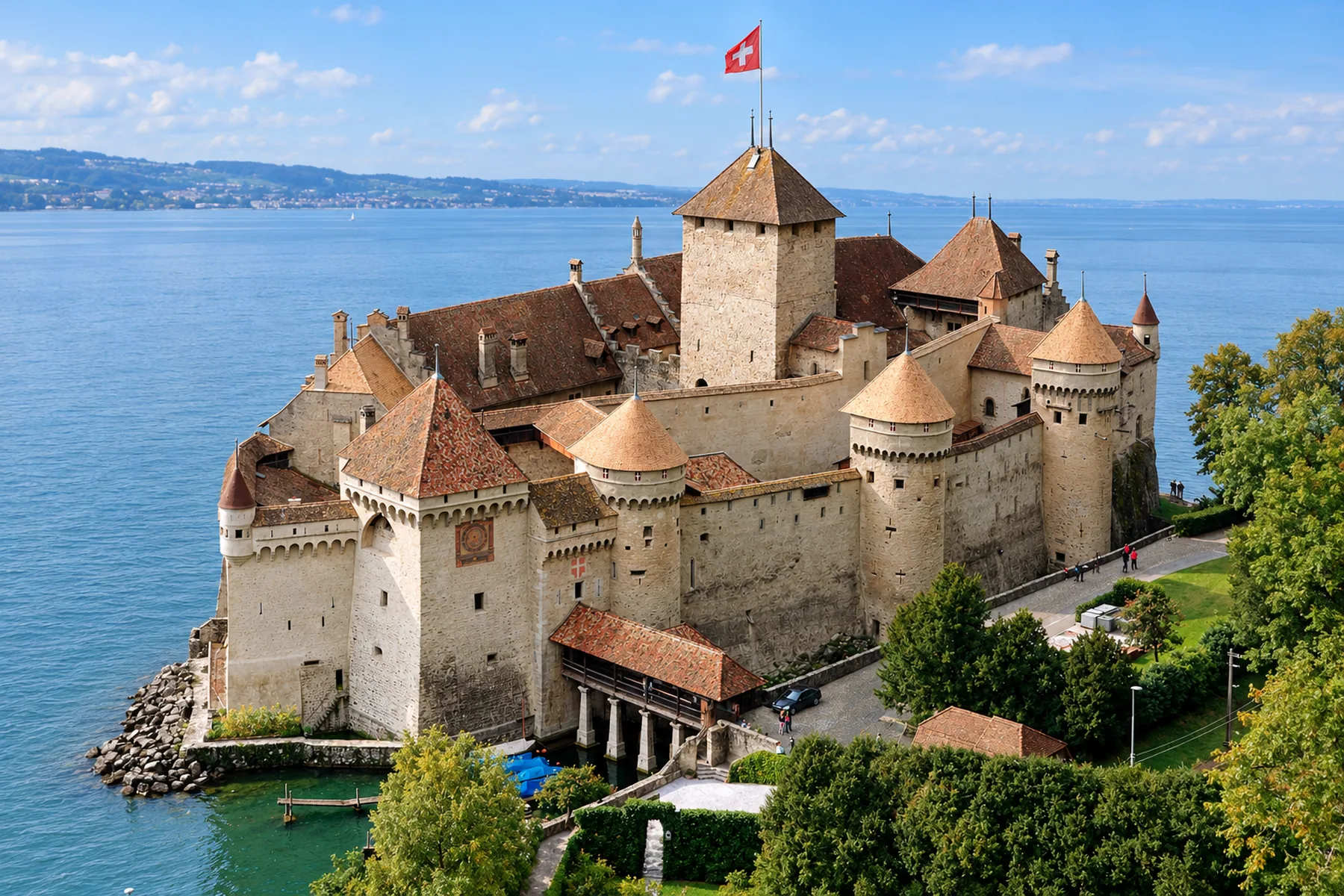
In the photo: Chillon Castle — Montreux
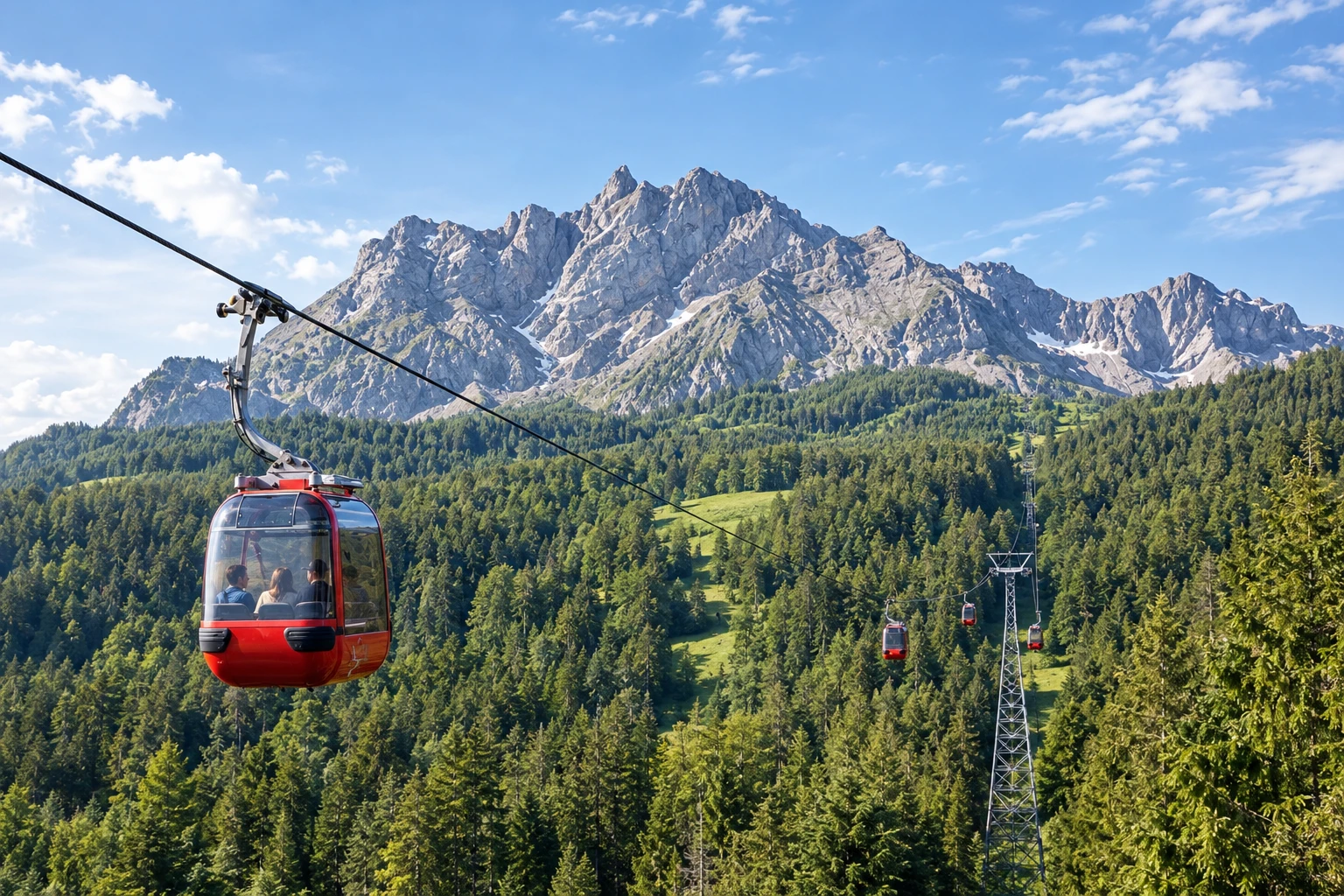
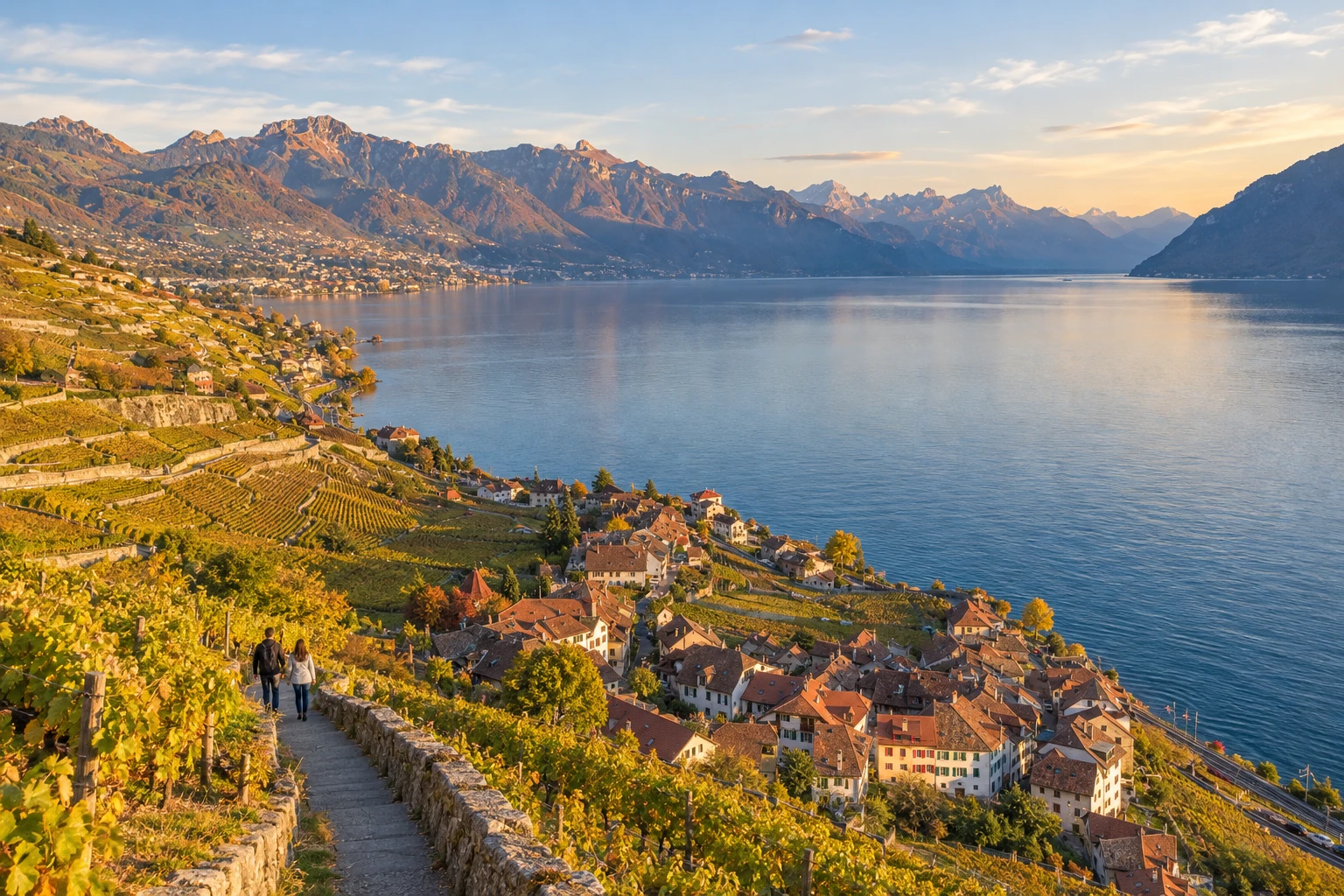
Illustrative images. The pictures in this guide are illustrations based on the real place, not photographs, and may differ from it.
The guide
The Alps of Zermatt and the Jungfrau, the lakes of Lucerne and Geneva, Zurich, Bern and the Italian-speaking towns of Ticino. Trains, boats and cable cars are scheduled to connect. Each place shows what to do, when to go and how to get there.
The guide has three ways in, so you can start wherever you like: routes, which link towns along one journey; destinations, which are the tourist regions; and the cantons, with the main cities in each one.
The texts are written from official tourism sources, such as national and regional tourism offices, national parks and city halls, and new cities and routes keep being added to the guide.
About Cidade Turismo: who we are and how the guide is made →

Cross-border routes
Journeys that cross borders, with the map, the cities in each country, the itineraries and what changes from one side to the other.
By train from Paris to Zurich in about four hours, without changing: from Gare de Lyon to the center of Switzerland’s largest city, passing through Alsace and Basel.
By train from Switzerland to Italy through the Alps: from Zurich to Milan via the Gotthard base tunnel, with Lucerne, Lake Como and, if you have time, the old panoramic mountain line.
The red train that crosses the Alps from Switzerland to Italy: viaducts, spiral tunnels, glaciers and Lake Bianco, from Chur to Tirano in about four hours, with a bus onward to Lugano.
The ancient pilgrims’ route to Rome: from Canterbury Cathedral, through France and Switzerland, over the Alps via the Great St Bernard Pass and through Tuscany to St. Peter’s Square.
11 destinations
The tourist regions in Switzerland, each with its towns: things to do, when to go and how to get there.
See the destinations19 cities in 13 cantons
The guide by canton: each one with its destinations, cities and routes, and each city with its attractions.
See cantons and cities17 flavors
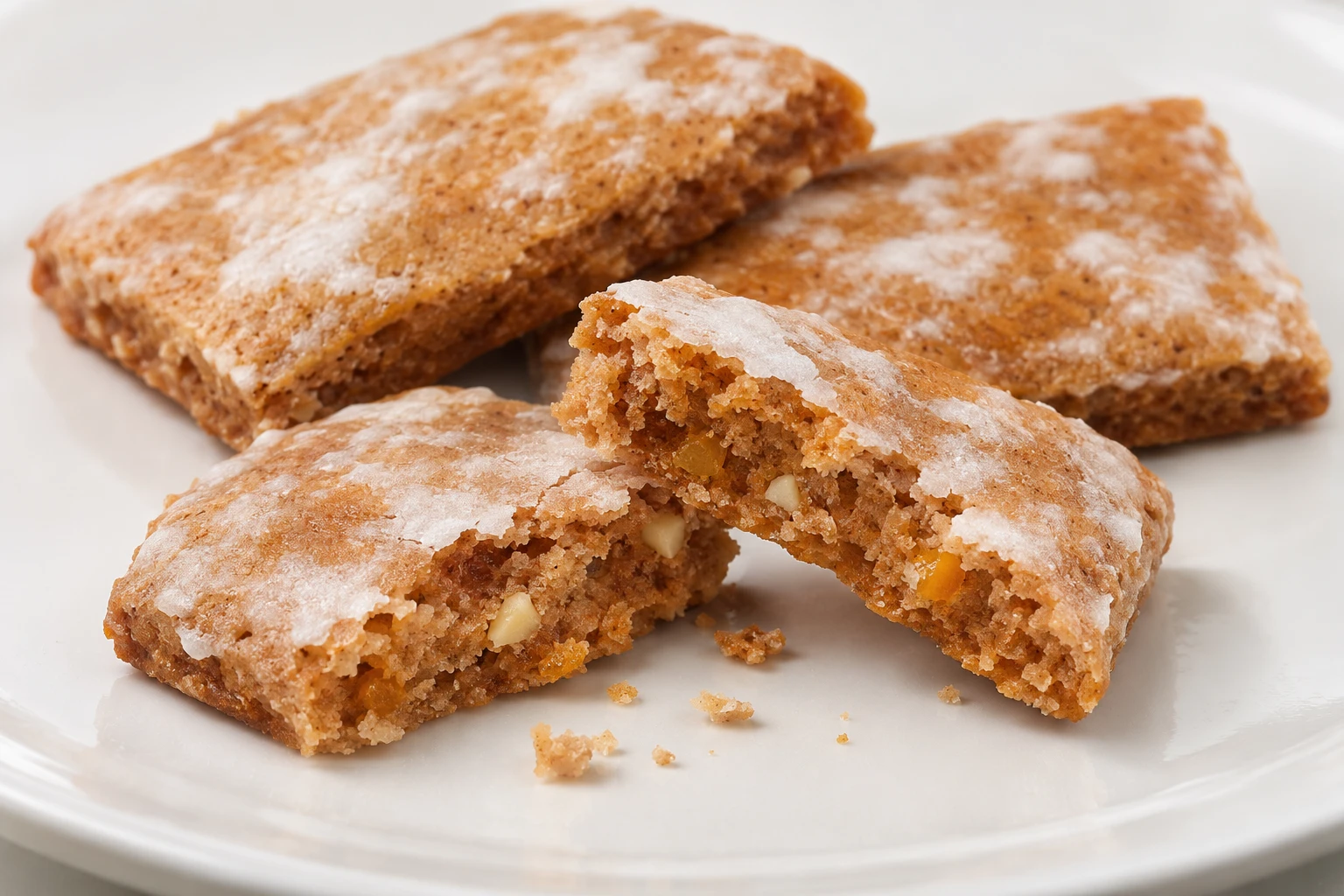
Melted-cheese dishes, festival sweets and recipes named after towns: Switzerland’s food changes from canton to canton, between the Alps, the Jura and the lakes.
See the flavorsThe map
Tap a region to see the names. Use two fingers to zoom in.
Outlines: ©swisstopo. Adapted by Cidade Turismo.
Where to start
Six cities from the guide, changing every day.

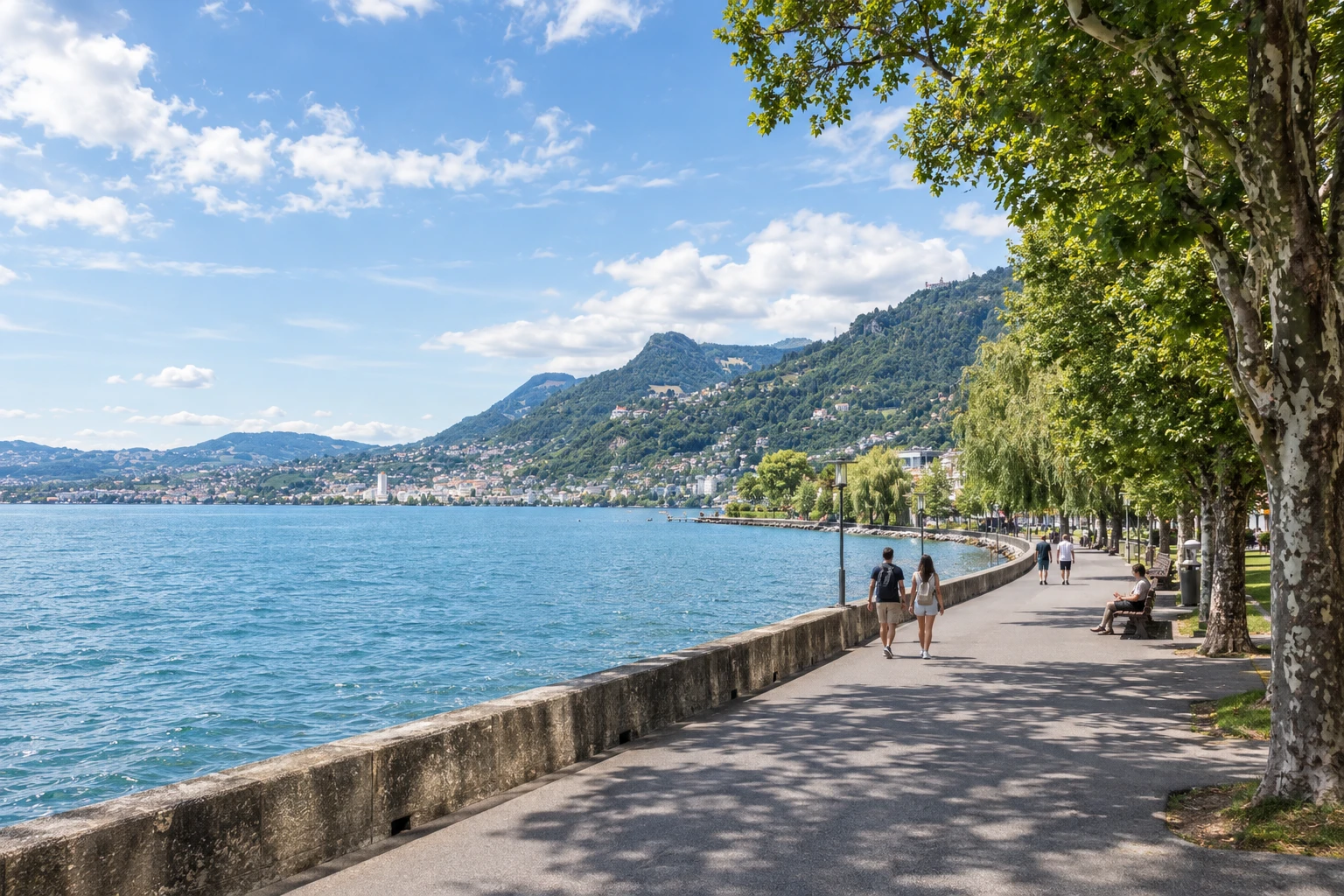
City on the Riviera of Vaud, where Lake Léman meets the mountains, known for its Belle Époque hotels and the Montreux Jazz Festival in July. It has the Freddie Mercury statue and the former Queen studio on the waterfront, the Château de Chillon 3 km away and the rack railway to the Rochers-de-Naye. From here depart the GoldenPass Express to Interlaken and trips to Vevey, with Chaplin's World and the Alimentarium.

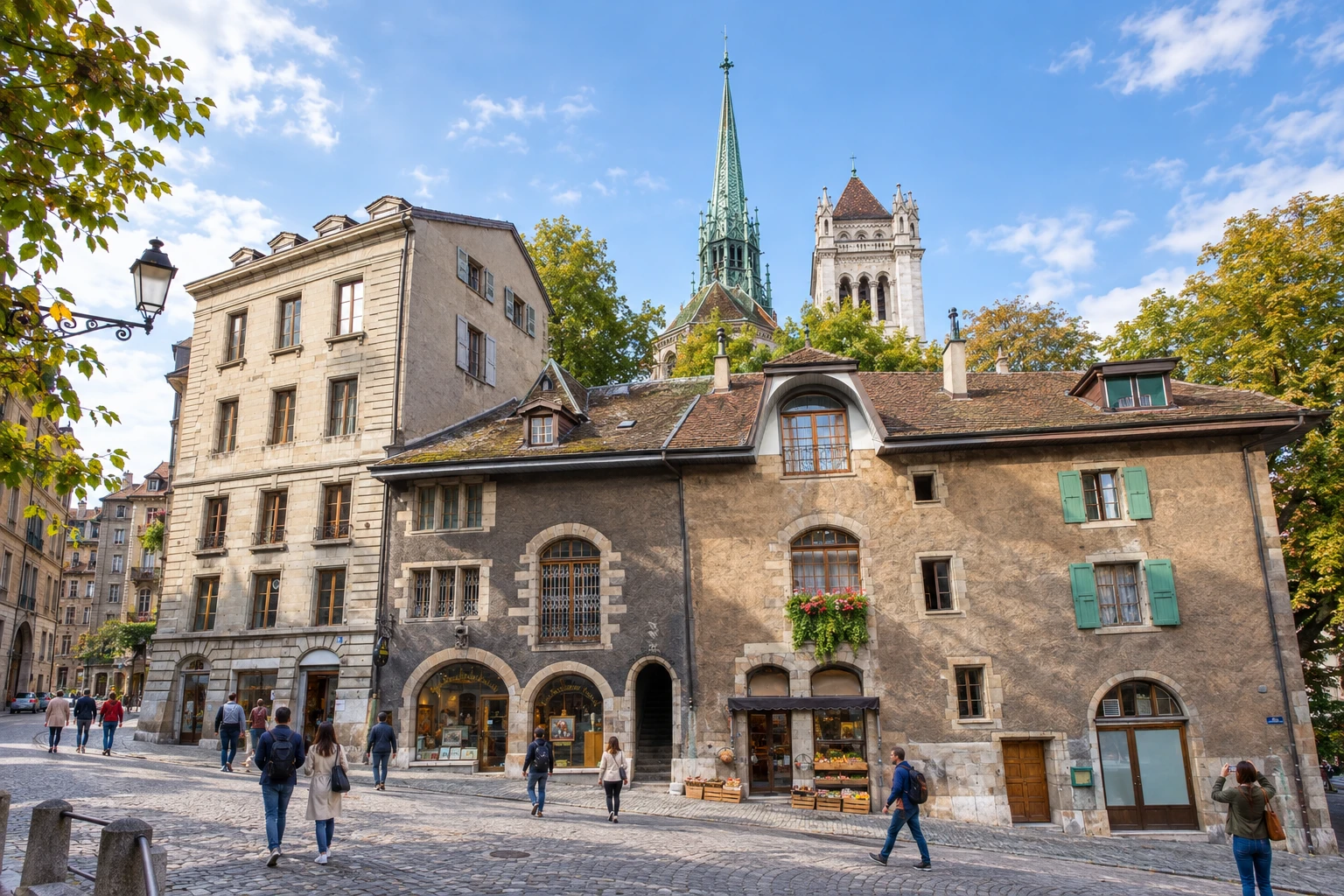
French-speaking city at the point where the Rhône leaves Lake Léman, with the Jet d'Eau, the Bains des Pâquis and the Jardin Anglais on the waterfront and, above, the Vieille-Ville with the Cathédrale Saint-Pierre, the Maison Tavel and the Mur des Réformateurs. On the right bank are the Palais des Nations, the Red Cross Museum, the Musée Ariana and the Jardin botanique. It also has the MAH, the Patek Philippe Museum, the Plainpalais market, the Parc La Grange, Carouge and CERN.

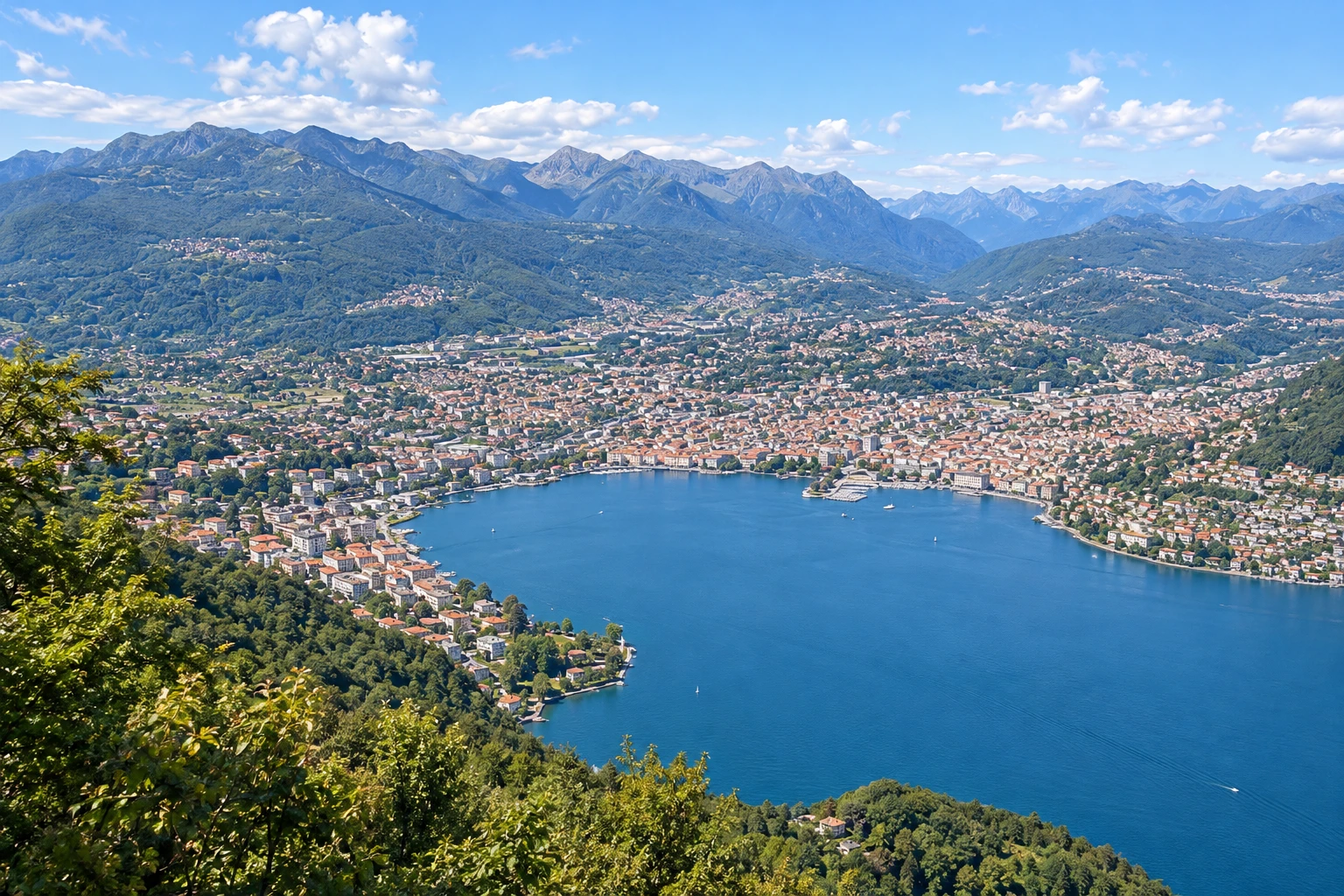
Lugano is the largest city in Ticino, the Italian-speaking Switzerland, on the shore of the lake of the same name and between two hills, San Salvatore and Brè. The center features the Piazza della Riforma, arcaded streets like Via Nassa, the cathedral of San Lorenzo above the station, and the church of Santa Maria degli Angioli with Bernardino Luini’s large Passion fresco. On the lakefront are the LAC cultural center, housing the Swiss Italian art museum, and Parco Ciani. Funiculars climb both hills, and boats take visitors to the villages of Gandria and Morcote. Italian is spoken, and the climate is milder than in northern Switzerland.

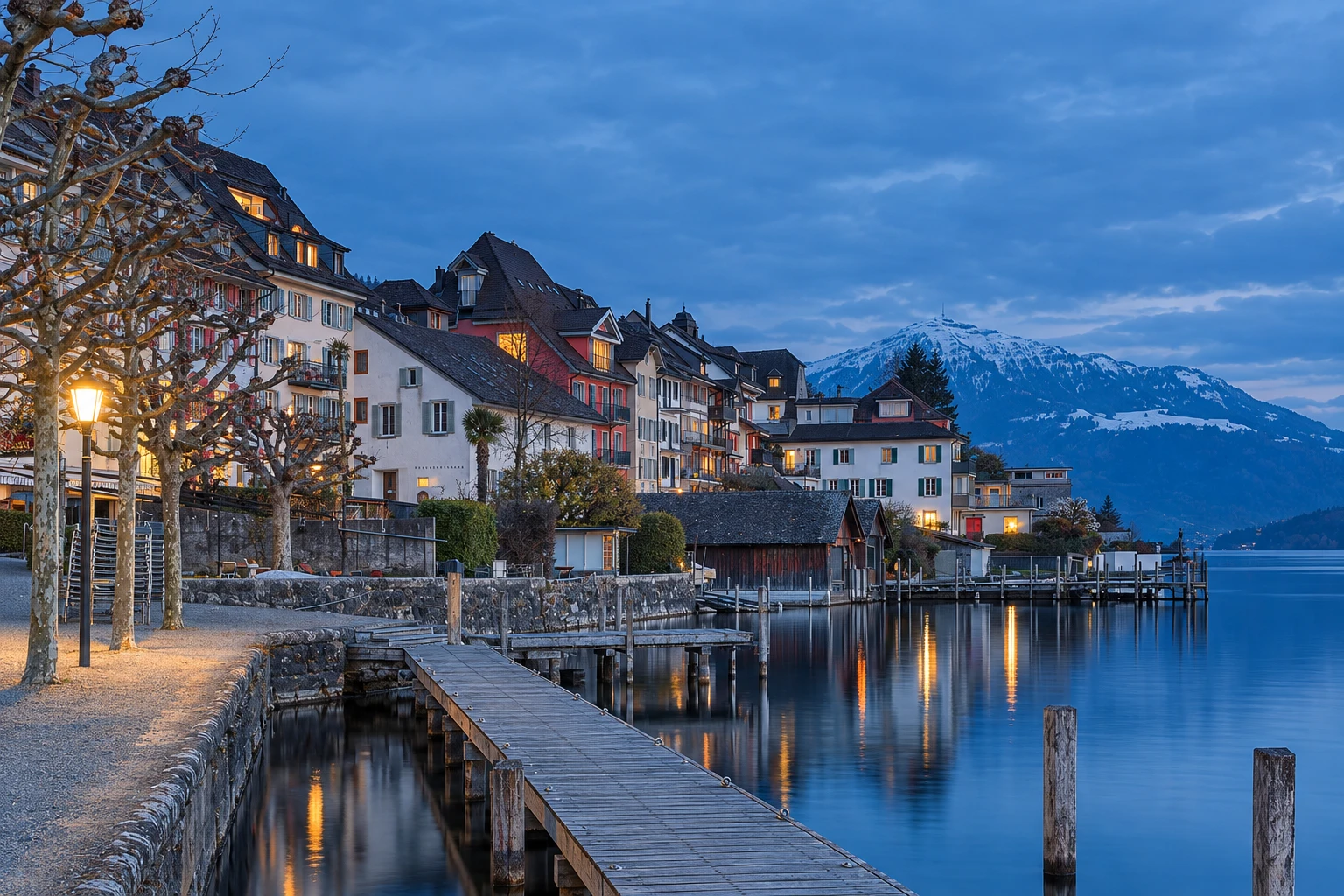
Capital of the small canton of Zug, on the north shore of Lake Zug, between Zurich and Lucerne. The historic center preserves the Zytturm, the clock tower with a blue-and-white roof, the Burg Zug, a castle that houses the city’s history museum, and fishermen’s houses along the water. Above the town, the Zugerberg offers trails and views over the lake and the Alps. Zug is the town of the Zuger Kirschtorte.

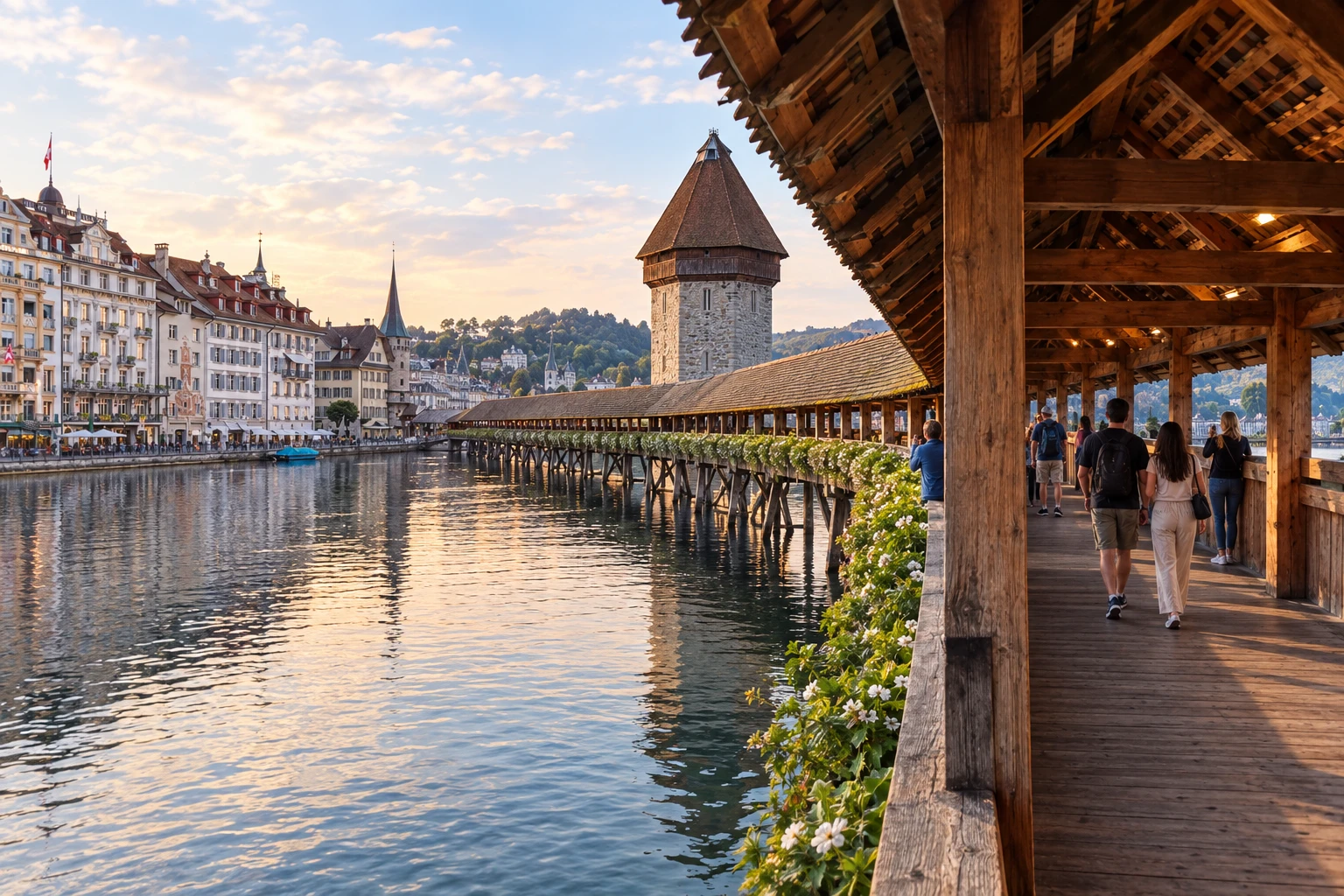
Capital of the canton of Lucerne, at the point where the river Reuss leaves the Lake of the Four Cantons. It has the Kapellbrücke and the Spreuerbrücke, covered wooden bridges, the Altstadt with painted facades, the Museggmauer wall, the Löwendenkmal, the KKL by Jean Nouvel and the Swiss Museum of Transport. It is the base for ascending Pilatus, Rigi, Stanserhorn and Bürgenstock.

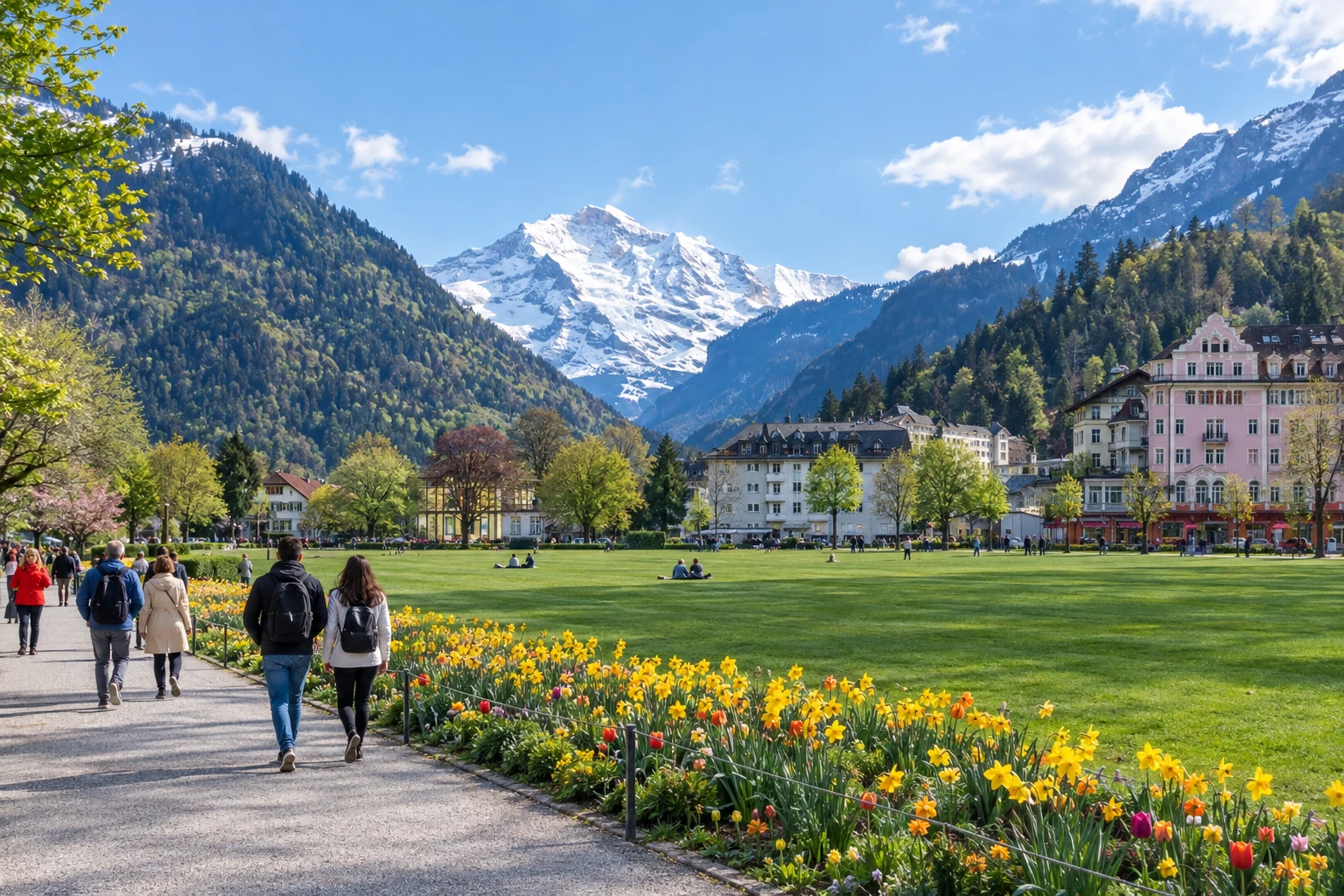
Town between the Thunersee and the Brienzersee, at 568 m, which has relied on tourism since the 19th century. It has the Höhematte, a lawn with views of the Jungfrau, the Harder Kulm funicular, boats on both lakes and trains to the valleys. In the surroundings are the Schynige Platte, the St. Beatus-Höhlen, Brienz, the Giessbachfälle, the Ballenberg and the Brienzer Rothorn, and the GoldenPass Express passes through it.
Traveler area
The app
Save the destinations you want to visit, send your travel photos and get the guide's news.
Cidade Turismo around the world
The routes, destinations and cities of each country, with things to do, when to go and how to get there.
Switzerland In the guide
Beyond the guide
Frequently asked questions
A travel guide to Switzerland, organized into routes, destinations, cantons and cities. Each city has things to do, attractions, when to go and how to get there. It is part of Cidade Turismo, a guide with countries on every continent, Flavors, Festivals and events and the knowledge pages.
A route is a journey linking several towns. A destination is a tourist region with its towns. A city is the place itself, with its attractions.
They are illustrations based on the real place, not photographs, and may differ from it. Photos sent by travelers are shown separately, as travelers' photos.
Type the name in the search box: it can be a route, destination, canton, city or attraction. Or start from Routes, Destinations or Cantons and cities in the menu.
Yes. Destinations already translated are available in Spanish and English at cidadeturismo.com, and the rest are being added.
Yes, for Android, on Google Play. With it you can save the destinations you want to visit and get the guide's news.