Geneva
Geneva
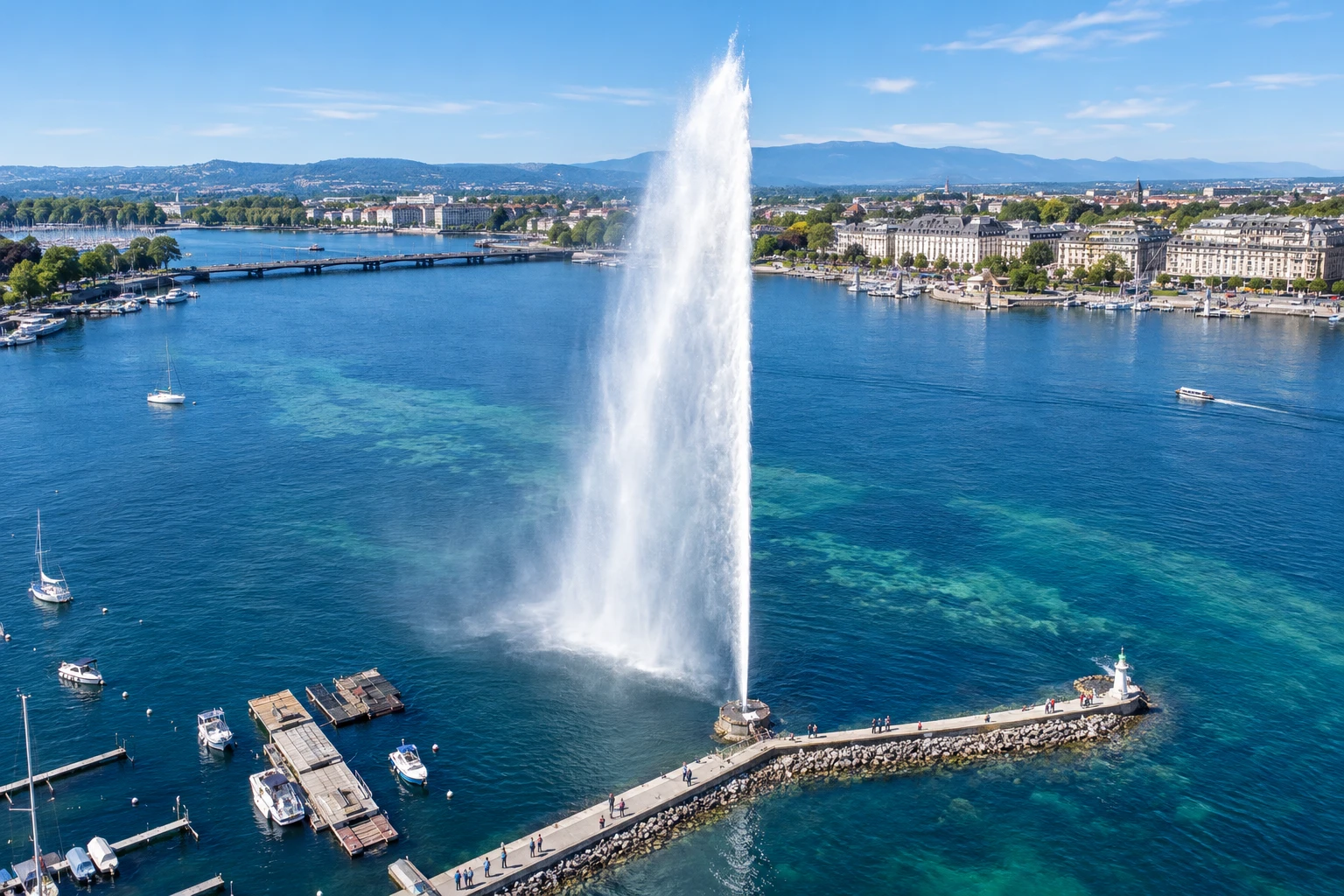
City at the tip of Lake Léman, with the Jet d'Eau, Calvin's old town, the UN's European headquarters, watchmaking and Red Cross museums, and CERN right next door.

 Search
 Brazil
 Antarctica
 Argentina
 Bolivia
 Chile
 Colombia
 Ecuador
 Falkland Islands (Malvinas)
 French Guiana
 Guyana
 Paraguay
 Peru
 Suriname
 Uruguay
 Venezuela
 Austria
 Belgium
 Croatia
 Denmark
 Finland
 France
 Germany
 Greece
 Hungary
 Iceland
 Ireland
 Italy
 Luxembourg
 Norway
 Poland
 Portugal
 Slovakia
 Slovenia
 Spain
 SwedenSwitzerland
 the Czech Republic
 the Netherlands
 the United Kingdom
 Turkey
 Bermuda
 Canada
 Greenland
 Mexico
 Saint Pierre and Miquelon
 the United States
 the Dominican Republic
 JapanTurkey
 Egypt
 South Africa
 Australia
 Fiji
 New Zealand
 Papua New Guinea
Switzerland travel guide
What to do, when to go and how to get there, destination by destination.
11 destinations · 19 citiesin Switzerland
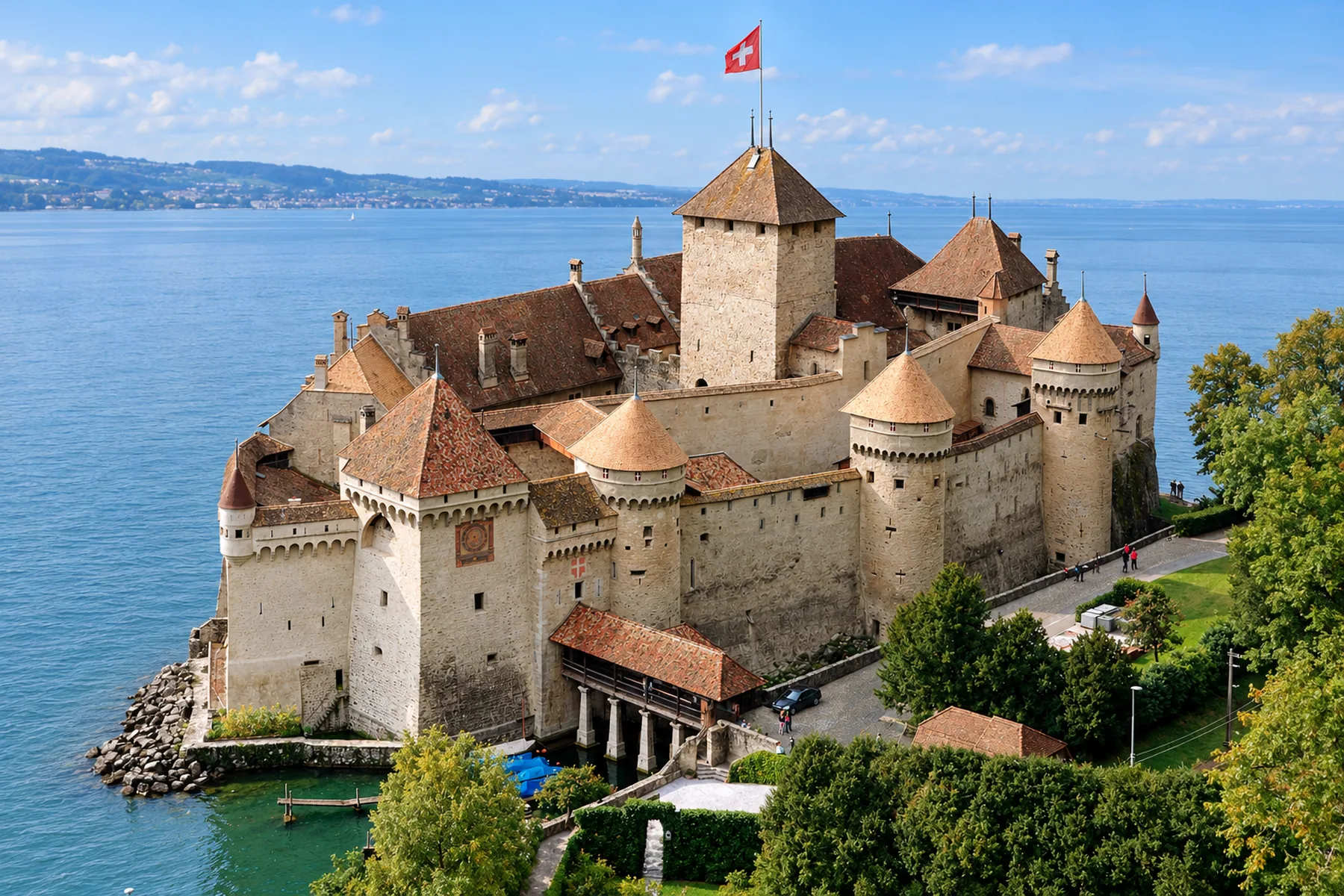
In the photo: Chillon Castle — Montreux
Illustrative images. The pictures in this guide are illustrations based on the real place, not photographs, and may differ from it.

A destination is a region you visit as a single trip: it can bring together several cities or be a large city with everything it offers. Each destination has the tours, the itineraries, the best time to go month by month and how to get there.
The guide currently has 11 destinations, with 19 cities in 13 cantons.
Today's highlights
A destination is more than a city: it's everything you can experience there.
City at the tip of Lake Léman, with the Jet d'Eau, Calvin's old town, the UN's European headquarters, watchmaking and Red Cross museums, and CERN right next door.
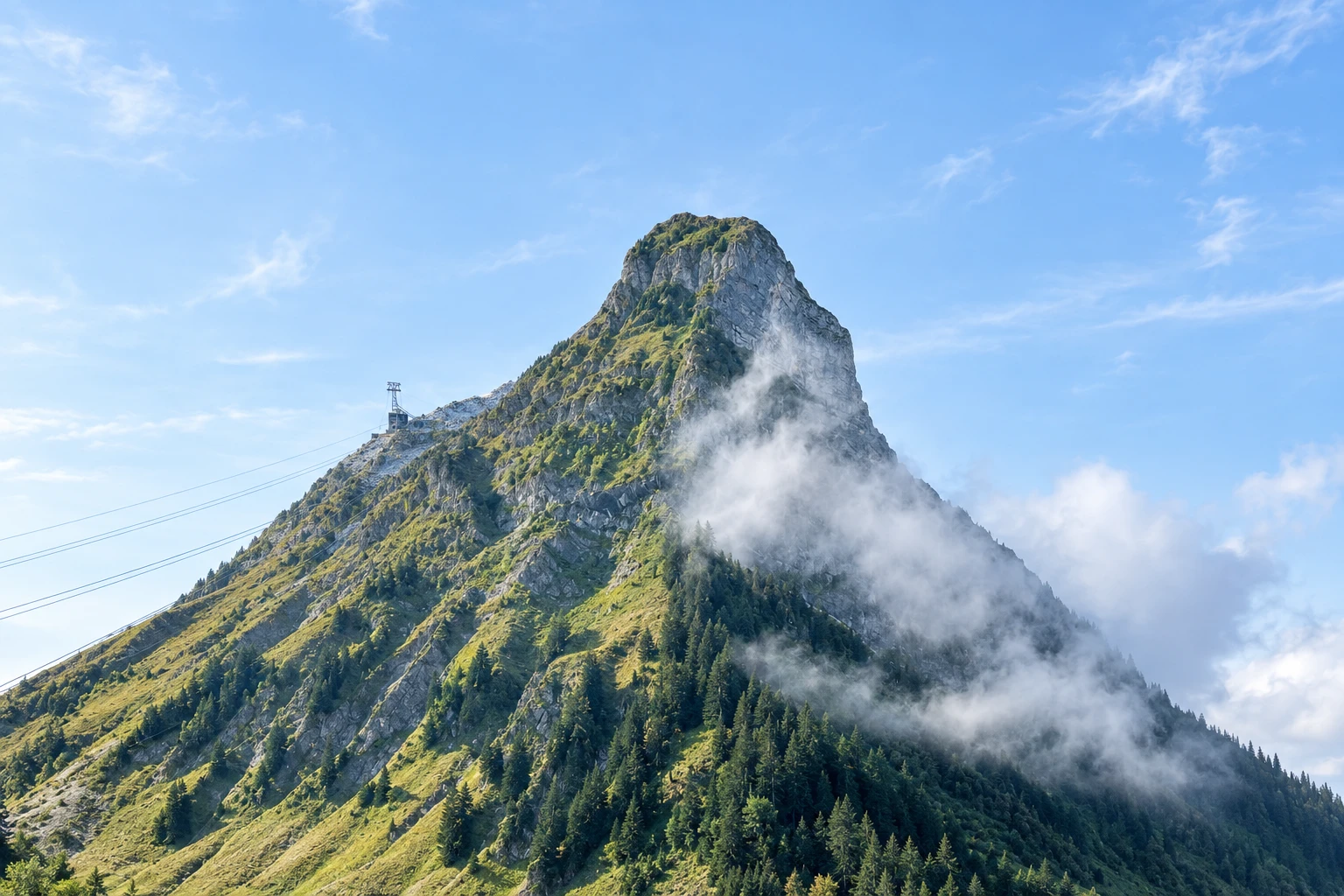
The bilingual medieval town on the Sarine River and the Gruyère region, with a castle, cheese and meringues with crème double at the foot of the Pré-Alps.
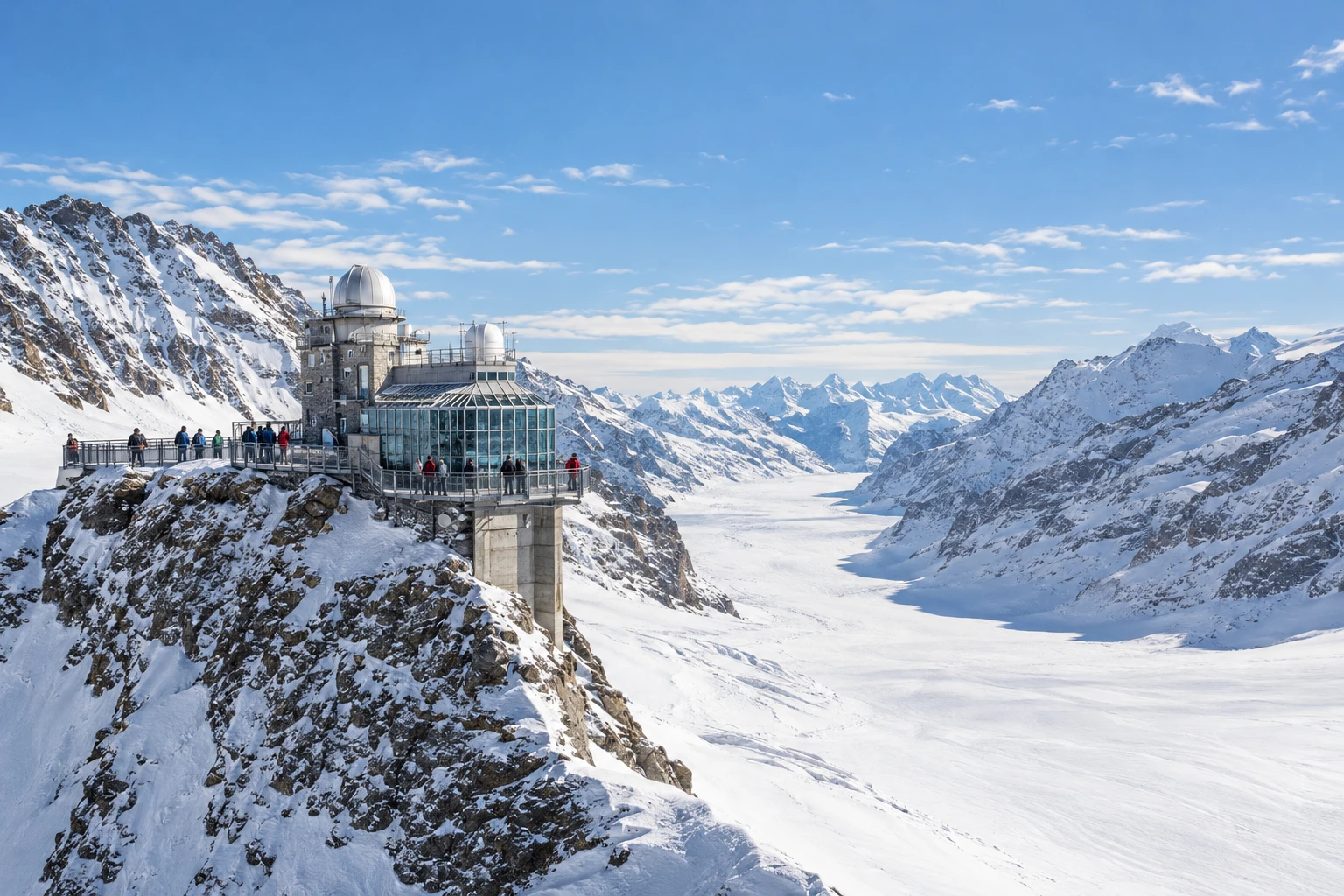
Interlaken, between the lakes Thunersee and Brienzersee, and the valleys of Grindelwald and Lauterbrunnen, from which trains and cable cars climb to the Jungfraujoch, the Schilthorn and car-free villages.
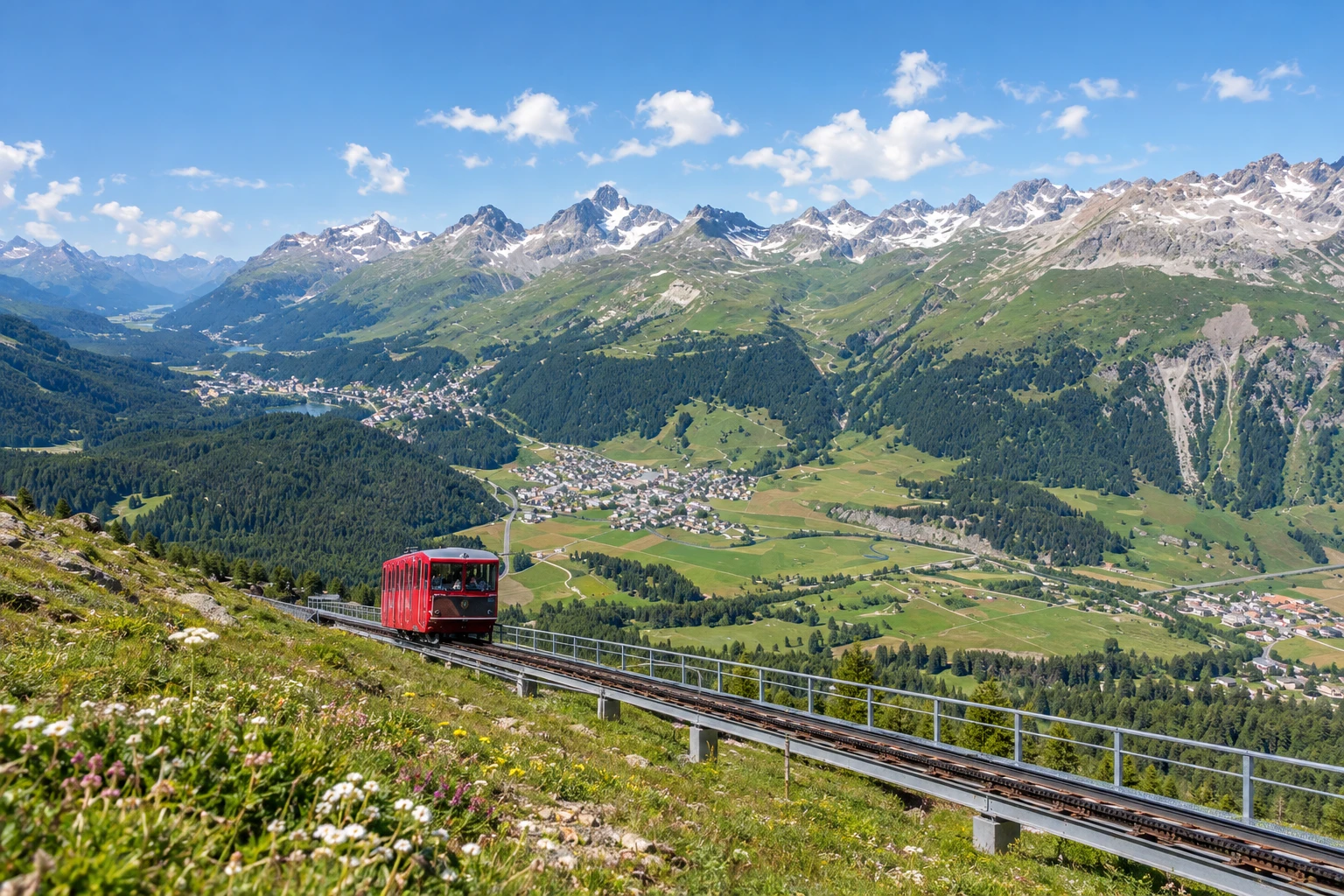
St. Moritz, at 1,822 m, the lakes of the Upper Engadine, the Bernina glaciers and the trains of the Rhätische Bahn, which climb the Albula and cross the Bernina to Tirano, in Italy.
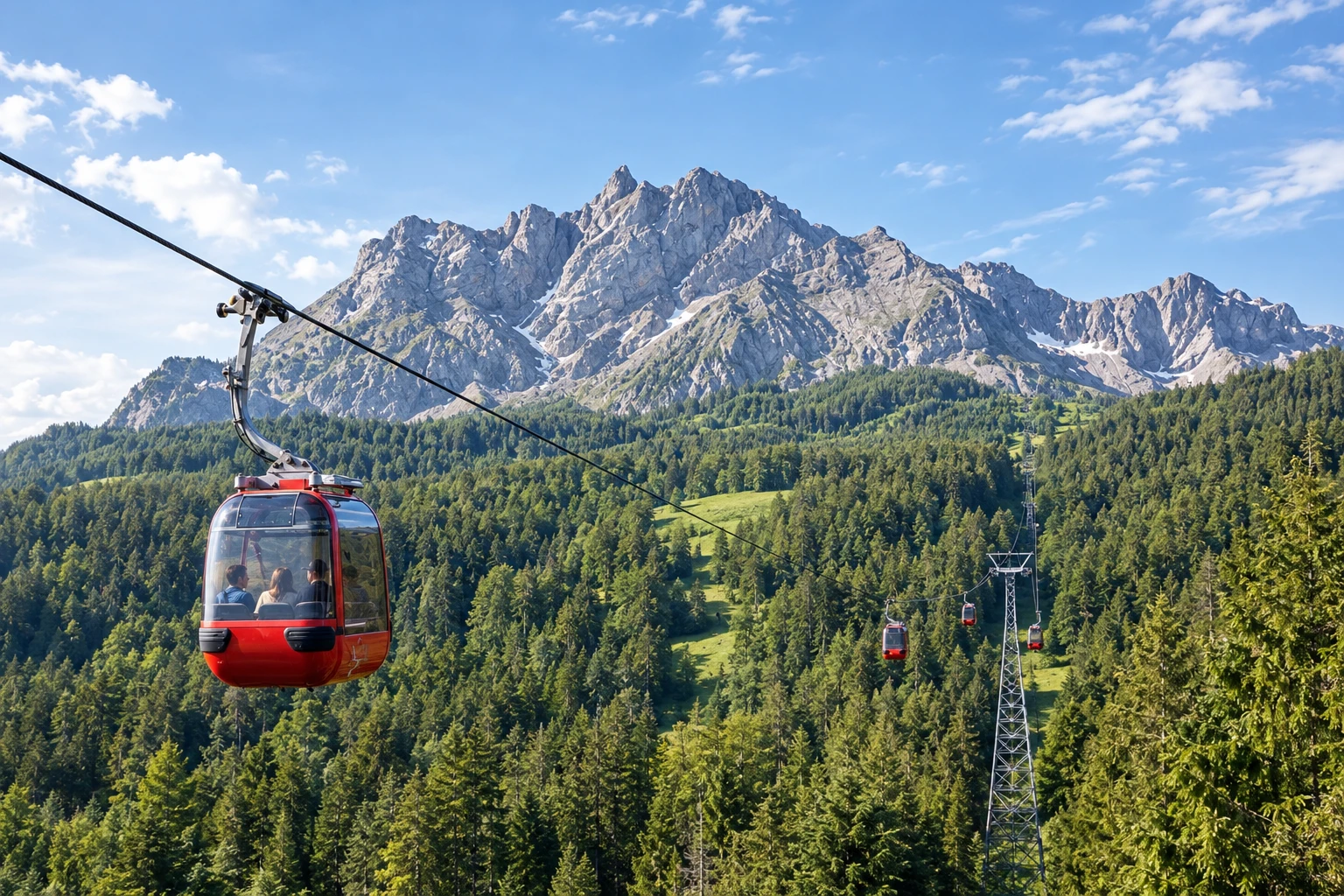
Lucerna, with wooden bridges over the Reuss River and the Lake of the Four Cantons, and the surrounding mountains: Pilatus, Rigi and, in Engelberg, the Titlis with a glacier at 3,020 m.
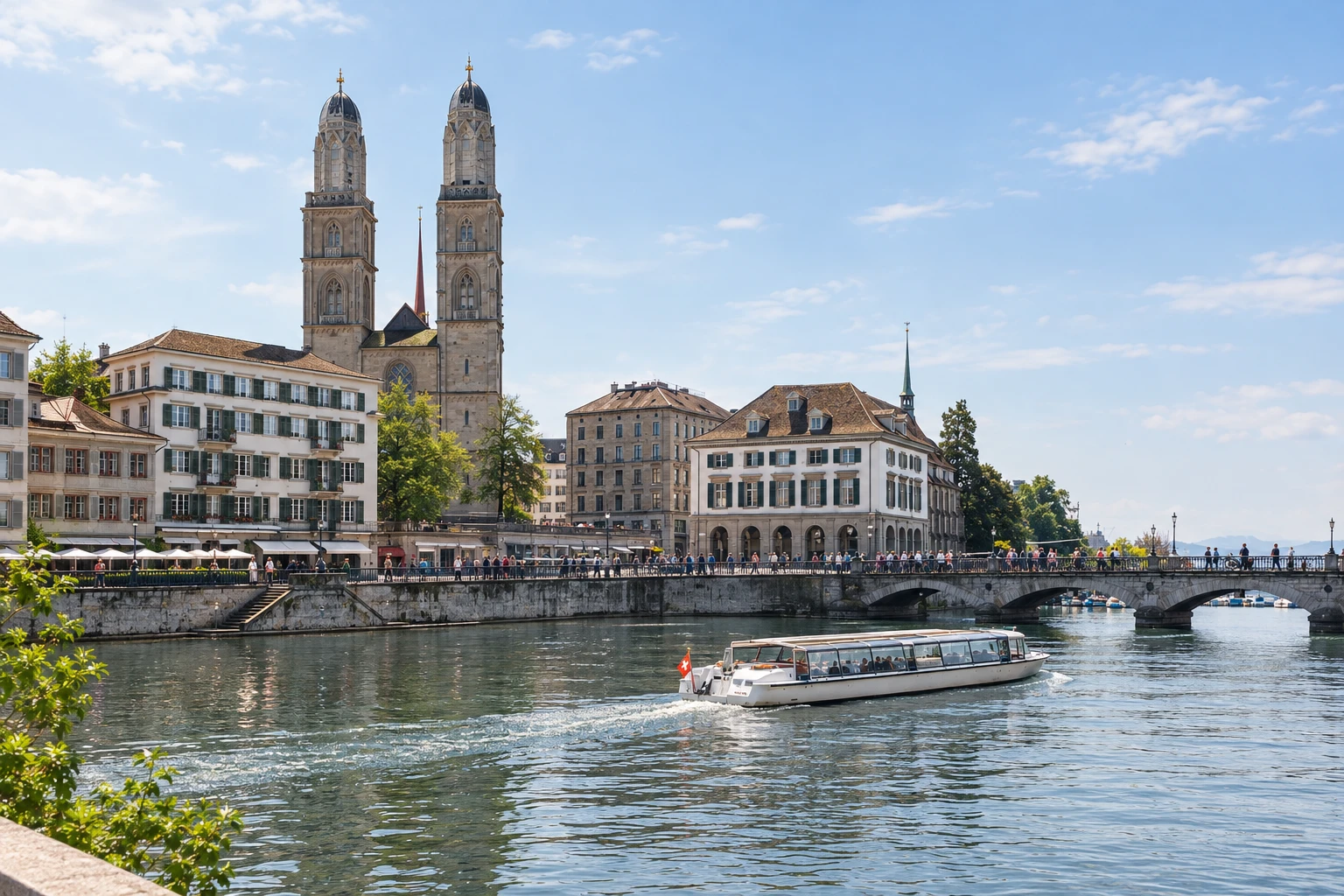
The city at the northern tip of Lake Zurique, with a medieval center on both banks of the Limmat River, museums, churches with stained glass by Chagall and Giacometti, and trains to the whole country.
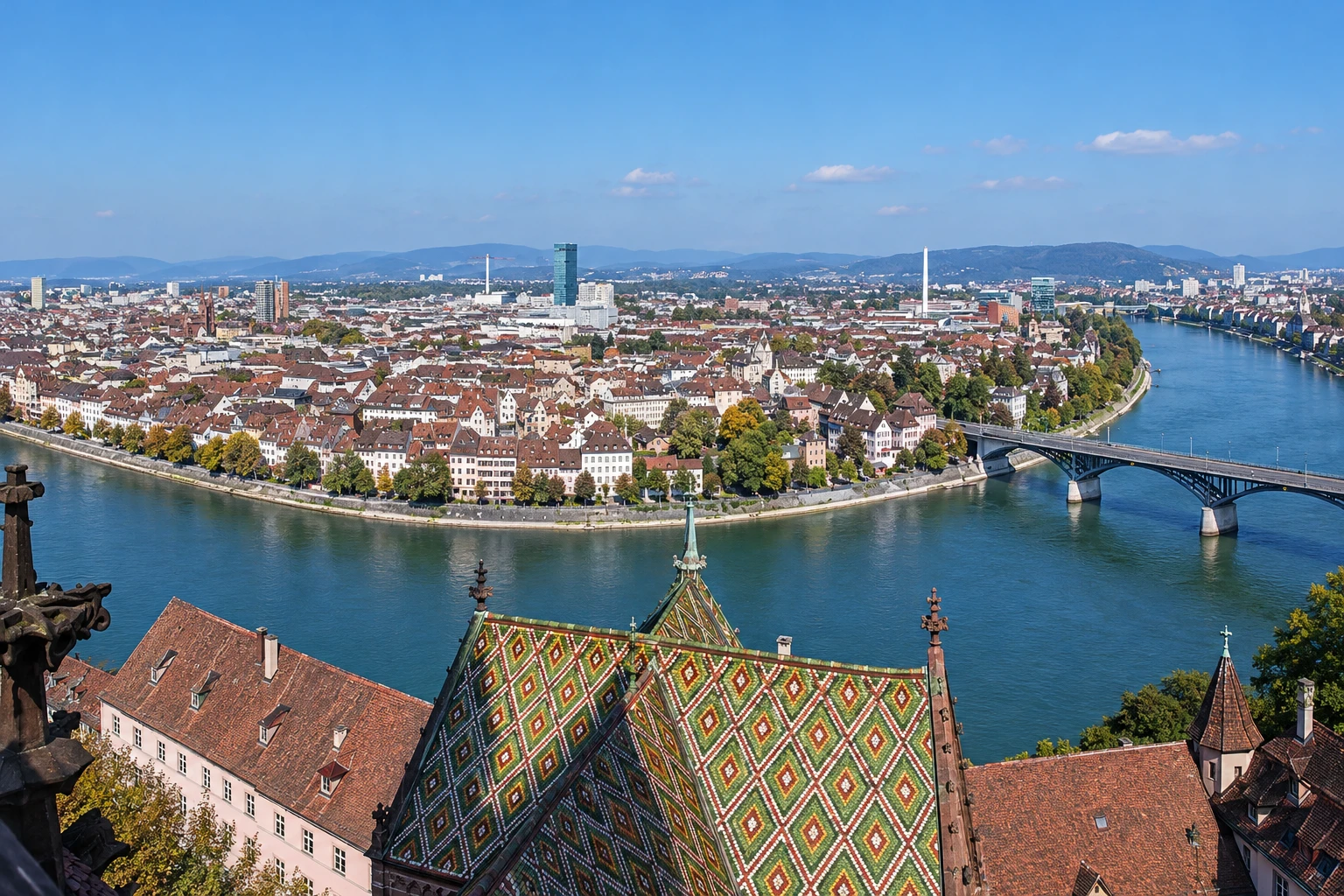
The Rhine city where Switzerland meets France and Germany, with a red sandstone cathedral, a painted town hall, art museums, and ferries crossing the river.
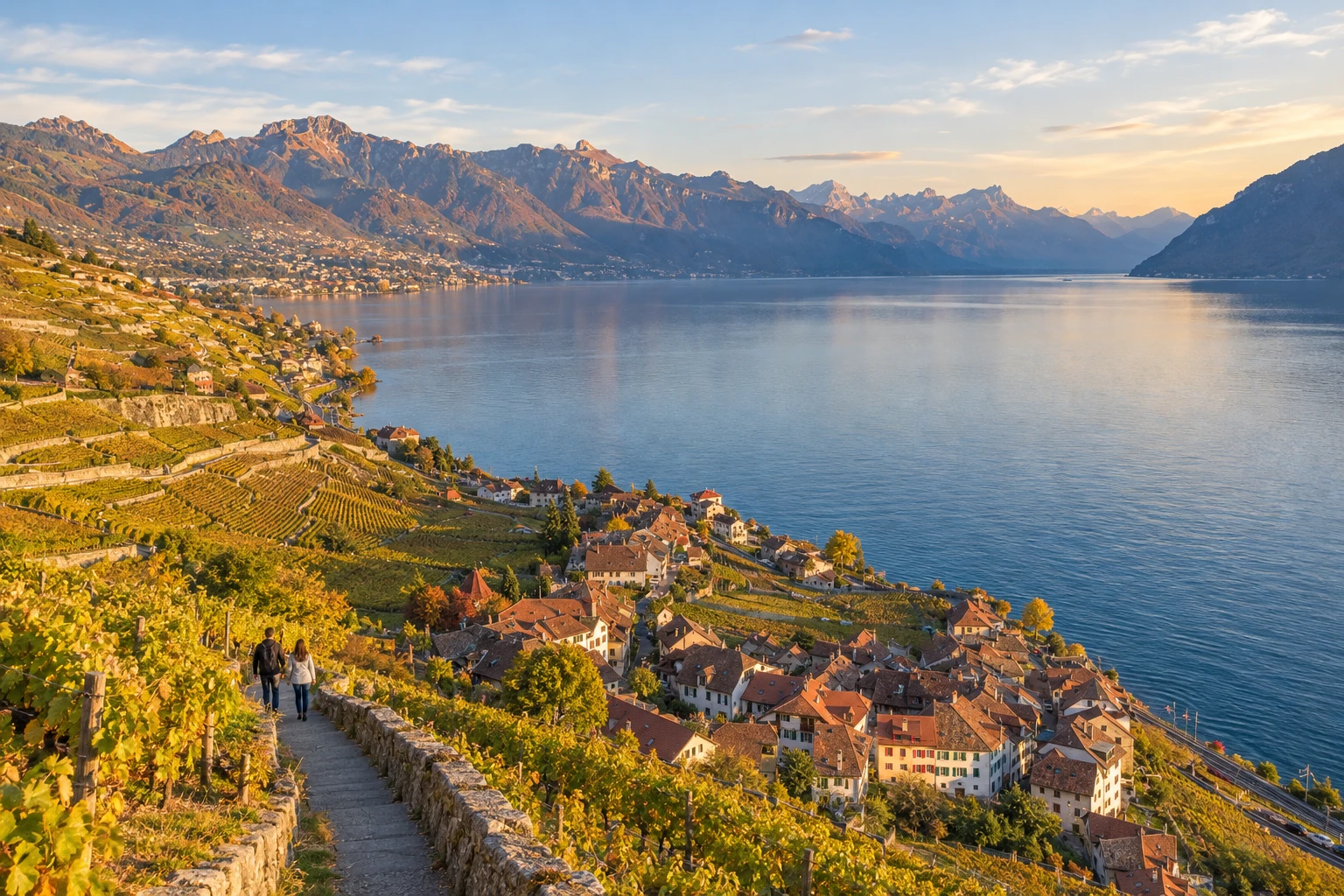
The north shore of Lago Léman, between hilly Lausanne and the Museu Olímpico, the terraced vineyards of Lavaux and Montreux of jazz and the Château de Chillon.
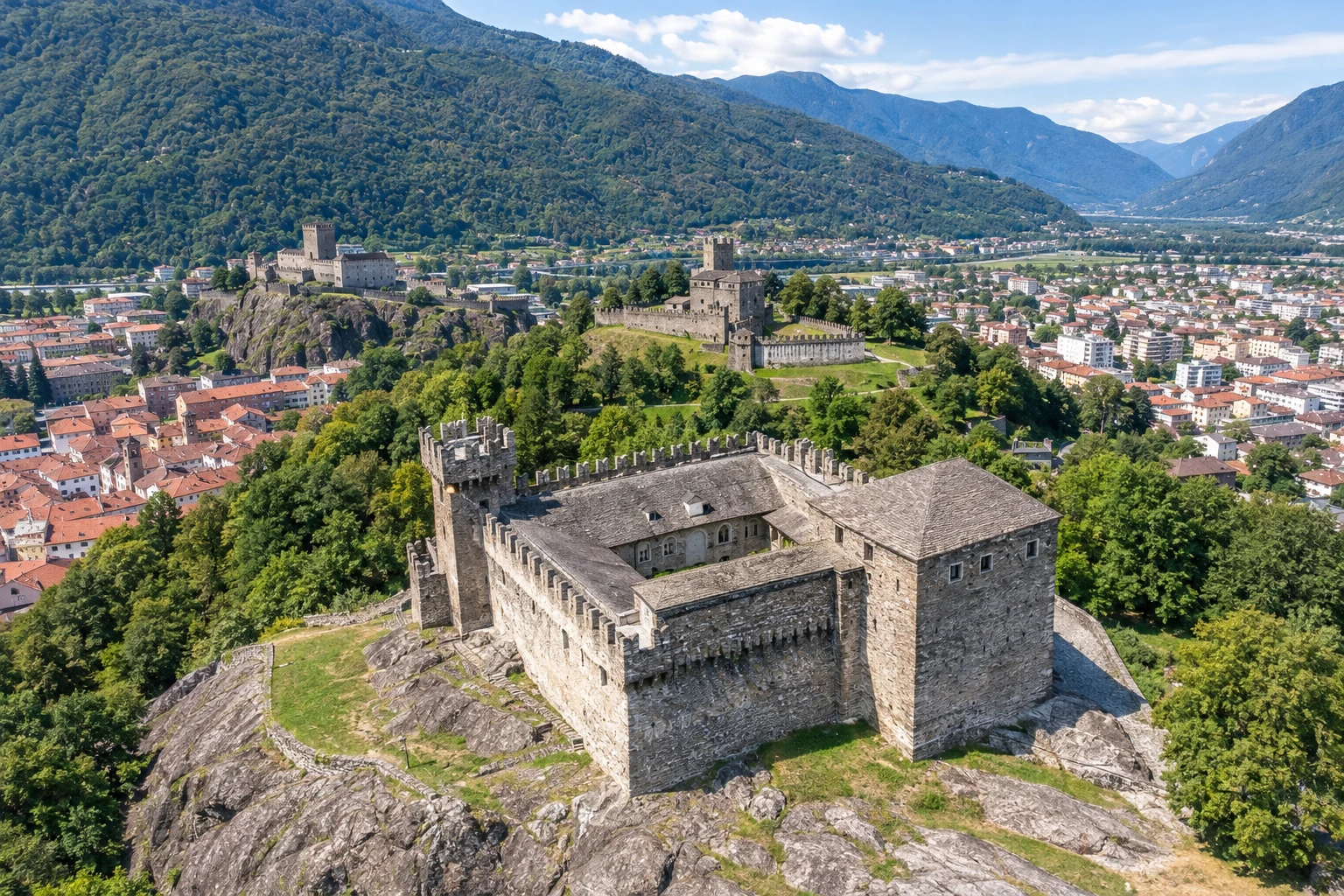
The Italian-speaking Switzerland: Lugano on the lake shore, between the San Salvatore and Brè hills, with trains to Milão and to Zurique via the Gotardo.
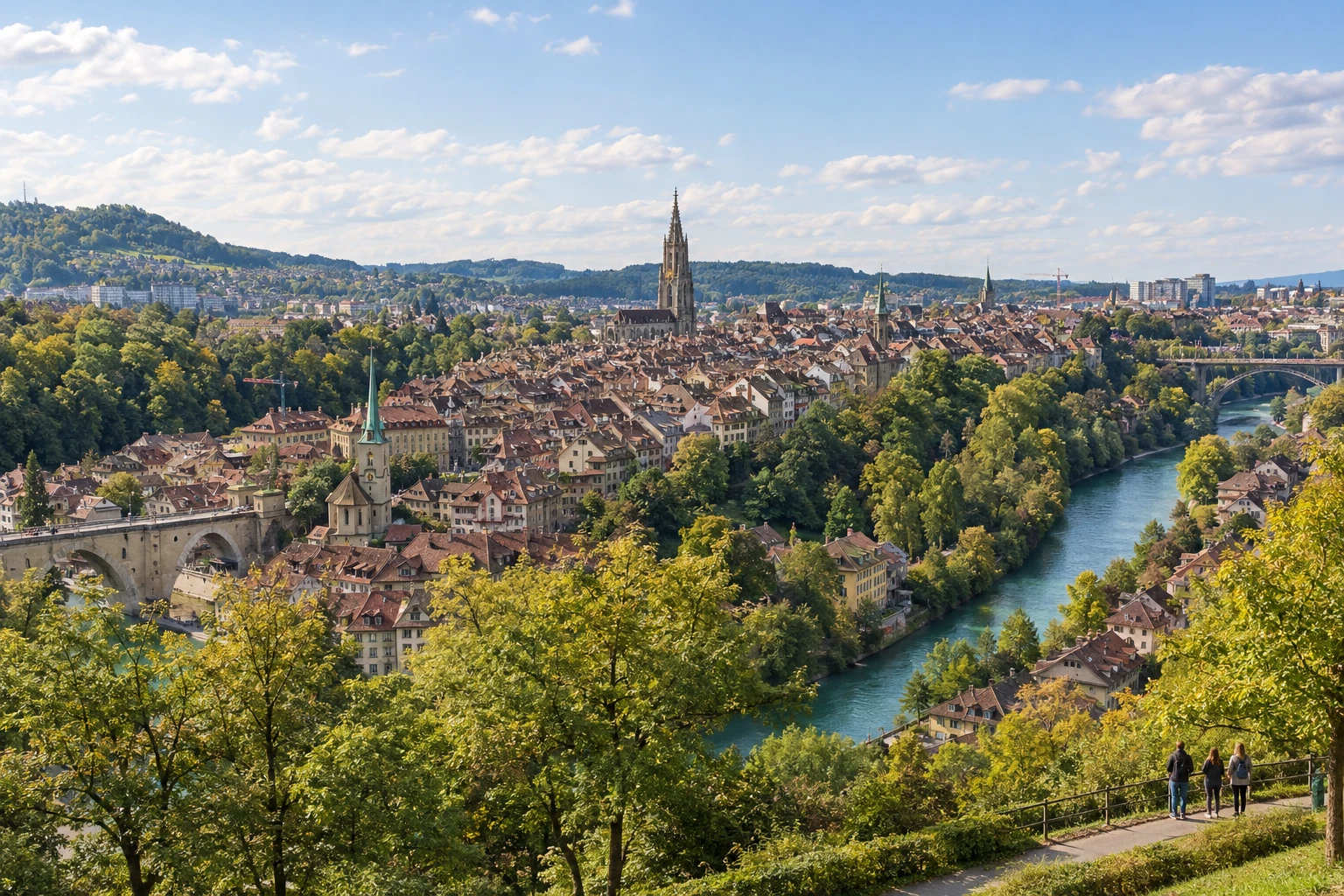
The federal city of the Suíça, seat of the government and parliament, with a medieval centre of arcades, fountains and towers on a bend of the Aare river, listed by UNESCO.
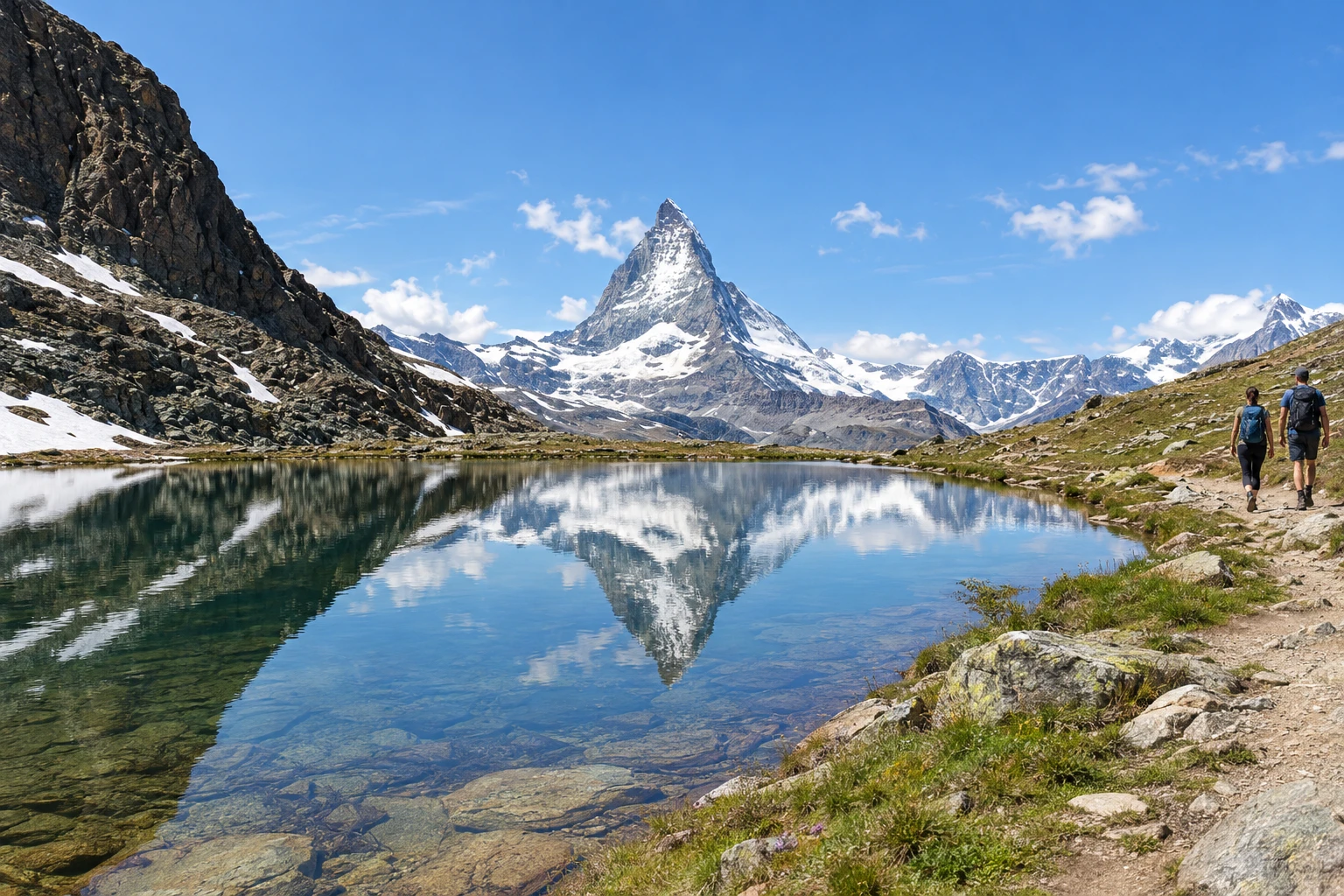
Village without combustion-engine cars at the foot of the Matterhorn, at 1.608 m, with rack railways and cable cars that ascend to viewpoints above 3.000 m and the departure point of the Glacier Express.
Cities to start with
Each city has a page with what to do there.
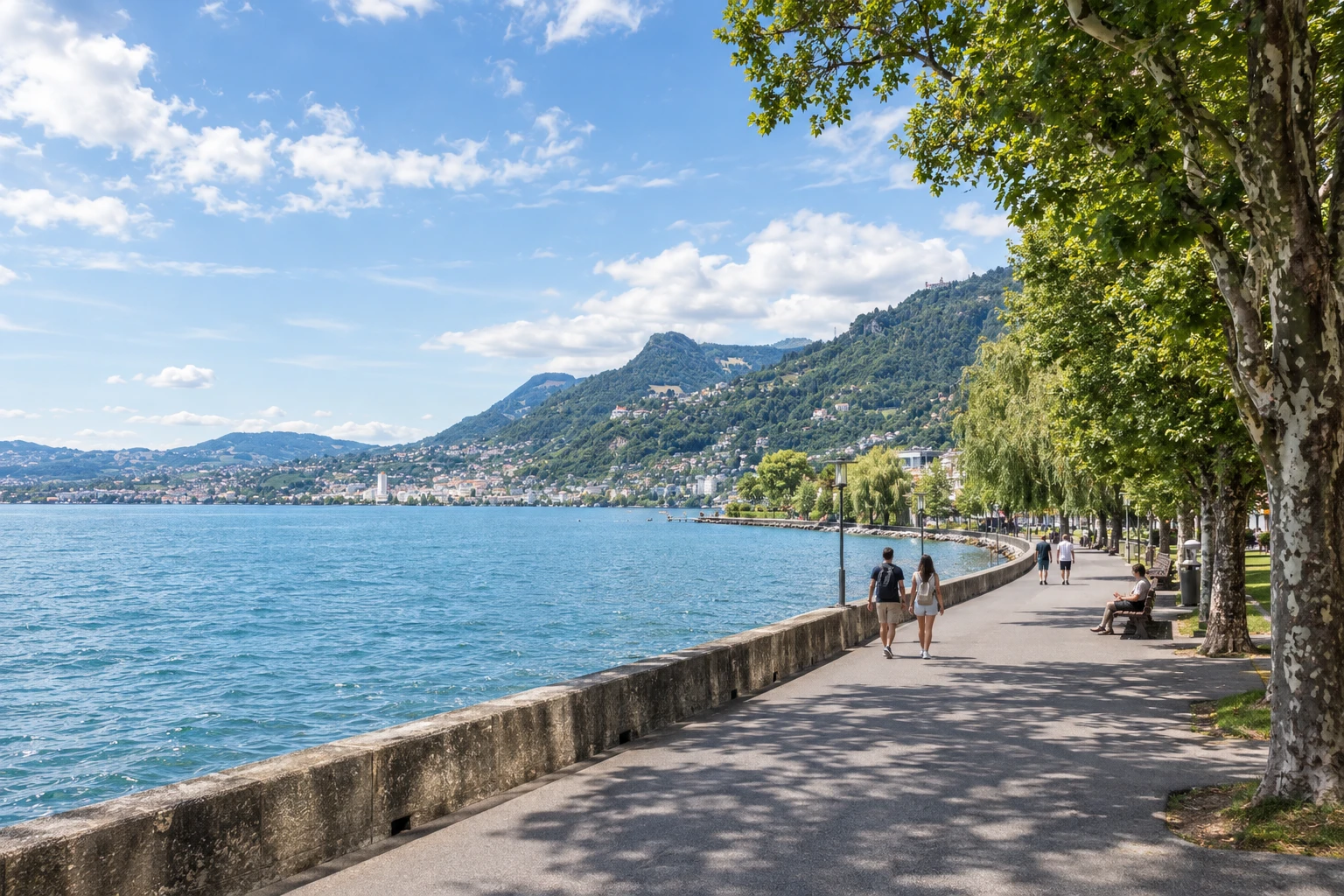
City on the Riviera of Vaud, where Lake Léman meets the mountains, known for its Belle Époque hotels and the Montreux Jazz Festival in July. It has the Freddie Mercury statue and the former Queen studio on the waterfront, the Château de Chillon 3 km away and the rack railway to the Rochers-de-Naye. From here depart the GoldenPass Express to Interlaken and trips to Vevey, with Chaplin's World and the Alimentarium.
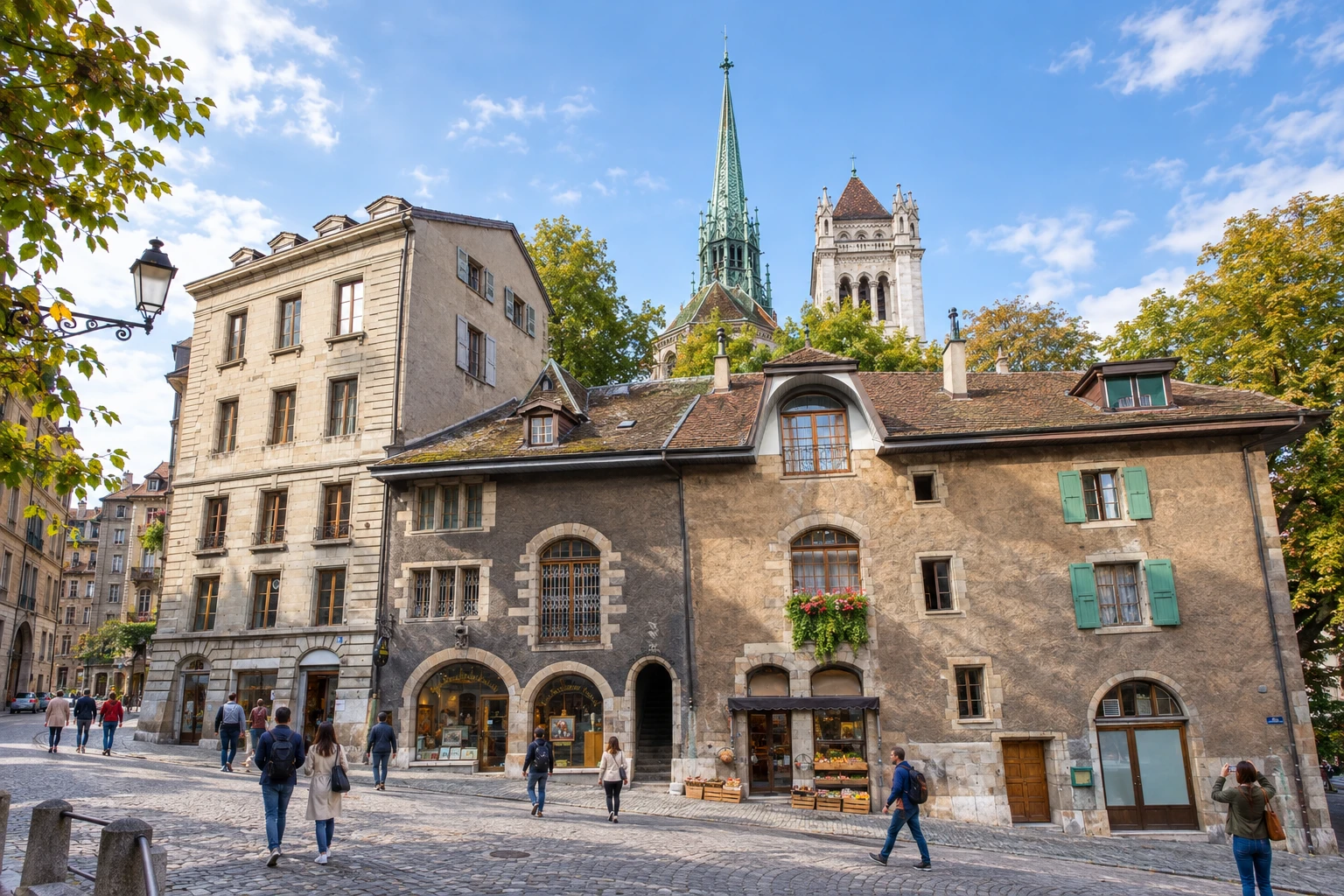
French-speaking city at the point where the Rhône leaves Lake Léman, with the Jet d'Eau, the Bains des Pâquis and the Jardin Anglais on the waterfront and, above, the Vieille-Ville with the Cathédrale Saint-Pierre, the Maison Tavel and the Mur des Réformateurs. On the right bank are the Palais des Nations, the Red Cross Museum, the Musée Ariana and the Jardin botanique. It also has the MAH, the Patek Philippe Museum, the Plainpalais market, the Parc La Grange, Carouge and CERN.
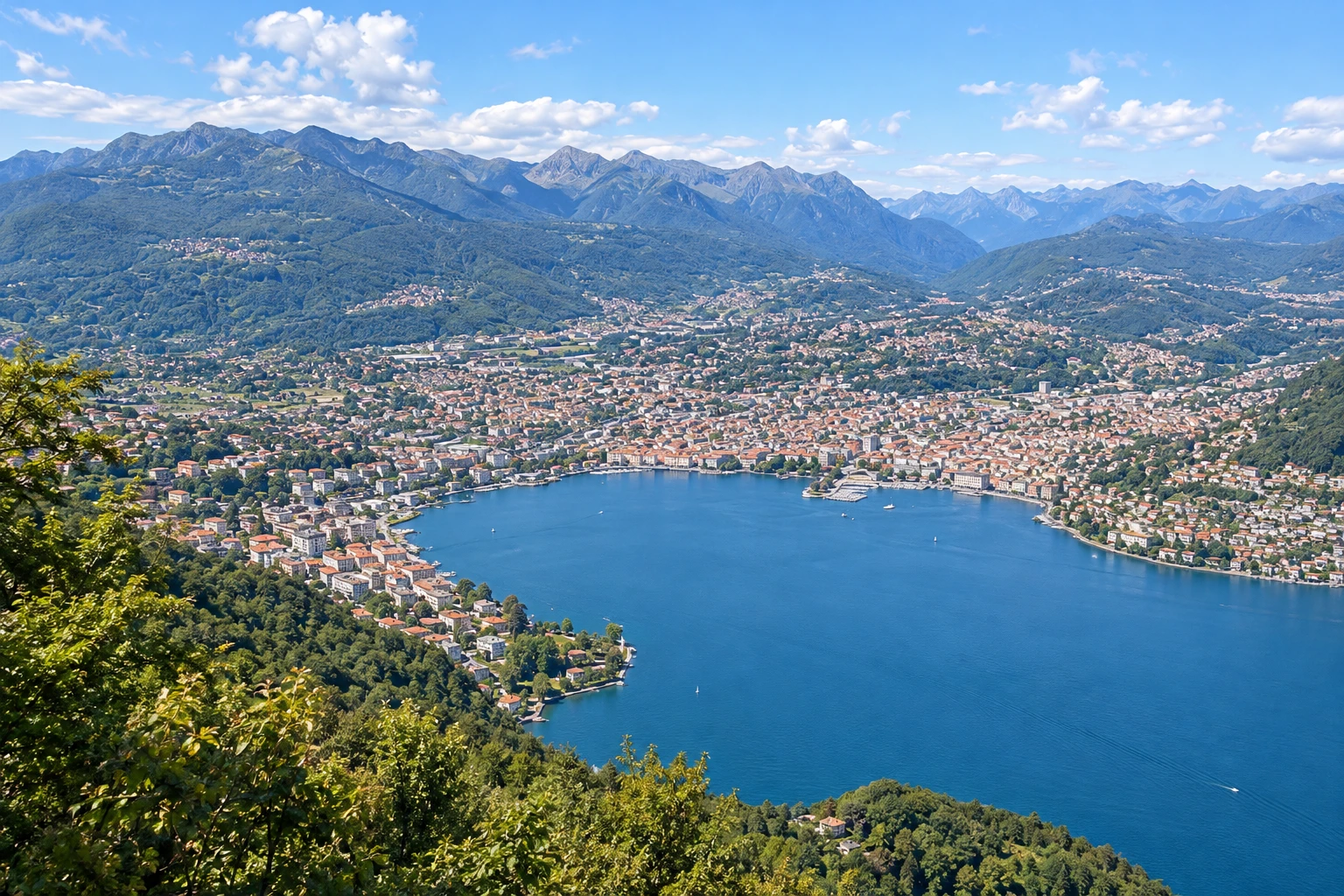
Lugano is the largest city in Ticino, the Italian-speaking Switzerland, on the shore of the lake of the same name and between two hills, San Salvatore and Brè. The center features the Piazza della Riforma, arcaded streets like Via Nassa, the cathedral of San Lorenzo above the station, and the church of Santa Maria degli Angioli with Bernardino Luini’s large Passion fresco. On the lakefront are the LAC cultural center, housing the Swiss Italian art museum, and Parco Ciani. Funiculars climb both hills, and boats take visitors to the villages of Gandria and Morcote. Italian is spoken, and the climate is milder than in northern Switzerland.
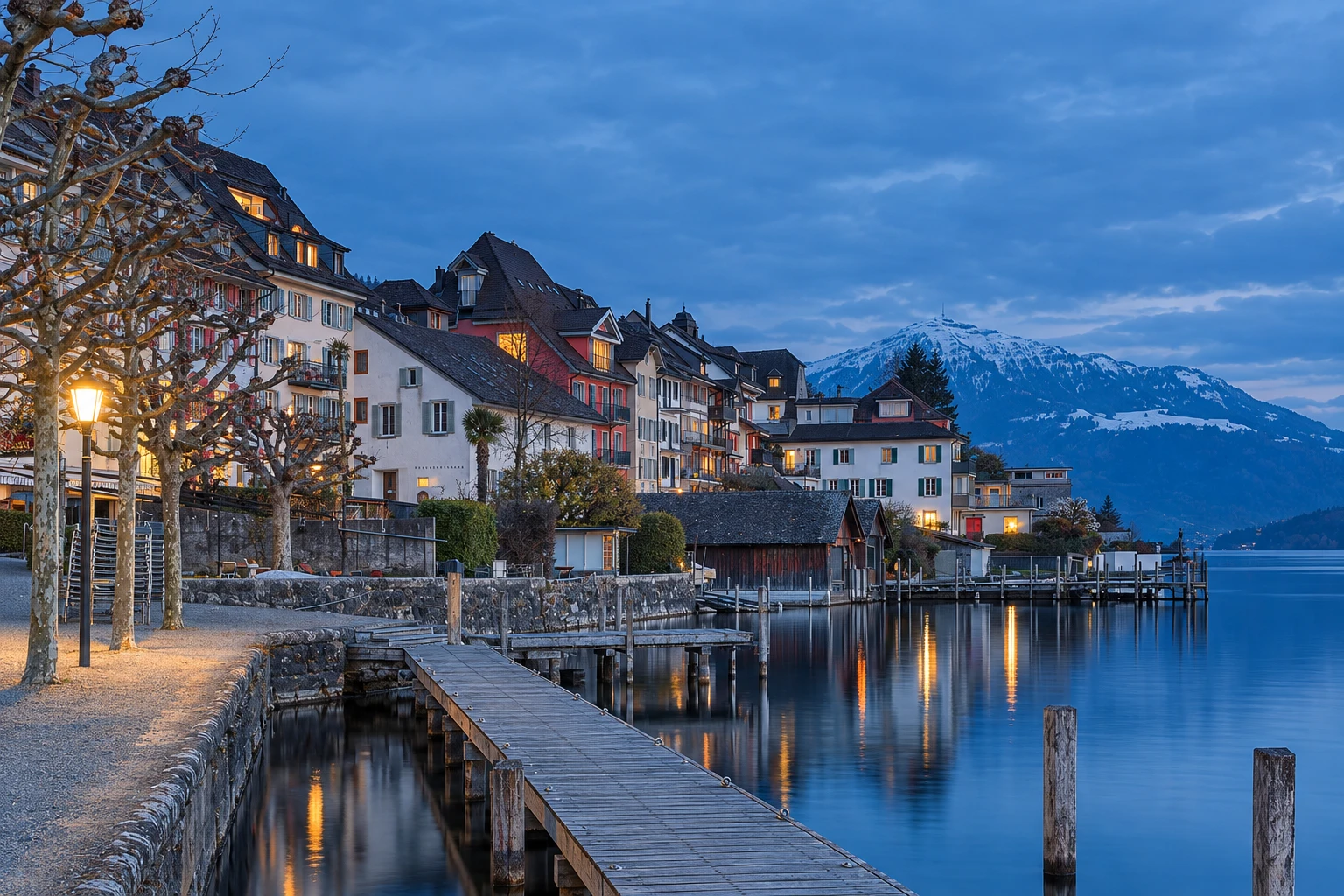
Capital of the small canton of Zug, on the north shore of Lake Zug, between Zurich and Lucerne. The historic center preserves the Zytturm, the clock tower with a blue-and-white roof, the Burg Zug, a castle that houses the city’s history museum, and fishermen’s houses along the water. Above the town, the Zugerberg offers trails and views over the lake and the Alps. Zug is the town of the Zuger Kirschtorte.
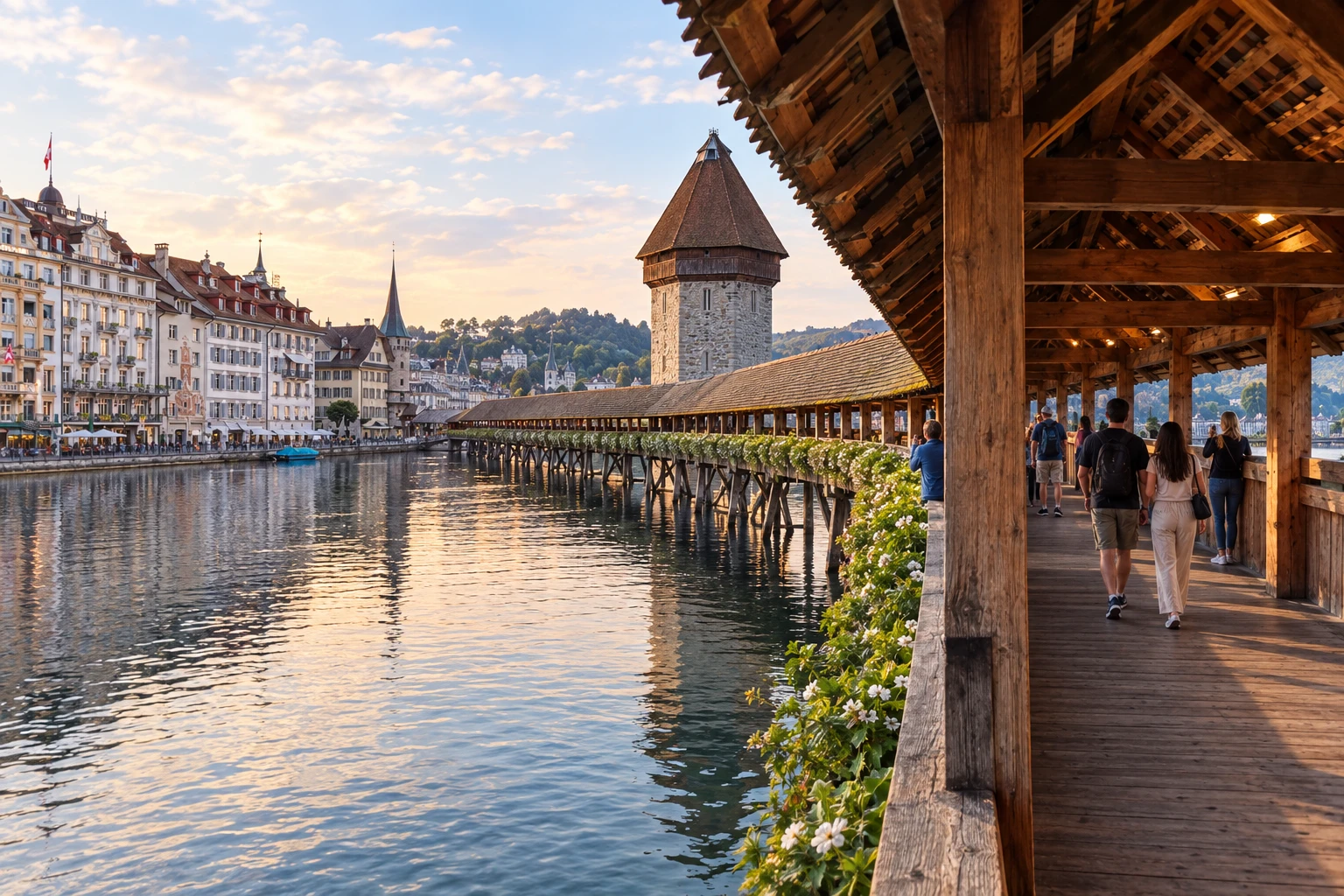
Capital of the canton of Lucerne, at the point where the river Reuss leaves the Lake of the Four Cantons. It has the Kapellbrücke and the Spreuerbrücke, covered wooden bridges, the Altstadt with painted facades, the Museggmauer wall, the Löwendenkmal, the KKL by Jean Nouvel and the Swiss Museum of Transport. It is the base for ascending Pilatus, Rigi, Stanserhorn and Bürgenstock.
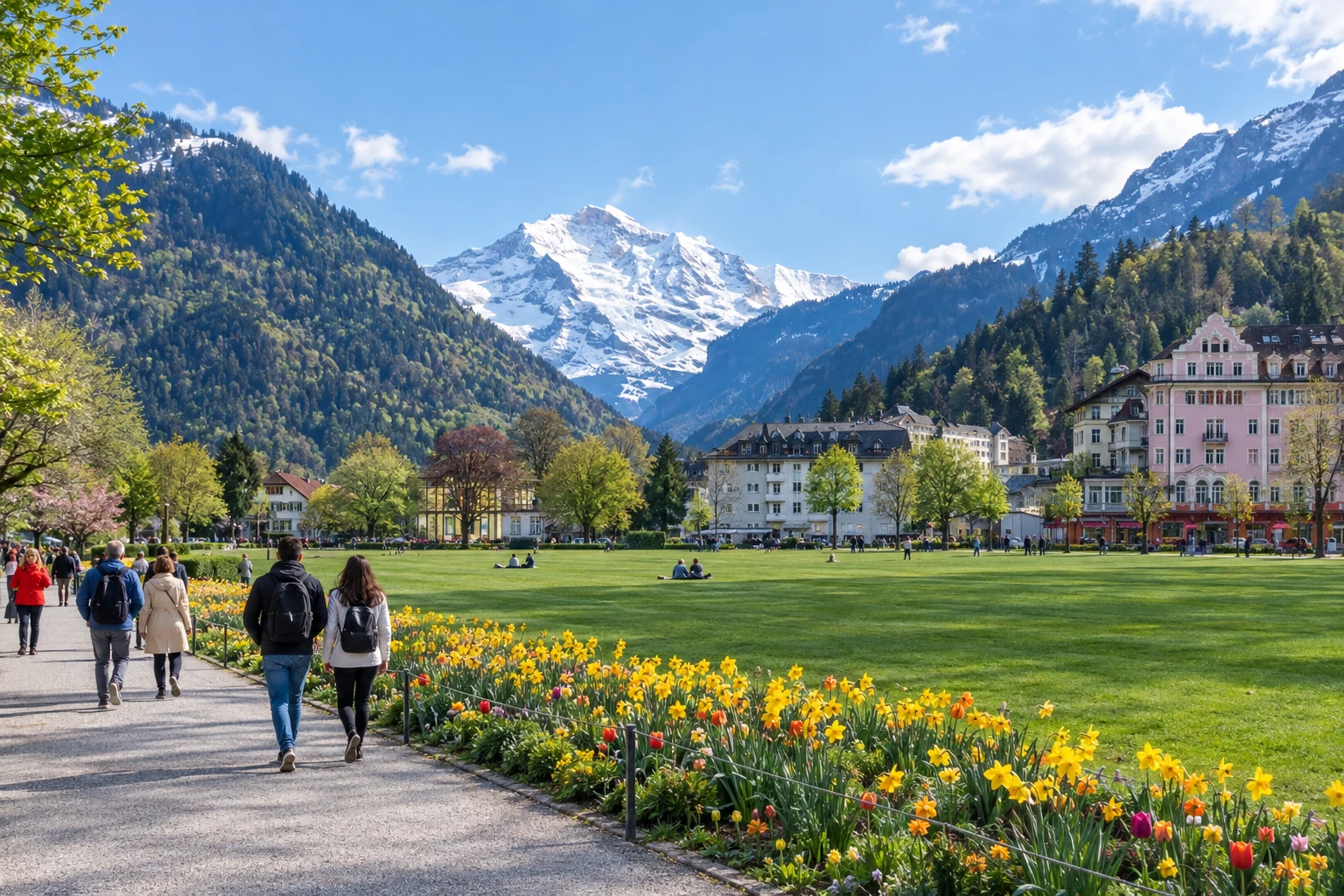
Town between the Thunersee and the Brienzersee, at 568 m, which has relied on tourism since the 19th century. It has the Höhematte, a lawn with views of the Jungfrau, the Harder Kulm funicular, boats on both lakes and trains to the valleys. In the surroundings are the Schynige Platte, the St. Beatus-Höhlen, Brienz, the Giessbachfälle, the Ballenberg and the Brienzer Rothorn, and the GoldenPass Express passes through it.
The map
Tap a region to see the names. Use two fingers to zoom in.
Outlines: ©swisstopo. Adapted by Cidade Turismo.
Switzerland
Another way into the same trip
Choose the canton and the city to find your place in the guide.
Beyond the guide


