Lausanne and Montreux

Vaud · Neuchâtel

Lausanne and Montreux

The north shore of Lago Léman, between hilly Lausanne and the Museu Olímpico, the terraced vineyards of Lavaux and Montreux of jazz and the Château de Chillon.

French-speaking Switzerland

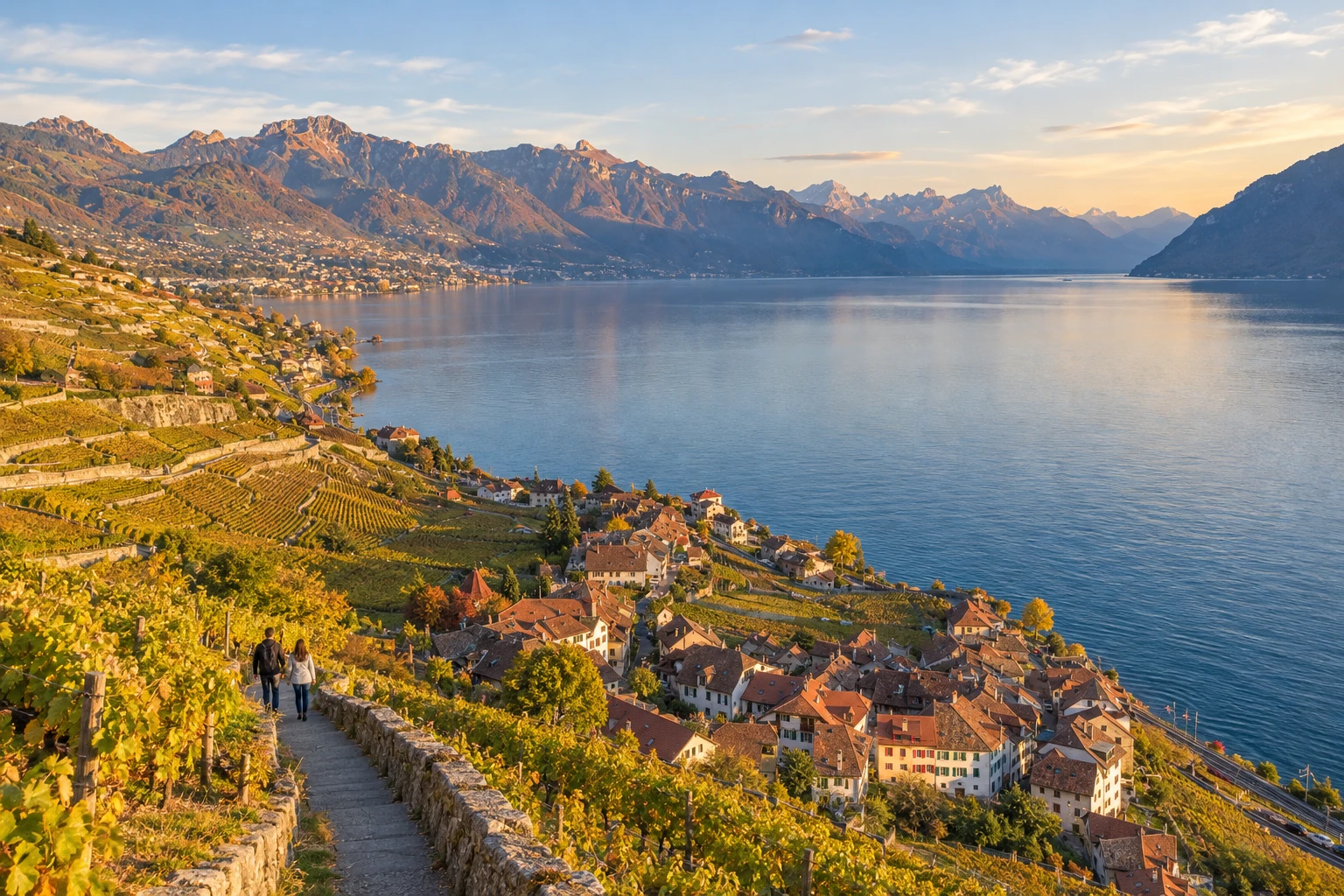
In the photo: Lavaux and Lago Léman

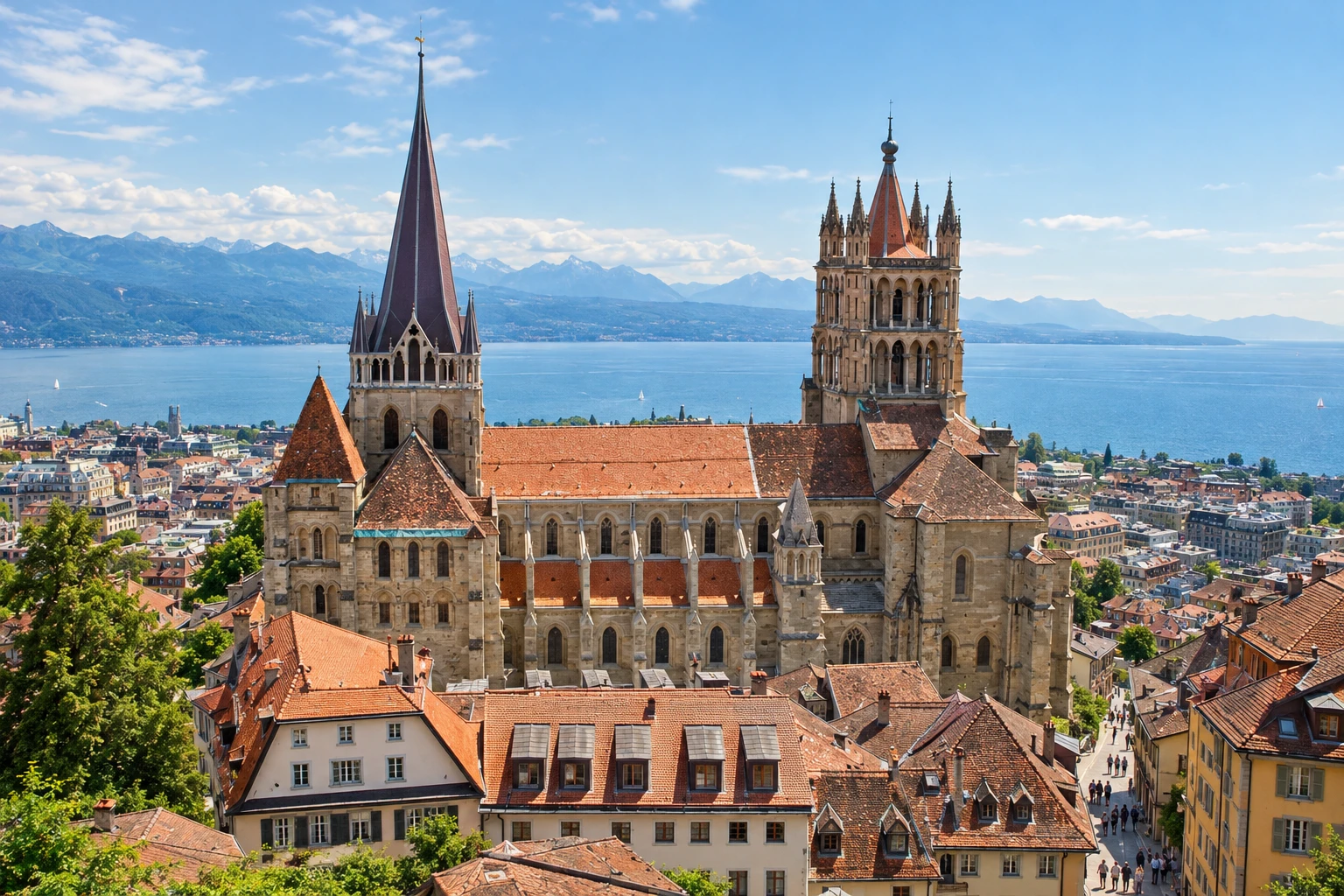
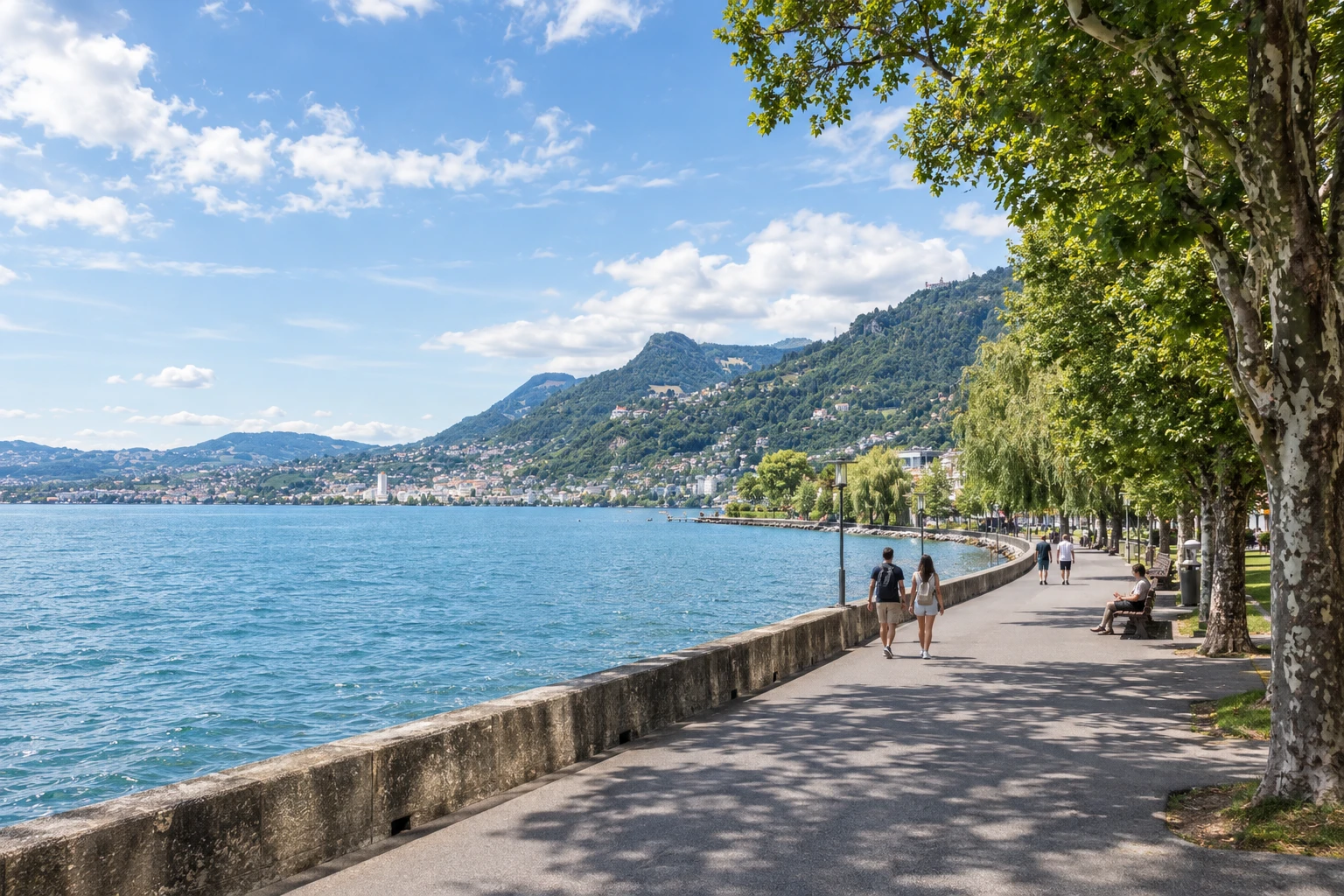
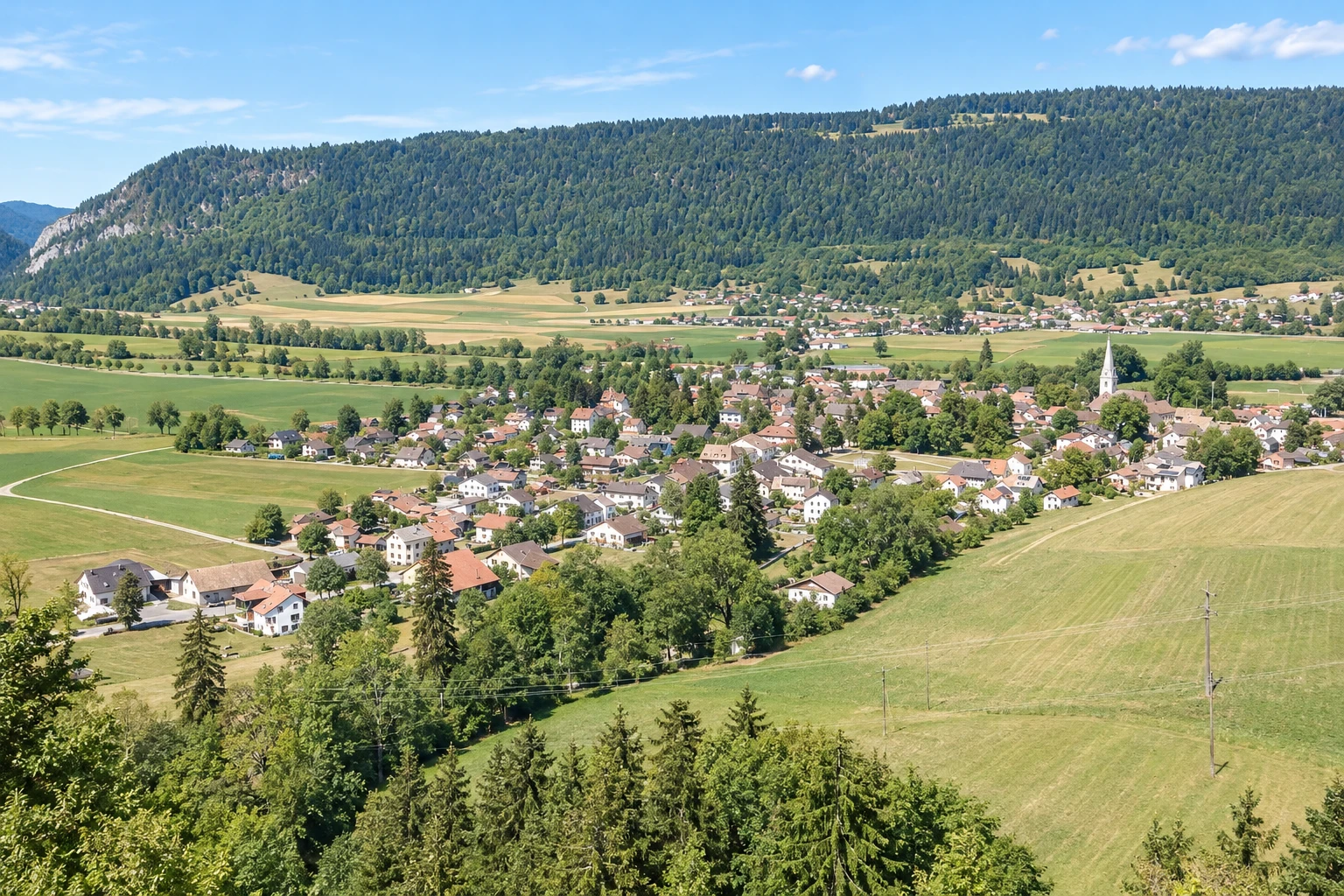
Illustrative images. The pictures in this guide are illustrations based on the real place, not photographs, and may differ from it.

Get it on Google Play

Get to know the place

A region to enjoy
at your own pace.

Lausanne and Montreux lie on the north shore of Lago Léman, the lake Brazilians know as Lago de Genebra, in the canton of Vaud. It’s the part of Switzerland where French is spoken. English is widely used in tourism, and the currency is the Swiss franc: Switzerland does not use the euro.

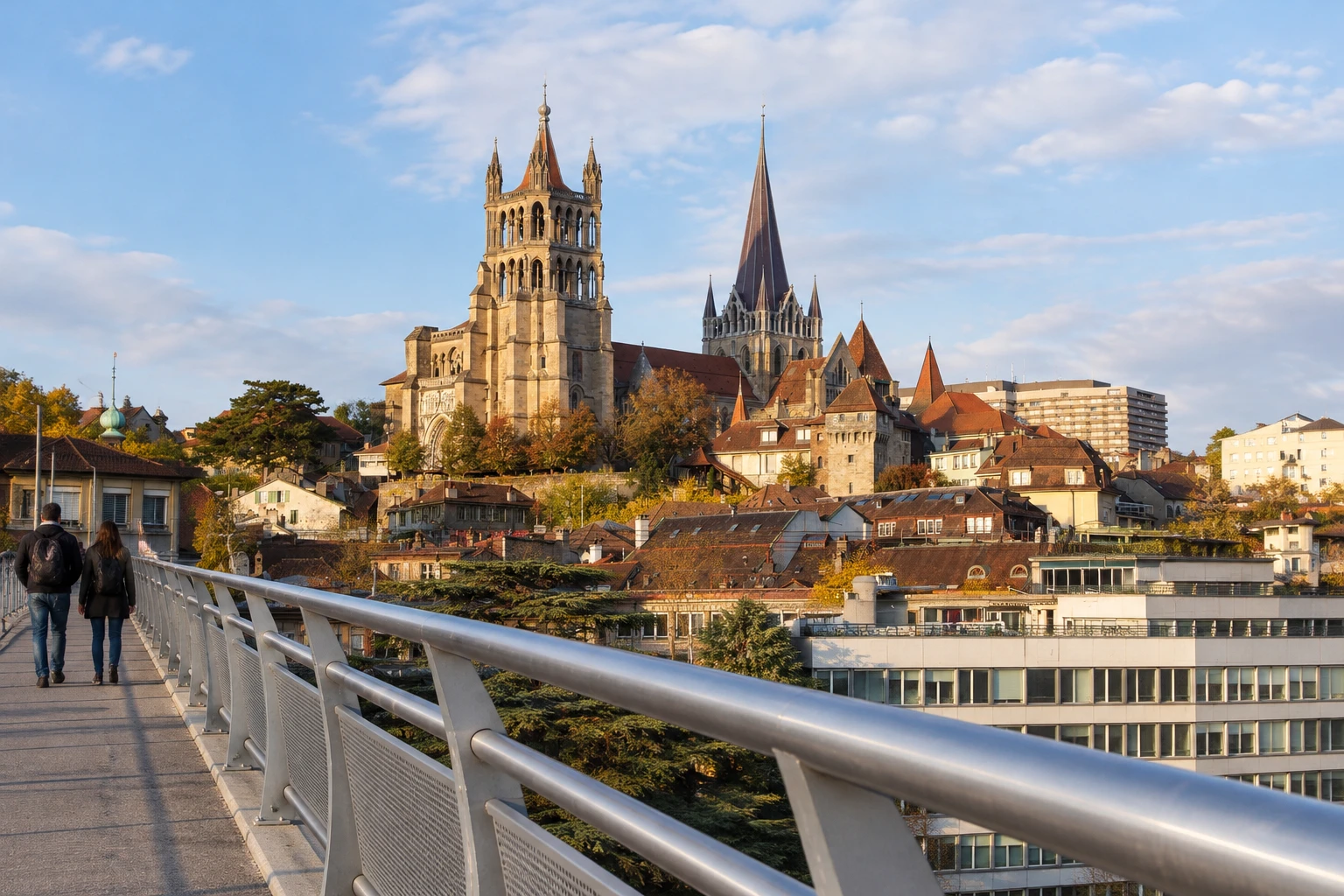
Lausanne, the cantonal capital, rises from the lake on steep slopes: the Ouchy waterfront is at 372 m altitude and the Cité, the cathedral quarter, at 526 m. A rubber-tyred metro bridges the difference. The city hosts the headquarters of the International Olympic Committee and the Musée Olympique, has a museum district next to the station and a Gothic cathedral where a night watchman announces the hours every evening.

Between Lausanne and Vevey stretches Lavaux, about 800 hectares of terraced stone vineyards above the lake, inscribed by UNESCO as a World Heritage Site in 2007. Hiking trails, small tourist trains and regional trains connect the winemaking villages, where the chasselas grape has been part of local culture for centuries.

Montreux sits where the lake meets the mountains. The town became known for its Belle Époque hotels and, since 1967, for the Montreux Jazz Festival in July. On the waterfront are the statue of Freddie Mercury and Queen’s former studio; a few kilometers away, the Château de Chillon stands on a rock in the lake. From there depart the rack railway to the Rochers-de-Naye and the GoldenPass Express toward Interlaken.

For Brazilians, the two towns make a calm base for French-speaking Switzerland. SBB trains link Lausanne and Montreux in about 20–30 minutes, and CGN steamships follow the same route on the lake. Genebra is about 40 minutes by train from Lausanne.

This destination brings together 3 cities: Lausanne, Montreux, Val-de-Travers.

Share: WhatsApp
Traveler, share your experiences through photos Up to 5 photos of each place you visited.

One destination, many paths

The cities on this trip

Start with one city or combine several in your itinerary.

Where Lausanne and Montreux is The star marks the capital, Lausanne.
LausanneMontreuxVal-de-Travers

Outlines: ©swisstopo. Adapted by Cidade Turismo.

How to get there: Lausanne and Montreux

Aeroporto de Genebra (GVA), in Genebra · 62 km to Lausanne

The nearest airport is Geneva (GVA), with direct trains to Lausanne in about 40 minutes and to Montreux in a little over an hour. From Zurich (ZRH) the train takes roughly two and a half hours. Flights from Brazil usually include a connection in another city. Check before booking.

Suggested arrival point: Lausanne

Lausanne
Vaud · Lausanne and Montreux Capital Suggested arrival point

Lausanne

Capital of the canton of Vaud, Lausanne rises in slopes from the Ouchy waterfront on Lago Léman up to the Cité, with a Gothic cathedral where a night watchman announces the hours every evening. It hosts the headquarters of the International Olympic Committee and has the Musée Olympique, the museum quarter Plateforme 10 and the Collection de l'Art Brut. The m2 metro links the lake to the centre, and the vineyards of Lavaux begin in the neighbouring Lutry.

Val-de-Travers
Neuchâtel · Lausanne and Montreux

Val-de-Travers

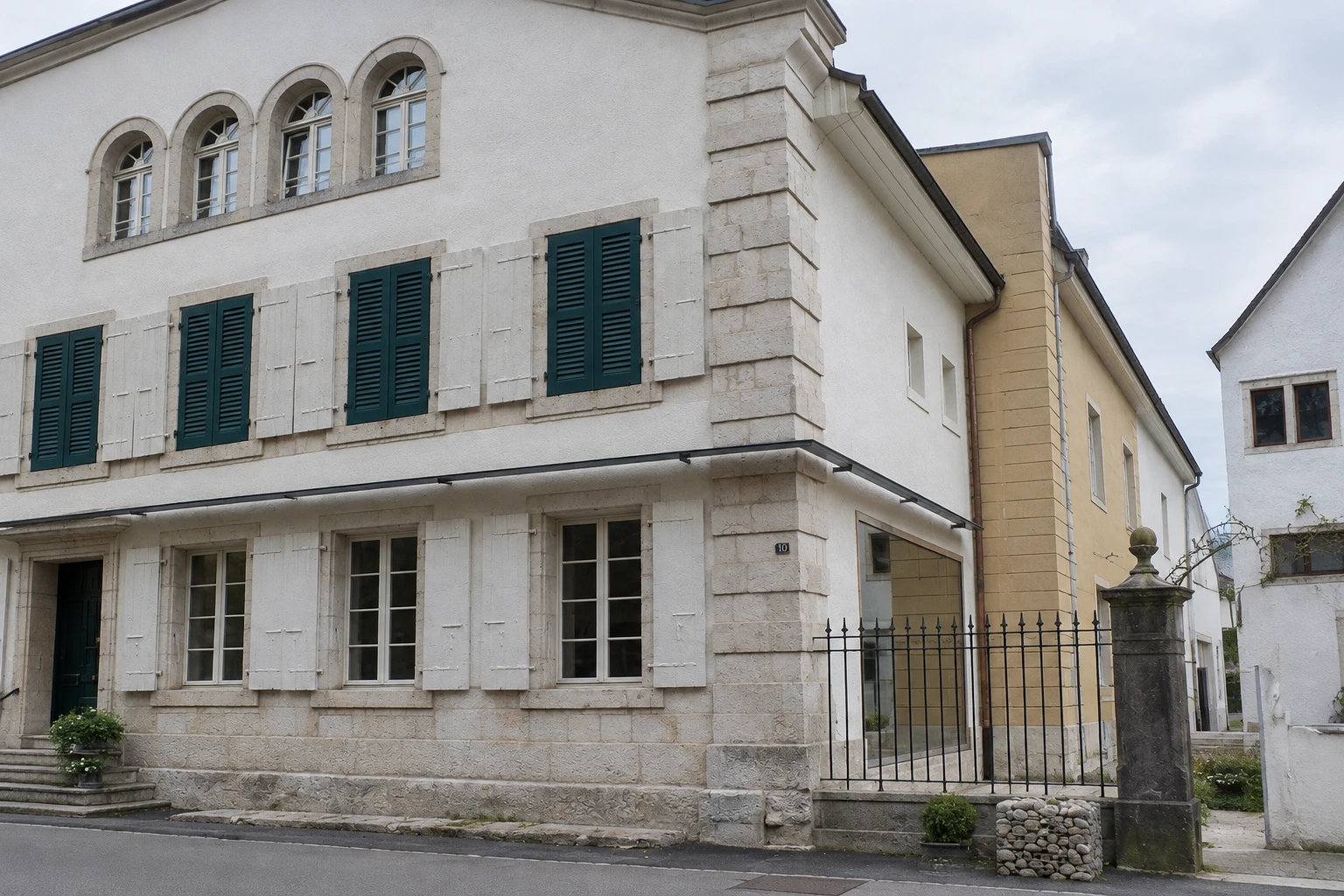
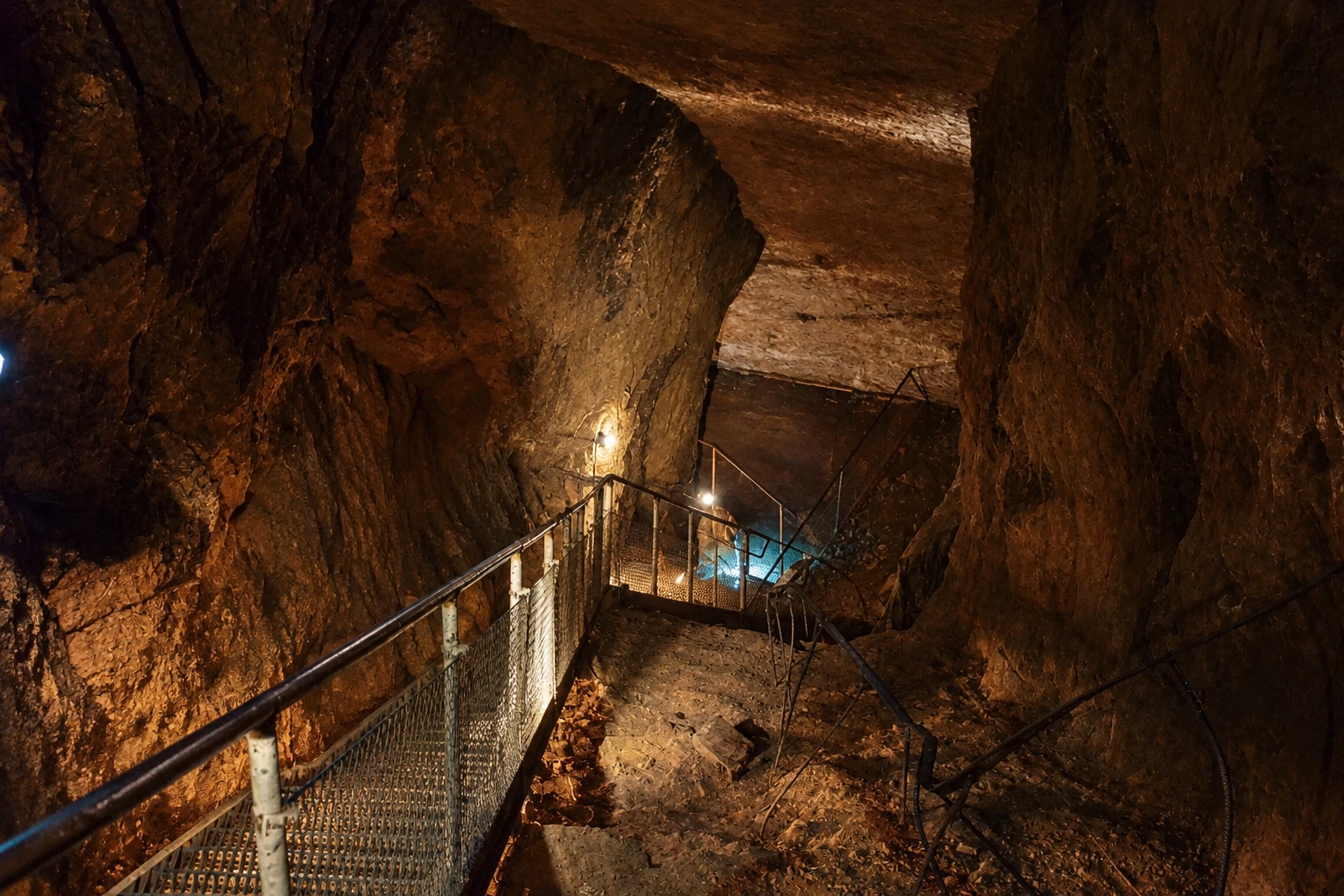
Municipality of the same-name valley in the Jura mountains, in the canton of Neuchâtel, which includes villages such as Môtiers, Fleurier, Couvet and Travers. The valley is regarded as the birthplace of absinthe and preserves the memory of distillers who worked clandestinely for almost a century. In Môtiers is the Maison de l'Absinthe; near Travers, the Presta natural asphalt mines offer guided visits, and the rocky cirque of the Creux du Van sits above Noiraigue.

The local experience

Things to do in Lausanne and Montreux

Lausanne · Vaud · Church

Lausanne Cathedral

Gothic cathedral atop the Cité, consecrated in 1275, with a 13th‑century rose window, a painted portal and a watchman who announces the hours from the tower every night — a tradition kept since 1405.

Explore Lausanne Cathedral

Montreux · Vaud · Castle

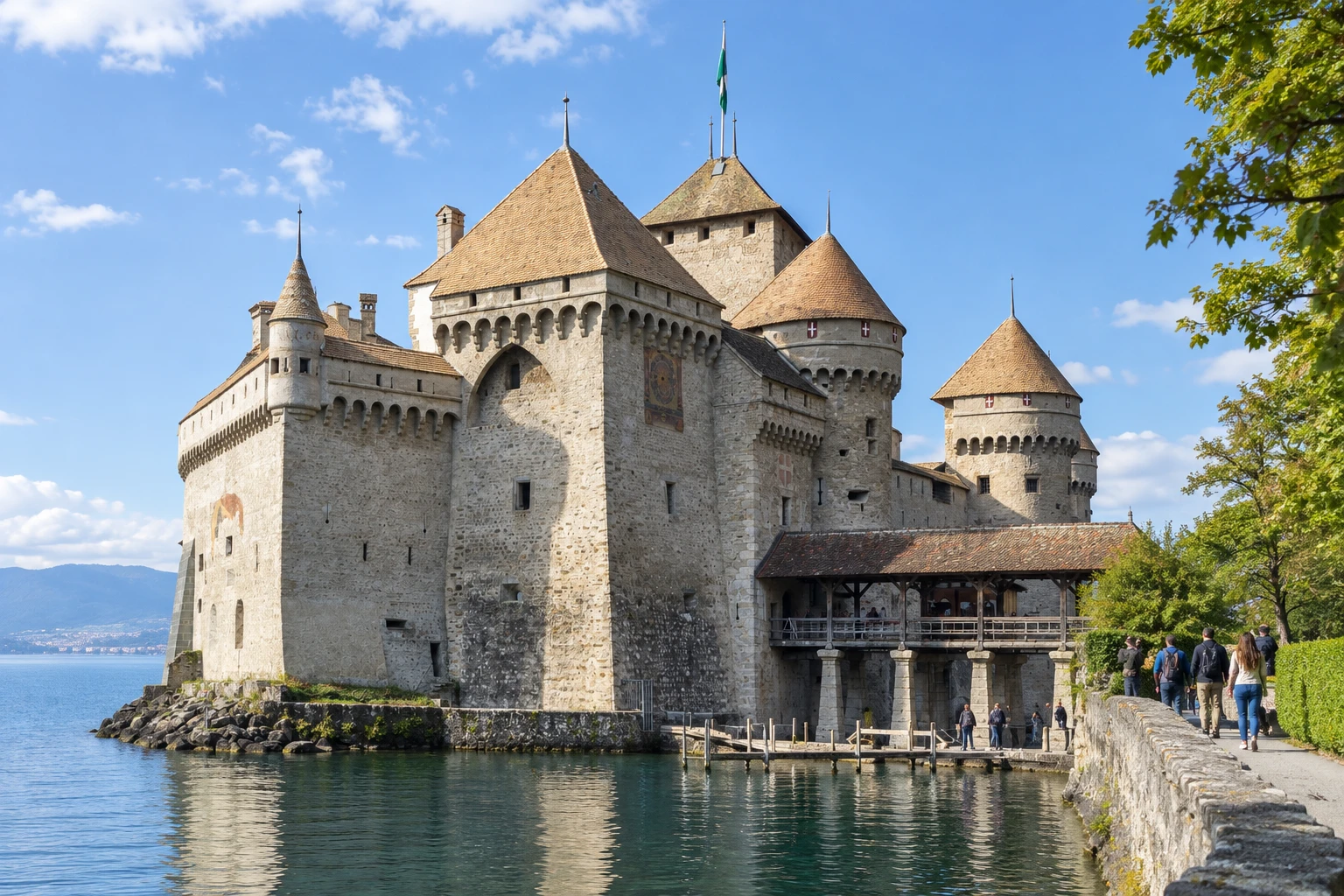
Chillon Castle

Medieval castle on a rock in Lake Léman, in Veytaux, residence of the Counts of Savoy and later of the Bernese bailiffs, with painted rooms, a chapel and the dungeon that inspired Lord Byron.

Explore Chillon Castle

See 17 more places in Lausanne and Montreux

To choose before you go

Tours in Lausanne and Montreux

Where each tour starts, how long it takes, how it is done, what is included and the price range.

Lausanne old town: Cathédrale, Escaliers du Marché and Place de la Palud

From Lausanne city centre On foot, with climbs and stairs about 3 hours morning or afternoon easy (hills and stairs)

Lausanne is built on a slope, from the lake up to the top of the Cité hill, where the Cathédrale de Lausanne (Notre-Dame Cathedral) stands. The walk starts at Place de la Palud, the central square with the city's oldest fountain, topped by a statue of Justice, and an animated clock that moves on the hour during the day. Beside the square are the Escaliers du Marché: 177 wooden steps covered by a roof, in their present form since 1717–1719, which climb to the Cité in about ten minutes. At the top, the Gothic cathedral was consecrated in 1275 and has been Protestant since the Reformation. Inside, note the painted 13th-century portal and the large 2003 organ; the stair climb to the tower gives views of the city, Lac Léman (Lake Geneva) and the Alps. Since 1405 the city keeps a watchman in the tower, the guet, who announces the hours each night, from 22:00 to 02:00. On the descent, the cathedral esplanade looks over the roofs; then Rue de Bourg and Place Saint-François concentrate shops and cafés. On Wednesday and Saturday mornings the street market occupies the stretch between Place de la Riponne and Place Saint-François, and the Palud hosts a producers’ market.

Stops: Lausanne Cathedral, Marché Steps, Place de la Palud, Rue de Bourg, Place de la Riponne, Place Saint-François.

Includes: Cathedral entry is free; access to the tower has an admission fee (check current rates). The staircases and squares are freely accessible.

Tip: If you don’t want to climb on foot you can take metro line m2 to Riponne-Maurice Béjart station and walk down to La Palud. At night you can hear the night watch from the cathedral esplanade. The cathedral’s rose window may be inaccessible due to works in the south transept; check in advance.

Best time: All year; Wednesday and Saturday mornings for the market.

Château de Chillon, the castle on the rock in the lake

From Montreux On foot along the lakeside, bus 201, regional train or boat about 2 hours visit morning or afternoon easy (internal stairs)

Château de Chillon sits on a limestone rock in Lake Geneva, in Veytaux, between Montreux and Villeneuve. From the mid-12th century it was the summer residence of the Counts of Savoy, who expanded it in the 13th century. In 1530 the Genevan monk François de Bonivard was imprisoned there for six years, until the castle was taken by the Bernese in 1536. The story inspired Lord Byron to write the poem "The Prisoner of Chillon" in 1816, and it is said he scratched his own name on a column in the dungeon. The visit is self-guided, with a leaflet in several languages, and goes through the courtyards, the great halls, the lords’ chambers with 14th-century mural paintings, the chapel, the dungeons carved into the rock and the battlement walk, with windows onto the lake. There are also temporary exhibitions and guided tours. Allow 1.5 to 2 hours. From Montreux, the nicest route is on foot along the shore: about 3 km flat, roughly 45 minutes, passing through Territet.

Stops: Château de Chillon, Veytaux, Territet, Montreux.

Includes: There is an entrance fee (check the current schedule); advance purchase online is recommended. Café and shop on site, paid separately.

Tip: Arrive early in summer, when queues increase. A good combination is to walk along the lakeside and return by CGN boat (in season) or by bus. The castle is only closed on January 1 and December 25.

Best time: All year; from April to September the castle is open for longer hours.

Lavaux vineyards on foot: Terrasses de Lavaux trail, from Saint-Saphorin to Lutry

From Lausanne or Vevey Regional train to Saint-Saphorin and hike about 3 hours and 15 minutes of walking full day moderate (ups and downs)

Lavaux is the band of terraced vineyards that slopes down to Lake Geneva between Lausanne and Vevey, with about 30 km of shoreline; the stone walls began to be built by monasteries in the 11th century, and the landscape has been a UNESCO World Heritage Site since 2007. The main grape is Chasselas. The Terrasses de Lavaux trail (route 113 of the Swiss signage) links Saint-Saphorin to Lutry over 11 km, with roughly 440 m of ascent and 420 m of descent, highest point at 520 m, and takes around 3 hours and 15 minutes. It starts in the medieval village of Saint-Saphorin, with narrow streets and stone houses, and continues among the vineyards along paved paths and trails, passing winegrower villages such as Épesses, Cully and Grandvaux, always with the lake below and the French‑side Alps opposite. In Rivaz, a short detour leads to the Lavaux Vinorama, a centre that presents the region’s wines. The end point is Lutry, with a harbour and old town by the lake. The trail is waymarked both ways and can be shortened: there are regional train stations in the lakeside villages, and anyone tired can return by train or by boat.

Stops: Lavaux, Saint-Saphorin, Rivaz, Épesses, Cully, Grandvaux, Lutry, Lavaux Vinorama.

Includes: The trail is open access. The regional train, boats and visits to the cellars are paid separately; the cellars and the Vinorama offer tastings, with their own price and times.

Tip: Bring water, a hat and sturdy footwear: the terraces have little shade in summer. The trail may be closed in sections depending on the season and weather; check before you go.

Best time: The trail season runs from March to November; September and October usually have the grape harvest.

Quai de Montreux and the Freddie Mercury statue

From Montreux town center On foot via the lakeside promenade about 2 hours morning, afternoon or late afternoon easy (flat)

The Montreux promenade runs along Lake Léman for about 7 km, from Clarens to Territet; it is flat, paved and car-free. It is known as the Quai des Fleurs for its flower beds; the mild climate of the Riviera vaudoise allows palm trees and cypresses at the water’s edge, with the mountains just behind the town and the French-bank Alps opposite. Midway, at Place du Marché beside the covered market, stands the 3 m bronze statue of Freddie Mercury by Czech sculptor Irena Sedlecká, inaugurated in 1996. It shows the Queen singer with a microphone and raised fist, as at the Wembley show in 1986; fans often leave flowers and notes. Mercury lived in Montreux for a time and Queen recorded many albums in the town’s studio. From winter into spring, large figures made of pine branches decorate the promenade, with a different theme each year. Heading east, the promenade leads to Territet and from there to Château de Chillon.

Stops: Quai de Montreux, Place du Marché, Statue de Freddie Mercury, Clarens, Territet, Montreux.

Includes: Free-to-access walk.

Tip: Around September 5, Freddie Mercury’s birthday, tributes are often held at the statue. Combine with a visit to Queen: The Studio Experience, a few minutes' walk away.

Best time: All year; from April to October the flower beds are in bloom.

Ouchy and Musée Olympique, on the shore of Lake Léman

From Lausanne town centre Metro line m2 to Ouchy-Olympique and walk about 4 hours morning or afternoon easy

Ouchy is the Lausanne neighborhood on the shores of Lake Geneva, with the harbor, the CGN boat dock and a long tree-lined promenade. You reach it from the city center on the m2 metro, an automatic 5.9 km line that overcomes the city's elevation with slopes up to 12% and ends at Ouchy-Olympique station. From the harbor, a short walk along Quai d'Ouchy westward leads to the Musée Olympique, the museum of the International Olympic Committee, which is based in Lausanne. The museum tells the story of the Games, from Antiquity to the modern era, with torches, medals, athletes' equipment and more than a thousand competition videos, plus an area with interactive balance and agility challenges. Allow two to three hours for the museum. Around it, the Parc Olympique descends in terraces to the lake, with sport-themed sculptures, including works by Rodin, Niki de Saint Phalle, Fernando Botero and Jean Tinguely. On the way back, the Ouchy promenade is a good spot to watch the sunset over the lake and the mountains on the French shore.

Stops: Ouchy, Musée Olympique, Parc Olympique, Quai d'Ouchy, Lake Geneva.

Includes: The museum charges admission (check the current rates). The park and the promenade are free to access.

Tip: Combine it with a CGN boat departing from Ouchy the same day. Travelers staying in registered accommodation in Lausanne usually receive the Lausanne Transport Card, which covers the metro and city buses during the stay.

Best time: All year; the lakeside park is most rewarding from April to October.

CGN Belle Époque boat on Lake Léman, from Lausanne-Ouchy to Montreux and Chillon

From Lausanne-Ouchy CGN scheduled boat from 1 to 3 hours, depending on the section morning or afternoon easy

CGN (Compagnie Générale de Navigation sur le Léman) operates a fleet of 19 vessels, eight of which are Belle Époque paddle steamers: La Suisse, Savoie, Italie, Montreux, Rhône, Vevey, Helvétie and Simplon. The oldest date from the early 20th century, and some still run on steam. Most departures leave from Ouchy in Lausanne. The section most popular with travelers runs east along the Lavaux shore, stopping at villages such as Lutry and Cully, then Vevey and Montreux, and in season the quay at Château de Chillon. From the boat you can see terrace vineyards, the Alps on the French shore and, on arrival in Montreux, the mountains above the Riviera. Boats also cross the lake to French towns such as Évian-les-Bains; if you disembark in France, carry your passport. A good way to use the boat is to go from Lausanne to Montreux or Chillon by lake and return by train, which is much faster.

Stops: Lac Léman, Lausanne-Ouchy, Lutry, Cully, Vevey, Montreux, Château de Chillon.

Includes: Boat fare paid separately; tourist transport passes often cover the regular lines (check conditions). Onboard restaurant and bar, paid separately.

Tip: Not all departures are operated by Belle Époque boats: check the timetable to see which boat runs each trip. Spring, summer and autumn timetables differ, and in winter the service is much reduced.

Best time: From June to September, during summer timetable, there are more departures; April, May and early October have reduced schedules.

See 11 more tours

Rochers-de-Naye: rack railway from Montreux up to 2,042 m

From Montreux station MOB rack railway about 4 hours round trip morning or afternoon easy (altitude above 1,900 m)

The rack railway departs from Montreux station itself and climbs about 10 km, passing Glion and Caux, to Rochers-de-Naye station at roughly 1,970 m; the trip takes around 50 minutes. The line reached the summit in 1892 and uses the Abt rack system. From the station, a short walk leads to the summit at 2,042 m, with 360-degree views over the whole Lake Geneva, the Swiss and French Alps and, on clear days, distant peaks. In summer there is the alpine garden La Rambertia, established in 1896, with mountain plants from Switzerland and other parts of the world, and marmots are often visible. There are restaurants at the top. In winter the mountain hosts snow activities and, from late November until December 24, the Maison du Père Noël with Santa Claus, visited by families. Allow at least three hours for the full outing.

Stops: Rochers-de-Naye, Montreux, Glion, Caux, La Rambertia, Lake Geneva.

Includes: Rack railway fare paid separately; tourist transport passes often cover part of the journey and provide discounts on the remainder (check conditions). Restaurants at the top are paid separately.

Tip: Up there it is much colder than at the lakeside: bring a jacket even in summer and sturdy footwear. Weather at the summit changes quickly and clouds can obscure the view; check the forecast and live cameras before you go up.

Best time: The train runs year-round; from June to September for the alpine garden and the marmots, and from late November to December for Santa Claus.

Lavaux Express: tourist train through the vineyards from Lutry or Cully

From Lutry or Cully Tourist little train on rubber tires about 1 hour and 15 minutes morning or afternoon easy

For those who prefer not to walk, the Lavaux Express is a tourist train that climbs the narrow roads through the Lavaux vineyards. There are two main routes, each about 1 hour and 15 minutes: the Lutry route climbs via Aran and Grandvaux and returns to Lutry; the Cully route goes through Riex, Épesses and the Dézaley terraces before returning to Cully. Both depart from the boat docks, which makes it possible to arrive by CGN boat, take the circuit and continue traveling on the lake. During part of the season there are longer routes, such as a roughly two‑hour loop linking Lutry and Cully, and departures that stop at a cellar for a tasting. There is a mobile audioguide, via an app, with commentary on the route. The ride brings you close to the stone walls, vineyards and villages, with stops for photos.

Stops: Lavaux Express, Lutry, Aran, Grandvaux, Cully, Riex, Épesses, Dézaley.

Includes: There is a tourist train service (check the current timetable). Departures that include a tasting have a separate fee.

Tip: Lutry is about 6 minutes by regional train from Lausanne, and Cully about 10 minutes. Check the departure days for each circuit before you go.

Best time: The Lutry and Cully routes usually run from April through early November.

Queen: The Studio Experience, in the former Mountain Studios at the Montreux Casino

From Montreux town center On foot about 1 hour morning, afternoon or evening easy

Mountain Studios operated inside the Montreux Casino, and Queen recorded there from 1978 to 1995: the band bought the studio in 1979, and it was where Freddie Mercury recorded his final vocals. The exhibition Queen: The Studio Experience, opened in 2013 under the care of the Mercury Phoenix Trust, recreates the studio control room and brings together handwritten lyrics, costumes, members’ instruments, boxes of tapes with original and altered titles, records and promotional material. Behind glass are the last lines Mercury wrote in Montreux in 1991. On the mixing console, a reproduction of the original, visitors can make their own mix of some Queen songs. Entrance is through the main door of Casino Barrière de Montreux, on Rue du Théâtre, near the promenade.

Stops: Queen: The Studio Experience, Casino Barrière de Montreux, Mountain Studios, Montreux.

Includes: There is no admission fee.

Tip: The exhibition is usually open from morning until evening every day, so you can fit it in at the end of the day. Combine it with the Freddie Mercury statue on the promenade.

Best time: All year.

Chaplin's World, Charlie Chaplin's home in Corsier-sur-Vevey

From Vevey Bus 212 from Vevey station about 3 hours morning or afternoon easy

Charlie Chaplin spent the last 25 years of his life at the Manoir de Ban, a manor in Corsier-sur-Vevey, on the hills above Vevey, with his wife and children. Chaplin's World occupies the property and is split into three parts. The house shows the rooms where the family lived, with photos, objects and stories of life in Vevey. The studio, in a separate building, reconstructs film sets and tells the story of the creation of the character Charlie Chaplin (the Tramp) and cinema of the time. The park covers four hectares of century-old trees and has views over Lake Geneva and the Alps. There is a shop and a restaurant. From Vevey station, bus 212 reaches the Chaplin stop in about 15 minutes.

Stops: Chaplin's World, Manoir de Ban, Corsier-sur-Vevey, Vevey.

Includes: There is an entrance fee (check the current schedule). Restaurant and shop are paid separately.

Tip: Combine it the same day with Vevey town center and the Alimentarium. The museum may be closed some days in January; check the calendar beforehand.

Best time: All year; from April to October the park is more rewarding.

GoldenPass Express: from Montreux to Gstaad, Zweisimmen and Interlaken

From Montreux station GoldenPass Express panoramic train about 1 hour 25 minutes to Gstaad full day easy

The GoldenPass Express links Montreux with Interlaken Ost without changing trains, in about 3 hours 15 minutes, over 115 km that cross the cantons of Vaud, Fribourg and Bern. Leaving Montreux, the train climbs in curves along Lake Léman, goes through a tunnel to the Pays-d'Enhaut valley and passes Château-d'Oex and Gstaad, a village of wooden chalets, to Zweisimmen. At Zweisimmen the track gauge changes: from Montreux to there the line is meter gauge, and from there to Interlaken it is standard gauge; the GoldenPass Express cars adjust their wheels with passengers on board. After that, the train descends the Simmental to Spiez and Lake Thun (Thunersee) and arrives in Interlaken. There is second class, first class and Prestige class, with heated seats that rotate. For a day trip from Montreux, Gstaad (about 1 hour 25 minutes) or Château-d'Oex are good stops; those continuing travel can use the train to go from Montreux to the Interlaken region.

Stops: GoldenPass Express, Montreux, Gstaad, Zweisimmen, Interlaken Ost, Château-d'Oex, Pays-d'Enhaut.

Includes: Train fare is paid separately; tourist transport passes cover the route. Seat reservation is recommended in first and second class and is mandatory in Prestige class, paid separately.

Tip: Not all trains on the line are the GoldenPass Express: check the timetable. There are also regional trains on the same line with more stops.

Best time: All year; in winter the valleys are often snowy, and in summer the pastures are green.

Gruyères and the Maison Cailler in Broc: cheese and chocolate day trip

From Montreux Train with change at Montbovon, or Chocolate Train about 7 hours 30 minutes full day easy

Gruyères is in the canton of Fribourg, about 1 hour 15 minutes by train from Montreux, with a change at Montbovon. The medieval village sits on a hill at about 810 m, with a main stone street that climbs to the castle, built between 1270 and 1282 and now a museum. Also on the hilltop is the H. R. Giger museum, the Swiss artist who created the creatures in the film Alien. At the foot of the hill, next to the station, La Maison du Gruyère is a demonstration cheesemaking facility where you can see Gruyère cheese being made. A few kilometers away, in Broc, the Maison Cailler is the Cailler chocolate factory: the visit tells the story of chocolate and the brand, in several languages, and lasts 45 minutes to 1 hour, standing. From May to September, on some weekdays, the Chocolate Train runs the full tour: MOB train with Belle Époque carriage from Montreux to Montbovon, bus to Gruyères and Broc, and return by bus to Montreux, in about 7 hours 30 minutes.

Stops: Gruyères, Château de Gruyères, La Maison du Gruyère, Maison Cailler, Broc, Montbovon.

Includes: On the Chocolate Train, generally: train, reserved seat, hot drink and roll on board, bus, entry to La Maison du Gruyère and to the Maison Cailler. The Castle of Gruyères and meals are paid separately. Check the current chart.

Tip: On the Chocolate Train reservation is mandatory. At the Maison Cailler, buy the ticket online: on busy days the wait can exceed two hours.

Best time: All year by regular train; the Chocolate Train runs from May to September.

Vevey: Alimentarium and the fork in the lake

From Lausanne or Montreux Train to Vevey and on foot about 3 hours morning or afternoon easy

Vevey lies between Lausanne and Montreux, about a 14-minute train ride from Lausanne, and is the town where Nestlé is headquartered. On the lakeside at Quai Perdonnet, the Alimentarium is a museum dedicated to food, opened in 1985 and run by a foundation linked to Nestlé: the exhibits cover how food is produced, prepared, consumed and digested, with many interactive features, and there is a kitchen garden. In front of the museum, in the water, is La Fourchette, an 8 m-tall stainless-steel fork planted in the lake, created for the museum's tenth anniversary; removed later, it was returned after residents' requests and became a photo spot. After the museum, Vevey's promenade continues along the shore, and the old town is a short walk away, with the Grande Place (Place du Marché) by the lake.

Stops: Vevey, Alimentarium, La Fourchette, Quai Perdonnet, Lake Geneva.

Includes: The Alimentarium charges admission (check the current rate). The lakeside promenade and the fork are free to access.

Tip: The Alimentarium is closed on Mondays. Combine it with Chaplin's World on the hills above the town, or take the CGN boat to Montreux.

Best time: Year-round.

Plateforme 10: the museum district beside Lausanne station

From Lausanne station On foot 2 to 4 hours morning or afternoon easy

Plateforme 10 is Lausanne’s arts quarter, set on an esplanade of almost 25,000 m² next to the train station (gare), where railway sheds once stood. It brings together three museums of the canton of Vaud: the MCBA (Musée cantonal des Beaux-Arts), the fine arts museum with a collection of Swiss and international art and temporary exhibitions; Photo Elysée, dedicated to photography; and mudac, the museum of design and applied arts. The esplanade is open and has cafés, so you can visit just one museum or spend the afternoon among all three. Because it adjoins the station, it’s a good choice for a rainy day or for the hours before catching a train.

Stops: Plateforme 10, MCBA, Photo Elysée, mudac, Lausanne gare.

Includes: Each museum has its own admission (check the current rate). The esplanade is free to access.

Tip: Museums usually open in the morning until late afternoon and are closed one weekday; check opening times before you go.

Best time: All year; a good option for rainy days.

Collection de l'Art Brut, in Lausanne

From Central Lausanne City bus or on foot about 2 hours morning or afternoon easy

The Collection de l'Art Brut is housed in the Château de Beaulieu, an 18th-century mansion in the Beaulieu district, north of central Lausanne. The museum grew from the collection that French painter Jean Dubuffet donated to the city, and opened in 1976 with more than 4,000 works. Art brut is the term Dubuffet used for art made outside the artistic circuit, by self-taught people, often institutionalized, isolated or marginalized: paintings, drawings, sculptures and objects made from improvised materials. Exhibited authors include Aloïse Corbaz and Adolf Wölfli. The permanent exhibition occupies several floors with dark, wood-lined rooms, and there are temporary shows.

Stops: Collection de l'Art Brut, Château de Beaulieu, Lausanne.

Includes: There is an entrance fee (check the current price list).

Tip: The museum is closed on Mondays. Parts of the permanent collection may be closed during installation changes; check in advance.

Best time: All year; a good option for rainy days.

Montreux Jazz Festival, in July

From Montreux town center On foot along the promenade about two weeks of festival afternoon and evening easy

Founded in 1967 by Claude Nobs, the Montreux Jazz Festival typically occupies the town for about two weeks in early July. Despite the name, the program goes far beyond jazz, including rock, soul, pop and electronic music. The main shows take place in the lakeside convention center, at the Auditorium Stravinski and in the Montreux Jazz Lab, with tickets. At the same time, the promenade turns into a festival street, with smaller stages, bars and food stalls along the lake, and the town stays busy late into the night. Even without a ticket, it’s worth walking the promenade during the festival.

Stops: Montreux Jazz Festival, Auditorium Stravinski, Montreux Jazz Lab, Quai de Montreux.

Includes: The main concerts require tickets (check the program and the current schedule). Much of the promenade programming does not require a ticket.

Tip: The program is usually released in spring, and the major shows sell out. On those days, Montreux and Vevey are in high demand: plan your trip well in advance.

Best time: early July (confirm the dates each year).

Montreux Noël: the lakeside Christmas market

From Montreux town centre Walk along the lakeside promenade about 3 hours late afternoon and evening easy

From late November until December 24, Montreux usually sets up a large Christmas market along the promenade: about 150 illuminated chalets along roughly 1 km of shore, offering crafts, food and hot drinks; part of it is covered, which helps on rainy days. There is a Ferris wheel, a candle workshop for children and the flying Santa Claus that passes over the market. During the same period, the rack railway climbs to Rochers-de-Naye, where the Maison du Père Noël is located, and Château de Chillon often holds some weekends of medieval Christmas with storytellers, musicians and artisans. Because it gets dark early in December, late afternoon is when the market looks most illuminated.

Stops: Montreux Noël, Quai de Montreux, Rochers-de-Naye, Château de Chillon.

Includes: Entrance to the market is free. Food, drinks, toys, the Rochers-de-Naye train and the castle are paid separately.

Tip: Dress warmly: in December the average high at the lakeshore is around 5 °C. On weekends the market gets crowded; weekdays are quieter.

Best time: From late November until December 24 (check the dates for each year).

Day by day

2, 3 and 5-day itinerary in Lausanne and Montreux

Suggestions to plan the trip. Change the order of the days according to the weather and tour availability.

2 days · Lausanne and Lavaux in 2 days

For If you have little time and arrive from Brazil via Zurich, with one day for the city and one day for vineyards and lake. · Based in Lausanne
  1. Day 1 · Arrival and Lausanne old town

    The overnight flight from Brazil arrives in the morning in Zurich. From the airport station (Zürich Flughafen) there is a direct train to Lausanne, taking about 2 hours and 35 minutes. Drop your bags and spend the afternoon in Lausanne’s old town: Place de la Palud, Escaliers du Marché and Cathédrale, with the climb up the tower if you have the energy. At the end of the day, take metro m2 down to Ouchy to see the sunset by Lake Geneva.

  2. Day 2 · Lavaux on foot, boat and Château de Chillon

    In the morning, take the regional train to Saint-Saphorin and hike the Terrasses de Lavaux toward Lutry, or do just a section to Cully among the terraced vineyards. From Cully, take the CGN boat to Château de Chillon (in season) or to Montreux, then walk along the shore. Visit the castle, return by bus 201 or on foot to Montreux and catch the train to Lausanne, about 20 minutes.

3 days · Montreux and the Riviera in 3 days
For If you arrive via Geneva and want lake, castle, mountain and the stories of Chaplin and Queen. · Based in Montreux
  1. Day 1 · Arrival via Geneva and Montreux lakeside promenade

    With a European connection, the flight arrives in Geneva (Genève). From the airport station (Genève‑Aéroport) there is a direct train to Montreux, taking about 1 hour and 15 minutes. In the afternoon, walk along the Quai de Montreux to the Freddie Mercury statue and visit Queen: The Studio Experience, which is open into the evening.

  2. Day 2 · Château de Chillon and Rochers-de-Naye

    In the morning, walk along the shore to Château de Chillon, about 45 minutes, and tour the castle. Return by bus 201 to Montreux and, after lunch, take the rack railway up to Rochers-de-Naye, at 2,042 m, with views over the whole Lake Léman. Descend late afternoon.

  3. Day 3 · Vevey: Chaplin's World and Alimentarium

    Take the train to Vevey, a few minutes away, and bus 212 to Chaplin's World in Corsier‑sur‑Vevey to see the house, studio and park. In the afternoon, back on the lakeshore, visit the Alimentarium and photograph the fork in the lake. If time allows, return to Montreux by CGN boat (in season).

5 days · Lausanne, Lavaux, Montreux and the Vaud Alps in 5 days
For If you want to see both towns at a relaxed pace and make a day trip on a panoramic train or to visit cheese and chocolate. · Based in Lausanne for the first two nights and Montreux for the rest
  1. Day 1 · Arrival and Lausanne old town

    Arrive in Zurich in the morning and take the direct train from the airport station (Zürich Flughafen) to Lausanne, about 2 h 35 min. In the afternoon, visit Lausanne’s old town: Place de la Palud, Escaliers du Marché and the Cathédrale. If you arrive via Geneva, the train from Genève-Aéroport to Lausanne takes about 50 minutes.

  2. Day 2 · Ouchy, Musée Olympique and Lausanne museums

    Morning in Ouchy and at the Musée Olympique, with the Parc Olympique by the lake. In the afternoon, visit Plateforme 10 next to the station, or the Collection de l'Art Brut. On Wednesdays and Saturdays, start the day at the city centre street market.

  3. Day 3 · Lavaux on foot and boat to Montreux

    With luggage stored or sent on, do the Terrasses de Lavaux trail from Saint-Saphorin to Lutry, or a section of it; if you prefer not to walk, take the Lavaux Express from Lutry or Cully. Continue by CGN boat across the lake to Montreux (in season) or by train, about 20 minutes from Lausanne. Spend late afternoon on Montreux Quai, with the Freddie Mercury statue and the Queen: The Studio Experience.

  4. Day 4 · Château de Chillon and Rochers-de-Naye

    Walk along the shore to Château de Chillon and visit the castle in the morning. In the afternoon, take the rack railway to Rochers-de-Naye, at 2,042 m. If mountain weather is closed in, swap this for a visit to Vevey with Chaplin's World and the Alimentarium.

  5. Day 5 · GoldenPass Express or Gruyères

    Pick a day trip. On the GoldenPass Express, go from Montreux to Gstaad in about 1 h 25 min, passing Château‑d'Oex, and return in the afternoon; if you are continuing on to Interlaken you can travel direct in about 3 h 15 min. The other option is Gruyères and the Maison Cailler in Broc, by train with a change at Montbovon or, from May to September, on the Chocolate Train.

Best time to go

When to go: Lausanne and Montreux month by month

From May to September the days are long, boats run more frequently and Lavaux turns green. The Montreux Jazz Festival takes place in July, and the grape harvest usually happens between September and October. From December to February it’s winter with short days; Montreux Noël livens the waterfront from late November until December 24.

The seasons shown are the most usual ones; nature doesn't always follow the calendar.

January Low rain

cold winter · museums and calm lake

Average 3 °C, high 5 °C and low 1 °C, with about 75 mm of rain (Pully station, near Lausanne). Deep winter, with short days and skies often covered by fog over the lake. A good month for museums, Chillon and Chaplin's World (which may close for some days in January). There is usually snow on the top of Rochers-de-Naye. CGN boats have few departures.

February Low rain

winter · driest month

Average 3 °C, high 6 °C and low 1 °C, with about 64 mm of rain (Pully station, near Lausanne). This is the driest month of the year. It is still winter: cold at the lakeshore and snow that often covers the mountains above Montreux. Good for museums, the GoldenPass Express with winter scenery, and Château de Chillon without queues.

March Low rain

end of winter · Lavaux trail opens

Average 7 °C, high 10 °C and low 4 °C, with about 72 mm of rain (Pully station, near Lausanne). Days get longer and European daylight saving time begins at the end of the month. The Terrasses de Lavaux trail season runs from March to November. Easter, when it falls in March, fills towns during the holiday.

April Low rain

spring · boats and the little train return

Average 11 °C, high 15 °C and low 7 °C, with about 84 mm of rain (Pully station, near Lausanne). Spring, with flowers on Montreux's promenade. CGN boats switch to spring timetables at the end of the month, and the Lavaux Express usually resumes service in April. There is more activity at Easter and during European spring school holidays.

May High rain

rainy spring · Chocolate Train

Average 15 °C, high 19 °C and low 11 °C, with about 113 mm of rain (Pully station, near Lausanne). This is the rainiest month of the year, with showers alternating with sunny days. The Lavaux vineyards turn green, and the Chocolate Train to Gruyères and Broc usually starts its season in May. Bring an umbrella and a light jacket.

June High rain

start of summer · longer days

Average 18 °C, high 23 °C and low 14 °C, with about 107 mm of rain (Pully station, near Lausanne). Start of summer, with the longest days of the year and rain in the form of showers. CGN boats move to summer timetables with more departures. On the top of Rochers-de-Naye, the alpine garden La Rambertia blooms and marmots are often visible.

July Some rain

Montreux Jazz Festival · European holidays

Average 20 °C, high 25 °C and low 16 °C, with about 103 mm of rain (Pully station, near Lausanne). The warmest month, with long days and hot afternoons at the lakeside. The Montreux Jazz Festival usually takes place in the first two weeks of the month. European school holidays fill the boats, Chillon and trains: book in advance.

August High rain

hot summer · August 1st

Average 20 °C, high 24 °C and low 16 °C, with about 110 mm of rain (Pully station, near Lausanne). Hot summer, with afternoon showers. August 1, the Swiss national holiday, usually features festivities and fireworks. European holidays are still on: heavy traffic in Montreux, on the boats and at Rochers-de-Naye.

September Some rain

end of summer · grape harvest

Average 16 °C, high of 20 °C and low of 13 °C, with about 98 mm of rain (Pully station, near Lausanne). Days are still mild and crowds drop after the holidays. Grape harvest in Lavaux usually begins at the end of the month. The Chocolate Train typically ends its season in September, and the boats’ summer timetable finishes at the end of the month.

October High rain

autumn · golden vineyards

Average 12 °C, high of 15 °C and low of 9 °C, with about 111 mm of rainfall (Pully station, near Lausanne). Autumn, with the Lavaux vineyards changing colour and the grape harvest usually continuing in the first half of the month. CGN boats run on a reduced timetable. European daylight saving time ends at the end of the month and the days shorten.

November Some rain

late autumn · Montreux Noël

Average 7 °C, high 9 °C and low 4 °C, with about 99 mm of rain (Pully station, near Lausanne). A gray, cold month with short days. The Lavaux Express usually stops running at the start of the month, and the Lavaux trail season runs through November. At the end of the month the Montreux Noël market and the Maison du Père Noël on Rochers-de-Naye usually open.

December Some rain

Christmas market · winter

Average 4 °C, high 5 °C and low 2 °C, with about 98 mm of rain (Pully station, near Lausanne). Winter, with the shortest days of the year. The Montreux Noël market usually runs until December 24, with chalets on the promenade, and Château de Chillon often hosts medieval Christmas weekends. There is usually snow in the mountains above Montreux. Christmas and New Year fill the region.

Plan the journey

How to get there: Lausanne and Montreux

From Brazil by plane

There is a direct flight from São Paulo (Guarulhos) to Zurich (ZRH). From other Brazilian cities, travel is with a connection in another European city; for Geneva (GVA) connections in another European city are also common. Confirm before buying. Both airports have a train station inside the terminal. From Zurich, there is a direct train from Zürich Flughafen station to Lausanne in about 2 hours 35 minutes; to Montreux about 3 hours, with a change in Lausanne. From Geneva, trains depart Genève-Aéroport and reach Lausanne in about 50 minutes and Montreux in about 1 hour 15 minutes. As flights from Brazil often arrive in the morning, you can be in Lausanne or Montreux before lunch.

By train (SBB/CFF/FFS) from Zurich and from Geneva

The train is the main way to arrive and get around. From Zurich main station (Zürich HB) there are direct trains to Lausanne in about 2 hours 10 minutes, plus options with a change in Bern. From Genève (Cornavin station), the direct train reaches Lausanne in about 40 minutes. Lausanne and Montreux are about 20 minutes apart, with frequent trains stopping at Vevey; regional trains also stop at Lavaux villages such as Lutry and Cully. If you plan to travel a lot, there are tourist transport passes that cover trains, buses and boats nationwide; compare before buying.

Panoramic and mountain trains

Montreux is the departure point for the GoldenPass Express, which runs without change to Interlaken Ost in about 3 hours 15 minutes, passing Gstaad and Zweisimmen, where the train changes gauge with passengers on board. From the same Montreux station departs the rack railway to Rochers-de-Naye, which operates year‑round, and, from May to September, the Chocolate Train to Gruyères and Broc, with mandatory reservation. Between Vevey and Chexbres, the regional train known as the Train des Vignes climbs through the vineyards of Lavaux.

By car

From Geneva, the A1 motorway takes you to Lausanne and from there the A9 continues along the slope above Lavaux to Vevey and Montreux, then on to Valais. From Zurich, the A1 goes to Bern and the A12 descends through Fribourg to the Vevey area, where it meets the A9. The motorway vignette is mandatory to use Swiss highways, available as a sticker or electronically. A car is useful for Gruyères and mountain villages, but not necessary in the cities: Lausanne is steep and parking is paid, and trains and boats serve the area well.

How to get around Lausanne, Montreux and surroundings

In Lausanne, the m2 metro links Ouchy (on the lakefront) with the train station, Le Flon and the upper city, climbing slopes of up to 12%; city buses complete the network. In Montreux, the center and lakeside promenade are walkable, and bus 201 runs along the shore from Vevey to Villeneuve, passing Chillon. CGN boats connect Lausanne-Ouchy, the villages of Lavaux, Vevey, Montreux and Chillon, with more departures from June to September. Guests staying in registered accommodation in Lausanne usually receive the Lausanne Transport Card, which covers urban transport during the stay; Montreux and Vevey have similar cards. The Lavaux trail is done on foot, with return by regional train.

Documents, time zone and currency

Switzerland is part of the Schengen area: Brazilian citizens enter with a valid passport. Entry requirements for Europe can change: confirm before travel. For minors, check requirements before you go. Carry your passport also on boat trips to the French shore of the lake. Time difference: Switzerland is 4 or 5 hours ahead of Brasília, depending on the time of year (European summer time, late March to late October). The currency of Switzerland is the Swiss franc, not the common European currency. French is spoken in Lausanne and Montreux.

Reservations worth making

Some visits require reservation or advance purchase. At Château de Chillon, buying tickets online is recommended, especially in summer. At Maison Cailler in Broc, wait times can exceed two hours on busy days without prior tickets. The Chocolate Train and the Prestige class of the GoldenPass Express require reservations. During the Montreux Jazz Festival in July, main-show tickets sell out and the area is heavily visited.

Before you go

Practical information

A little planning leaves more time to enjoy the journey.

When to go

From May to September the days are long, boats run more frequently and Lavaux turns green. The Montreux Jazz Festival takes place in July, and the grape harvest usually happens between September and October. From December to February it’s winter with short days; Montreux Noël livens the waterfront from late November until December 24.

The seasons shown are the most usual ones; nature doesn't always follow the calendar.

How many days to stay

Three days allow one day in Lausanne, one in Lavaux and one in Montreux with the Château de Chillon. With four or five days there’s time for the Rochers-de-Naye, Vevey with Chaplin's World and a steamship cruise. If you have only one day, you can do Lausanne in the morning and Montreux and Chillon in the afternoon.

Which city to stay in

In Lausanne, the station and Flon area put trains and the metro within easy reach; the Cité and la Palud lie in the historic center on a hill; Ouchy, by the lake, is quieter and has Belle Époque hotels. In Montreux, the centre between the station and the quay makes everything walkable; Clarens and Territet are calmer, and Glion and Caux, up above, have lake views. Vevey is a smaller alternative between the two.

Respect the place

Take your trash with you, follow the signs and support local businesses. In natural areas, follow the visiting guidelines.

Beyond the guide

Your questions

Frequently asked questions about Lausanne and Montreux

How to get from Brazil to Lausanne and Montreux?

Via Geneva airport (GVA), from which direct trains run to Lausanne in about 40 minutes and to Montreux. You can also arrive via Zurich (ZRH) and continue by train. Flights from Brazil usually involve a connection in another city. Check before booking. Switzerland is in the Schengen area: Brazilians enter with a valid passport. Entry requirements for Europe can change—check before traveling.

How many days to allocate for Lausanne and Montreux?

Three days are a good guideline: one for Lausanne, one for the vineyards of Lavaux and one for Montreux and Chillon. Five days allow including the Rochers-de-Naye, Vevey and a scenic train ride.

Do you need a car to explore the region?

No. SBB trains link Lausanne, Lavaux, Vevey and Montreux, CGN boats serve the shoreline and buses reach more remote spots. In Lausanne, the m2 metro handles the slopes. A car only helps for high villages in Lavaux outside train hours.

What is the best time to go?

From May to September, with long days and more boat services. July hosts the Montreux Jazz Festival. In the European autumn, September–October, is the grape harvest in Lavaux. In December Montreux has a Christmas market on the waterfront. In winter, December–February, days are short and cold.

Can you do a day trip from Genebra?

Yes. Lausanne is about 40 minutes by train from Genebra and Montreux a little over an hour. In a day you can see Lausanne’s centre and Ouchy, or Montreux with Chillon. To include Lavaux, it’s worth staying overnight in the region.

What language is spoken and what is the time zone?

French is spoken, and English is widely used in tourism. Switzerland follows Central European Time: 4 hours ahead of Brasília in European winter and 5 hours ahead in European summer. Lunch is usually served between 12:00 and 14:00, and dinner from around 19:00.

Cross-border routes

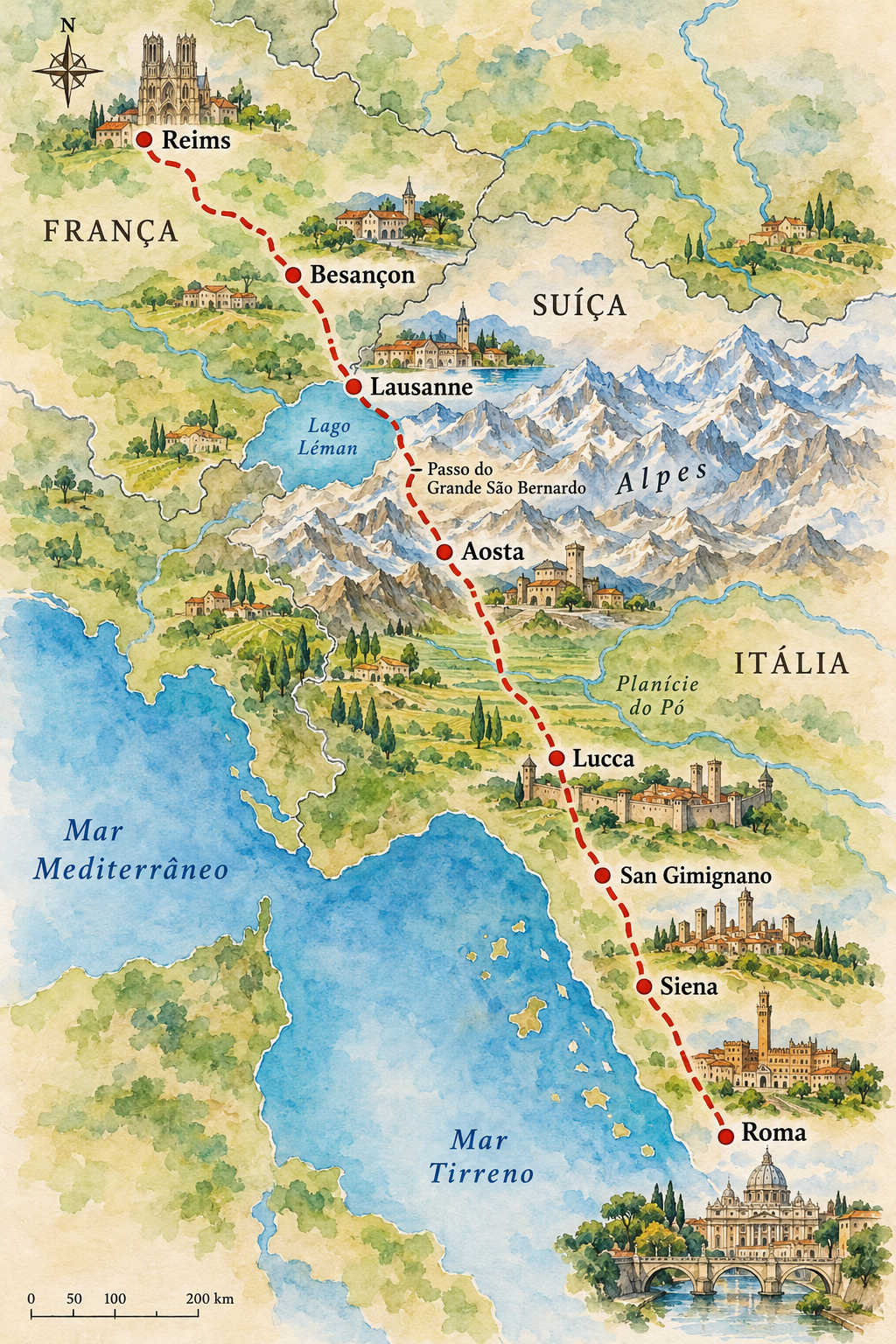
Lausanne and Montreux is on the Via Francigena on foot: from Canterbury to Rome

The ancient pilgrims’ route to Rome: from Canterbury Cathedral, through France and Switzerland, over the Alps via the Great St Bernard Pass and through Tuscany to St. Peter’s Square.

Illustrative map, not to scale. Tap a city to open its page.
Illustrated map of Via Francigena on foot: from Canterbury to Rome
Explore other destinations Search by state and city