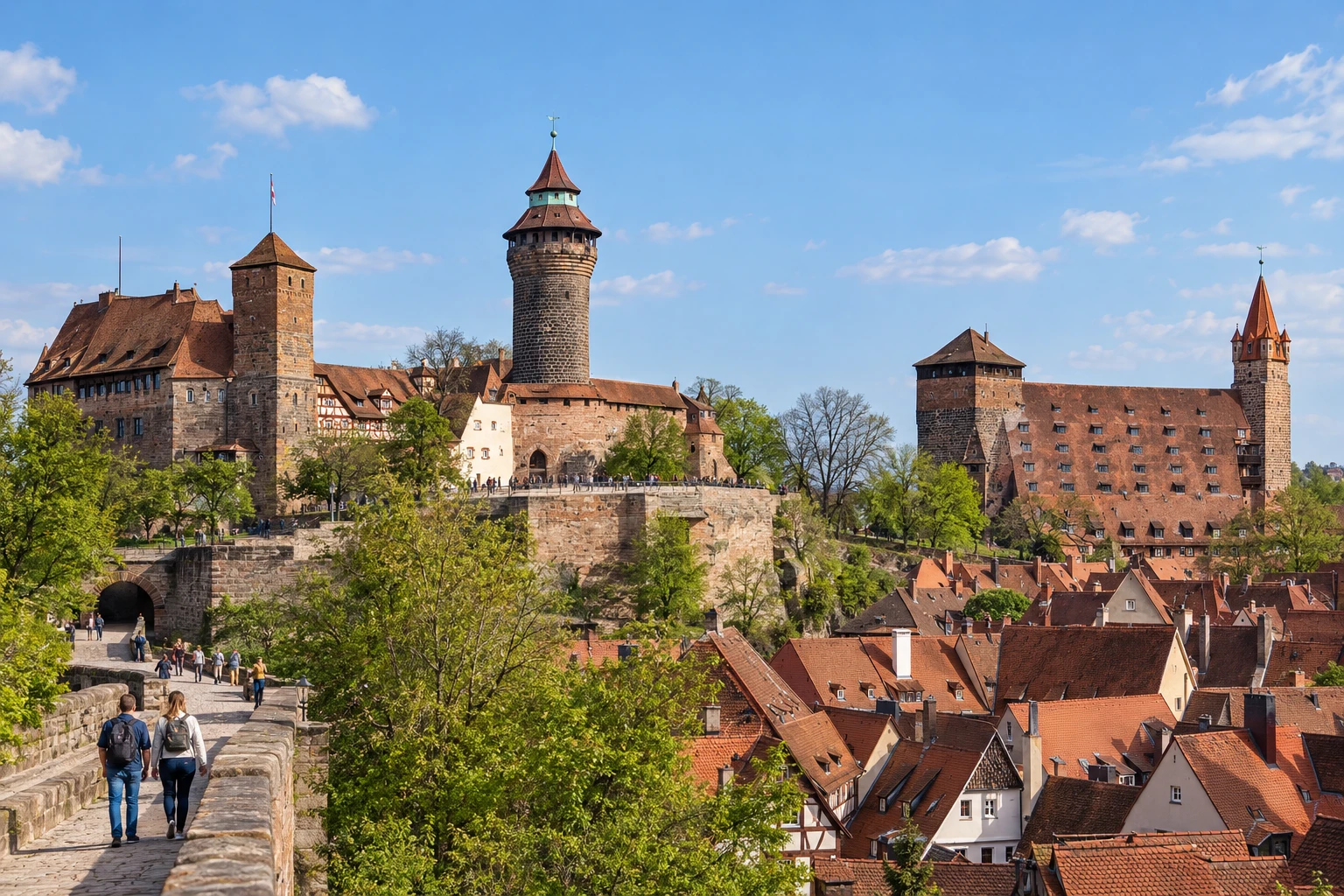
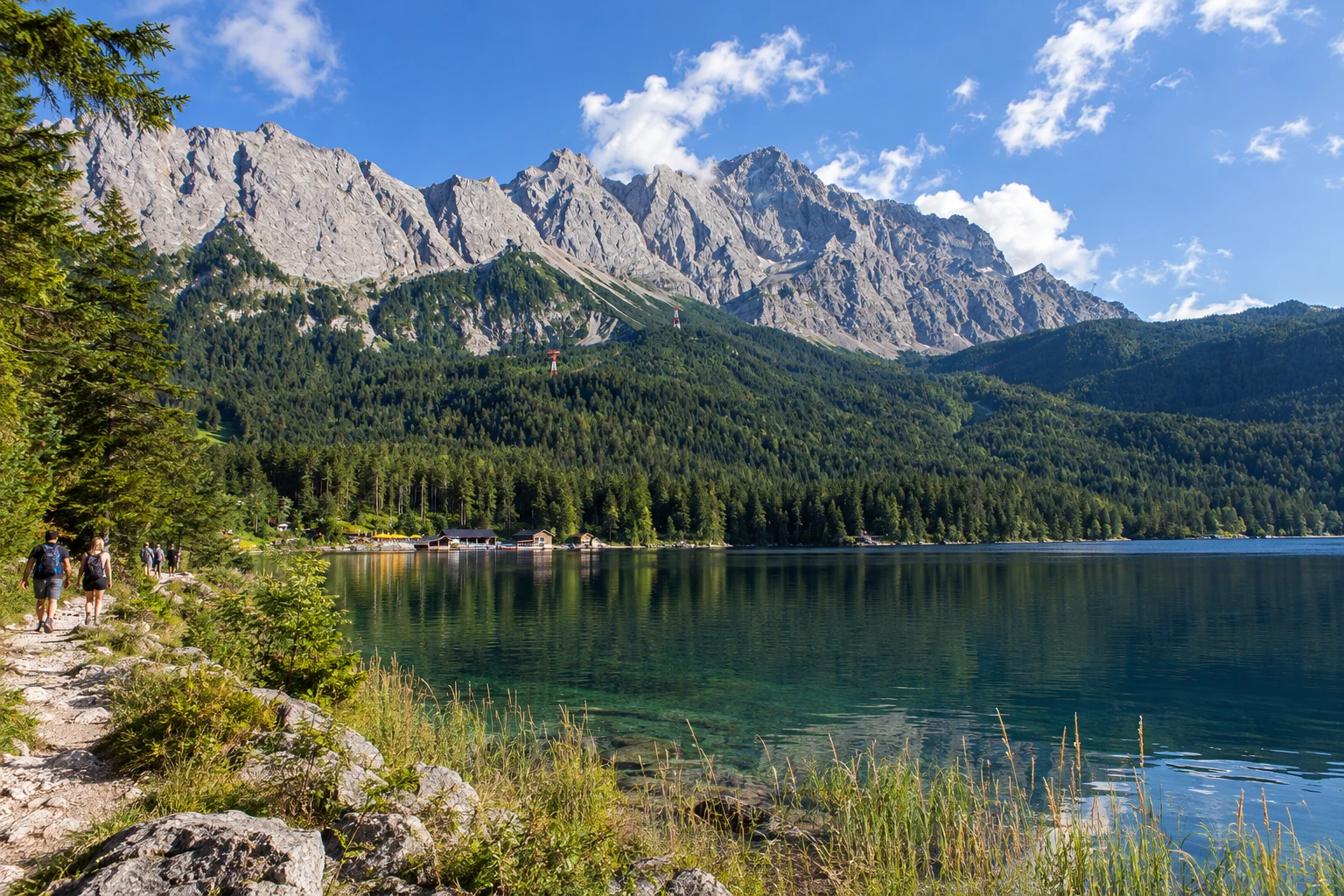
France · Germany · 4 cities
Paris–Frankfurt–Munich by train
By train from Paris to Munich via Frankfurt and Nuremberg: TGV and ICE connect France with southern Germany from central station to central station.
 Search
 Brazil
 Antarctica
 Argentina
 Bolivia
 Chile
 Colombia
 Ecuador
 Falkland Islands (Malvinas)
 French Guiana
 Guyana
 Paraguay
 Peru
 Suriname
 Uruguay
 Venezuela
 Austria
 Belgium
 Croatia
 Denmark
 FinlandFranceGermany
 Greece
 Hungary
 Iceland
 Ireland
 Italy
 Luxembourg
 Norway
 Poland
 Portugal
 Slovakia
 Slovenia
 Spain
 Sweden
 Switzerland
 the Czech Republic
 the Netherlands
 the United Kingdom
 Turkey
 Bermuda
 Canada
 Greenland
 Mexico
 Saint Pierre and Miquelon
 the United States
 the Dominican Republic
 JapanTurkey
 Egypt
 South Africa
 Australia
 Fiji
 New Zealand
 Papua New Guinea
Routes, destinations and cities in Germany, with things to do, when to go and how to get there.
17 destinations 14 states 35 cities
Across Cidade Turismo: 53 countries · 101 routes · 925 destinations · 2,317 cities
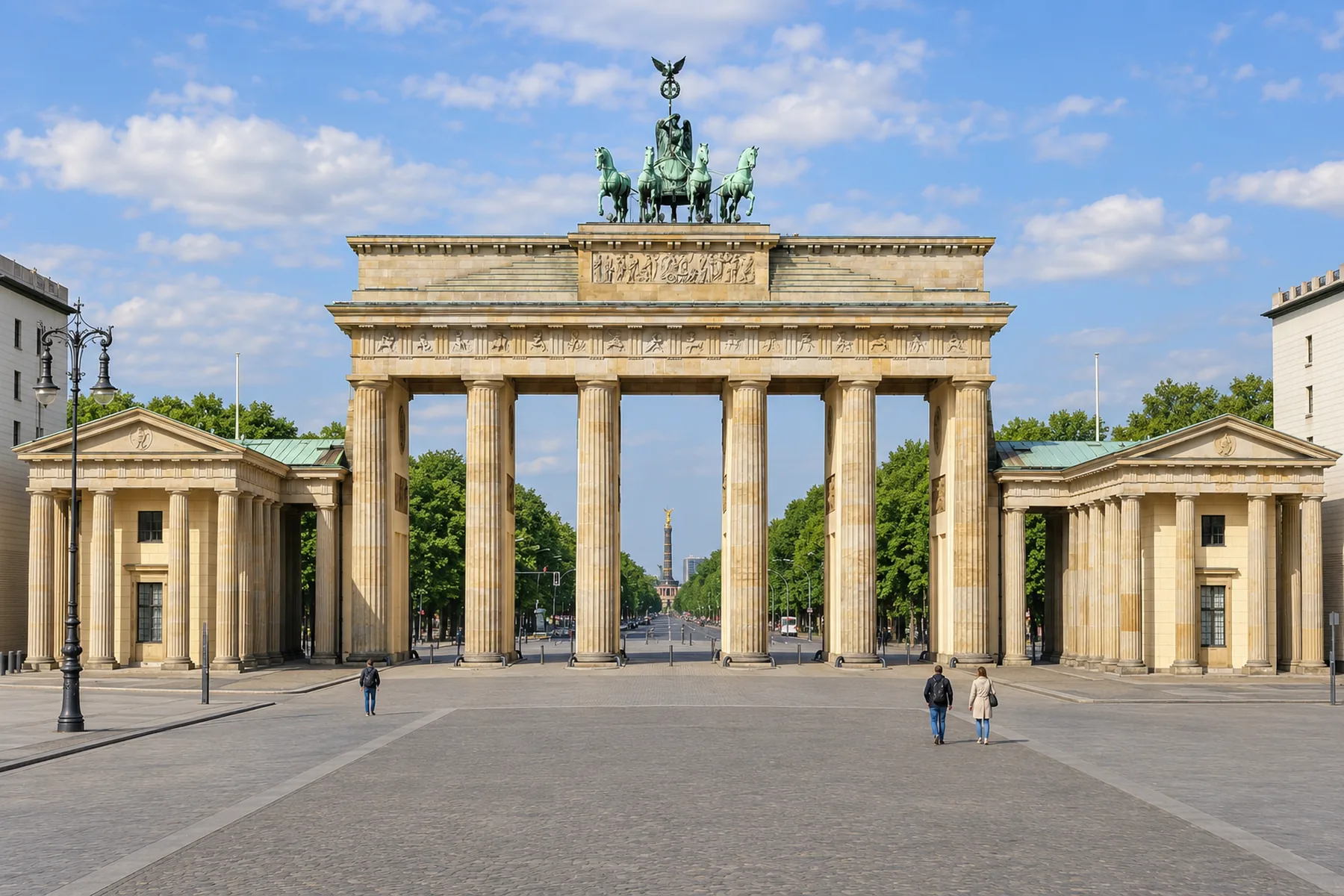
In the photo: Brandenburg Gate — Berlin
Illustrative images. The pictures in this guide are illustrations based on the real place, not photographs, and may differ from it.

The guide
Berlin and the history of the Wall, Munich and Bavaria, the castles of the Rhine Valley, the villages of the Romantic Road, the Black Forest and the Alps. Trains connect nearly everything, and each region has its own beer and festivals. Choose where to start: each destination shows what to do, the best time to go and how to get there.
The guide has three ways in, so you can start wherever you like: routes, which link towns along one journey; destinations, which are the tourist regions; and the states, with the main cities in each one.
The texts are written from official tourism sources, such as national and regional tourism offices, national parks and city halls, and new cities and routes keep being added to the guide.
About Cidade Turismo: who we are and how the guide is made →
Cross-border routes
Journeys that cross borders, with the map, the cities in each country, the itineraries and what changes from one side to the other.
France · Germany · 4 cities
By train from Paris to Munich via Frankfurt and Nuremberg: TGV and ICE connect France with southern Germany from central station to central station.
France · Germany · 4 cities
By car on both sides of the Rhine: the Alsace Wine Route, with half-timbered villages among vineyards, and the mountain roads of the Black Forest, between Strasbourg, Colmar, Freiburg and Baden-Baden.
the Netherlands · Germany · 2 cities
By train from the Netherlands to Berlin: about six hours nonstop, through the Dutch interior and northern Germany, from central station to central station.
Belgium · Germany · 4 cities
By train from Belgium to Germany: Brussels, Liège, Cologne and Frankfurt in about three hours, from central station to central station.
Luxembourg · Germany · 6 cities
Along the Moselle River, from Luxembourg to Germany: vineyards on slopes, half-timbered villages, Roman Trier, Cochem Castle, and the confluence with the Rhine in Koblenz.
17 destinations
The tourist regions in Germany, each with its towns: things to do, when to go and how to get there.
See the destinations35 cities in 14 states
The guide by state: each one with its destinations, cities and routes, and each city with its attractions.
See states and cities21 flavors
From the Weißwurst of Munich to the Kölsch of Cologne, from the Lebkuchen of Nuremberg to the Baumkuchen of Salzwedel: dishes, sweets and drinks tied to German cities and states, with the history and how to taste each one.
See the flavorsThe map
Tap a region to see the names. Use two fingers to zoom in.
Outlines: © BKG (2026), dl-de/by-2-0. Adapted by Cidade Turismo.
Where to start
Six cities from the guide, changing every day.
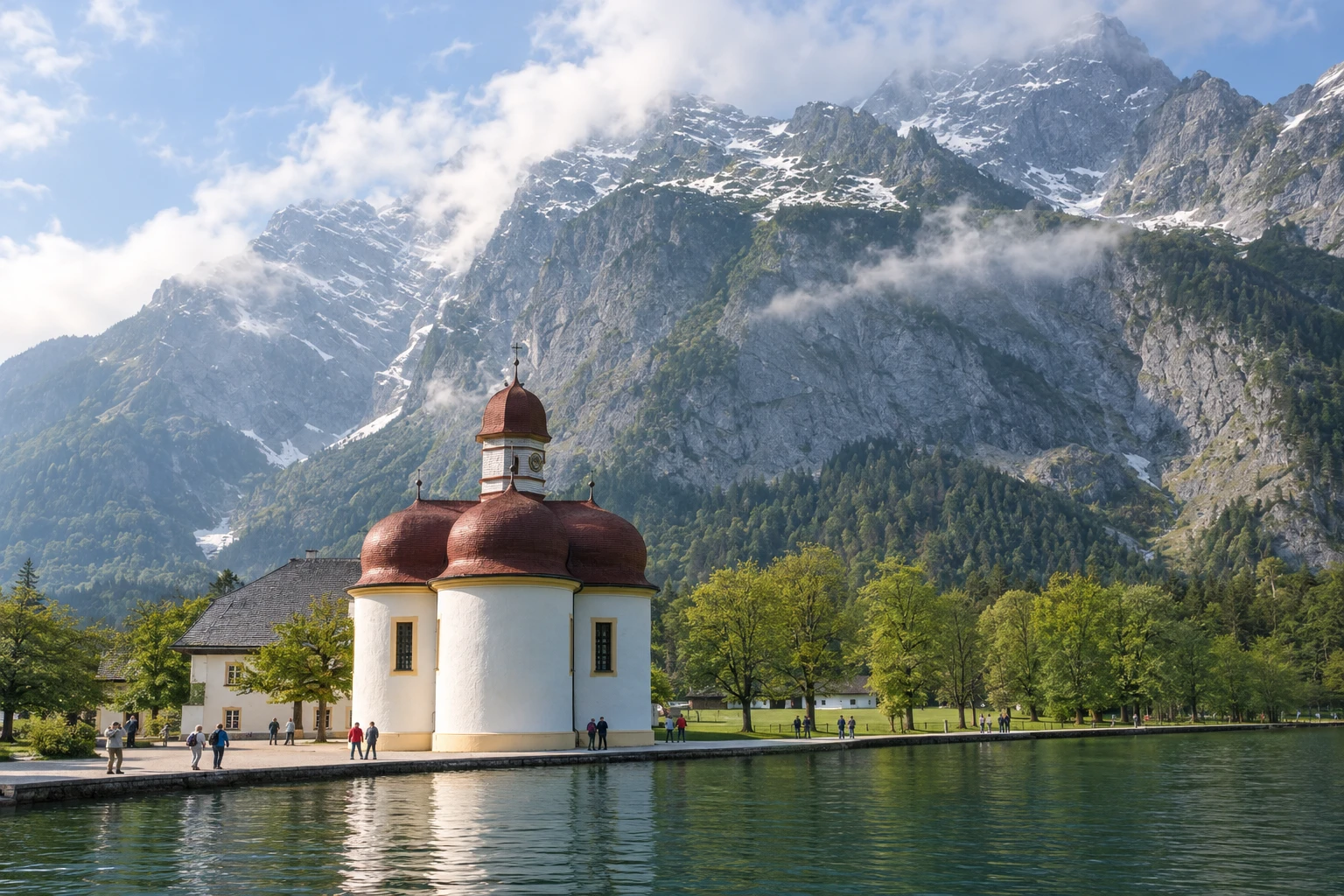
Berchtesgaden sits at the far southeast of Bavaria, surrounded by mountains and the Austrian border; Salzburgo is about 25 km away. The town grew around a monastery and a salt mine active since 1517, the Salzbergwerk. Nearby are the Königssee, with electric boats to St. Bartholomä, the Nationalpark Berchtesgaden and the Obersalzberg, home to the Dokumentation Obersalzberg and the Kehlsteinhaus.
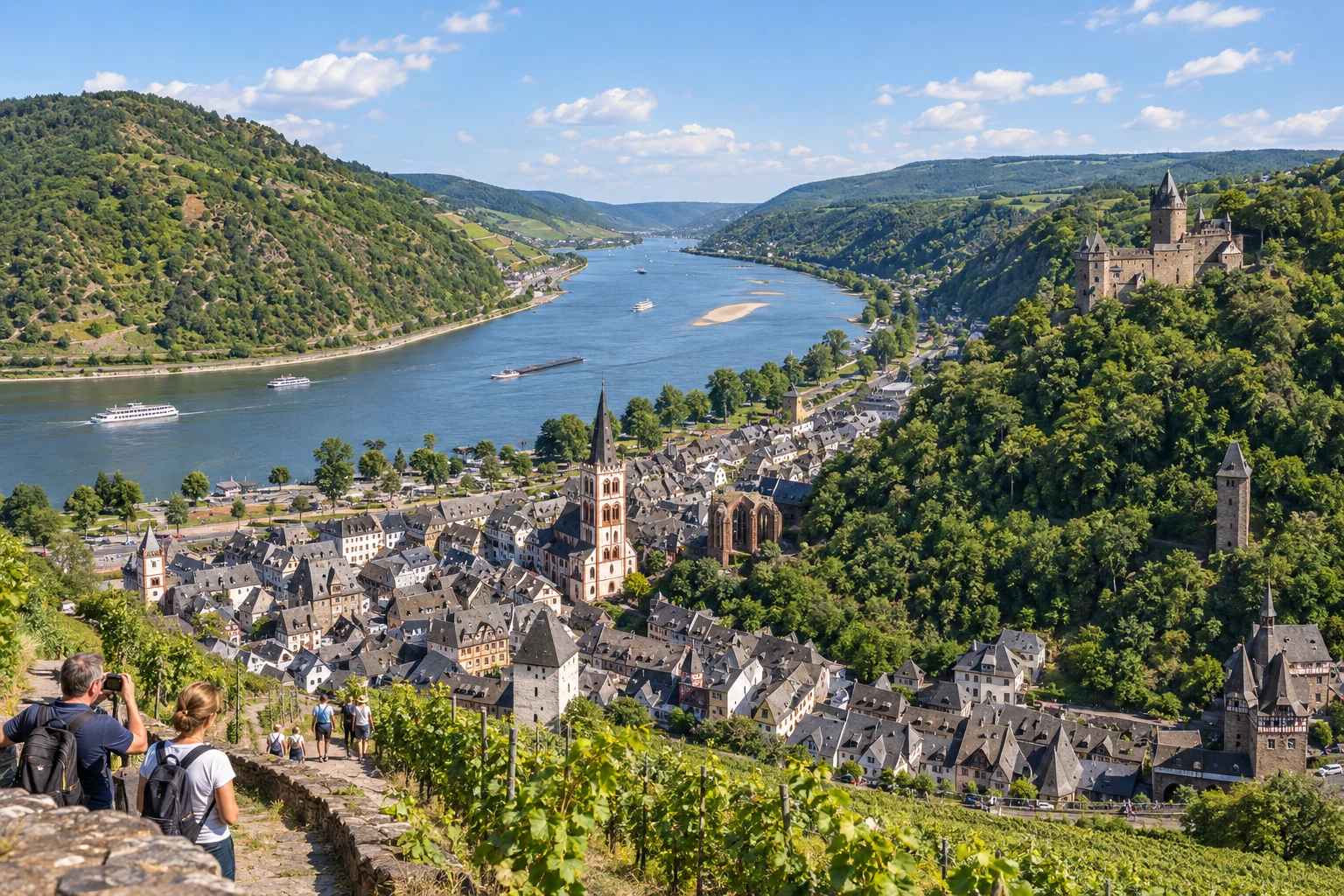
Bacharach is a small walled town on the left bank of the Rhine, in the heart of the Middle Rhine Valley, a UNESCO World Heritage Site. It has half-timbered houses, the church of St. Peter, the ruins of the Wernerkapelle and Burg Stahleck atop the hill. From here you can reach the Loreley, Burg Rheinfels, Burg Pfalzgrafenstein and the Marksburg, the valley's most visited castles.
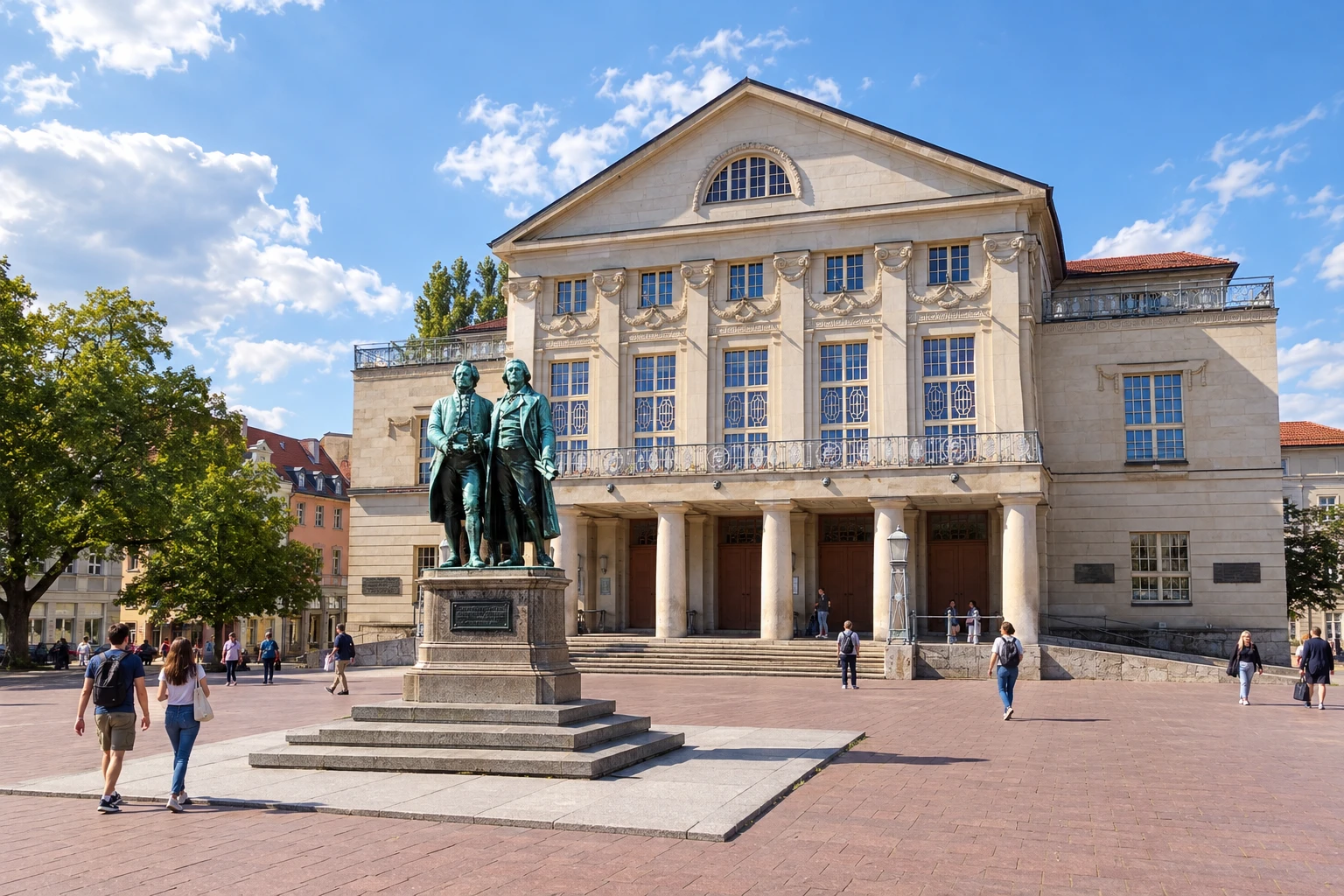
Small town in Thuringia that was the center of German literature in the time of Goethe and Schiller. The houses of both, the Duchess Anna Amalia Library, the Stadtschloss, the Park an der Ilm with Goethe's garden house and the Goethe-Schiller monument on Theaterplatz form the World Heritage Site of Weimar Classicism. The Bauhaus was founded there in 1919 and has its own museum. In the surroundings lies the Gedenkstätte Buchenwald, a place of remembrance.
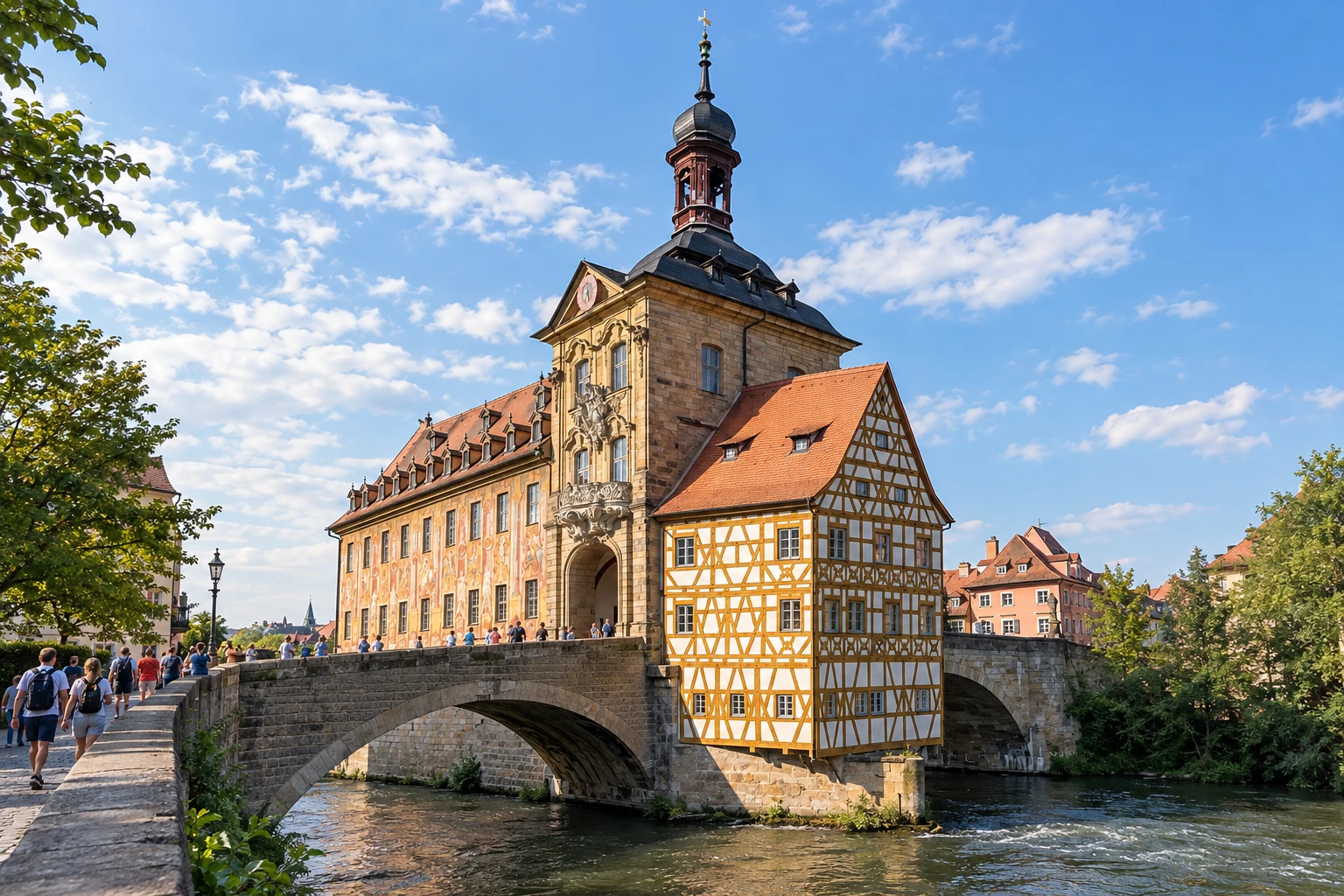
Bamberg, in Upper Francônia, has its old town inscribed as a World Heritage Site by UNESCO since 1993. The city spreads across seven hills and the islands of the Regnitz river. The Altes Rathaus, the town hall built in the middle of the river, links the burghers' town to the bishops' hill, where the Bamberger Dom, the Neue Residenz with its Rosengarten and the Michaelsberg monastery are located. On the riverbank are the fishermen's houses of Klein-Venedig. The smoked beer, Rauchbier, is part of the local culture.
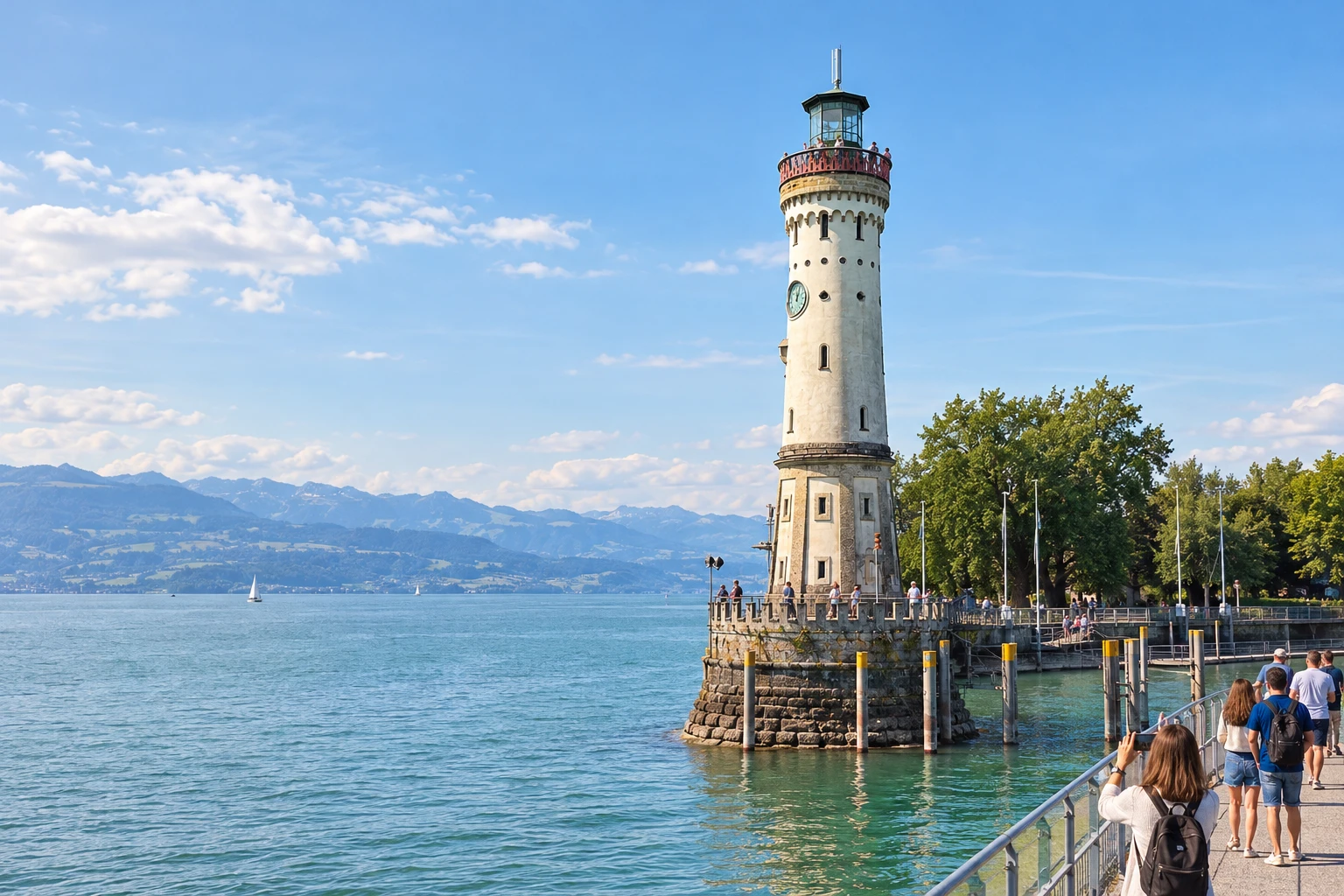
Lindau is the only Bavarian town on Lago de Constança and has its old town on an island of less than 1 km², connected to the mainland by a bridge and a railway causeway. A former Free Imperial City, it preserves the Maximilianstraße with houses from the 16th and 17th centuries, the painted Altes Rathaus, the Mangturm tower and, at the harbor entrance, the Bavarian lion and the lighthouse that can be climbed in season.
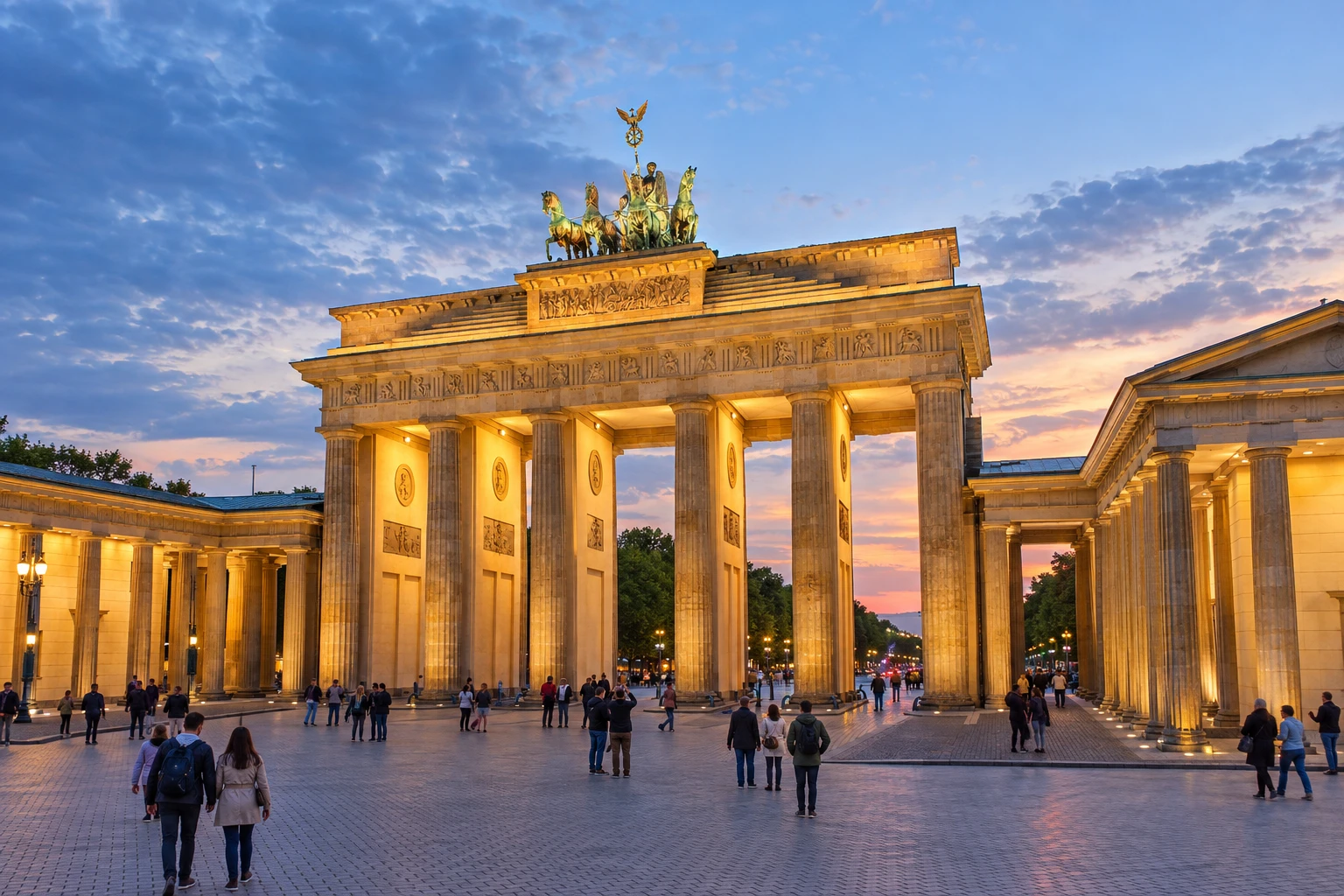
As the capital of Germany, Berlim brings together the memory of division and the Second World War with top-tier museums and neighborhoods with their own character. The Brandenburger Tor, the Reichstag and the Museumsinsel are in the center; the East Side Gallery and Bernauer Straße preserve stretches of the Wall. Kreuzberg, Prenzlauer Berg and Charlottenburg show different sides of the city.

Traveler area
The app
Save the destinations you want to visit, send your travel photos and get the guide's news.
Cidade Turismo around the world
The routes, destinations and cities of each country, with things to do, when to go and how to get there.
Germany In the guide
Beyond the guide
Frequently asked questions
A travel guide to Germany, organized into routes, destinations, states and cities. Each city has things to do, attractions, when to go and how to get there. It is part of Cidade Turismo, a guide with countries on every continent, Flavors, Festivals and events and the knowledge pages.
A route is a journey linking several towns. A destination is a tourist region with its towns. A city is the place itself, with its attractions.
They are illustrations based on the real place, not photographs, and may differ from it. Photos sent by travelers are shown separately, as travelers' photos.
Type the name in the search box: it can be a route, destination, state, city or attraction. Or start from Routes, Destinations or States and cities in the menu.
Yes. Destinations already translated are available in Spanish and English at cidadeturismo.com, and the rest are being added.
Yes, for Android, on Google Play. With it you can save the destinations you want to visit and get the guide's news.