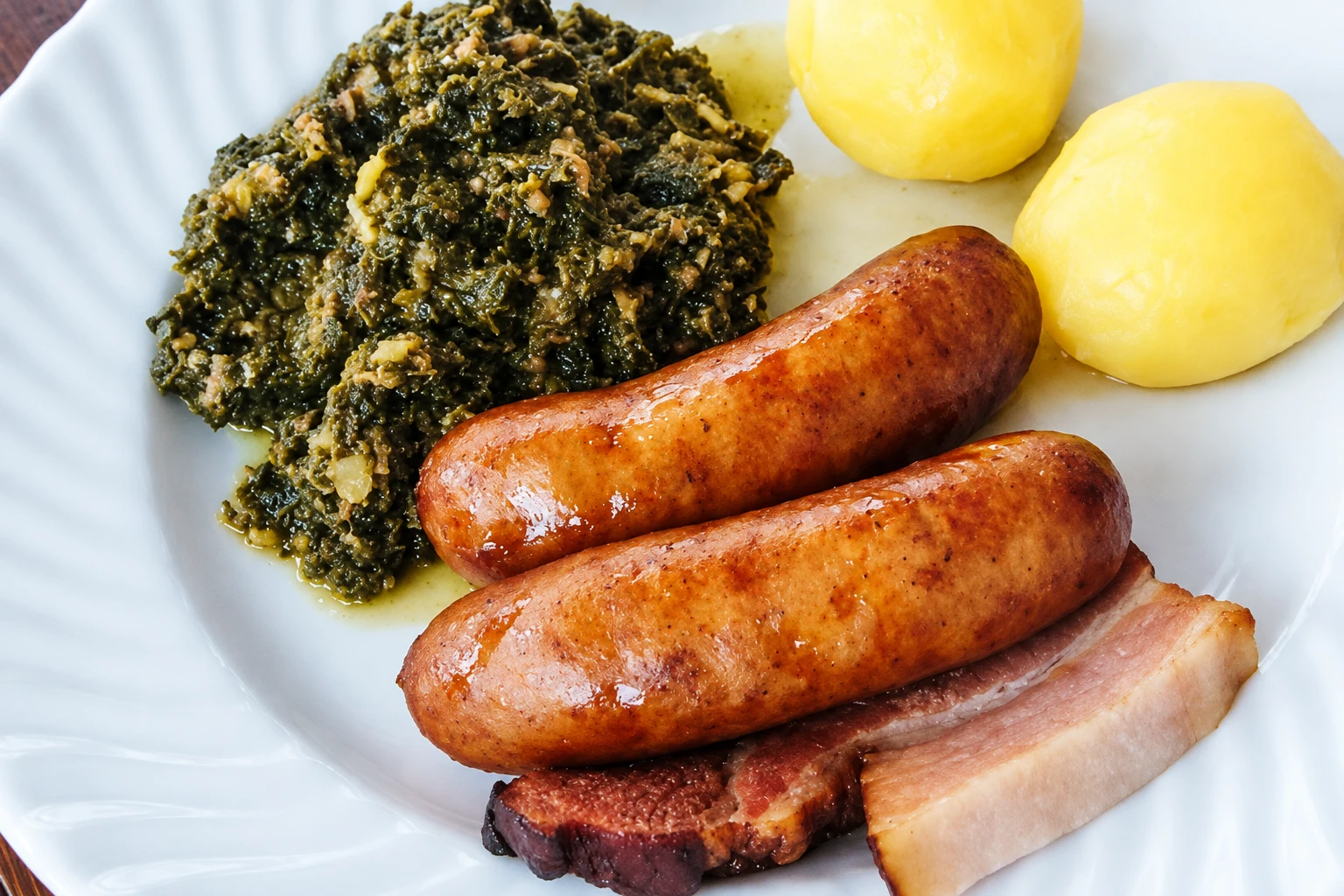
Kohl und Pinkel
Kale slowly cooked with bacon, served with the smoked sausage Pinkel, smoked pork and potatoes. Bremen’s official portal presents it as the city’s best-known specialty, a winter dish of the Kohlfahrt.
Antarctica
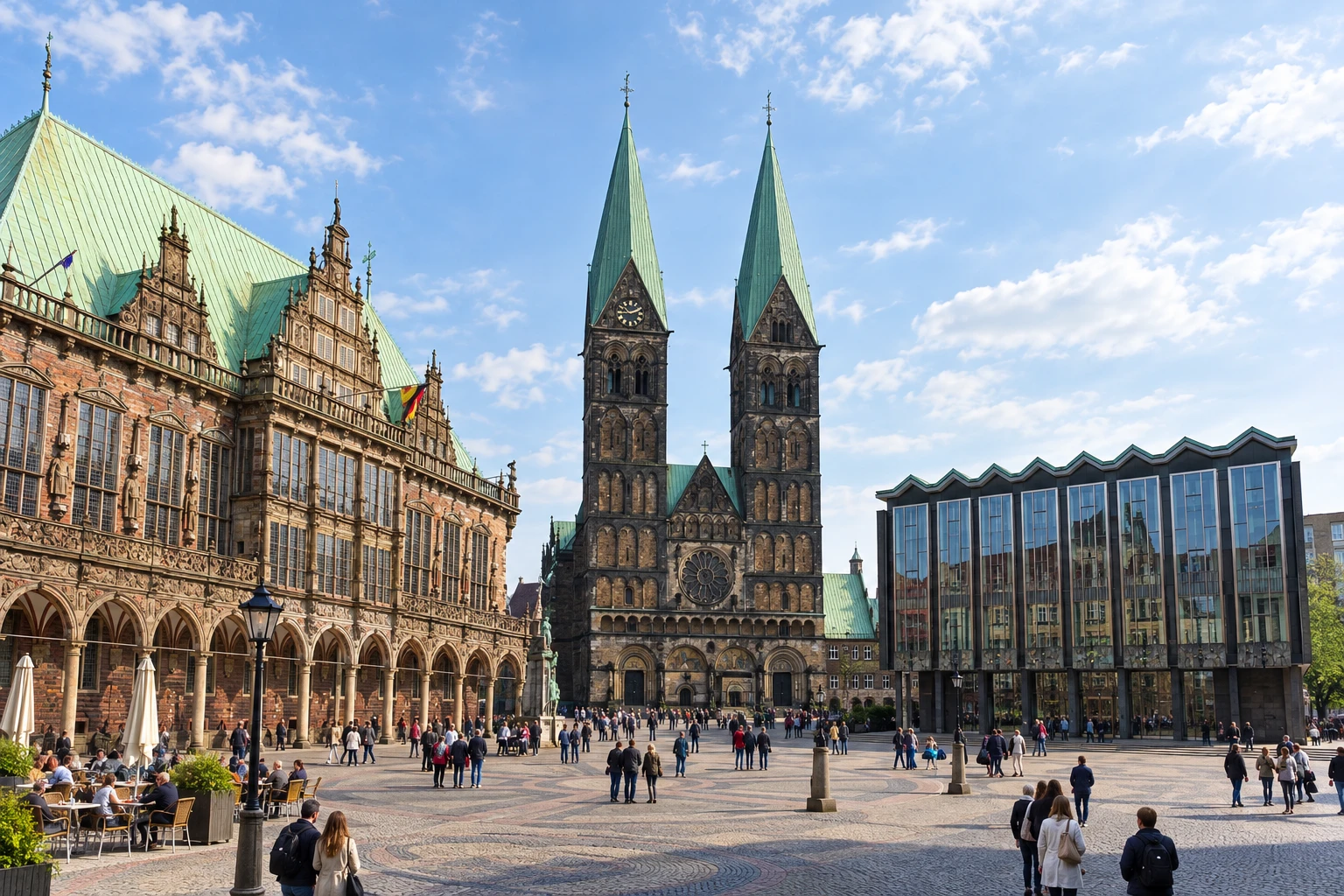
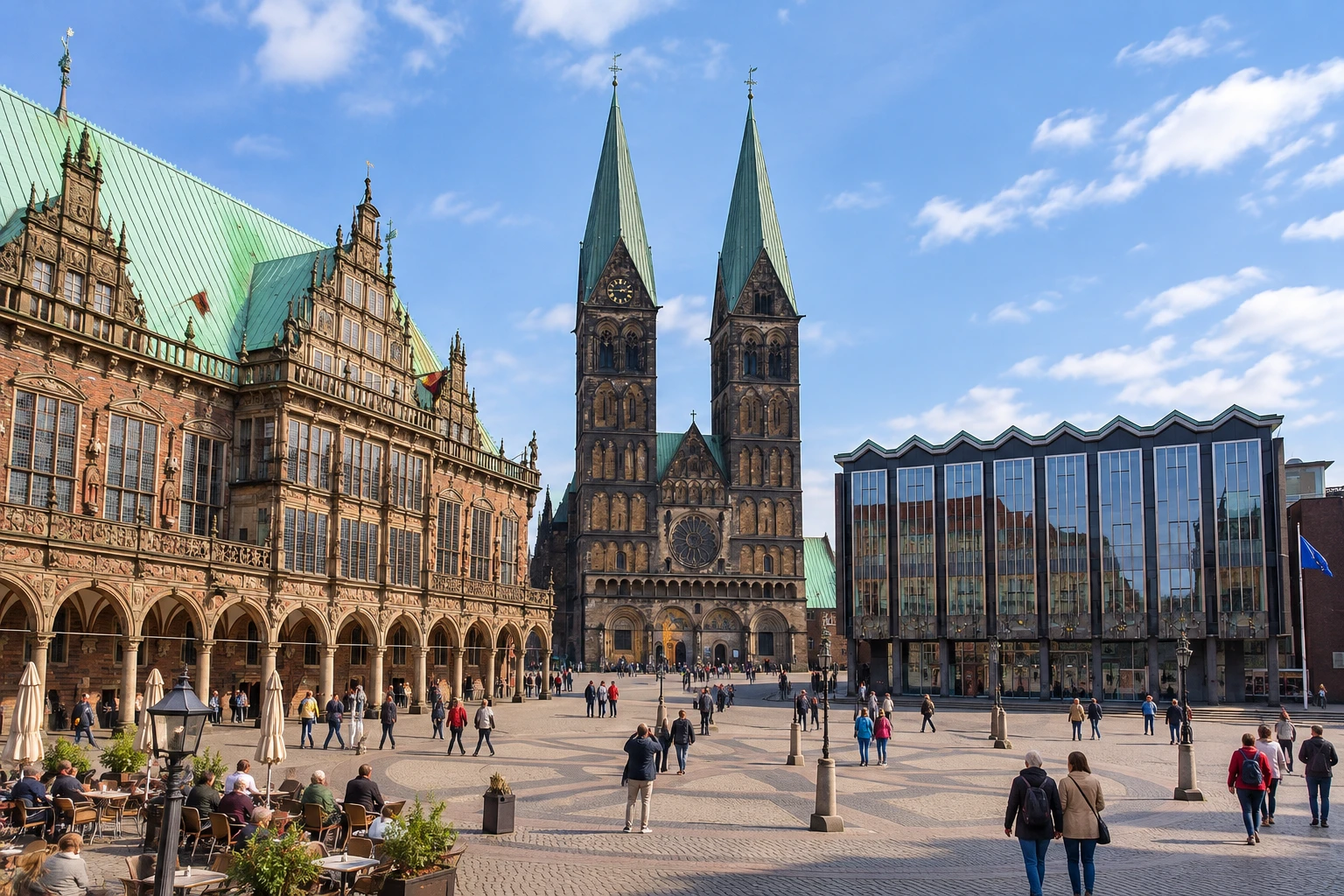
In the photo: Bremer Marktplatz, Bremen
Illustrative images. The pictures in this guide are illustrations based on the real place, not photographs, and may differ from it.
The city
Hanseatic city on the banks of the Weser and capital of Germany’s smallest state, which it shares with Bremerhaven. The Marktplatz brings together the Gothic town hall with a Renaissance façade and the stone Roland, a UNESCO World Heritage Site, as well as the statue of the Músicos de Bremen. Nearby are St. Peter's Cathedral, the Böttcherstraße, the Schnoor neighborhood and the Schlachte quay. Bremerhaven, on the coast, completes the visit with the Casa do Emigrante and the Klimahaus.
There's no accommodation in the guide yet in Bremen.
Tem hotel, pousada ou casa de temporada aqui? Cadastre a suaThere are no restaurants in the guide yet in Bremen.
Know a good one? Recommend it to usHotéis e restaurantes da cidade no mapa.
how to get there · how many days · itinerary · questions
Flavors of Germany
The local experience
Bremen's market square, surrounded by the town hall, the cathedral, the state parliament and the merchants' house (Schütting). In the centre, the stone Roland; at the corner of the town hall, the Músicos de Bremen.
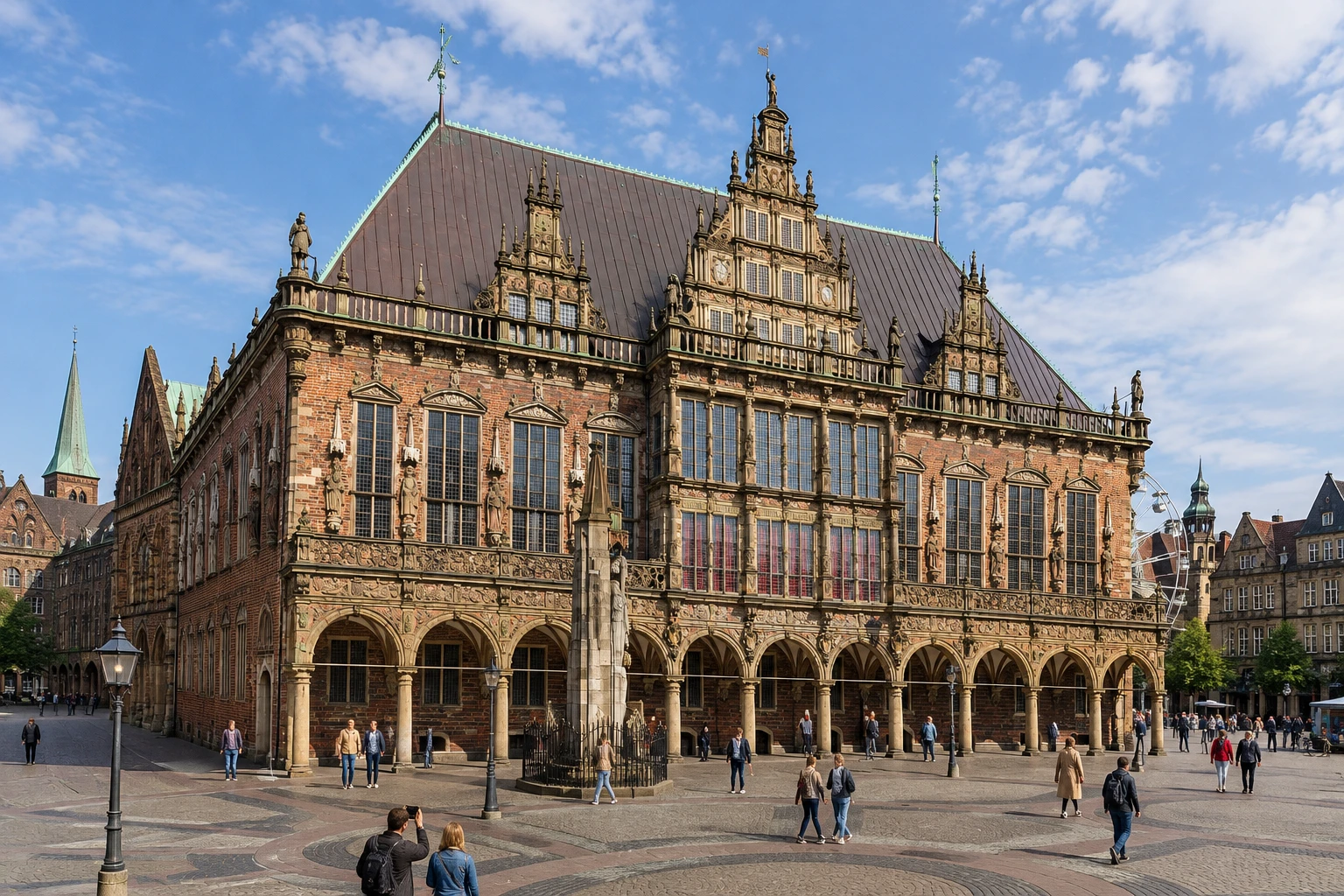
Gothic town hall built between 1405 and 1410, with a Renaissance façade from the early 17th century. A UNESCO World Heritage Site together with the Roland, it has a grand hall with ship models, the art nouveau Güldenkammer and the Ratskeller wine cellar.
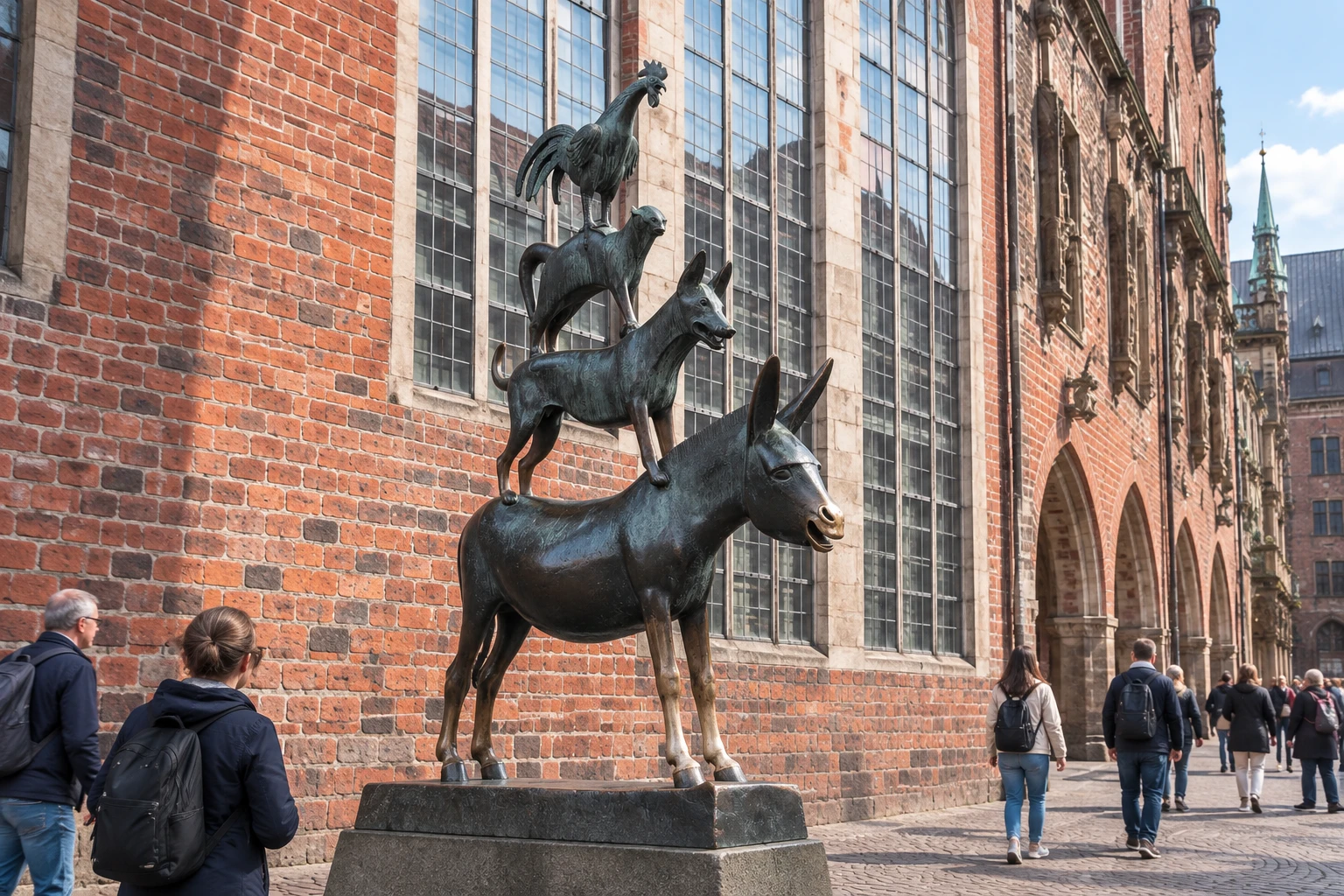
Bronze sculpture by Gerhard Marcks from 1953, featuring the donkey, dog, cat and rooster from the Brothers Grimm tale stacked on top of each other. It stands at the left side of the town hall and is the city's most popular symbol.
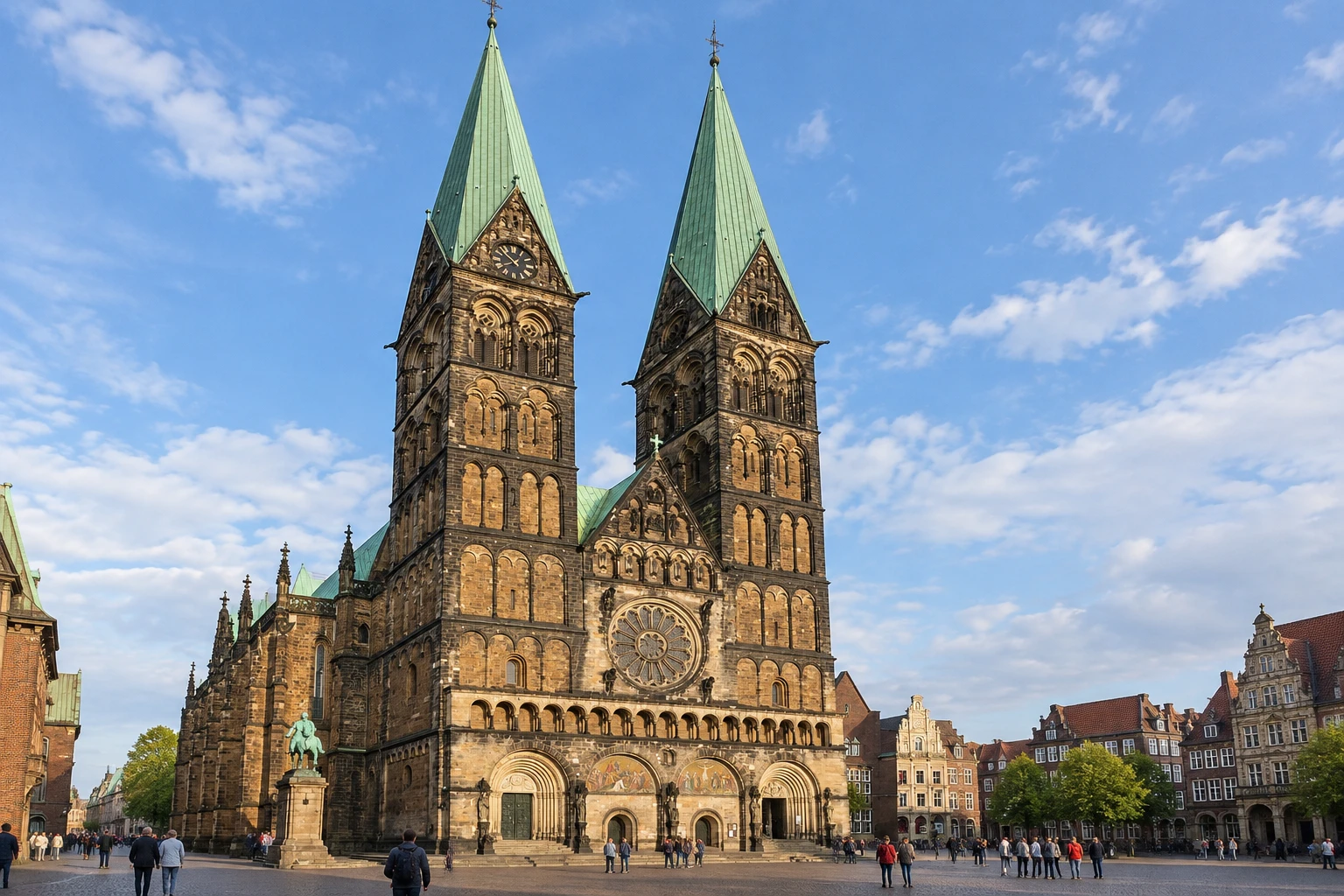
Lutheran Cathedral of São Pedro, next to the Marktplatz, with two towers, Romanesque crypts, a museum, an observation deck in the south tower and the Bleikeller, a cellar where naturally mummified bodies are displayed.
Before you go
Bremen – Germany Capital
Approximate distances. Check flights and bus, train or boat schedules before you travel.
Connections to Brasil usually require a transfer in another city. Confirm before you buy. Bremen Airport (BRE) is south of the city center, and tram line 6 stops in front of the terminal and runs to the central station. By train, Bremen Hauptbahnhof is served by ICE and IC: about one hour from Hamburg or Hannover and roughly four hours from Frankfurt.
One day for the historic center, all on foot. Two days to add museums such as the Kunsthalle and the Übersee-Museum, or a day trip by train to Bremerhaven, about 35 minutes, to visit the Casa do Emigrante and the Klimahaus.
From May to September, with long days and outdoor tables on the Schlachte. Winter, from December to February, is cold and rainy, with short days. The Christmas market usually runs from the end of November until near Christmas, in the Marktplatz and on the Schlachte. The Freimarkt, one of the country's oldest popular festivals, typically takes place in the second half of October.
The seasons shown are the most usual ones; nature doesn't always follow the calendar.
No. The center is compact and flat, and the tram and bus network links the central station, the airport, the Viertel and the Universum. There is a regional train to Bremerhaven every hour. Drivers need the green sticker to circulate in the center's environmental zone (Umweltzone).
Suggested itinerary
Built with the places on this page. No rush: it's paced so you have time to see them.
Start at the Marktplatz. Notice the Renaissance façade of the Rathaus and the stone Roland in front of it, both listed by UNESCO. On the left side of the town hall is the sculpture of the Músicos de Bremen: tradition says to hold the donkey's front legs. If a time is available, take the guided tour inside the town hall.
Enter the St. Petri Dom, beside the square, and on days when the tower is open climb to the viewing platform. Then cross the Marktplatz to the Böttcherstraße, with the golden relief at the entrance, the porcelain bell carillon and the Paula Modersohn-Becker and Ludwig Roselius museums.
Walk to the Schnoor, the city's oldest quarter, with low houses of former fishermen and craftsmen. The narrow lanes house studios, craft shops and cafés. It's worth entering the side passages, where some houses are only one window wide.
Go down to the Schlachte, the old port quay, and choose one of the restaurants or breweries set up in the warehouses. On mild evenings the tables are on the pavement by the river, with sailboats moored opposite. Another option is to dine at the Ratskeller, the cellar beneath the town hall.
Day 1
Spend the morning at the market square: the town hall with a guided tour, Roland, the Músicos sculpture and the cathedral right next door. On days it's open, the cathedral's lead cellar (Bleikeller) displays naturally mummified bodies in a silent setting.
Have lunch near the Böttcherstraße and stroll through it at a relaxed pace, visiting one of the two art museums. Then follow the Weser riverbank to the Schnoor and explore the alleys unhurriedly.
From the Schnoor it's a few minutes to the Kunsthalle Bremen, which holds Monet, Van Gogh and Paula Modersohn-Becker in its collection; check the closing time. Then walk along the Wallanlagen, the park that borders the center, to the windmill by the old moat.
Take the tram or walk to the Viertel, in the Ostertor and Steintor neighborhoods, where nightlife is concentrated in bars, cafés and restaurants of various cuisines. It's Bremen's younger, more informal side.
Day 2
Leave early from the central station on the regional train to Bremerhaven, a journey of about 35 minutes. From Bremerhaven Hauptbahnhof a city bus takes you to the Havenwelten stop. Start at the Deutsches Auswandererhaus, which recreates the departure of emigrants bound for the Americas; allow about three hours.
After lunch, cross to the Klimahaus, a hull-shaped building by the Alter Hafen. The main route follows the 8° East meridian through climate zones of five continents, with warm, humid and cold rooms. Bring a jacket that's easy to remove.
Walk along the promenade between the Neuer Hafen and the Alter Hafen, with the museum ships and the view of the Weser already near the North Sea. It's a good time for a coffee before returning to the station.
Return by train to Bremen and dine on the Schlachte or in the Altstadt. If it's Christmas market season, which usually runs from the end of November until near Christmas, the Marktplatz and the riverbank fill with stalls.
Check before you go. Opening hours and days change, and places may close for renovations, holidays or events. This itinerary is a suggestion from Cidade Turismo, not a commitment: plan yours by checking directly with each place you intend to visit.
Before you go
The Marktplatz with the town hall and Roland, the Músicos de Bremen sculpture, the Catedral de São Pedro, the Böttcherstraße, the Schnoor neighborhood and an evening on the Schlachte by the Weser. Everything is a few minutes' walk from each other.
Tram line 6 stops in front of the arrivals terminal, passes through the Neustadt district, crosses the Weser and reaches the center and the central station. Buy the ticket at the machine before boarding or in the local network's app, and validate it when the machine requests.
For those with an extra day, yes. The regional train covers the route in about 35 minutes. The Casa do Emigrante (Deutsches Auswandererhaus) tells the story of people who left Europe via the city's port, a subject close to many Brazilian families of German descent, and the Klimahaus takes visitors through the planet's climate zones along the 8° East meridian. Both are side by side in the Havenwelten.
Mostly no: shops and supermarkets remain closed on Sundays, except for some stores in the central station. Restaurants, cafés and most museums are open. Plan shopping for Saturday. In small shops and cafés, cash is still widely accepted.
Hauptbahnhof (Hbf) is the central station; Altstadt, the old town; Rathaus, the town hall; Dom, the cathedral; Markt or Marktplatz, the market square; and Wall, the old city wall, which gives its name to the Wallanlagen park and the streets around the center. English is widely spoken in tourist areas.