8 destinations
Destinations
The tourist regions in Bolivia, each with its towns: things to do, when to go and how to get there.
See the destinations
 Search
 Brazil
 Antarctica
 ArgentinaBolivia
 Chile
 Colombia
 Ecuador
 Falkland Islands (Malvinas)
 French Guiana
 Guyana
 Paraguay
 Peru
 Suriname
 Uruguay
 Venezuela
 Austria
 Belgium
 Croatia
 Denmark
 Finland
 France
 Germany
 Greece
 Hungary
 Iceland
 Ireland
 Italy
 Luxembourg
 Norway
 Poland
 Portugal
 Slovakia
 Slovenia
 Spain
 Sweden
 Switzerland
 the Czech Republic
 the Netherlands
 the United Kingdom
 Turkey
 Bermuda
 Canada
 Greenland
 Mexico
 Saint Pierre and Miquelon
 the United States
 the Dominican Republic
 JapanTurkey
 Egypt
 South Africa
 Australia
 Fiji
 New Zealand
 Papua New Guinea
Routes, destinations and cities in Bolivia, with things to do, when to go and how to get there.
8 destinations 7 departments 10 cities
Across Cidade Turismo: 53 countries · 101 routes · 925 destinations · 2,317 cities
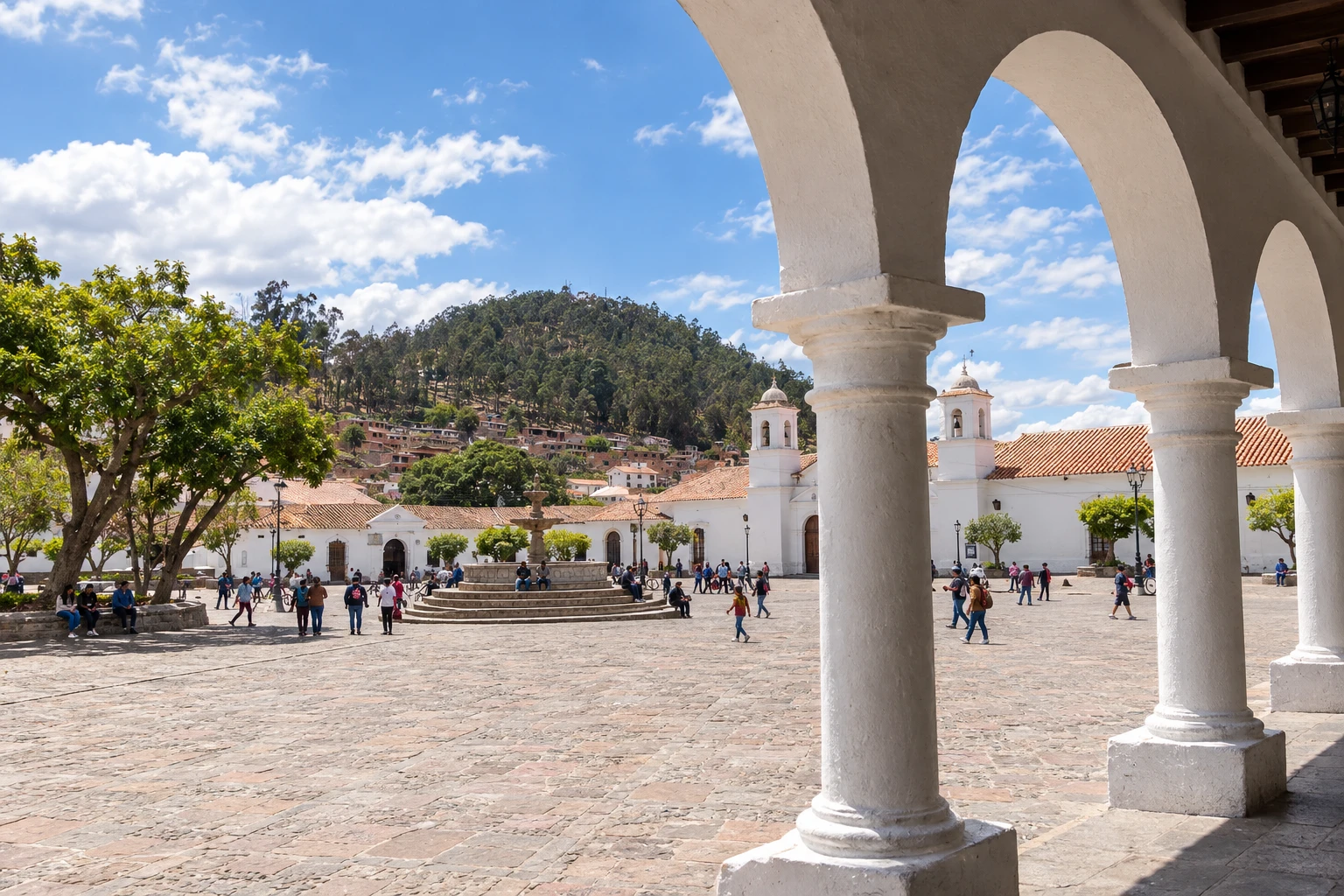
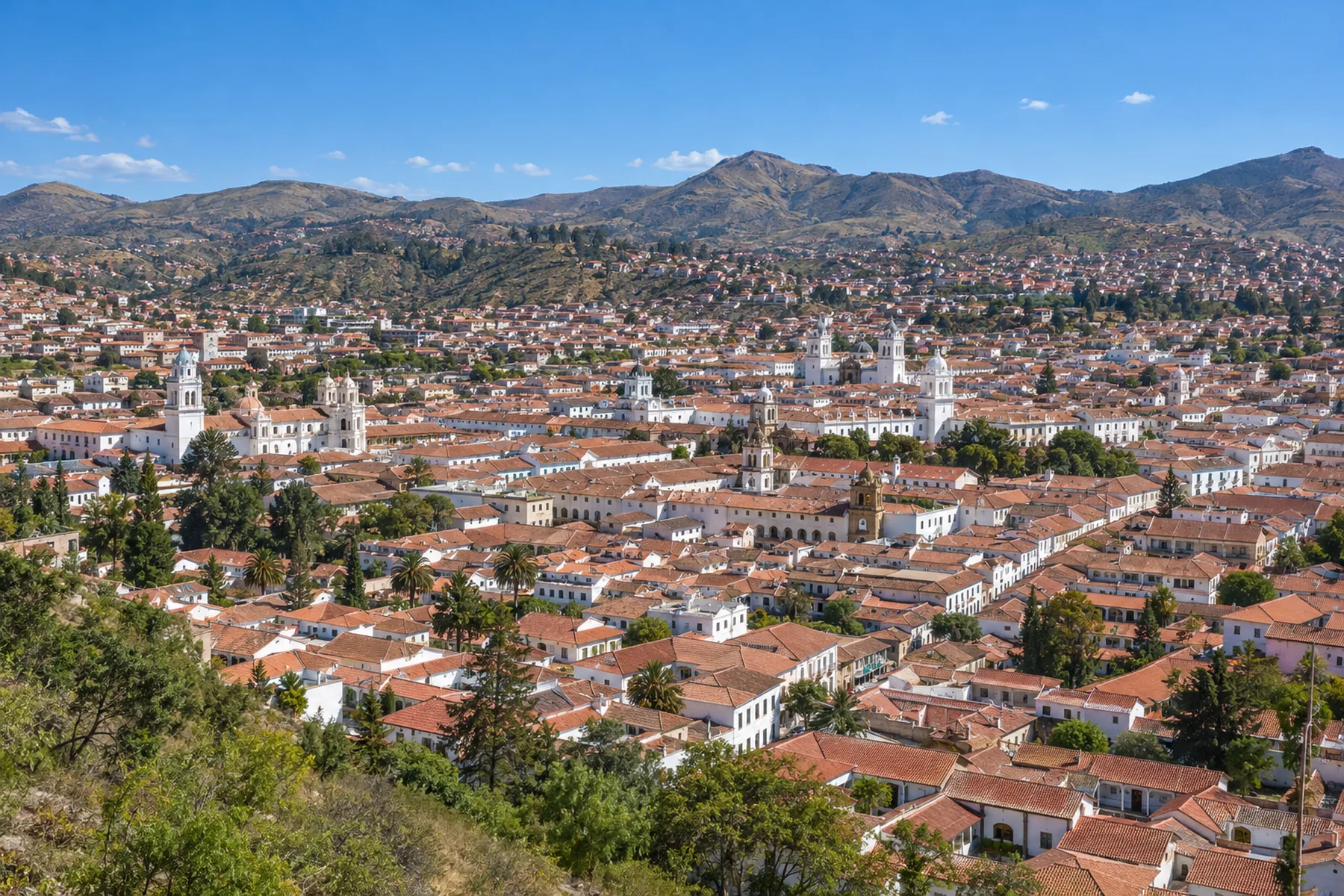
In the photo: Historic center of Sucre — Sucre
Illustrative images. The pictures in this guide are illustrations based on the real place, not photographs, and may differ from it.

The guide
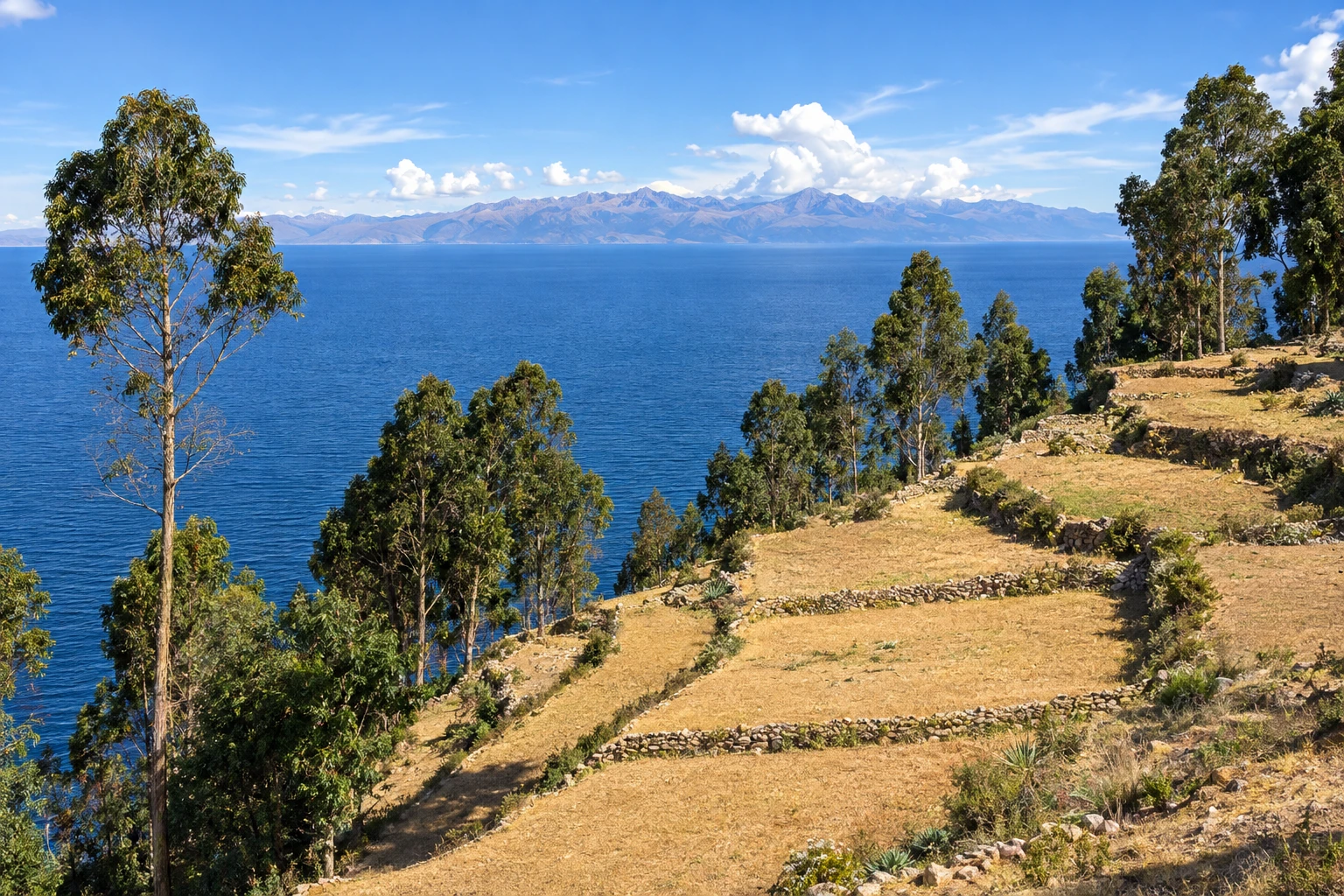
La Paz amid snow-capped mountains, the white expanse of the Salar de Uyuni, Lake Titicaca and Isla del Sol, Sucre’s white façades and the silver history of Potosí. On the Altiplano the elevation exceeds 3,500 meters; Santa Cruz, in the Oriente, lies near the border with Brazil. Each destination explains what to do, the best time to go and how to get there.
The guide has three ways in, so you can start wherever you like: routes, which link towns along one journey; destinations, which are the tourist regions; and the departments, with the main cities in each one.
The texts are written from official tourism sources, such as national and regional tourism offices, national parks and city halls, and new cities and routes keep being added to the guide.
About Cidade Turismo: who we are and how the guide is made →
8 destinations
The tourist regions in Bolivia, each with its towns: things to do, when to go and how to get there.
See the destinations10 cities in 7 departments
The guide by department: each one with its destinations, cities and routes, and each city with its attractions.
See departments and cities11 flavors
Dishes, sweets, and drinks that represent cities and departments of Bolivia, from the high plateau of La Paz and Oruro to the valleys of Cochabamba and Tarija and the Lowlands (Oriente) of Santa Cruz.
See the flavorsThe map
Tap a region to see the names. Use two fingers to zoom in.
Outlines: GeoBolivia, via geoBoundaries (CC BY 4.0). Adapted by Cidade Turismo.
Where to start
Six cities from the guide, changing every day.
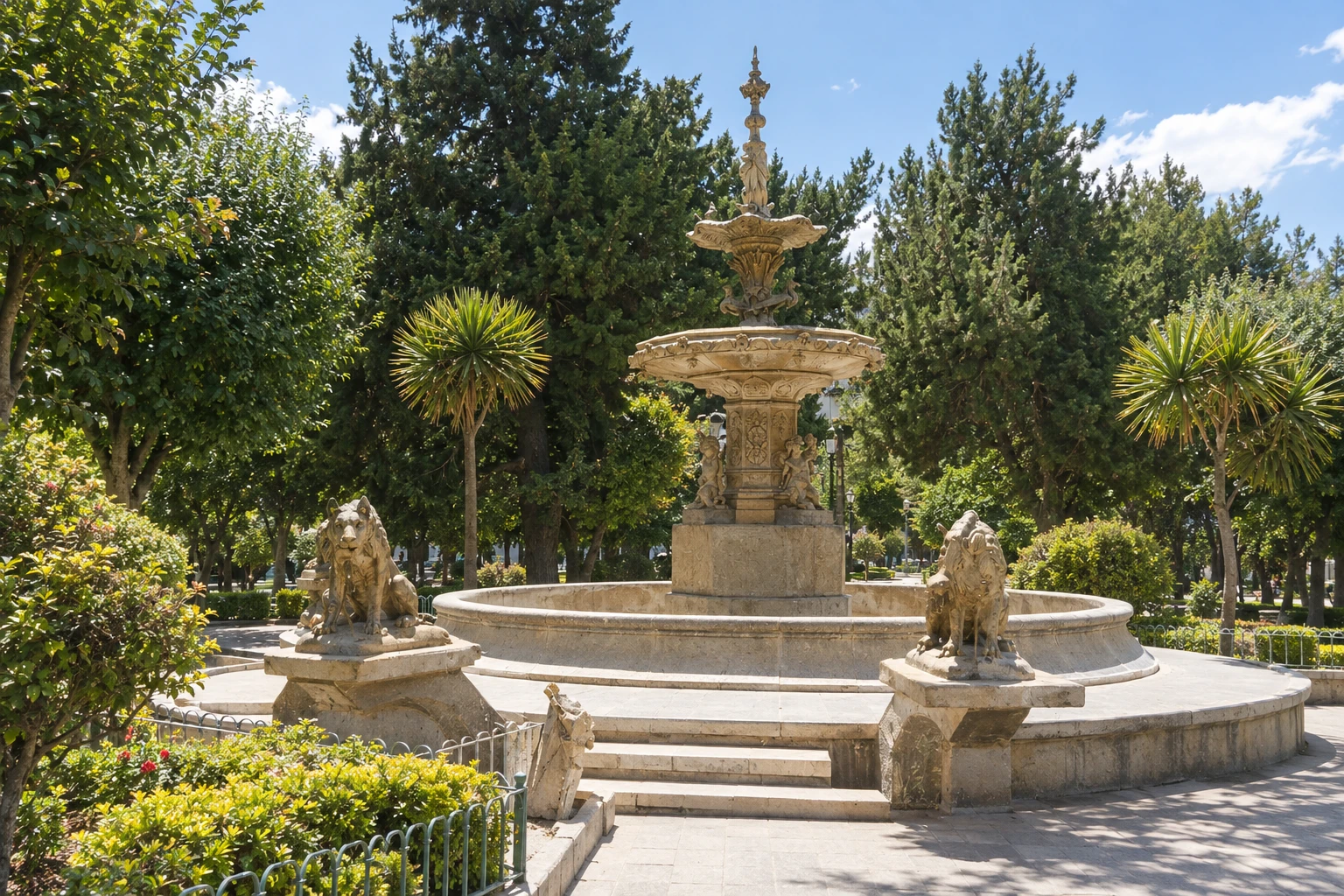
Capital of the Oruro department on the altiplano at about 3,700 meters. Founded in 1606 because of silver, it later grew with tin and the railway. It hosts the Oruro Carnival, a UNESCO heritage event honoring the Virgin of the Socavón, whose sanctuary stands beside an old mine. A cable car goes up to the Virgin monument on Cerro Santa Bárbara. It is the city of charquekan.

Uyuni is a town on the Altiplano, at about 3,700 meters, on the eastern edge of the Salar de Uyuni. It was founded at the end of the 19th century as a railway junction and today lives off tourism: it is the base for agencies that take visitors to the salar in 4x4 vehicles. It has wide streets, Plaza Arce with the clock tower and, in the surroundings, the Train Cemetery and the village of Colchani.
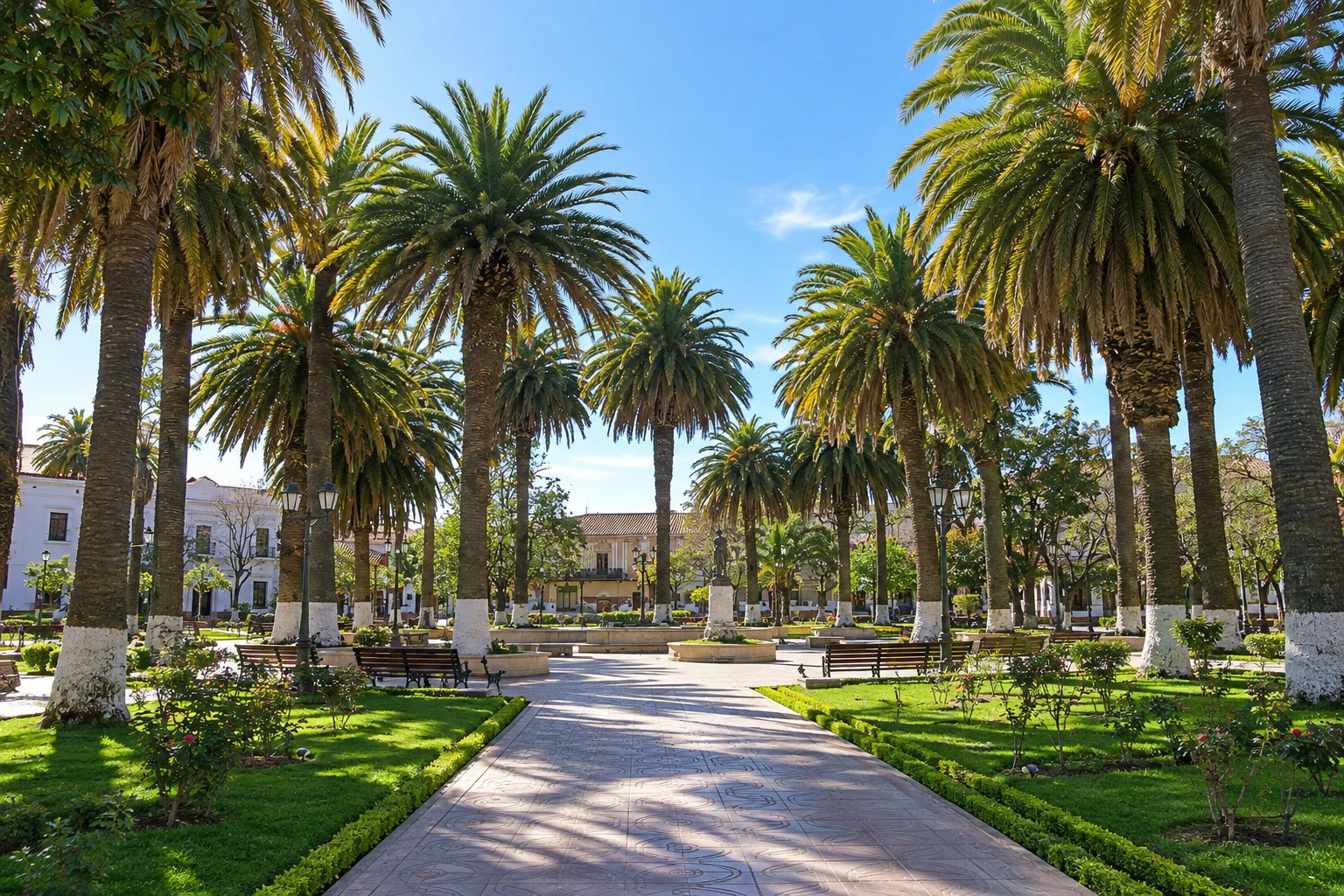
Capital of the Tarija department in southern Bolivia, in a valley about 1,850 meters high. Founded in 1574, it has a colonial center around Luis de Fuentes y Vargas square, the Casa Dorada, the San Francisco convent from 1606, and a fossil museum of the valley’s megafauna. About 25 km away are the vineyards of Valle de la Concepción. It is the city of saice tarijeño.
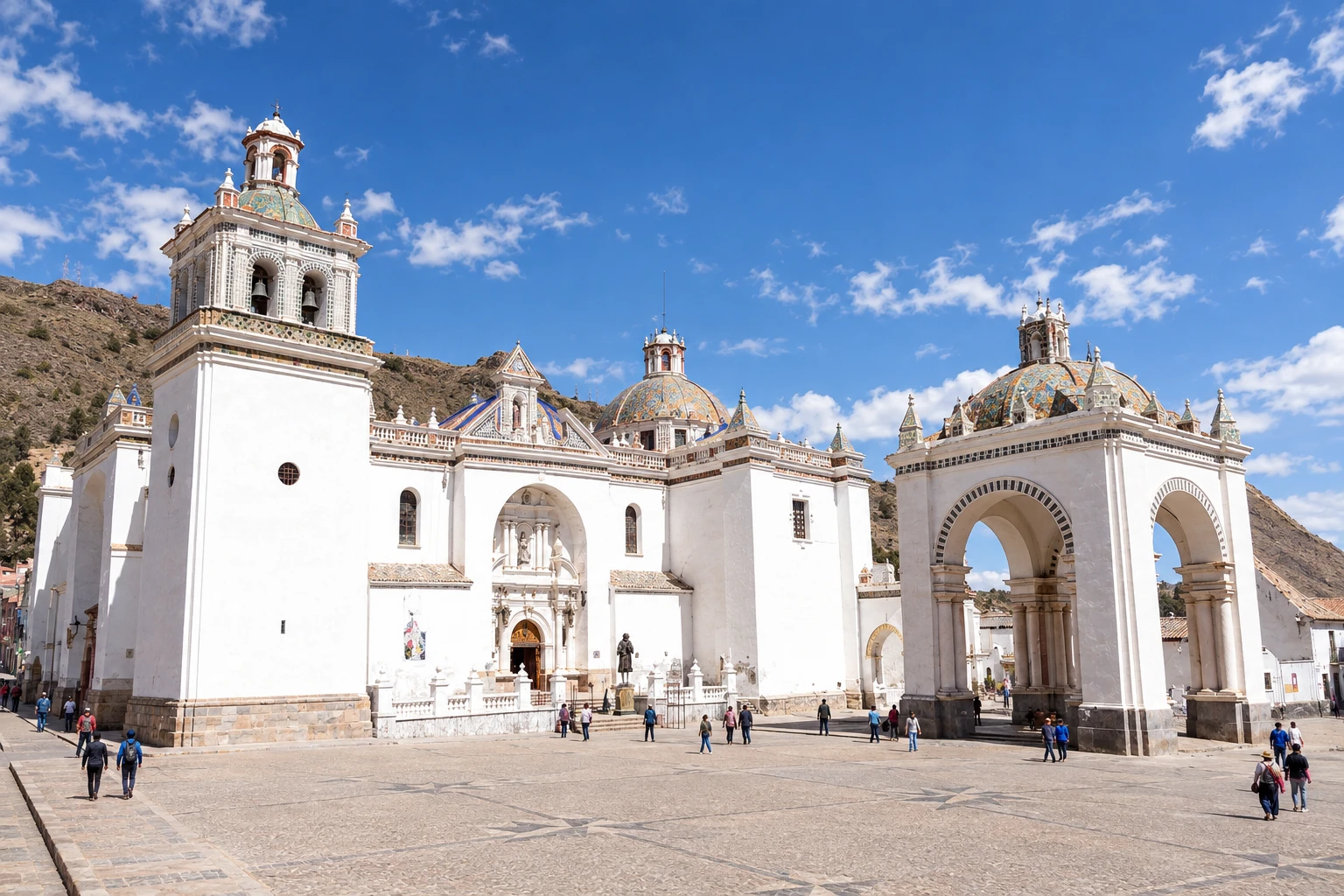
Copacabana is a pilgrimage village on the Bolivian shore of Lake Titicaca, at about 3,800 metres and 155 km from La Paz. The basilica da Virgem de Copacabana, with white domes, dominates the square, and the Cerro Calvario has views over the bay. Boats to the Isla del Sol and the Isla de la Luna leave from the port. It is also a stop on the overland route between La Paz and Puno.
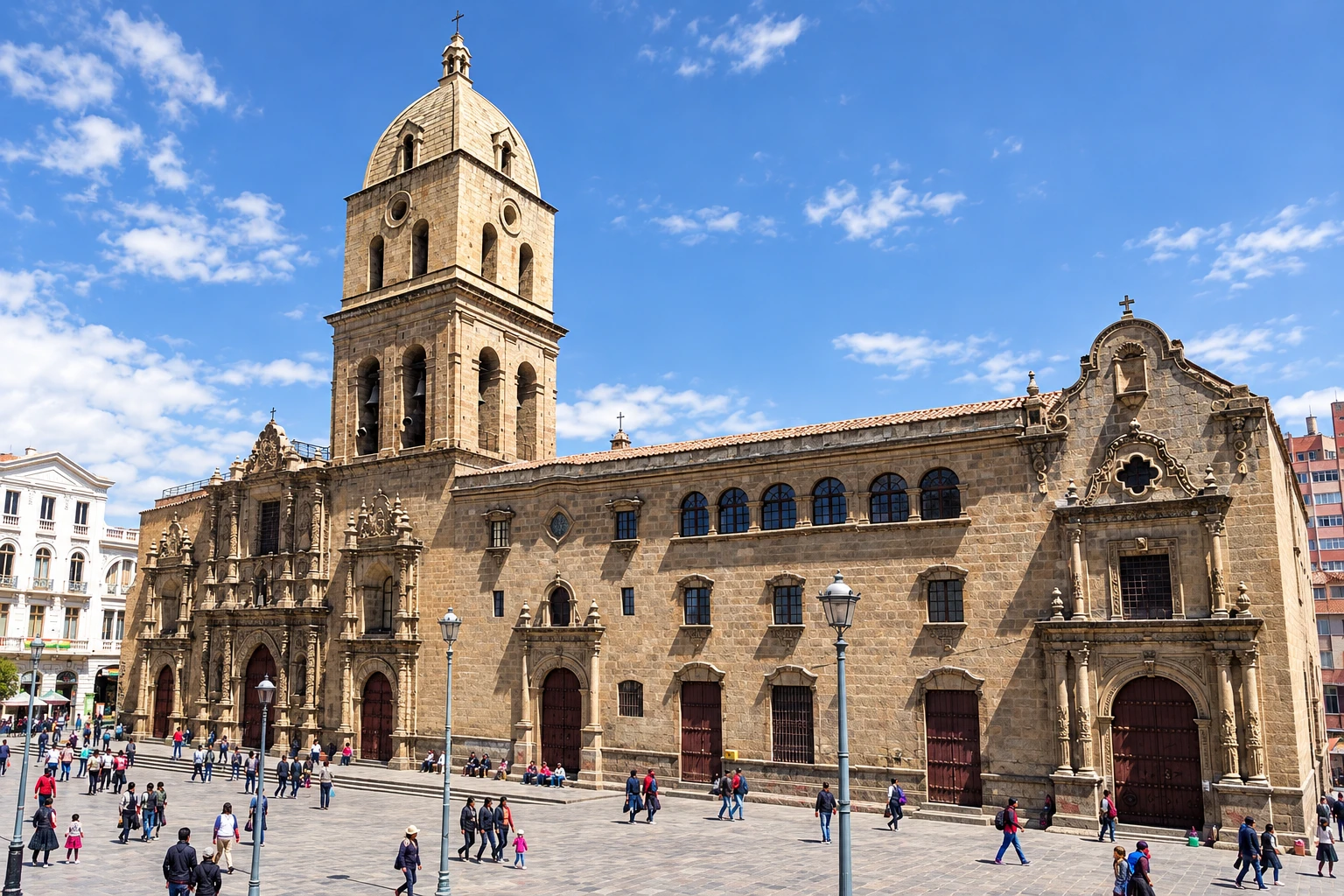
Seat of the Bolivian government, La Paz sits in an Andean canyon with the city center at about 3,600 meters and the snow-capped Illimani in the background. The colonial center has Plaza Murillo, Calle Jaén and the Basílica de San Francisco, and Mi Teleférico links the neighborhoods to El Alto on the Altiplano. From here you can take trips to Tiwanaku, Valle de la Luna and Copacabana on Lake Titicaca.
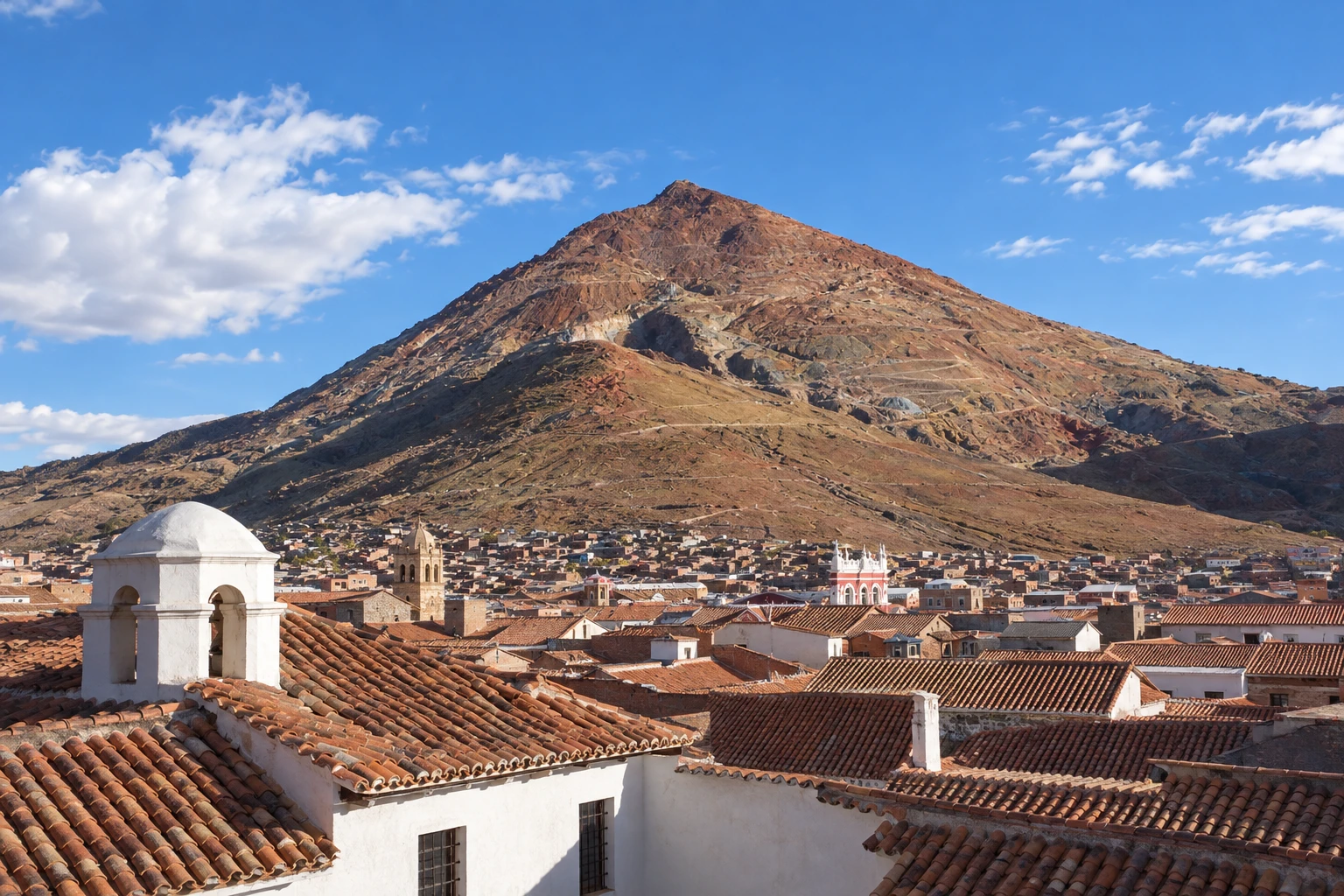
Potosí is about 4,000 meters high, at the foot of Cerro Rico, the silver mountain that made the city one of the richest and most populous in the world in the 17th century. A World Heritage Site since 1987, it has baroque churches, mansions with wooden balconies and the Casa Nacional de Moneda, where colonial silver was minted. It is the capital of the department of Potosí and is 3 hours from Sucre.

Traveler area
The app
Save the destinations you want to visit, send your travel photos and get the guide's news.
Cidade Turismo around the world
The routes, destinations and cities of each country, with things to do, when to go and how to get there.
Bolivia In the guide
Beyond the guide
Frequently asked questions
A travel guide to Bolivia, organized into routes, destinations, departments and cities. Each city has things to do, attractions, when to go and how to get there. It is part of Cidade Turismo, a guide with countries on every continent, Flavors, Festivals and events and the knowledge pages.
A route is a journey linking several towns. A destination is a tourist region with its towns. A city is the place itself, with its attractions.
They are illustrations based on the real place, not photographs, and may differ from it. Photos sent by travelers are shown separately, as travelers' photos.
Type the name in the search box: it can be a route, destination, department, city or attraction. Or start from Routes, Destinations or Departments and cities in the menu.
Yes. Destinations already translated are available in Spanish and English at cidadeturismo.com, and the rest are being added.
Yes, for Android, on Google Play. With it you can save the destinations you want to visit and get the guide's news.