Charquekan
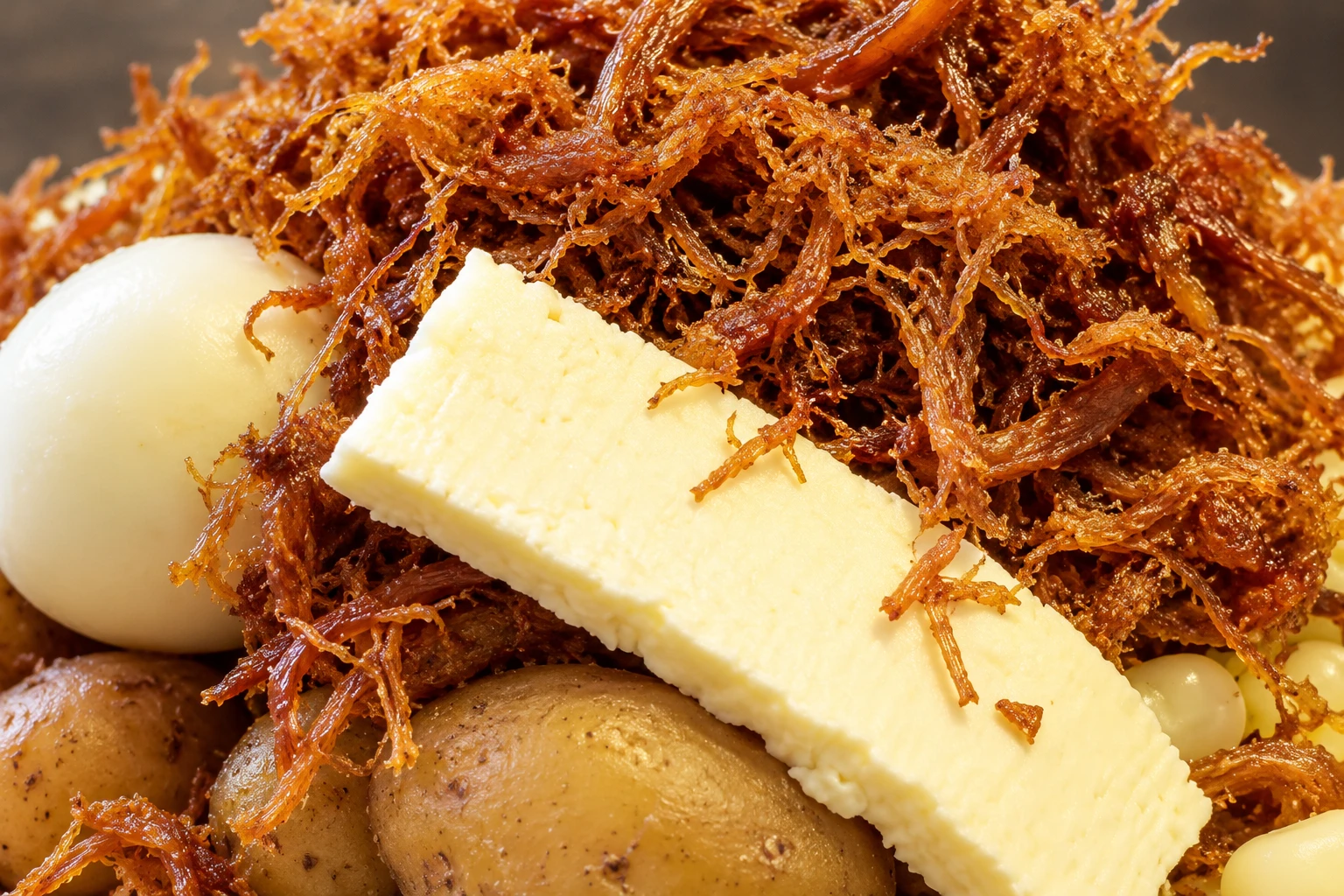
Oruro dish of shredded llama charque fried until crispy, served with mote (corn), potato, hard‑boiled egg, cheese and llajwa. It is a traditional specialty of the city of Oruro.
Antarctica
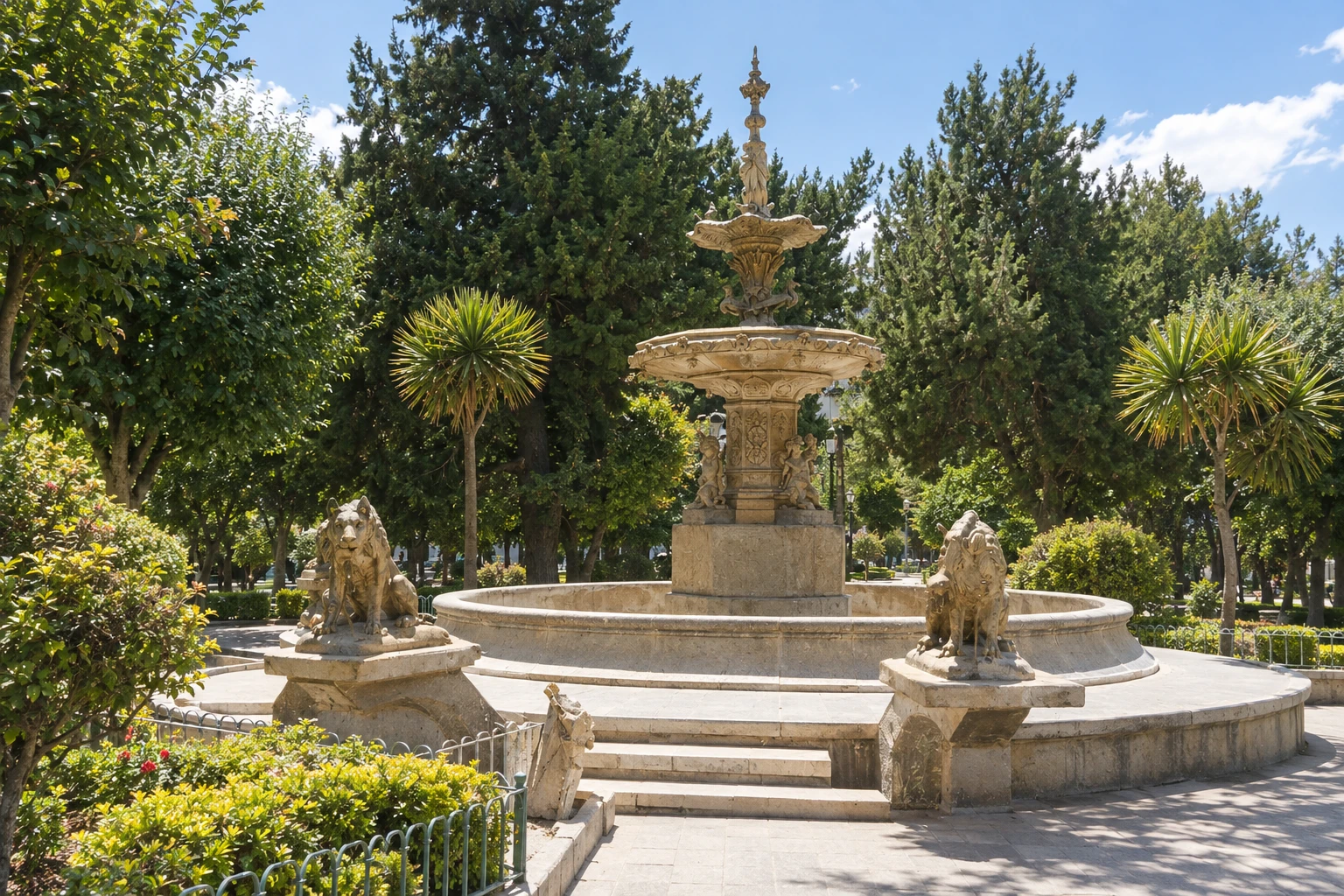
In the photo: Fountain and gardens of Plaza 10 de Febrero, in Oruro.
Illustrative images. The pictures in this guide are illustrations based on the real place, not photographs, and may differ from it.
The city
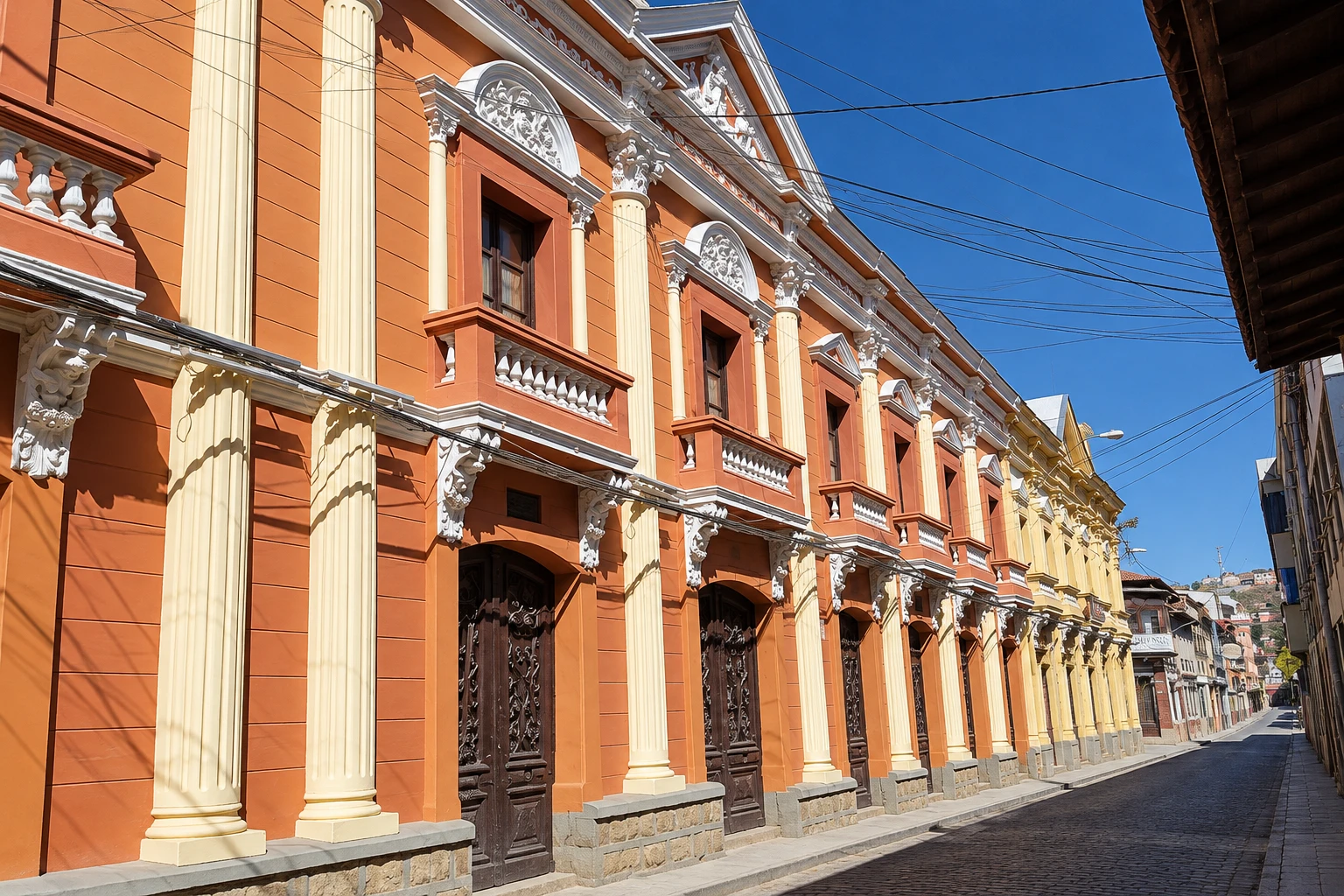
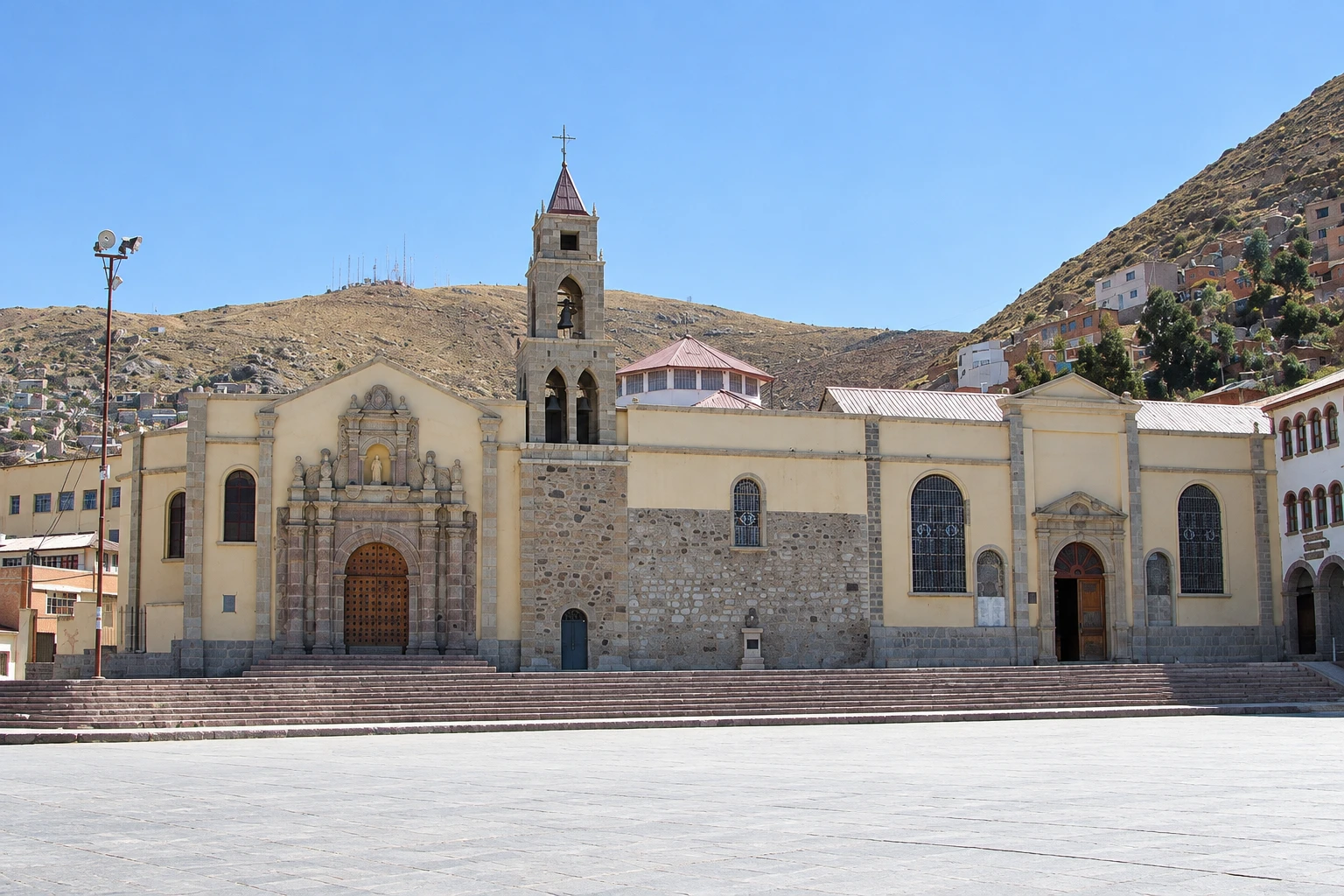
Capital of the Oruro department on the altiplano at about 3,700 meters. Founded in 1606 because of silver, it later grew with tin and the railway. It hosts the Oruro Carnival, a UNESCO heritage event honoring the Virgin of the Socavón, whose sanctuary stands beside an old mine. A cable car goes up to the Virgin monument on Cerro Santa Bárbara. It is the city of charquekan.
There's no accommodation in the guide yet in Oruro.
Tem hotel, pousada ou casa de temporada aqui? Cadastre a suaThere are no restaurants in the guide yet in Oruro.
Know a good one? Recommend it to usHotéis e restaurantes da cidade no mapa.
how to get there · how many days · itinerary · questions
Flavors of Bolivia
The local experience
Sanctuary of the miners’ patroness, at the foot of Cerro Pie de Gallo, beside the entrance to an old mine. It is the endpoint of the Oruro Carnival and has a museum that descends to a mine gallery.
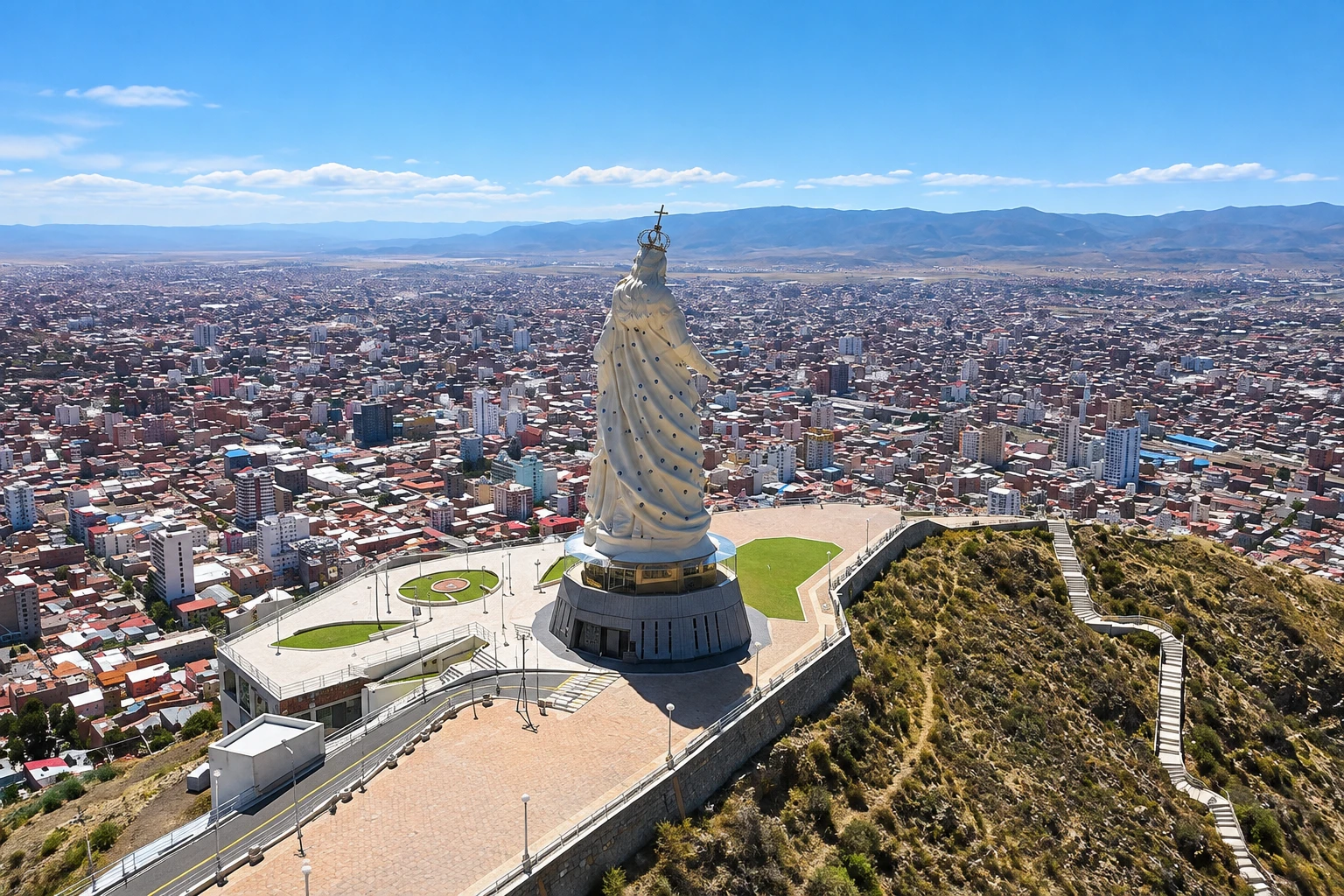
Statue of the Virgen del Socavón over 45 meters tall, atop Cerro Santa Bárbara, inaugurated in 2013. It is reached by cable car from Plaza del Folklore; inside, stairs lead to viewing platforms.
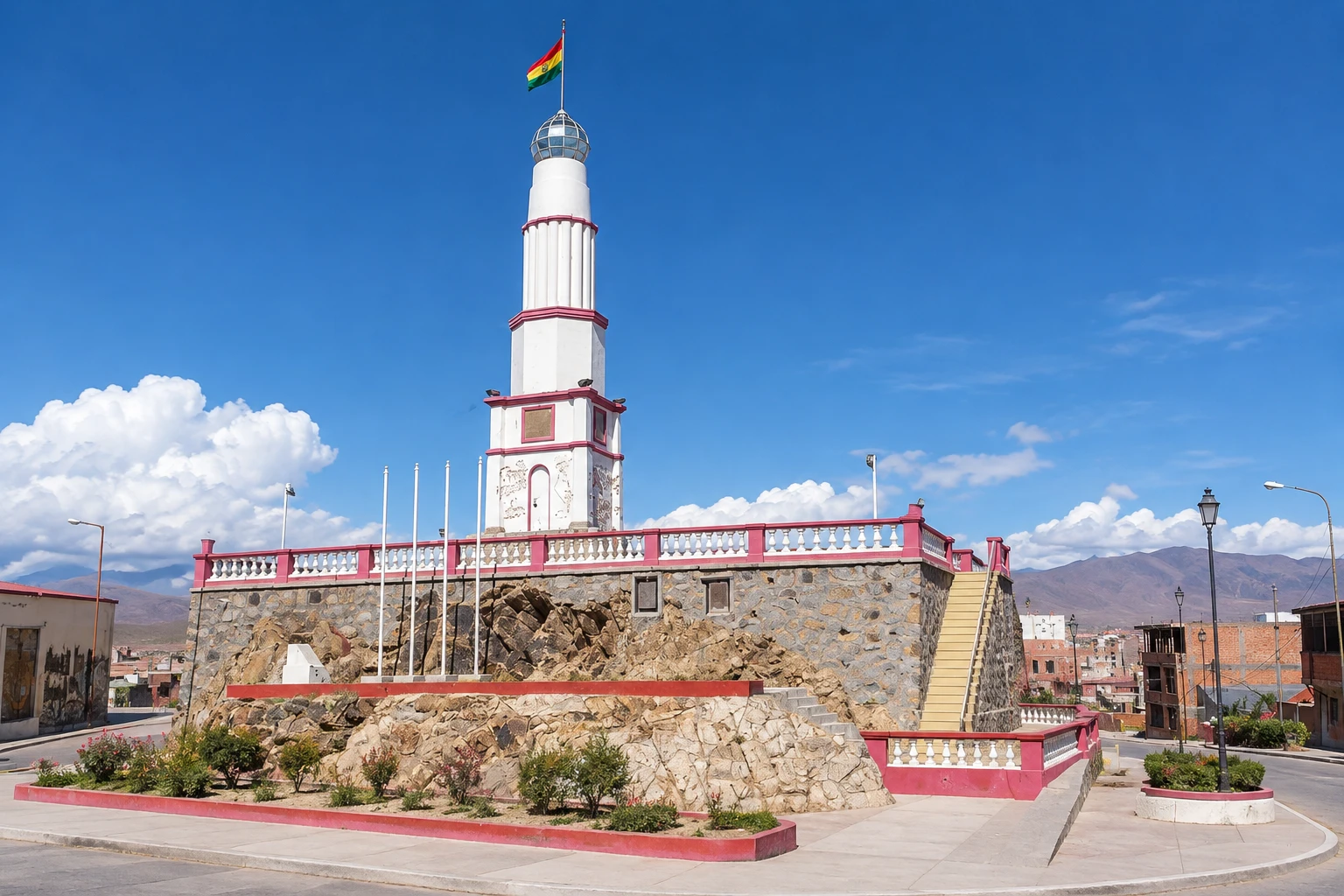
Lookout in central Oruro where, according to tradition, Bolivia’s tricolor flag was hoisted for the first time in 1851. It has a column topped by a glass globe that is lit at night.
Former house of tin magnate Simón I. Patiño in central Oruro, built between 1900 and 1913 in a French style. It is a museum of the Universidad Técnica de Oruro, with the family’s furniture and objects.
Before you go
Oruro – Bolivia Capital
Approximate distances. Check flights and bus, train or boat schedules before you travel.
Juan Mendoza International Airport (ORU) is about 4 km from the center, with few domestic flights. Most travelers arrive by bus: it’s about a three‑hour road trip from La Paz. There are also buses to other cities in the country. Confirm schedules before you travel.
A full day covers the Sanctuary of the Virgin of the Socavón, the mine museum, the cable car to the Virgin monument, the Casa de la Cultura Simón I. Patiño and the Faro de Conchupata. During Carnival, allow two or three days.
It is cold year‑round. From May to August the sky tends to be clear and nights fall below zero. The rainy season is November to March. Carnival takes place in February or March depending on the date of Lent.
The seasons shown are the most usual ones; nature doesn't always follow the calendar.
No. The center, the sanctuary and the cable car station are close to one another and can be reached on foot or by taxi. Buses connect to other cities.
Suggested itinerary
Built with the places on this page. No rush: it's paced so you have time to see them.
Start at the Sanctuary of the Virgin of the Socavón on Plaza del Folklore, and take the guided tour of the museum, which goes down into a gallery of the old mine.
On the other side of Plaza del Folklore, take the cable car up to Cerro Santa Bárbara. Climb to the monument of the Virgin of the Socavón, which has viewpoints inside, and see the city and the altiplano from above.
In the center, visit the Casa de la Cultura Simón I. Patiño, the former home of the tin magnate, and finish at the Faro de Conchupata, a viewpoint illuminated at the end of the day.
Find a restaurant or a downtown market to try charquekan, a dish of llama jerky with corn and potato.
Check before you go. Opening hours and days change, and places may close for renovations, holidays or events. This itinerary is a suggestion from Cidade Turismo, not a commitment: plan yours by checking directly with each place you intend to visit.
Before you go
The Sanctuary of the Virgin of the Socavón and the mine museum, the cable car up to the Virgin monument on Cerro Santa Bárbara, the Casa de la Cultura Simón I. Patiño and the Faro de Conchupata. At night, have a plate of charquekan.
It is the city’s major festival, honoring the Virgin of the Socavón, with dozens of dance groups and thousands of dancers and musicians. It was proclaimed by UNESCO in 2001 as a Masterpiece of the Oral and Intangible Heritage of Humanity.
She is the patroness of the miners of Oruro, venerated in the sanctuary at the foot of Cerro Pie de Gallo, next to the entrance of an old mine. Local tradition places the appearance of the painted image that is venerated there in 1789.
By cable car from Plaza del Folklore, beside the sanctuary. The route is about 820 meters and takes a few minutes.
The charquekan, made with shredded and fried llama charque, corn, potato, egg and cheese. The city is also known for rostro asado, roasted lamb’s head sold at night.