 10 destinations · 28 cities
the Dominican Republic
Punta Cana and Bávaro, Santo Domingo's Ciudad Colonial, Samaná, Puerto Plata, and Bayahibe: the guide with routes, destinations, and towns.

 Search
 Brazil
 Antarctica
 Argentina
 Bolivia
 Chile
 Colombia
 Ecuador
 Falkland Islands (Malvinas)
 French Guiana
 Guyana
 Paraguay
 Peru
 Suriname
 Uruguay
 Venezuela
 Austria
 Belgium
 Croatia
 Denmark
 Finland
 France
 Germany
 Greece
 Hungary
 Iceland
 Ireland
 Italy
 Luxembourg
 Norway
 Poland
 Portugal
 Slovakia
 Slovenia
 Spain
 Sweden
 Switzerland
 the Czech Republic
 the Netherlands
 the United Kingdom
 Turkey
 Bermuda
 Canada
 Greenland
 Mexico
 Saint Pierre and Miquelon
 the United Statesthe Dominican Republic
 JapanTurkey
 Egypt
 South Africa
 Australia
 Fiji
 New Zealand
 Papua New Guinea
The countries of Central America and the Caribbean on Cidade Turismo: what to do, when to go and what to know before you go.
1 country 10 destinations 28 cities
Across Cidade Turismo: 53 countries · 101 routes · 925 destinations · 2,317 cities
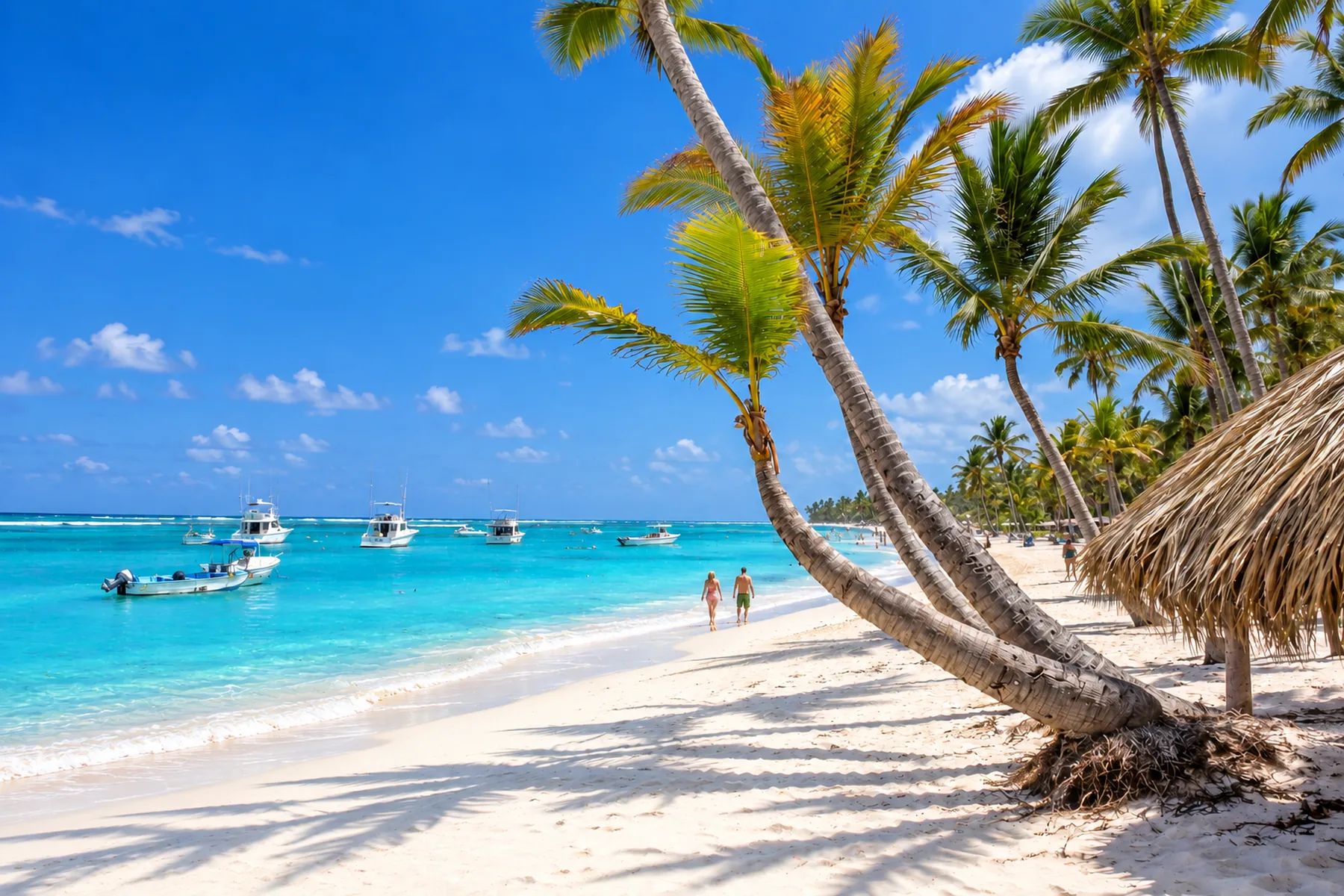
In the photo: Praia de Bávaro — Punta Cana, the Dominican Republic see the guide to the Dominican Republic →
The guide
Central America and the Caribbean bring together in one region the seven isthmus countries, from Belize to Panama, and the islands of the Caribbean Sea, from Cuba to the Lesser Antilles. There are volcanoes, forests, Mayan ruins, colonial cities and white-sand beaches, with a mix of languages and cultures: Spanish, English, French, Dutch, creoles and Papiamento.
This page covers all countries and territories of the region and what applies to the region as a whole. Each country will have its own guide, made city by city, with routes, destinations, attractions, when to go and how to get there, once complete.
The texts are written from official tourism and government sources. Entry requirements change over time: before buying a ticket, check the rules for your nationality on each country’s official website.
The countries
Each country has its own guide: the routes, the destinations, the cities and what to know before you go. New countries are added all the time.
the Dominican Republic
 Anguilla
 Antigua and Barbuda
 Aruba
 Barbados
 Belize
 Costa Rica
 Cuba
 Curaçao
 Dominica
 El Salvador
 Grenada
 Guadeloupe
 Guatemala
 Haiti
 Honduras
 Jamaica
 Martinique
 Montserrat
 Nicaragua
 Panama
 Puerto Rico
 Saint Barthélemy
 Saint Kitts and Nevis
 Saint Lucia
 Saint Martin
 Saint Vincent and the Grenadines
 Sint Maarten
 the Bahamas
 the British Virgin Islands
 the Caribbean Netherlands
 the Cayman Islands
 the Turks and Caicos Islands
 the U.S. Virgin Islands
 Trinidad and Tobago
The linked countries already have a guide. The others are added little by little, each one once its guide is complete.
Flavors of the countries
Pick a country to see its traditional dishes, sweets and drinks.
Central America and the Caribbean
Entry rules vary from country to country and depend on your nationality. For tourism, many countries in the region admit citizens of most nationalities with just a valid passport; others require a visa or authorization obtained before travel. Some also require a return ticket and proof of accommodation booking for arrival.
Territories follow the rules of the authority that administers them. Puerto Rico and the United States Virgin Islands follow United States entry rules. Guadeloupe, Martinique, Saint-Martin and Saint-Barthélemy are French; Aruba, Curaçao, Sint Maarten and the Dutch Caribbean belong to the Netherlands; and several islands are British territories, each with its own regulations.
Some countries in the region require the International Certificate of Vaccination against yellow fever from travelers arriving from countries with transmission risk. The vaccine must be taken at least 10 days before travel.
Entry requirements change over time: before buying a ticket, check the rules on each country’s official website.
Central America and the Caribbean
The region is warm year-round, and what changes your trip is the rainfall. The dry season typically runs from December to April, with calmer seas and clearer skies, and it is high season at the beaches.
The Atlantic hurricane season runs from June to November, with higher frequency from August to October. During that period, the weather can change from one day to the next: follow forecasts and prefer reservations that allow rescheduling.
In the mountains and volcanoes of Central America, nights are cooler, and trails are easier to tackle during the dry season.
Central America and the Caribbean
Between islands, the most common way is by plane, with short regional flights; in some archipelagos there are boats and ferries between neighboring islands. Cruises also call at several ports on a single voyage.
In Central America there are buses between countries and short flights linking capitals. To explore natural areas, such as national parks and more remote beaches, a rental car or tours with included transportation are very helpful.
For driving, many foreign licenses are accepted for a short period, sometimes together with the International Driving Permit. Check the rule for each country, and remember that on several British-colonized islands, such as Jamaica, the Bahamas and Barbados, driving is on the left.
Central America and the Caribbean
Currency varies from place to place. The US dollar is the official currency in Panama, El Salvador, Puerto Rico and the Virgin Islands, and it is accepted in many tourist areas across the region. Several islands use the East Caribbean dollar, and the French islands use the euro. Credit cards are accepted in hotels and cities; carry some cash for smaller places.
Time zones range from UTC−4 to UTC−6: the Lesser Antilles, Puerto Rico and the Dominican Republic are in UTC−4; Cuba, Jamaica, the Bahamas and Panama are in UTC−5; most of Central America is in UTC−6.
Voltage and outlets vary: in much of the region it is 110–120 volts with the US flat-pin plug; on the French islands, 220 volts with the European round-pin plug. Bring a universal adapter.
Frequently asked questions
It depends on the country and your nationality. Many countries and islands in the region admit tourists with just a valid passport; others require a visa or prior authorization. Puerto Rico and the United States Virgin Islands follow US rules. Check each place’s requirements before buying a ticket.
Some countries in the region require the International Certificate of Vaccination from travelers arriving from countries with yellow fever transmission risk. Get the vaccine at least 10 days before travel and check the requirement for each country on your itinerary.
The dry season, usually December to April, is high season, with calmer seas and less rain. Hurricane season runs from June to November, with higher frequency from August to October.
The US dollar is accepted in many tourist areas and is the official currency in Panama, El Salvador and Puerto Rico. The French islands use the euro, and several islands use the East Caribbean dollar. Credit cards are accepted in hotels and cities.
No. Geographically, Central America and the Caribbean islands are part of North America. On Cidade Turismo, they have their own page, as in travel guides, because traveling there is very different from traveling to the United States and Canada.