Berlin and Potsdam

Berlin · Brandenburg

Berlin and Potsdam

The German capital, with the memory of the Wall and the Second World War, the Museumsinsel and lively neighborhoods, and nearby Potsdam, with the palaces and gardens of the kings of Prússia.

East

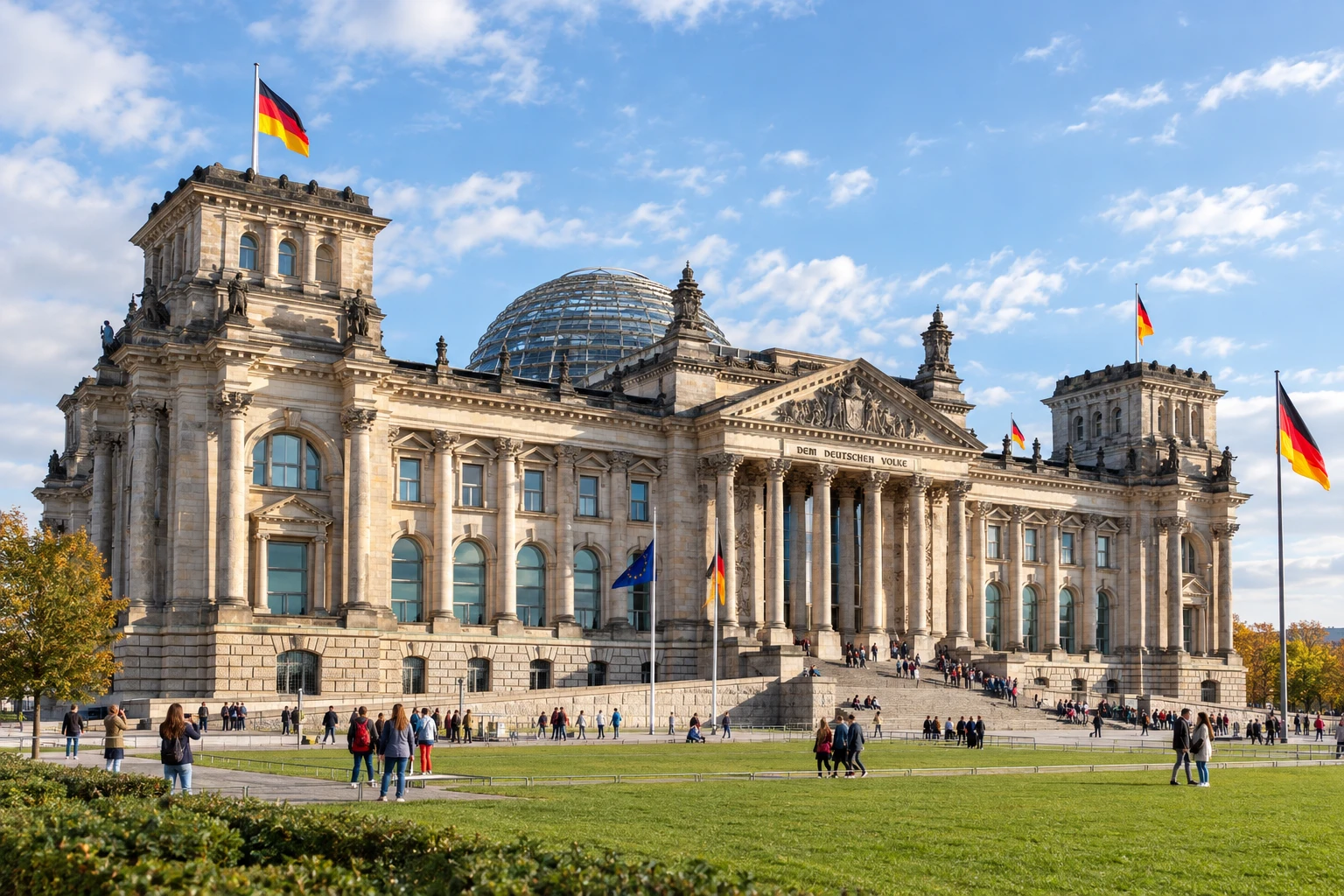
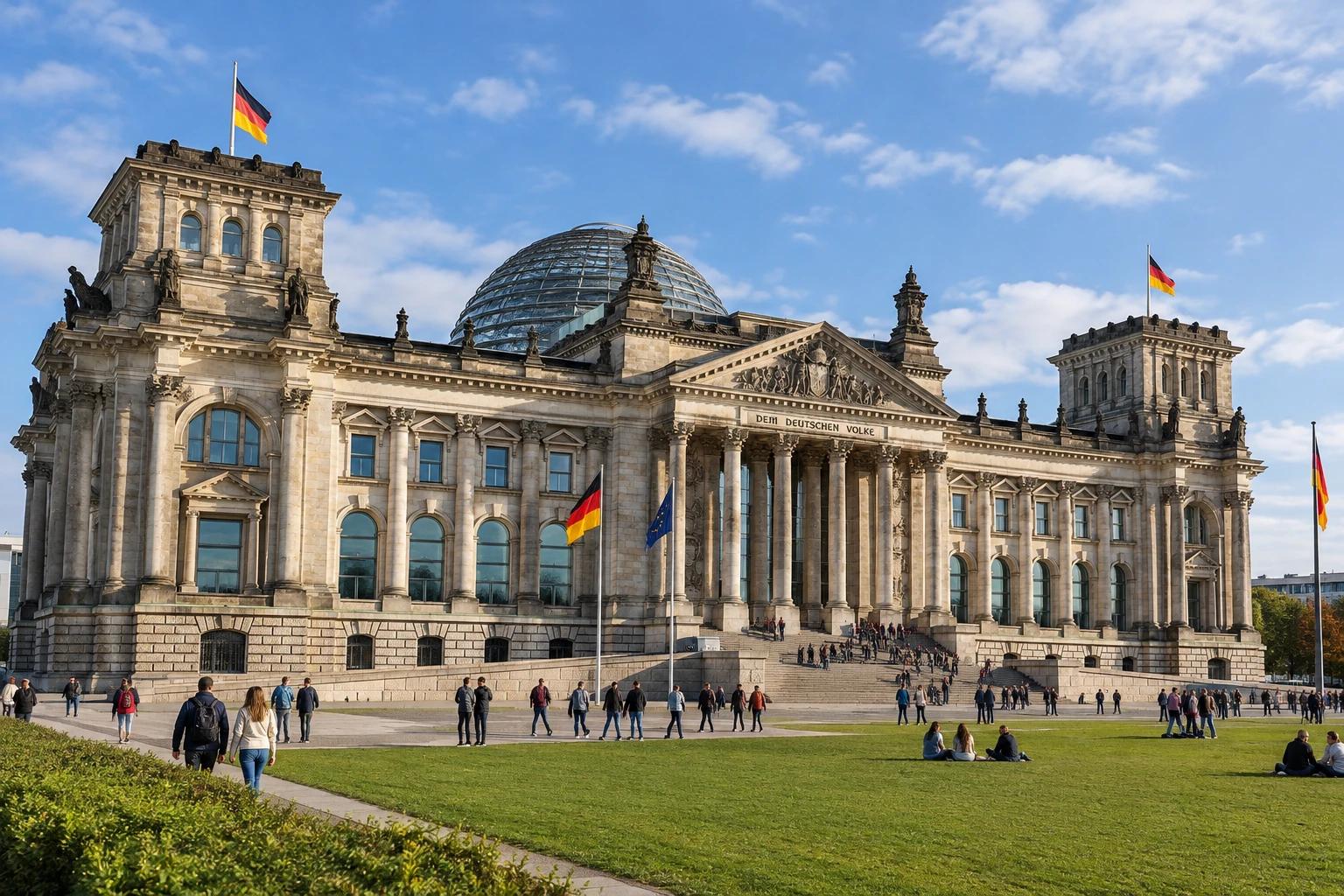
In the photo: Reichstagsgebäude, Berlim

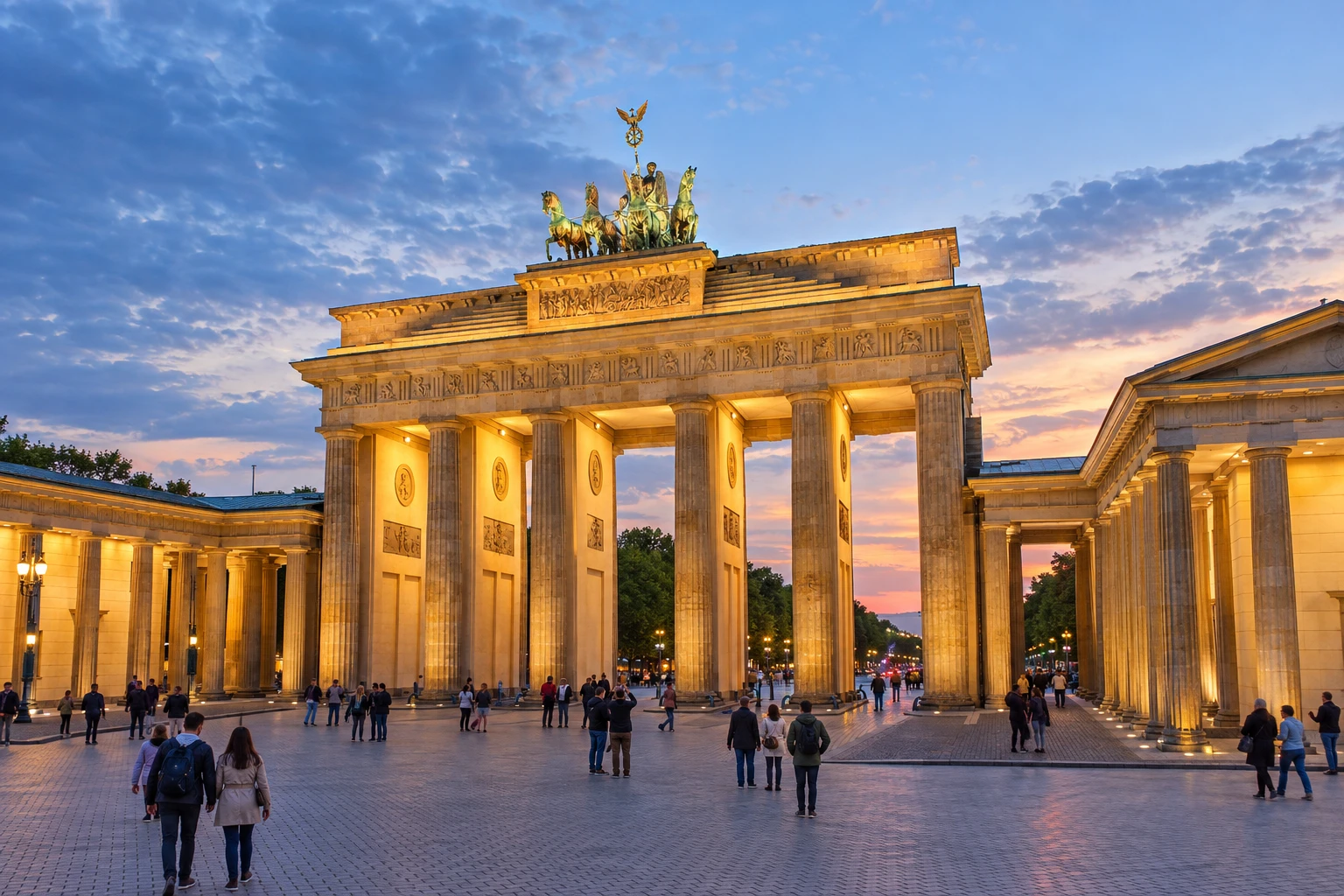
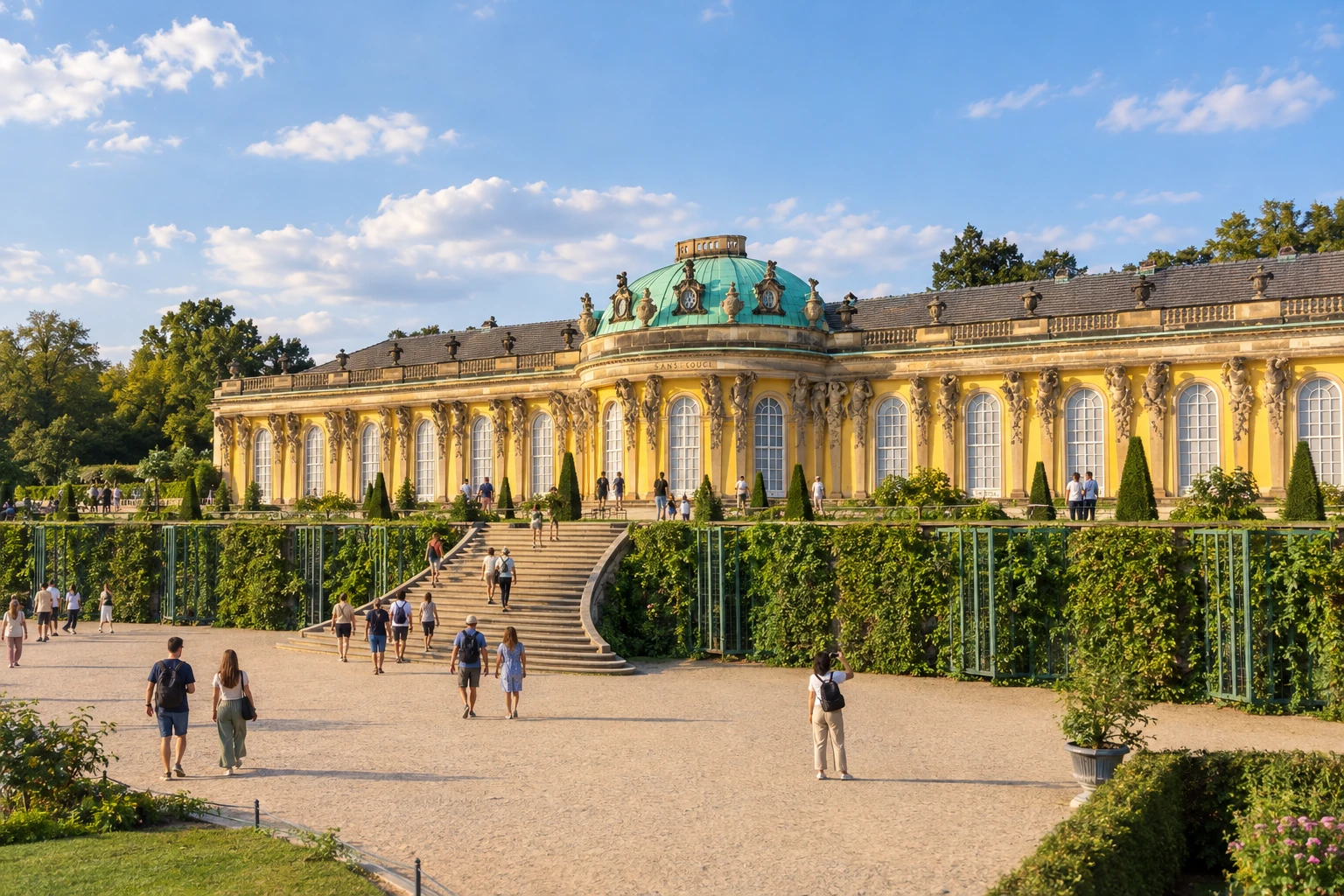
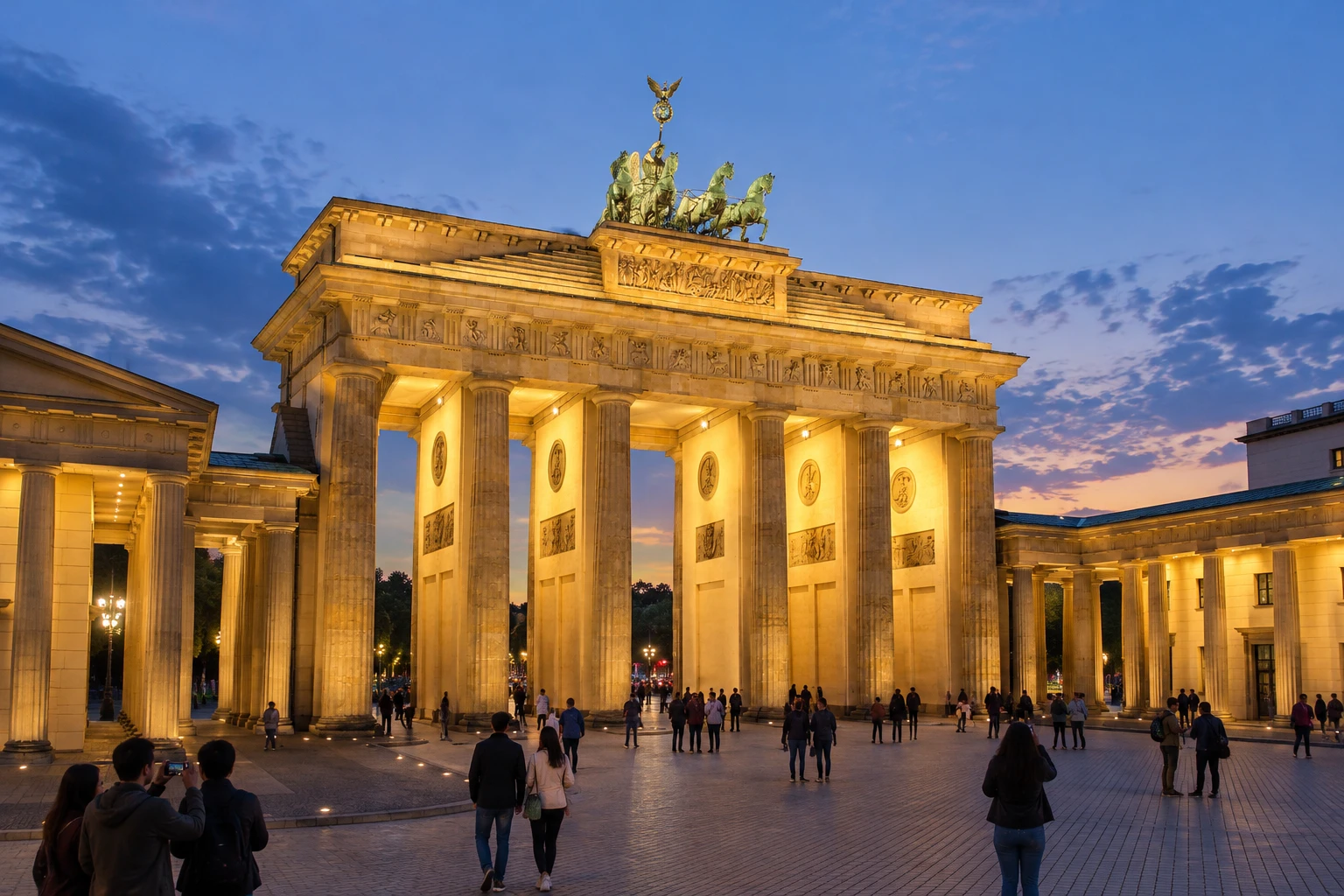
Illustrative images. The pictures in this guide are illustrations based on the real place, not photographs, and may differ from it.

Get it on Google Play

Get to know the place

A region to enjoy
at your own pace.

Berlim is the capital and largest city of Germany. It was the capital of Prússia and of the German Empire, was divided by a wall from 1961 to 1989 and became a single city again with the country's reunification in 1990. That history is visible in the streets: markers on the ground show where the Wall ran, and sections remain standing on Bernauer Straße and at the East Side Gallery.

In the historic center, the Brandenburger Tor opens onto the boulevard Unter den Linden, which leads to the Museumsinsel, the Island of Museums, a complex declared a World Heritage Site by UNESCO. Nearby are the Berliner Dom, the television tower at Alexanderplatz and the Reichstag, the parliament seat, with a glass dome open to the public by reservation. The Holocaust memorials and the Topographie des Terrors address the Nazi era in a sober tone.

The city is large and spread out, but transport is straightforward: S-Bahn (city train), U-Bahn (metro), trams and buses use the same ticket, divided into zones A, B and C. Each neighborhood has its own feel: Kreuzberg and Friedrichshain with bars and street art, Prenzlauer Berg with restored old buildings and cafés, Charlottenburg with the palace and the Kurfürstendamm avenue.

Potsdam lies adjacent to Berlim, to the southwest, and is the capital of the state of Brandemburgo. It was the summer residence of the kings of Prússia, and the palaces and parks, led by the Palácio de Sanssouci, are also a World Heritage Site. Regional trains and the S-Bahn connect the two cities in under an hour, which makes Potsdam the most common day trip from Berlim.

This destination brings together 2 cities: Berlin, Potsdam.

Share: WhatsApp
Traveler, share your experiences through photos Up to 5 photos of each place you visited.

One destination, many paths

The cities on this trip

Start with one city or combine several in your itinerary.

Where Berlin and Potsdam is The star marks the capital, Berlin.
BerlinPotsdam

Outlines: © BKG (2026), dl-de/by-2-0. Adapted by Cidade Turismo.

How to get there: Berlin and Potsdam

Flughafen Berlin Brandenburg Willy Brandt (BER) · 27 km to Berlin

Connections with Brazil usually involve a stopover in another city. Confirm before buying. The airport is Berlin Brandenburg (BER), linked to the center by train. From Hamburg, Munich or Frankfurt, the ICE train of Deutsche Bahn arrives at Berlin Hauptbahnhof, the central station. Potsdam is less than an hour from Berlim by train.

Suggested arrival point: Berlin

The local experience

Things to do in Berlin and Potsdam

Potsdam · Brandenburg · Palace

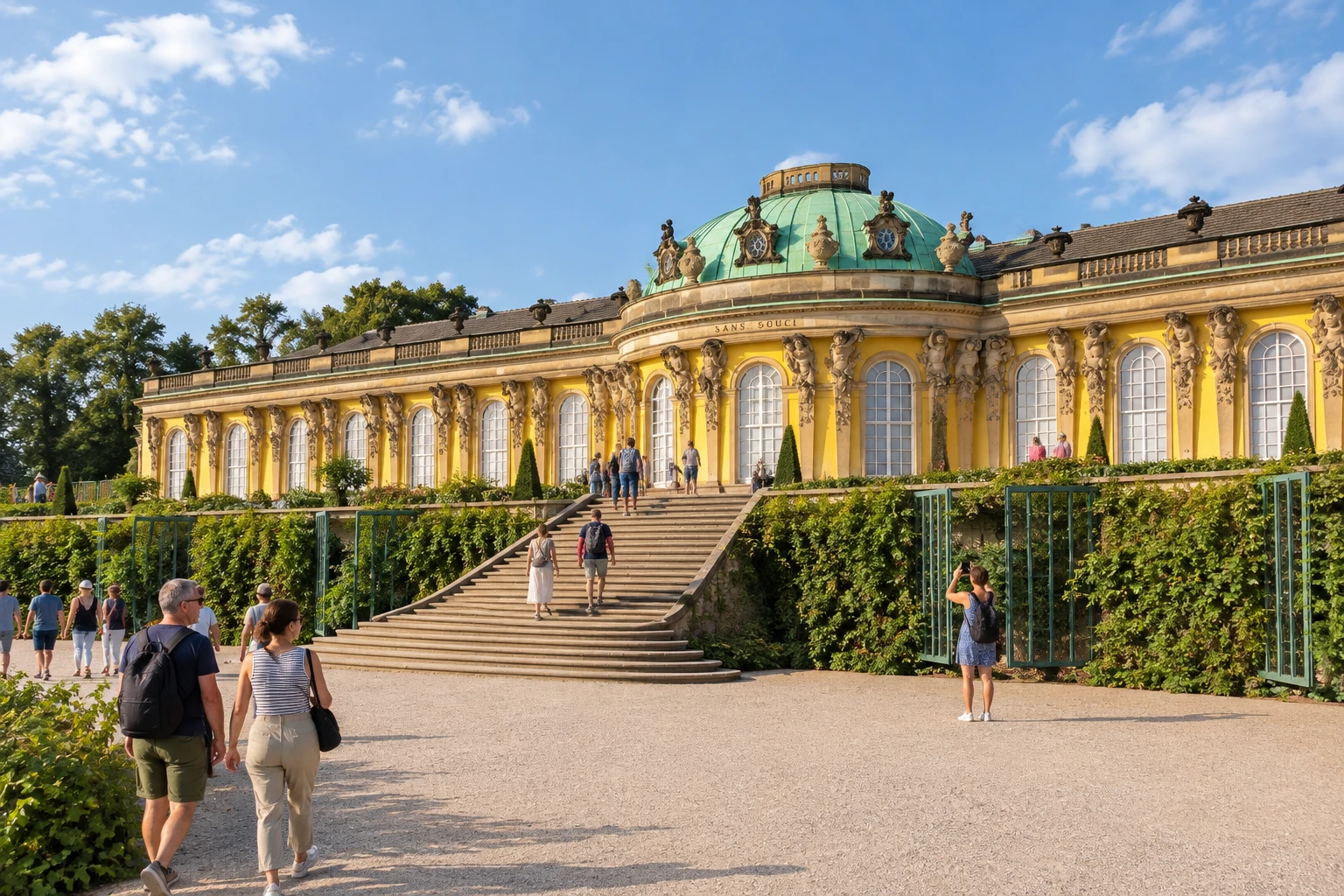
Sanssouci Palace

Summer palace of Frederick the Great, atop vineyard terraces. 18th-century Rococo, original rooms and the king's tomb on the upper terrace.

Explore Sanssouci Palace

Potsdam · Brandenburg · Park

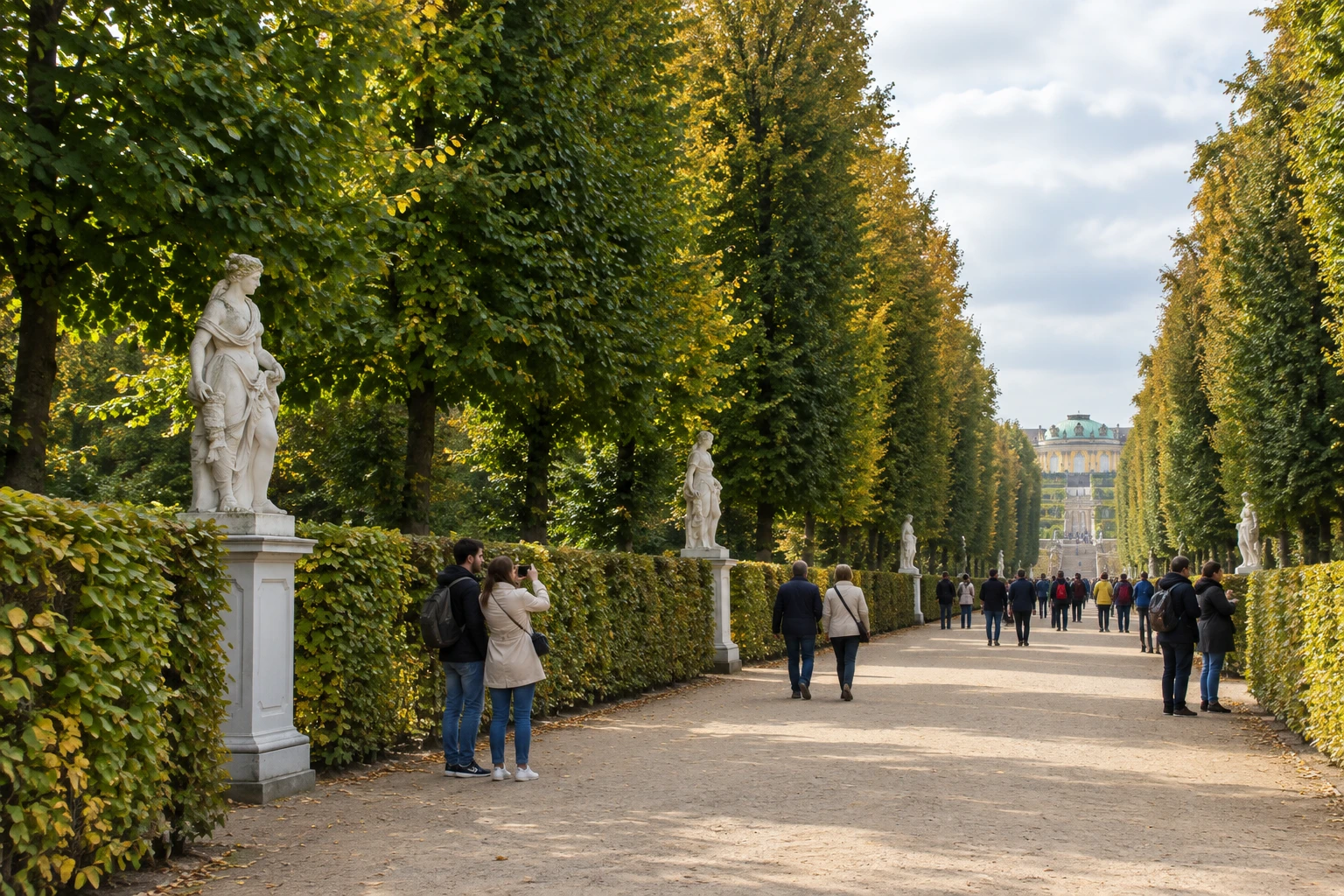
Sanssouci Park

Royal park of about 300 hectares, a World Heritage Site, with palaces, fountains, the Casa Chinesa, the Friedenskirche and paths that connect Sanssouci to the Neues Palais.

Explore Sanssouci Park

Berlin · Berlin · Architecture

Reichstag Building

Seat of the German parliament, the Bundestag. The glass dome, with a spiral ramp and a rooftop terrace, is open to visitors with advance booking on the parliament's website.

Explore Reichstag Building

See 35 more places in Berlin and Potsdam

To choose before you go

Tours in Berlin and Potsdam

Where each tour starts, how long it takes, how it is done, what is included and the price range.

Historic center on foot: Brandenburger Tor, Unter den Linden, Gendarmenmarkt and the Holocaust Memorial

From Pariser Platz (S+U Brandenburger Tor station) Walk through the historic center about 3 to 4 hours morning or afternoon easy (flat terrain)

The Brandenburger Tor (Brandenburg Gate) is the only historic city gate that survived. It was built between 1788 and 1791 by architect Carl Gotthard Langhans, in sandstone, about 26 m high; the Quadriga, the carriage pulled by four horses on top, dates from 1793 and was taken to Paris by Napoleon in 1806, returning in 1814. From 1961 to 1989 the gate stood inside the closed strip of the Berlin Wall; it reopened on December 22, 1989. Unter den Linden avenue leads away from it, the linden-lined boulevard that reaches the Museumsinsel, passing Humboldt University, the State Opera and the Neue Wache. A few minutes south of the gate is the Denkmal für die ermordeten Juden Europas, the Memorial to the Murdered Jews of Europe: 2,711 concrete blocks of varying heights, a design by Peter Eisenman, opened in 2005, with an underground information center that documents the persecution. Continue along Friedrichstraße to Gendarmenmarkt, the square formed by the Konzerthaus, by Karl Friedrich Schinkel, and the two twin churches, Deutscher Dom and Französischer Dom, the latter connected to the French Huguenots who settled in Berlin. The square underwent about two years of renovation and now has new paving while keeping its checkerboard layout.

Stops: Brandenburger Tor, Unter den Linden, Gendarmenmarkt, Denkmal für die ermordeten Juden Europas.

Includes: Free walk: streets, squares, the gate and the memorial’s field of blocks are open and admission is free. The memorial’s information center also does not charge entry. Climbing the Französischer Dom dome and guided tours are paid separately.

Tip: Start early at the Brandenburg Gate, before the tour groups arrive. At the memorial, walk among the blocks in silence and allow half an hour for the information center, which explains what the field of blocks does not show. Combine this walk with the Reichstag, which is next to the gate.

Best time: All year. From May to September the days are long and the lindens are green; in December Gendarmenmarkt usually hosts a Christmas market, check before you go.

Reichstag: the glass dome with reservation and the Großer Tiergarten park

From Platz der Republik (S+U Brandenburger Tor or Bundestag station, U5) On foot; advance registration required for the dome about 1 h 30 in the dome; plus 1 to 2 hours in the park morning, afternoon or evening easy (spiral ramp)

The Reichstagsgebäude is the seat of the Bundestag, the German parliament. The 1894 building was set on fire in 1933, damaged in the war and rebuilt in the 1990s by Norman Foster’s office, which added the glass dome open to the public. Inside the dome, two spiral ramps of about 230 m in total lead to the top, offering views over the Tiergarten, the Brandenburg Gate, the Hauptbahnhof (central station) and the government district; through the center you look down to the plenary chamber. A roughly 20-minute audio guide, in several languages including Portuguese, accompanies the ascent and is handed out on the terrace. Entry is free, but you must register in advance on the Bundestag site, giving full name and date of birth for each visitor, and bring your passport on the day. Those without a reservation can try for a spot at the visitor centre on Platz der Republik, with confirmation at least two hours before. Entries are every fifteen minutes and the last slot is usually late in the evening. The dome closes on some days each year for cleaning and during special sessions. Afterward, cross over to the Großer Tiergarten, a park of about 210 hectares that was once hunting grounds for the electors and became a public park at the end of the 17th century. In the middle, at the Großer Stern roundabout, stands the Siegessäule (Victory Column), 69 m high, completed in 1873; 285 steps lead up to the platform below the golden statue. North of the park is Schloss Bellevue, the official residence of the President of Germany.

Stops: Reichstagsgebäude, Großer Tiergarten.

Includes: Dome and terrace have free entry, with mandatory advance registration and photo ID. Audio guide included. Terrace restaurant requires its own reservation. Park is open free of charge; the climb to the Siegessäule has a separate paid admission.

Tip: Register as soon as you finalize your travel dates: late-afternoon slots sell out first. Prefer the end of the day, when the light falls over the city and the lights come on. Bring your original passport: a copy is not accepted. In the Tiergarten, bus 100 cuts through the park along Straße des 17. Juni and stops at the Siegessäule.

Best time: Open year-round; the dome is covered. From April to October the Tiergarten is green; in January and February the park is bare and the dome may close for maintenance on some days, so confirm before you go.

Museumsinsel (Museum Island), Berliner Dom and Humboldt Forum

From S-Bahn Hackescher Markt station or U Museumsinsel (U5) On foot between the museums; timed tickets a full day for two museums and the cathedral full day easy (stairs in the Dom dome)

Museumsinsel (Museum Island) occupies the northern tip of an island in the River Spree and has been a UNESCO World Heritage Site since 1999. There are five museums built between 1830 and 1930: the Altes Museum by Schinkel, with Greek and Roman antiquities; the Neues Museum by Friedrich August Stüler, restored by David Chipperfield and reopened in 2009 housing the Egyptian Museum, which holds the bust of Nefertiti, and the prehistory collection; the Alte Nationalgalerie, with 19th-century painting and sculpture from Caspar David Friedrich to the Impressionists; the Bode-Museum, with sculpture and Byzantine art; and the Pergamonmuseum, which is undergoing a long renovation and is not open to visits—do not count on it. The James-Simon-Galerie (2019) is the entrance building and link between the museums. Next to them is the Berliner Dom, the cathedral of 1905 built for Emperor Wilhelm II, with a dome of almost 100 m, the Hohenzollern crypt with 91 graves and a walkway around the dome with views over the island; the visit is paid. On the other side of the Lustgarten is the Humboldt Forum, the reconstructed former royal palace with three baroque facades and one modern side, a project by Franco Stella. Inside are the Ethnological Museum and the Museum of Asian Art, the Berlin Global exhibition, the palace basement with remains of a medieval monastery and a roof terrace with views of Museumsinsel and the TV tower.

Stops: Museumsinsel, Berliner Dom, Humboldt Forum.

Includes: Each museum has a separate paid ticket; there is a Museumsinsel day ticket and the three-day Museum Pass Berlin, which covers more than 30 museums. Berliner Dom requires a paid ticket, purchased online. At the Humboldt Forum, some exhibitions are free and the main collections and the terrace require separate payment.

Tip: Choose two museums and take your time: the Neues Museum and the Alte Nationalgalerie are the most sought-after. State museums are closed on Mondays. Buy a timed ticket online to avoid queues at the James-Simon-Galerie. Climb the Dom late in the afternoon, when the light hits the island.

Best time: Open all year, indoor program; a good option for rainy days and for winter, from December to February. In July and August queues grow—buy timed tickets.

Gedenkstätte Berliner Mauer (Wall Memorial) on Bernauer Straße and Mauerpark

From S Nordbahnhof station (S1, S2, S25) On foot along Bernauer Straße about 2 to 3 hours morning or afternoon easy (flat terrain)

The Gedenkstätte Berliner Mauer is the place to understand how the Wall operated. The outdoor exhibition stretches for 1.4 km along Bernauer Straße, a street that was cut by the border in 1961: houses were on the east side and the sidewalk on the west side, and people jumped from windows in the early days. In the central section, about 500 m between Gartenstraße and Strelitzer Straße, a 70 m piece of the Wall has been preserved with the death strip, a watchtower and lighting, visible from the five-storey Documentation Center tower. On the street are the Window of Remembrance, with photos of people who died trying to cross the border, and the Chapel of Reconciliation, built on the site of the church that was dynamited in 1985 because it stood in the strip. The Visitors’ Center at Bernauer Straße 119 has films and maps; at Nordbahnhof station there is an exhibition about the “ghost stations” of the subway, where west-side trains passed without stopping. Walk along the street to Mauerpark, a park built over the former border strip between Prenzlauer Berg and Wedding. On Sundays it hosts a flea market and, in the amphitheater, an open-air karaoke that usually takes place in the afternoon, weather permitting.

Stops: Gedenkstätte Berliner Mauer, Mauerpark.

Includes: All exhibitions on Bernauer Straße, the observation tower and the Visitors’ Center are free to enter. Guided tours and workshops have separate fees. Mauerpark and the market are open.

Tip: Start at the Visitors’ Center to watch the short film and then go up the Documentation Center tower. The centers are closed on Mondays; the outdoor area is open every day. For the Mauerpark market and karaoke, go on Sunday afternoon.

Best time: Year-round. On November 9, the anniversary of the Wall’s fall, there are usually events at the memorial. The Mauerpark karaoke generally runs from April to October, in good weather.

Checkpoint Charlie and Topographie des Terrors

From Kochstraße U station (U6) or S+U Potsdamer Platz On foot along Friedrichstraße and Niederkirchnerstraße about 2 to 3 hours morning or afternoon easy (flat terrain)

Checkpoint Charlie, on Friedrichstraße, was the border crossing used by diplomats, allied military and foreigners between the American sector and the Soviet sector. In October 1961 American and Soviet tanks faced each other there, one of the tensest moments of the Cold War. The original guardhouse was removed in 1990 and is in the Allied Museum; in its place is a smaller replica, the sign marking exit from the American sector and an outdoor exhibition on the corner of Zimmerstraße about escape attempts. The Mauermuseum, a private museum on the same corner, collects objects and stories of escapes and charges admission. A few blocks away, at Niederkirchnerstraße 8, is the Topographie des Terrors, a documentation center on the site where, from 1933 to 1945, the Gestapo headquarters, SS leadership and, from 1939, the Reich Main Security Office operated; in the Gestapo basement about 15,000 opponents were arrested and interrogated. The main exhibition, inside the 2010 building, proceeds in five parts from the seizure of power to the postwar period; outside, a trench dug along the street shows the remains of the basement, with panels on Berlin between 1933 and 1945. Along the edge of the site runs a stretch of about 200 m of the Wall, one of the longest sections left in the center.

Stops: Checkpoint Charlie, Topographie des Terrors.

Includes: Checkpoint Charlie is on public street and free to visit. The Topographie des Terrors does not charge admission, nor does its outdoor area. The Mauermuseum and the paid exhibitions nearby require separate tickets.

Tip: Do not pay to take pictures with performers dressed as soldiers at the guardhouse. Allow time for the Topographie des Terrors: the texts are dense and there is an audio guide. The panel pathway on Wilhelmstraße, alongside, shows where the Third Reich ministries were located.

Best time: All year. The indoor exhibition is sheltered; the outdoor trench is better in dry weather, from April to October.

See 13 more tours

Potsdam: Schloss Sanssouci, Park Sanssouci and Neues Palais

From Berlin Hauptbahnhof (RE1 or S7 to Potsdam Hauptbahnhof) Regional train or S-Bahn, then bus 695 and a walk in the park about 7 hours including travel full day easy to moderate (extensive park)

Potsdam is about a 25-minute regional train ride from Berlin and is the classic day trip. Schloss Sanssouci, the summer palace of Frederick II, the Great, was designed by the king himself in 1743 and built between 1745 and 1747 by Georg Wenzeslaus von Knobelsdorff atop six vineyard terraces; the name, from French, means 'without worries'. It is a one-storey rococo palace; among the rooms open are the music room and the bedroom where the king died in 1786; since 1991 he has been buried on the highest terrace, next to his dogs. Visits are timed and daily tickets are limited, so buy online in advance. Park Sanssouci covers nearly 300 hectares, has over a thousand sculptures and several buildings: the Bildergalerie (picture gallery), the Neue Kammern, the Chinesisches Haus (Chinese House), the Orangerieschloss, the Historic Mill and, at the western end, 2 km from the palace, the Neues Palais, a huge palace built after the Seven Years' War to show that Prussia was not ruined; inside are the Grottensaal, lined with shells and minerals, the Marmorsaal and a baroque theatre. The ensemble of palaces and parks of Potsdam has been a UNESCO World Heritage Site since 1990. From April to October a park bus usually links the two palaces.

Stops: Schloss Sanssouci, Park Sanssouci, Neues Palais.

Includes: Park entry is free. Each palace has a separate paid ticket with a scheduled time; the sanssouci+ ticket covers the palaces in Potsdam that are open on the same day. Audio guide available in several languages at Schloss Sanssouci. Photographing inside requires a separate paid permit. Transport ticket for zones ABC is needed for the train.

Tip: Buy a timed ticket for Schloss Sanssouci first and plan the day around it. From Potsdam Hauptbahnhof, bus 695 stops at the palace gate; Neues Palais has its own stop on the same bus. Bring water and snacks: the park is large and cafés are far apart. The palaces are closed on Mondays.

Best time: From April to October, with the park in bloom and the palaces operating full hours; from November to March some park buildings are closed and the Neues Palais only opens for guided tours, so confirm before you go.

Potsdam city center: Holländisches Viertel, Alter Markt, Museum Barberini and the Potsdam Brandenburger Tor

From Potsdam Hauptbahnhof On foot through central Potsdam (or tram 92/96) about 3 to 4 hours morning or afternoon easy (flat terrain)

Potsdam city center is a 10-minute walk from the station, crossing the bridge over the Havel. You arrive at the Alter Markt, the old square: in the middle is the 1753 obelisk; on one side the Nikolaikirche, a centrally planned church designed by Karl Friedrich Schinkel and built between 1830 and 1837, with the dome visible across the city; on the other side the former Stadtschloss, the city palace, reconstructed and opened as the Brandenburg parliament building in 2014. On the same square is Museum Barberini, an art museum opened in 2017 in a replica of a 1771 palace, displaying Hasso Plattner’s collection of Impressionists, including several Monet paintings, and temporary exhibitions from all periods; the Potsdam Museum is in the old Rathaus next door. Follow Friedrich-Ebert-Straße to the Holländisches Viertel, the Dutch Quarter: four blocks of red brick houses with gables, built in the 1730s and completed in 1742 for craftsmen brought from the Netherlands at the invitation of King Frederick William I, now home to cafés, shops and a small museum in the house of Jan Bouman, the master builder. At the tip of the quarter stands the Nauener Tor, from 1755. Along Brandenburger Straße, a pedestrian street, you reach the Potsdam Brandenburger Tor, an arch from 1770, smaller and older than Berlin’s, which opens onto Luisenplatz, the entrance to Park Sanssouci.

Stops: Alter Markt, Museum Barberini, Holländisches Viertel, Brandenburger Tor.

Includes: Free walk, no charge. Museum Barberini has a separate paid admission, preferably booked with a timed ticket online. The climb to Nikolaikirche and the visit to the Potsdam Museum are paid separately.

Tip: Do the city center in the morning and Park Sanssouci in the afternoon, or vice versa, depending on the time of your palace ticket. The Museum Barberini often rotates temporary exhibitions with a few closed days between shows: check the schedule. The Dutch Quarter usually has a tulip festival in spring.

Best time: All year. In April the Dutch Quarter usually holds a tulip festival; in December there is a Christmas market on Brandenburger Straße. Check the dates before you go.

Potsdam: Neuer Garten, Marmorpalais and the Glienicker Brücke (Bridge of Spies)

From Potsdam Hauptbahnhof (tram 93 to Glienicker Brücke) Tram or bus, then a walk along the lakes about 3 hours afternoon easy (flat walk of 2 to 3 km)

The Neuer Garten (New Garden) is a 102.5-hectare park that Frederick William II commissioned from 1787 on the shores of Jungfernsee and Heiliger See, in an English landscape style, breaking with the Baroque of Sanssouci; Peter Joseph Lenné reworked it in 1816. On the shore of Heiliger See stands the Marmorpalais, the king’s summer palace built between 1787 and 1793 by Carl von Gontard, in brick and marble, which can be visited inside (November to March only on weekends). In the north of the park is Schloss Cecilienhof, from 1917, where Truman, Stalin, Churchill and Attlee met at the Potsdam Conference in July–August 1945; the building does not receive visits and is seen only from the outside; check before you go. Walk along the shore to the Glienicker Brücke, the 1907 iron bridge over the Havel that links Potsdam with Berlin-Wannsee. During the Cold War it marked the border between the GDR and West Berlin, and was used in three spy exchanges, in 1962 (pilot Gary Powers for agent Rudolf Abel), 1985 and 1986, earning it the nickname Bridge of Spies, the subject of Steven Spielberg’s 2015 film. A line in the asphalt marks where the border was. On the Berlin side of the bridge are Schloss Glienicke and its park, also part of the World Heritage site.

Stops: Neuer Garten, Glienicker Brücke.

Includes: Park and bridge open, no charge. Marmorpalais has a separate admission, included in the sanssouci+ ticket. ABC transport ticket required.

Tip: Combine it with Potsdam city center or do it as a second day in town. Tram 93 leaves from Potsdam Hauptbahnhof and terminates at Glienicker Brücke; from there walk to the Neuer Garten along the shore. Return to Berlin on bus 316 to S Wannsee station, on the other side of the bridge.

Best time: From April to October, with Marmorpalais open Tuesday to Sunday and the park in green. In winter the park is quiet and the palace is open only on Saturdays and Sundays.

Gedenkstätte und Museum Sachsenhausen, in Oranienburg

From Berlin Friedrichstraße or Hauptbahnhof (S1 or RE5 to Oranienburg) S-Bahn or regional train, then bus 804/821 or a 20-minute walk about 3 hours on site; half a day including travel time morning or afternoon easy (flat terrain, outdoors)

Sachsenhausen is in Oranienburg, north of Berlin, about 45 minutes by S‑Bahn (S1 line) from Friedrichstraße station. The concentration camp was built in 1936 as an SS model camp near the capital and operated until 1945; more than 200,000 people passed through it, including political opponents, Jews, Sinti and Roma, homosexuals, Jehovah’s Witnesses, and prisoners of war from many countries. In the autumn of 1941 more than 10,000 Soviet prisoners of war were killed there. From 1945 to 1950 the site was used by the Soviets as a special camp, holding about 60,000 prisoners, of whom roughly 12,000 died of hunger and disease. In 1961 the GDR opened the national memorial, with the obelisk; since 1993 it has been a memorial and museum, with thirteen smaller permanent exhibitions spread across the original buildings: Gatehouse A at the entrance, the reconstructed barracks, the camp prison, the kitchen, the infirmary and the area known as Station Z, where the extermination installations were located. The visit is mostly outdoors, with an audioguide available for a fee in several languages, and requires time: including travel, allow half a day. The atmosphere of the place calls for appropriate clothing and silence in memorial areas. It is not recommended for small children.

Stops: Gedenkstätte und Museum Sachsenhausen.

Includes: Admission to the memorial and exhibitions is free. Audioguide available for a fee. Guided tours departing from Berlin are paid separately. Transport: ABC zone ticket (Oranienburg is in zone C).

Tip: Leave Berlin in the morning to have the site lit for most of the day. From Oranienburg, buses 804 and 821 stop in front; on foot it’s about a 20‑minute walk along residential streets. In winter the outdoor area closes earlier: check the seasonal opening times. Bring water; there is little shade.

Best time: Open year‑round. From April to September the opening hours are longer and daylight lasts longer; in winter, from December to February, the wind on the open site is cold: bring a coat and gloves.

Berliner Fernsehturm (TV tower), Alexanderplatz and Nikolaiviertel

From S+U Alexanderplatz station On foot; elevator in the tower about 2 to 3 hours late afternoon or evening easy

The Berliner Fernsehturm is 368 m tall and is the tallest structure in Germany. It was inaugurated by the GDR in October 1969 as a landmark of the socialist capital and became the city’s reference point. Two elevators rise in about 40 seconds to the observation platform at 203 m, offering 360-degree views; on a clear day you can see as far as Potsdam and the lakes. Just above, at 207 m, the revolving restaurant requires a separate reservation. Entry is timed, and slots fill up early at sunset. The tower stands on Alexanderplatz, the square that was the center of East Berlin and still has the Weltzeituhr, the 1969 world clock, and the Fountain of Friendship among Peoples; nearby are the red city hall (Rotes Rathaus), the Marienkirche, a 13th-century brick Gothic church, and the Neptune Fountain. On the other side of the Rathaus, along the Spree, is Nikolaiviertel, the neighborhood rebuilt by the GDR in 1987 for the city’s 750th anniversary around Nikolaikirche, Berlin’s oldest church, with narrow streets, restaurants and the piers where Spree boats depart.

Stops: Berliner Fernsehturm, Alexanderplatz.

Includes: Tower with separate paid entry and timed tickets; restaurant requires its own reservation. Square, Nikolaiviertel and churches open; Nikolaikirche operates as a museum with paid entry.

Tip: Buy the timed tower ticket for sunset in advance and arrive 20 minutes early. On a low-cloud day it’s not worth going up: check the top before you go. In Alexanderplatz, the Weltzeituhr is the traditional meeting point for Berliners.

Best time: All year round, on a clear day. From November to February sunset is early, around 16:00, which makes it easier to see the city by day and by night with a single ticket.

Boat on the Spree River: from the Nikolaiviertel to the government quarter

From Nikolaiviertel pier, Alte Börse (Hackescher Markt) or Friedrichstraße Tourist-line boat, about 1 hour about 1 hour (or 3 hours on the bridges cruise) late afternoon or sunset easy

The one-hour boat tour on the Spree is the easiest way to see central Berlin at once. Several operators depart from the piers at Nikolaiviertel, the Alte Börse next to Hackescher Markt station, and Friedrichstraße by the Tränenpalast. The boat passes Museumsinsel, with the Bode-Museum at the tip of the island and the Berliner Dom, continues past the Humboldt Forum and Nikolaiviertel, and in the other direction enters the government quarter: Hauptbahnhof, the Reichstag with its dome, the walkways and the chancellery buildings. Live or audio commentary is available in German and English. If you have more time, you can take the bridges tour, about 3 hours 15 minutes, which departs from Jannowitzbrücke or Treptow, follows the Landwehrkanal and returns via the Spree, passing under dozens of bridges, or the east tour, which goes to the East Side Gallery and the Oberbaumbrücke. The main season is usually April to October; in winter there are few departures on limited days and times. From Wannsee, in the southwest of the city, boats run to the Havel lakes and to Potsdam, passing the Peacock Island and the riverside palaces.

Stops: Museumsinsel, Reichstagsgebäude, Berliner Dom.

Includes: Boat ticket paid separately, purchased at the pier or online; the 1-hour and 3-hour tickets have different prices. Food and drinks on board are extra. Some operators offer discounts with the Berlin WelcomeCard.

Tip: Choose the one-hour boat that departs from the Nikolaiviertel or the Alte Börse and sit on the open deck on the right-hand side heading toward the government quarter. For photos, late afternoon light is better on the buildings. With work on the bridges the route can change: check before you go.

Best time: From April to October, with frequent departures and open deck. In July and August buy in advance; in winter departures are limited, so check before you go.

Schloss Charlottenburg, the garden and the Kaiser-Wilhelm-Gedächtniskirche on the Kurfürstendamm

From Richard-Wagner-Platz U station (U7) or bus M45 to Schloss Charlottenburg Subway or bus; on foot in the palace and garden about 3 hours in the palace; another 1 hour in the church morning or afternoon easy (stairs in the palace)

Schloss Charlottenburg is the largest palace remaining in Berlin. It began as the summer residence of Queen Sophie Charlotte, wife of Frederick I, opened around 1700, and was expanded by seven generations of Hohenzollern; it was heavily damaged in the war and was rebuilt and refurnished. The visit is divided into two parts: the Altes Schloss (old palace), Baroque, with the Porcelain Cabinet lined with Chinese and Japanese pieces, the chapel and Frederick I’s apartments; and the Neuer Flügel (new wing), by Knobelsdorff, with Frederick the Great’s Rococo rooms and Queen Louise’s chambers. Behind it is the garden, part Baroque, part English, with Queen Louise’s Mausoleum, the Belvedere with the KPM porcelain collection and Schinkel’s pavilion; the garden is open free of charge. From there the M45 bus or the subway take about 20 minutes to Breitscheidplatz, at the start of the Kurfürstendamm, the shopping avenue of the former West. On the square is the Kaiser-Wilhelm-Gedächtniskirche: the ruined tower, 71 m high, was left as it was after the bombing of November 22, 1943, with a memorial hall on the ground floor; beside it, the new church by Egon Eiermann, consecrated in 1961, is a concrete octagon with 21,292 blue stained-glass windows by Gabriel Loire, which make the interior appear thoroughly blue.

Stops: Schloss Charlottenburg, Kaiser-Wilhelm-Gedächtniskirche.

Includes: Palace with separate paid admission: ticket per building or the charlottenburg+ pass, valid for one day in all garden buildings. Audio guide available in several languages. Garden and church are free; the Gedächtniskirche accepts donations. Photographing inside the palace requires a permit.

Tip: Go to the palace in the morning — it is closed on Mondays — and save the Gedächtniskirche for late afternoon, when the blue of the stained glass becomes stronger with the outside light. Opposite the palace, across the street, are the Berggruen Museum and the Scharf-Gerstenberg Collection for those who like Picasso and surrealism (check whether they are open).

Best time: All year. From April to October the garden is in bloom and the palace hours are longer; in December there is usually a Christmas market in front of the palace — check before you go.

Jüdisches Museum Berlin (Jewish Museum)

From U Hallesches Tor station (U1/U6) or U Kochstraße (U6) On foot; timed-entry ticket recommended about 2 to 3 hours morning or afternoon easy (ramps and sloped floors)

The Jüdisches Museum Berlin is on Lindenstraße in Kreuzberg and tells the story of Jews in Germany across the centuries, from the Middle Ages to today. Entrance is through the Kollegienhaus, a 1735 Baroque palace—the last remaining in the former Friedrichstadt—from which a staircase descends to Daniel Libeskind’s building, opened in 2001, a zinc wedge broken into a zigzag that has become as famous as the collection. In the basement three axes intersect: the Exile axis leads to the Garden of Exile, an inclined plane with 49 concrete stelae topped by olive trees that unsettle your balance; the Holocaust axis ends at the Holocaust Tower, a tall, cold, dark concrete void closed by a heavy door; the Continuity axis rises to the permanent exhibition, opened in 2020, which covers the Middle Ages through contemporary Jewish life, with objects, films and family stories. Along the route are the 'voids', vertical empties that cut through the building, and Menashe Kadishman’s installation Shalekhet, with more than 10,000 iron faces on the floor that visitors can walk on. There is a café in the glass courtyard; across the street is ANOHA, the museum’s children’s area, featuring a Noah’s Ark for kids with timed entry.

Stops: Jüdisches Museum Berlin.

Includes: The permanent exhibition is free; temporary exhibitions require a separate ticket. Audio guide available for a fee. Timed-entry ticket recommended—buy online to avoid queues. ANOHA requires its own reservation.

Tip: Do the axes and the Garden of Exile first, before going up to the exhibition, to experience the building empty. The museum is closed on Mondays and on some Jewish holidays. It’s near Checkpoint Charlie and the Topographie des Terrors: you can combine all three in one day.

Best time: Year-round, with covered programming. The Garden of Exile is outdoors and the olive trees have leaves from April to October.

Life in the GDR: DDR Museum and Tränenpalast

From S Hackescher Markt station (DDR Museum) and S+U Friedrichstraße (Tränenpalast) On foot between the two, about 15 minutes about 3 hours morning or afternoon easy

Two small museums, close to each other, show everyday life in the GDR (DDR, East Germany) and are a good complement to Wall sites. The DDR Museum sits on the Spree’s bank, opposite the Berliner Dom, and is hands-on: drawers are opened and you can touch everything. There is a complete prefabricated apartment (Plattenbau) with living room, kitchen and a TV tuned to period programs; a Trabant you can sit in to “drive” on a simulator; displays on school, work, Baltic vacations, the Stasi, the secret police, and products on the shelves. The museum opened in 2006 and holds more than 360,000 objects; it is compact and often becomes crowded. The Tränenpalast (Palace of Tears) is the 1962 glass pavilion next to Friedrichstraße station, where travelers returning from the East reentered the West after passport control: the name comes from the farewells at the door. The exhibition “Place of German Division,” maintained by the Haus der Geschichte foundation, uses original booths, suitcases, documents and testimonies to show how the crossing and surveillance worked; admission is free. Nearby, on the same block, Friedrichstraße station functioned as a border hub within the city, with separate platforms for East and West.

Stops: DDR Museum, Tränenpalast.

Includes: DDR Museum with paid admission separately, purchased online for a timeslot. Tränenpalast free of charge; guided visits are also free. Audioguides available for an extra fee.

Tip: The DDR Museum is best visited right at opening or in the evening, when tour groups have left: it’s open daily until late. The Tränenpalast is closed on Mondays. If you have time, add the Stasi exhibition at the former headquarters in Lichtenberg to round out the topic.

Best time: All year round, indoor programming. Good for rainy days and for winter, December to February.

Kulturforum and Potsdamer Platz: Gemäldegalerie, Philharmonie and the Panoramapunkt

From S+U Potsdamer Platz station On foot; elevator at the Panoramapunkt about 3 to 4 hours afternoon easy

Potsdamer Platz was one of Europe’s busiest traffic squares in the 1920s and received the continent’s first traffic light in 1924. Bombed in the war and later cut by the Wall, it remained for more than 40 years as an empty lot between sectors. After reunification it was rebuilt from scratch starting in 1993: the Sony Center, today the Potsdamer Platz center, with seven steel-and-glass buildings under a tent-like roof designed by Helmut Jahn; the Kollhoff tower, made of brick, where an elevator takes you in seconds to the Panoramapunkt, about 100 m up, with an exhibition on the square’s history and views over the Tiergarten and the city center; and stretches of the Wall left on the sidewalk, with a metal strip in the pavement marking its course. To the south is the Kulturforum, the cultural complex of the old west: the Philharmonie, Hans Scharoun’s 1963 concert hall and home of the Berlin Philharmonic; the Neue Nationalgalerie, Mies van der Rohe’s glass pavilion with 20th-century art; and the Gemäldegalerie, with European painting from the 13th to the 18th century in a sequence of rooms around a large hall: Van Eyck, Bruegel, Dürer, Holbein, Raphael, Titian, Caravaggio, Rubens, Vermeer and one of the largest collections of Rembrandt. The Kulturforum also houses the Museum of Decorative Arts and the Museum of Musical Instruments.

Stops: Gemäldegalerie, Potsdamer Platz.

Includes: Square and shopping center open. Gemäldegalerie requires a separate ticket, included in the Museum Pass Berlin. Panoramapunkt requires a separate ticket. Philharmonie concerts have their own tickets; on some days there are short midday concerts free of charge—check the program.

Tip: Allow at least two hours for the Gemäldegalerie, which is closed on Mondays and is usually not crowded. Go up to the Panoramapunkt at the end of the day to see the square light up. For the Philharmonie, check the program in advance; concert tickets sell out.

Best time: All year round, indoor program. In February the square hosts the Berlinale film festival, with increased activity; in December there is usually an ice rink and a market—check before you go.

Hackesche Höfe, Scheunenviertel and Prenzlauer Berg: the courtyards and neighborhoods of the former east

From S‑Bahn Hackescher Markt station On foot and by tram M1 about 4 hours afternoon easy

The Hackesche Höfe are a complex of eight interconnected courtyards between Rosenthaler Straße and Sophienstraße, opened in 1906; the first courtyard has an art‑nouveau facade of colorful tiles designed by August Endell. Inside are small shops, cafés, a cinema and the Chamäleon variety theatre, housed in the former ballroom. Around them is the Scheunenviertel, the former Jewish quarter, with the Neue Synagoge from 1866 on Oranienburger Straße, recognizable by its golden dome, and the streets Sophienstraße and Auguststraße, full of galleries. From there the M1 tram climbs in ten minutes to Prenzlauer Berg, a neighborhood of late‑19th‑century buildings that escaped wartime bombing and, after reunification, became a district of young families, cafés and design shops. The center is Kollwitzplatz, with a Saturday market, and the 1877 water tower (Wasserturm) on a round square; on Schönhauser Allee is the Kulturbrauerei, a former brick brewery converted into a cultural center with a cinema, theatres and a museum about everyday life in the GDR that does not charge admission. Kastanienallee and Oderberger Straße have cafés and end near Mauerpark, for those who want to continue to the Wall memorial.

Stops: Hackesche Höfe, Prenzlauer Berg.

Includes: Self‑guided stroll, free of charge. Admission to the Neue Synagoge and the cinema is paid separately; the Kulturbrauerei museum does not charge admission. AB transport ticket for the tram.

Tip: Go in the late afternoon, when the courtyards and cafés come alive, and have dinner in Prenzlauer Berg. On Sundays combine it with the Mauerpark market. There is a security check at the entrance to the Neue Synagoge: bring ID.

Best time: Year‑round. From May to September the tables spill onto the sidewalks; in December the Kulturbrauerei often hosts a Nordic Christmas market, check before you go.

Kreuzberg, Tempelhofer Feld and the Deutsches Technikmuseum

From U Gleisdreieck station (U1/U2) or U Möckernbrücke On foot and by U6 subway full day (or half day without the museum) full day easy (a lot of walking)

Kreuzberg was the immigrant and artist neighborhood of the old west, next to the Wall, and remains one of the city’s most mixed districts. Start at the Deutsches Technikmuseum on Trebbiner Straße: the technology museum occupies the former locomotive sheds of the Anhalter Bahnhof and has a C-47 “Rosinenbomber” on the roof, an aircraft from the 1948–1949 airlift when the Allies supplied West Berlin by air. Inside are dozens of locomotives and carriages, planes, ships, a brewery and the Spectrum, a hands-on science center; it’s a family-friendly activity. Walk along the Landwehrkanal to the Bergmannkiez, around Bergmannstraße, with cafés, thrift shops and the Marheineke Markthalle, a covered market; next to it is Viktoriapark, with an artificial waterfall and Schinkel’s monument atop the hill that gave the neighborhood its name. From Bergmannstraße, a 15-minute walk brings you to Tempelhofer Feld, the former Tempelhof airport, closed in 2008 and opened as a park in 2010: about 300 hectares of grass with the two runways intact, where people cycle, skate, fly kites and barbecue in marked areas, with the 1930s terminal building in the background. In eastern Kreuzberg, on Tuesdays and Fridays, the Turkish market at Maybachufer lines the canal bank.

Stops: Deutsches Technikmuseum, Kreuzberg, Tempelhofer Feld.

Includes: Museum requires a separate ticket; under-18s enter free. Tempelhof park and surrounding streets are free. Guided tours of the Tempelhof terminal building are paid and require reservation.

Tip: The museum is closed on Mondays. There is no shade at Tempelhofer Feld: bring a hat and water. Rent a bike to ride the paths. The park gates close at dusk, with hours varying by month.

Best time: April to October for the park and markets; the museum is worth visiting year-round, including on rainy days.

Olympiastadion Berlin: the 1936 stadium

From S+U Olympiastadion station (S3, S9, U2) S-Bahn or U-Bahn; self-guided or guided visit about 2 hours morning or afternoon easy (stairs in the stands)

The Olympiastadion is in the west of the city, at the end of the U2 line, and was built for the 1936 Olympic Games, when the Nazi regime transformed the area into the Reichssportfeld; the design is by Werner March, replacing an earlier stadium by his father, Otto March. Those were the Games of Jesse Owens, who won four gold medals there. The limestone stadium, with the track sunken below ground level, received a roof between 2000 and 2004 and today seats about 74,000. It is the home of Hertha BSC, hosts the German Cup final and was a venue for matches in the 2006 World Cup, including the final, and Euro 2024. Outside match and event days, the stadium opens for self-guided visits with routes through the stands, the track and the players' tunnel, and guided tours that go into the dressing rooms. Beside it, on the Maifeld axis, is the Glockenturm, the bell tower, rebuilt between 1960 and 1962, with a viewing platform and an exhibition about the site's history; the tower has its own admission and season.

Stops: Olympiastadion Berlin.

Includes: Self-guided visit with separate paid admission; guided and themed tours have their own prices and require booking. Glockenturm has separate admission. Closed on match and event days.

Tip: Check the schedule of matches and shows before you go: on event days the visit does not take place. Olympiastadion S station, with the 1930s platform, is a 10-minute walk from the entrance. For football fans there is also a shop and match-day tours.

Best time: From April to October, when self-guided visits have longer hours and the Glockenturm usually opens; in winter check hours and holidays.


Day by day

3, 5 and 7-day itinerary in Berlin and Potsdam

Suggestions to plan the trip. Change the order of the days according to the weather and tour availability.

3 days · Berlin in 3 days: historic center, Wall and Museumsinsel

For First trip, arriving from Brazil via Frankfurt or Munich and continuing by train, with limited time and a wish to see the essentials of the capital. · Based in Berlin, in Mitte, near Friedrichstraße, Hauptbahnhof or Alexanderplatz
  1. Day 1 · Arrival and the historic center

    The overnight flight from Brazil arrives in the morning to Frankfurt or Munich. From the airport station in Frankfurt, the ICE takes about 4 hours to Berlin Hauptbahnhof; from Munich, take the S-Bahn to the central station and an ICE of about 4 hours. Arriving in the mid-afternoon, drop your bags and do only the historic center on foot: Brandenburger Tor, the Holocaust Memorial and Unter den Linden up to the Museumsinsel, to view the island from outside. Have an early dinner and sleep: the time difference is 4 or 5 hours.

  2. Day 2 · Reichstag, Museumsinsel and TV tower

    In the morning, go up to the Reichstag dome at your reserved time and cross through to the Tiergarten up to the Siegessäule. After lunch, Museumsinsel: choose the Neues Museum (Nefertiti) or the Alte Nationalgalerie, and go up to the dome of the Berliner Dom. In the late afternoon, a one-hour boat on the Spree departing from the Nikolaiviertel. In the evening, TV tower with a booked time for sunset, and dinner at Alexanderplatz or the Nikolaiviertel.

  3. Day 3 · The Wall and the Cold War

    Start at the Gedenkstätte Berliner Mauer on Bernauer Straße, with the Documentation Center tower. Take the S-Bahn to the East Side Gallery and cross the Oberbaumbrücke. In the afternoon, Checkpoint Charlie and the Topographie des Terrors; if you have energy left, the Tränenpalast on Friedrichstraße or the DDR Museum, which stays open late. Finish at the Gendarmenmarkt.

5 days · Berlin and Potsdam in 5 days: the capital, Sanssouci and Sachsenhausen
For Someone with almost a week who wants to add the palaces of Potsdam and the Sachsenhausen memorial to the city sights. · Based in Berlin, in Mitte or Prenzlauer Berg, with a transport ticket for zones ABC on the days for Potsdam and Oranienburg
  1. Day 1 · Arrival and the historic center

    Arrival in the morning to Frankfurt or Munich and an ICE train of about 4 hours to Berlin Hauptbahnhof, arriving in the mid-afternoon. Easy day: Brandenburger Tor, the Holocaust Memorial, Unter den Linden and Gendarmenmarkt on foot. If your Reichstag dome reservation is for early evening, the view with the city lit is a nice end to the first day.

  2. Day 2 · Museumsinsel, Humboldt Forum and Alexanderplatz

    Morning and early afternoon on the Museumsinsel, with two museums and the Berliner Dom. Then, the Humboldt Forum, with the palace basement and the terrace, and the Nikolaiviertel. One-hour boat on the Spree at the end of the afternoon and ascent to the TV tower with a booked time for sunset.

  3. Day 3 · The Wall: Bernauer Straße, East Side Gallery and Checkpoint Charlie

    Gedenkstätte Berliner Mauer in the morning, East Side Gallery and Oberbaumbrücke at midday, Checkpoint Charlie and Topographie des Terrors in the afternoon. Dinner in Kreuzberg, on the other side of the bridge, or return to the Tränenpalast and the DDR Museum to close the topic of the GDR.

  4. Day 4 · Potsdam: Sanssouci and the center

    Regional train RE1 of about 25 minutes to Potsdam Hauptbahnhof and bus 695 to Schloss Sanssouci, at the time booked in advance. Walk through Park Sanssouci to the Neues Palais. In the afternoon, the center: Brandenburger Tor of Potsdam, the Dutch Quarter, Alter Markt and, if time permits, the Museum Barberini. Return to Berlin in the early evening.

  5. Day 5 · Sachsenhausen and Charlottenburg

    In the morning, S1 to Oranienburg and visit the Sachsenhausen memorial, spending about 3 hours on site. Return to the city early afternoon and finish in the west: Schloss Charlottenburg with its garden and, at the end of the day, the Kaiser-Wilhelm-Gedächtniskirche and Kurfürstendamm. If your return flight is the next day from Frankfurt or Munich, book the train in advance.

7 days · Berlin and Potsdam in 7 days: city, palaces, memorials and neighborhoods
For Someone who wants to explore Berlin at a relaxed pace, neighborhood by neighborhood, and also spend two days in Potsdam and visit the Sachsenhausen memorial. · Based in Berlin, in Mitte, Prenzlauer Berg or Kreuzberg; one or two nights in Potsdam are optional
  1. Day 1 · Arrival and the historic center

    Arrival in the morning to Frankfurt or Munich and an ICE train of about 4 hours to Berlin Hauptbahnhof. In the afternoon, walk through the historic center: Brandenburger Tor, the Holocaust Memorial, Unter den Linden and Gendarmenmarkt. Early dinner near the hotel.

  2. Day 2 · Reichstag, Tiergarten and Museumsinsel

    Reichstag dome in the morning at the reserved time, and a walk through the Tiergarten to the Siegessäule. In the afternoon, Museumsinsel with two museums and the dome of the Berliner Dom. One-hour boat on the Spree at the end of the afternoon.

  3. Day 3 · The Wall and the GDR

    Gedenkstätte Berliner Mauer and Mauerpark in the morning; East Side Gallery and Oberbaumbrücke after lunch; Checkpoint Charlie and Topographie des Terrors in the afternoon. In the evening, the DDR Museum, which is open late, and a view from the TV tower.

  4. Day 4 · Potsdam: Sanssouci and the Neues Palais

    RE1 to Potsdam and bus 695 to Schloss Sanssouci, with a timed ticket. Full day in Park Sanssouci: Chinese House, Orangerieschloss, Neues Palais. In the late afternoon, Potsdam’s Brandenburger Tor and dinner in the Dutch Quarter. Those who wish can stay overnight in Potsdam.

  5. Day 5 · Potsdam: center, Barberini, Neuer Garten and the Bridge of Spies

    Morning at the Alter Markt, with the Nikolaikirche and Museum Barberini. In the afternoon, tram 93 to the Glienicker Brücke and a walk through the Neuer Garten, viewing the Marmorpalais and Cecilienhof from the outside. Return to Berlin by bus 316 and the S‑Bahn from Wannsee.

  6. Day 6 · Sachsenhausen and the neighborhoods: Hackesche Höfe and Prenzlauer Berg

    S1 to Oranienburg and a full morning at the Sachsenhausen memorial. Easy afternoon back in the city: Hackesche Höfe, the Scheunenviertel with the Neue Synagoge, tram M1 to Prenzlauer Berg, and dinner at Kollwitzplatz or Kastanienallee.

  7. Day 7 · Charlottenburg, Kurfürstendamm and Kreuzberg

    Schloss Charlottenburg in the morning, including the garden and the new wing. Midday, Kaiser-Wilhelm-Gedächtniskirche and Kurfürstendamm. In the afternoon, Kreuzberg: the Deutsches Technikmuseum if you’re traveling with children, or Bergmannkiez and Tempelhofer Feld for outdoor walking; football fans can swap this for a visit to the Olympiastadion. Book the train to Frankfurt or Munich for the day of your return flight.

Best time to go

When to go: Berlin and Potsdam month by month

From May to September the days are long and the parks and the banks of the Spree fill up; summer runs from June to August. Autumn is usually cool and good for museums. Winter, from December to February, is cold and it gets dark early, but the Christmas markets usually run from late November until close to Christmas.

The seasons shown are the most usual ones; nature doesn't always follow the calendar.

January Low rain

winter · short days

Winter, the opposite of summer in Brazil. At the DWD Berlin‑Tempelhof station (48 m) the average is 1 °C and about 48 mm of precipitation for the month; in Potsdam (81 m) 1 °C and 45 mm. Days are short, with sunset before 17:00, and the sky is often gray; snow occurs on some days and does not last. It’s the month for museums, covered memorials and the Tränenpalast. Spree boat services are nearly halted and some Park Sanssouci buildings close. Low crowds, short lines. Pack a heavy coat, hat and gloves.

February Low rain

winter · Berlinale

Winter and the driest month at Berlin‑Tempelhof (48 m): about 36 mm of precipitation and an average of 2 °C; Potsdam (81 m) has 2 °C and 36 mm. Dry cold, sometimes with snow. In February the city usually hosts the Berlinale, the film festival at Potsdamer Platz, with hotels busier in that area. Indoor programs: Museumsinsel, Gemäldegalerie, Jewish Museum. Sanssouci is open, but the Neues Palais only by guided tour.

March Low rain

end of winter · first clear days

End of winter, with spring arriving at the end of the month. In Berlin-Tempelhof (48 m), average 5 °C and about 41 mm; in Potsdam (81 m), 5 °C and 39 mm. Days lengthen quickly and European daylight saving time starts at the end of March, when the difference with Brasília becomes 4 hours. Still cold for Tempelhofer Feld and the boat trips, which usually resume at the end of the month or in April. Low crowds, good for museums without lines.

April Low rain

spring · tulips in Potsdam

Spring, the driest month in Potsdam (81 m), with about 29 mm and an average of 10 °C; Berlin-Tempelhof (48 m) has 10 °C and 29 mm. The trees in the Tiergarten and Unter den Linden bud, and Park Sanssouci begins to bloom. The park buildings in Potsdam reopen full-time, Spree boat services resume, and the Dutch Quarter usually holds a tulip festival. Easter brings holidays and more visitors. Still cool days: pack a coat and an umbrella.

May Some rain

spring · green parks

Full spring. In Berlin-Tempelhof (48 m), average 15 °C and about 52 mm; in Potsdam (81 m), 14 °C and 53 mm, with passing showers. Long days, with light until after 9:00 p.m. Good month for all outdoor activities: Tiergarten, Tempelhofer Feld, Sanssouci, boat on the Spree. Public holidays on May 1, Ascension, and sometimes Pentecost bring long weekends and more people at the palaces. Tourist traffic increases from here.

June Some rain

start of summer · longer days

Start of summer (winter in Brazil). Average 18 °C in Berlin-Tempelhof (48 m), with about 58 mm, and 17 °C and 61 mm in Potsdam (81 m); rain in short showers. The days are the longest of the year: the sun sets after 9:30 p.m. The banks of the Spree and the parks fill up in the late afternoon, there are outdoor festivals and Spree boats depart full at the end of the day. High demand at the main sites: book timed-entry for the Reichstag, Sanssouci and the TV tower.

July Some rain

summer · wettest month

Summer and the wettest month of the year in Berlin-Tempelhof (48 m): about 72 mm, with late-afternoon thunderstorms, and an average of 20 °C, with afternoons that can exceed 30 °C; Potsdam (81 m) has 19 °C and 76 mm. School holidays in Germany and high season: queues at the Museumsinsel and Sanssouci, crowded boats, more expensive hotels. The lakes at Wannsee and the parks are the refuge from the heat. Bring light clothing and a rain jacket for the showers.

August Some rain

summer · high season

Summer. In Berlin-Tempelhof (48 m), average 20 °C and about 58 mm; in Potsdam (81 m), 19 °C and 59 mm. Warm days, pleasant nights for an evening boat ride and terraces. Still high season, with visitors from all over Europe; at the end of the month school holidays finish and crowds begin to drop. The Lange Nacht der Museen, when many museums stay open late, usually takes place at the end of August; check the date.

September Low rain

end of summer · mild temperatures

End of summer and start of autumn, one of the most pleasant months to travel: average 15 °C in Berlin-Tempelhof (48 m), with about 47 mm, and 15 °C and 47 mm in Potsdam (81 m). Clear days, fewer people than in July and all outdoor activities operating: Sanssouci, boat trips, Tempelhofer Feld. The Berlin Marathon often takes over central streets on a Sunday at the end of the month. Light jacket for the evening.

October Low rain

autumn · yellow leaves

Autumn (spring in Brazil). At Berlin‑Tempelhof (48 m) the average is 10 °C and about 44 mm; at Potsdam (81 m) 10 °C and 43 mm. The leaves in the Tiergarten and Park Sanssouci turn yellow, with low light that’s good for photos. The Festival of Lights usually illuminates monuments for about ten days early in the month. On October 3, German Unity Day, there is a celebration at the Brandenburger Tor. At the end of the month daylight saving time ends (5 h difference to Brasília), and boats and some Potsdam buildings close for the season.

November Low rain

autumn · fall of the Wall

Late autumn, gray and wet. At Berlin‑Tempelhof (48 m) the average is 5 °C and about 42 mm; at Potsdam (81 m) 5 °C and 42 mm. Days shorten and the sky stays overcast for long periods. On November 9 the city remembers the fall of the Wall in 1989, with events on Bernauer Straße and at the Brandenburger Tor. Christmas markets usually open in the last week of the month at the Gendarmenmarkt, in front of Schloss Charlottenburg and in other squares. Low crowds, museums quiet.

December Low rain

winter · Christmas markets

Winter (summer in Brazil). Average 2 °C at Berlin‑Tempelhof (48 m), with about 44 mm, and 2 °C and 46 mm in Potsdam (81 m). Sunset near 16:00 and long nights, which the Christmas markets typically fill until around the 24th, with lights, stalls and ice rinks. Between Christmas and New Year museums operate on special schedules, and New Year’s Eve features a street celebration at the Brandenburger Tor. Snow is possible but not certain. Bring real cold‑weather gear: gloves, a hat and closed shoes.

Plan the journey

How to get there: Berlin and Potsdam

From Brazil by plane

There is no direct flight from Brazil to Berlin. Direct flights arrive in Frankfurt, departing from São Paulo (Guarulhos) daily and from Rio de Janeiro (Galeão) about six times a week, and in Munich, departing from São Paulo about four times a week. From either city you can continue to Berlin by train or by a connecting flight of about 1 hour. The other option is to fly with a connection in another European city directly to Berlin Brandenburg Airport (BER), south of the city. Confirm before purchasing. The overnight flight leaves Brazil at night and reaches Europe in the morning after about 11 to 12 hours; add the connection or the train and expect to arrive in Berlin in the mid-afternoon. At Frankfurt Airport, the long-distance train station (Frankfurt Flughafen Fernbahnhof) is linked to Terminal 1 and has ICE trains to Berlin. In Munich, the S-Bahn (S1 or S8) takes about 40 minutes to Hauptbahnhof, where ICE trains depart.

From BER airport to central Berlin

Berlin Brandenburg Airport (BER) has the train station beneath Terminal 1. The Airport Express FEX, a regional train, reaches Berlin Hauptbahnhof (central station) in about half an hour, departing every 30 minutes; regional RE8 and RB23 trains also go to Hauptbahnhof, and RB22 and RB23 continue directly to Potsdam Hauptbahnhof. The S-Bahn S9 is slower, about 50 minutes to Hauptbahnhof, but stops at Alexanderplatz, Hackescher Markt and Friedrichstraße without transfers; the S45 goes to Südkreuz. The airport is in tariff zone C: buy an ABC zone ticket at the station machines or on the VBB app, and validate paper tickets at the machine before boarding. An AB ticket is not valid for the airport. The Deutschlandticket and the Berlin WelcomeCard ABC cover the journey.

By train (Deutsche Bahn) from Frankfurt, Munich and other cities

Train is the most practical way to reach Berlin from any German city, and Berlin Hauptbahnhof, the central station, is a few minutes' walk from the Reichstag. Approximate ICE times, according to Deutsche Bahn: from Frankfurt (Main) Hauptbahnhof, about 4 hours, with direct trains throughout the day; from Frankfurt Airport long-distance station (Frankfurt Flughafen Fernbahnhof), about 4 h 30 to 5 hours, with some direct services and others requiring a change; from München (Munich) Hauptbahnhof, about 4 hours on the ICE Sprinter, direct; from Hamburg, about 1 h 50; from Leipzig, about 1 h 15; from Dresden, about 2 hours. Buy in advance on the DB website or app: promotional fares (Sparpreis) are cheaper and tied to the chosen train, and seat reservations are sold separately. Berlin has other long-distance stations such as Südkreuz, Gesundbrunnen and Ostbahnhof; check which one your train serves and which is nearer your hotel. The Deutschlandticket, a monthly pass, is valid only on regional trains and urban transport, not on ICE.

Between Berlin and Potsdam, and to Oranienburg

Potsdam is part of Berlin’s transport network. The regional train RE1 departs from Berlin Hauptbahnhof and reaches Potsdam Hauptbahnhof in about 25 minutes, also stopping at Friedrichstraße, Alexanderplatz and Zoologischer Garten; the S-Bahn S7 does the same route in about 40 minutes with more stops. Potsdam is in zone C, so the ticket is an ABC zones ticket. From Potsdam Hauptbahnhof, bus 695 goes to Schloss Sanssouci and the Neues Palais, trams 92 and 96 go to the Dutch Quarter and tram 93 to the Glienicke Brücke. For Sachsenhausen, the S-Bahn S1 runs from Friedrichstraße to Oranienburg in about 45 minutes, also in zone C, and from there buses 804 and 821 stop at the memorial. To go beyond zone C, on Brandenburg regional trains the Deutschlandticket and the Brandenburg-Berlin-Ticket (a day ticket for up to 5 people) are valid.

How to get around Berlin: U-Bahn, S-Bahn, tram, bus and passes

Berlin has a subway (U-Bahn), urban trains (S-Bahn), trams (in the former east) and buses, all integrated on the same ticket, managed by BVG and VBB. The city is divided into zones: A is the center, inside the S-Bahn ring; B reaches to the city boundary; C includes Potsdam, Oranienburg and BER airport. For most sightseeing a AB ticket is enough; for Potsdam, Sachsenhausen or the airport, buy ABC. There are single tickets, 24-hour, 24-hour small-group and 7-day tickets; paper tickets must be validated in the platform or bus machine before travel, and checks are made onboard, with fines for travelers without a validated ticket. The Berlin WelcomeCard combines AB or ABC transport for 48 hours up to 6 days with discounts on attractions; there is a version including the Museumsinsel. The Deutschlandticket, a monthly pass for all regional and urban transport in Germany, is valid in Berlin and Potsdam and can pay off for longer stays or if you connect to other cities by regional train. Bus lines 100 and 300 pass the main central sights and work as a sightseeing route. Berlin is flat and has bike lanes: rental bicycles are a good option from April to October. Taxis and apps operate normally.

By car

A car is not necessary in Berlin or Potsdam: public transport reaches all the sites in this guide and parking in the center is difficult and expensive. Those arriving by car from other regions use the Berliner Ring (A 10), the motorway ring around the city, from which radial routes depart: the A 2 comes from the west (Hannover, Ruhr), the A 9 from the south (Munich, Nuremberg, Leipzig), the A 24 from the northwest (Hamburg), the A 13 from the southeast (Dresden) and the A 11 from the northeast. Distances are long: from Frankfurt about 550 km, from Munich about 580 km, from Hamburg about 290 km, from Dresden about 190 km. Central Berlin, inside the S-Bahn ring, is an environmental zone (Umweltzone): only cars with the green sticker (Umweltplakette) on the windshield may enter; rental cars in Germany generally already have it, check at pick-up. A car helps for the lakes and forests of Brandenburg, but regional trains serve the area well.

Documents and time zone for Brazilian travelers

Germany is in the Schengen area: Brazilian citizens enter with a valid passport. Entry requirements for Europe can change: confirm before traveling. On arrival you may be asked for a return ticket, proof of accommodation and means to support your stay; travel insurance is recommended. For minors, check the requirements before travelling. The time zone is CET: Germany is 5 hours ahead of Brasília in European winter and 4 hours ahead during European summer time, which runs from late March to late October. The language is German; in museums, stations and hotels English will work, and the Wall memorials, the Reichstag and Sanssouci offer audio guides or texts in multiple languages. Shops are closed on Sundays, except those in main stations and at the airport. Cards are accepted in most places, but markets, small cafés and public toilets may ask for cash.

Timed tickets and museum passes

Several places in this guide require reservation or timed tickets, and the difference between reserving and not reserving is being left out. The Reichstag dome does not charge an entrance fee, but requires prior registration on the Bundestag website with each visitor’s details. Schloss Sanssouci sells a limited number of timed tickets per day: buy online as soon as you fix your dates. The TV tower, the DDR Museum, Museum Barberini and the museums on Museumsinsel sell timed tickets, and in July and August the same day can sell out. The memorials (Bernauer Straße, Topographie des Terrors, Sachsenhausen, the Memorial to the Murdered Jews of Europe, Tränenpalast) and the permanent exhibition of the Jewish Museum do not charge entry. For those visiting several museums, the Museum Pass Berlin covers three consecutive days in over 30 museums, including Museumsinsel and the Gemäldegalerie; the sanssouci+ ticket covers one day at all open palaces in Potsdam, and the charlottenburg+ does the same in Charlottenburg. State museums are closed on Mondays; several others close on Tuesdays. Check the current schedule and closing days before planning your itinerary.

Before you go

Practical information

A little planning leaves more time to enjoy the journey.

When to go

From May to September the days are long and the parks and the banks of the Spree fill up; summer runs from June to August. Autumn is usually cool and good for museums. Winter, from December to February, is cold and it gets dark early, but the Christmas markets usually run from late November until close to Christmas.

The seasons shown are the most usual ones; nature doesn't always follow the calendar.

How many days to stay

Three days are enough to see the historic center, the Museumsinsel, the Wall memorial sites and some of Charlottenburg and Kreuzberg. With four days you have a whole day left for Potsdam and the Sanssouci parks. Museum lovers can stay much longer, because the city has dozens of them.

Which city to stay in

Mitte is the central neighborhood, close to the Brandenburger Tor, the Museumsinsel and Alexanderplatz, and everything can be done on foot or by tram. Prenzlauer Berg, to the north, is more residential, with cafés and tree-lined streets. Kreuzberg and Friedrichshain attract those looking for nightlife. Charlottenburg, to the west, near the Kurfürstendamm and the Zoologischer Garten, is quieter. Staying near an S-Bahn or U-Bahn station makes things much easier, including trips to Potsdam.

Respect the place

Take your trash with you, follow the signs and support local businesses. In natural areas, follow the visiting guidelines.

Beyond the guide

Your questions

Frequently asked questions about Berlin and Potsdam

How do I get to Berlim from Brazil?

Connections with Brazil usually involve a stopover in another city. Confirm before buying. You arrive at Berlin Brandenburg (BER), south of the city, from where regional trains and the S-Bahn run to Berlin Hauptbahnhof and other central stations. Another option is to fly to Frankfurt or Munich and continue by ICE train.

How many days should I allocate for Berlim and Potsdam?

For Berlim, three days is a good start: one for the historic center and the Reichstag, one for the Museumsinsel and Alexanderplatz, and another for the Wall sites and Charlottenburg. Add one day for Potsdam, with the Palácio de Sanssouci and the old town.

What's the best time to go?

From May to September the days are longer and you can enjoy parks, terraces and boat trips on the Spree, which usually run from April to October. Winter, from December to February, is cold with short days, but it is the season for Christmas markets, which typically run from late November until close to Christmas. The seasons are reversed compared to Brazil.

Do I need a car in Berlim?

No. Public transport covers the whole city and reaches Potsdam and the airport. The center is inside an environmental zone (Umweltzone), where only cars with the sticker may circulate, and parking is difficult. Remember to validate your ticket at the machines when it does not come with a printed date and time.

Can you do Potsdam as a day trip from Berlim?

Yes. The regional train leaves from Berlin Hauptbahnhof and reaches Potsdam in about half an hour; the S-Bahn takes around 40 minutes. Potsdam is in transport zone C, so buy a ticket for zones A, B and C. One day allows you to see the park and the Palácio de Sanssouci, the Dutch Quarter and the town center.

What time zone and language will I find?

Berlim is 4 or 5 hours ahead of Brasília, depending on the time of year. The language is German, but English is widely spoken in hotels, museums and restaurants. On Sundays most shops are closed; those in major stations usually stay open.

Cross-border routes

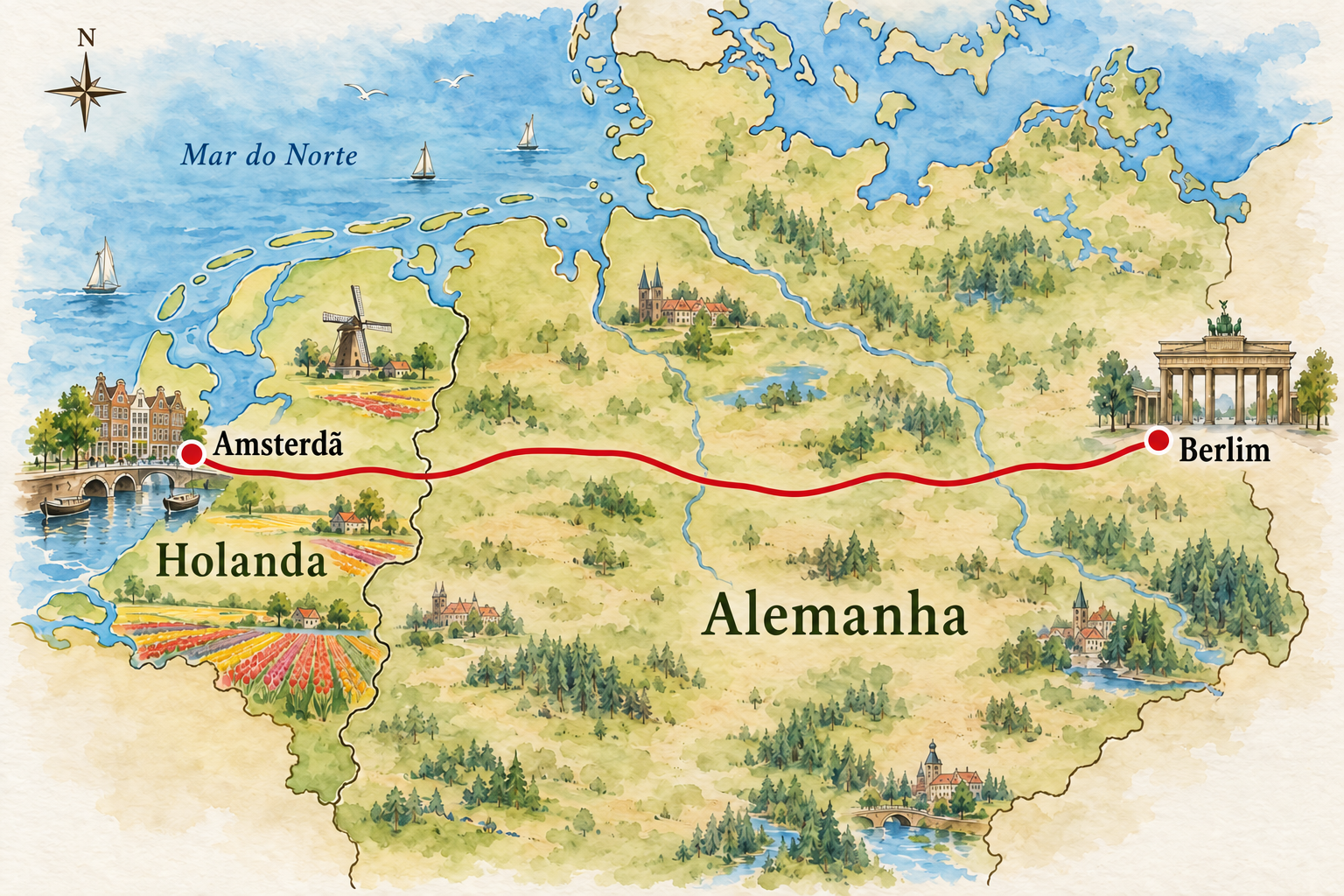
Berlin and Potsdam is on the Amsterdam–Berlin by train

By train from the Netherlands to Berlin: about six hours nonstop, through the Dutch interior and northern Germany, from central station to central station.

Illustrative map, not to scale. Tap a city to open its page.
Illustrated map of Amsterdam–Berlin by train
Explore other destinations Search by state and city