Berlin · Berlin · Monument
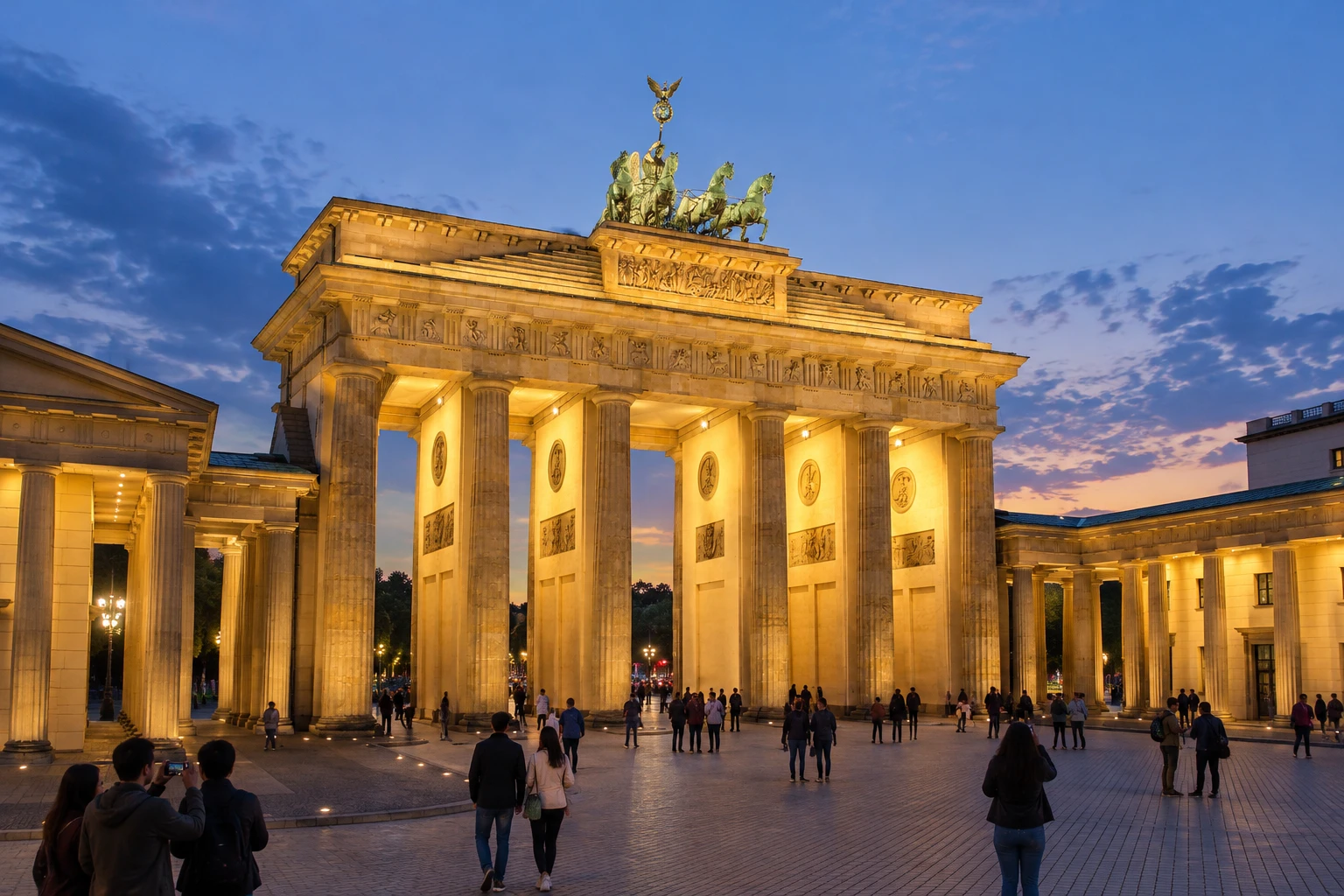
Brandenburg Gate
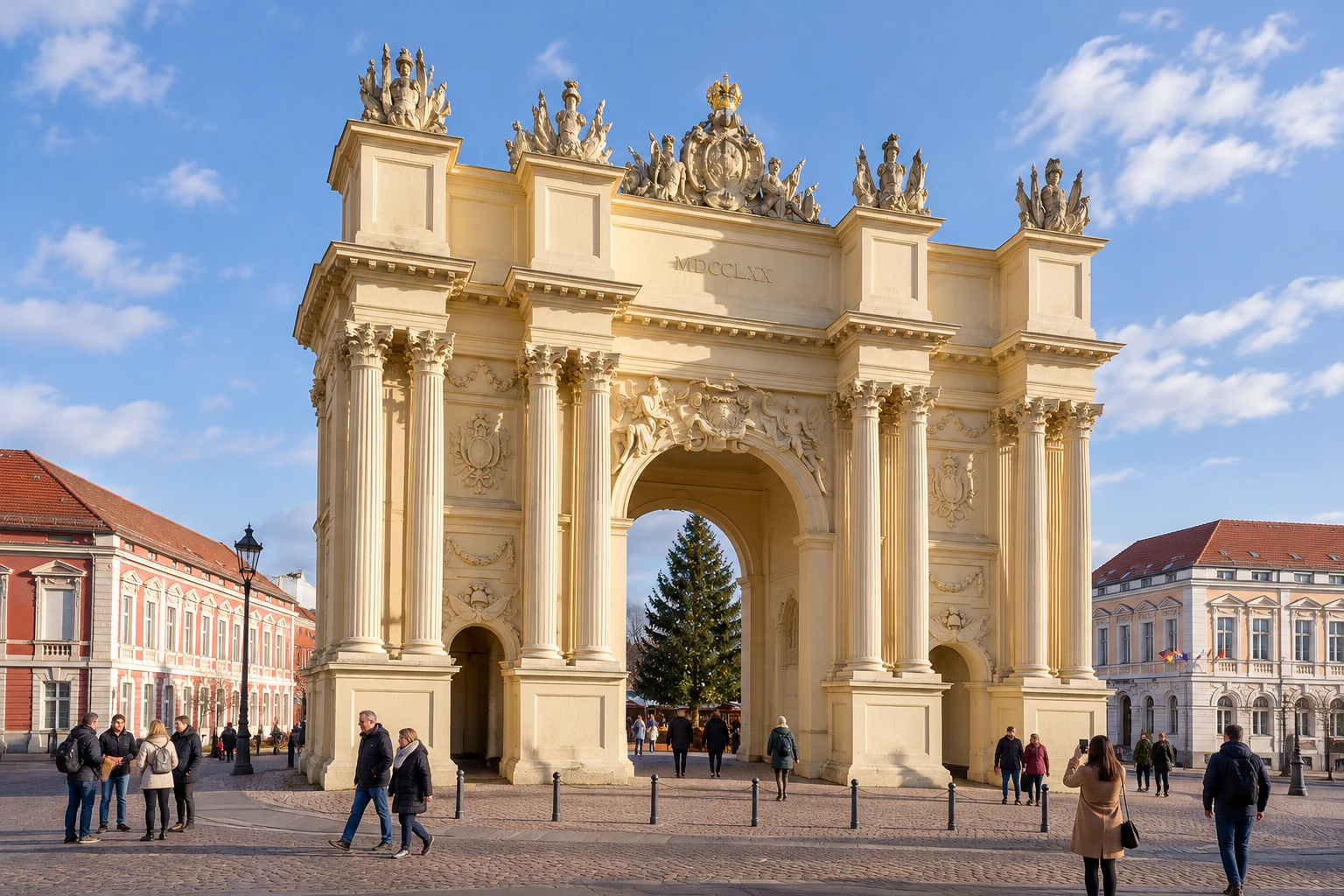
Potsdam gate in the form of a Roman triumphal arch, built in 1770 and 1771, two decades before the Brandenburger Tor in Berlin.

 Search
 Brazil
 Antarctica
 Argentina
 Bolivia
 Chile
 Colombia
 Ecuador
 Falkland Islands (Malvinas)
 French Guiana
 Guyana
 Paraguay
 Peru
 Suriname
 Uruguay
 Venezuela
 Austria
 Belgium
 Croatia
 Denmark
 Finland
 FranceGermany
 Greece
 Hungary
 Iceland
 Ireland
 Italy
 Luxembourg
 Norway
 Poland
 Portugal
 Slovakia
 Slovenia
 Spain
 Sweden
 Switzerland
 the Czech Republic
 the Netherlands
 the United Kingdom
 Turkey
 Bermuda
 Canada
 Greenland
 Mexico
 Saint Pierre and Miquelon
 the United States
 the Dominican Republic
 JapanTurkey
 Egypt
 South Africa
 Australia
 Fiji
 New Zealand
 Papua New Guinea
Berlin · Brandenburg
39 lugares para conhecer e 19 passeios, escolhidos pelo guia Cidade Turismo.
Atualizado em
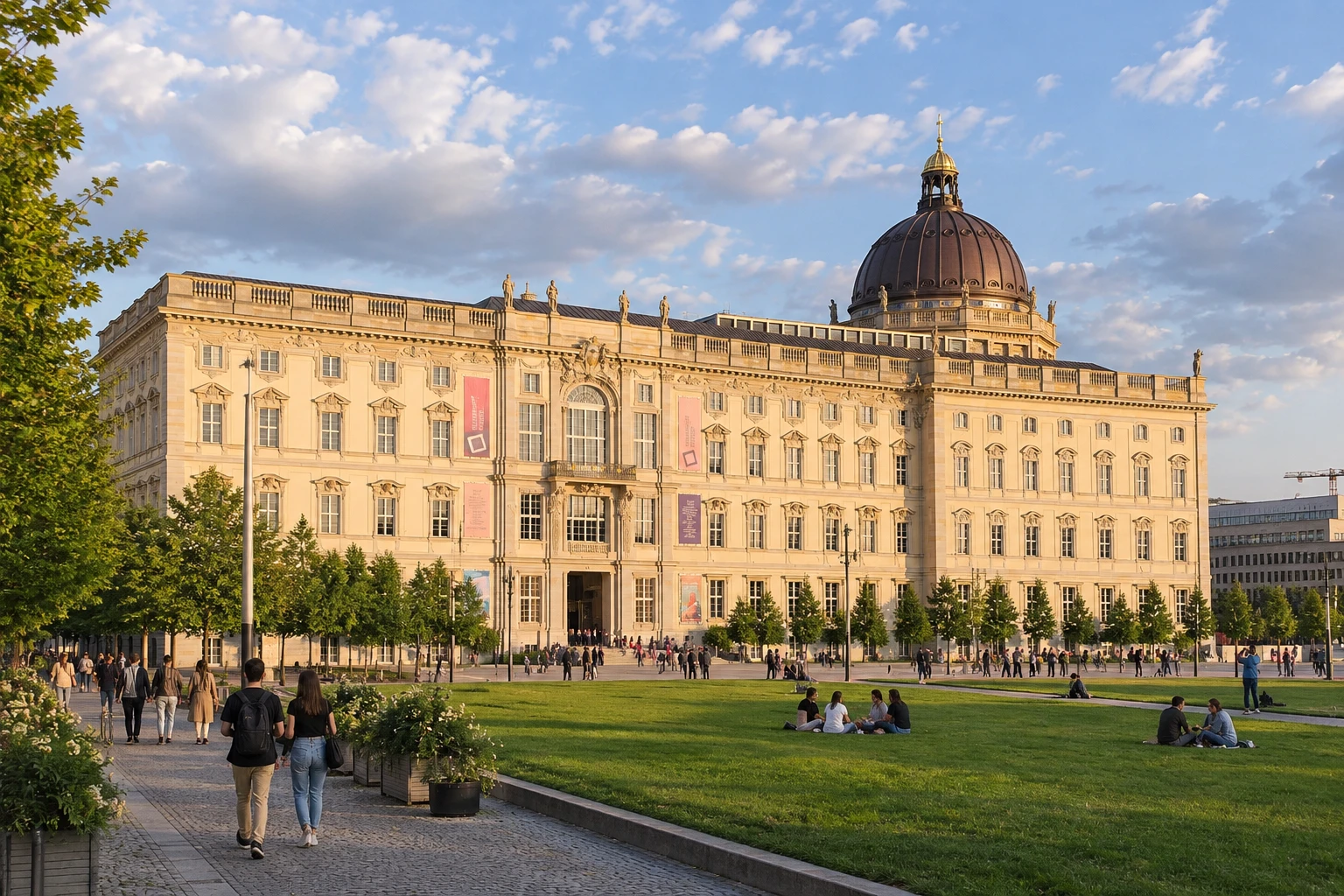
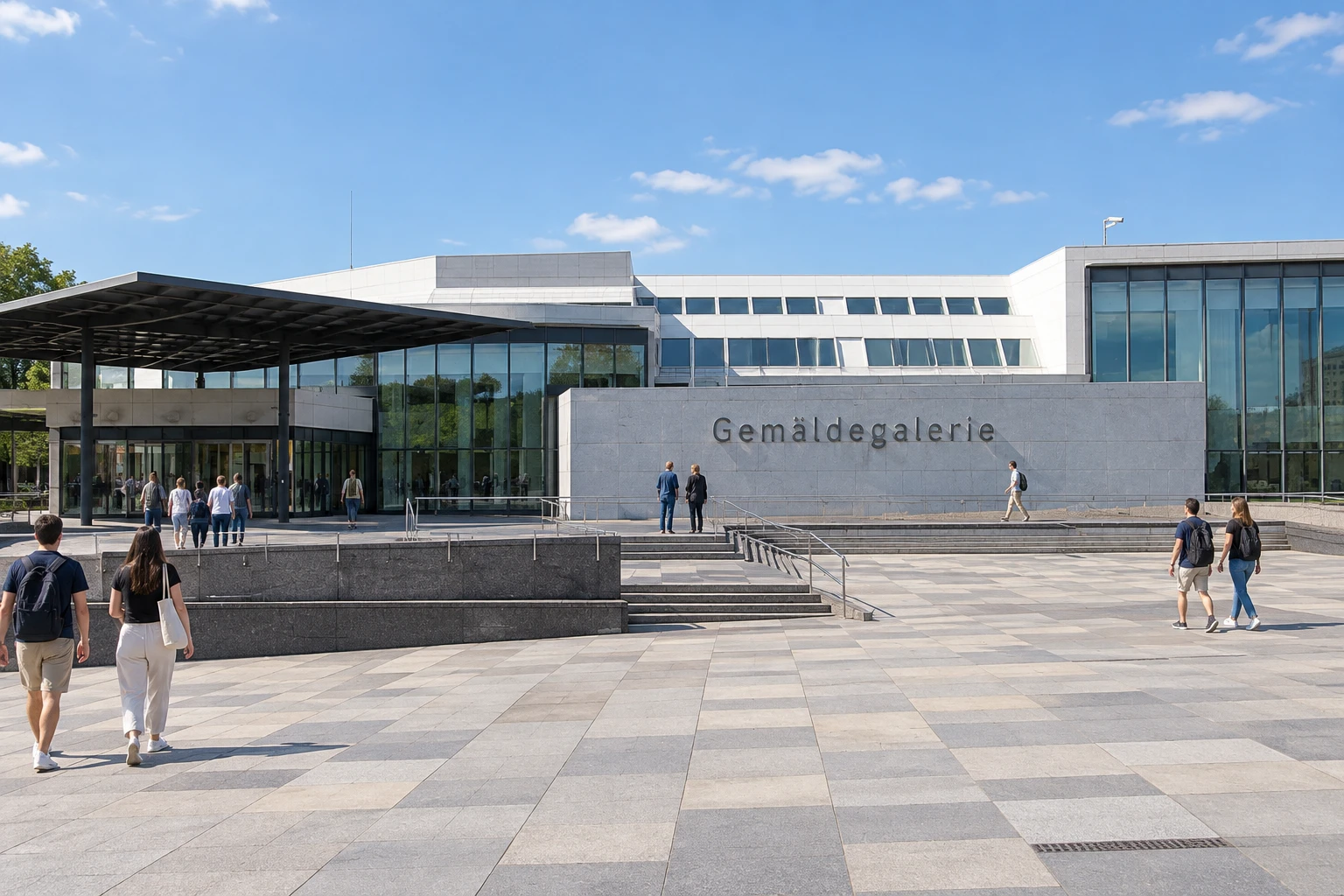
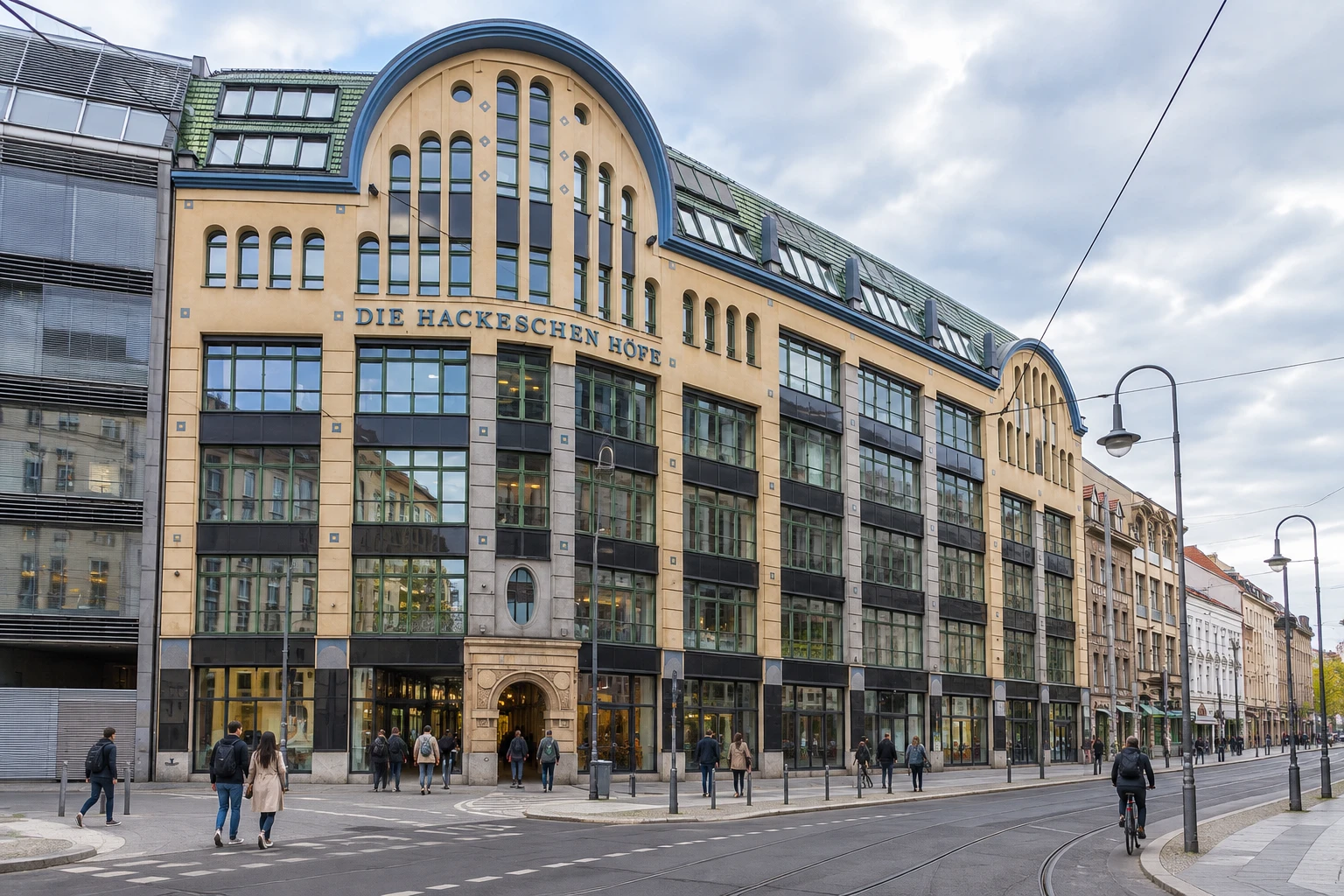
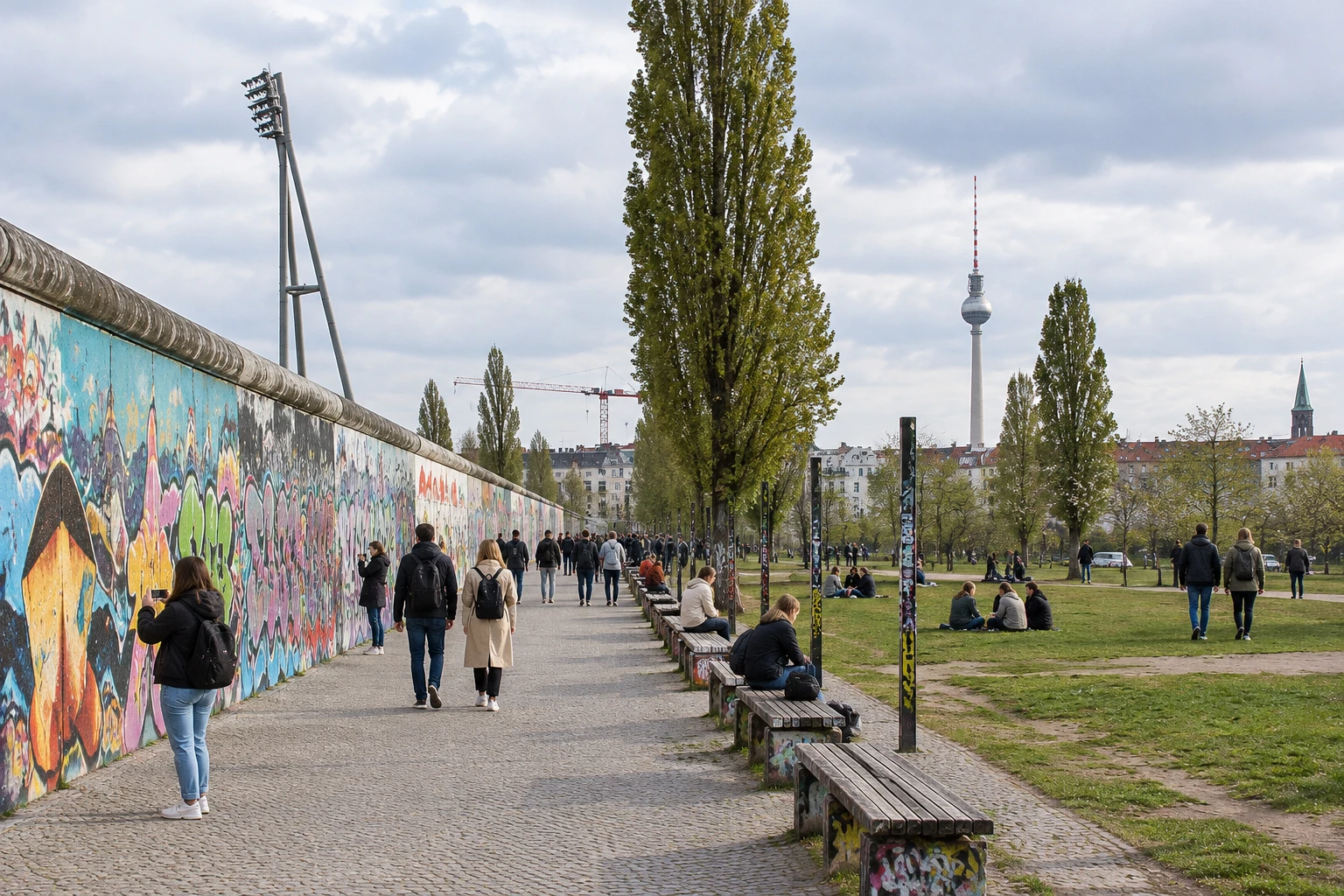
Illustrative images. The pictures in this guide are illustrations based on the real place, not photographs, and may differ from it.
Para começar
Um a um
Potsdam gate in the form of a Roman triumphal arch, built in 1770 and 1771, two decades before the Brandenburger Tor in Berlin.
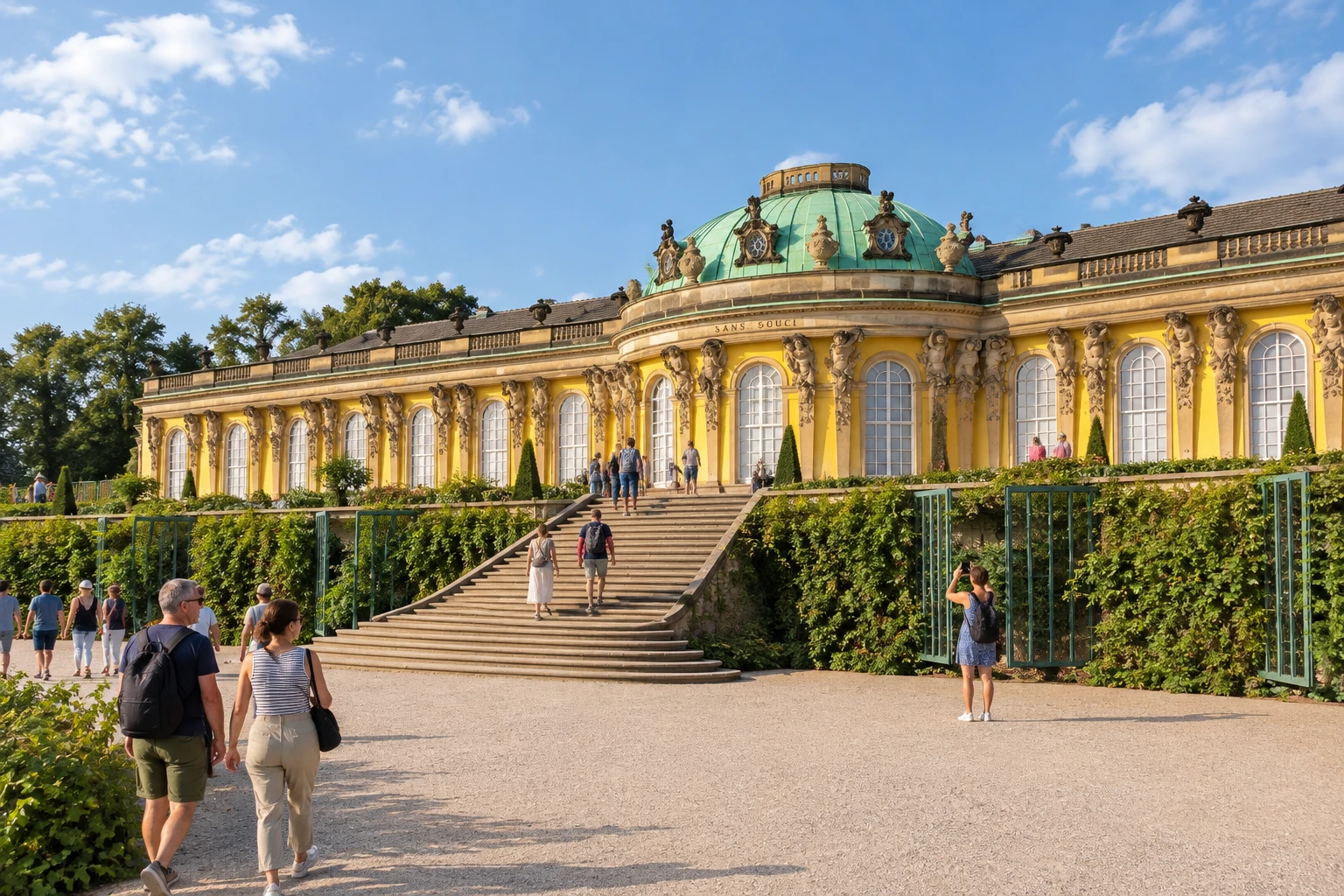
Summer palace of Frederick the Great, atop vineyard terraces. 18th-century Rococo, original rooms and the king's tomb on the upper terrace.
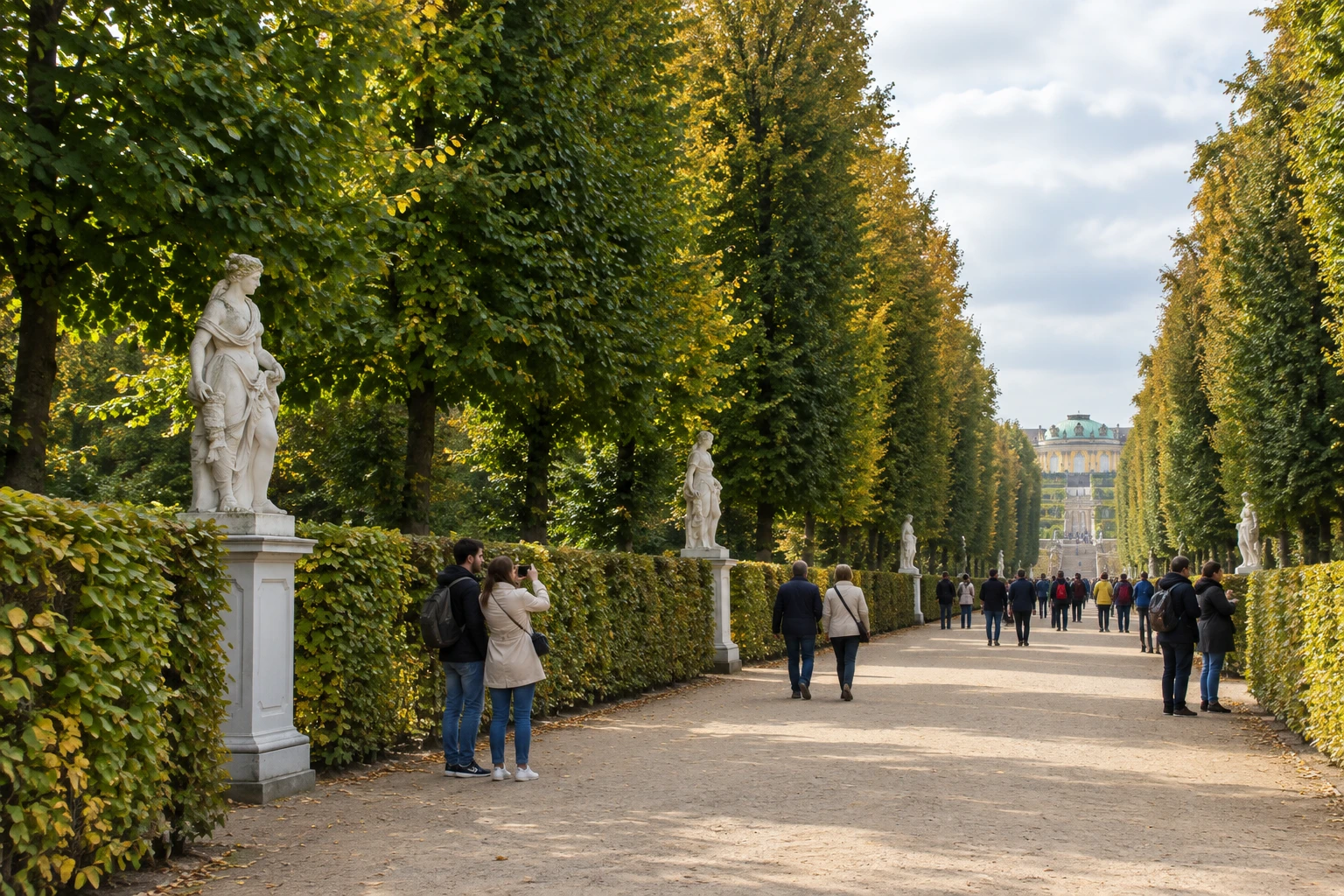
Royal park of about 300 hectares, a World Heritage Site, with palaces, fountains, the Casa Chinesa, the Friedenskirche and paths that connect Sanssouci to the Neues Palais.
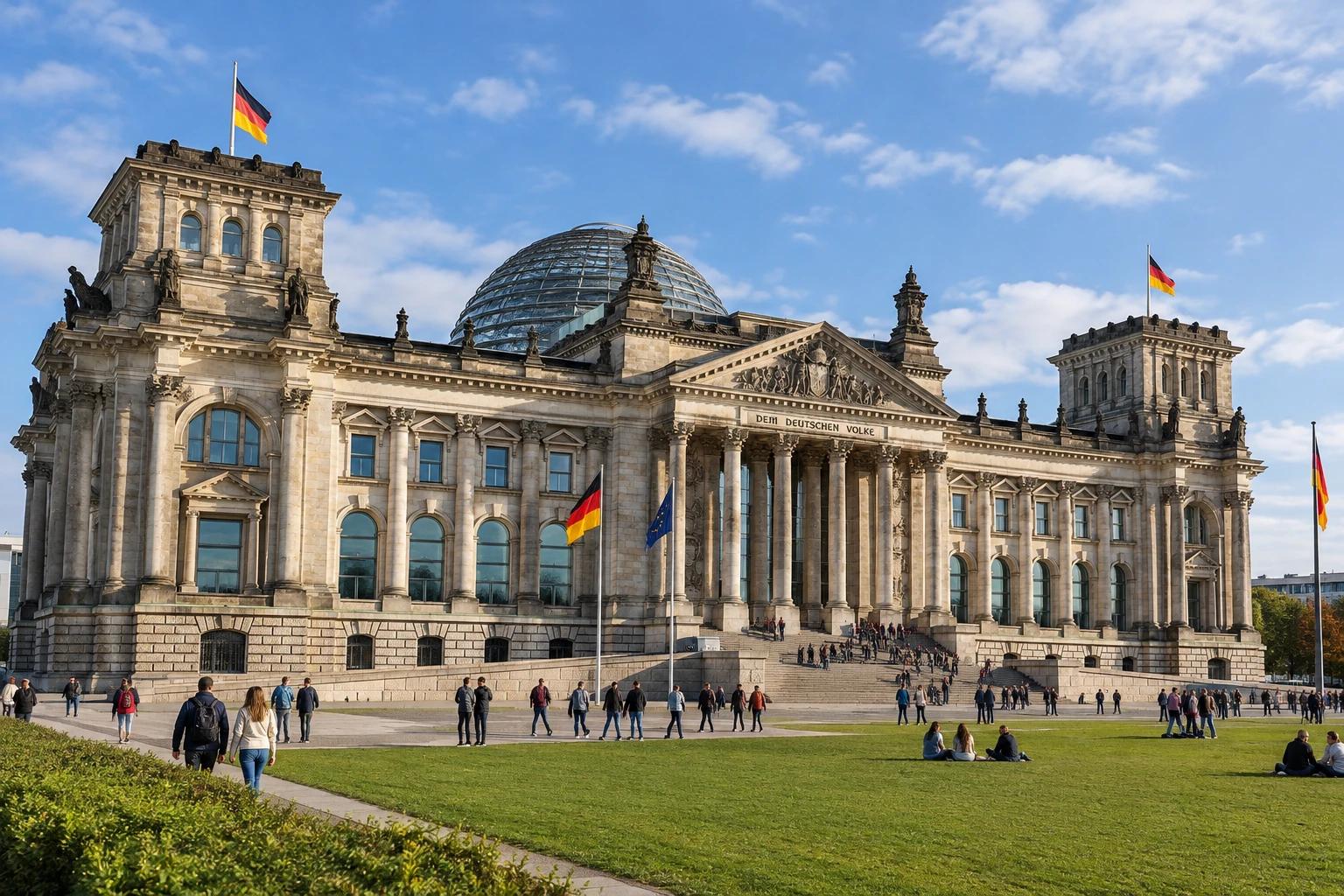
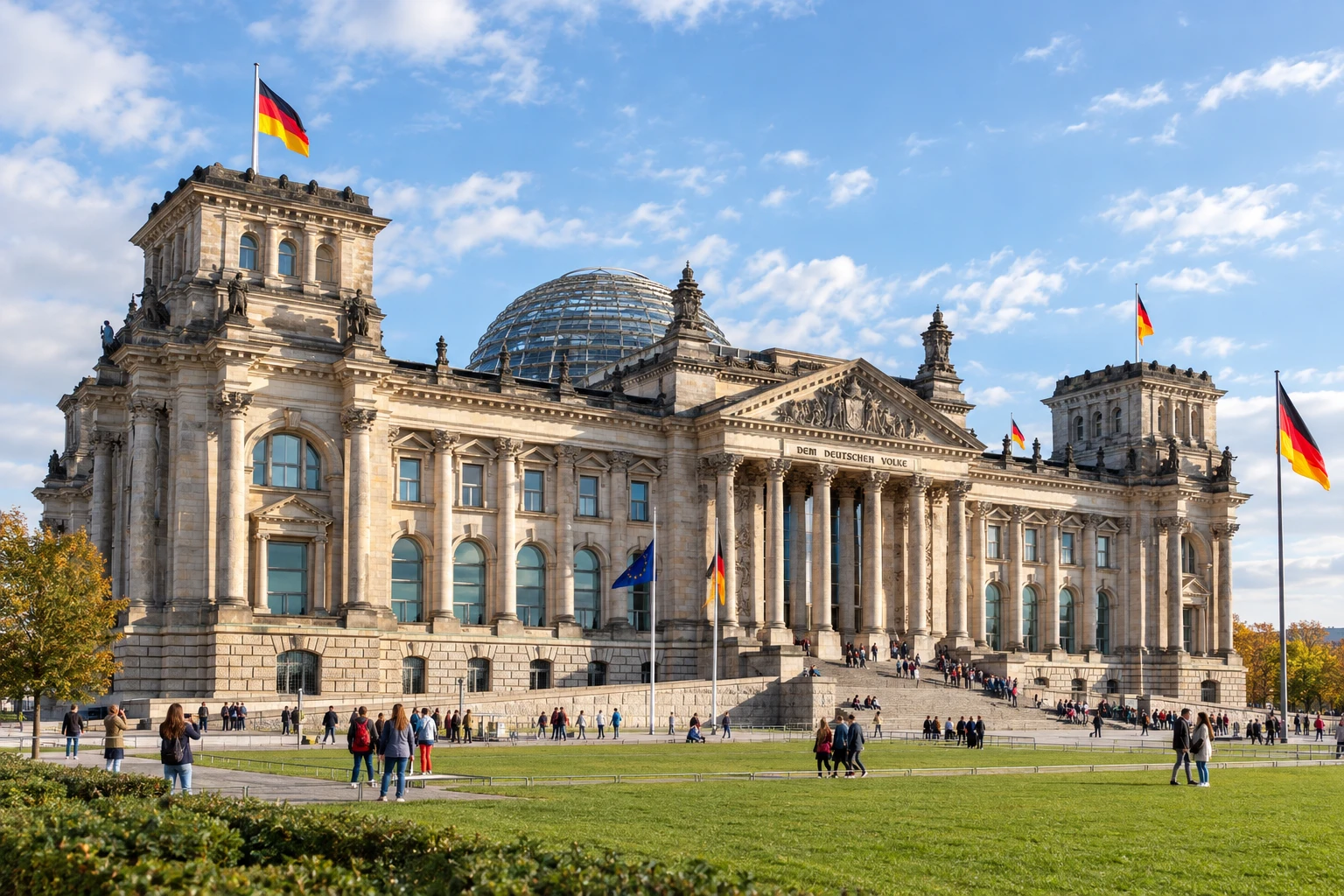
Seat of the German parliament, the Bundestag. The glass dome, with a spiral ramp and a rooftop terrace, is open to visitors with advance booking on the parliament's website.
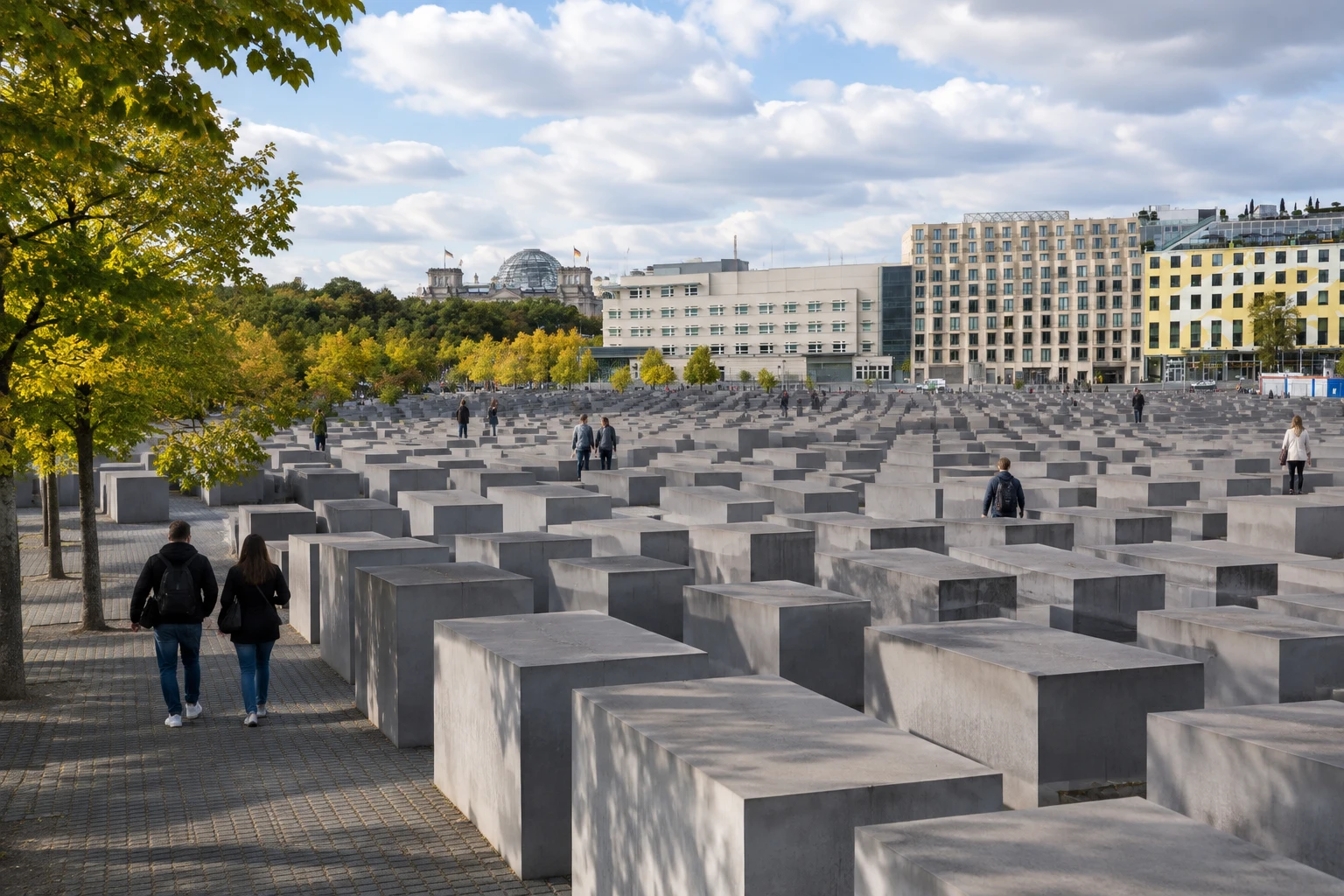
Memorial to the roughly six million Jews killed by Nazism: a field of 2,711 concrete blocks south of the Brandenburger Tor, with an underground information center.
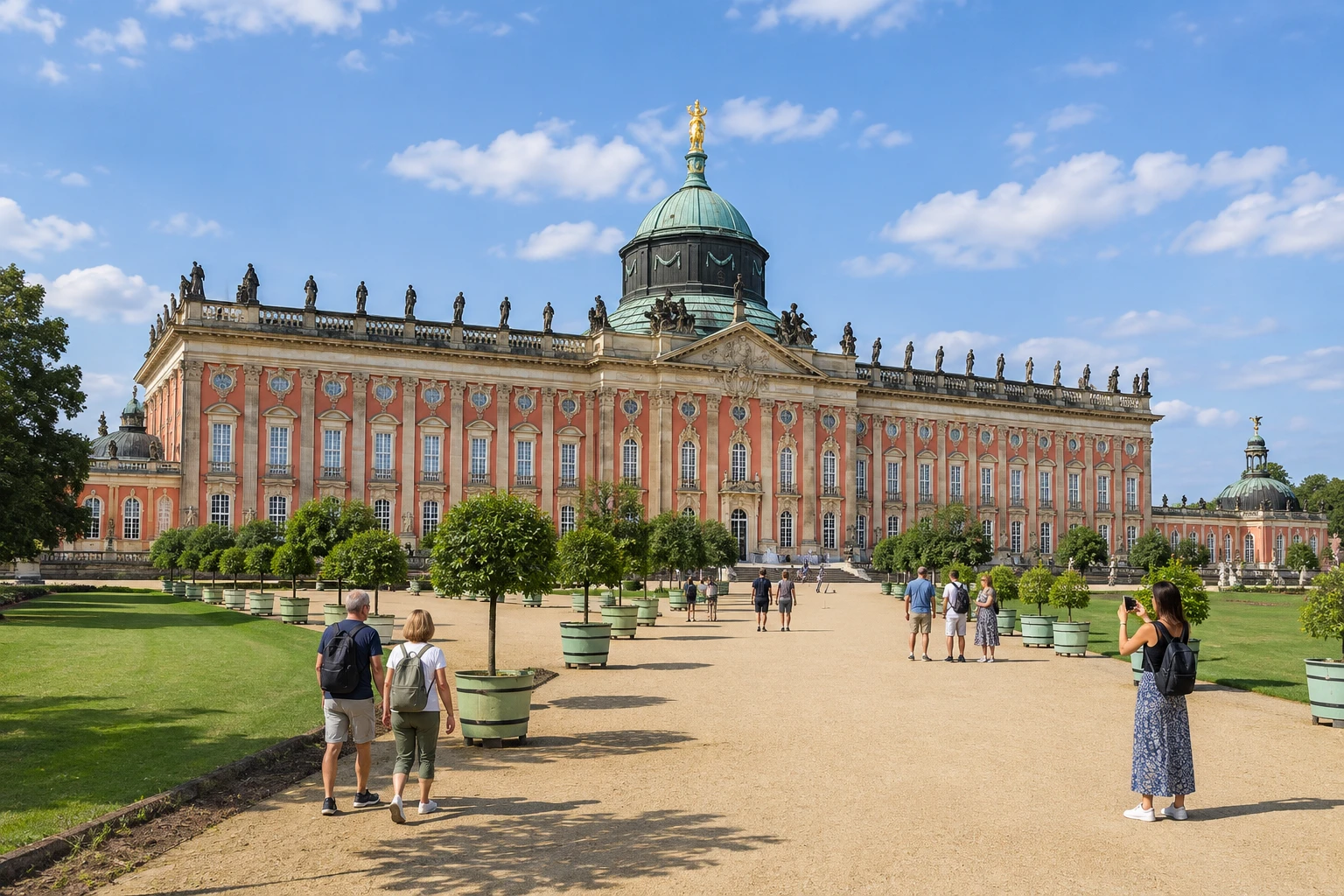
Monumental Baroque palace on the western edge of the Park Sanssouci, built by Frederick the Great after the Seven Years' War. It has the Grottensaal and a theatre.
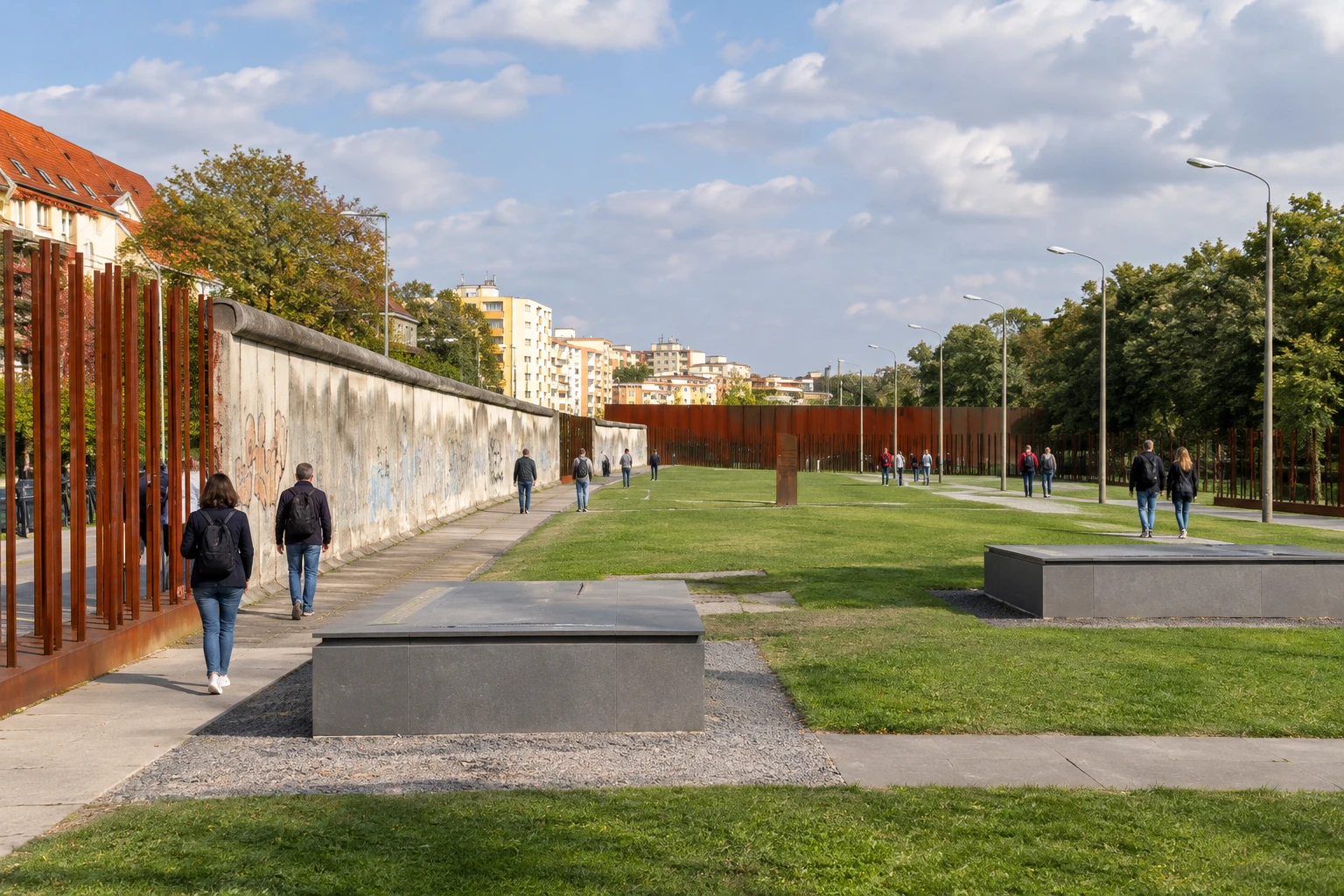
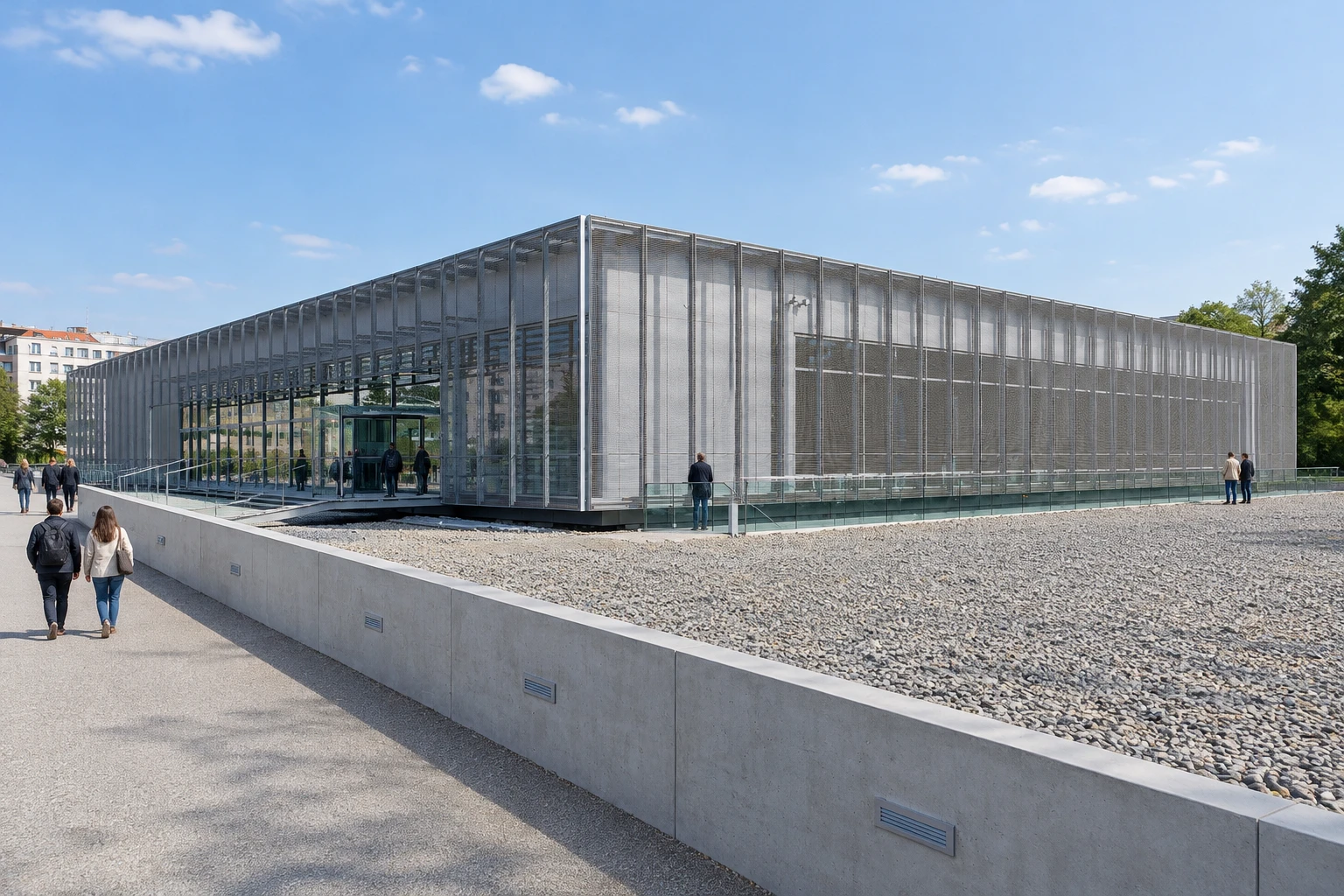
Main Berlin Wall memorial, along 1.4 km of Bernauer Straße. It preserves a section of the death strip, with a watchtower, chapel and documentation center.
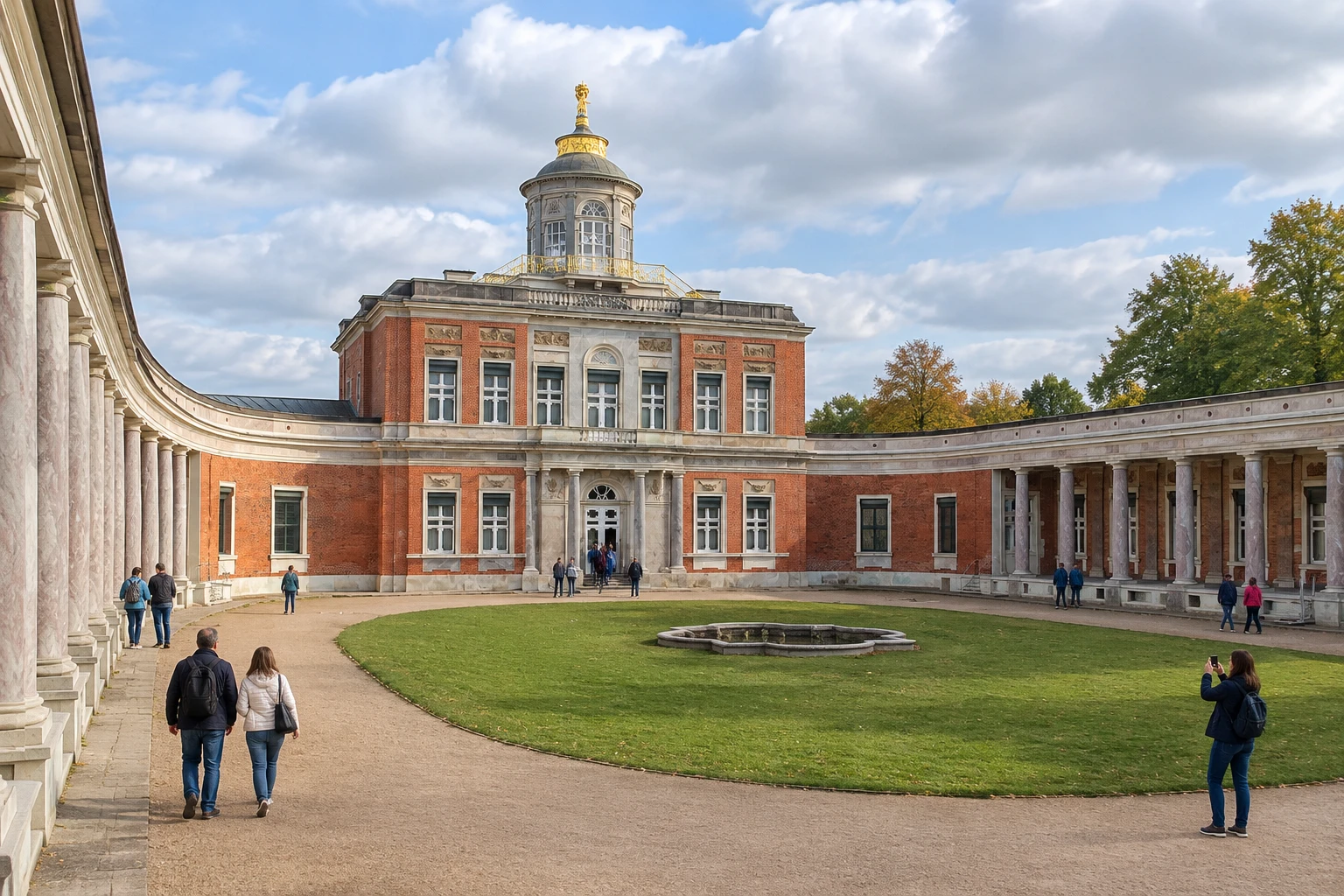
Park on the shores of the Heiliger See and Jungfernsee lakes, where the Marmorpalais and the Cecilienhof palace are located, the venue of the Potsdam Conference in 1945.
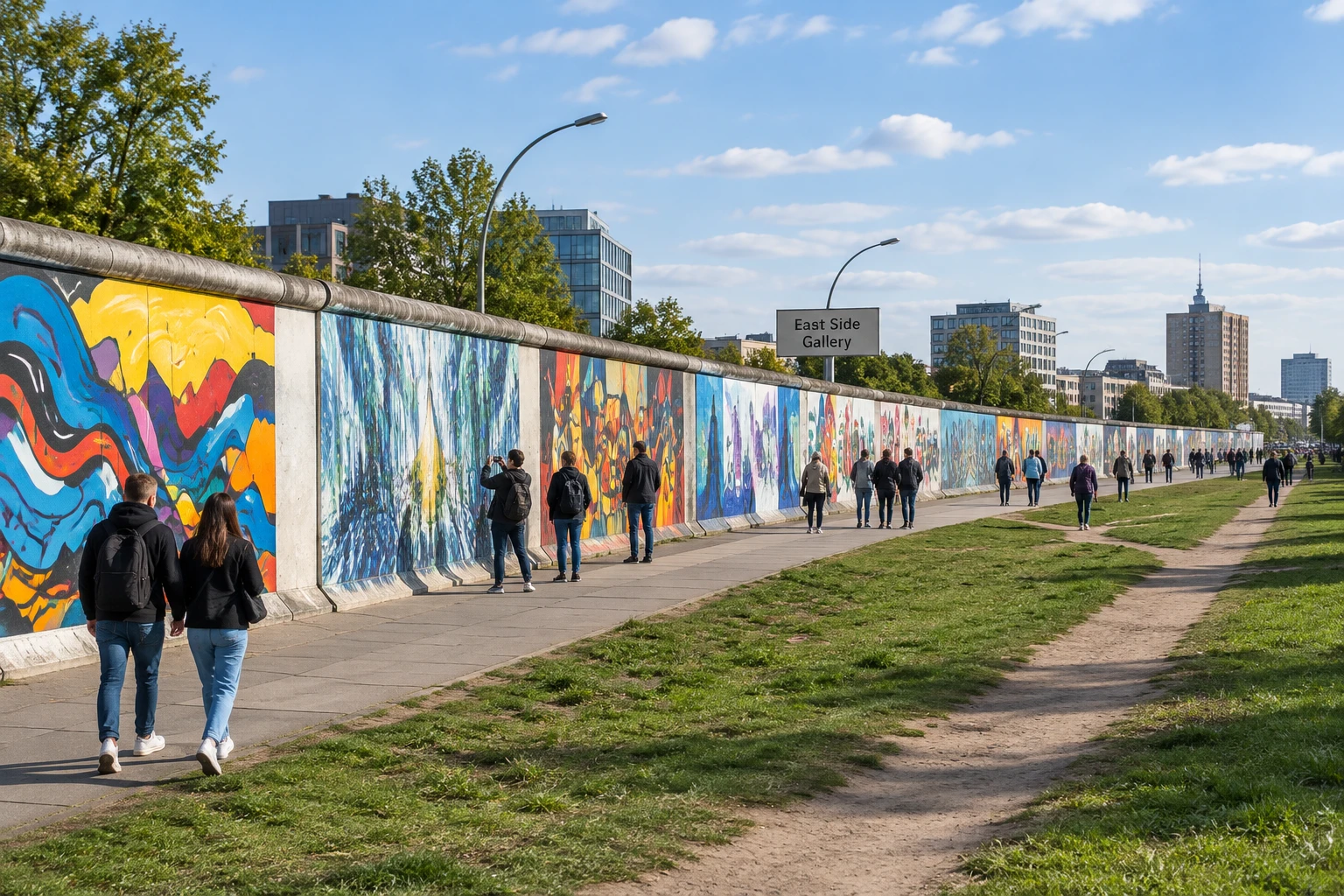
The longest remaining stretch of the Berlin Wall still standing, about 1.3 km along the river Spree, covered with paintings made by artists from various countries in 1990.
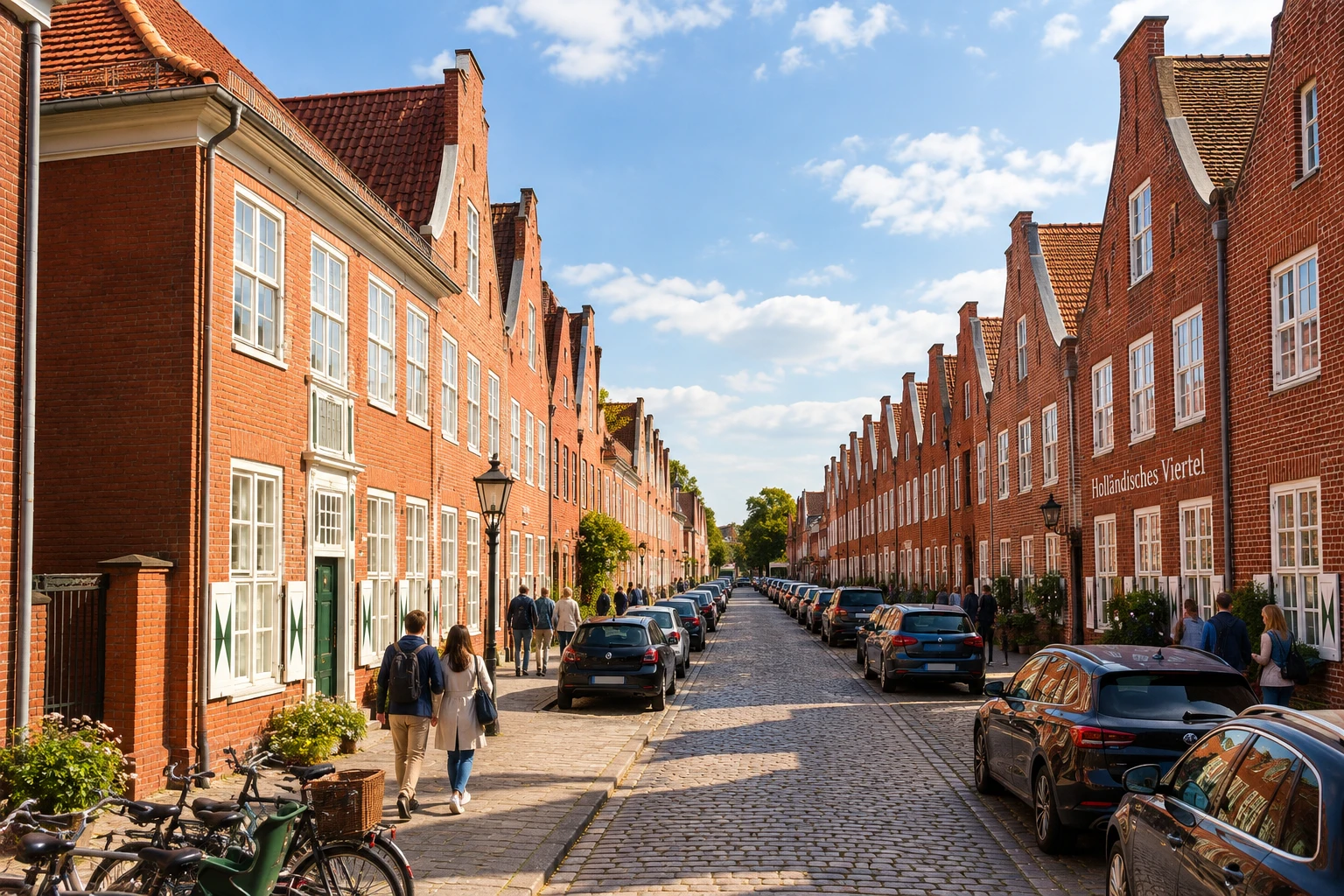
Neighborhood of 134 exposed-brick houses in Dutch style, built between 1733 and 1742 in central Potsdam. Today it has cafés, shops and restaurants.
Potsdam gate in the form of a Roman triumphal arch, built in 1770 and 1771, two decades before the Brandenburger Tor in Berlin.
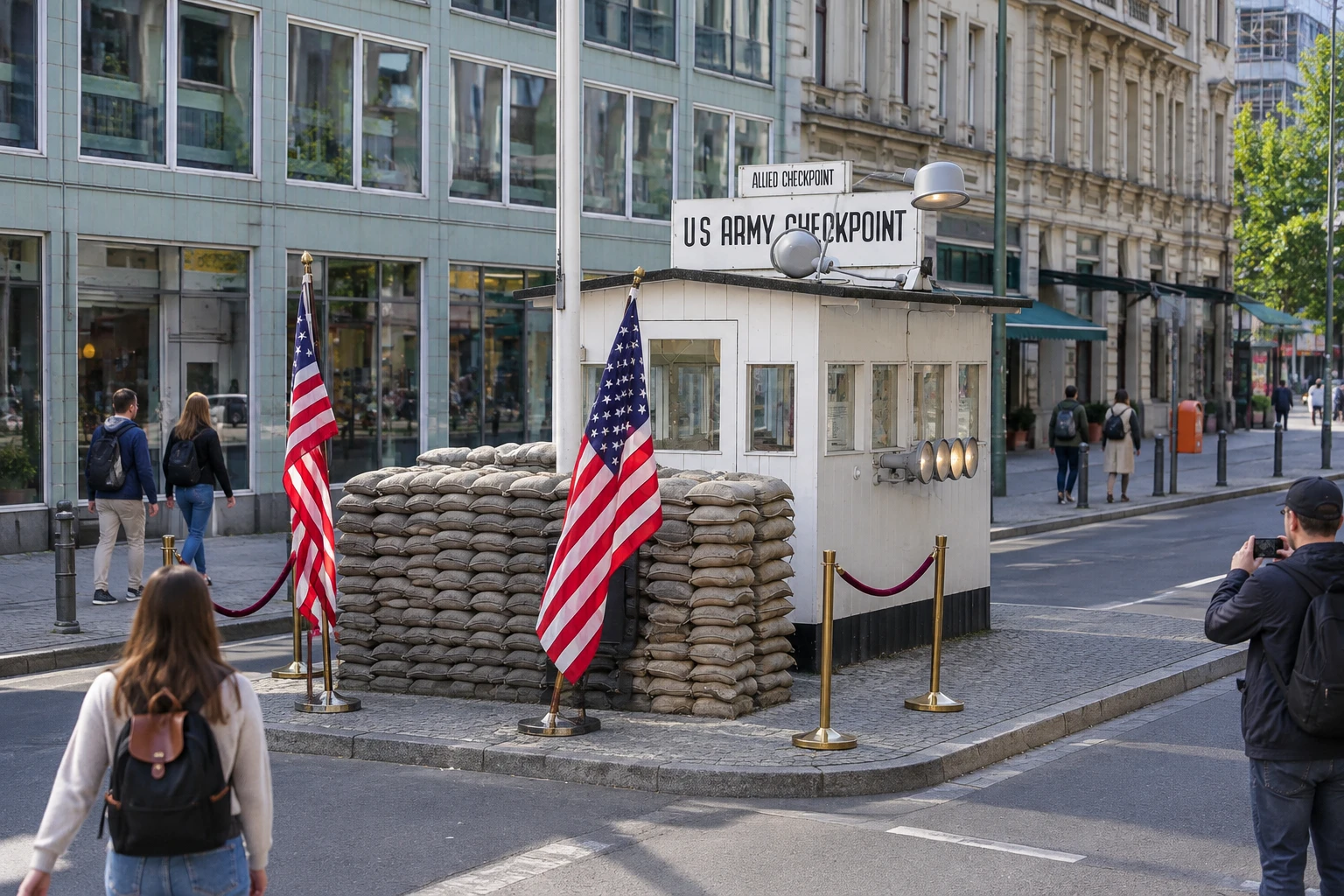
The former checkpoint between the American and Soviet sectors on Friedrichstraße, scene of the 1961 tank standoff. Today there is a replica of the guardhouse and panels about the history.
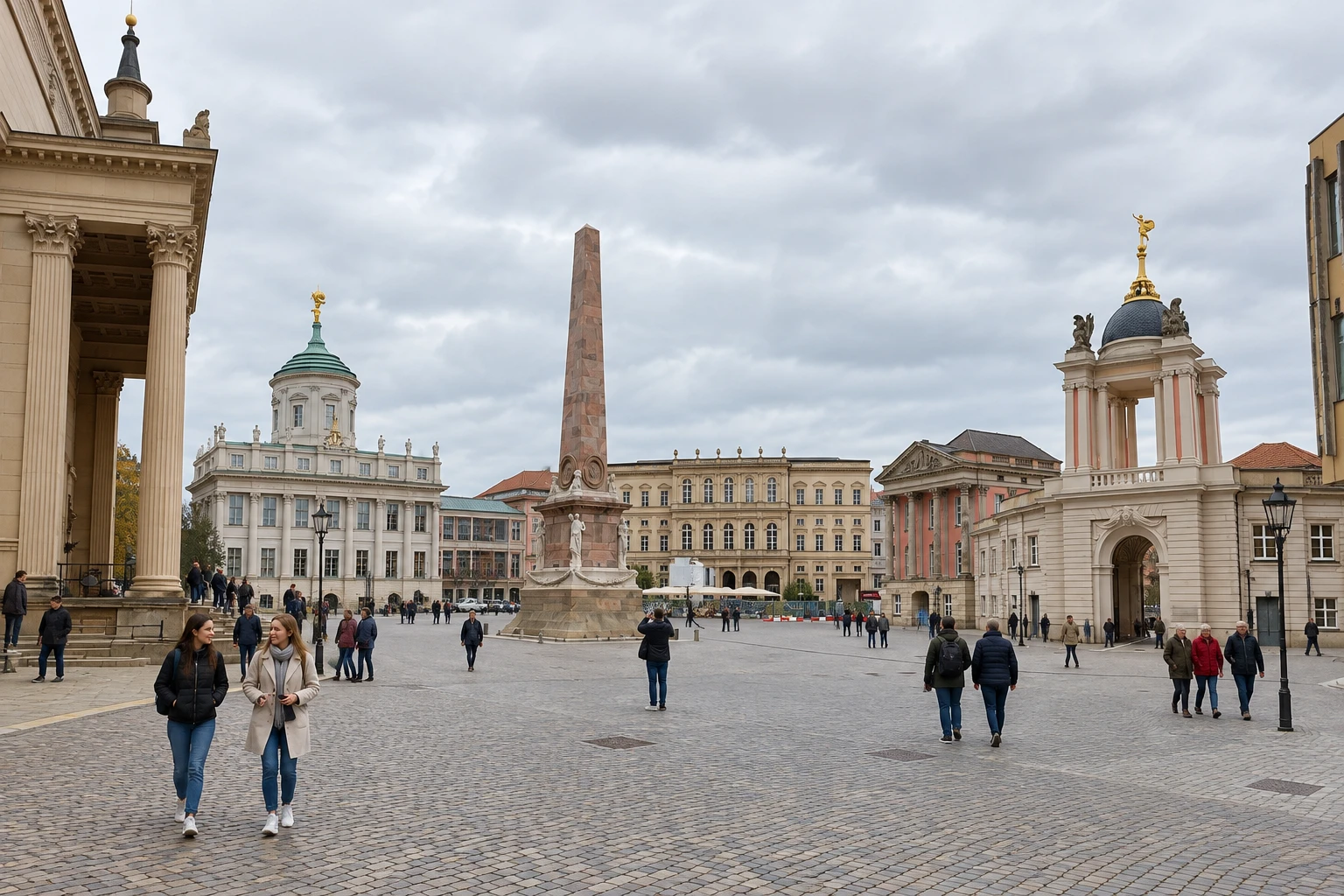
Historic square in the centre of Potsdam, surrounded by the Nikolaikirche with its green dome, the old Rathaus, the Palácio Barberini and the reconstructed Stadtschloss.
Documentation center about the crimes of the Nazi regime, on the site where the Gestapo and the SS command were located. Beside it is an original section of the Wall.
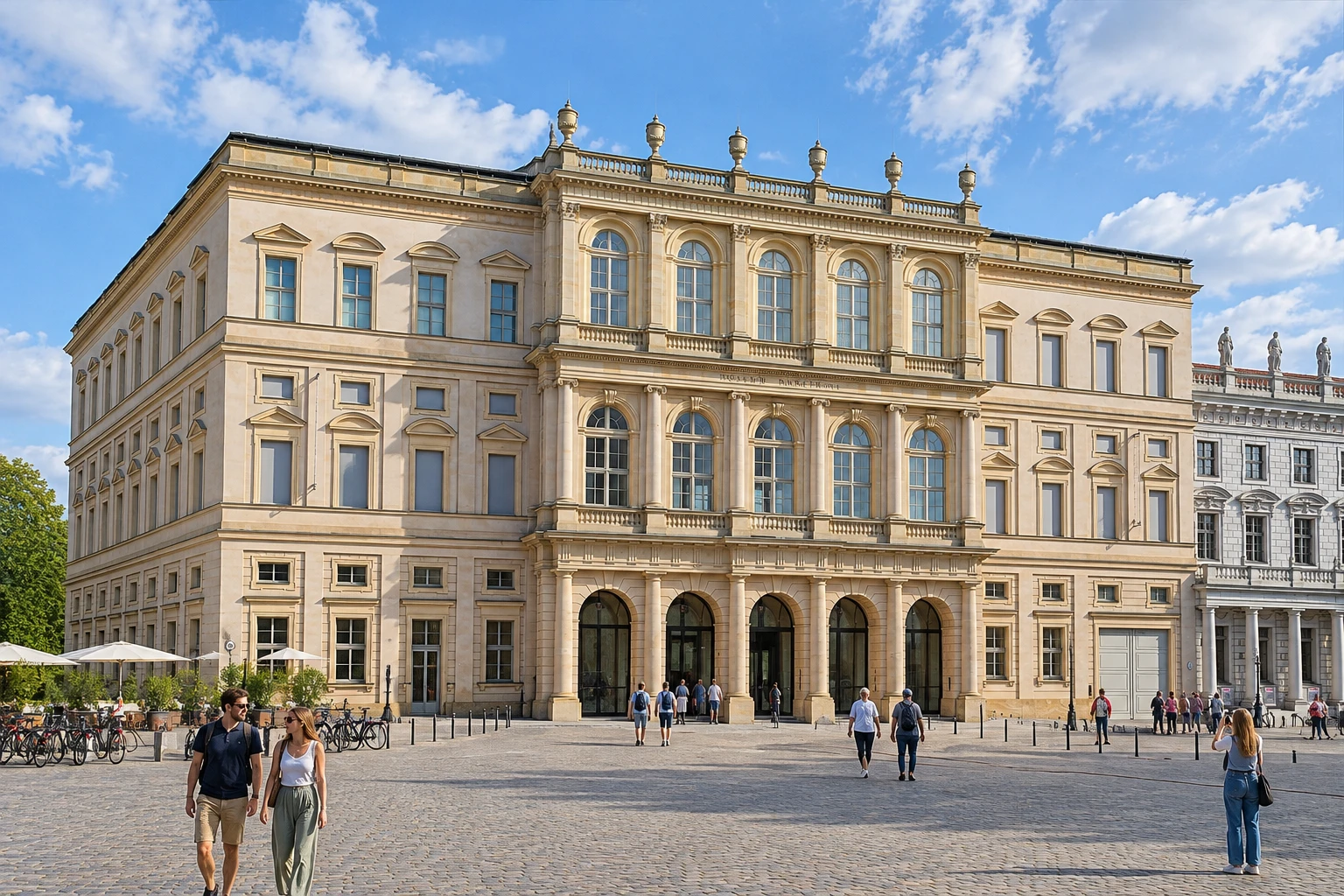
Art museum on the Alter Markt, in a reconstructed palace inspired by the Palazzo Barberini in Rome. It has a notable collection of Impressionist painting.
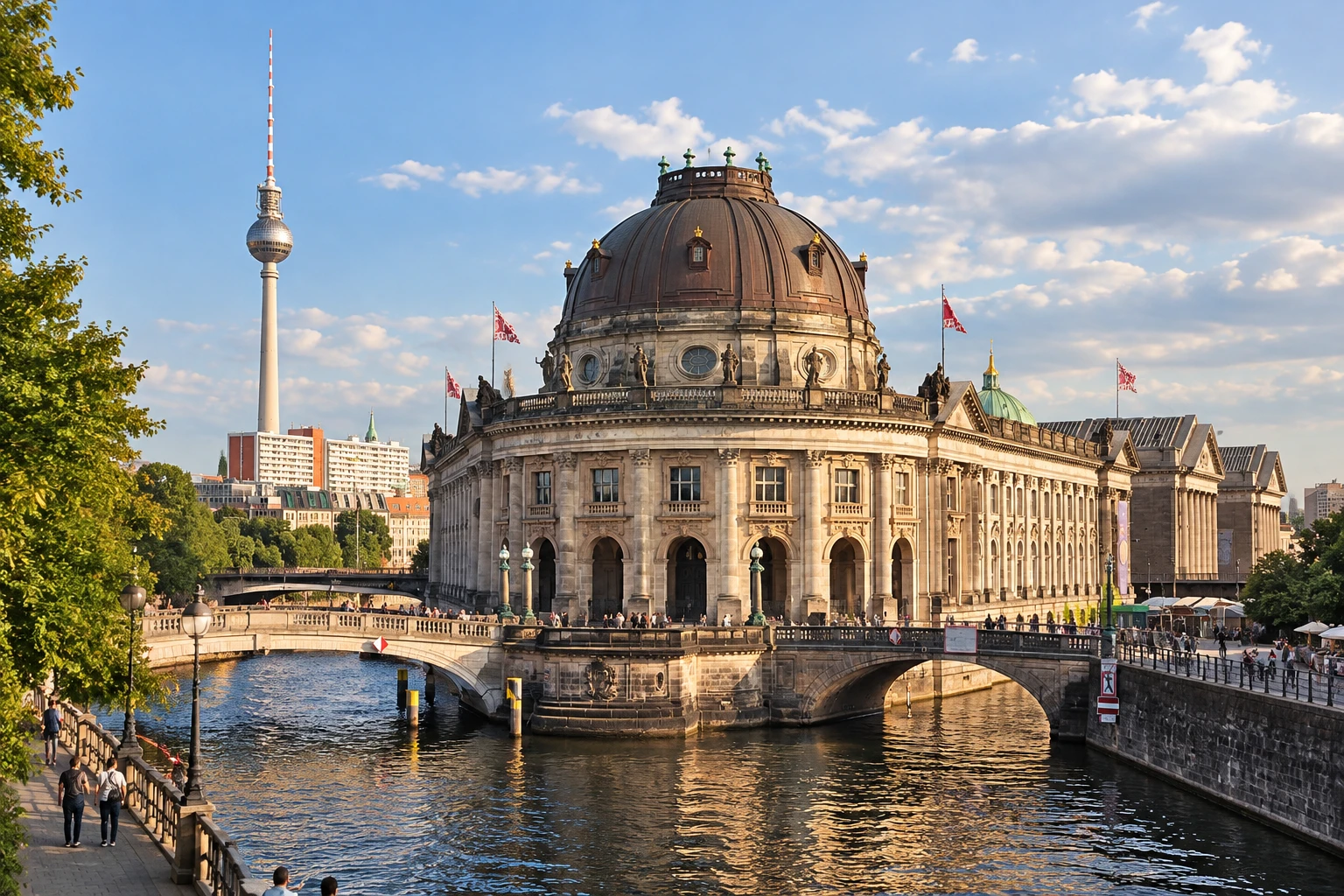
A group of museums on the northern tip of an island in the River Spree, a UNESCO World Heritage Site. The Altes Museum, the Neues Museum, the Alte Nationalgalerie and the Bode-Museum are open.
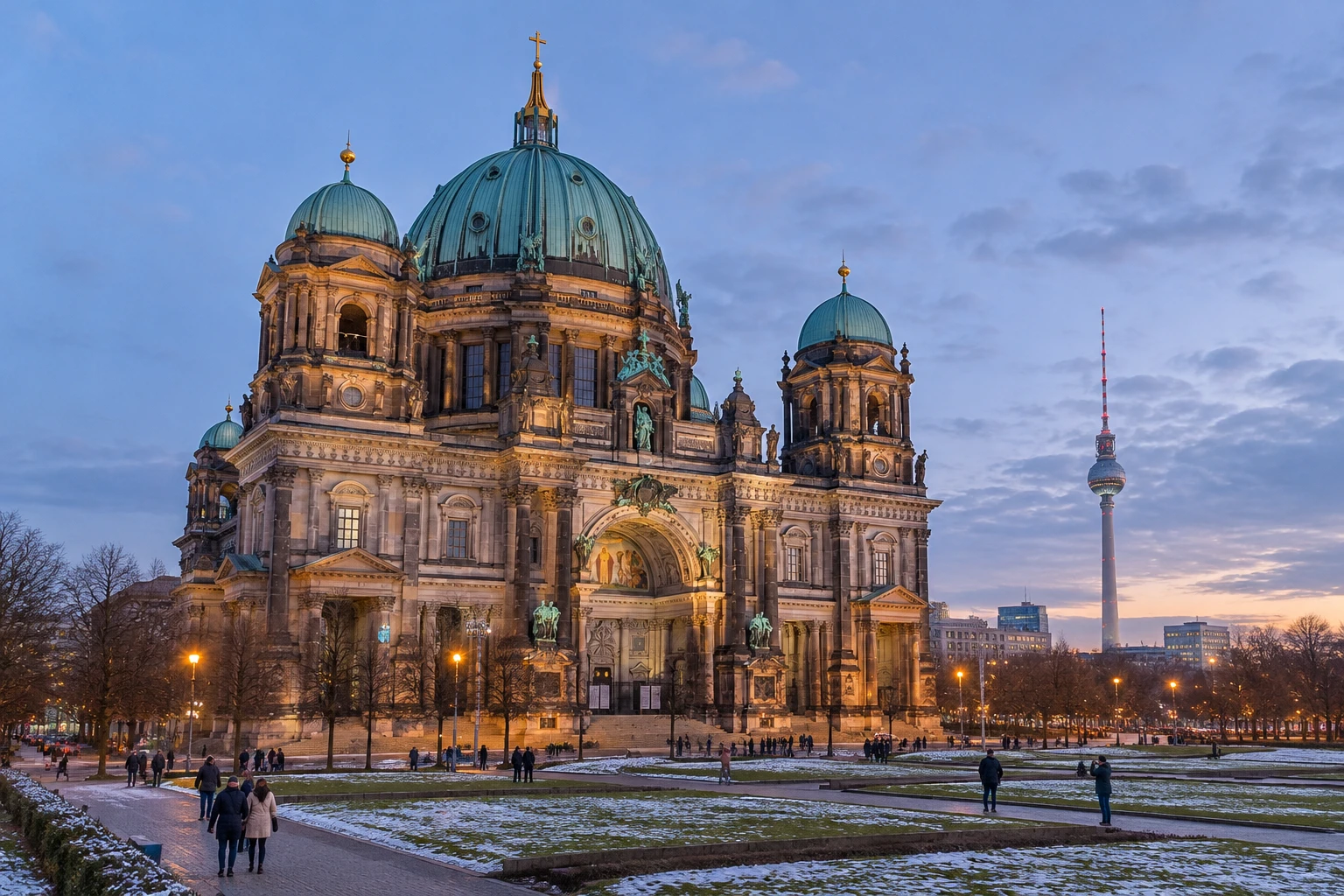
The largest Protestant church in Germany, next to the Museum Island, with a richly decorated interior, the Hohenzollern crypt and a gallery in the dome with views over the city center.
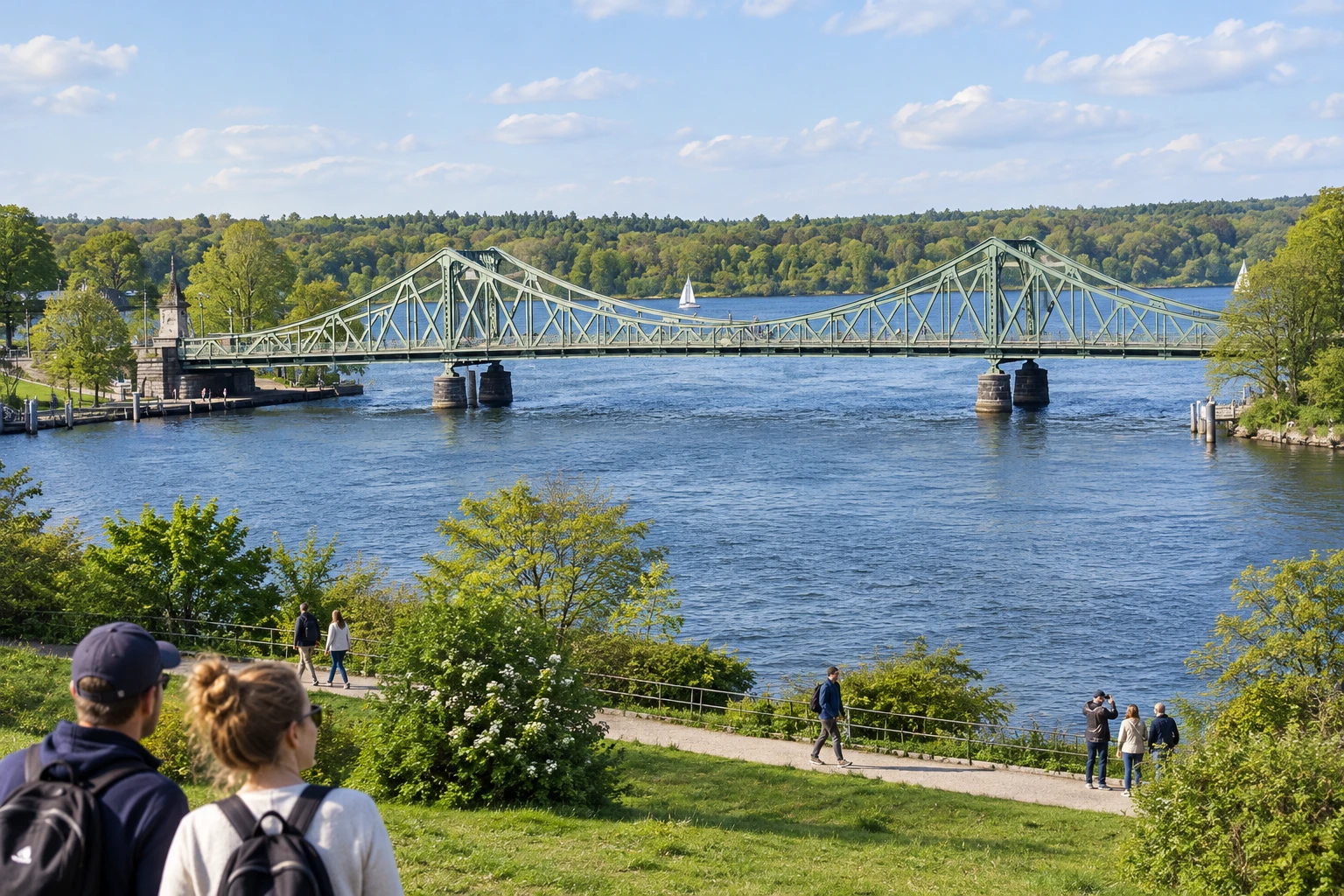
Iron bridge over the river Havel between Potsdam and Berlin, famous for the spy exchanges between East and West during the Cold War.
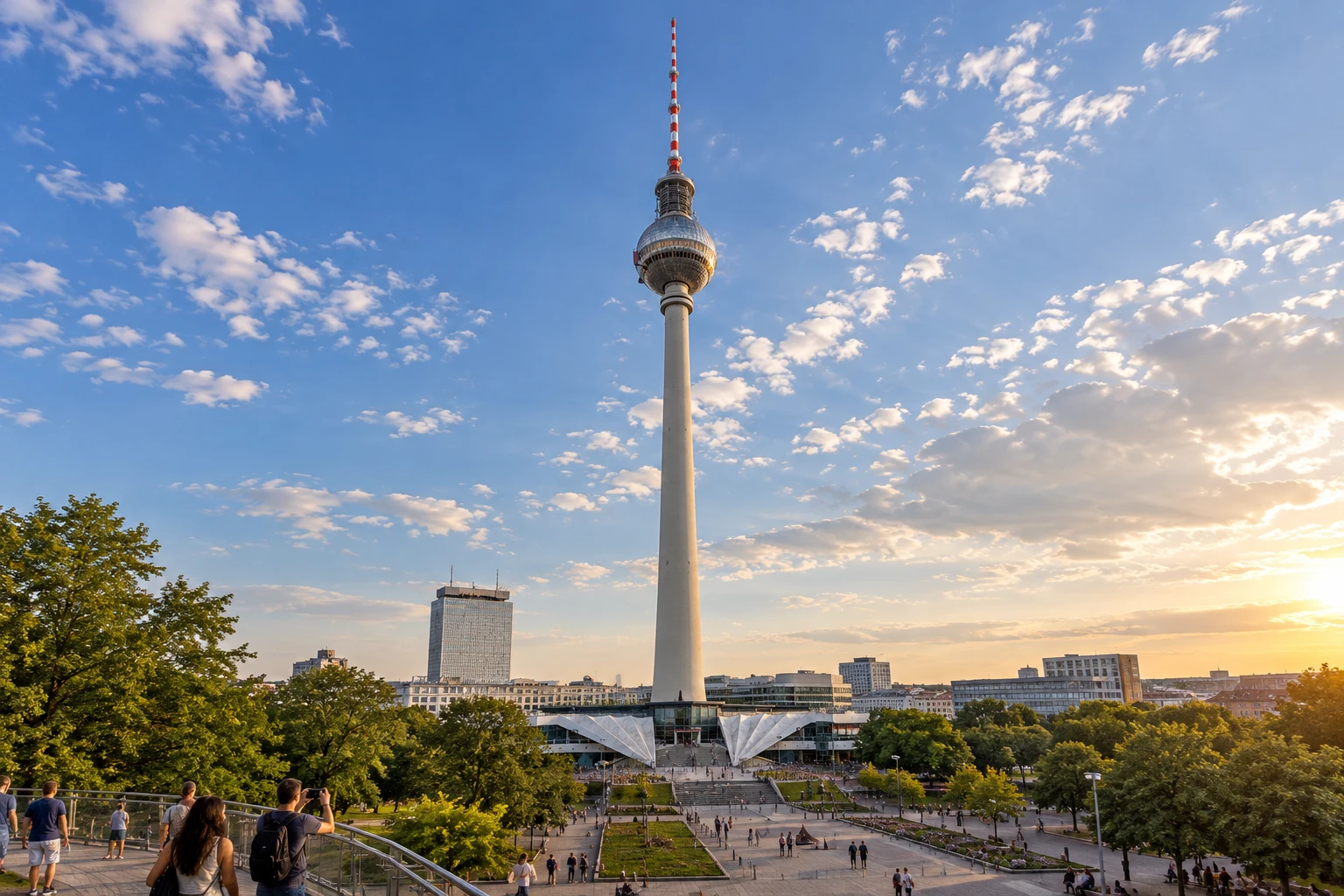
At 368 metres, the television tower at Alexanderplatz is the tallest structure in Germany. The sphere contains an observation deck and a rotating restaurant with views over the whole city.
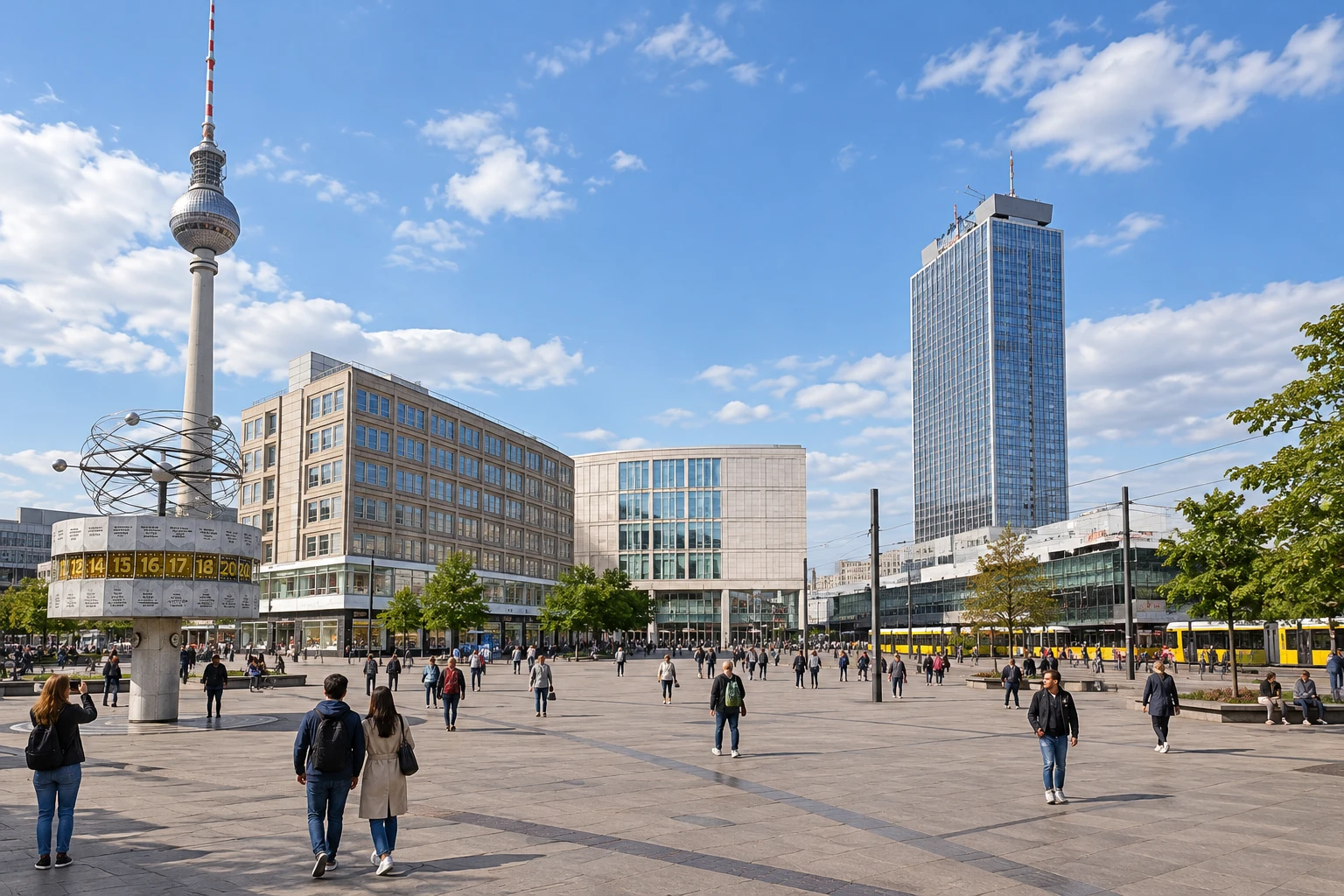
The large square in the eastern part of Berlin, featuring the Relógio Mundial, the Brunnen der Völkerfreundschaft and the television tower. It is one of the city’s major transport hubs.
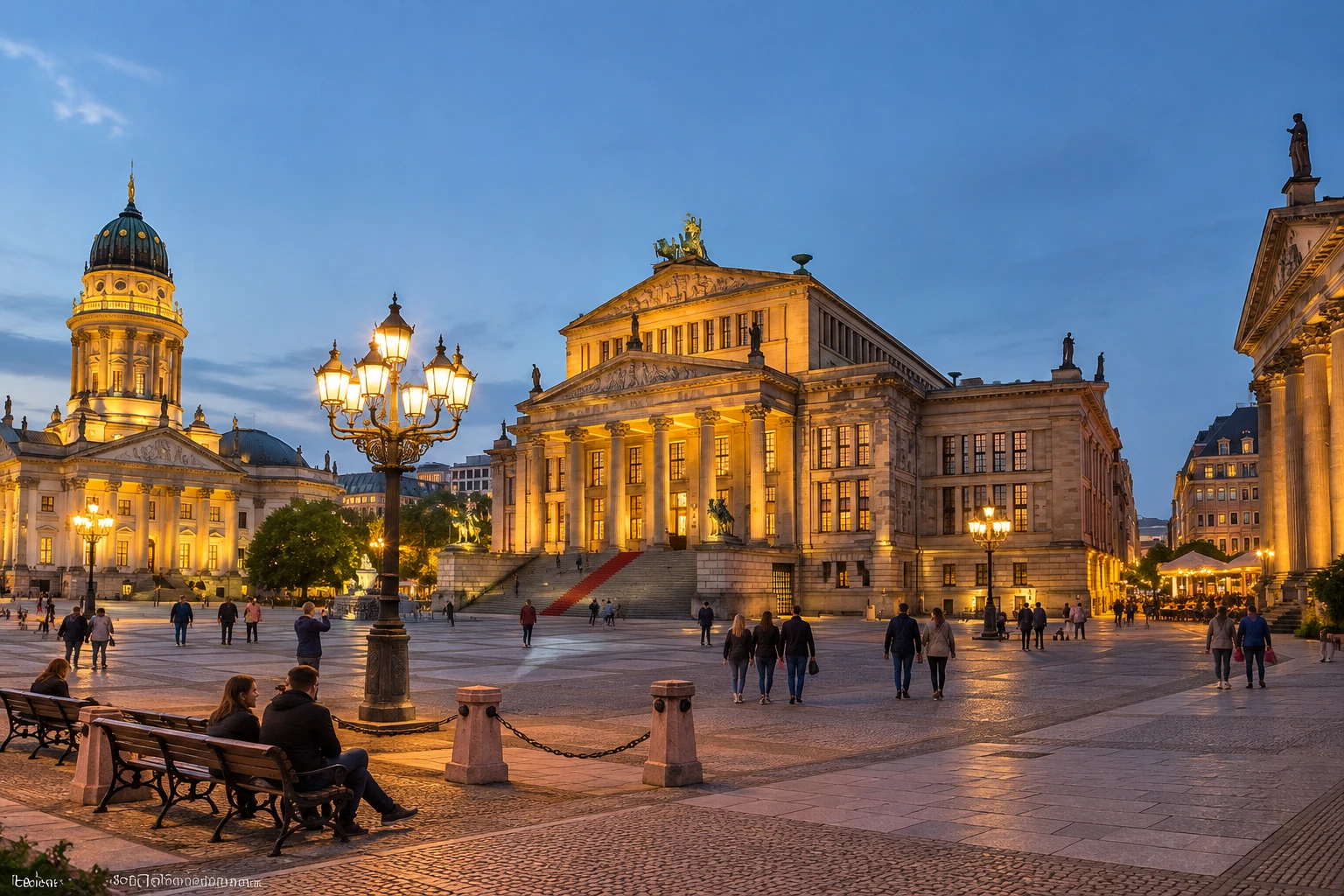
A 17th-century square in central Berlin, with Schinkel’s Konzerthaus between two nearly identical domed churches: the Deutscher Dom and the Französischer Dom.
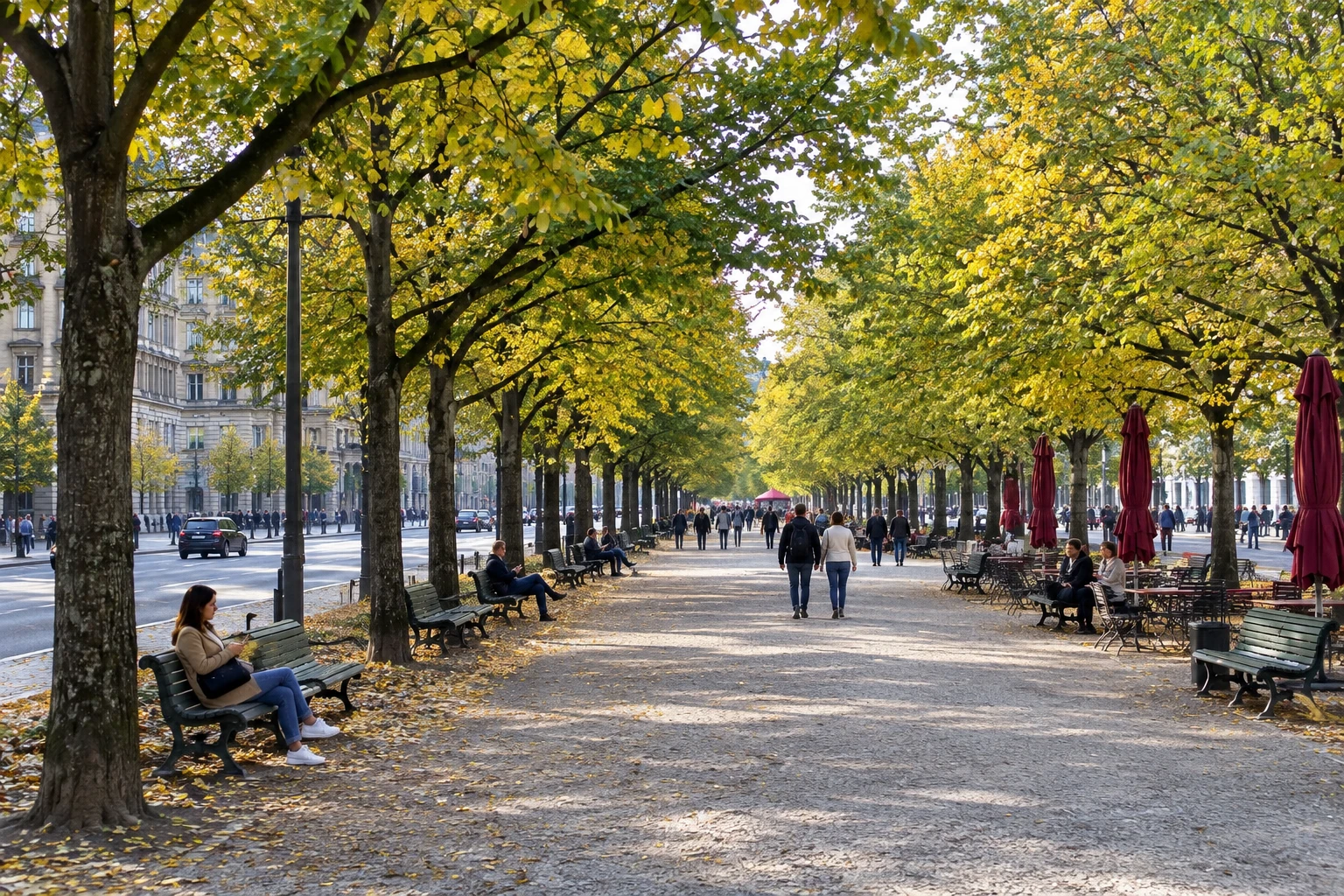
The historic boulevard of Berlin, about 1.5 km between the Brandenburger Tor and the Ilha dos Museus, lined with linden trees and Prussian buildings: the opera, the university and the Neue Wache.
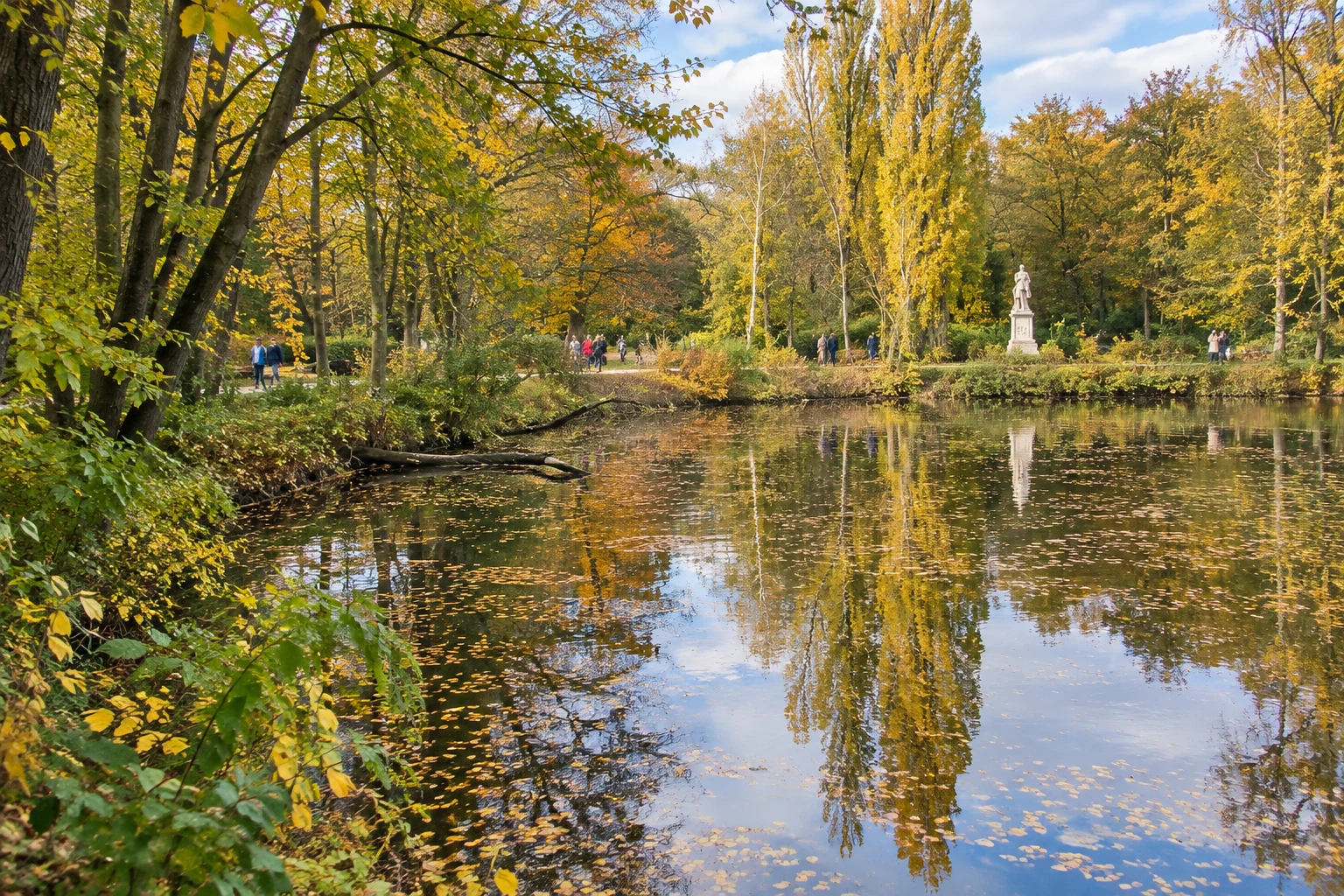
Berlin's large central park, formerly the princes' hunting grounds. At its center stands the Siegessäule, the Victory Column, with an observation deck beneath the golden statue.
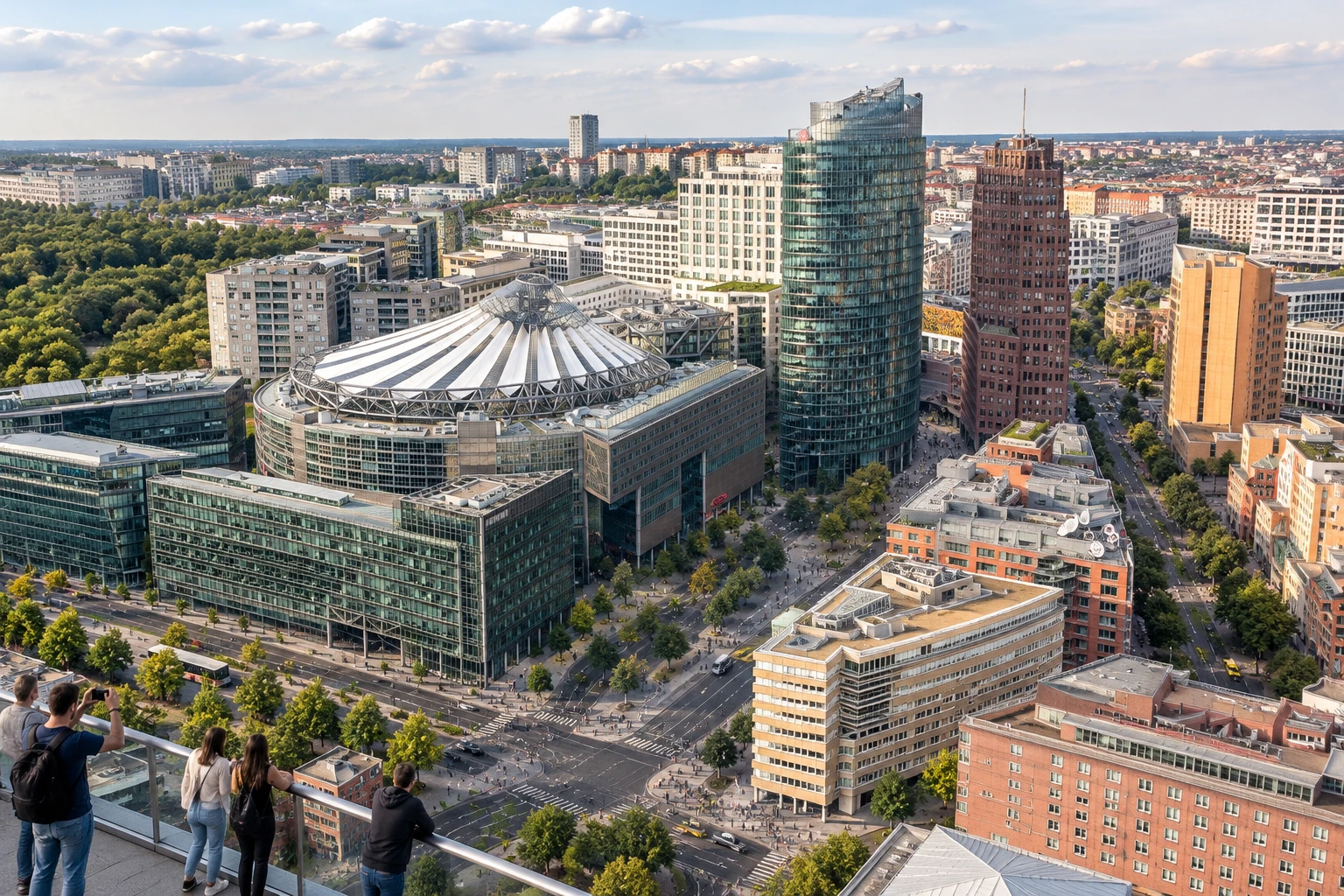
Formerly the busiest square in Europe, it became an empty lot during the division of Berlin and was rebuilt with skyscrapers in the 1990s. It has panels of the Wall and an observation point.
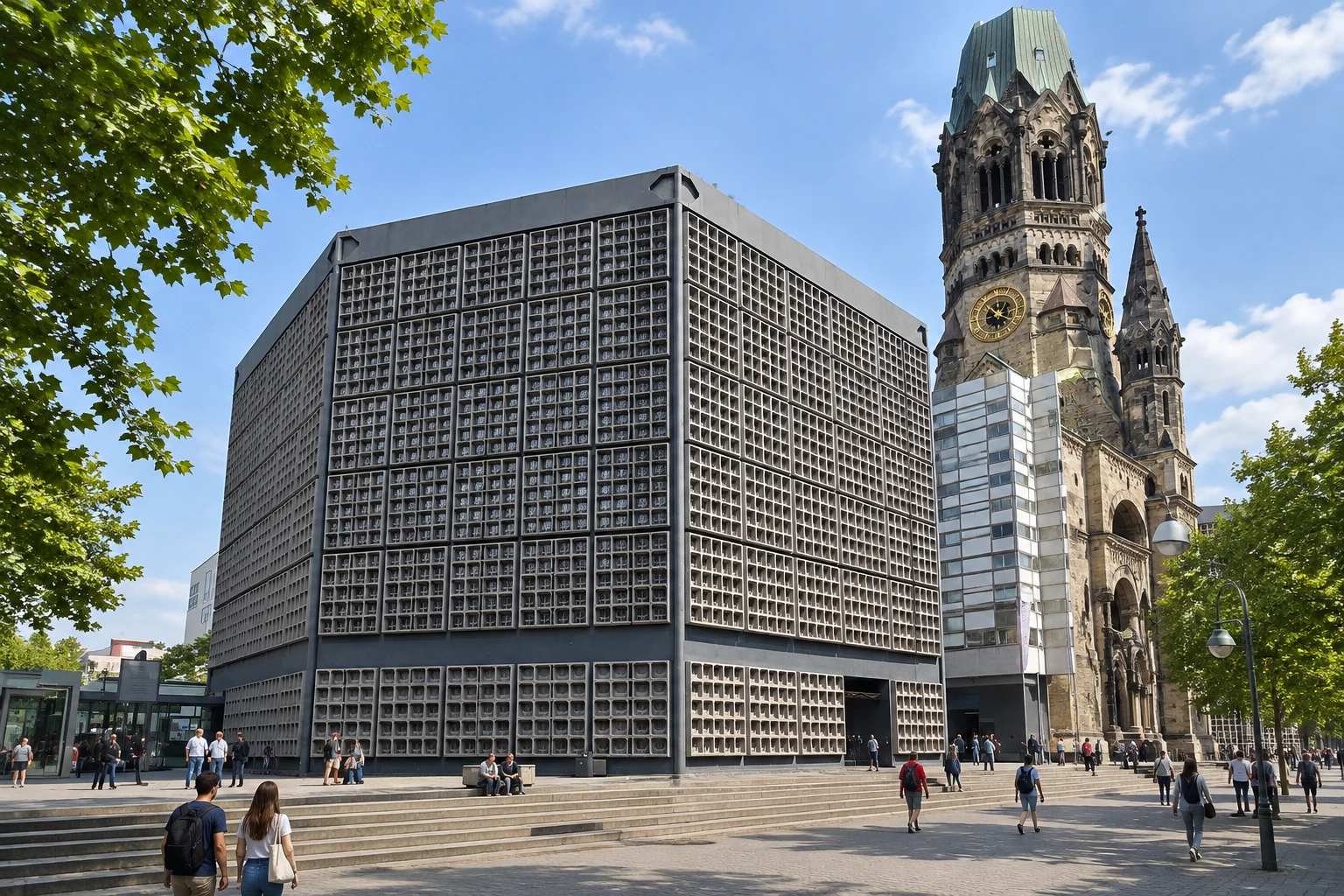
The ruined tower of a 19th-century church, preserved as a reminder of the war, next to the new church by Egon Eiermann, with blue glass walls. It is on Breitscheidplatz.
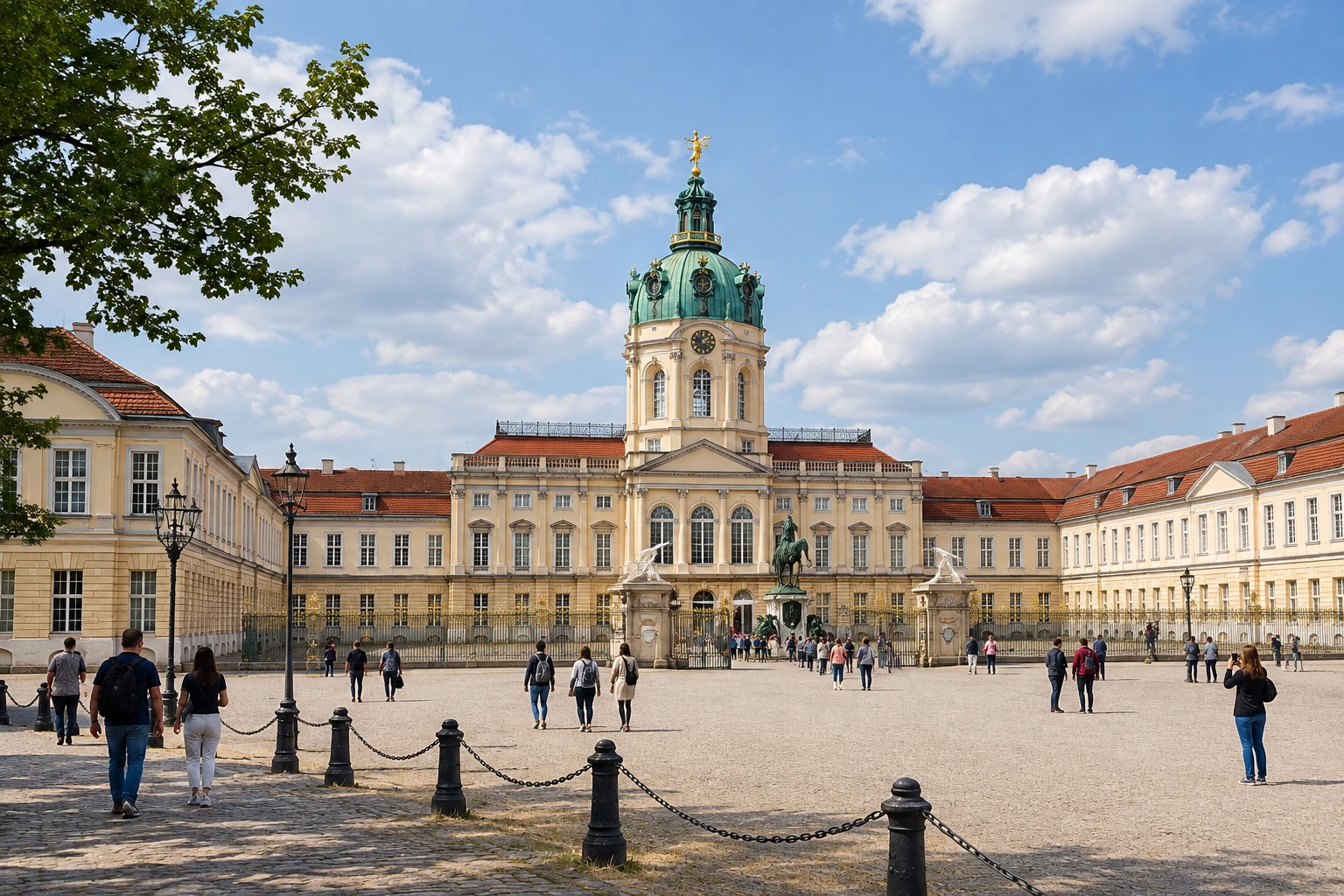
The largest palace in Berlin, summer residence of the kings of Prussia between 1701 and 1888, with Baroque and Rococo halls and a large garden on the banks of the river Spree.
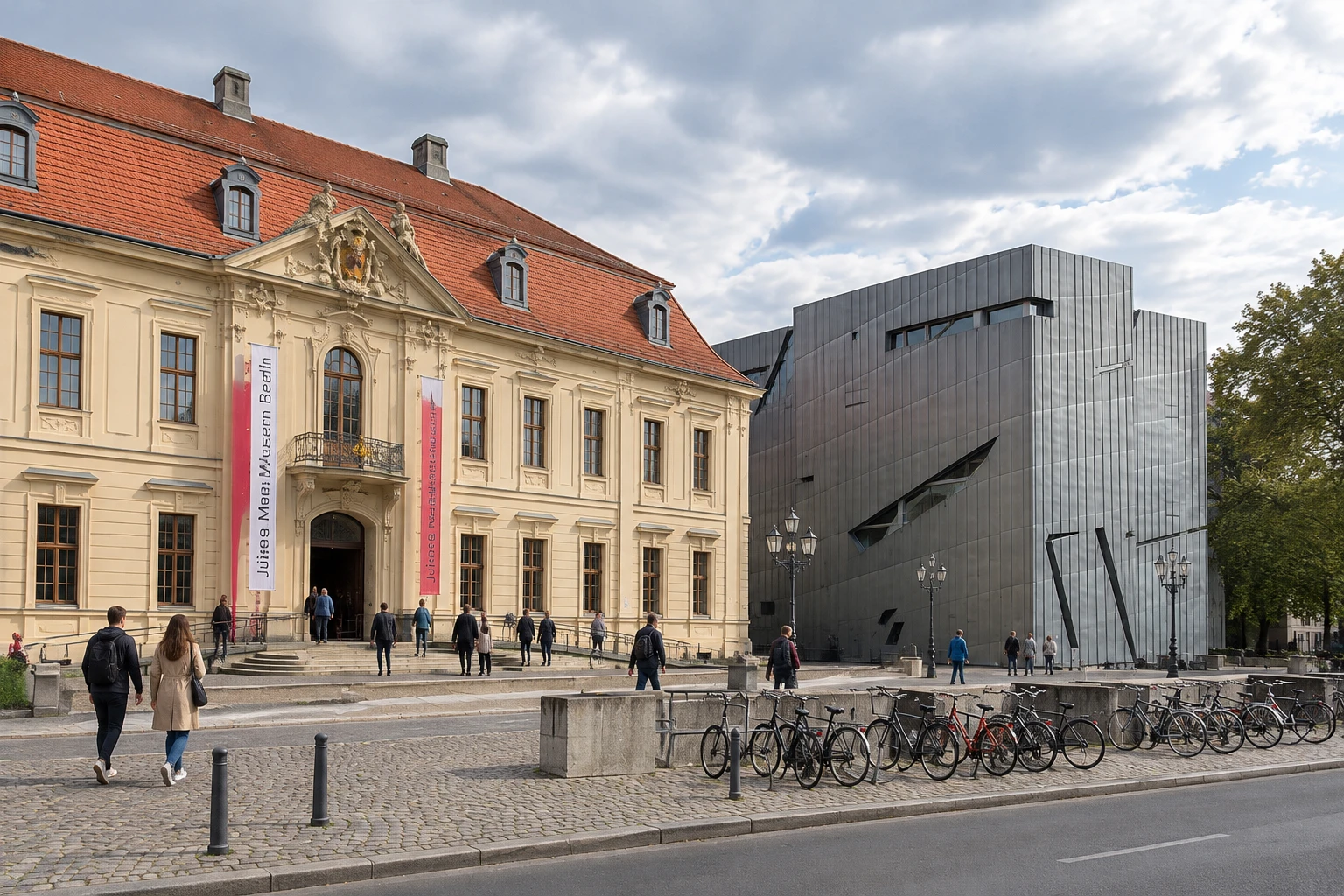
One of the largest Jewish museums in Europe, in Kreuzberg. Daniel Libeskind's zigzag building tells the story of Jews in Germany up to the present day.
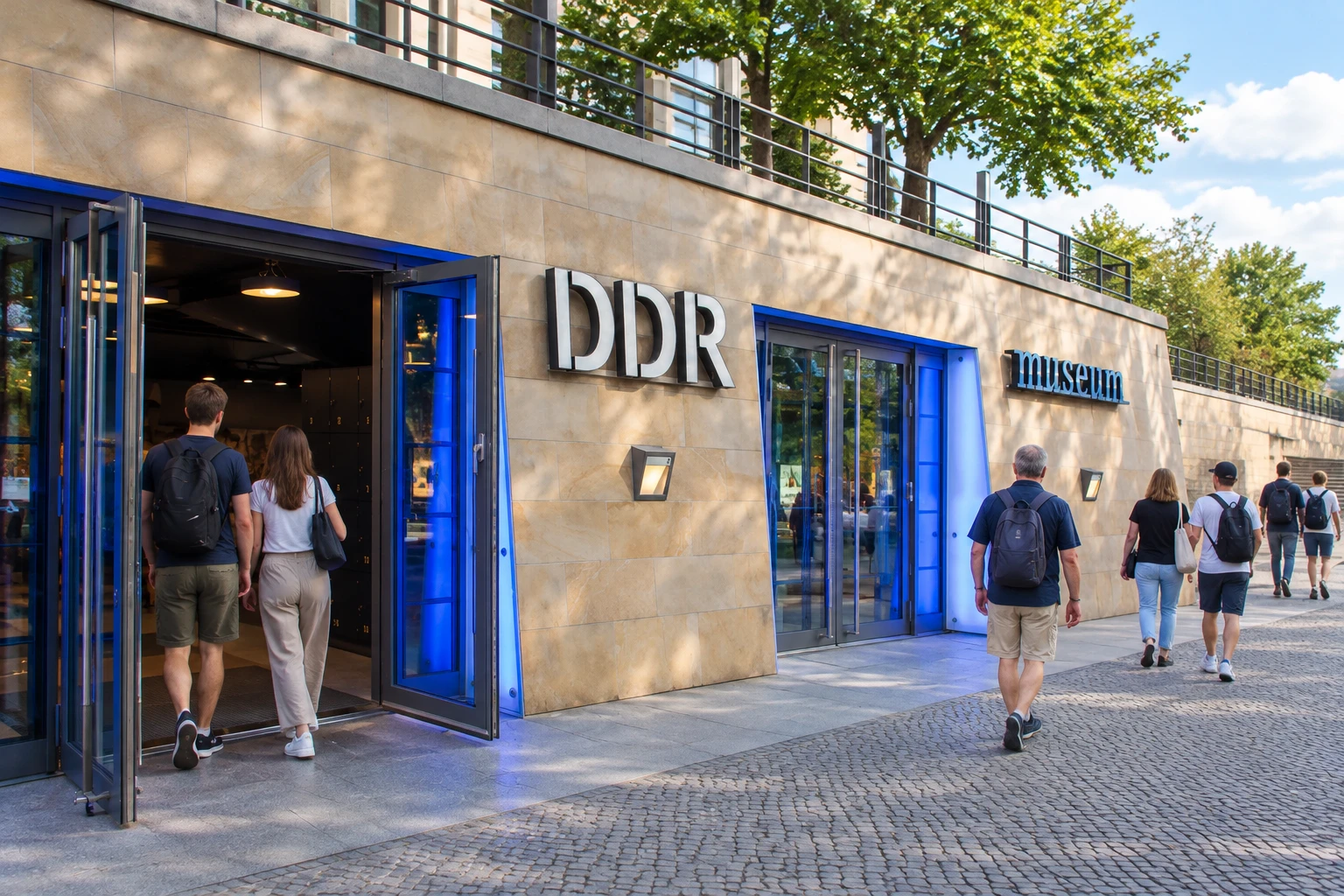
Interactive museum about everyday life in East Germany, on the banks of the river Spree, opposite the Berlin Cathedral. It has a period apartment and a Trabant simulator.
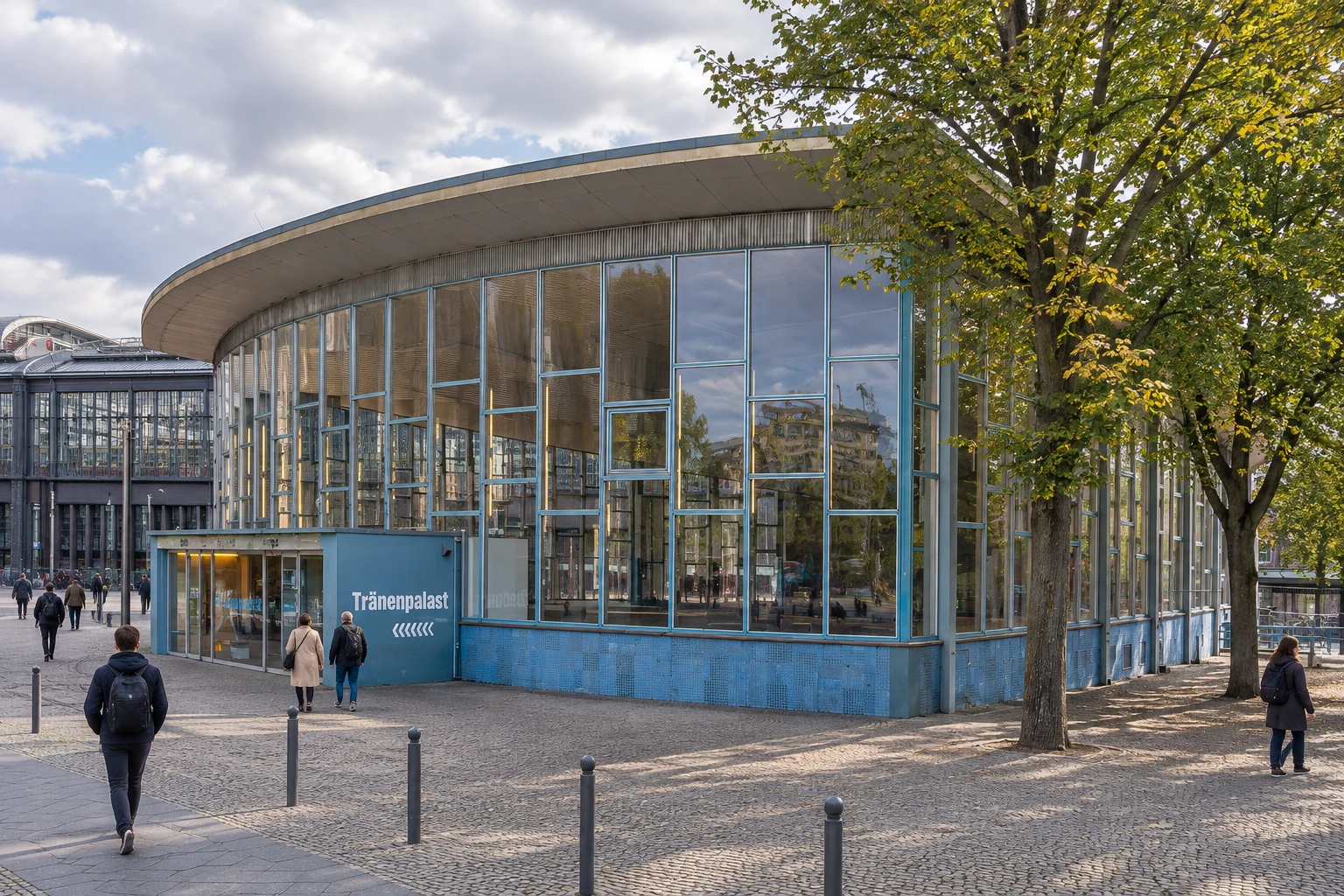
Former border control hall at Friedrichstraße station, where East and West families said goodbye. Today it is a museum about the division of Germany.
Cultural center in the reconstructed Berliner Schloss, facing the Museumsinsel. It brings together collections from Africa, Asia, the Americas and Oceania and an exhibition about Berlin.
Museum of European painting from the 13th to the 18th century at the Kulturforum, with works by Rembrandt, Vermeer, Caravaggio, Botticelli, Dürer, Rubens and Bruegel.
Group of eight interconnected courtyards, built from 1905 to 1907, in the Mitte neighborhood. The first courtyard has Art Nouveau façades in colorful ceramic; the others house shops, cafés and a cinema.
Park on the former path of the Wall between Prenzlauer Berg and Wedding, famous for its flea market and the outdoor Sunday karaoke.
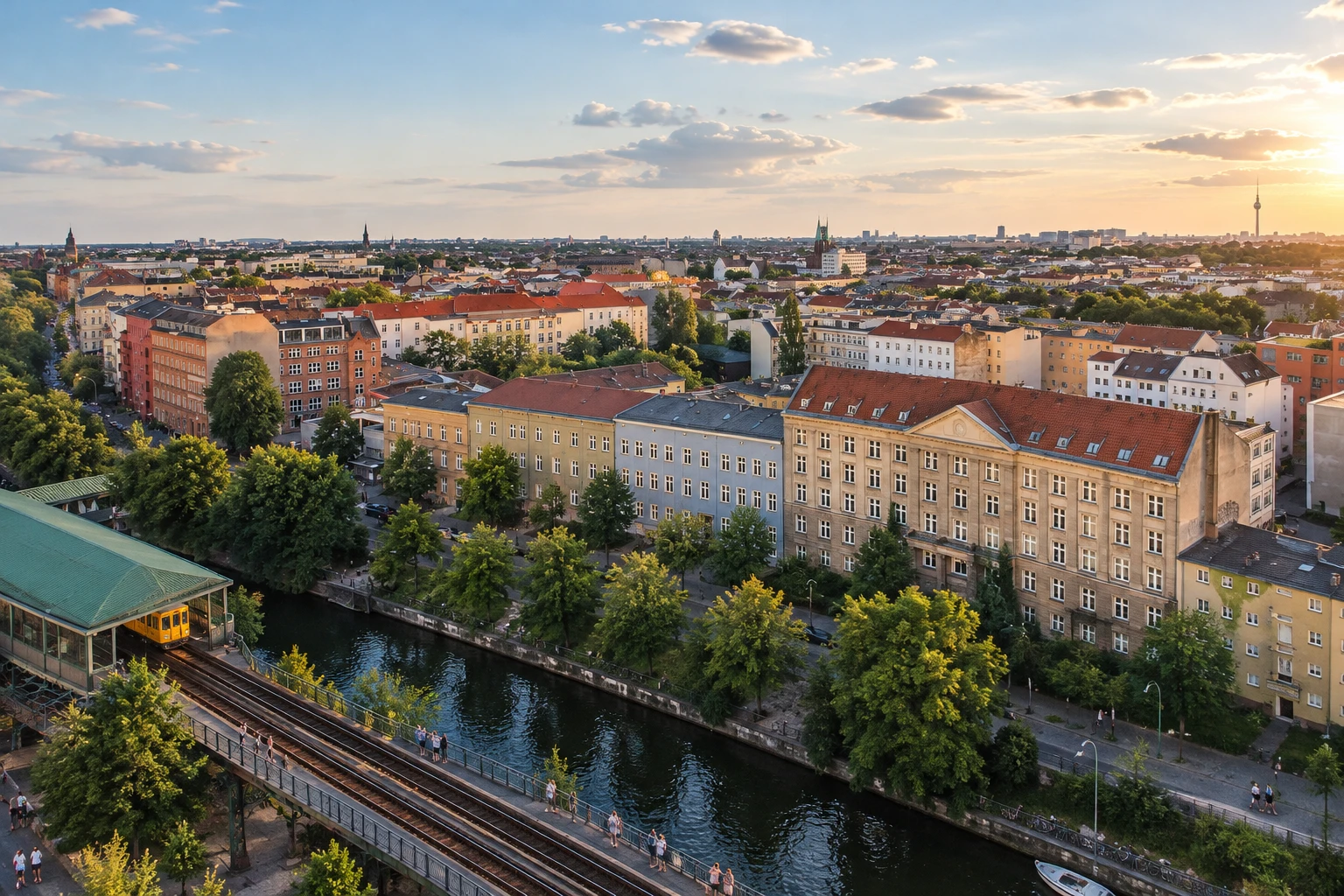
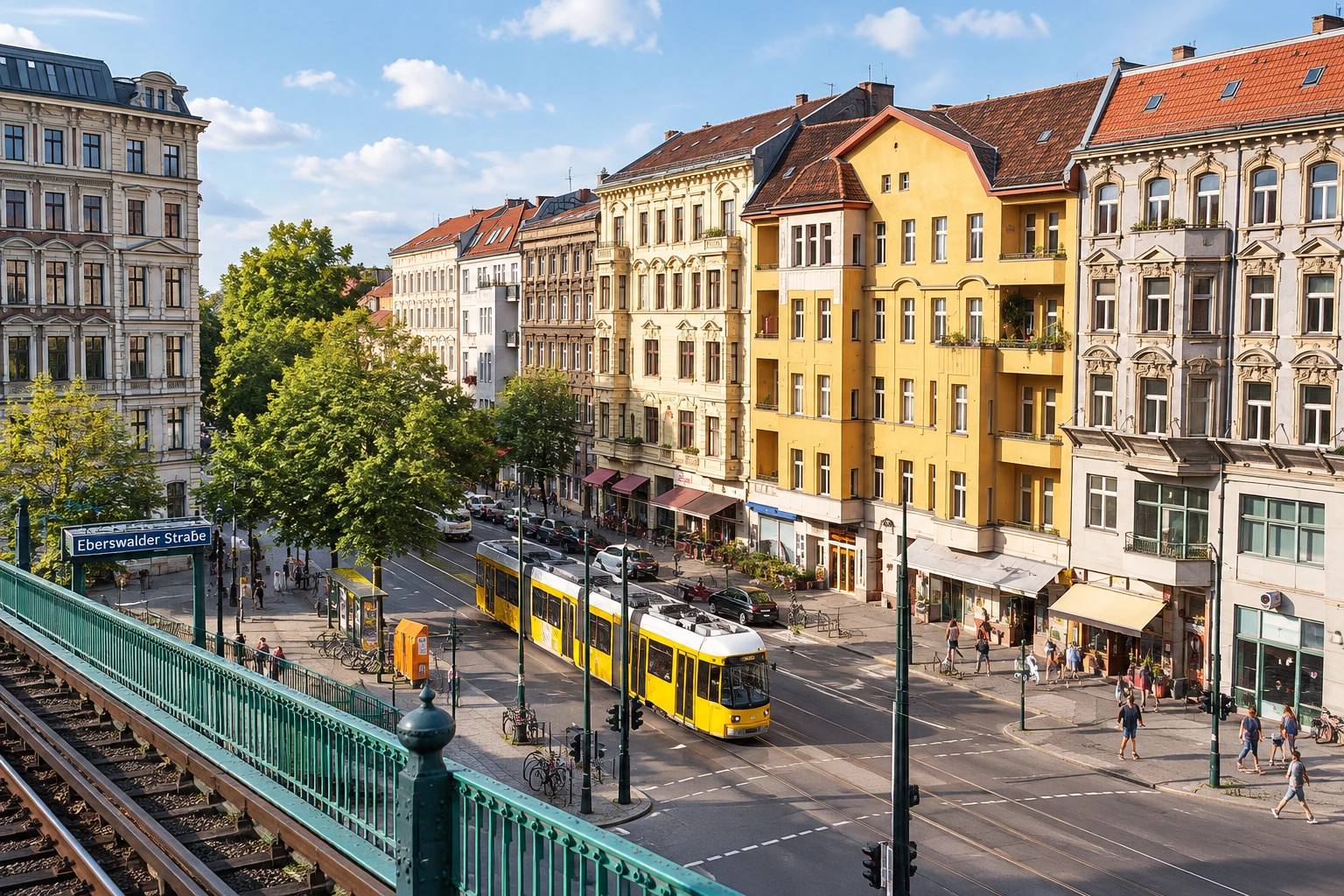
Multicultural neighborhood south of the center, with a strong Turkish presence, cafés, bars, markets, the Landwehrkanal and the Oberbaumbrücke over the Spree.
Neighborhood of restored late-19th-century buildings, on the former eastern side, with tree-lined squares, cafés, the Kulturbrauerei and Berlim's oldest water tower.
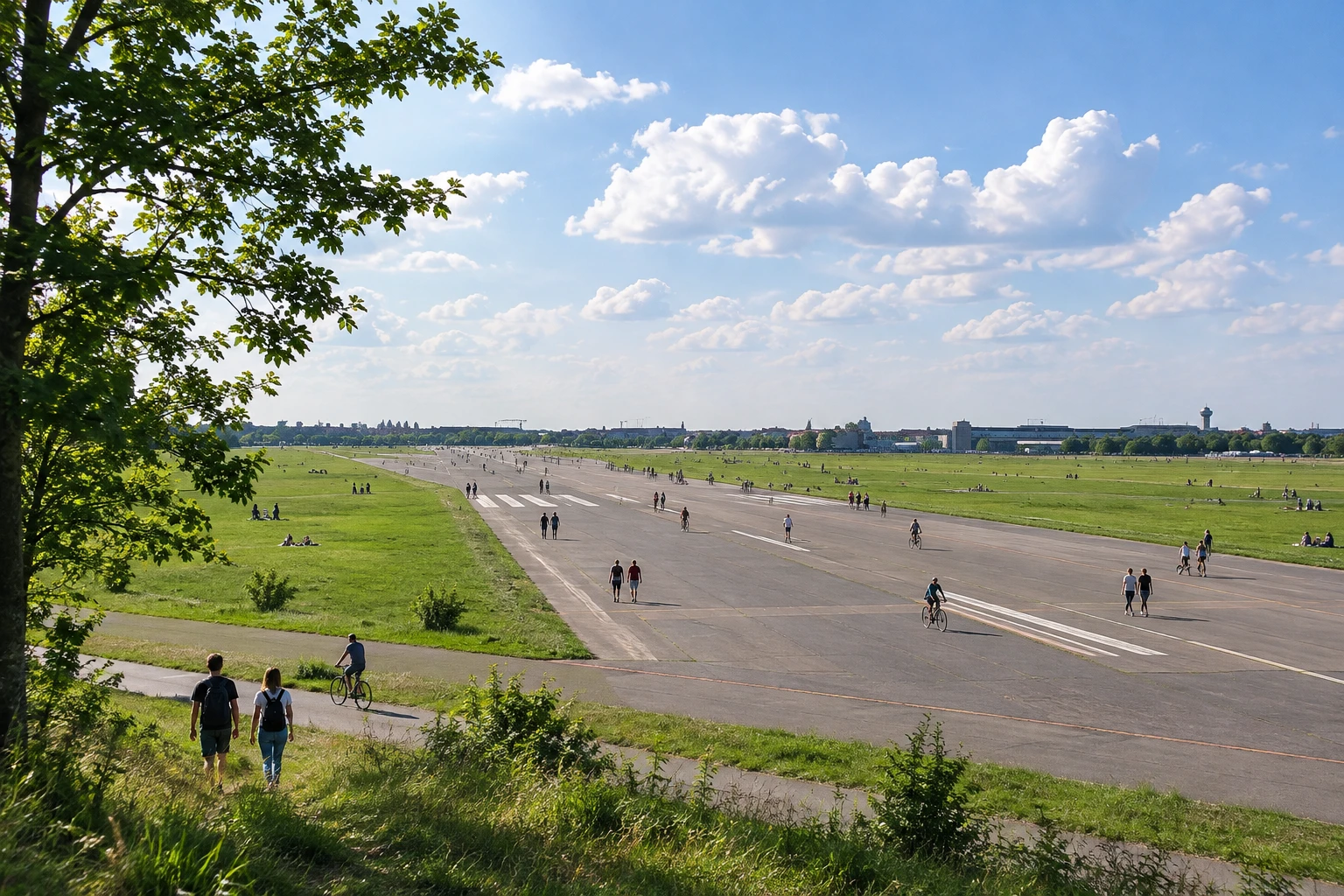
Former Tempelhof airport turned into a park of more than 300 hectares. The runways have become space for cycling, skating, flying kites and picnicking.
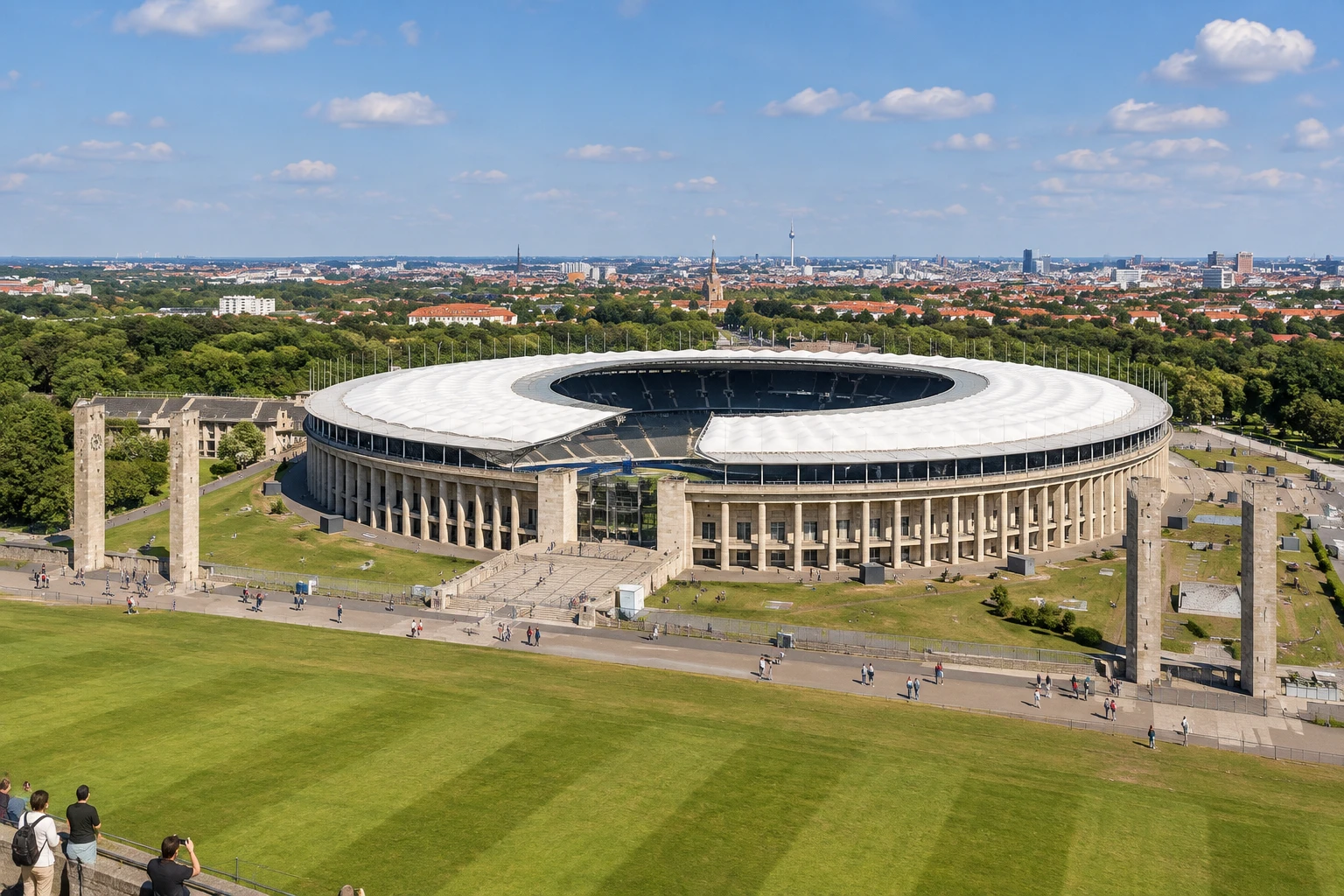
Stadium built for the 1936 Olympic Games, now home to Hertha BSC. It hosted the 2006 World Cup final and offers guided and self-guided tours.
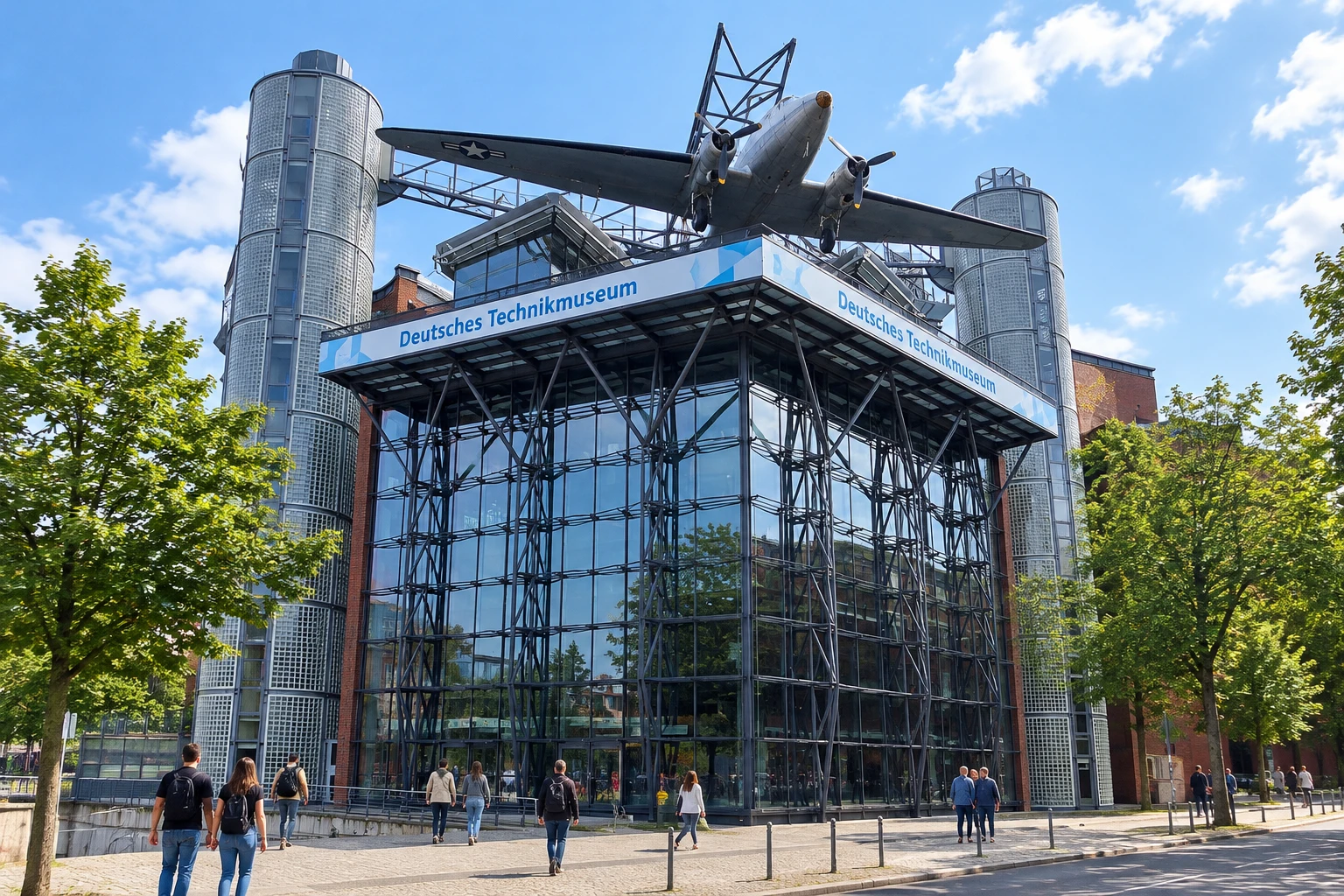
Large technology museum in Kreuzberg, housed in former railway sheds, with locomotives, airplanes, ships and the Science Center Spectrum.
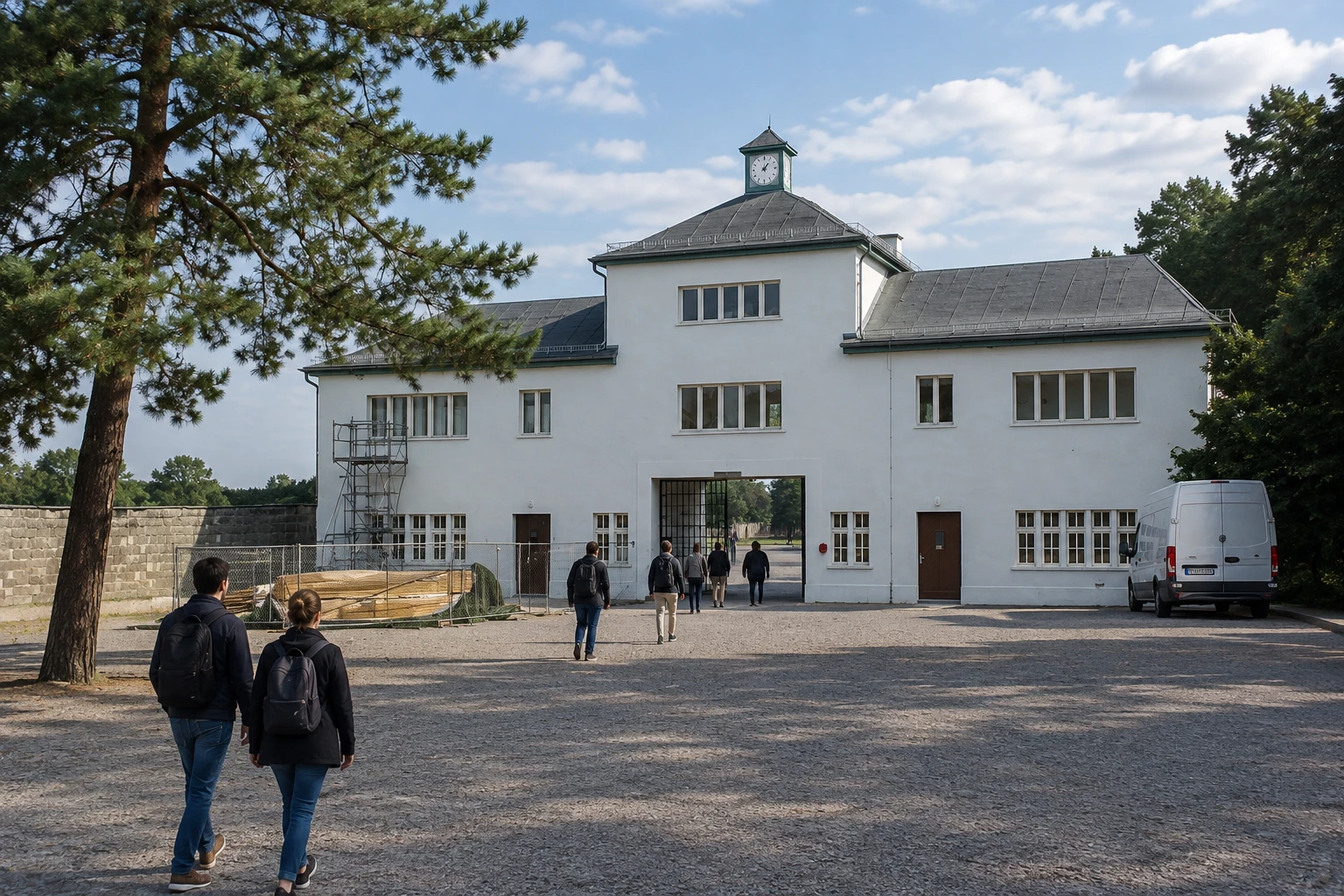
Memorial at the former Sachsenhausen concentration camp in Oranienburg, north of Berlin. A place of remembrance with exhibitions in the original buildings.
Para escolher antes de ir
O detalhe de cada passeio (de onde sai, o que inclui, a melhor época) está no guia completo.
Tire suas dúvidas
Os roteiros do guia têm 3, 5 e 7 dias: em 3 dias, historic center, Wall and Museumsinsel; em 5 dias, the capital, Sanssouci and Sachsenhausen; em 7 dias, city, palaces, memorials and neighborhoods.
Arrival and the historic center. The overnight flight from Brazil arrives in the morning to Frankfurt or Munich. From the airport station in Frankfurt, the ICE takes about 4 hours to Berlin Hauptbahnhof; from Munich, take the S-Bahn to the central station and an ICE of about 4 hours. Arriving in the mid-afternoon, drop your bags and do only the historic center on foot: Brandenburger Tor, the Holocaust Memorial and Unter den Linden up to the Museumsinsel, to view the island from outside. Have an early dinner and sleep: the time difference is 4 or 5 hours.
Em geral chove menos de setembro a abril. O guia traz cada mês com o clima e o que muda nos passeios.
Para planejar