Leipziger Lerche
Little tart of shortcrust pastry filled with marzipan, almonds and a touch of jam or a cherry, with two strips of pastry crossed on top. It replaced the roasted lark, a Leipzig dish until the hunting ban in 1876.
Antarctica
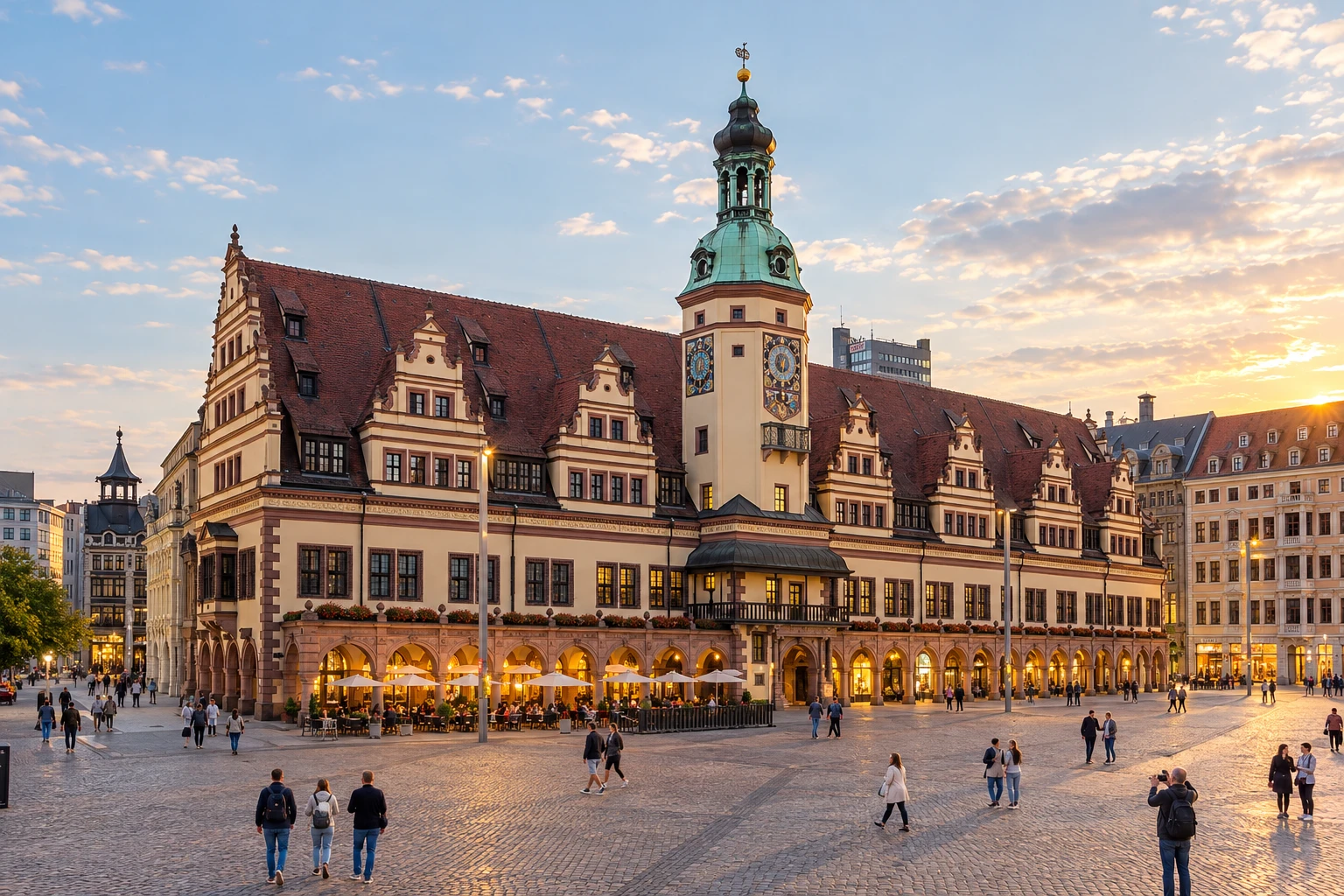
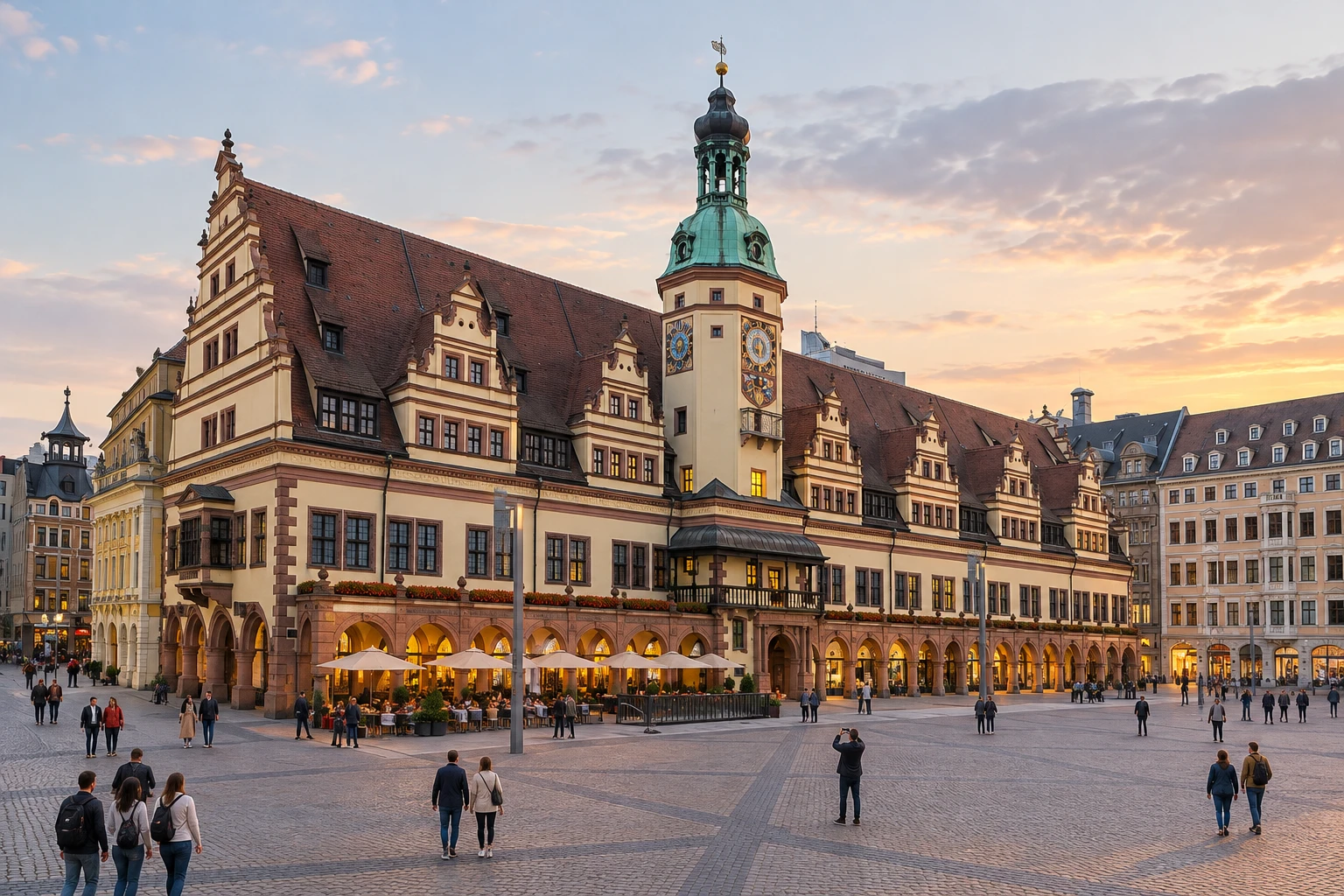
In the photo: Altes Rathaus, Leipzig
Illustrative images. The pictures in this guide are illustrations based on the real place, not photographs, and may differ from it.
The city
The largest city of Saxônia, Leipzig combines music and recent history. Bach worked at the Thomaskirche and the Bach-Museum stands opposite; the Nikolaikirche was the starting point of the 1989 demonstrations, recounted at the Zeitgeschichtliches Forum and the Museum in der Runden Ecke. In the centre are the Altes Rathaus, the Mädlerpassage and the Augustusplatz with the Gewandhaus; outside the centre, the Völkerschlachtdenkmal, Zoo Leipzig, the Spinnerei and Plagwitz.
There's no accommodation in the guide yet in Leipzig.
Tem hotel, pousada ou casa de temporada aqui? Cadastre a suaThere are no restaurants in the guide yet in Leipzig.
Know a good one? Recommend it to usHotéis e restaurantes da cidade no mapa.
how to get there · how many days · itinerary · questions
Flavors of Germany
The local experience
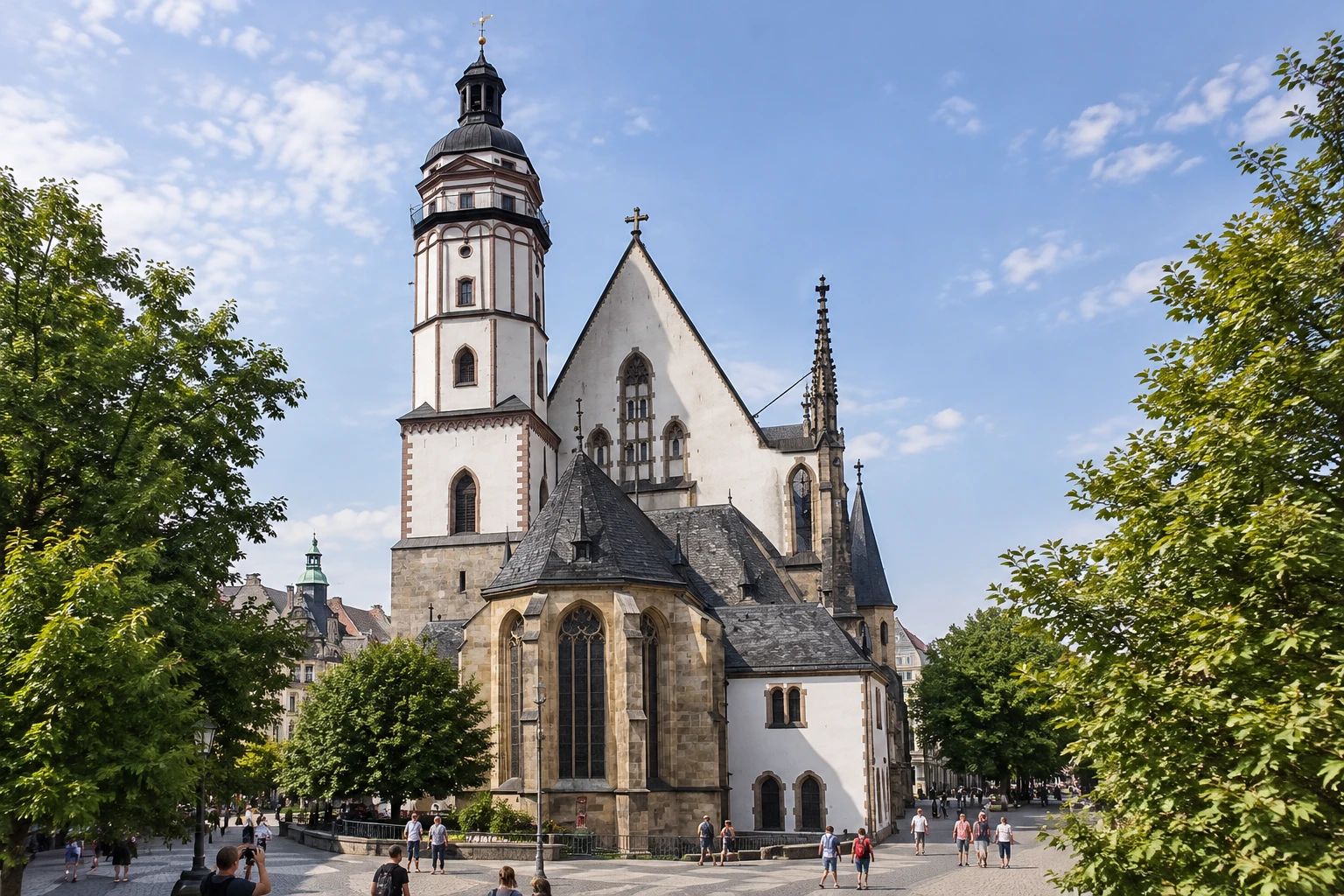
Gothic church where Johann Sebastian Bach was cantor from 1723 to 1750 and where his tomb is located. Home of the Thomanerchor, a boys' choir over 800 years old.
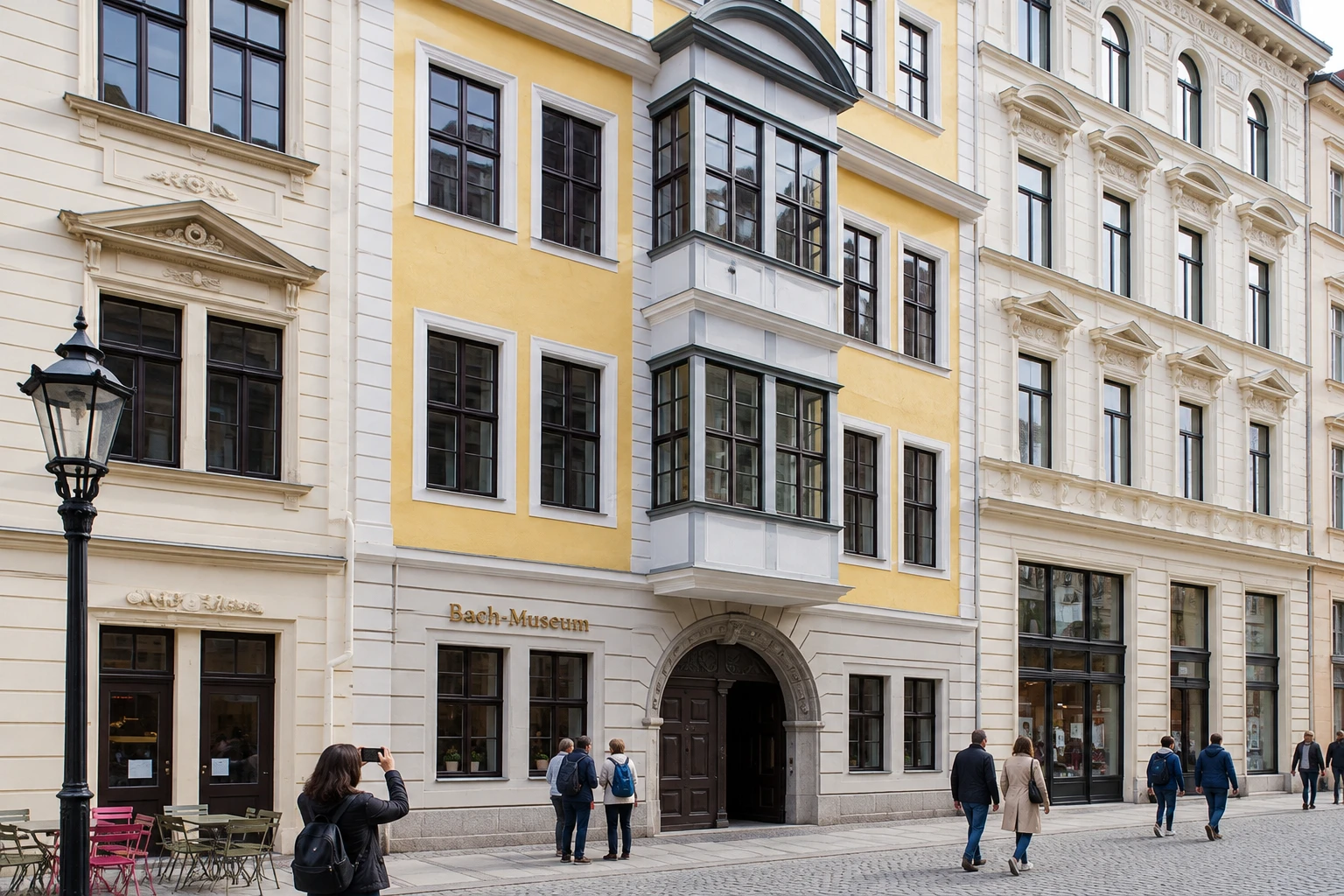
Museum about Johann Sebastian Bach in the Bosehaus, opposite the Thomaskirche, with original manuscripts, interactive rooms and the organ console that the composer examined.
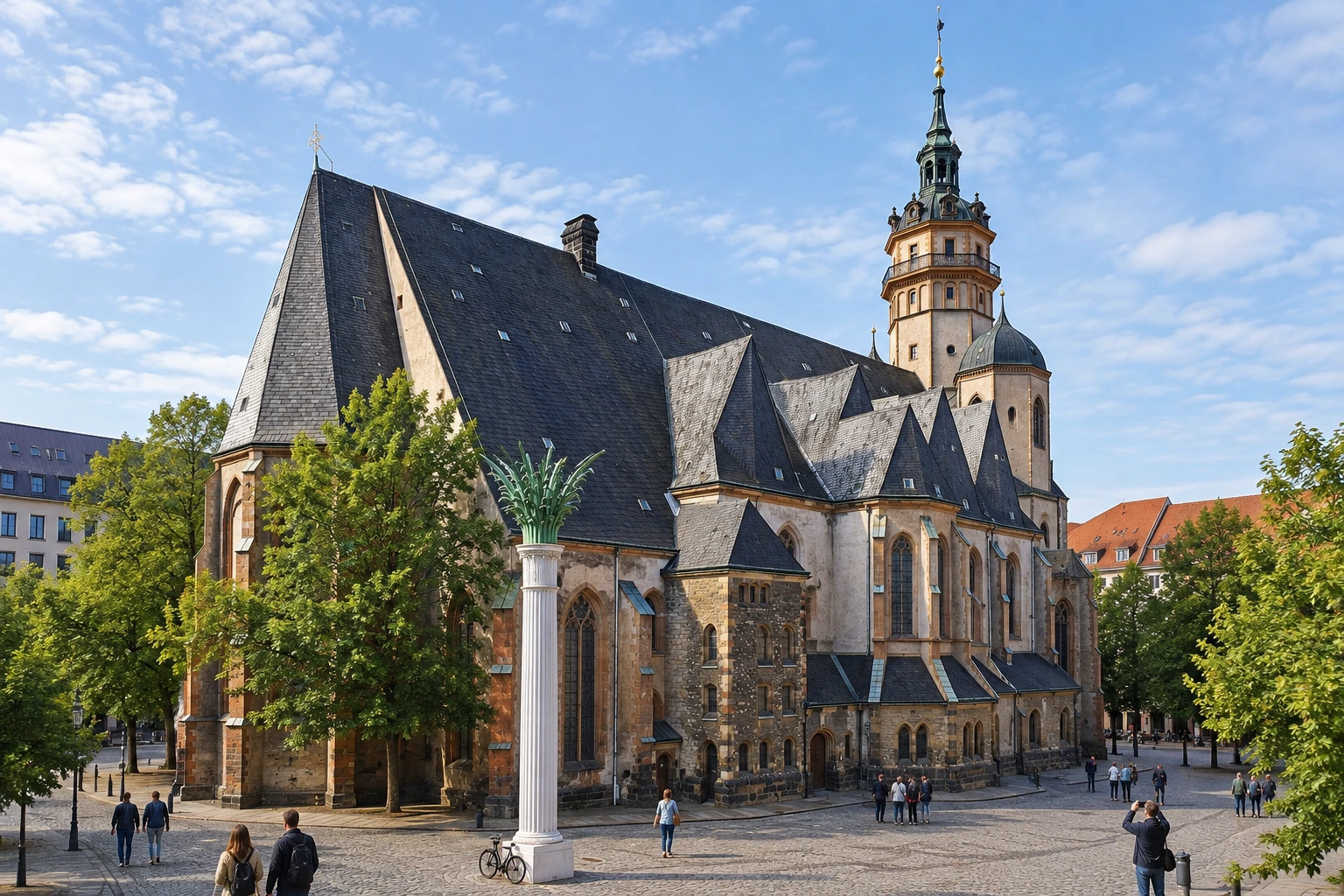
Church where the Monday prayers for peace grew into the 1989 demonstrations. The interior has white columns shaped like palm trees.
Renaissance town hall from 1556 that occupies an entire side of the market square (Markt) and houses the city history museum.
Before you go
Leipzig – Germany about 115 km from Dresden
Approximate distances. Check flights and bus, train or boat schedules before you travel.
Connections from Brazil usually involve a stopover in another city. Check before buying. From Berlim, the ICE reaches Leipzig Hauptbahnhof in about 1h15; from Dresden, in a little over an hour; from Frankfurt, in around 3 hours. Leipzig/Halle airport (LEJ) is about 20 km away and has a direct S-Bahn link to the central station of about 12 minutes.
One day covers the old town, which lies within the ring of avenues and can be explored on foot: churches, the market square, passages and a museum. Two days allow you to include the Völkerschlachtdenkmal, the Museum der bildenden Künste and Plagwitz with the Spinnerei. Classical-music fans can add an evening concert at the Gewandhaus or a motet at the Thomaskirche.
From May to September the days are long and the canals of Plagwitz get busy. The Bachfest usually takes place in June. In October the city commemorates the 1989 demonstrations with the Lichtfest. The Christmas market usually runs from late November until near Christmas. In winter, from December to February, it is cold and gets dark early. Germany is 4 or 5 hours ahead of Brasília, depending on the time of year.
The seasons shown are the most usual ones; nature doesn't always follow the calendar.
You don't need to. The center is compact and much of it is pedestrian-only. Trams, buses and the S-Bahn, which runs through a tunnel under the center, reach the Völkerschlachtdenkmal, the Zoo, Plagwitz and the Panometer. Tickets are valid across the network; validate when the machine asks. Leipzig has an environmental zone (Umweltzone), and cars need the sticker on the windshield.
Suggested itinerary
Built with the places on this page. No rush: it's paced so you have time to see them.
Start at the Thomaskirche, where Bach served as cantor from 1723 to 1750 and is buried in front of the altar. On the other side of the courtyard is the Bach-Museum, with original manuscripts and interactive rooms about the composer's life.
Walk to the market square (Markt) and the Altes Rathaus, the Renaissance town hall. Cross the Mädlerpassage, with the statues of Faust, and enter the Zeitgeschichtliches Forum to understand divided Germany. Entrance to that museum is free.
Visit the Nikolaikirche, the starting point of the 1989 demonstrations, and see the column in memory of them in the courtyard. Then walk to Augustusplatz, with the opera house, the Gewandhaus and the Paulinum; the lookout at the City-Hochhaus shows the city from above.
If tickets are available, attend a concert at the Gewandhaus. Another option is to dine at Auerbachs Keller, the cellar in the Mädlerpassage mentioned in Goethe's Faust, or in the streets of bars around the Barfußgäßchen, near the market square.
Day 1
Start the day at the Thomaskirche, with Bach's tomb and the stained-glass windows, and head to the Bach-Museum opposite. On Fridays and Saturdays the church's boys' choir, the Thomanerchor, usually sings the motets; check the times before you go.
Pass the market square and the Altes Rathaus, which houses the city history museum, and the Mädlerpassage. Then go to the Museum in der Runden Ecke, in the former building of East Germany's political police, and to the Zeitgeschichtliches Forum.
At the Nikolaikirche notice the palm-shaped columns and the history of the peace prayers. Continue to Augustusplatz and, if the weather is clear, go up to the City-Hochhaus lookout to see the sunset over the center.
Reserve the evening for music: a concert by the Gewandhaus orchestra or a performance at the Oper Leipzig, both at Augustusplatz. Buy tickets in advance because dates with the principal orchestra tend to sell out.
Day 2
Take the tram to the Völkerschlachtdenkmal, a 91-meter monument to the 1813 battle against Napoleon. See the crypt with the guardian figures and climb to the high platform; the FORUM 1813 at the foot of the monument explains the battle.
Back in the center, visit the Museum der bildenden Künste, with Cranach, Caspar David Friedrich and painters of the Leipzig School. Those interested in design and musical instruments can swap it for one of the Grassi museums at Johannisplatz.
Head west: at the Spinnerei, a former cotton mill, the galleries usually open from Tuesday to Saturday. Then walk along the bank of the Karl-Heine-Kanal, among brick factories converted into lofts and studios.
Finish in Plagwitz, at the bars and restaurants on Karl-Heine-Straße, or return by tram to the Südvorstadt, where Karl-Liebknecht-Straße concentrates breweries and cuisines from various countries.
Check before you go. Opening hours and days change, and places may close for renovations, holidays or events. This itinerary is a suggestion from Cidade Turismo, not a commitment: plan yours by checking directly with each place you intend to visit.
Before you go
It's about 115 km by road. By train, the ICE makes the journey in just over an hour and there are several departures a day; the regional train takes longer, around 1h30. You can do a day trip in either direction.
The airport station has an S-Bahn direct to Leipzig Hauptbahnhof, with a journey of about 12 minutes and departures every half hour for most of the day. Buy the ticket before boarding and validate it when the machine asks.
The Thomanerchor, the boys' choir Bach conducted, usually sings the motets on Friday late afternoons and Saturday afternoons, when not on tour. There is no reservation: the program is sold at the door shortly before and seating is on a first-come, first-served basis. Check the schedule before you go.
In most shops, no: Sunday is a day of closed commerce in Germany. Museums, churches, the Zoo and many restaurants are open. Plan shopping for other days. In small places cash payment is still common.
Yes. Besides the Thomaskirche and the Bach-Museum, the city has the Mendelssohn-Haus, where the composer died, and the Gewandhaus, home to one of the world's oldest orchestras. The Bachfest usually takes place in June. Buy concert tickets in advance.