

 Brazil
 Antarctica
 Argentina
 Bolivia
 Chile
 Colombia
 Ecuador
 Falkland Islands (Malvinas)
 French Guiana
 Guyana
 Paraguay
 Peru
 Suriname
 Uruguay
 Venezuela
 Albania
 Austria
 Belgium
 Croatia
 Denmark
 Finland
 France
 Germany
 Greece
 Hungary
 Iceland
 Ireland
 Luxembourg
 Norway
 Poland
 Portugal
 Slovakia
 Slovenia
 Spain
 Sweden
 the Czech Republic
 the Netherlands
 the United Kingdom
 Turkey
 Bermuda
 Canada
 Greenland
 Mexico
 Saint Pierre and Miquelon
 the United States
 the Dominican Republic
 Japan
 Egypt
 South Africa
 Australia
 Fiji
 New Zealand
 Papua New Guinea
Route · Switzerland · Italy
Bernina Express: Chur–St. Moritz–Tirano
The red train that crosses the Alps from Switzerland to Italy: viaducts, spiral tunnels, glaciers and Lake Bianco, from Chur to Tirano in about four hours, with a bus onward to Lugano.
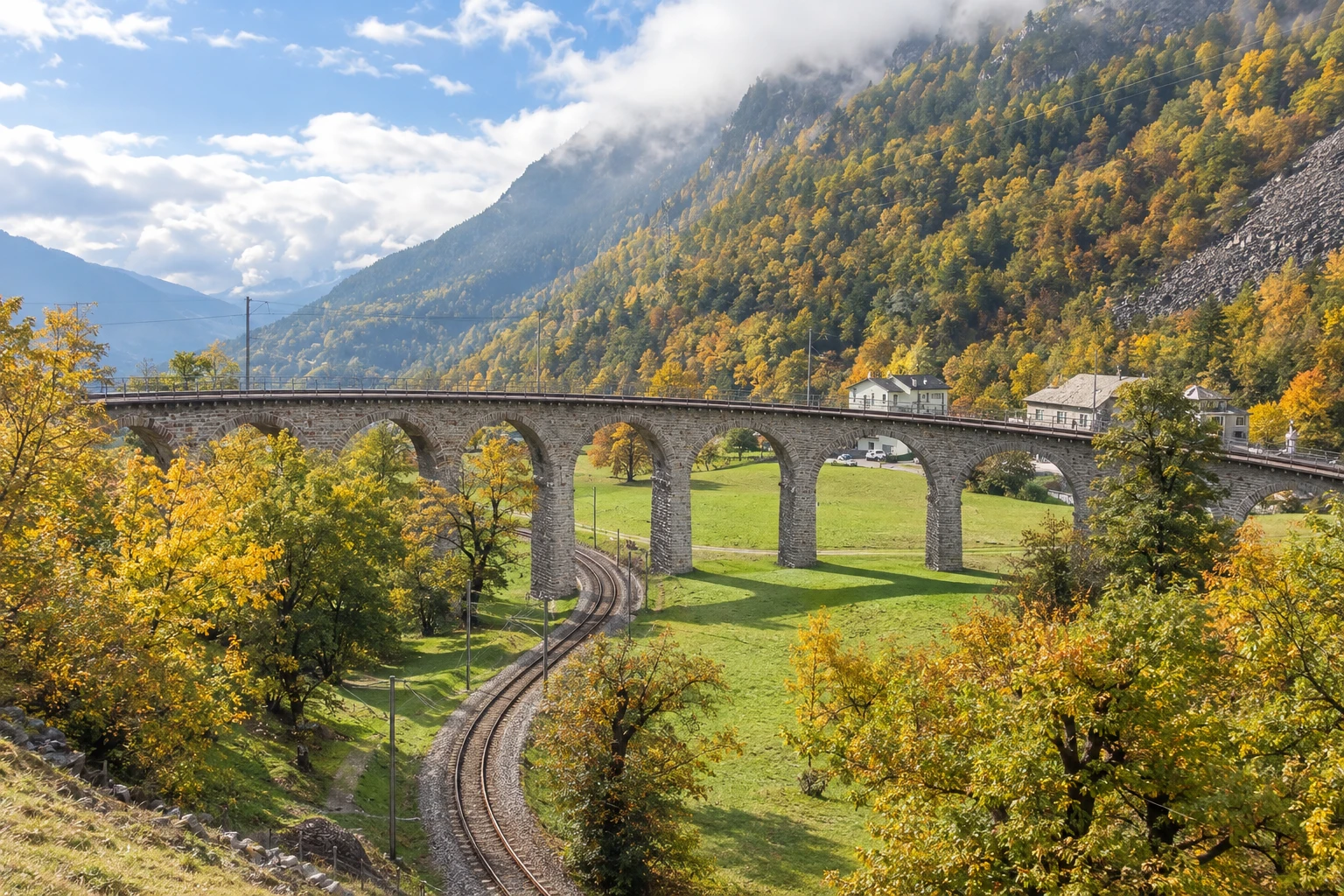
In the photo: Brusio circular viaduct
The route
What the Bernina Express: Chur–St. Moritz–Tirano is
The Bernina Express is the panoramic train of the Rhaetian Railway (RhB) that links Chur, in Graubünden, to Tirano in Italy via the Albula and Bernina lines, recognized by UNESCO as a World Heritage Site. The journey takes 4 to 4.5 hours and has carriages with windows that extend to the ceiling. There are also departures from Davos and from St. Moritz.
From Chur the train climbs the Albula valley, passes the Landwasser viaduct near Filisur, and goes through spiral tunnels to the Engadine and St. Moritz. It then crosses the Bernina Pass at the Ospizio Bernina, at 2,253 meters, the highest point on the line, beside Lake Bianco and with views of the Morteratsch Glacier. On the descent it goes past Alp Grüm, through the Poschiavo valley and the circular Brusio viaduct, a full spiral loop, until it reaches Tirano, already in Italy.
In season a panoramic bus, the Bernina Express Bus, continues from Tirano to Lugano in Italian-speaking Switzerland via the Valtellina and the shore of Lake Como in about 3 hours. Switzerland is in the Schengen area but not in the European Union, and uses the Swiss franc; Italy uses the euro.
The map
Bernina Express: Chur–St. Moritz–Tirano
The journey
City by city
Distances and times are approximate: check before you set off.
-
 1 ·
 Switzerland · Graubünden
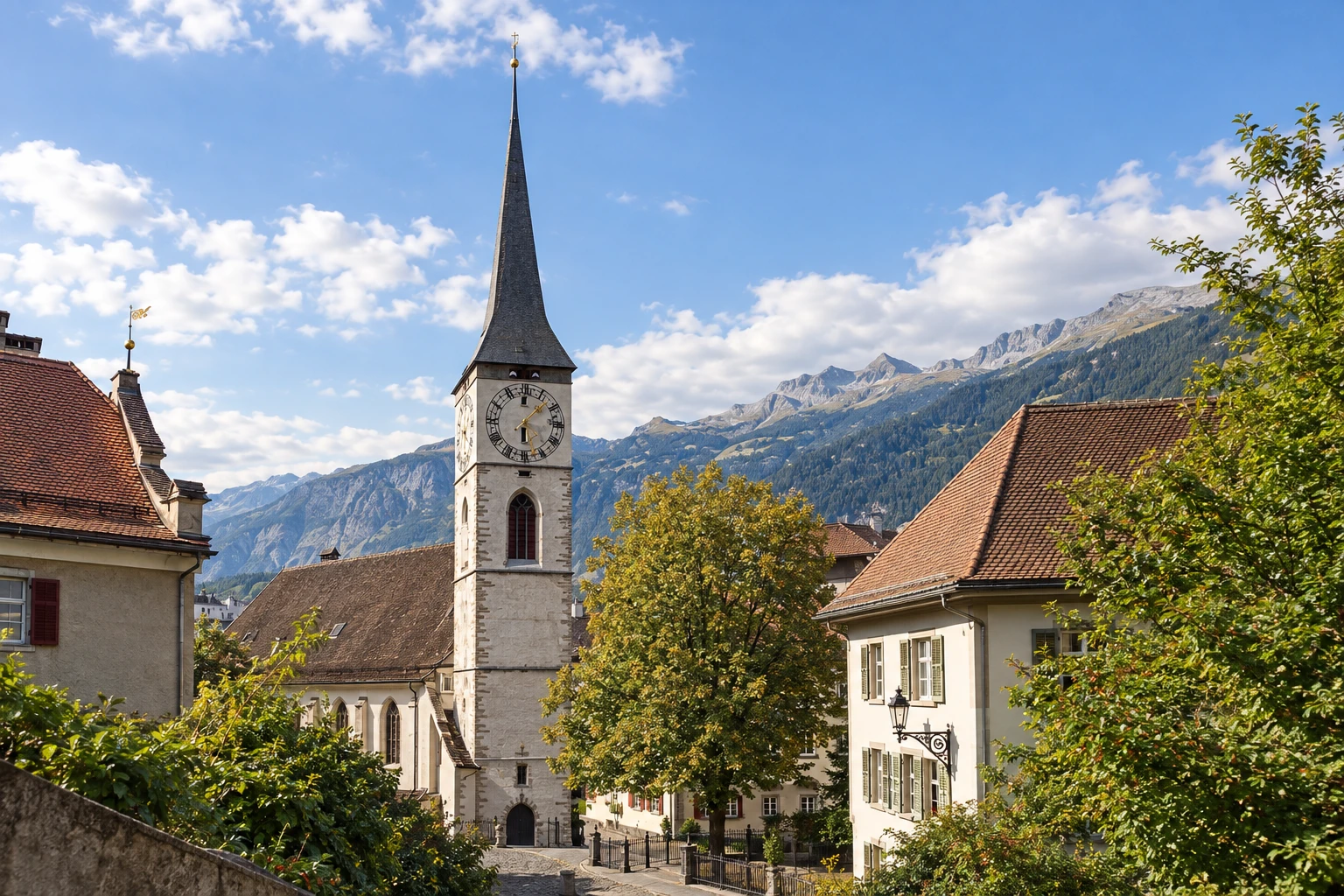
Chur
Chur is the capital of Graubünden and one of the oldest towns in Switzerland, with an old town of cobbled streets, the cathedral and the Bündner Kunstmuseum. It is the starting point of the Bernina Express, which departs from the station next to the town centre.
→ St. Moritz about 2h Bernina Express via the Albula line: Thusis, Tiefencastel, the Landwasser viaduct near Filisur, Bergün, the spiral tunnels and Samedan.
-
 2 ·Switzerland · Graubünden
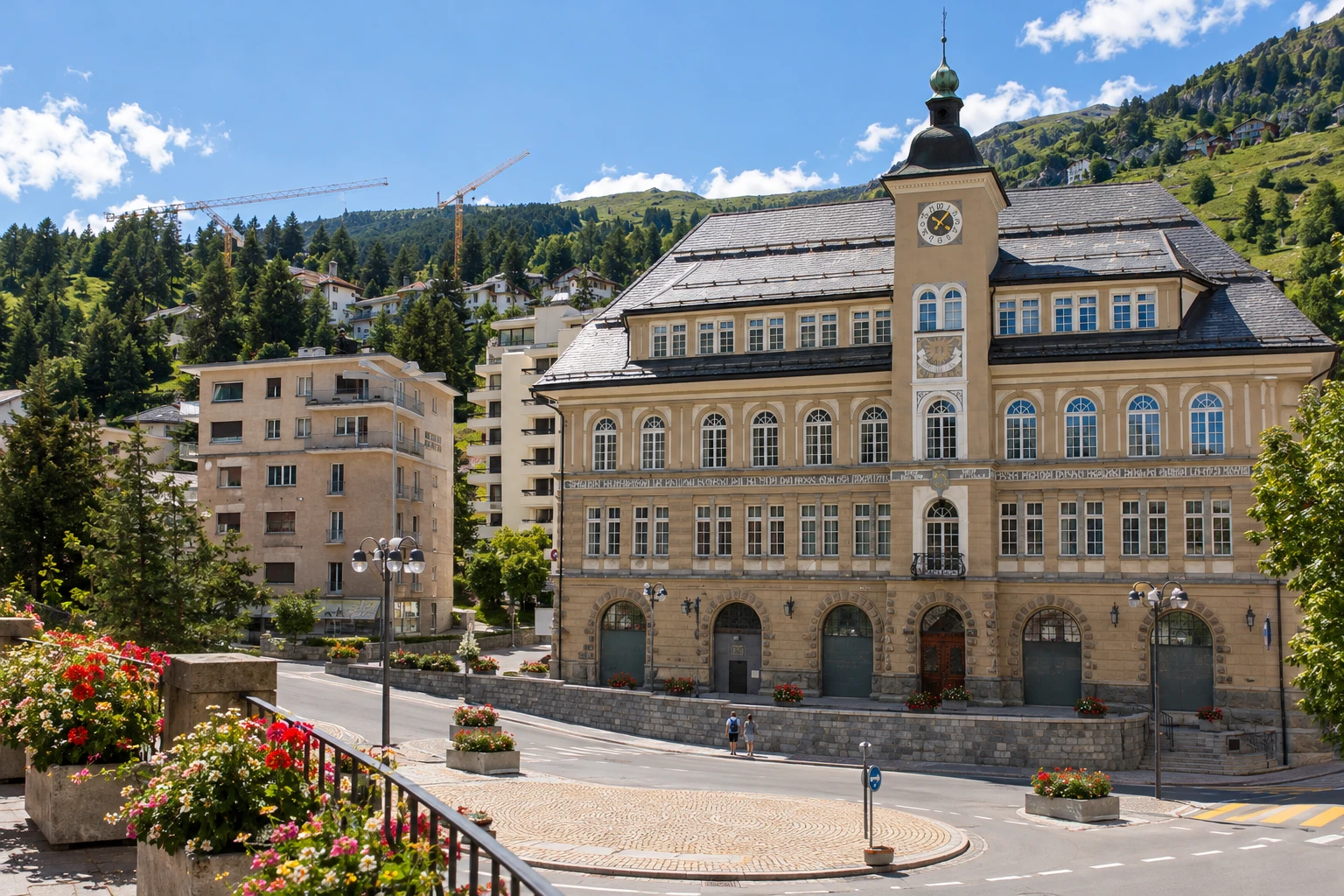
St. Moritz
After the Landwasser viaduct and the Albula spirals, passing Filisur, Bergün and Samedan, the train reaches the Engadine and St. Moritz, a town of the lake and ski resorts. From here Bernina Express services also depart for those who want to do only the Bernina Pass section, in about 2.5 hours.
→ Tirano about 2h30 Bernina Express via the Bernina line: Pontresina, Ospizio Bernina (2,253 m), Alp Grüm, Poschiavo, the Brusio circular viaduct and Tirano.
-
 3 ·
 Italy · Lombardy
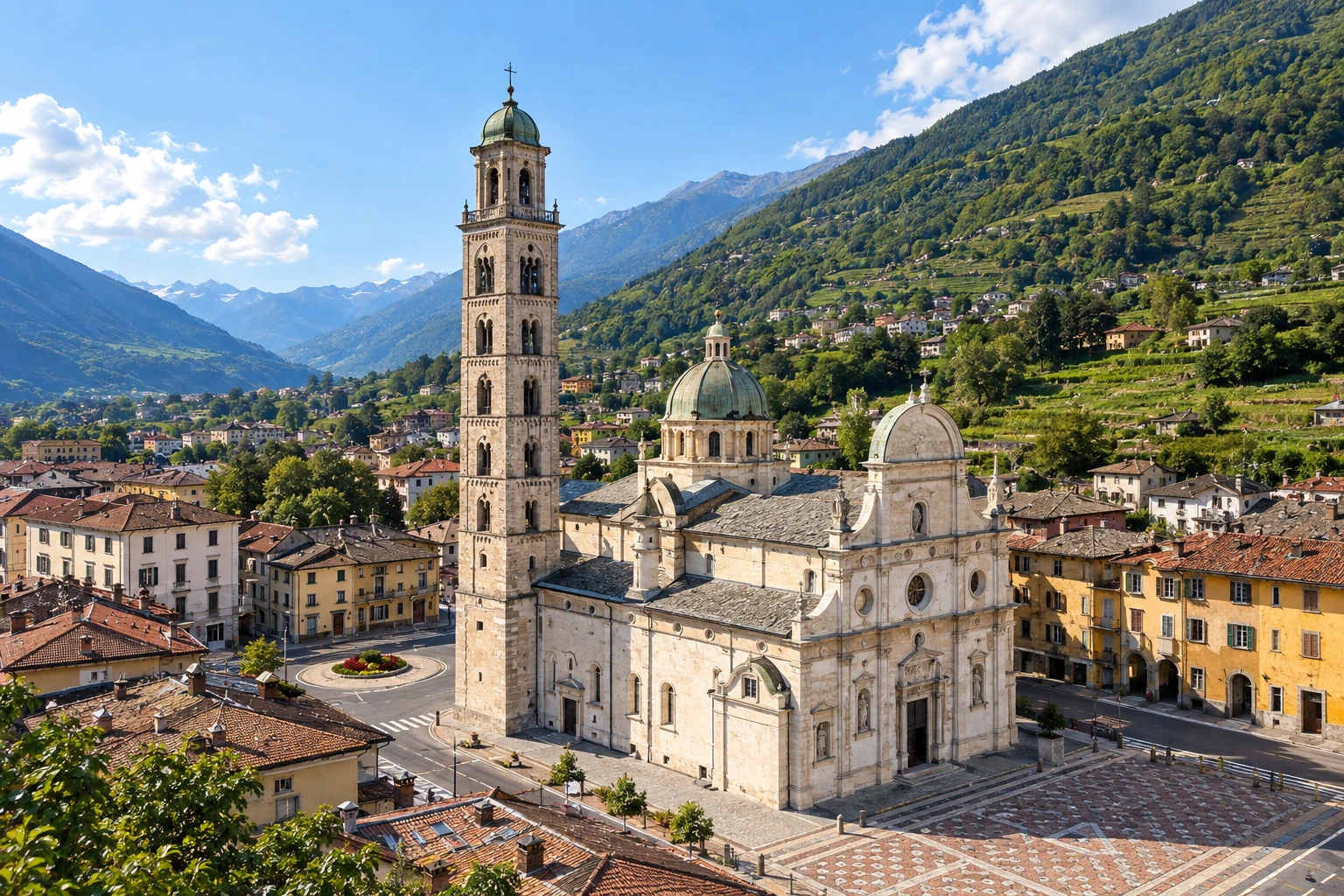
Tirano
After the Ospizio Bernina, Alp Grüm, Poschiavo and the Brusio circular viaduct, the train reaches Tirano in the Italian Valtellina, where it runs along the middle of the street before entering the station. The town has the Sanctuary of the Madonna di Tirano and is the end of the line.
→ Lugano about 3h Bernina Express Bus via the Valtellina and the shore of Lake Como, with its own reservation and running only part of the year. Out of season the route is made by train, with changes, via Italy.
-
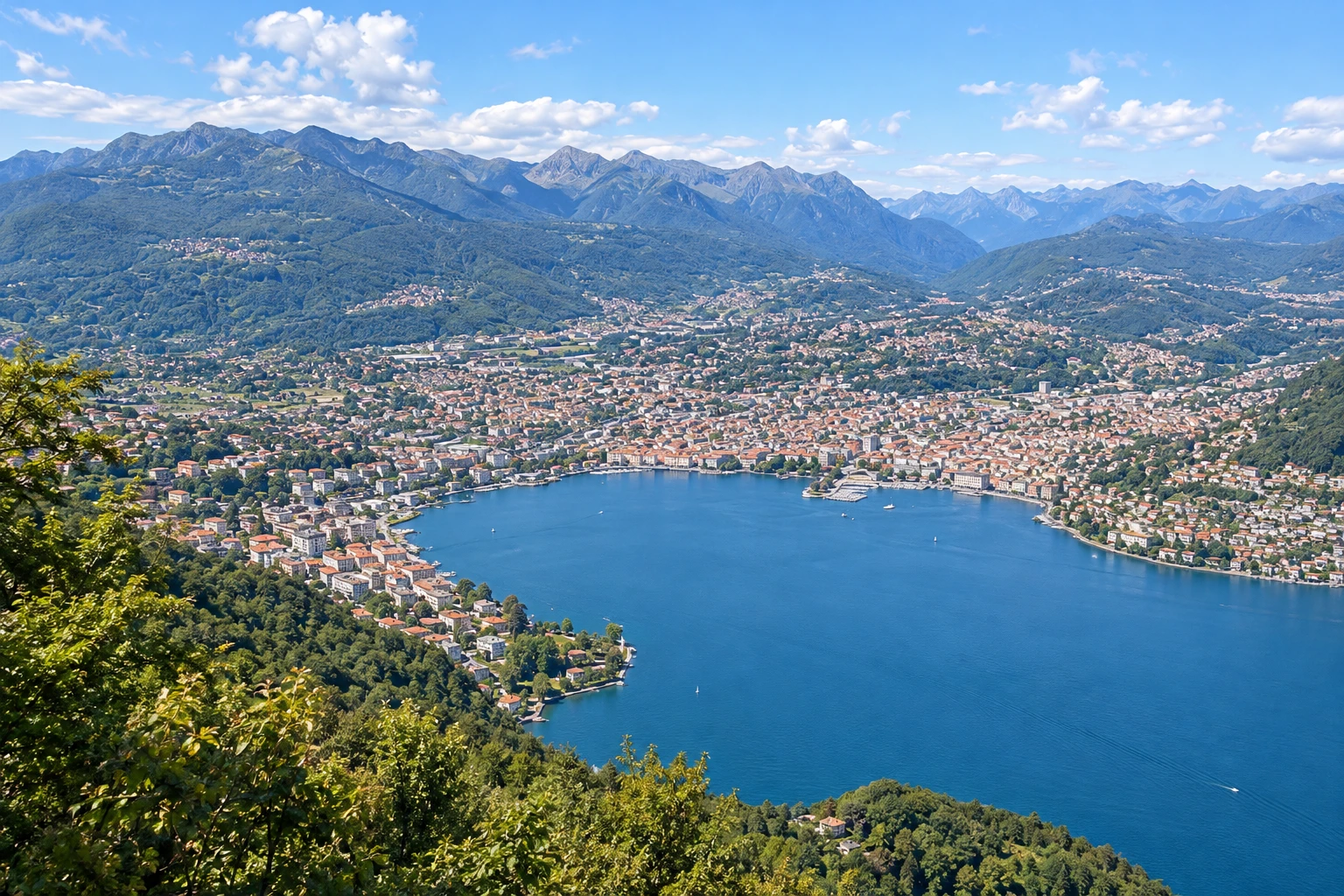 4 ·Switzerland · Ticino
Lugano
In season the Bernina Express Bus continues from Tirano to Lugano via the Valtellina and the shore of Lake Como in about 3 hours. Lugano sits on the shore of the lake of the same name in Italian-speaking Switzerland, with a centre of squares and arcades, Ciani Park and the San Salvatore and Brè hills.
How many days
The train covers the full route in 4 to 4.5 hours. To visit the towns, allow 3 to 5 days: one in Chur, one or two in St. Moritz and one in Lugano, or return from Tirano the same day.
Best time to go
The train runs year-round. From June to September the valleys are green, days are long and Lake Bianco is often ice-free. From December to March the landscape is covered in snow and the service runs on a winter timetable. The bus to Lugano operates on its own seasonal schedule and does not run every month: check in advance.
The seasons shown are the most usual ones; nature doesn't always follow the calendar.
How to travel it
By train, with a ticket and seat reservation on the Bernina Express. Reservation is compulsory and charged separately, including for holders of passes. RhB regional trains follow the same route without mandatory reservation and without panoramic carriages, but they require at least one change between Chur and Tirano. To continue to Lugano the bus has its own reservation system.
Who it's for
For those who want to cross the Alps by train, who enjoy mountain scenery and railway engineering, and who want to combine Switzerland and Italy in a single trip.
Your questions
Frequently asked questions about Bernina Express: Chur–St. Moritz–Tirano
How long does the Bernina Express journey take?
From Chur to Tirano, 4 to 4.5 hours. From St. Moritz to Tirano, about 2.5 hours. The bus from Tirano to Lugano takes about 3 hours.
Is a reservation required?
Yes. Seat reservation on the Bernina Express is compulsory and charged separately, including for Swiss Travel Pass, Interrail or Eurail holders. The bus to Lugano has its own reservation.
Can you make the same route without the Bernina Express?
Yes. RhB regional trains follow the same route without mandatory reservation, but without panoramic carriages and with at least one change. In some summers there are open‑air coaches on regional trains between St. Moritz and Tirano.
Which side should you sit on?
From Chur to Pontresina sit on the right to see the Landwasser viaduct. From Pontresina to Tirano also on the right for views of the Morteratsch Glacier and Lake Bianco. With reservation it is not always possible to choose the side.
Do you need to show your passport between Switzerland and Italy?
Switzerland is in the Schengen area and there are no fixed passport controls. However it is not part of the European Union and there may be customs checks at the border. Carry your passport with you.
Does the train run in winter?
Yes, year‑round on a winter timetable. The landscape is covered in snow. At times there may be engineering work with some sections replaced by buses: check in advance.