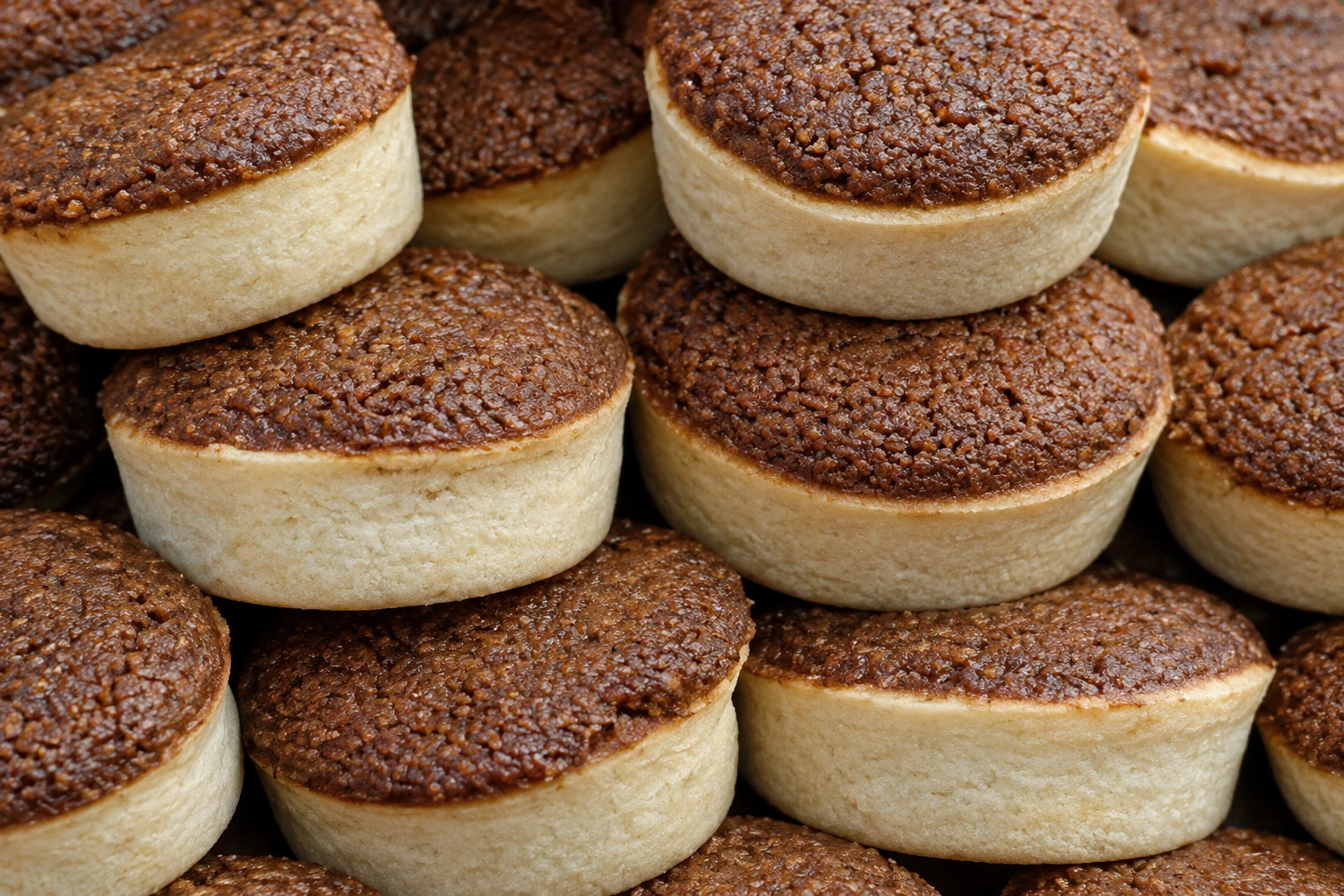
Liers vlaaike
Round tartlet from Lier, in the province of Antwerp, with a crisp sugar-free pastry and a dark filling of breadcrumbs, cane sugar syrup and spices. The name is protected by a European geographical indication.
Antarctica
Province · Flanders
Antuérpia and its port on the Escalda, Mechelen and the tower of Sint-Rombout, and to the east the heaths and pine woods of the Kempen.
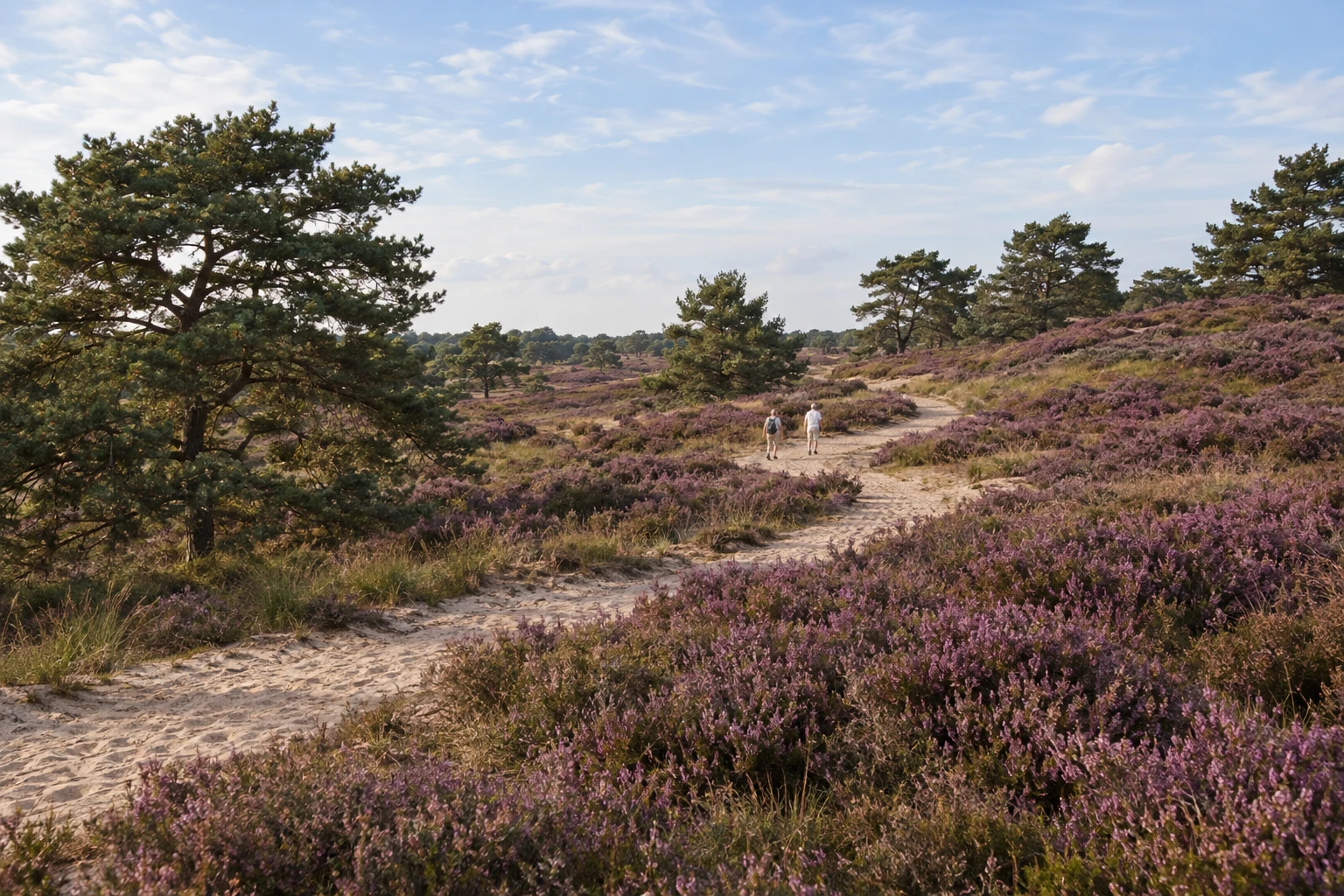
In the photo: Kalmthoutse Heide, Kalmthout
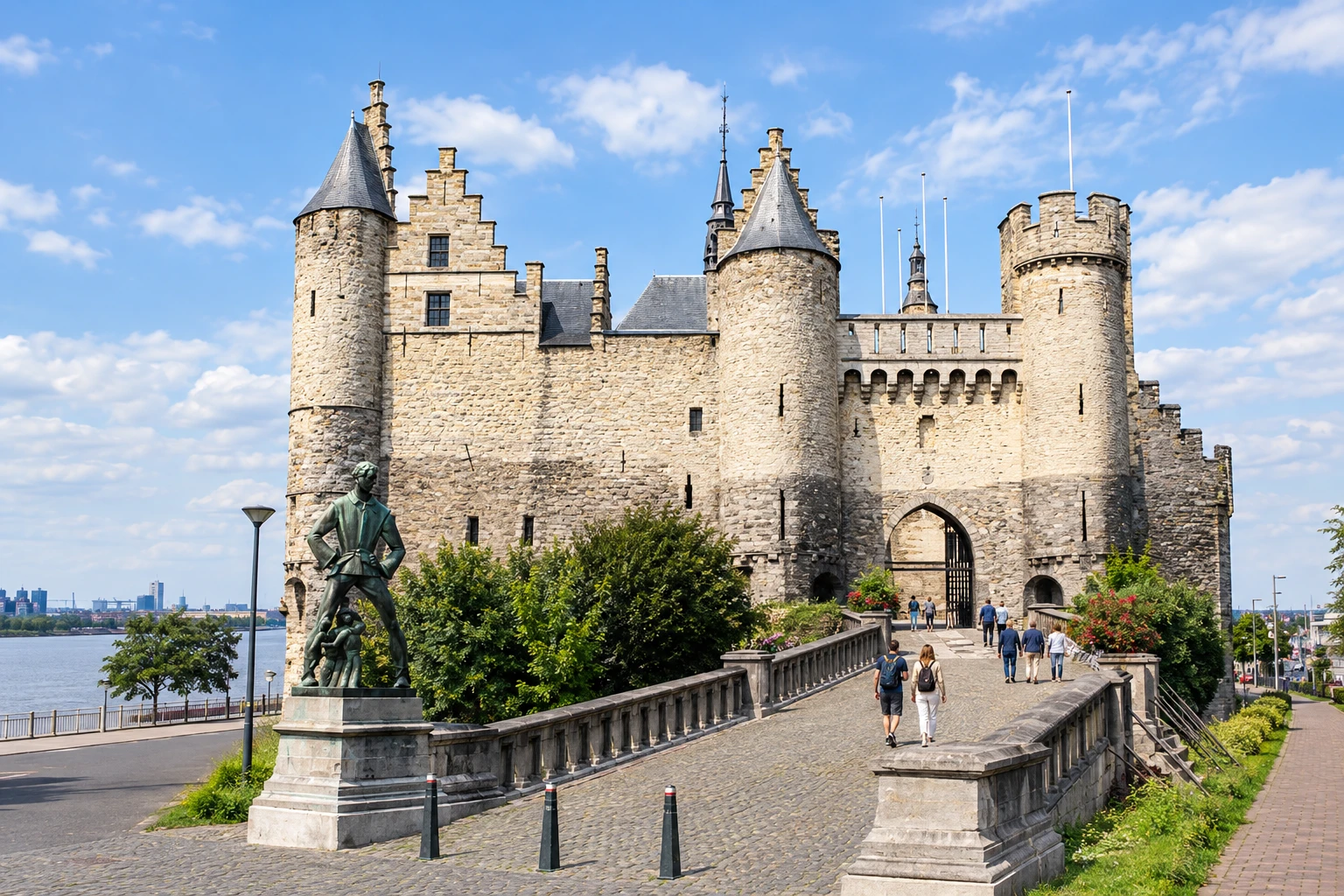
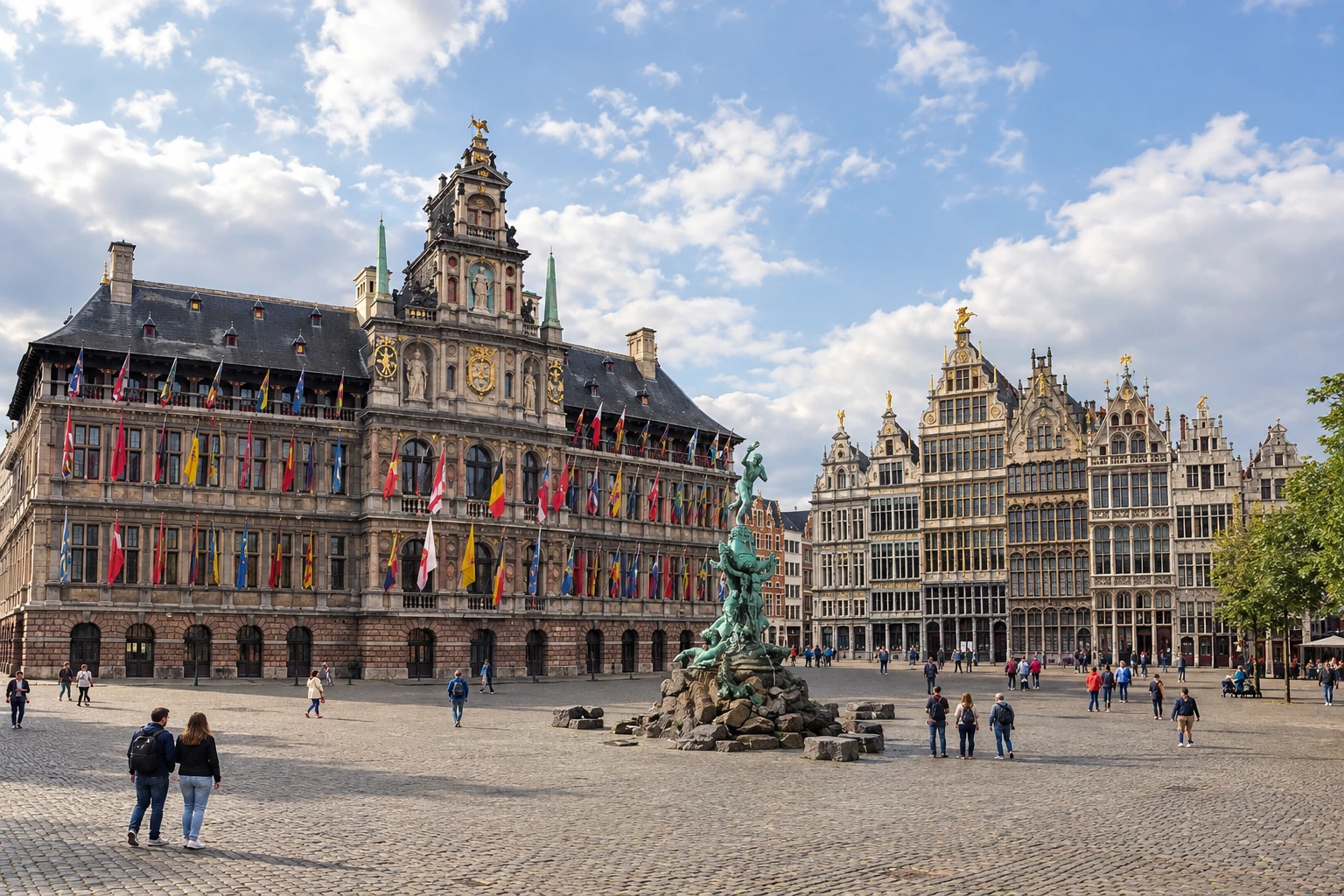
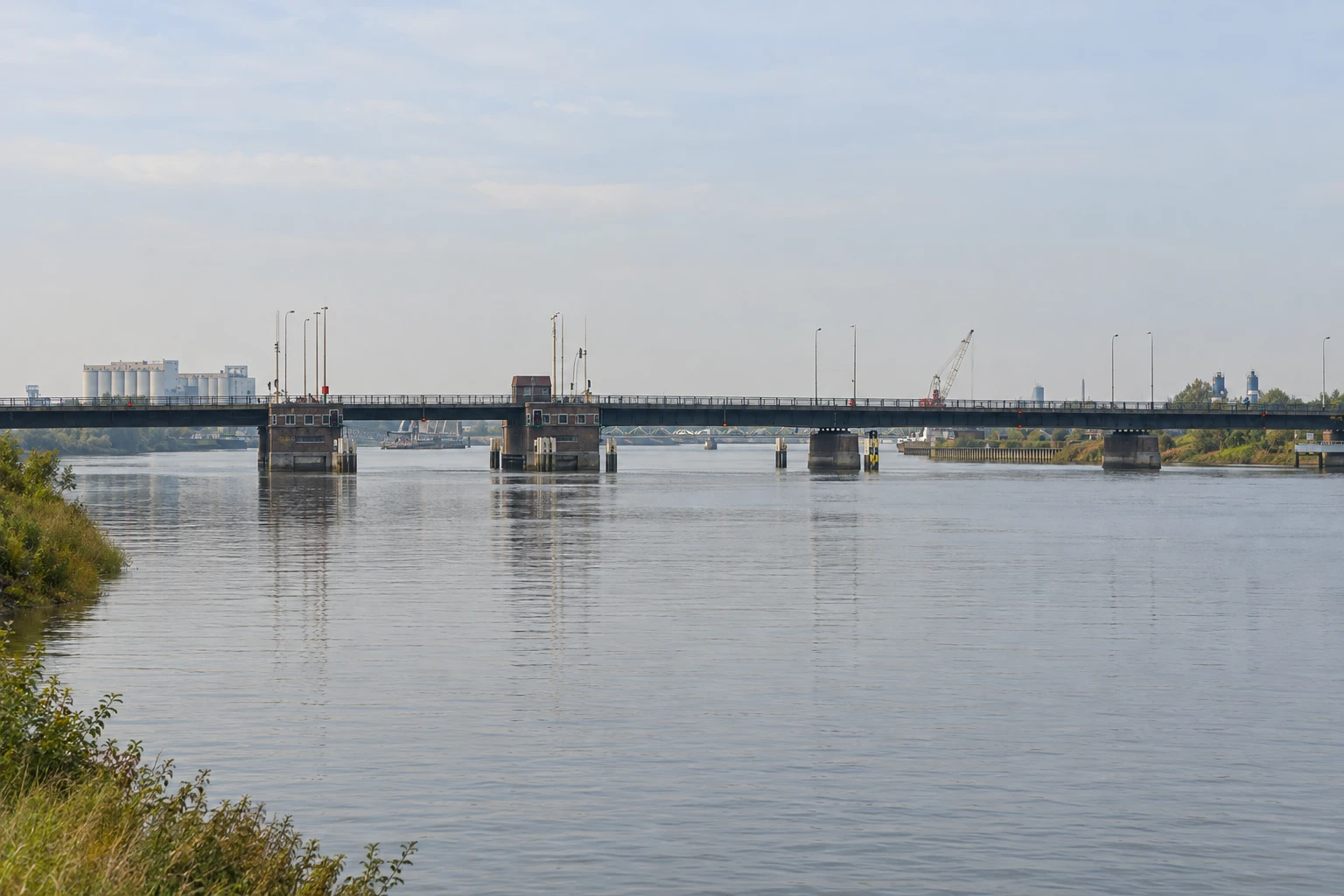
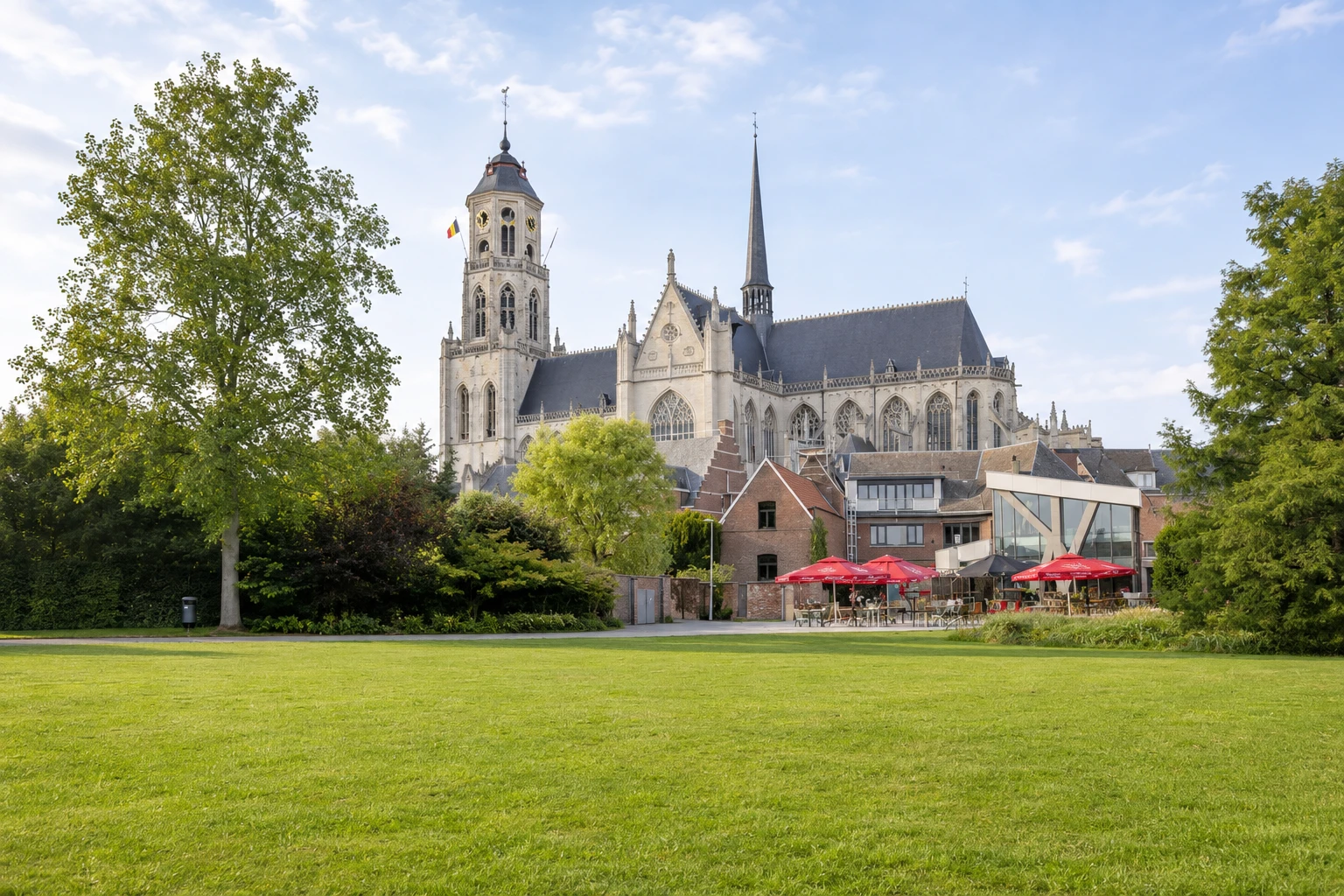
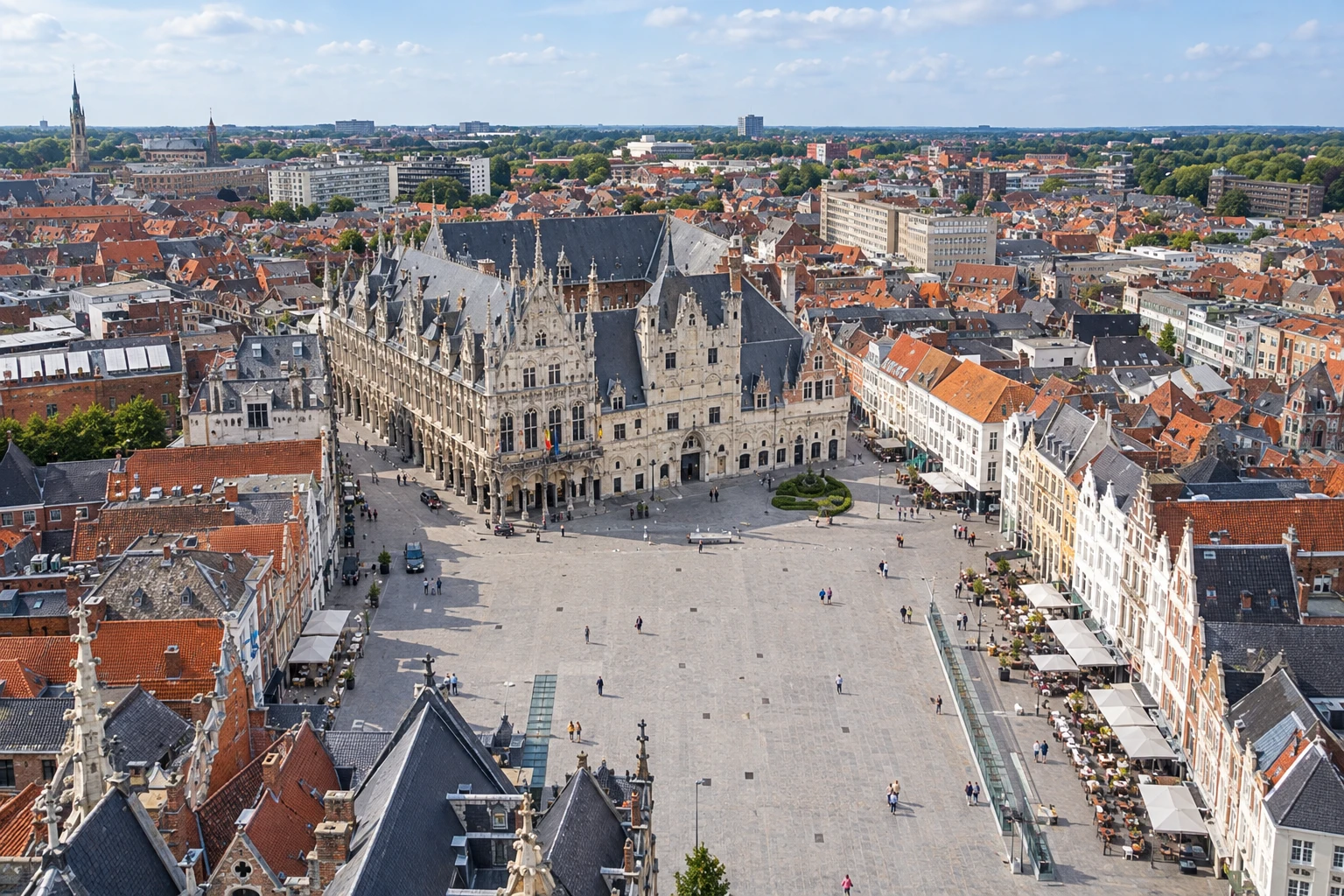
Illustrative images. The pictures in this guide are illustrations based on the real place, not photographs, and may differ from it.
Province
The province of Antuérpia occupies northern Belgium, bordering the Países Baixos. To the west runs the Escalda, which brings ships to the port of Antuérpia, one of the largest in Europe. To the east the Kempen begins, a region of sandy soil, heathland, pine forests and small ponds, quite different from the coastal polders.
Antuérpia is the capital and largest city of Flandres. It was the great commercial center of Europe in the 16th century and Rubens's city in the 17th. From the past remain the Gothic cathedral of Nossa Senhora, the Grote Markt with the Brabo fountain and the Museum Plantin-Moretus, an old printing house that is a Unesco World Heritage Site. From the present, the diamond trade near Antwerpen-Centraal station, the fashion of designers trained at the city's academy and the MAS, a museum by the port.
Mechelen, halfway between Antuérpia and Bruxelas, was the capital of the Países Baixos in the early 16th century, at the court of Margaret of Austria. The cathedral tower of Sint-Rombout dominates the plain and houses carillons; since 1922 it has been home to the world's first carillon school. The Kazerne Dossin commemorates the Jews and Roma deported from there during the Second World War. Nearby, Lier has the Zimmertoren, a tower with an astronomical clock, and a beguinage of narrow streets.
People from Antuérpia speak Dutch with a distinct accent, easy for any Fleming to recognize. On the table you find stoverij, fries with mayonnaise and mussels; the hand-shaped biscuits, the Antwerpse handjes, recall the legend of Brabo, who cut off a giant's hand. The bolleke is the glass for the beer De Koninck, brewed in the city, and the Trappist abbey of Westmalle, in the Kempen, produces one of Belgium's Trappist beers.

Flavors of Belgium
Destinations
Cities

Antuérpia is the largest city in Flanders and capital of the province of the same name, on the banks of the river Escalda. Flemish is spoken, the Dutch of Belgium; in tourist areas English will do. The city has the second-largest port in Europe, is a world center for the diamond trade and was Rubens’s homeland. The historic center revolves around the Grote Markt and the cathedral, and museums such as the MAS, the Plantin-Moretus and the KMSKA are located in different neighborhoods.

Riverside town on the Rupel between Antwerp and Mechelen that for centuries lived off clay extraction and brickmaking. The old clay pits have become the provincial domain De Schorre, a park with lakes, woodlands and sculptures that hosts Tomorrowland in summer. An ecomuseum set in a former brickworks tells the story of that industry.

Lier grew up along the Nete River in the province of Antwerp. The facade of the Zimmer Tower features clocks and astronomical dials. Nearby, the Lier Beguinage preserves the narrow streets and houses of a former religious community.

Mechelen, called Malines in French, lies between Brussels and Antwerp, about 25 km from each, on the banks of the river Dijle. Flemish is spoken, the Dutch of Belgium. At the beginning of the 16th century, under Margaret of Austria, it was the capital of the Low Countries. The compact centre brings together the cathedral of Sint-Rombout with its tower, the Grote Markt, the Hof van Busleyden museum, the Kazerne Dossin memorial, the Groot Begijnhof and the toy museum.
Routes

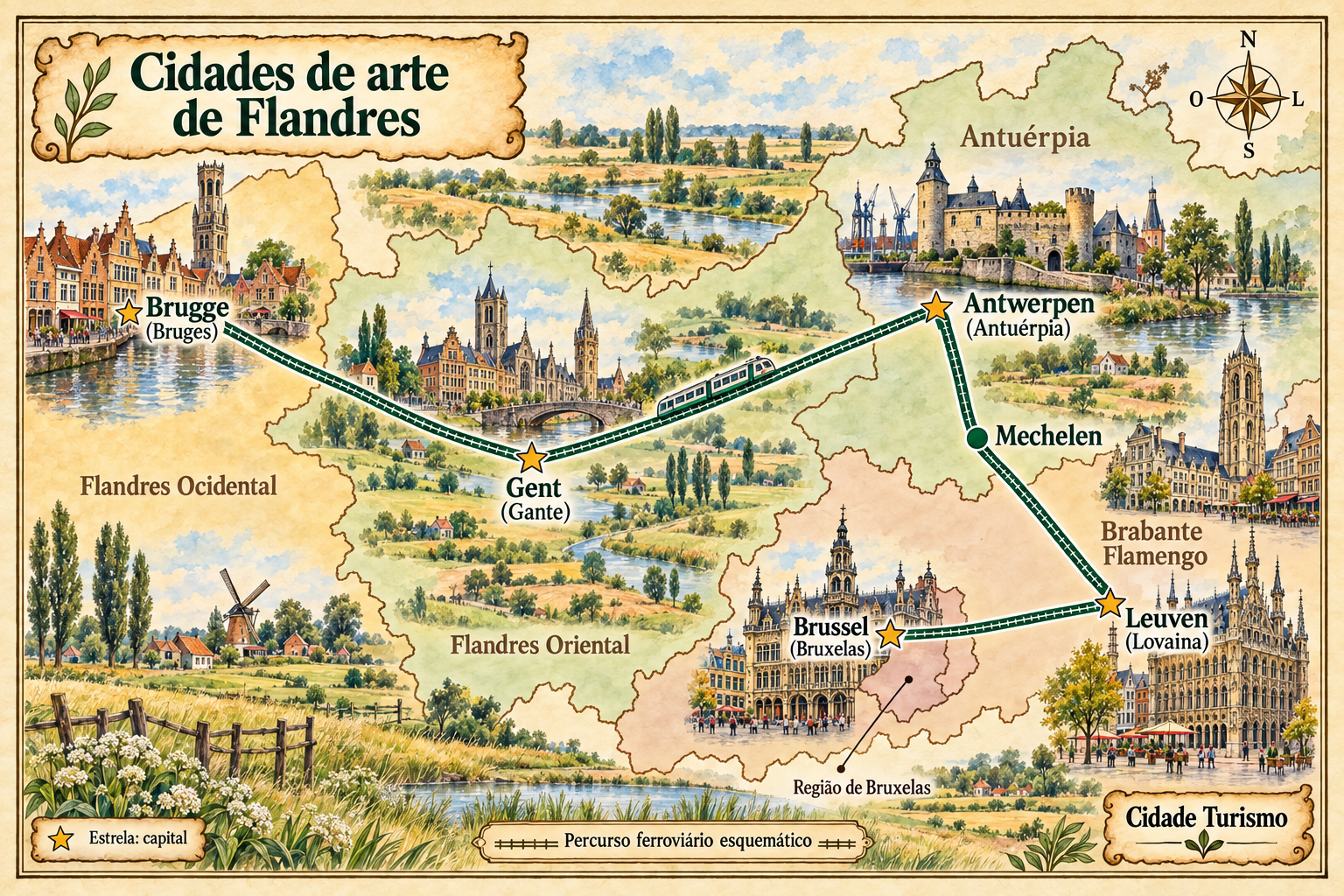
Six historic cities linked by train: Brussels, Leuven, Mechelen, Antwerp, Ghent and Bruges, with Flemish painting, cathedrals and medieval centres less than an hour apart.

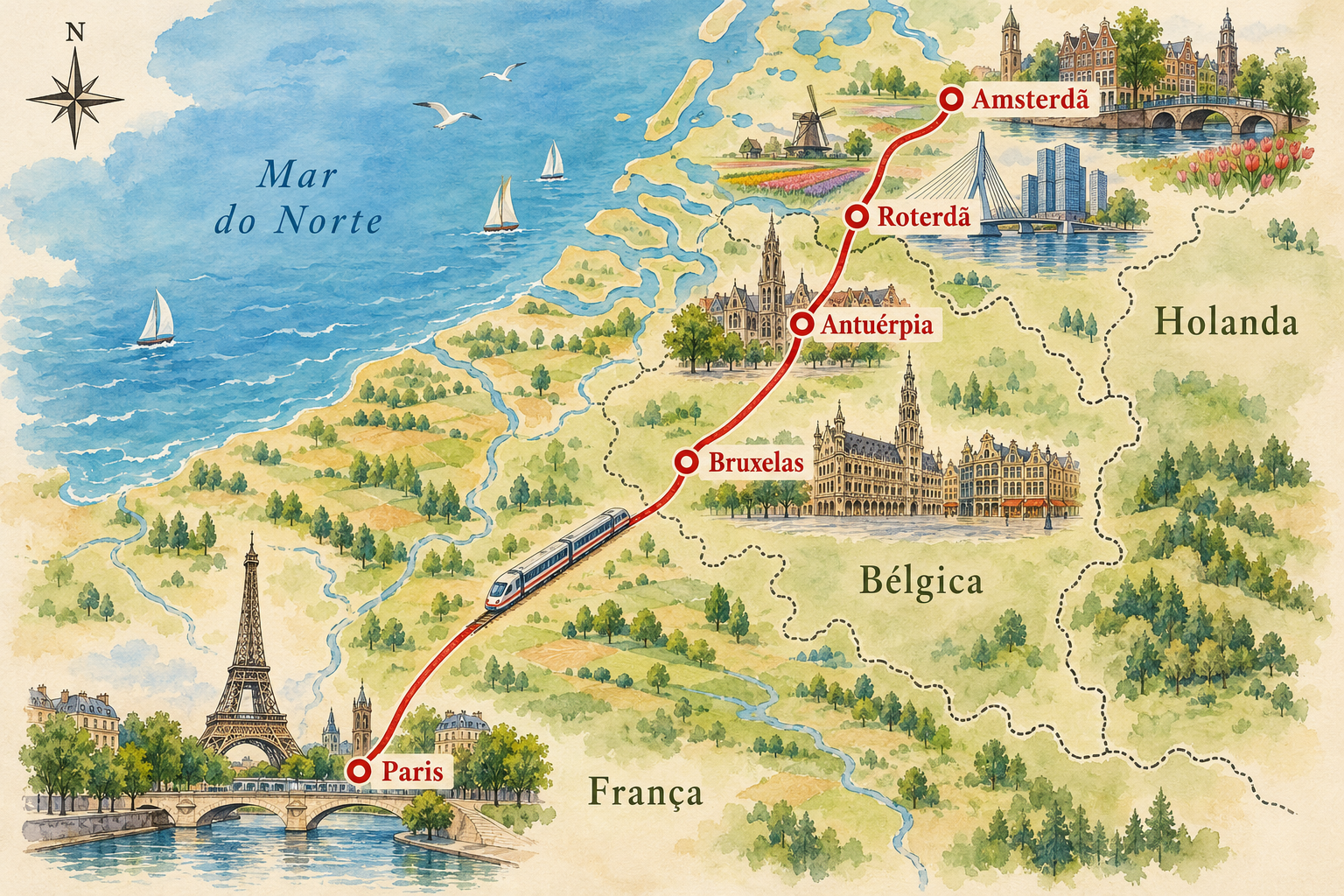
By train through the centers of Paris, Brussels, Antwerp, Rotterdam and Amsterdam: three countries in just over three hours, from central station to central station.

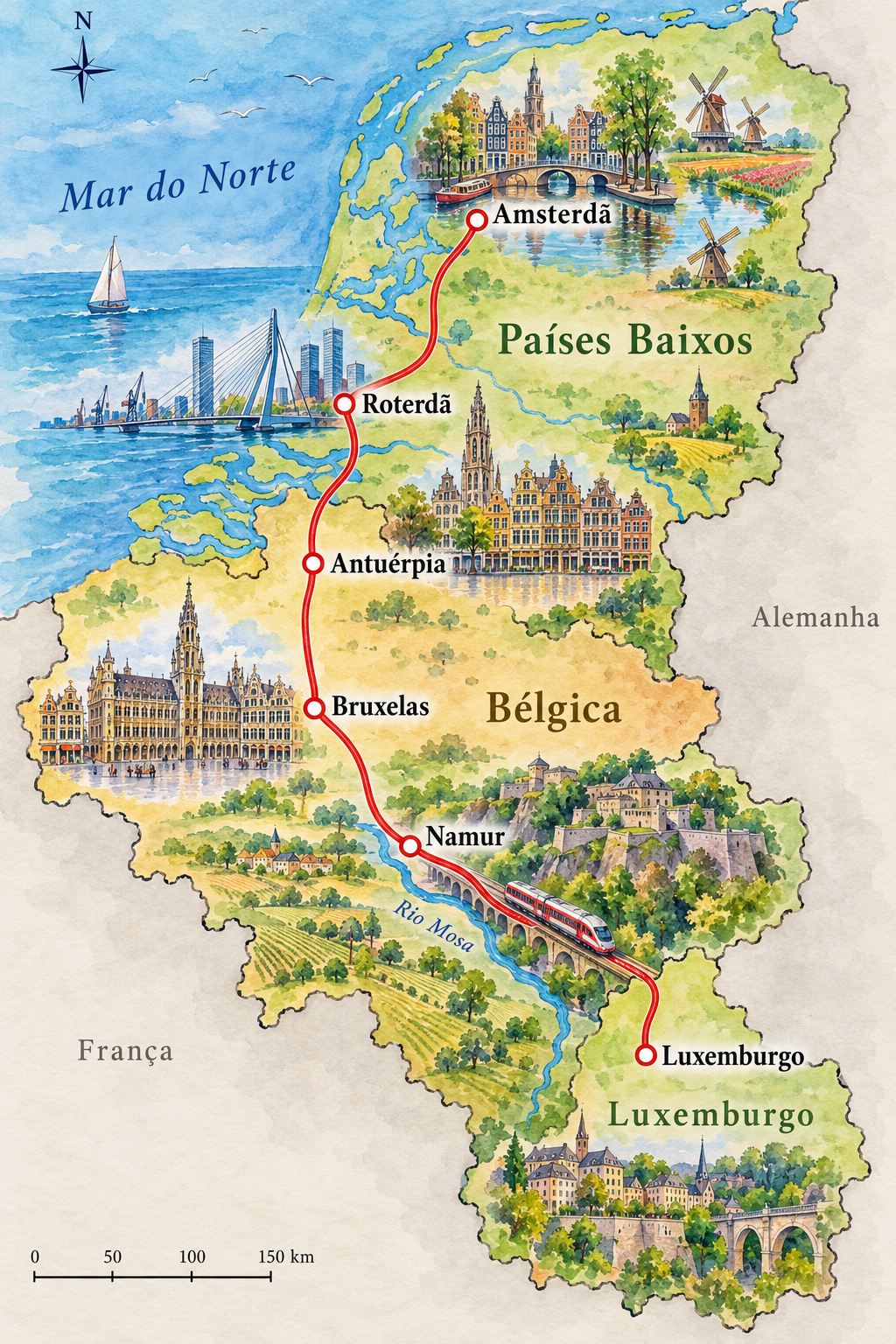
The three Benelux countries by train: from Amsterdam to Brussels in about two hours, and from Brussels to Luxembourg via the Ardennes, with Rotterdam, Antwerp and Namur along the way.
The climate is temperate, with well-distributed rainfall. Summers are mild, rarely hot; from May to September is the best time to cycle in the Kempen. The heather of the Kalmthoutse Heide usually blooms in August and September, when the heath turns purple. In Mechelen, the Hanswijk Procession takes place every year in May, on the Sunday before Ascension. In July, the Tomorrowland festival fills Boom, between Antuérpia and Bruxelas, and packs the region's hotels. At the end of the year, Christmas stalls usually fill the Grote Markt and the Groenplaats.
The main airport is Brussels Airport, in Zaventem. Flights to Brazil usually involve a connection in another city. Check before you buy. From the airport there are direct SNCB trains to Mechelen and Antuérpia. Antwerpen-Centraal station also handles high-speed trains linking Paris and Bruxelas with Rotterdam and Amsterdam. Mechelen is about 20 minutes by train from both Antuérpia and Bruxelas. Lier, Herentals and Turnhout have stations heading into the Kempen. By car, the E19 links Bruxelas to Mechelen and Antuérpia and continues to the Países Baixos; the E17 comes from Gante. The center of Antuérpia is a low-emission zone: foreign cars need prior registration.
Beyond the guide
Your questions
Yes. The train takes about 20 minutes and runs frequently. Mechelen can be seen in half a day: the tower of Sint-Rombout, the Grote Markt, the beguinages and the Kazerne Dossin are close to each other, within walking distance from the station.
Yes. Bruxelas is about 40 minutes by train, Gante under an hour, and Mechelen is on the way to the airport. The city has bars and restaurants open late and a life of its own beyond the tourist trail.
The center is a low-emission zone (LEZ). Cars with Belgian plates are recognized by the system; cars with foreign plates must be registered in advance. Check the rules with your rental company. Visitors staying a few days usually leave the car and get around by tram and on foot.
It is the region of heathland, pine forests and ponds to the east and north of the province. The Kalmthoutse Heide, near the border with the Países Baixos, has waymarked trails and a lookout tower. The region is flat and good for cycling; Turnhout, Herentals and Geel are the base towns.
The diamond quarter is next to Antwerpen-Centraal station, with jewelry shops open to the public on the street. The trade in rough stones takes place in buildings with restricted access. For the history of the craft, the DIVA, the museum of diamonds and silverware, is in the center.
The Antwerpse handjes, butter cookies shaped like hands, chocolates from the shops in the center and the liqueur Elixir d'Anvers, made in the city since the 19th century. In Lier, the typical souvenir is the Lierse vlaaikens, small tarts filled with spiced filling.