1 city

 Search
 Brazil
 Antarctica
 Argentina
 Bolivia
 Chile
 Colombia
 Ecuador
 Falkland Islands (Malvinas)
 French Guiana
 Guyana
 Paraguay
 Peru
 Suriname
 Uruguay
 Venezuela
 AustriaBelgium
 Croatia
 Denmark
 Finland
 France
 Germany
 Greece
 Hungary
 Iceland
 Ireland
 Italy
 Luxembourg
 Norway
 Poland
 Portugal
 Slovakia
 Slovenia
 Spain
 Sweden
 Switzerland
 the Czech Republic
 the Netherlands
 the United Kingdom
 Turkey
 Bermuda
 Canada
 Greenland
 Mexico
 Saint Pierre and Miquelon
 the United States
 the Dominican Republic
 JapanTurkey
 Egypt
 South Africa
 Australia
 Fiji
 New Zealand
 Papua New Guinea
Province · Wallonia
Where the Sambre meets the Mosa: citadels above the river, limestone cliffs, the Lesse caves and the valley's castles, in the south-central part of Valônia.
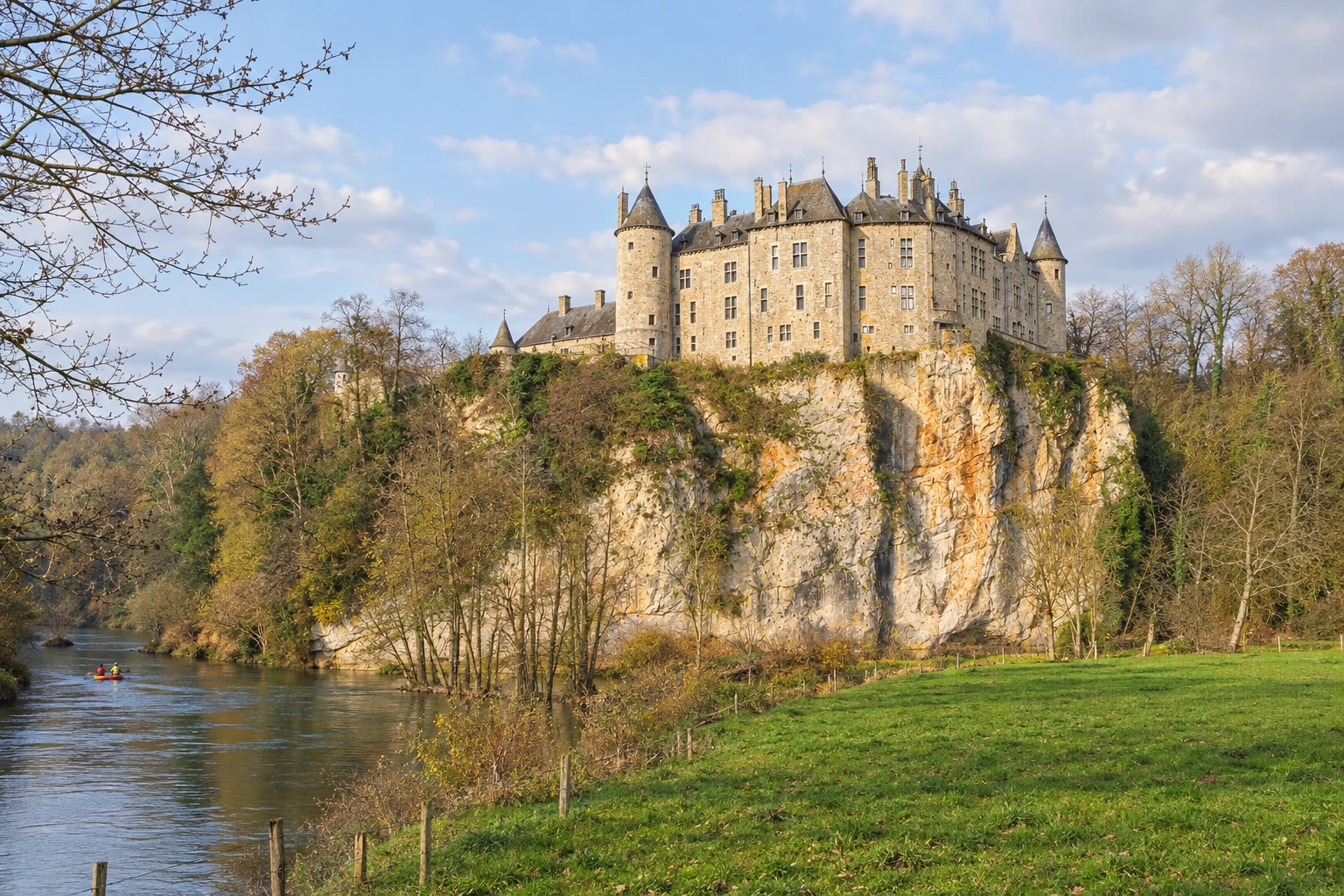
In the photo: Château de Walzin
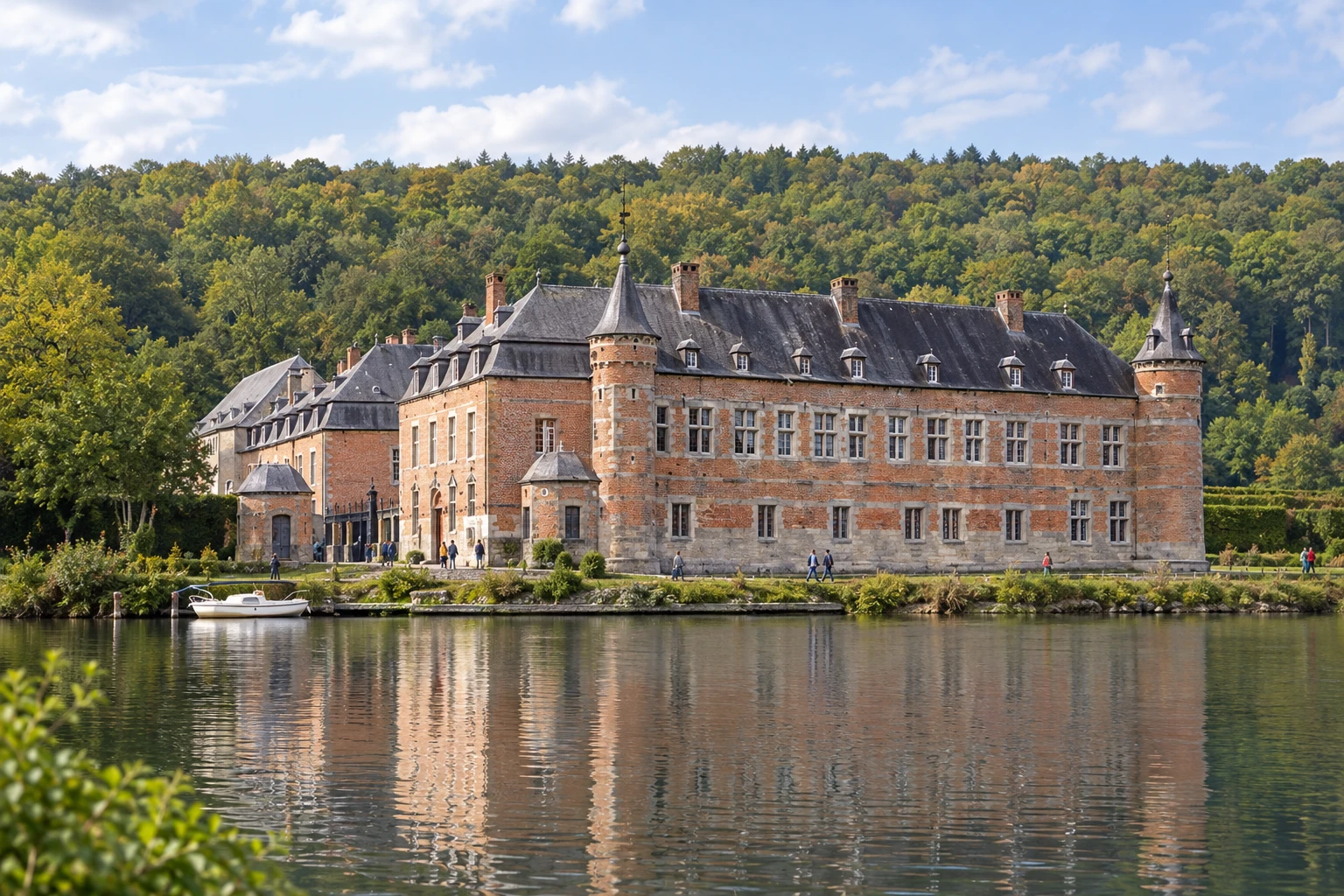
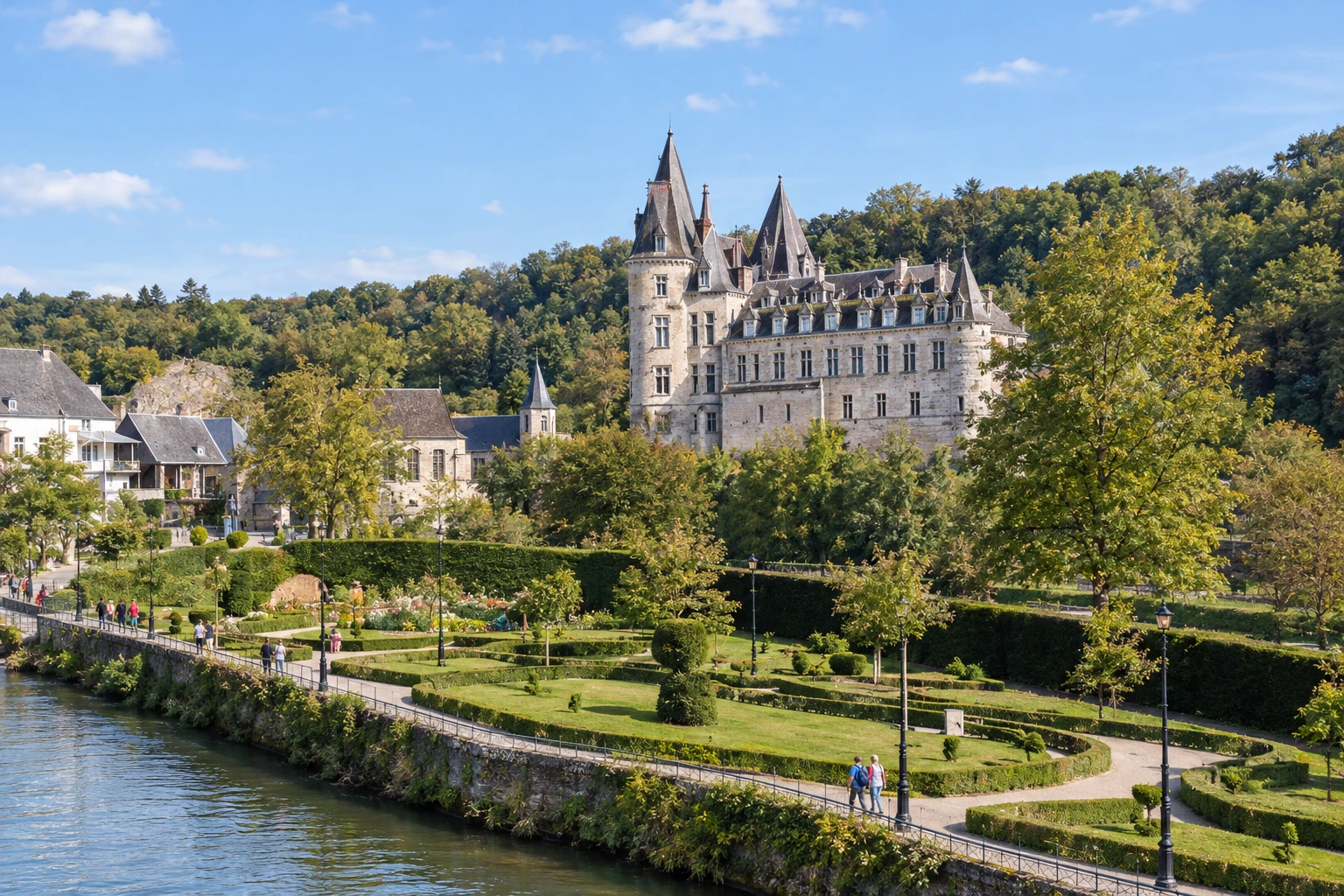
Illustrative images. The pictures in this guide are illustrations based on the real place, not photographs, and may differ from it.

Province
The province of Namur occupies the south-central part of Valônia, the French-speaking half of Belgium. The capital, Namur, is also the capital of Valônia and grew at the confluence of the Sambre and the Mosa, at the foot of a citadel that watches over both rivers. From there to the south, the Mosa runs between limestone rocks to Dinant, the town where Adolphe Sax, the inventor of the saxophone, was born, and continues to Hastière, near the border with France.
Further south the landscape changes. Between the Famenne and the start of the Ardennes, the Lesse cuts through the limestone massif and forms the caves of Han-sur-Lesse, in the municipality of Rochefort. In the same valley, the Château de Walzin stands on top of a cliff above the water. It is a private residence and is viewed from the outside, preferably by kayak, on the Lesse descent to Anseremme.
The Mosa valley preserves centuries of castles, abbeys and gardens. The Château de Freÿr sits on the riverbank, with formal French gardens. The Jardins d'Annevoie are known for fountains powered only by the force of water. The Abadia de Maredsous, run by Benedictines, lends its name to a cheese and a beer, and the monks of the Abadia de Saint-Remy, in Rochefort, produce one of Belgium's Trappist beers.
The language is French, and Walloon still appears in songs and popular festivals. In September, Namur celebrates the Fêtes de Wallonie, featuring the échasseurs, men on stilts who try to knock down their rivals. On the table, the couque de Dinant, a hard honey biscuit molded in carved wooden forms, shares space with river trout and abbey cheeses.
Destinations
Cities
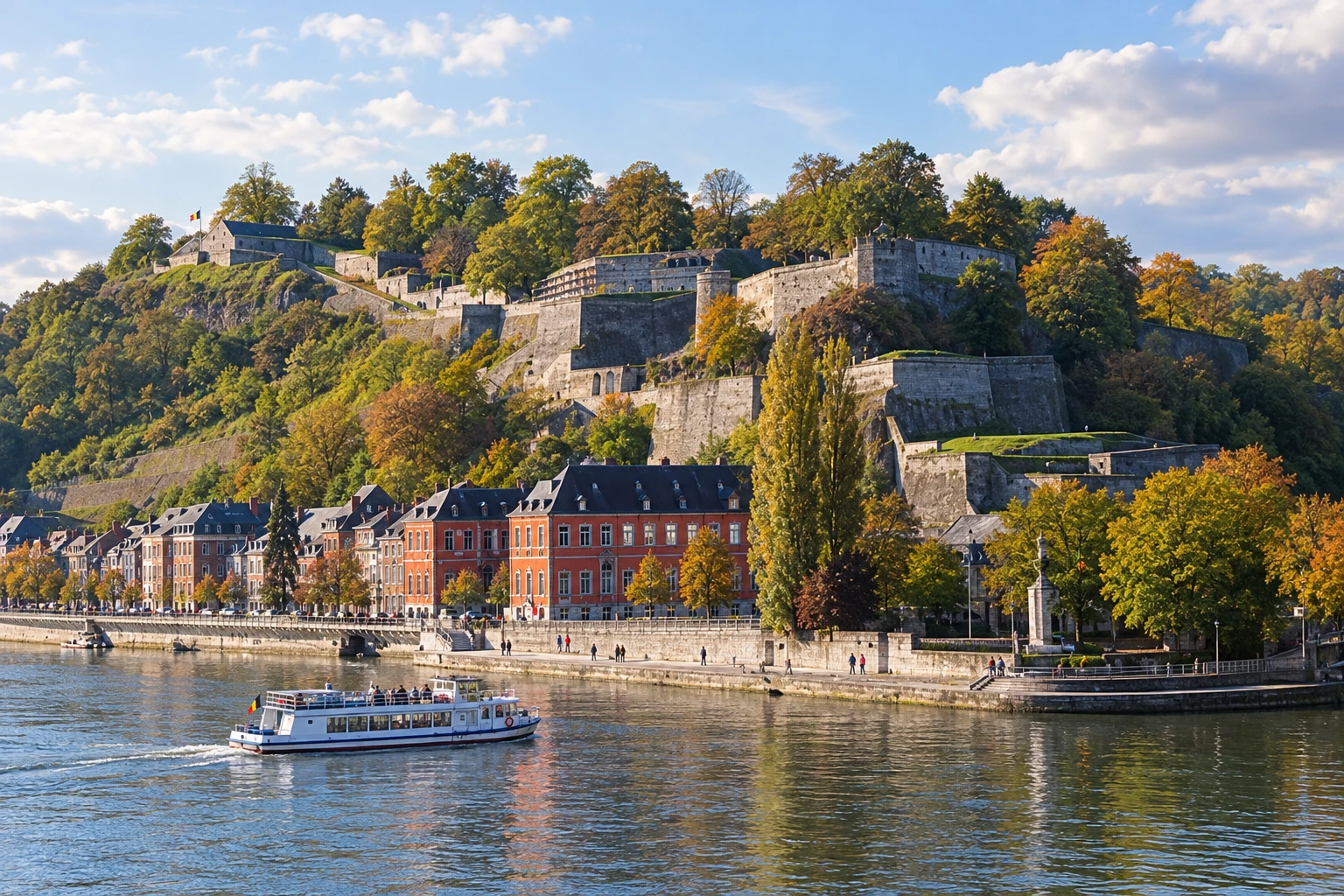
Namur is the capital of Valônia and of the province of Namur, at the point where the Sambre flows into the Meuse. French is spoken. On top of the hill is the Citadelle de Namur, with tunnels and viewpoints, reached by the Téléphérique de Namur. Below, the old town includes the Beffroi, the Place du Marché aux Légumes, the Cathédrale Saint-Aubain, the Église Saint-Loup and the Musée Félicien Rops. The tip of the Grognon marks the rivers' confluence.
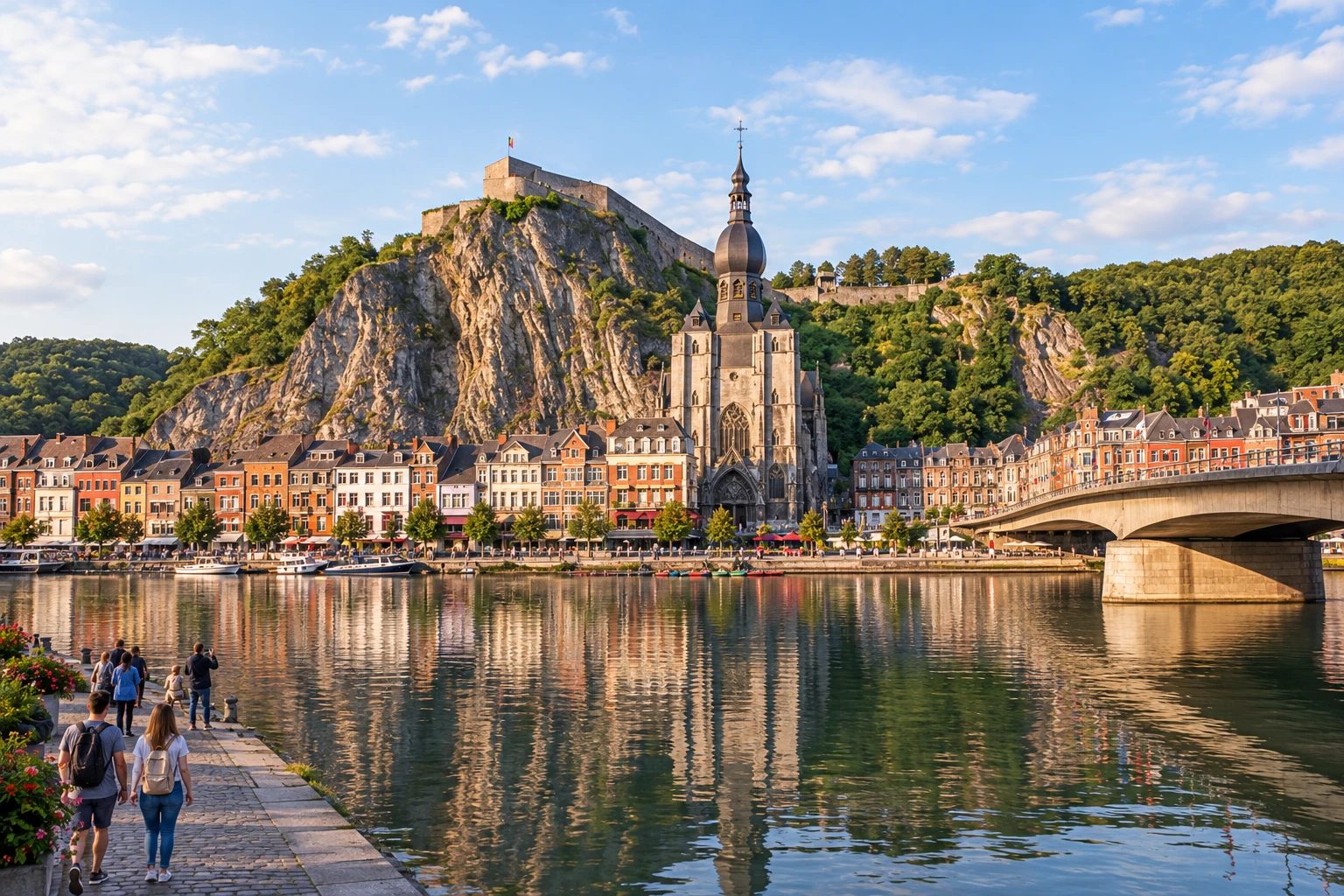
Dinant is a small town squeezed between the Meuse and the cliffs, about 30 kilometers south of Namur. French is spoken. The Collégiale Notre-Dame, with its bulbous bell tower, stands at the foot of the Citadelle de Dinant. Adolphe Sax, inventor of the saxophone, was born there, and the Maison de Monsieur Sax tells his story. There are Croisières Mosanes boat trips on the Meuse, the Rocher Bayard, the Descente de la Lesse by kayak and, on the way to Namur, the Jardins d'Annevoie.
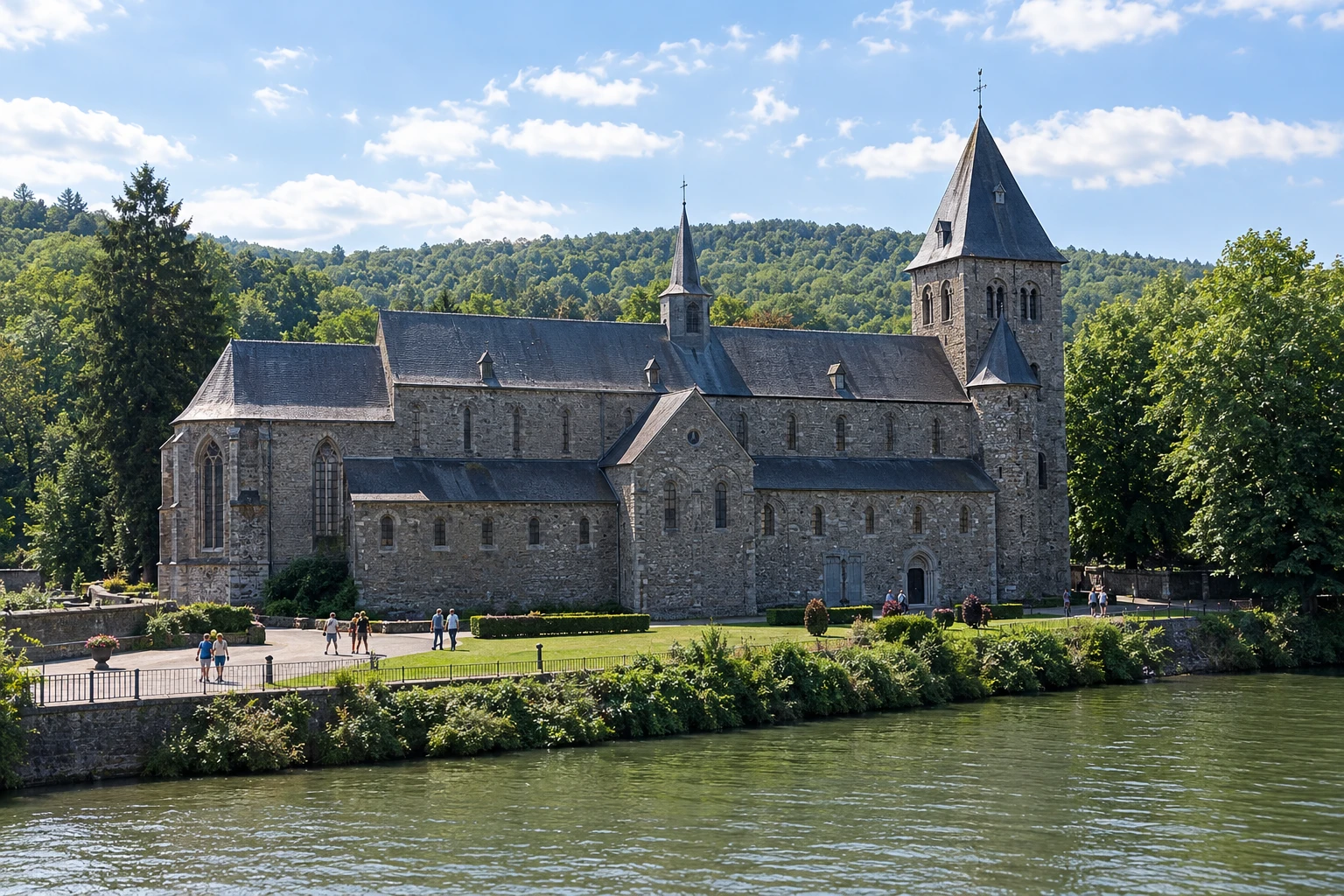
Municipality in the province of Namur on the upper Mosa, a few kilometres before the border with France. It includes villages such as Hastière-Lavaux, Hastière-par-delà and Waulsort, where the river bends in front of a castle. The Romanesque church from the 11th century belonged to a Benedictine monastery. Within the municipality are the Château de Freÿr and its gardens, the Freÿr cliffs, known for climbing, and the Pont d'Arcole caves. French is spoken.
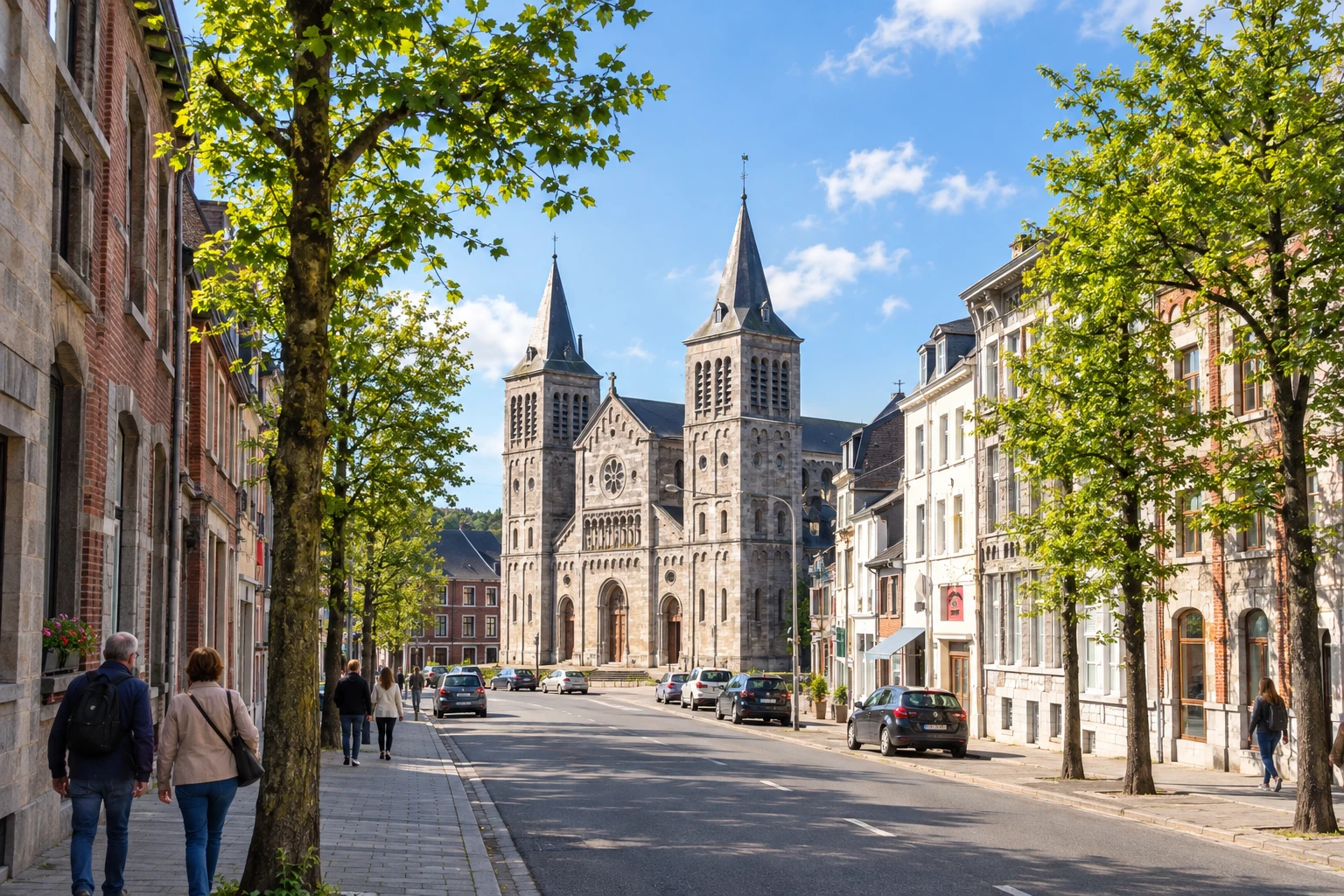
City of the Famenne, in the province of Namur, on the edge of the Ardennes. The name comes from the medieval castle, the "rocha forte", first mentioned in 1155, whose ruins still dominate the center. In Han-sur-Lesse, a locality of the municipality, the river Lesse cuts through a limestone hill underground and forms the Grottes de Han, beside a 250-hectare wildlife park. Between Rochefort and Jemelle lies Malagne, a 1st-century Gallo-Roman villa.
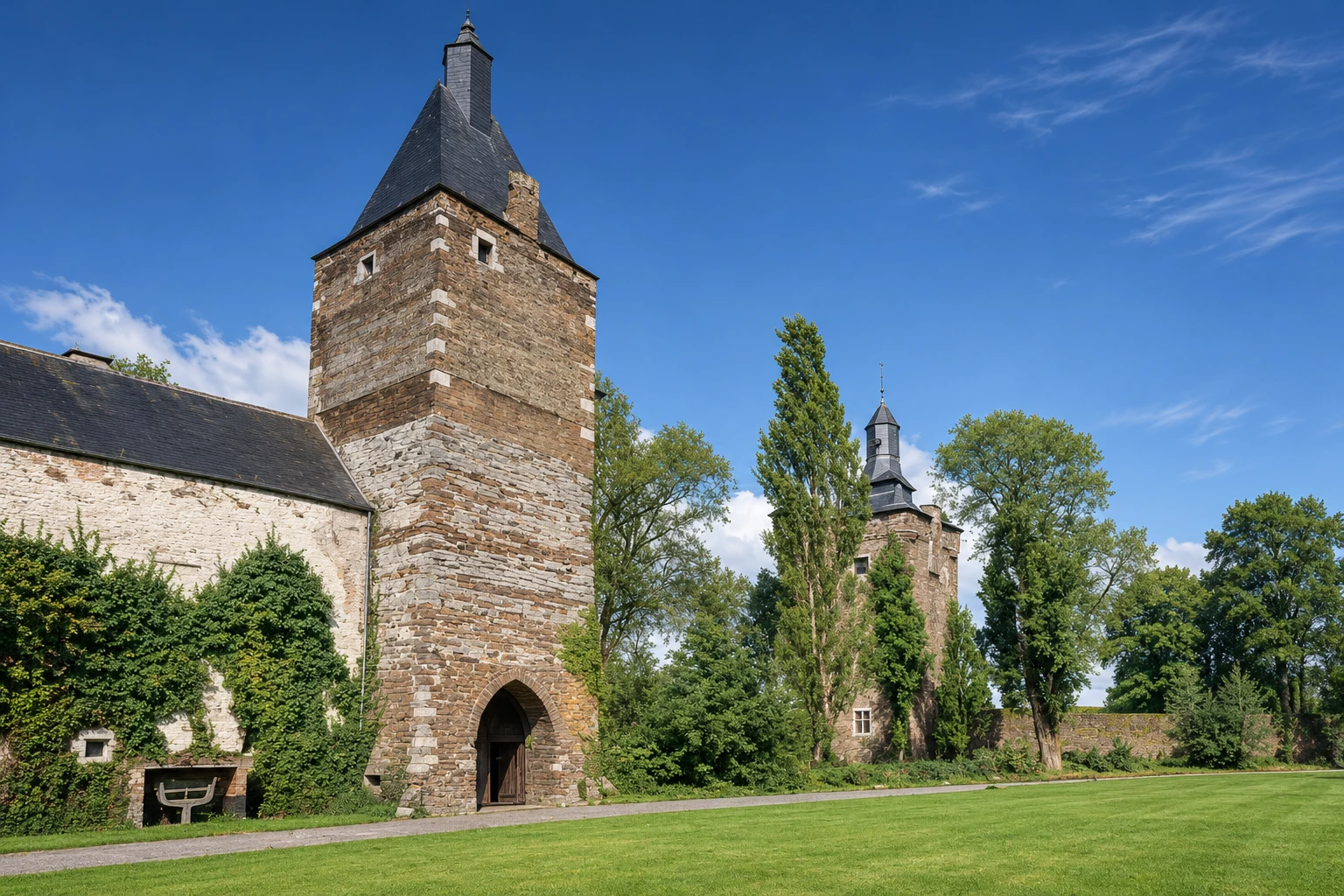
Sombreffe includes the village of the same name and rural localities such as Ligny. In Ligny, the engagement of 16 June 1815 ended with Napoleon’s last victory. The Ligny 1815 Museum occupies an old farm that served as a field hospital. In Sombreffe, the lowland medieval château preserves the towers of the former fortification.
Routes
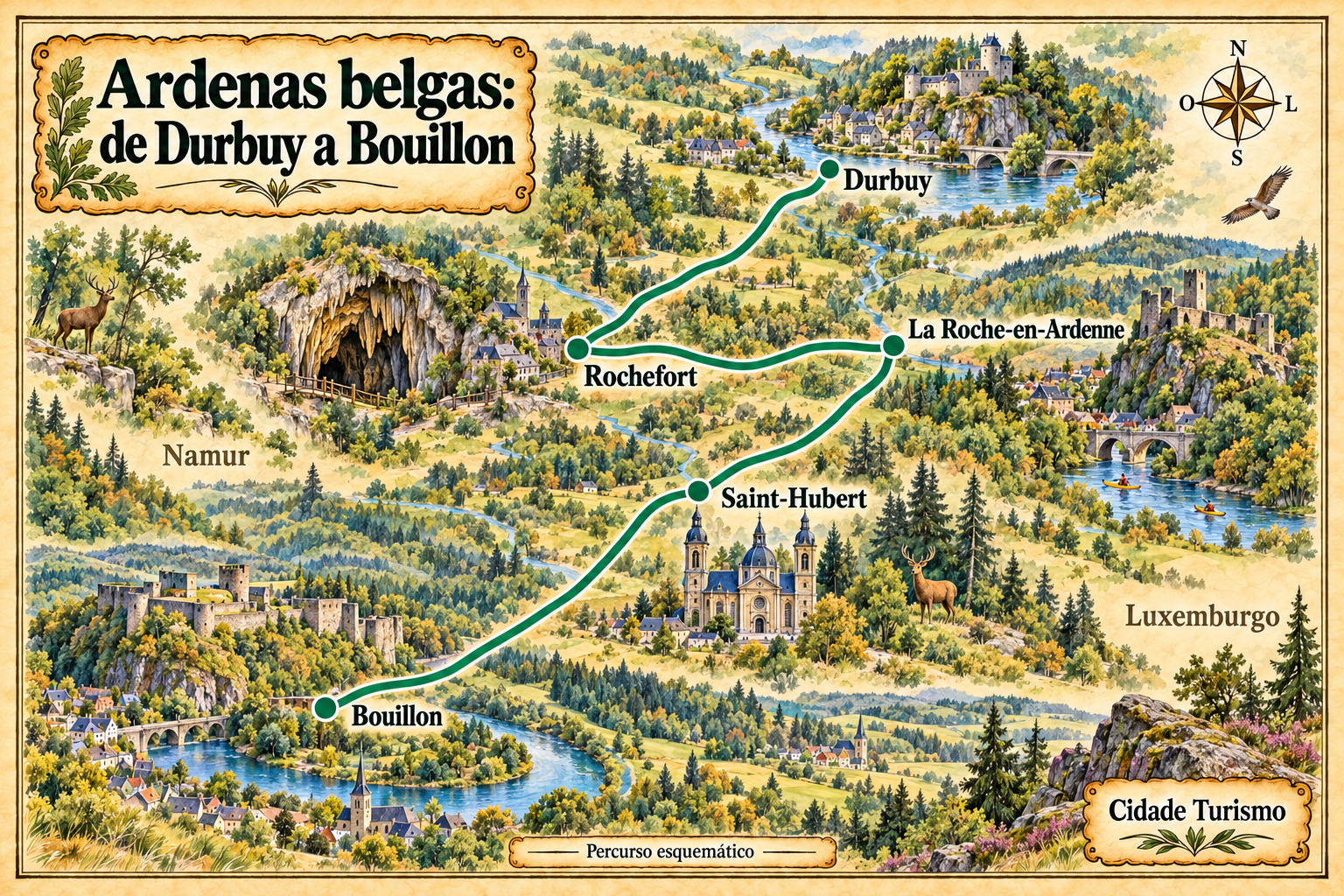
Five stops through the Belgian Ardennes, from the Ourthe valley to the Semois: Durbuy, the Han caves in Rochefort, La Roche‑en‑Ardenne, Saint‑Hubert and Bouillon Castle, linked by forest roads.
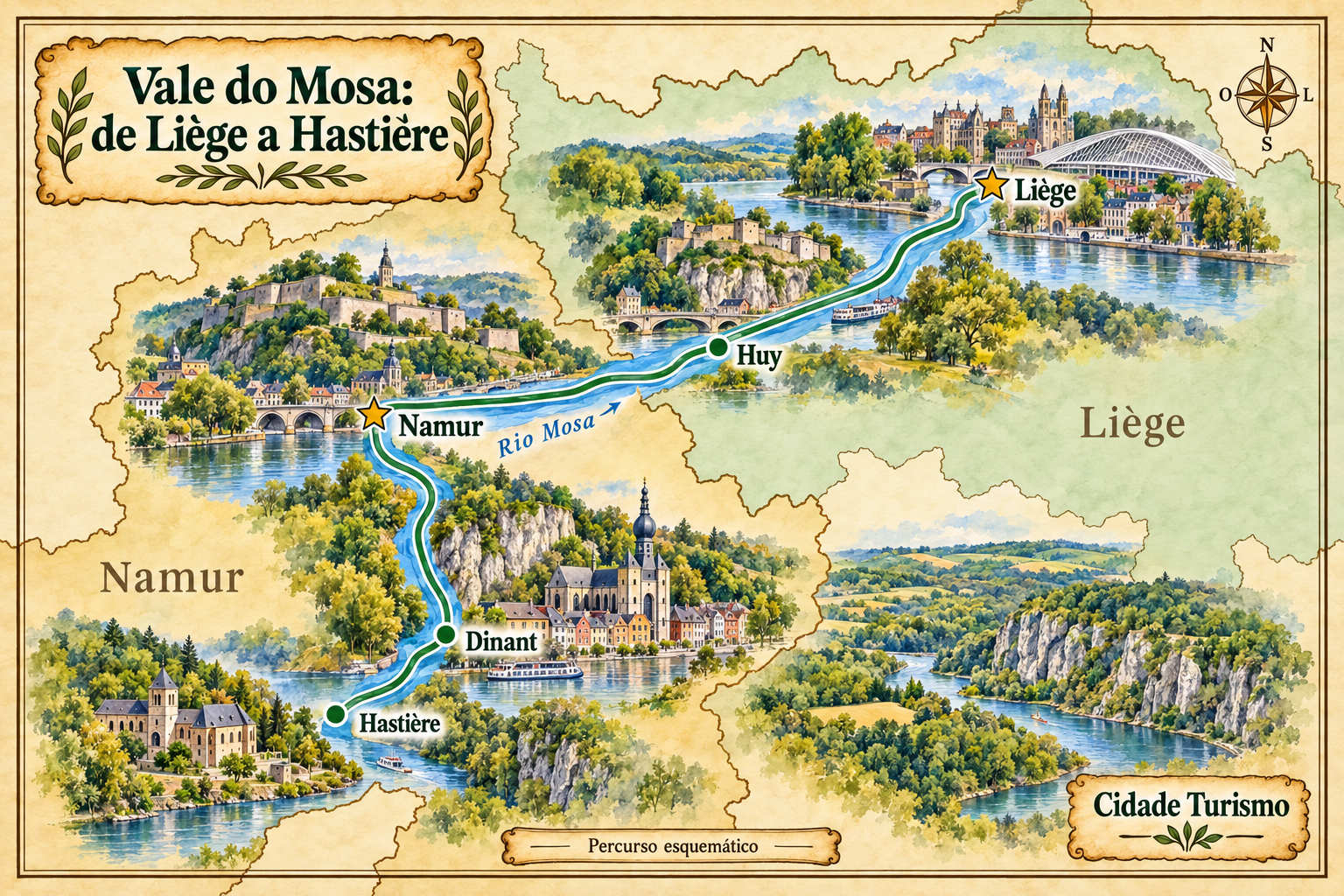
The Meuse River cuts through Wallonia from south to north. The route follows the valley from Liège to Hastière, passing Huy, Namur and Dinant, with fortresses atop the cliffs and a train running beside the water.
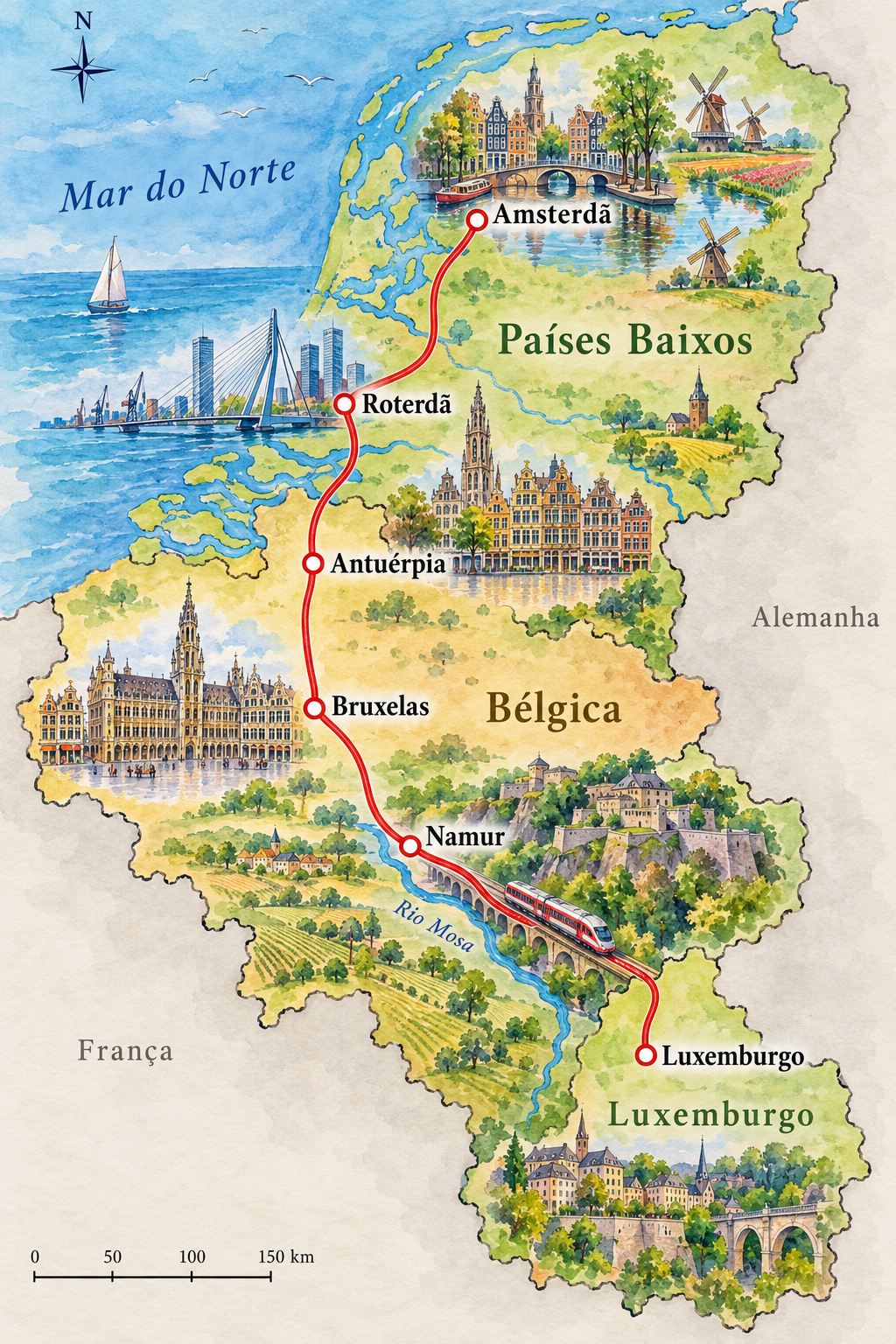
The three Benelux countries by train: from Amsterdam to Brussels in about two hours, and from Brussels to Luxembourg via the Ardennes, with Rotterdam, Antwerp and Namur along the way.
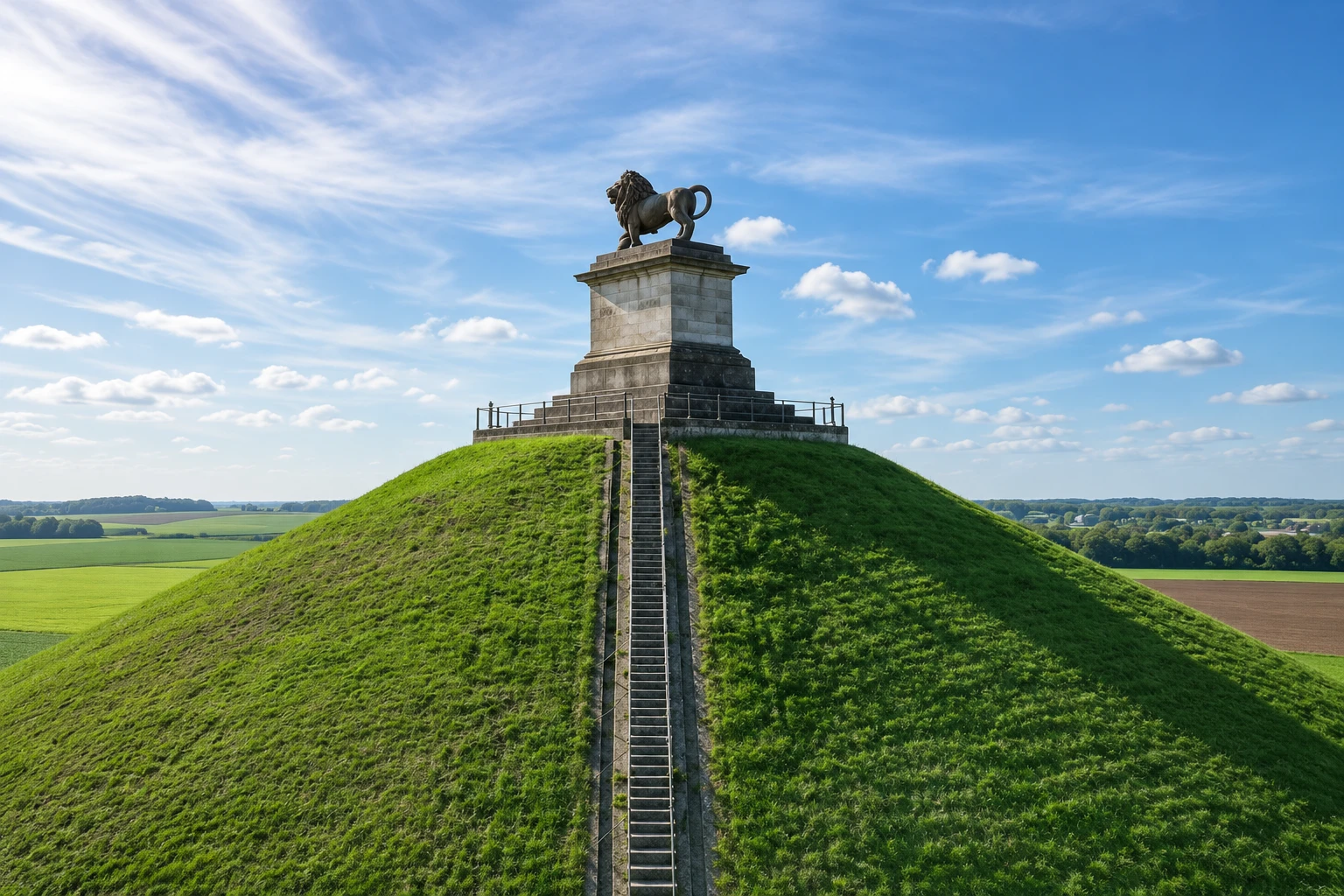
From the first encampment at Beaumont to the Waterloo battlefield, follow the markers of the June 1815 campaign in Wallonia.
The climate is temperate and humid, with seasons reversed compared to Brazil. From June to August the days are long and it is the busiest time for kayaking on the Lesse and boat trips on the Mosa in Dinant, which usually run from April to early November. April, May, September and October are quieter, and in October the valley woods often turn red. From December to February it is cold and it gets dark early; the Han caves often close for a break at the start of the year. The Fêtes de Wallonie in Namur take place in September.
The gateway is Brussels Airport, in Zaventem. Flights from Brazil usually involve a connection in another city. Check before buying. From the airport, SNCB trains go to Namur and continue along the valley to Dinant. South of Dinant there is no passenger train: Hastière is a short trip along the N96 road, on the banks of the Mosa. For Han-sur-Lesse, trains go to Jemelle station in Rochefort, and from there TEC buses run to the caves. By car, the E411 links Bruxelas to Namur and continues south, and the E42 crosses the province from west to east. Charleroi airport is in the neighboring province of Hainaut.
Beyond the guide
Your questions
Yes. The train links Bruxelas with Namur and continues to Dinant on the same line, so it's possible to see both towns in a single day, starting in Dinant and returning via Namur. To climb the Namur citadel and still stroll through Dinant’s center, set off early. Check train schedules before you go.
There are three ways: on foot, via trails and staircases starting from the center; by car, using the road that circles the hill; and by cable car that departs from the Mosa riverside near the confluence with the Sambre. Up there are the ramparts, the underground passages and the viewpoint over both rivers.
Yes. Local companies rent kayaks for sections between Houyet and Anseremme, where the Lesse flows into the Mosa, with a bus return to the starting point. The route passes beneath the Château de Walzin. The season generally runs from spring to early autumn and depends on river levels. Book in advance, especially in July and August.
No. Trains go to Jemelle station in Rochefort, and TEC buses run to Han-sur-Lesse. The caves tour begins with a tram that takes the group to the entrance. Having a car makes it easier to combine Rochefort, Dinant and the valley castles in the same day.
It is a biscuit made of flour and honey, without fat or yeast, baked in carved wooden molds with designs of animals, landscapes and coats of arms. It becomes very hard. The custom is to break it into small pieces and let it melt in the mouth rather than bite it. Dinant confectioneries sell it in various sizes.
The province's language is French. In hotels, museums and at the larger attractions—like the Namur citadel and the Han caves—English service is often available. In villages and small restaurants, a few words of French are very helpful.