

 Brazil
 Antarctica
 Argentina
 Bolivia
 Chile
 Colombia
 Ecuador
 Falkland Islands (Malvinas)
 French Guiana
 Guyana
 Paraguay
 Peru
 Suriname
 Uruguay
 Venezuela
 Albania
 Austria
 Croatia
 Denmark
 Finland
 France
 Germany
 Greece
 Hungary
 Iceland
 Ireland
 Italy
 Luxembourg
 Norway
 Poland
 Portugal
 Slovakia
 Slovenia
 Spain
 Sweden
 Switzerland
 the Czech Republic
 the Netherlands
 the United Kingdom
 Turkey
 Bermuda
 Canada
 Greenland
 Mexico
 Saint Pierre and Miquelon
 the United States
 the Dominican Republic
 Japan
 Egypt
 South Africa
 Australia
 Fiji
 New Zealand
 Papua New Guinea
Route · Brussels · Flemish Brabant · Antwerp · East Flanders · West Flanders
Flemish art cities
Six historic cities linked by train: Brussels, Leuven, Mechelen, Antwerp, Ghent and Bruges, with Flemish painting, cathedrals and medieval centres less than an hour apart.
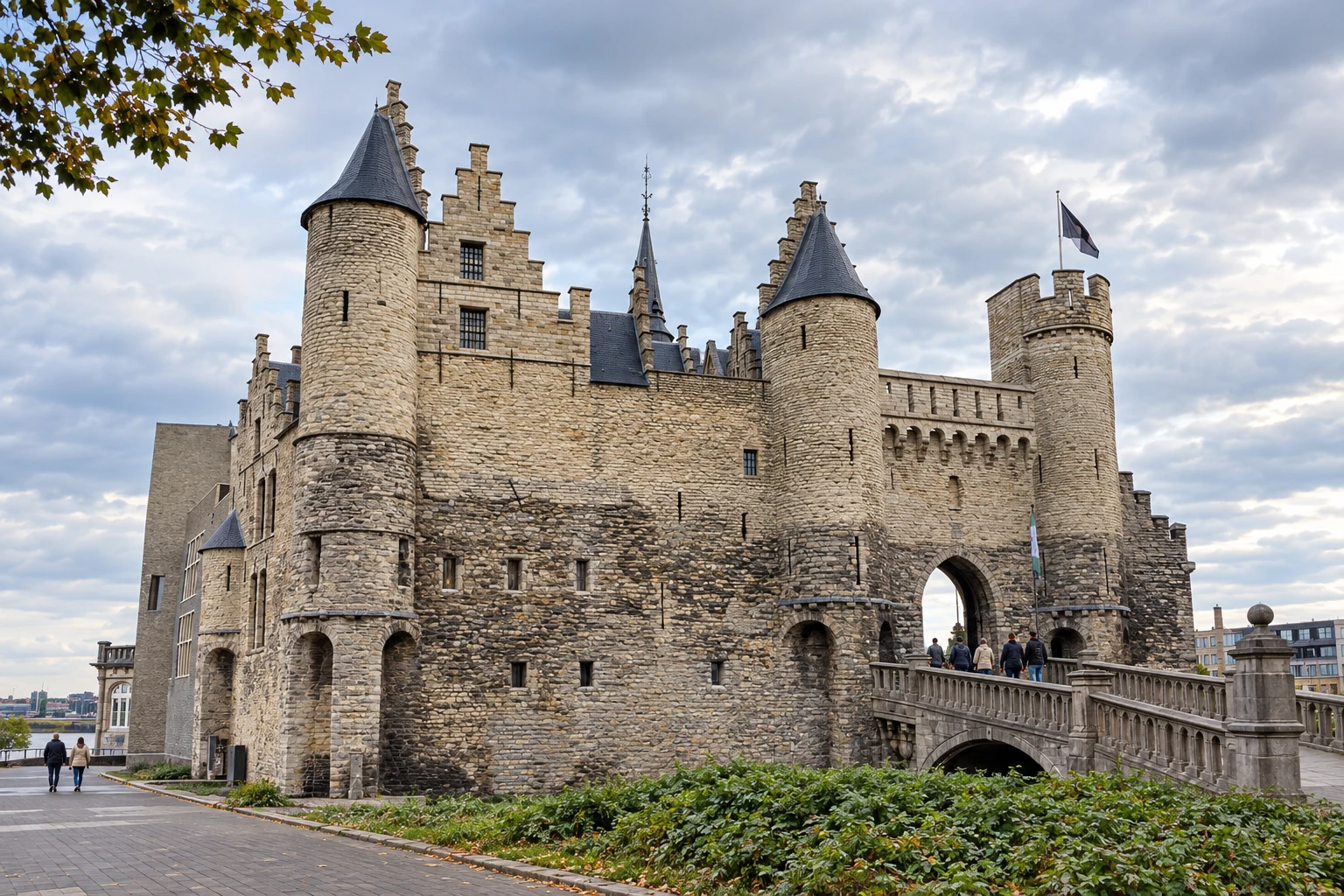
In the photo: Het Steen in Antwerp
Illustrative images. The pictures in this guide are illustrations based on the real place, not photographs, and may differ from it.
The route
What the Flemish art cities is
Flanders calls the group of Antwerp, Bruges, Brussels, Ghent, Leuven and Mechelen its “art cities.” They preserve the legacy from when the region was one of the richest in Europe, with textile trade and busy ports. That heritage explains the Gothic town halls, bell towers, beguinages and works by painters such as Van Eyck and Rubens.
The route runs from Brussels east to Leuven, then up to Mechelen and Antwerp and back west toward Ghent and Bruges. Each leg has direct trains on the Belgian network, and the longest usually takes under an hour. You can base yourself in two or three cities and visit the others as day trips.
For Brazilians, the first surprise is the language. Brussels is bilingual, with signs in French and Dutch, while the other five cities use only Dutch. That is why some places appear with two names: Gent and Gand, Brugge and Bruges, Mechelen and Malines, Leuven and Louvain.
Several sites along the way are UNESCO World Heritage: Brussels’ Grand-Place, Bruges’ historic centre, Mechelen cathedral tower, Leuven’s large beguinage and the Plantin-Moretus Museum in Antwerp.
The map
6 cities along the way
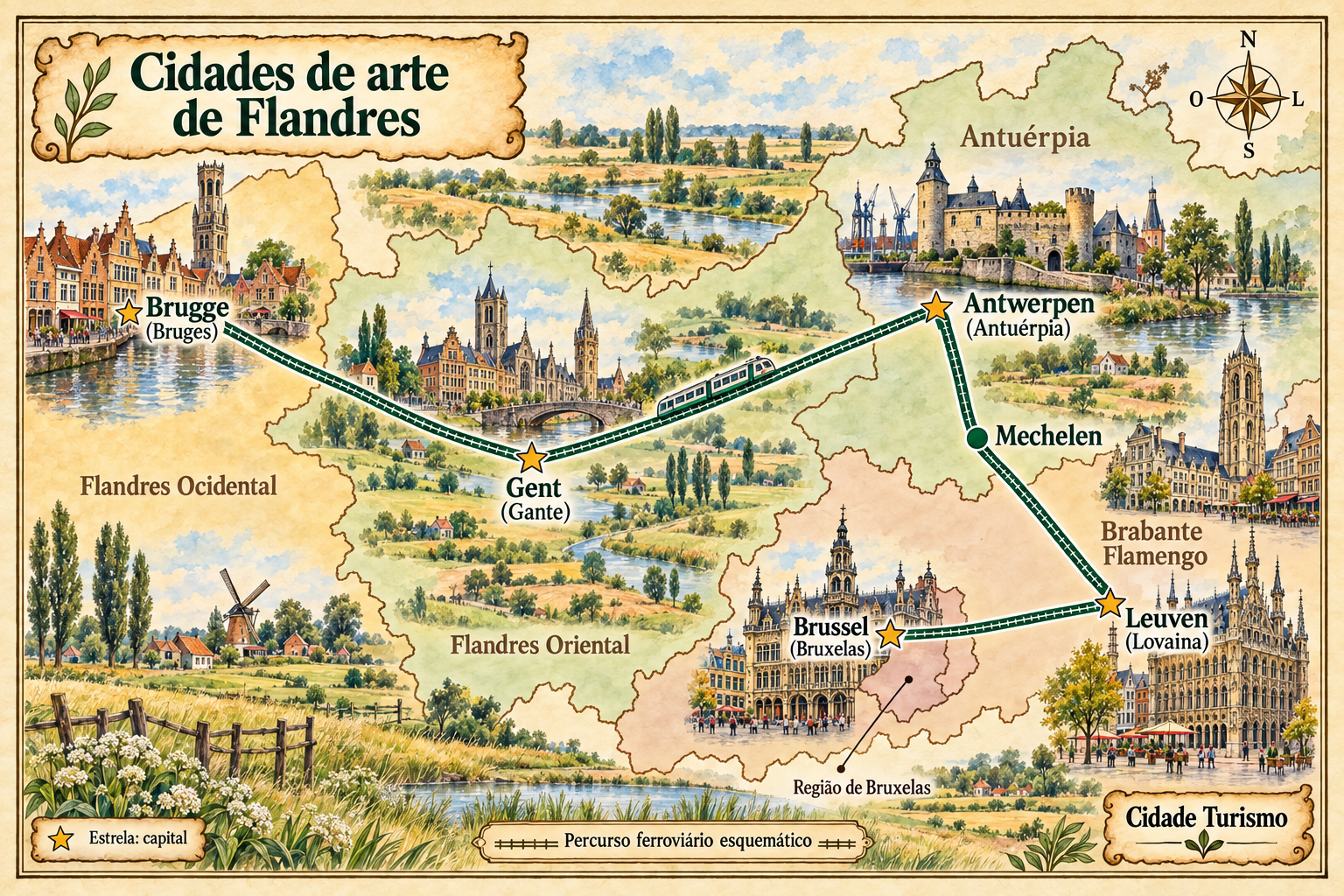
Outlines: © NGI-IGN, AdminVector, CC BY 4.0. Adapted by Cidade Turismo.
The journey
City by city
Distances and times are approximate: check before you set off.
-
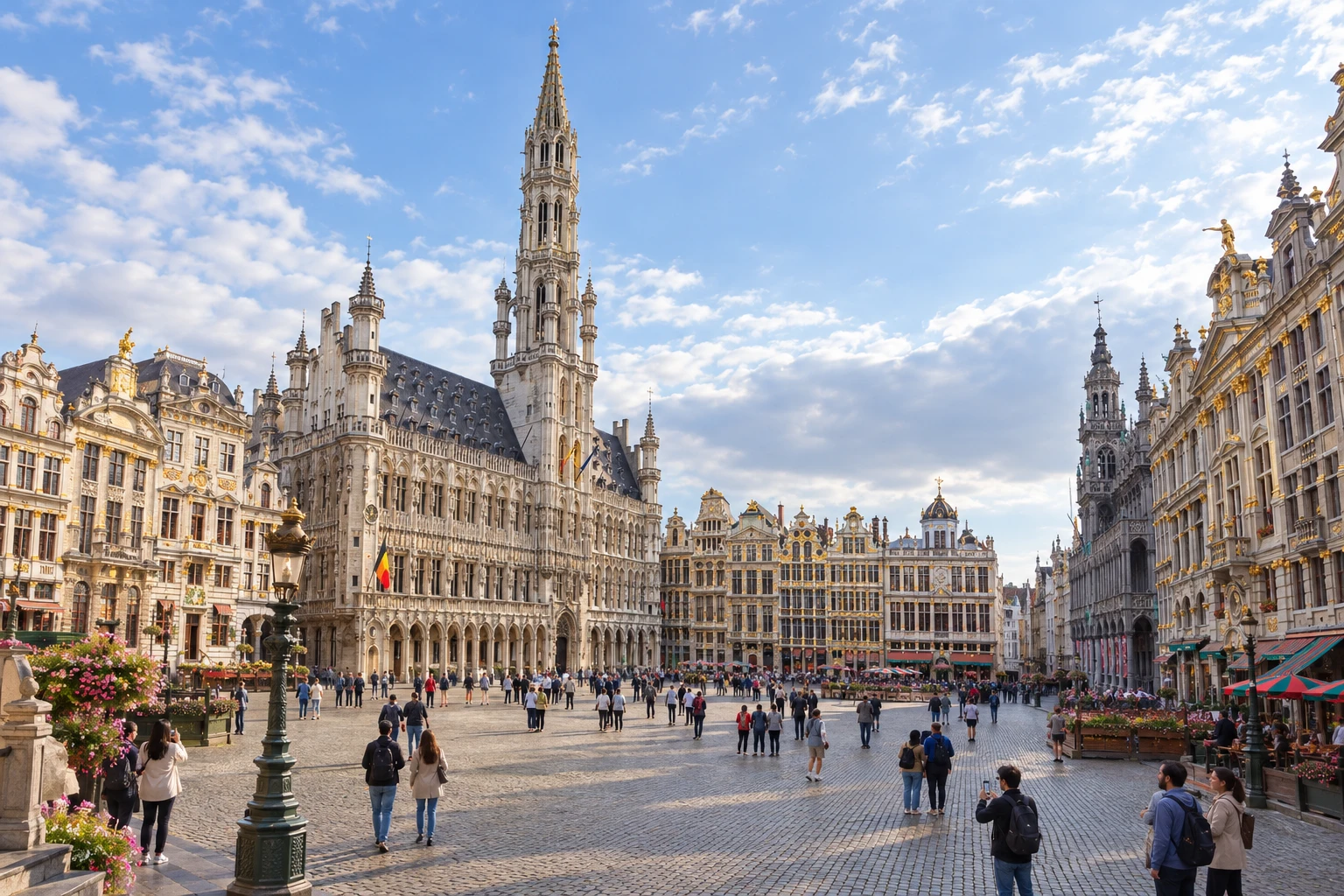 1 · Brussels
Brussels
Starting point and main gateway to the country, with international trains at Bruxelles-Midi station, also called Brussel-Zuid. The Grand-Place, surrounded by guild houses and the Gothic town hall, is the focal point for visitors. The city also hosts the Royal Museums of Fine Arts, with a room devoted to Magritte, and Victor Horta’s Art Nouveau façades.
→ Leuven about 25 minutes by train Direct SNCB trains run from Brussels to Leuven, with several departures per hour from Brussels’ central stations. The line continues east through neighbourhoods and fields of Flemish Brabant, and signs become Dutch-only.
-
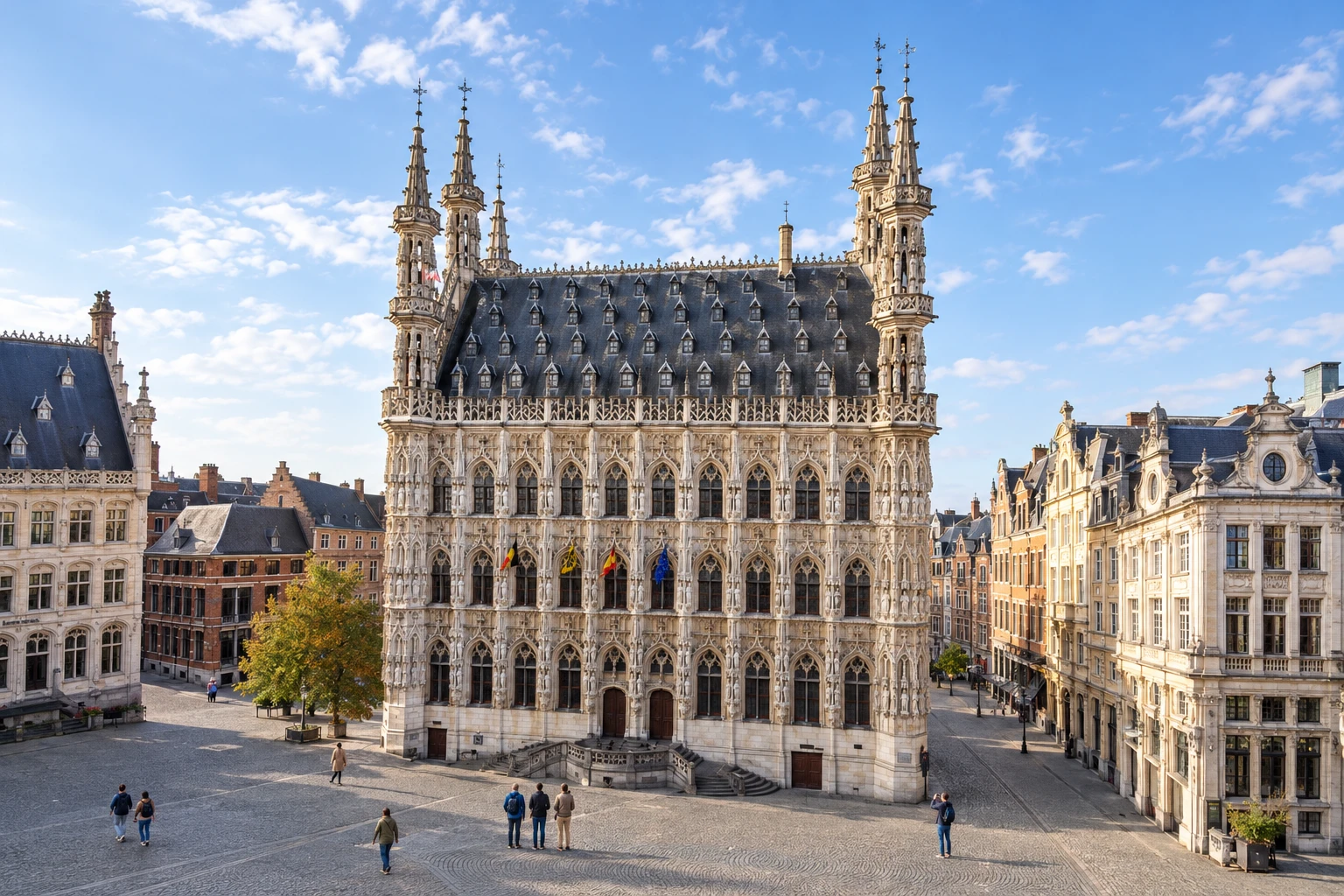 2 · Flemish Brabant
Leuven
A university town since 1425, when the institution now called KU Leuven was founded. The Gothic town hall, covered in statues, faces Saint Peter’s Church on the Grote Markt. South of the centre, the Groot Begijnhof is a whole quarter of brick houses by the Dijle River, protected by UNESCO.
→ Mechelen about 20 minutes by train Direct trains run from Leuven to Mechelen, on the line that calls at Brussels Airport station. Get off at Mechelen main station; Mechelen-Nekkerspoel is served by only some trains.
-
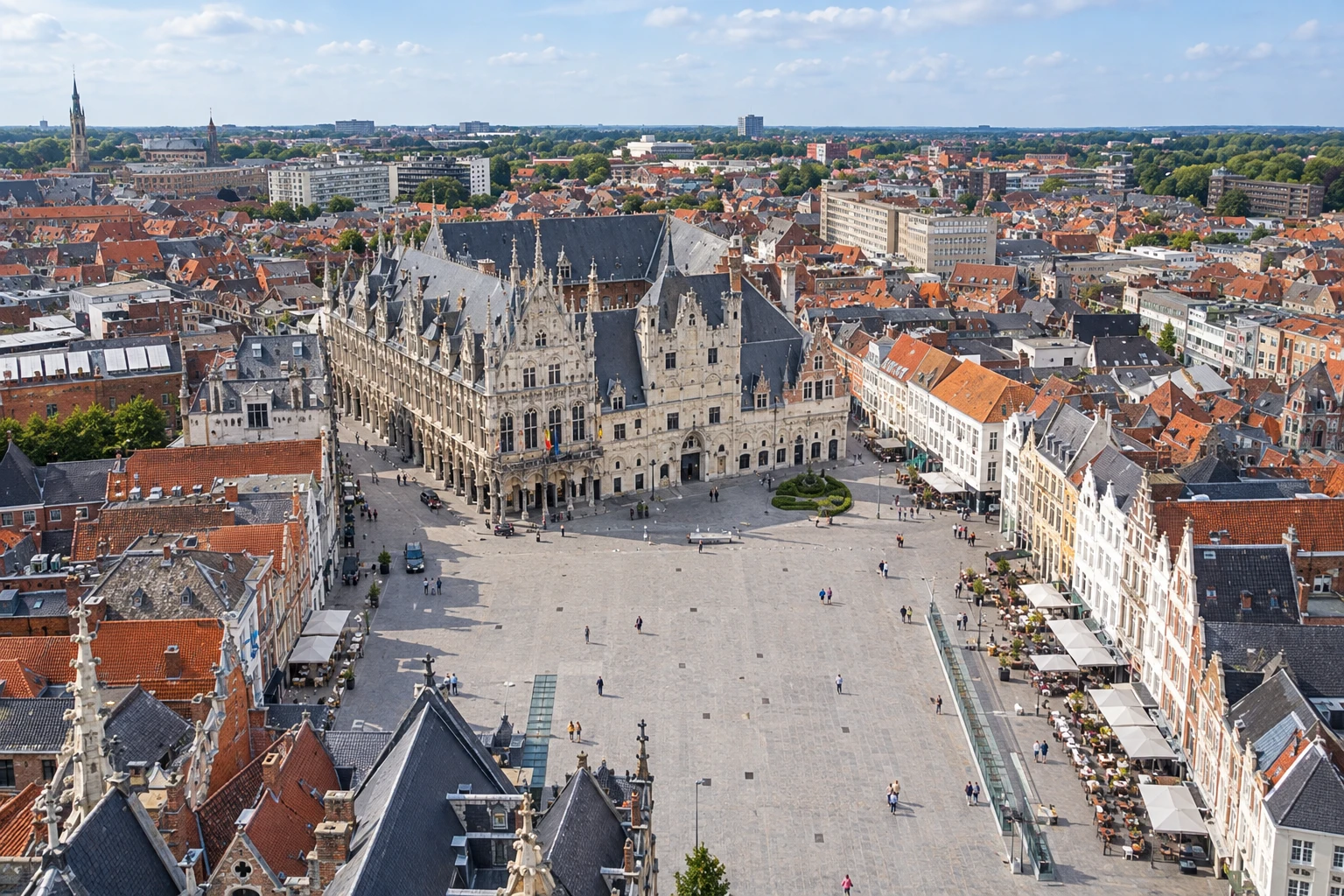 3 · Antwerp
Mechelen
The smallest of the art cities, called Malines in French. In the early 16th century it was the seat of government of the Low Countries under Margaret of Austria, and palaces from that era remain in the centre. The tower of Saint Rumbold’s Cathedral can be climbed on foot and houses a carillon. The Hof van Busleyden presents the city as it was in Habsburg times.
→ Antwerp about 20 minutes by train Direct trains run from Mechelen to Antwerp on one of the country’s busiest lines, with frequent departures throughout the day. Arrival is at Antwerpen-Centraal, a few minutes’ walk from Meir and the centre.
-
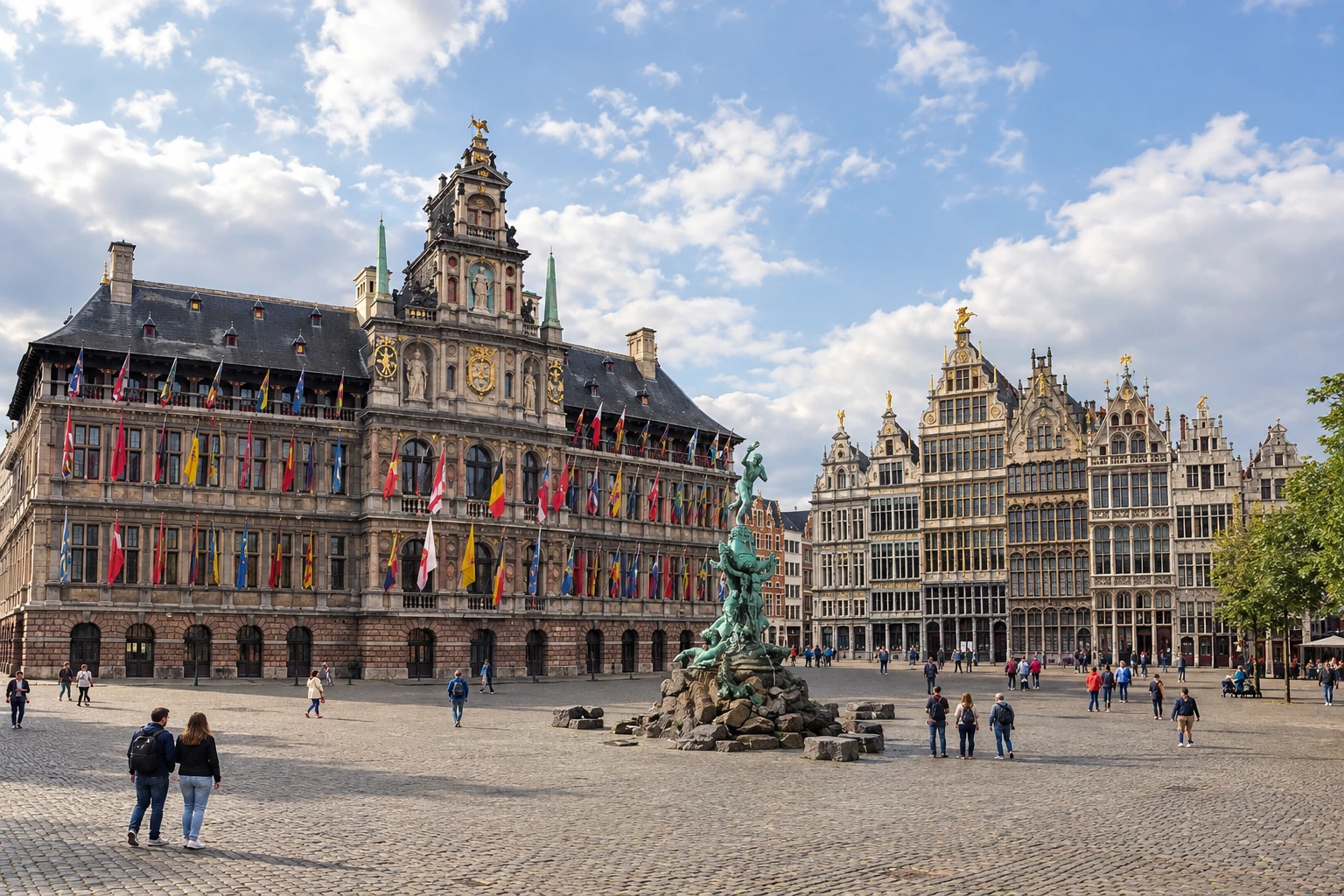 4 · Antwerp
Antwerp
The largest city in Flanders and one of Europe’s major ports. Arrival is already through Antwerpen-Centraal, a station with a domed stone concourse. In the Cathedral of Our Lady are paintings by Rubens, such as The Descent from the Cross. The Plantin-Moretus Museum preserves the house and print workshop of a 16th-century family of printers, with original presses, and the fashion quarter shows the city’s contemporary side.
→ Ghent under an hour by train Direct trains run from Antwerp to Ghent via Sint-Niklaas, crossing the Waasland region. Disembark at Gent-Sint-Pieters, from where trams 1 and 3 run to the centre.
-
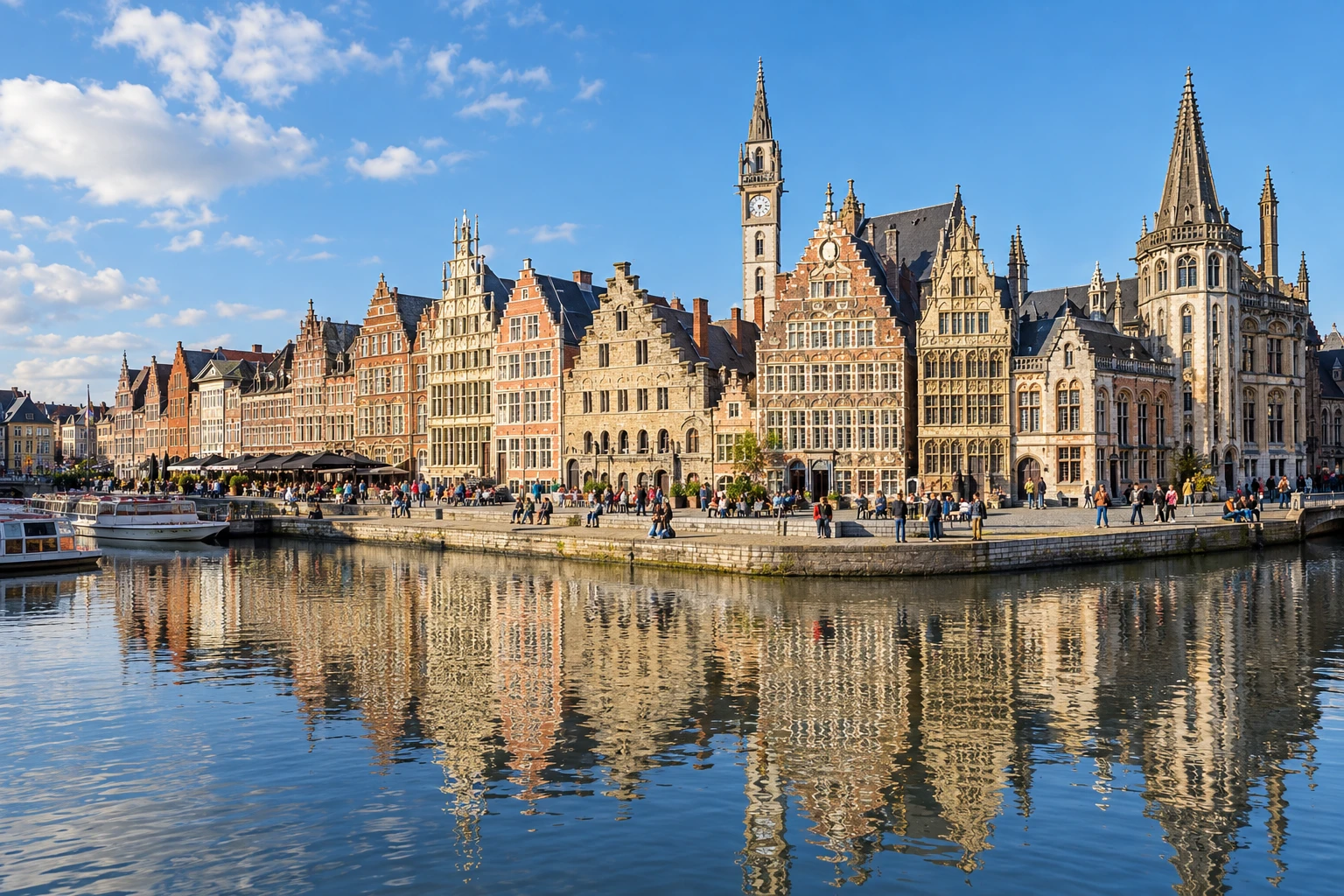 5 · East Flanders
Ghent
The Ghent Altarpiece, The Adoration of the Mystic Lamb, finished by the Van Eyck brothers in 1432, is in Saint Bavo’s Cathedral. The counts’ castle, the Gravensteen, still has a moat and walls in the middle of the city. The Graslei and Korenlei quays on the banks of the Lys form the city’s best-known view. Gent-Sint-Pieters station is about a 20-minute walk from the centre, with trams serving the route.
→ Bruges about half an hour by train Direct trains run from Ghent to Bruges, with several departures per hour, on the line that continues to the coast at Ostend. The landscape is flat, with fields and canals of West Flanders. On station signs, Bruges appears as Brugge.
-
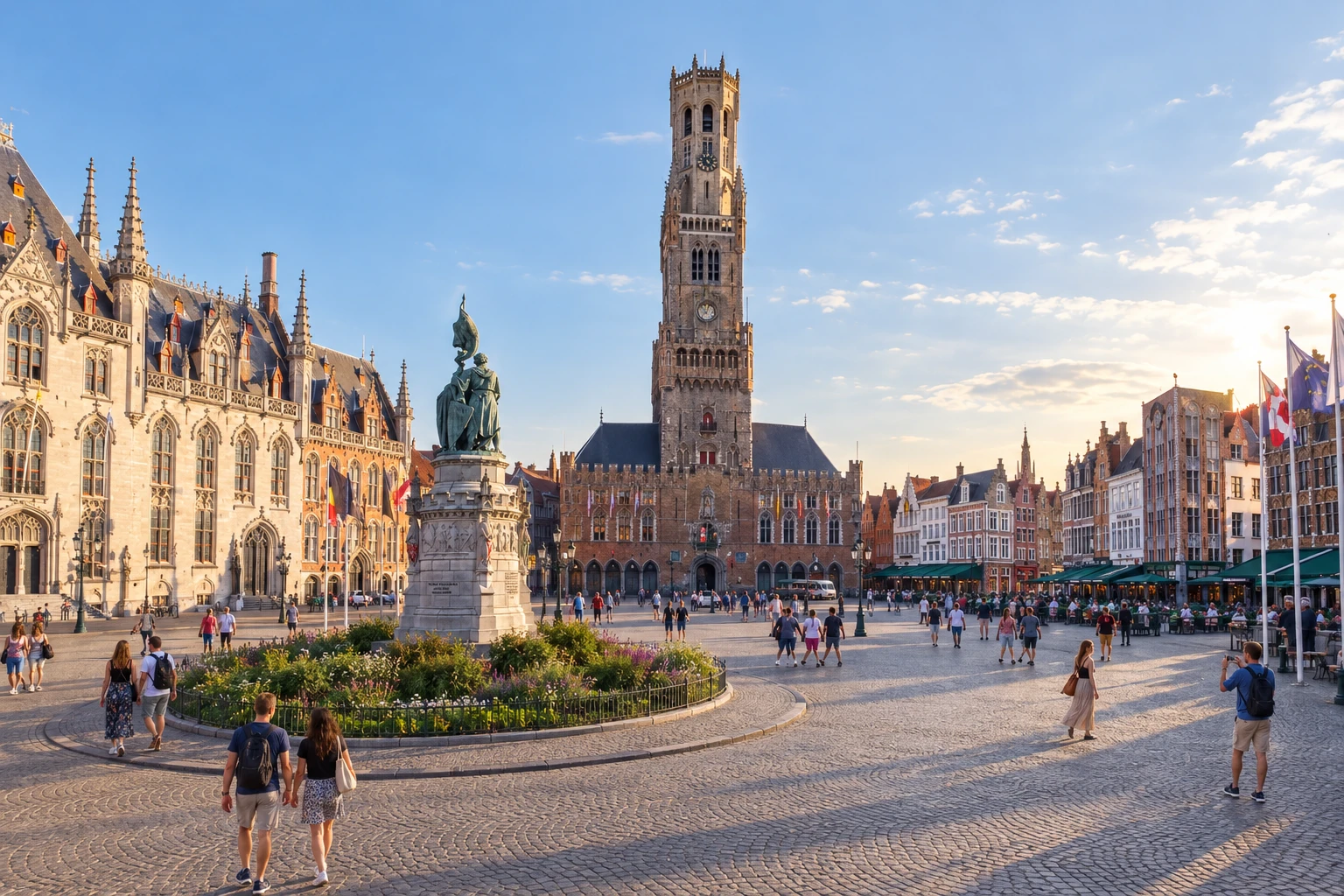 6 · West Flanders
Bruges
End of the route, with the entire historic centre listed by UNESCO and the medieval layout preserved. Canals cut through the centre and are navigable by boat. The Belfry, the bell tower, dominates the Markt square. The Groeninge Museum houses paintings by the Early Flemish masters, and the Begijnhof is near Minnewater Lake. Frequent buses run from the station to the centre.
How many days
With a week you can visit all six cities without rushing. In four or five days the common plan is to sleep in Brussels, Antwerp and Ghent and do Leuven, Mechelen and Bruges as day trips. Each city really needs at least a full day; Brussels and Antwerp warrant two.
Best time to go
From April to September days are usually long and drier, good for walking the centres. July and August bring more tourists, especially in Bruges. From November to February it gets dark early and rain is frequent; in December several cities typically set up Christmas markets in the squares. It can rain any month, so bring a waterproof coat.
The seasons shown are the most usual ones; nature doesn't always follow the calendar.
How to travel it
By train. The Belgian railway company links all the cities with direct, frequent services. Historic centres have restricted-traffic zones and limited parking, so a car is more of a hindrance than a help. At stations names appear in the local language: Brugge, Gent-Sint-Pieters, Antwerpen-Centraal. Check timetables before you travel.
Who it's for
For those who enjoy art, architecture and history and prefer to travel without a car. It works well for couples, solo travellers and first-time visitors to Europe, because the cities are compact and the centres are walkable.
Your questions
Frequently asked questions about Flemish art cities
Preciso de carro para fazer a rota?
No. All of the towns have train stations with direct connections to the next stop, and the historic centers are explored on foot. A car usually gets in the way, because the centers have restricted access and parking is difficult.
Can you do everything based in Brussels without changing hotels?
Yes. Mechelen and Leuven are about 20–25 minutes by train, Antwerp and Ghent under an hour, and Bruges about an hour. Staying only in Brussels saves on luggage, but leaves little time to see the cities late afternoon and at night, when the centers are quieter.
How many days are necessary?
A week is ideal for the six towns. With four or five days, choose two or three bases—such as Brussels, Antwerp and Ghent—and visit the others on day trips.
What is the best time to go?
From April to September, when days are usually longer. July and August are the busiest months. From November to February it gets dark early and it rains often, but in December the towns usually have Christmas markets.
Why do the towns appear with different names on signs and tickets?
Belgium has two main languages in that region. Flanders speaks Dutch, and Brussels is officially bilingual, French and Dutch. That is why Ghent appears as Gent or Gand, Bruges as Brugge, Mechelen as Mechelen, Leuven as Leuven or Louvain, and Antwerp as Antwerpen or Anvers. When buying a ticket or reading the station board, look for the local name.
In what order is it worth visiting the towns?
There is no required order, and the train allows you to start at any town. Leaving from Brussels, going on to Leuven, Mechelen and Antwerp and then down to Ghent and Bruges avoids backtracking, and each leg has a direct train.