Poperinge · Belgium · Museum
Talbot House
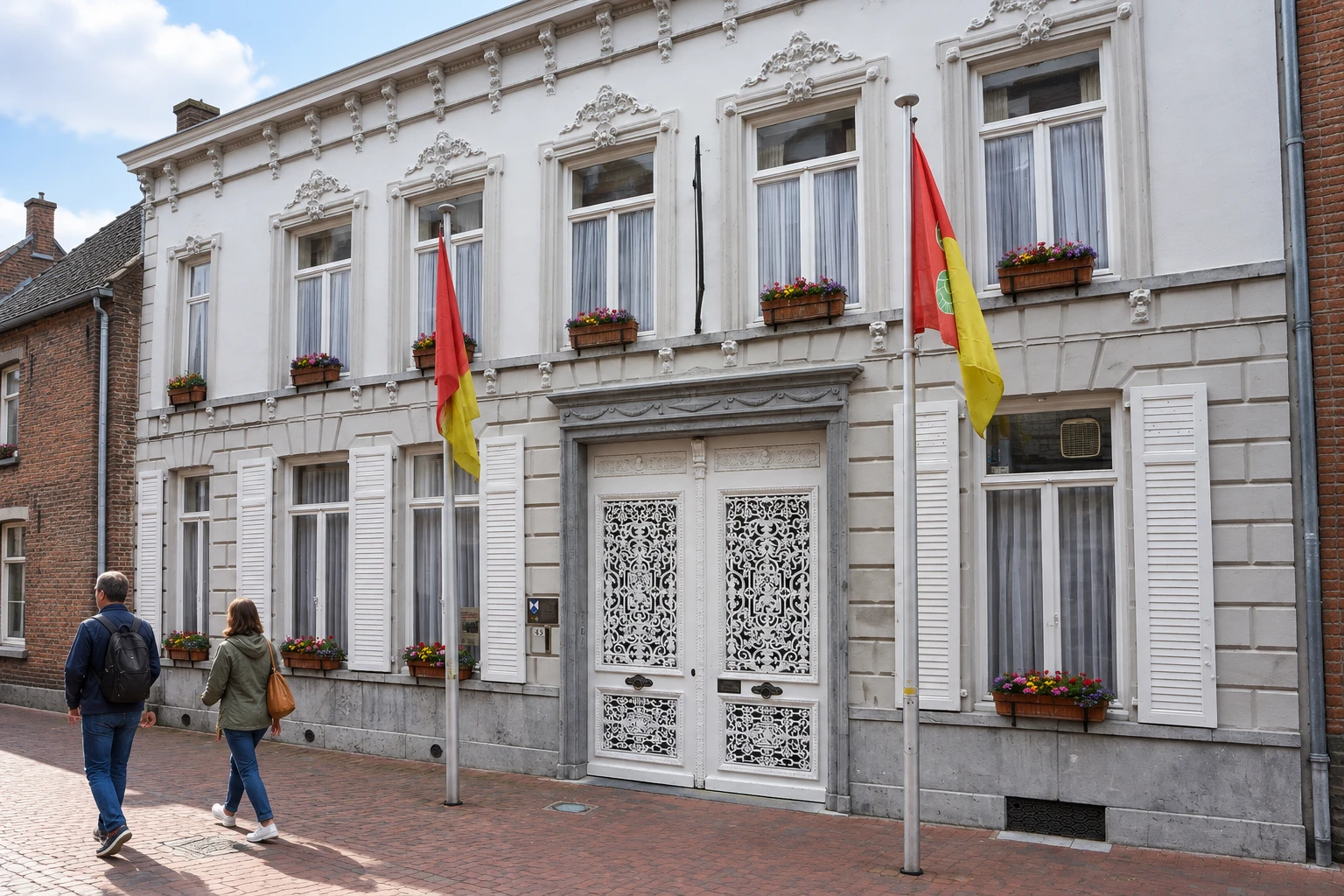
House where, from 1915, a club for British soldiers of any rank operated. Today it is a museum about life behind the front and still hosts guests.

 Search
 Brazil
 Antarctica
 Argentina
 Bolivia
 Chile
 Colombia
 Ecuador
 Falkland Islands (Malvinas)
 French Guiana
 Guyana
 Paraguay
 Peru
 Suriname
 Uruguay
 Venezuela
 AustriaBelgium
 Croatia
 Denmark
 Finland
 France
 Germany
 Greece
 Hungary
 Iceland
 Ireland
 Italy
 Luxembourg
 Norway
 Poland
 Portugal
 Slovakia
 Slovenia
 Spain
 Sweden
 Switzerland
 the Czech Republic
 the Netherlands
 the United Kingdom
 Turkey
 Bermuda
 Canada
 Greenland
 Mexico
 Saint Pierre and Miquelon
 the United States
 the Dominican Republic
 JapanTurkey
 Egypt
 South Africa
 Australia
 Fiji
 New Zealand
 Papua New Guinea
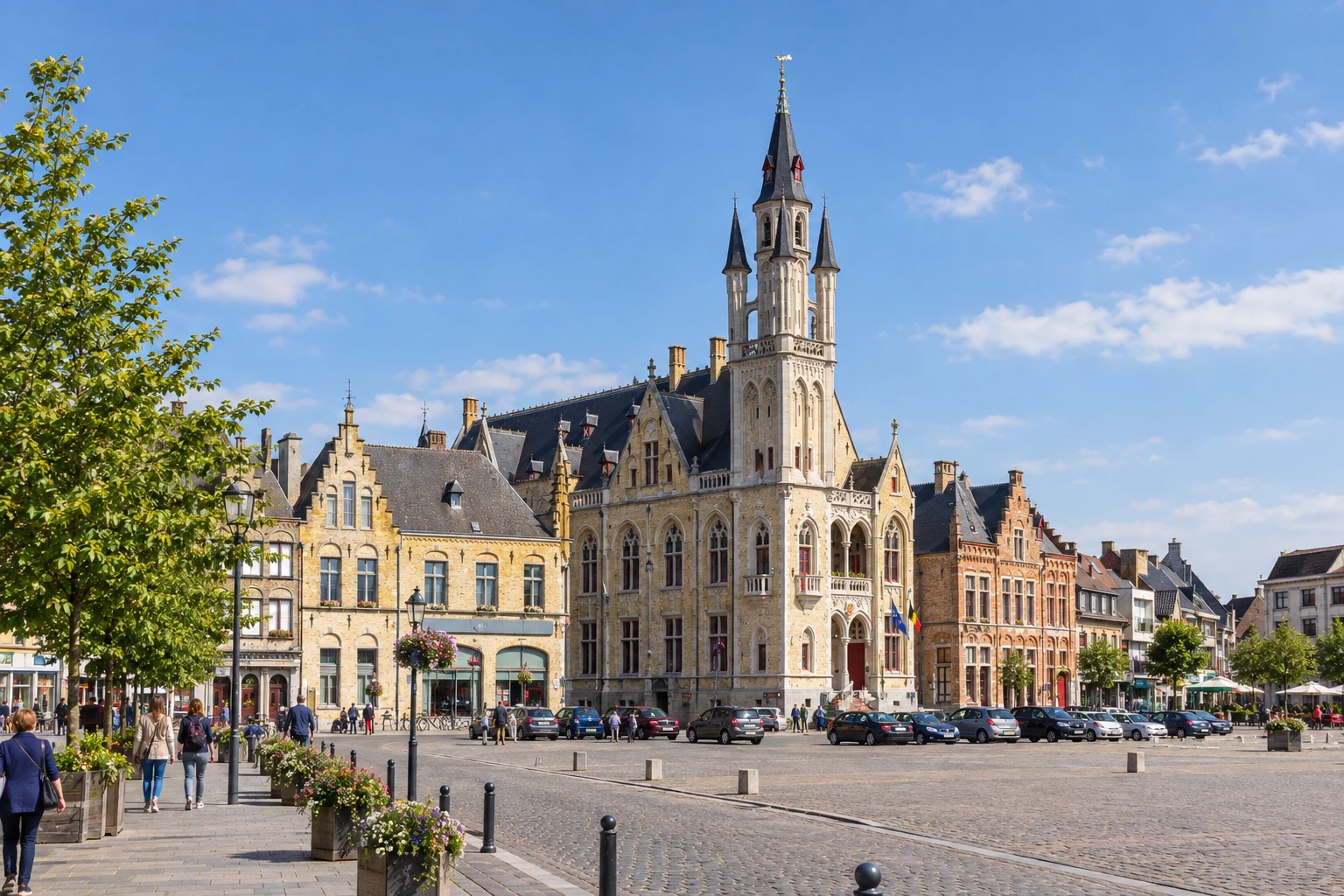
In the photo: Stadhuis and Grote Markt · Poperinge
Illustrative images. The pictures in this guide are illustrations based on the real place, not photographs, and may differ from it.

The city
City west of Ypres that remained outside the German occupation during the First World War. Because it was just behind the front, it housed British troops on leave and field hospitals. Talbot House, a club opened to soldiers of any rank in 1915, is now a museum and guesthouse. On the road south, Lijssenthoek is the largest hospital cemetery of the Commonwealth. The region contains much of Belgium's hop cultivation.
30 places to stay in Poperinge.
30 places to eat in Poperinge.
The city's hotels and restaurants on the map.
how to get there · how many days · itinerary · questions
The local experience
House where, from 1915, a club for British soldiers of any rank operated. Today it is a museum about life behind the front and still hosts guests.
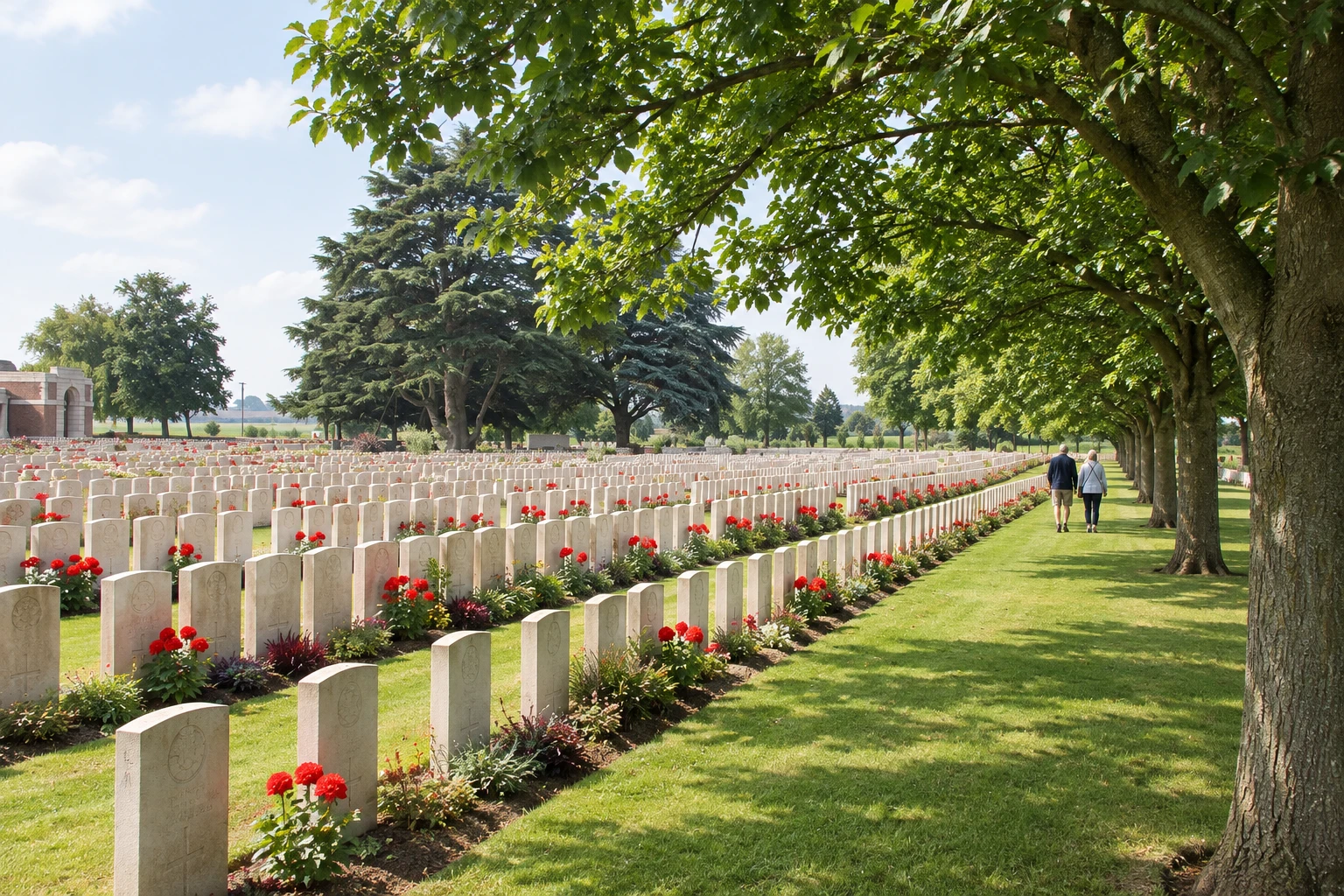
A Commonwealth cemetery in the countryside south of Poperinge, with nearly 11,000 graves of soldiers from various nations who died in the field hospitals established there between 1915 and 1920.
Before you go
Poperinge – Belgium Destination Ypres and the Western Front
Approximate distances. Check flights and bus, train or boat schedules before you travel.
Poperinge is the terminus of train line 69, which runs via Ypres and Kortrijk. From Brussels the journey requires a change. Connections with Brazil usually involve a stopover in another city. Confirm before buying.
One day is enough for Talbot House and Lijssenthoek. You can combine it with Ypres, which is one station away by train.
From April to October, with long days. In September the hop festival takes place every three years, with a street parade. In winter, from December to February, days are short and rainy.
The seasons shown are the most usual ones; nature doesn't always follow the calendar.
For Talbot House, no: it's in the centre, within walking distance of the station. Lijssenthoek is a few kilometres away in the countryside and requires a car, bicycle or taxi.
Suggested itinerary
Built with the places on this page. No rush: it's paced so you have time to see them.
From the station, walk to Talbot House on Gasthuisstraat. Visit the museum about life behind the lines, the old house, the garden and the chapel in the attic.
Head south to Lijssenthoek. Start at the visitor centre, which tells the story of the field hospitals, and then walk through the cemetery.
Back in the centre, pass through the main square, the Grote Markt. At the town hall two cells used during the war for those condemned to death are preserved; check whether they are open to visitors.
Take the train to Ypres, one station further, and watch the Last Post at the Menin Gate.
Check before you go. Opening hours and days change, and places may close for renovations, holidays or events. This itinerary is a suggestion from Cidade Turismo, not a commitment: plan yours by checking directly with each place you intend to visit.
Before you go
The town lay to the west of the front line, which became fixed at Ypres from the end of 1914. It was one of the few Belgian towns outside the occupation and became a rest base and site of hospitals for British troops.
Yes. Poperinge is the terminus of line 69, which runs via Ypres and Kortrijk. Check timetables before you go.
Yes. The house maintains guest rooms in addition to the museum. Book in advance and confirm conditions.
The region has produced much of Belgium's hops, an ingredient of beer, since the 15th century. The high-pole plantations are part of the landscape between Poperinge and Ypres.
Routes in Belgium
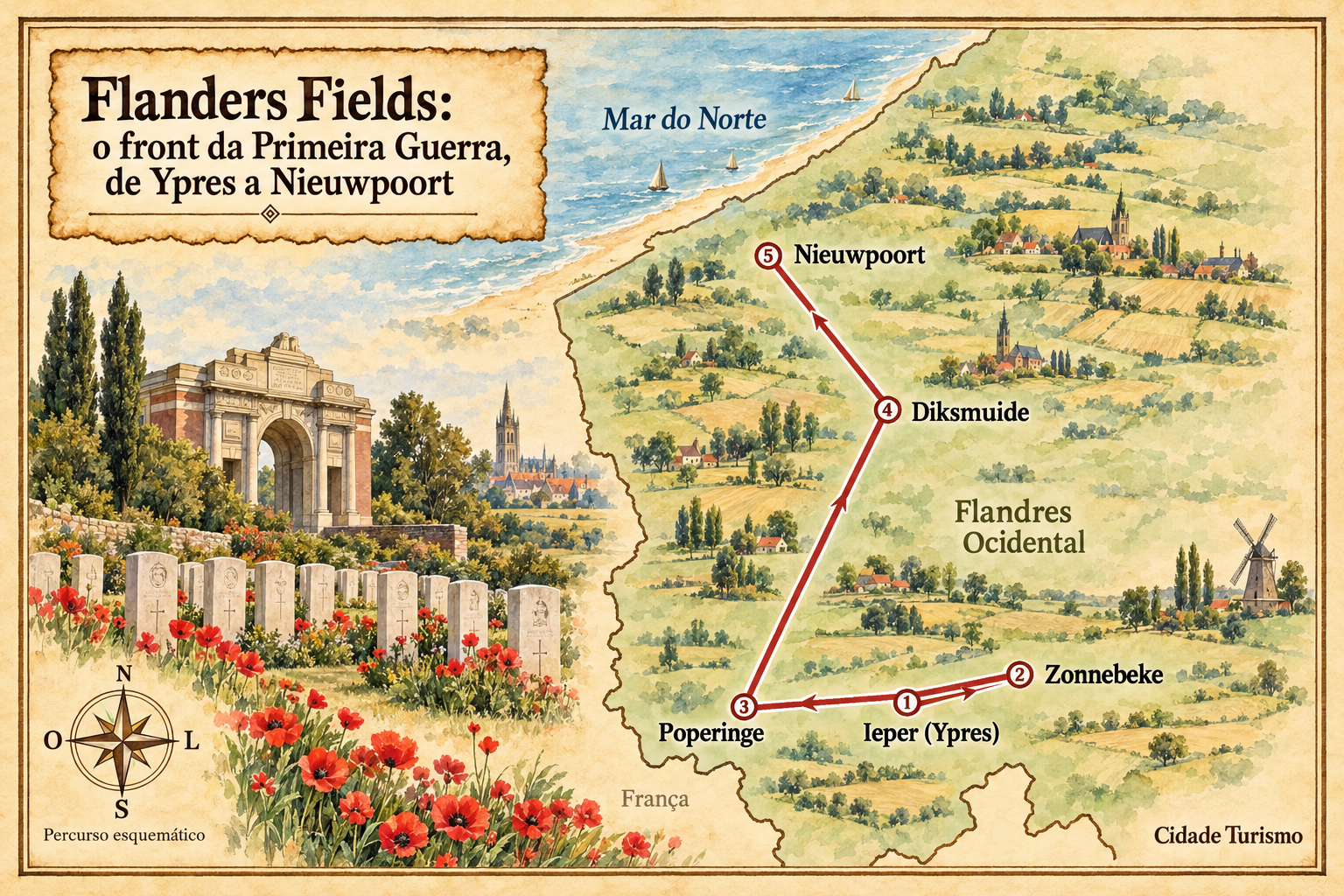
Cemeteries, museums and trenches of the First World War in West Flanders, from the Ypres salient to the mouth of the IJzer River near the North Sea.