Zonnebeke · Belgium · Military cemetery
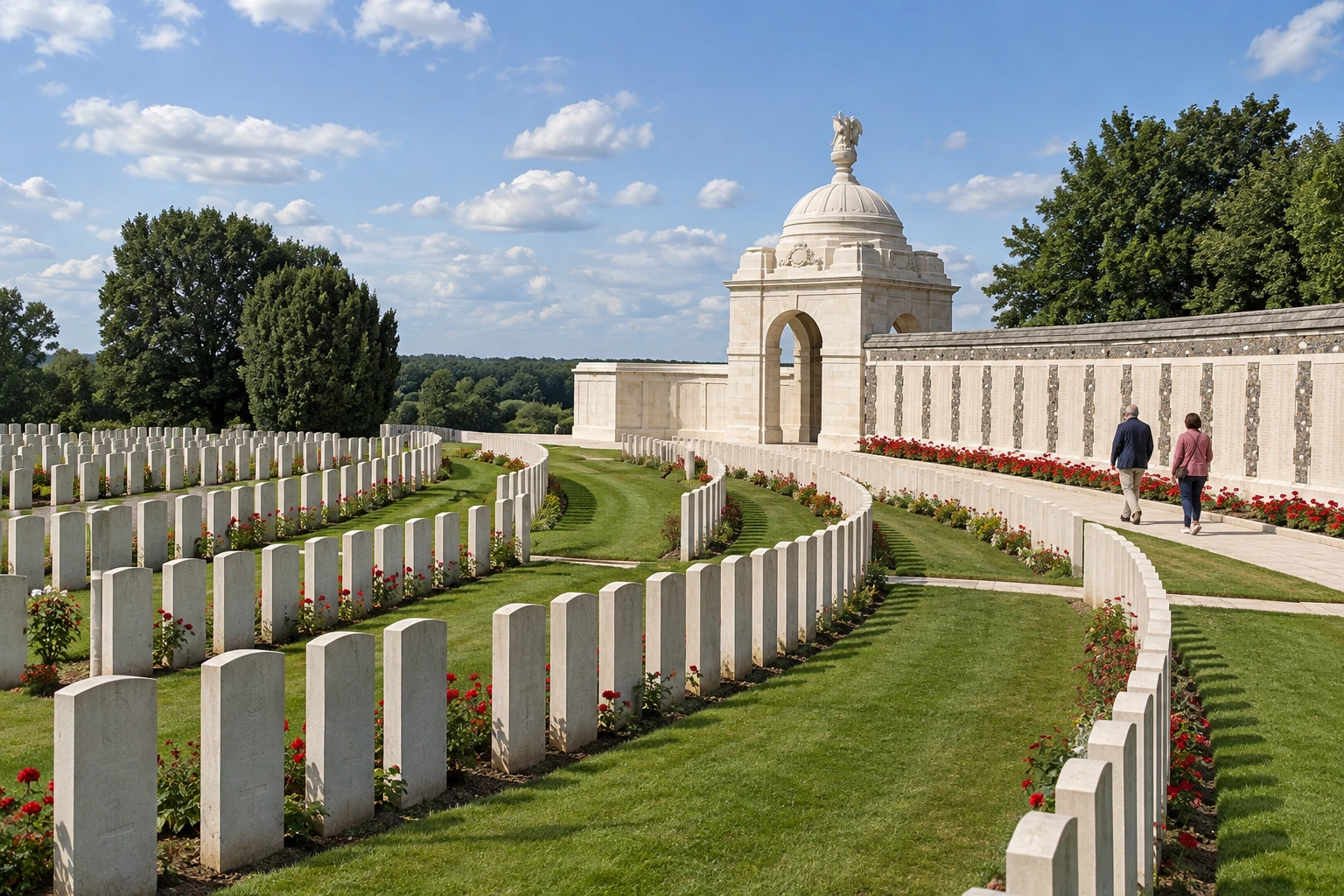
Tyne Cot Cemetery
The largest Commonwealth military cemetery in the world, with about 12,000 graves and a wall bearing almost 35,000 names of missing soldiers, on the Passendale ridge.

 Search
 Brazil
 Antarctica
 Argentina
 Bolivia
 Chile
 Colombia
 Ecuador
 Falkland Islands (Malvinas)
 French Guiana
 Guyana
 Paraguay
 Peru
 Suriname
 Uruguay
 Venezuela
 AustriaBelgium
 Croatia
 Denmark
 Finland
 France
 Germany
 Greece
 Hungary
 Iceland
 Ireland
 Italy
 Luxembourg
 Norway
 Poland
 Portugal
 Slovakia
 Slovenia
 Spain
 Sweden
 Switzerland
 the Czech Republic
 the Netherlands
 the United Kingdom
 Turkey
 Bermuda
 Canada
 Greenland
 Mexico
 Saint Pierre and Miquelon
 the United States
 the Dominican Republic
 JapanTurkey
 Egypt
 South Africa
 Australia
 Fiji
 New Zealand
 Papua New Guinea
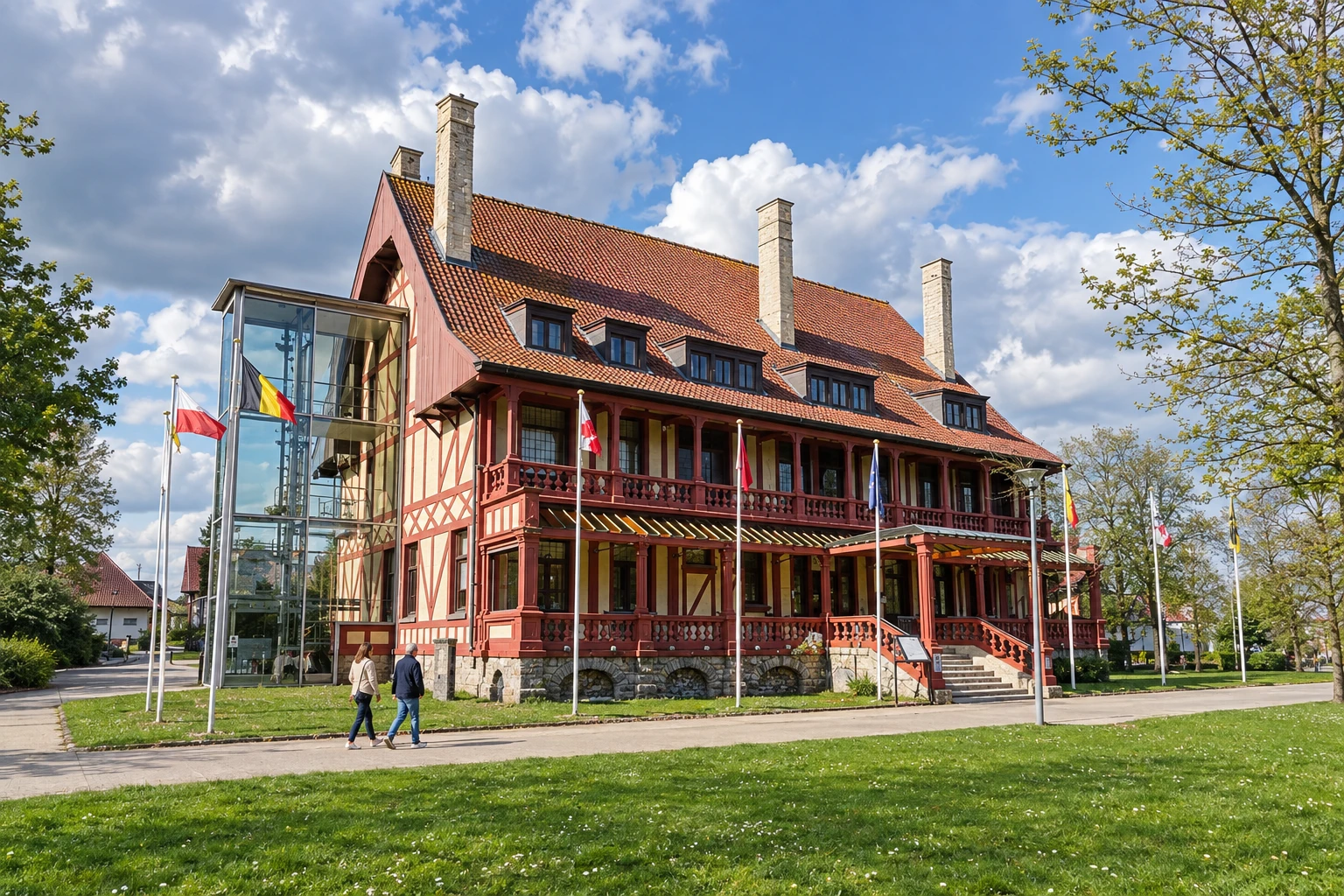
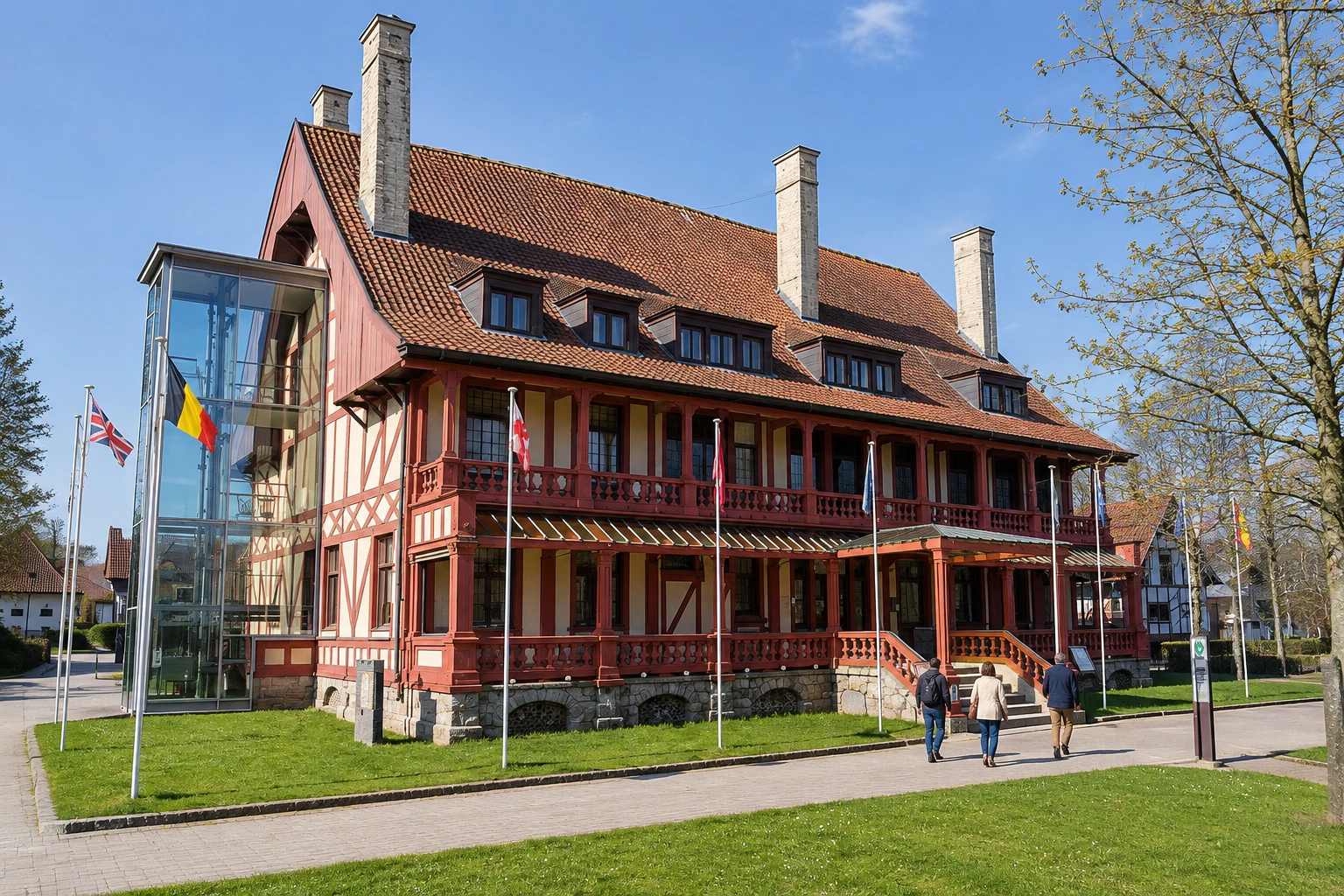
In the photo: Kasteel van Zonnebeke · Passchendaele Museum
Illustrative images. The pictures in this guide are illustrations based on the real place, not photographs, and may differ from it.

The city
Rural municipality east of Ypres, in the centre of the former salient. It includes the village of Passendale, which gave its name to the 1917 battle from 31 July to 10 November, when Commonwealth troops advanced about 8 km through rain and mud. The war destroyed the whole area. Today, in the castle park is the Memorial Museum Passchendaele 1917, and on the Passendale ridge stands the Tyne Cot cemetery, the largest Commonwealth cemetery in the world.
23 places to stay in Zonnebeke.
15 places to eat in Zonnebeke.
The city's hotels and restaurants on the map.
how to get there · how many days · itinerary · questions
The local experience
The largest Commonwealth military cemetery in the world, with about 12,000 graves and a wall bearing almost 35,000 names of missing soldiers, on the Passendale ridge.
Museum in the castle park of Zonnebeke about the battle of Passchendaele, featuring a reconstructed British underground shelter and full-size British and German trenches.
Before you go
Zonnebeke – Belgium Destination Ypres and the Western Front
Approximate distances. Check flights and bus, train or boat schedules before you travel.
It is a few kilometres from Ypres, which has a train station. From there you can get there by car, bicycle, De Lijn bus or on a guided tour. Connections from Brazil usually involve a stopover in another city. Confirm before booking.
Half a day to a full day, leaving from Ypres. The museum and Tyne Cot can be visited at a relaxed pace in a morning or an afternoon.
From April to October, with longer daylight hours to travel between sites. November has ceremonies linked to the Armistice. In winter, from December to February, it gets dark early and it rains a lot.
The seasons shown are the most usual ones; nature doesn't always follow the calendar.
Transport helps, because the museum is in the centre and Tyne Cot is several kilometres away in the countryside. Without a car, the guided tour from Ypres usually includes both. Cycling is common in the area, on flat rural roads.
Suggested itinerary
Built with the places on this page. No rush: it's paced so you have time to see them.
Start with the museum in the castle park, which explains the 1917 battle in chronological order. The route includes a reconstructed British underground shelter and full-size trenches.
Head to Tyne Cot, on the top of the ridge. Start at the visitor centre, walk among the rows of headstones and finish at the memorial wall for the missing, from where you can see Ypres in the distance.
On the way back, rural roads cross the former battlefield, now farmed. Small cemeteries and memorials appear beside the road.
Finish the day in Ypres, a few kilometres away, to attend the Last Post at the Menin Gate.
Check before you go. Opening hours and days change, and places may close for renovations, holidays or events. This itinerary is a suggestion from Cidade Turismo, not a commitment: plan yours by checking directly with each place you intend to visit.
Before you go
Yes. Passendale is the Dutch name used on signs. Passchendaele is the older spelling, which stayed in books and in the name of the museum and the 1917 battle.
Yes: by De Lijn bus, by bicycle or on a guided tour. The tour is the most convenient way to combine the museum and Tyne Cot in one day. Check times before you go.
Half a day is the minimum for the museum and Tyne Cot. A full day allows you to walk at a leisurely pace and stop at other salient memorials.
Yes. The museum explains the battle from start to finish with artefacts, photos and exhibits, and Tyne Cot conveys the scale of the losses without prior knowledge.
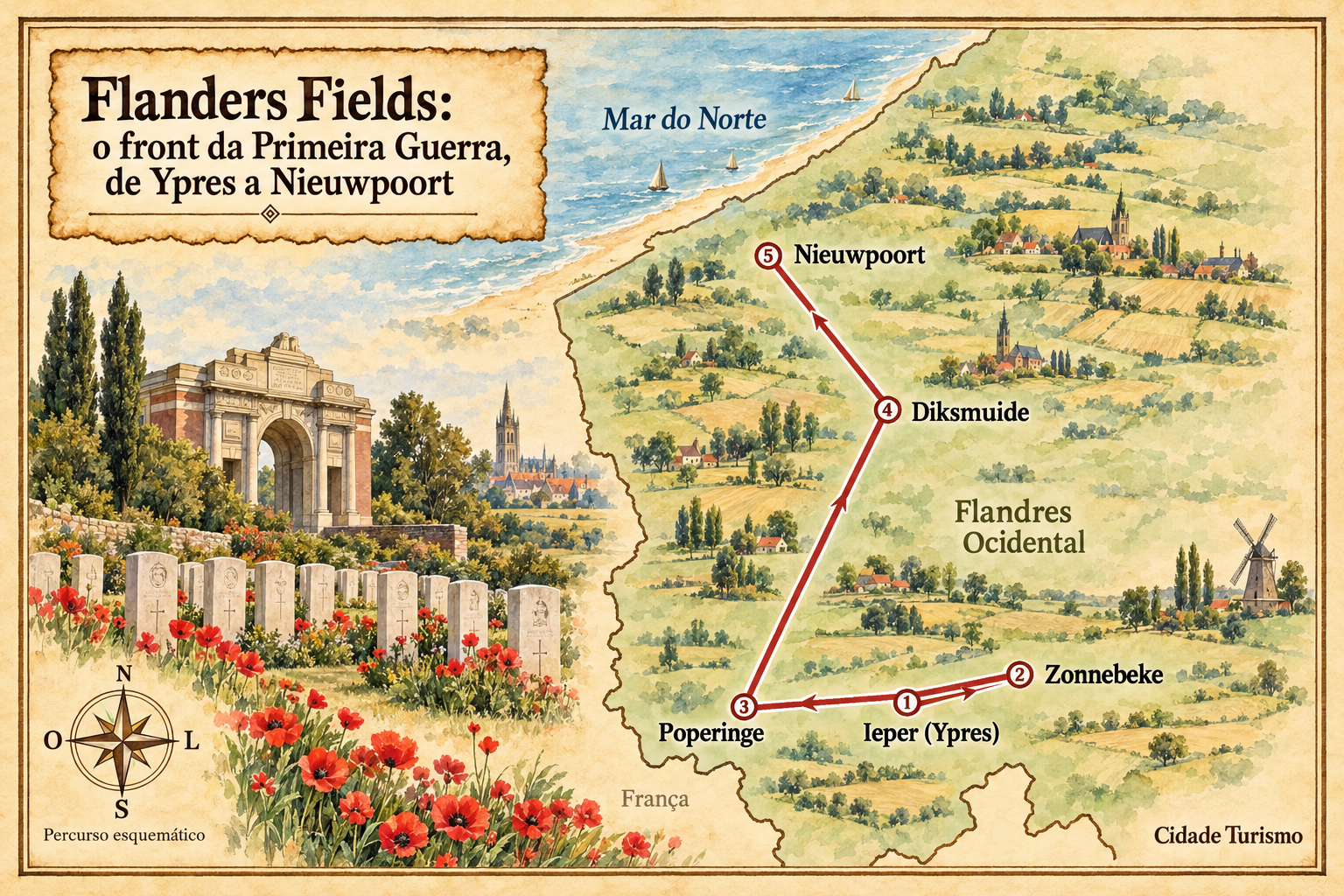
Routes in Belgium
Cemeteries, museums and trenches of the First World War in West Flanders, from the Ypres salient to the mouth of the IJzer River near the North Sea.