

 Brazil
 Argentina
 Bolivia
 Chile
 Colombia
 Ecuador
 Guyana
 French Guiana
 Falkland Islands (Malvinas)
 Paraguay
 Peru
 Suriname
 Uruguay
 Venezuela
 Germany
 Austria
 Belgium
 Croatia
 Denmark
 Spain
 Finland
 France
 Greece
 the Netherlands
 Hungary
 Ireland
 Iceland
 Italy
 Luxembourg
 Norway
 Poland
 Portugal
 the United Kingdom
 the Czech Republic
 Sweden
 Switzerland
 the Dominican Republic
 Fiji
Archaeological site · Şanlıurfa, Şanlıurfa
Göbeklitepe Örenyeri
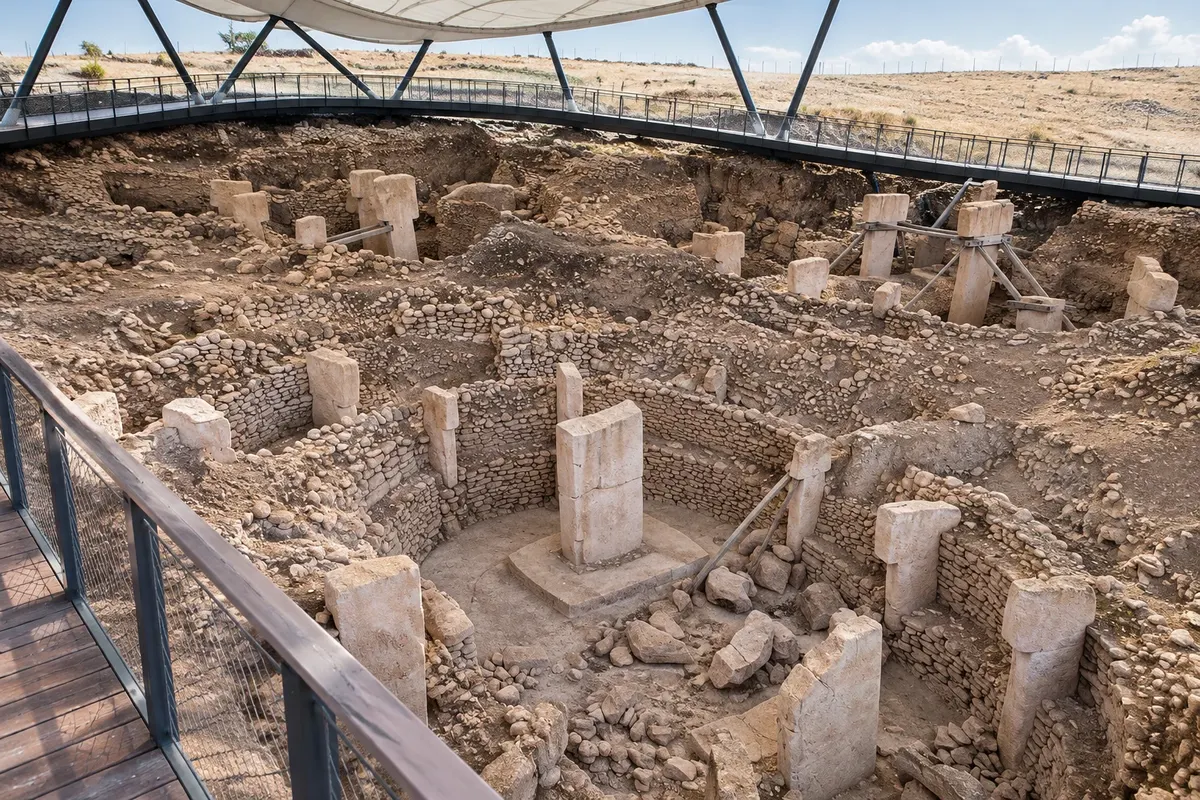
Neolithic enclosures with T-shaped pillars and animal reliefs make up one of Şanlıurfa's principal archaeological sites.
Illustrative images. The pictures in this guide are illustrations based on the real place, not photographs, and may differ from it.

Discover
About Göbeklitepe Örenyeri
Göbekli Tepe brings together monumental Neolithic structures, with T-shaped stone pillars in the vicinity of Şanlıurfa.
Animal reliefs and the organization of the enclosures help discuss collective practices of communities predating the cities known from Antiquity. The site is a World Heritage Site. Its importance lies both in the architecture and in the archaeological questions it allows researchers to pose about these societies.
Visitor circulation is via observation structures, without free access among the pillars. Allow time for interpretive resources and to view the complex from different points along the route. Avoid reducing the site to the label of 'first temple': research into its functions and relation to communal life is ongoing.
Before you go
Practical information
Cidade Turismo reviews its information regularly, but something may have changed. Check with the place before planning your trip.
How much time to set aside
Two to three hours at the complex and for interpretation, plus travel time.
Best time
Between June and August, schedule Göbekli Tepe for a cooler part of the day; observing the enclosures and the explanatory resources requires more than a quick stop.
How to get there
From Şanlıurfa, organize the road transfer to the Göbekli Tepe access point and confirm the internal section to the visitor area.
Tip
Visit the city museum before or after to relate the objects to the site.
Official website
Get your questions answered
Frequently asked questions about Göbeklitepe Örenyeri
Can visitors walk between the pillars at Göbekli Tepe?
Viewing is done from visitor circulation structures. You should not expect to descend freely into the enclosures or touch the pillars.
Is Göbekli Tepe certainly called the first temple?
That expression simplifies a site whose function and relationship to communal life are still being studied. The visit should observe the architecture and reliefs without reducing the whole interpretation to that label.
What should you look for on the T-shaped pillars at Göbekli Tepe?
Animal reliefs and the arrangement of elements within the enclosures help to understand the collective character of the complex. Use explanatory resources to relate those details to the Neolithic context.