

 Brazil
 Argentina
 Bolivia
 Chile
 Colombia
 Ecuador
 Guyana
 French Guiana
 Falkland Islands (Malvinas)
 Paraguay
 Peru
 Suriname
 Uruguay
 Venezuela
 Germany
 Austria
 Belgium
 Croatia
 Denmark
 Spain
 Finland
 France
 Greece
 the Netherlands
 Hungary
 Ireland
 Iceland
 Italy
 Luxembourg
 Norway
 Poland
 Portugal
 the United Kingdom
 the Czech Republic
 Sweden
 Switzerland
 the Dominican Republic
 Fiji
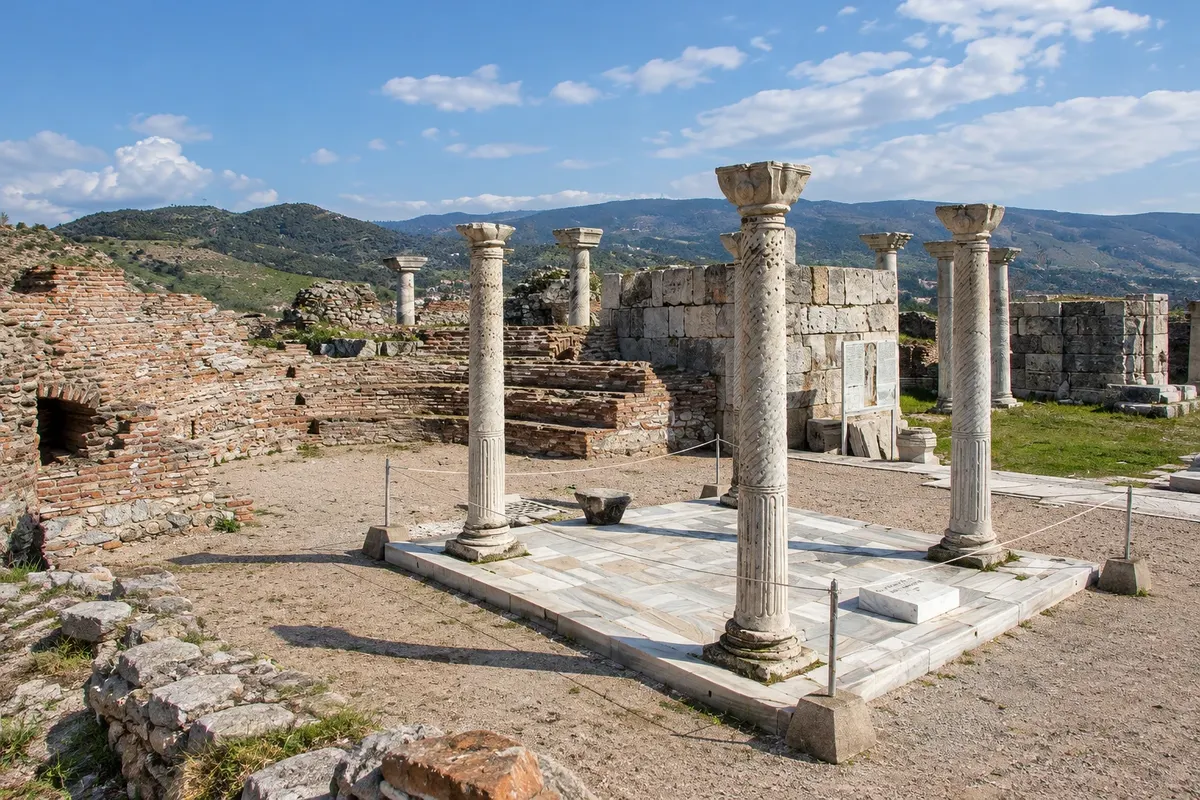
Archaeological site · Selçuk, Esmirna
St. Jean Bazilikası
Ruins of a Byzantine basilica on the Ayasuluk hill, linked to the tradition of St. John.
Illustrative images. The pictures in this guide are illustrations based on the real place, not photographs, and may differ from it.

Discover
About St. Jean Bazilikası
The Basilica of St. John occupies part of the Ayasuluk hill in Selçuk. The Byzantine building was raised over a place traditionally linked to the apostle. The ruins allow you to recognise the plan of a large-scale church, with different circulation and worship spaces.
Columns, pavements and architectural remains help to perceive the proportions the construction had. The religious account should be presented as tradition, without turning burial attributions into archaeological certainty. The hilltop position also offers a reading of Selçuk’s landscape.
The walk has slopes and open areas. Check the visitable route and the access conditions to the castle sector, which occupies another part of the hill. Organise the visit with the İsa Bey mosque and the museum according to available time, leaving Ephesus for its own period.
Before you go
Practical information
Cidade Turismo reviews its information regularly, but something may have changed. Check with the place before planning your trip.
How much time to set aside
From one hour to one and a half hours.
Best time
Morning or afternoon with less heat on the hill.
How to get there
Uphill walk from the centre of Selçuk or transport to the site approach.
Tip
Differentiate the basilica route from the Ayasuluk sectors that have their own access.
Get your questions answered
Frequently asked questions about St. Jean Bazilikası
Is the Basilica of Saint John an intact church?
The visit is archaeological, among the remains of a large Byzantine building.
Is it inside the ancient city of Ephesus?
No. It is on Ayasuluk hill, adjacent to the core of Selçuk.
Is it correct to state that the tomb is proven?
The association with Saint John should be treated in the context of religious tradition.