

 Brazil
 Argentina
 Bolivia
 Chile
 Colombia
 Ecuador
 Guyana
 French Guiana
 Falkland Islands (Malvinas)
 Paraguay
 Peru
 Suriname
 Uruguay
 Venezuela
 Germany
 Austria
 Belgium
 Croatia
 Denmark
 Spain
 Finland
 France
 Greece
 the Netherlands
 Hungary
 Ireland
 Iceland
 Italy
 Luxembourg
 Norway
 Poland
 Portugal
 the United Kingdom
 the Czech Republic
 Sweden
 Switzerland
 the Dominican Republic
 Fiji
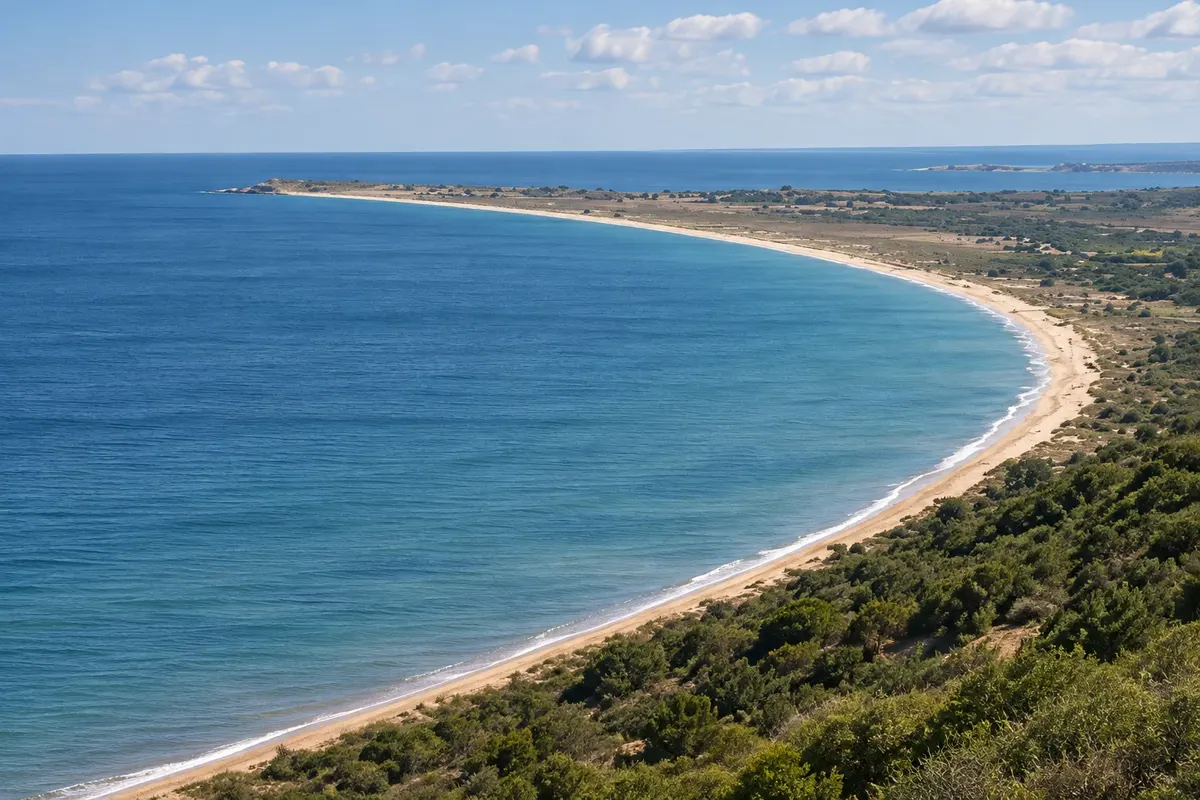
Memorial · Eceabat, Çanakkale
Anzak Koyu
The landing cove is part of the campaign’s landscape of memory on the European Gallipoli peninsula.
Illustrative images. The pictures in this guide are illustrations based on the real place, not photographs, and may differ from it.

Discover
About Anzak Koyu
Anzac Cove is on the western coast of the Gallipoli peninsula, on the European side of the Dardanelles. The cove is associated with the landing of Australian and New Zealand forces in the 1915 campaign. It is a place of memory, and understanding it requires observing the terrain between the beach and the slopes.
The landscape helps explain the short distances and steep ground of the campaign, without turning the visit into a spectacle. Memorials and cemeteries in the region are part of a wider circuit, with travel between sites and time to read the inscriptions.
Use Eceabat as your access reference and arrange the outing with private transport or a tour that specifies stops. The site should not be presented as a bathing beach. Maintain a respectful attitude and check access on ceremonial dates, when the visit organization may change.
Before you go
Practical information
Cidade Turismo reviews its information regularly, but something may have changed. Check with the place before planning your trip.
How much time to set aside
About 30 to 45 minutes at the cove; more for the wider Gallipoli circuit.
Best time
During the day, with attention to the ceremonies calendar.
How to get there
By road from Eceabat, on a circuit around the Gallipoli peninsula.
Tip
First observe the relationship between the coastal strip and the slopes, which explains the cove’s historical significance.
Get your questions answered
Frequently asked questions about Anzak Koyu
Is Anzac Cove a beach outing?
The visit is a historical memorial one, linked to the landing and the Gallipoli campaign.
Is Anzac Cove in Asia?
It is on the European Gallipoli peninsula.
How to visit Anzac and the other memorials?
Arrange a circuit with transport, because the sites do not form a single urban walk.