

 Brazil
 Argentina
 Bolivia
 Chile
 Colombia
 Ecuador
 Guyana
 French Guiana
 Falkland Islands (Malvinas)
 Paraguay
 Peru
 Suriname
 Uruguay
 Venezuela
 Germany
 Austria
 Belgium
 Croatia
 Denmark
 Spain
 Finland
 France
 Greece
 the Netherlands
 Hungary
 Ireland
 Iceland
 Italy
 Luxembourg
 Norway
 Poland
 Portugal
 the United Kingdom
 the Czech Republic
 Sweden
 Switzerland
 the Dominican Republic
 Fiji
Archaeological site · Çanakkale, Çanakkale
Troya Örenyeri
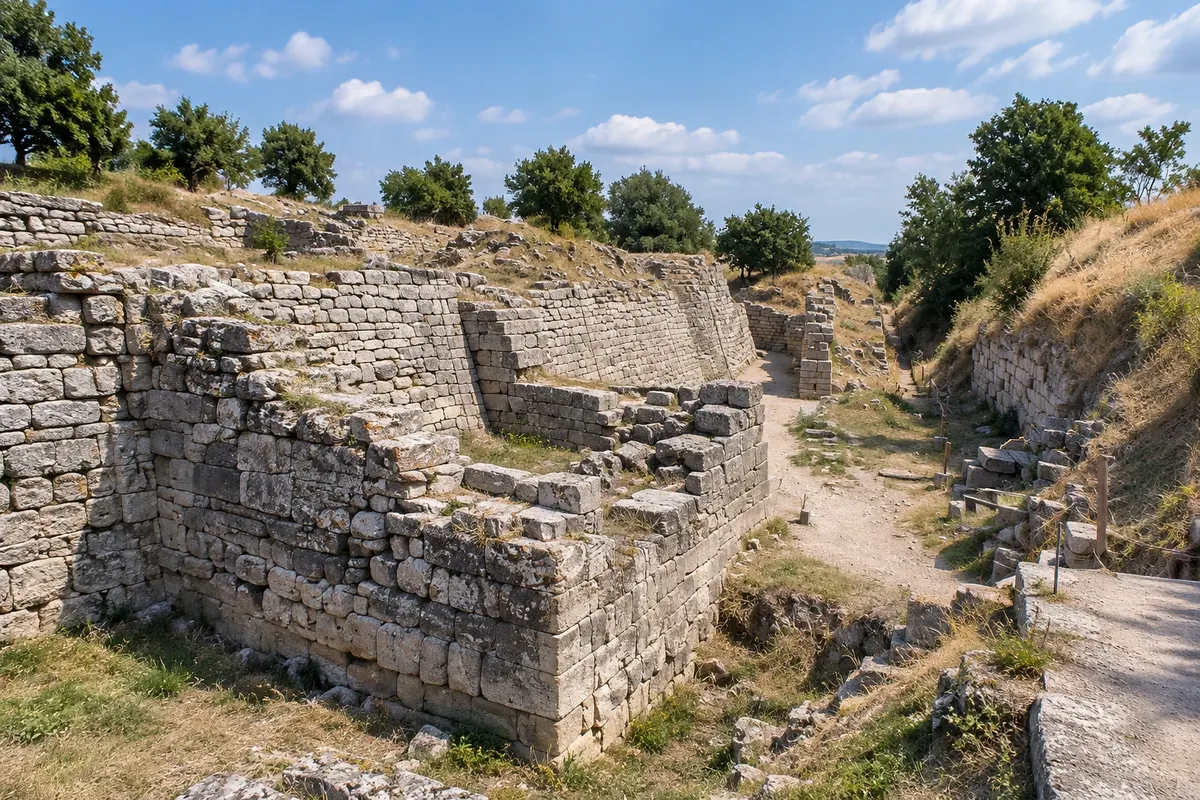
The ruins of Troy reveal superimposed cities at Hisarlık, associated with the Iliad tradition and Anatolian archaeology.
Illustrative images. The pictures in this guide are illustrations based on the real place, not photographs, and may differ from it.

Discover
About Troya Örenyeri
Troy is near Tevfikiye on the Asian side of the Dardanelles. The visit follows a mound of stacked occupations, not a Roman city with intact avenues. Walls, ramps and building remains belong to different periods and must be read as layers.
The link to Homer's poems is part of the site's appeal, but archaeology does not turn every episode of the Iliad into established fact. The excavations help to understand the city's position between Anatolia and the Aegean and the changes the settlement underwent over time.
Read the panels and allow time for the nearby museum, which presents objects and context. The site is open, exposed to the sun, with stretches of uneven ground. In the hottest part of summer, choose mornings and bring water for the walk around the site.
Before you go
Practical information
Cidade Turismo reviews its information regularly, but something may have changed. Check with the place before planning your trip.
How much time to set aside
One and a half to two hours, in addition to the museum.
Best time
Morning visits from April to June or September to October; in summer avoid concentrating the walk at midday.
How to get there
Leave Çanakkale heading to Tevfikiye by road or regional transport confirmed before your visit.
Tip
Combine the site and museum to interpret the layers, without expecting a reconstruction of movie-style Troy.
Get your questions answered
Frequently asked questions about Troya Örenyeri
Is Troy in Europe or Asia?
In Asia, in Anatolia, south of Çanakkale.
What can you see in the ruins of Troy?
Remains from several phases of occupation, which should be compared using the panels and the route.
Does the horse represent an archaeological find?
The horse representations are modern symbols of the narrative; the site holds other types of evidence.