

 Brazil
 Argentina
 Bolivia
 Chile
 Colombia
 Ecuador
 Guyana
 French Guiana
 Falkland Islands (Malvinas)
 Paraguay
 Peru
 Suriname
 Uruguay
 Venezuela
 Germany
 Austria
 Belgium
 Croatia
 Denmark
 Spain
 Finland
 France
 Greece
 the Netherlands
 Hungary
 Ireland
 Iceland
 Italy
 Luxembourg
 Norway
 Poland
 Portugal
 the United Kingdom
 the Czech Republic
 Sweden
 Switzerland
 Turkey
 the Dominican Republic
 South Africa
 Fiji
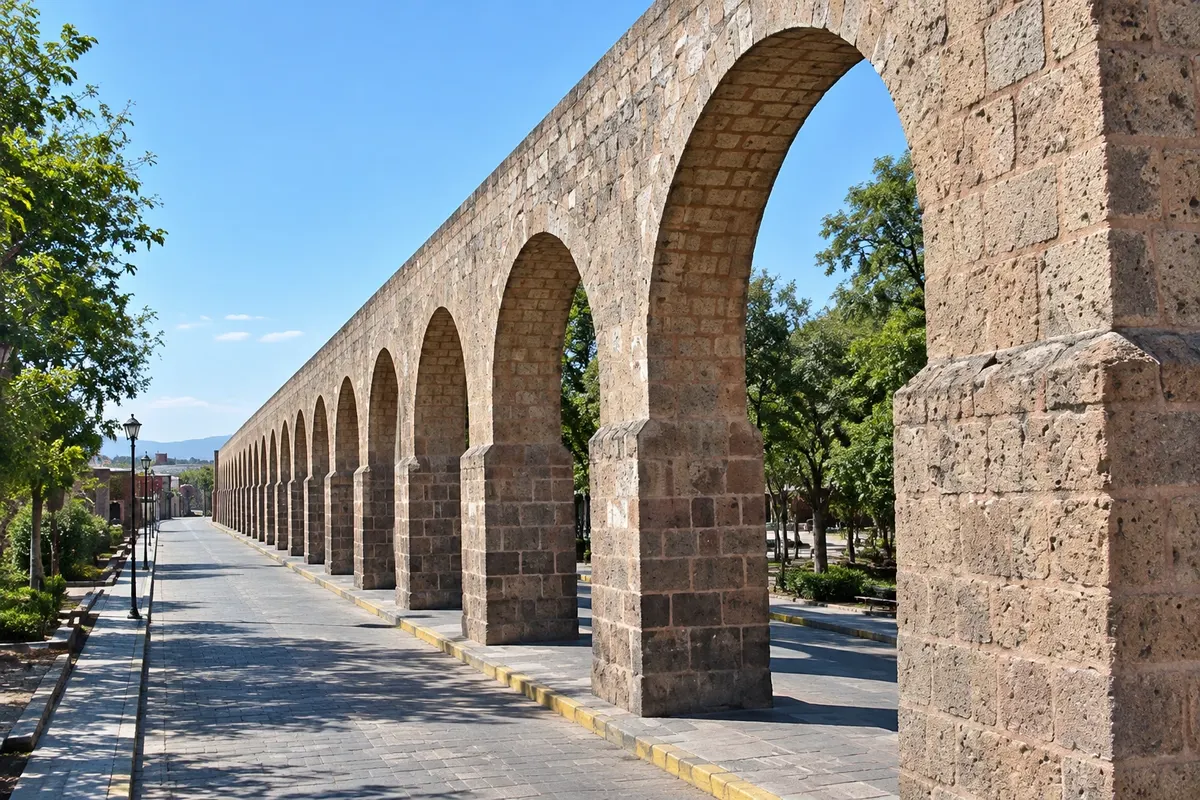
Aqueduct and street · Morelia, Michoacán
Acueducto de Morelia e Callejón del Romance
18th-century aqueduct of 253 arches and the tree-lined promenade that leads to it, with the small flowered alley of the Callejón del Romance.
Illustrative images. The pictures in this guide are illustrations based on the real place, not photographs, and may differ from it.

Discover
About Acueducto de Morelia e Callejón del Romance
Morelia’s aqueduct has 253 stone arches and is about 1,700 meters long, along Avenida Acueducto. The current version was built between 1785 and 1789 at the initiative of Bishop Fray Antonio de San Miguel, during a time of drought and famine, to provide work for residents and bring water to the center.
The Fray Antonio de San Miguel promenade, a stone walkway with trees and benches, links the aqueduct to the Guadalupe sanctuary and the Fuente de las Tarascas, which depicts three Purépecha women holding a basket of fruit.
Next to the promenade is the Callejón del Romance, a narrow alley with colorful houses, plants and plaques bearing verses from a love poem about the city.
At night the aqueduct’s arches are illuminated.
Before you go
Practical information
Cidade Turismo reviews its information regularly, but something may have changed. Check with the place before planning your trip.
How much time to set aside
One hour.
Best time
In the late afternoon and at night, when it is illuminated.
How to get there
About 1 km east of the cathedral, on foot along Avenida Madero to the Fuente de las Tarascas.
Tip
Start at the Fuente de las Tarascas and follow the promenade to the Guadalupe sanctuary.
Get your questions answered
Frequently asked questions about Acueducto de Morelia e Callejón del Romance
How many arches does Morelia’s aqueduct have?
253 arches, about 1,700 meters long.
What is the Callejón del Romance?
A narrow, flower-lined alley near the aqueduct, with verses of a poem about the city.
What is the Fountain of the Tarascas?
A fountain with three Purépecha women holding a basket of fruit at the beginning of the aqueduct.