

 Brazil
 Argentina
 Bolivia
 Chile
 Colombia
 Ecuador
 Guyana
 French Guiana
 Falkland Islands (Malvinas)
 Paraguay
 Peru
 Suriname
 Uruguay
 Venezuela
 Germany
 Austria
 Belgium
 Croatia
 Denmark
 Spain
 Finland
 France
 Greece
 the Netherlands
 Hungary
 Ireland
 Iceland
 Italy
 Luxembourg
 Norway
 Poland
 Portugal
 the United Kingdom
 the Czech Republic
 Sweden
 Switzerland
 Turkey
 the Dominican Republic
 South Africa
 Fiji
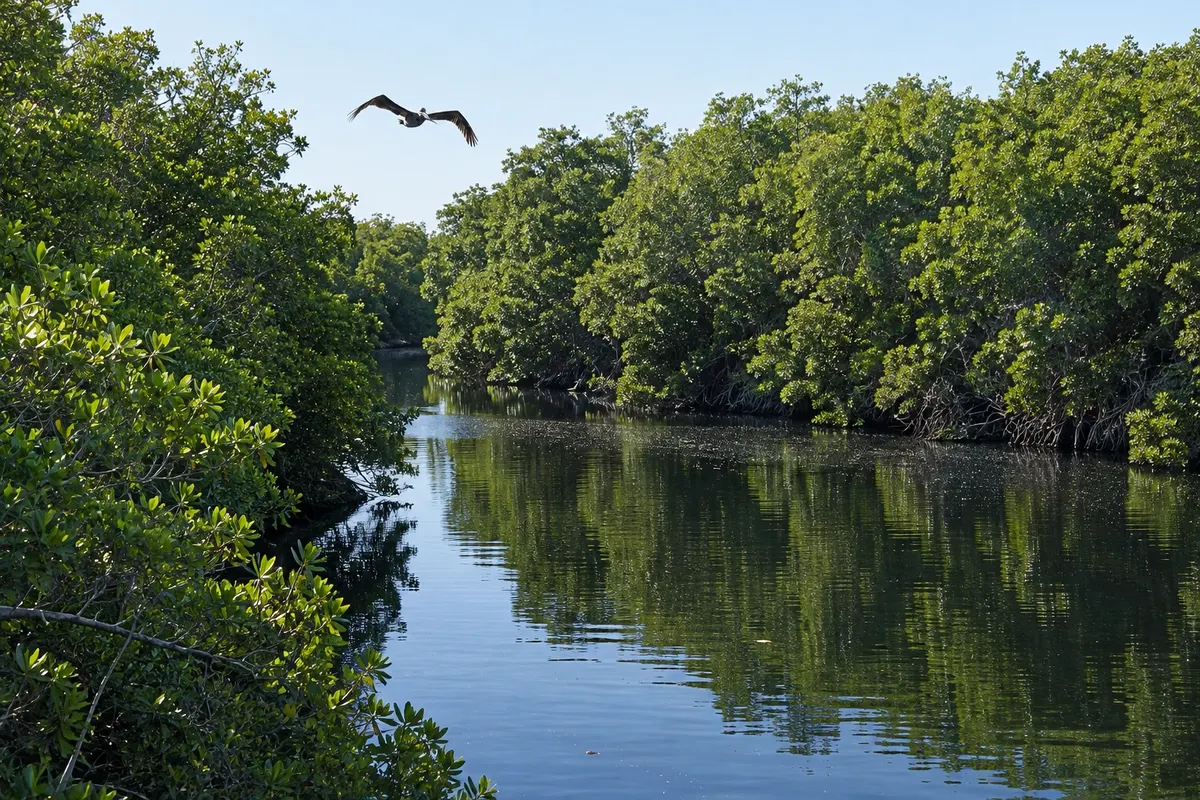
Lagoon · Puerto Escondido, Oaxaca
Laguna de Manialtepec
Mangrove lagoon west of Puerto Escondido, with birdwatching in the morning and, on some nights, bioluminescence that makes the water glow.
Illustrative images. The pictures in this guide are illustrations based on the real place, not photographs, and may differ from it.

Discover
About Laguna de Manialtepec
The Manialtepec lagoon is about 15 km west of Puerto Escondido, separated from the sea by a sandbar. It is roughly 7 km long and is surrounded by mangroves where herons, cormorants, kingfishers, pelicans, spoonbills and many other birds live.
Early in the morning boat tours travel the mangrove channels to observe birds, and some continue to the sandbar where the lagoon meets the Pacific.
At night the lagoon is known for bioluminescence: microorganisms in the water emit a bluish light when the surface is disturbed by the boat, oars or hands. The phenomenon is usually stronger between July and December on moonless nights, and it varies greatly from one night to another.
Tours are run by cooperatives and local operators, by boat or kayak.
Before you go
Practical information
Cidade Turismo reviews its information regularly, but something may have changed. Check with the place before planning your trip.
How much time to set aside
2 to 3 hours.
Best time
Early morning for the birds. At night, on moonless nights, for the bioluminescence, which is usually stronger from July to December.
How to get there
It is about 15 km west of Puerto Escondido along the coastal road. Tours depart from Puerto Escondido with transportation.
Tip
Ask beforehand whether the bioluminescence is strong; it varies night to night. Bring insect repellent.
Get your questions answered
Frequently asked questions about Laguna de Manialtepec
What is the bioluminescence of Manialtepec?
Bluish light emitted by microorganisms when the water is stirred.
When is the bioluminescence strongest?
It is usually from July to December, on moonless nights.
What birds are seen in Manialtepec?
Herons, cormorants, kingfishers, pelicans and spoonbills, among others.