Huatulco and Puerto Escondido

Oaxaca · Mexico

Huatulco and Puerto Escondido

The nine bays of Huatulco, the waves of Zicatela in Puerto Escondido, and the beach villages of Mazunte and Zipolite on Oaxaca’s Pacific coast.

Oaxaca

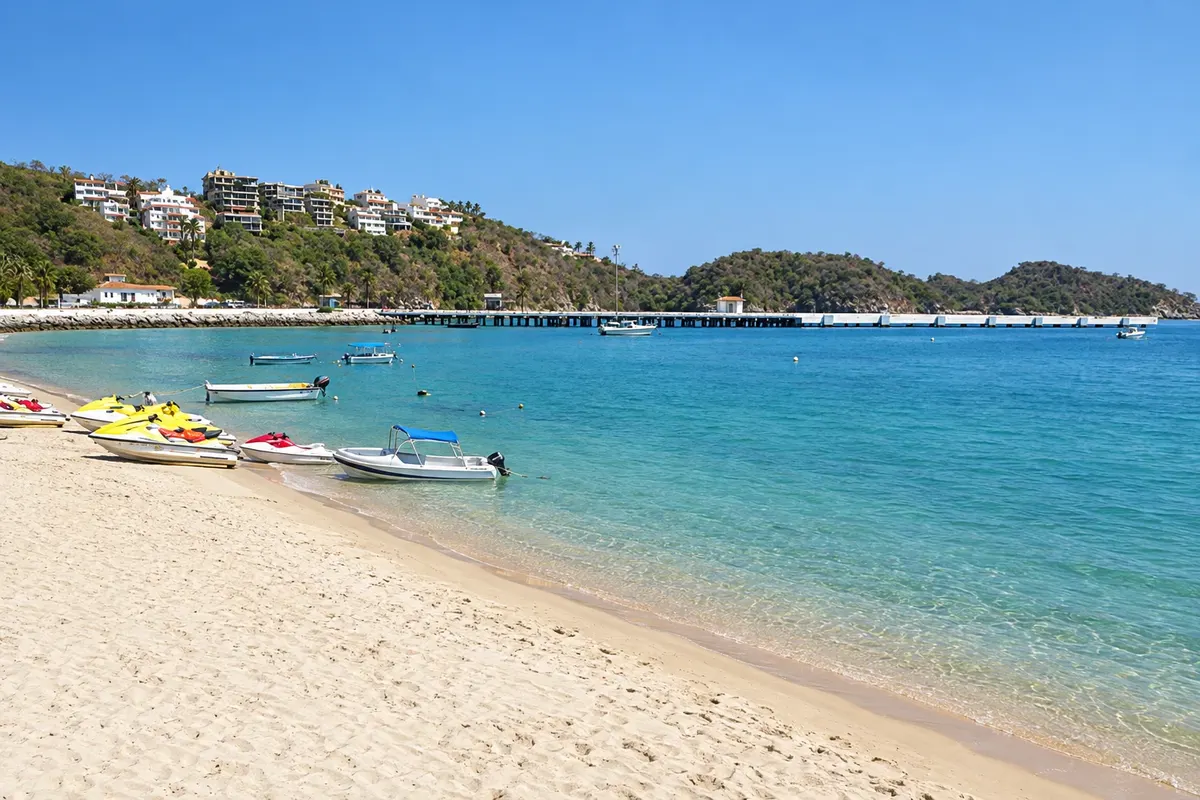
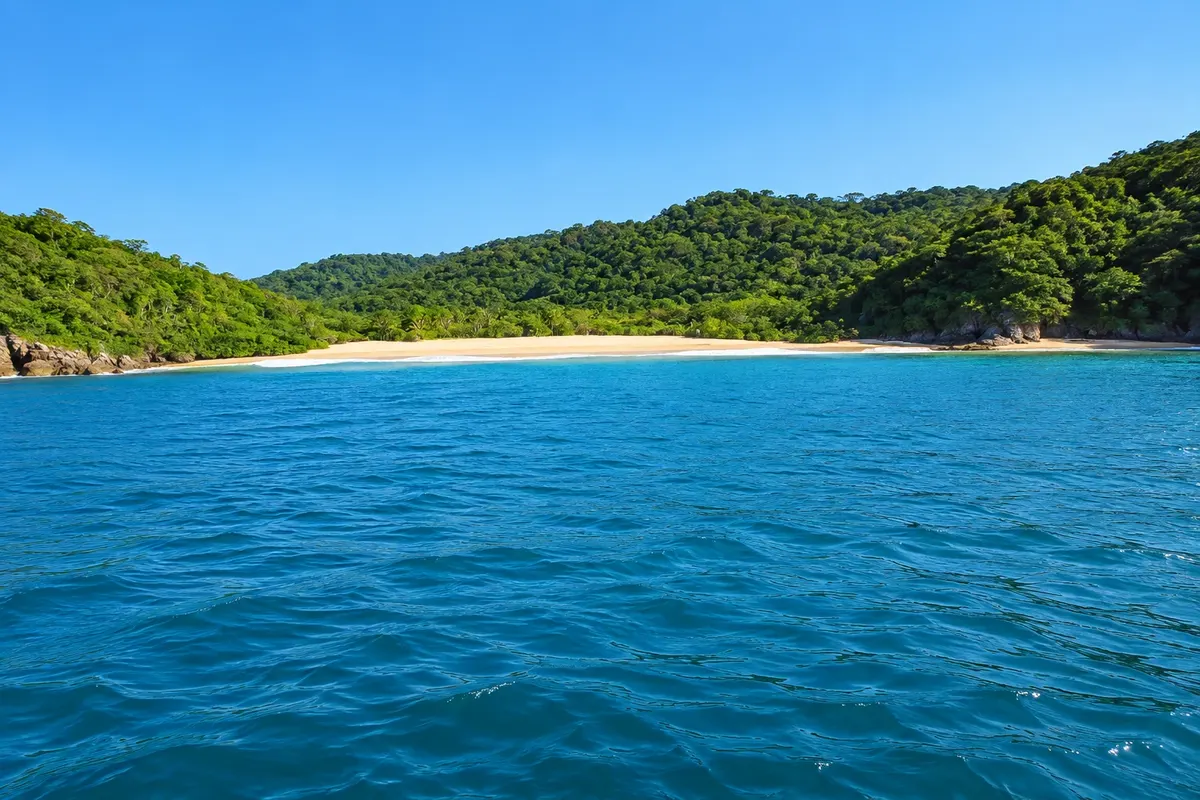
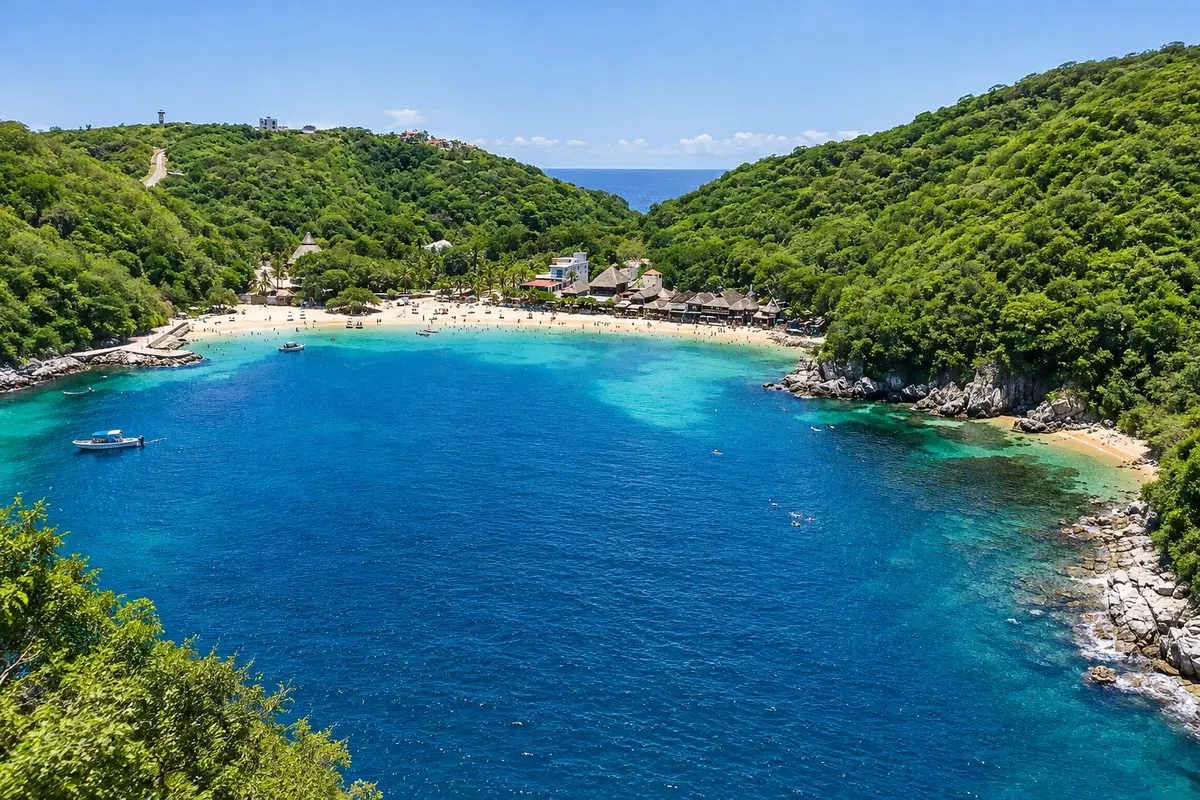
In the photo: Santa Cruz Beach, Huatulco

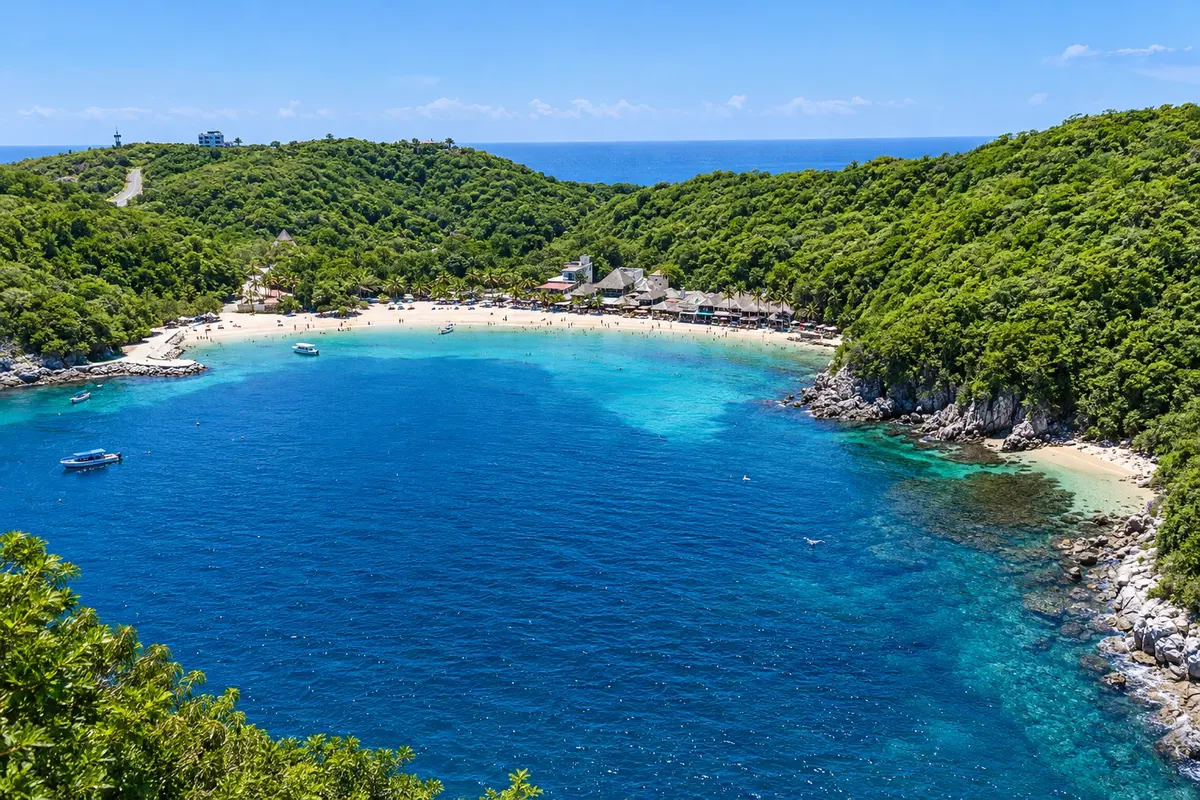
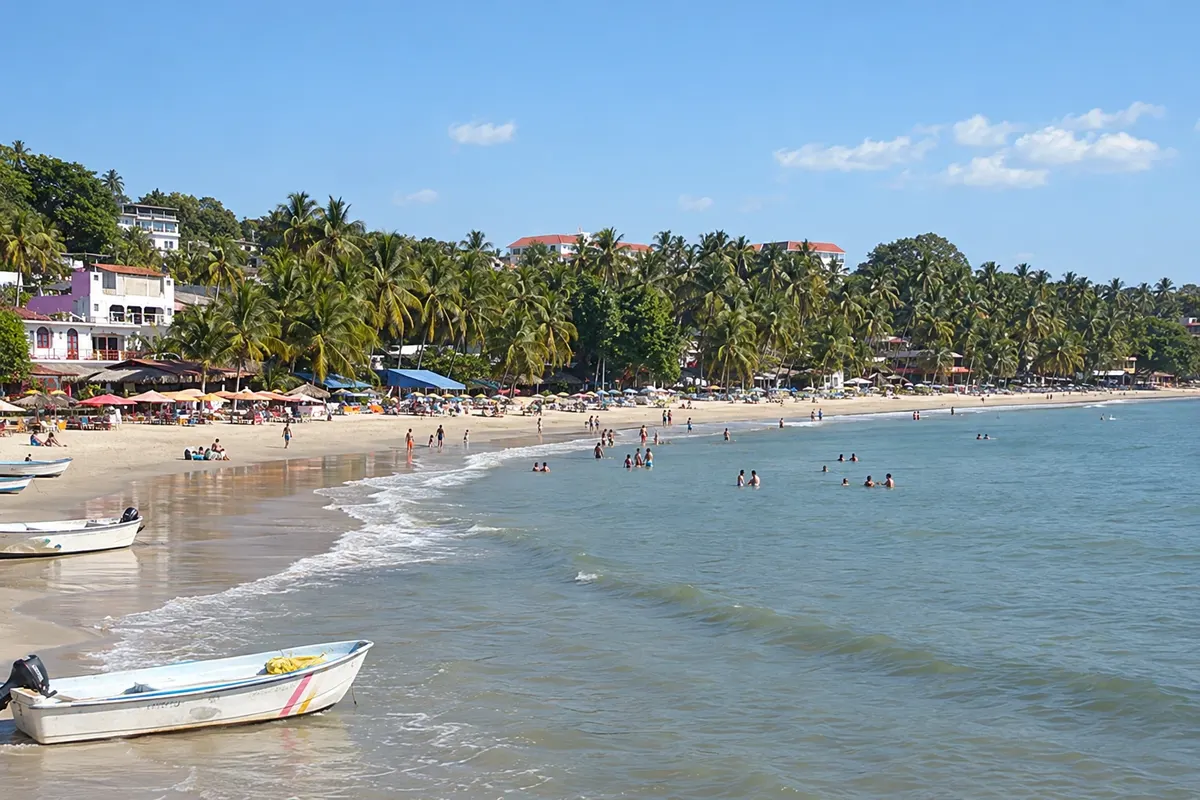
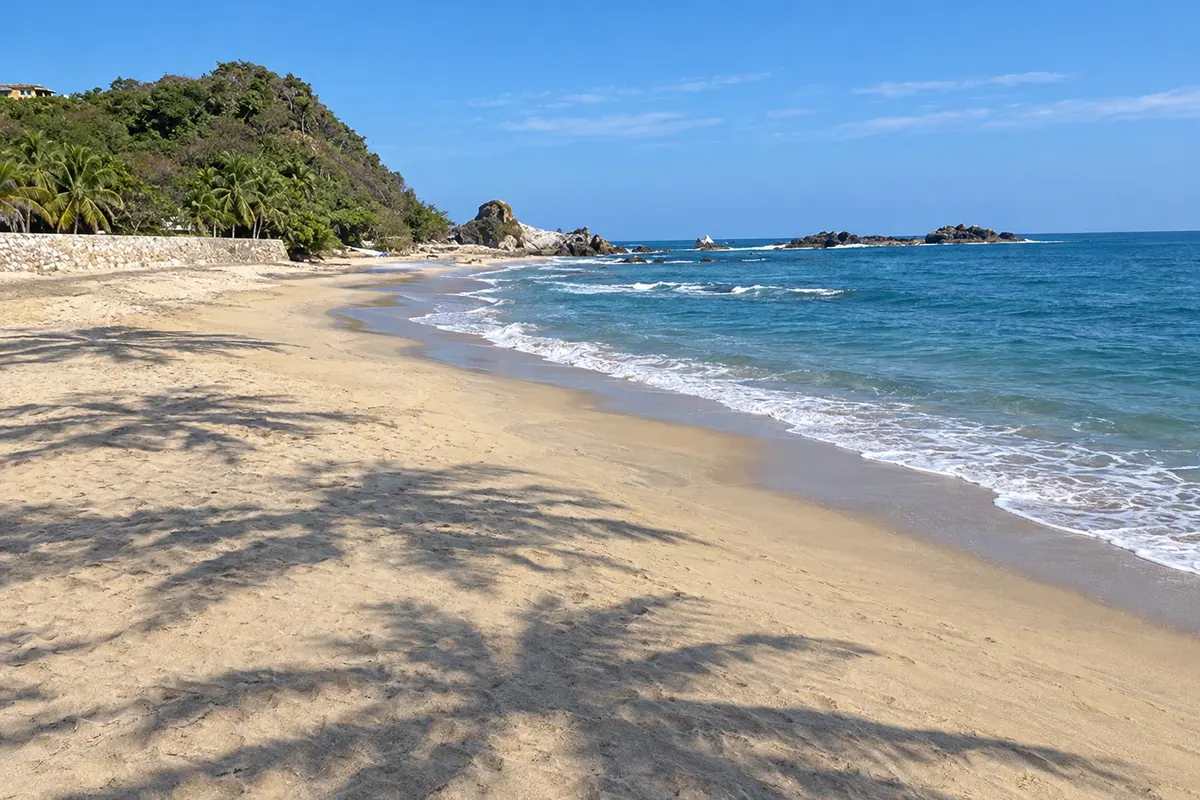
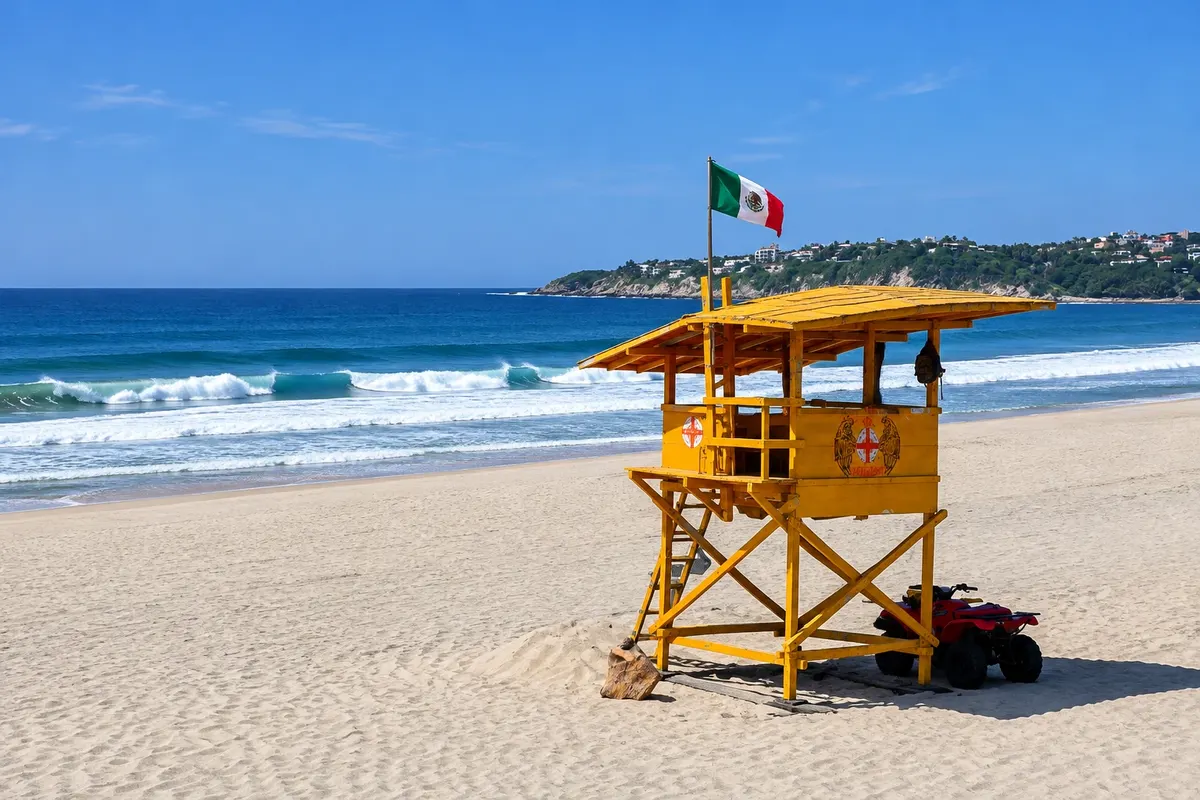
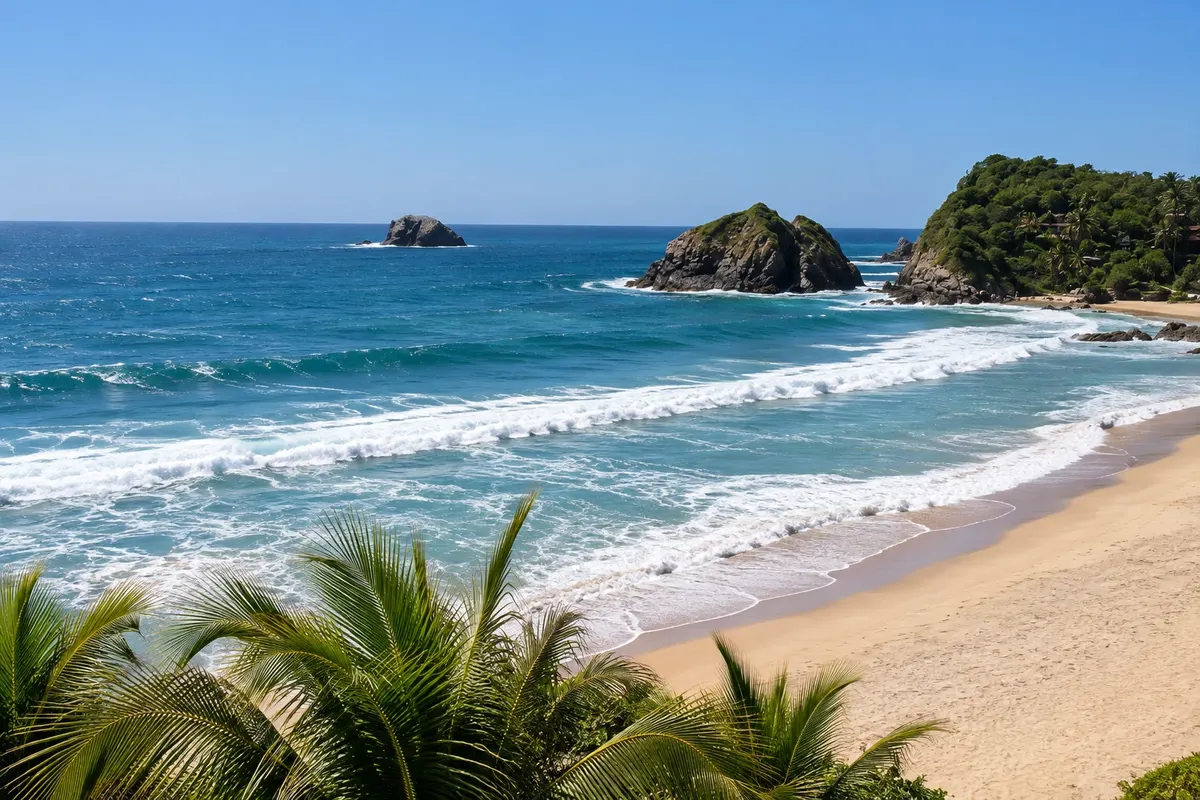
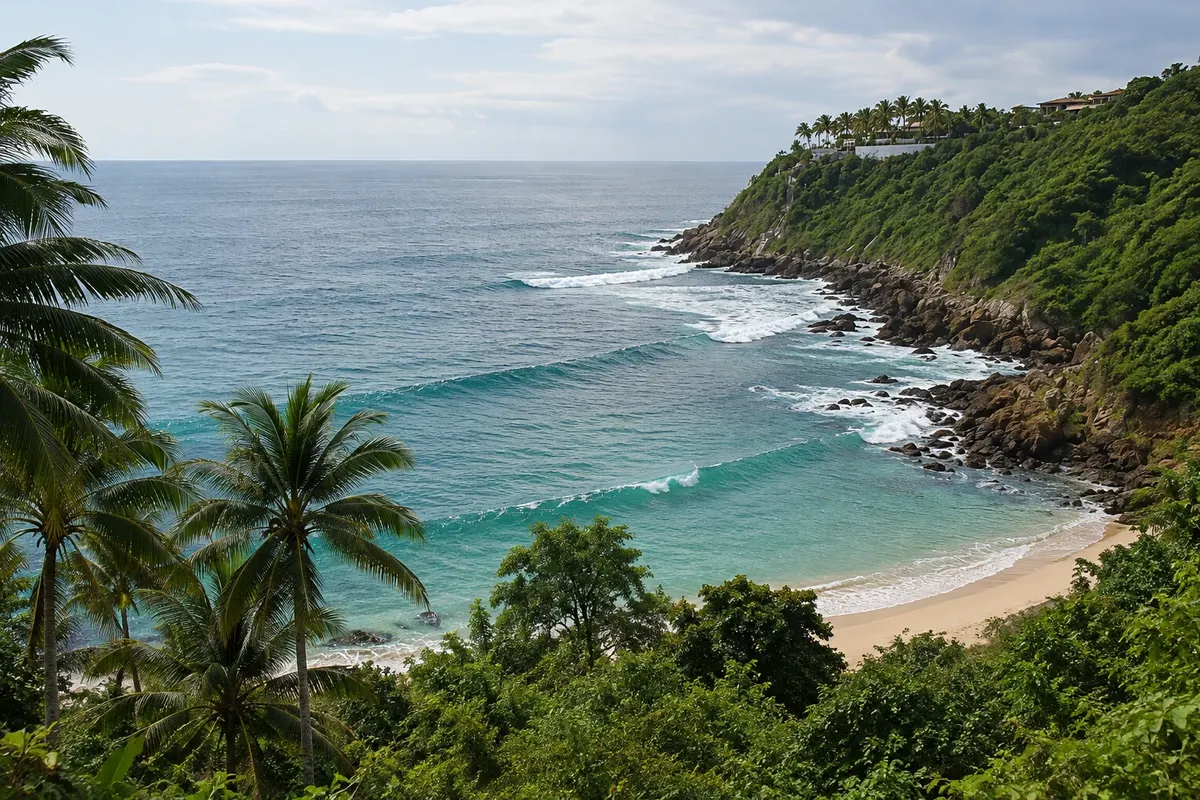
Illustrative images. The pictures in this guide are illustrations based on the real place, not photographs, and may differ from it.

Get it on Google Play Send your photos

Get to know the place

A region to enjoy
at your own pace.

Oaxaca’s coast stretches along the Pacific, south of the Sierra Madre del Sur mountains, with golden-sand beaches, rocky coves and fishing villages. The climate is warm year-round, and the sea ranges from calm bays good for swimming and snorkeling to open beaches with strong surf sought by surfers worldwide.

To the east is Huatulco, a planned resort center spread across nine bays and 36 beaches, many of them within Parque Nacional Huatulco, with dry forest and coral reefs. The town of La Crucecita concentrates shops, and Santa Cruz has the marina where boats depart for the bays.

About 110 km to the west is Puerto Escondido, a livelier beach town known for Zicatela beach and the Mexican Pipeline wave, as well as calm coves like Carrizalillo and the Manialtepec lagoon, where the water sometimes glows at night. Between the two are Mazunte, a beach village with the Mexican Turtle Center and the Punta Cometa viewpoint, and Zipolite, a long beach with a free-spirited vibe.

This destination brings together 4 cities: Huatulco, Puerto Escondido, Mazunte, Zipolite.

Share: WhatsApp
Traveler, share your experiences through photos Up to 5 photos of each place you visited.

One destination, many paths

The cities on this trip

Start with one city or combine several in your itinerary.

Where Huatulco and Puerto Escondido is
ZipoliteHuatulcoMazuntePuerto Escondido

Limites: INEGI / geoBoundaries (CC BY 3.0 IGO). Adaptação do Cidade Turismo.

How to get there: Huatulco and Puerto Escondido

✈ Aeropuerto Internacional de Bahías de Huatulco (HUX) · 15 km to Huatulco

Confirm before booking. Huatulco (HUX) and Puerto Escondido (PXM) have airports with flights from Mexico City and other cities. From Oaxaca there are short flights and mountain roads, served by buses and vans.

Suggested arrival point: Huatulco

The local experience

Things to do in Huatulco and Puerto Escondido

Mazunte · Oaxaca · Conservation center

Centro Mexicano de la Tortuga

Research and conservation center for turtles in Mazunte, with aquariums of Mexico's marine and freshwater species and an exhibition about nesting.

Parque Nacional Huatulco
Huatulco · Oaxaca · National park

Parque Nacional Huatulco

National park on Oaxaca’s coast that protects bays, beaches, coral reefs and dry forest, visited on boat tours from Santa Cruz marina.

Playa Zicatela
Puerto Escondido · Oaxaca · Beach

Playa Zicatela

Puerto Escondido’s long open beach, known for the tubular Pipeline Mexicano wave, with the neighborhood of hotels and restaurants facing the sea.

Playa Zipolite
Zipolite · Oaxaca · Beach

Playa Zipolite

Long golden-sand beach open to the Pacific, between rocks, with inns and restaurants, a relaxed atmosphere and tolerance of naturism.

See 4 more places in Huatulco and Puerto Escondido
Playa Carrizalillo
Puerto Escondido · Oaxaca · Beach

Playa Carrizalillo

Small calm cove in Puerto Escondido, between rocks, reached by a staircase, good for swimming, snorkeling and learning to surf.

Playa La Entrega
Huatulco · Oaxaca · Beach

Playa La Entrega

Calm-water beach in the Santa Cruz bay in Huatulco, with a coral reef near the shore, good for snorkeling and with beach restaurants.

Punta Cometa
Mazunte · Oaxaca · Viewpoint

Punta Cometa

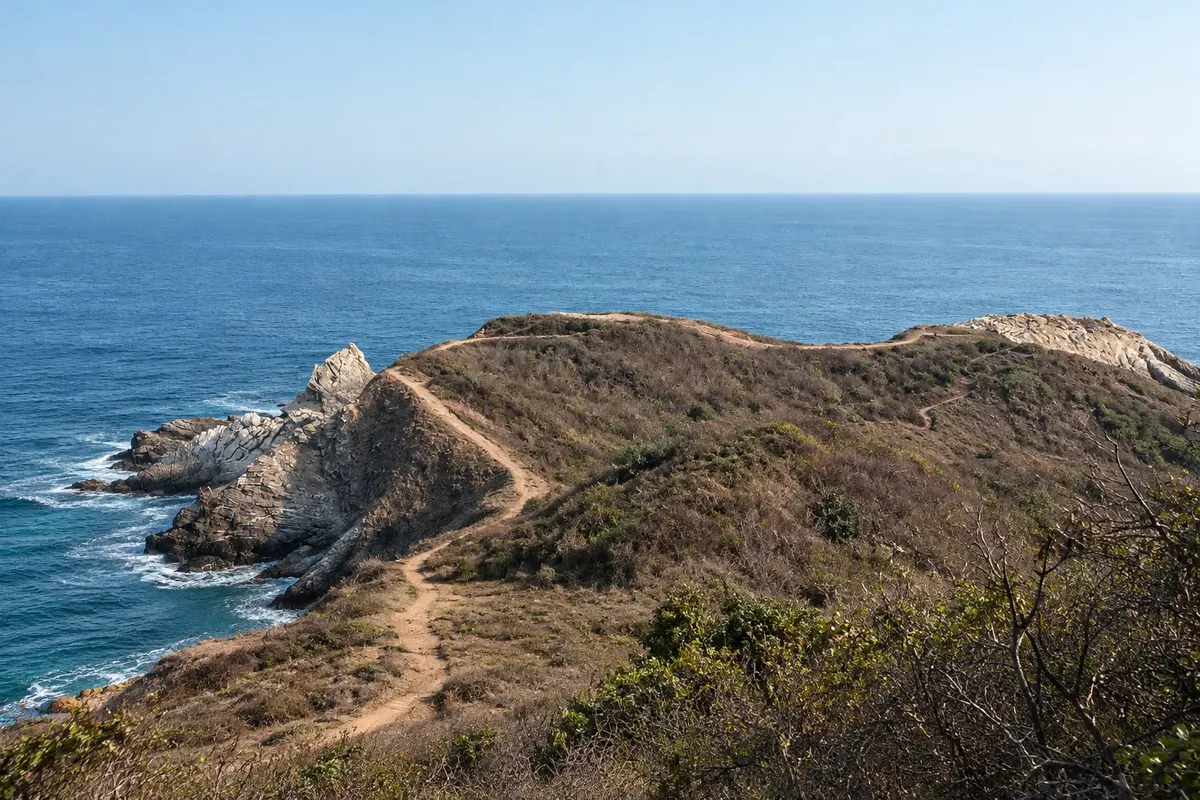
Rocky promontory between Mazunte and Mermejita beaches, with a trail to the top offering views of the sunset over the Pacific.

Laguna de Manialtepec
Puerto Escondido · Oaxaca · Lagoon

Laguna de Manialtepec

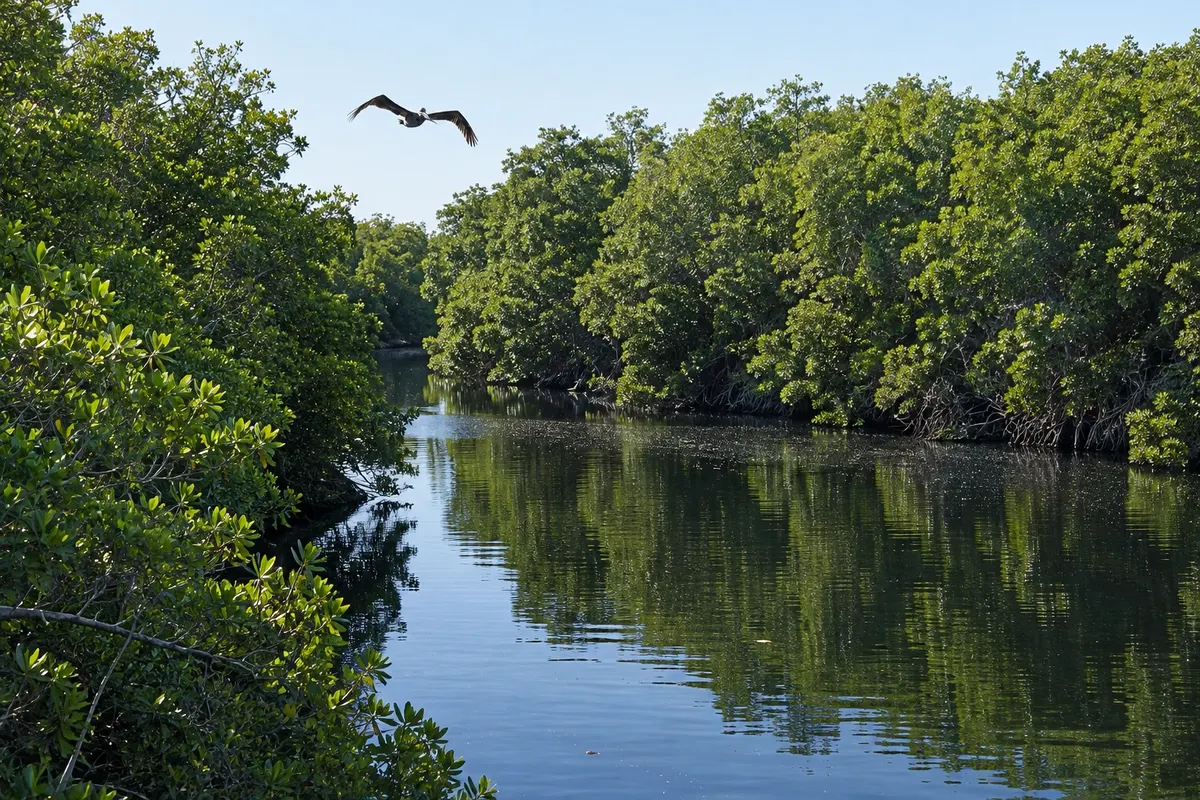
Mangrove lagoon west of Puerto Escondido, with birdwatching in the morning and, on some nights, bioluminescence that makes the water glow.

Before you go

Practical information

A little planning leaves more time to enjoy the journey.

When to go

November to April is usually the dry season, with sun, clear skies and calmer seas in the bays; it’s high season. From May to October there is more rain, often in downpours, and the vegetation turns green; Zicatela’s big waves tend to be stronger from May to September. Hurricanes can occur from June to November.

The seasons shown are the most usual ones; nature doesn't always follow the calendar.

How many days to stay

Five or six days: two in Huatulco, two in Puerto Escondido and one or two in Mazunte and Zipolite.

Which city to stay in

In Huatulco, Tangolunda bay has larger hotels; La Crucecita, simpler lodgings and restaurants; Chahué and Santa Cruz lie between them. In Puerto Escondido, Zicatela and La Punta concentrate hotels and nightlife, while Rinconada, near Carrizalillo, is quieter. Mazunte and Zipolite have beach cabins and guesthouses.

Respect the place

Take your trash with you, follow the signs and support local businesses. In natural areas, follow the visiting guidelines.

Get your questions answered

Frequently asked questions about Huatulco and Puerto Escondido

Huatulco or Puerto Escondido?

Huatulco has calm bays good for swimming and families, in a planned resort center. Puerto Escondido is livelier, with surfing, nightlife and strong-wave beaches. Many people visit both.

Can you swim at Puerto Escondido’s beaches?

In protected coves such as Carrizalillo, Puerto Angelito and Manzanillo, yes. At Zicatela the sea usually has strong waves and currents, suitable for experienced surfers.

How to go from Huatulco to Puerto Escondido?

Via the coastal highway, about 110 km, roughly two hours, passing near Mazunte and Zipolite. There are buses and vans.

How to go from Oaxaca to the coast?

By plane on short flights, or by mountain road. There is a new highway to Puerto Escondido and longer roads to Huatulco.

What is the bioluminescence of Manialtepec?

Microorganisms in the lagoon that emit blue light when the water is disturbed. It tends to be strongest between July and December on moonless nights.

Explore other destinations Search by state and city