

 Brazil
 Argentina
 Bolivia
 Chile
 Colombia
 Ecuador
 Guyana
 French Guiana
 Falkland Islands (Malvinas)
 Paraguay
 Peru
 Suriname
 Uruguay
 Venezuela
 Germany
 Austria
 Belgium
 Croatia
 Denmark
 Spain
 Finland
 France
 Greece
 the Netherlands
 Hungary
 Ireland
 Iceland
 Italy
 Luxembourg
 Norway
 Poland
 Portugal
 the United Kingdom
 the Czech Republic
 Sweden
 Switzerland
 Turkey
 Mexico
 the Dominican Republic
 Fiji
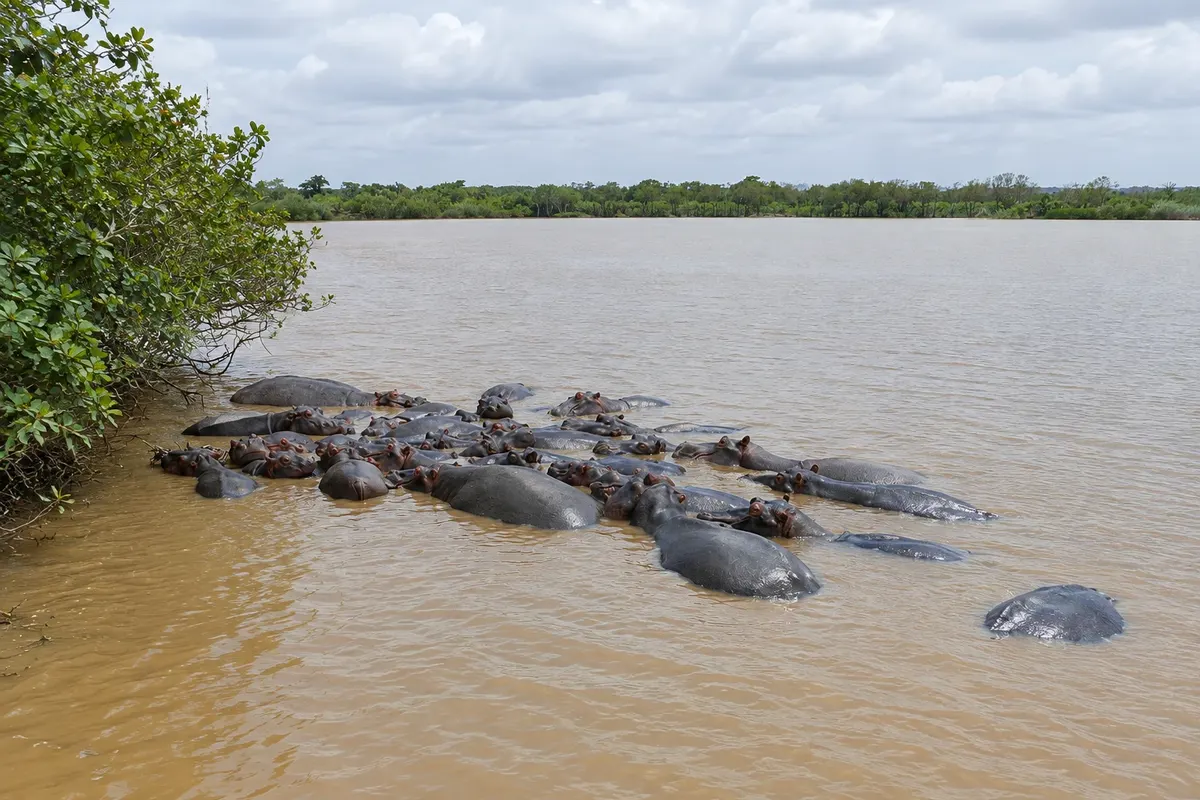
Boat trip · St. Lucia, KwaZulu-Natal
Estuário de St. Lucia
The largest estuary in Africa, beside the village of St. Lucia, with boat trips to see hippos, crocodiles and waterbirds.
Illustrative images. The pictures in this guide are illustrations based on the real place, not photographs, and may differ from it.

Discover
About Estuário de St. Lucia
The St. Lucia lake system covers about 350 km² of shallow waters that connect to the Indian Ocean via a narrow estuary beside the village. It is considered the largest estuary in Africa and the heart of the iSimangaliso Wetland Park.
Boat trips depart from the village jetty and travel up the channel for about 2 hours. Hippos often group in shallow water just a few meters from the boat, and crocodiles bask on the banks. It’s also common to see fish eagles, kingfishers, herons and flamingos, depending on the season.
The lake’s salinity changes with rains and droughts, and in some years the estuary has been closed to the sea, altering the landscape.
In the village, the estuary’s wooden boardwalk leads to the beach across dunes and mangrove, and it’s a pleasant late-afternoon walk.
Before you go
Practical information
Cidade Turismo reviews its information regularly, but something may have changed. Check with the place before planning your trip.
How much time to set aside
About 2 hours for the boat trip.
Best time
In the late afternoon, when hippos are more active and the light is nicer. Boats run several times a day.
How to get there
The jetty is at the beginning of the village of St. Lucia, near the bridge over the estuary, within walking distance of the hotels.
Tip
Book the boat in advance in high season and bring binoculars.
Official website
Get your questions answered
Frequently asked questions about Estuário de St. Lucia
What can you see on the boat trip in St. Lucia?
Hippos, crocodiles and waterbirds, such as fish eagles and herons.
How long does the boat trip take?
About 2 hours.
Is the St. Lucia estuary the largest in Africa?
Yes, the St. Lucia lake system is considered the largest estuary on the continent.