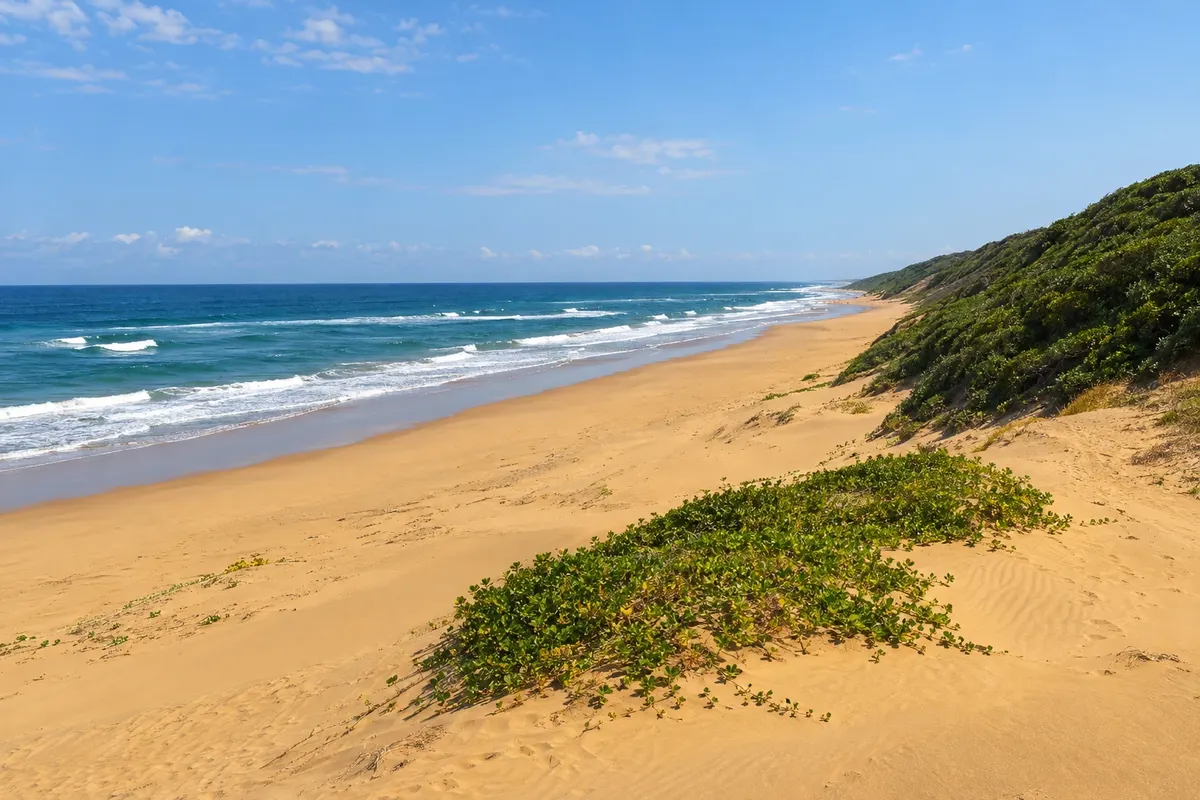
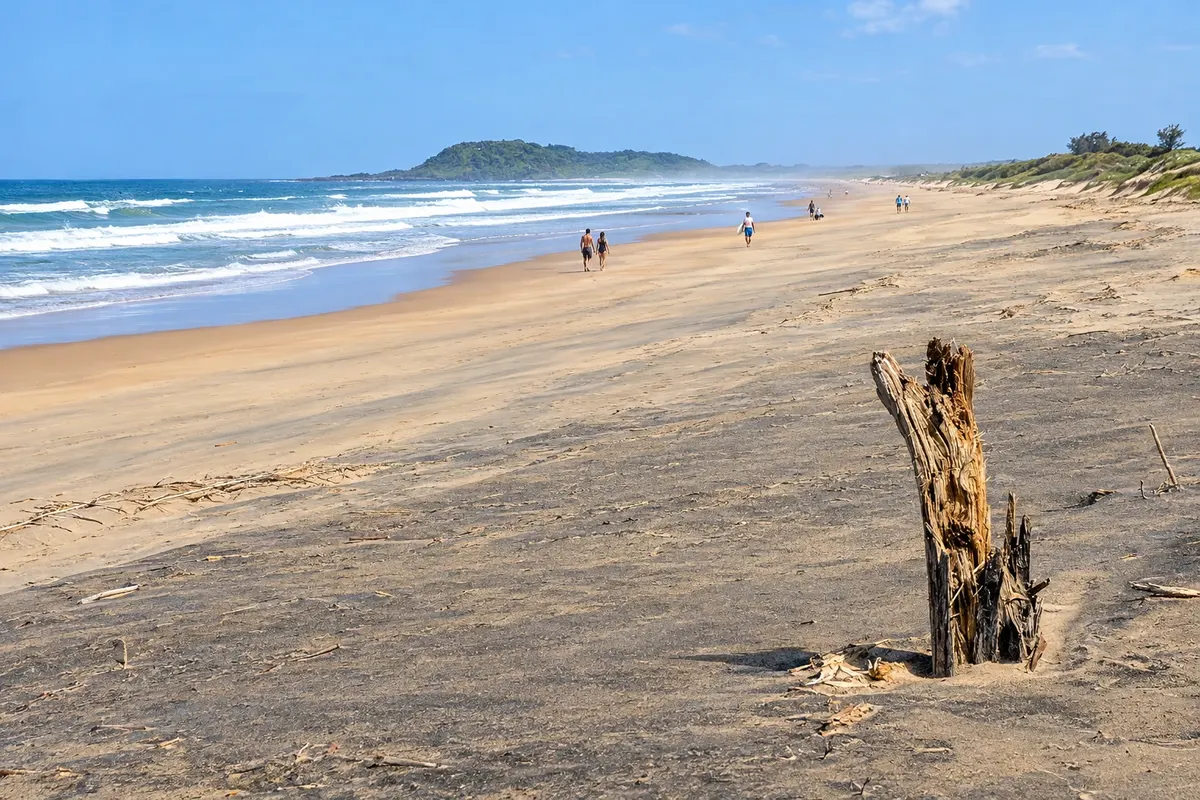
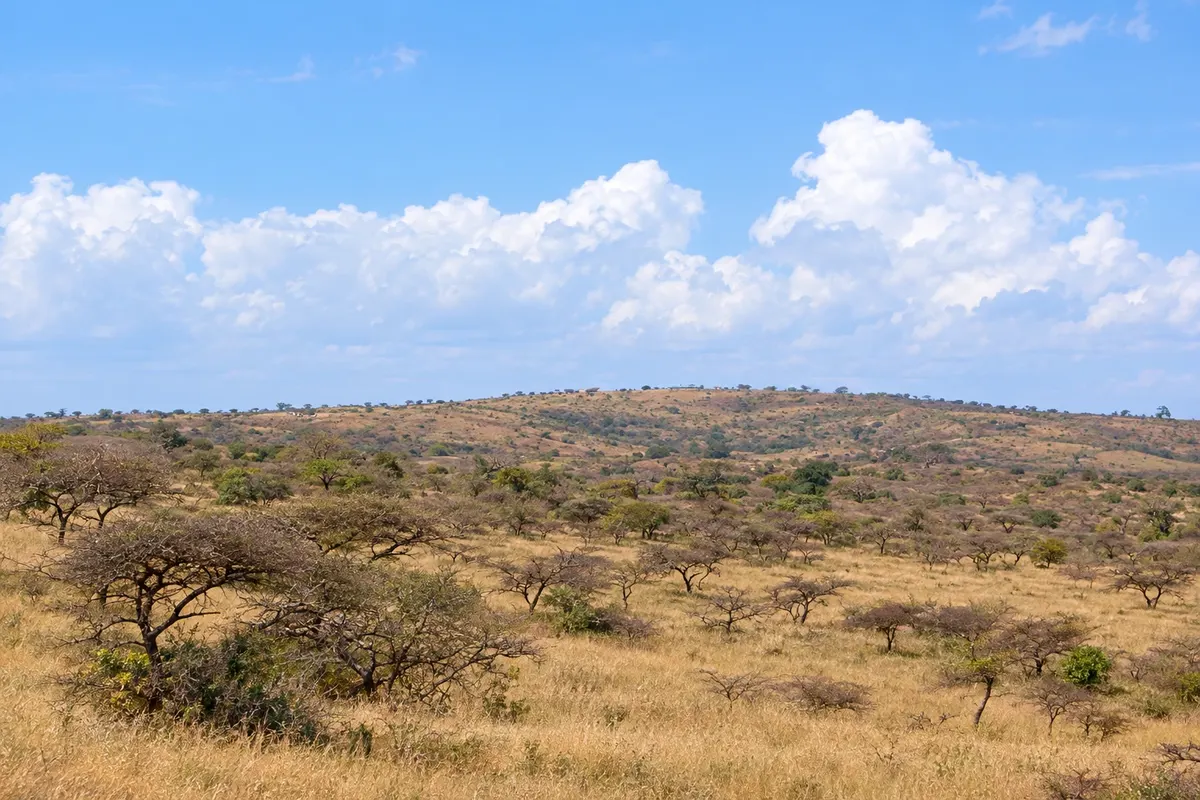
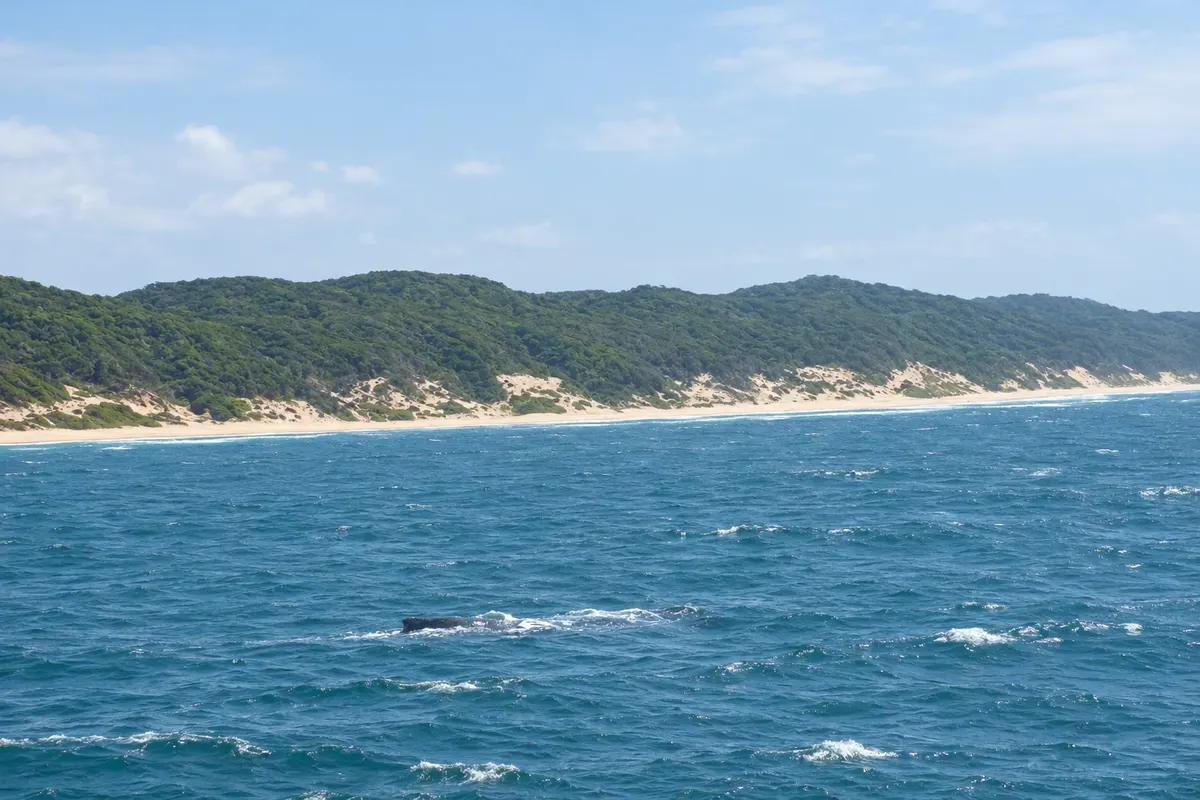
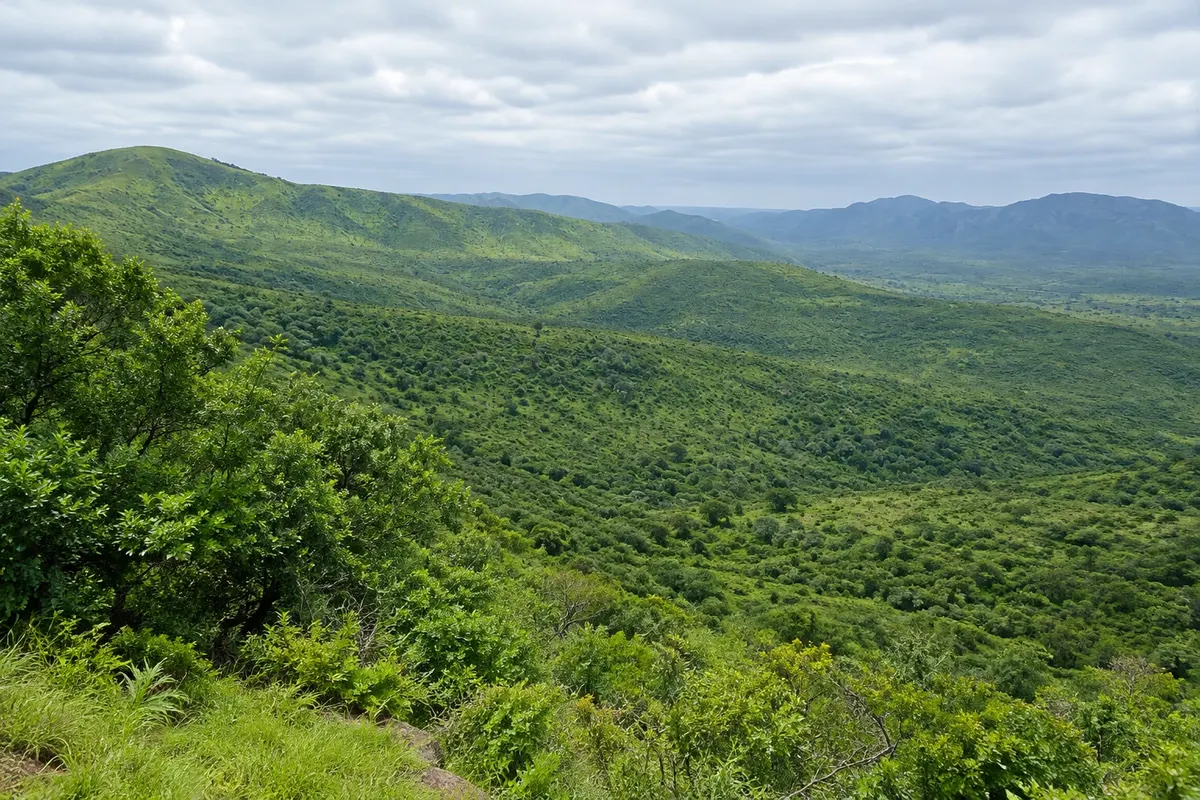
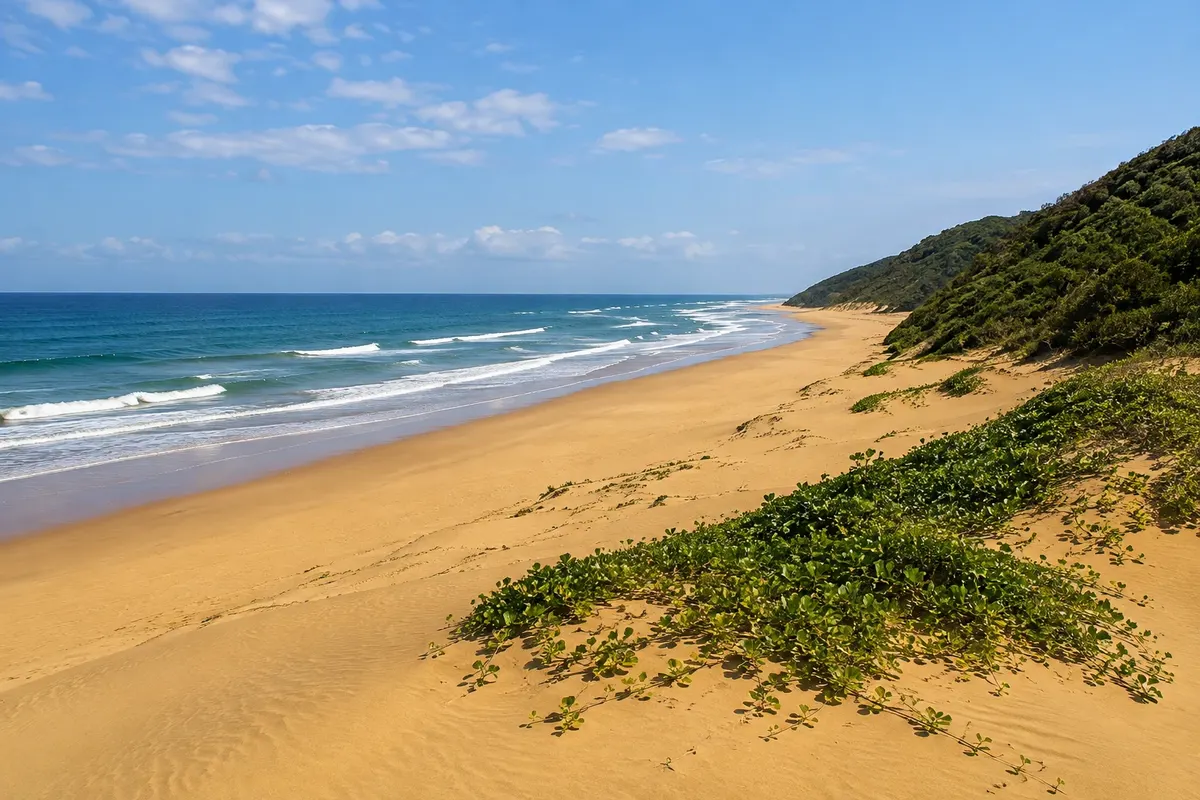
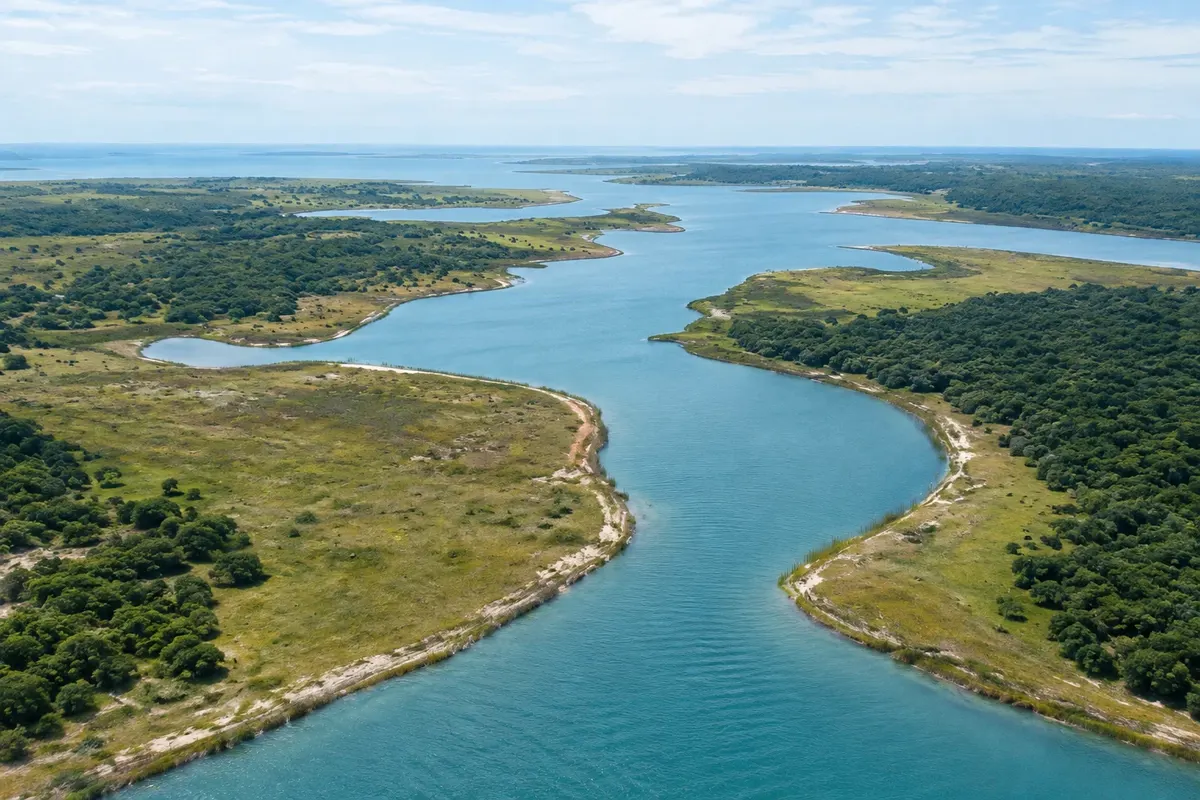
The iSimangaliso Wetland Park stretches about 220 km along the northern coast of KwaZulu-Natal, from St. Lucia to the Mozambique border. It was South Africa’s first natural World Heritage Site, inscribed by UNESCO in 1999. The name, in Zulu, means miracle or wonder. One park combines the lake and St. Lucia estuary, dune forests, swamps, savanna, deserted beaches and coral reefs.
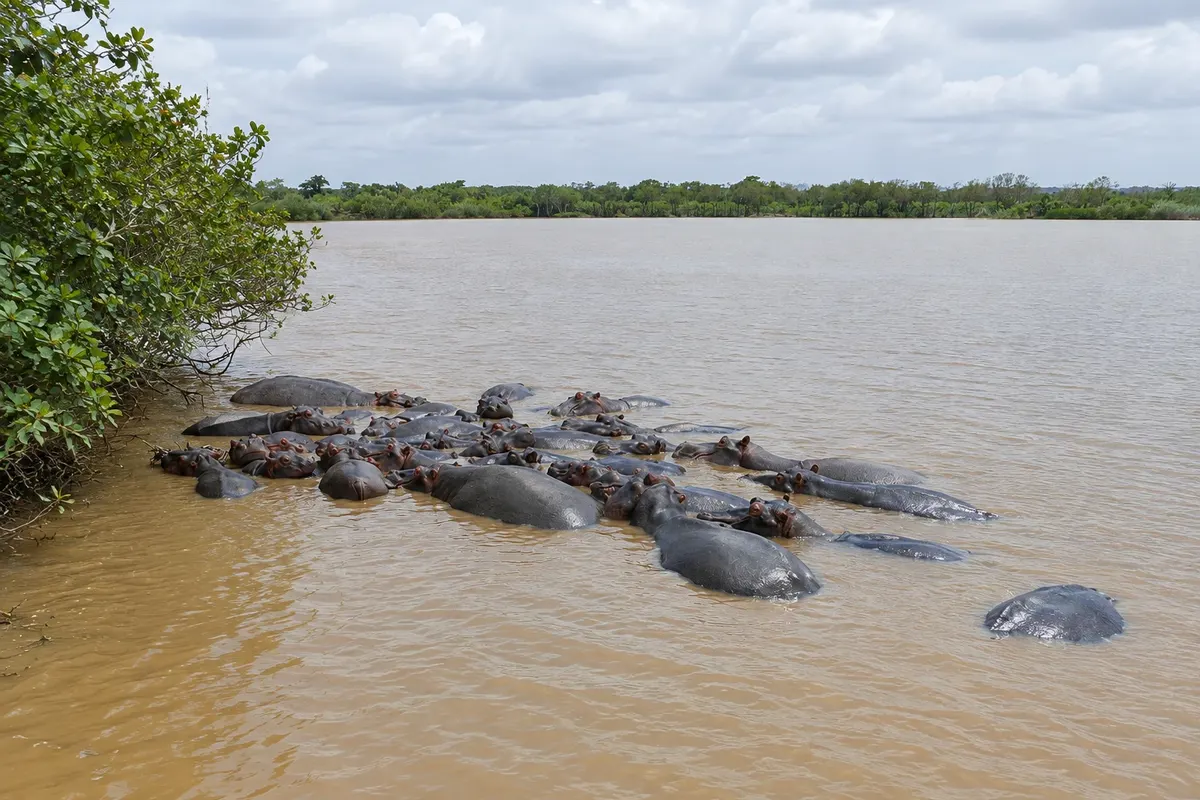
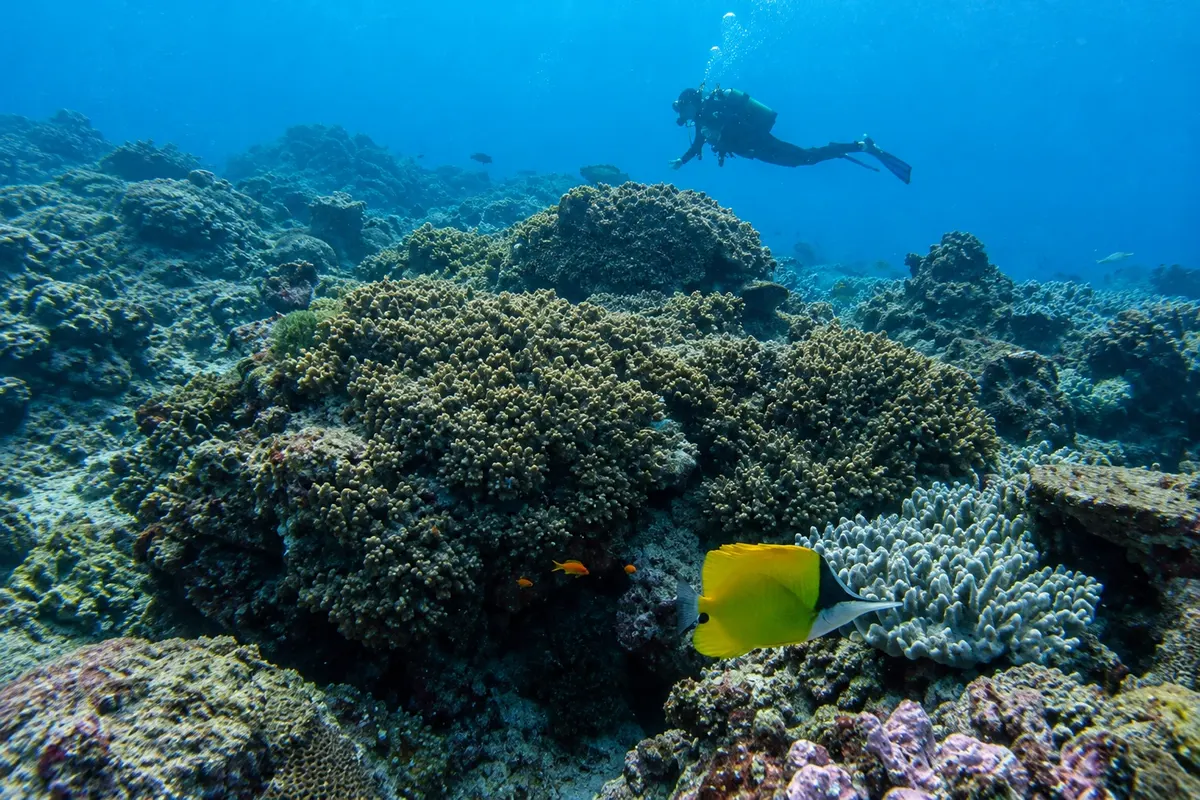
The St. Lucia estuary is the largest in Africa and hosts many hippos and crocodiles, seen up close on boat trips that depart from the village. On the east coast, Cape Vidal has beaches and high dunes; further north, Sodwana Bay is the country’s best-known diving spot, with coral reefs in the Indian Ocean. Between November and March, loggerhead and leatherback turtles nest on the northern beaches.
About 50 km inland lies Hluhluwe-iMfolozi Park, protected since 1895 and considered Africa’s oldest wildlife reserve. It was here that the white rhinoceros was saved from extinction in the 1950s and 1960s in an operation that relocated animals to parks around the world. The park has the Big Five and is known for the ease of seeing rhinos.
The combination of safari and beach in the same trip is the region’s major draw. Safari rules apply here too: do not leave the vehicle outside designated areas, respect gate opening hours and keep your distance from hippos, which roam the village of St. Lucia at night.
This destination brings together 3 cities: St. Lucia, Hluhluwe, Sodwana Bay.


 Brazil
 Argentina
 Bolivia
 Chile
 Colombia
 Ecuador
 Guyana
 French Guiana
 Falkland Islands (Malvinas)
 Paraguay
 Peru
 Suriname
 Uruguay
 Venezuela
 Germany
 Austria
 Belgium
 Croatia
 Denmark
 Spain
 Finland
 France
 Greece
 the Netherlands
 Hungary
 Ireland
 Iceland
 Italy
 Luxembourg
 Norway
 Poland
 Portugal
 the United Kingdom
 the Czech Republic
 Sweden
 Switzerland
 Turkey
 Mexico
 the Dominican Republic
 Fiji