Santiago de Compostela and Galicia

Galicia

Santiago de Compostela and Galicia

The city at the end of the Way, with the cathedral of the apostle Santiago and the granite old town, and Vigo, port of the Illas Cíes, connected to Porto by the Celta train.

North

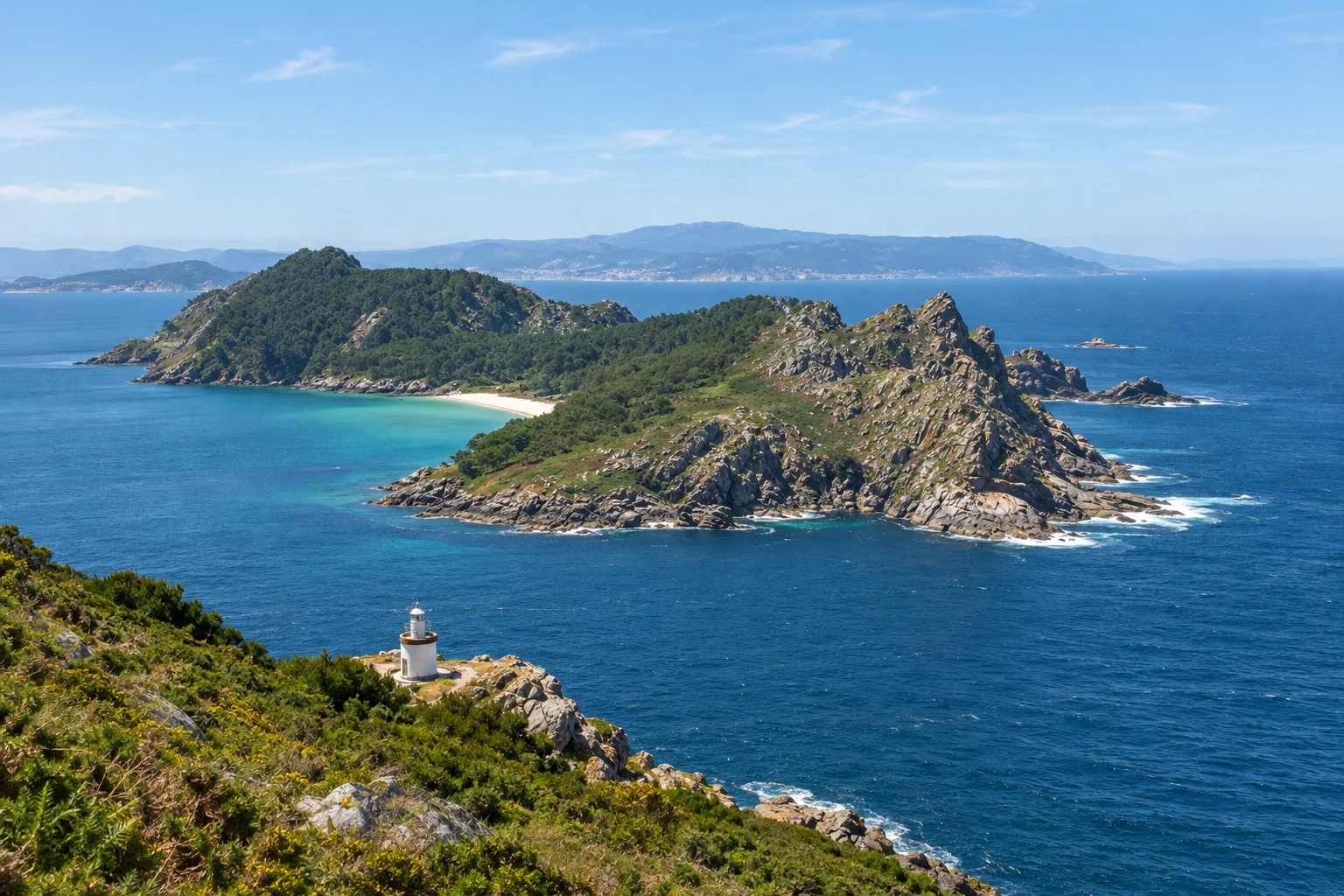
In the photo: Illas Cíes

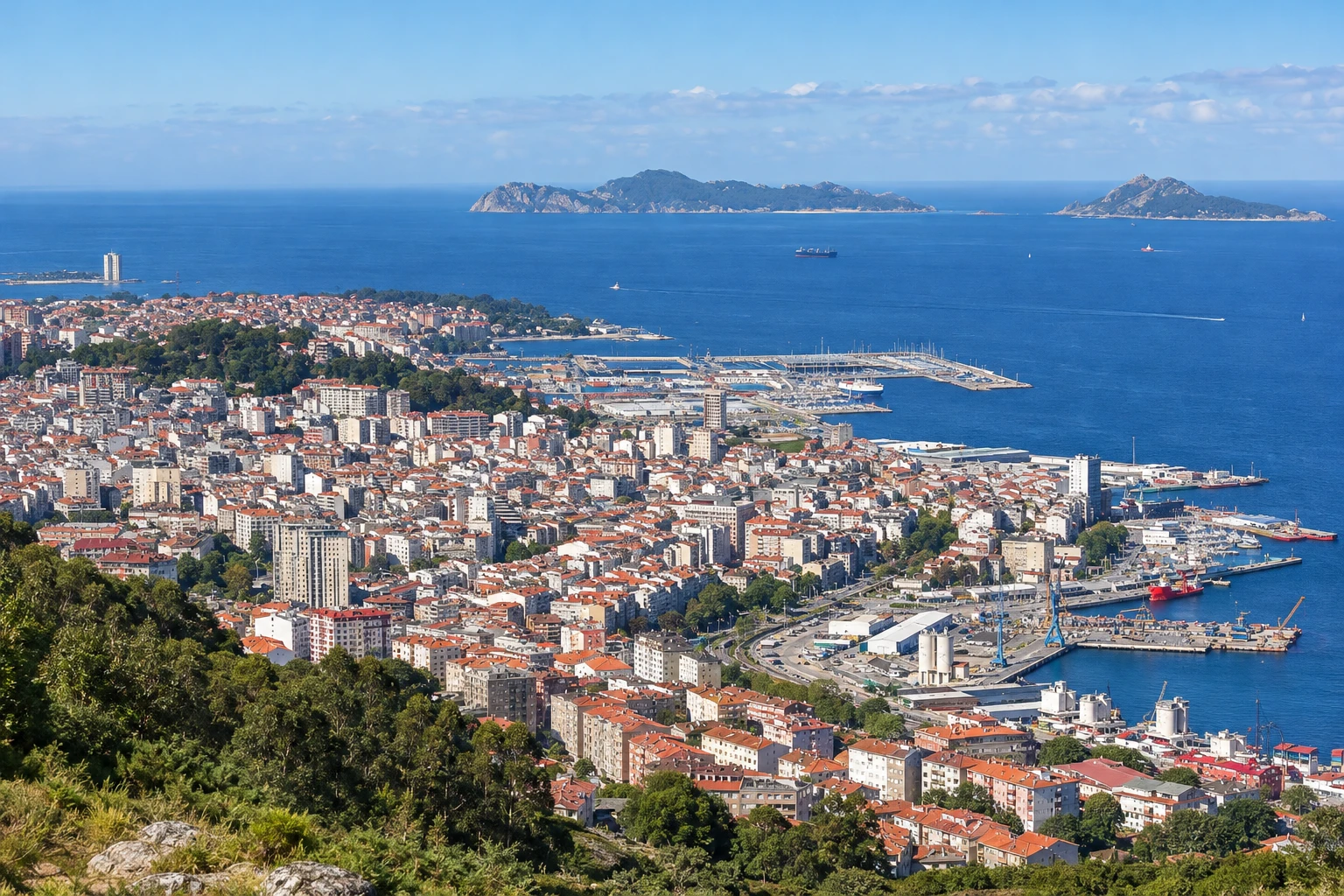
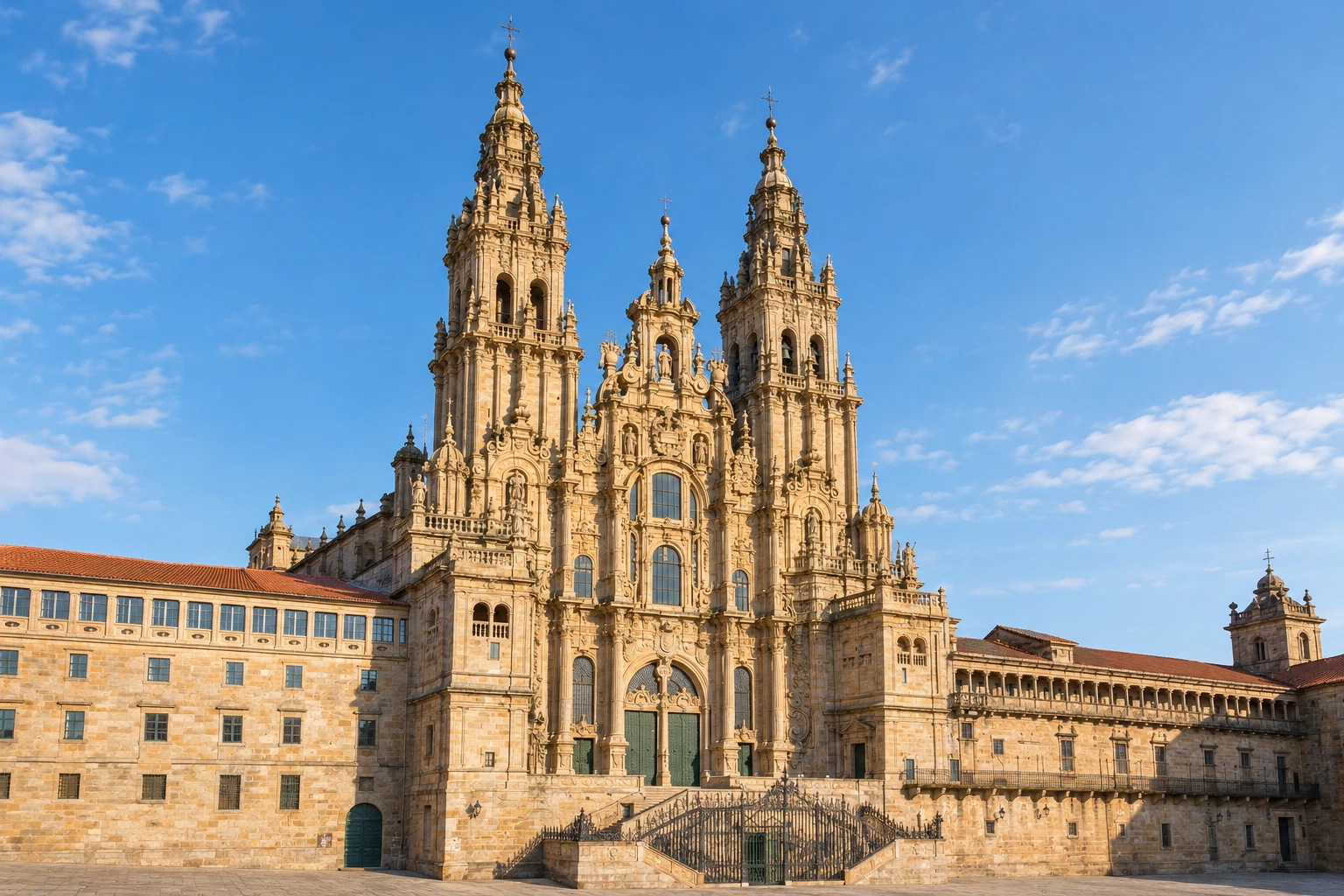
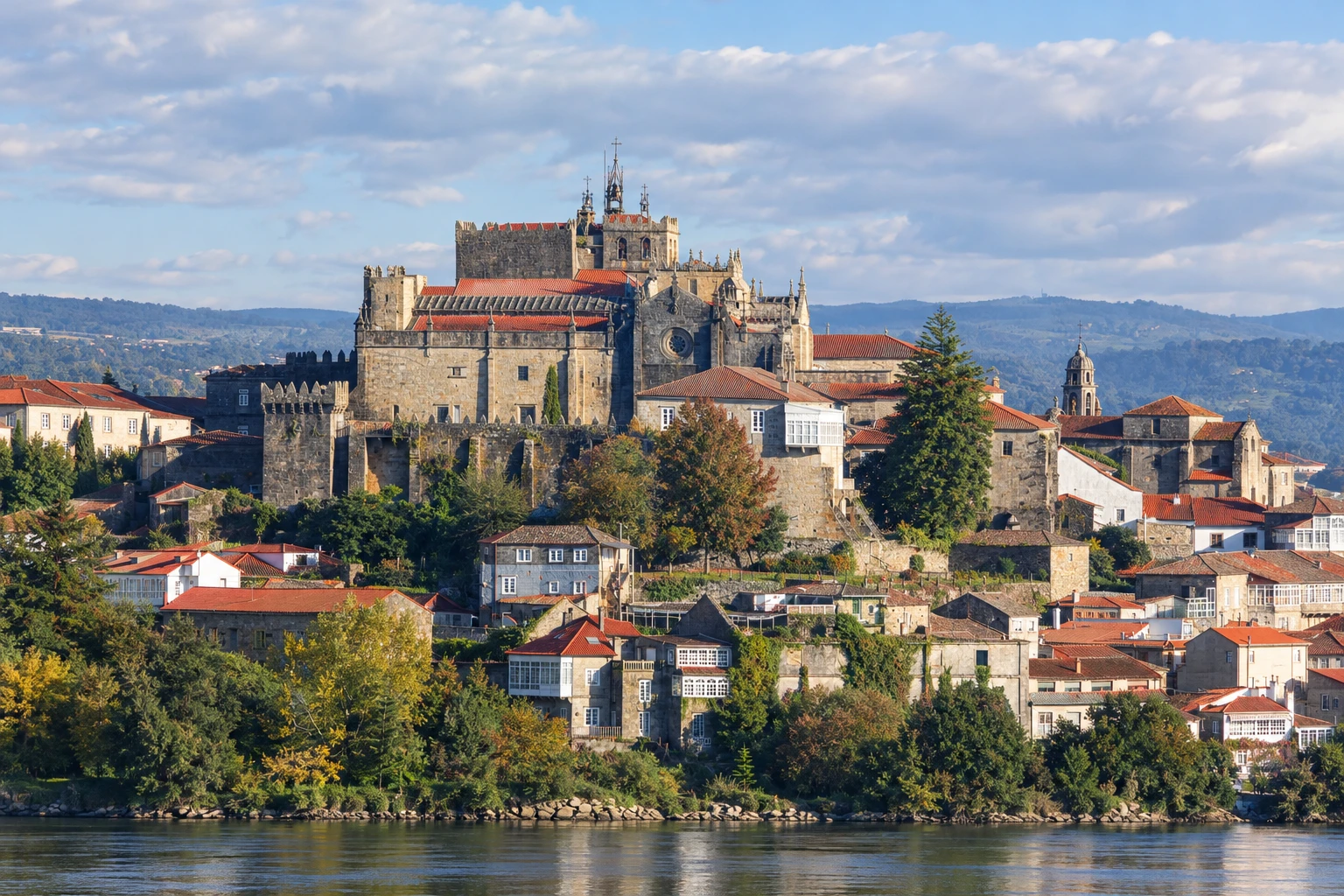
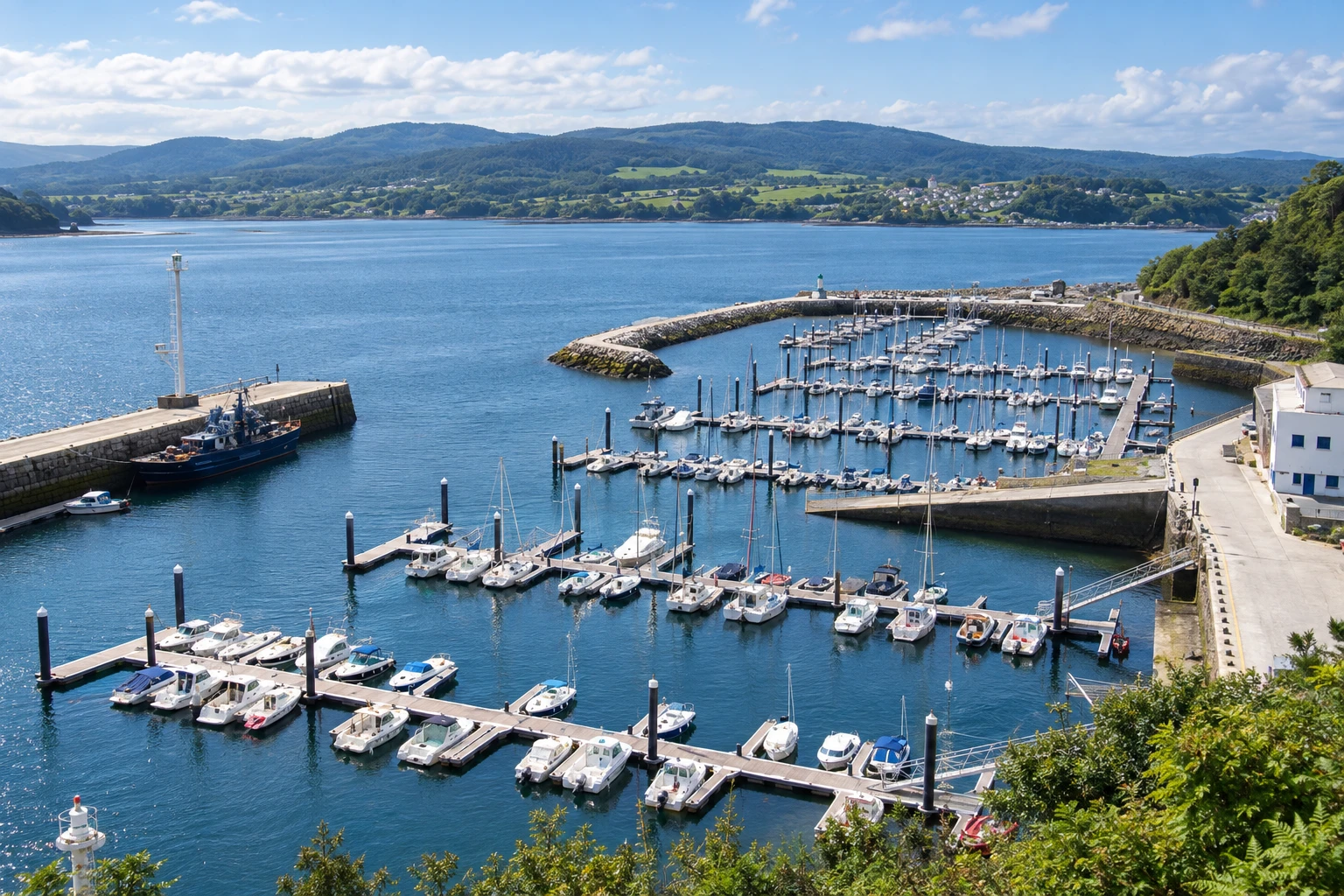
Illustrative images. The pictures in this guide are illustrations based on the real place, not photographs, and may differ from it.

Get it on Google Play

Get to know the place

A region to enjoy
at your own pace.

Galícia occupies the northwest corner of Spain, just above Portugal, with which it shares the origin of the language: Galician is a close relative of Portuguese, and Brazilians understand much of the signs and conversations. The landscape is green and rainy, cut by the rias, arms of the sea that reach into the land, and the cuisine revolves around octopus, shellfish, bread and the white Albariño wines.

Santiago de Compostela, capital da Galícia, grew around the tomb attributed to the apostle James, discovered in the 9th century. Since the Middle Ages, pilgrims from all over Europe walk to the cathedral along the Camino de Santiago, and even today hundreds of thousands arrive on foot or by bicycle each year at the Praza do Obradoiro. The historic center, all in granite, with arcades, churches and monasteries, has been a UNESCO World Heritage Site since 1985.

Vigo, 90 km to the south, is the largest city in Galícia and one of the main fishing ports in Europe, on the ria of Vigo. From the port depart the boats to the Illas Cíes, islands with white-sand beaches inside a national park. The Caminho Português da Costa passes through Vigo, and the city is the gateway for those coming from northern Portugal: the Celta train connects Porto to Vigo in about 2h30.

For Brazilians, the region fits into a trip through Portugal, on a Porto–Vigo–Santiago route, or on a flight from Madri. The time difference is 4 or 5 hours ahead of Brasília, depending on the time of year.

This destination brings together 17 cities: Vigo, Santiago de Compostela, Tui, Sarria, A Guarda, Baiona, Pontevedra, Ribadeo, Arzúa, Lugo, Melide, Ferrol, Betanzos, A Coruña, Finisterre, Muxía, Ourense.


Share: WhatsApp
Traveler, share your experiences through photos Up to 5 photos of each place you visited.

One destination, many paths

The cities on this trip

Start with one city or combine several in your itinerary.

Where Santiago de Compostela and Galicia is The star marks the capital, Santiago de Compostela.
Santiago de CompostelaVigoTuiSarriaA GuardaBaionaPontevedraRibadeoArzúaLugoMelideFerrolBetanzosA CoruñaFinisterreMuxíaOurense

Outlines: IGN/CNIG, unidades administrativas, CC BY 4.0. Adapted by Cidade Turismo.

How to get there: Santiago de Compostela and Galicia

Aeropuerto de Vigo (VGO), in Peinador · 9 km to Vigo

Aeroporto Francisco Sá Carneiro (OPO), in Porto (Portugal) · 140 km to Vigo

Connections from Brazil usually involve a stopover in another city. Confirm before buying. Santiago and Vigo have airports with flights from Spain and Europe. From Madri, the high-speed train takes about 3h30 to Santiago. From Porto, the Celta train takes about 2h30 to Vigo, and from Vigo to Santiago the train takes about 1 hour.

Suggested arrival point: Vigo

Sarria
Galicia · Santiago de Compostela and Galicia

Sarria

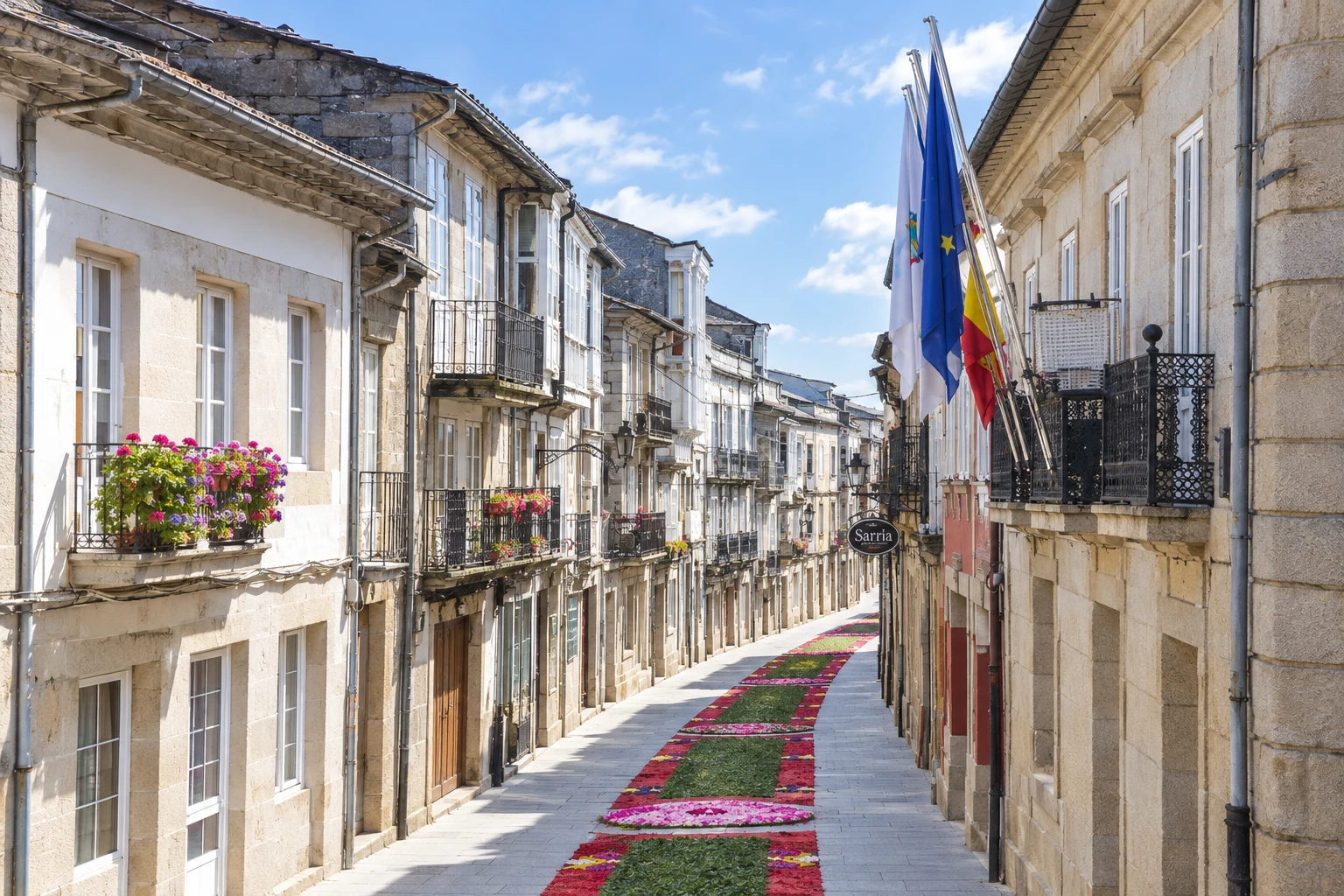
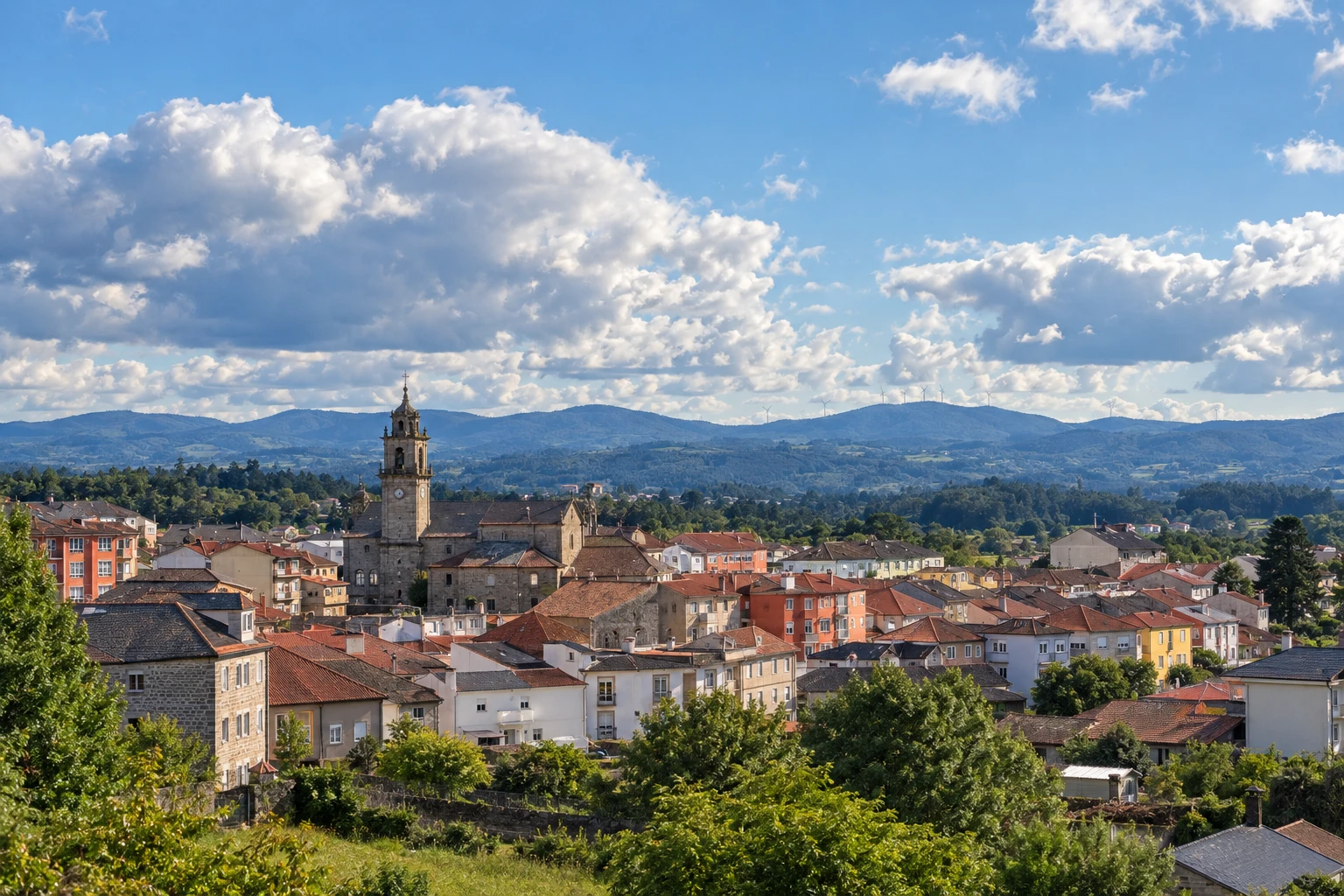
Sarria is a small town in the province of Lugo, in Galícia, about 115 km from Santiago de Compostela along the Camino. It is the most common starting point for those who walk the last 100 km—the minimum distance to request the Compostela—and it has many hostels and services for pilgrims. The Rúa Maior, the Camino street, runs past the churches of Santa Mariña and do Salvador and the tower of the old fortress, up to the mosteiro da Madalena, from the 13th century. Galician and Spanish are spoken.

A Guarda
Galicia · Santiago de Compostela and Galicia

A Guarda

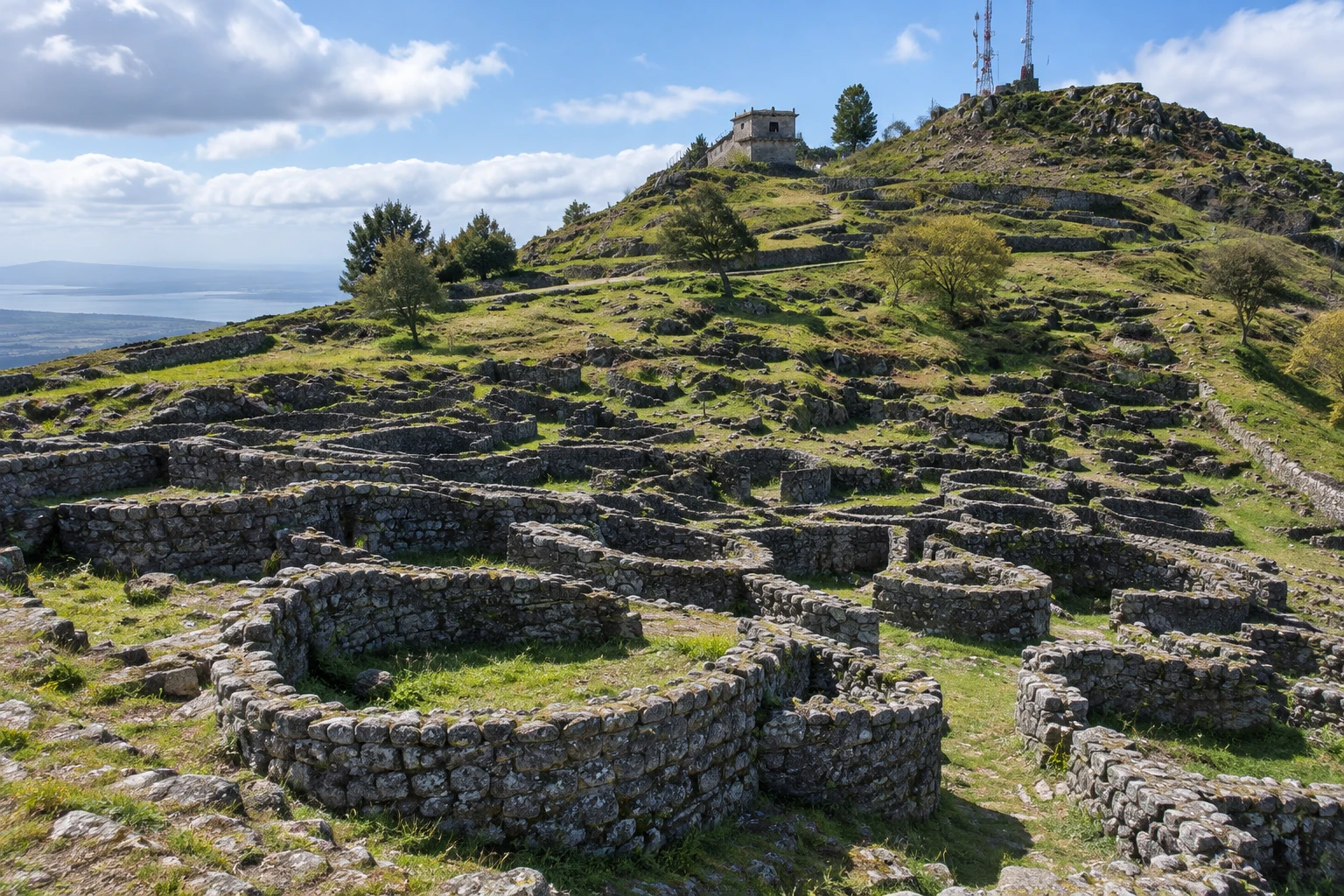
A Guarda is a fishing village in the extreme southwest of Galicia, where the Minho river meets the Atlantic, facing Portugal. Above it rises the mount of Santa Trega, 341 meters high, where the ruins of a castro settlement stand, with round stone houses, an archaeological museum, a chapel and views of the Minho estuary. In the center, the Castle of Santa Cruz recalls the 17th-century wars with Portugal, and the harbor, with colorful houses, is known for its lobster. It is the first Galician village on the Portuguese Coastal Way. Galician and Spanish are spoken.

Baiona
Galicia · Santiago de Compostela and Galicia

Baiona

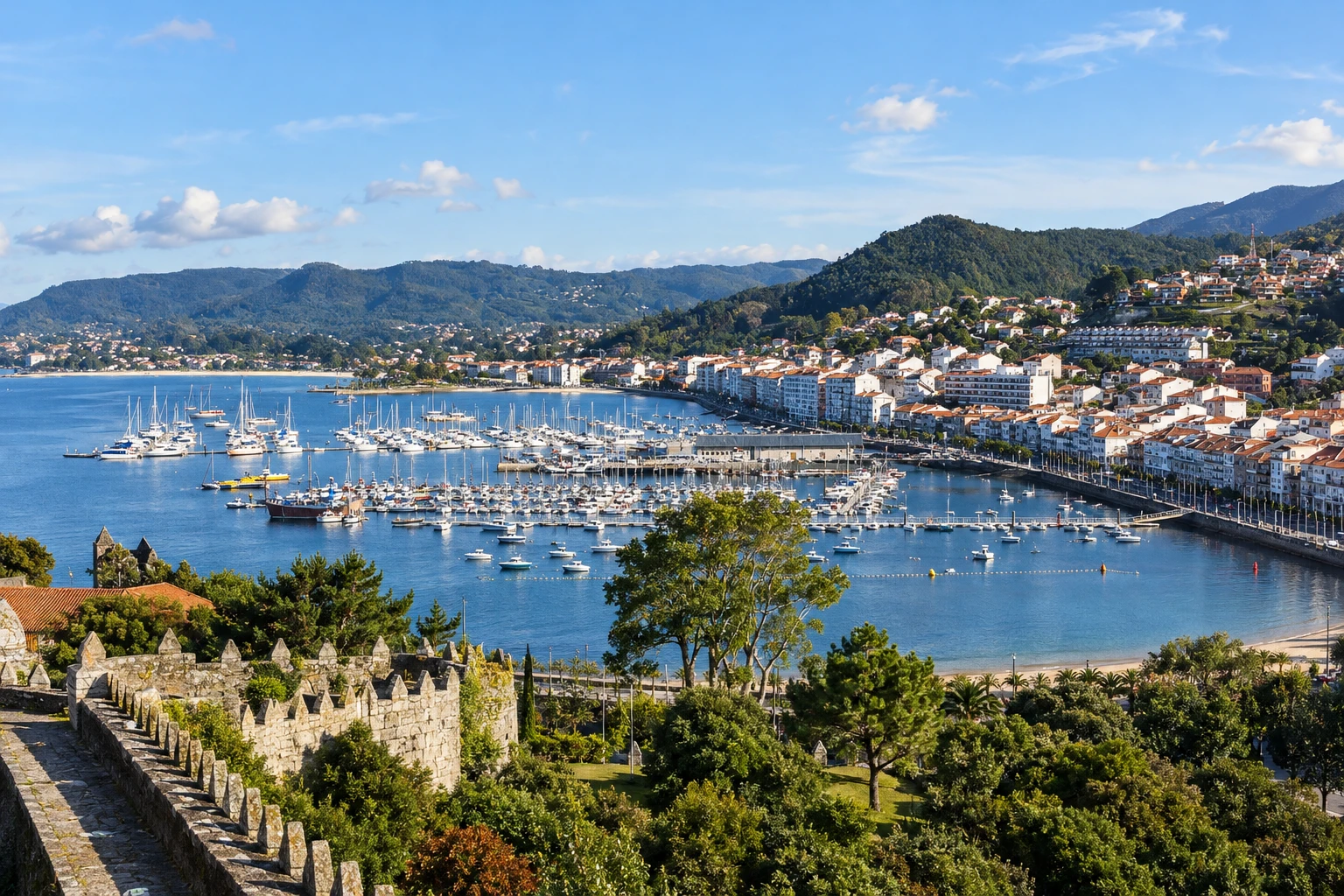
Baiona is a village on the Galician coast, about 25 km from Vigo, in a bay sheltered in front of the Cíes islands. The Monterreal peninsula is surrounded by walls, with a sea-side rampart walk; inside them is a historic parador. On 1 March 1493 the caravel Pinta arrived in Baiona with the first news of Columbus’s voyage, and a replica of the ship is in the harbor. On the top of the hill, the stone statue of the Virgem da Rocha has a viewpoint, and the town centre preserves the old Romanesque collegiate church and a covered cruceiro from the 15th century. Galician and Spanish are spoken.

Pontevedra
Galicia · Santiago de Compostela and Galicia

Pontevedra

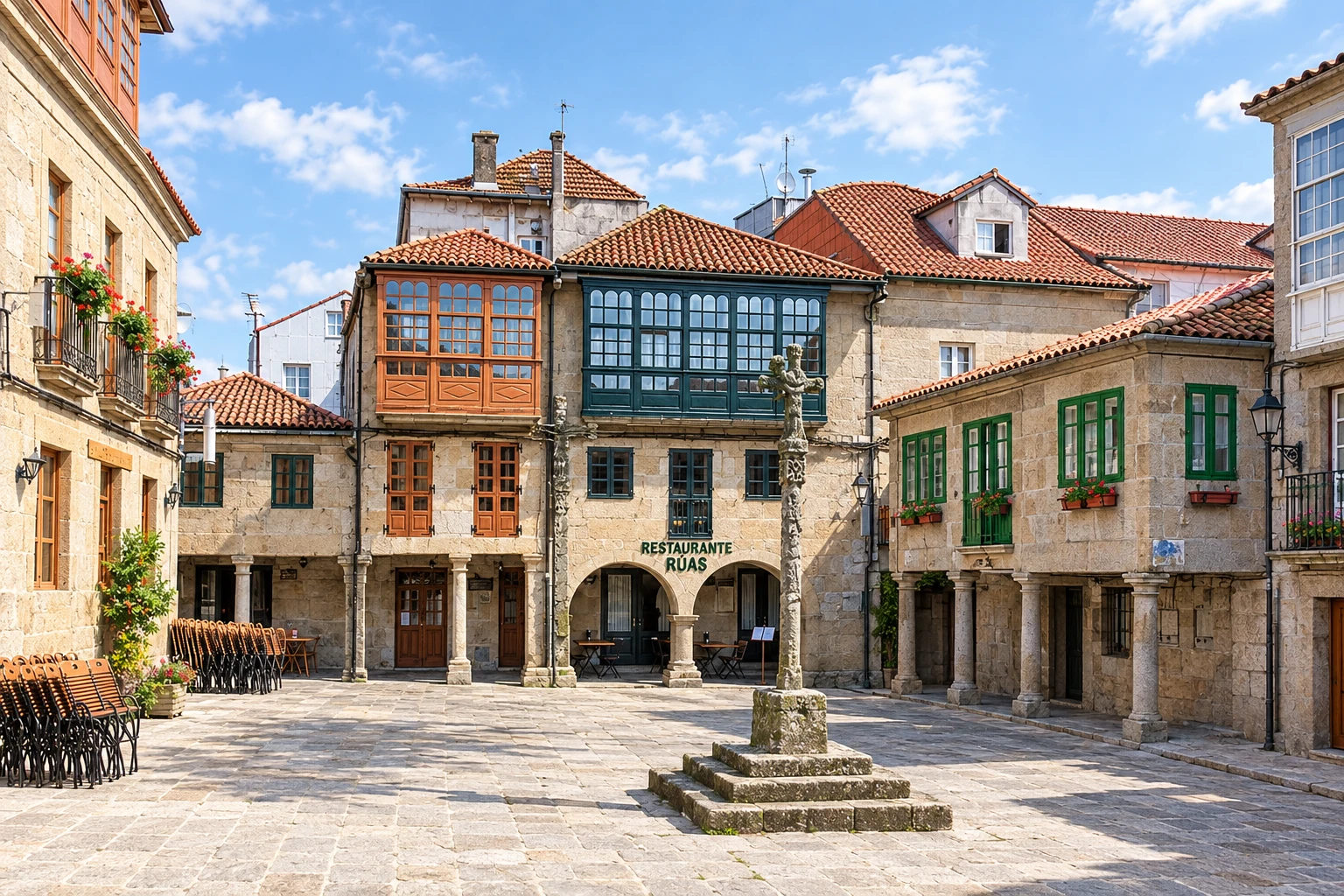
Pontevedra is a Galician city on the estuary of the same name, about 60 km from Santiago de Compostela. The historic center, made of granite, was closed to cars and is explored on foot through squares such as Praça da Leña, Praça da Ferrería and Praça da Verdura. There are the Igreja da Virgem Peregrina, with a scallop-shell floor plan, the Basílica de Santa María a Maior, the Convento de San Francisco, the Gothic ruins of San Domingos and the buildings of the Museu de Pontevedra. To the north, the Ponte do Burgo crosses the Lérez river, and the Ilha das Esculturas hosts outdoor art. It is a stop on the Caminho Português central and the Caminho da Costa.

Ribadeo
Galicia · Santiago de Compostela and Galicia

Ribadeo

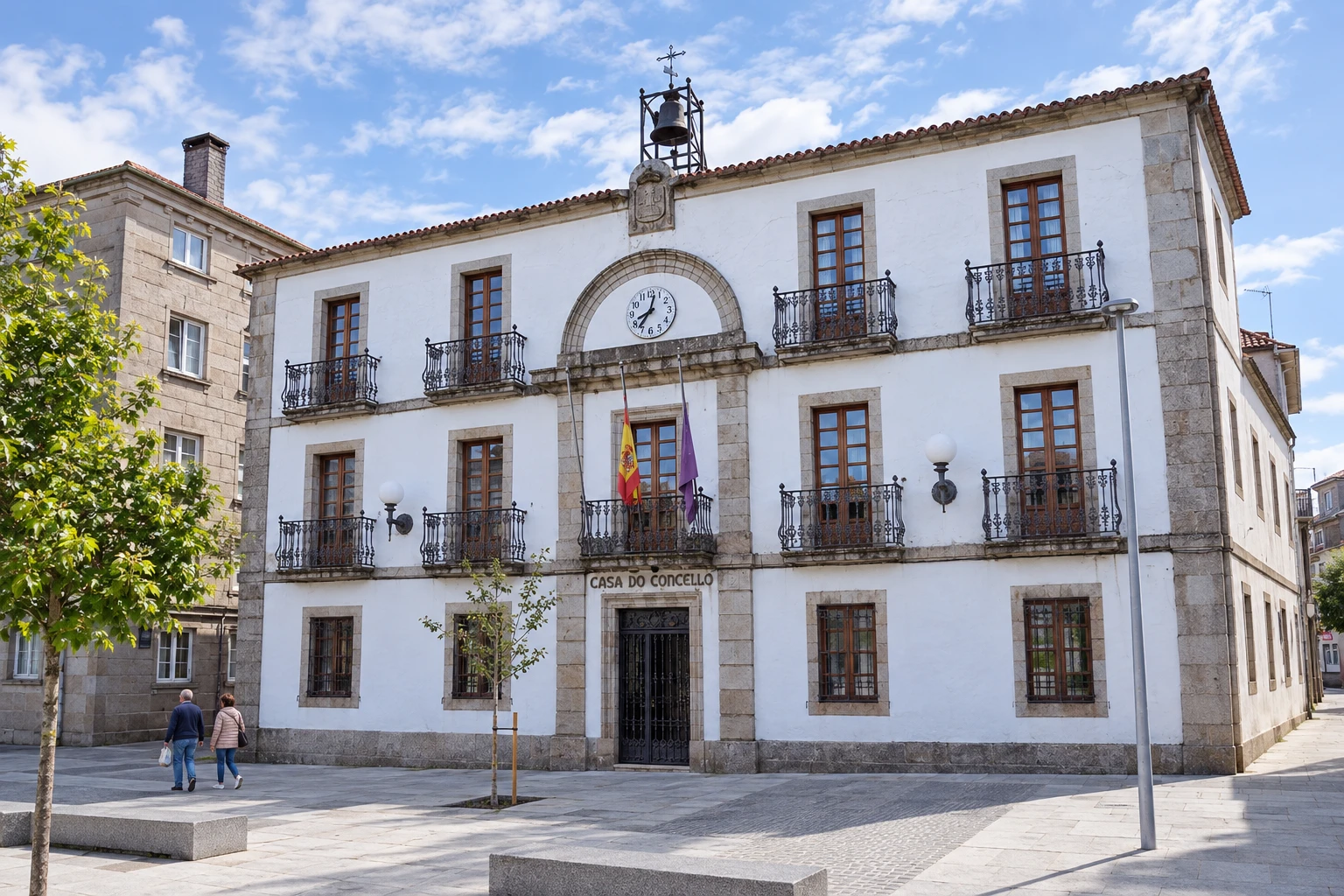
Ribadeo is a Galician town on the ría de Ribadeo, which borders Asturias, on the northern coast of Galicia. About 10 km away is the Praia das Catedrais, with rock arches that can only be explored at low tide. In the centre, Plaza de España includes the Torre dos Moreno, a 1915 modernist house built by emigrants who returned from the Americas, and the pazo de Ibáñez, now the town hall. At the mouth of the ría are the isla Pancha, with two lighthouses, and the 17th-century fort of San Damián, opposite the ponte dos Santos. It is a stop on the Caminho do Norte, the first Galician town. Galician and Spanish are spoken.

Arzúa
Galicia · Santiago de Compostela and Galicia

Arzúa

Arzúa is a village inland in Galicia, about 40 km from Santiago de Compostela, where the Camino Francés and the Camino del Norte join for the final stretch to the cathedral. It is known for the Arzúa-Ulloa cheese, made from cow's milk, with a protected designation of origin and its own festival in March. On the rua do Caminho are the church of Santiago and the chapel of Madalena, remnants of an old convent and pilgrims' hospital from the 14th century. About 3 km away, in Ribadiso, the medieval bridge over the Iso River and the old pilgrims' hospital make one of the best-known stops on the Camino. Galician and Spanish are spoken.

Lugo
Galicia · Santiago de Compostela and Galicia

Lugo

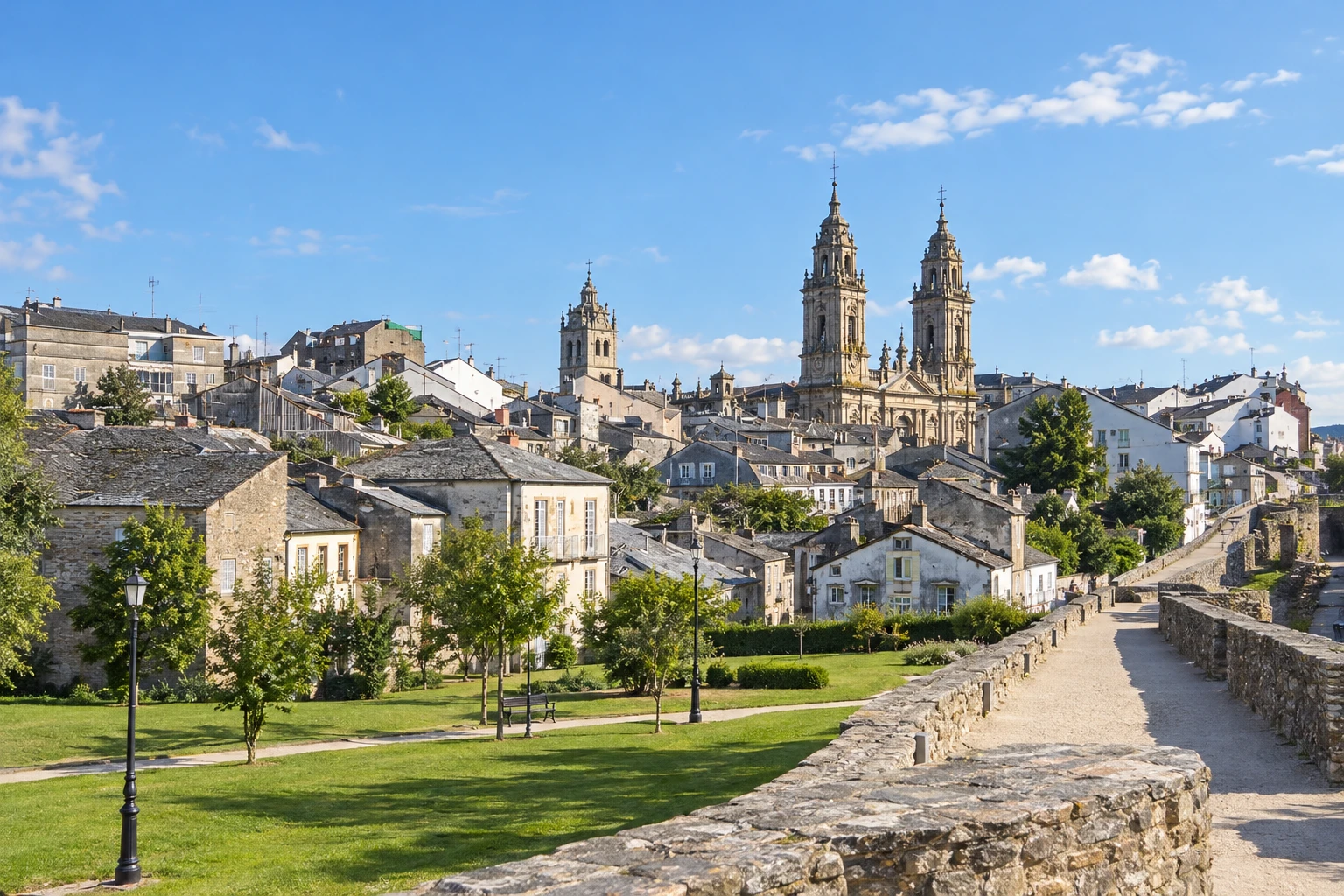
Lugo is an inland city in Galicia that began as the Roman Lucus Augusti around 15 BC. It is surrounded by a complete Roman wall of about 2 km and 71 towers, a World Heritage site; you can walk along the top of it around the entire circuit. Inside are the cathedral, Praça Maior, the Museu Provincial and the museum of the Domus do Mitreo, with remains of a Roman house. By the river Minho are the thermal baths and a bridge of Roman origin, and 14 km away is the Roman temple of Santa Eulalia de Bóveda. It is a stop on the Caminho Primitivo, about 100 km from Santiago, and in June the Arde Lucus festival revives its Roman past.

Melide
Galicia · Santiago de Compostela and Galicia

Melide

Melide is a village in inland Galicia, about 55 km from Santiago de Compostela, where the Caminho Primitivo meets the Caminho Francês. It is known for polvo à feira, boiled and served on wooden plates in the pulperías on the rua do Caminho. At the entrance to the village, the capela de San Roque stands beside a 14th-century cruceiro, considered the oldest in Galicia, and in the centre are the church of the former convent of Sancti Spiritus and the Museu da Terra de Melide. On the way out is the church of Santa María, and before reaching it is the medieval bridge of Furelos. Galician and Spanish are spoken.

Ferrol
Galicia · Santiago de Compostela and Galicia

Ferrol

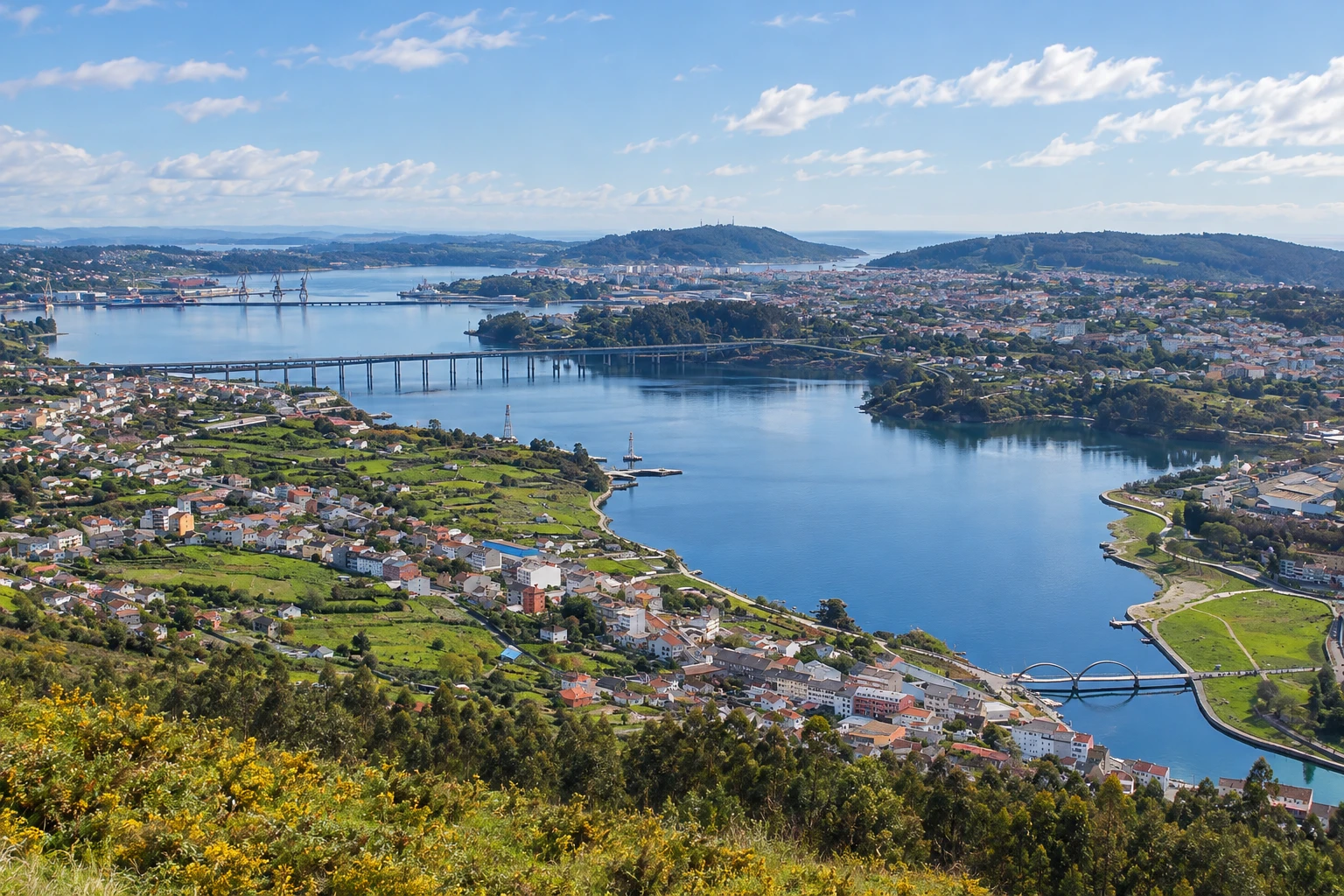
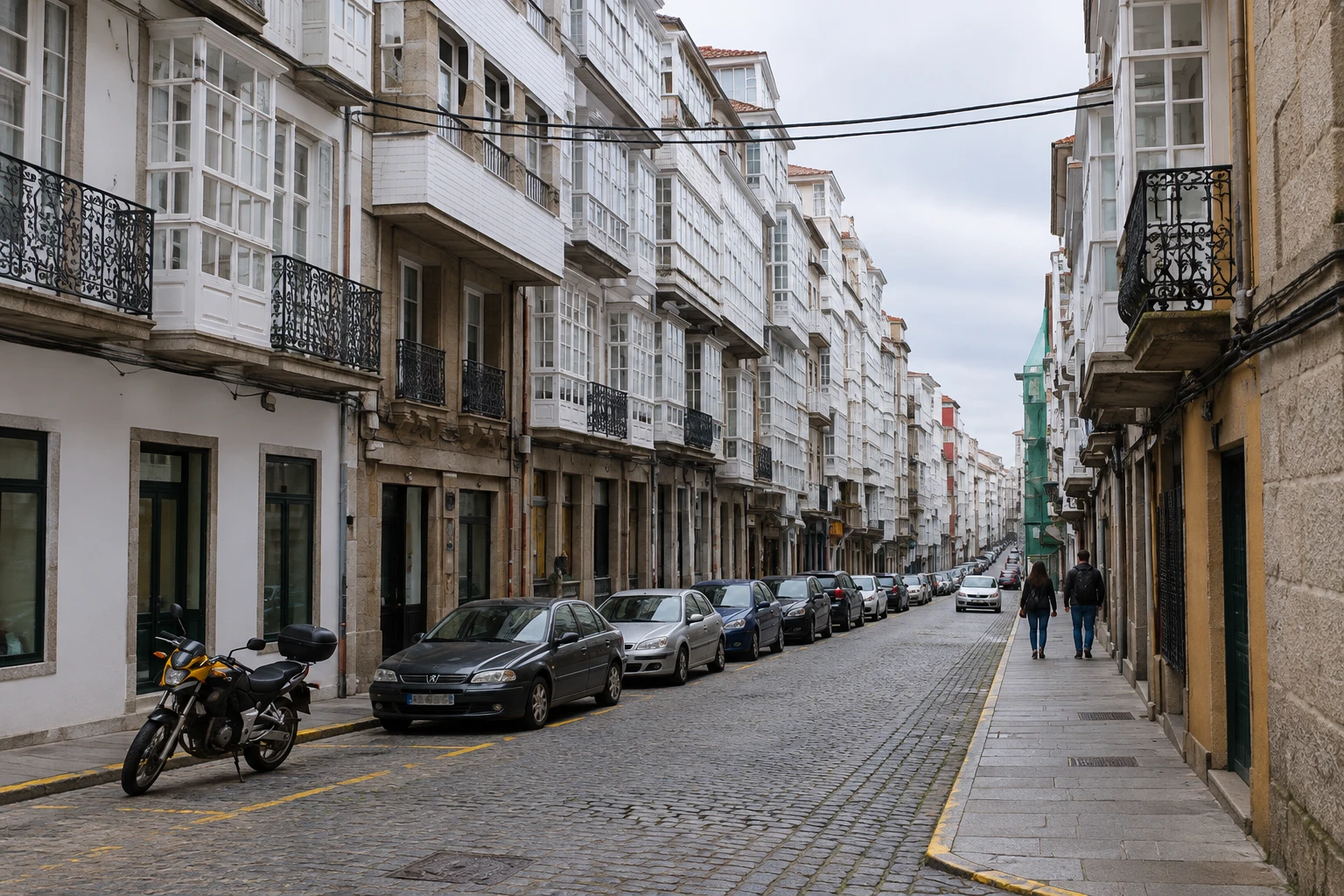
Ferrol is a Galician city on a deep Atlantic ria, about 55 km from A Coruña, linked for almost three centuries to the Spanish Navy. The bairro da Madalena, planned in the 18th century with straight streets, has houses with glass galleries, modernist buildings and the concatedral de San Xiao. Next to the arsenal are the Museu Naval and the Exponav, about shipbuilding, and at the mouth of the ria the castelo de San Felipe guards the entrance to the port. The praia de Doniños, open to the ocean, is a few kilometers away. It is the starting point of the Caminho Inglês for Santiago. Galician and Spanish are spoken.

Betanzos
Galicia · Santiago de Compostela and Galicia

Betanzos

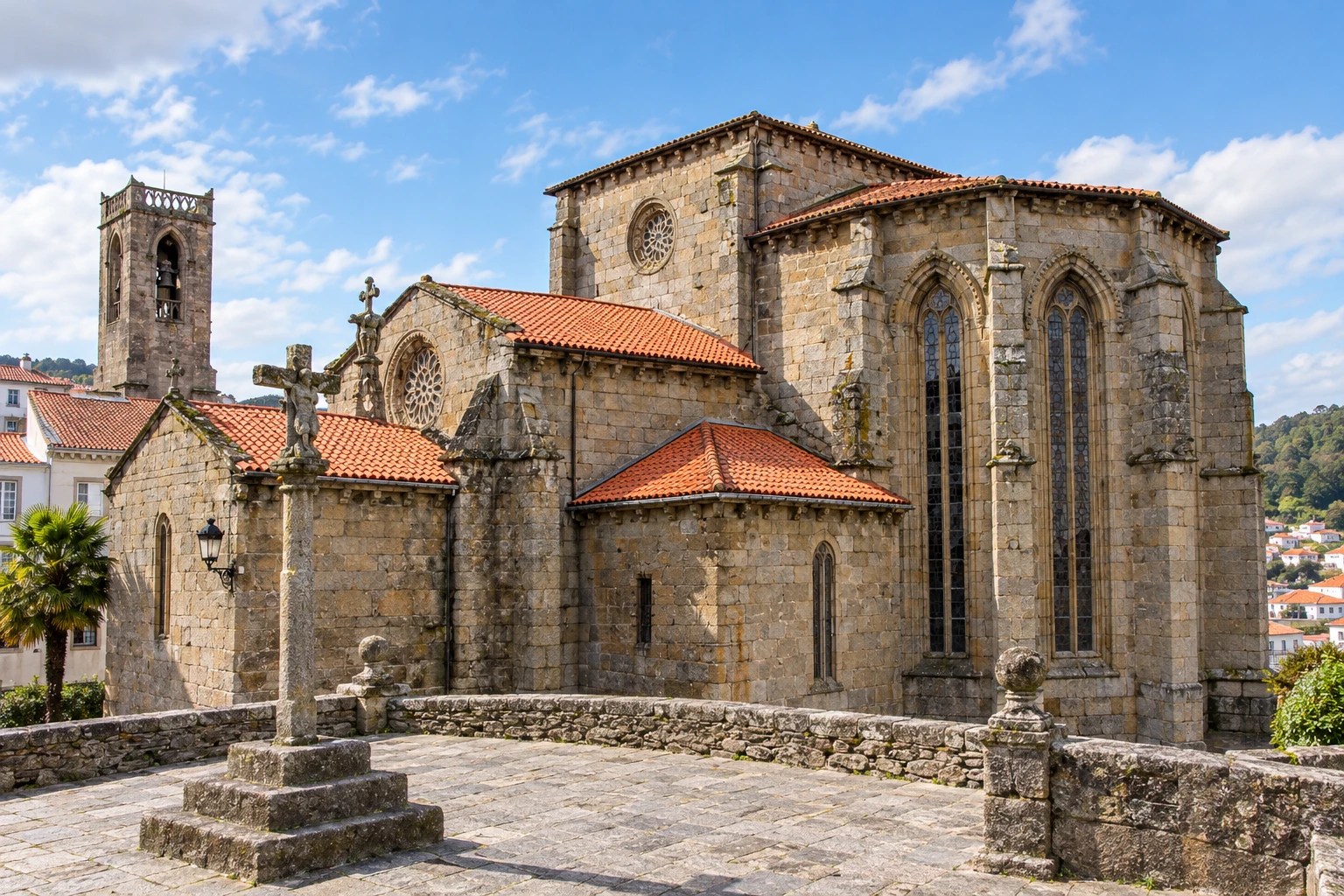
Betanzos is a medieval Galician town at the meeting of the Mandeo and Mendo rivers, about 25 km from A Coruña. The historic center climbs a hill with three Gothic churches: San Francisco, with the tomb of Fernán Pérez de Andrade supported on a bear and a boar, Santa María do Azougue and Santiago. In the old convent of Santo Domingo is the Museu das Mariñas, and down below is the Parque do Pasatempo, created by an emigrant who returned wealthy from Argentina, with grottos and figures from around the world. On the night of August 16 the town releases a huge paper balloon. It is a stop on the Caminho Inglês. Galician and Spanish are spoken.

A Coruña
Galicia · Santiago de Compostela and Galicia

A Coruña

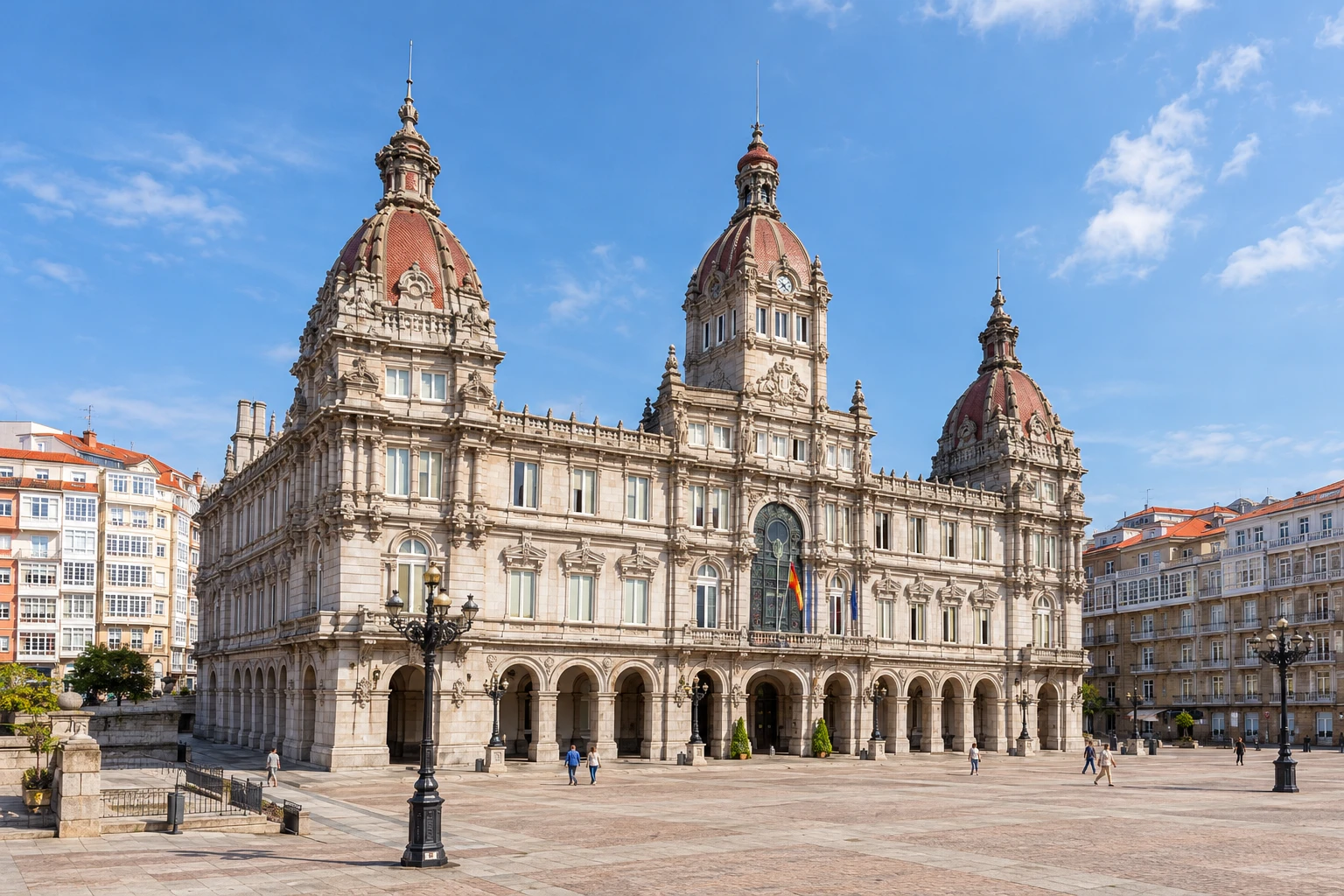
A Coruña is a Galician city on an Atlantic peninsula, about 75 km from Santiago de Compostela. At the northern tip stands the Torre de Hércules, the only Roman lighthouse still in operation and a World Heritage Site. The glass galleries along avenida da Mariña lead to plaza de María Pita and the Old Town, with the colegiata de Santa María do Campo and the San Carlos garden. The castle of San Antón houses the archaeological museum. A seaside promenade skirts the peninsula, with the beaches of Riazor and Orzán, the Aquarium Finisterrae, the Domus, the Casa das Ciências and monte de San Pedro.

Finisterre
Galicia · Santiago de Compostela and Galicia

Finisterre

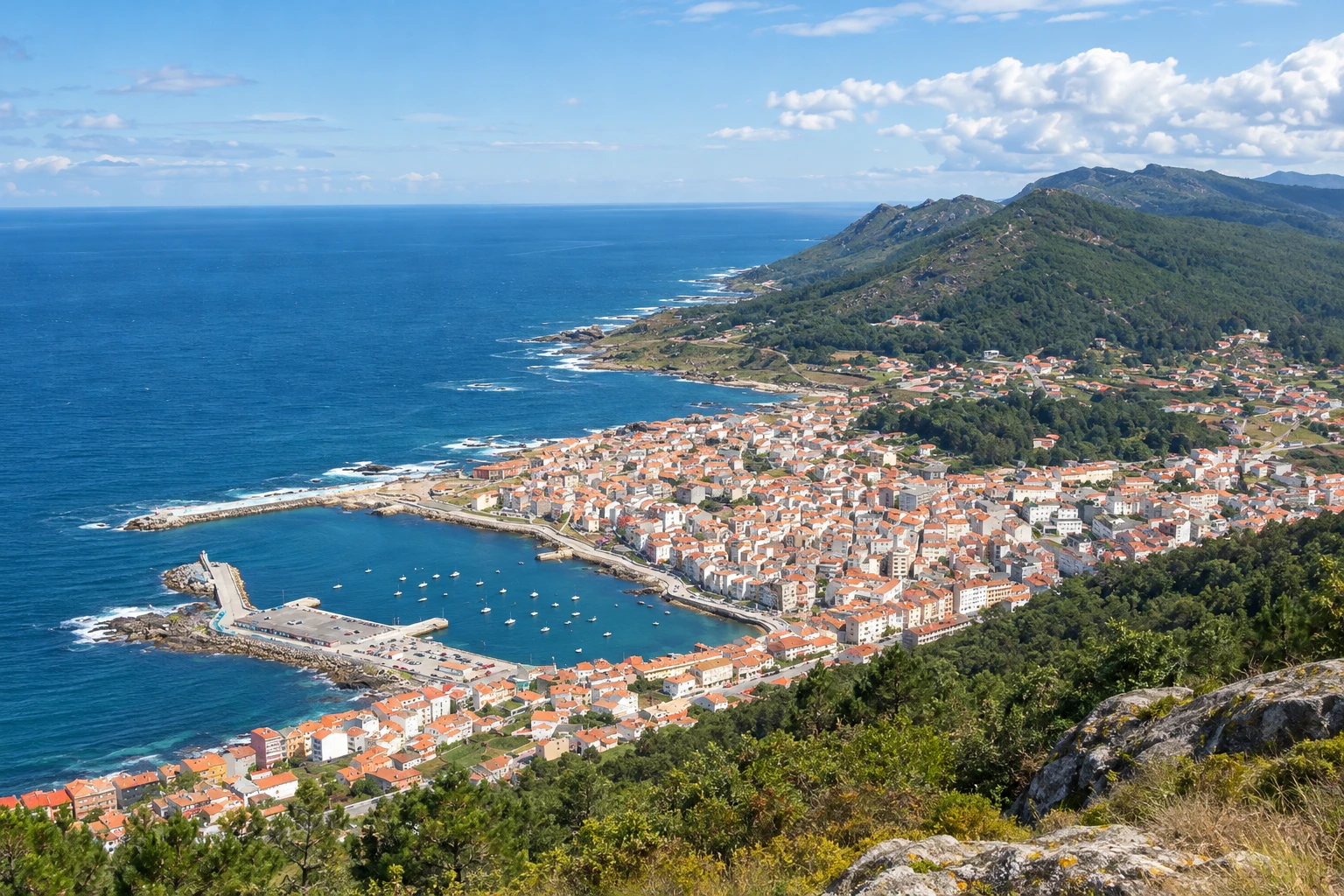
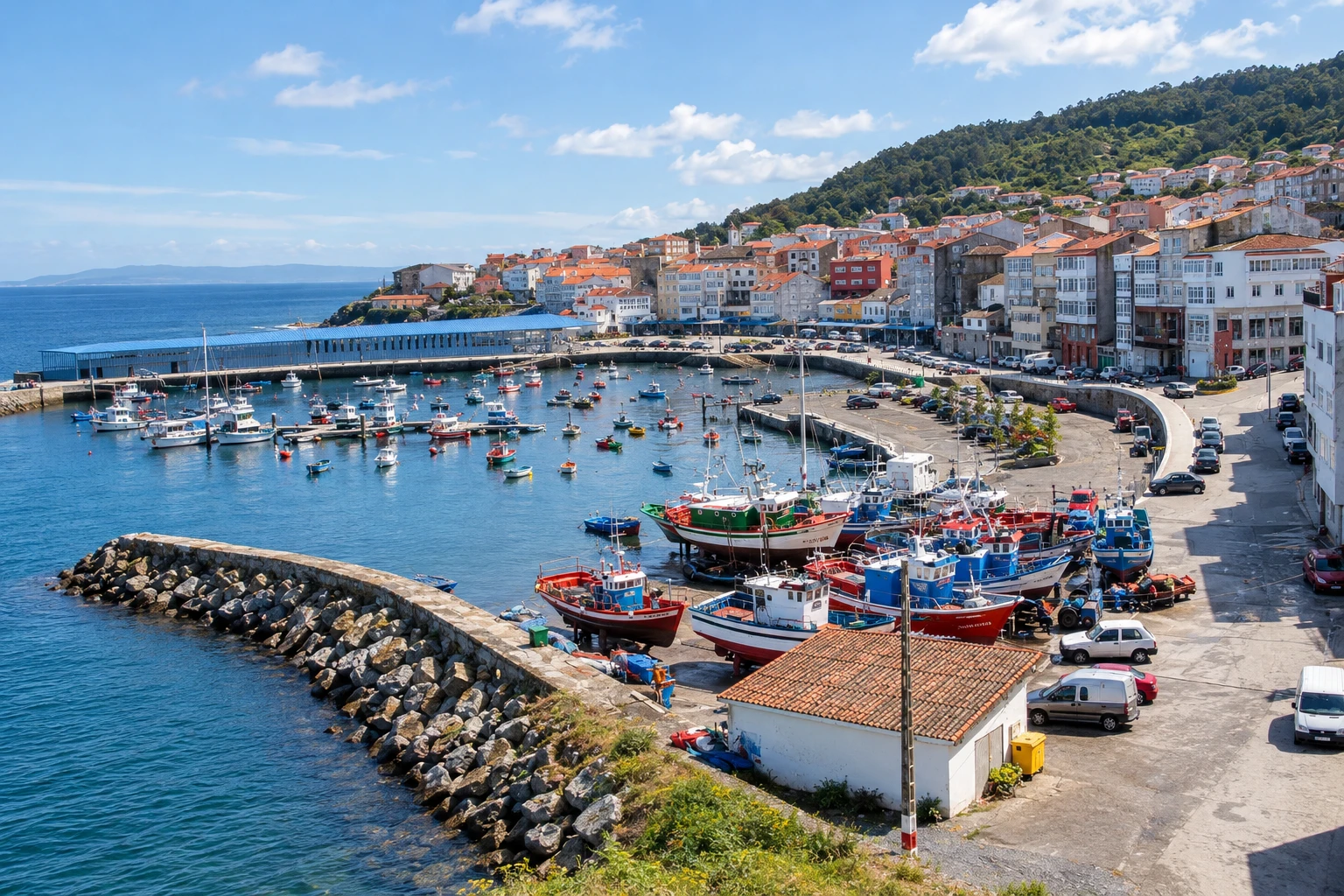
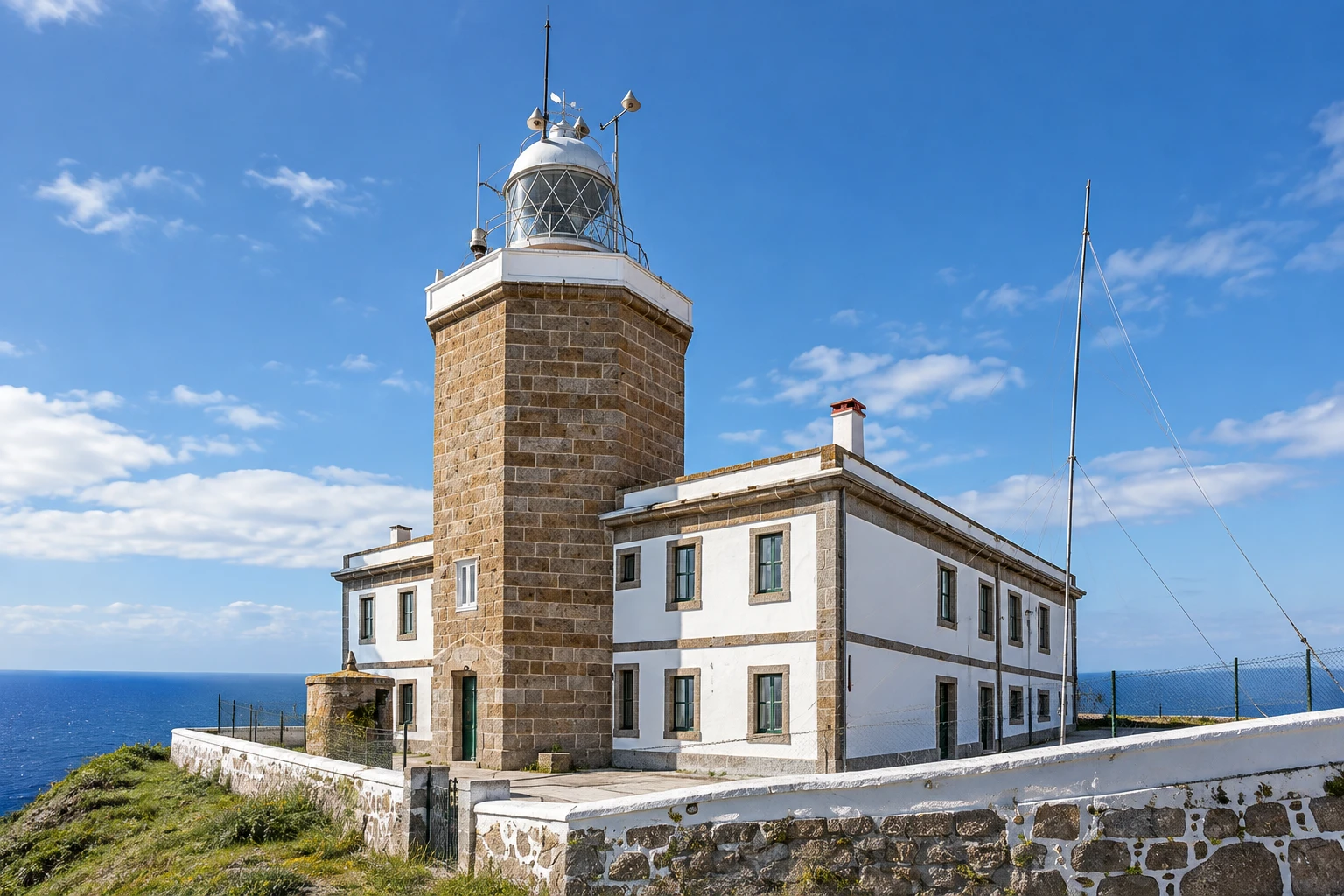
Fisterra is a fishing village on the Costa da Morte, in Galicia, about 90 km from Santiago de Compostela. About 3 km away is the cabo Fisterra, the finis terrae of the Romans, considered the end of the known world, with the lighthouse from 1853 and the kilometer-zero marker of the route many pilgrims walk after Santiago. On the way to the cape is the church of Santa María das Areas, with the Cristo de Fisterra. In the village the castelo de San Carlos houses the Museu da Pesca, and the port, with the lonxa, shows the coastal fishing. Galician and Spanish are spoken.

Muxía
Galicia · Santiago de Compostela and Galicia

Muxía

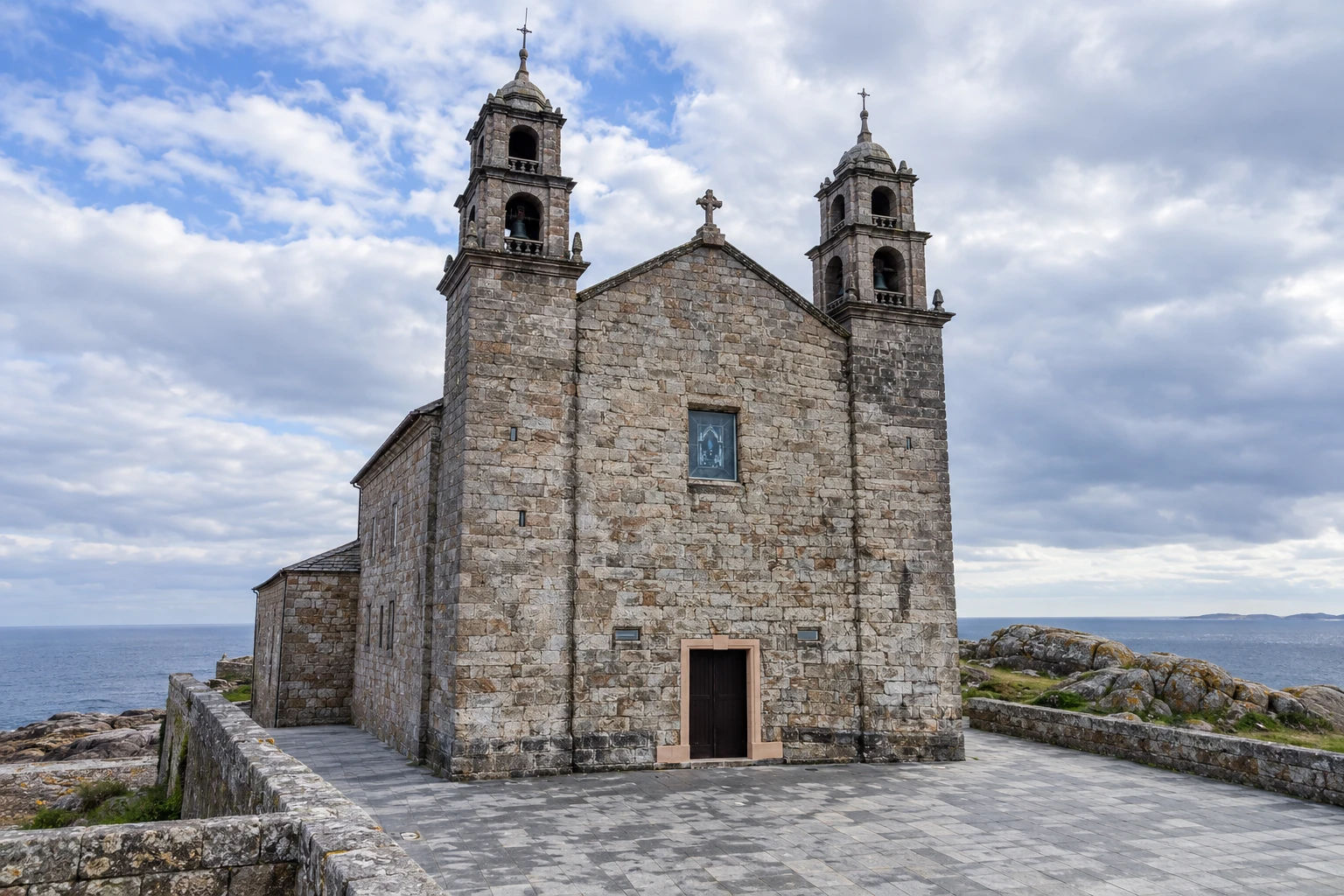
Muxía is a fishing village on the Costa da Morte in Galicia, about 80 km from Santiago de Compostela, on a peninsula facing the Atlantic. At the tip stands the sanctuary of the Virgem da Barca, among rocks linked to the legend of the stone boat that is said to have brought the Virgin to the apostle James, and beside it the sculpture A Ferida, a tribute to the volunteers of the Prestige oil spill disaster. The Gothic church of Santa María sits above the village, and about 3 km away is the Romanesque church of Moraime. The municipality includes Cabo Touriñán, the westernmost point of Galicia. Galician and Spanish are spoken.

Festivals and events

Festivals Santiago de Compostela and Galicia

Dates change every year: check this year's date before you travel.

Festival calendar in Spain

The local experience

Things to do in Santiago de Compostela and Galicia

Ferrol · Galicia · Historic neighborhood

A Magdalena Quarter

Neighborhood planned in the 18th century, under the reign of Carlos III, with straight streets, houses with glass galleries, modernist buildings and the praça de Armas; a protected historic ensemble.

Explore A Magdalena Quarter

A Guarda · Galicia · Archaeological site

Santa Trega Hillfort

Ruins of a castro settlement on the slopes of mount Santa Trega, occupied between the 1st century BC and the 1st century AD, with round stone houses and two reconstructed dwellings.

Explore Santa Trega Hillfort

Ourense · Galicia · Church

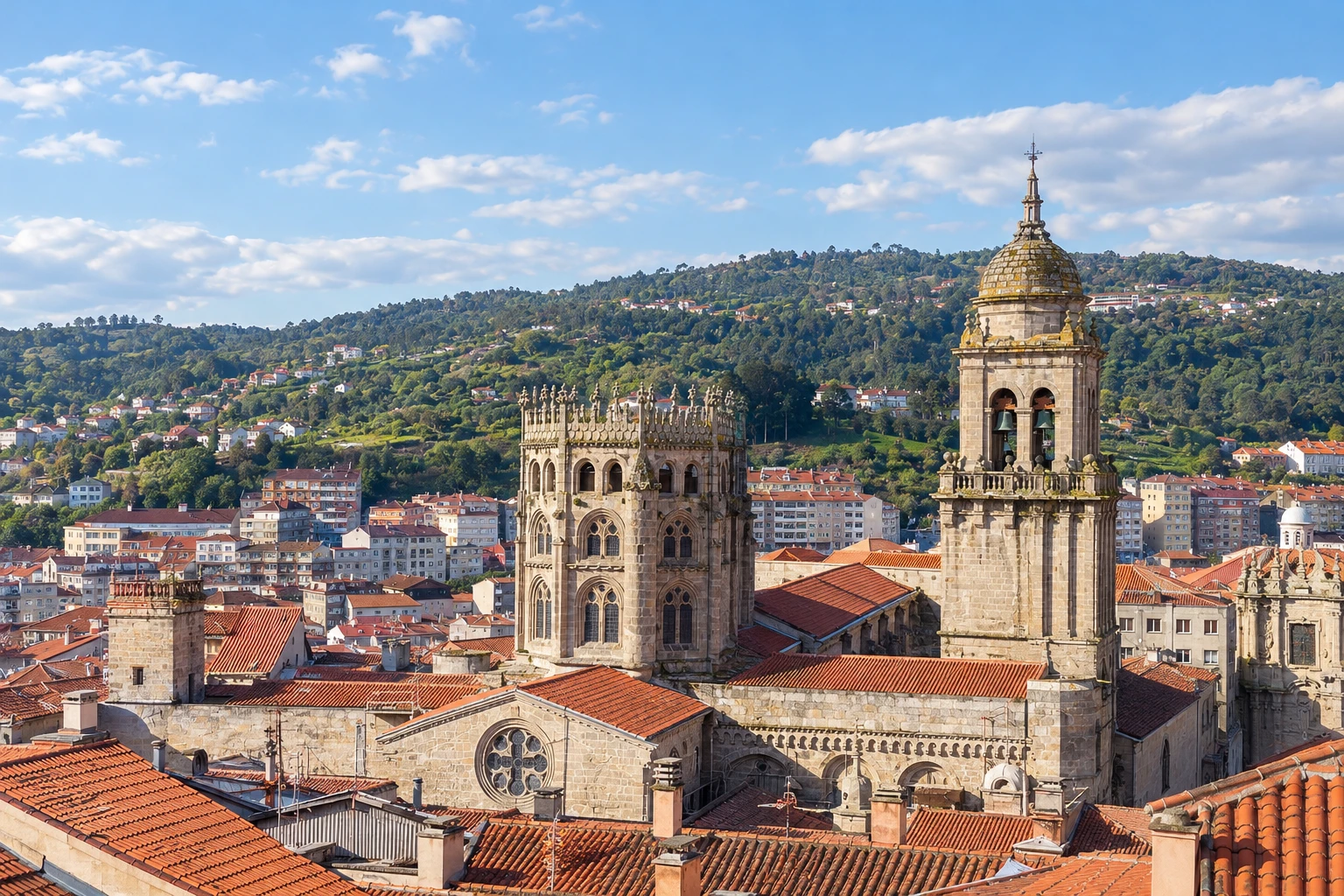
Ourense Cathedral

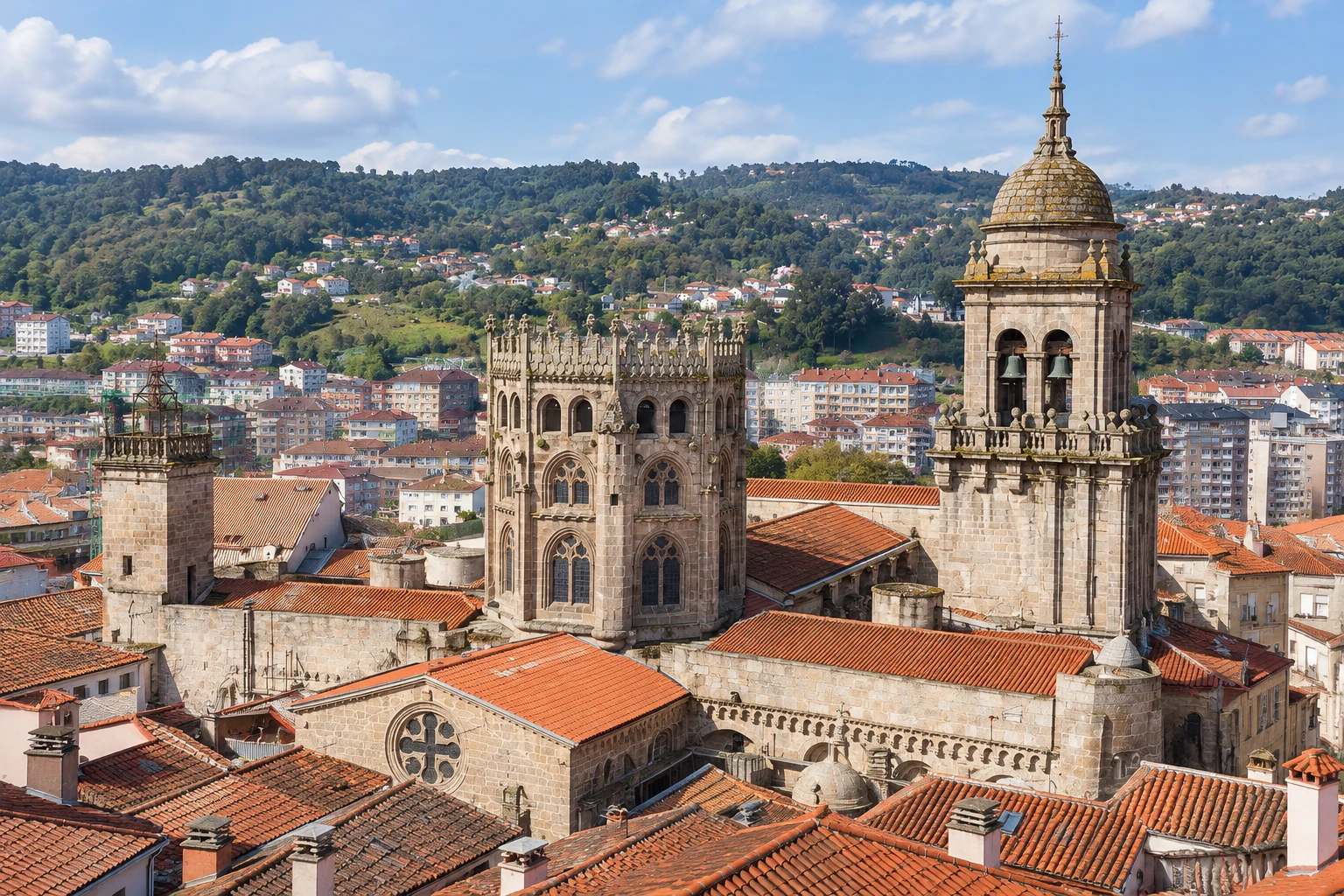
The cathedral of San Martiño, from the 12th and 13th centuries, is one of the great Romanesque churches of Galicia, with the polychrome Pórtico do Paraíso and the chapel of the Santo Cristo.

Explore Ourense Cathedral

See 92 more places in Santiago de Compostela and Galicia

Before you go

Practical information

A little planning leaves more time to enjoy the journey.

When to go

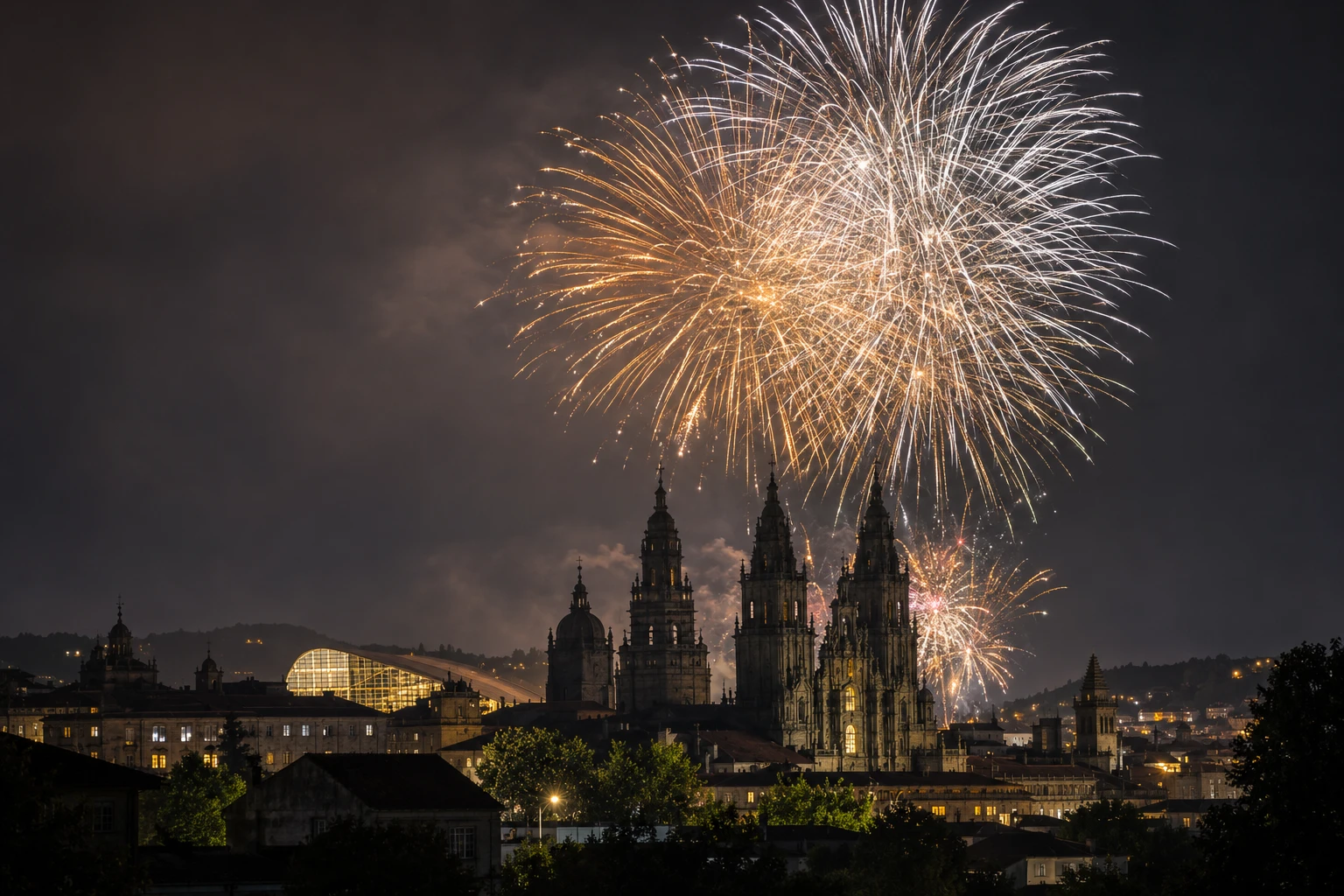
From June to September it usually rains less and the weather is mild, good for the Illas Cíes, which only receive regular boats in the season. May and October have fewer people but more rain. Winter is rainy and cold. In July, Santiago usually holds the Feast of the Apostle, with fireworks on the night of the 24th.

The seasons shown are the most usual ones; nature doesn't always follow the calendar.

How many days to stay

Two days in Santiago cover the cathedral, the historic center, the market and the Cidade da Cultura. Vigo needs one or two days, one of them for the Illas Cíes in season. Those coming from Porto can do the route in four days, with one night in Vigo and two in Santiago.

Which city to stay in

In Santiago, the old quarter leaves the cathedral and the restaurants within walking distance, but it has cobbled streets with climbs, bad for large suitcases; the Ensanche, to the south, has larger hotels and is a 10-minute walk away. In Vigo, the center between the Rúa do Príncipe and the Casco Vello is close to the port for the Cíes boats and to the train stations. Those who want the beach can stay near Samil, to the south, with buses to the center.

Respect the place

Take your trash with you, follow the signs and support local businesses. In natural areas, follow the visiting guidelines.

Beyond the guide

Your questions

Frequently asked questions about Santiago de Compostela and Galicia

Does a Brazilian understand Galician?

For the most part, yes. Galician and Portuguese share the same medieval origin, and many words are identical or similar. Everyone also speaks Spanish.

Do you need to do the Camino to visit Santiago?

No. The city receives many tourists who arrive by train, plane or bus. Those who want to feel the Camino can walk the last stretch, from Monte do Gozo, about 5 km from the cathedral.

How to go from Porto to Santiago de Compostela?

By train, via the Celta to Vigo and another train to Santiago, in about 4 hours in total, or by direct bus, in about 3h30. In some periods, part of the Celta journey is made by bus; check in advance.

Does it rain a lot in Galícia?

Yes, mainly from October to April. Santiago is one of the rainiest cities in Spain. Bring an umbrella and footwear that can handle wet stone.

What to eat in Galícia?

Polvo à feira (octopus with paprika and olive oil), shellfish, empanada galega, tetilla cheese, pimientos de Padrón and, for dessert, the Torta de Santiago made with almonds. The white Albariño wines come from the Rías Baixas.

Cross-border routes

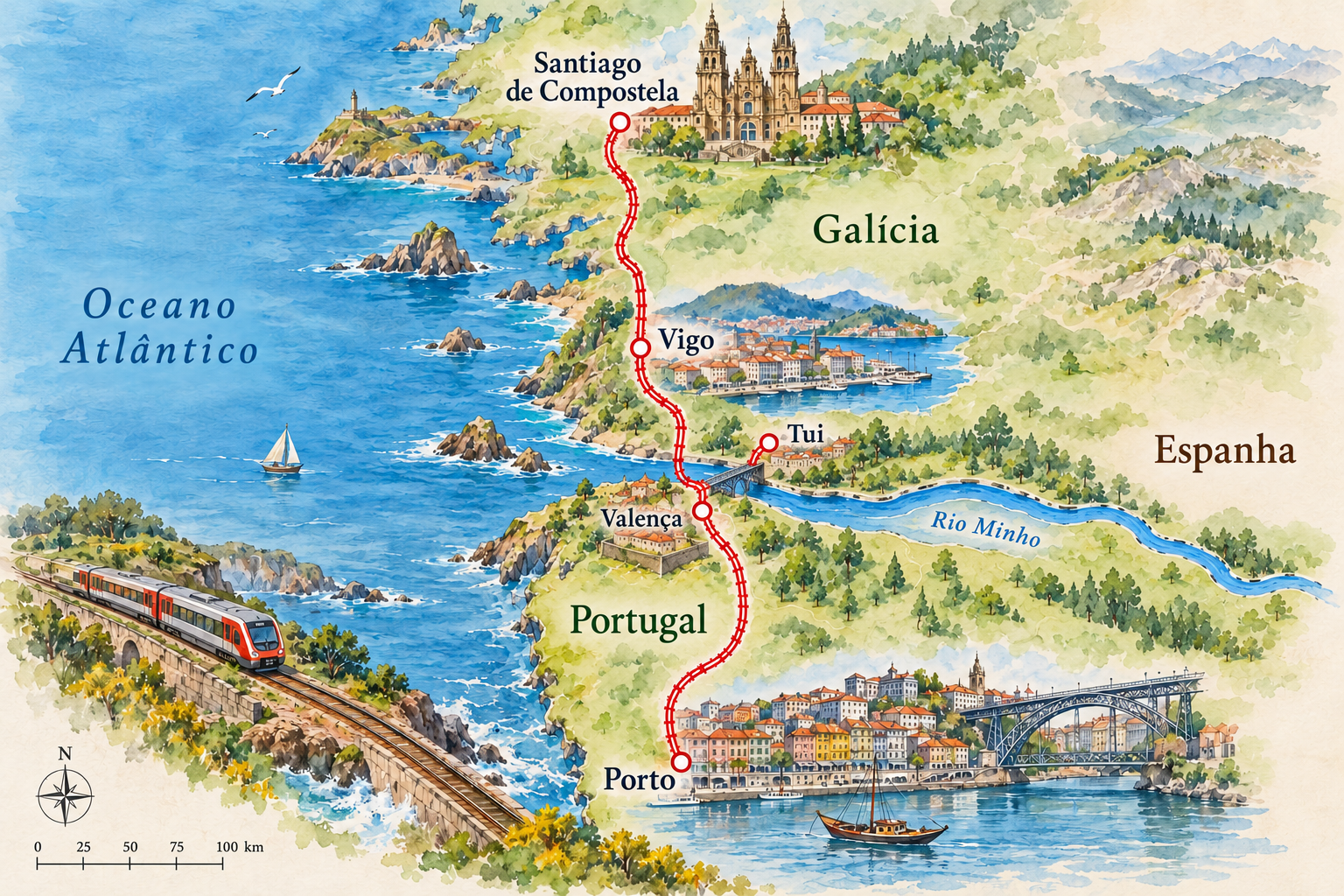
Santiago de Compostela and Galicia is on the Porto–Vigo–Santiago de Compostela by train

From Porto to Galicia by train: the Celta crosses the Minho to Vigo, and a regional train takes you to Santiago de Compostela in about an hour.

Illustrative map, not to scale. Tap a city to open its page.
Illustrated map of Porto–Vigo–Santiago de Compostela by train

Cross-border routes

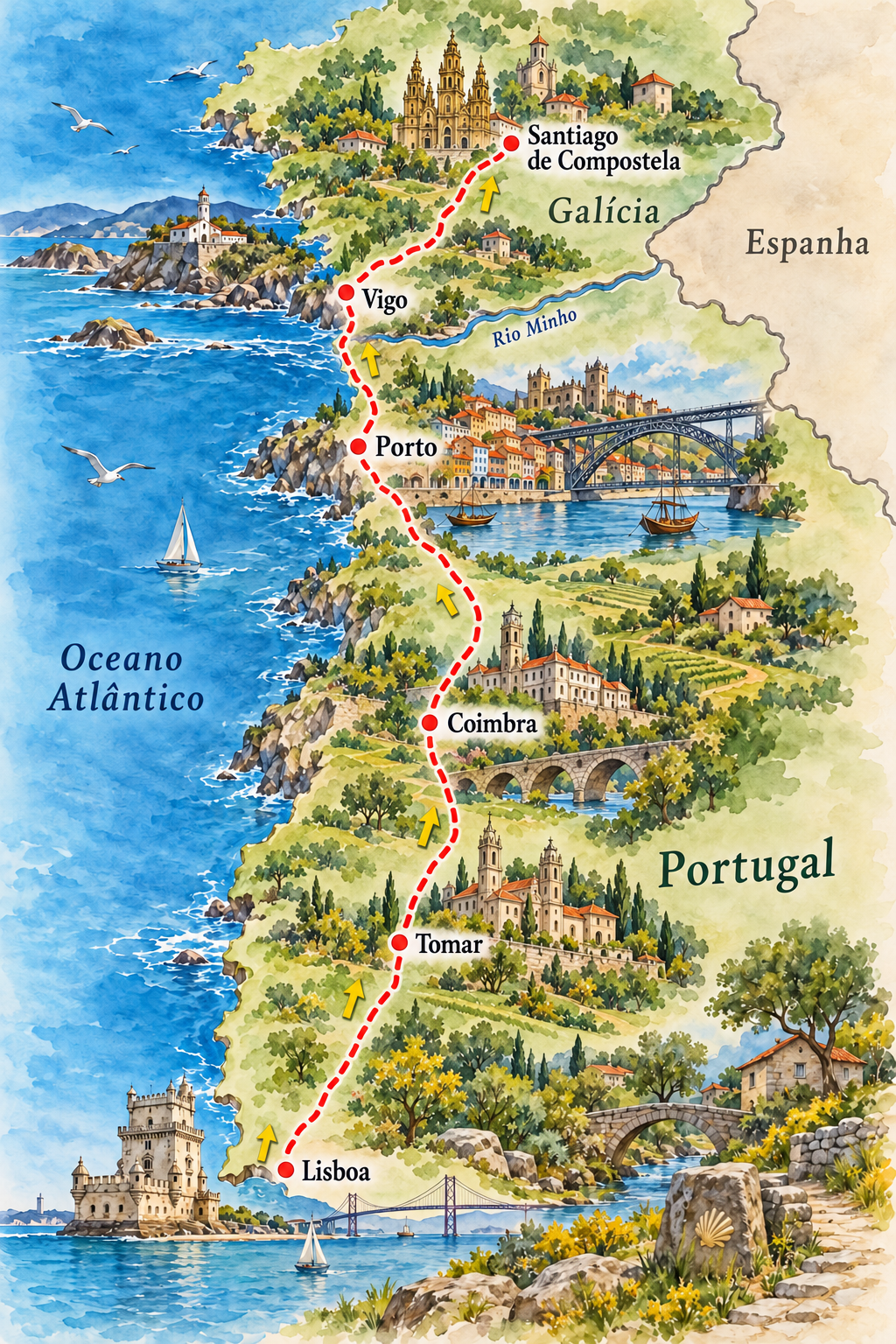
Santiago de Compostela and Galicia is on the Portuguese Way to Santiago on foot

On foot from Portugal to Santiago de Compostela: the pilgrimage route that starts in Lisbon or Porto, follows yellow arrows and ends at Obradoiro Square.

Illustrative map, not to scale. Tap a city to open its page.
Illustrated map of Portuguese Way to Santiago on foot

Cross-border routes

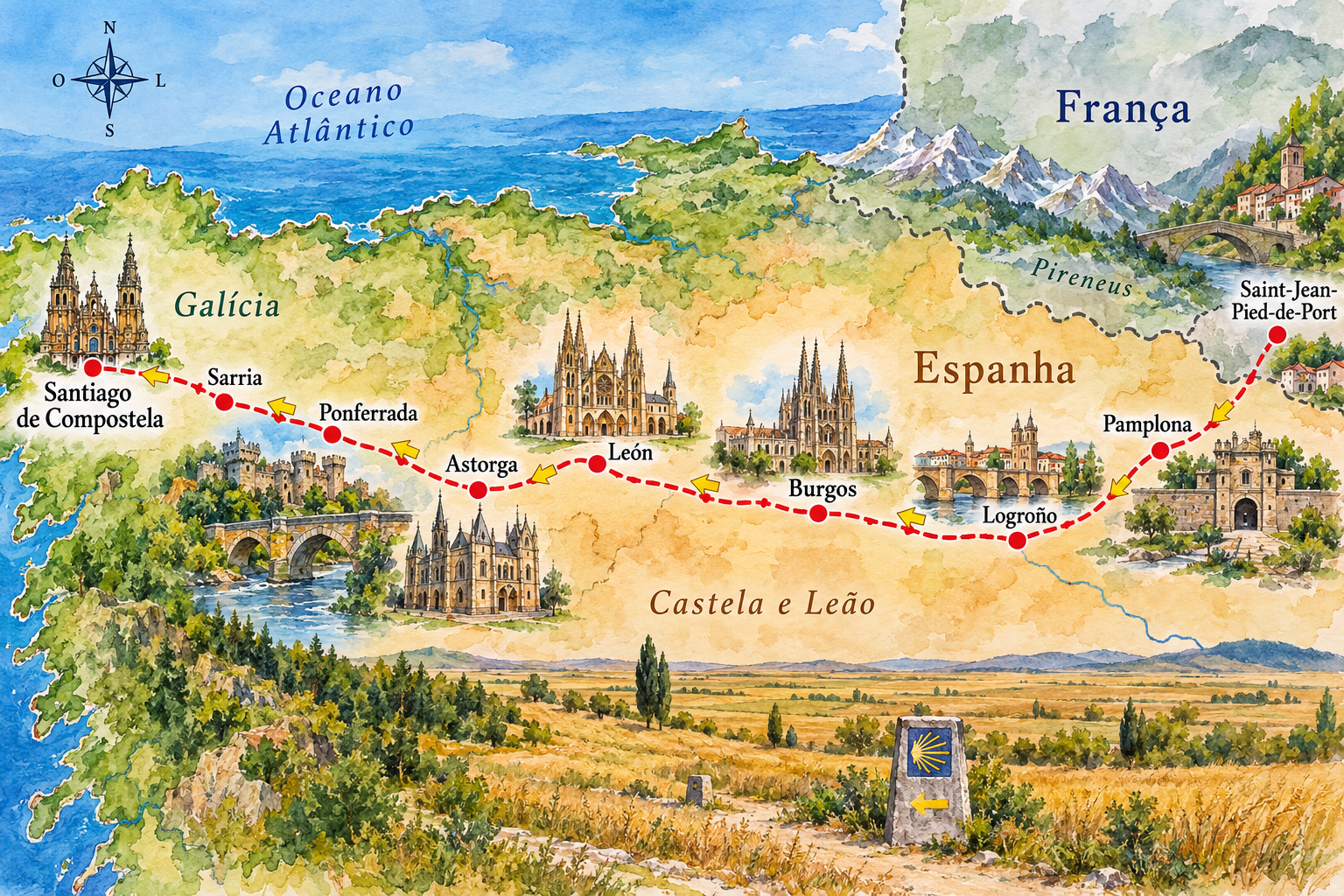
Santiago de Compostela and Galicia is on the French Way (Camino Francés) to Santiago on foot

The most travelled pilgrimage route to Santiago de Compostela: from the French Pyrenees to Galicia, on foot, via Pamplona, Burgos and León, following the yellow arrows.

Illustrative map, not to scale. Tap a city to open its page.
Illustrated map of French Way (Camino Francés) to Santiago on foot

Cross-border routes

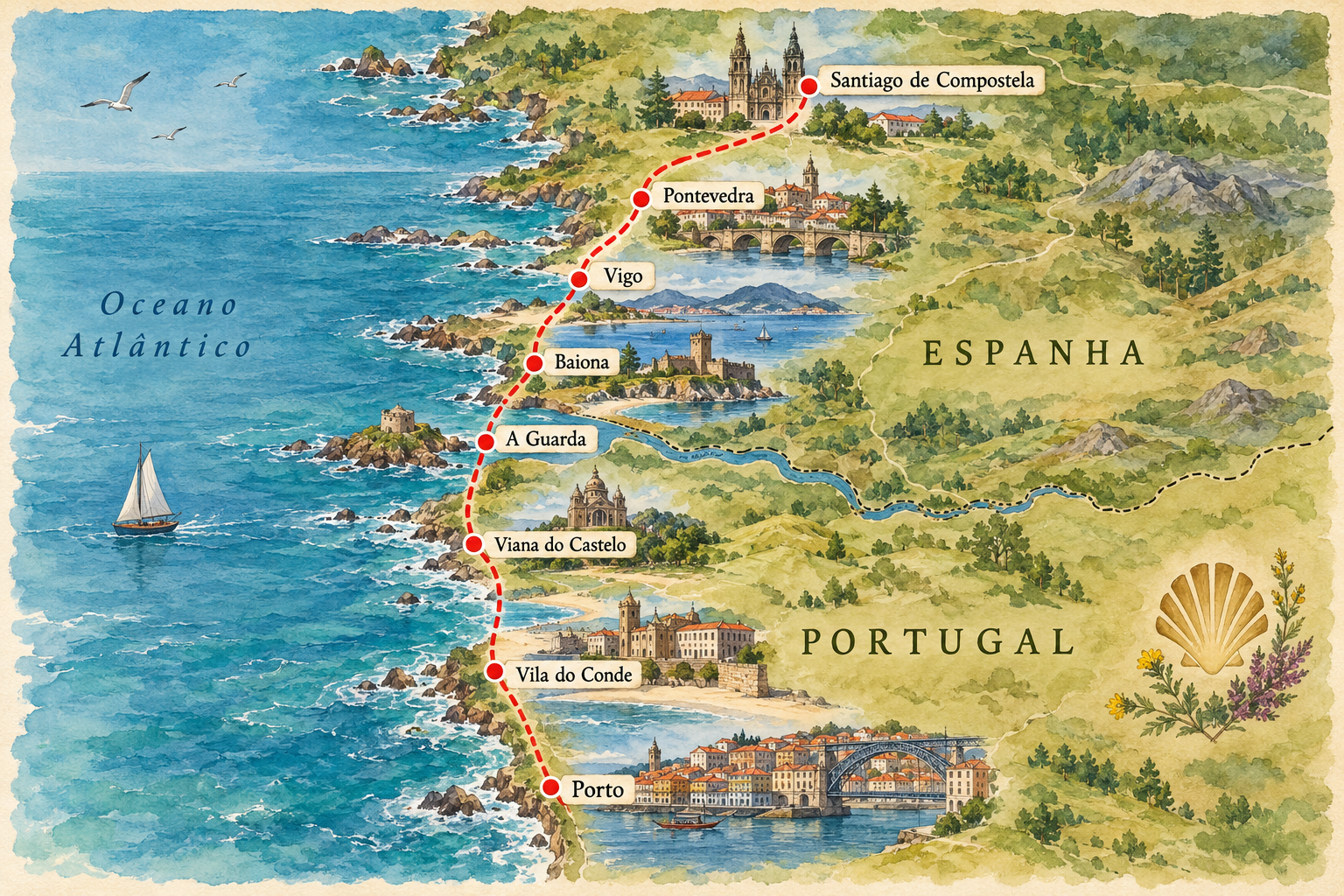
Santiago de Compostela and Galicia is on the Portuguese Coastal Way on foot

The Camino de Santiago along the Atlantic: from Porto to Galicia via the coast, through Vila do Conde, Viana do Castelo, A Guarda, Baiona and Vigo, ending at Santiago Cathedral.

Illustrative map, not to scale. Tap a city to open its page.
Illustrated map of Portuguese Coastal Way on foot

Routes in Spain

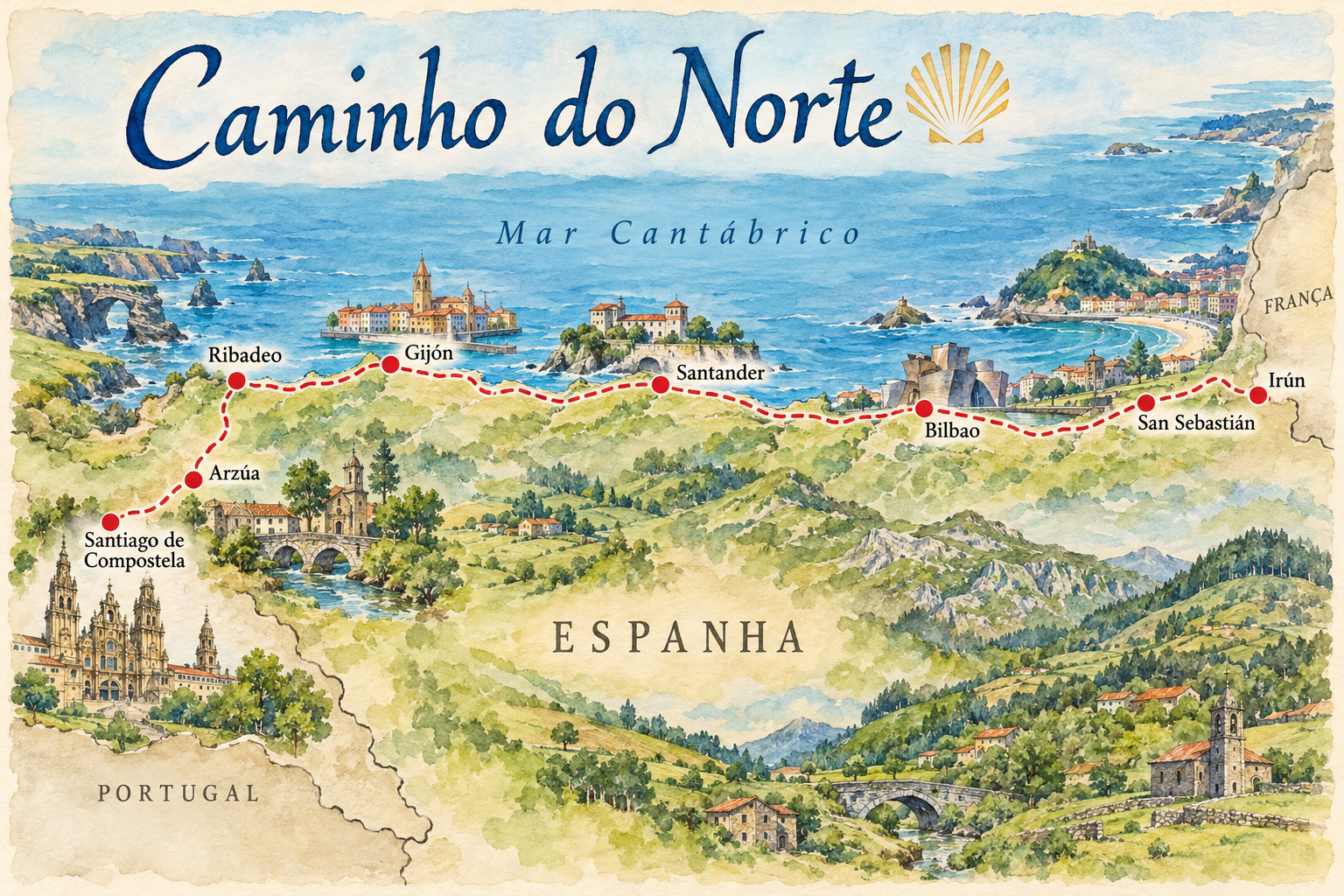
Santiago de Compostela and Galicia is on the Northern Way (Camino del Norte) to Santiago on foot

The Camino de Santiago along the Cantabrian coast: from the Basque Country to Galicia on foot, via San Sebastián, Bilbao, Santander and Gijón, between the sea and the green mountains.

Illustrative map, not to scale. Tap a city to open its page.
Illustrated map of Northern Way (Camino del Norte) to Santiago on foot
Explore the Northern Way (Camino del Norte) to Santiago on foot

Routes in Spain

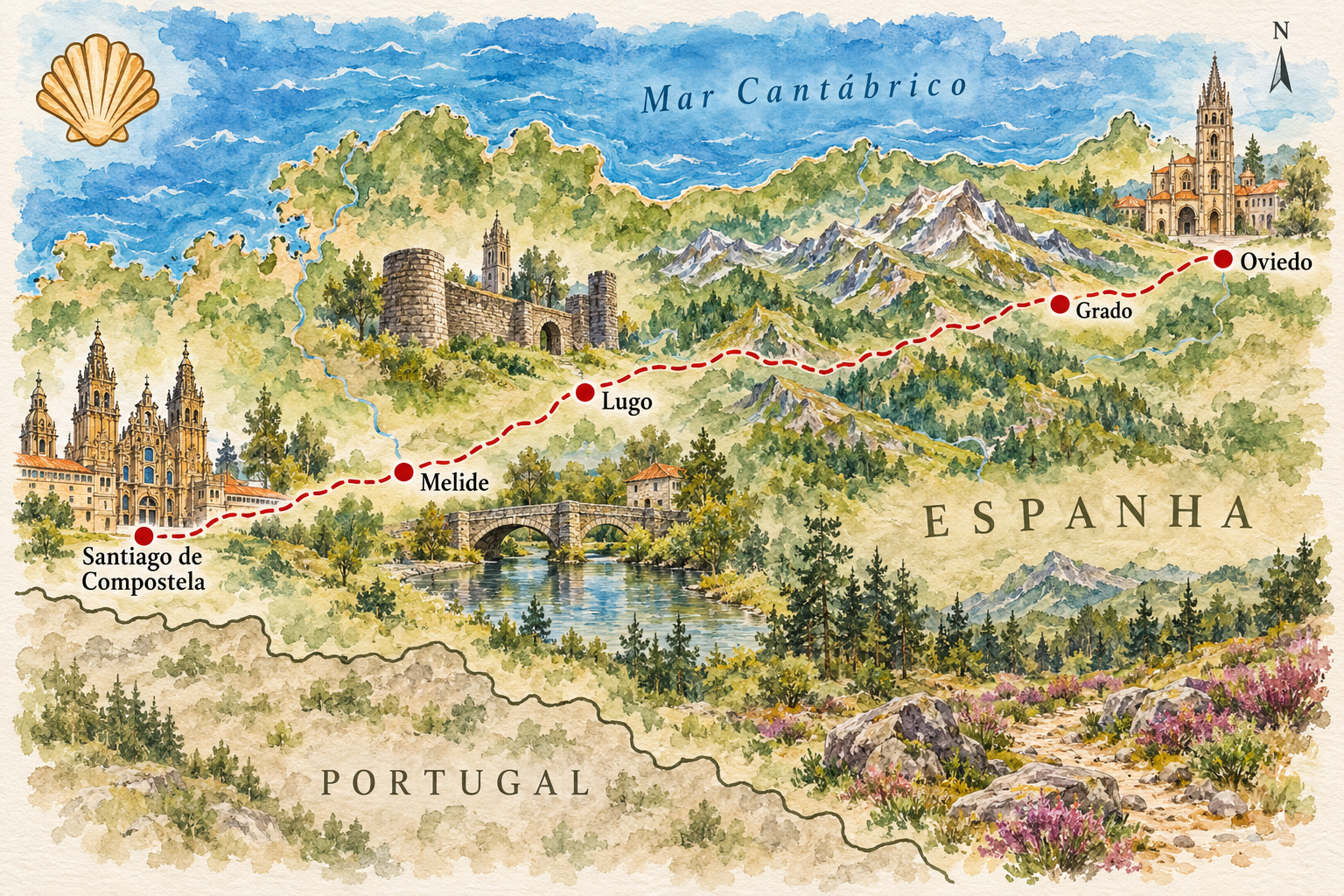
Santiago de Compostela and Galicia is on the Caminho Primitivo de Santiago on foot

The oldest route to Santiago: from Oviedo, through the mountains of Asturias and via Lugo and its Roman walls, on foot to the cathedral of Compostela.

Illustrative map, not to scale. Tap a city to open its page.
Illustrated map of Caminho Primitivo de Santiago on foot
Explore the Caminho Primitivo de Santiago on foot

Routes in Spain

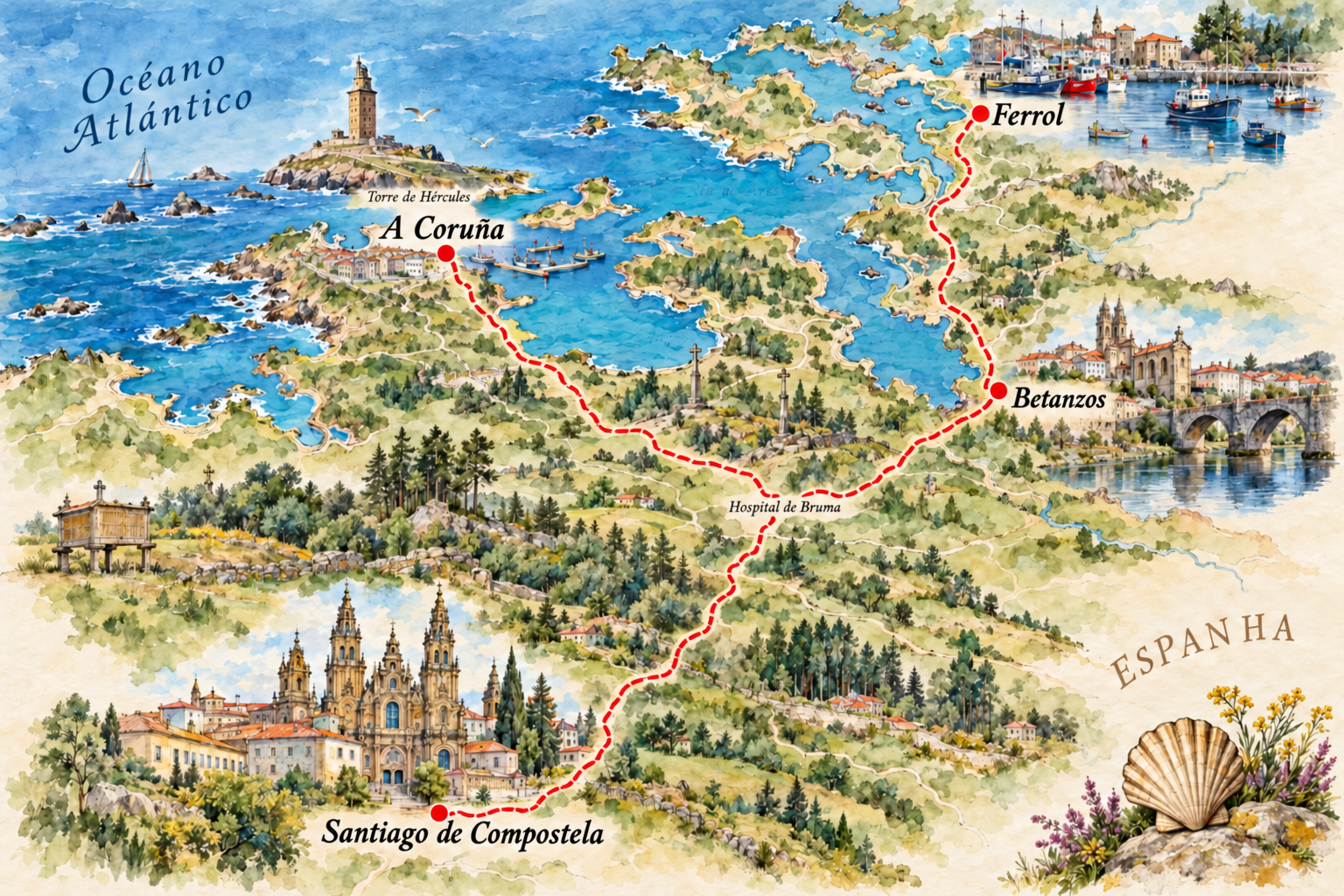
Santiago de Compostela and Galicia is on the English Way (Camino Inglés) to Santiago on foot

The route taken by pilgrims who arrived by sea: from Ferrol or A Coruña to Santiago de Compostela in under a week, along Galicia’s northern coast.

Illustrative map, not to scale. Tap a city to open its page.
Illustrated map of English Way (Camino Inglés) to Santiago on foot
Explore the English Way (Camino Inglés) to Santiago on foot

Routes in Spain

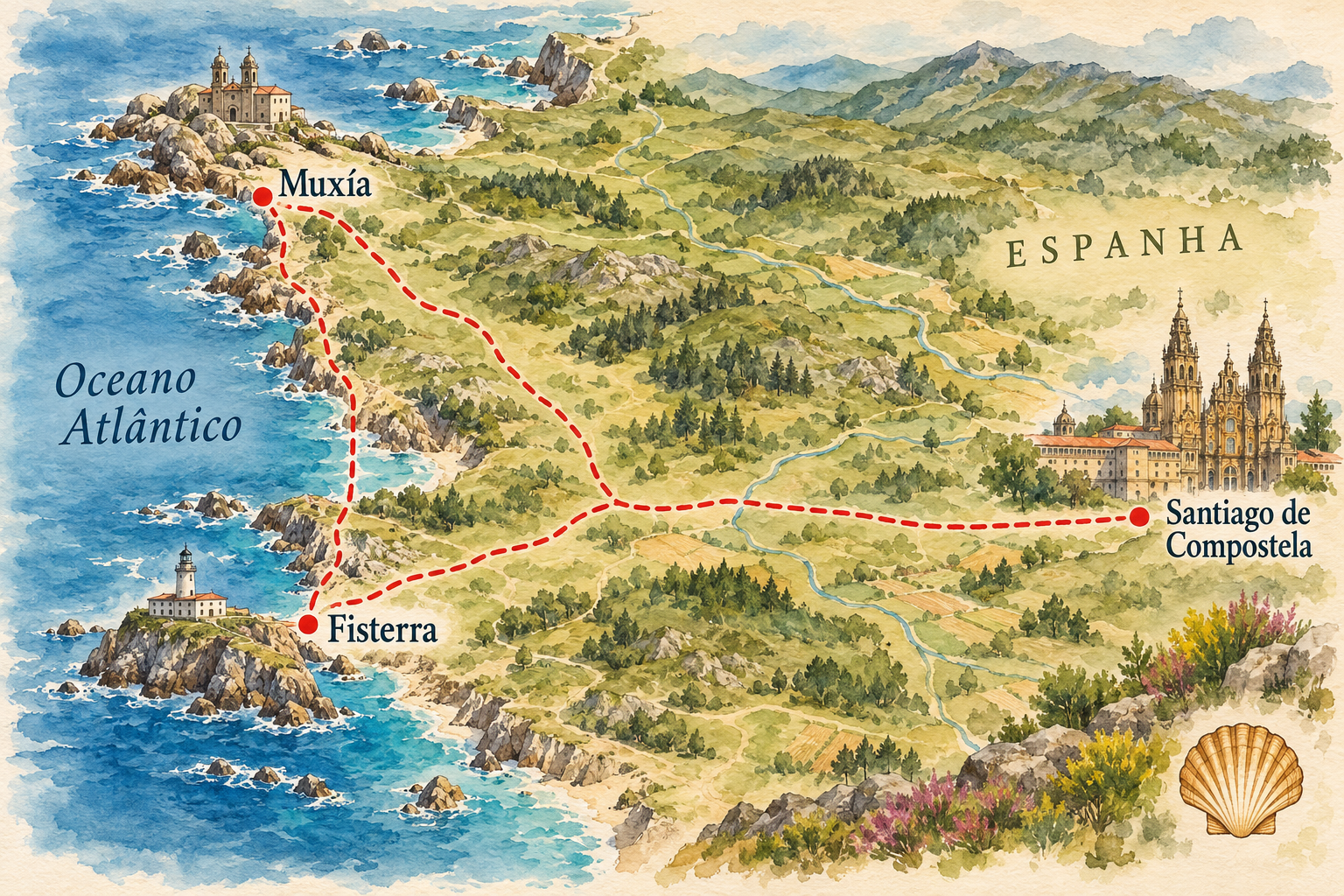
Santiago de Compostela and Galicia is on the Finisterre and Muxía walk

After the cathedral, the sea: on foot from Santiago de Compostela to Cape Finisterre, the old end of the world, and to the sanctuary of Muxía, on the Costa da Morte.

Illustrative map, not to scale. Tap a city to open its page.
Illustrated map of Finisterre and Muxía walk
Explore the Finisterre and Muxía walk

Routes in Spain

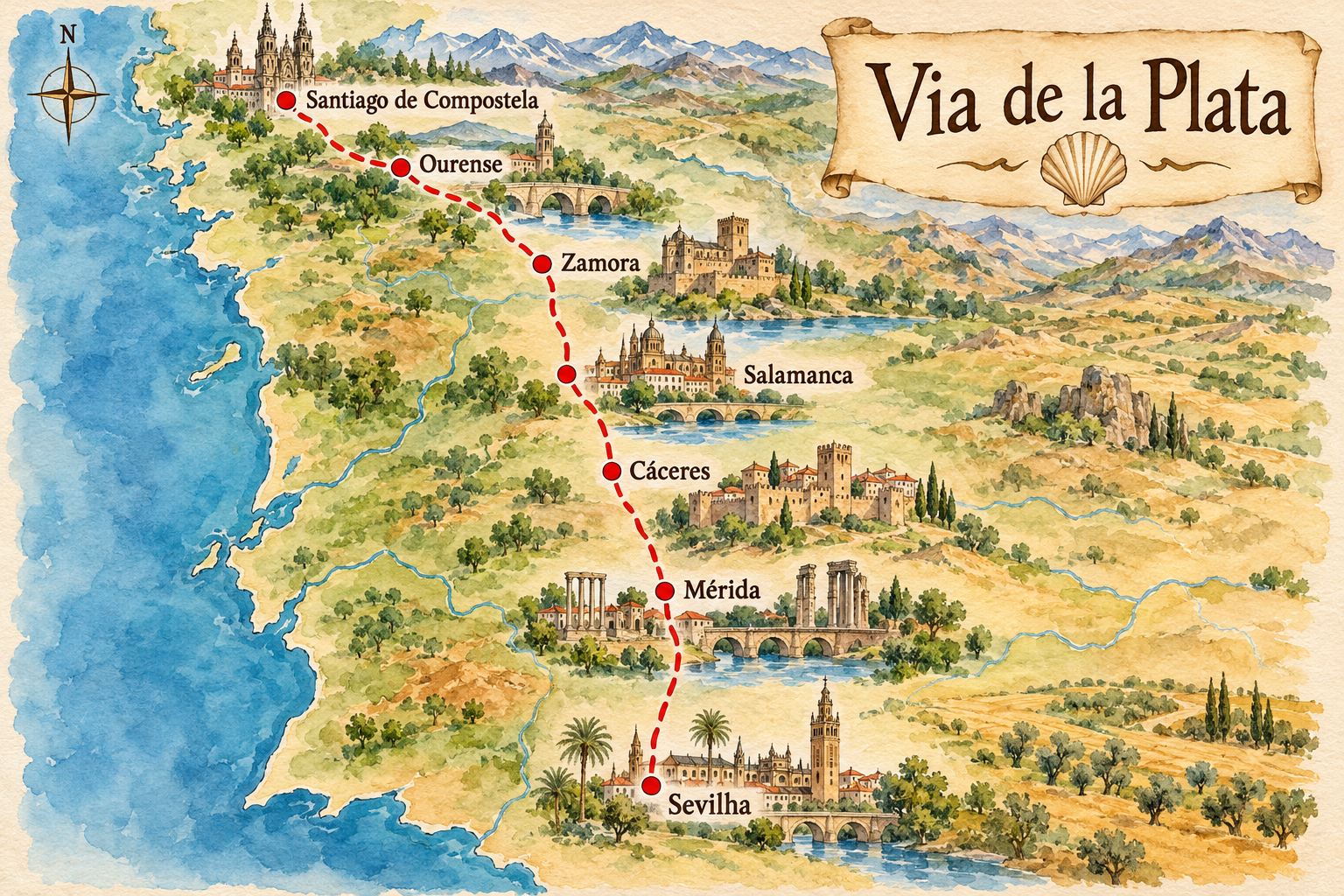
Santiago de Compostela and Galicia is on the Vía de la Plata from Seville to Santiago on foot

The longest Camino de Santiago in Spain: from Seville to Santiago de Compostela along the country’s west, following the old Roman road, via Mérida, Cáceres, Salamanca, Zamora and Ourense.

Illustrative map, not to scale. Tap a city to open its page.
Illustrated map of Vía de la Plata from Seville to Santiago on foot
Explore the Vía de la Plata from Seville to Santiago on foot
Explore other destinations Search by state and city