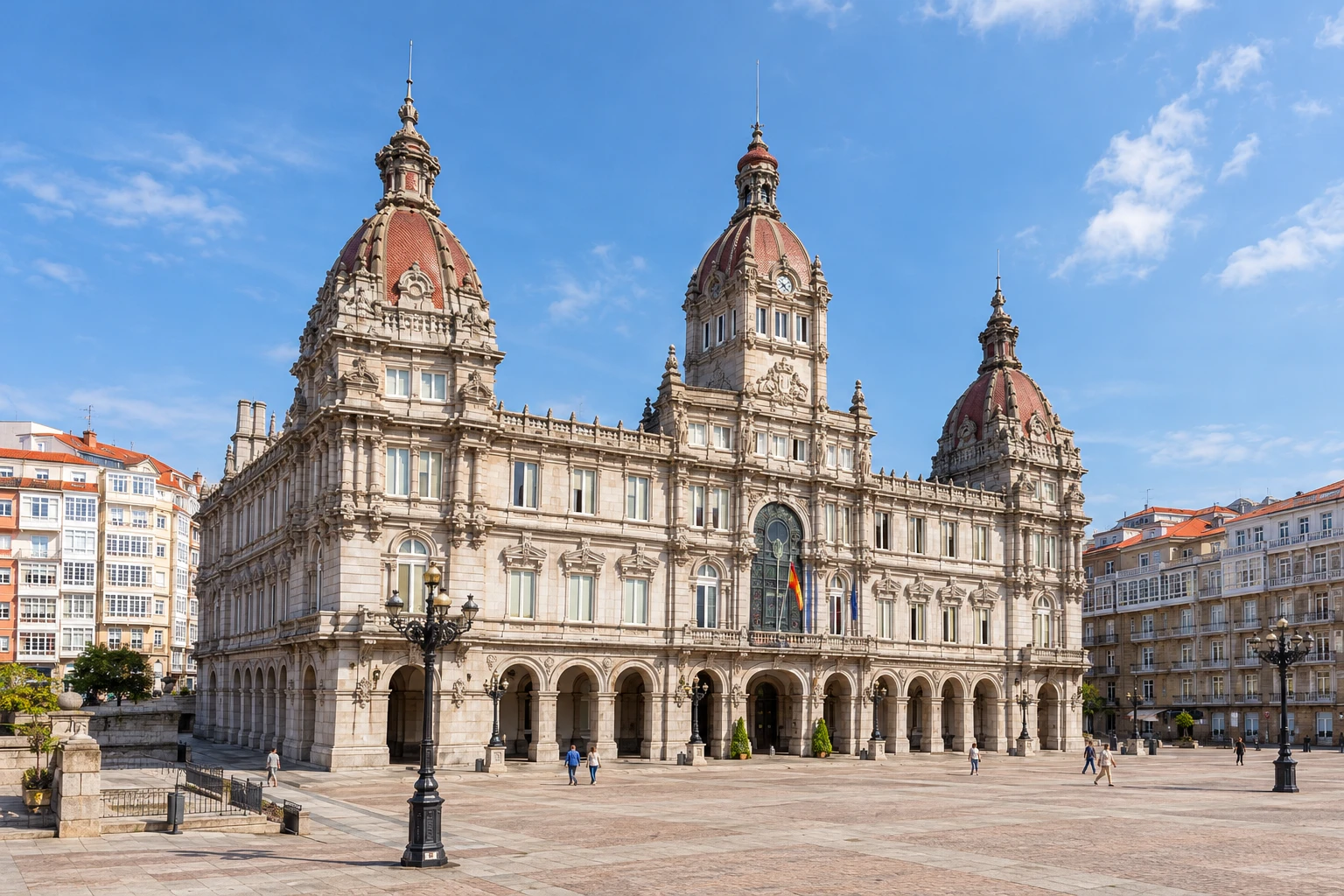
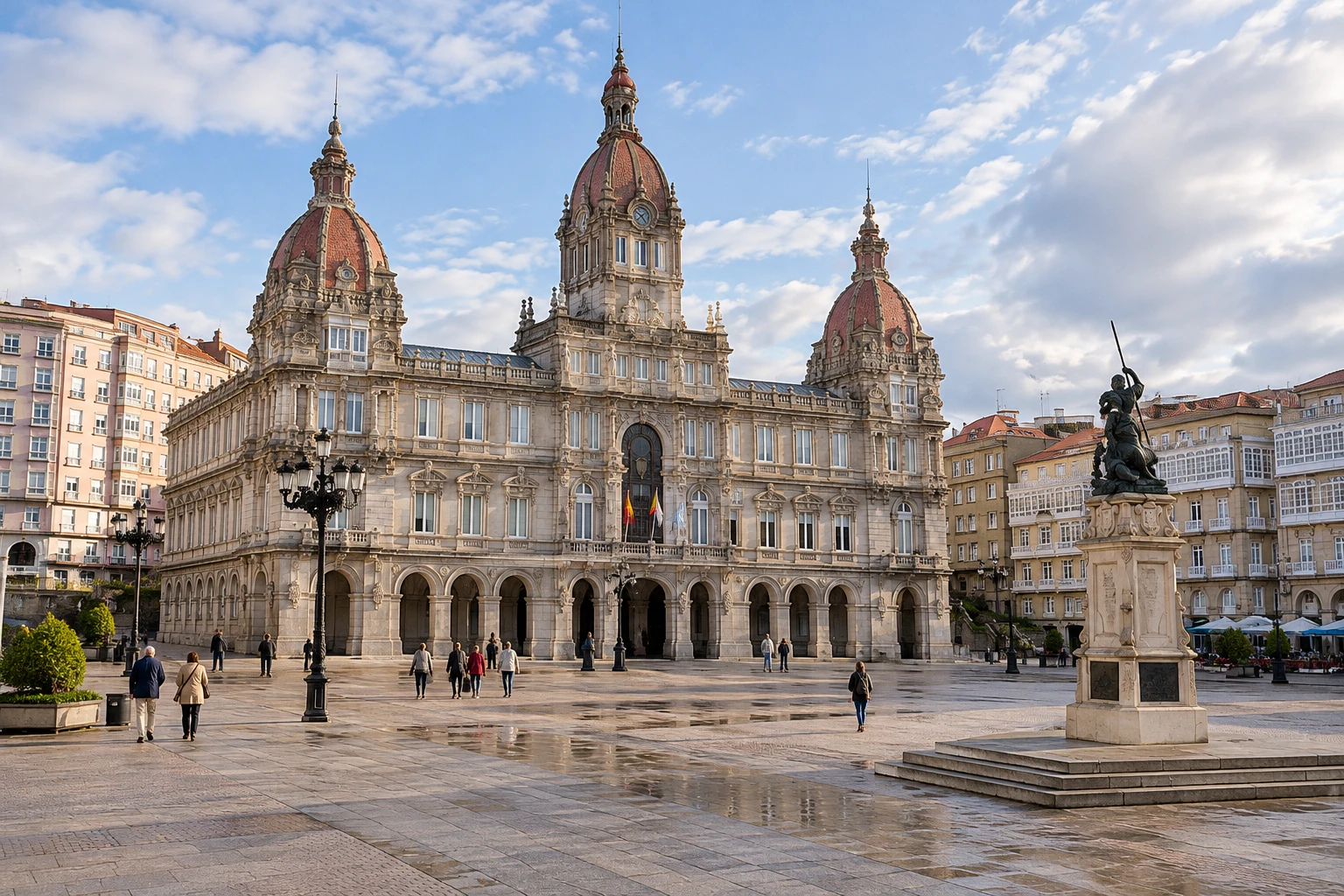
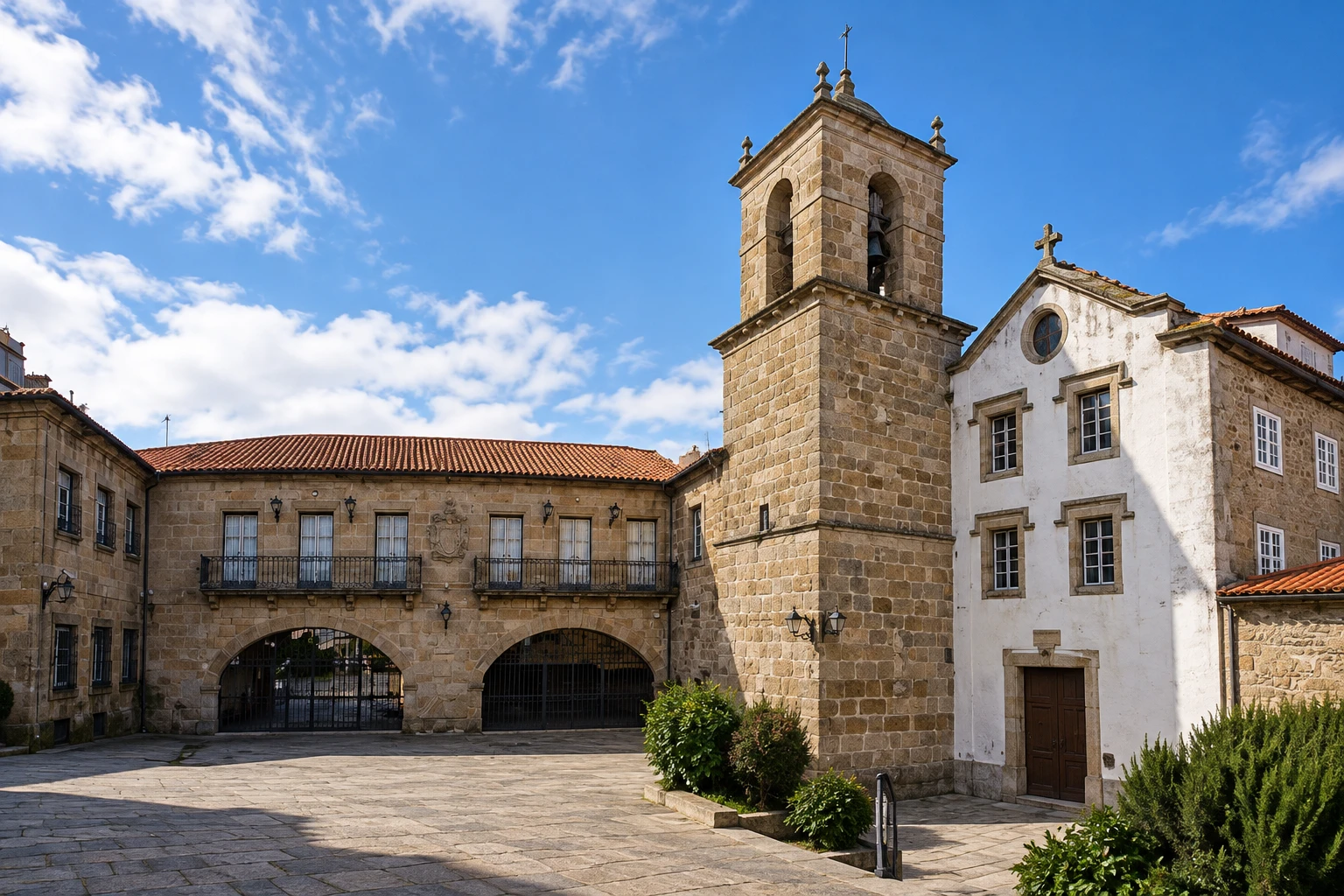
In the photo: Town Hall and plaza de María Pita, A Coruña
Illustrative images. The pictures in this guide are illustrations based on the real place, not photographs, and may differ from it.
The city
What to expect from A Coruña.
A Coruña is a Galician city on an Atlantic peninsula, about 75 km from Santiago de Compostela. At the northern tip stands the Torre de Hércules, the only Roman lighthouse still in operation and a World Heritage Site. The glass galleries along avenida da Mariña lead to plaza de María Pita and the Old Town, with the colegiata de Santa María do Campo and the San Carlos garden. The castle of San Antón houses the archaeological museum. A seaside promenade skirts the peninsula, with the beaches of Riazor and Orzán, the Aquarium Finisterrae, the Domus, the Casa das Ciências and monte de San Pedro.
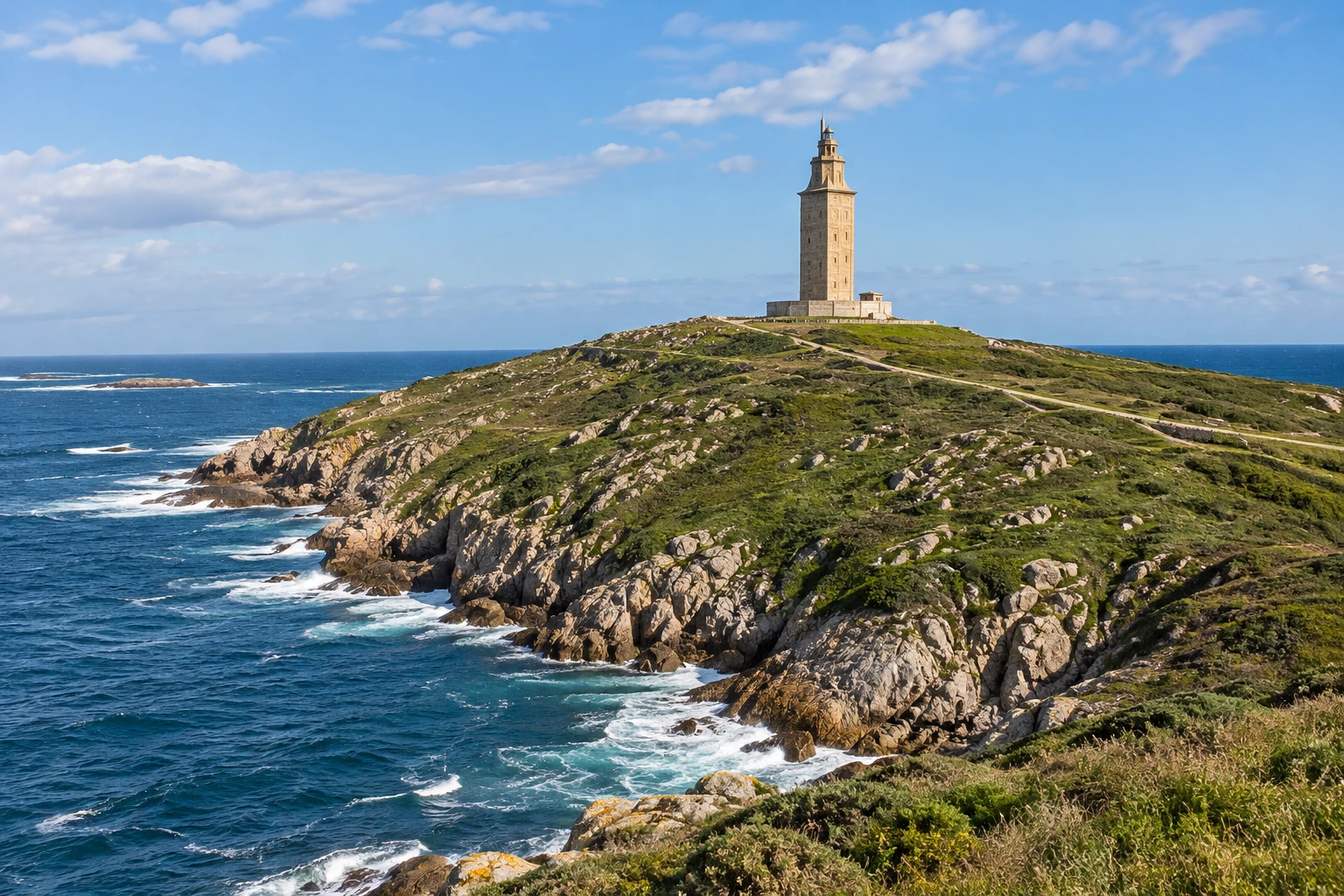
Roman lighthouse from the late 1st and early 2nd centuries, 55 meters tall, with an 18th-century neoclassical refurbishment; the only Roman lighthouse still in operation; a World Heritage Site since 2009.
Large square in A Coruña, over 10,000 m², surrounded by arcades and glass galleries, with the town hall and the statue of María Pita, heroine of the city's defense against the English fleet in 1589.
Medieval neighborhood of A Coruña, with stone streets, the Romanesque collegiate church of Santa María do Campo and the jardín de San Carlos, where the tomb of the English general John Moore is located.
Aeroporto de A Coruña (Aeropuerto de A Coruña-Alvedro) (LCG)8 km
Estação de trem de A Coruña (Estación de A Coruña)2 km
Approximate distances. Check flights and bus, train or boat schedules before you travel.
Connections to Brazil are usually via a stop in another city. Confirm before buying. A Coruña airport is about 8 km from the center, with flights from Spanish and European cities; Santiago airport is about 70 km away. A Coruña station has trains to Santiago and Vigo on the Eixo Atlántico, and services to Madrid, Lugo and Ferrol. There are buses to Galician cities. By car, via the AP-9 and A-6 motorways.
How many days
Two days are enough for the Torre de Hércules, the seaside promenade, the Mariña, plaza de María Pita, the Old Town, the castle of San Antón and one of the science museums. With three days you’ll have time for monte de San Pedro, the beaches and a day trip to Betanzos or Ferrol.
When to go
From June to September it usually rains less and is less cold; it’s the beach season for Riazor and Orzán. On the night of June 23–24 the festival of San Juan fills the beaches with bonfires. The city is windy year-round and winters are rainy. The seasons are opposite to Brazil; Spain is 4 to 5 hours ahead of Brasília depending on the time of year, and meals are served later than in Brazil.
The seasons shown are the most usual ones; nature doesn't always follow the calendar.
Do you need a car?
No. The center, the Old Town and the seaside promenade are walkable, and city buses reach the Torre de Hércules and monte de San Pedro. Trains link the city with Santiago, Betanzos and Ferrol.
Suggested itinerary
An order that works
Built with the places on this page. No rush: it's paced so you have time to see them.
One day in A Coruña
manhã
Torre de Hércules
Visit the Torre de Hércules, climb to the top and walk around the surrounding sculpture park facing the Atlantic.
tarde
Seaside promenade and Aquarium
Follow the seaside promenade to the Aquarium Finisterrae or the Domus, depending on your interest.
fim de tarde
Mariña and María Pita
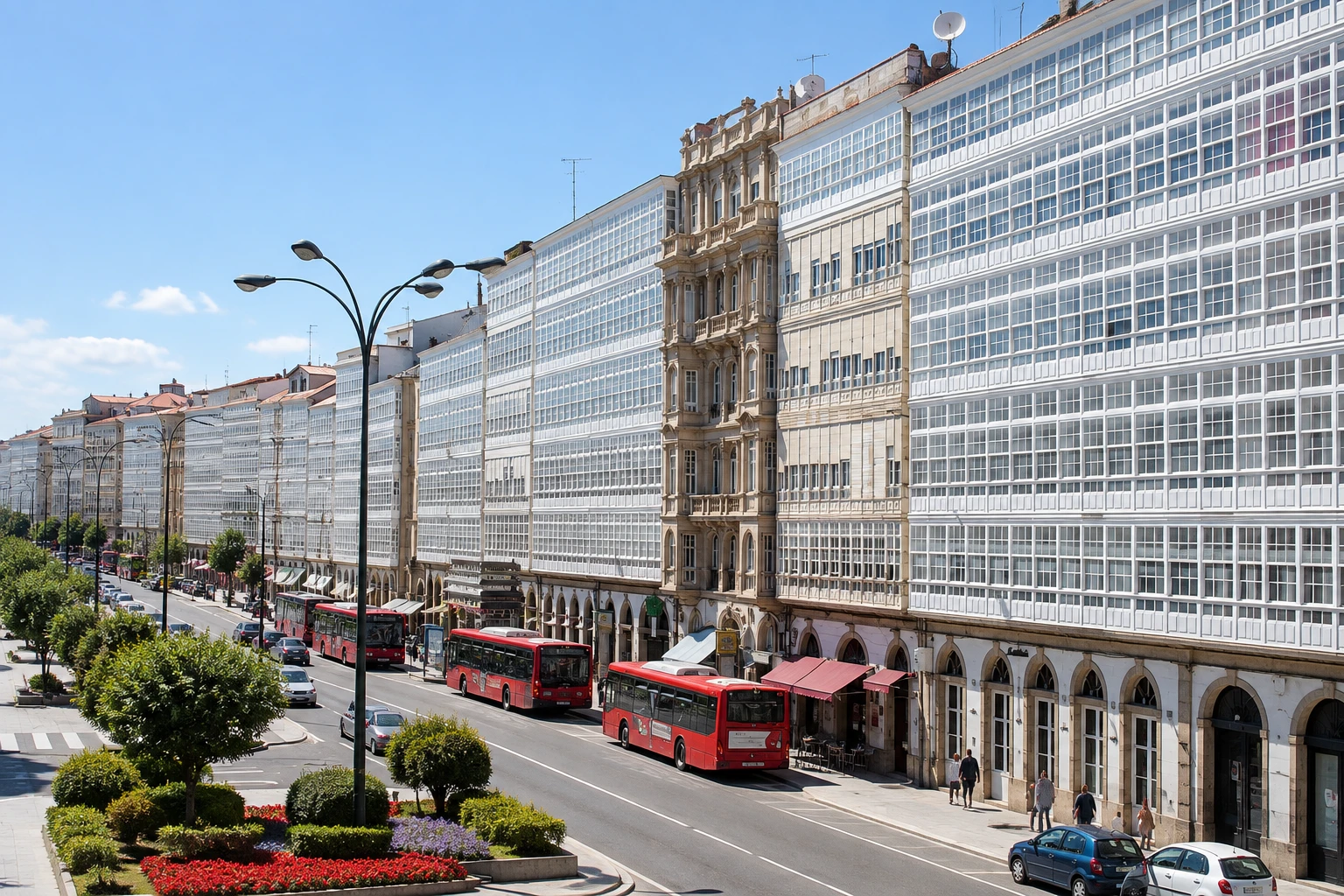
Go to avenida da Mariña, with its glass galleries, and to plaza de María Pita, where the town hall is located.
noite
Tapas on rua da Estrela
Do a tapas crawl along the streets da Estrela, da Galera and da Franxa, near María Pita.
2 days in A Coruña
Day 2
manhã
Old Town
Walk through the Old Town, with the colegiata de Santa María do Campo and the San Carlos garden.
tarde
Castle of San Antón
Visit the castle of San Antón and the archaeological museum by the harbor.
fim de tarde
Monte de San Pedro
Go up monte de San Pedro by bus or by the panoramic elevator for the sunset over the city.
Check before you go. Opening hours and days change, and places may close for renovations, holidays or events. This itinerary is a suggestion from Cidade Turismo, not a commitment: plan yours by checking directly with each place you intend to visit.
Before you go
Frequently asked questions
Does the Torre de Hércules still function as a lighthouse?
Yes. It is the only Roman lighthouse still in operation, built between the late 1st century and the early 2nd century, and it has been a World Heritage Site since 2009.
Why is A Coruña called the 'city of glass'?
Because of the glass gallery façades along avenida da Mariña, which sparkle in the sun.
How to get from Santiago to A Coruña?
By train on the Eixo Atlántico in about 30 to 40 minutes depending on the service, or by bus.
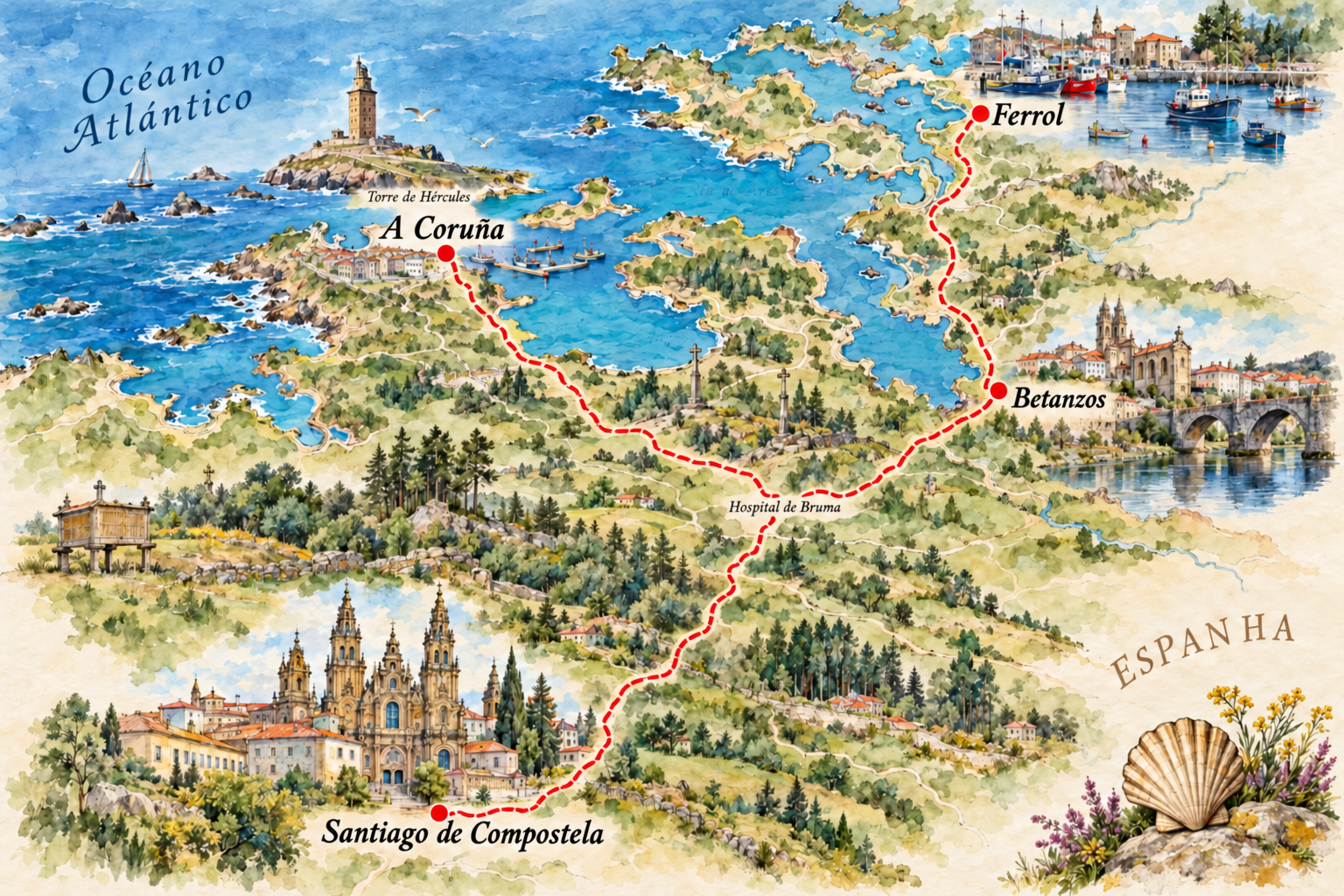
Does the English Way (Camino Inglés) start from A Coruña?
Yes, there is a variant of the Camino Inglés that starts in A Coruña and joins the one from Ferrol, but it is under 100 km to Santiago.


 Brazil
 Antarctica
 Argentina
 Bolivia
 Chile
 Colombia
 Ecuador
 Falkland Islands (Malvinas)
 French Guiana
 Guyana
 Paraguay
 Peru
 Suriname
 Uruguay
 Venezuela
 Austria
 Belgium
 Croatia
 Denmark
 Finland
 France
 Germany
 Greece
 Hungary
 Iceland
 Ireland
 Italy
 Luxembourg
 Norway
 Poland
 Portugal
 Slovakia
 Slovenia
 Sweden
 Switzerland
 the Czech Republic
 the Netherlands
 the United Kingdom
 Turkey
 Bermuda
 Canada
 Greenland
 Mexico
 Saint Pierre and Miquelon
 the United States
 the Dominican Republic
 Japan
 Egypt
 South Africa
 Australia
 Fiji
 New Zealand
 Papua New Guinea