Ourense · Spain · Church
Ourense Cathedral
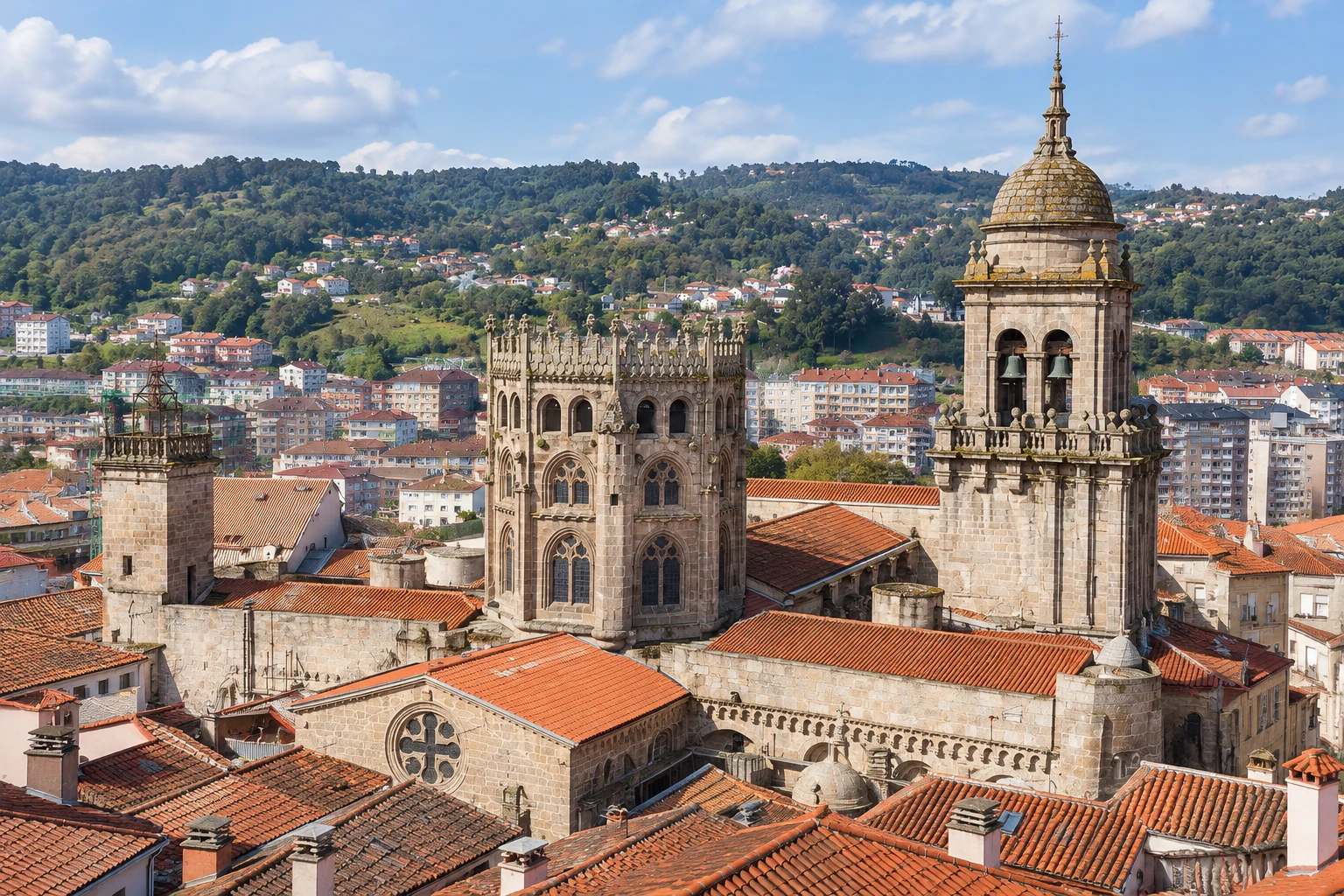
The cathedral of San Martiño, from the 12th and 13th centuries, is one of the great Romanesque churches of Galicia, with the polychrome Pórtico do Paraíso and the chapel of the Santo Cristo.

 Search
 Brazil
 Antarctica
 Argentina
 Bolivia
 Chile
 Colombia
 Ecuador
 Falkland Islands (Malvinas)
 French Guiana
 Guyana
 Paraguay
 Peru
 Suriname
 Uruguay
 Venezuela
 Austria
 Belgium
 Croatia
 Denmark
 Finland
 France
 Germany
 Greece
 Hungary
 Iceland
 Ireland
 Italy
 Luxembourg
 Norway
 Poland
 Portugal
 Slovakia
 SloveniaSpain
 Sweden
 Switzerland
 the Czech Republic
 the Netherlands
 the United Kingdom
 Turkey
 Bermuda
 Canada
 Greenland
 Mexico
 Saint Pierre and Miquelon
 the United States
 the Dominican Republic
 JapanTurkey
 Egypt
 South Africa
 Australia
 Fiji
 New Zealand
 Papua New Guinea
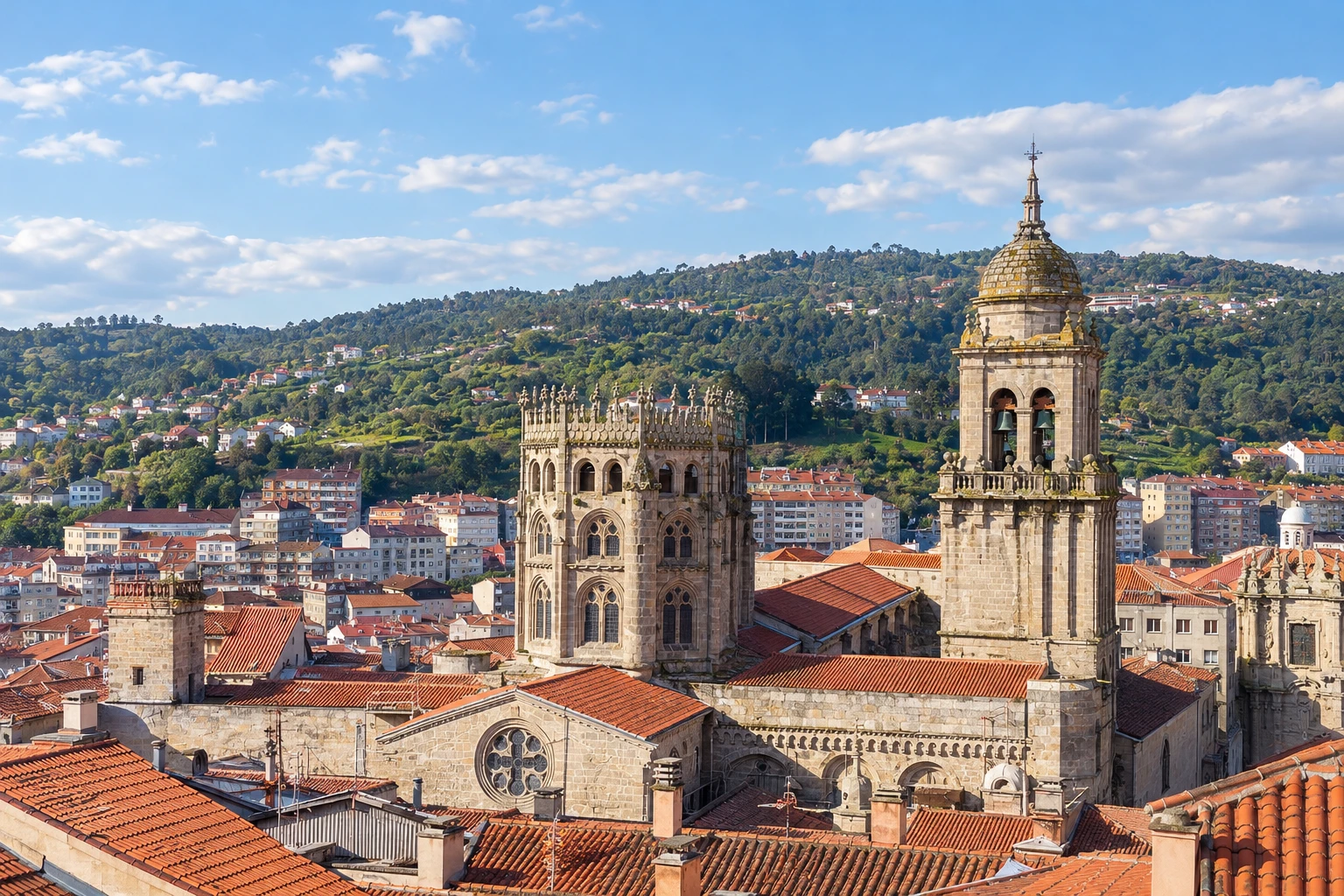
In the photo: Catedral de Ourense.
Illustrative images. The pictures in this guide are illustrations based on the real place, not photographs, and may differ from it.

The city
Ourense is the largest inland city in Galicia, on the banks of the Miño river, known for its thermal waters: the As Burgas springs gush hot in the old town, and the Outariz thermal baths are on the riverbank. It has the cathedral of San Martiño, the Roman bridge and the Praza Maior, and it is the most popular starting point of the Via de la Plata, about 109 km from Santiago. Nearby are the mosteiro de Santo Estevo and the cânion do Sil.
There's no accommodation in the guide yet in Ourense.
Tem hotel, pousada ou casa de temporada aqui? Cadastre a suaThere are no restaurants in the guide yet in Ourense.
Know a good one? Recommend it to usHotéis e restaurantes da cidade no mapa.
how to get there · how many days · itinerary · questions
The local experience
The cathedral of San Martiño, from the 12th and 13th centuries, is one of the great Romanesque churches of Galicia, with the polychrome Pórtico do Paraíso and the chapel of the Santo Cristo.
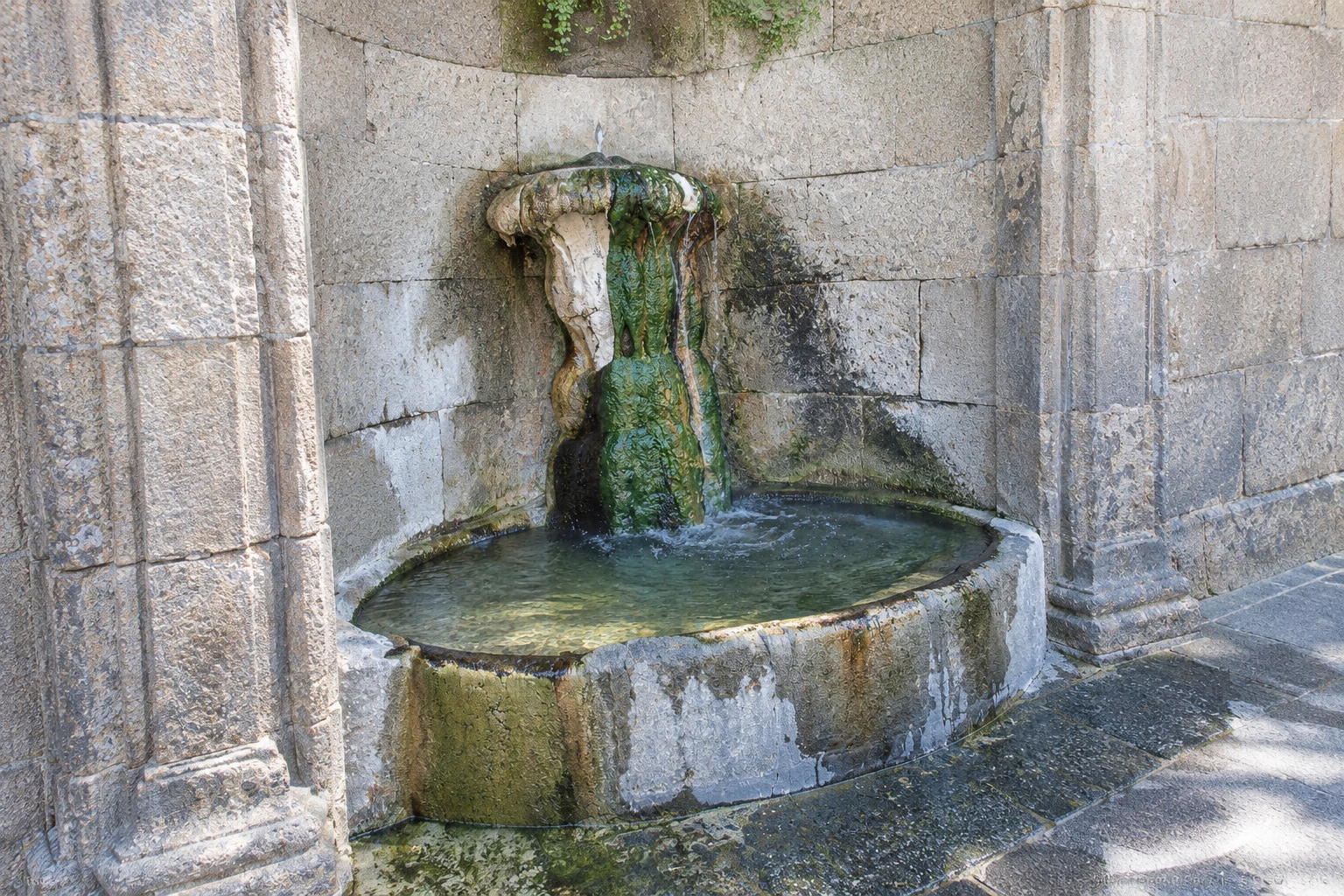
Thermal water springs that gush in Ourense's old town at over 60 °C, with a flow of around 300 liters per minute. They are the symbol of the city.
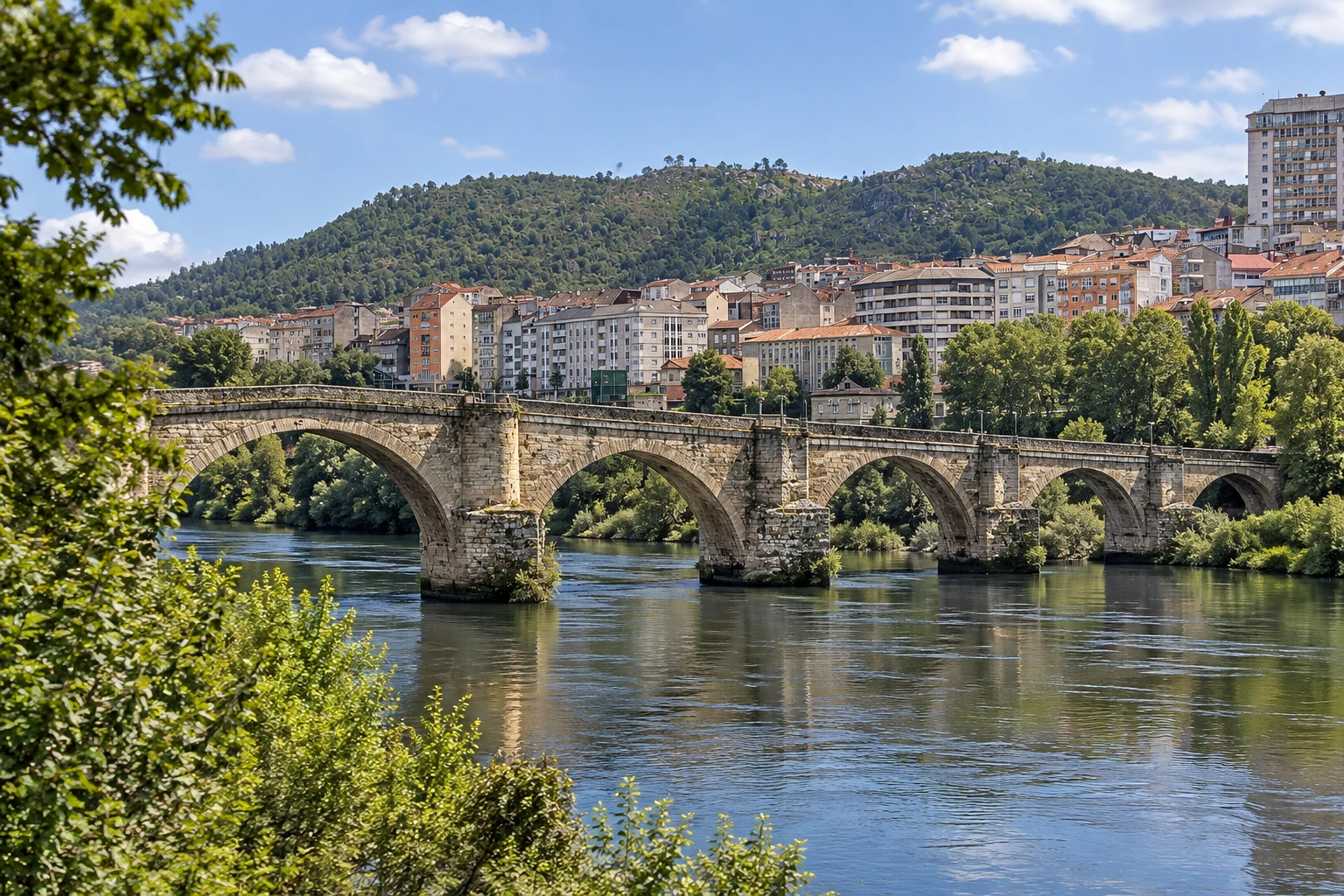
The bridge over the river Miño, of Roman origin and rebuilt in the Middle Ages, along which the Via de la Plata runs. The central arch, 43 meters wide, was for a long time the largest in Spain.
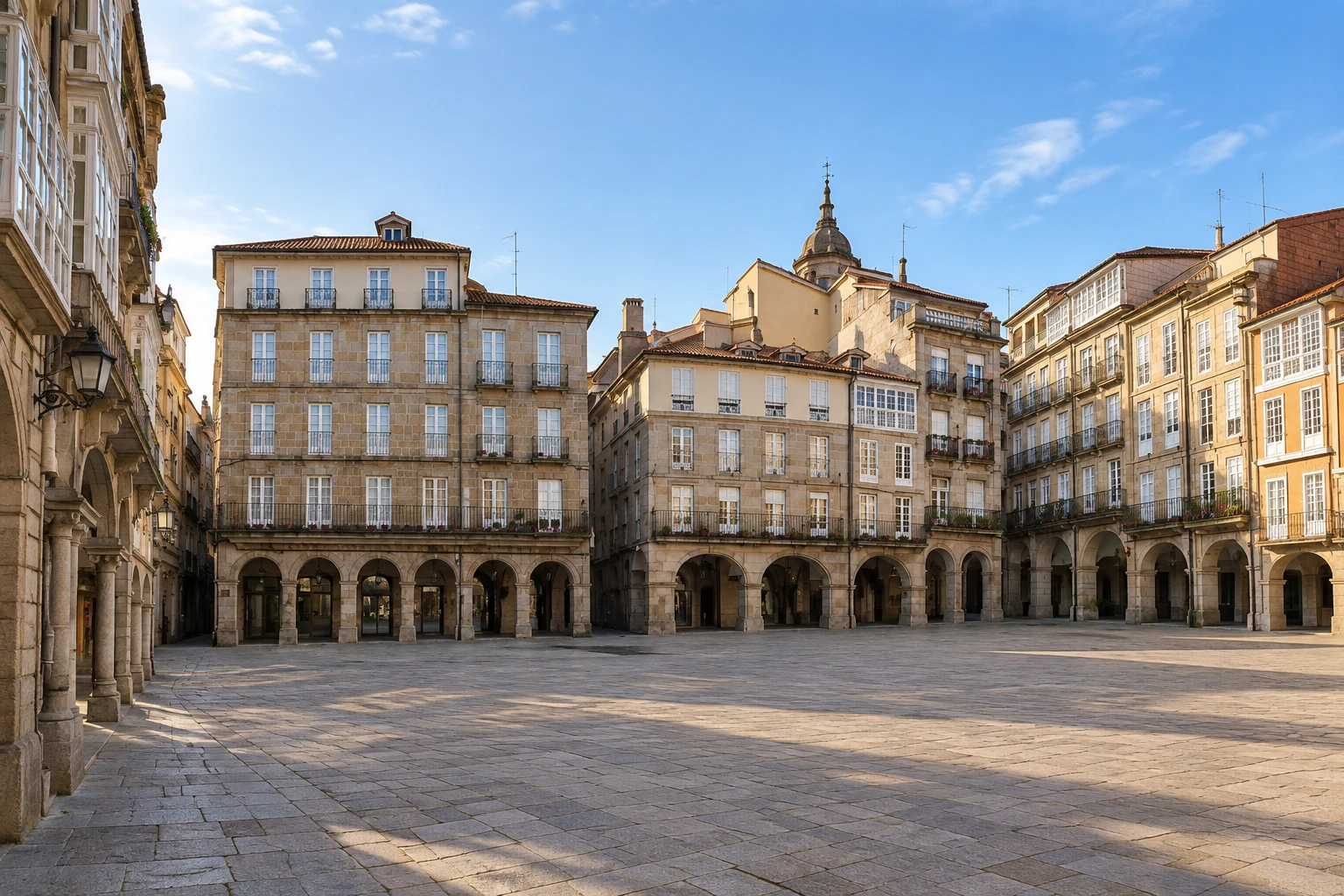
The main square of the old town, with a sloping ground, arcades, the Casa do Concello and the church of Santa María Nai, just a few steps from the cathedral.
Before you go
Ourense – Spain Destination Santiago de Compostela and Galicia about 105 km from Santiago de Compostela
Approximate distances. Check flights and bus, train or boat schedules before you travel.
Connections with Brazil usually require a stopover in another city. Check before purchasing. From Santiago de Compostela the train takes about 40 minutes; from Madri, high-speed trains take a little over two hours. Ourense station and the bus terminal are about 2 km from the old town. The nearest airports are Vigo and Santiago, about 100 km away.
One day covers the cathedral, As Burgas, the Praza Maior, the Roman bridge and a bath in the thermal pools on the Miño riverbank. With two days you can visit the Ribeira Sacra, including the mosteiro de Santo Estevo and the boat trip through the cânion do Sil. Pilgrims often spend one night before starting the walk.
From May to October the weather is usually drier. Summers are hot in the valley, with afternoons above 30 °C, and the thermal baths are nicer at night. In autumn the vineyards of the Ribeira Sacra change color. Winter is wet and cold, but it is the season when the outdoor thermal baths are most pleasant.
The seasons shown are the most usual ones; nature doesn't always follow the calendar.
There is no stop in the old town, which is explored on foot. To reach the Outariz thermal baths there are city buses and a tourist little train along the riverbank, plus pedestrian paths along the river. For the Ribeira Sacra and the cânion do Sil, a car or an organized tour helps, because public transport is scarce.
Suggested itinerary
Built with the places on this page. No rush: it's paced so you have time to see them.
Visit the cathedral of San Martiño, with the Pórtico do Paraíso and the chapel of the Santo Cristo. Walk down to the As Burgas springs, where hot water emerges in the middle of the city.
Have lunch in the old town and stroll through the Praza Maior. Then walk to the Roman bridge over the Miño and follow the riverbank to the ponte do Milénio.
Follow the thermal promenade along the river to the Outariz baths for an evening soak. Bring swimwear, flip-flops and a towel.
Return to the old town to eat tapas in the streets around the cathedral, paired with wines from the Ribeira Sacra and the Ribeiro.
Day 1
Catedral, As Burgas and Praza Maior.
Roman bridge, walk along the Miño riverbank and the ponte do Milénio.
Bath in the Outariz thermal baths.
Tapas and wines in the old town.
Day 2
Go by car or on an organized tour to the mosteiro de Santo Estevo de Ribas de Sil, about 30 km away, overlooking the cânion do Sil.
Take the catamaran trip through the cânion, with terraced vineyards on the slopes. Check schedules, which vary by season.
Stop at a viewpoint overlooking the cânion before returning to Ourense.
Dinner in Ourense or overnight in the Ribeira Sacra.
Check before you go. Opening hours and days change, and places may close for renovations, holidays or events. This itinerary is a suggestion from Cidade Turismo, not a commitment: plan yours by checking directly with each place you intend to visit.
Before you go
It is the most popular starting point of the Via de la Plata: from Ourense to Santiago is about 109 km, in 5 stages, enough to request the Compostela.
Yes. The Outariz thermal baths on the Miño riverbank have outdoor pools. The As Burgas springs in the center are too hot to touch and are only for viewing.
By train, in about 40 minutes. By car, it's about 105 km.
Yes. The mosteiro de Santo Estevo and the cânion do Sil are about 30 to 40 km away, a half-day or full-day drive.
Polbo á feira, empanadas, chestnuts in autumn and tapas in the streets of the old town, with wines from the Ribeiro and the Ribeira Sacra.
Routes in Spain
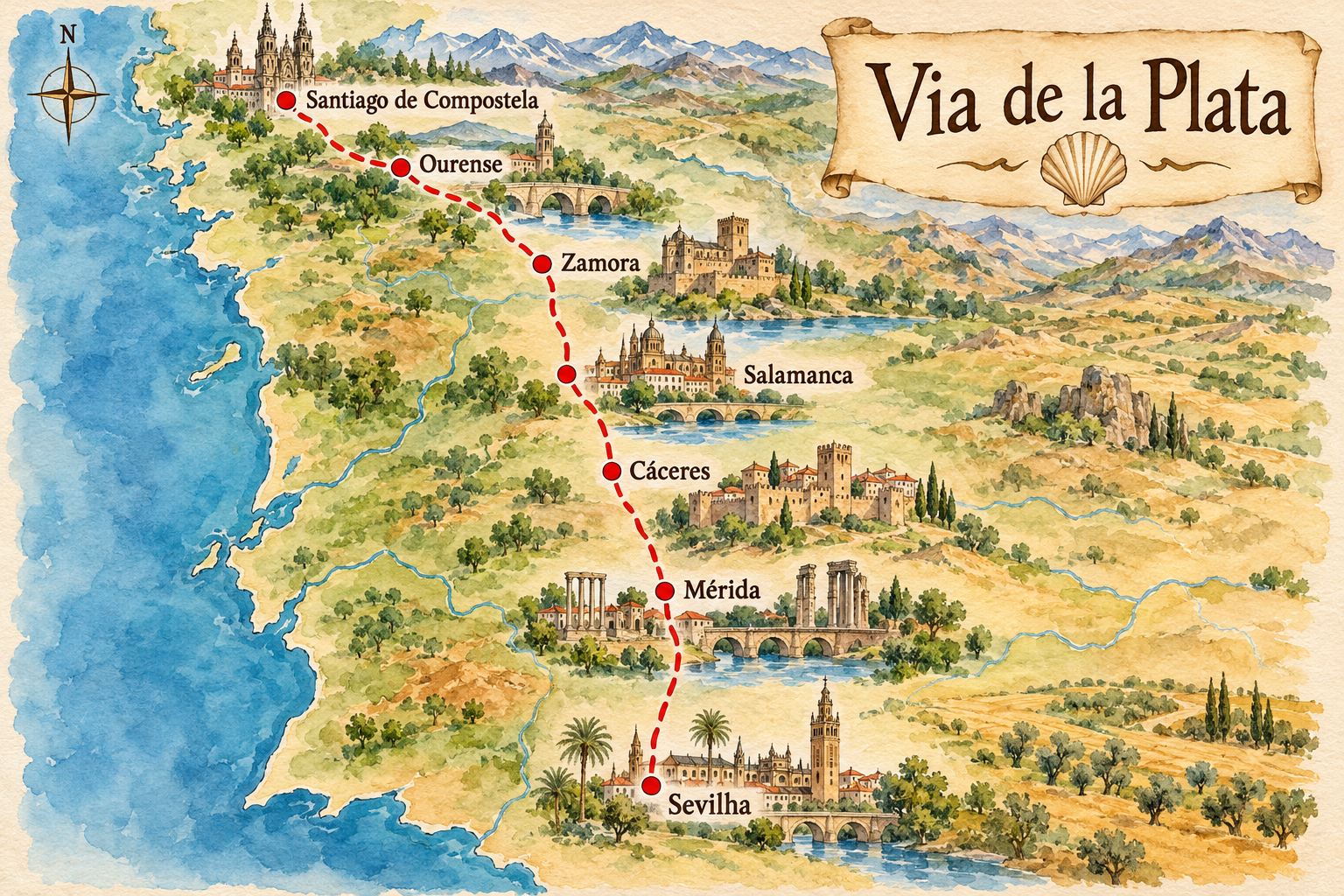
The longest Camino de Santiago in Spain: from Seville to Santiago de Compostela along the country’s west, following the old Roman road, via Mérida, Cáceres, Salamanca, Zamora and Ourense.