

 Brazil
 Antarctica
 Argentina
 Bolivia
 Chile
 Colombia
 Ecuador
 Falkland Islands (Malvinas)
 French Guiana
 Guyana
 Paraguay
 Peru
 Suriname
 Uruguay
 Venezuela
 Austria
 Belgium
 Croatia
 Denmark
 Finland
 France
 Germany
 Greece
 Hungary
 Iceland
 Ireland
 Italy
 Luxembourg
 Norway
 Poland
 Portugal
 Slovakia
 Slovenia
 Sweden
 Switzerland
 the Czech Republic
 the Netherlands
 the United Kingdom
 Turkey
 Bermuda
 Canada
 Greenland
 Mexico
 Saint Pierre and Miquelon
 the United States
 the Dominican Republic
 Japan
 Egypt
 South Africa
 Australia
 Fiji
 New Zealand
 Papua New Guinea
Route · Basque Country · Cantabria · Asturias · Galicia
Northern Way (Camino del Norte) to Santiago on foot
The Camino de Santiago along the Cantabrian coast: from the Basque Country to Galicia on foot, via San Sebastián, Bilbao, Santander and Gijón, between the sea and the green mountains.
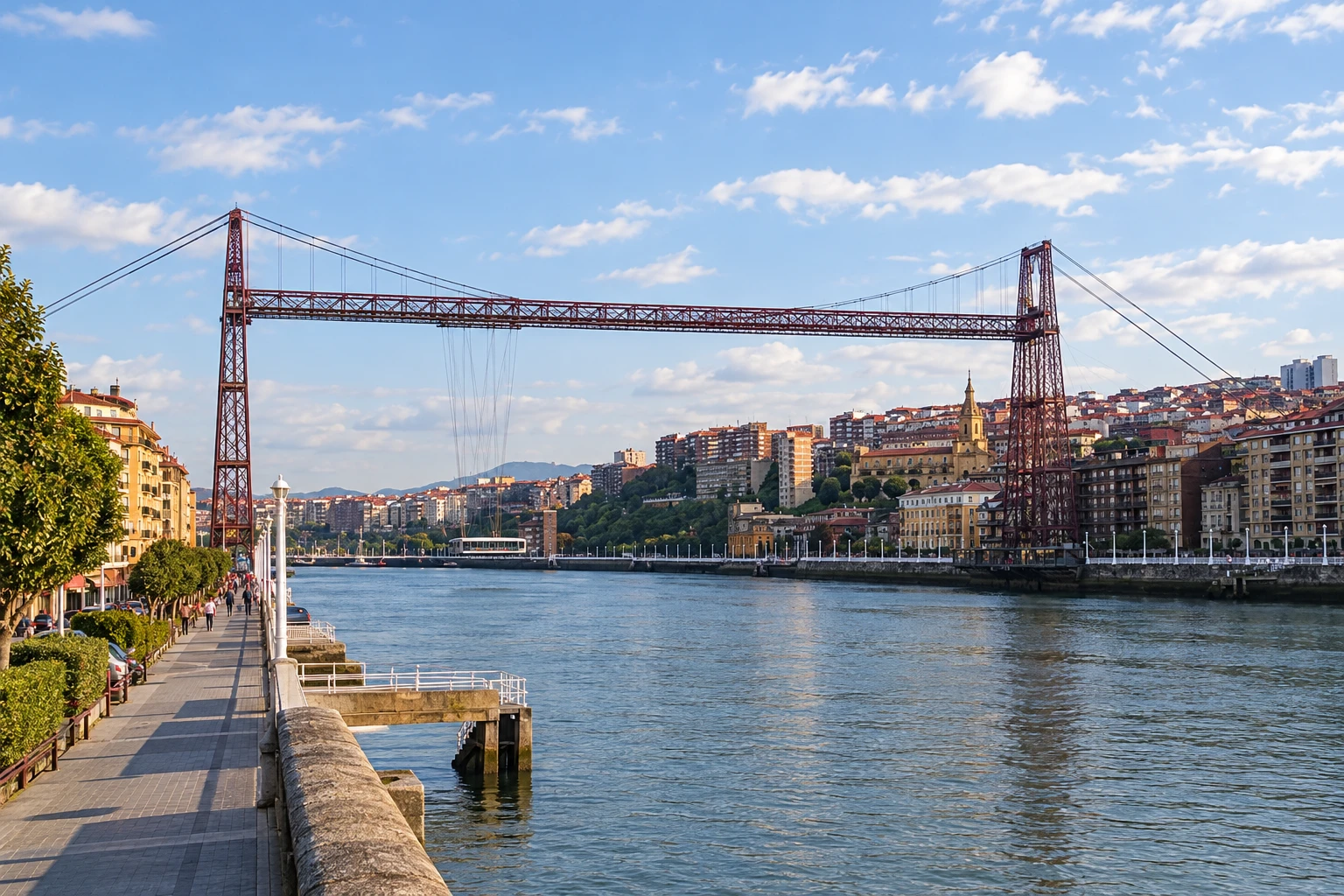
In the photo: Vizcaya Bridge (Puente de Vizcaya), between Portugalete and Getxo
Illustrative images. The pictures in this guide are illustrations based on the real place, not photographs, and may differ from it.
The route
What the Northern Way (Camino del Norte) to Santiago on foot is
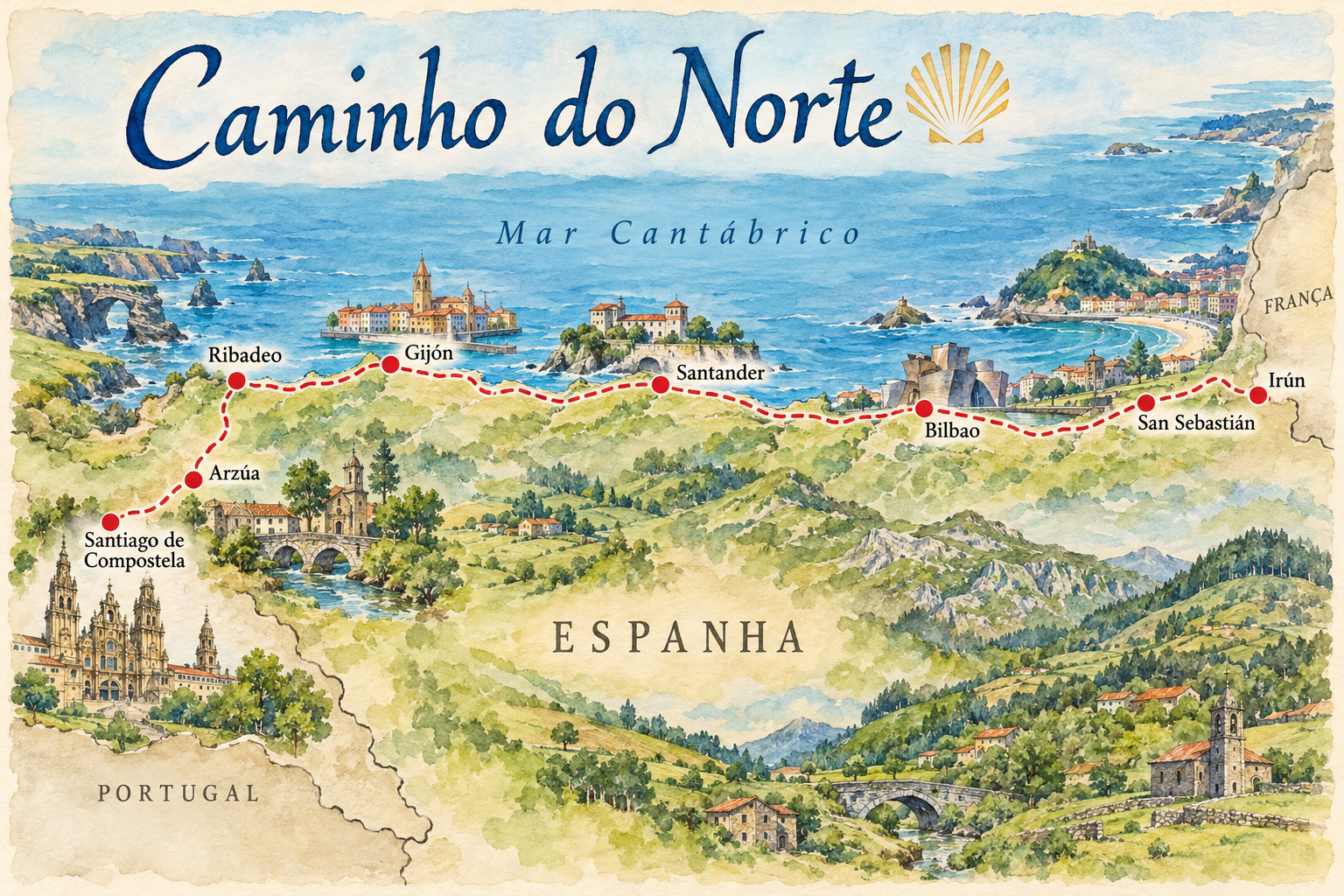
The Northern Way follows Spain’s northern coast, from Irún on the French border to Santiago de Compostela. It’s about 820 km in roughly 34 stages, crossing four autonomous communities: Basque Country, Cantabria, Asturias and Galicia. It is recognized by UNESCO as World Heritage, together with the other northern routes in Spain.
The route passes beaches, cliffs, fishing ports and cities such as San Sebastián, Bilbao, Santander and Gijón, with many climbs and descents through the valleys that drop to the sea. At Ribadeo it leaves the coast and goes inland through Galicia via Vilalba and Sobrado dos Monxes, until it joins the French Way at Arzúa, two days from Santiago.
It is a more demanding and less crowded route than the French Way, with fewer hostels in some stretches. In Asturias, a variant leaves the coastline toward Oviedo and the Camino Primitivo. The route is marked with yellow arrows and the scallop shell.
The map
8 cities along the way
Outlines: IGN/CNIG, unidades administrativas, CC BY 4.0. Adapted by Cidade Turismo.
The journey
City by city
Distances and times are approximate: check before you set off.
-
 1 · Basque Country
Irun
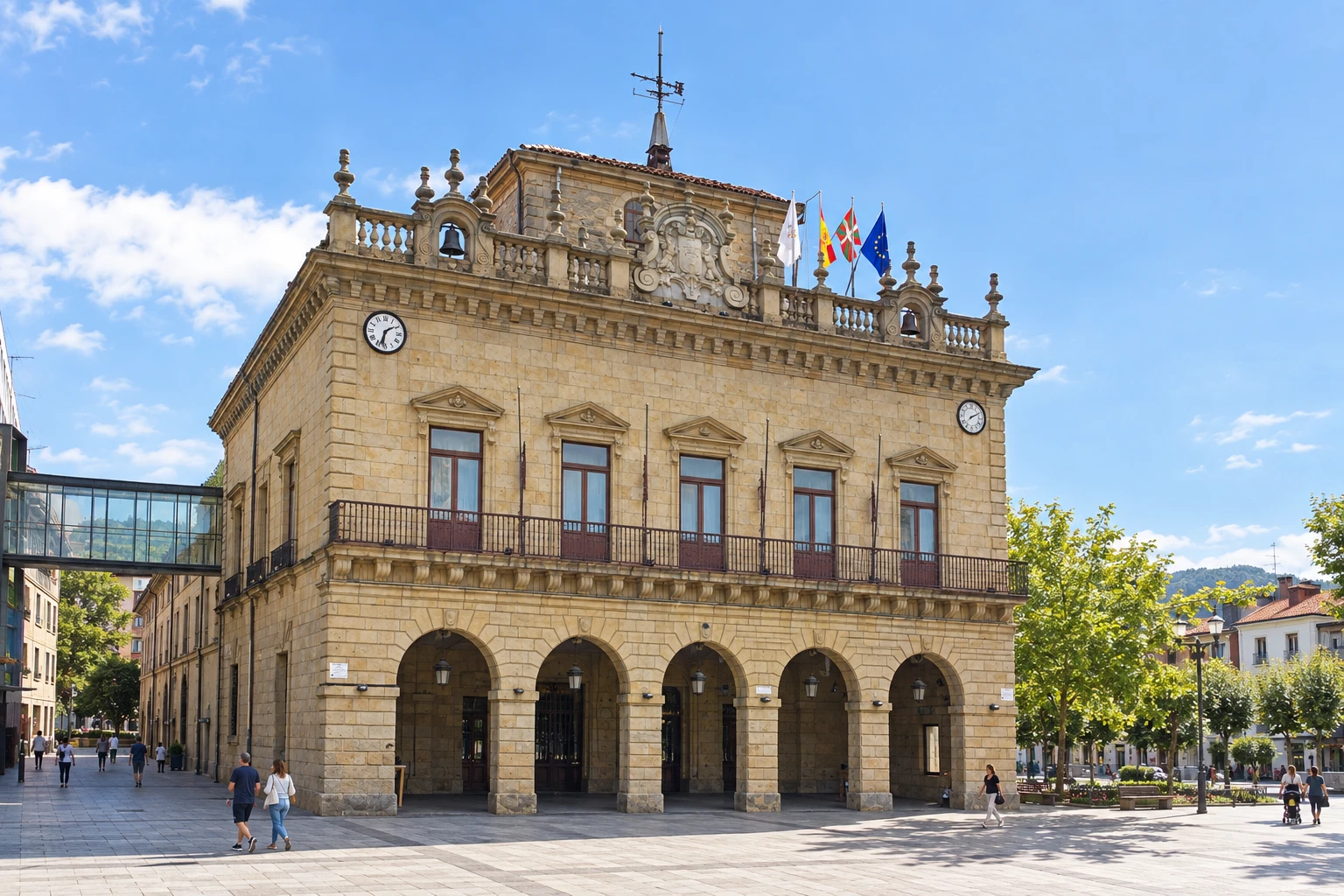
Irún sits on the Bidasoa River at the French border, opposite Hendaye. Many pilgrims start here, obtaining their credential at the hostel or the church. The first stage climbs Mount Jaizkibel and descends to Pasaia, with a boat crossing across the bay.
→ San Sebastián about 25 km 1 day on foot Irún–San Sebastián (about 25 km), via Mount Jaizkibel and Pasaia, with a boat crossing across the bay.
-
 2 · Basque Country
San Sebastián
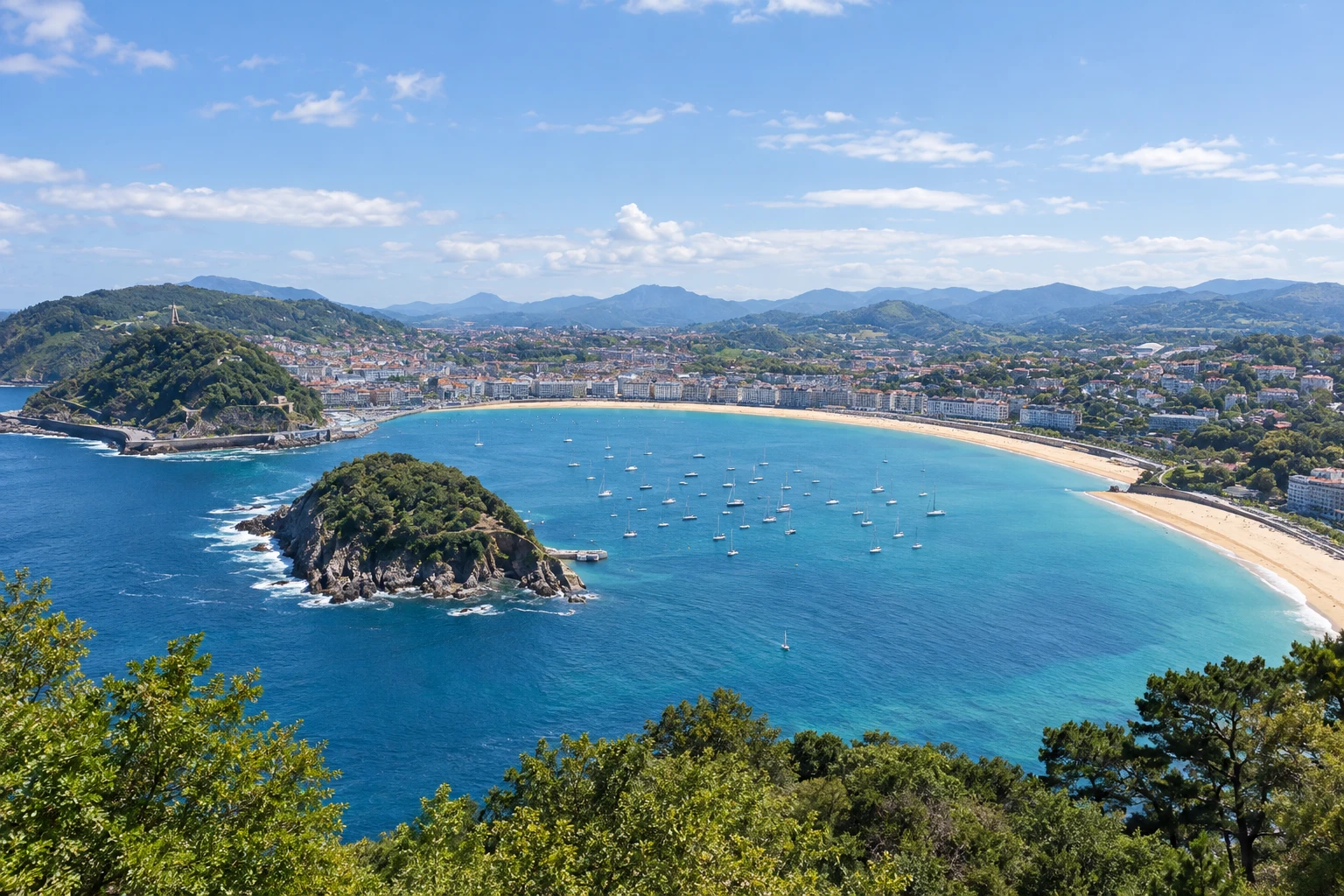
San Sebastián (Donostia) has La Concha bay, an old town full of pintxo bars and Mount Igueldo. After the city the route continues through Zarautz, Getaria and Deba along the Basque coast, then heads inland via Markina and Gernika.
→ Bilbao about 125 km about 6 days on foot San Sebastián–Zarautz (22 km), Zarautz–Deba (21 km), Deba–Markina (22 km), Markina–Gernika (28 km), Gernika–Lezama (20 km) and Lezama–Bilbao (11 km).
-
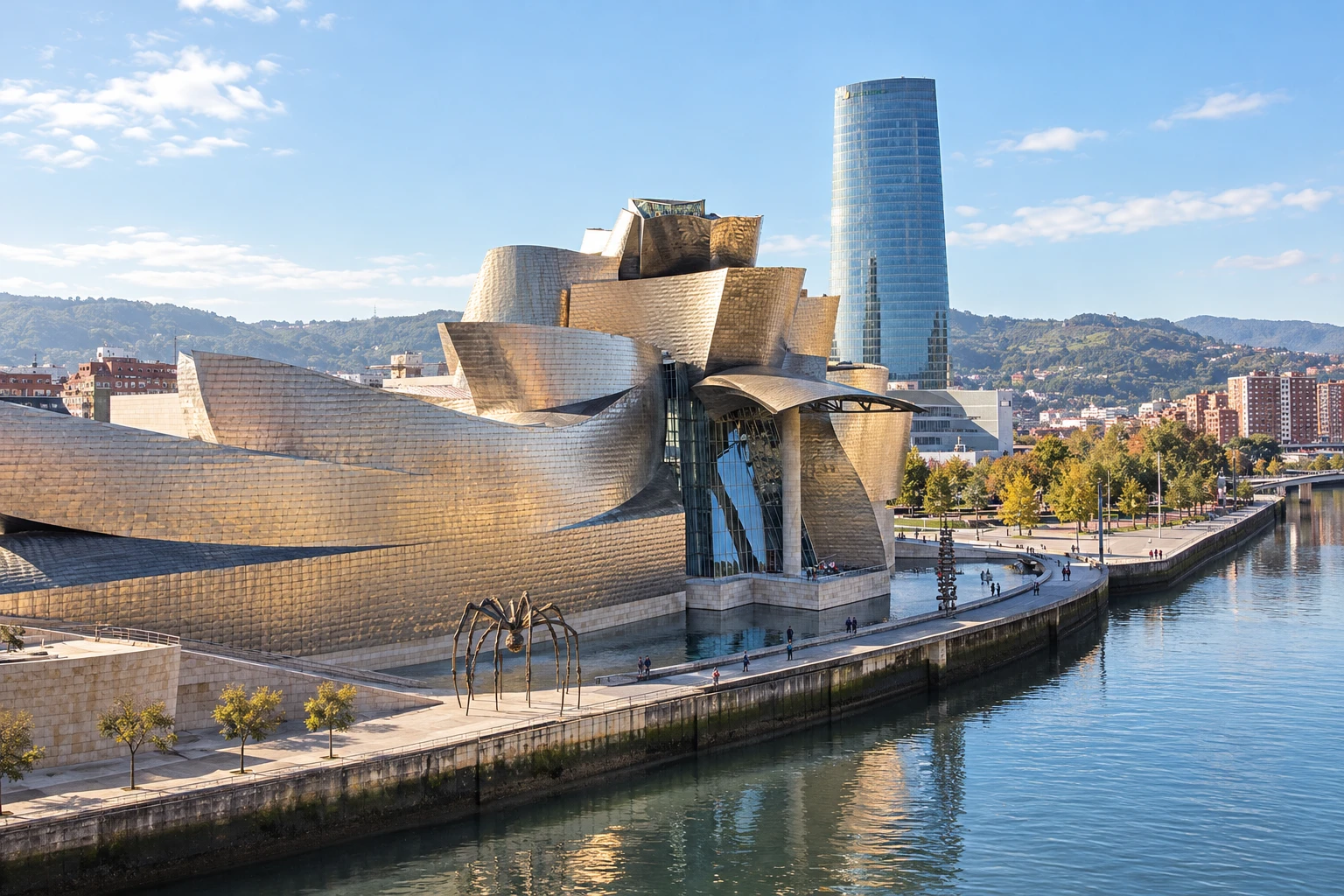 3 · Basque Country
Bilbao
Bilbao is home to the Guggenheim Museum on the Nervión River and the Old Town with the Seven Streets. After the city, the route passes Portugalete, where the Vizcaya Bridge (a World Heritage site) is located, and then enters Cantabria via Castro Urdiales.
→ Santander about 118 km about 5 days on foot Bilbao–Portugalete (19 km), Portugalete–Castro Urdiales (28 km), Castro Urdiales–Laredo (27 km), Laredo–Güemes (29 km, with a boat to Santoña) and Güemes–Santander (16 km).
-
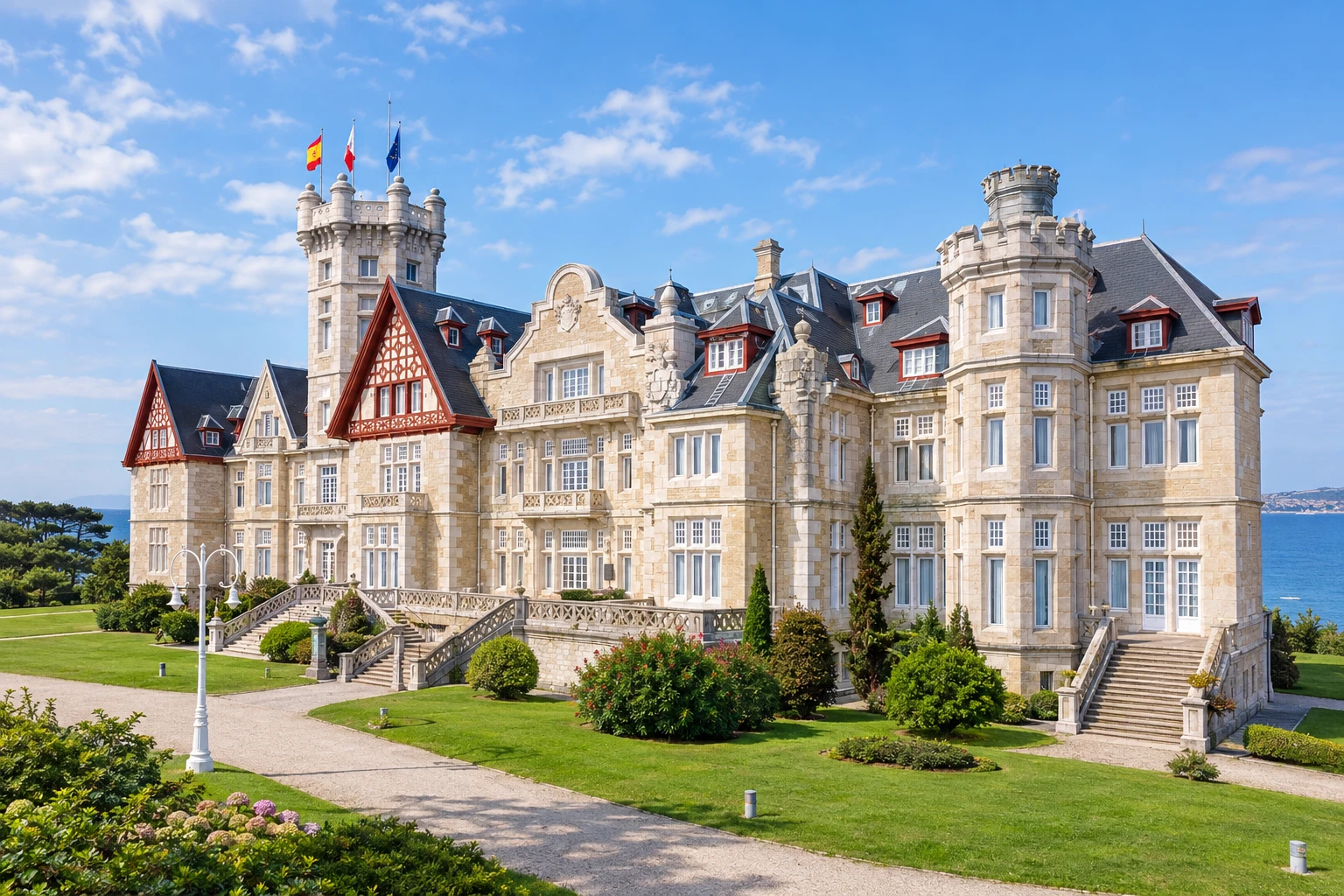 4 · Cantabria
Santander
Before Santander, the route passes Laredo and in some sections crosses Santoña Bay by boat. Santander is the capital of Cantabria, with the Magdalena Peninsula, the palace of the same name and the Sardinero beaches. From here the route continues through Santillana del Mar, a medieval village near the Altamira caves, and through Comillas.
→ Gijón about 209 km about 7 days on foot Santander–Santillana del Mar (39 km), Santillana–Comillas (22 km), Comillas–Colombres (28 km), Colombres–Llanes (22 km), Llanes–Ribadesella (30 km), Ribadesella–Sebrayo (31 km) and Sebrayo–Gijón (36 km).
-
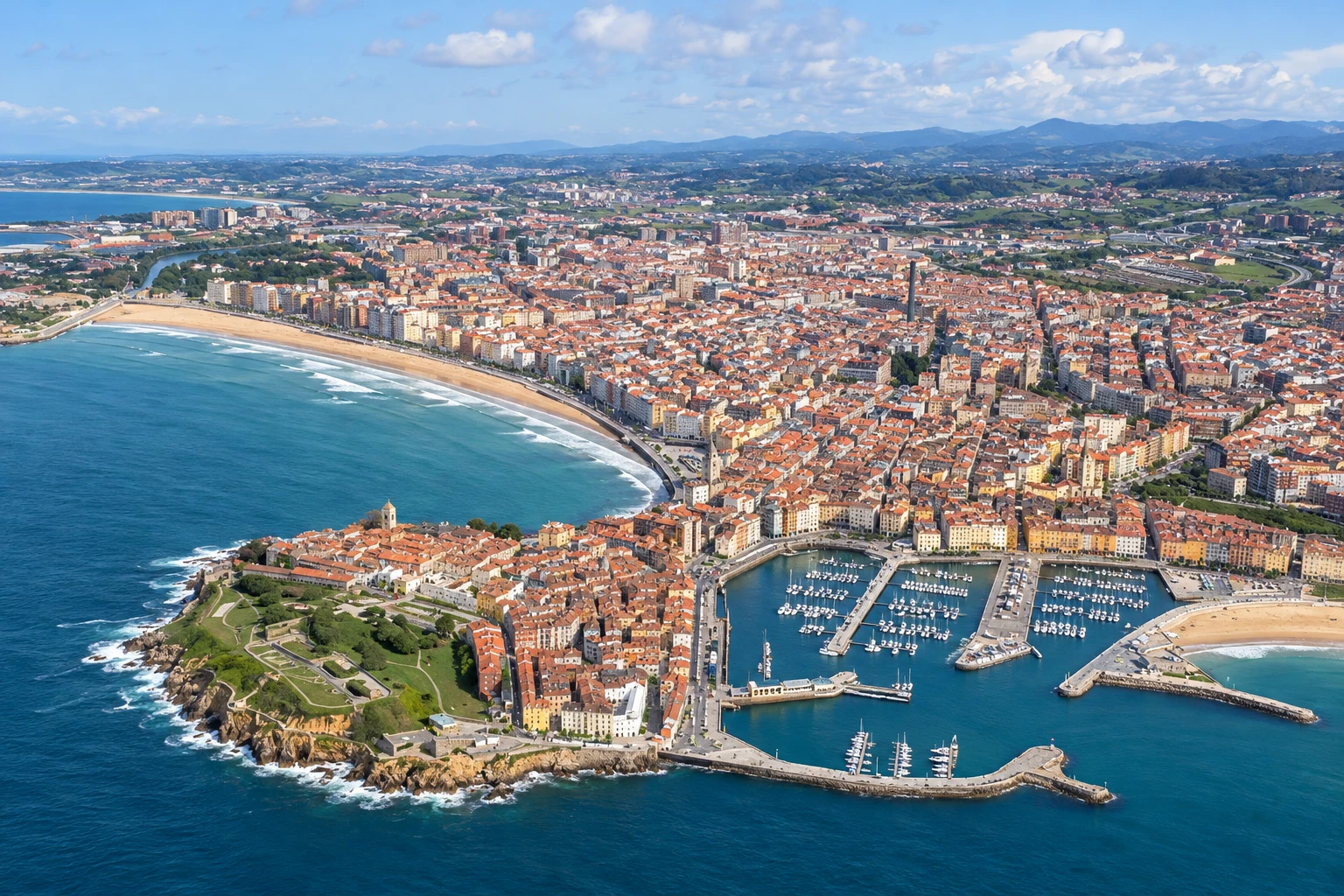 5 · Asturias
Gijón
After Llanes and Ribadesella, the route reaches Gijón, Asturias’ largest city, with San Lorenzo beach, the fishermen’s quarter of Cimavilla and the Elogio del Horizonte. Before Gijón, a variant heads toward Oviedo and the Camino Primitivo. From here the path continues through Avilés, Luarca and the western coast of Asturias.
→ Ribadeo about 149 km about 7 days on foot Gijón–Avilés (25 km), Avilés–Muros de Nalón (21 km), Muros–Soto de Luiña (15 km), Soto de Luiña–Cadavedo (19 km), Cadavedo–Luarca (16 km), Luarca–La Caridad (31 km) and La Caridad–Ribadeo (22 km).
-
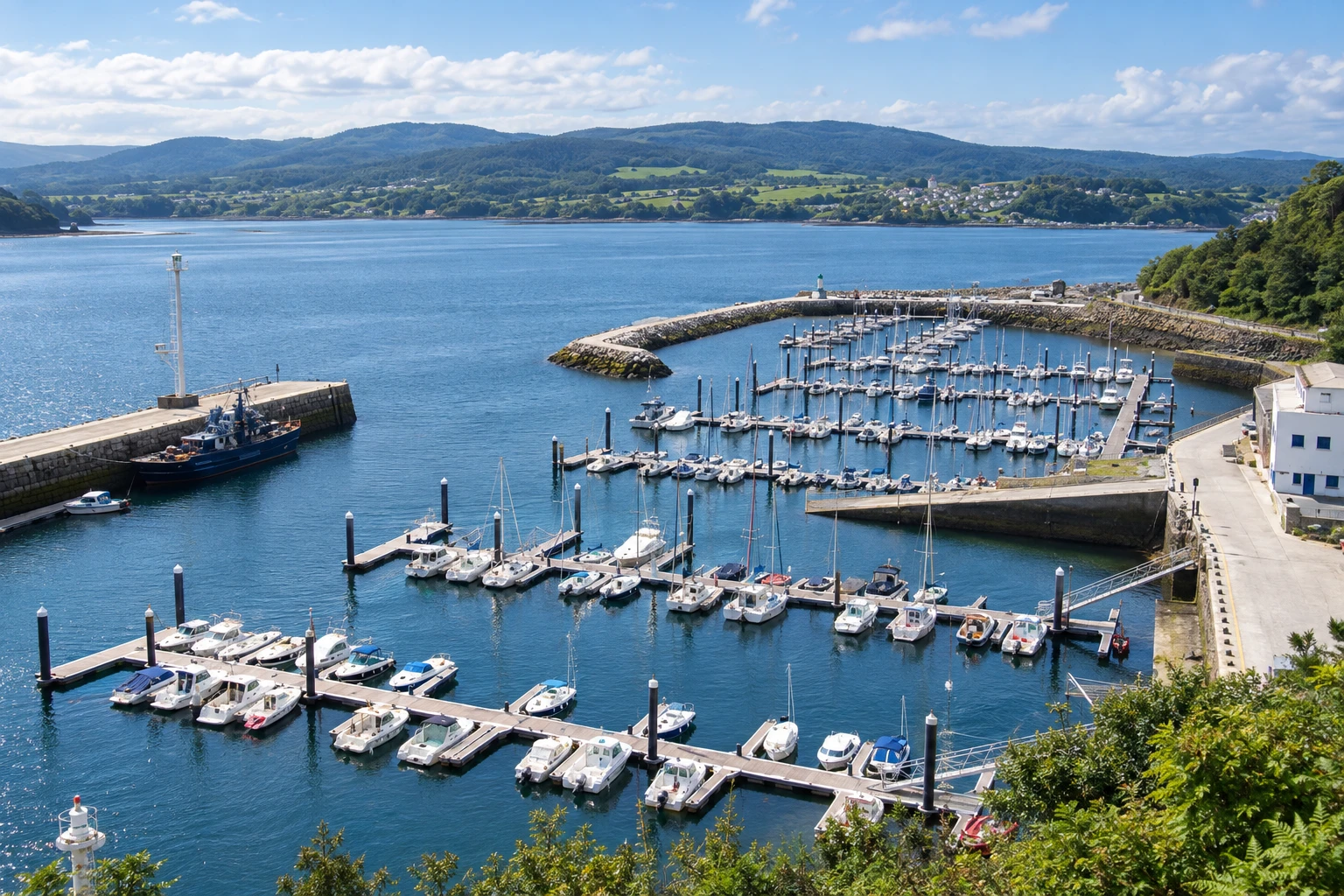 6 · Galicia
Ribadeo
Ribadeo is the first Galician town on the route, on the far side of the Ría del Eo, spanned by the Puente de los Santos. Nearby is the Beach of the Cathedrals, with stone arches that appear at low tide. From here the route leaves the sea and continues inland through Galicia via Lourenzá, Vilalba and Sobrado dos Monxes.
→ Arzúa about 158 km about 6 days on foot Ribadeo–Lourenzá (30 km), Lourenzá–Gontán (25 km), Gontán–Vilalba (23 km), Vilalba–Baamonde (19 km), Baamonde–Sobrado dos Monxes (40 km) and Sobrado–Arzúa (22 km).
-
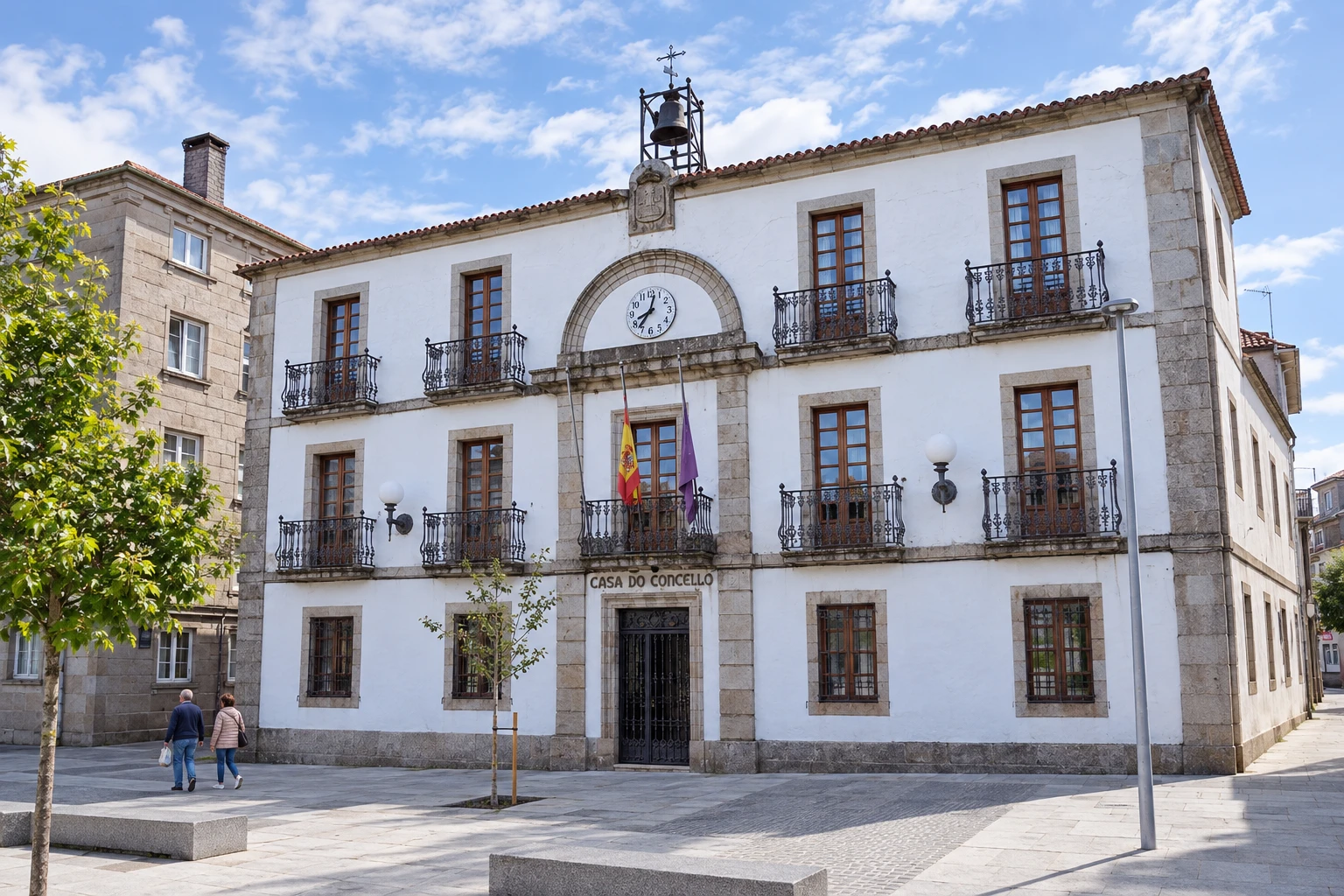 7 · Galicia
Arzúa
Arzúa is a Galician village known for its cheese of the same name. Here the Northern Way joins the French Way, and the number of pilgrims increases. About 39 km remain, via O Pedrouzo, to Santiago.
→ Santiago de Compostela about 39 km about 2 days on foot Arzúa–O Pedrouzo (19 km) and O Pedrouzo–Santiago (20 km), together with the French Way.
-
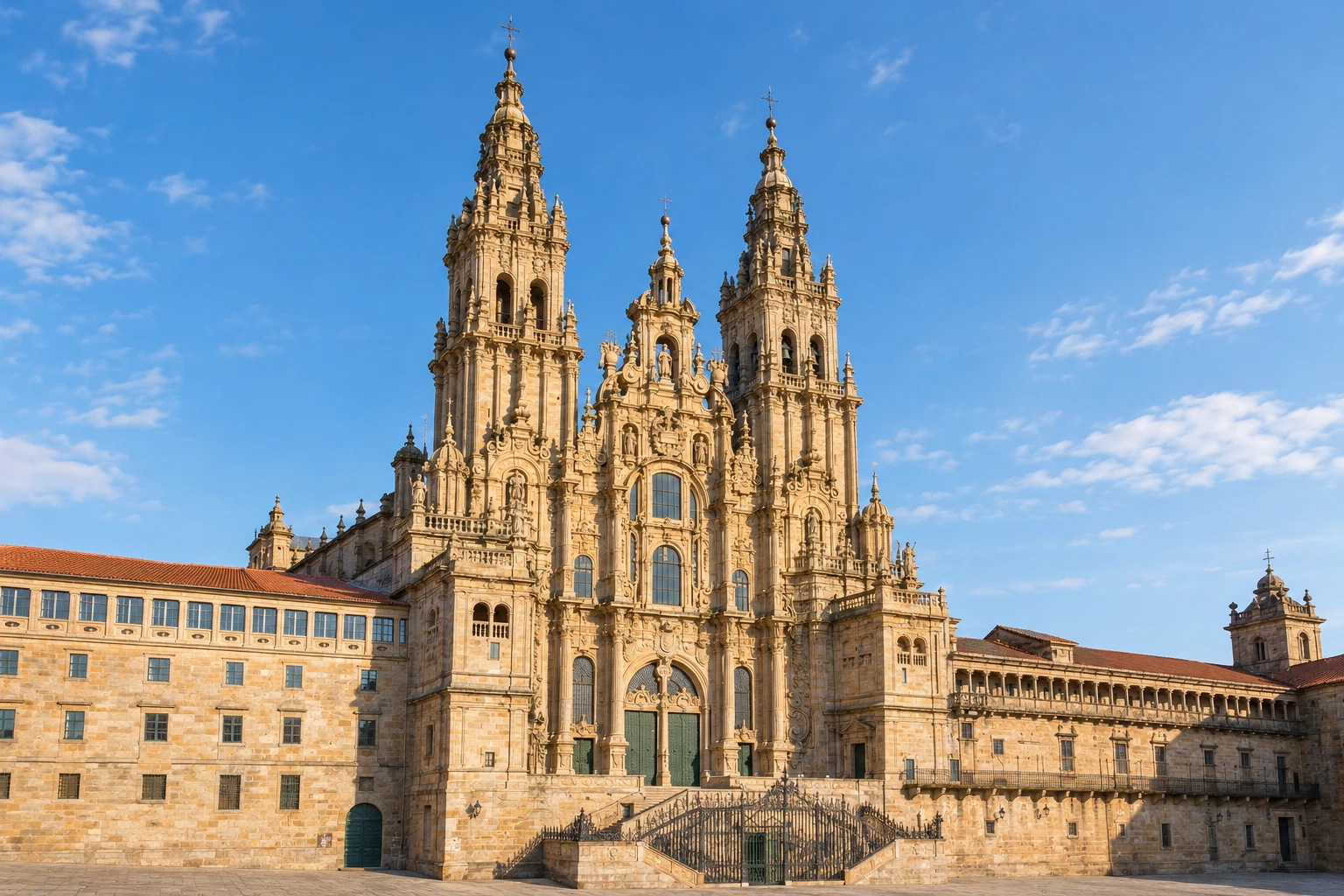 8 · Galicia
Santiago de Compostela
The arrival is over Monte do Gozo and through the old town to the Plaza del Obradoiro in front of the cathedral. The Pilgrim’s Office, near the cathedral, issues the Compostela.
How many days
The whole route takes about 5 to 6 weeks on foot. Many do it in sections: the Basque Country in about 1 week from Irún to Bilbao; or the last 100 km from Vilalba in 5 to 6 days to qualify for the Compostela.
Best time to go
From May to September, when it rains less on the northern coast and hostels are open. July and August are the driest months, but beach towns become crowded and busier. The Cantabrian coast receives rain much of the year; bring a rain poncho even in summer.
The seasons shown are the most usual ones; nature doesn't always follow the calendar.
How to travel it
On foot, following the yellow arrows, carrying your backpack or using luggage transport services between stages. Stages generally range from 11 to 40 km; some require good physical fitness. In some rivers and rías, crossings are made by boat, as between Santoña and Laredo.
Who it's for
For those who have already done the French Way and want a different route, for those who enjoy walking near the sea with many climbs, and for those who want to get to know the cities of northern Spain along the way.
Your questions
Frequently asked questions about Northern Way (Camino del Norte) to Santiago on foot
How many kilometers is the Northern Way?
About 820 km from Irún to Santiago, in roughly 34 stages. Distances vary slightly depending on sources and variants.
Is the Northern Way more difficult than the French Way?
It is generally considered more demanding because of the constant climbs and descents between valleys and some asphalt stretches, and it has fewer hostels in certain sections. In return, it is less crowded.
Where should you start to obtain the Compostela?
At Vilalba or earlier, about 120 km from Santiago. Baamonde is about 100 km away, at the limit. Check the rules on the Pilgrim’s Office website.
Can it be combined with the Camino Primitivo?
Yes. In Asturias, before Gijón, a variant heads to Oviedo, from where the Camino Primitivo departs inland toward Lugo and Melide.
Do you need to book hostels?
Public hostels usually operate on a first-come, first-served basis, without reservations, and only for those who have the required credential. In summer, in beach towns, demand is high: book private ones in advance.
Are there boat crossings?
Yes, at some points, such as in the bay of Pasaia and between Laredo and Santoña. Schedules change depending on the season: check the day before.