Things to do in Santiago de Compostela and Galicia
96 places to visit, chosen by the Cidade Turismo guide.
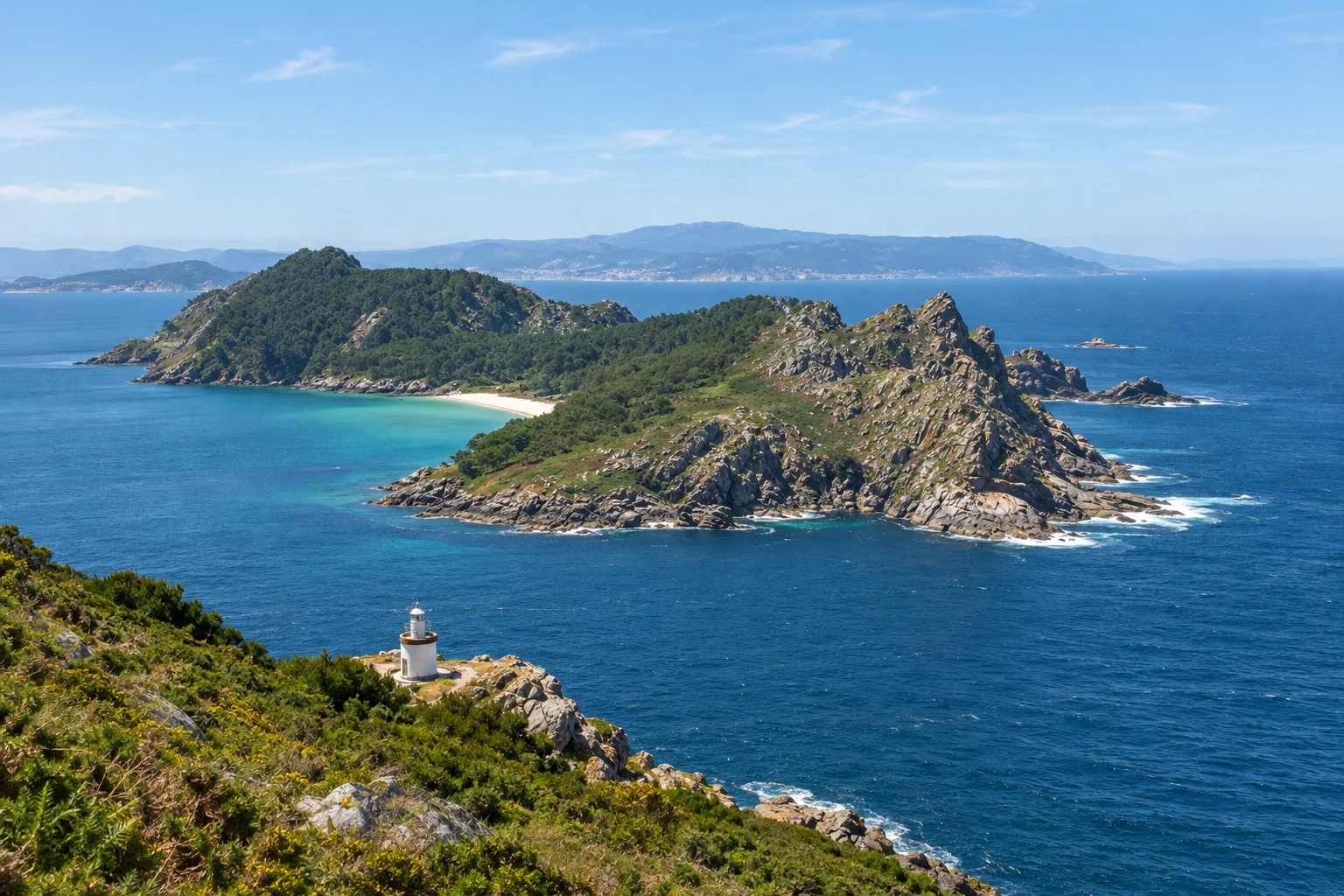
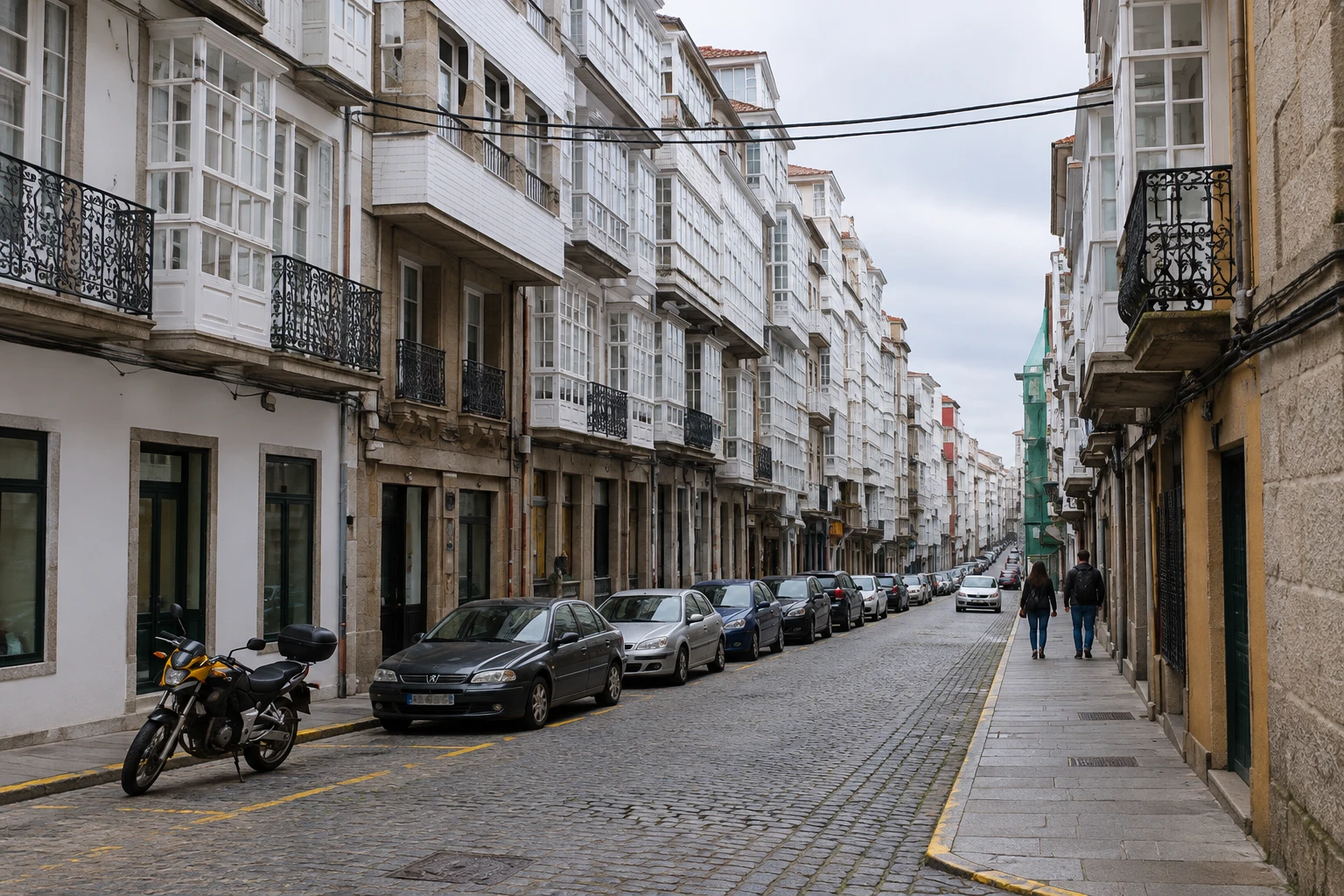
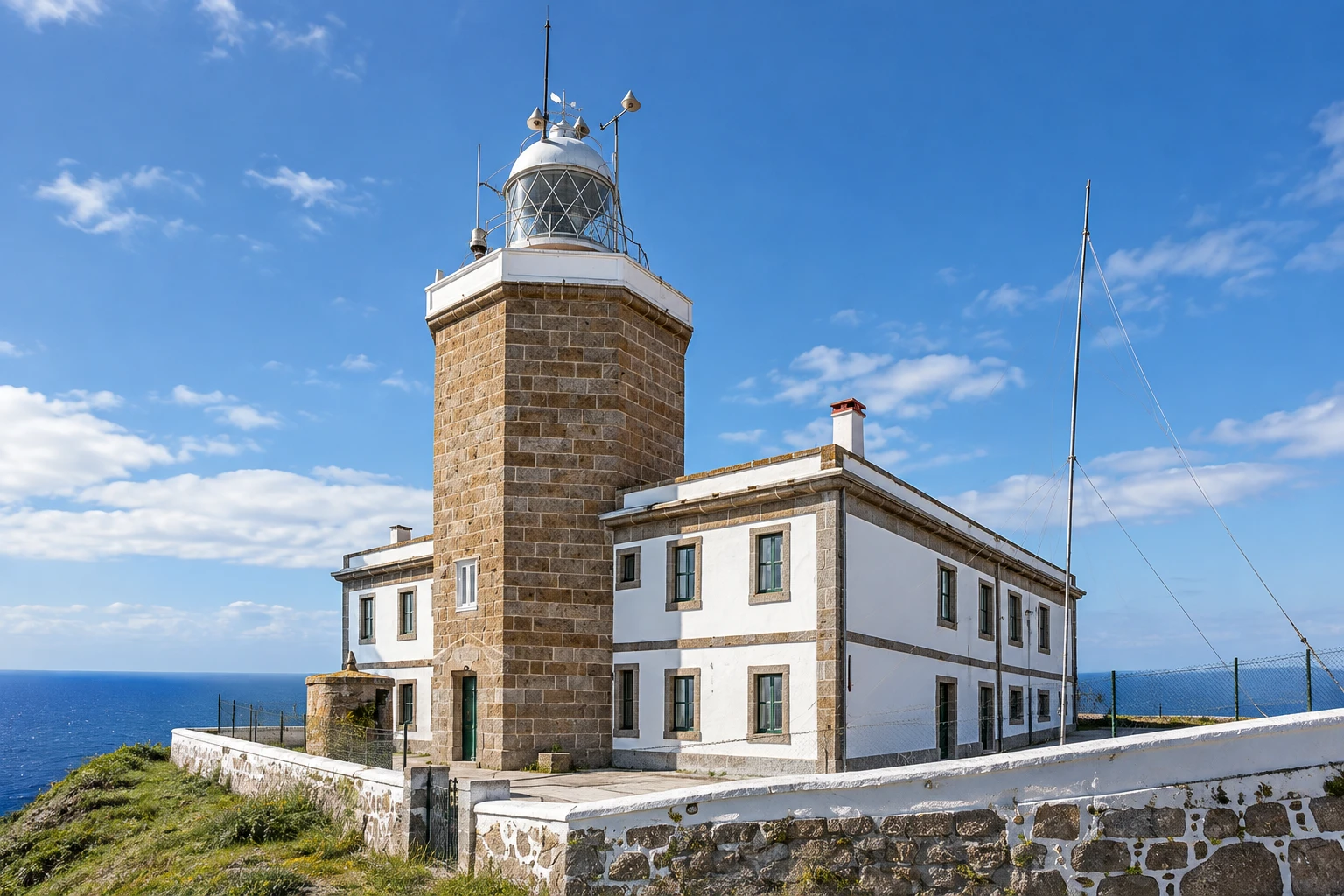
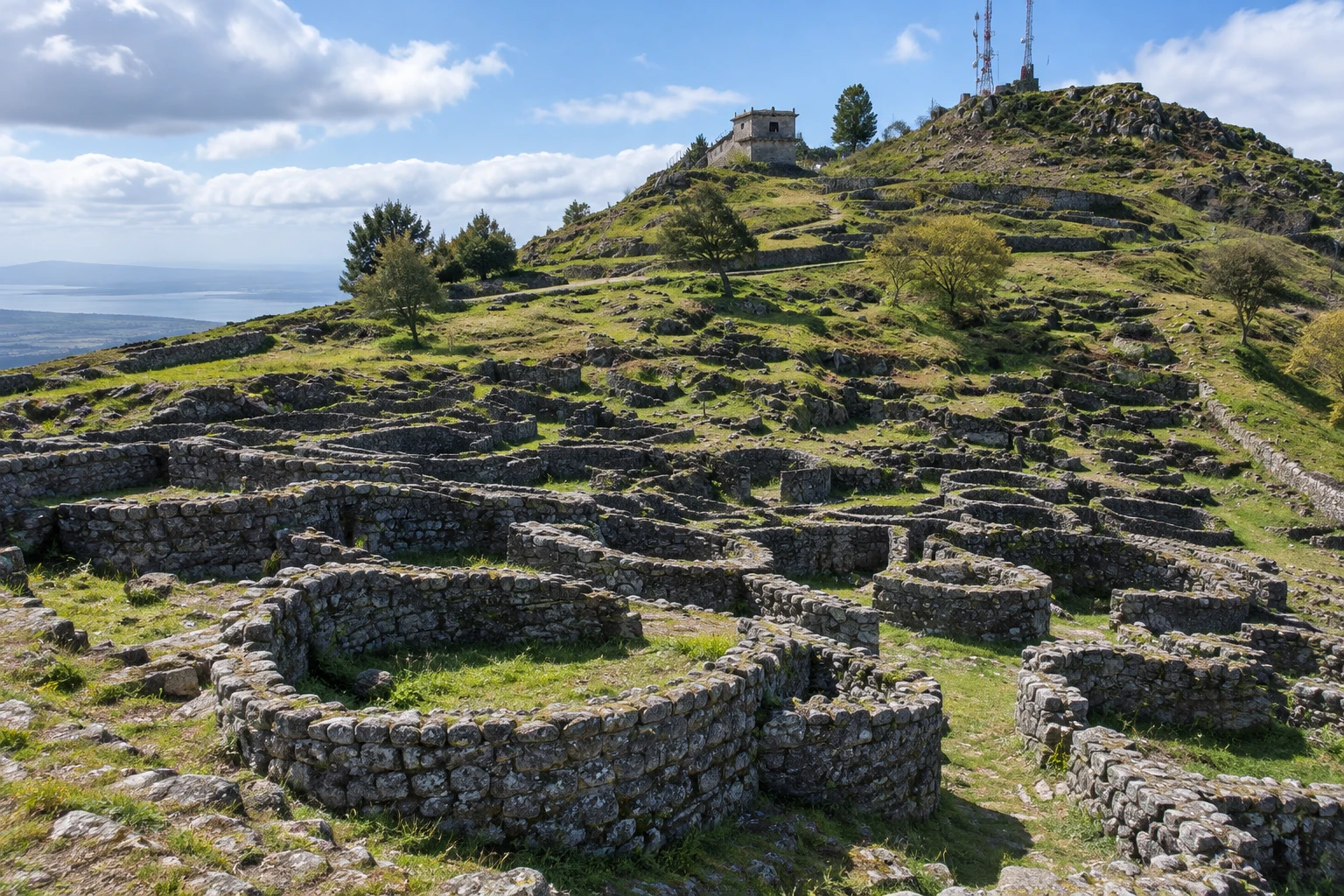
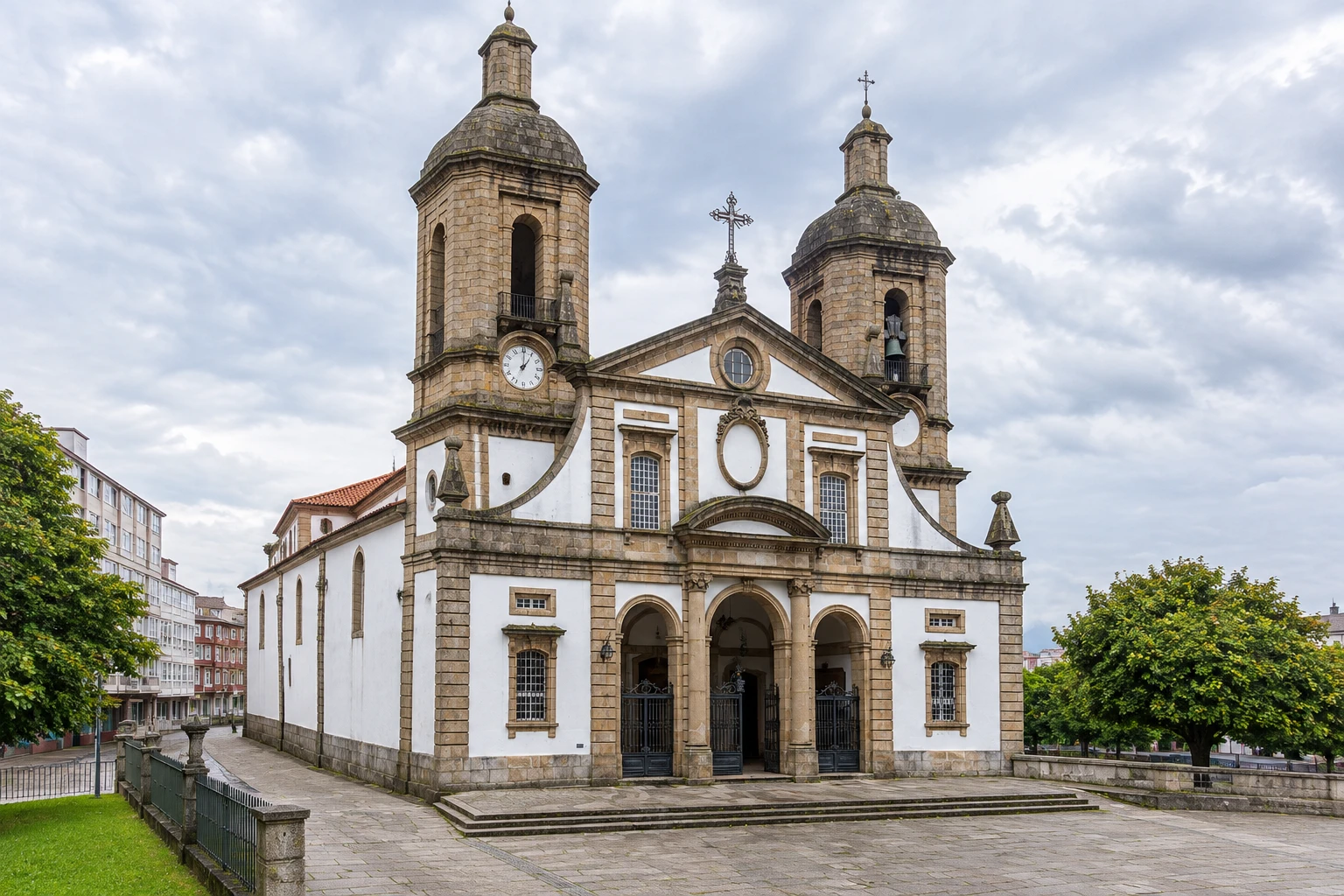
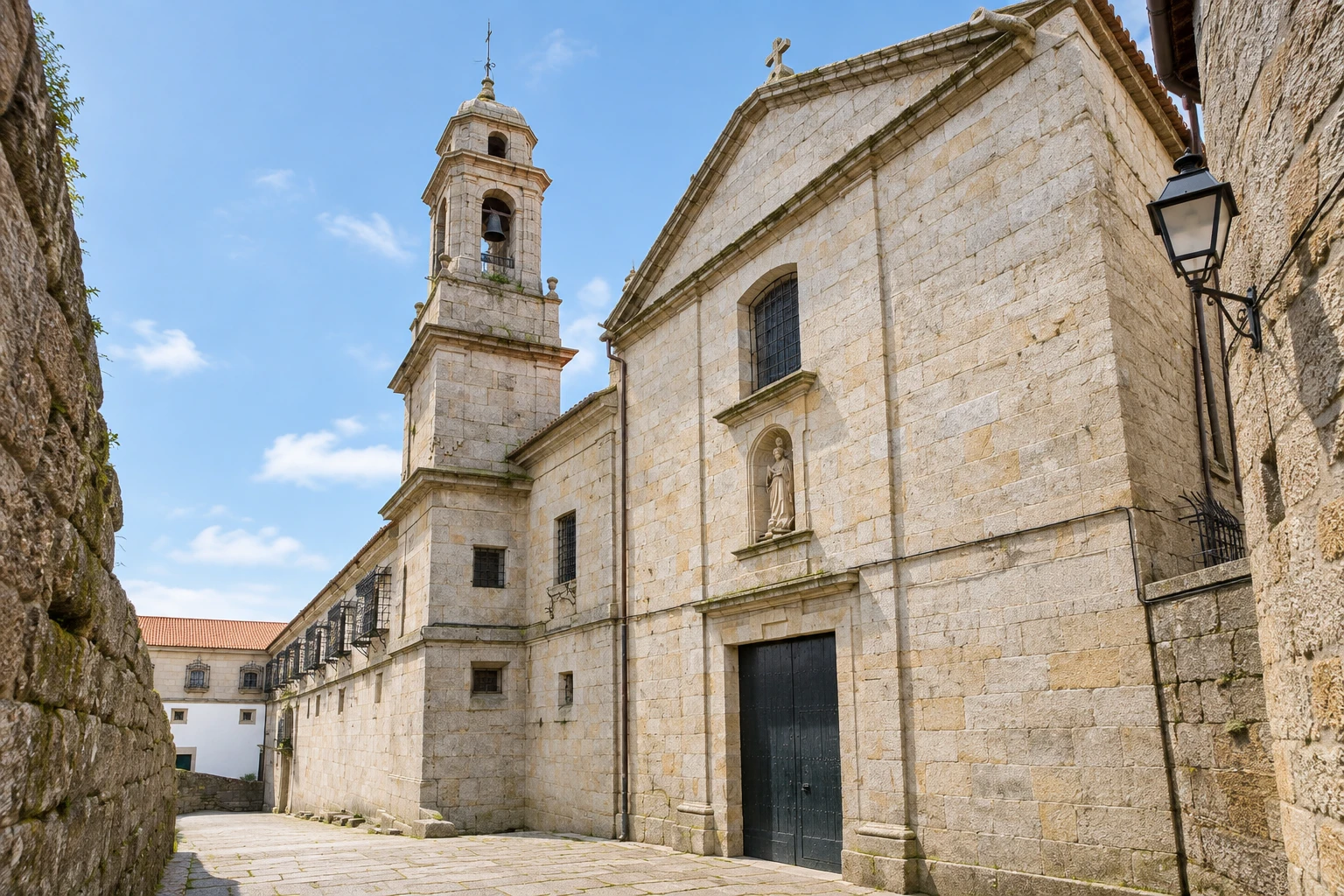
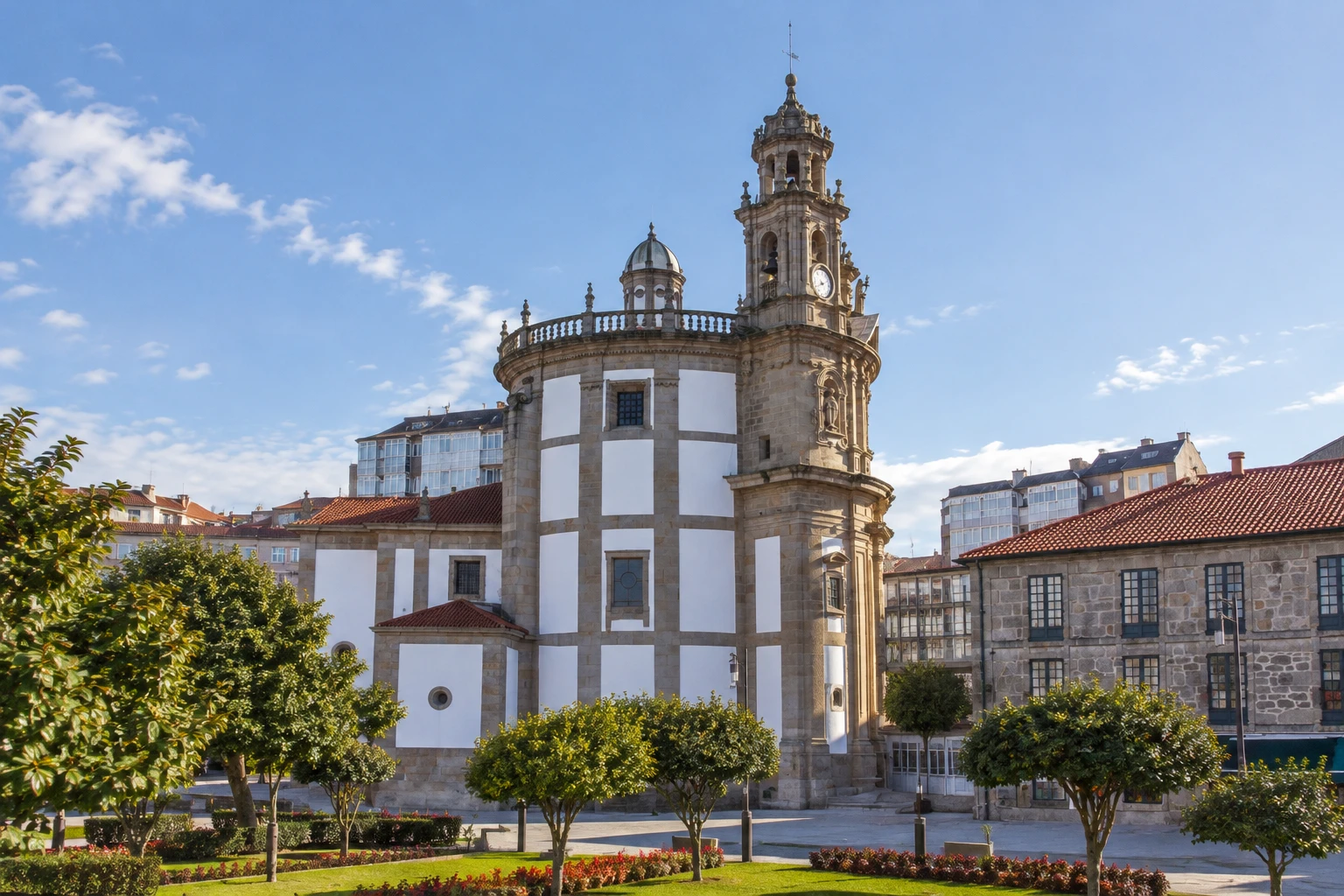
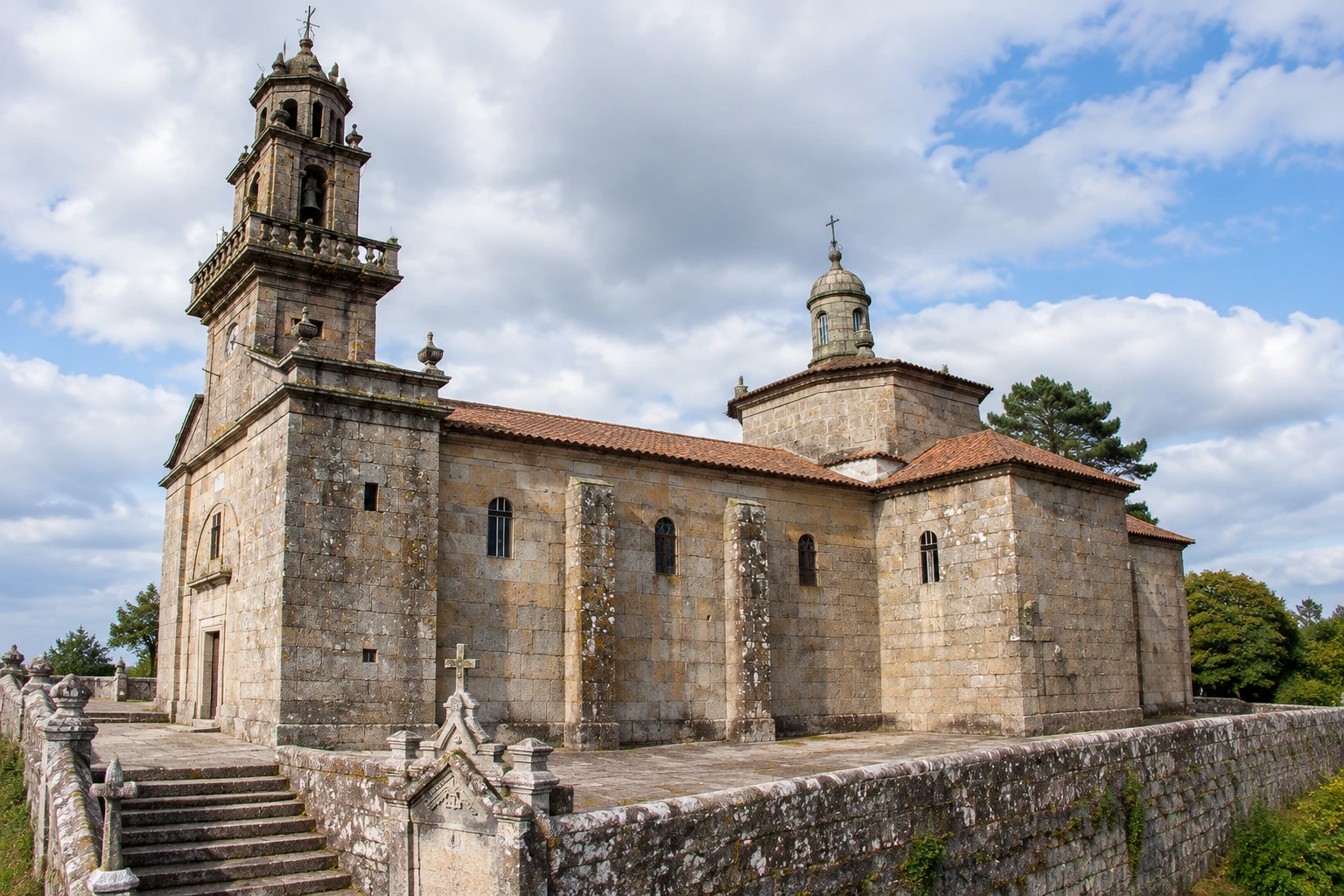
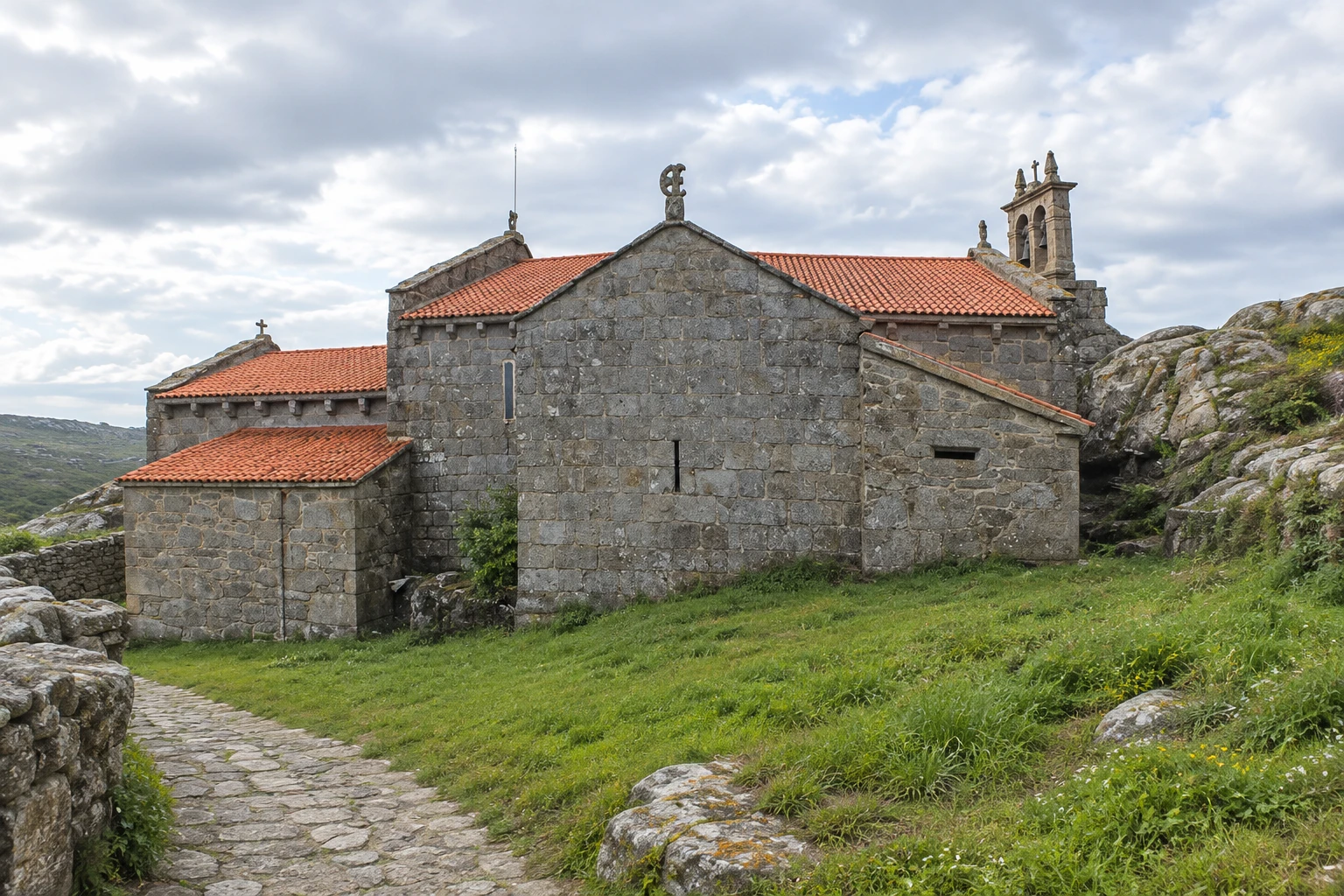
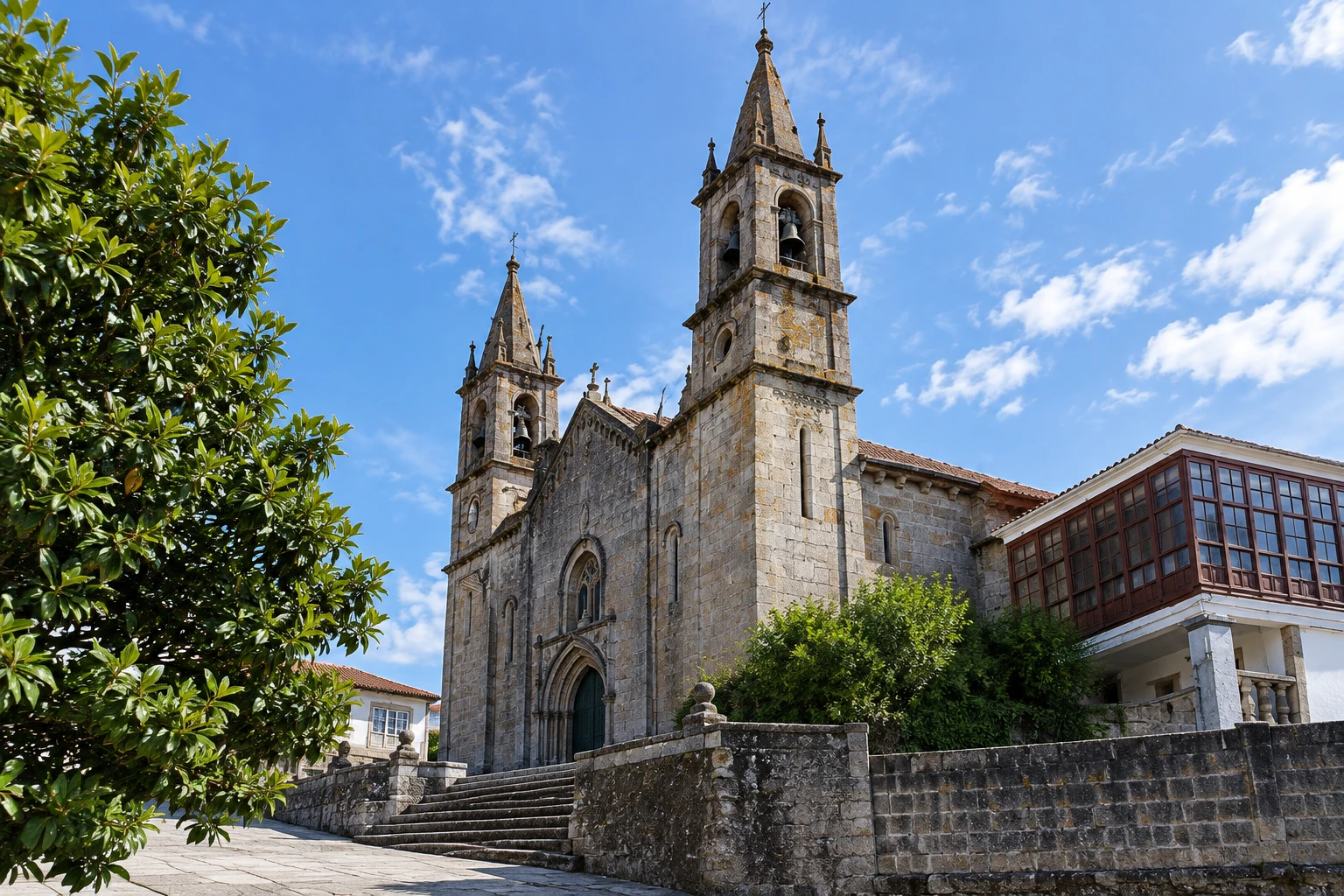
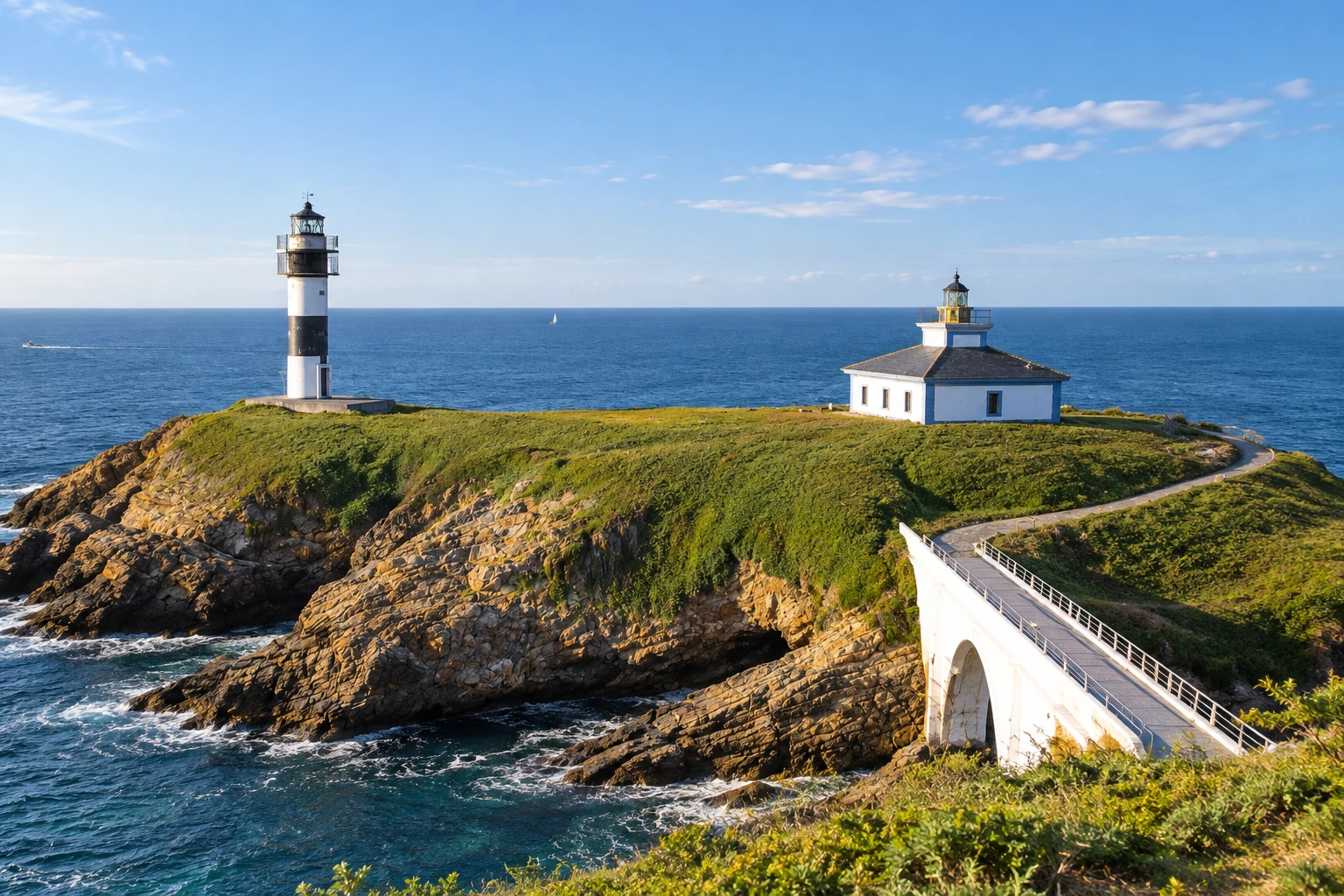
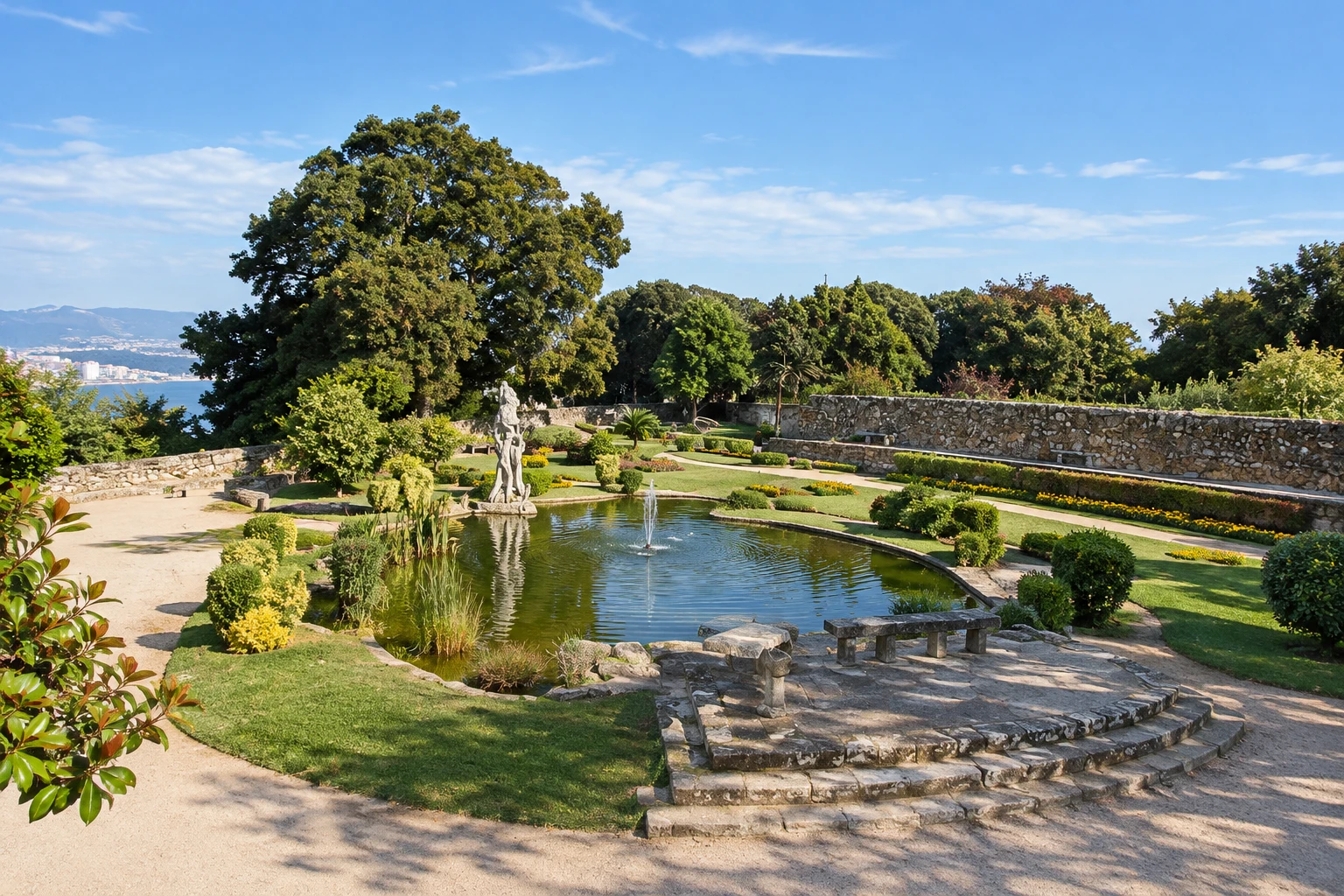
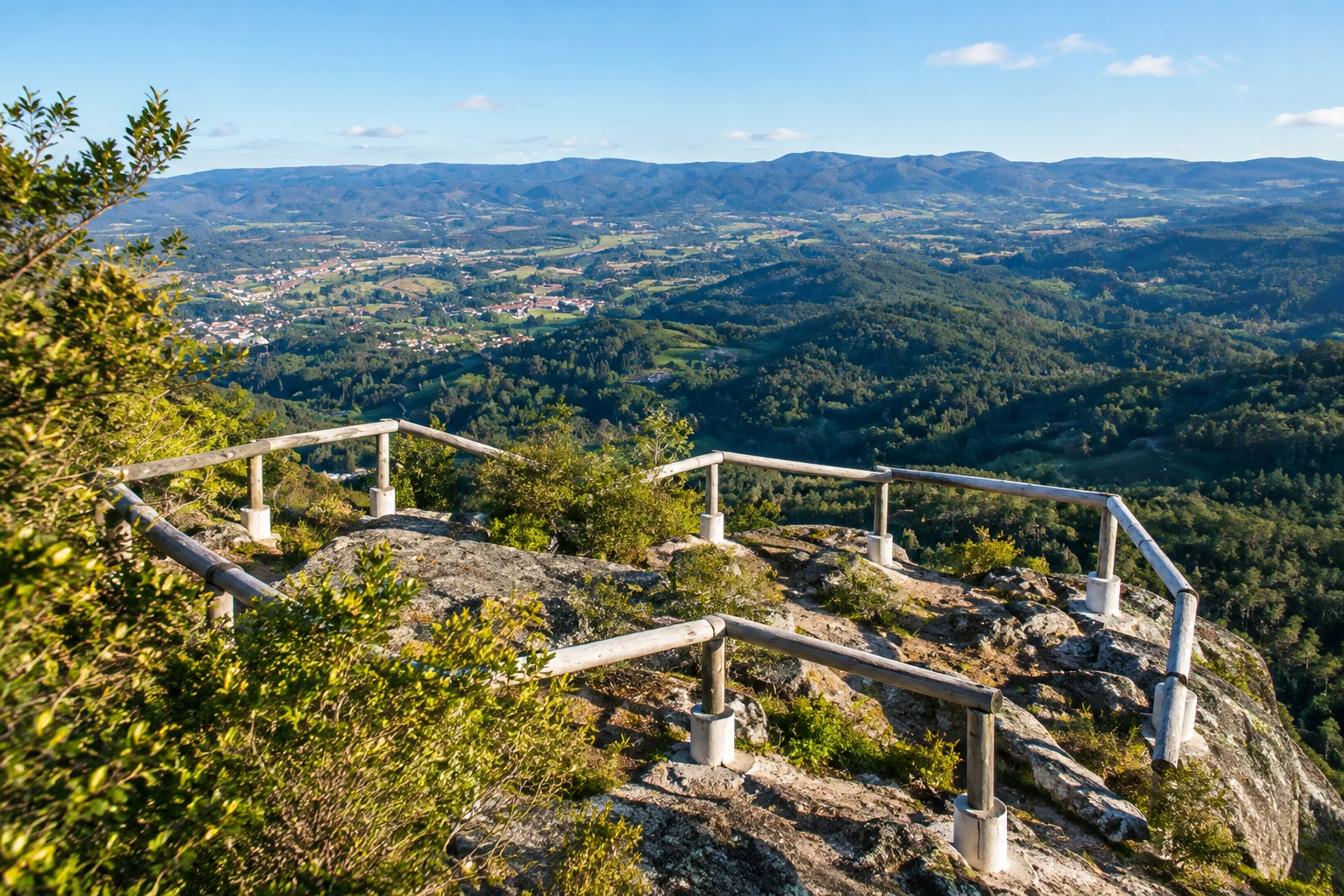
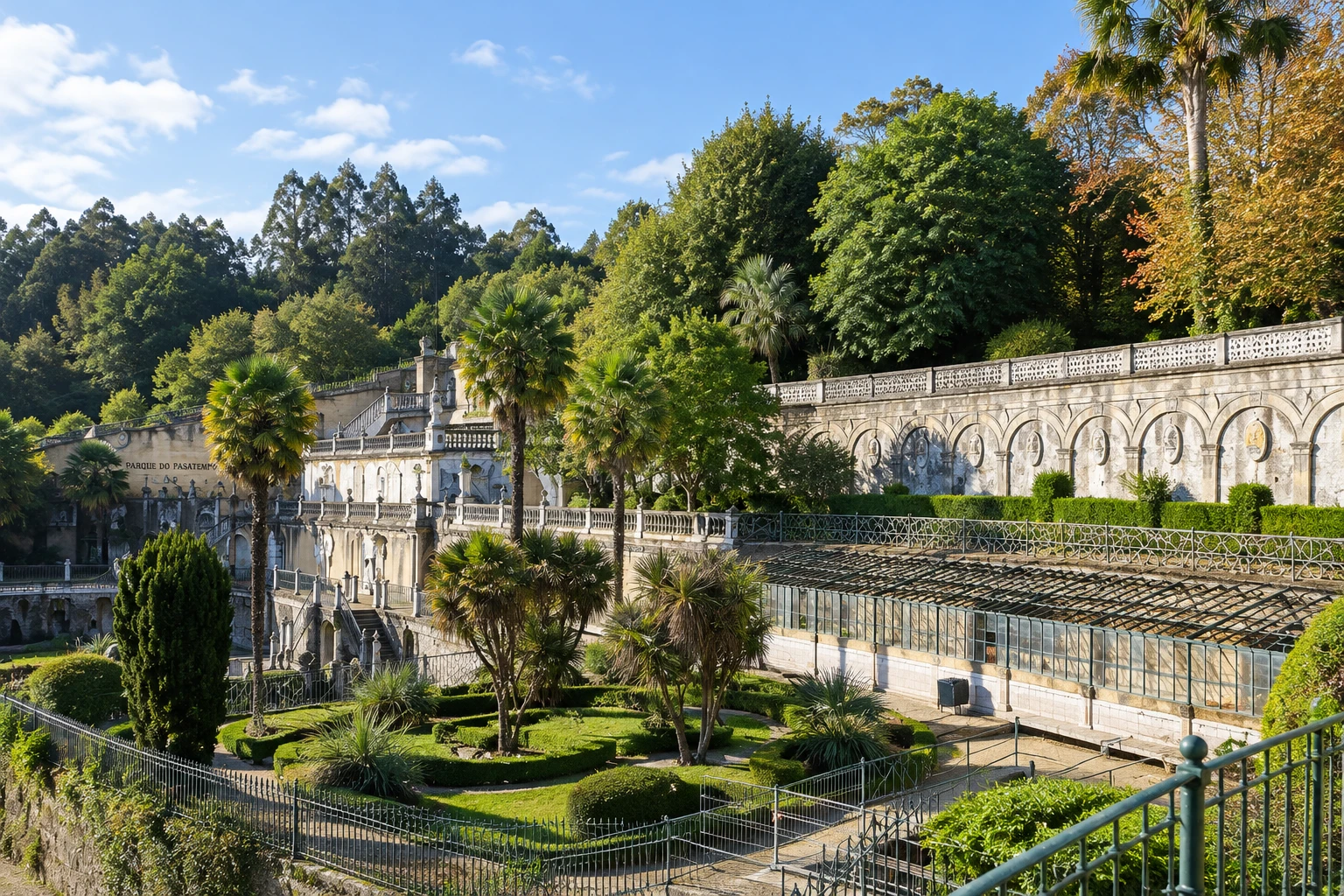
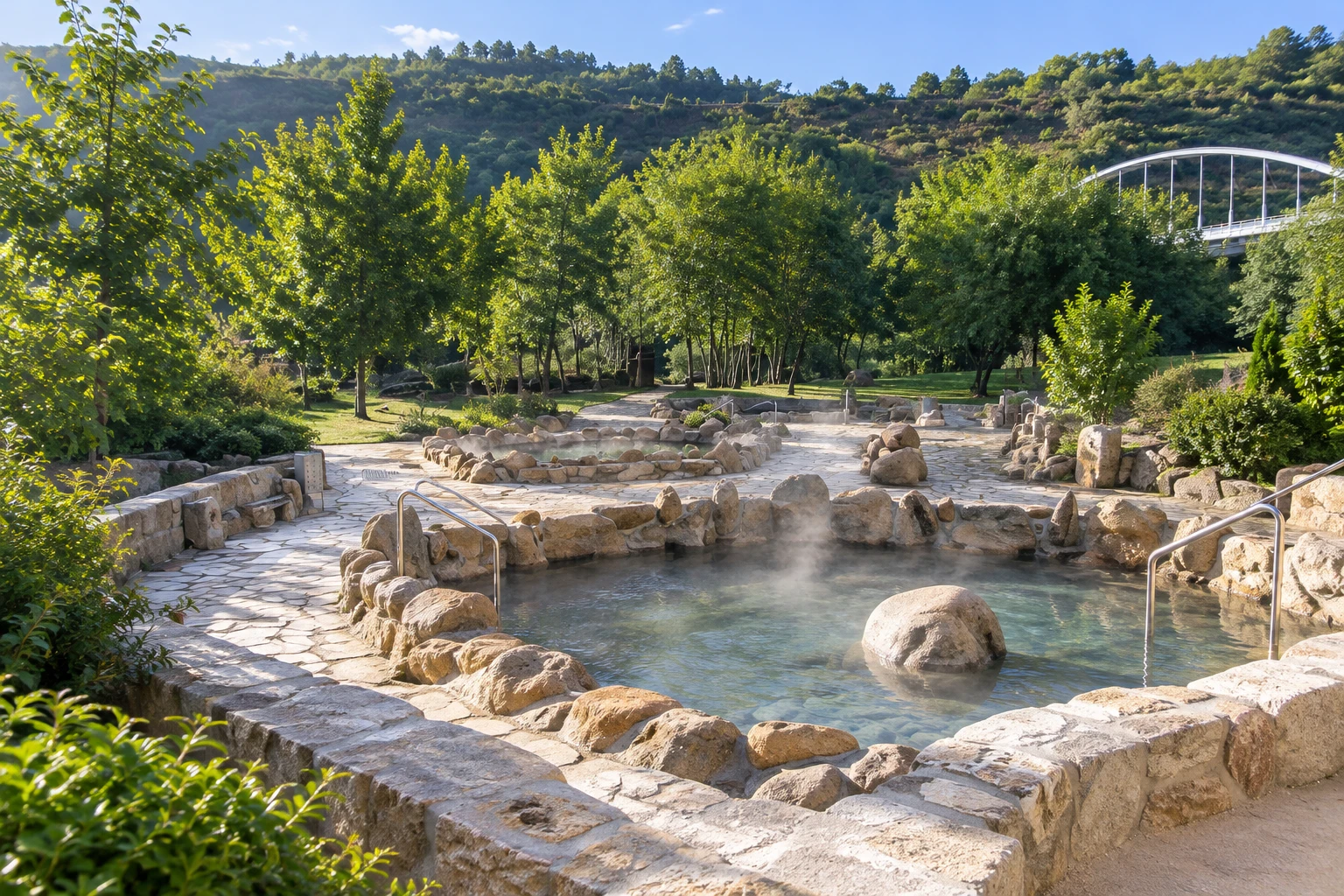
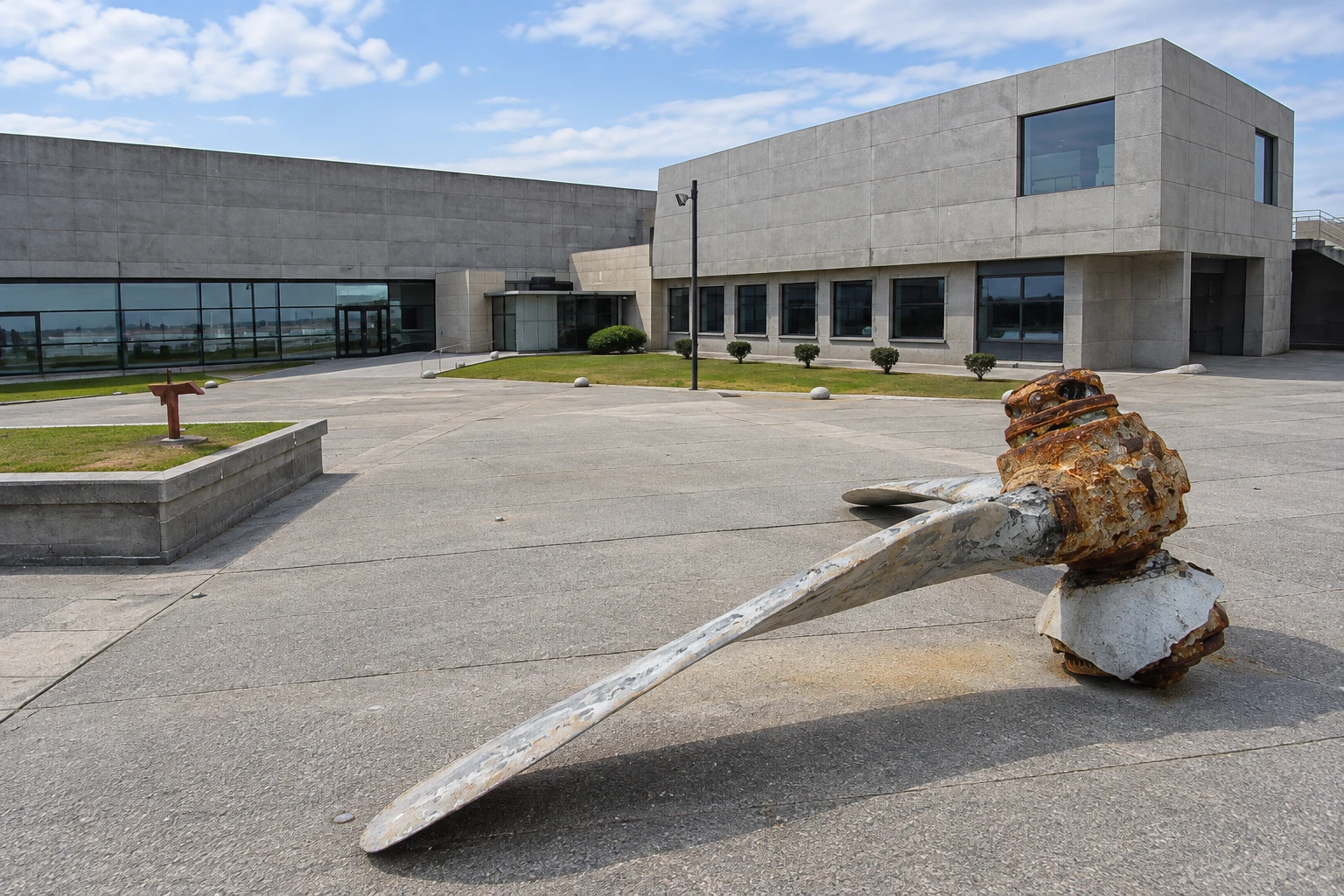
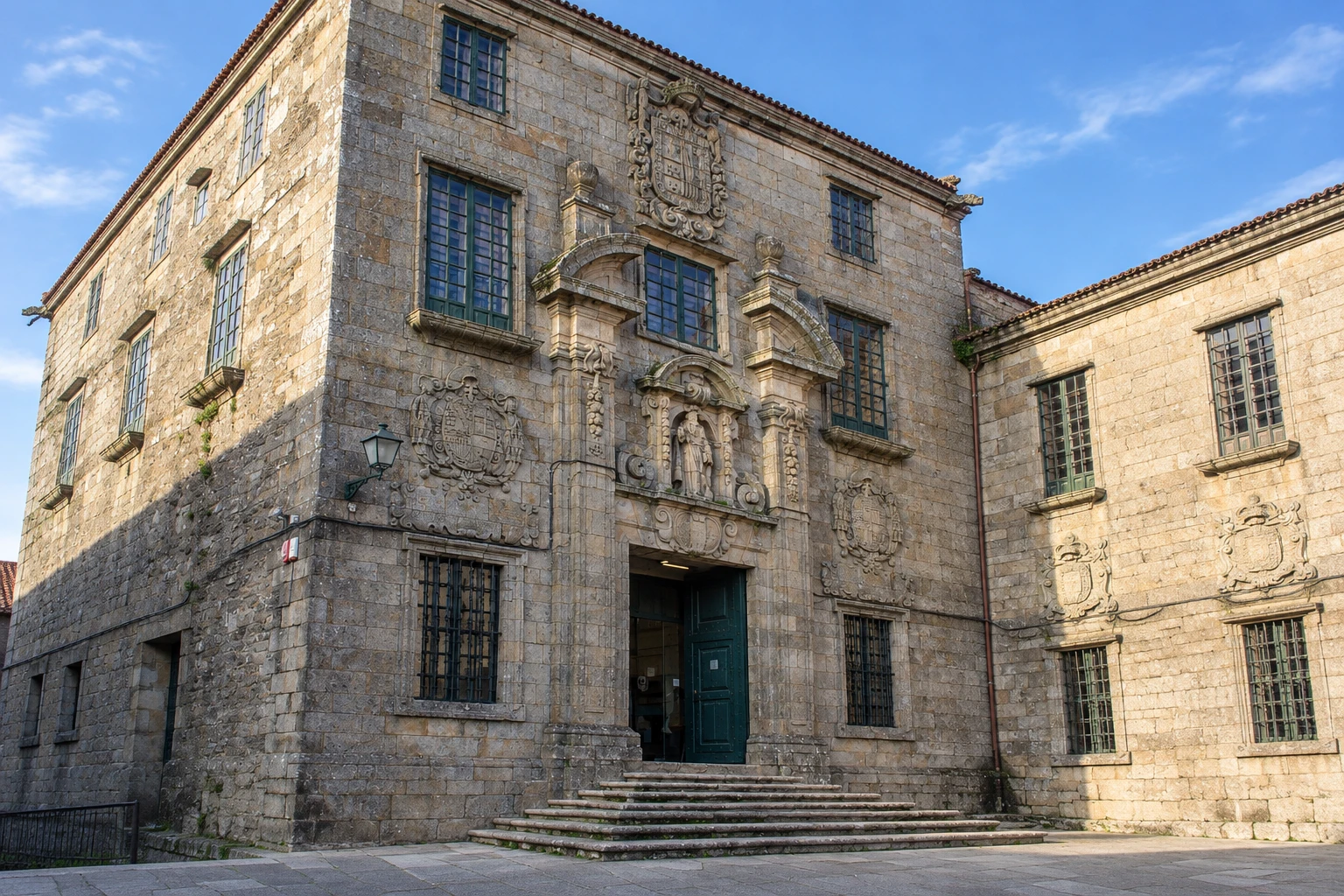
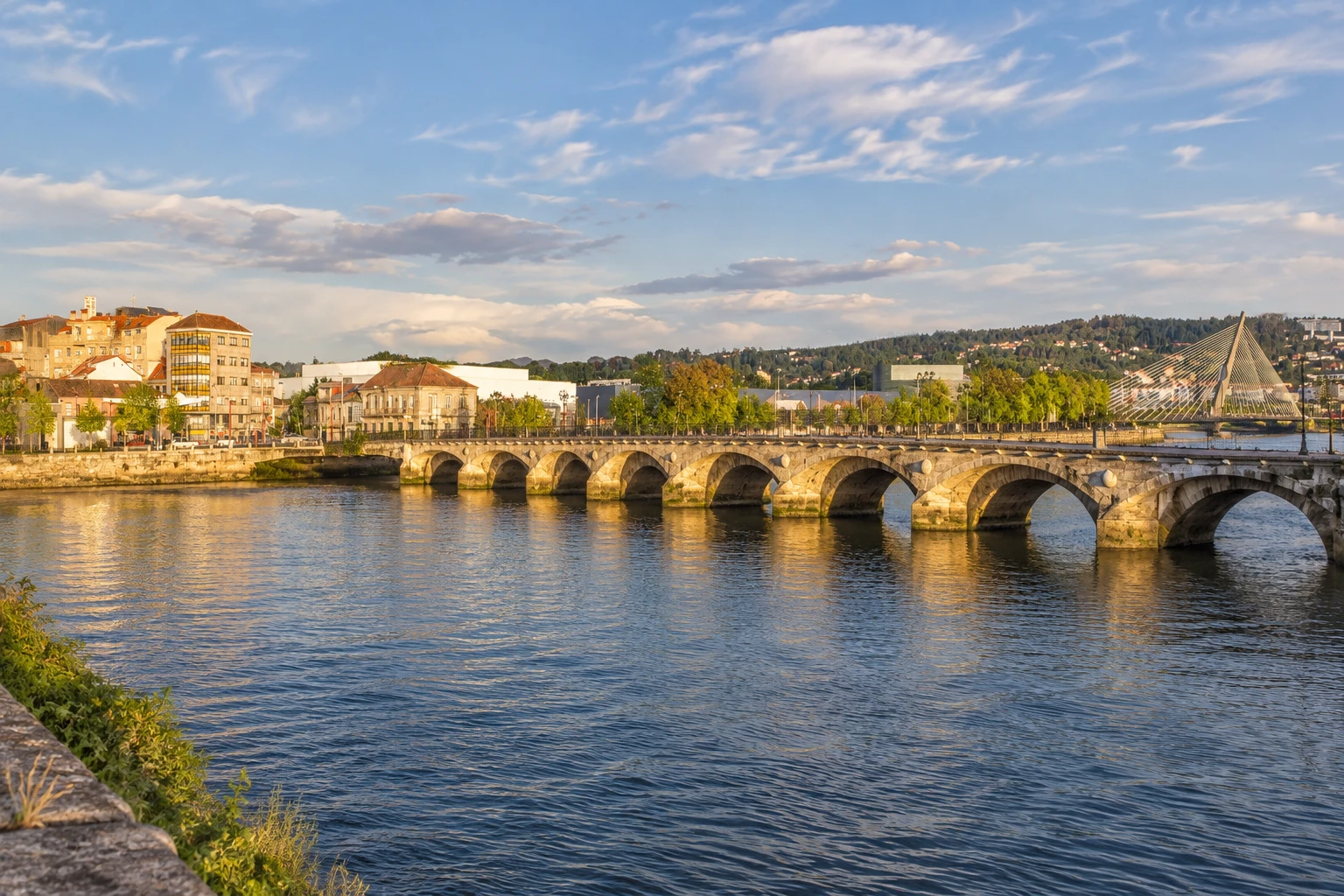
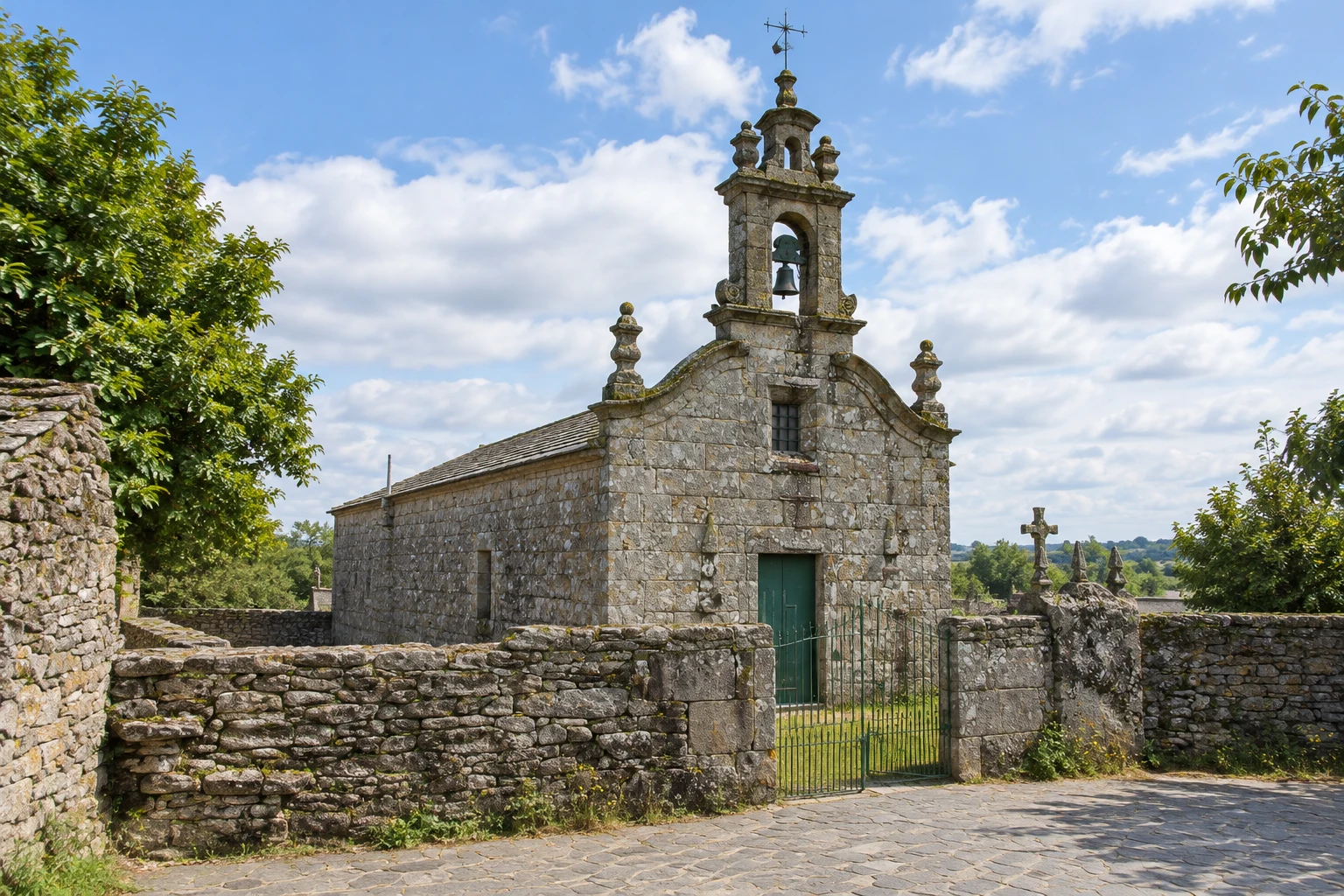
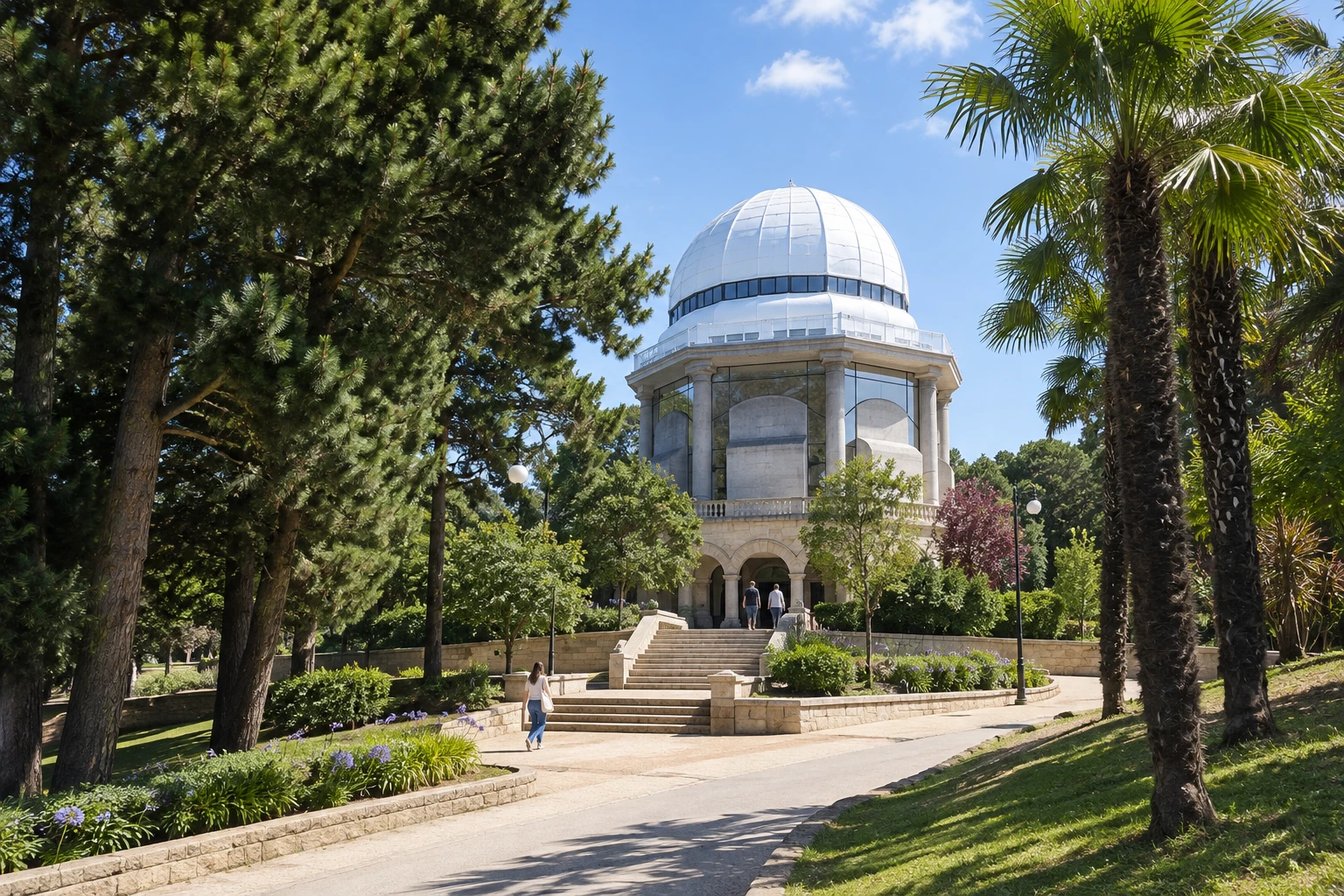
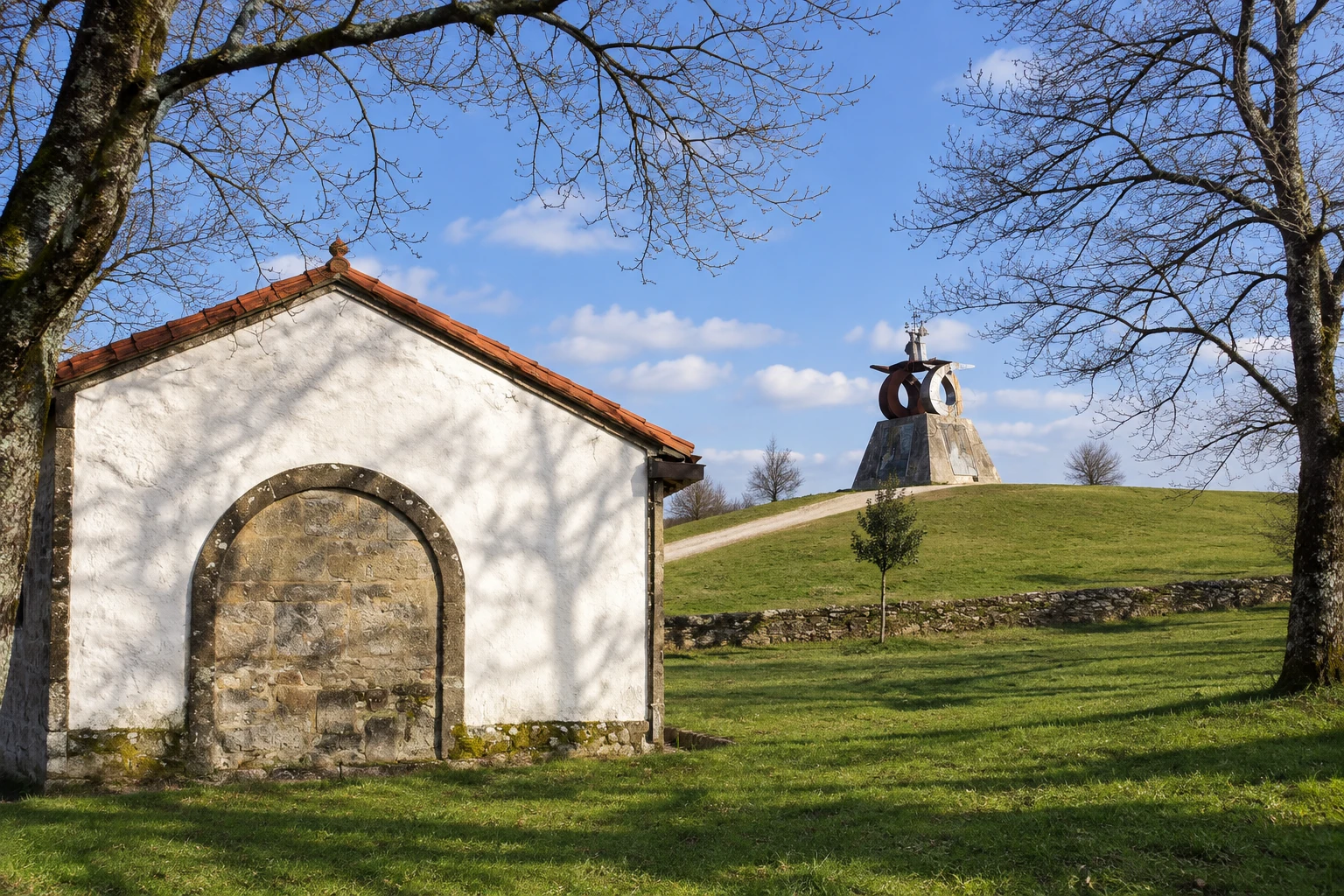
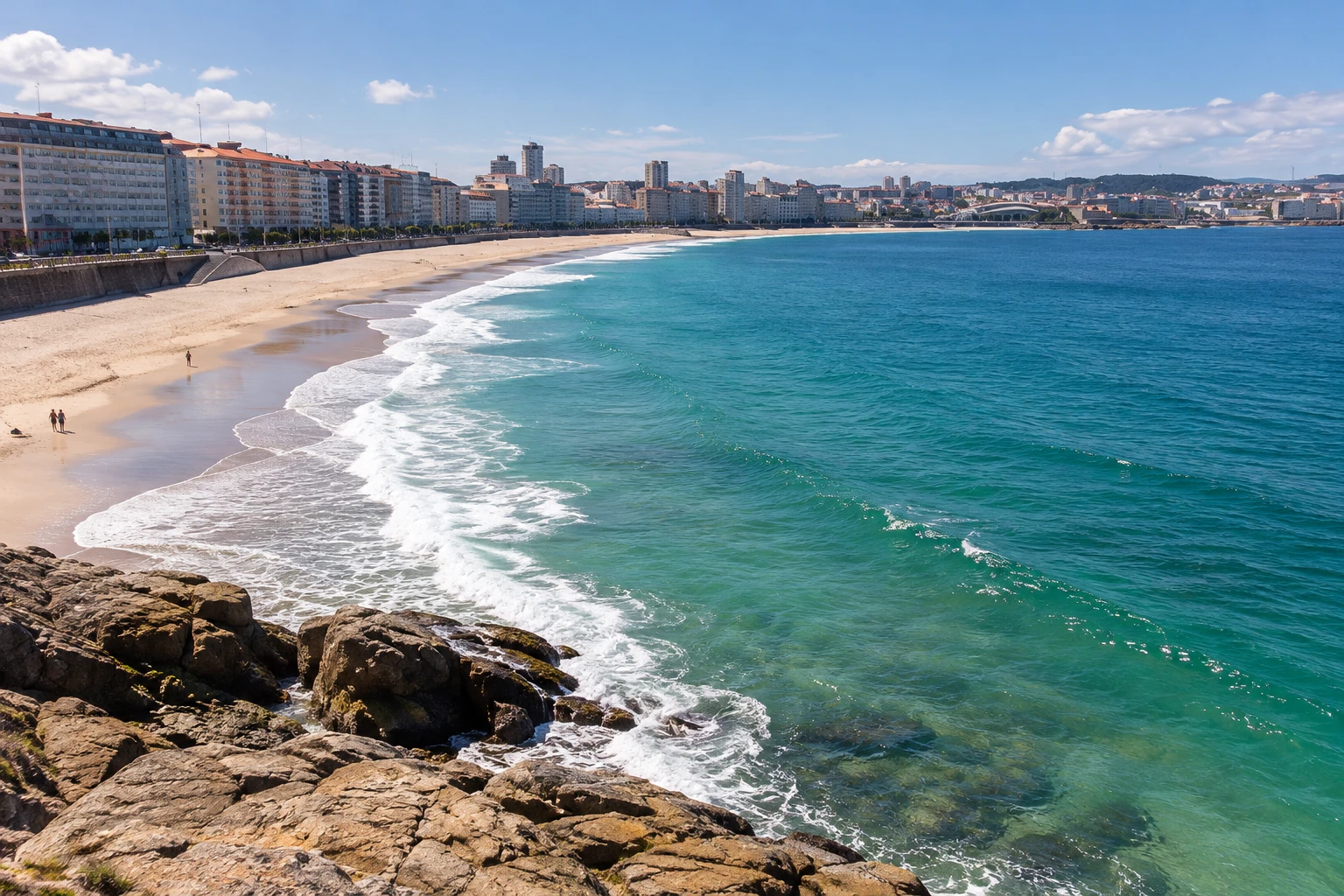
Illustrative images. The pictures in this guide are illustrations based on the real place, not photographs, and may differ from it.
To start
The 10 main places Santiago de Compostela and Galicia
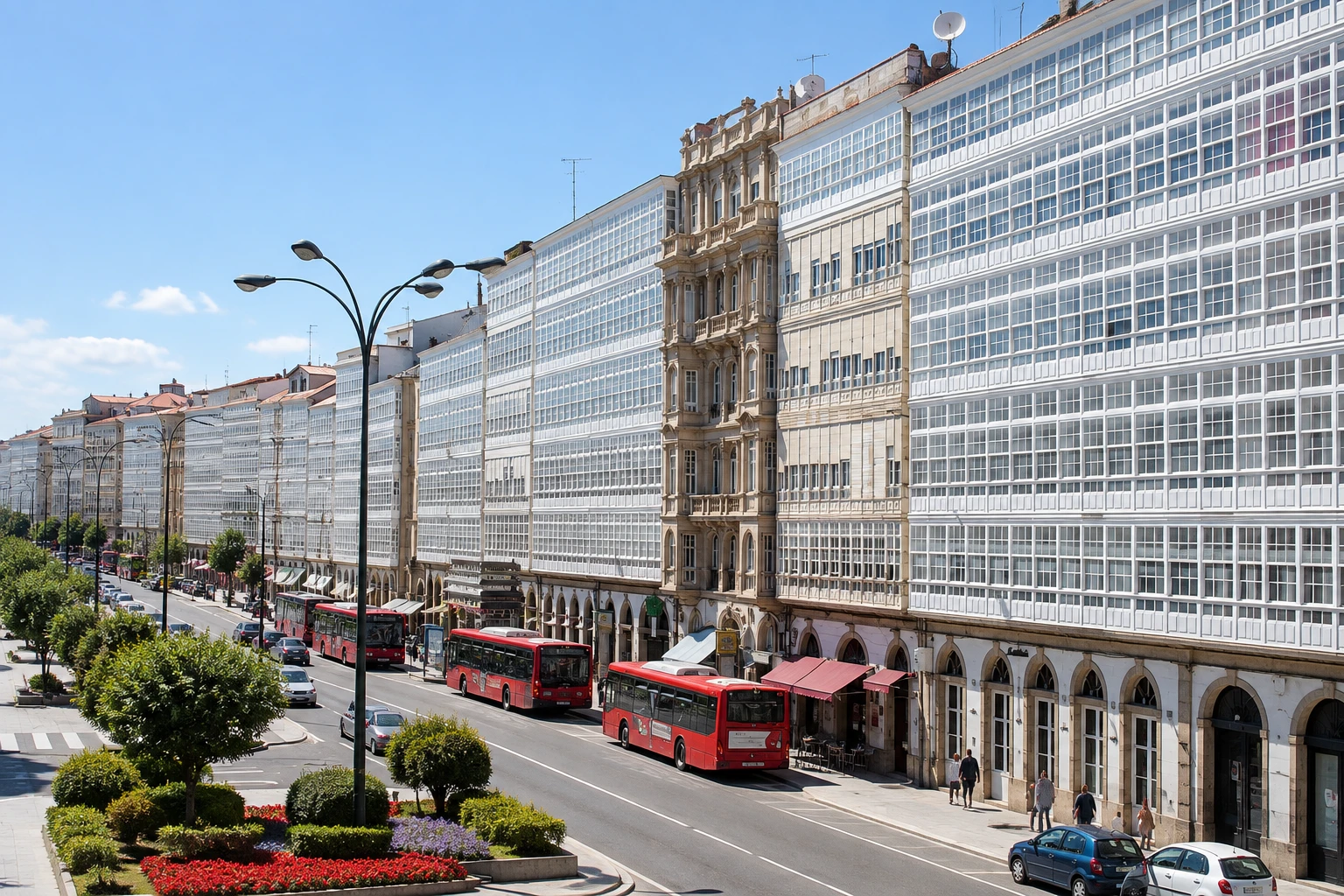
A Magdalena Quarter · FerrolNeighborhood planned in the 18th century, under the reign of Carlos III, with straight streets, houses with glass galleries, modernist buildings and the praça de Armas; a protec...
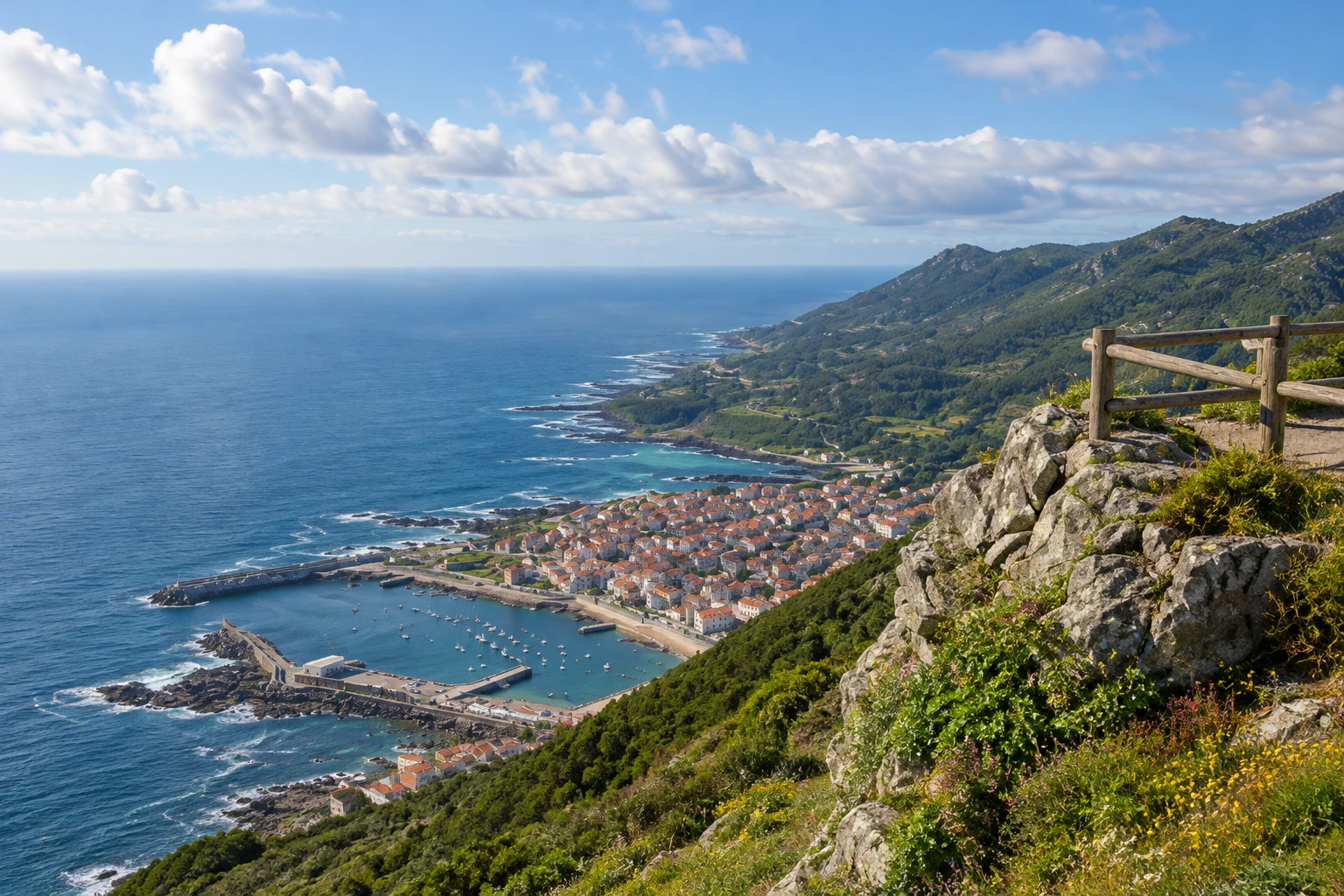
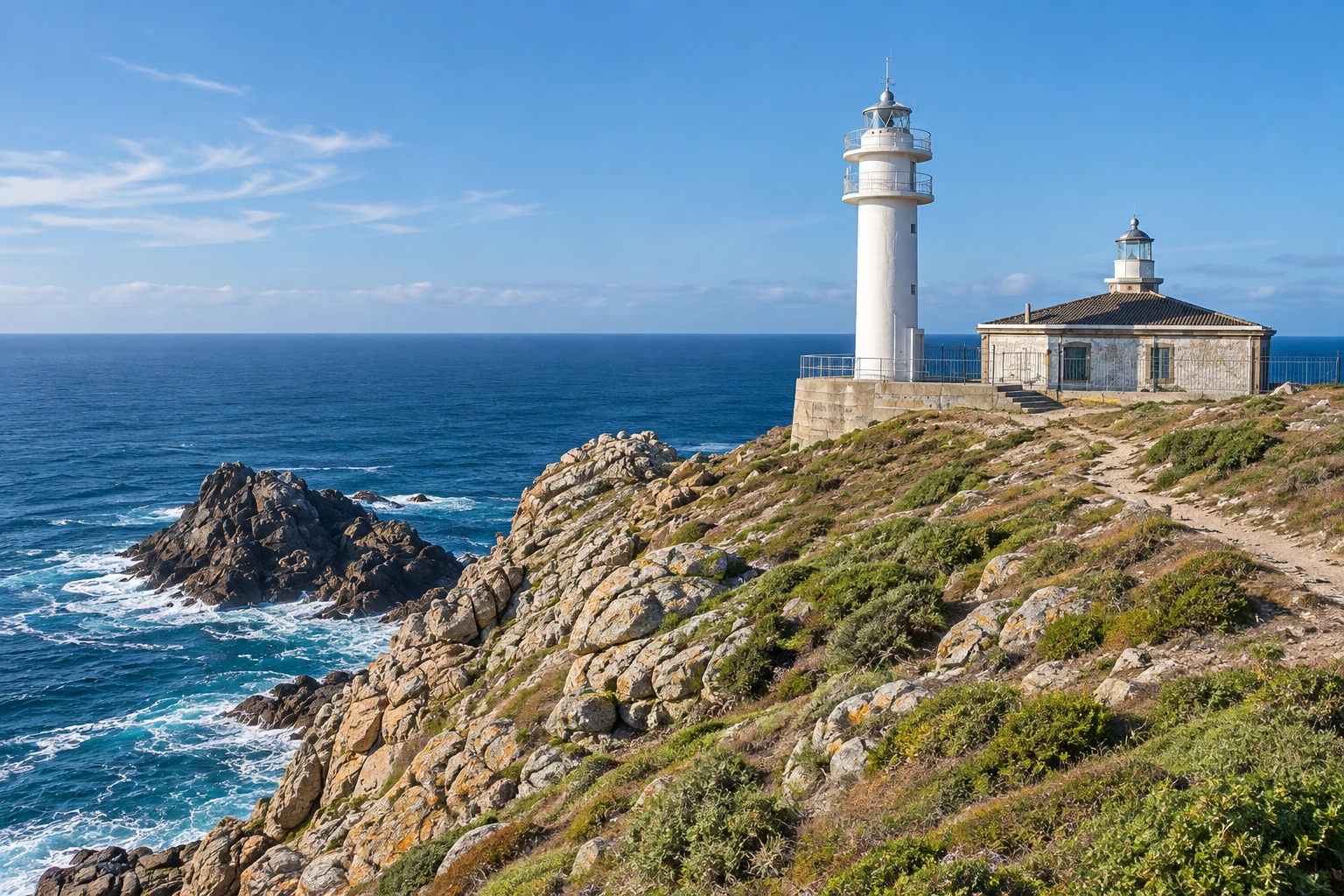
Cape Finisterre and Cape Finisterre Lighthouse · FinisterreGranite cape that the Romans called finis terrae, the end of the known world, with the lighthouse from 1853 at 143 meters above the sea and the kilometer-zero marker of the cami...
Santa Trega Hillfort · A GuardaRuins of a castro settlement on the slopes of mount Santa Trega, occupied between the 1st century BC and the 1st century AD, with round stone houses and two reconstructed dwelli...
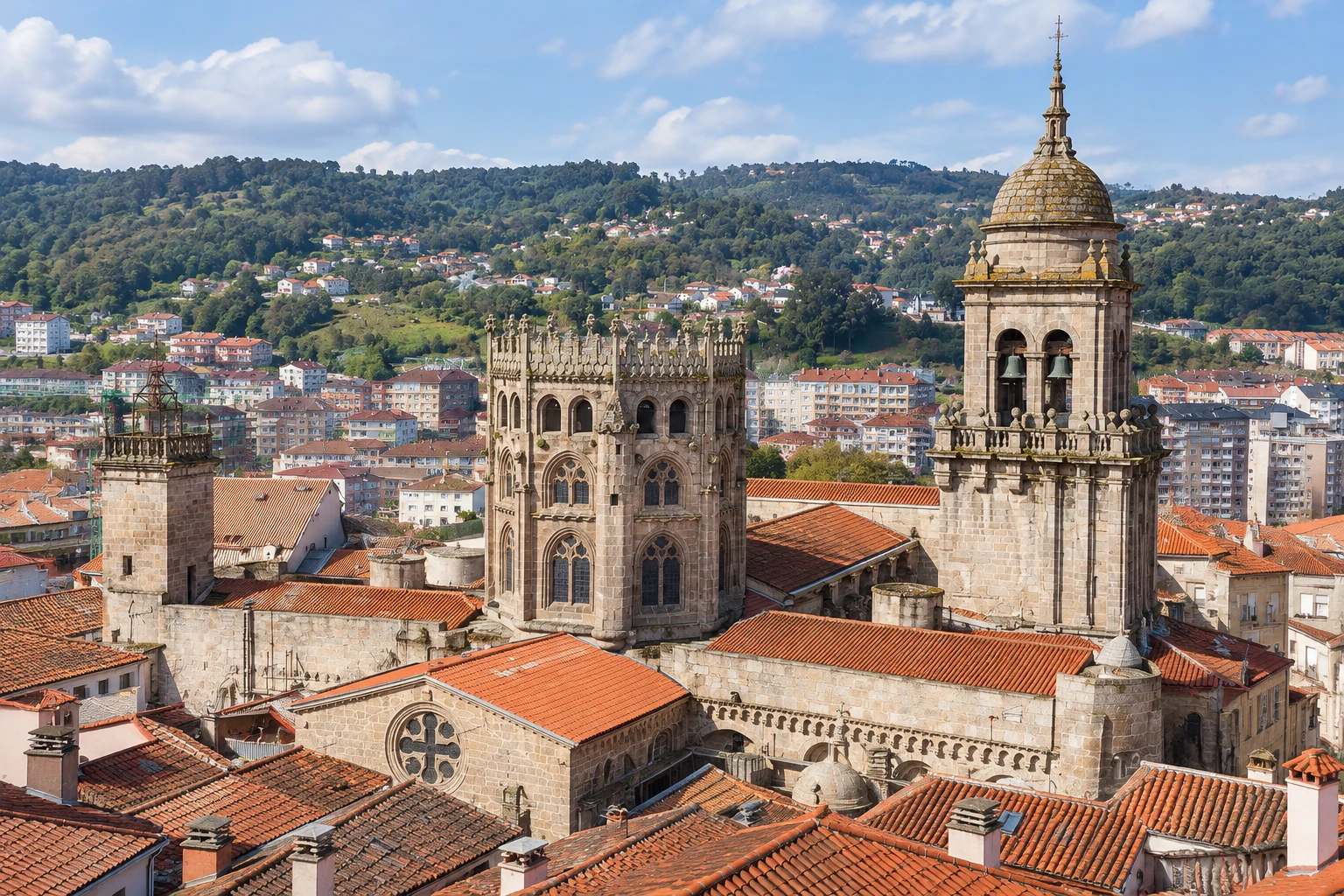
Ourense Cathedral · OurenseThe cathedral of San Martiño, from the 12th and 13th centuries, is one of the great Romanesque churches of Galicia, with the polychrome Pórtico do Paraíso and the chapel of the...
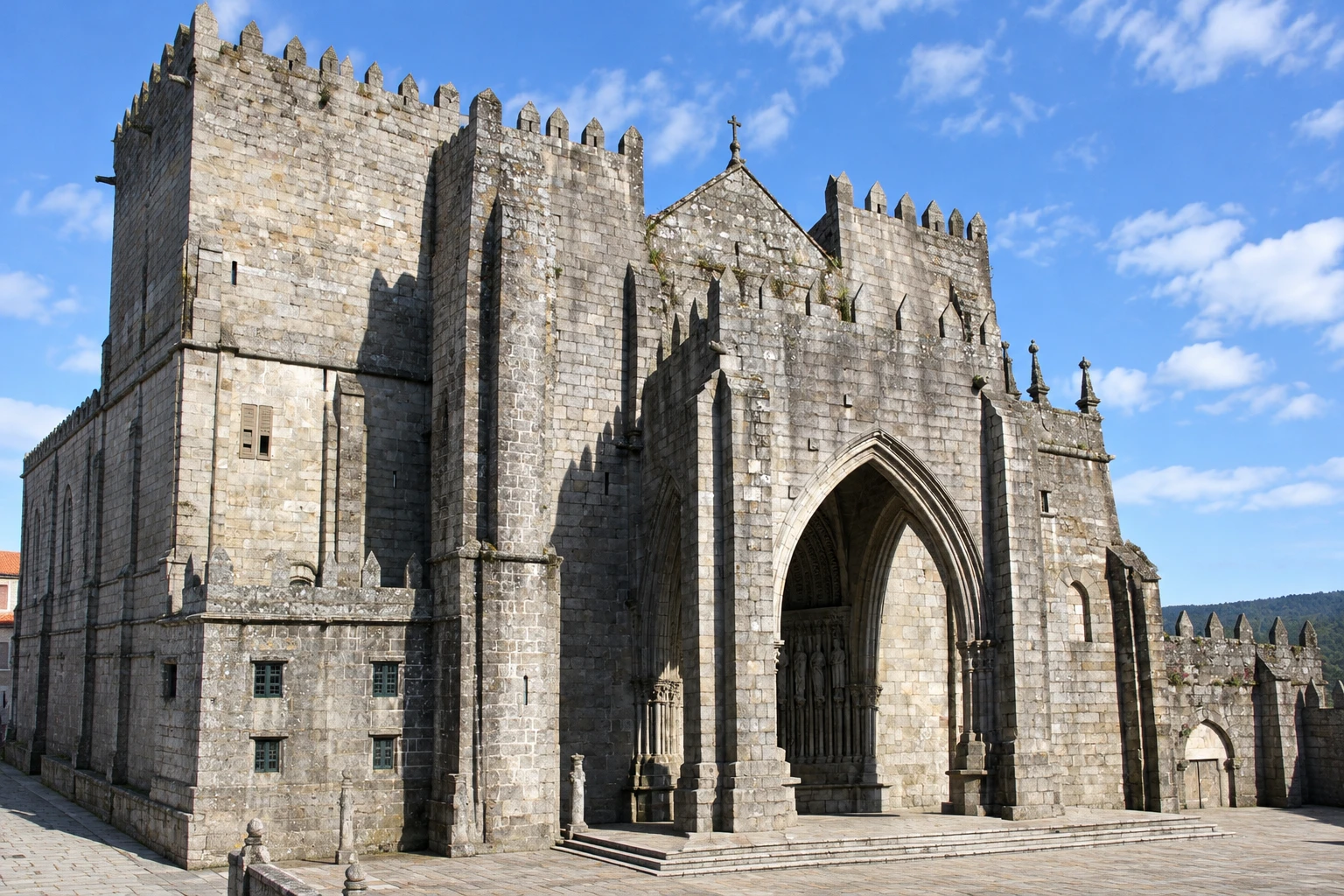
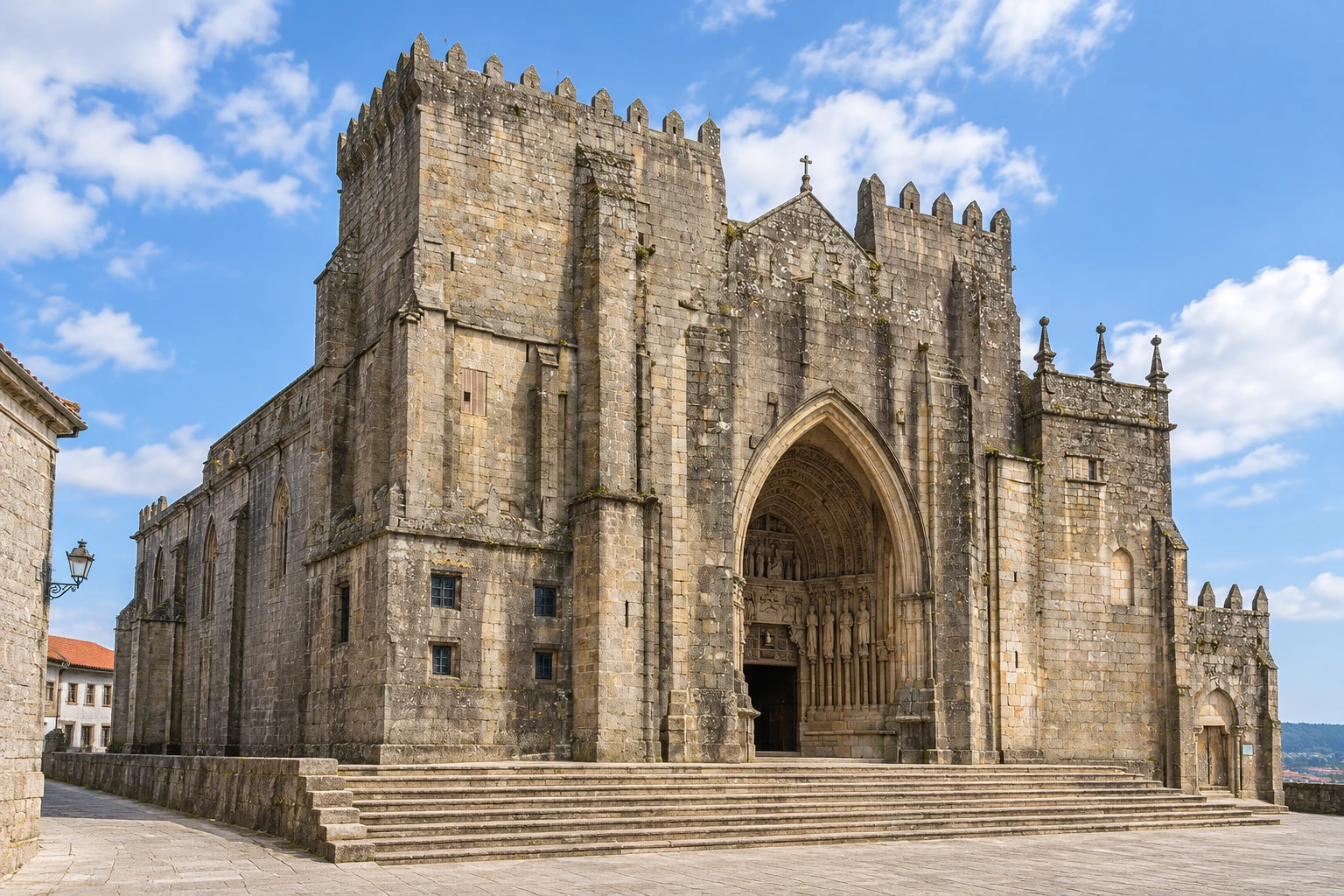
Tui Cathedral · TuiRomanesque and Gothic cathedral from the 12th and 13th centuries, with a fortress-like appearance atop the town, a Gothic portal, cloister and towers overlooking the river Minho...
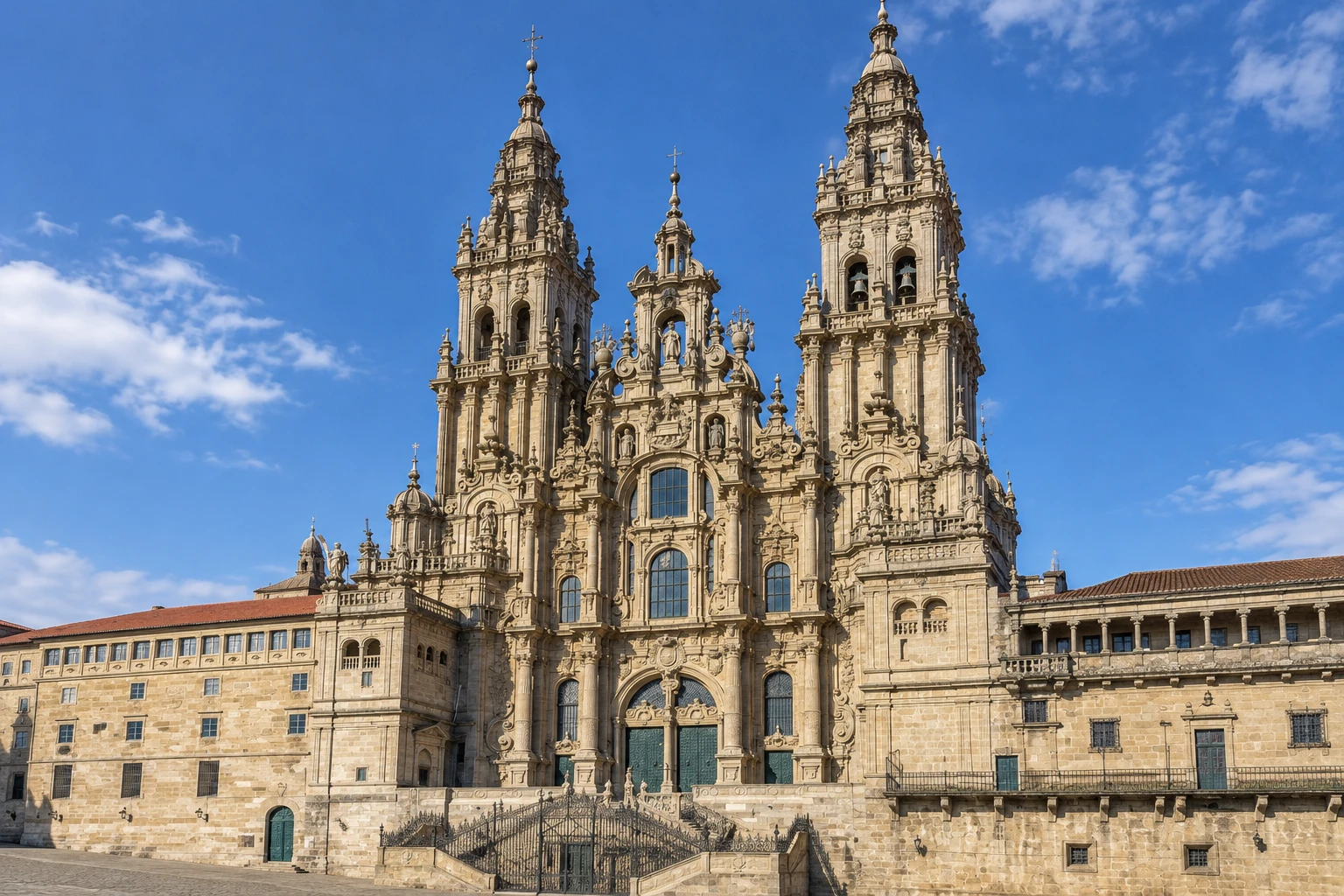
Santiago de Compostela Cathedral · Santiago de CompostelaRomanesque cathedral of the 11th century with a Baroque façade, which houses the tomb attributed to the apostle James, the Pórtico da Glória by Mestre Mateus and the Botafumeiro.
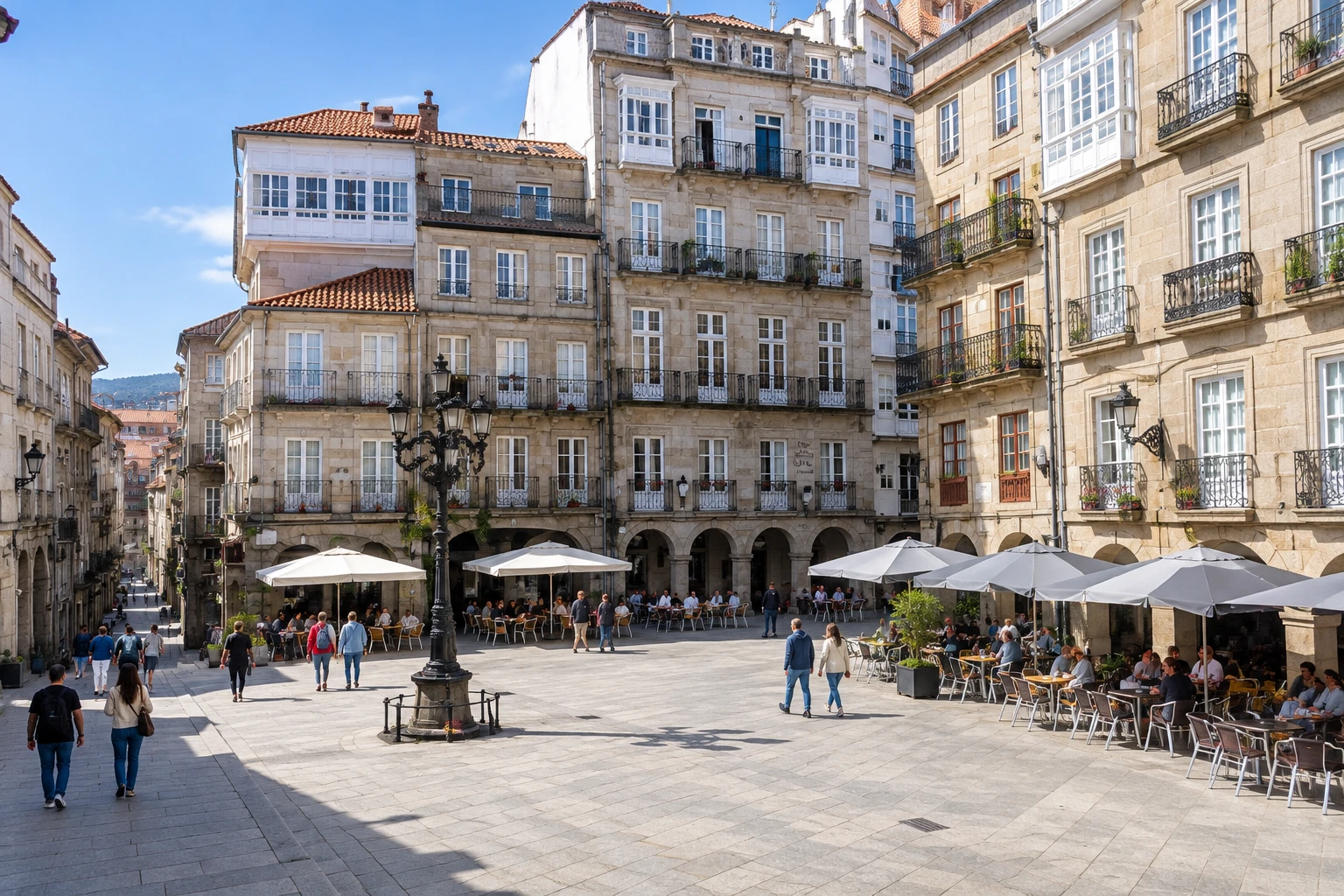
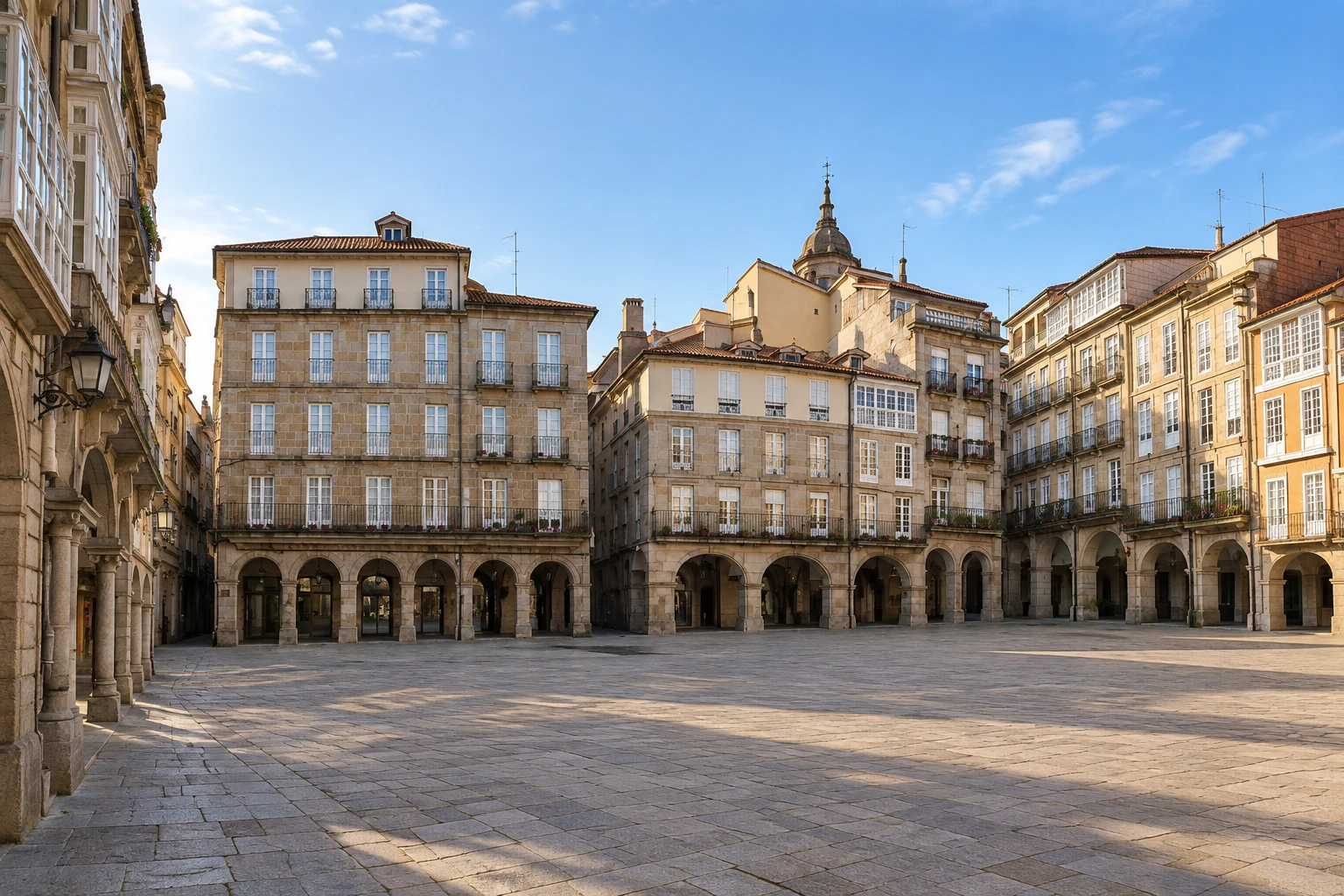
Pontevedra Old Town · PontevedraMedieval granite center closed to traffic, with Praça da Leña, Praça da Ferrería, Praça da Verdura and Praça do Teucro, stone houses with arcades and tapas bars.
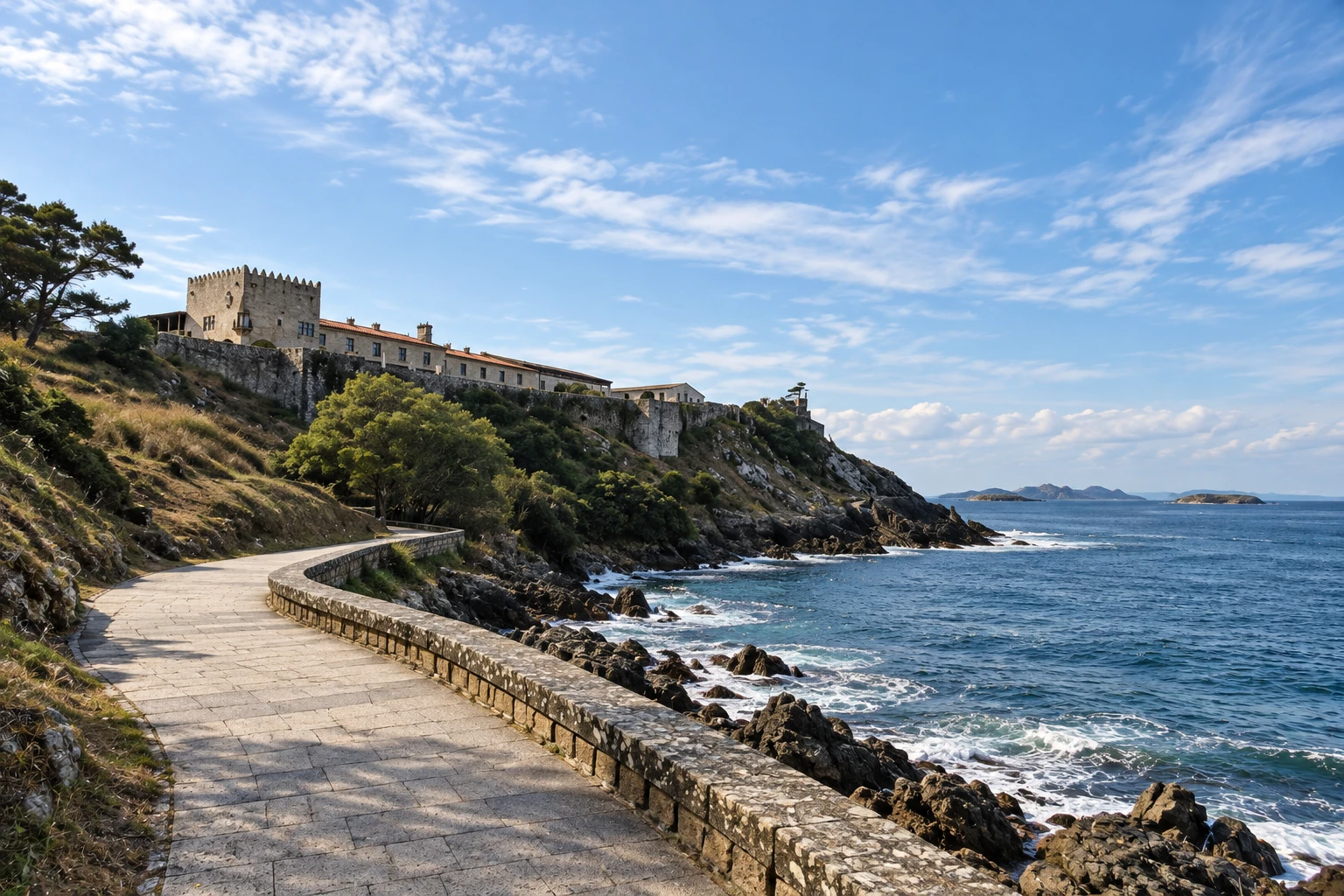
Monterreal Castle · BaionaFortress that surrounds the Monterreal peninsula, rebuilt in the 16th century by the conde de Gondomar, with walls, towers and a rampart walk by the sea; inside it houses a hist...
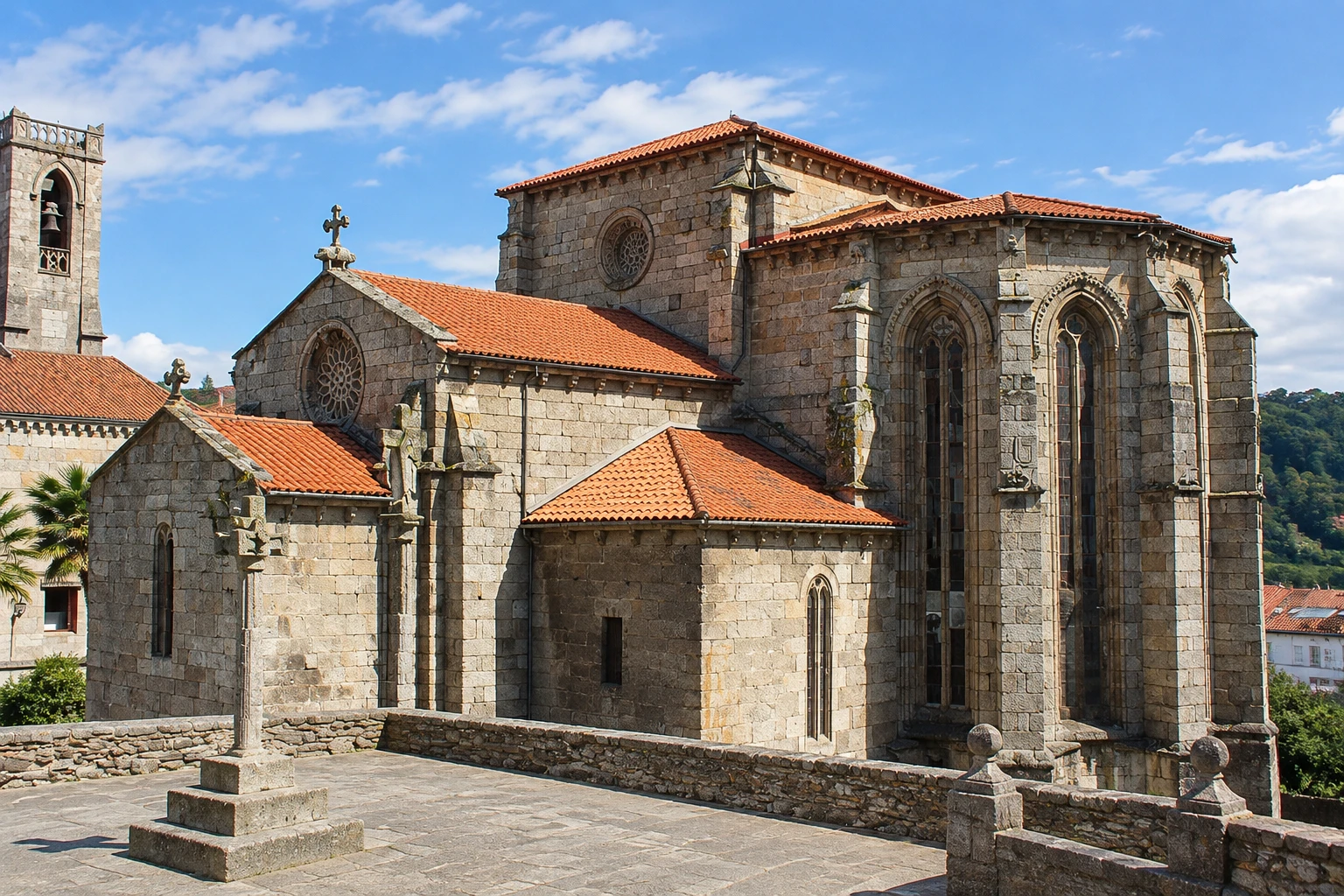
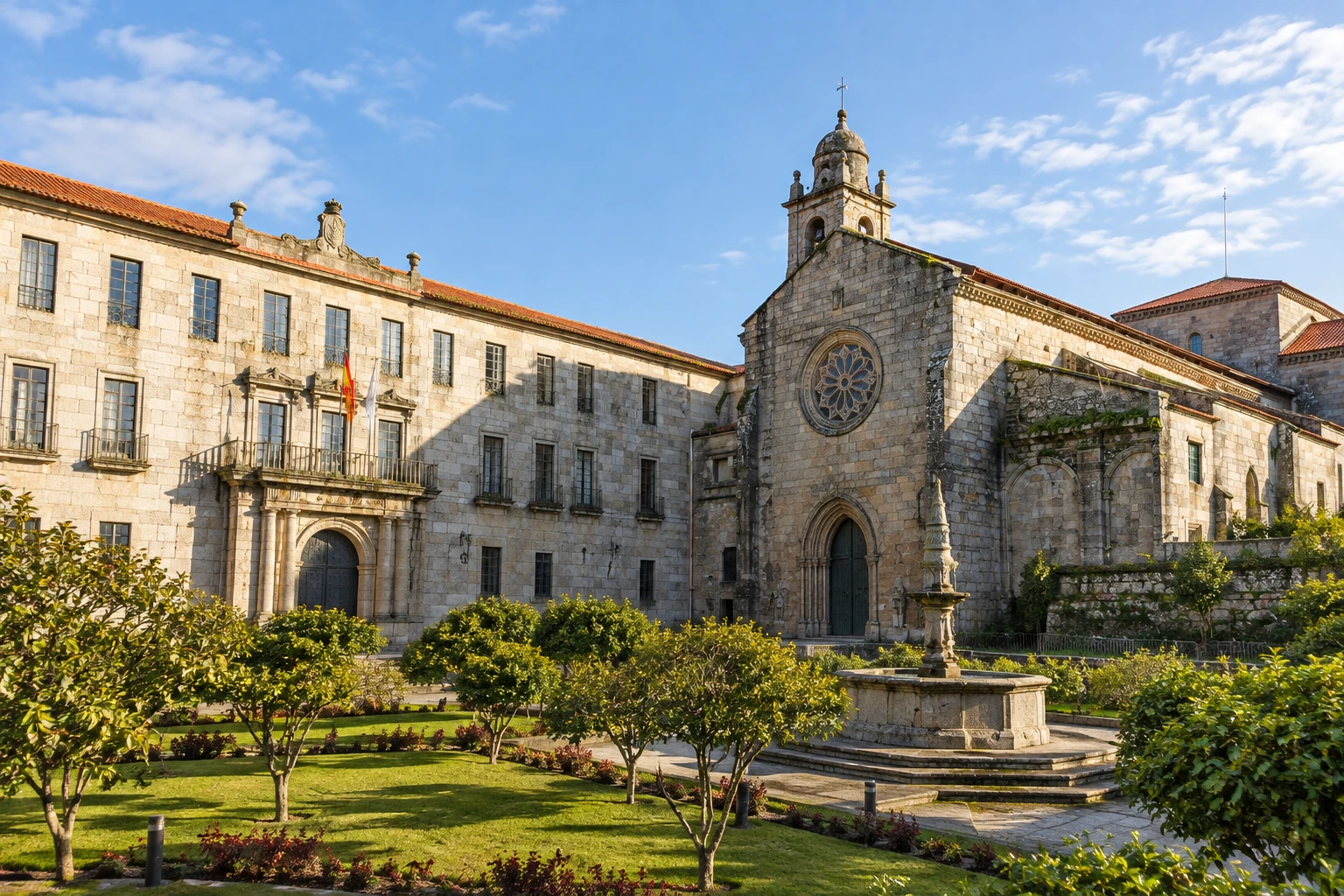
Church of San Francisco, Betanzos · BetanzosGothic church from the 14th century, sponsored by Fernán Pérez de Andrade, with the noble's tomb supported on a bear and a boar and a collection of family sarcophagi; a national...
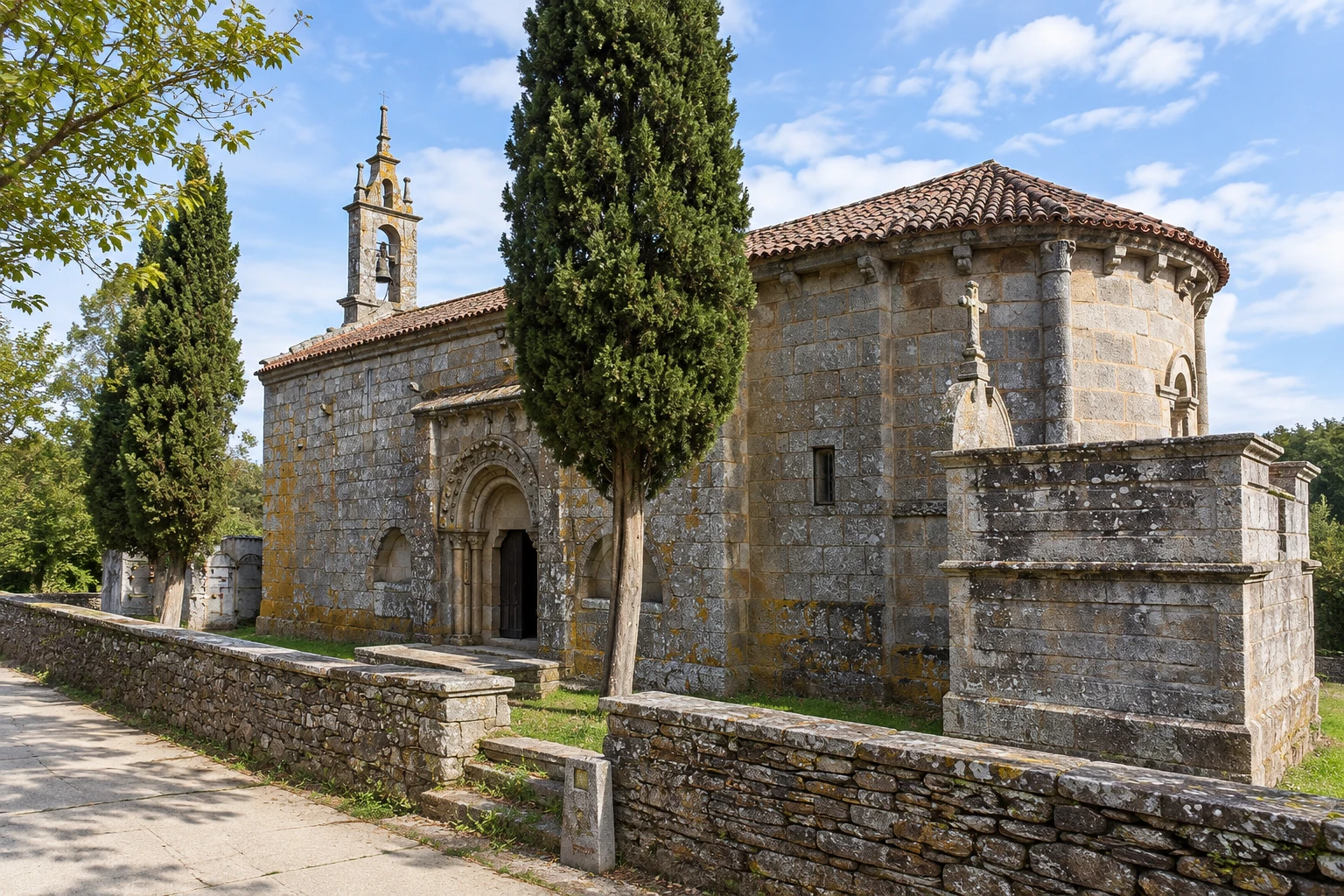
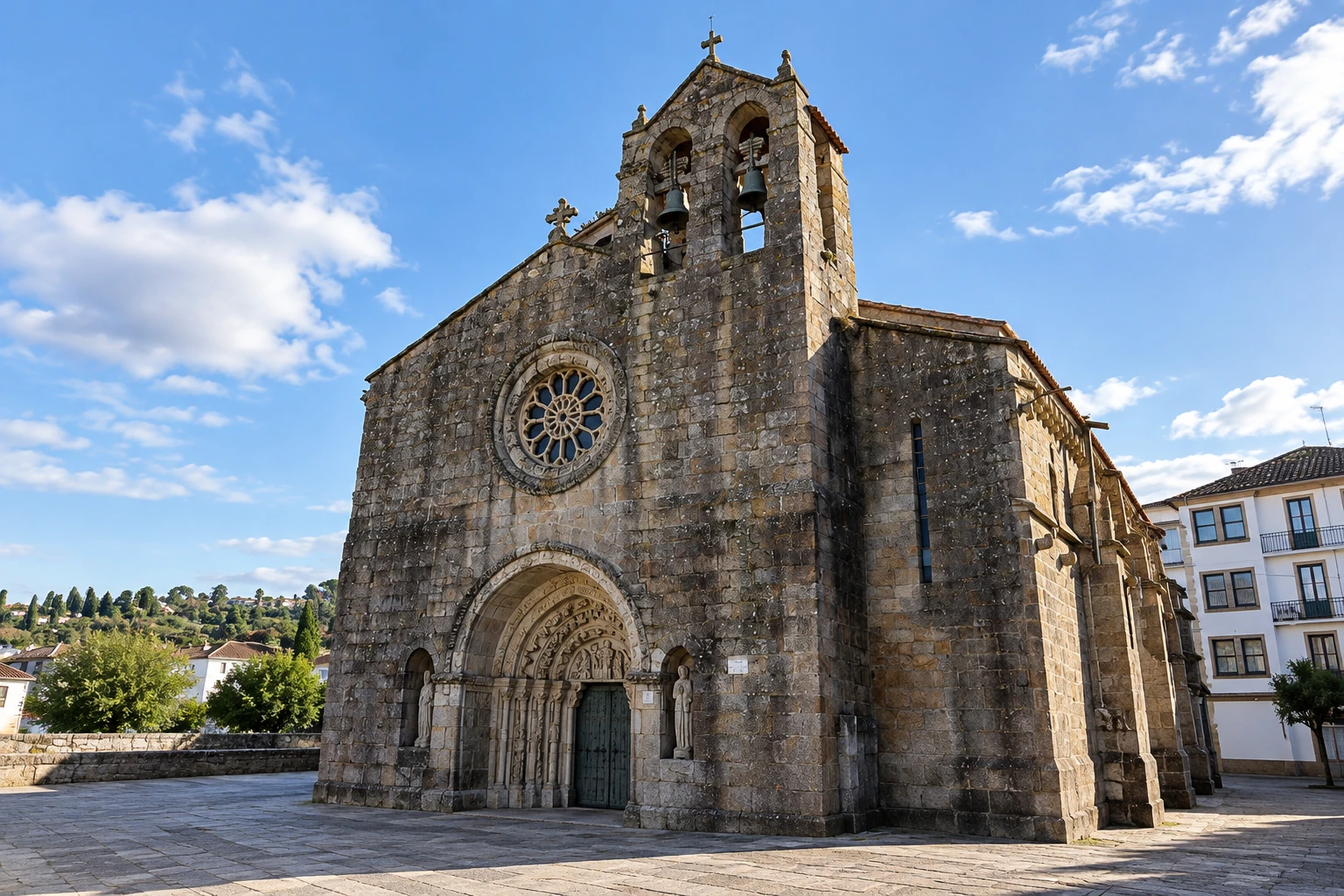
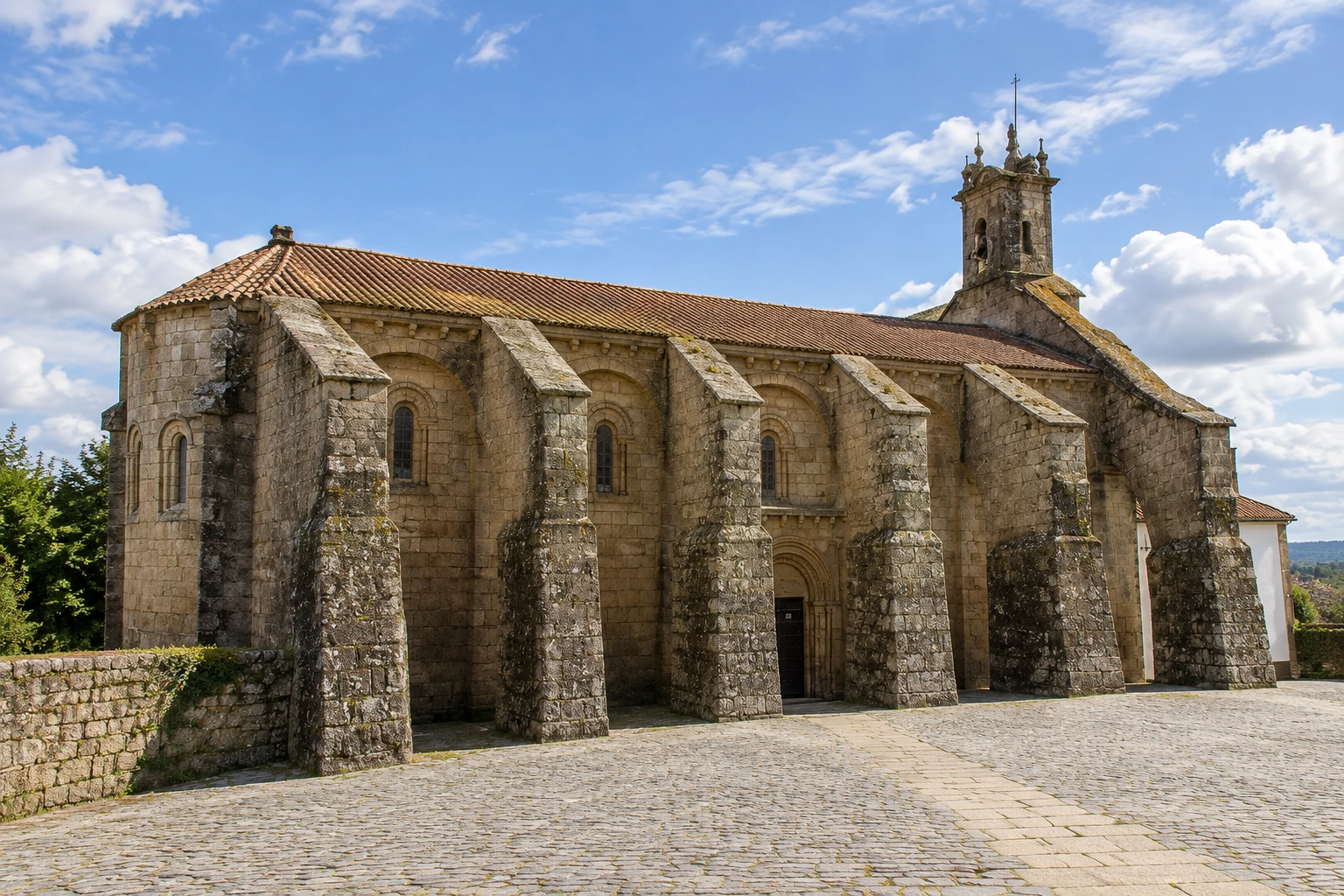
Church of Santa María de Melide · MelideRomanesque church from the 12th century at the exit of Melide on the Caminho Francês, with an arched portal, a stone altar and remnants of Gothic mural paintings in the apse.
Neighborhood planned in the 18th century, under the reign of Carlos III, with straight streets, houses with glass galleries, modernist buildings and the praça de Armas; a protected historic ensemble.
Granite cape that the Romans called finis terrae, the end of the known world, with the lighthouse from 1853 at 143 meters above the sea and the kilometer-zero marker of the camino de Fisterra.
Ruins of a castro settlement on the slopes of mount Santa Trega, occupied between the 1st century BC and the 1st century AD, with round stone houses and two reconstructed dwellings.
The cathedral of San Martiño, from the 12th and 13th centuries, is one of the great Romanesque churches of Galicia, with the polychrome Pórtico do Paraíso and the chapel of the Santo Cristo.
Romanesque and Gothic cathedral from the 12th and 13th centuries, with a fortress-like appearance atop the town, a Gothic portal, cloister and towers overlooking the river Minho and Portugal.
Romanesque cathedral of the 11th century with a Baroque façade, which houses the tomb attributed to the apostle James, the Pórtico da Glória by Mestre Mateus and the Botafumeiro. End of the Way of St. James.
Medieval granite center closed to traffic, with Praça da Leña, Praça da Ferrería, Praça da Verdura and Praça do Teucro, stone houses with arcades and tapas bars.
Fortress that surrounds the Monterreal peninsula, rebuilt in the 16th century by the conde de Gondomar, with walls, towers and a rampart walk by the sea; inside it houses a historic parador.
Gothic church from the 14th century, sponsored by Fernán Pérez de Andrade, with the noble's tomb supported on a bear and a boar and a collection of family sarcophagi; a national monument since 1919.
Romanesque church from the 12th century at the exit of Melide on the Caminho Francês, with an arched portal, a stone altar and remnants of Gothic mural paintings in the apse.
Parish igreja on the rua do Caminho, dedicated to the Apostle Santiago, with images of Santiago pilgrim and Santiago knight; a stop for pilgrims to stamp their credential.
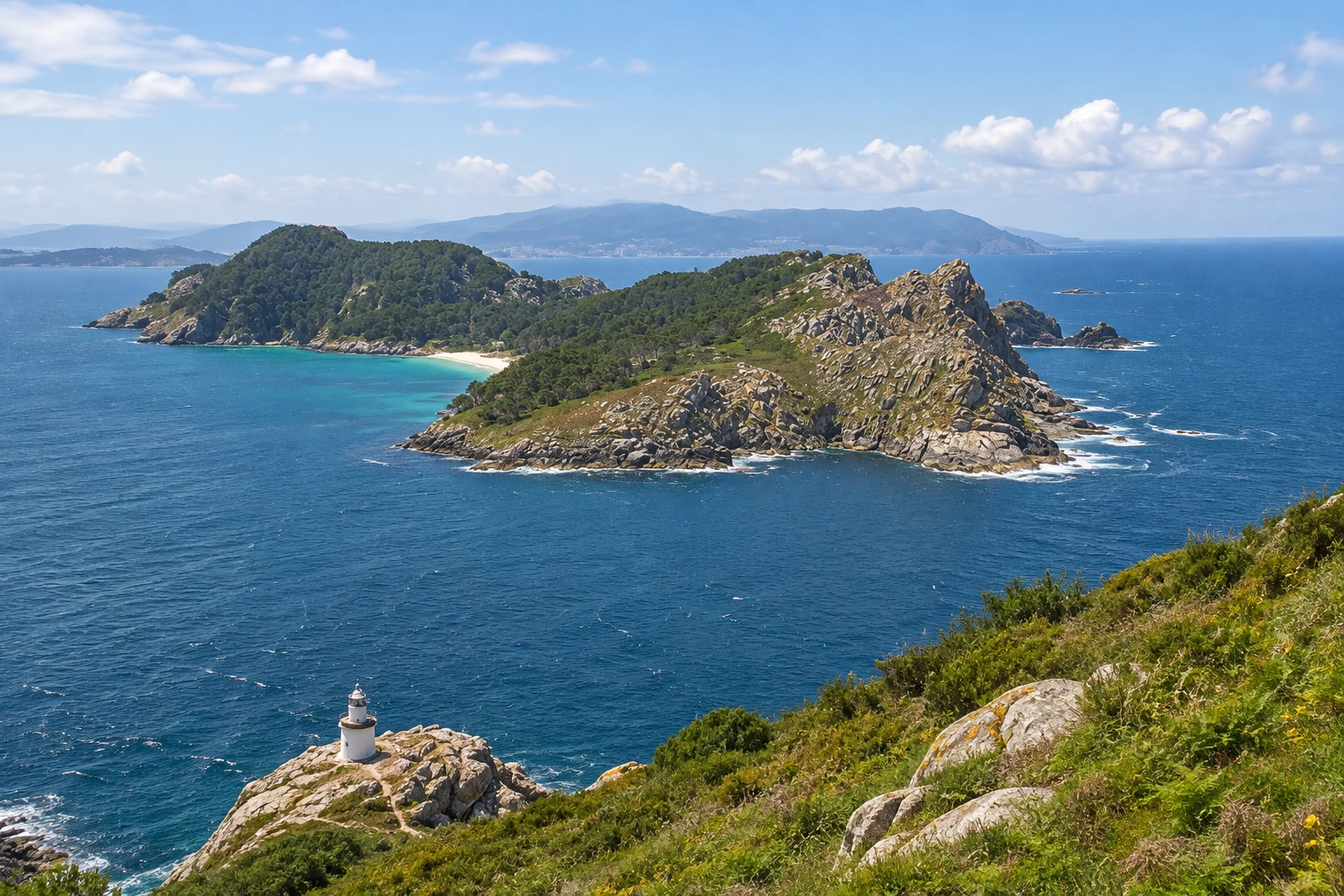
Archipelago at the entrance of the ría de Vigo, part of the Parque Nacional das Illas Atlánticas, with white-sand beaches, cliffs, trails and a lighthouse. In season, visiting requires prior authorization.
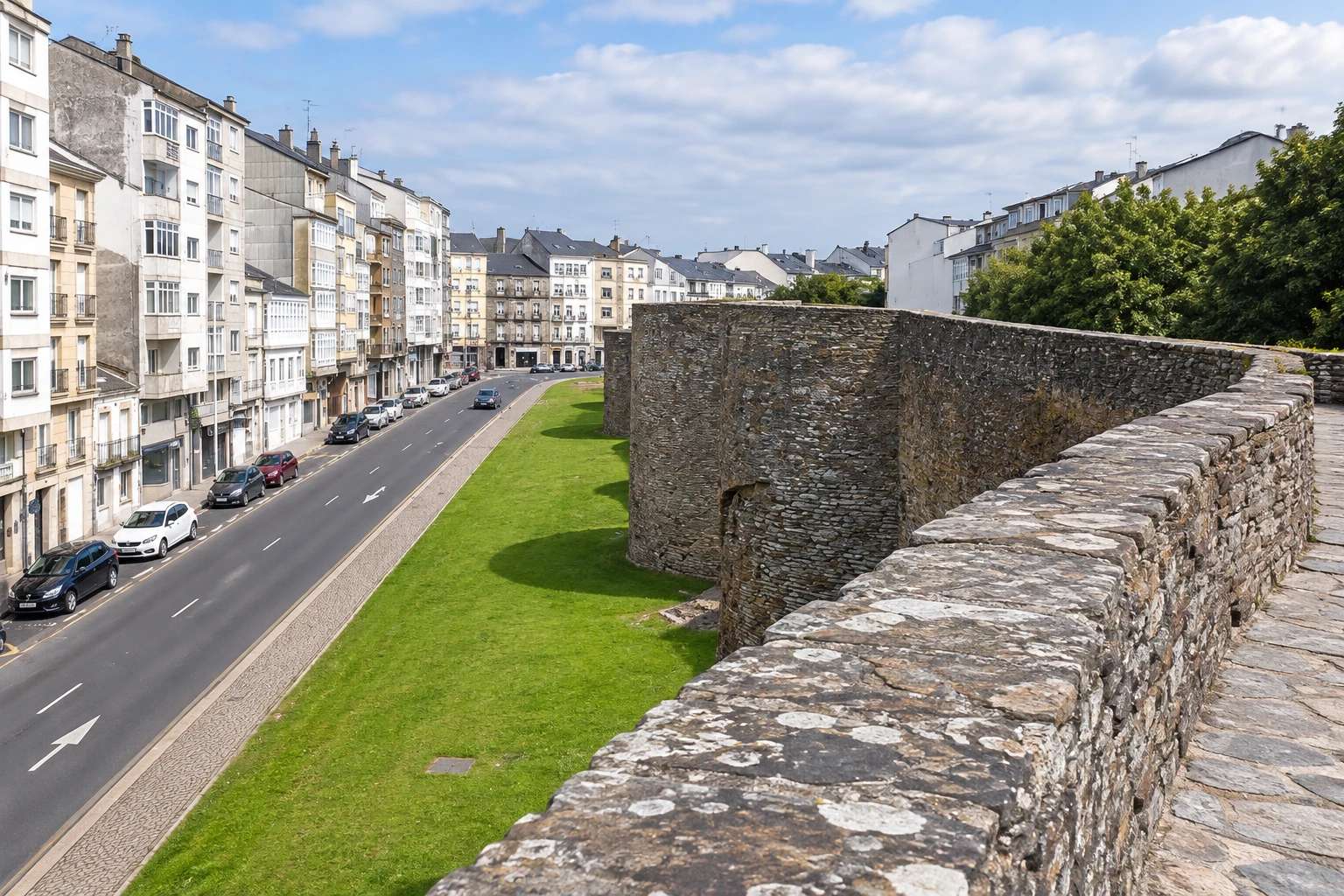
Roman wall from the late 3rd century that surrounds the center of Lugo, about 2 km long, with 71 towers and ten gates; the only one preserved intact; a World Heritage site since 2000.
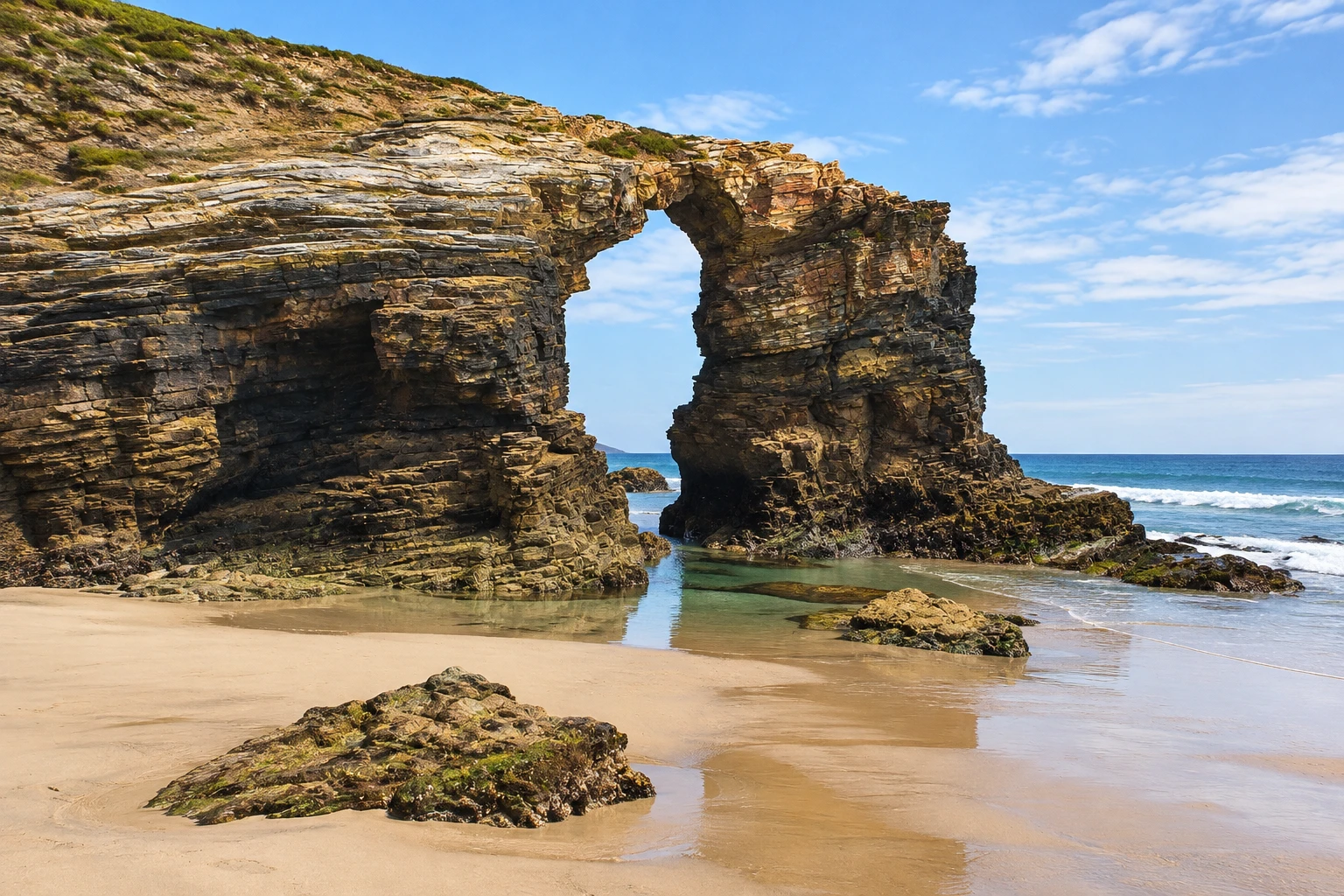
Beach about 10 km from Ribadeo with arches, caves and rocky cliffs that evoke a cathedral; it can only be explored at low tide, and at Easter and in summer visits require a reservation.
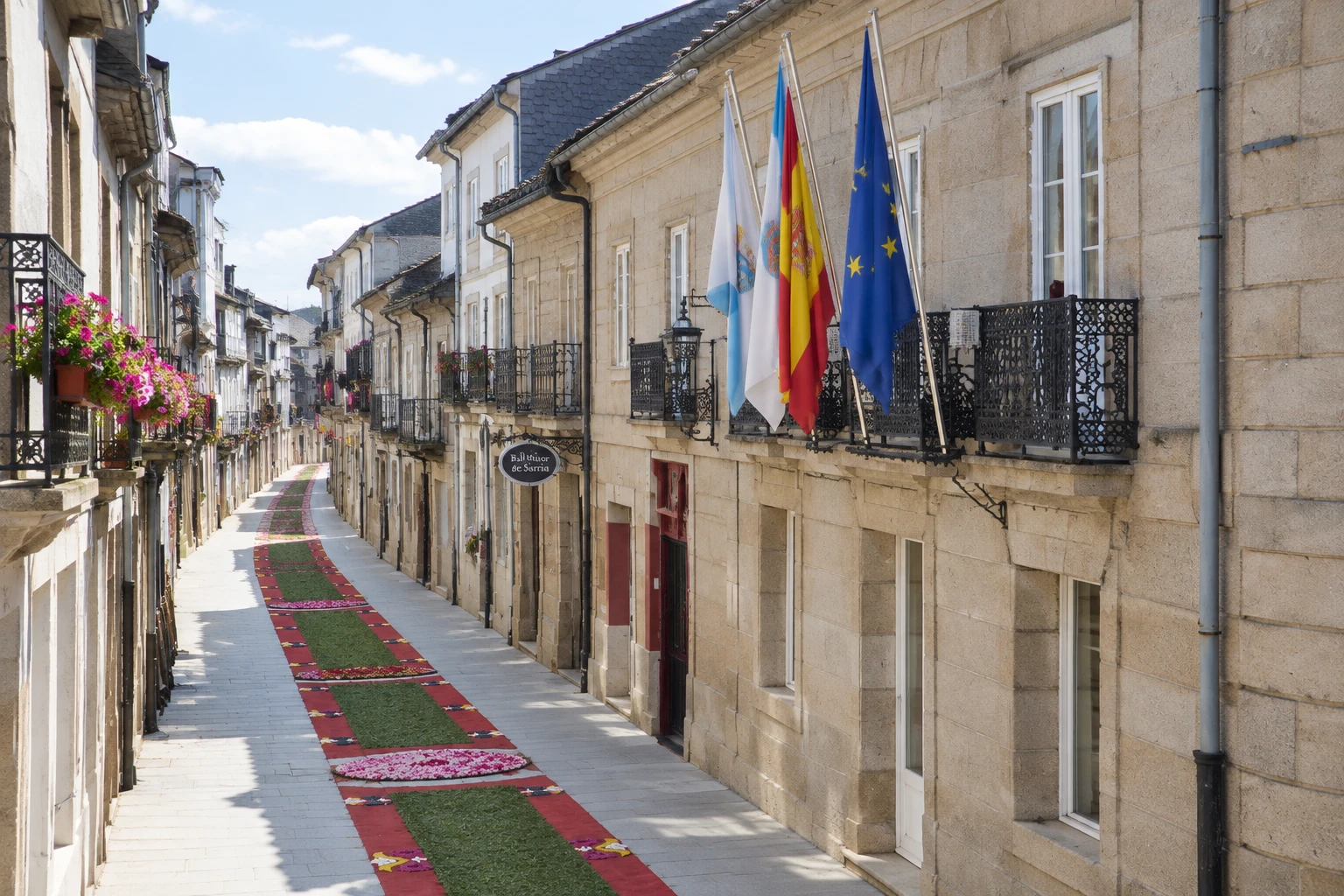
The Camino de Santiago street in the upper part of Sarria, with the church of Santa Mariña, the Romanesque–Gothic church do Salvador and the tower that remains of the medieval fortress.
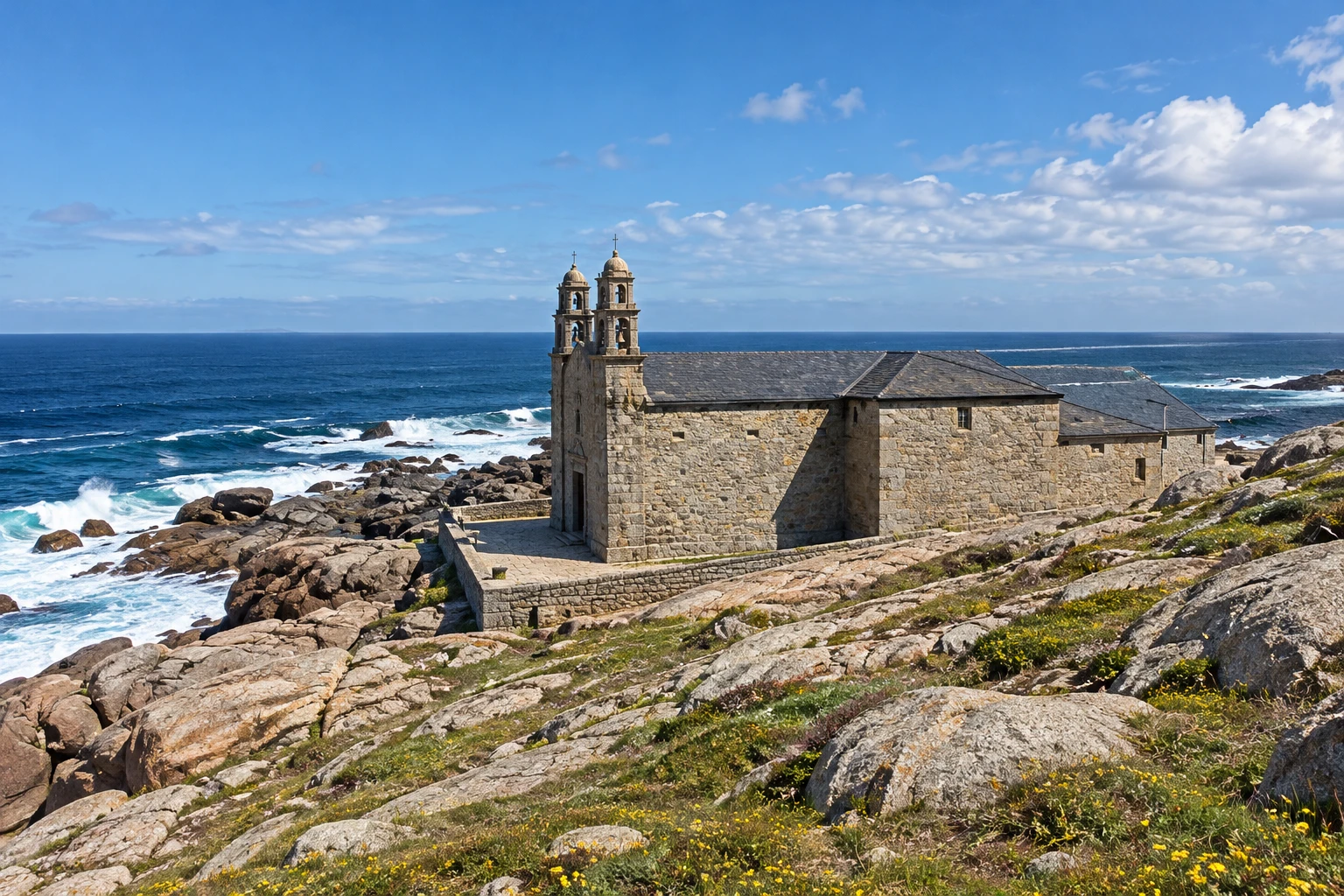
Baroque sanctuary at the tip of the peninsula of Muxía, facing the sea, next to the rocking stones linked to the legend of the stone boat of the Virgem da Barca; rebuilt after a fire in 2013.
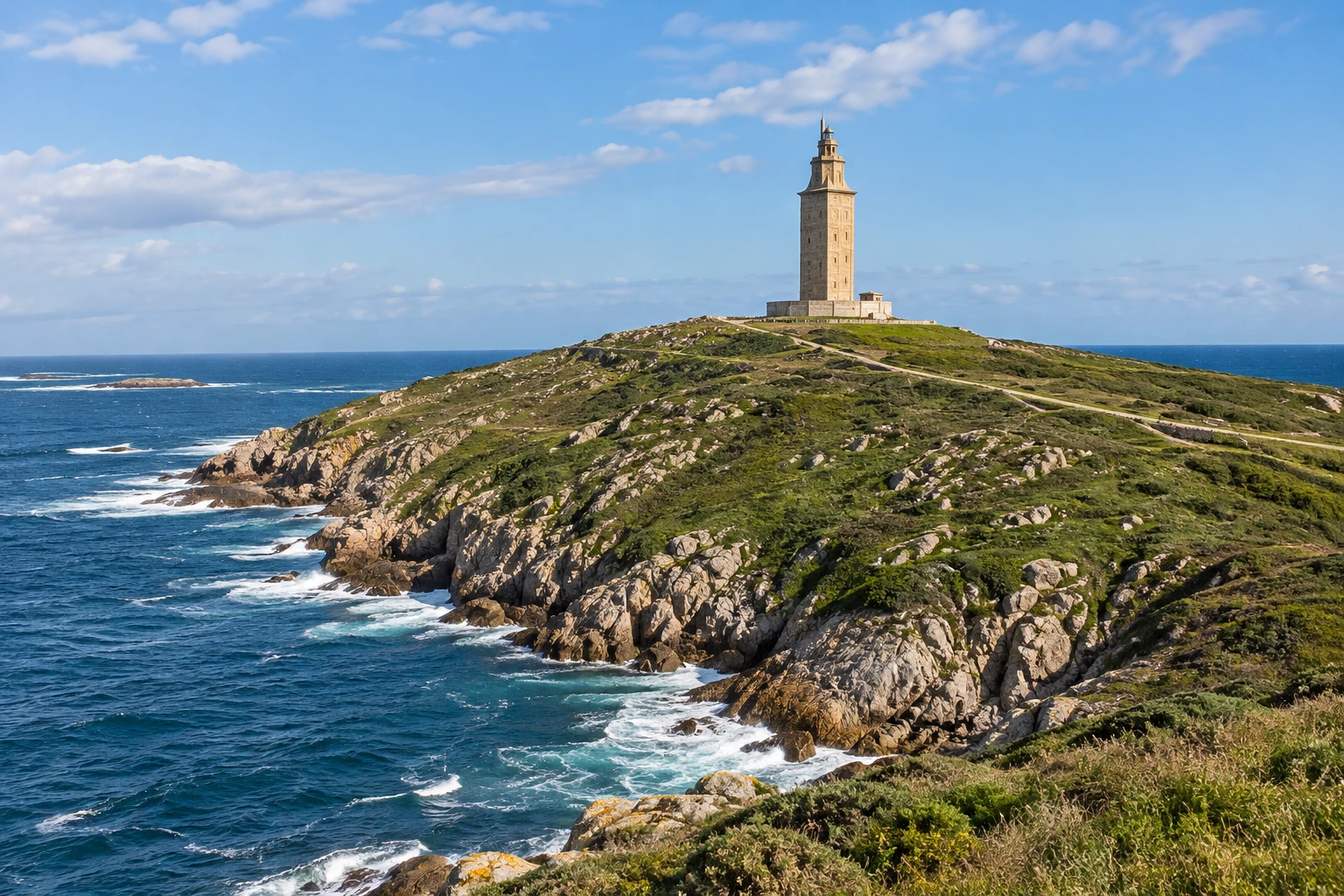
Roman lighthouse from the late 1st and early 2nd centuries, 55 meters tall, with an 18th-century neoclassical refurbishment; the only Roman lighthouse still in operation; a World Heritage Site since 2009.
Granite sculpture over 11 meters tall and weighing about 400 tonnes, by Alberto Bañuelos-Fournier, inaugurated in 2003 next to the sanctuary da Barca as a tribute to the volunteers of the Prestige disaster.
Gothic chapel from the 14th century in the center of Arzúa, a remnant of an Augustinian convent that functioned as a pilgrims' hospital, now used for exhibitions and cultural activities.
Old quarter beside the port, with stone houses, the neoclassical co-cathedral, the Praza da Constitución and the Rúa da Pedra, where ostreiras shuck oysters on the spot.
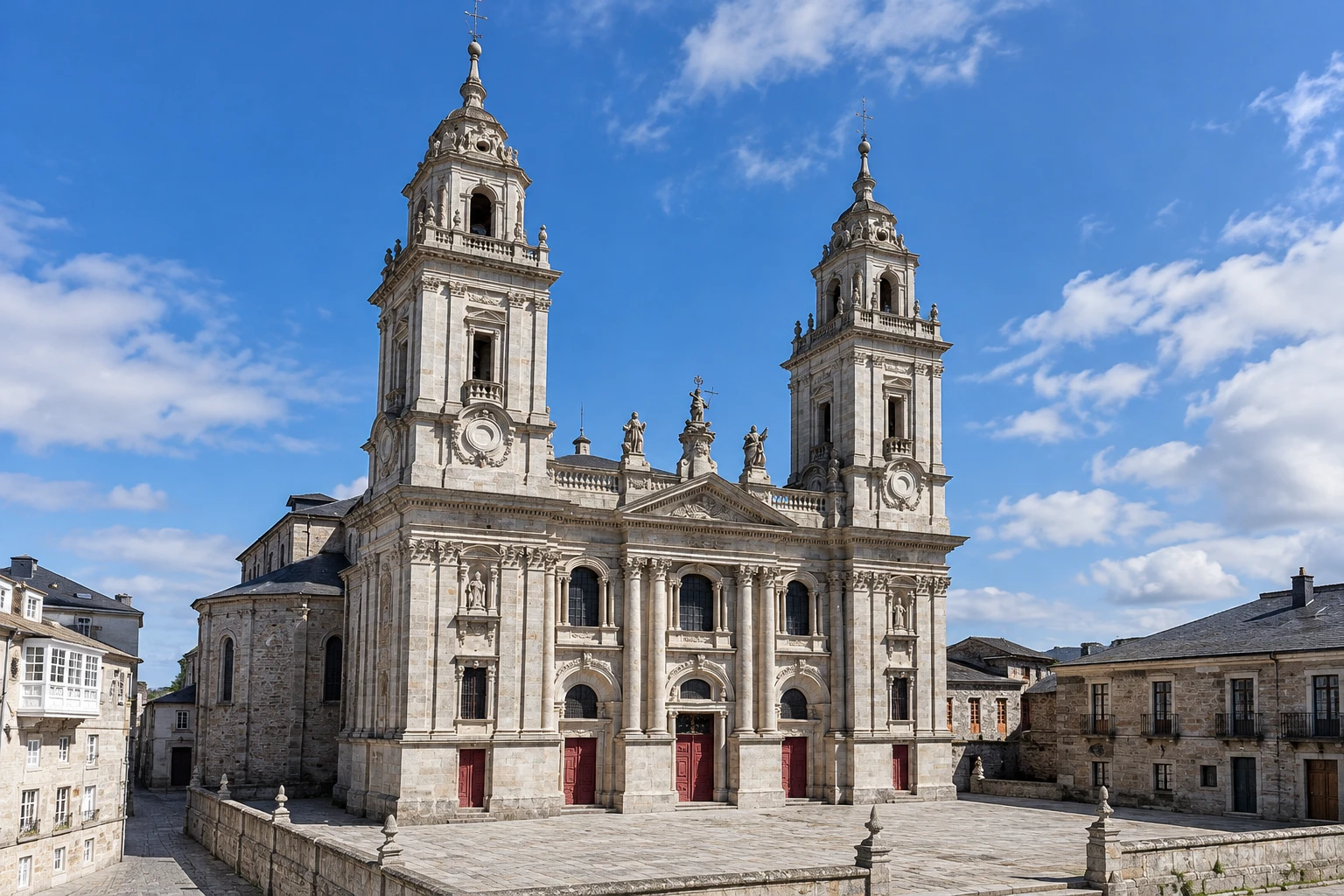
Romanesque cathedral begun in 1129, with Gothic and Baroque additions and a Neoclassical façade, where the Blessed Sacrament is exposed day and night; part of the World Heritage of the Caminho de Santiago.
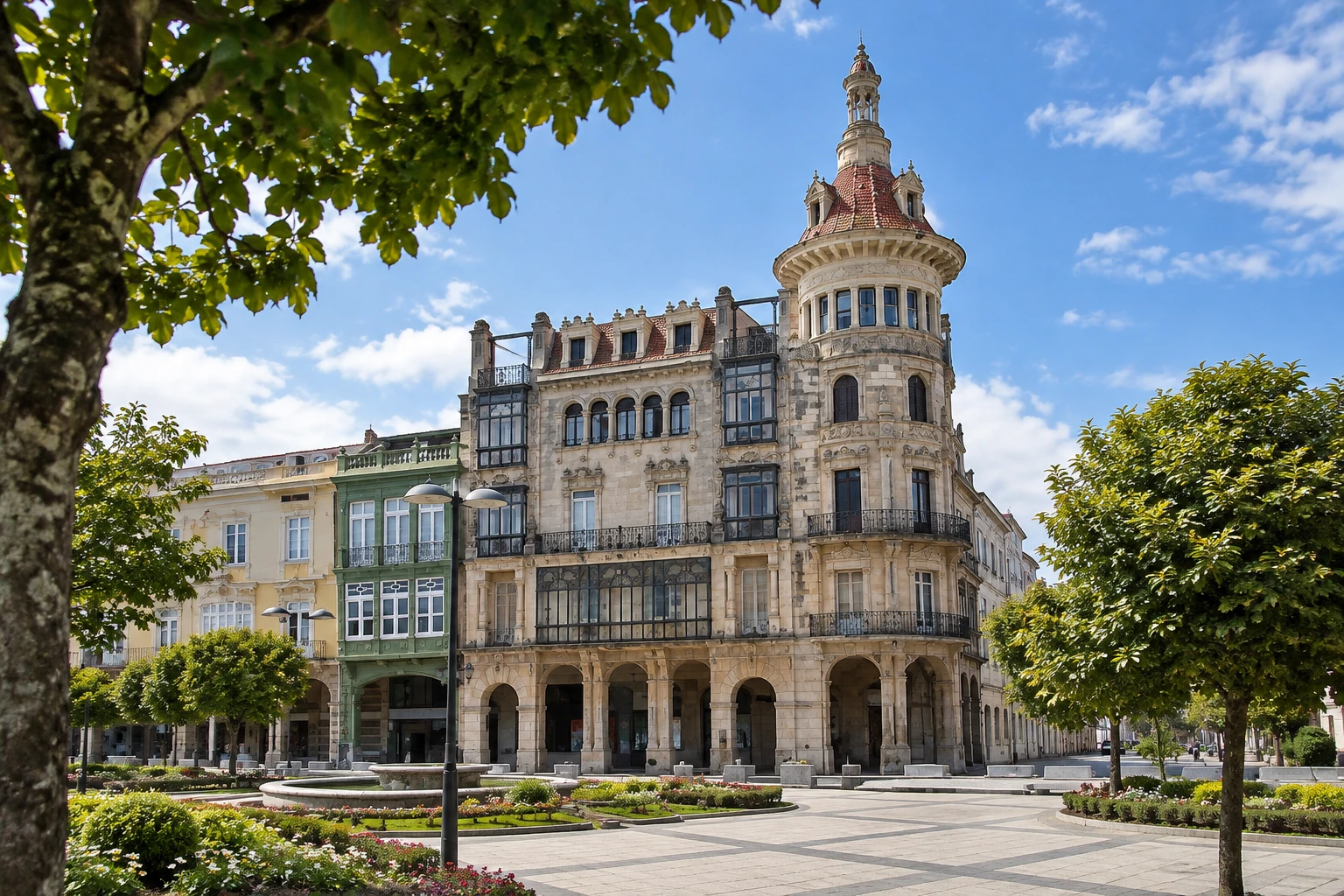
Town centre around Plaza de España, with the Torre dos Moreno, a 1915 modernist house built by emigrants who returned from the Americas, the pazo de Ibáñez and the convent of Santa Clara.
Enclosed convent from the 16th century in Tui's old town, known as As Encerradas, with a Baroque church and a small tunnel that connects the old walled village with the upper part of the town. The nuns sell sweets made in the convent.
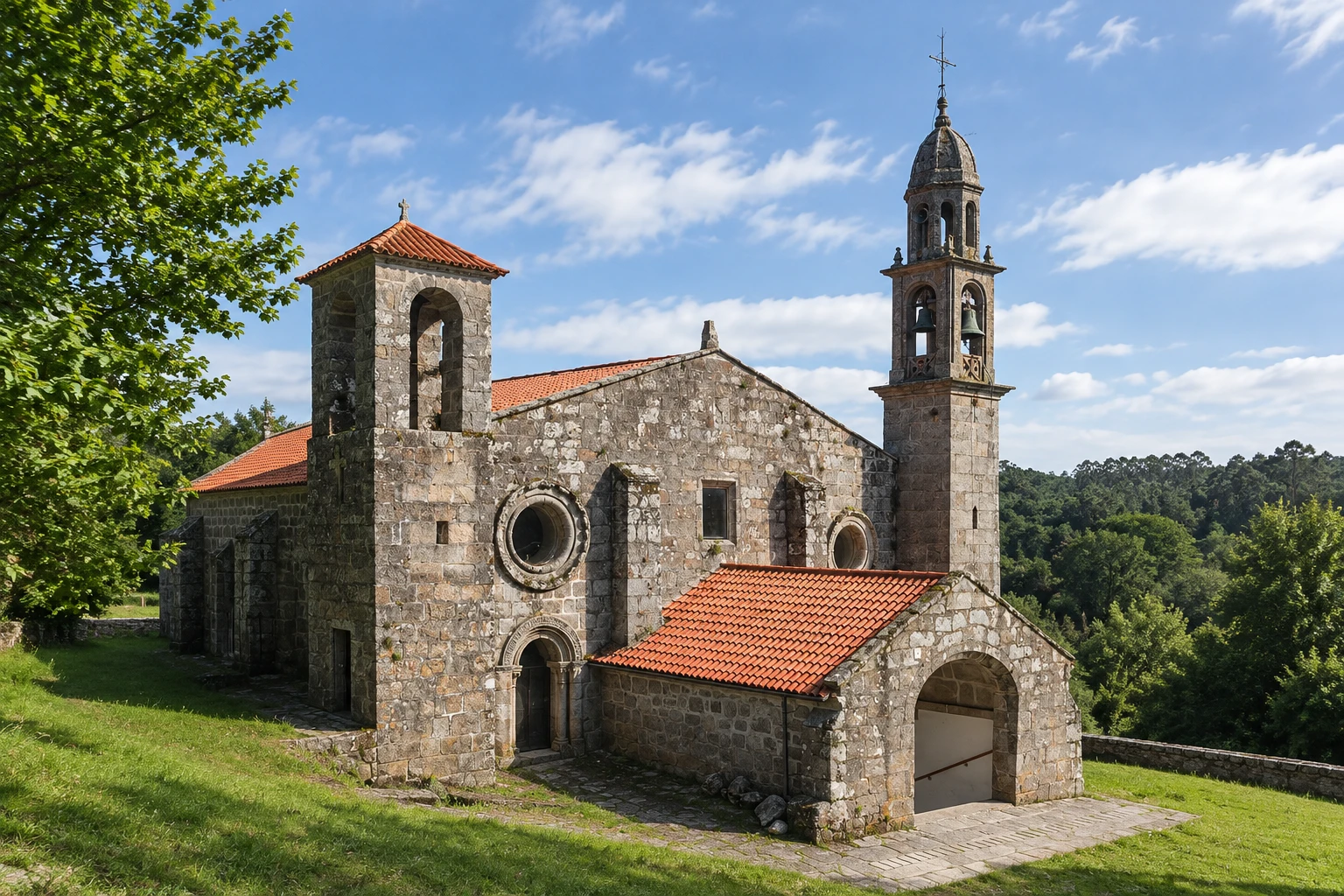
Romanesque church from the 12th century, with Gothic chapels, on the camino to cabo Fisterra, which houses the image of the Santo Cristo de Fisterra and is a stop for pilgrims.
A 341-meter mount above the Minho estuary, with the chapel of Santa Trega, the archaeological museum of the castro and viewpoints toward Portugal, the river and the Atlantic.
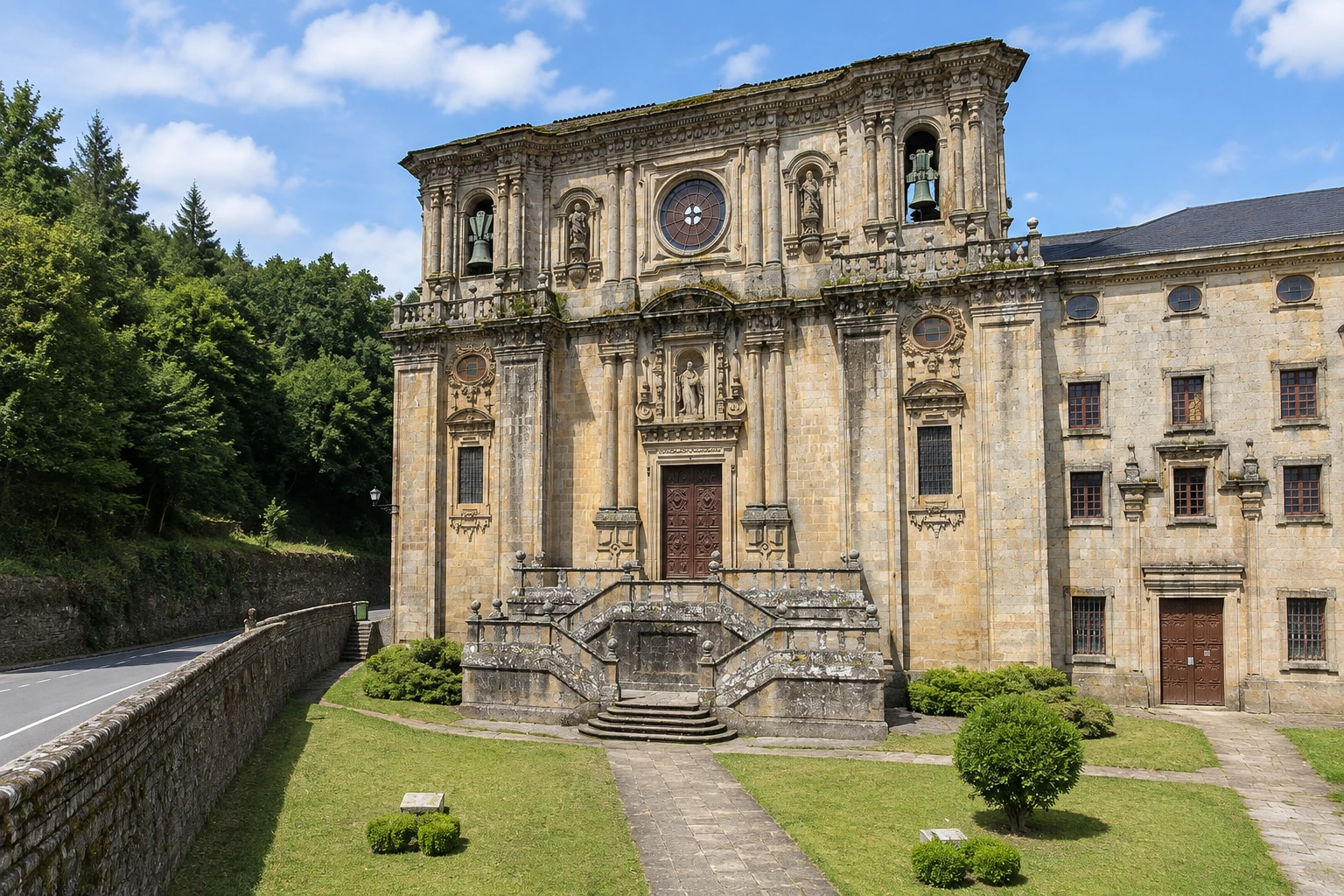
Monastery founded in the 13th century by Italian friars as a pilgrims' hospital, with a cloister transitional from Romanesque to Gothic, today run by the Mercedarian friars, who stamp the credential.
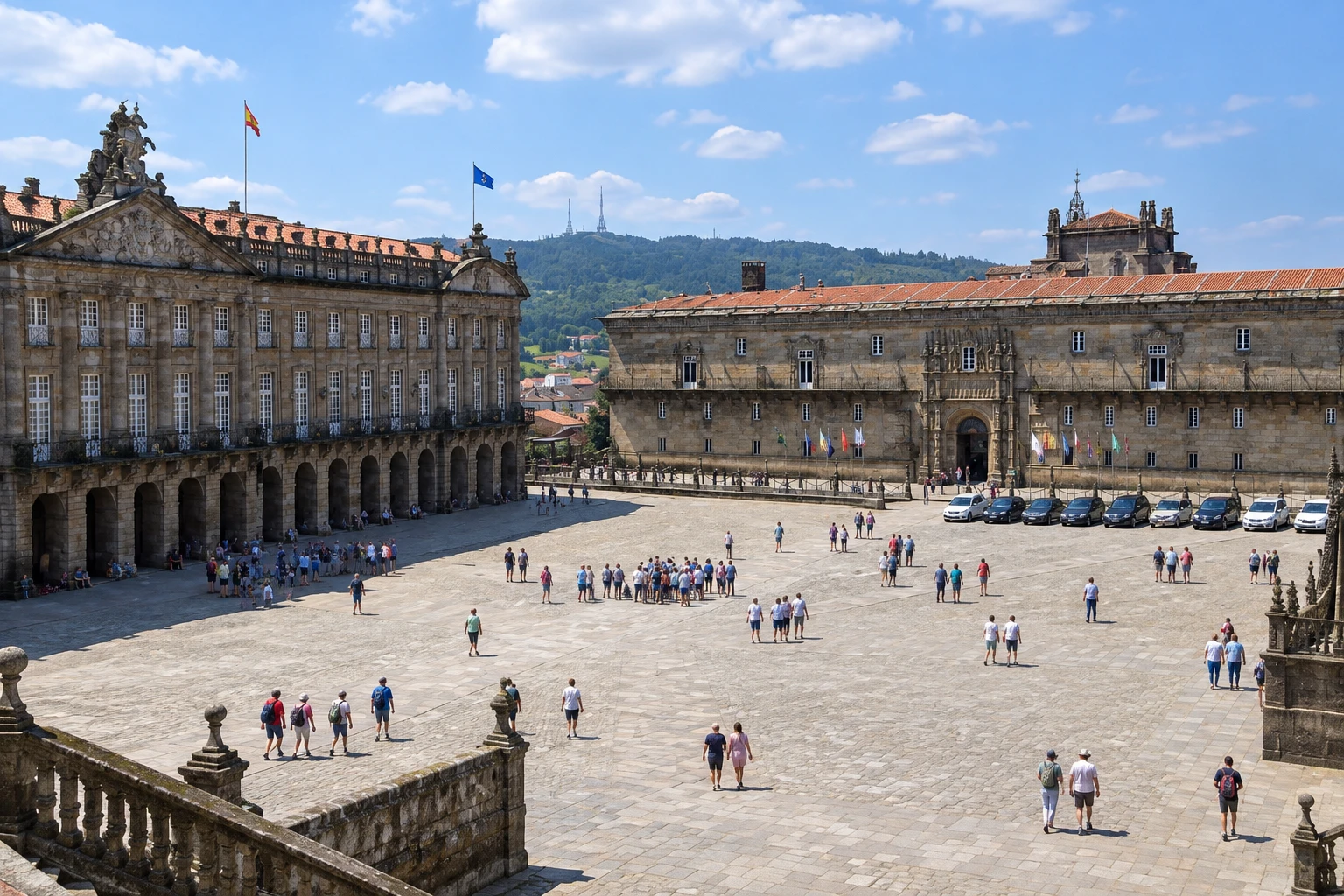
Square in front of the cathedral's Baroque façade, flanked by the Hostal dos Reis Católicos, the Pazo de Raxoi and the Colexio de San Xerome. It is where pilgrims finish the Way.
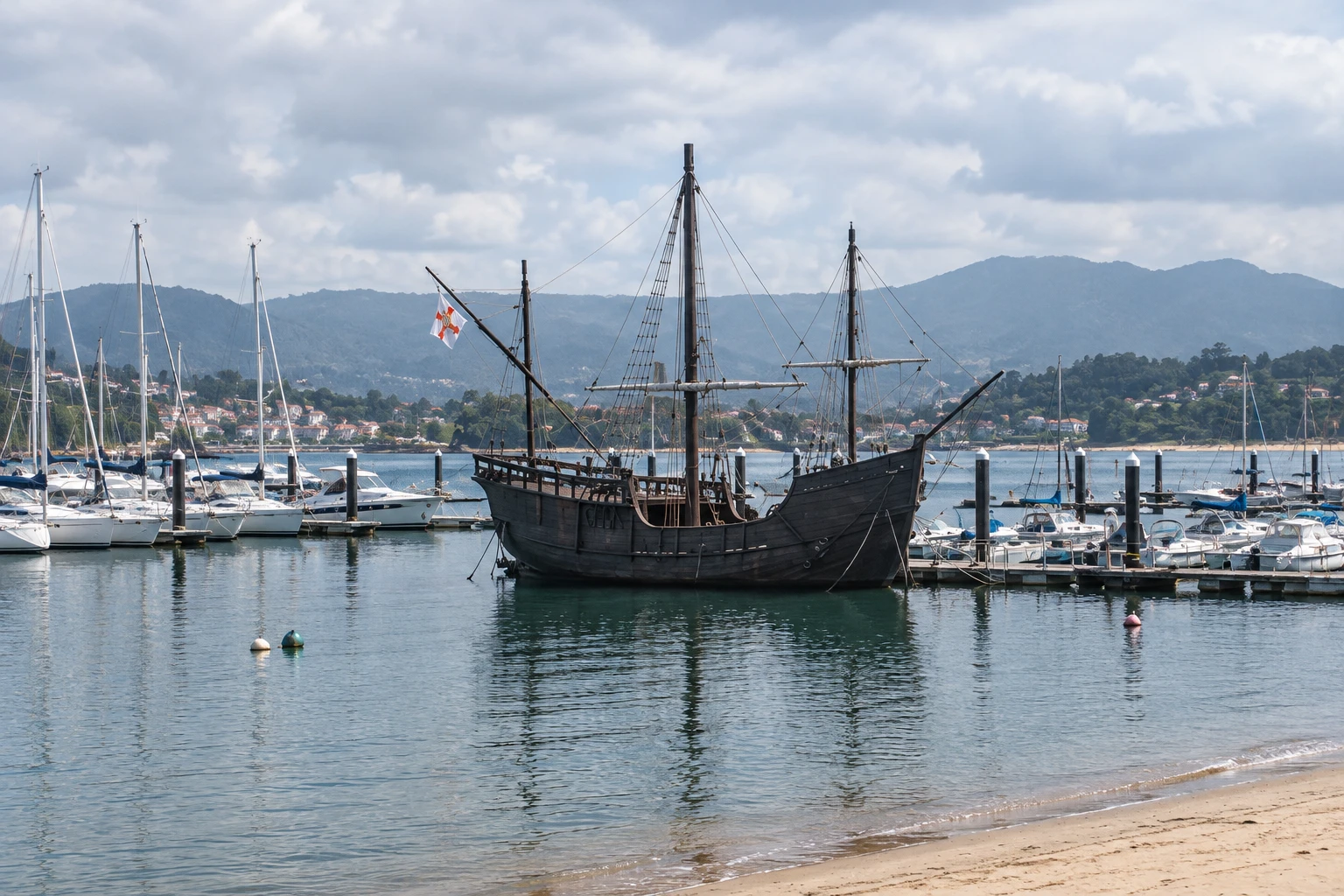
Full-size replica of the caravel Pinta, which arrived in Baiona on 1 March 1493 with news of Columbus’s voyage; moored in the harbour, it can be visited inside.
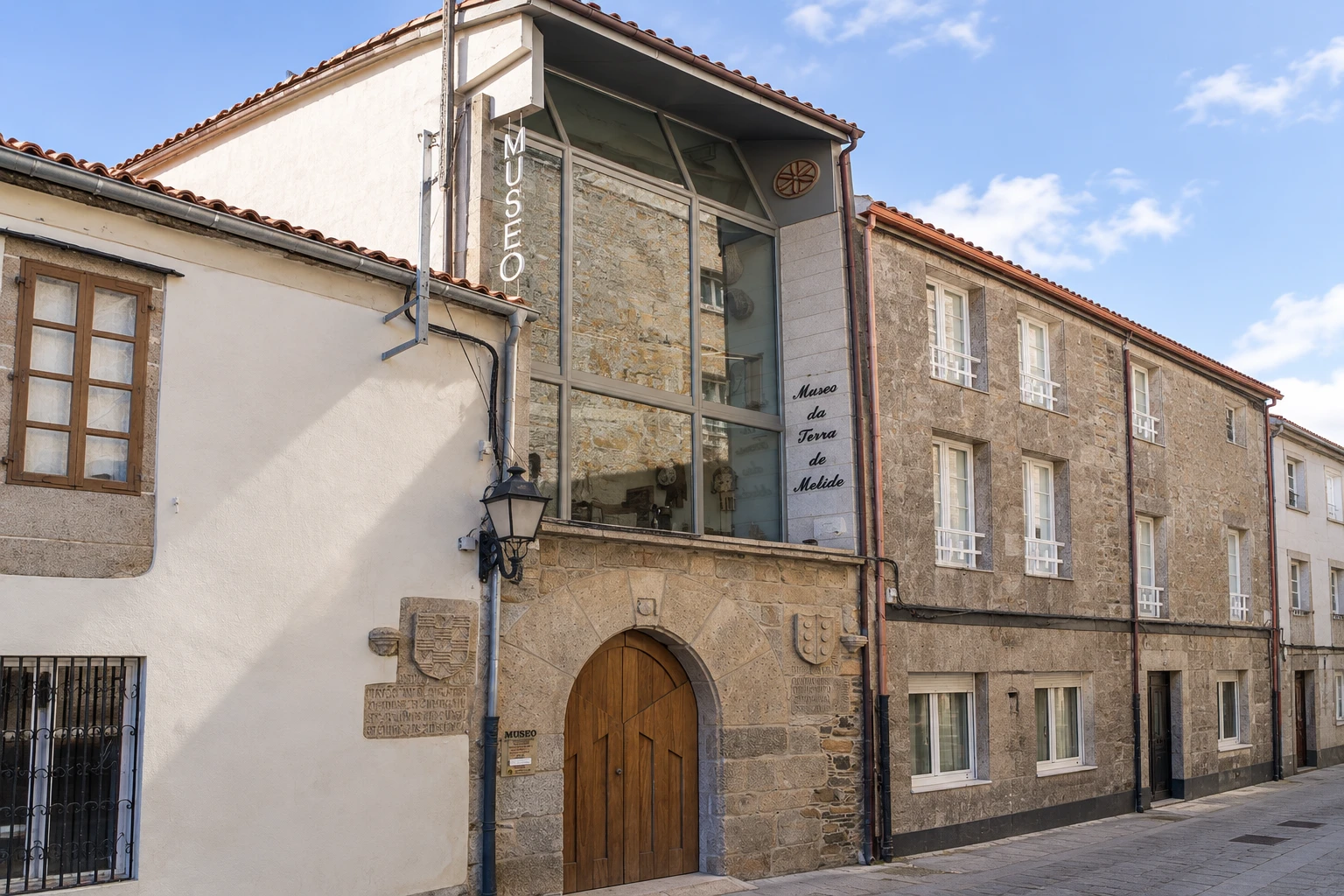
Church of the former Franciscan convent of Sancti Spiritus, of medieval origin, and next to it the Museu da Terra de Melide, housed in the former pilgrim hospital, with archaeology and ethnography from the region.
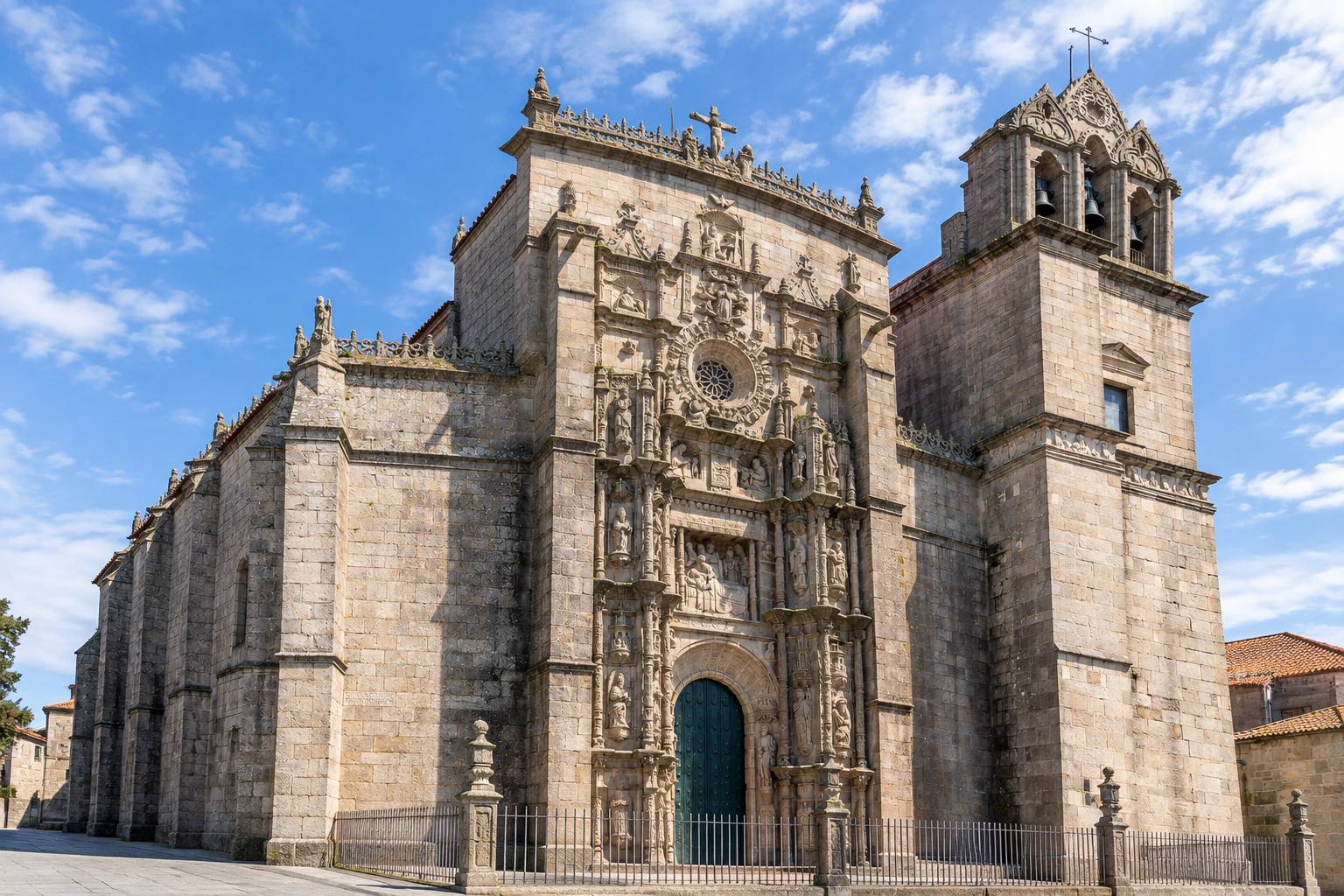
16th-century church built by the Grêmio de Mareantes, with a sculpted Renaissance façade, considered the main church of Pontevedra; a basilica since 1962.
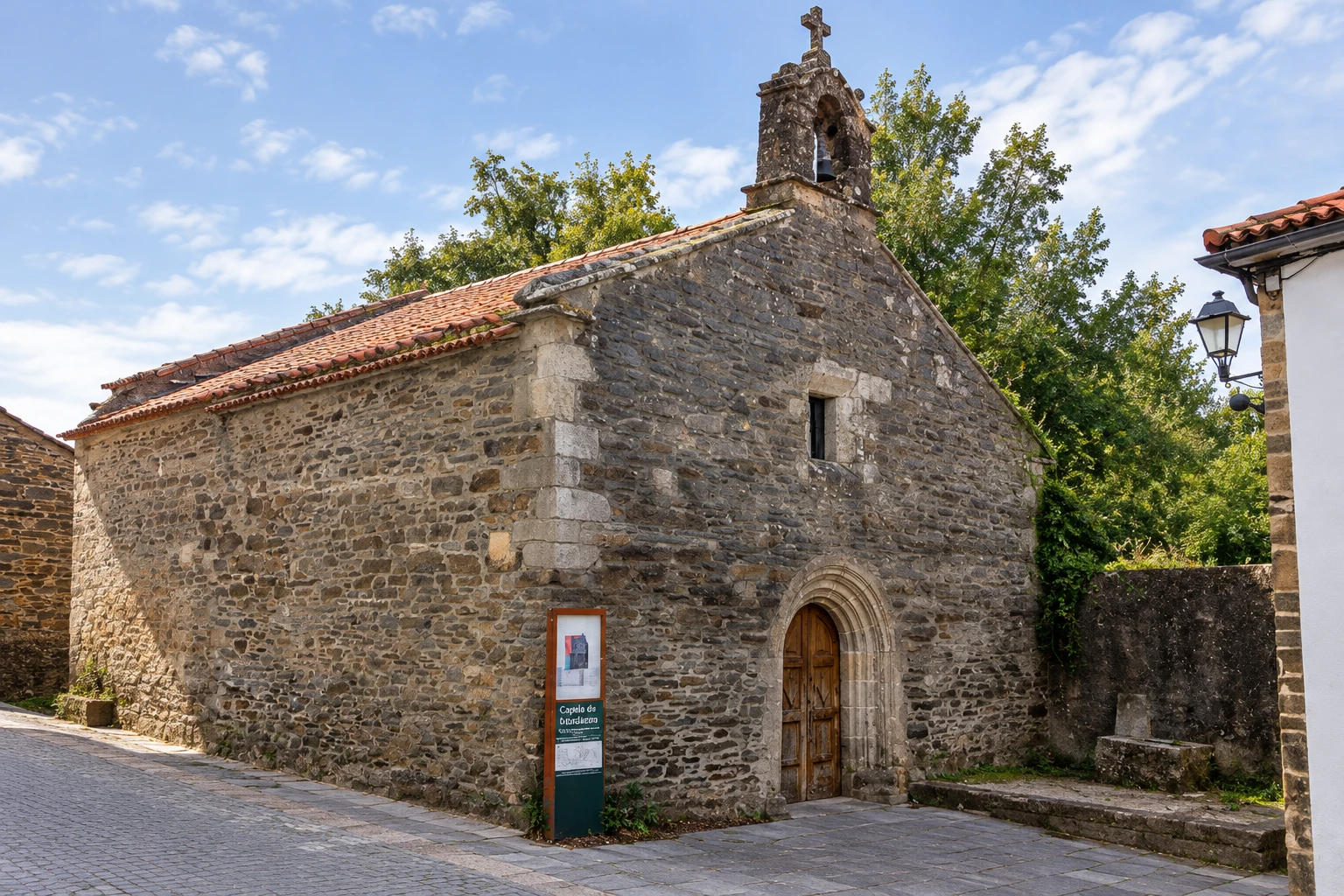
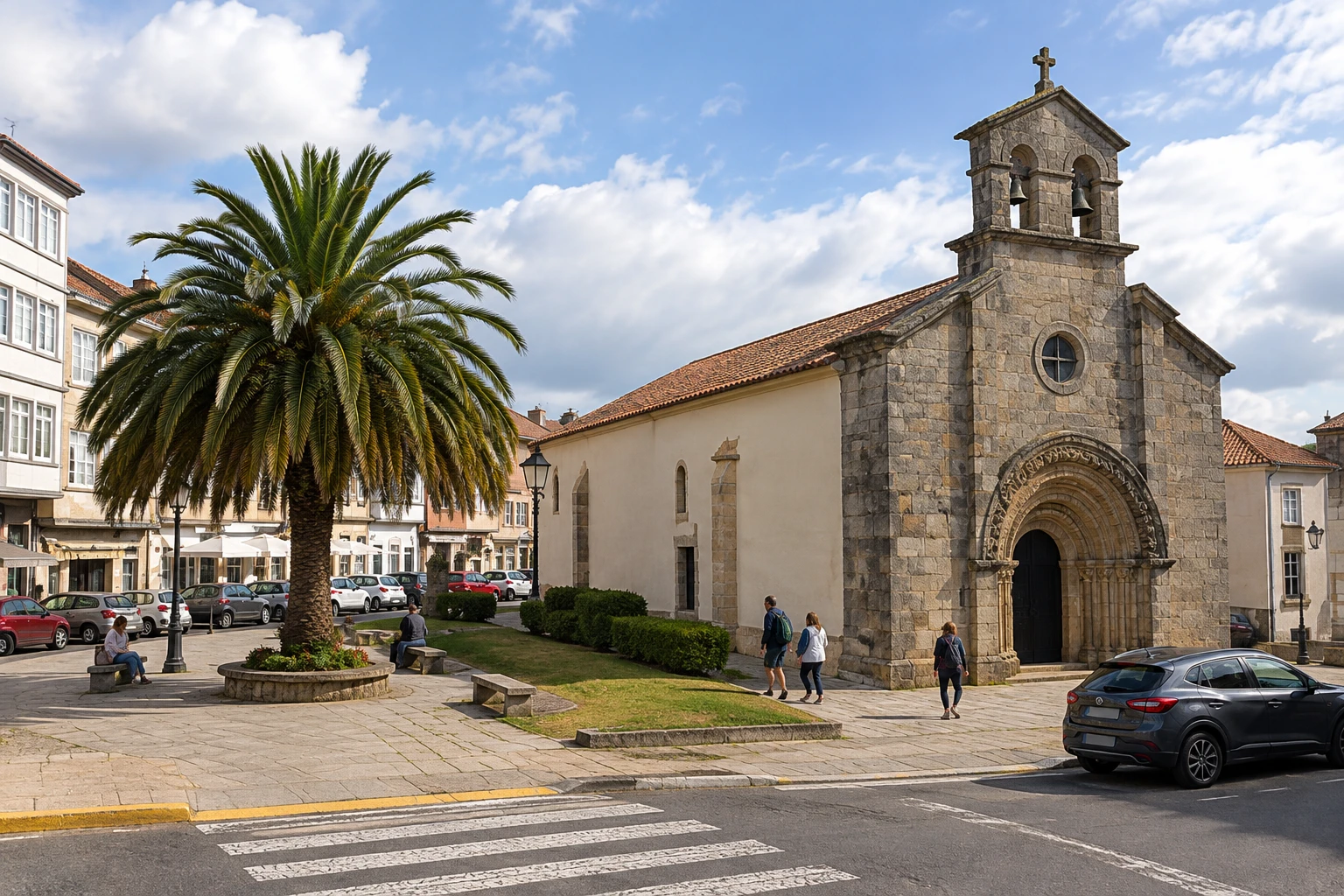
Chapel at the entrance to Melide, rebuilt using the portal of an old Romanesque church, and beside it the 14th-century Gothic cruceiro, considered the oldest in Galicia.
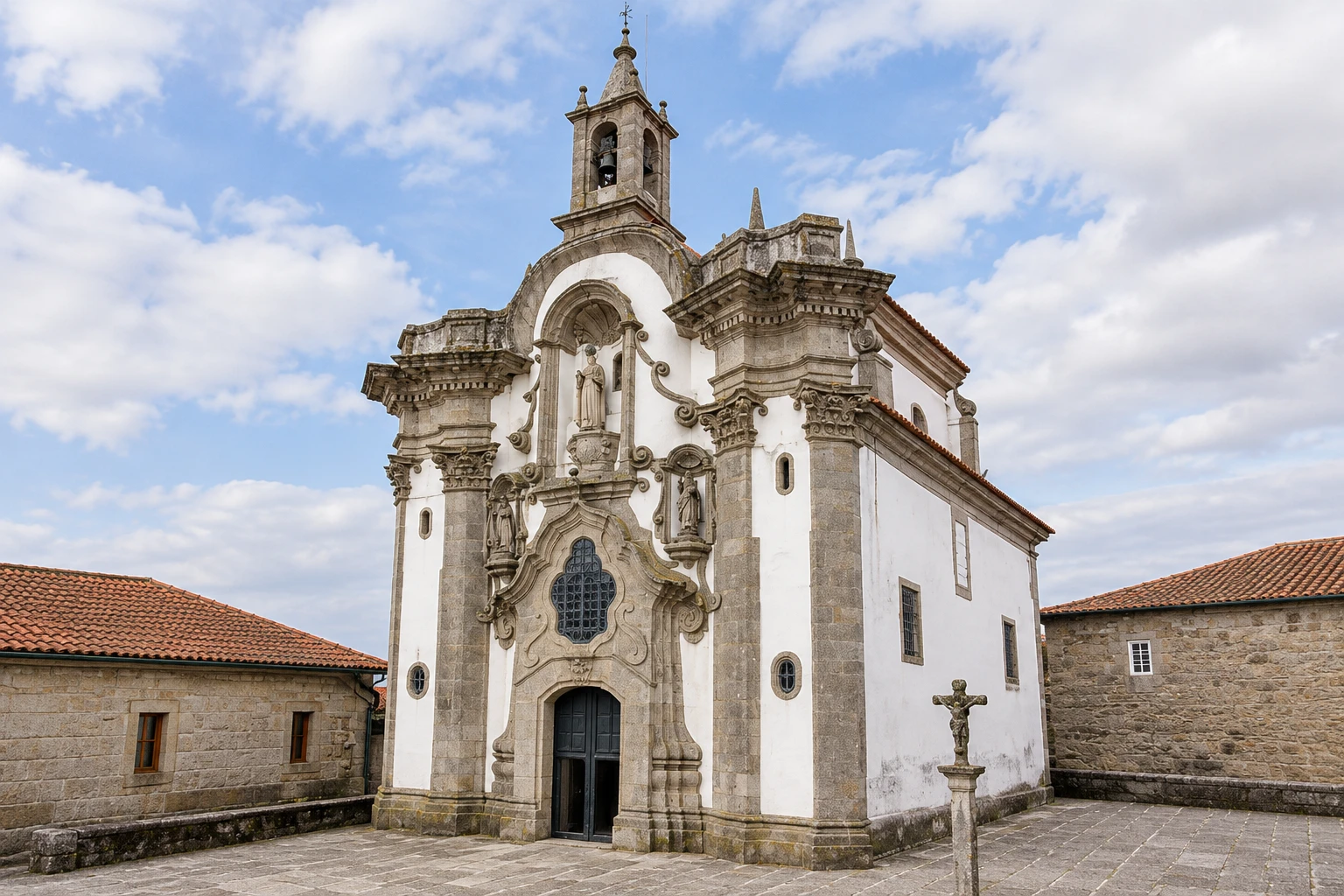
18th-century chapel in the Portuguese Baroque style, built on the site of the house where San Telmo died, patron saint of sailors and of Tui, featuring 19th-century frescoes.
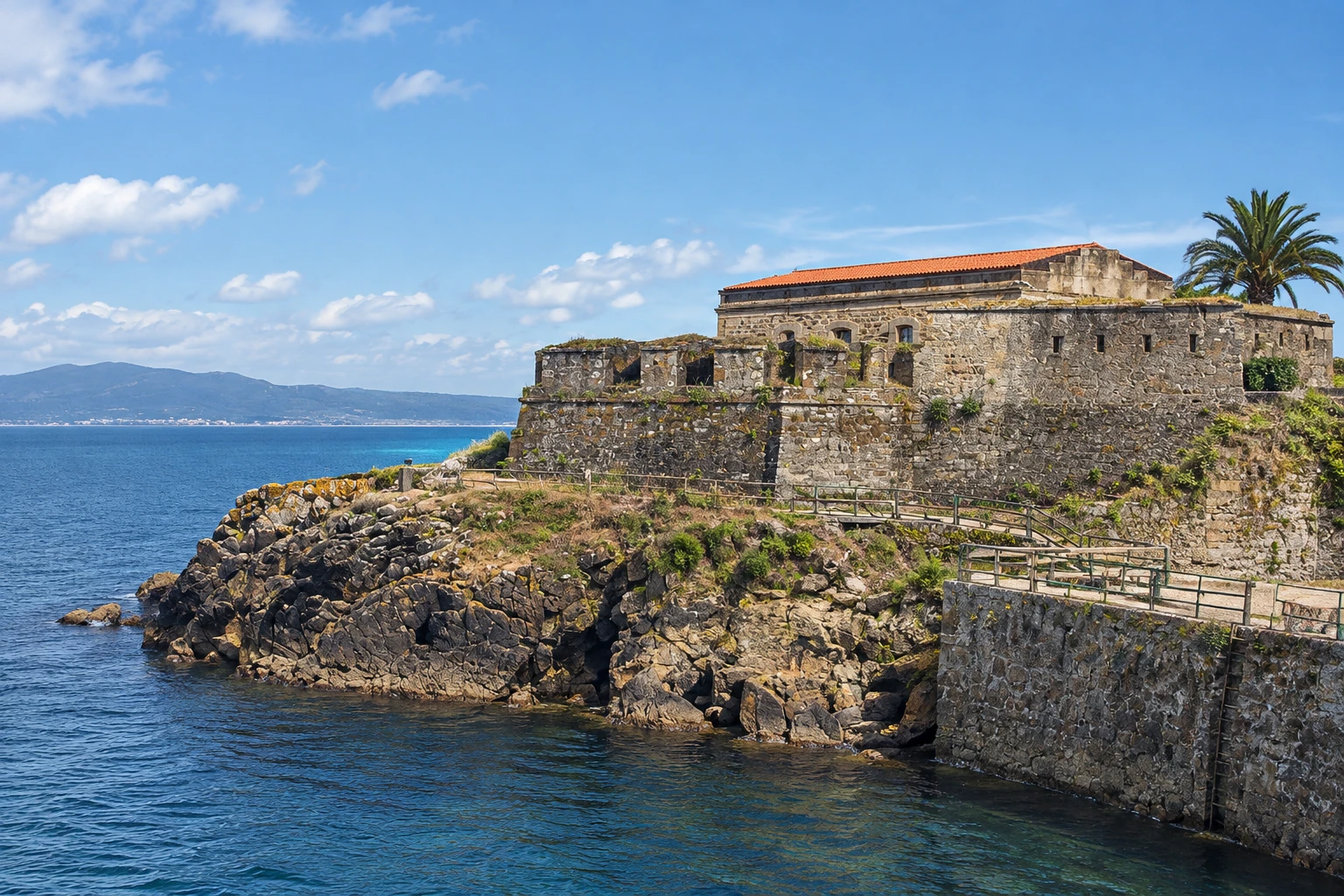
Small 18th-century fortification on the edge of the porto de Fisterra, built in the reign of Carlos III against corsairs, which houses the Museu da Pesca, about the life of the fishermen of the Costa da Morte.
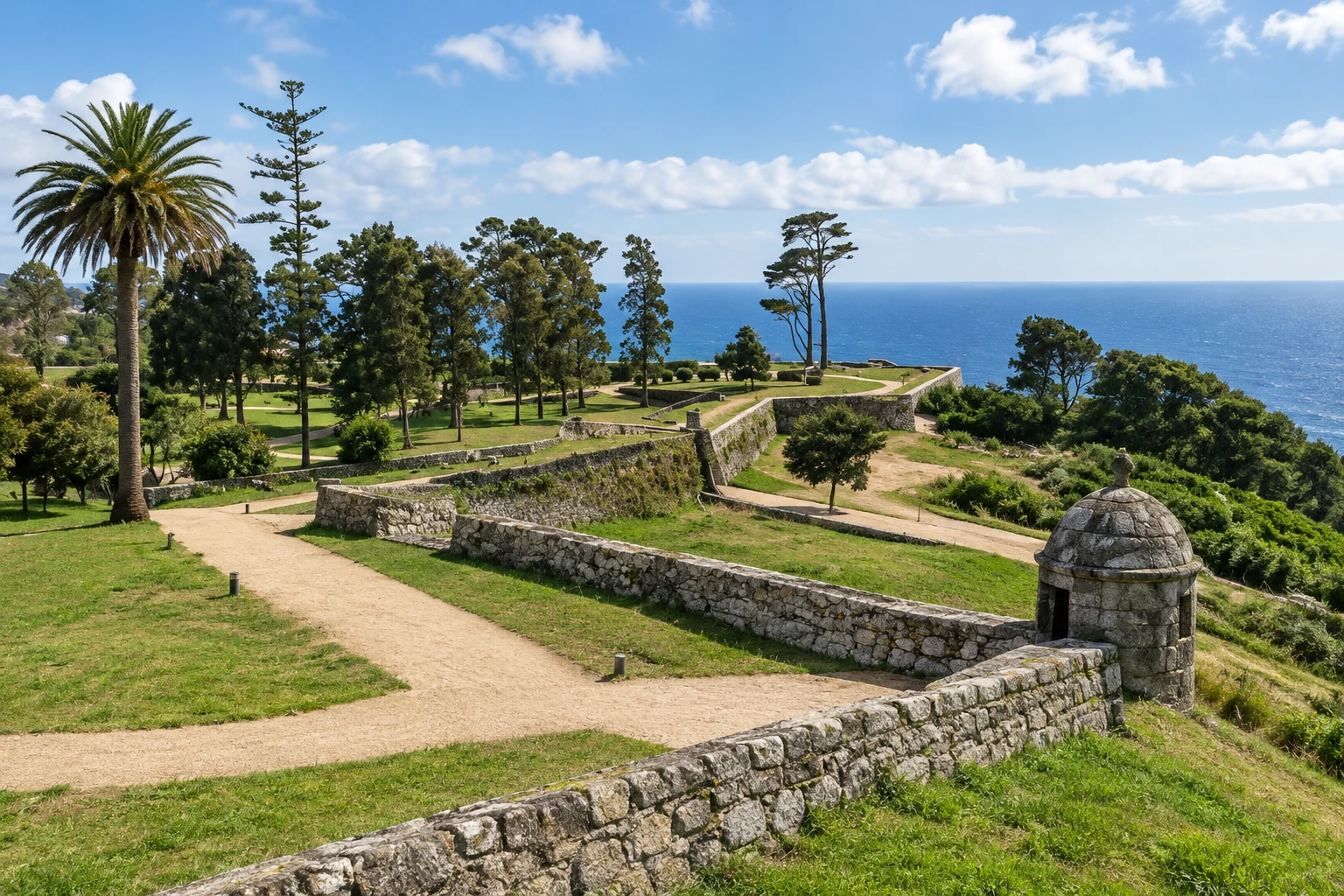
Stone fortress in the center of A Guarda, completed around 1664 during the Portuguese Restoration War, occupied by Portugal until 1668 and today surrounded by a garden.
Museum of the Museu da Universidade de Santiago next to the wall, above the remains of a Roman house that was converted into a temple of the god Mitra, with an altar bearing an inscription dedicated by a centurion.
Museum of shipbuilding, opened in 2008 in a former arsenal building in Ferrol, covering the history of ships, techniques and shipyards, from wood to steel.
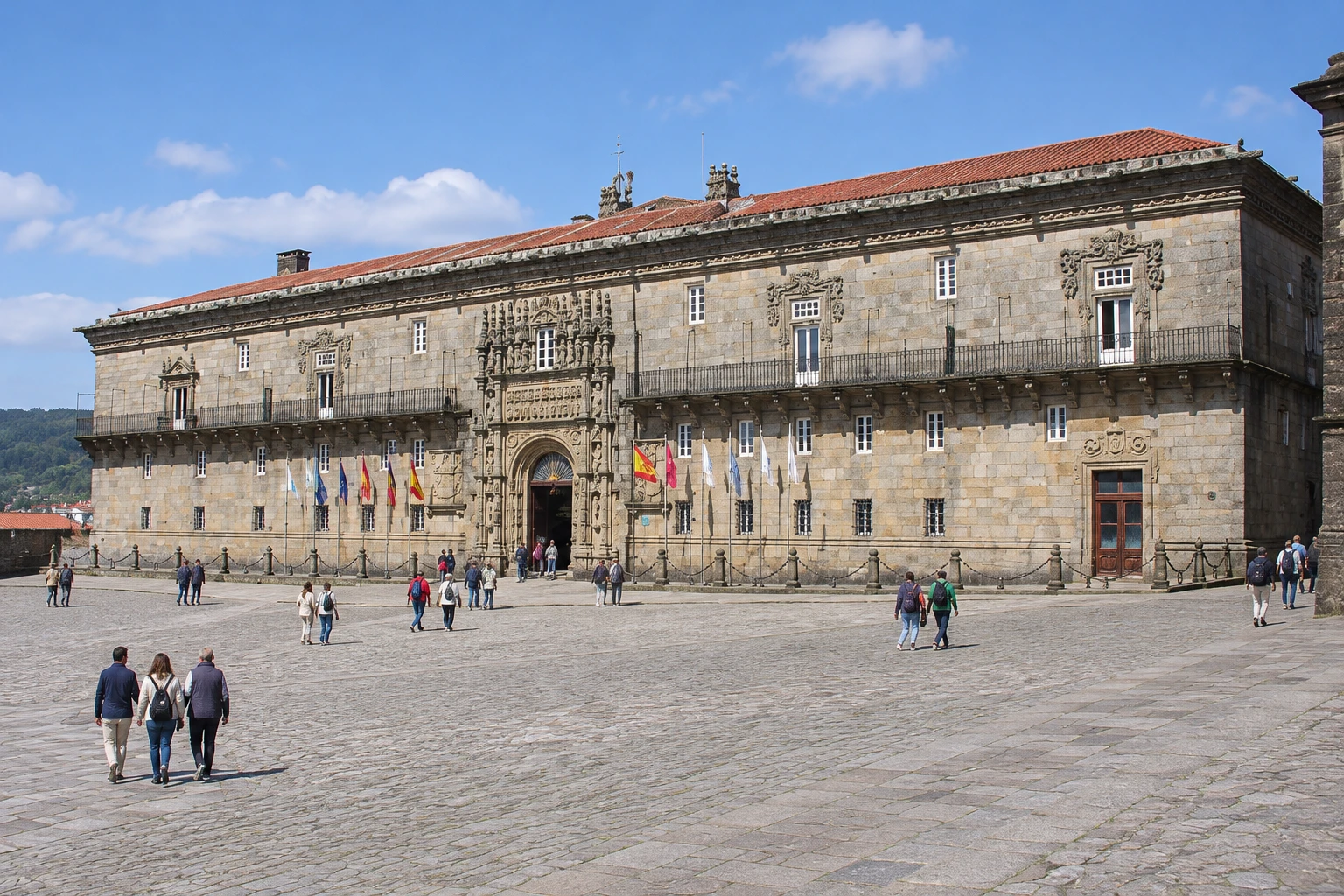
Former pilgrims' hospital founded in 1499 by the Catholic Monarchs on the Praza do Obradoiro, with a plateresque portal and four cloisters, today a hotel in the Paradores chain.
A 14th-century seafaring Gothic church with Romanesque details, located above the village at the foot of the Corpiño hill, a viewpoint over the peninsula and the sanctuary da Barca.
Gothic church from the 14th and 15th centuries, linked to the tailors' guild, with a figure of Santiago on horseback above the main portal, next to Betanzos’s main square.
Islet at the mouth of the ria of Ribadeo, connected to the mainland by a bridge, with the old lighthouse from 1857 and the new one from 1983, surrounded by rocks and viewpoints over the Cantabrian Sea.
Hill in the centre of Vigo with a park, remains of a 17th-century fortress, a reconstructed castro and viewpoints over the ria, the port, the Rande bridge and the Illas Cíes.
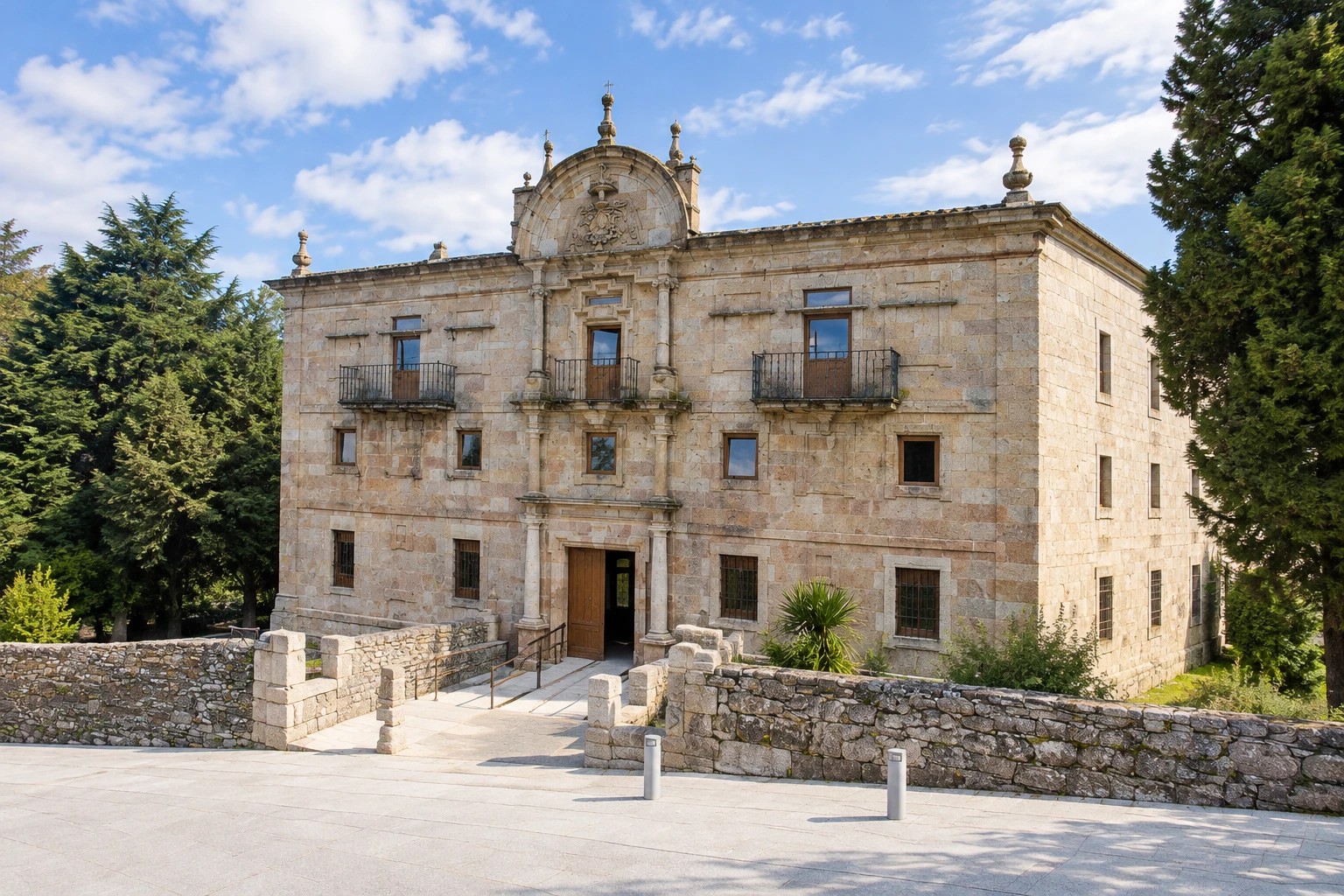
Benedictine monastery founded in the 6th century, one of the oldest in Spain, 12 km from Sarria, with two cloisters, a Baroque church and a pilgrims' guesthouse.
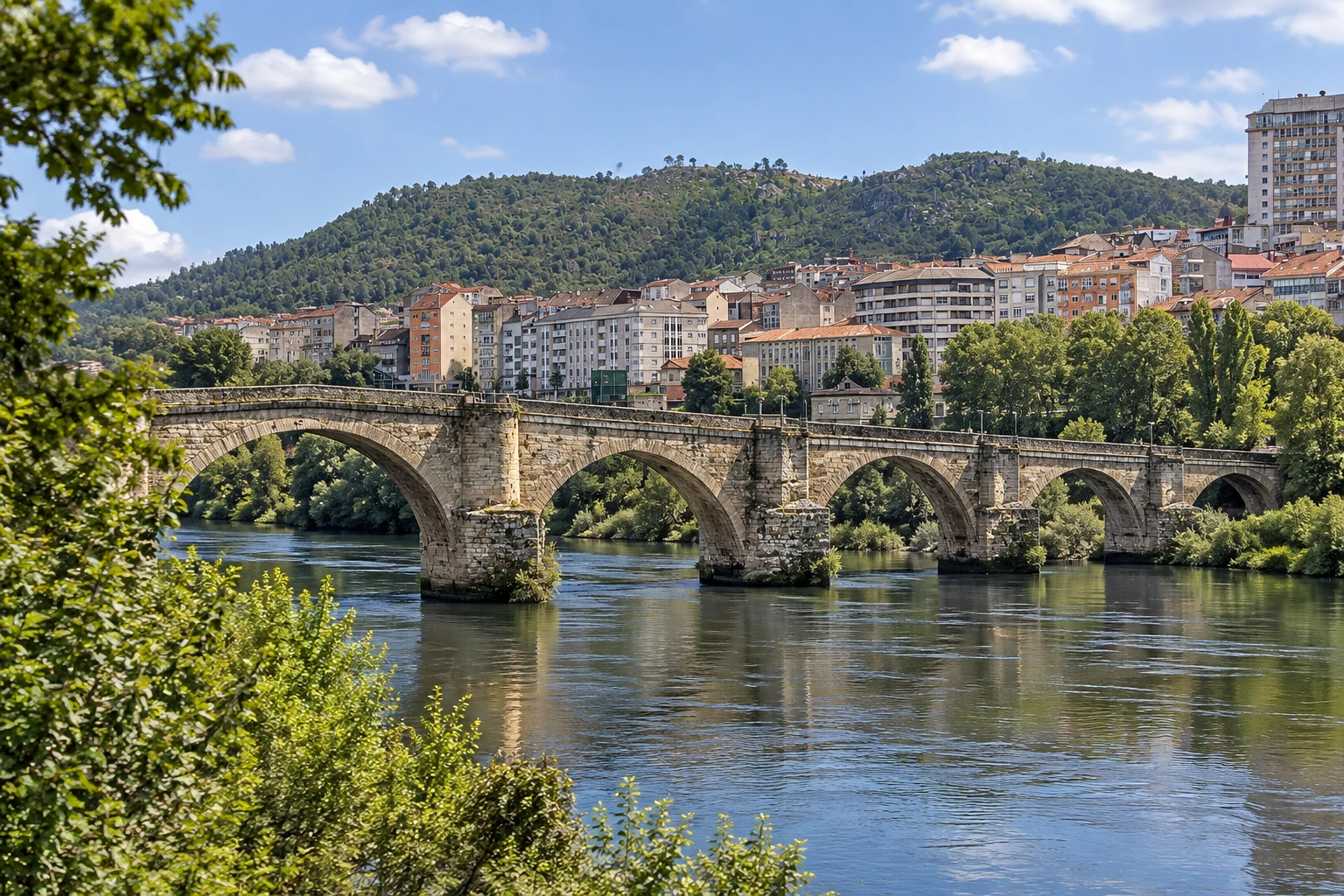
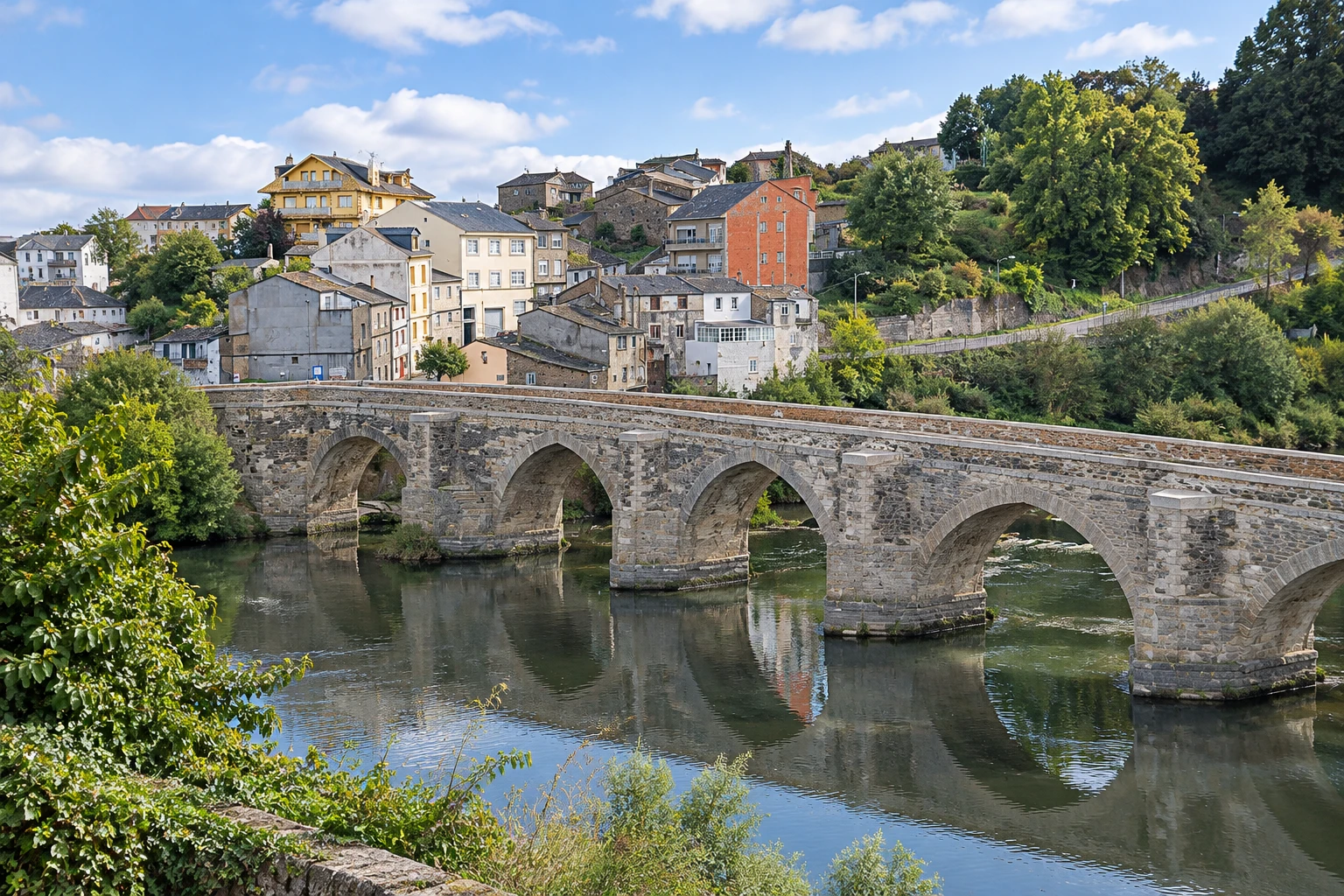
The bridge over the river Miño, of Roman origin and rebuilt in the Middle Ages, along which the Via de la Plata runs. The central arch, 43 meters wide, was for a long time the largest in Spain.
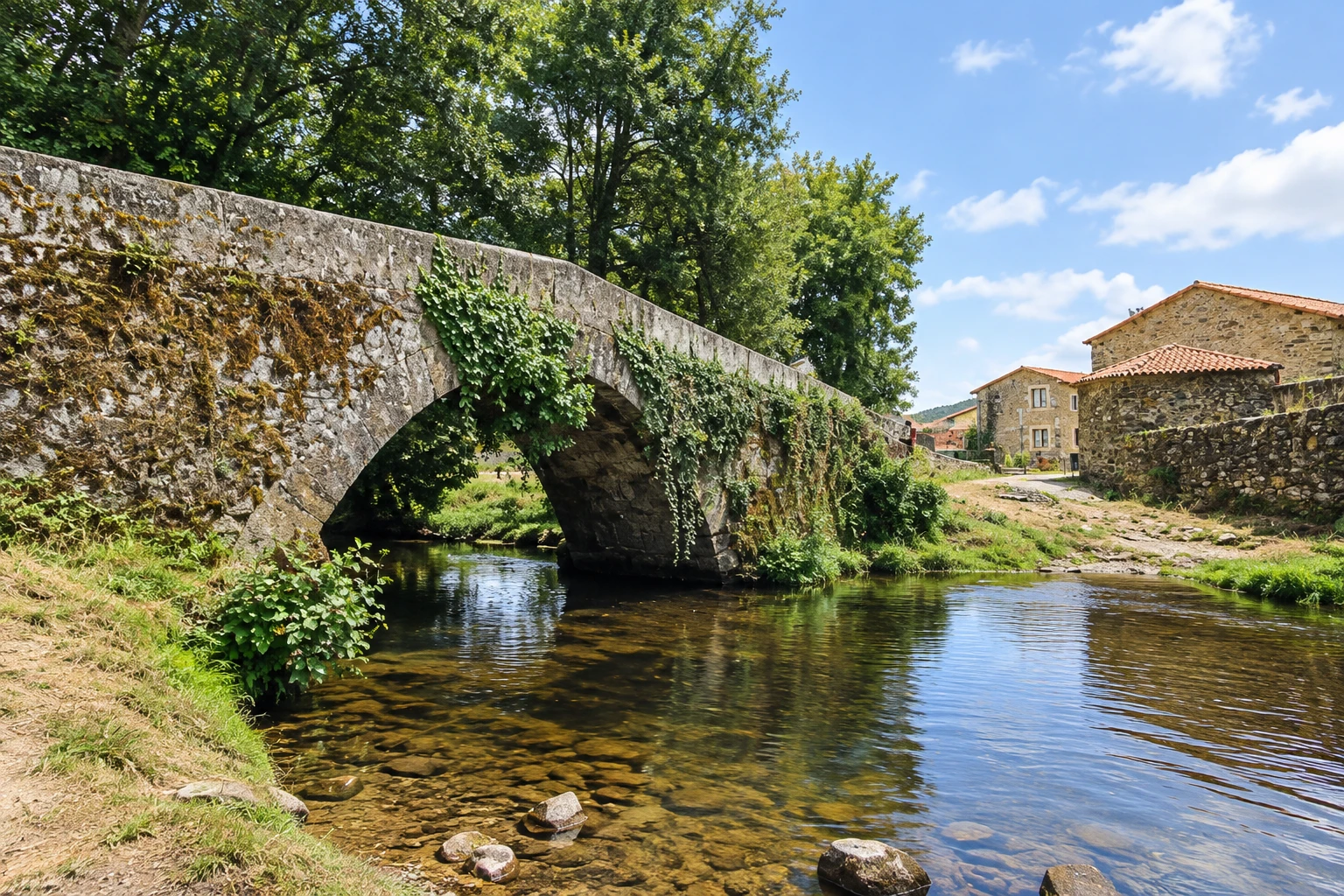
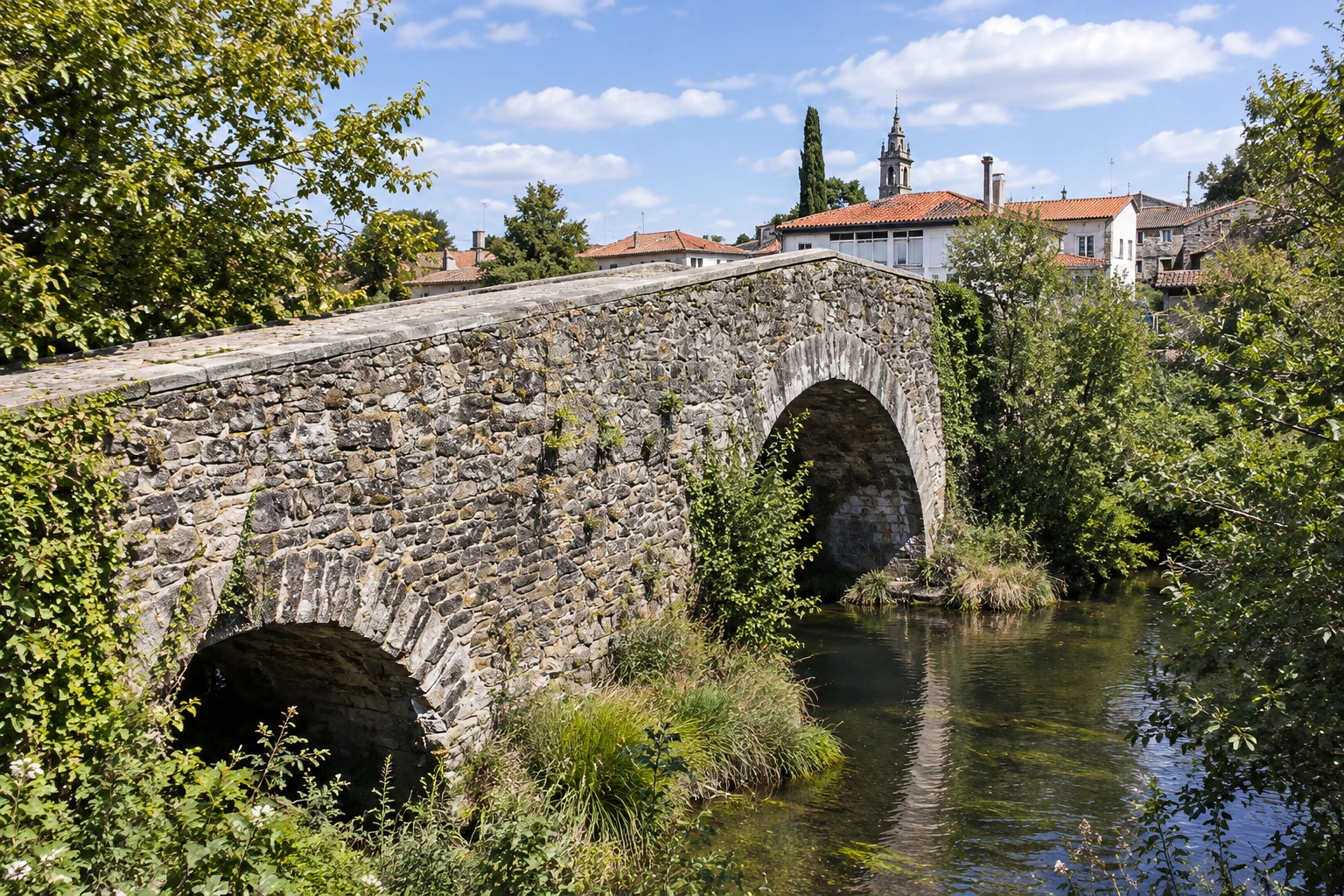
Medieval stone bridge over the Iso River, about 3 km from Arzúa, next to the old pilgrims' hospital of San Antón, restored as a hostel, at one of the best-known stops on the Camino Francés.
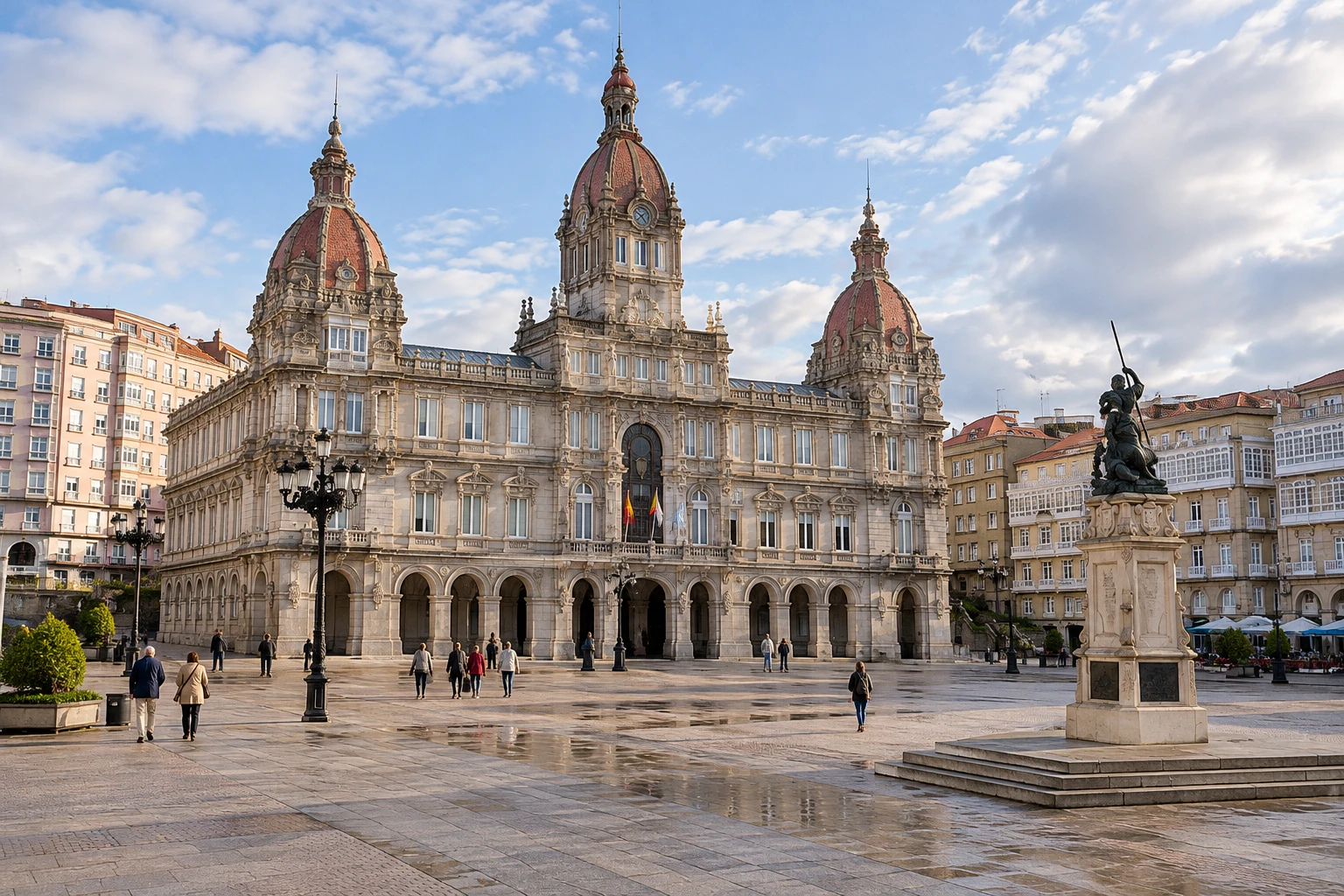
Large square in A Coruña, over 10,000 m², surrounded by arcades and glass galleries, with the town hall and the statue of María Pita, heroine of the city's defense against the English fleet in 1589.
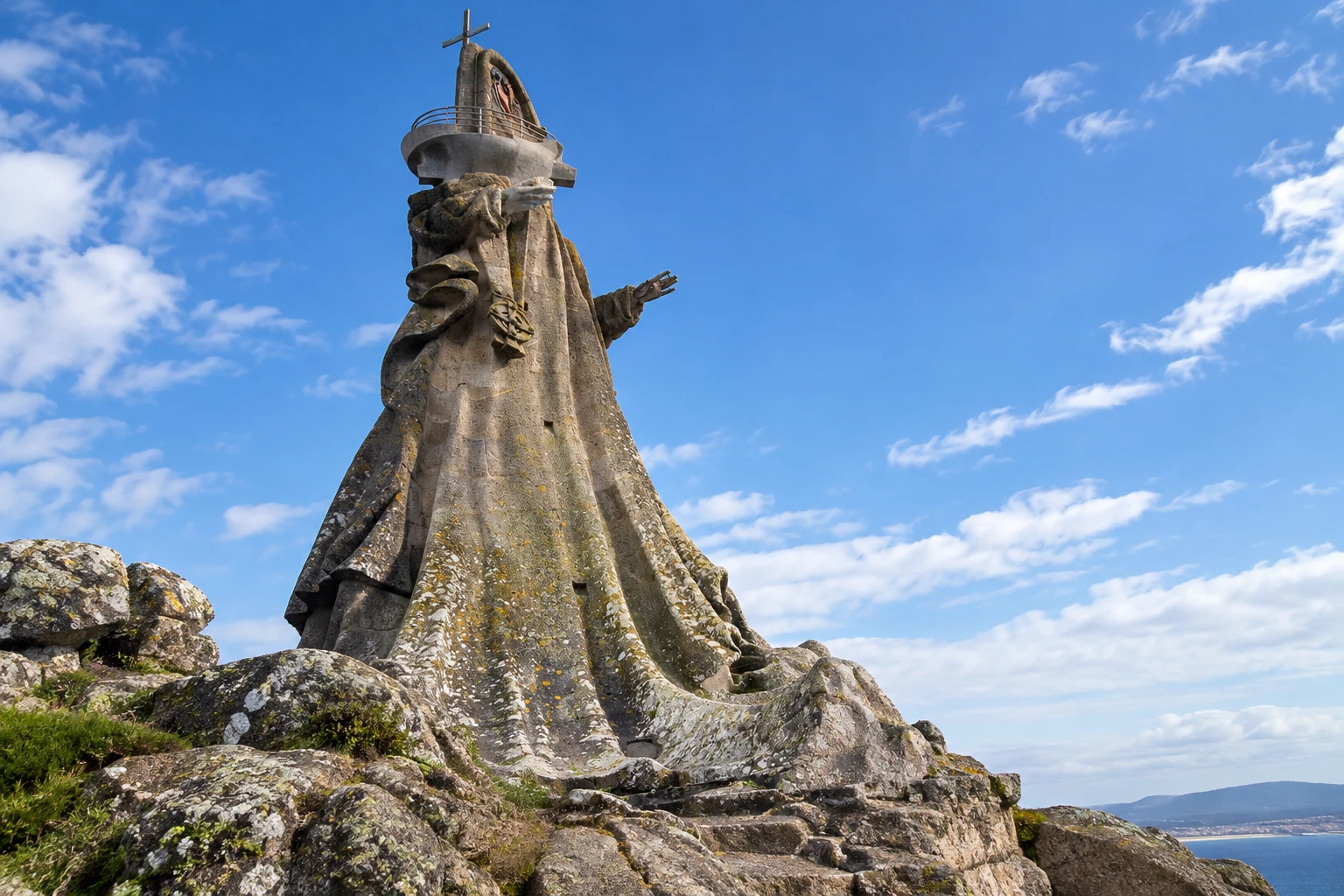
Stone statue of the Virgin Mary, 15 metres high, inaugurated in 1930 on monte Sansón, with an internal staircase that leads to the boat she holds, used as a viewpoint over the bay.
Medieval neighborhood of A Coruña, with stone streets, the Romanesque collegiate church of Santa María do Campo and the jardín de San Carlos, where the tomb of the English general John Moore is located.
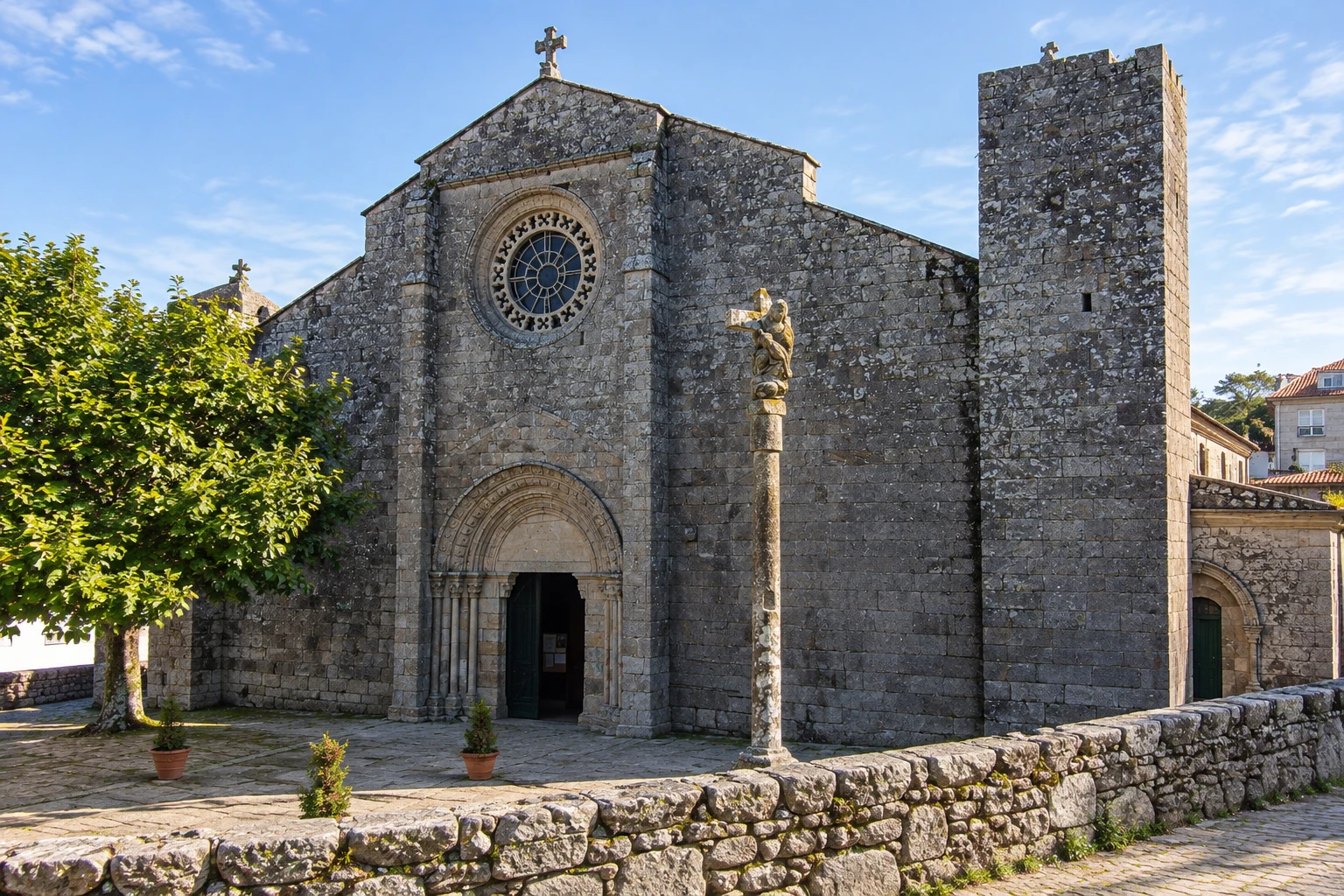
Romanesque church with a fortified appearance, dating to 1278, which was a colegiata between 1482 and 1840, with a rose window on the façade, a Baroque altar and stone cruzeiros in the churchyard.
Fort completed in 1624 to protect the galleons built in the Ribadeo shipyard, on the edge of the ria, overlooking the ponte dos Santos, which links Galicia to the Asturias.
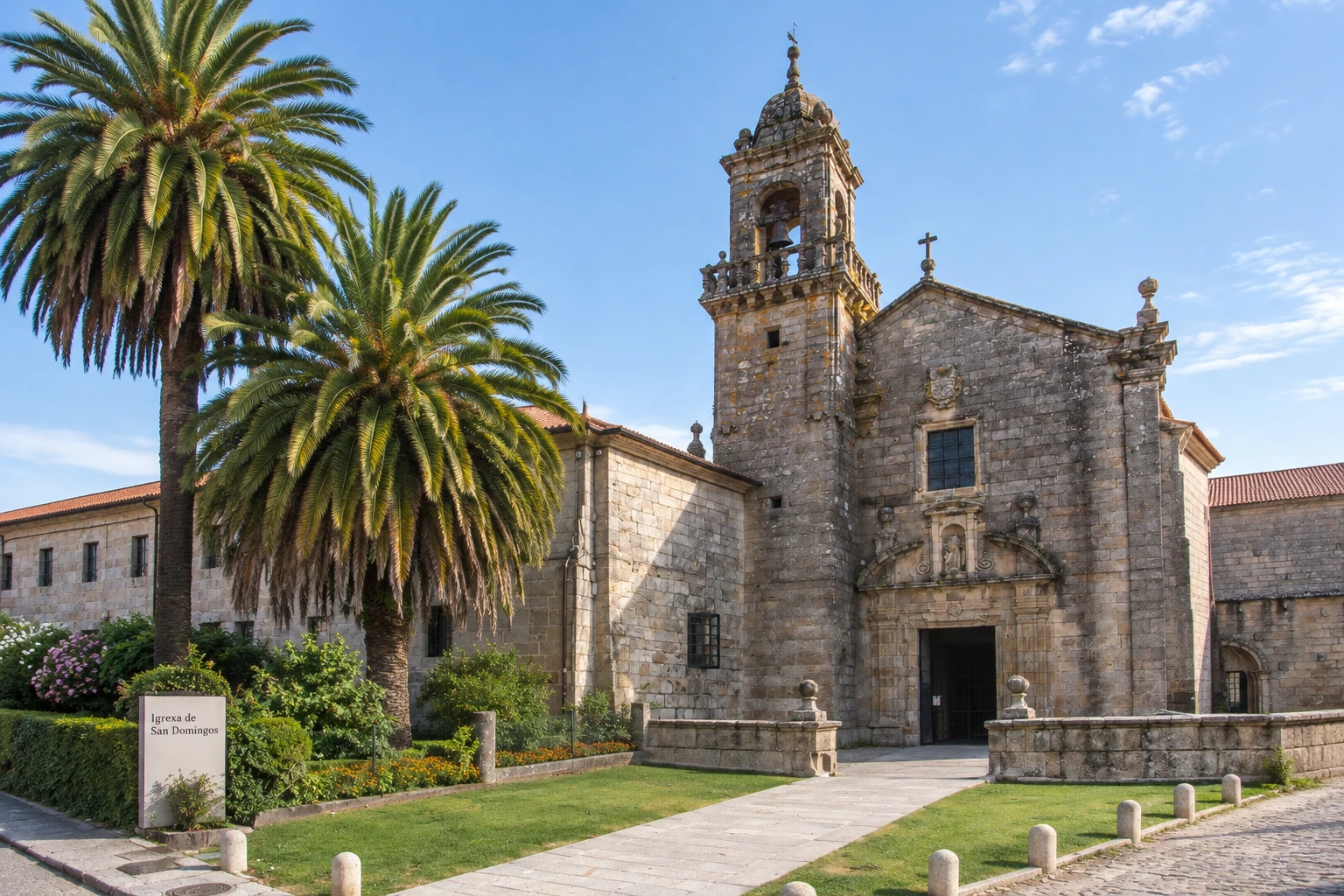
Gothic church of the former Dominican convent in Tui, from the 14th and 15th centuries, with a choir of polygonal chapels and Baroque altarpieces, next to the Parque da Alameda.
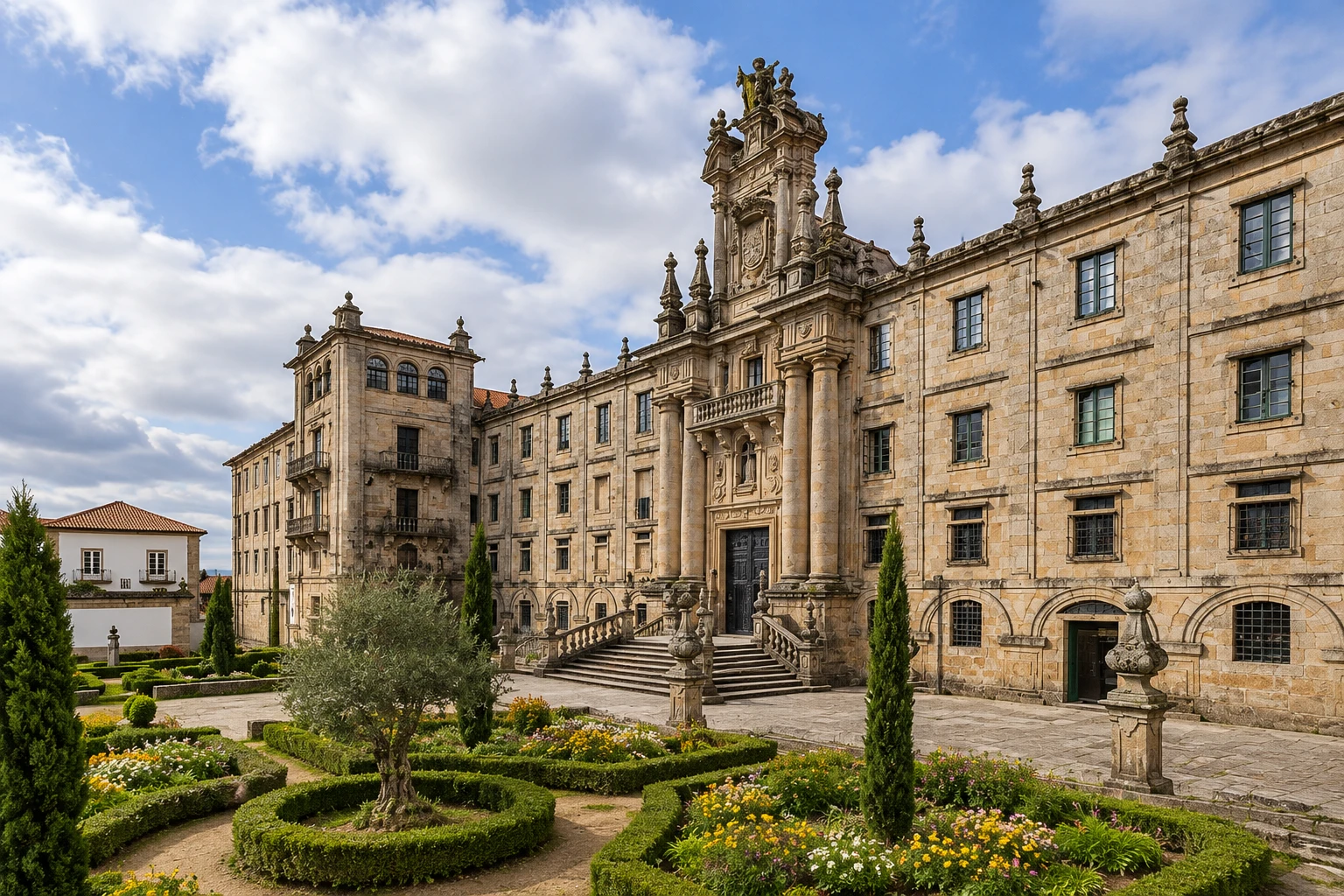
Benedictine monastery beside the cathedral, with a church featuring a baroque façade, a gilded altarpiece by Casas Novoa, a walnut choir, and a museum of sacred art.
Spanish Naval Museum next to the arsenal of Ferrol, with ship models, navigation instruments, weapons, uniforms and objects from the city's naval history.
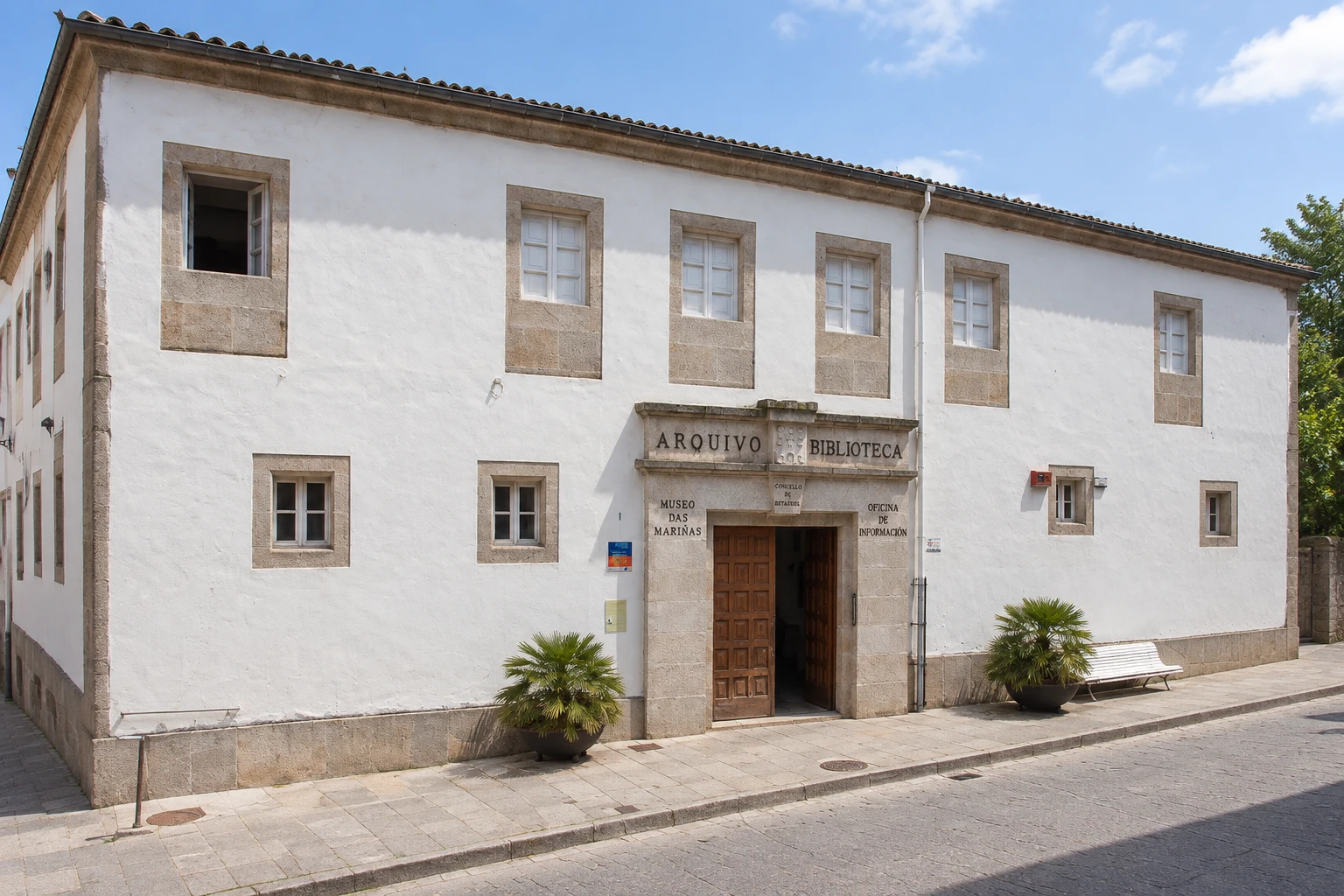
Museum of history and ethnography of the comarca das Mariñas, opened in 1983 in the former convent of Santo Domingo, next to the main square of Betanzos.
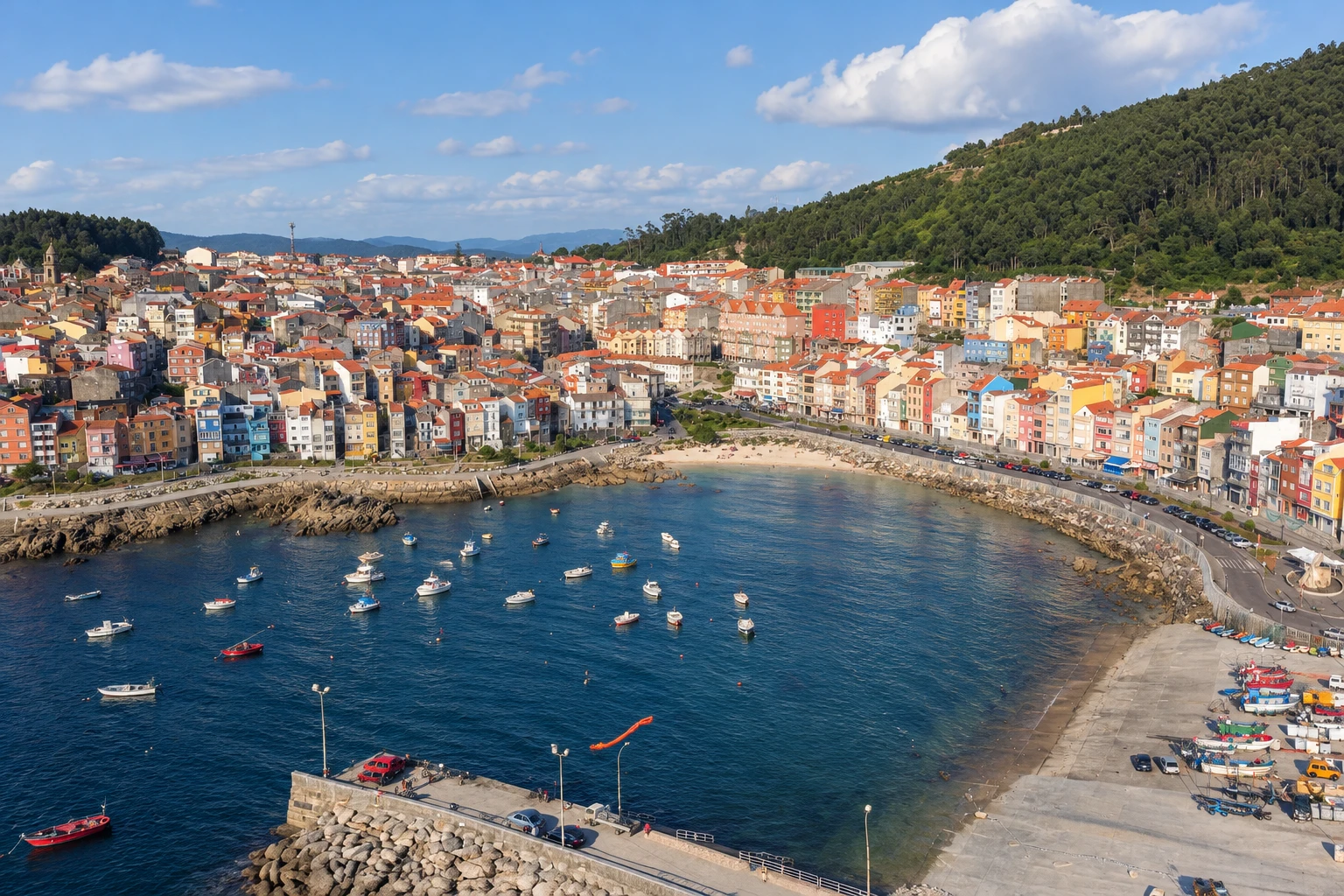
Fishing port of A Guarda, with colorful houses along the waterfront, seafood restaurants known for lobster and the small Museo do Mar on the promenade.
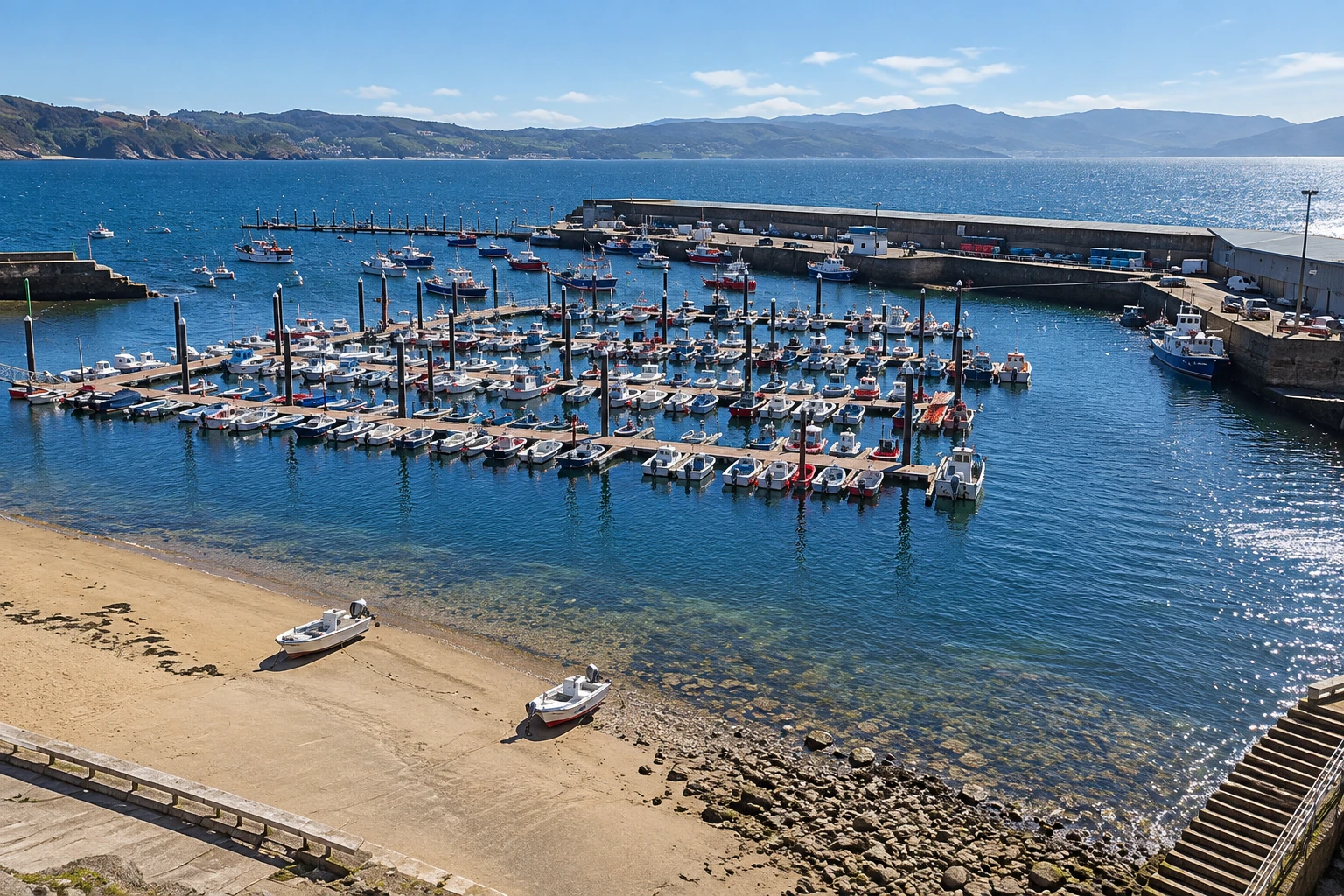
Fisterra's fishing port, with fishermen's houses, colorful boats and the lonxa, where fish from the Costa da Morte is auctioned, and fish and seafood restaurants around it.
The main square of the old town, with a sloping ground, arcades, the Casa do Concello and the church of Santa María Nai, just a few steps from the cathedral.
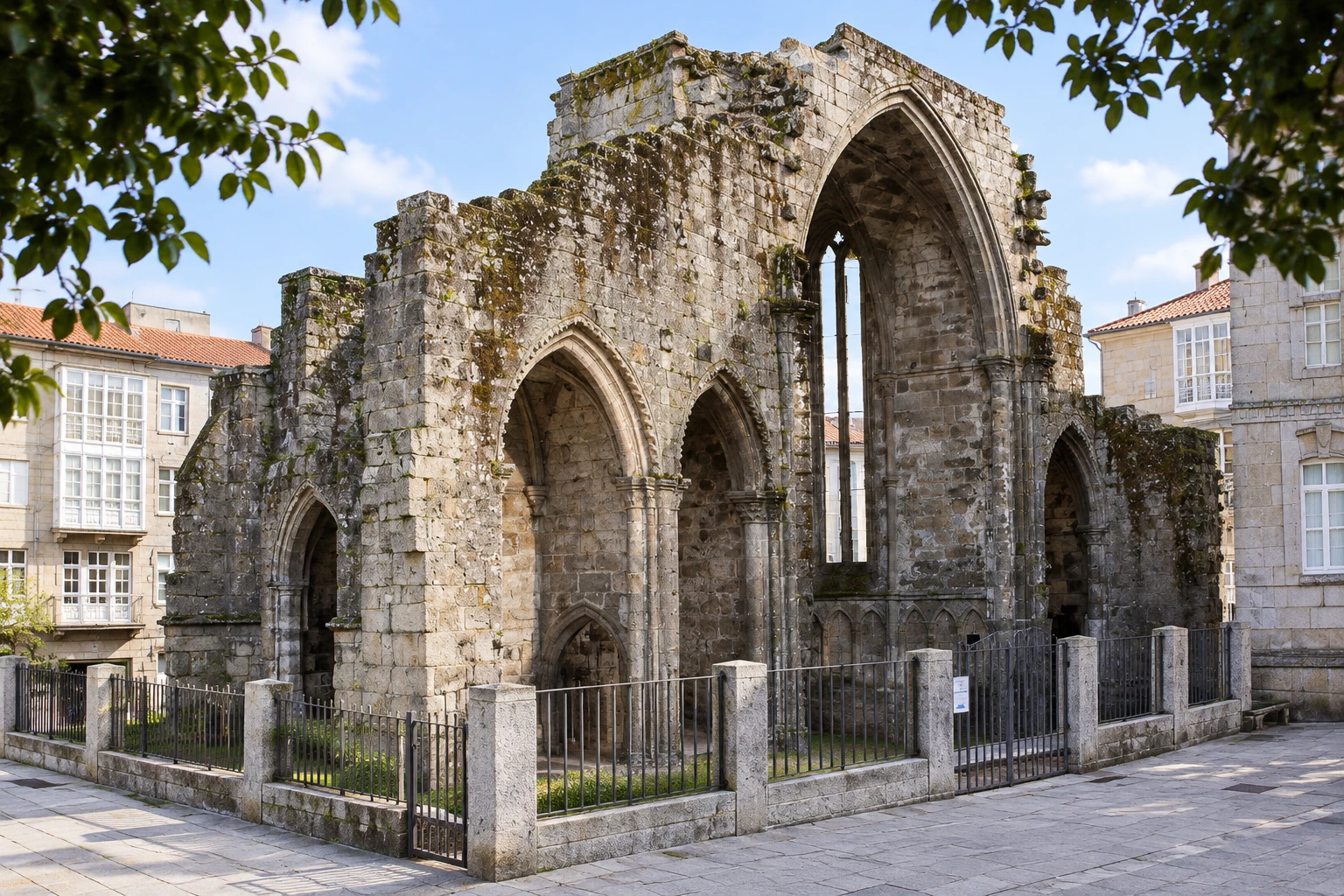
Gothic apse of the former Dominican convent of Pontevedra, with five open chapels, housing tombs, tombstones and coats of arms from the Museu de Pontevedra.
Remains of the Roman baths from the foundation of Lucus Augusti, by the river Minho, with the changing room preserved inside a spa hotel, and next to it the bridge of Roman origin, now for pedestrians.
Cabo da Costa da Morte in the municipality of Muxía, the westernmost point of Galicia, with two lighthouses, the old and the new, and cliffs opening to the Atlantic.
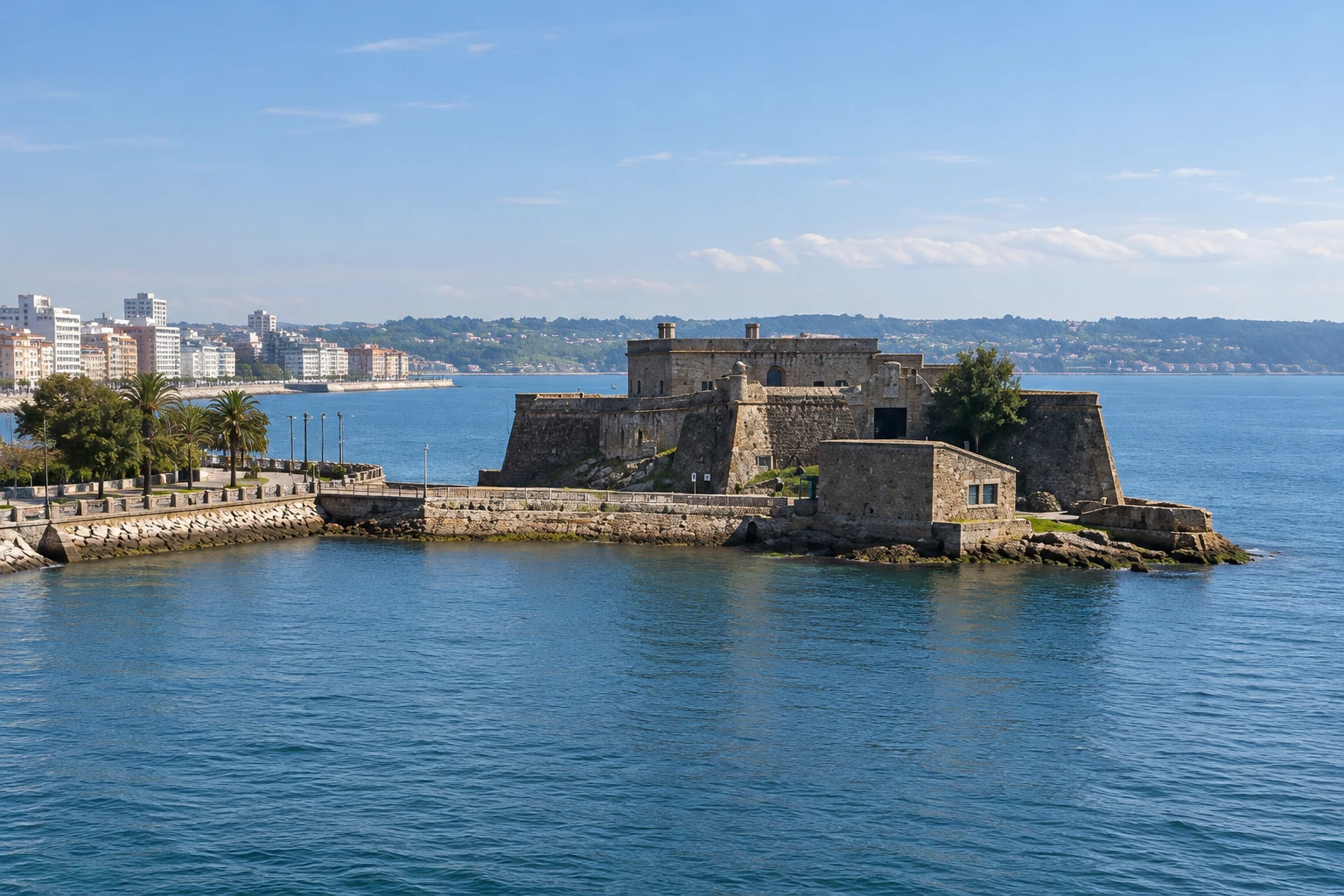
16th-century fortress on a former islet in the port of A Coruña, which defended the bay and later served as a prison; today it houses the Museu Arqueológico e Histórico.
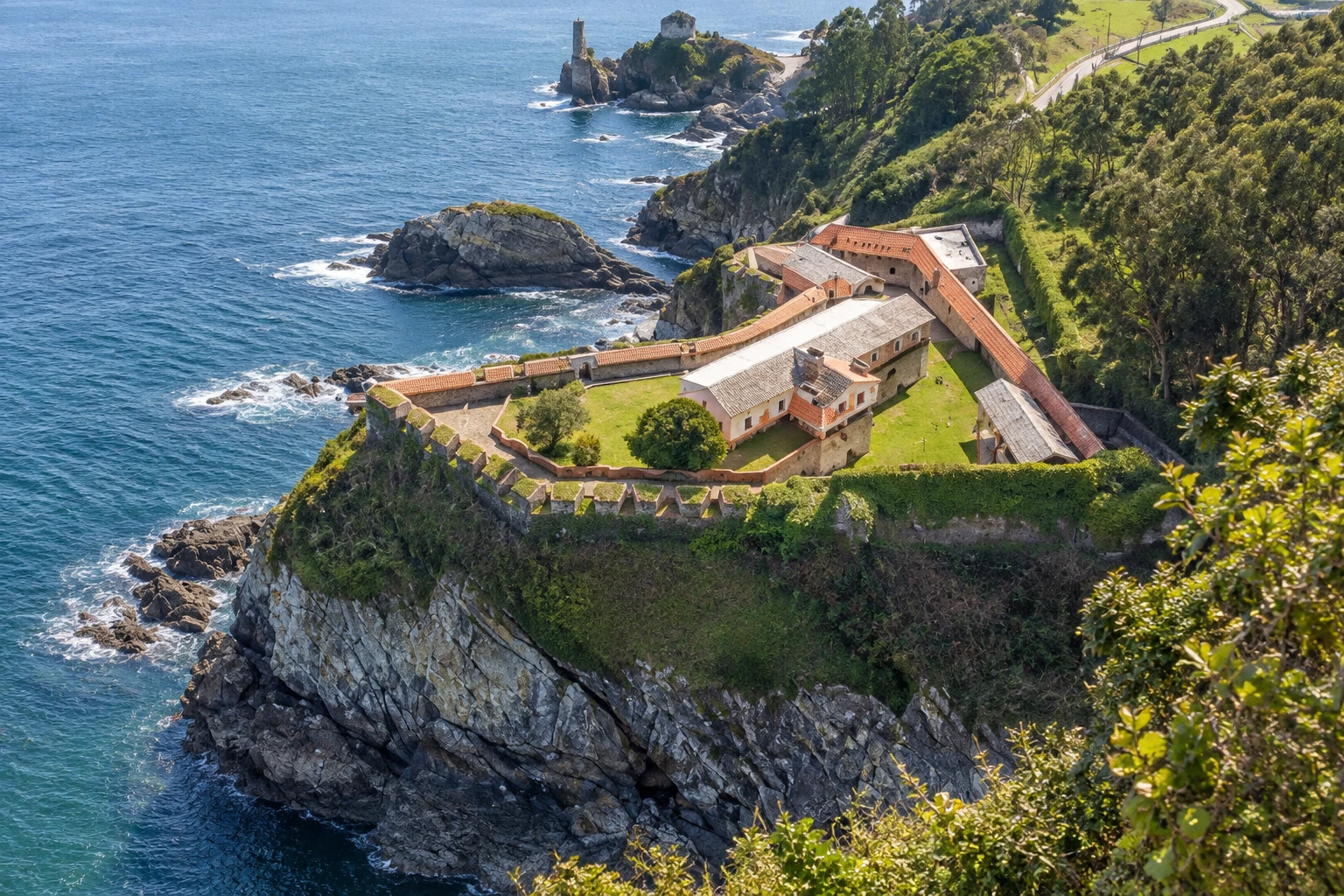
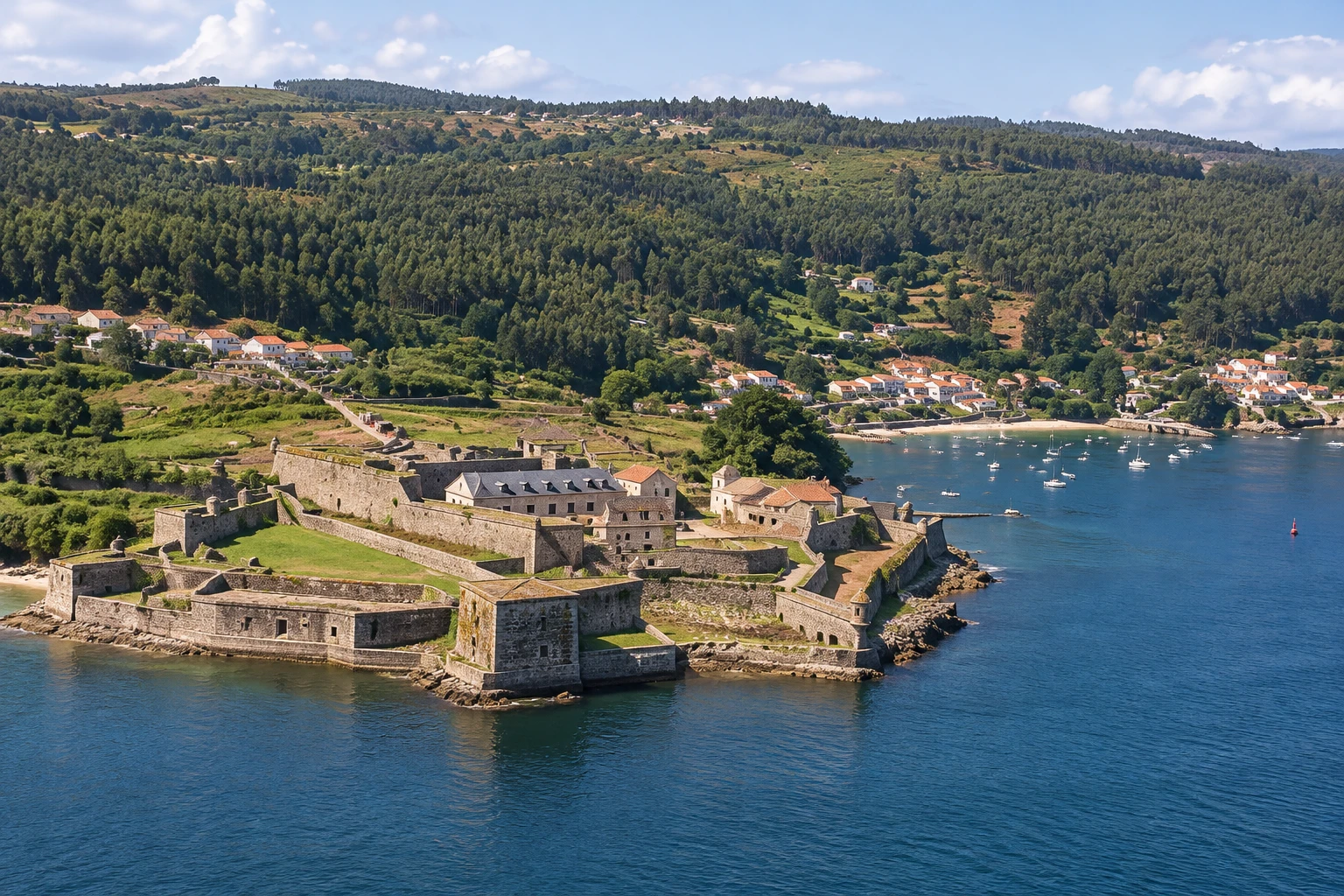
16th-century fortress, rebuilt in the 18th century, at the mouth of the ria of Ferrol, which together with the castillo da Palma on the opposite shore defended the harbor entrance; in the past a chain closed the ria between the two sides.
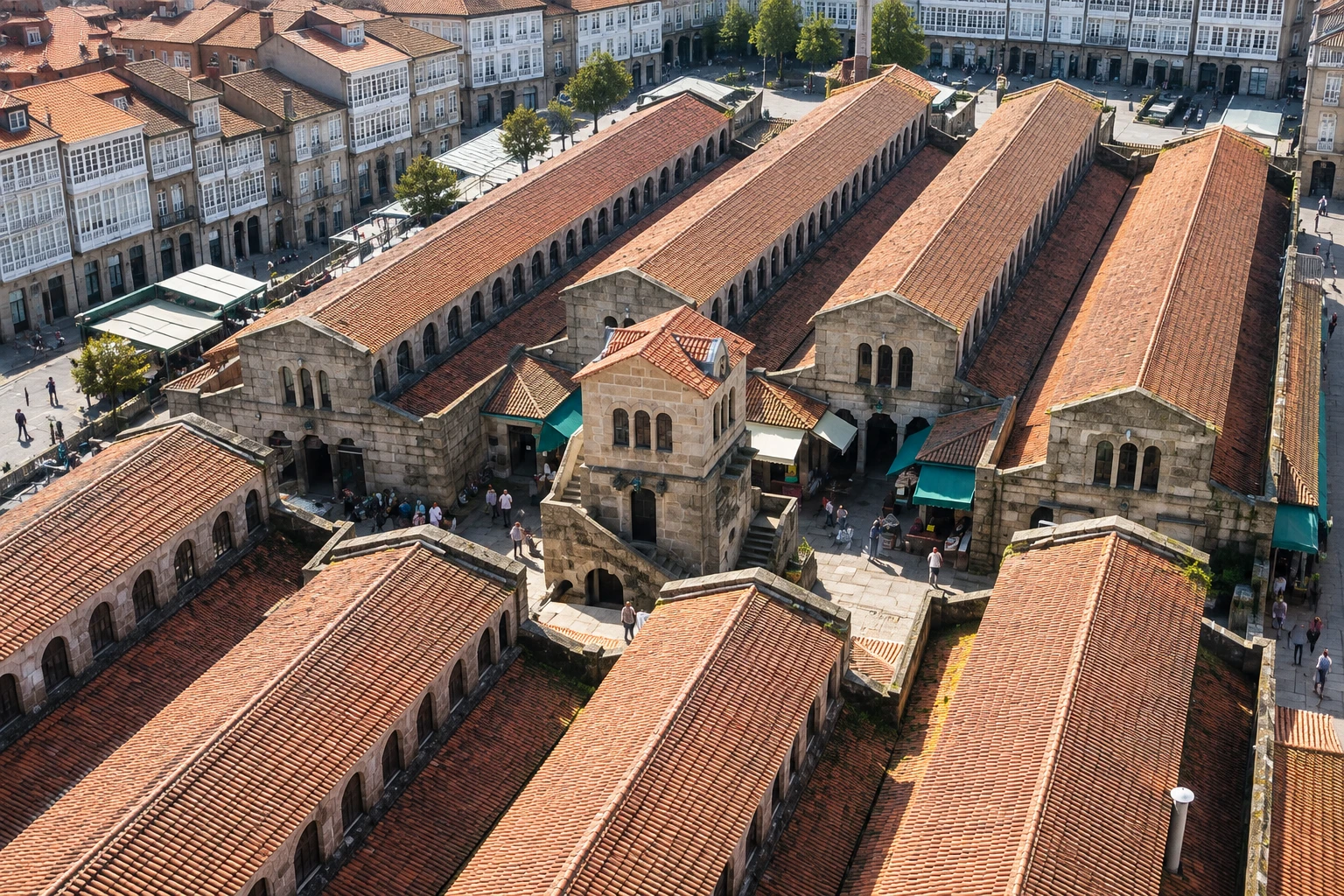
Stone market from 1941 in the old quarter, with granite aisles, stalls selling shellfish, fish, cheeses and Galician vegetables, and counters that prepare on the spot what you buy.
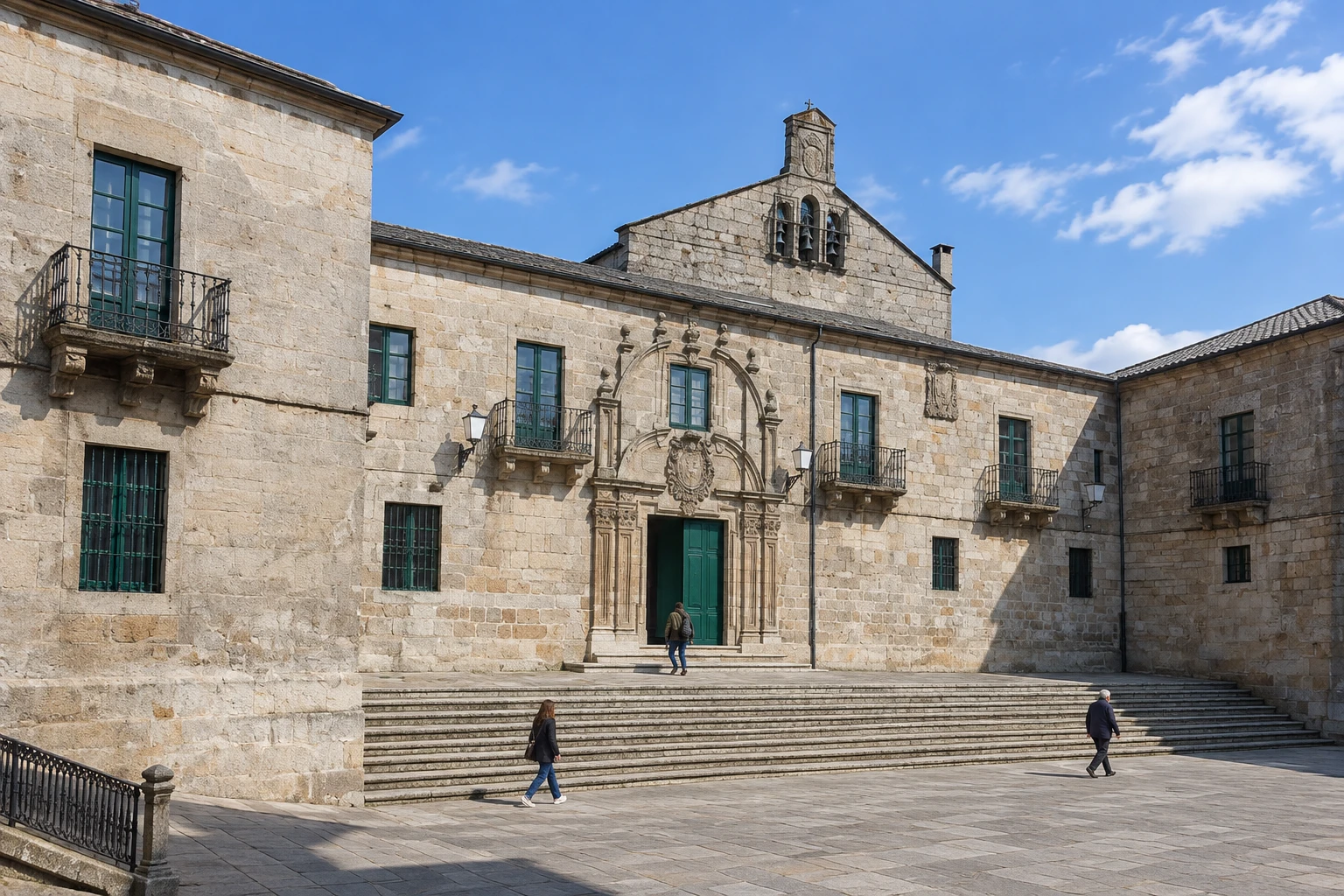
Provincial museum in the former convent of San Francisco, with a 15th-century cloister, 18th-century kitchen and refectory, Roman mosaics, castreja metalwork and Sargadelos ceramics.
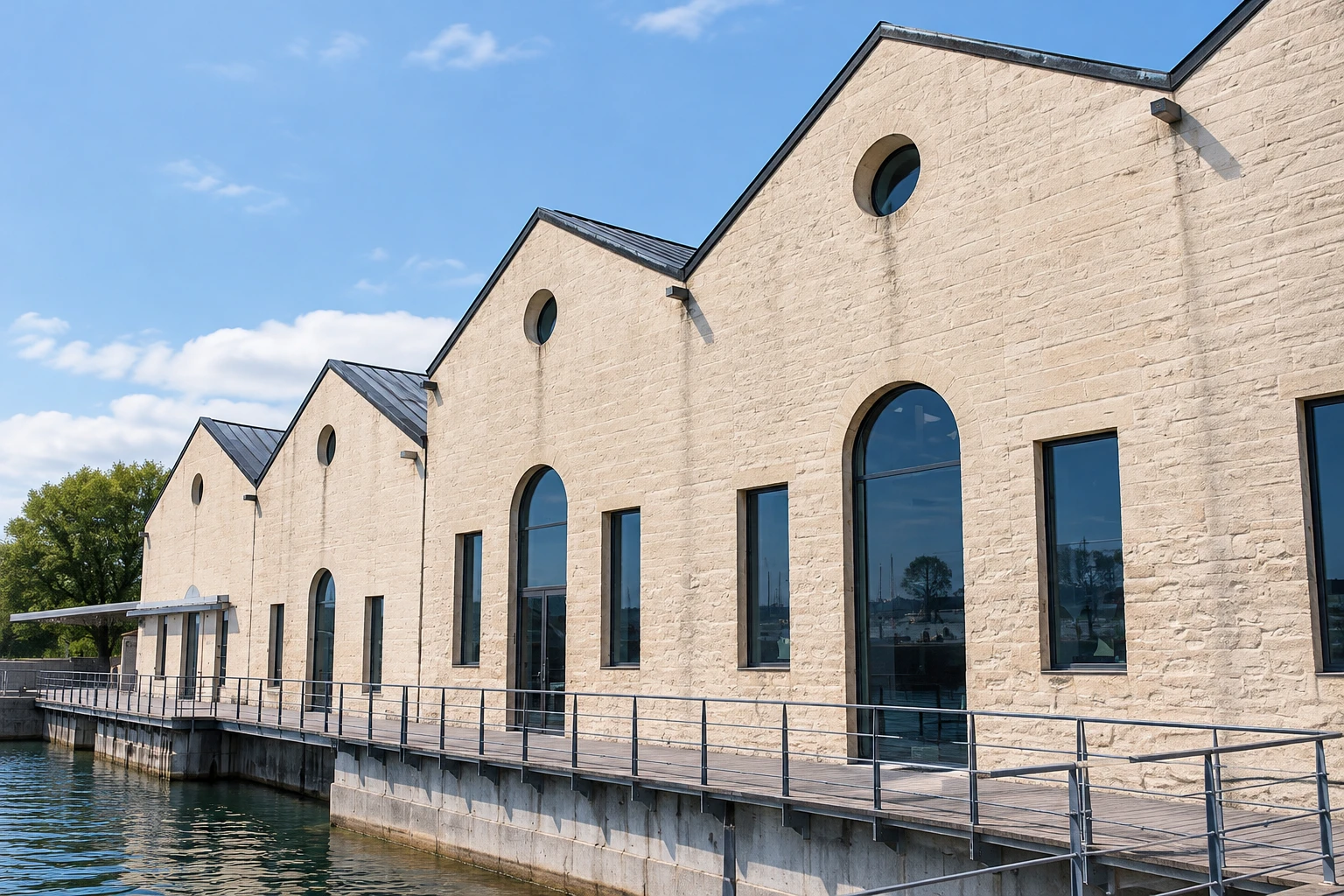
Galician sea museum in a former canning factory on the edge of the ria, renovated by Aldo Rossi and César Portela, with boats, fishing exhibits, an aquarium and a lighthouse.
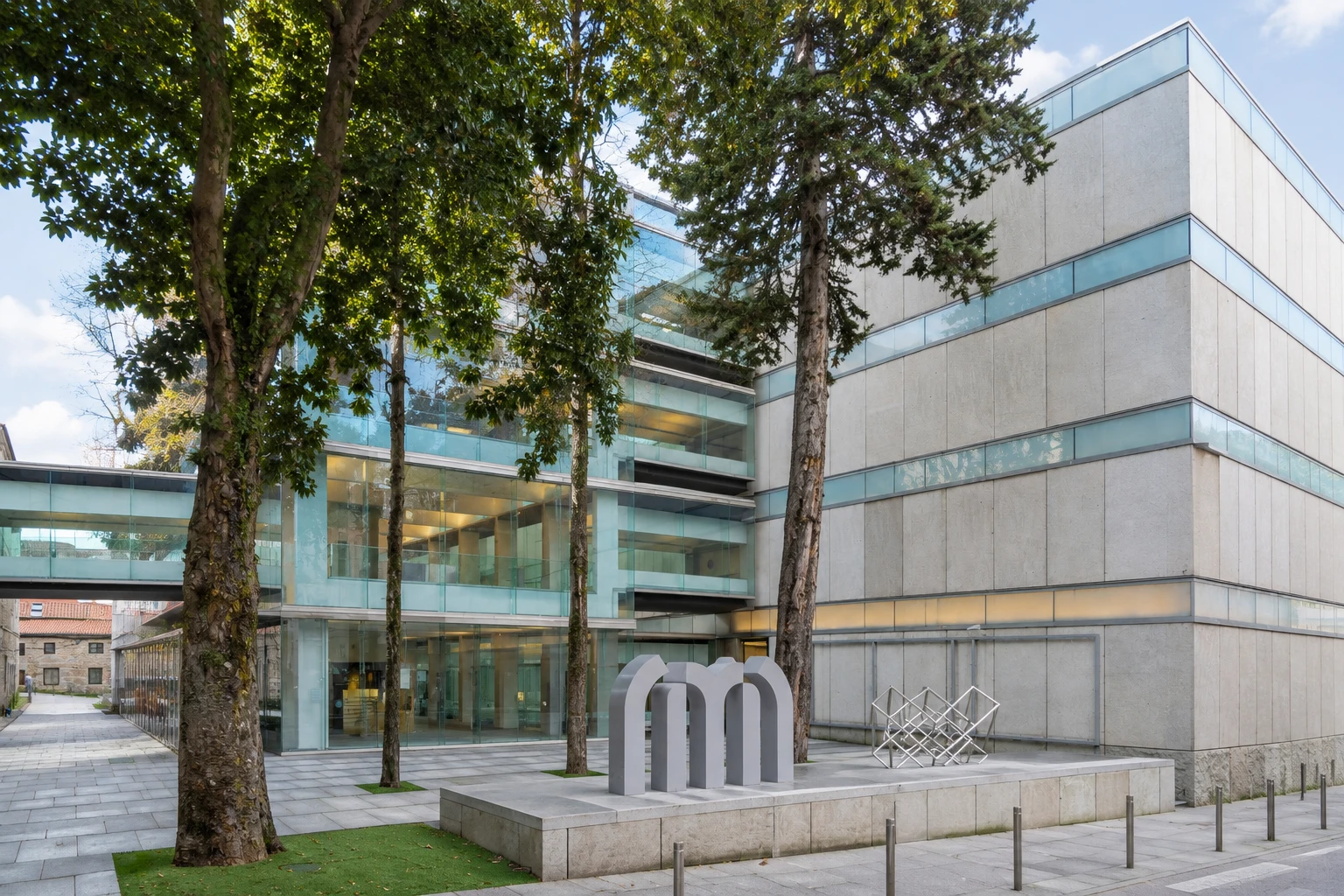
Provincial museum founded in 1927, spread across six buildings in the historic center, with archaeology, Castro-period goldsmithing, Galician and Spanish painting and works by Castelao.
First natural park of Galícia, designated in 1978, north of Tui, with 746 hectares of woodlands, trails, remains of a castrejo settlement and viewpoints over the Minho valley down to the estuary.
Park created between 1893 and 1914 by Juan García Naveira, an emigrant who returned wealthy from Argentina, with lakes, grottoes and sculptures that showed the townspeople places and themes from around the world.
Aquarium opened in 1999 by the sea, between the Domus and the Torre de Hércules, with pools connected to the Atlantic that follow the tides, seals and species of the Galician coast.
14th-century Franciscan Gothic church on praça da Ferrería, traditionally linked to the passage of São Francisco de Assis, with the tomb of the admiral and troubadour Paio Gómez Chariño.
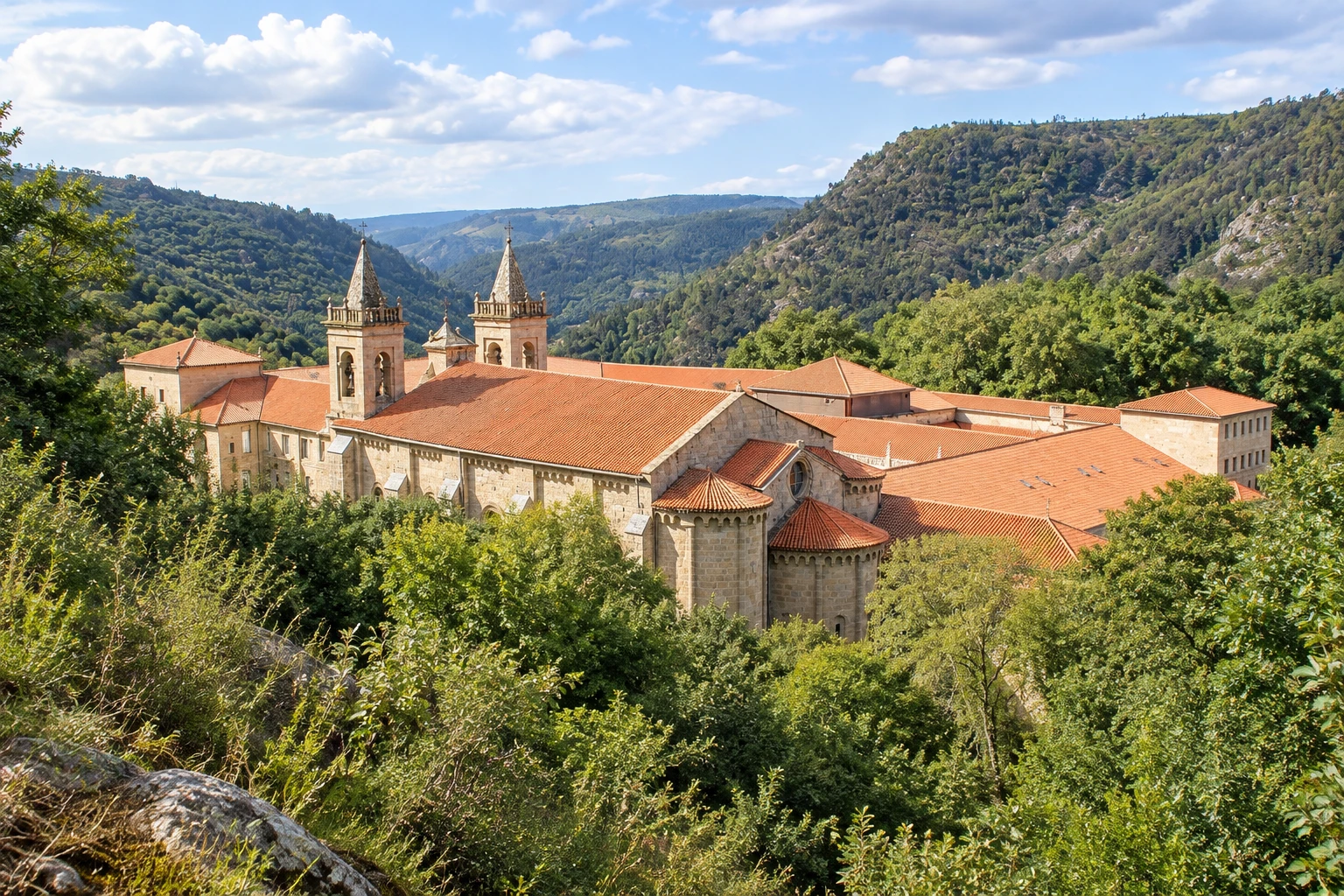
Former Benedictine monastery with three cloisters overlooking the Sil canyon in the Ribeira Sacra, about 30 km from Ourense. It now operates as a historic guesthouse.
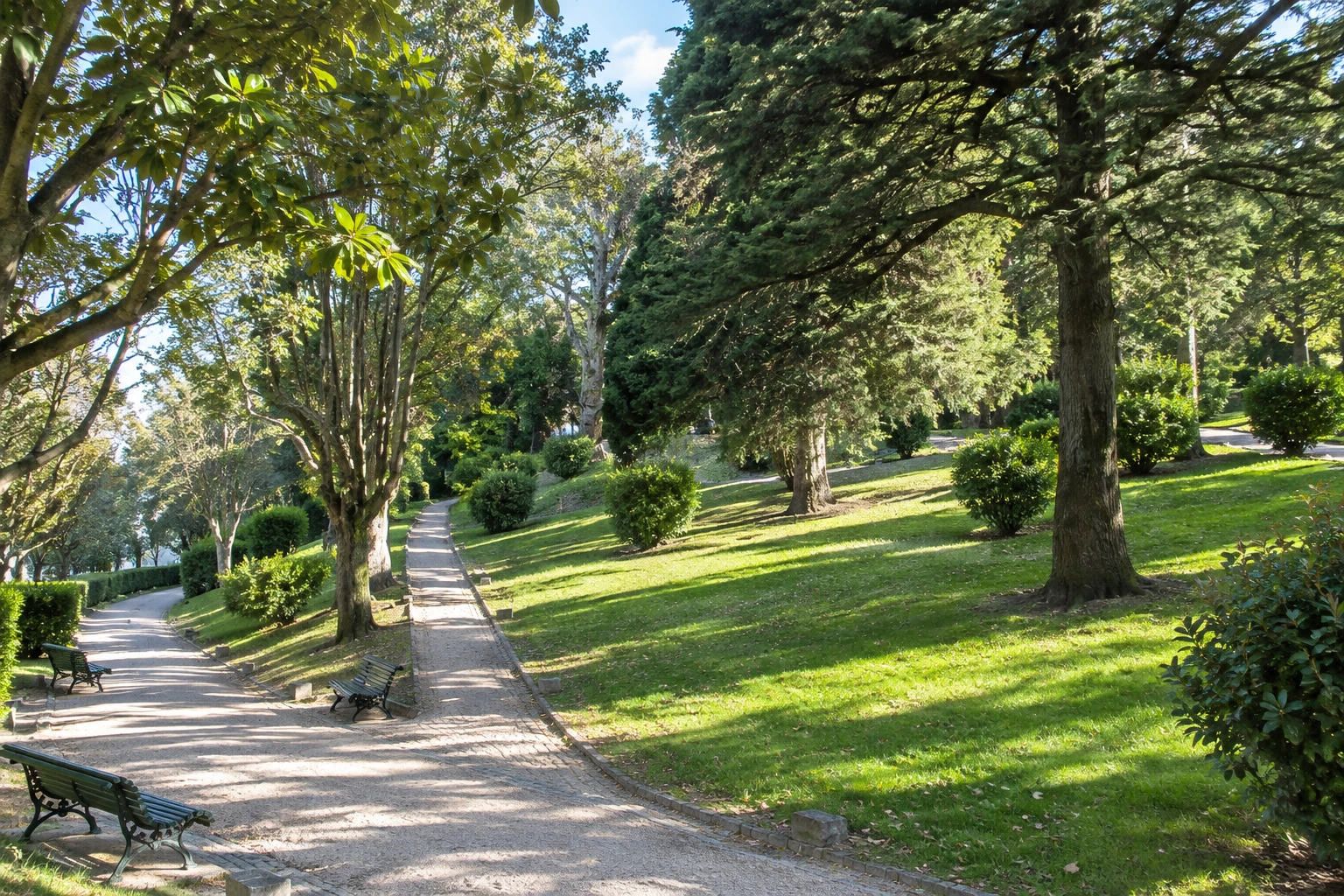
19th‑century park on the edge of the old town, featuring the Paseo da Ferradura, the best‑known view of the cathedral, the statue of the Dúas Marías and an oak grove.
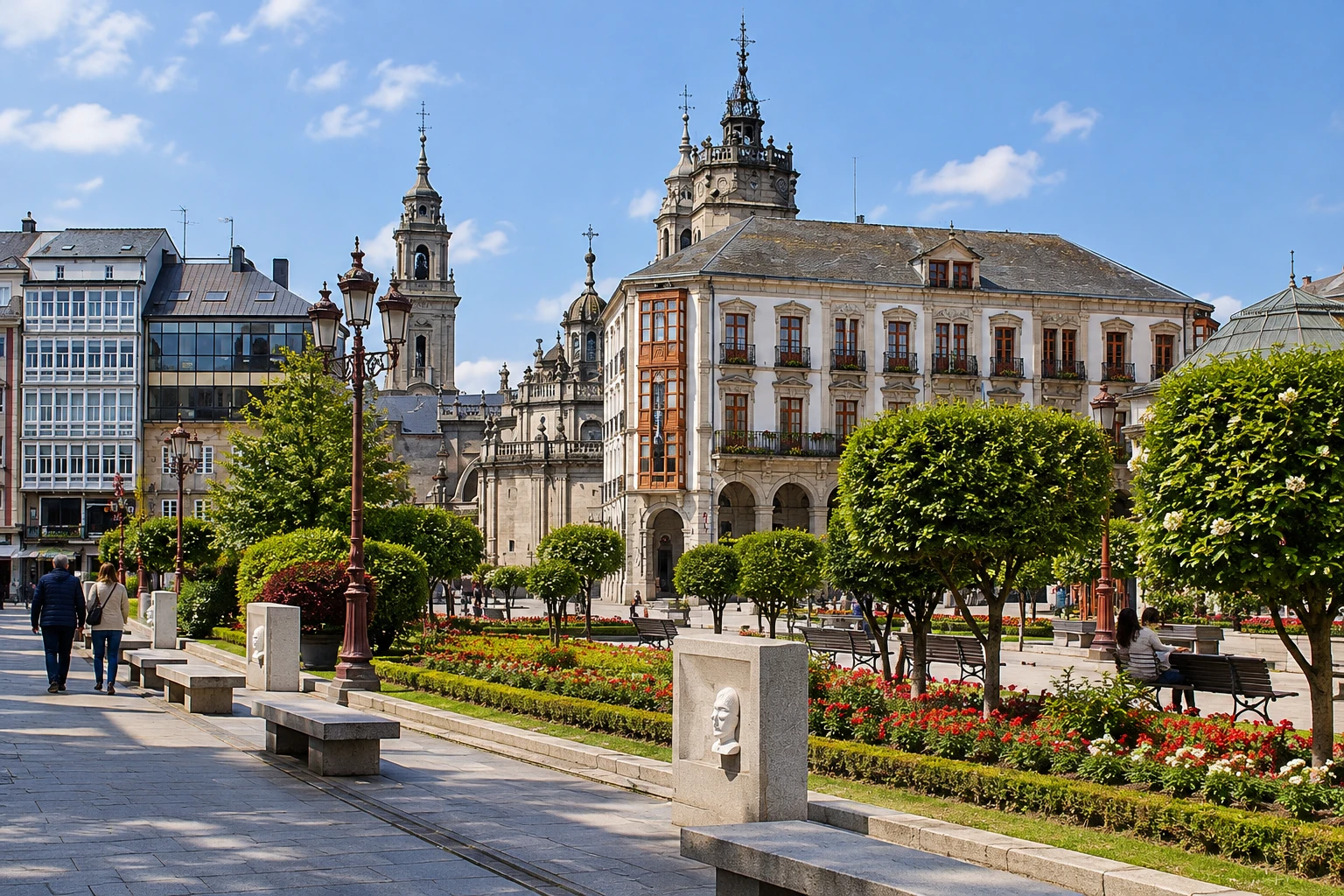
Main square of Lugo, inside the wall, with gardens, a bandstand and the 18th-century Baroque town hall, a meeting point for locals and the starting point for the central tapas bars.
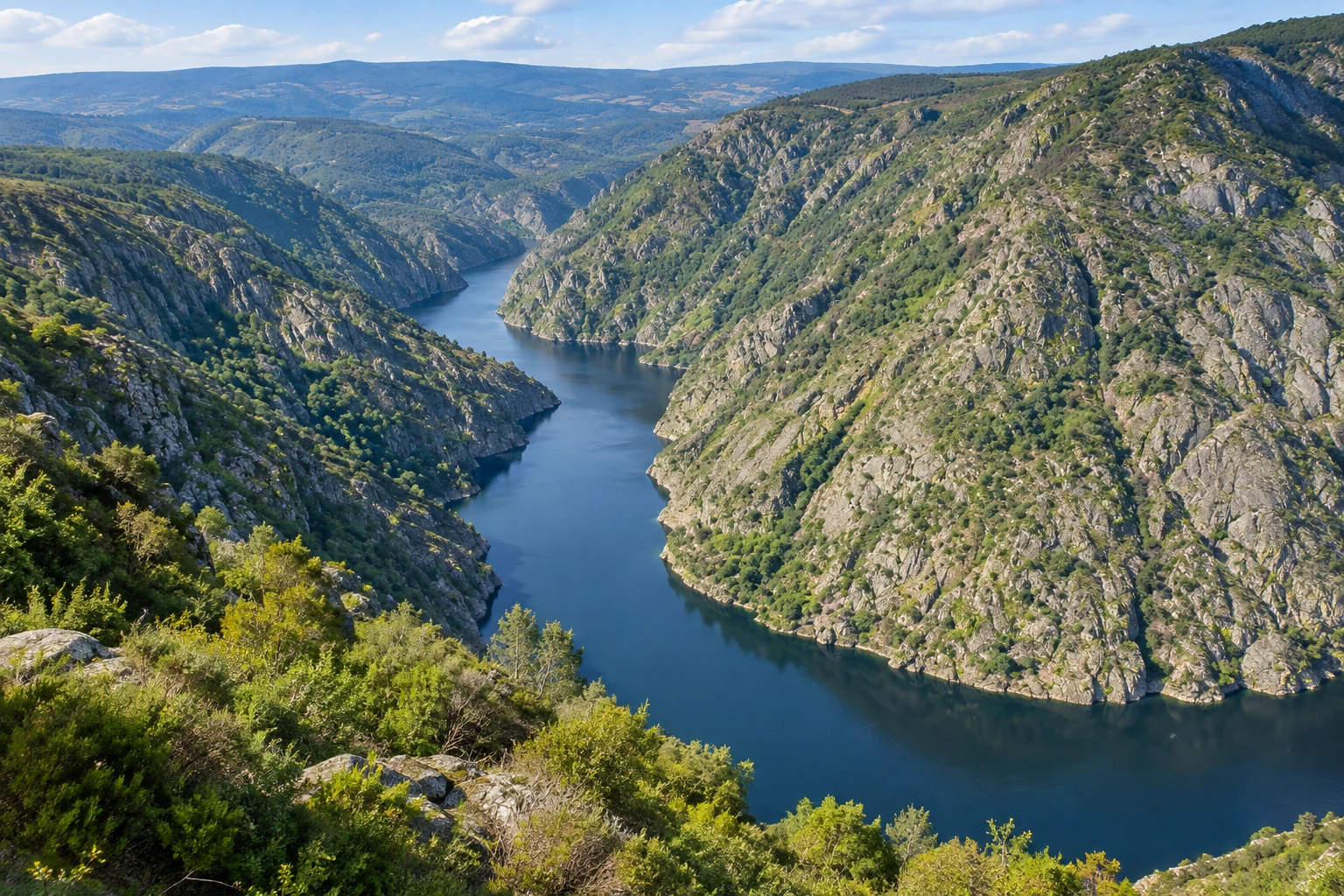
The canyon of the Sil river in the Ribeira Sacra, with walls over 500 meters high and terraced vineyards that descend to the water. Catamaran tours run along the river.
A Romanesque and Gothic fortress-cathedral from the 12th century atop Tui, overlooking the Minho river, opposite Valença do Minho — a starting point of the Caminho Português in Spain.
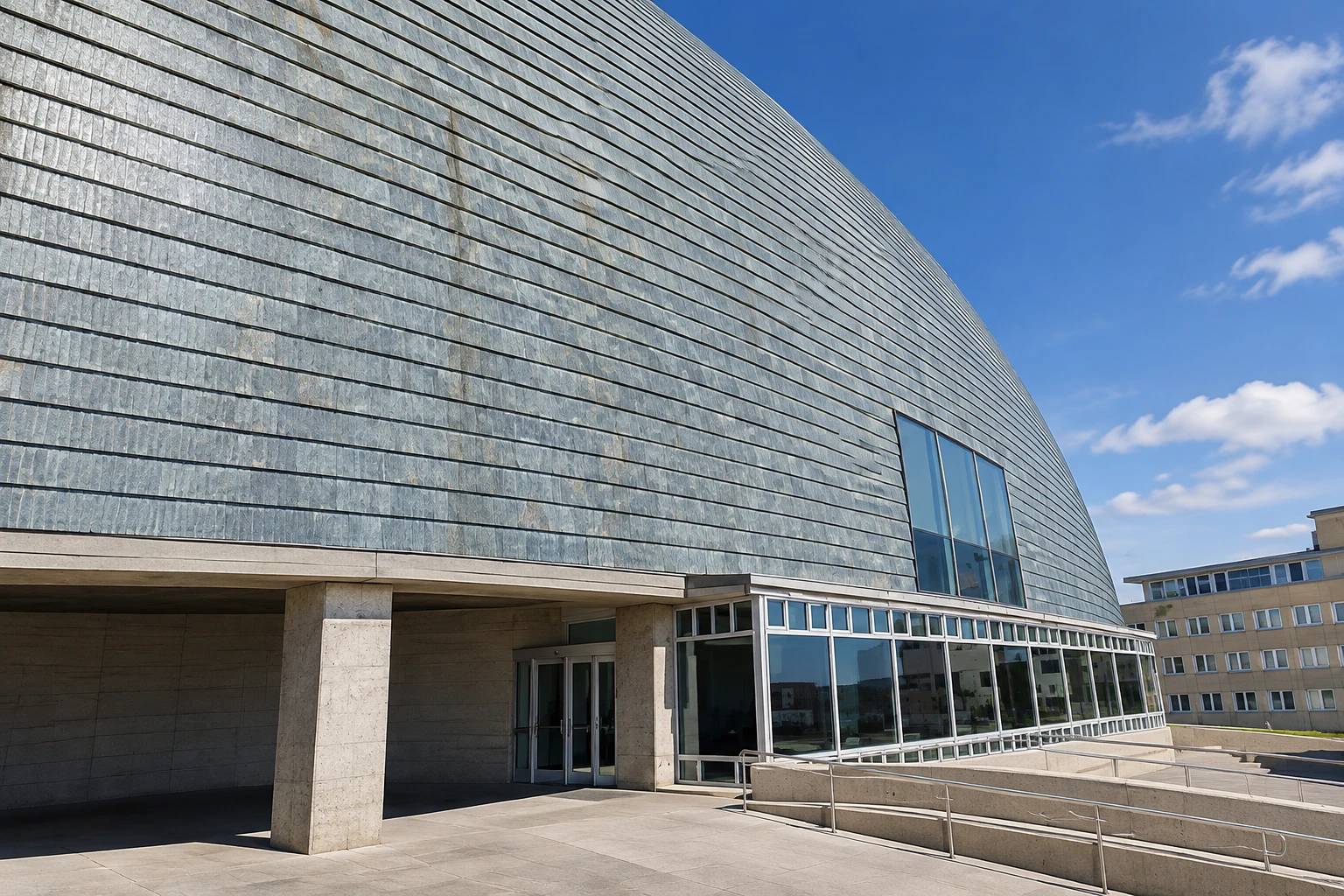
Interactive museum dedicated to the human being, opened in 1995 in a building by Arata Isozaki and César Portela, with a curved slate facade facing the sea, like a sail in the wind.
Museum of Galician culture in the former convent of San Domingos de Bonaval, featuring Domingo de Andrade’s triple helical staircase and the Panteón de Galegos Ilustres, where Rosalía de Castro is buried.
Medieval stone bridge over the river Lérez, built on top of an earlier Roman bridge, with carved pilgrim shells; it is the entrance to the Caminho Português on the north side of the city.
Roman temple from the 3rd century, 14 km from Lugo, probably dedicated to the goddess Cybele and later Christianized, with a central pool, bird paintings and the oldest horseshoe arch used as a structural element in Spain.
Interactive museum of science and technology opened in 1985 in a small palace in the Santa Margarida park, with a planetarium and physics experiments; the first of its kind under public management in Spain.
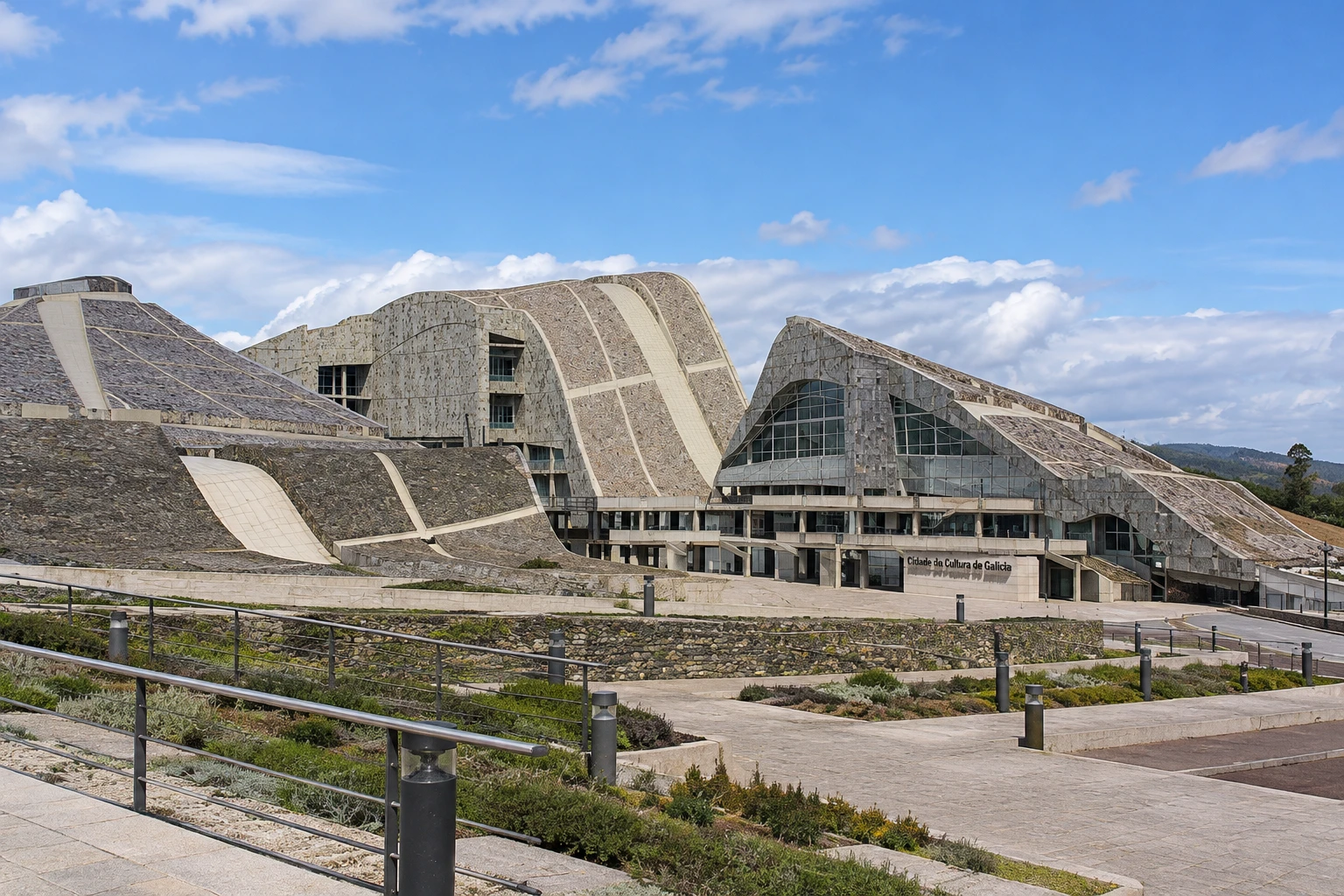
Peter Eisenman cultural complex on Monte Gaiás, with stone buildings that mimic waves, a museum, library and the Archive of Galicia, and views over the city.
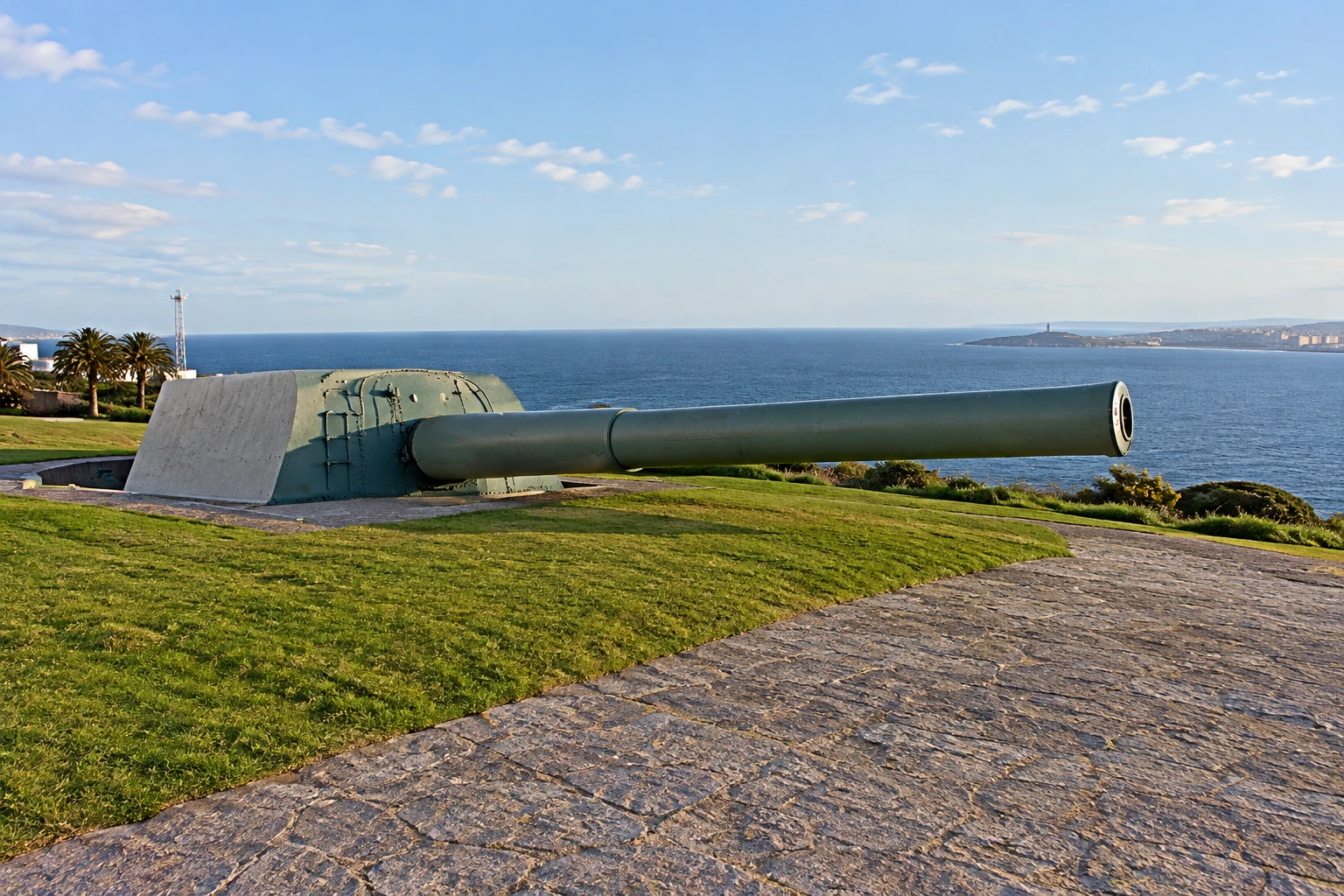
Park on top of an old military hill to the west of A Coruña, with the cannons of a coastal battery, viewpoints over the city and the sea, and a panoramic elevator that rises from the promenade.
Hill about 5 km from the cathedral, on the French Way, where pilgrims first caught sight of the towers of Santiago. It has a monument and a pilgrim hostel.
Two continuous urban beaches in the Orzán bay, in the center of A Coruña, accompanied by the promenade; Orzán has waves popular with surfers, while Riazor is calmer.


 Brazil
 Antarctica
 Argentina
 Bolivia
 Chile
 Colombia
 Ecuador
 Falkland Islands (Malvinas)
 French Guiana
 Guyana
 Paraguay
 Peru
 Suriname
 Uruguay
 Venezuela
 Albania
 Austria
 Belgium
 Croatia
 Denmark
 Finland
 France
 Germany
 Greece
 Hungary
 Iceland
 Ireland
 Italy
 Luxembourg
 Norway
 Poland
 Portugal
 Slovakia
 Slovenia
 Sweden
 Switzerland
 the Czech Republic
 the Netherlands
 the United Kingdom
 Turkey
 Bermuda
 Canada
 Greenland
 Mexico
 Saint Pierre and Miquelon
 the United States
 the Dominican Republic
 Japan
 Egypt
 South Africa
 Australia
 Fiji
 New Zealand
 Papua New Guinea