10 places to visit Santiago de Compostela (Spain), chosen by the Cidade Turismo guide.
Illustrative images. The pictures in this guide are illustrations based on the real place, not photographs, and may differ from it.
To start
The 10 main places Santiago de Compostela
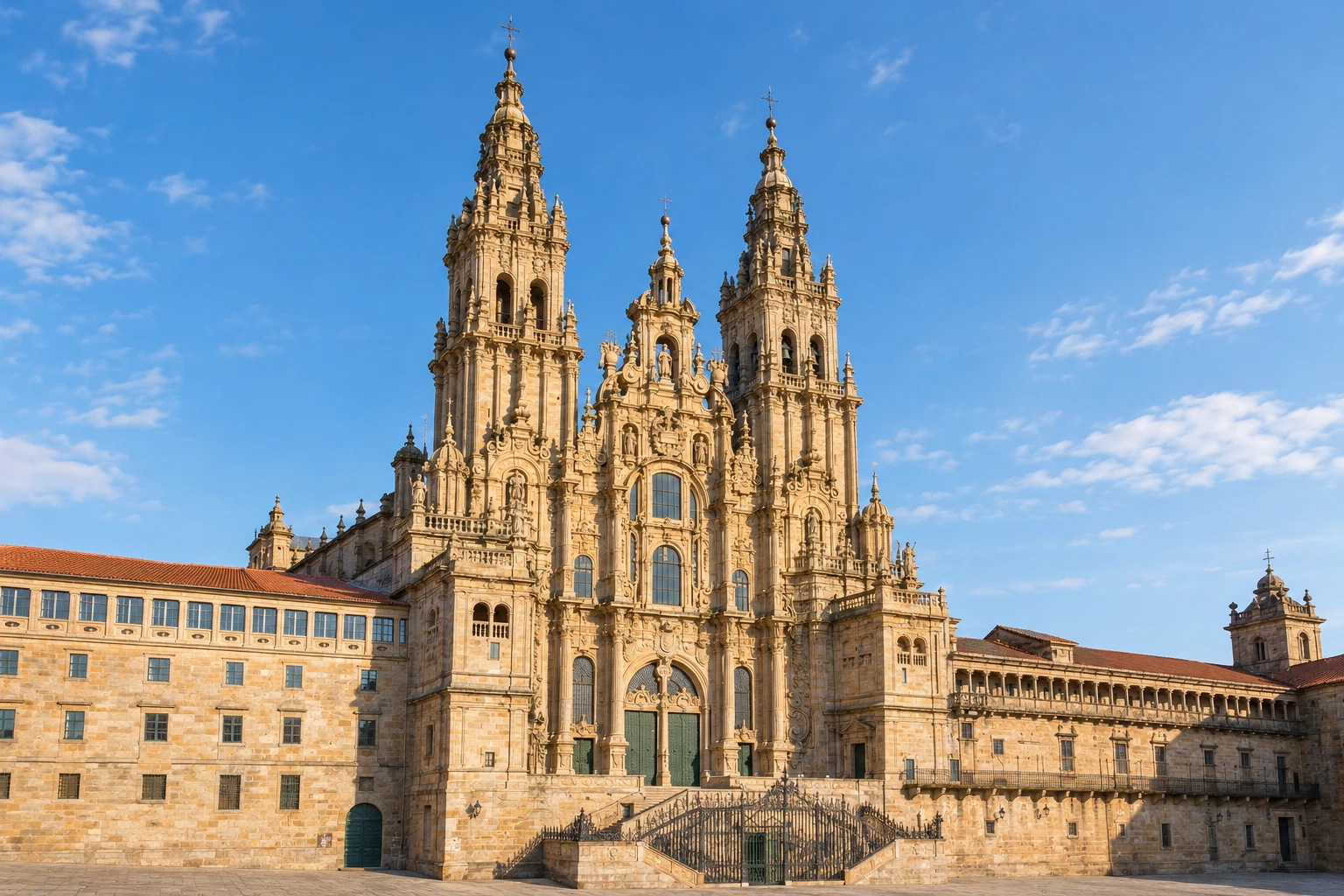
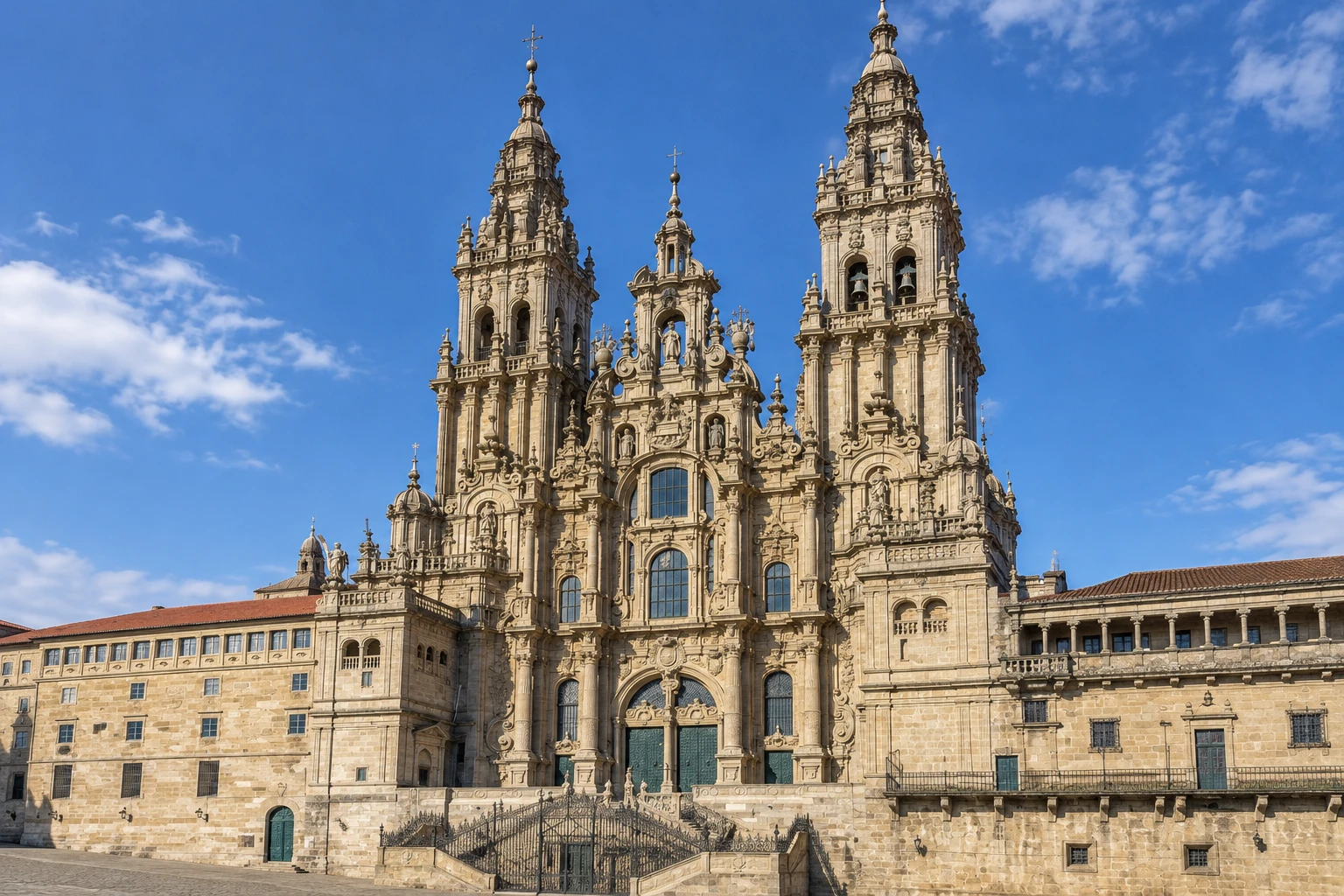
Santiago de Compostela CathedralRomanesque cathedral of the 11th century with a Baroque façade, which houses the tomb attributed to the apostle James, the Pórtico da Glória by Mestre Mateus and the Botafumeiro.
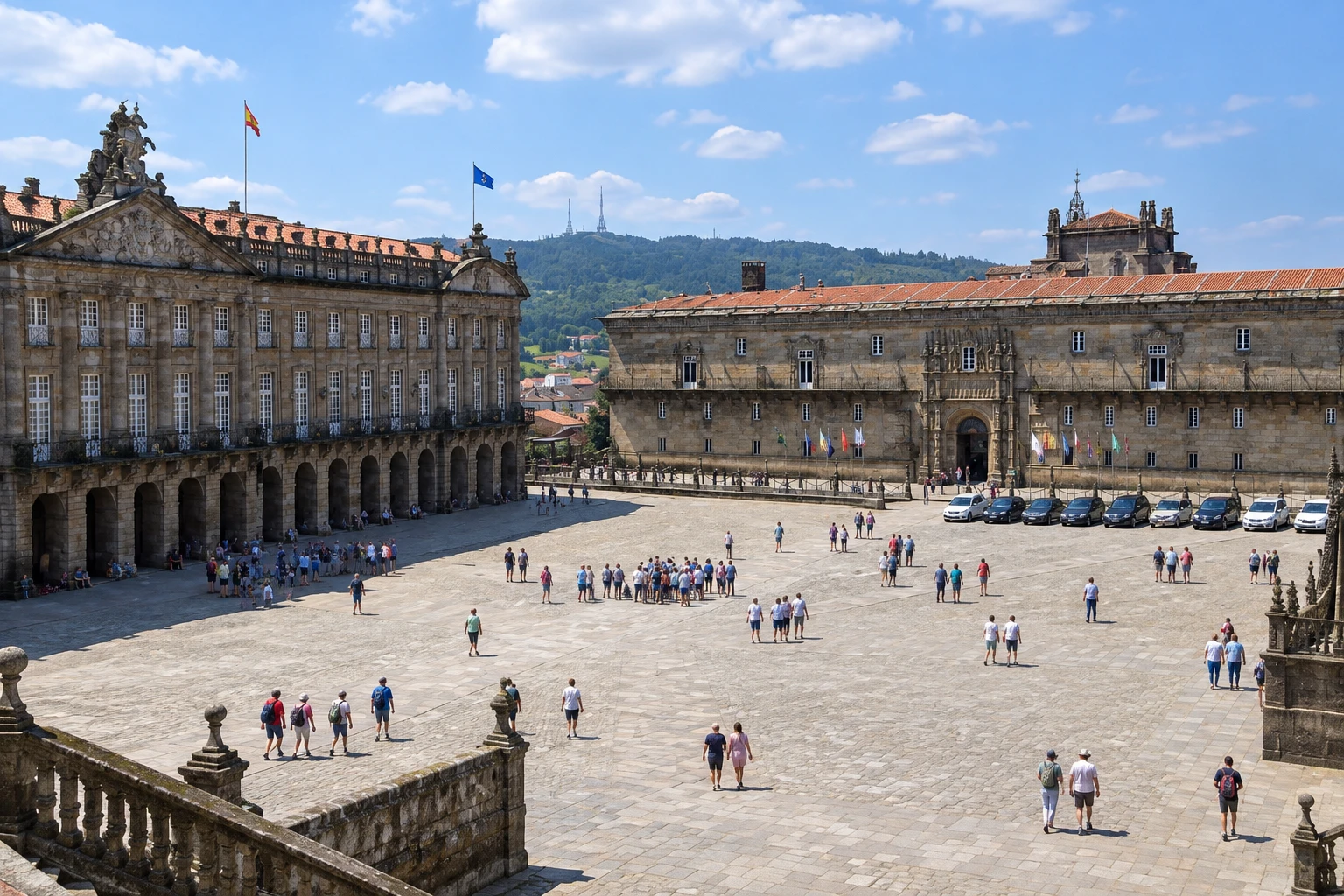
Obradoiro SquareSquare in front of the cathedral's Baroque façade, flanked by the Hostal dos Reis Católicos, the Pazo de Raxoi and the Colexio de San Xerome.
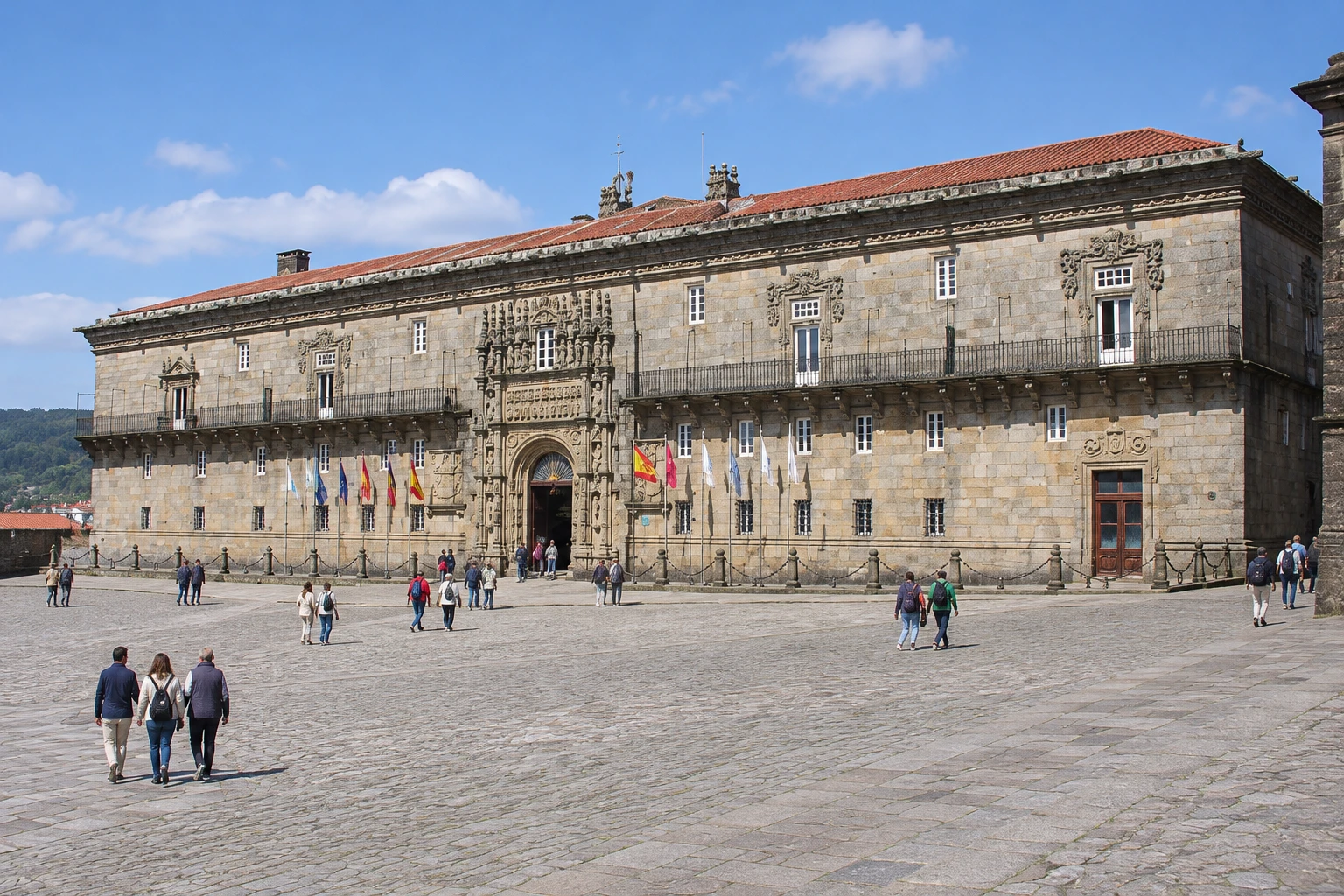
Hostal dos Reis CatólicosFormer pilgrims' hospital founded in 1499 by the Catholic Monarchs on the Praza do Obradoiro, with a plateresque portal and four cloisters, today a hotel in the Paradores chain.
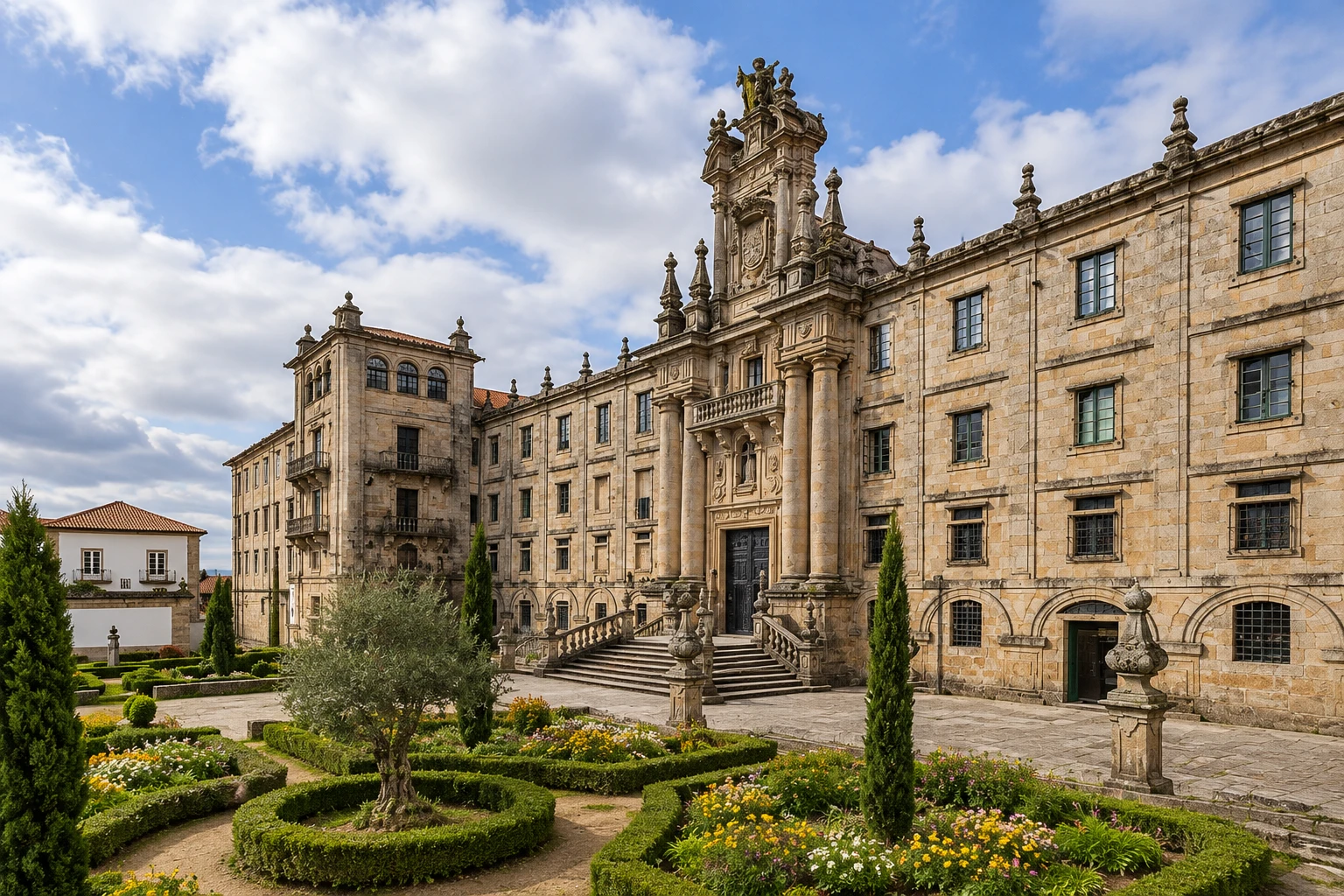
San Martín Pinario MonasteryBenedictine monastery beside the cathedral, with a church featuring a baroque façade, a gilded altarpiece by Casas Novoa, a walnut choir, and a museum of sacred art.
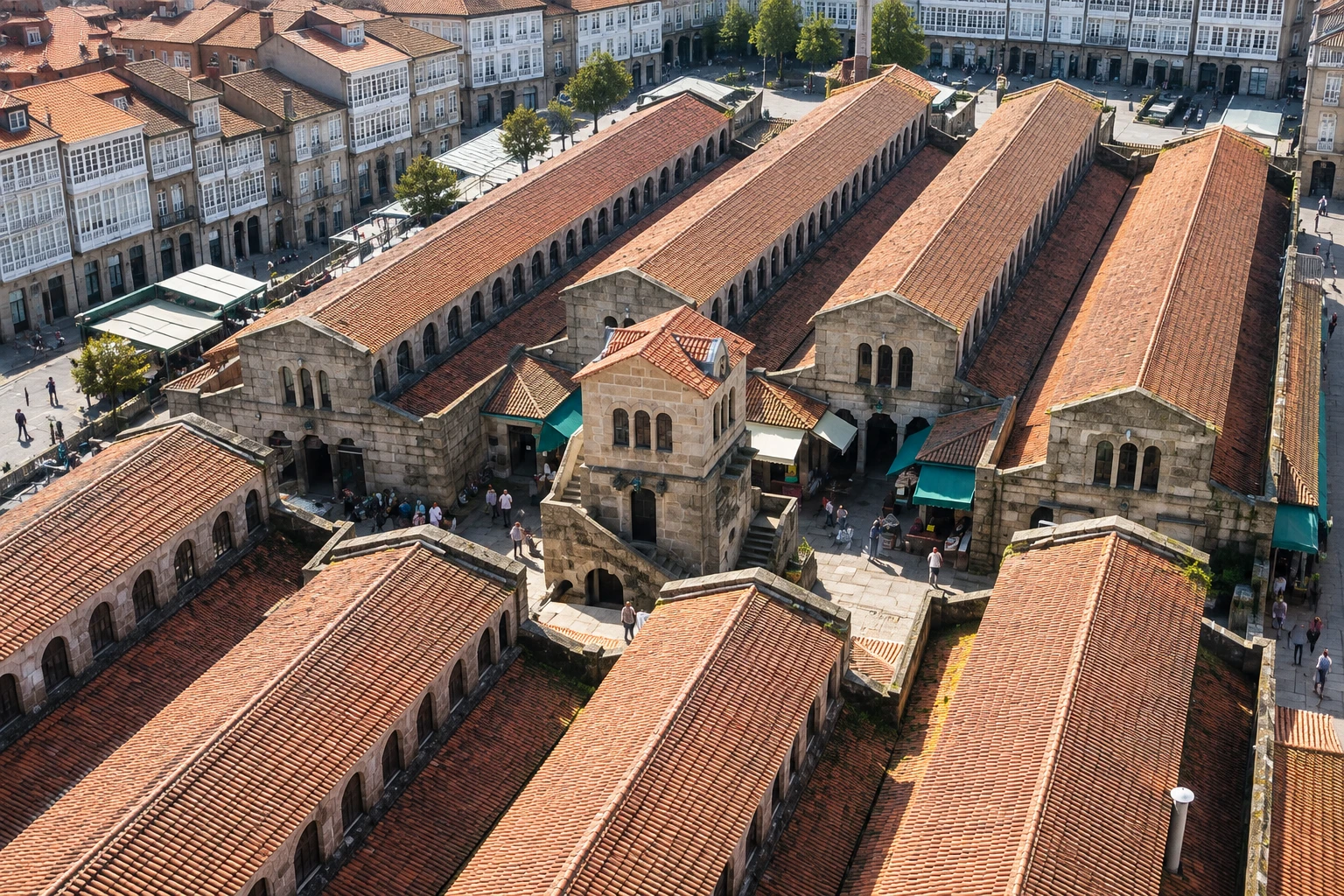
Mercado de Abastos de SantiagoStone market from 1941 in the old quarter, with granite aisles, stalls selling shellfish, fish, cheeses and Galician vegetables, and counters that prepare on the spot what you buy.
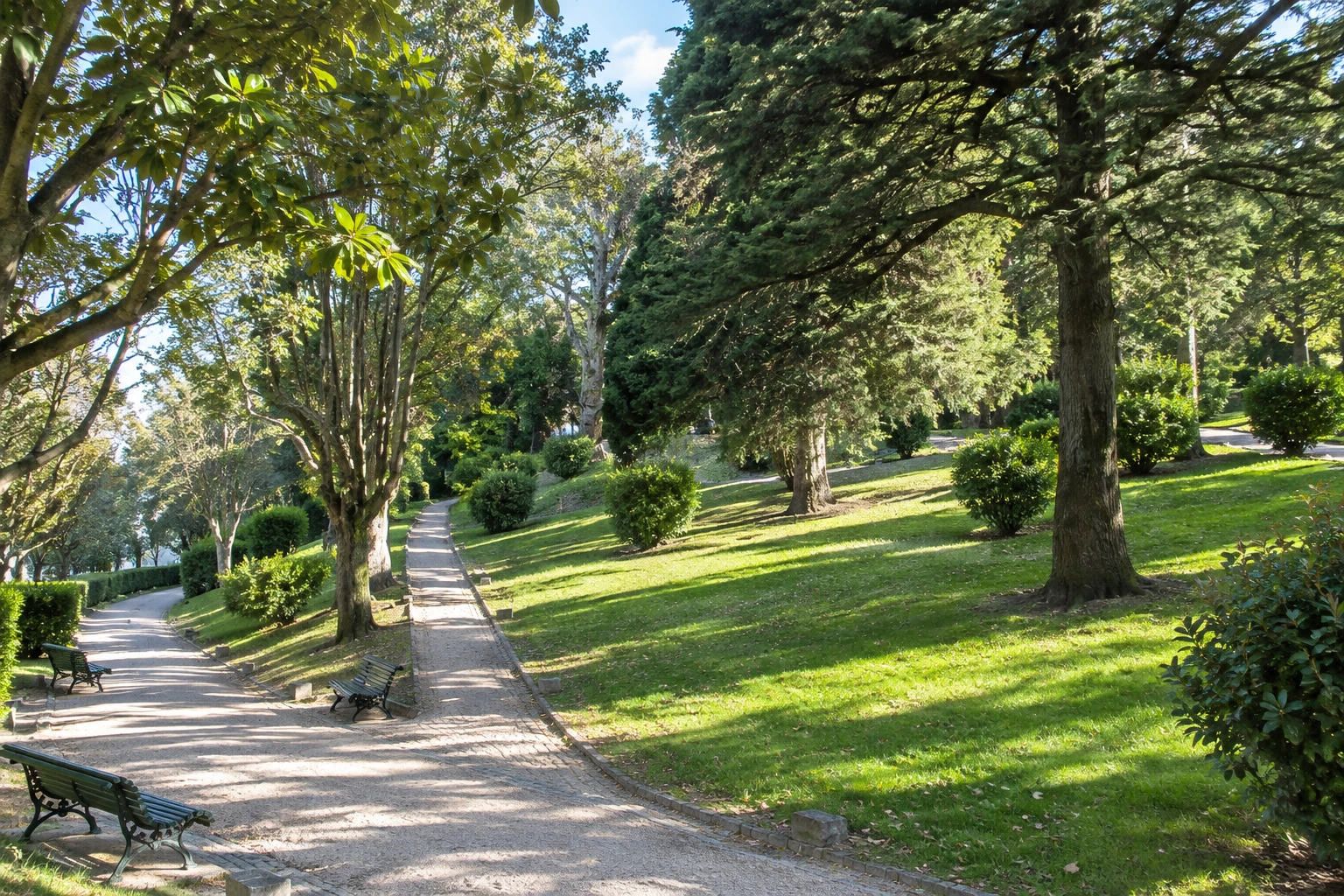
Alameda Park19th‑century park on the edge of the old town, featuring the Paseo da Ferradura, the best‑known view of the cathedral, the statue of the Dúas Marías and an oak grove.
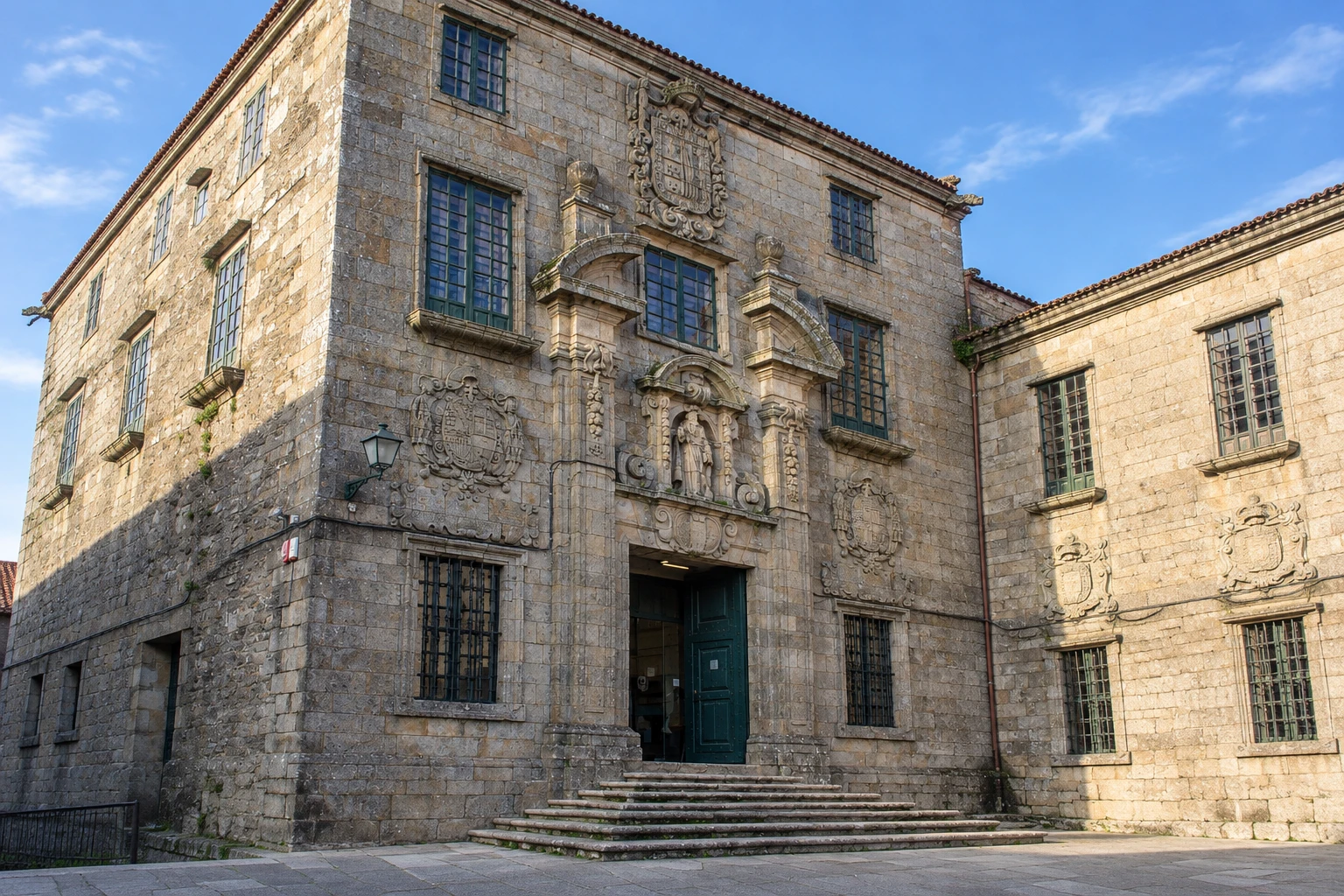
Museum of the Galician PeopleMuseum of Galician culture in the former convent of San Domingos de Bonaval, featuring Domingo de Andrade’s triple helical staircase and the Panteón de Galegos Ilustres, where R...
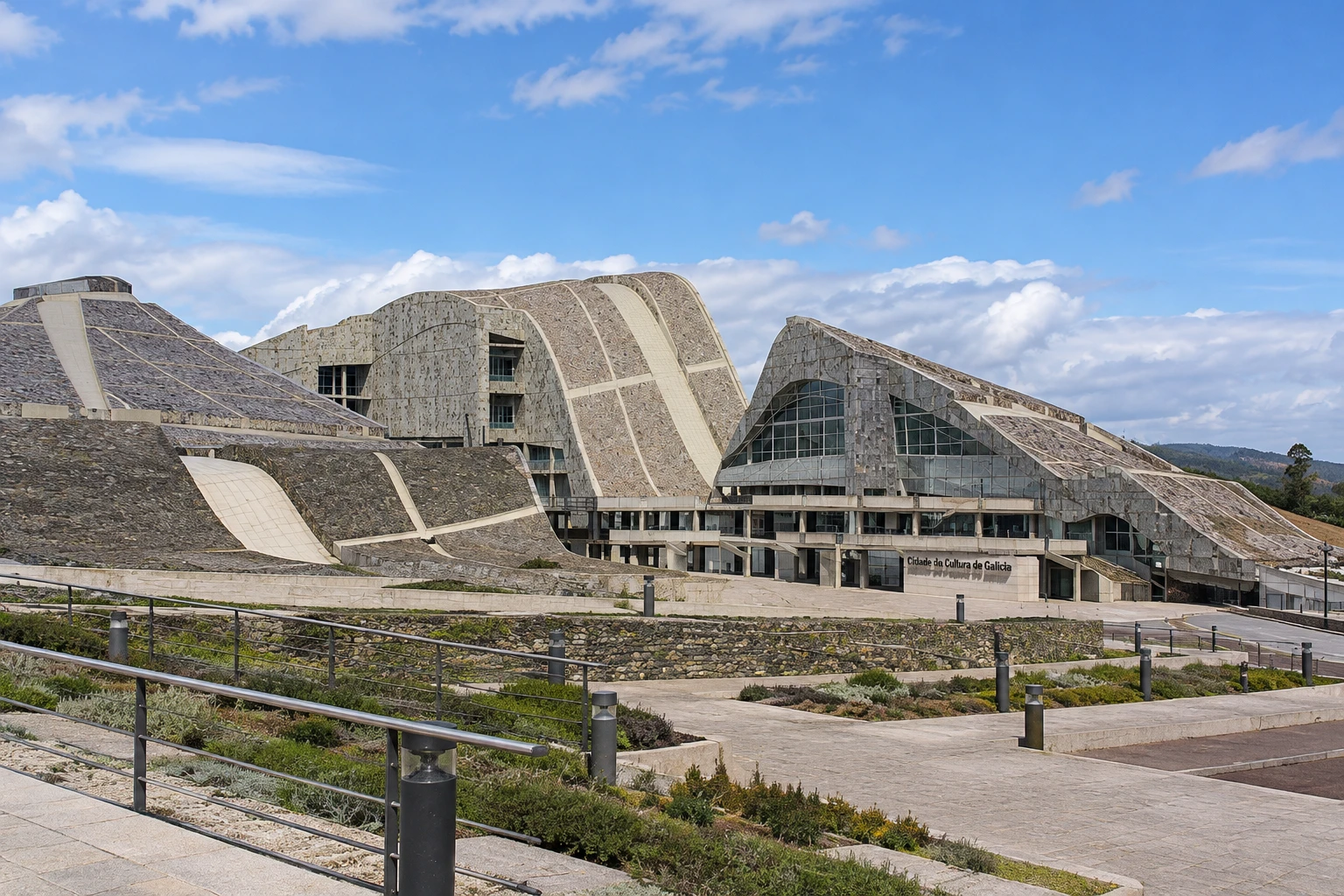
City of Culture of GaliciaPeter Eisenman cultural complex on Monte Gaiás, with stone buildings that mimic waves, a museum, library and the Archive of Galicia, and views over the city.
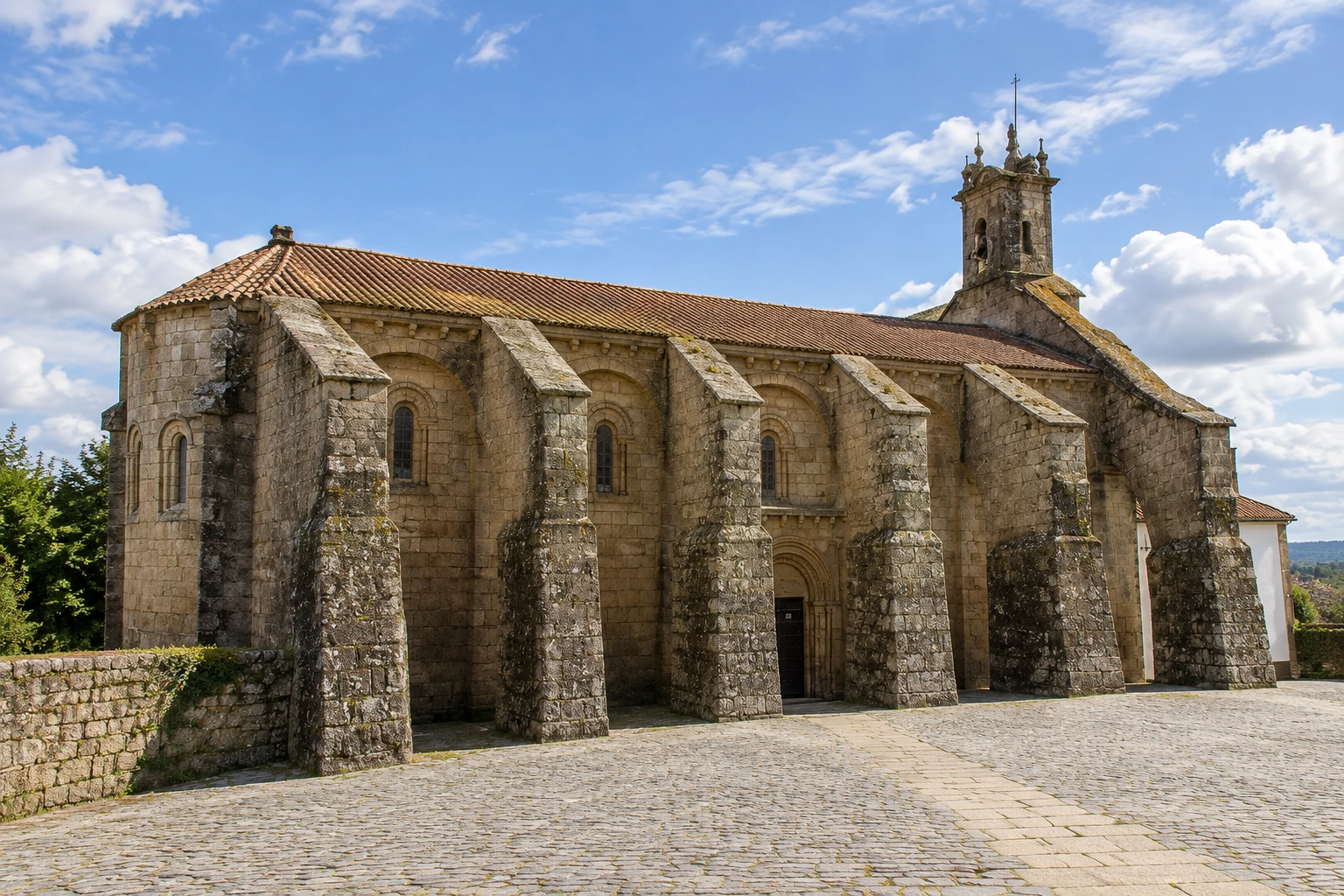
Collegiate Church of Santa María do Sar12th-century Romanesque church on the banks of the Sar River, known for its leaning columns and walls, with a Romanesque cloister and a small museum.
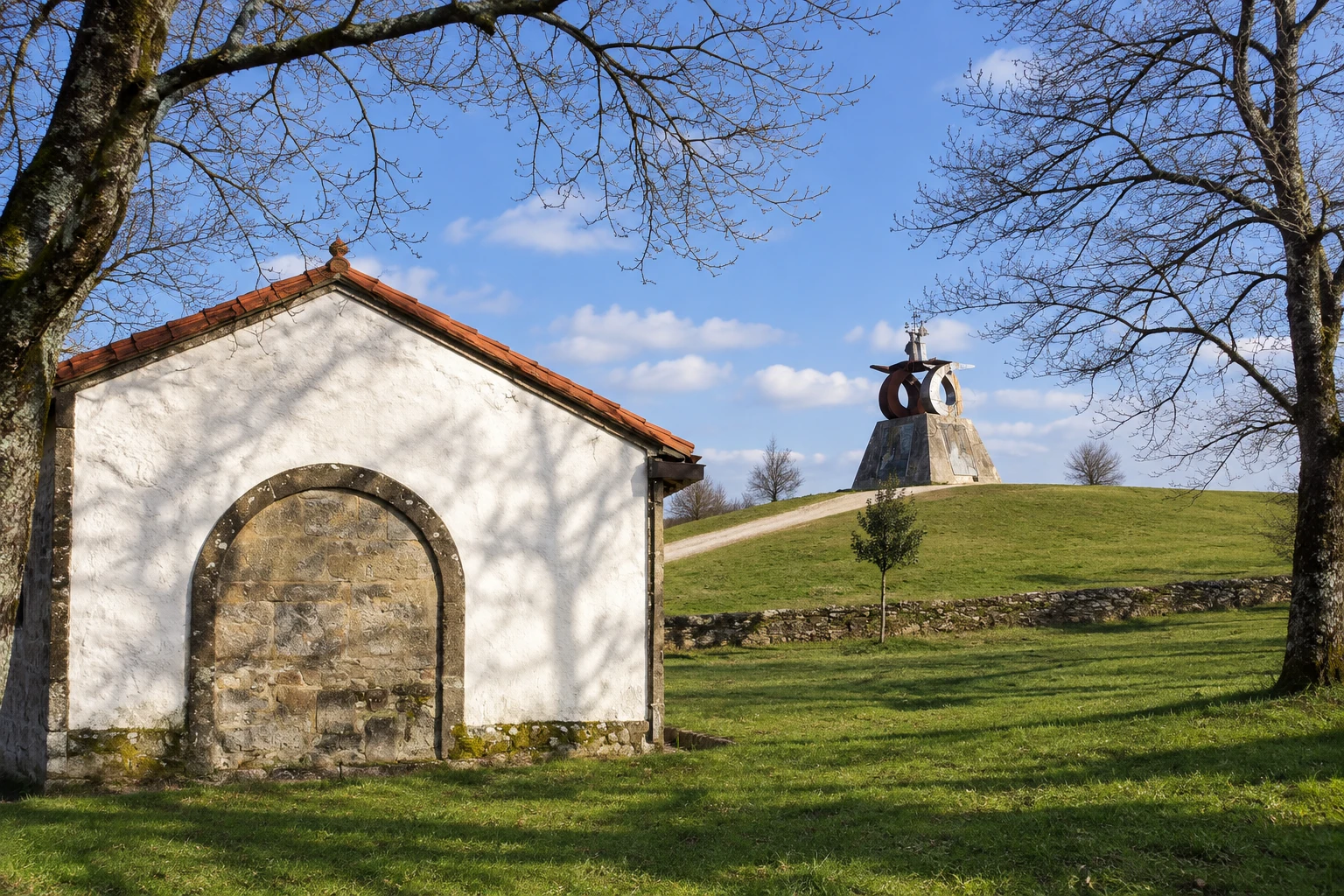
Monte do GozoHill about 5 km from the cathedral, on the French Way, where pilgrims first caught sight of the towers of Santiago.
Romanesque cathedral of the 11th century with a Baroque façade, which houses the tomb attributed to the apostle James, the Pórtico da Glória by Mestre Mateus and the Botafumeiro. End of the Way of St. James.
Square in front of the cathedral's Baroque façade, flanked by the Hostal dos Reis Católicos, the Pazo de Raxoi and the Colexio de San Xerome. It is where pilgrims finish the Way.
Former pilgrims' hospital founded in 1499 by the Catholic Monarchs on the Praza do Obradoiro, with a plateresque portal and four cloisters, today a hotel in the Paradores chain.
Benedictine monastery beside the cathedral, with a church featuring a baroque façade, a gilded altarpiece by Casas Novoa, a walnut choir, and a museum of sacred art.
Stone market from 1941 in the old quarter, with granite aisles, stalls selling shellfish, fish, cheeses and Galician vegetables, and counters that prepare on the spot what you buy.
19th‑century park on the edge of the old town, featuring the Paseo da Ferradura, the best‑known view of the cathedral, the statue of the Dúas Marías and an oak grove.
Museum of Galician culture in the former convent of San Domingos de Bonaval, featuring Domingo de Andrade’s triple helical staircase and the Panteón de Galegos Ilustres, where Rosalía de Castro is buried.
Peter Eisenman cultural complex on Monte Gaiás, with stone buildings that mimic waves, a museum, library and the Archive of Galicia, and views over the city.
Hill about 5 km from the cathedral, on the French Way, where pilgrims first caught sight of the towers of Santiago. It has a monument and a pilgrim hostel.


 Brazil
 Antarctica
 Argentina
 Bolivia
 Chile
 Colombia
 Ecuador
 Falkland Islands (Malvinas)
 French Guiana
 Guyana
 Paraguay
 Peru
 Suriname
 Uruguay
 Venezuela
 Albania
 Austria
 Belgium
 Croatia
 Denmark
 Finland
 France
 Germany
 Greece
 Hungary
 Iceland
 Ireland
 Italy
 Luxembourg
 Norway
 Poland
 Portugal
 Slovakia
 Slovenia
 Sweden
 Switzerland
 the Czech Republic
 the Netherlands
 the United Kingdom
 Turkey
 Bermuda
 Canada
 Greenland
 Mexico
 Saint Pierre and Miquelon
 the United States
 the Dominican Republic
 Japan
 Egypt
 South Africa
 Australia
 Fiji
 New Zealand
 Papua New Guinea