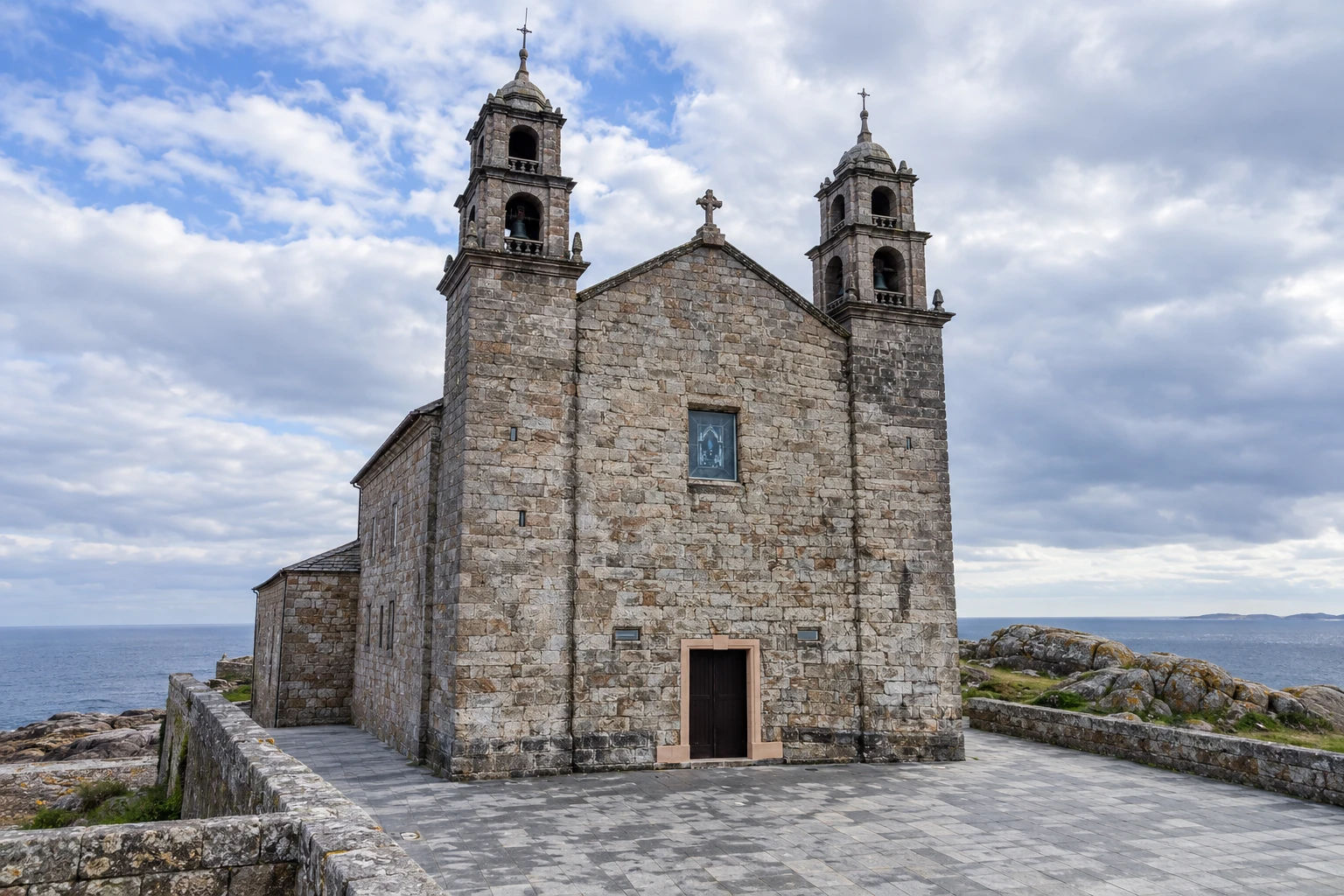
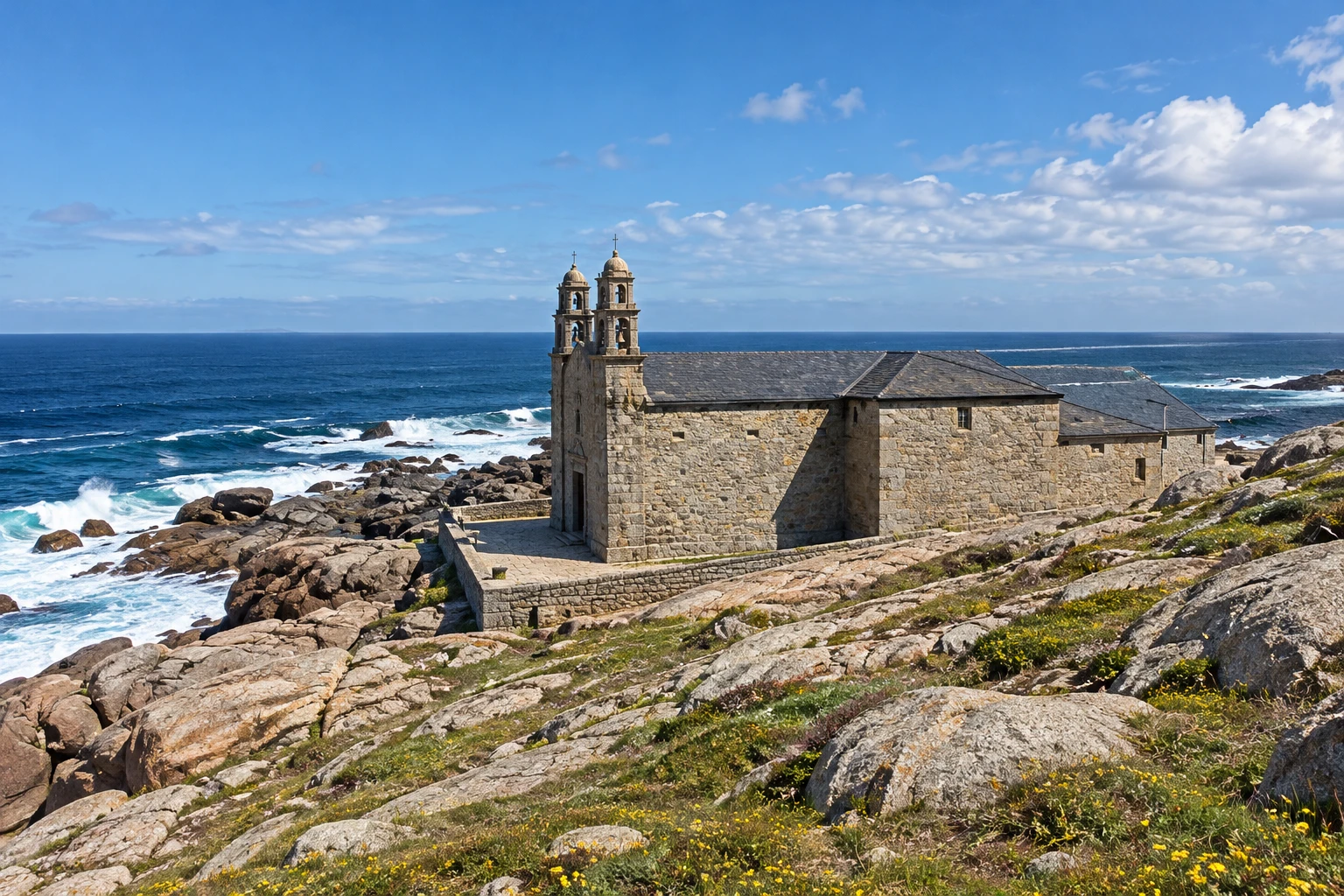
In the photo: Sanctuary of the Virgem da Barca, Muxía
Illustrative images. The pictures in this guide are illustrations based on the real place, not photographs, and may differ from it.
The city
What to expect from Muxía.
Muxía is a fishing village on the Costa da Morte in Galicia, about 80 km from Santiago de Compostela, on a peninsula facing the Atlantic. At the tip stands the sanctuary of the Virgem da Barca, among rocks linked to the legend of the stone boat that is said to have brought the Virgin to the apostle James, and beside it the sculpture A Ferida, a tribute to the volunteers of the Prestige oil spill disaster. The Gothic church of Santa María sits above the village, and about 3 km away is the Romanesque church of Moraime. The municipality includes Cabo Touriñán, the westernmost point of Galicia. Galician and Spanish are spoken.
Baroque sanctuary at the tip of the peninsula of Muxía, facing the sea, next to the rocking stones linked to the legend of the stone boat of the Virgem da Barca; rebuilt after a fire in 2013.
Granite sculpture over 11 meters tall and weighing about 400 tonnes, by Alberto Bañuelos-Fournier, inaugurated in 2003 next to the sanctuary da Barca as a tribute to the volunteers of the Prestige disaster.
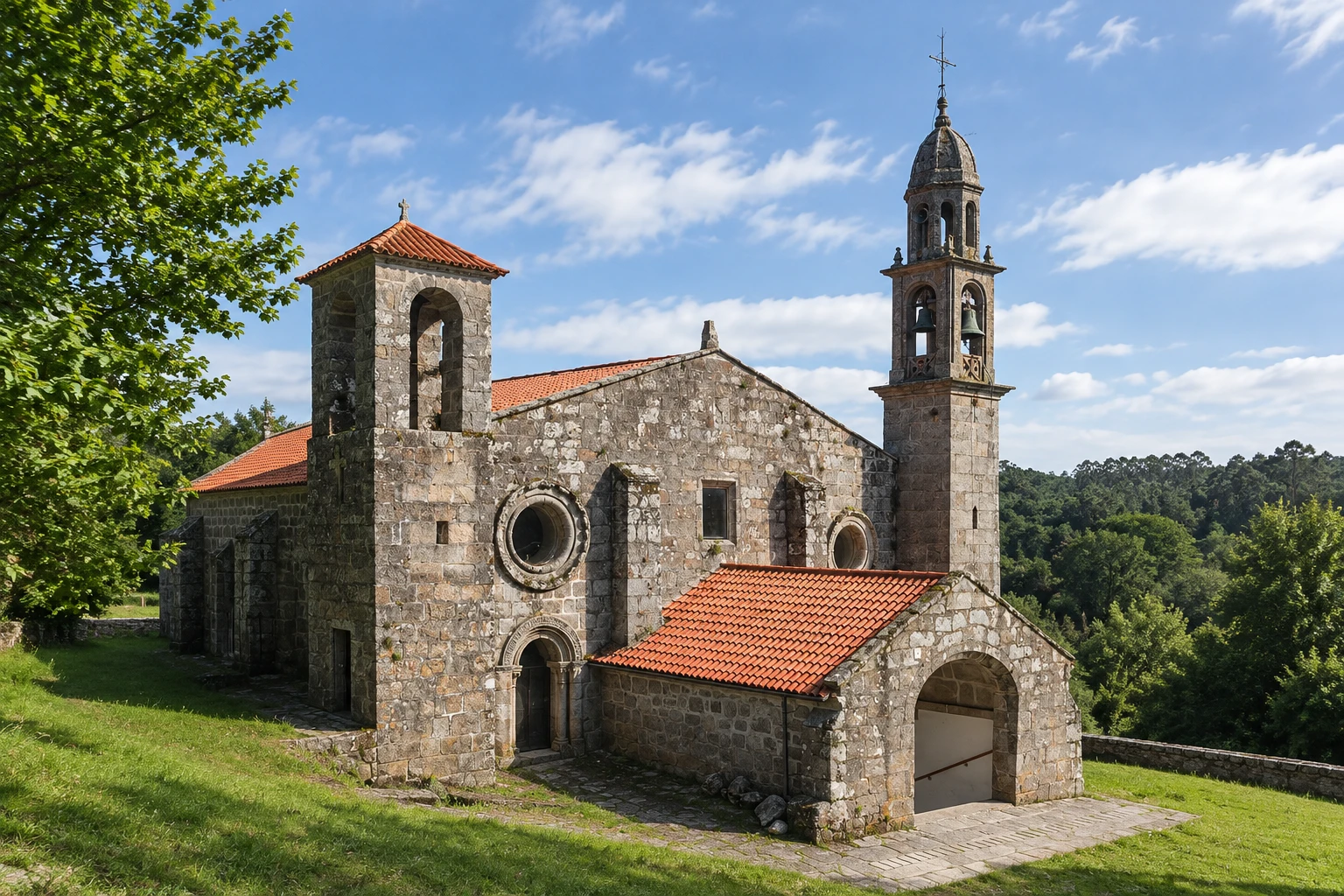
A 14th-century seafaring Gothic church with Romanesque details, located above the village at the foot of the Corpiño hill, a viewpoint over the peninsula and the sanctuary da Barca.
Aeroporto de Santiago de Compostela (Aeropuerto de Santiago-Rosalía de Castro) (SCQ)Santiago de Compostela · 90 km
Estação de trem de Santiago de Compostela (Estación de Santiago de Compostela)Santiago de Compostela · 80 km
Approximate distances. Check flights and bus, train or boat schedules before you travel.
Connections with Brazil are usually via a stopover in another city. Check before you book. The nearest airport is Santiago de Compostela, about 90 km away. There is no train service: buses link Muxía with Santiago and A Coruña, with limited schedules. By car, take the AC-552 and AC-440 roads; it takes about 1h15 from Santiago.
How many days
Half a day is enough for the sanctuary of the Virgem da Barca, A Ferida, the church of Santa María and the church of Moraime. With a full day you can include Cabo Touriñán. Many people combine Muxía and Fisterra in the same day, starting from Santiago.
When to go
From June to September it usually rains less and the days are long. The pilgrimage of the Virgem da Barca takes place on the first Sunday after September 8 and fills the village. On the Costa da Morte the weather changes quickly, with wind and fog at any time of year. The seasons are opposite to Brazil; Spain is 4 to 5 hours ahead of Brasília depending on the time of year, and meals are eaten later than in Brazil.
The seasons shown are the most usual ones; nature doesn't always follow the calendar.
Do you need a car?
Practical info. The village and the sanctuary are walked on foot, but Moraime is about 3 km away and Cabo Touriñán about 15 km by road. Buses have limited timetables.
Suggested itinerary
An order that works
Built with the places on this page. No rush: it's paced so you have time to see them.
One day in Muxía
manhã
Church of Moraime
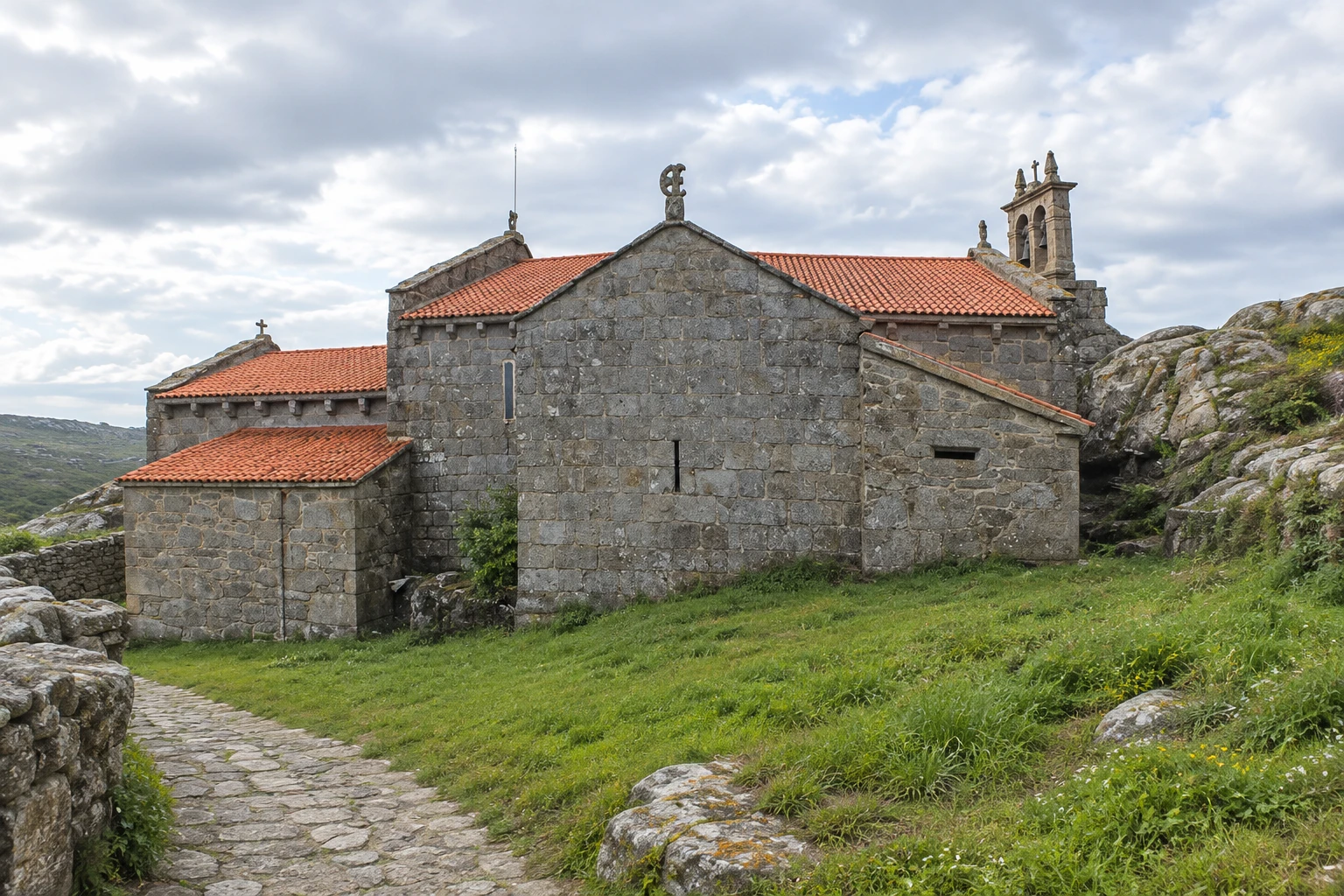
Start with the Romanesque church of San Xián de Moraime, about 3 km from the village, on the road that approaches it.
manhã
Santa María and the Corpiño
In the village, climb up to the church of Santa María and to the Corpiño hill just above it for views over the peninsula.
tarde
Virgem da Barca and A Ferida
Walk down to the sanctuary of the Virgem da Barca, among the legendary rocks, and continue to the sculpture A Ferida.
fim de tarde
Cabo Touriñán
Drive to Cabo Touriñán for the sunset at the westernmost point of Galicia.
Check before you go. Opening hours and days change, and places may close for renovations, holidays or events. This itinerary is a suggestion from Cidade Turismo, not a commitment: plan yours by checking directly with each place you intend to visit.
Before you go
Frequently asked questions
What is the legend of the Virgem da Barca?
According to tradition, the Virgin arrived in a stone boat to encourage the apostle James in his preaching in Galicia, and the stones on the coast are said to be the boat, the sail and the rudder.
Can you walk from Santiago to Muxía?
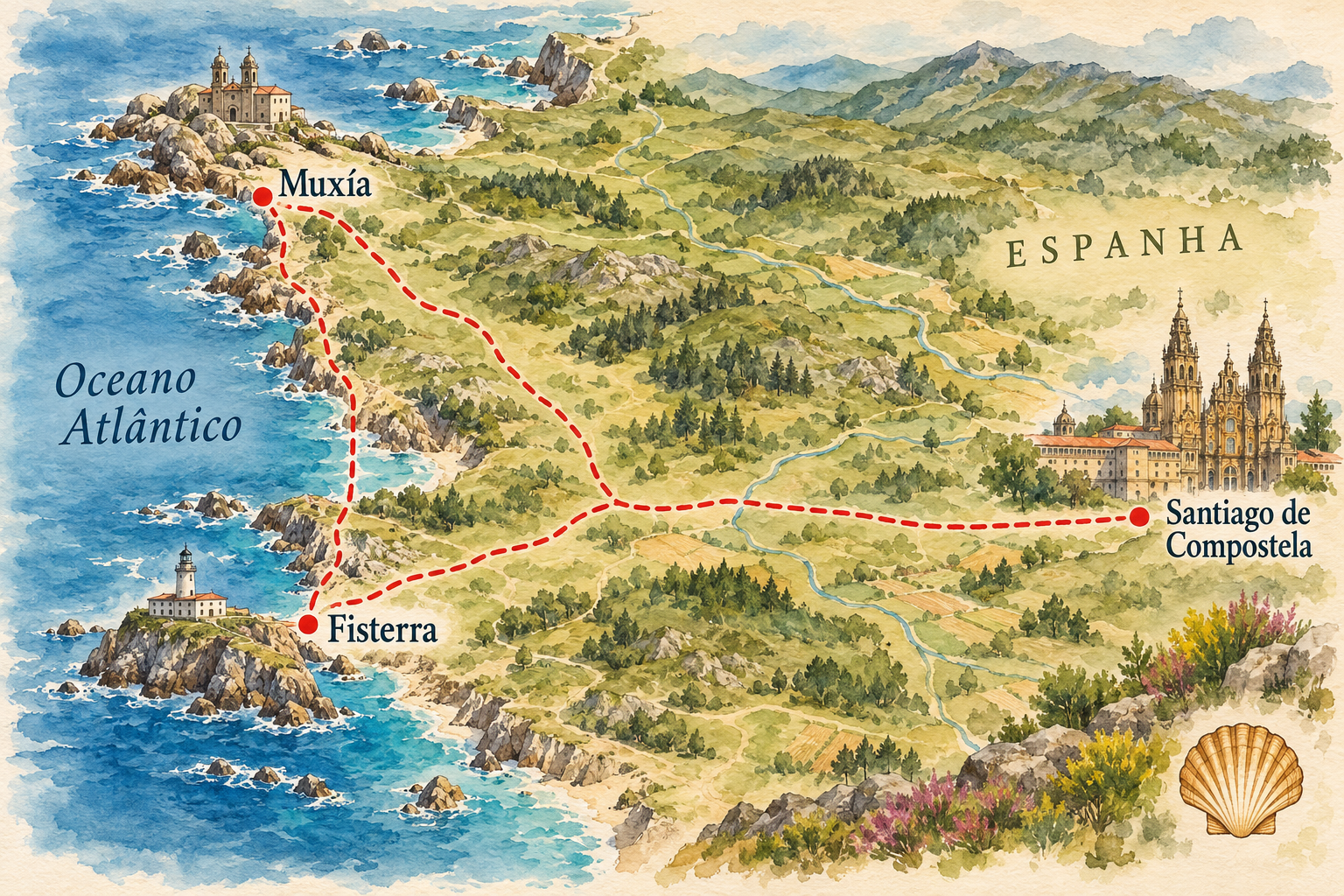
Yes, via the route to Fisterra and Muxía, generally in three or four days. There is also a stretch between Fisterra and Muxía of about 30 km.
When is the pilgrimage of the Virgem da Barca?
On the first Sunday after September 8.
What is A Ferida?
A granite sculpture over 11 meters tall, a tribute to the volunteers who cleaned the coast after the Prestige oil tanker disaster in 2002.
After the cathedral, the sea: on foot from Santiago de Compostela to Cape Finisterre, the old end of the world, and to the sanctuary of Muxía, on the Costa da Morte.
Illustrative map, not to scale. Tap a city to open its page.


 Brazil
 Antarctica
 Argentina
 Bolivia
 Chile
 Colombia
 Ecuador
 Falkland Islands (Malvinas)
 French Guiana
 Guyana
 Paraguay
 Peru
 Suriname
 Uruguay
 Venezuela
 Austria
 Belgium
 Croatia
 Denmark
 Finland
 France
 Germany
 Greece
 Hungary
 Iceland
 Ireland
 Italy
 Luxembourg
 Norway
 Poland
 Portugal
 Slovakia
 Slovenia
 Sweden
 Switzerland
 the Czech Republic
 the Netherlands
 the United Kingdom
 Turkey
 Bermuda
 Canada
 Greenland
 Mexico
 Saint Pierre and Miquelon
 the United States
 the Dominican Republic
 Japan
 Egypt
 South Africa
 Australia
 Fiji
 New Zealand
 Papua New Guinea