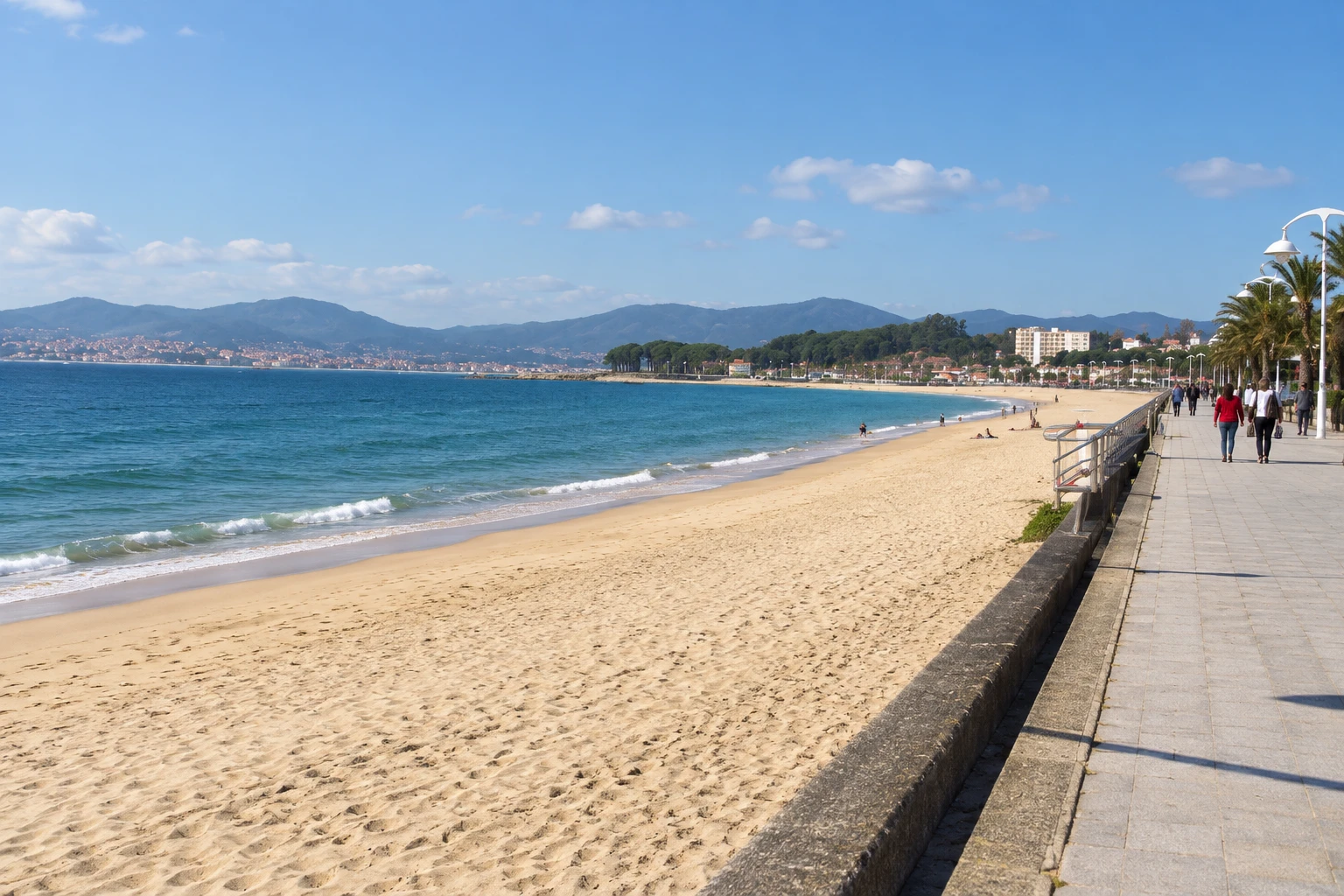
Illustrative images. The pictures in this guide are illustrations based on the real place, not photographs, and may differ from it.
The city
What to expect from Vigo.
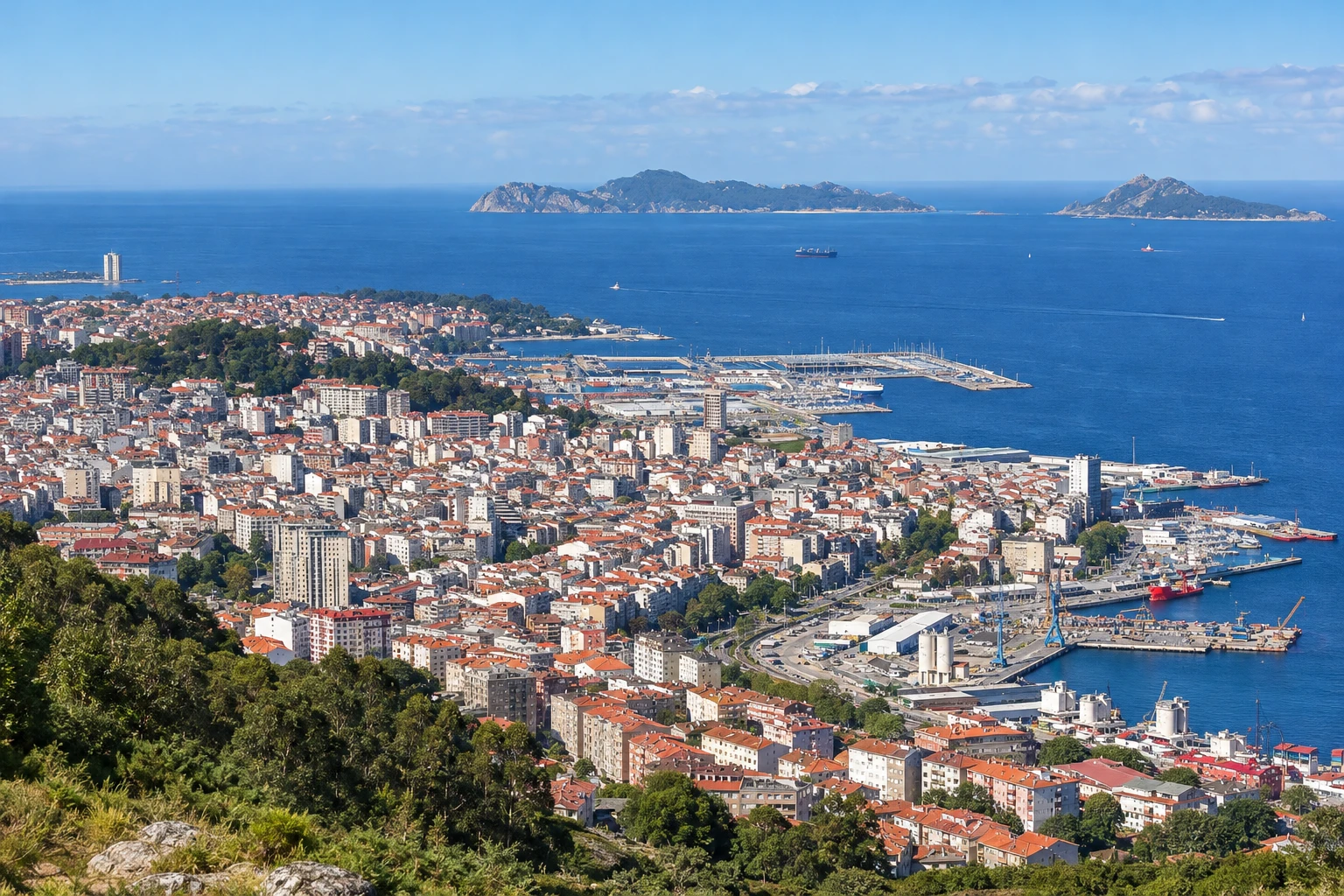
Vigo is the largest city in Galícia and a major fishing port on the ría de Vigo, near the border with Portugal. From the port boats sail to the Illas Cíes, inside a national park. The Casco Vello has the rua das ostras and the co-cathedral, and the Monte do Castro overlooks the ría. The Caminho Português da Costa passes through Vigo, and the Celta train links the city with Porto.
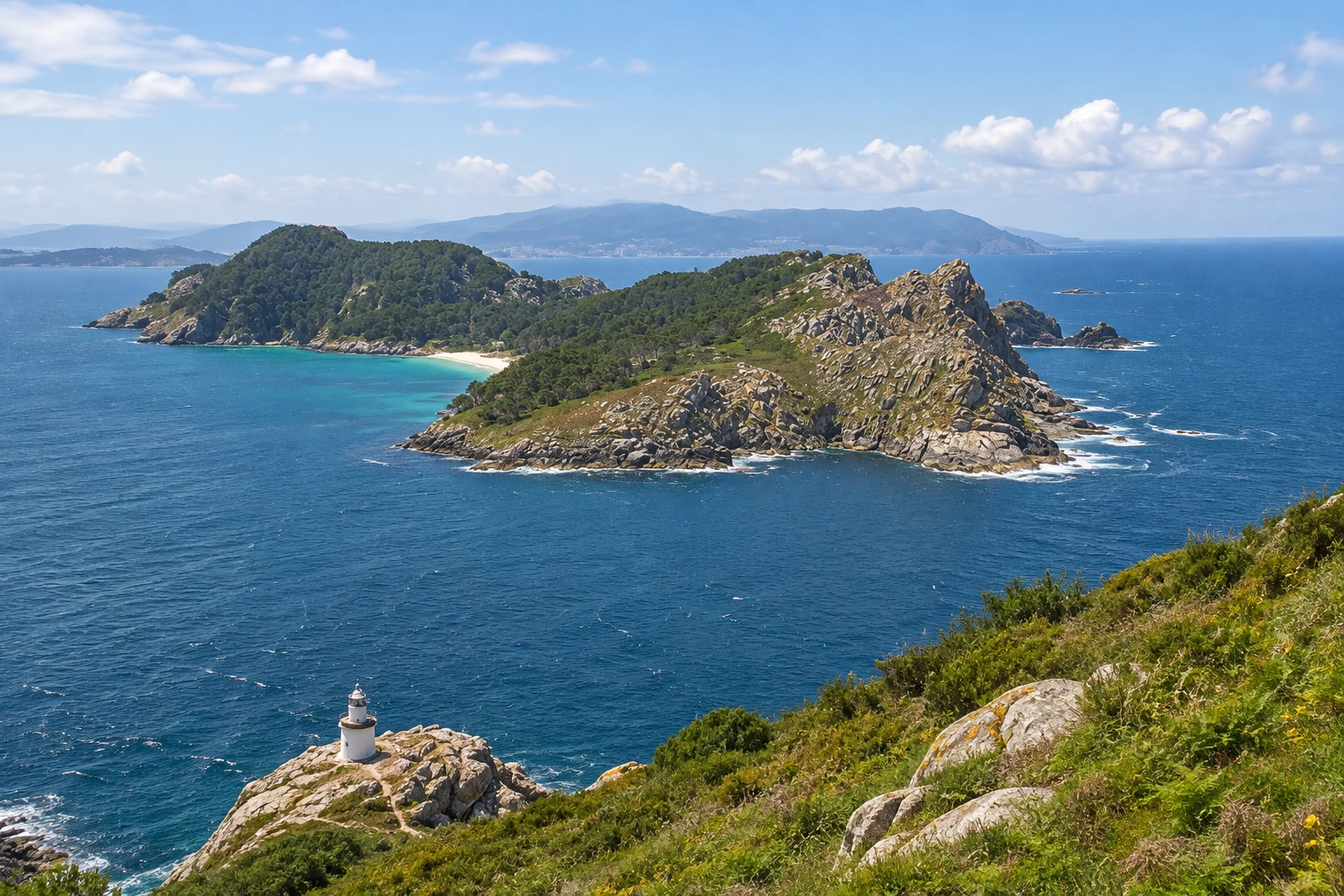
Archipelago at the entrance of the ría de Vigo, part of the Parque Nacional das Illas Atlánticas, with white-sand beaches, cliffs, trails and a lighthouse. In season, visiting requires prior authorization.
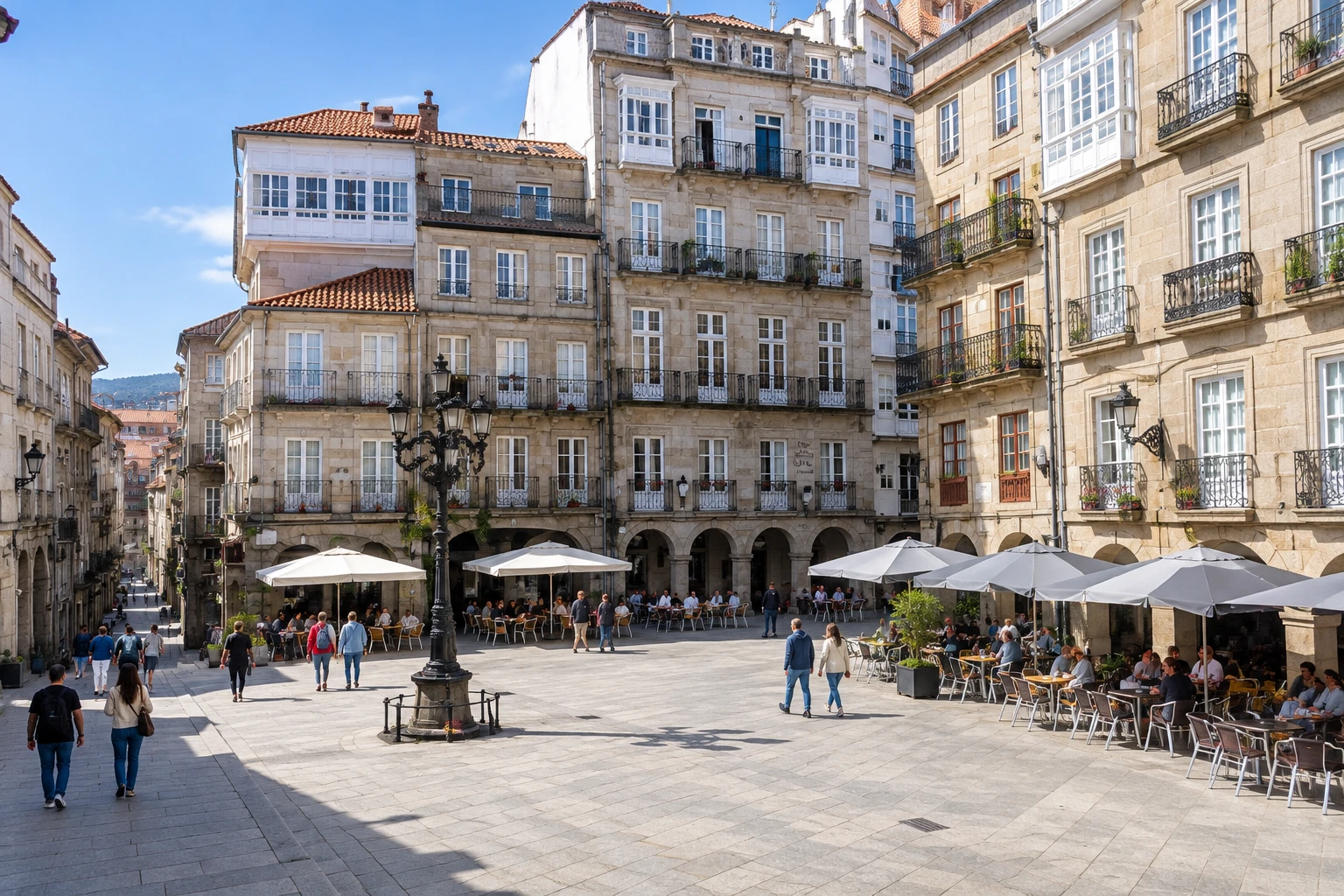
Old quarter beside the port, with stone houses, the neoclassical co-cathedral, the Praza da Constitución and the Rúa da Pedra, where ostreiras shuck oysters on the spot.
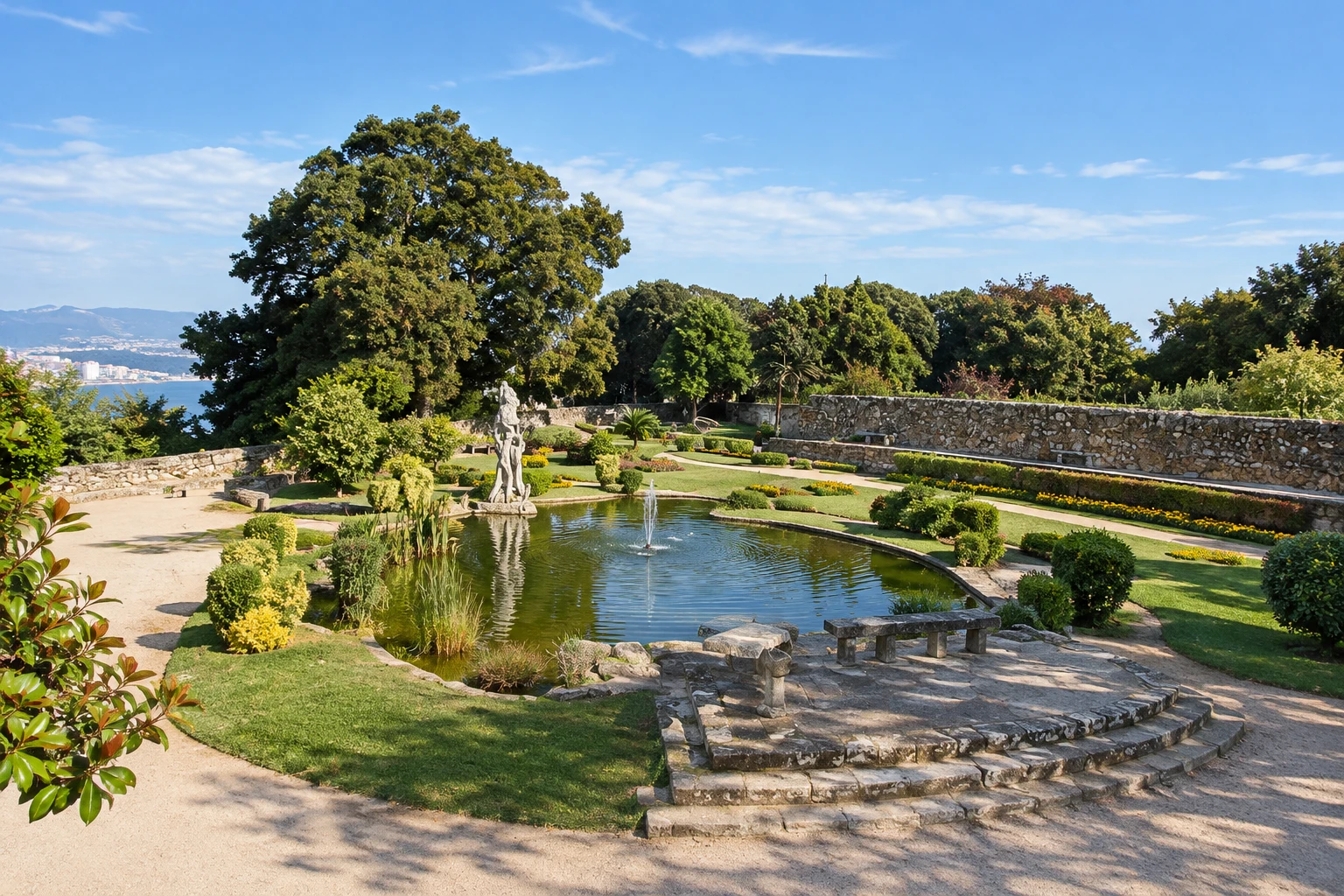
Hill in the centre of Vigo with a park, remains of a 17th-century fortress, a reconstructed castro and viewpoints over the ria, the port, the Rande bridge and the Illas Cíes.
Aeroporto Francisco Sá Carneiro (OPO)Porto (Portugal) · 140 km
Estación de Vigo-Urzáiz1 km
Estación de Vigo-Guixar1 km
Approximate distances. Check flights and bus, train or boat schedules before you travel.
Flights to Brazil usually require a connection in another city. Check before buying. Vigo airport is 9 km away, with a bus to the city center. From Porto, the Celta train takes about 2h30 to Vigo-Guixar station; in some periods part of the route is done by bus due to works on the line, check. From Santiago the train takes about 1 hour to Vigo-Urzáiz; from Madrid about 4h30.
How many days
One day for the Casco Vello, the Monte do Castro and Samil beach with the Museo do Mar. The second day is for the Illas Cíes, in season, or for Baiona and Tui. Those walking the Caminho Português usually spend one night.
When to go
From June to September the weather is usually best and boats to the Cíes run regularly. During Holy Week and from mid-May to mid-September, visiting the islands requires prior authorization. The rest of the year it rains more, but the city remains lively.
The seasons shown are the most usual ones; nature doesn't always follow the calendar.
Do you need a car?
You don’t need a car for the center, the urban beaches or the boats to the Cíes, which depart from the port in the center. Urban buses go to Samil and the Museo do Mar. A car helps for Baiona, Tui and the Rías Baixas, although there are buses.
Suggested itinerary
An order that works
Built with the places on this page. No rush: it's paced so you have time to see them.
One day in Vigo
manhã
Casco Vello
Start at the co-cathedral and the squares of the Casco Vello, walking down to the Rúa da Pedra.
tarde
Oysters and port
Have oysters on the Rúa da Pedra and walk along the port to the statue of Julio Verne.
fim de tarde
Monte do Castro
Climb Monte do Castro to see the ría, the Rande bridge and the Cíes in the distance.
noite
Príncipe
End the day on the Rúa do Príncipe and have a seafood dinner in the center.
2 days in Vigo
Day 1
manhã
Casco Vello
Co-cathedral, Praza da Constitución and the cobbled streets of the old quarter.
tarde
Rúa da Pedra
Oysters and Albariño wine at the tables on the Rúa da Pedra.
fim de tarde
Monte do Castro
Monte do Castro viewpoint, with the remains of the fortress and views over the ría.
noite
Center
Stroll along the Rúa do Príncipe and dine in the center.
Day 2
manhã
Illas Cíes
Early boat from the port to the Cíes, with authorization requested beforehand in season, and trail to the lighthouse.
tarde
Praia de Rodas
Bring lunch and spend the afternoon on the praia de Rodas, between the islands Monteagudo and do Faro.
fim de tarde
Return and Samil
Last boat back and, if time allows, late afternoon at Samil beach.
noite
Bouzas
Dinner in the seafaring neighborhood of Bouzas, near the port.
Check before you go. Opening hours and days change, and places may close for renovations, holidays or events. This itinerary is a suggestion from Cidade Turismo, not a commitment: plan yours by checking directly with each place you intend to visit.
Before you go
Frequently asked questions
How to go from Porto to Vigo by train?
By the Celta train, which links Porto-Campanhã station to Vigo-Guixar in about 2h30, with few departures per day. In some periods the section between Valença and Vigo is done by bus due to works; check with CP or Renfe.
Do you need authorization for the Illas Cíes?
During Holy Week and from mid-May to mid-September, yes: authorization from the Xunta de Galicia must be requested online, free of charge, before buying the boat ticket, and there is a daily visitor limit. Check the rules for the year.
Is Vigo on the Camino de Santiago?
Yes. The Caminho Português da Costa goes through Vigo, coming from Baiona, and continues to Redondela, where it meets the inland Caminho Português coming from Tui.
Where to eat oysters in Vigo?
On the Rúa da Pedra, in the Casco Vello, where ostreiras shuck oysters on the spot and nearby restaurants serve them with Albariño.
Can you go from Vigo to Portugal?
Yes. Valença, on the other side of the river Minho, is about 35 km away by car, train or bus. Bring your passport.
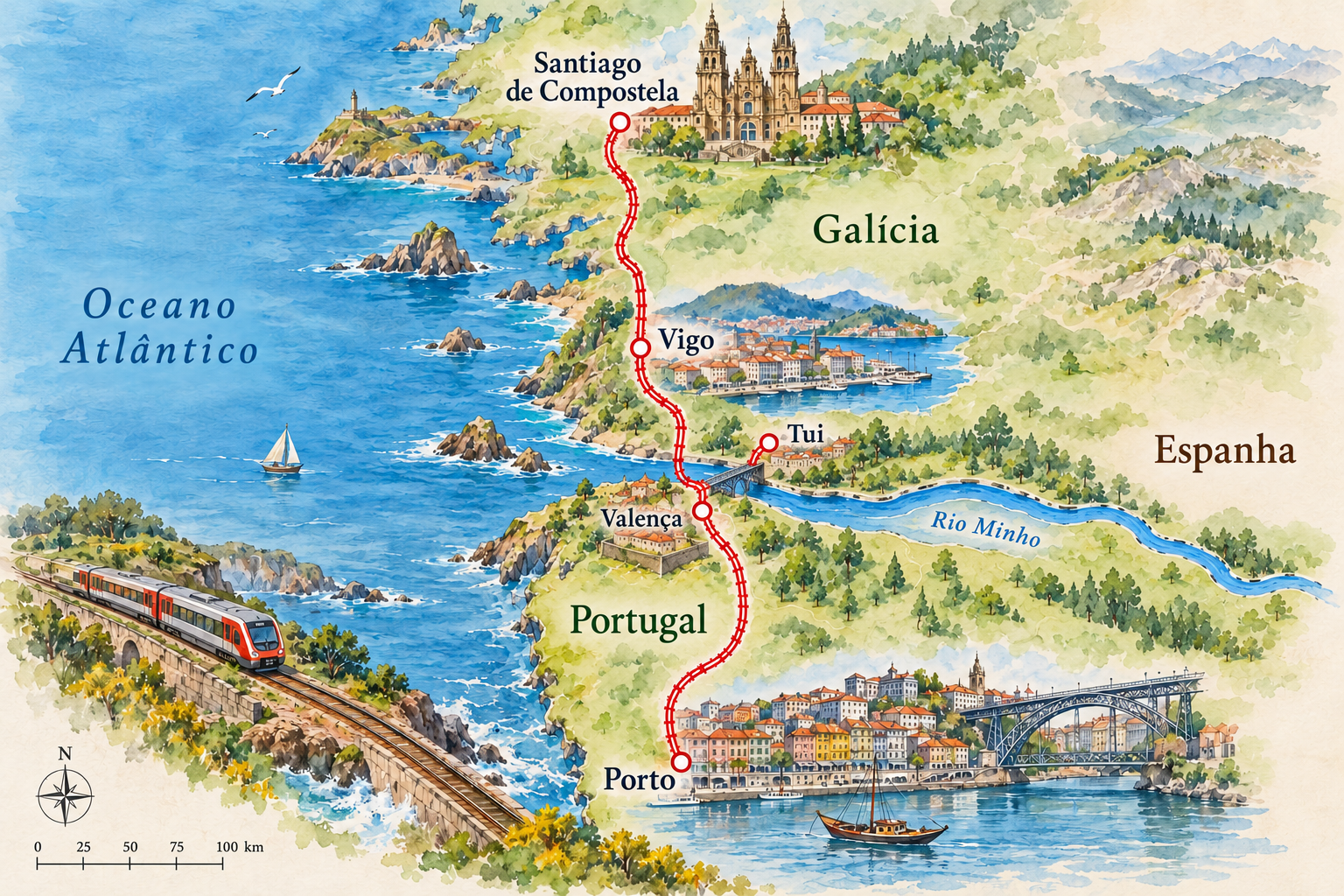
Vigo is part of the Porto–Vigo–Santiago de Compostela by train
From Porto to Galicia by train: the Celta crosses the Minho to Vigo, and a regional train takes you to Santiago de Compostela in about an hour.
Illustrative map, not to scale. Tap a city to open its page.
Cross-border routes
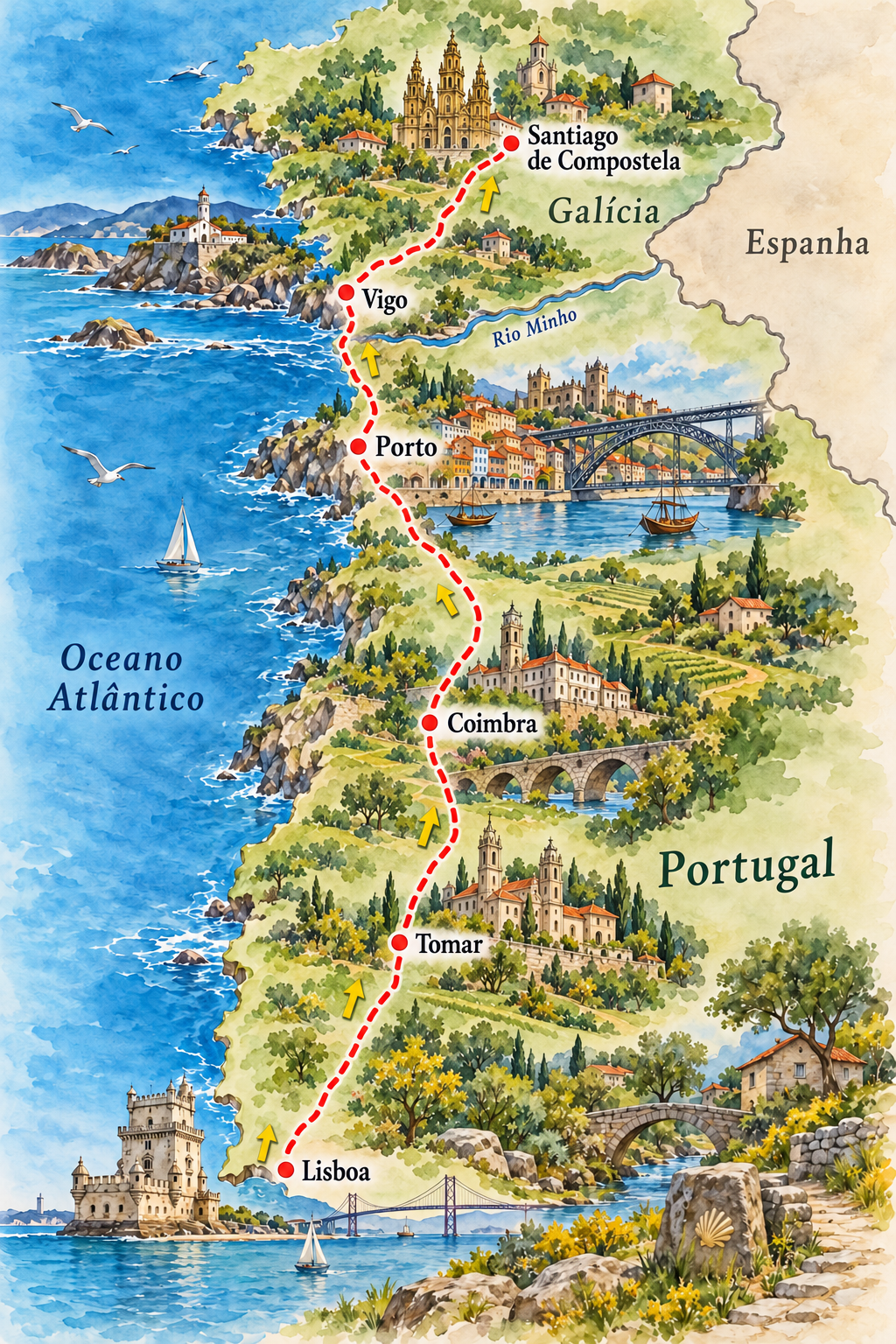
Vigo is part of the Portuguese Way to Santiago on foot
On foot from Portugal to Santiago de Compostela: the pilgrimage route that starts in Lisbon or Porto, follows yellow arrows and ends at Obradoiro Square.
Illustrative map, not to scale. Tap a city to open its page.
Cross-border routes
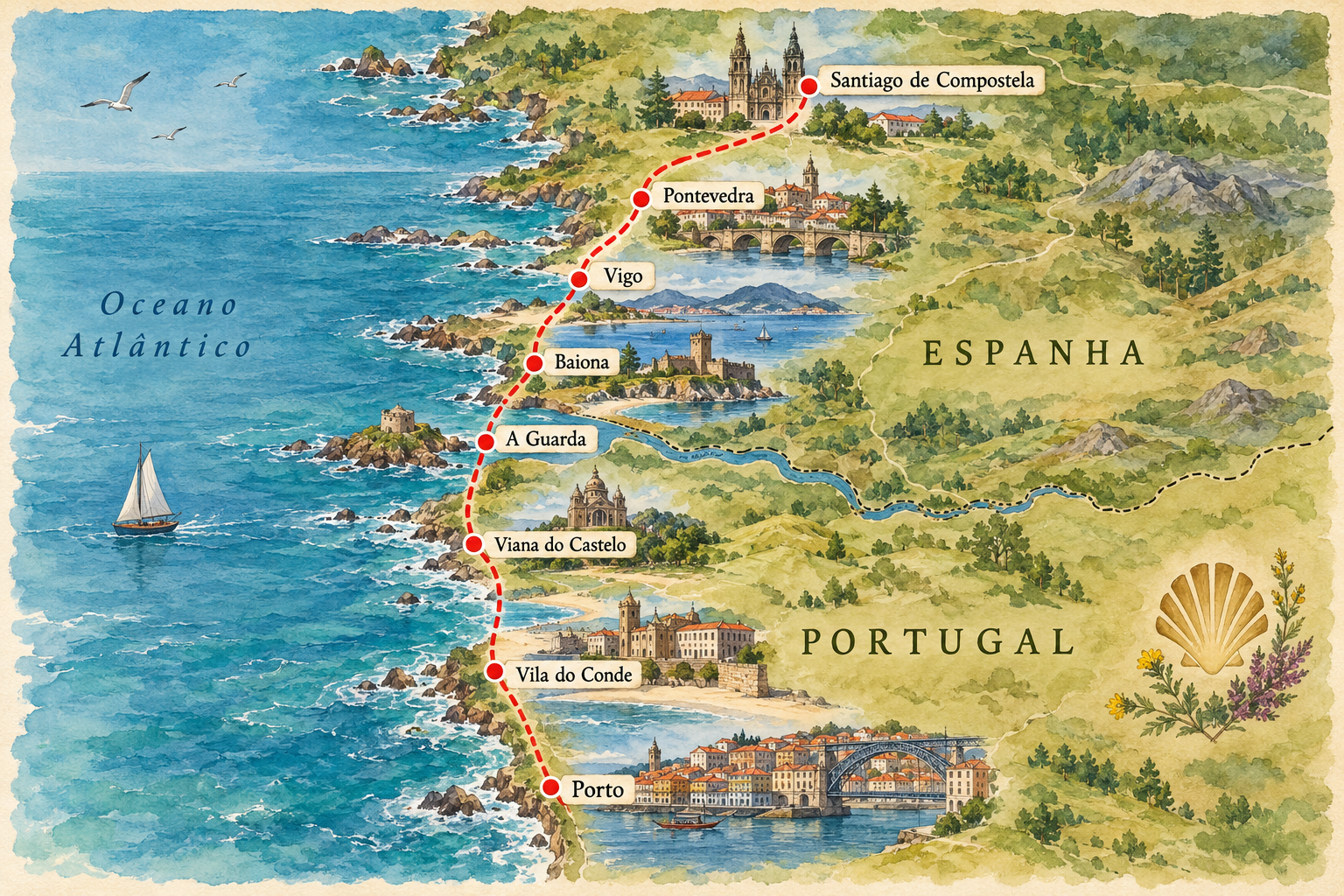
Vigo is part of the Portuguese Coastal Way on foot
The Camino de Santiago along the Atlantic: from Porto to Galicia via the coast, through Vila do Conde, Viana do Castelo, A Guarda, Baiona and Vigo, ending at Santiago Cathedral.
Illustrative map, not to scale. Tap a city to open its page.


 Brazil
 Antarctica
 Argentina
 Bolivia
 Chile
 Colombia
 Ecuador
 Falkland Islands (Malvinas)
 French Guiana
 Guyana
 Paraguay
 Peru
 Suriname
 Uruguay
 Venezuela
 Austria
 Belgium
 Croatia
 Denmark
 Finland
 France
 Germany
 Greece
 Hungary
 Iceland
 Ireland
 Italy
 Luxembourg
 Norway
 Poland
 Portugal
 Slovakia
 Slovenia
 Sweden
 Switzerland
 the Czech Republic
 the Netherlands
 the United Kingdom
 Turkey
 Bermuda
 Canada
 Greenland
 Mexico
 Saint Pierre and Miquelon
 the United States
 the Dominican Republic
 Japan
 Egypt
 South Africa
 Australia
 Fiji
 New Zealand
 Papua New Guinea