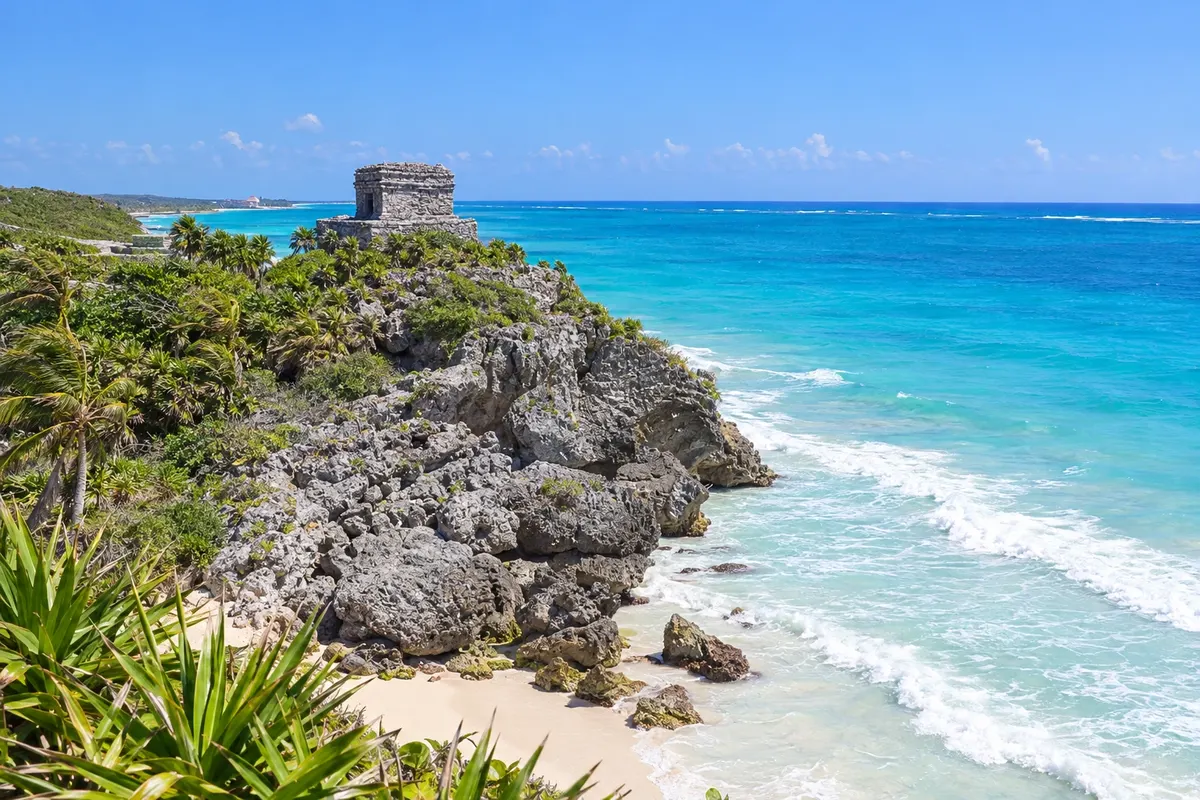
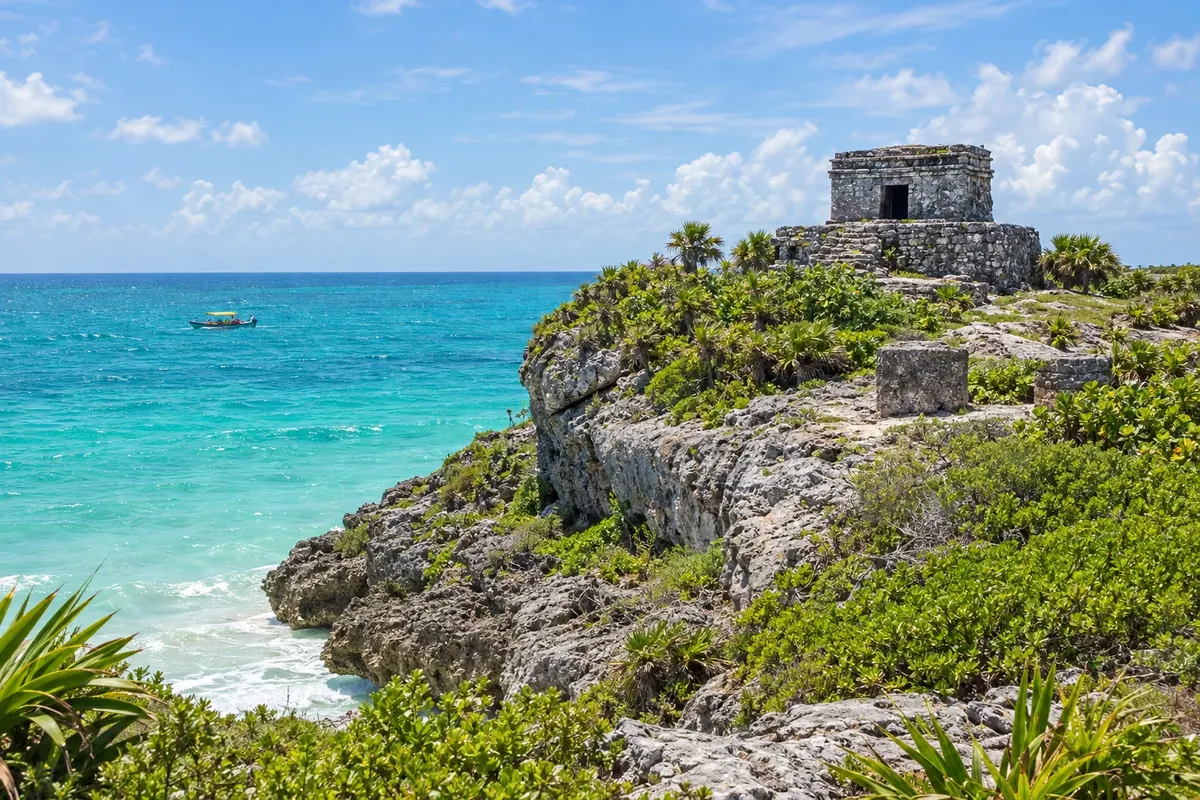
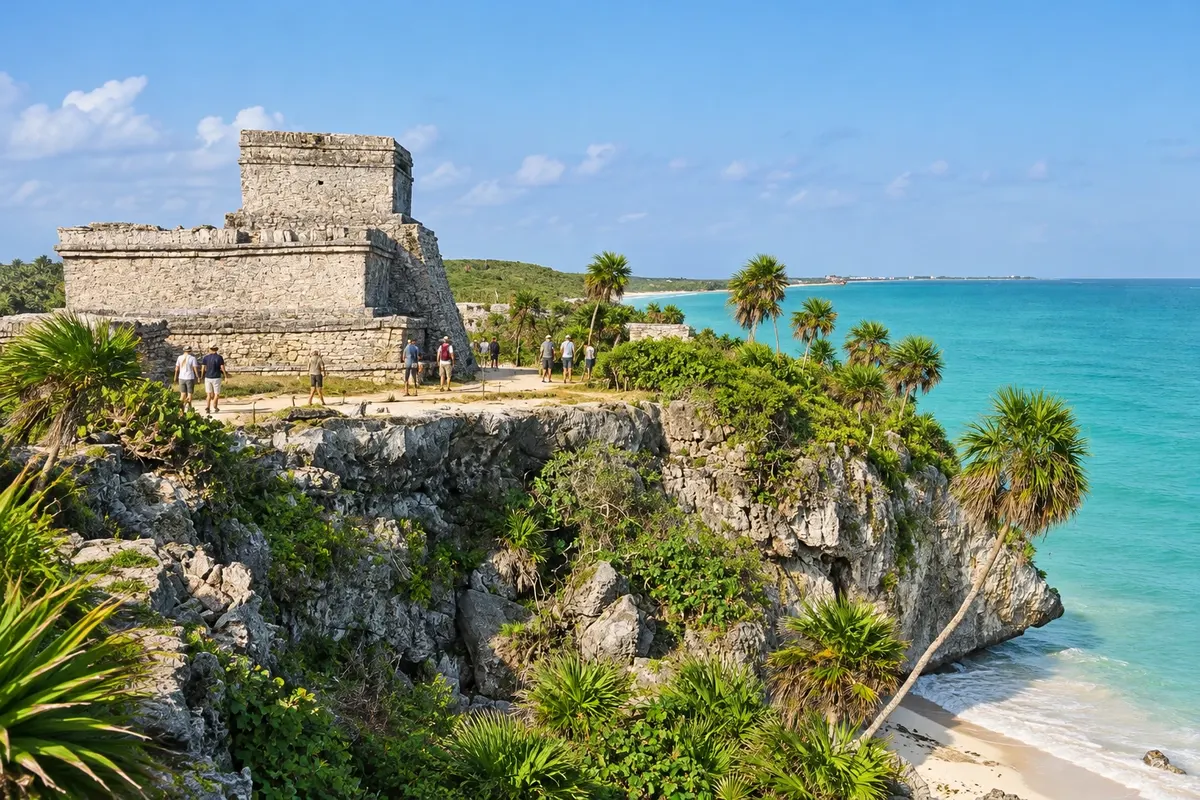
Tulum is in the southern Riviera Maya, about 130 km from Cancún. It is known for the archaeological zone on a cliff facing the Caribbean Sea, the image many people have of the Mexican coast: a walled Mayan town, with gray stone temples above a small white-sand beach. The old name was Zamá, linked to the dawn, and the city was an active port between the 13th and 15th centuries, already near the arrival of the Spanish.
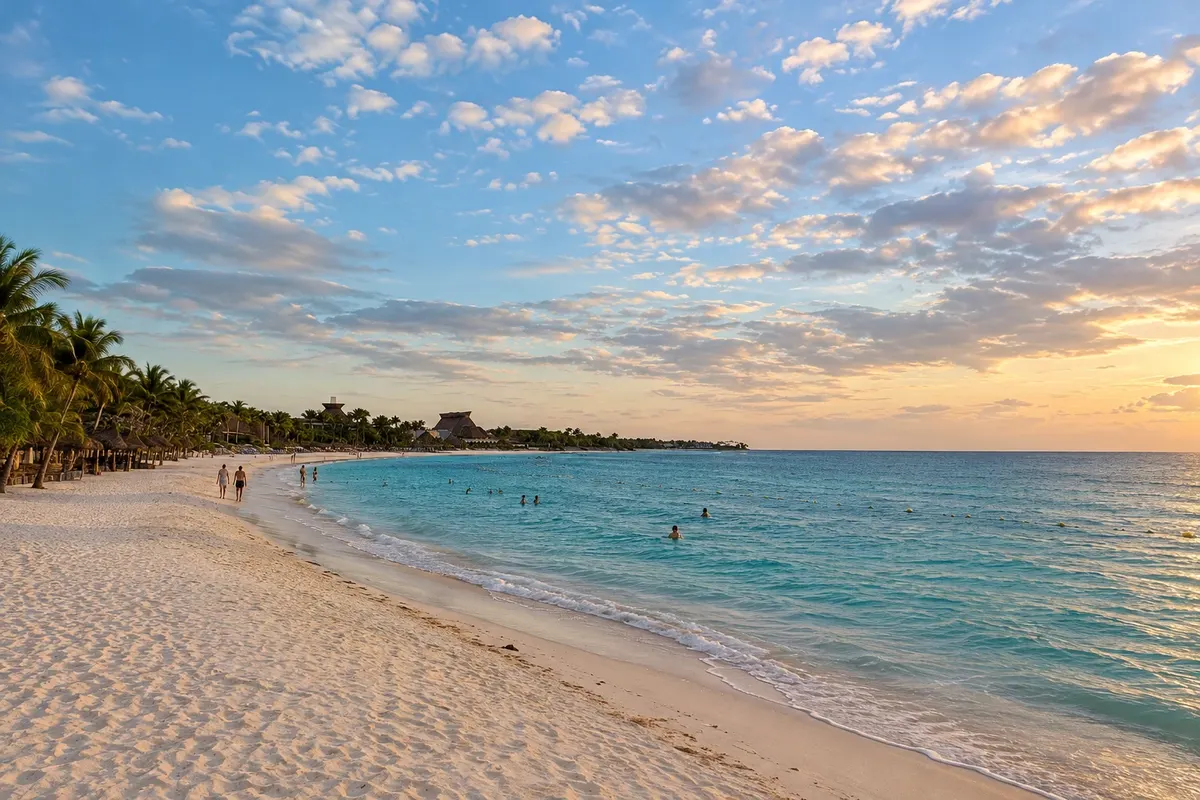
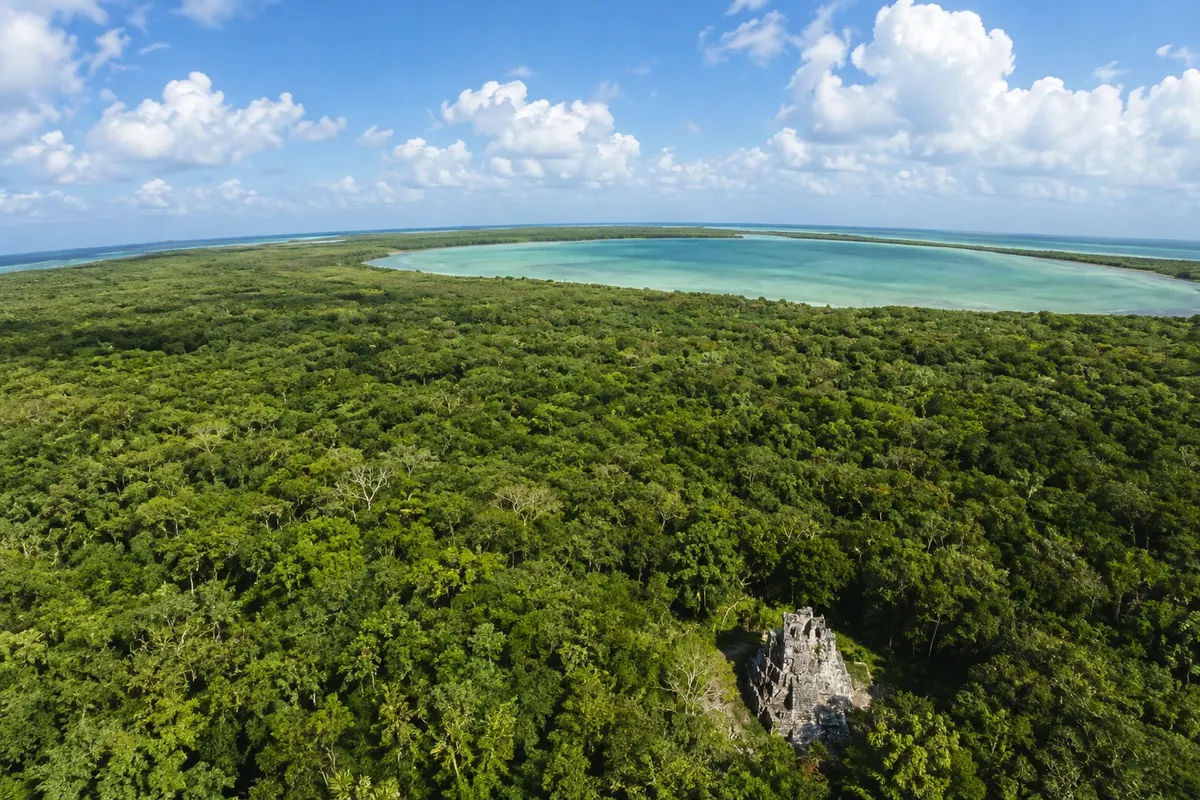
Today's Tulum has two parts. The Pueblo, by highway 307, concentrates shops, restaurants and simpler lodging. The beach area runs along a narrow road south of the ruins, with low hotels between the jungle and the sand, up to the entrance of the Sian Ka'an Biosphere Reserve, a UNESCO site, with lagoons, mangroves and reef.
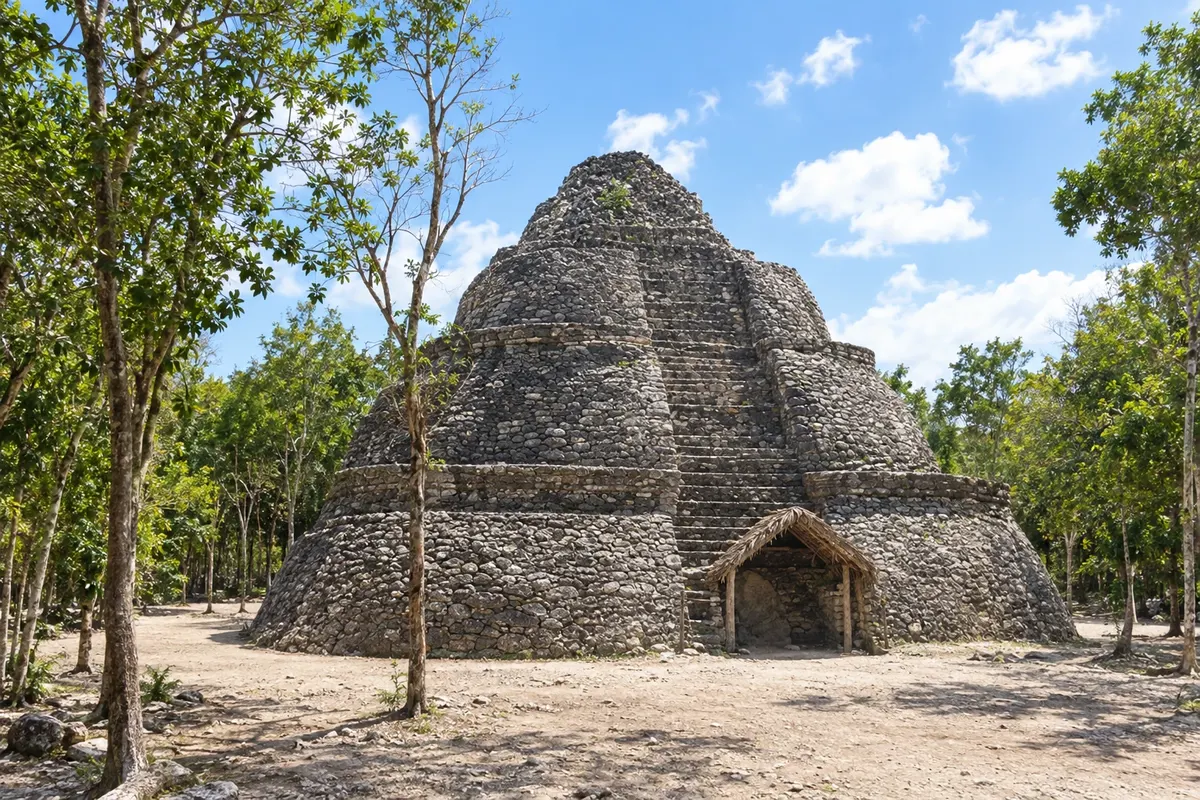
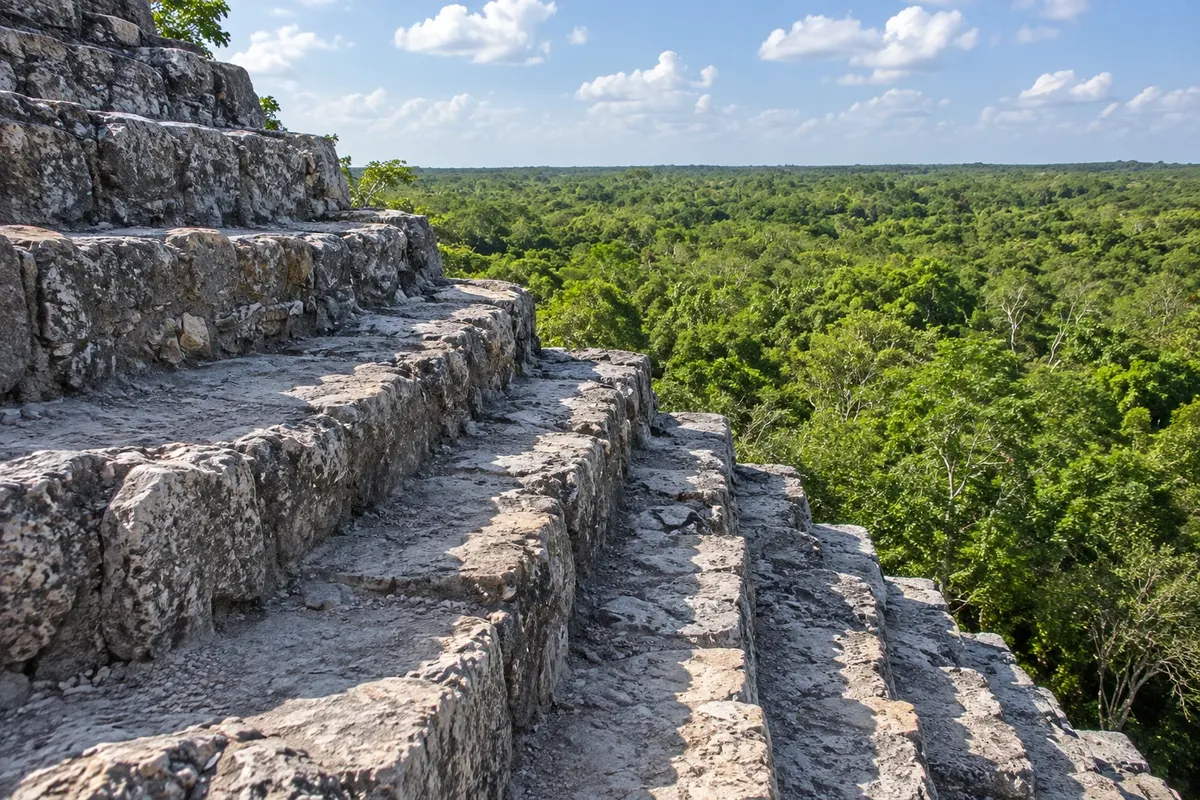
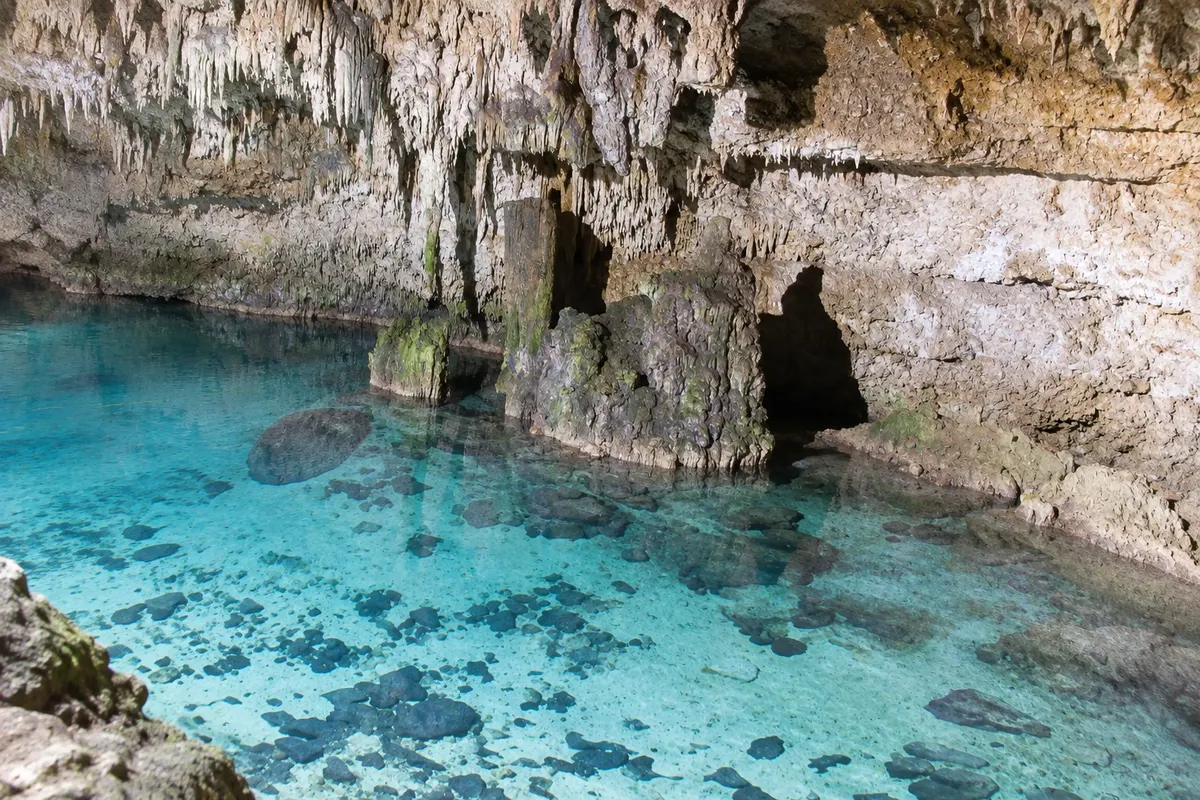
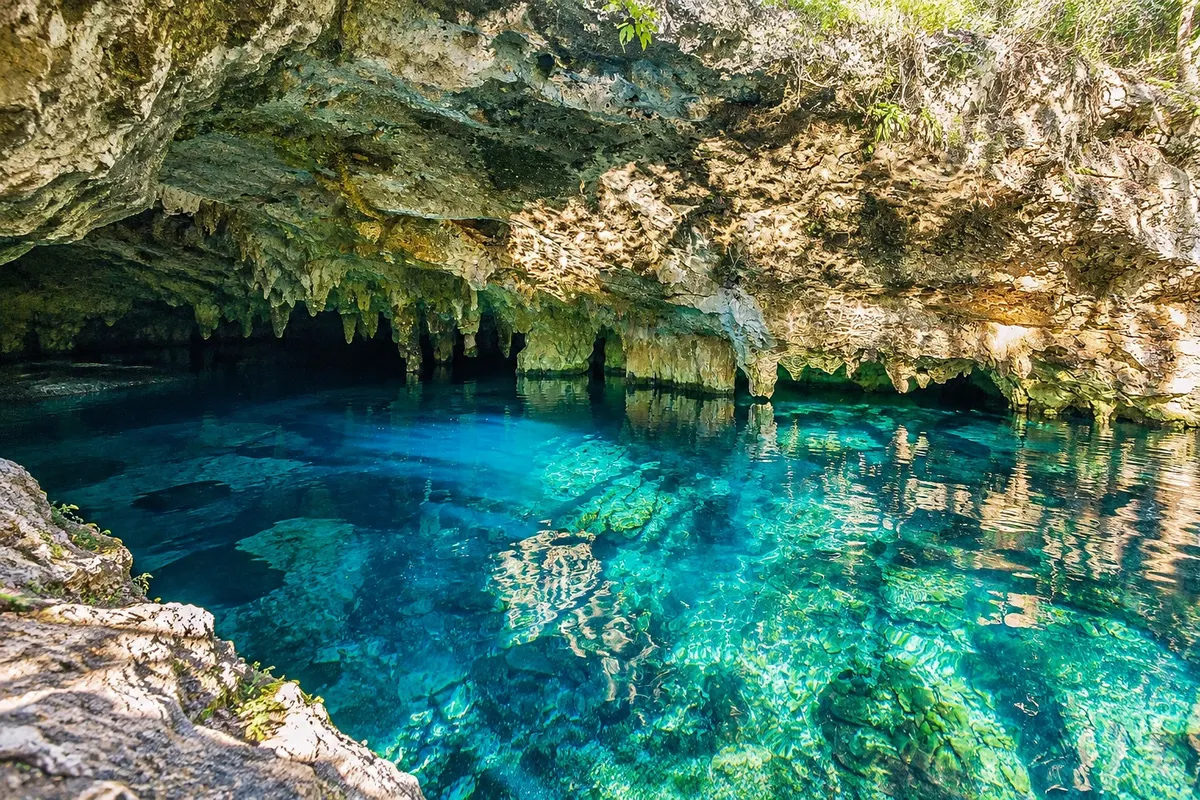
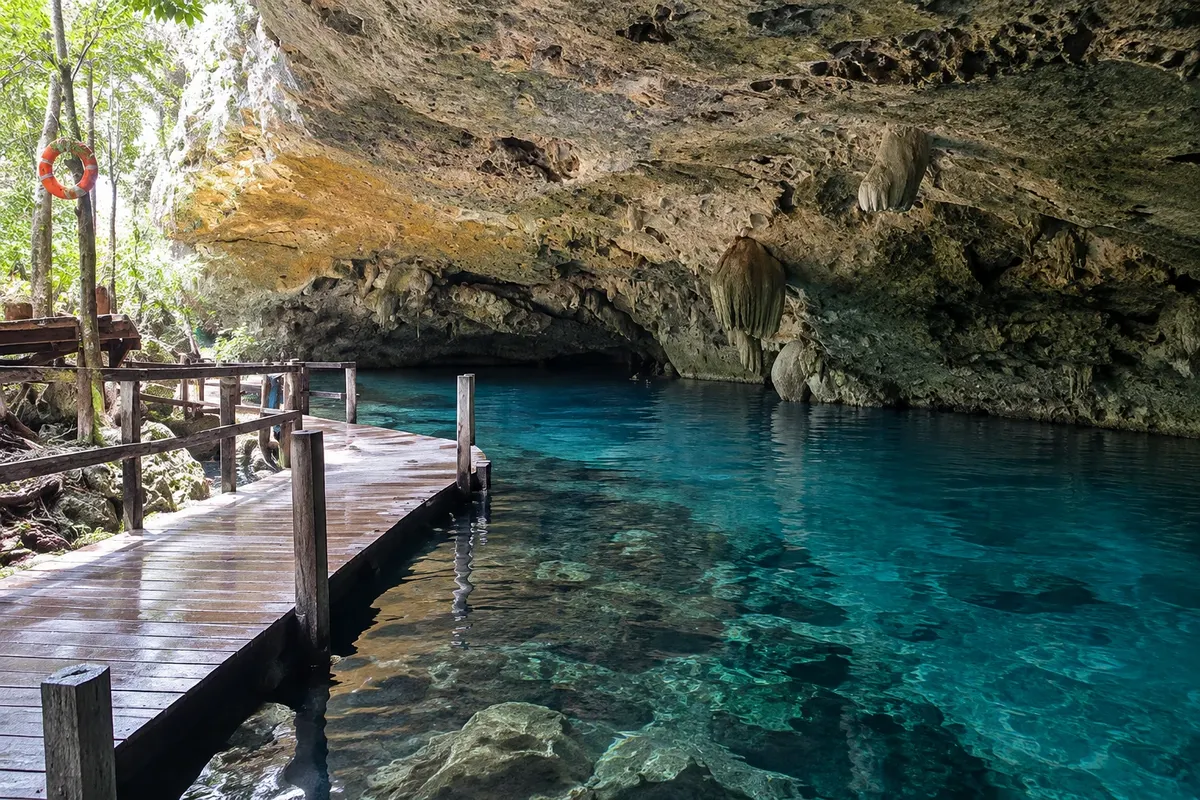
In the interior are the cenotes, freshwater sinkholes that give access to the peninsula's underground rivers. The Gran Cenote, on the road to Cobá, and the Dos Ojos system to the north, attract swimmers and cave divers. About 45 km away, in the middle of the jungle, Cobá was one of the largest Mayan cities of the Classic period, with the Nohoch Mul pyramid, lagoons and stone causeways that are explored by bicycle.
Tulum has its own airport and a Tren Maya station.
This destination brings together 2 cities: Tulum, Cobá.


 Brazil
 Argentina
 Bolivia
 Chile
 Colombia
 Ecuador
 Guyana
 French Guiana
 Falkland Islands (Malvinas)
 Paraguay
 Peru
 Suriname
 Uruguay
 Venezuela
 Germany
 Austria
 Belgium
 Croatia
 Denmark
 Spain
 Finland
 France
 Greece
 the Netherlands
 Hungary
 Ireland
 Iceland
 Italy
 Luxembourg
 Norway
 Poland
 Portugal
 the United Kingdom
 the Czech Republic
 Sweden
 Switzerland
 Turkey
 the Dominican Republic
 South Africa
 Fiji