

 Brazil
 Argentina
 Bolivia
 Chile
 Colombia
 Ecuador
 Guyana
 French Guiana
 Falkland Islands (Malvinas)
 Paraguay
 Peru
 Suriname
 Uruguay
 Venezuela
 Germany
 Austria
 Belgium
 Croatia
 Denmark
 Spain
 Finland
 France
 Greece
 the Netherlands
 Hungary
 Ireland
 Iceland
 Italy
 Luxembourg
 Norway
 Poland
 Portugal
 the United Kingdom
 the Czech Republic
 Sweden
 Switzerland
 Turkey
 the Dominican Republic
 South Africa
 Fiji
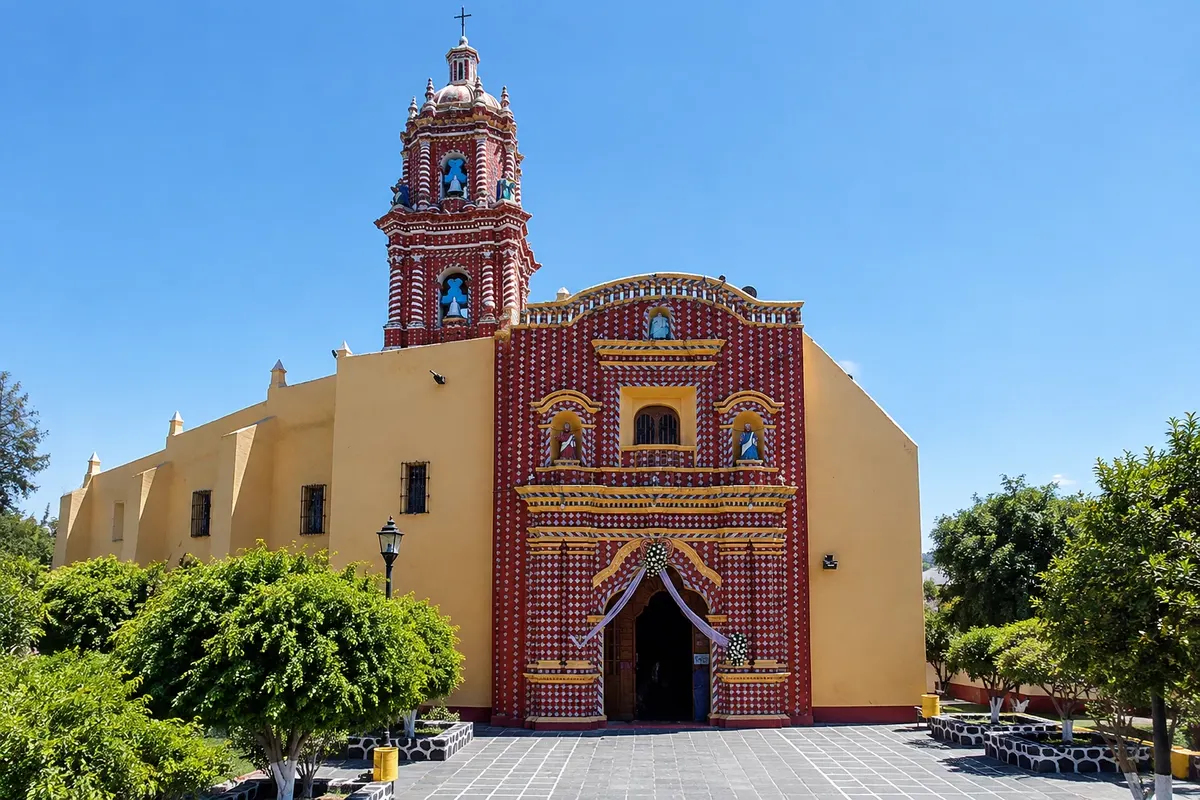
Church · San Pedro Cholula, Puebla
Templo de Santa María Tonantzintla
Church of indigenous baroque, with the interior covered in figures of angels, fruits and flowers in gilded and polychrome stucco made by local craftsmen.
Illustrative images. The pictures in this guide are illustrations based on the real place, not photographs, and may differ from it.

Discover
About Templo de Santa María Tonantzintla
Santa María Tonantzintla is a church in the village of the same name, about 5 km south of Cholula. From the outside it is simple; inside, the dome, walls and arches are covered in polychrome and gilded stucco made by indigenous artisans in the 17th and 18th centuries.
The decoration mixes angels, saints and cherubs with fruits, flowers, birds and faces with indigenous features, in a style called indigenous baroque, or popular baroque. It is one of the best-known works of this style in Mexico.
For conservation, photographing the interior is usually prohibited, and visits are conducted in silence.
A few kilometers away, the church of San Francisco Acatepec has a façade entirely covered with talavera tiles, and the two are often visited together.
Before you go
Practical information
Cidade Turismo reviews its information regularly, but something may have changed. Check with the place before planning your trip.
How much time to set aside
Half an hour, or one hour if including Acatepec.
Best time
In the morning. The church usually closes at midday; check the hours.
How to get there
In the village of Santa María Tonantzintla, about 5 km south of Cholula, by taxi, local bus or car.
Tip
Combine it with the church of San Francisco Acatepec, with a talavera façade, about 2 km away.
Get your questions answered
Frequently asked questions about Templo de Santa María Tonantzintla
Why is Tonantzintla famous?
For its interior covered in colorful and gilded stucco made by indigenous artisans, in the indigenous baroque style.
Can you photograph inside Tonantzintla?
It is usually prohibited, to protect the interior.
What is Acatepec?
A neighboring church, about 2 km away, with a façade covered in talavera tiles.