Capital

State · North
Belém, the Ilha de Marajó and the river beaches of the Tapajós are three distinct trips within Pará, connected by boat, plane and a cuisine made with tucupi and jambu.
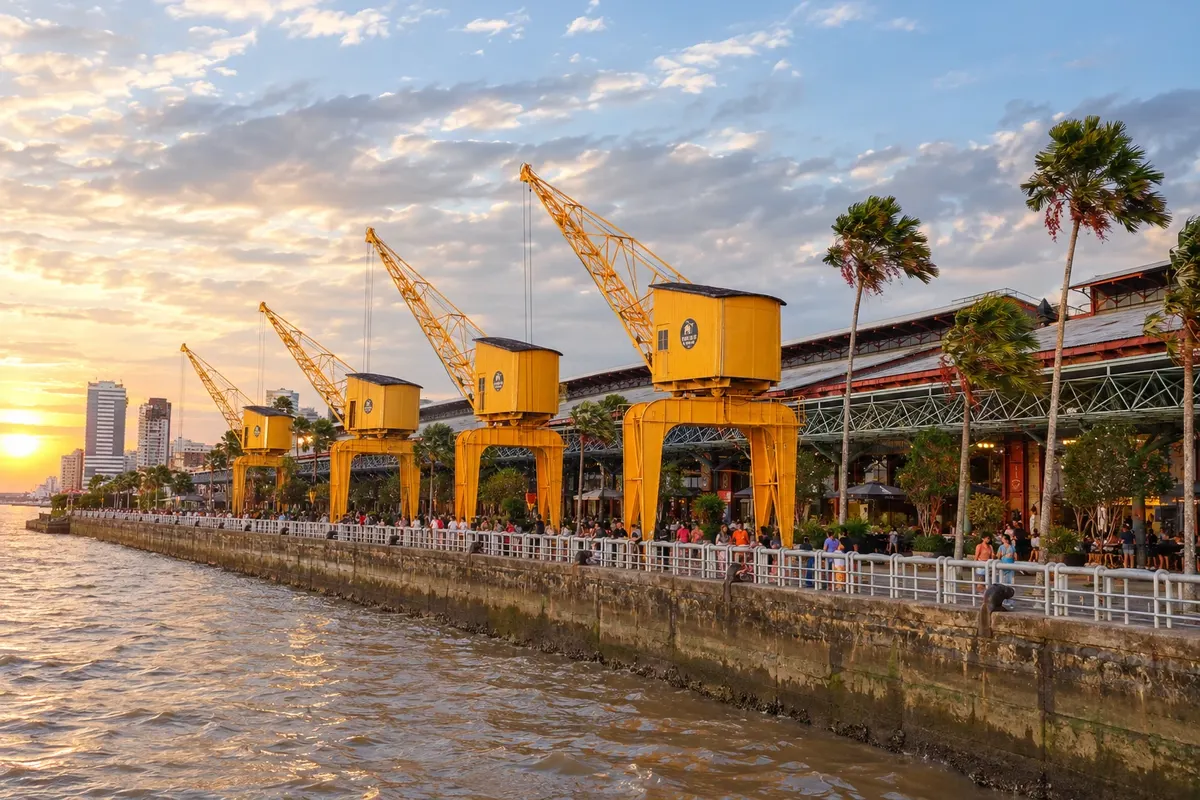
In the photo: Estação das Docas seen from the Baía do Guajará, Belém (PA)
Illustrative images. The pictures in this guide are illustrations based on the real place, not photographs, and may differ from it.

The state
Pará is the second-largest state in Brazil by area and organizes life around water. The baía do Guajará, the mouth of the Amazon and the Tapajós River shape the three regions that receive the most visitors, each with its own access and timetable.
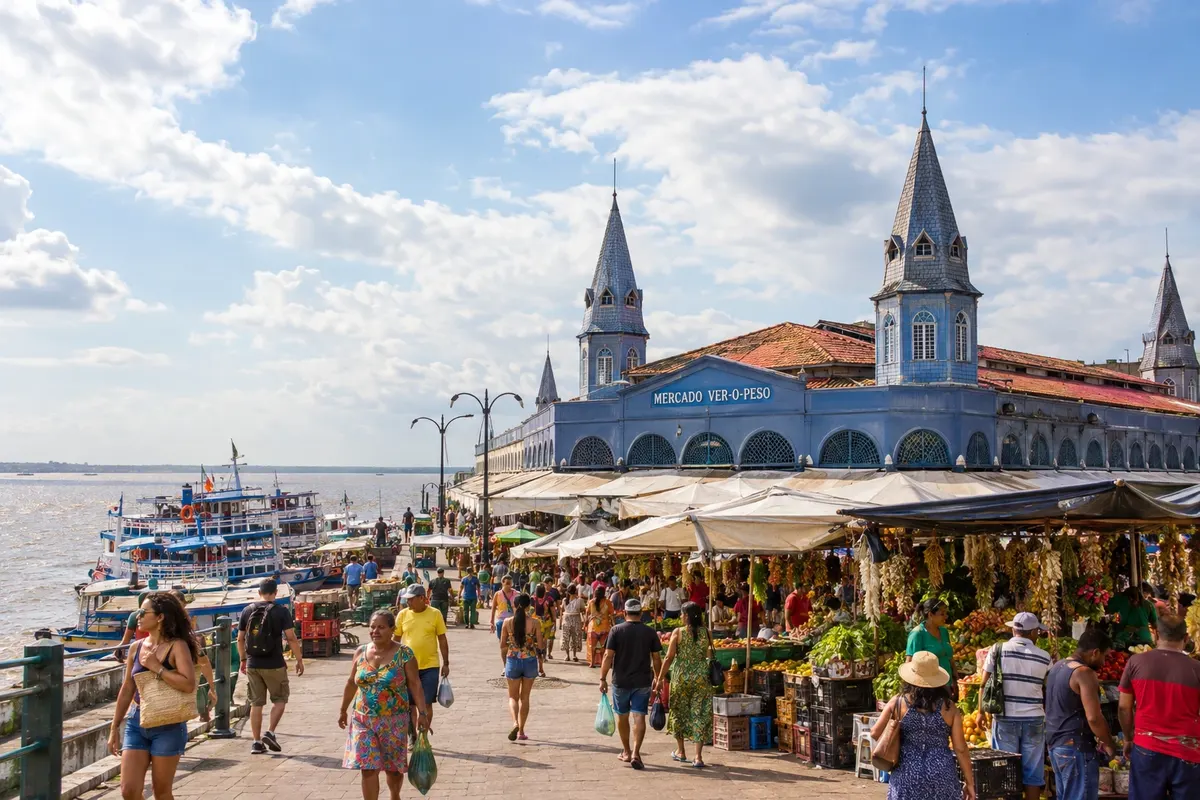
Belém was founded by the Portuguese in 1616, from the Forte do Presépio on the bay's shore. The Ver-o-Peso, a market and fair beside the quay, is the best place to understand the city: herbs, fish, flours and the açaí that arrives by boat from the islands at dawn. Nearby are the Estação das Docas, the churches of the Cidade Velha and the Theatro da Paz, built in the rubber boom era. On the other side of the river, islands like Combu have restaurants on stilts and trails in the várzea.
In October, the Círio de Nazaré upends the capital's routine. The procession on the second Sunday of the month draws more than two million people into the streets behind the image of the saint, and the fortnight of festivities includes pilgrimages by land and river. The Círio is a cultural heritage of Brazil.
At the mouth of the Amazon, the Ilha de Marajó forms the largest fluvio-marine archipelago in the world. To the east, Soure and Salvaterra have brackish-water beaches, flooded fields and buffalo ranches, which appear in the streets, in the meat and in Marajó cheese. In Cachoeira do Arari, the Museu do Marajó preserves marajoara ceramics made by peoples who lived there centuries before Europeans. Breves, to the west, lives from the movement of boats through the straits that link Belém to Macapá and Manaus.
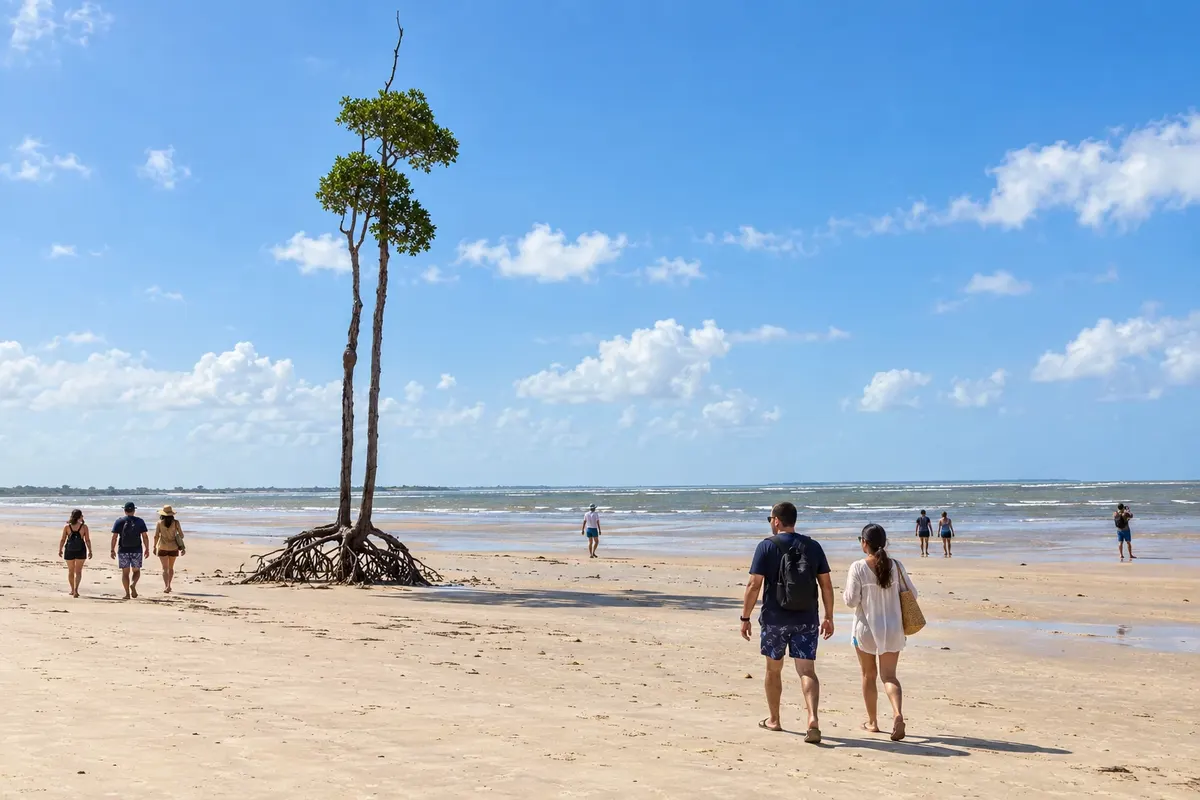
In the west, the Alter do Chão and Lower Tapajós destination has green waters and white-sand beaches that appear when the river falls. Alter do Chão, a village of Santarém, is the base for the Ilha do Amor, the Ponta do Cururu and the riverside communities. In September, the village celebrates the Çairé, a religious and folkloric festival featuring contests between the Tucuxi and Pink River dolphins. Belterra and Fordlândia, in Aveiro, retain houses and warehouses from Henry Ford's rubber-tree projects.
Pará cuisine uses what comes from manioc and the river. Pato no tucupi and maniçoba are festive dishes, served at the Círio lunch. Tacacá, filhote, açaí with fried fish and farinha d'água are everyday foods, and jambu, which numbs the mouth, is used in almost everything.
Destinations
Cities
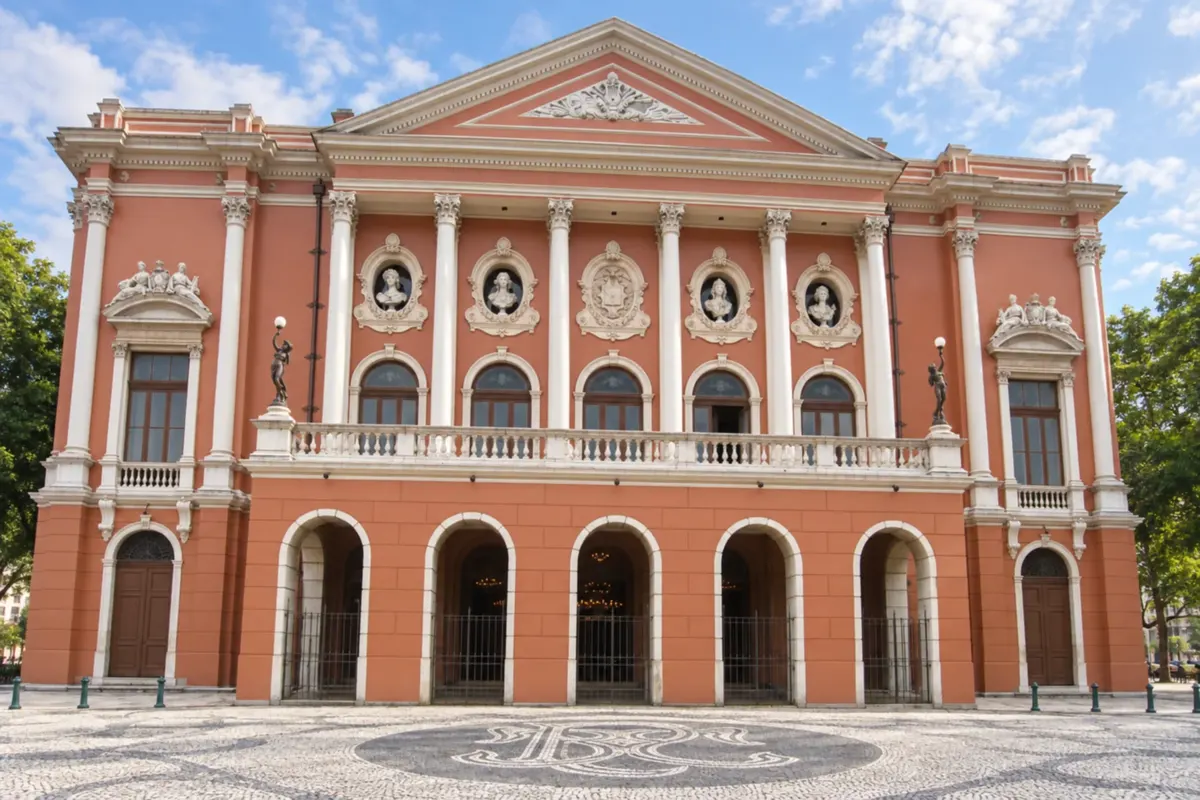
Belém brings together markets, theaters and historic churches among Amazon rivers and islands. The old center, the tree-lined squares and the culture of Pará bring visitors close to the history of the state capital and its waters.
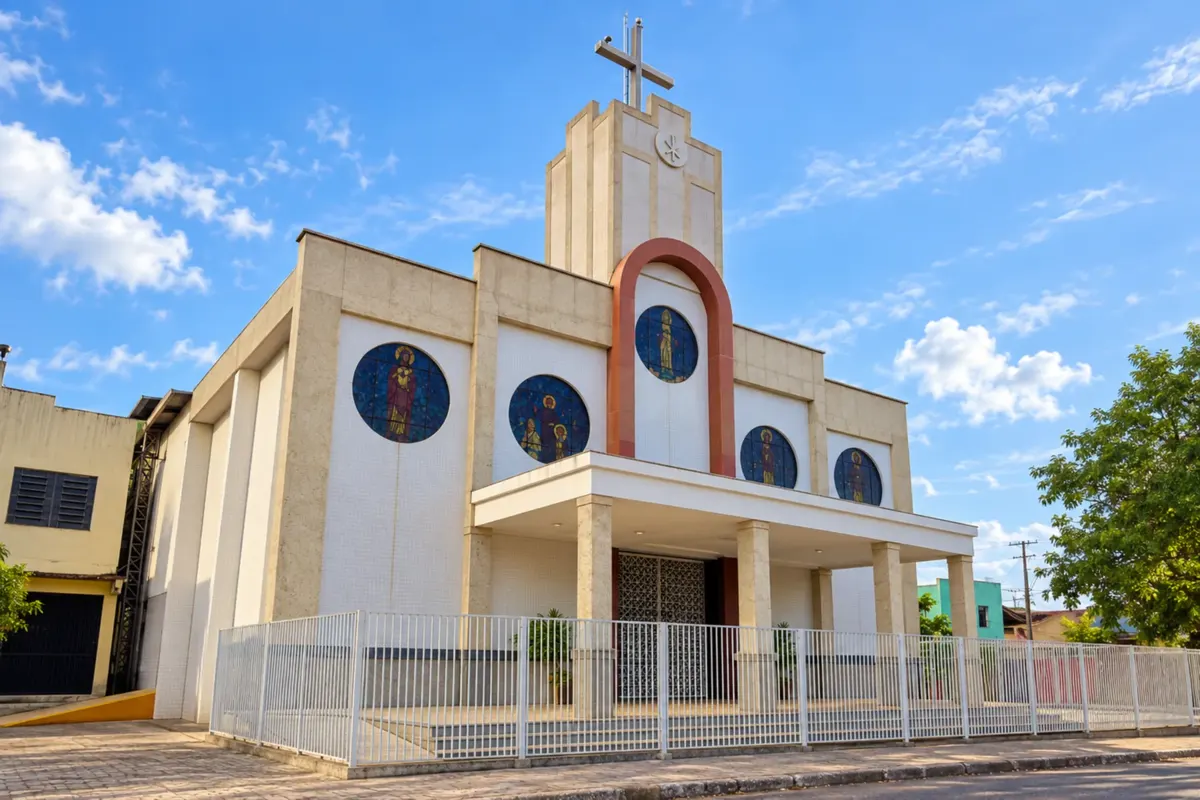
Ananindeua combines urban life, parks and island communities in the Belém area. Its religious heritage and green spaces reveal aspects of local history and of the Amazon's presence in the municipality.
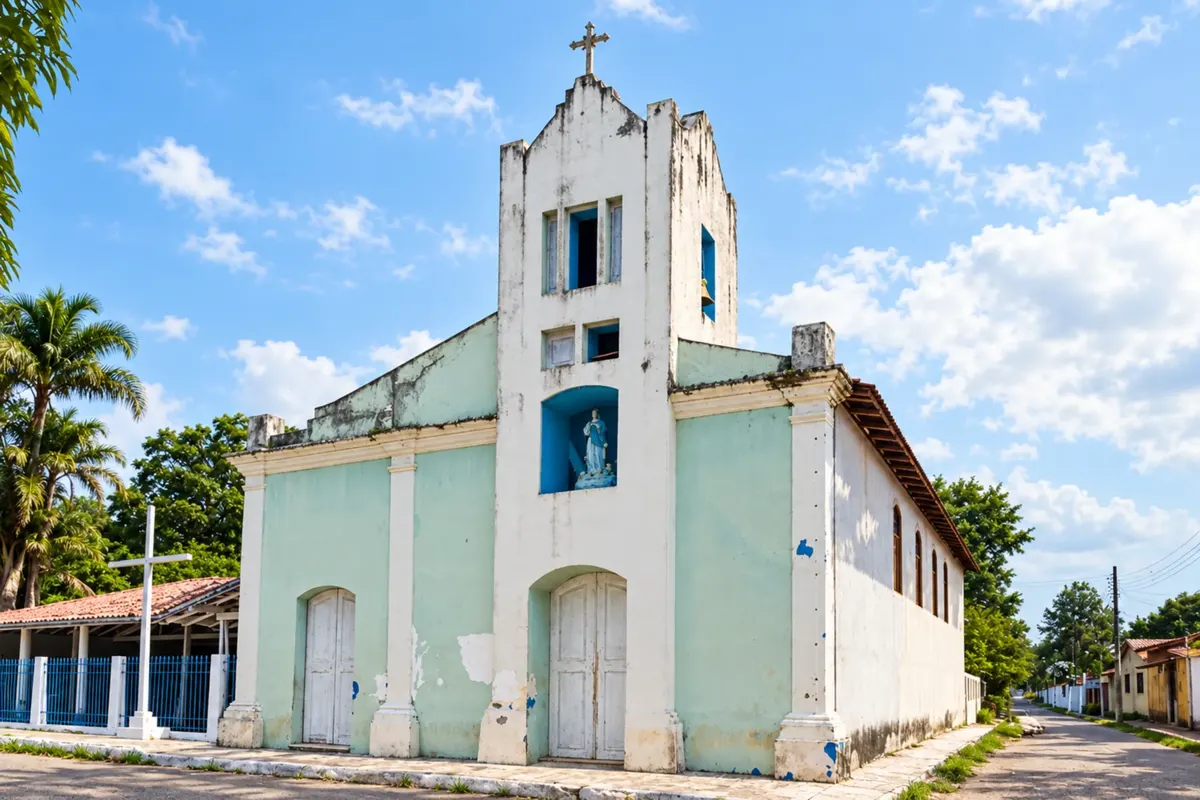
Benevides preserves memories of the abolition of slavery in Pará and the religious traditions of its communities. In Benfica, the heritage of the main church and the riverside landscape reveal part of that history.
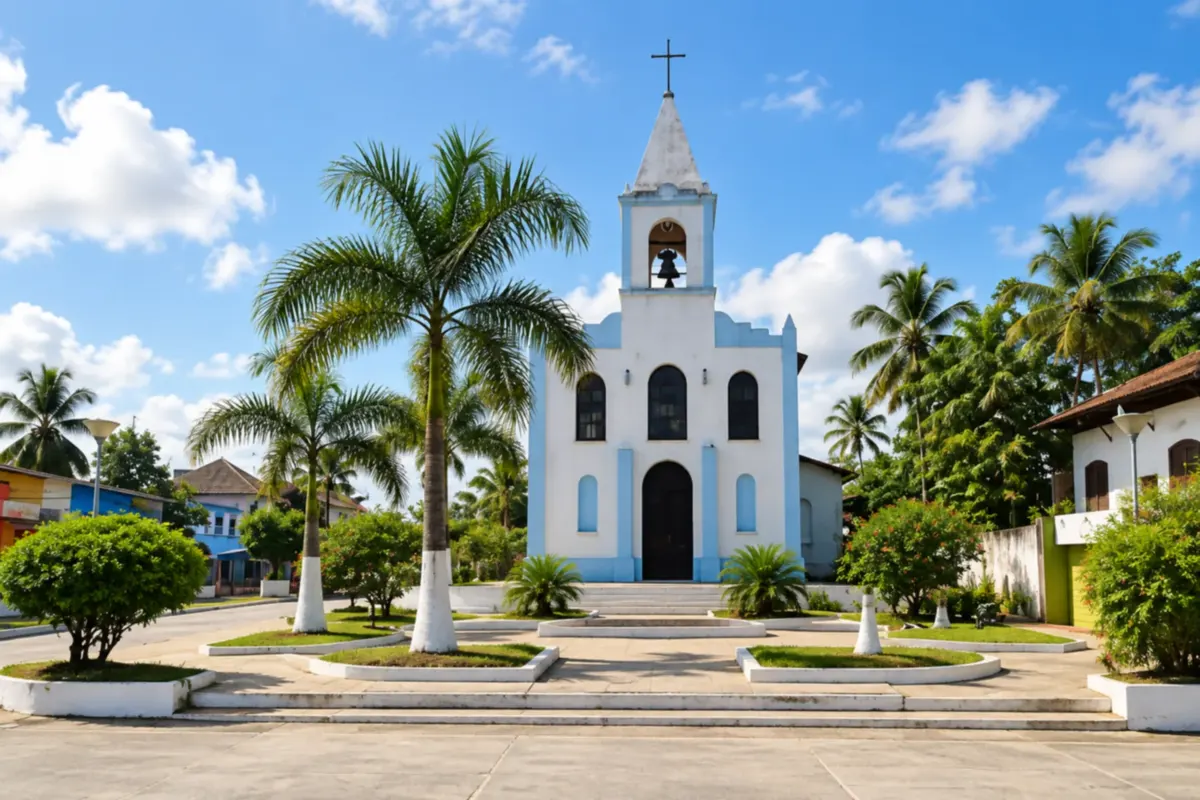
Breves grew up on the banks of the Rio Parauaú, in a region of Amazon islands and channels. The boat traffic and the downtown heritage reveal how rivers shape life on Marajó.
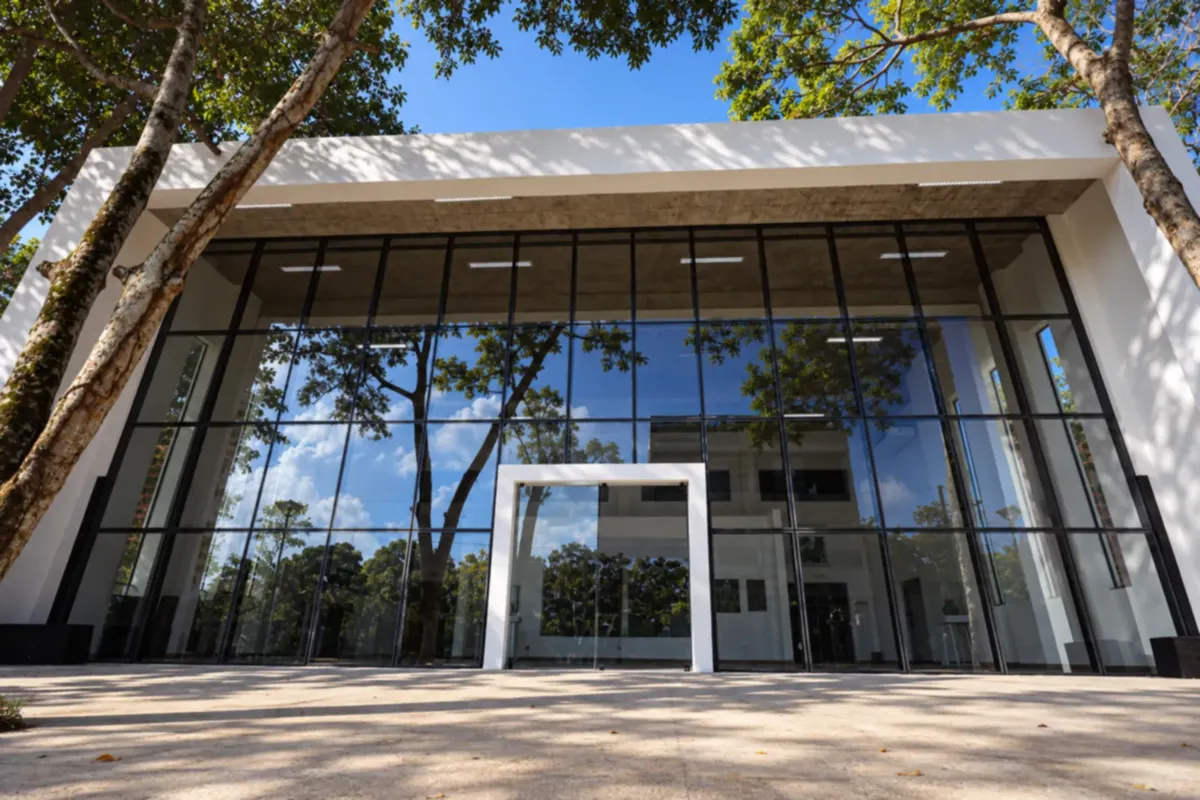
Cachoeira do Arari brings together Marajó grasslands, riverside life and cultural heritage. The Museu do Marajó presents the history and knowledge of the region, in dialogue with the daily life of local communities.
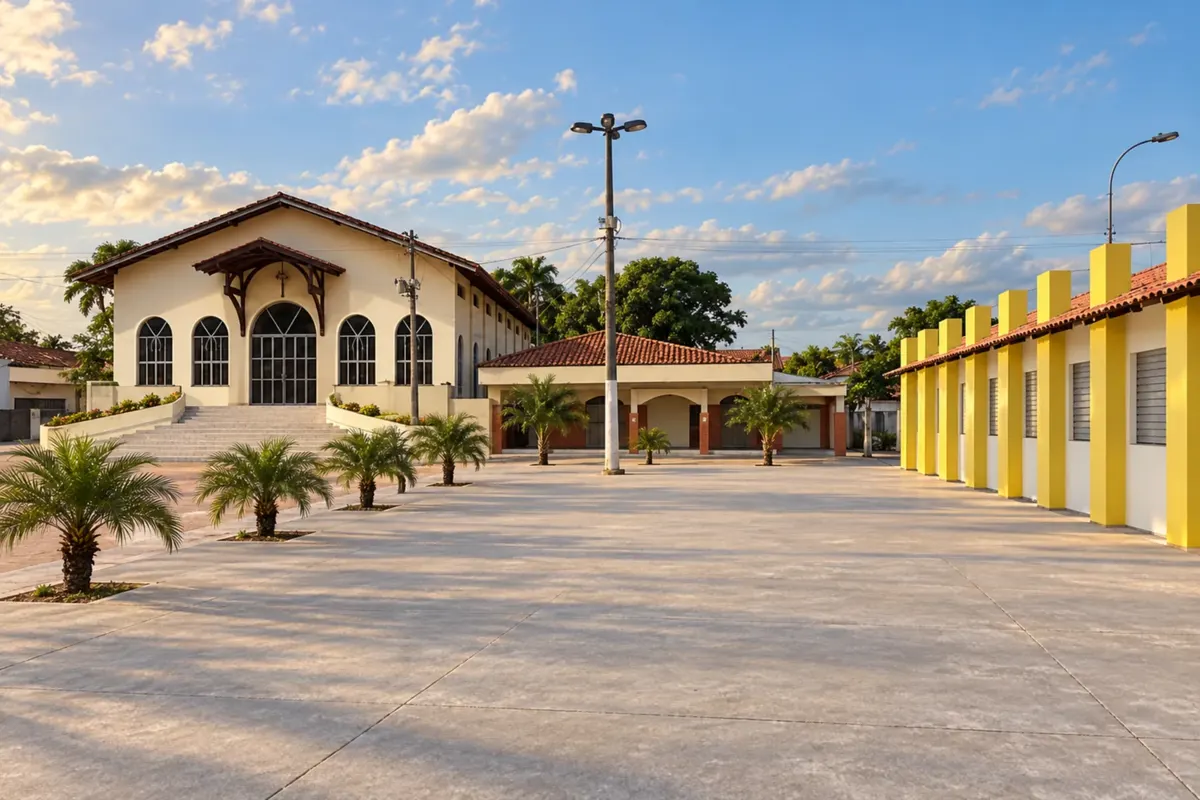
Marituba is part of the Belém metropolitan area and keeps traditions tied to the Child Jesus (Menino Deus). The main church and its square shape daily life downtown and the community's religious celebrations.
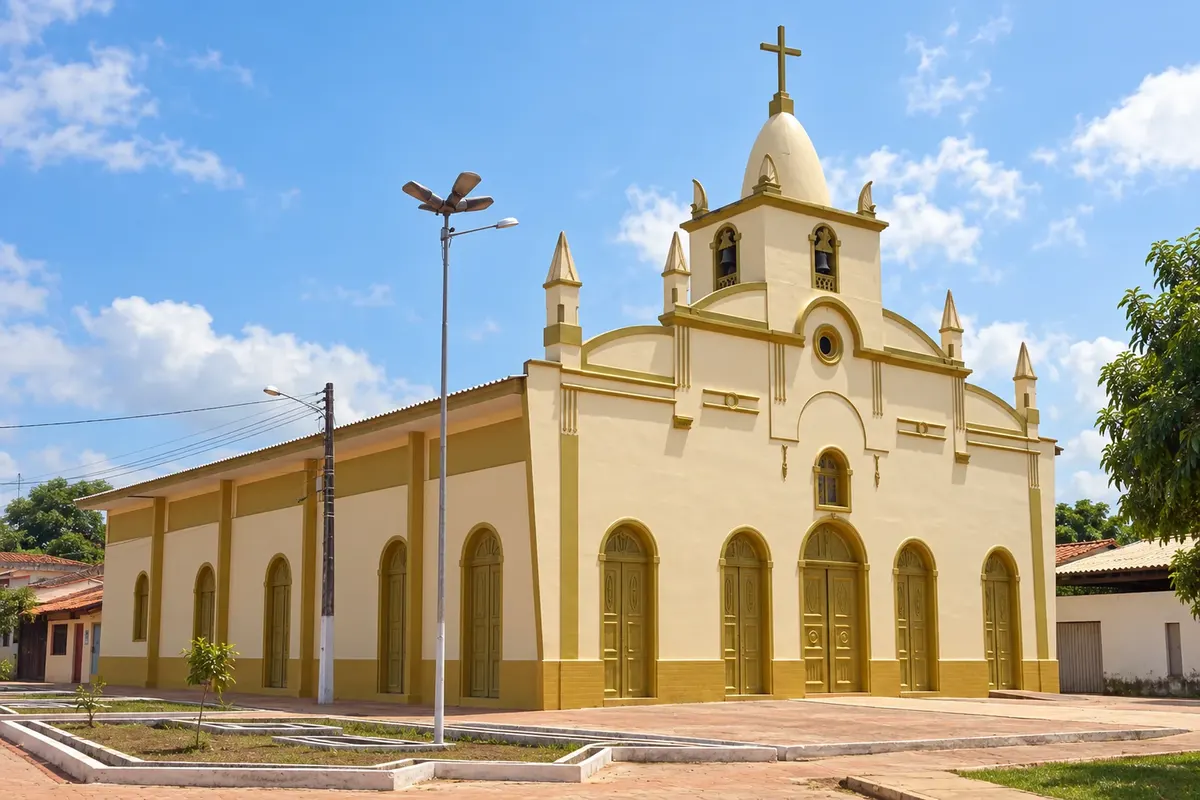
Ponta de Pedras brings together floodplain landscapes and riverside communities in the Marajó archipelago. Fishing, açaí and its religious heritage help you understand the town's relationship with its waters.
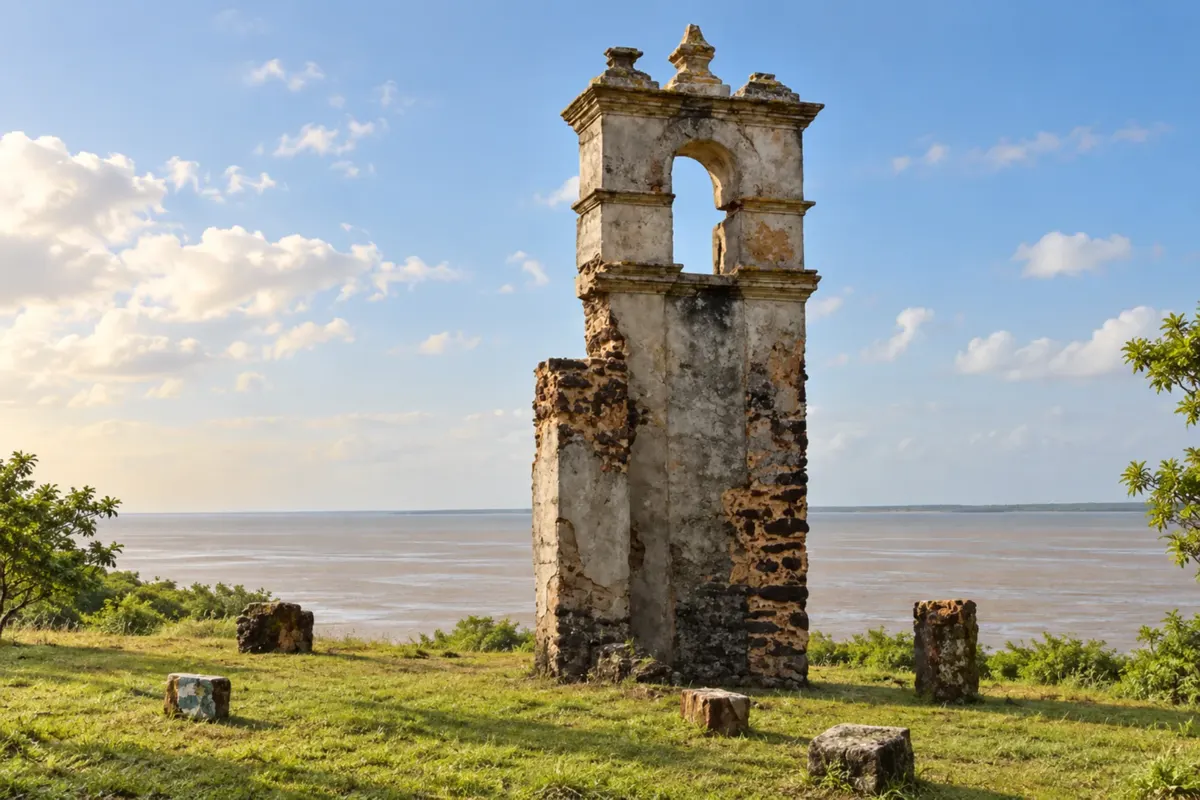
Salvaterra combines beaches and historic remains on the eastern coast of Marajó Island. The village of Joanes, the grasslands and the local communities bring visitors close to Marajó's landscapes and culture.
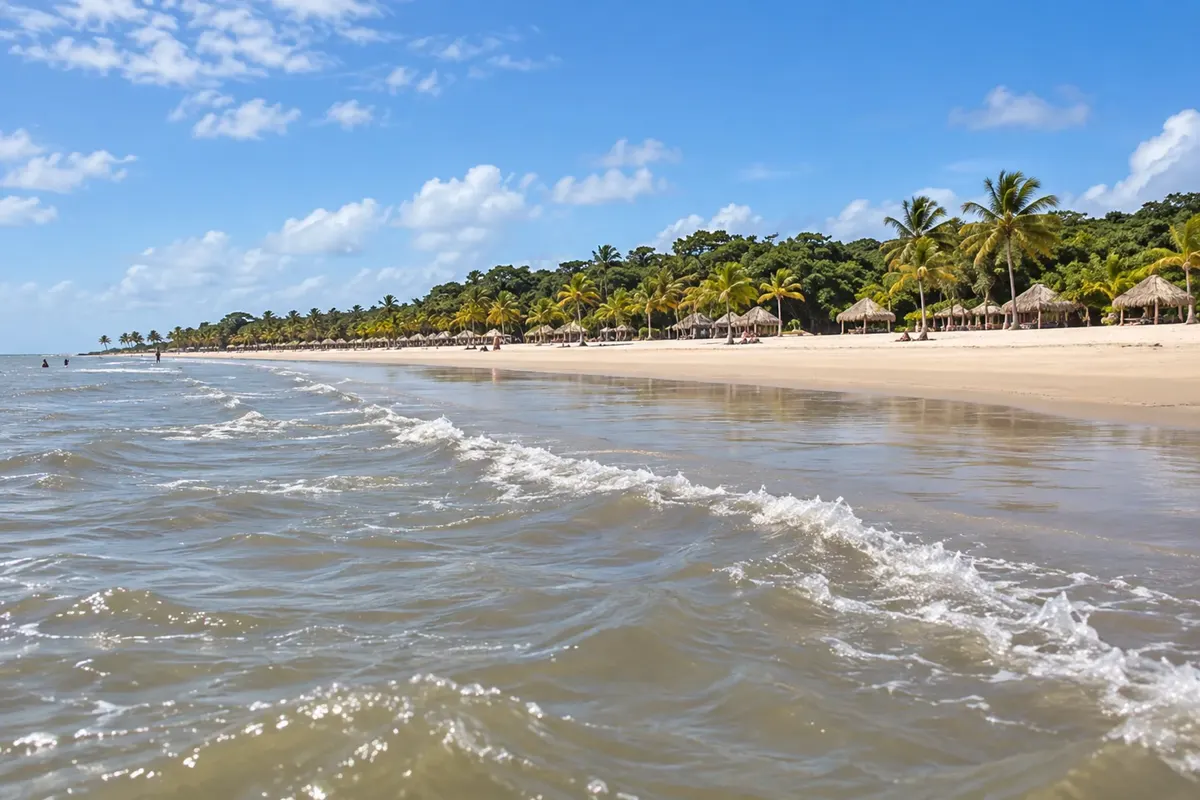
Soure brings together beaches, mangroves and natural grasslands on Marajó Island. The landscape of Pesqueiro and the daily life of the communities reveal the connection between the waters, fishing and Marajó culture.
The climate is hot and humid. In Belém and on Marajó, the heaviest rains run from December to May; in the second half of the year there is less rain, but late-afternoon downpours remain common in the capital. On Marajó, the fields flood in the rainy season and dry out from July onward. On the Tapajós, the beaches appear with the falling river, between August and December. The Círio de Nazaré, on the second Sunday of October, and the Çairé, in September, are the busiest dates.
Belém's international airport – Val-de-Cans/Júlio Cezar Ribeiro – is located in the capital. In the west, Santarém’s airport – Maestro Wilson Fonseca – serves Santarém, from where Alter do Chão is about 35 kilometers away by paved road. For Marajó, speedboats and ferries depart from Belém and the Icoaraci district to the port of Camará in Salvaterra; from there, a short ferry crosses the Paracauari River to Soure. Belém and Santarém are also linked by scheduled riverboats on journeys of several days. By road, the BR-316 and BR-010 connect Belém to Maranhão and the Central-West.
Your questions
At least ten days for all three regions: three or four in Belém, three on Marajó and three or four on the Tapajós, with a flight between Belém and Santarém. With less time, choose either Marajó or the Tapajós.
During the Tapajós low-water season, between August and December, when the Ilha do Amor and the sandbanks emerge. In the high water season, between March and June, much of the beaches are submerged and excursions focus on the igapós, the flooded forest.
Speedboats are faster and the ferries carry cars. Both arrive at the port of Camará in Salvaterra. On holidays and during vacation periods, buy tickets in advance and arrive early at the terminal.
Tucupi is the yellow broth extracted from bitter manioc, boiled for a long time to remove toxic substances. It is the base of pato no tucupi and tacacá. Jambu is a leaf that contains a compound causing a tingling and slight numbness of the lips and tongue.
Hotels near the route, in the neighborhoods of Nazaré, Batista Campos and Cidade Velha, sell out first. Book months in advance and expect street closures on the procession weekend.
Yes. In front of Santarém's waterfront, the Tapajós, with greenish water, runs alongside the muddy Amazonas without mixing for several kilometers. You can see it from the waterfront and, up close, on a boat tour.
Yes. Activity starts at dawn with the arrival of boats carrying açaí and fish. Early on the market has more products and it's less hot. Carry little in your pockets and try açaí with fried fish at the stalls.
Mapa: @svg-maps/brazil, CC BY 4.0