

 Brazil
 Argentina
 Bolivia
 Chile
 Colombia
 Ecuador
 Guyana
 French Guiana
 Falkland Islands (Malvinas)
 Paraguay
 Peru
 Suriname
 Uruguay
 Venezuela
 Germany
 Austria
 Belgium
 Croatia
 Denmark
 Spain
 Finland
 France
 Greece
 the Netherlands
 Hungary
 Ireland
 Iceland
 Italy
 Luxembourg
 Norway
 Poland
 Portugal
 the United Kingdom
 the Czech Republic
 Sweden
 Switzerland
 Turkey
 Mexico
 the Dominican Republic
 Fiji
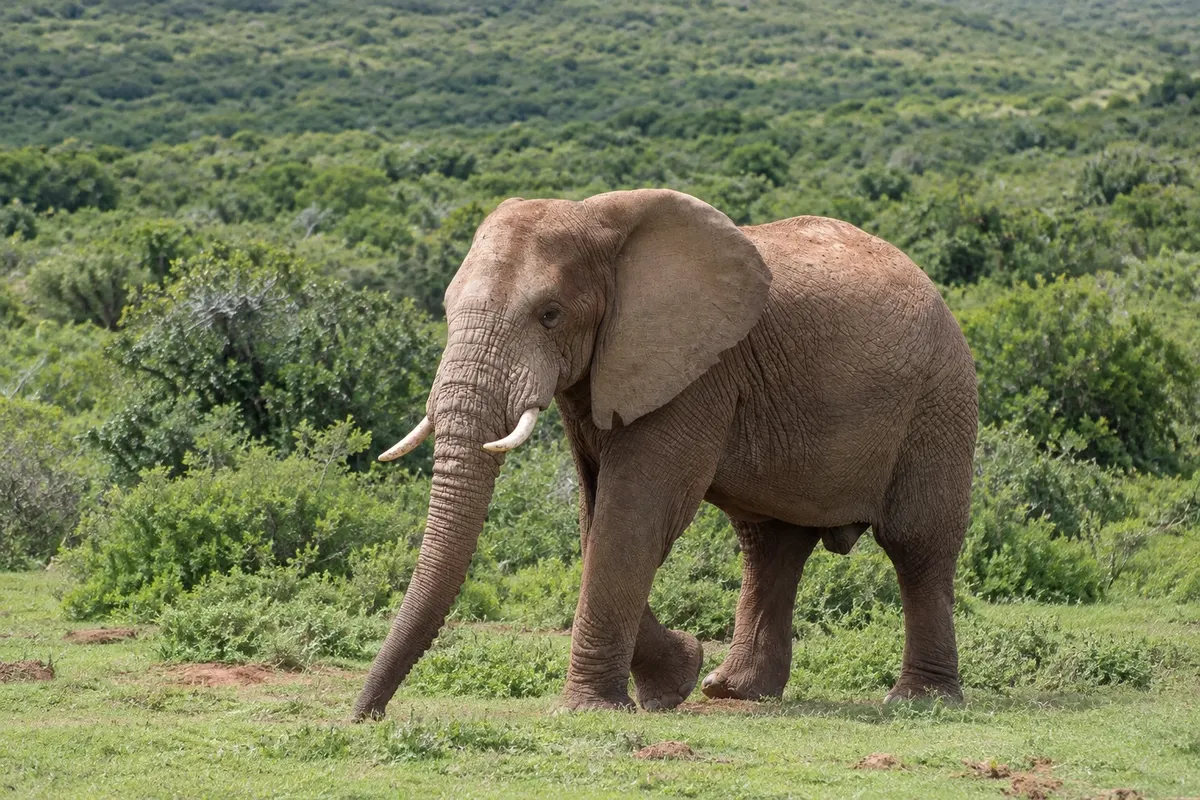
National park · Addo, Cabo Oriental
Addo Elephant National Park
Malaria-free national park an hour from Gqeberha, created in 1931 to protect the region’s elephants, now home to hundreds of them and the five big safari animals.
Illustrative images. The pictures in this guide are illustrations based on the real place, not photographs, and may differ from it.

Discover
About Addo Elephant National Park
Addo National Park was established in 1931 to protect the 11 elephants that remained in the region after decades of hunting. The population grew to hundreds of animals, and the park was expanded to become the third largest in South Africa, at about 1,640 km², from the Sundays River valley to the Zuurberg mountains and the Algoa Bay coast.
The most visited part is the main area near the camp, covered in spekboom, a dense shrub with succulent leaves that elephants eat. There it’s common to see whole elephant families at watering holes, as well as zebras, kudus, African wild pigs and buffalo. Lions, hyenas and rhinoceros also live in the park but are harder to spot.
On the roads, signs warn to watch for the wingless dung beetle, a rare species that lives in the park and has priority on the road. The park also includes a marine area with islands of penguins and Cape gannets, which gives Addo the title of the Big Seven park.
You can do a safari in your own car or in open vehicles with a guide, in the morning, afternoon or at night, leaving from the main camp.
Before you go
Practical information
Cidade Turismo reviews its information regularly, but something may have changed. Check with the place before planning your trip.
How much time to set aside
A full day; ideally spend one night in the park or nearby.
Best time
Early morning and late afternoon, when animals tend to move more. In the dry winter, from June to August, vegetation is more open. Respect the gate opening hours.
How to get there
The main gate is about 70 km from Gqeberha via the R335, near the village of Addo. Entry is paid, with a daily conservation fee.
Tip
Always stay inside the vehicle unless in designated areas, and do not feed the animals. Give way to elephants and to the beetles on the road.
Official website
Get your questions answered
Frequently asked questions about Addo Elephant National Park
Does Addo National Park have malaria?
No, the region is outside the malaria area.
Do you need a guide to do a safari in Addo?
No. You can drive yourself, but guided safaris in open vehicles help locate the animals.
What is the best time to go to Addo?
The park operates year-round. The dry winter, from June to August, makes it easier to see animals at watering holes.
Can you sleep inside Addo National Park?
Yes, at the main camp and other park camps, with advance reservation.