3 cities

 Search
 Brazil
 Antarctica
 Argentina
 Bolivia
 Chile
 Colombia
 Ecuador
 Falkland Islands (Malvinas)
 French Guiana
 Guyana
 Paraguay
 Peru
 Suriname
 Uruguay
 Venezuela
 Austria
 Belgium
 Croatia
 Denmark
 Finland
 France
 Germany
 Greece
 Hungary
 Iceland
 Ireland
 Italy
 Luxembourg
 Norway
 Poland
 Portugal
 Slovakia
 Slovenia
 Spain
 Sweden
 Switzerland
 the Czech Republic
 the Netherlands
 the United Kingdom
 Turkey
 Bermuda
 Canada
 GreenlandMexico
 Saint Pierre and Miquelon
 the United States
 the Dominican Republic
 JapanTurkey
 Egypt
 South Africa
 Australia
 Fiji
 New Zealand
 Papua New Guinea
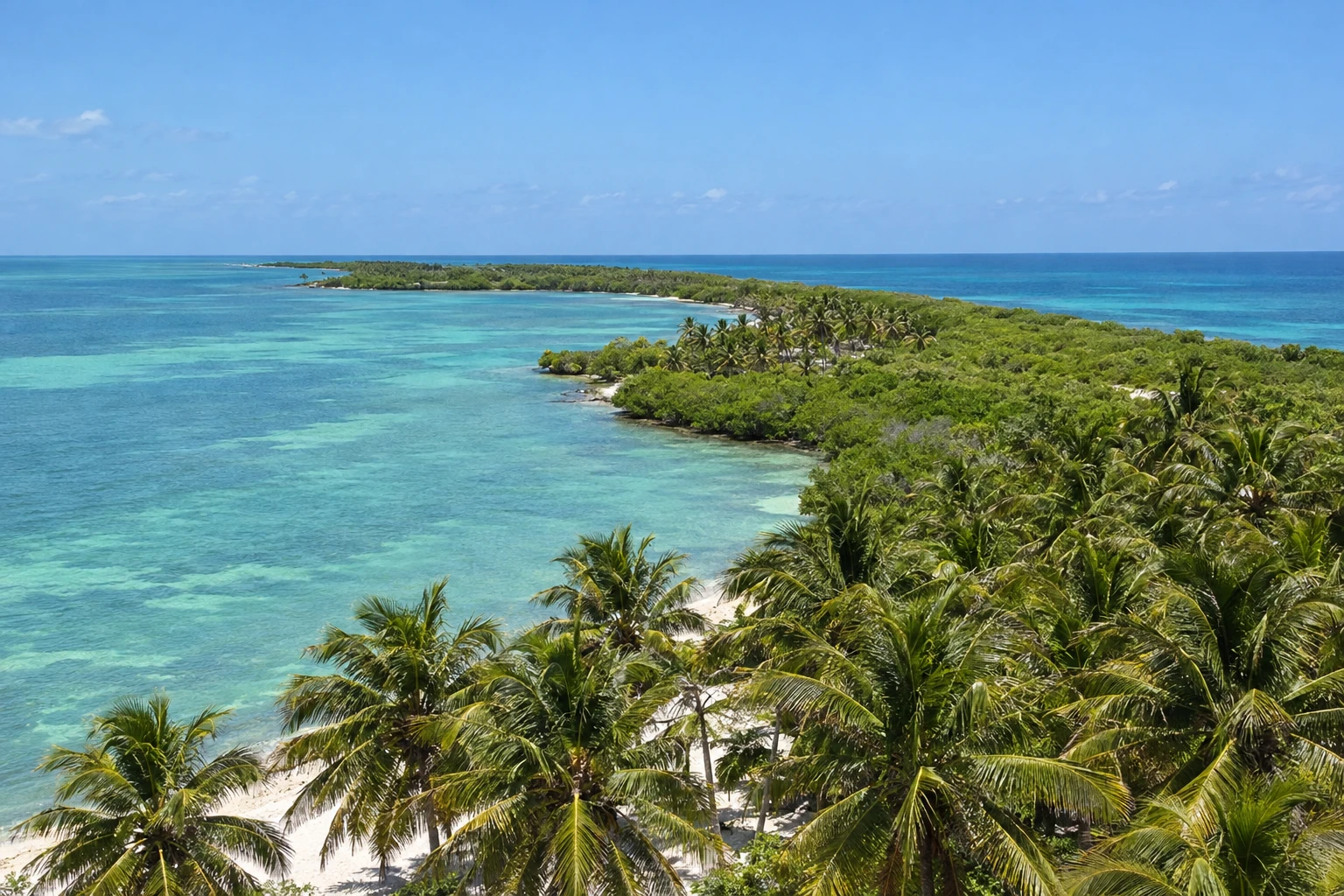
State · Mexican Caribbean (Cancún and Riviera Maya)
The Mexican Caribbean: Cancún, Playa del Carmen, Tulum, Cozumel, Isla Mujeres, Holbox and Bacalar, amid Maya ruins, cenotes and turquoise sea.
In the photo: Isla Contoy
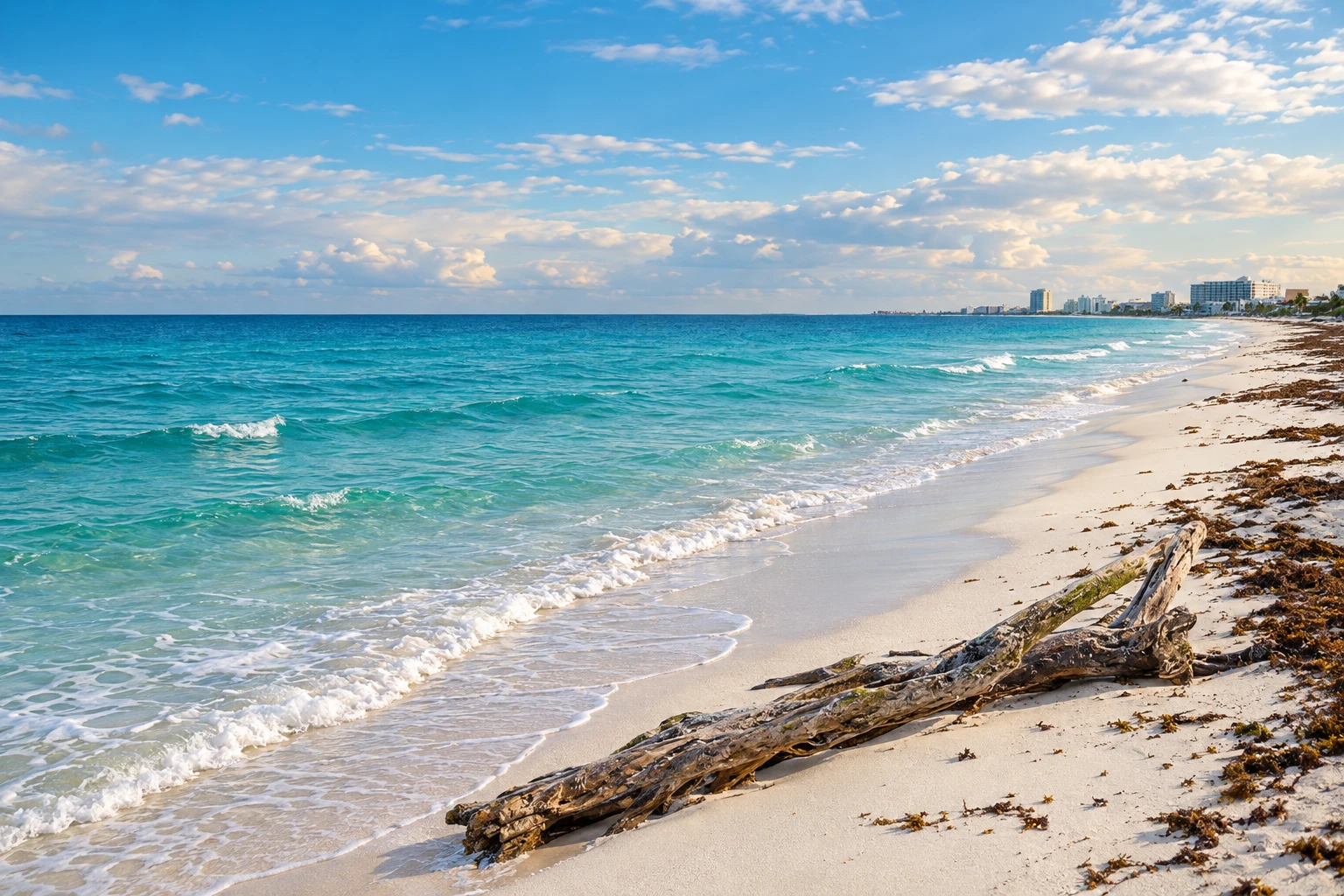
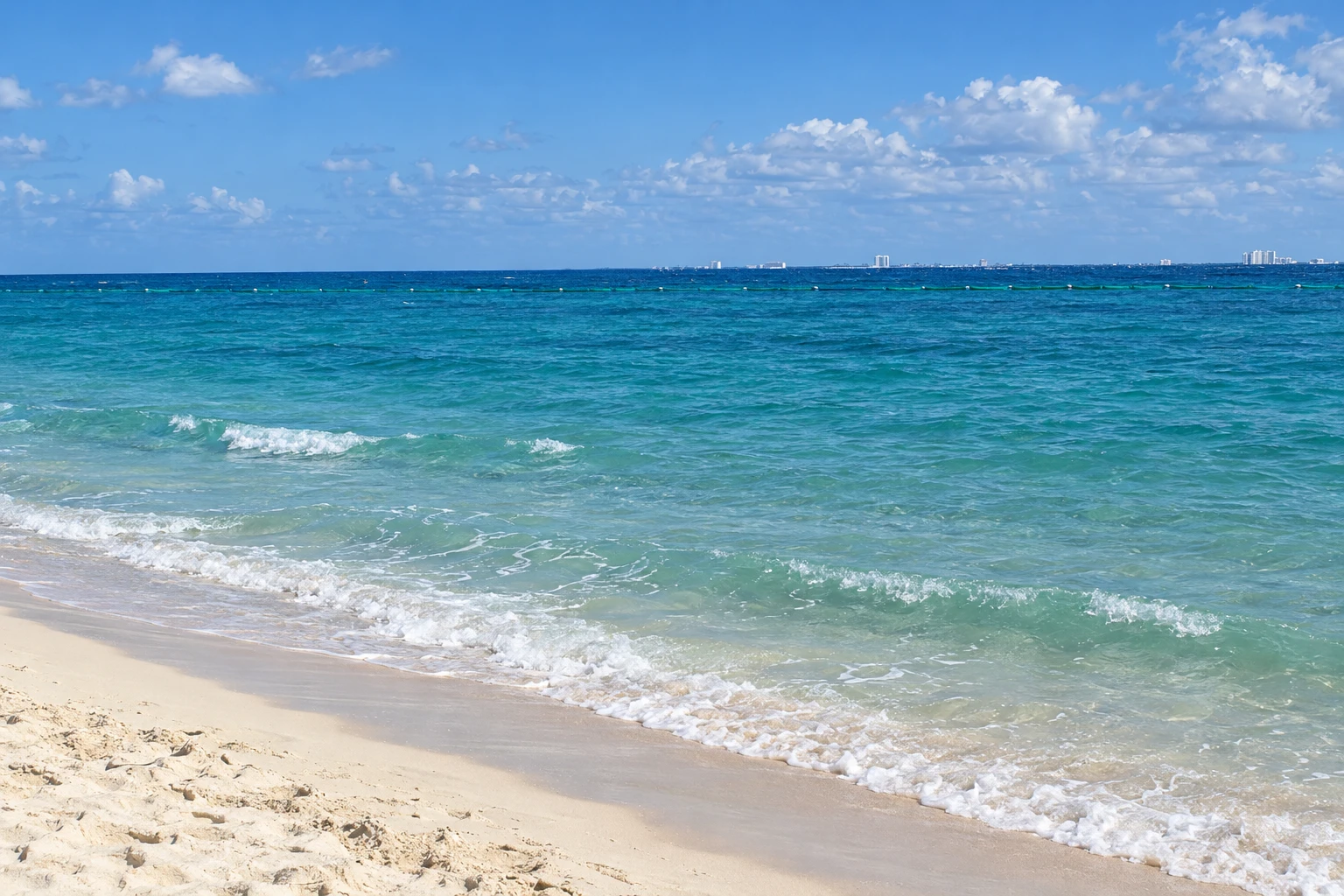
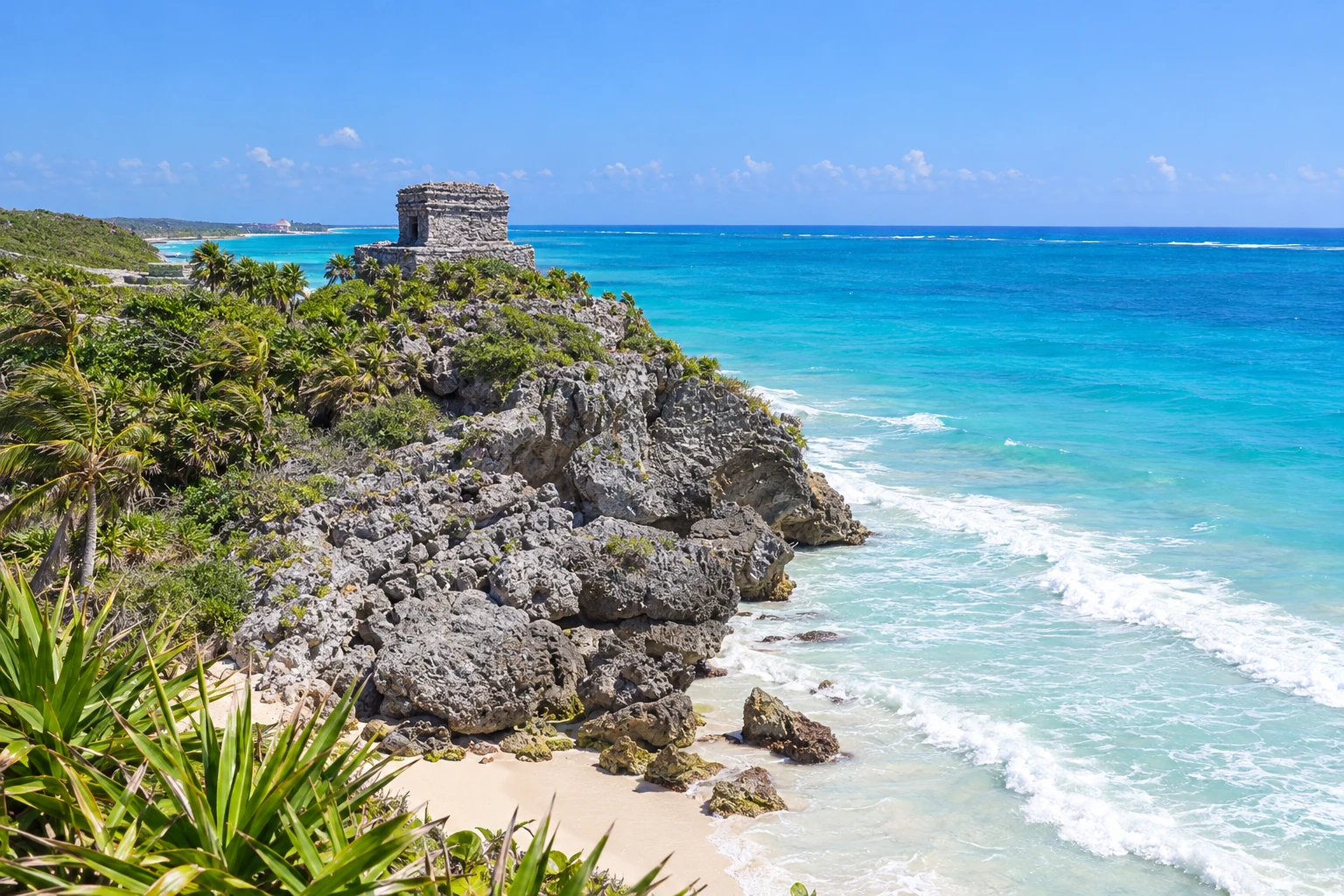
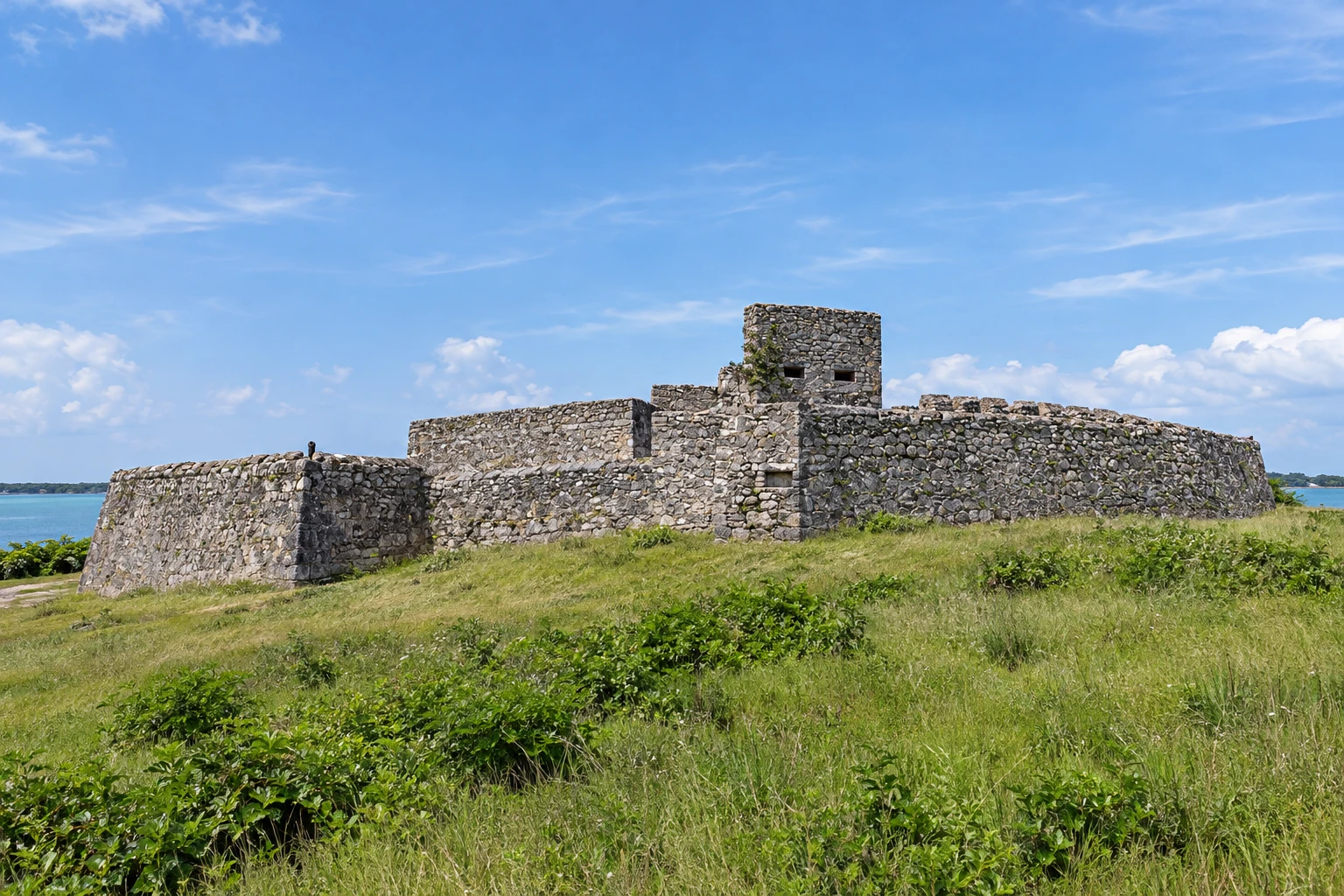
Illustrative images. The pictures in this guide are illustrations based on the real place, not photographs, and may differ from it.

State
Quintana Roo occupies the eastern part of the Yucatán Peninsula and is Mexico's Caribbean. The coastline runs for more than 800 km in front of the Mesoamerican Reef, the second-largest barrier reef in the world, and the white limestone sand gives the sea green and blue shades. It is the main entry point for Brazilians into the country, via Cancún airport.
Cancún brings together the hotel zone between the sea and Nichupté lagoon; opposite is Isla Mujeres, and to the north, Holbox, where the whale shark often appears from June to September. To the south begins the Riviera Maya, with Puerto Morelos, Playa del Carmen and Quinta Avenida, Akumal and its turtles, Puerto Aventuras and the island of Cozumel, known for diving on the reefs.
Further south are the ruins of Tulum, perched atop a cliff above the sea, the pyramid of Cobá in the middle of the jungle, and the Sian Ka'an reserve, a World Heritage Site. The limestone underground holds hundreds of cenotes, fresh, crystal-clear water sinkholes where you swim and dive, such as Gran Cenote and Dos Ojos.
At the far south, almost on the border with Belize, are the Bacalar lagoon, called the lagoon of seven colors, Mahahual beach and Chetumal, the state capital. On the table, the fish tikin xic, roasted in banana leaf with achiote, and dishes of Yucatecan cuisine, such as cochinita pibil.
Destinations
Cities
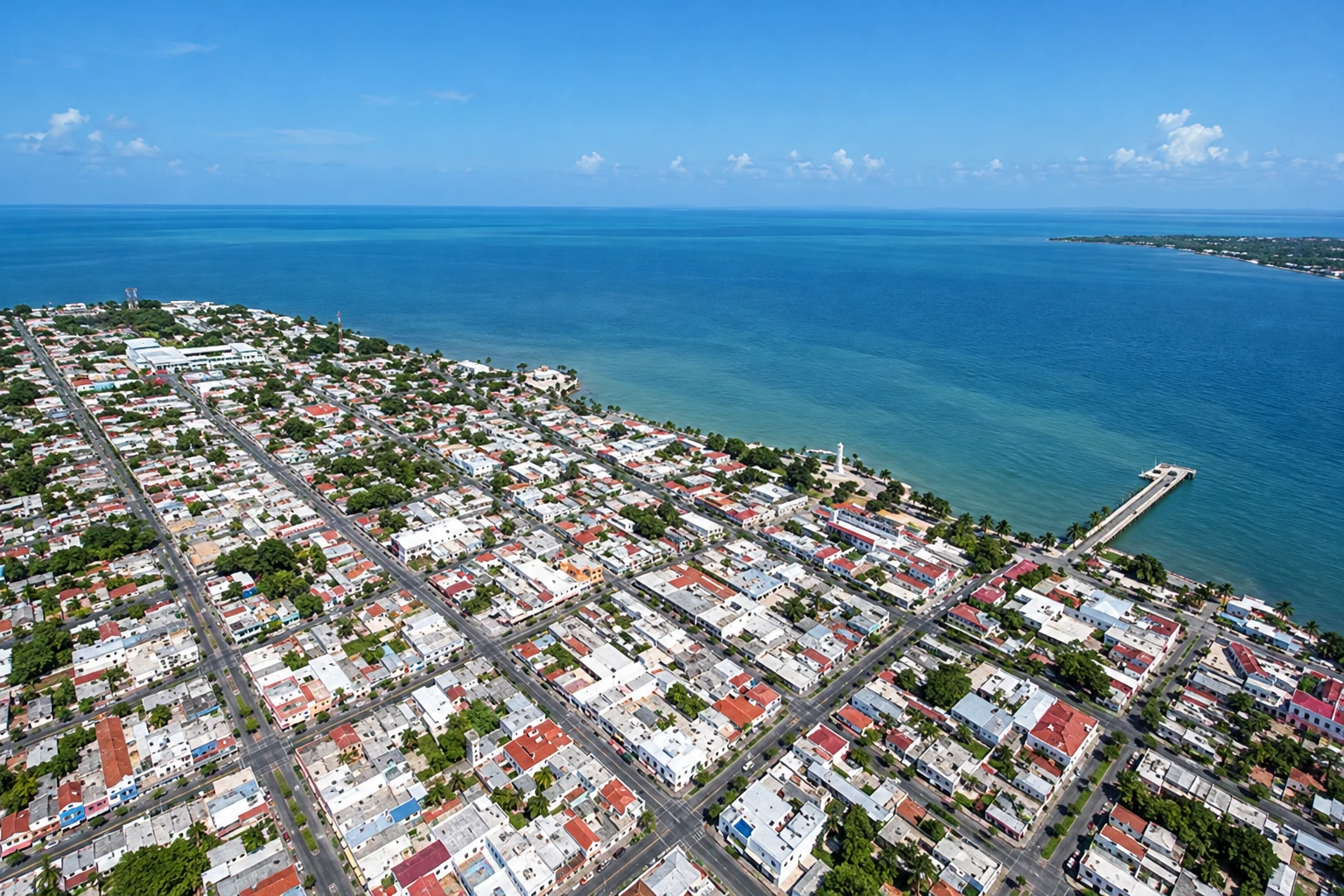
Chetumal is the capital of Quintana Roo, on the Bay of Chetumal, next to the border with Belize. It is a commercial and governmental city, with a long waterfront promenade along the bay, wooden houses with Caribbean influence and the Museum of Maya Culture. About 65 km to the west is Kohunlich, home to the Temple of the Masks. It has an airport and a Tren Maya station.
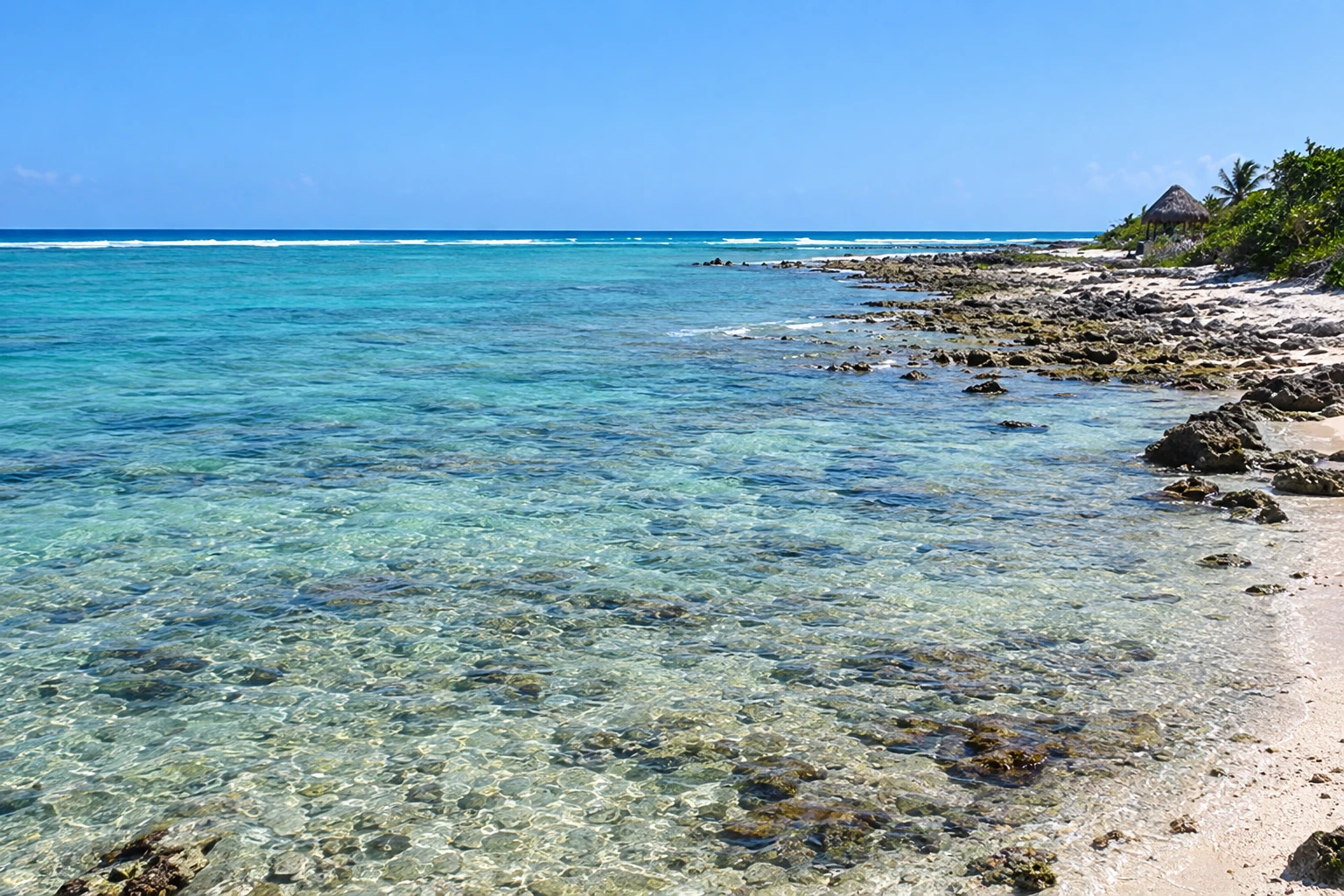
Akumal is a small beach village between Playa del Carmen and Tulum, about 37 km from Playa del Carmen. The name, in Maya, means place of the turtles: in Akumal Bay green turtles often feed on the seagrass near the sand, and snorkeling is regulated and done with guides. To the north, Yal-Ku lagoon is an inlet where freshwater from underground rivers meets the sea.
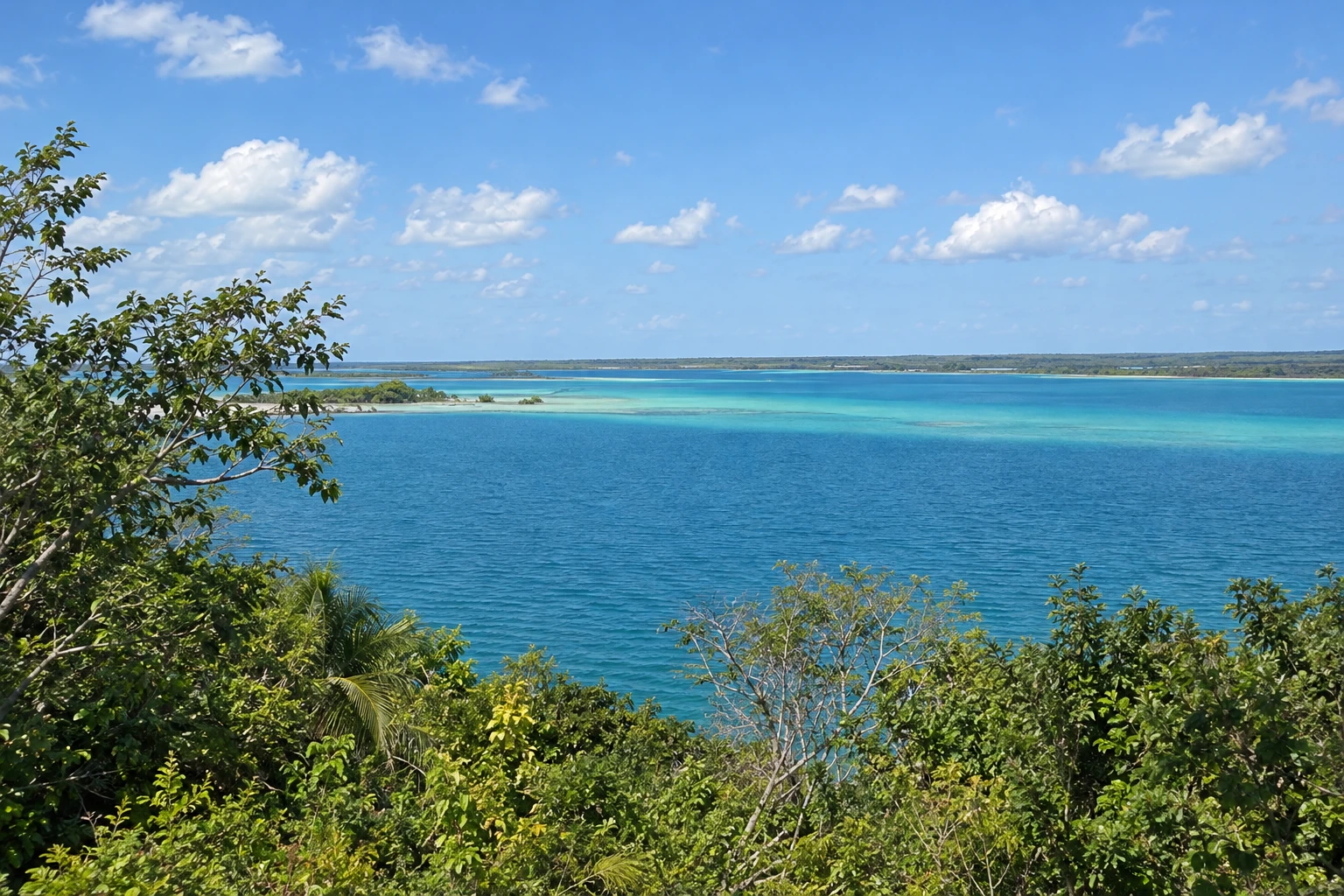
Bacalar is a small village on the shore of the Bacalar lagoon in southern Quintana Roo, about 40 km from Chetumal. The lagoon, freshwater with blue and turquoise bands, is used for swimming, paddling and boat trips. In the village is the 18th-century San Felipe fort, and to the south the Cenote Azul and the Canal de los Rápidos. It has a Tren Maya station.
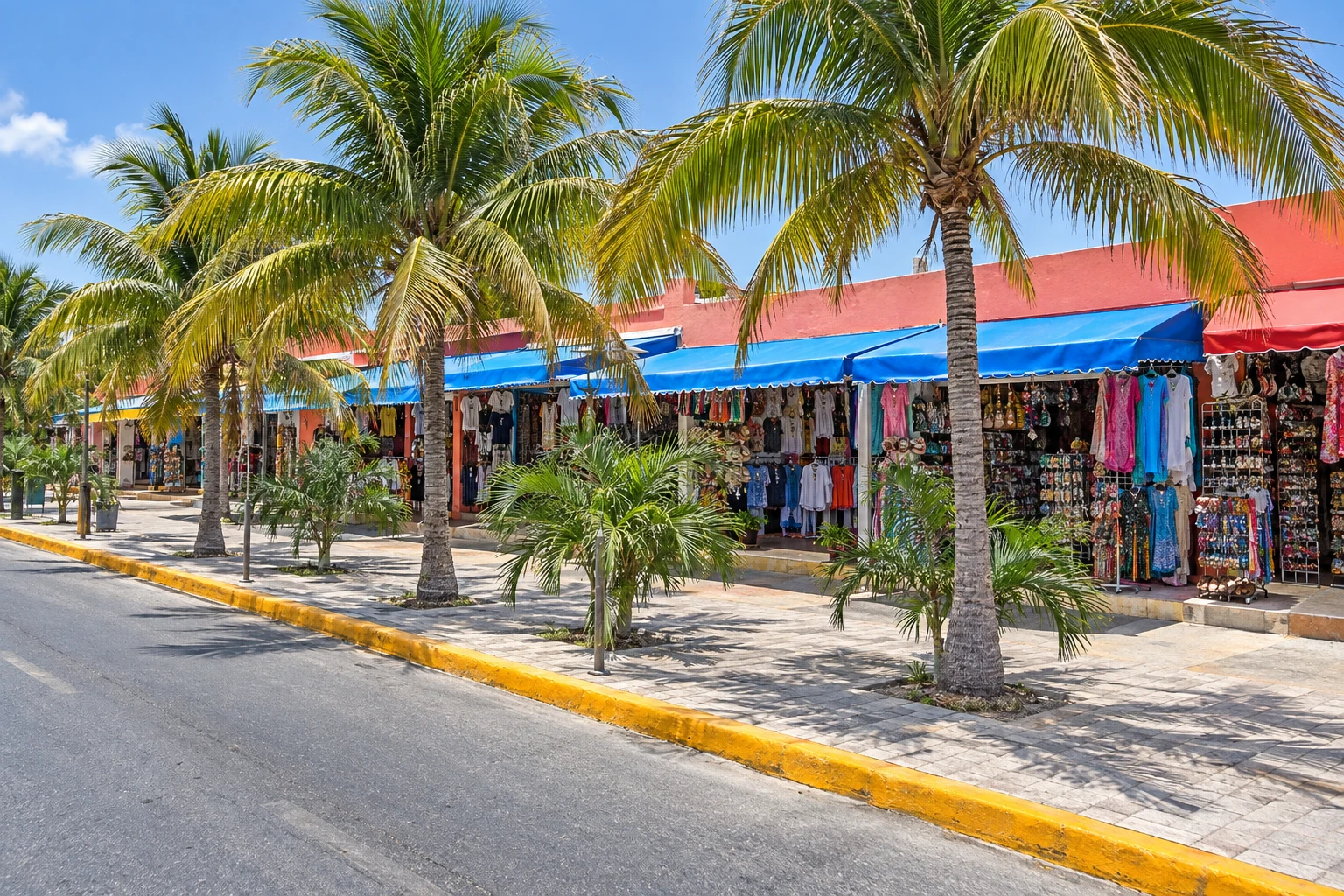
Cancún is the largest city in Quintana Roo and the main tourist airport of Mexico. The Hotel Zone, a sand strip of about 22 km between the Caribbean and the Nichupté lagoon, includes the public beaches, the Museo Maya de Cancún with the San Miguelito archaeological zone and, near Punta Nizuc, the El Rey ruins and Playa Delfines. Downtown, around Tulum Avenue and Parque de las Palapas, has the markets and the bus station. It is 2 hours behind Brasília.
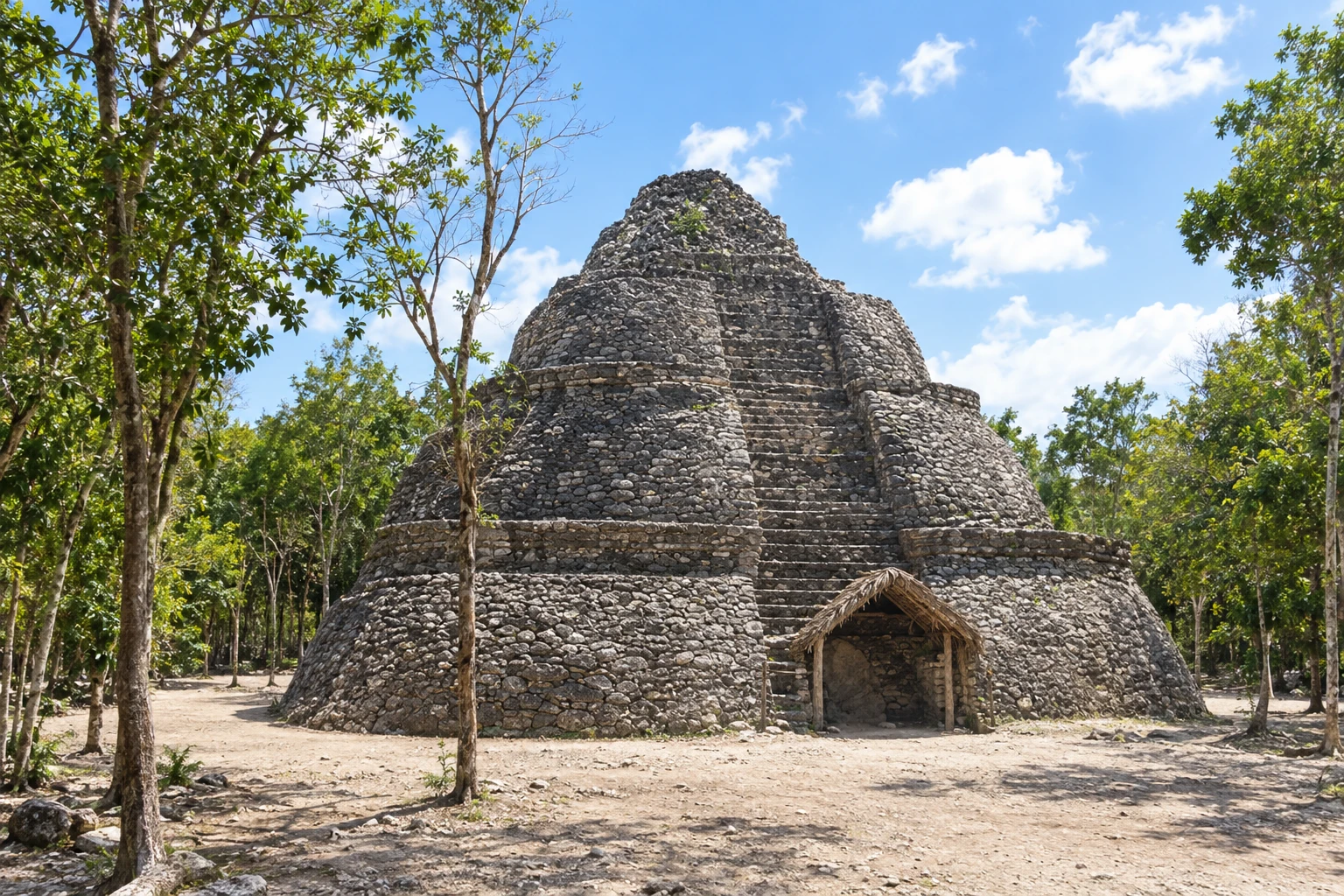
Cobá is a Mayan village in the interior of Quintana Roo, about 45 km from Tulum, beside two lagoons. Next to it is the Cobá archaeological zone, one of the largest Mayan cities of the Classic period, spread through the jungle and linked by stone causeways, with the Nohoch Mul pyramid, about 42 meters high. South of the village, the cenotes Choo-Ha, Tamcach-Ha and Multun-Ha are freshwater caves managed by the community.
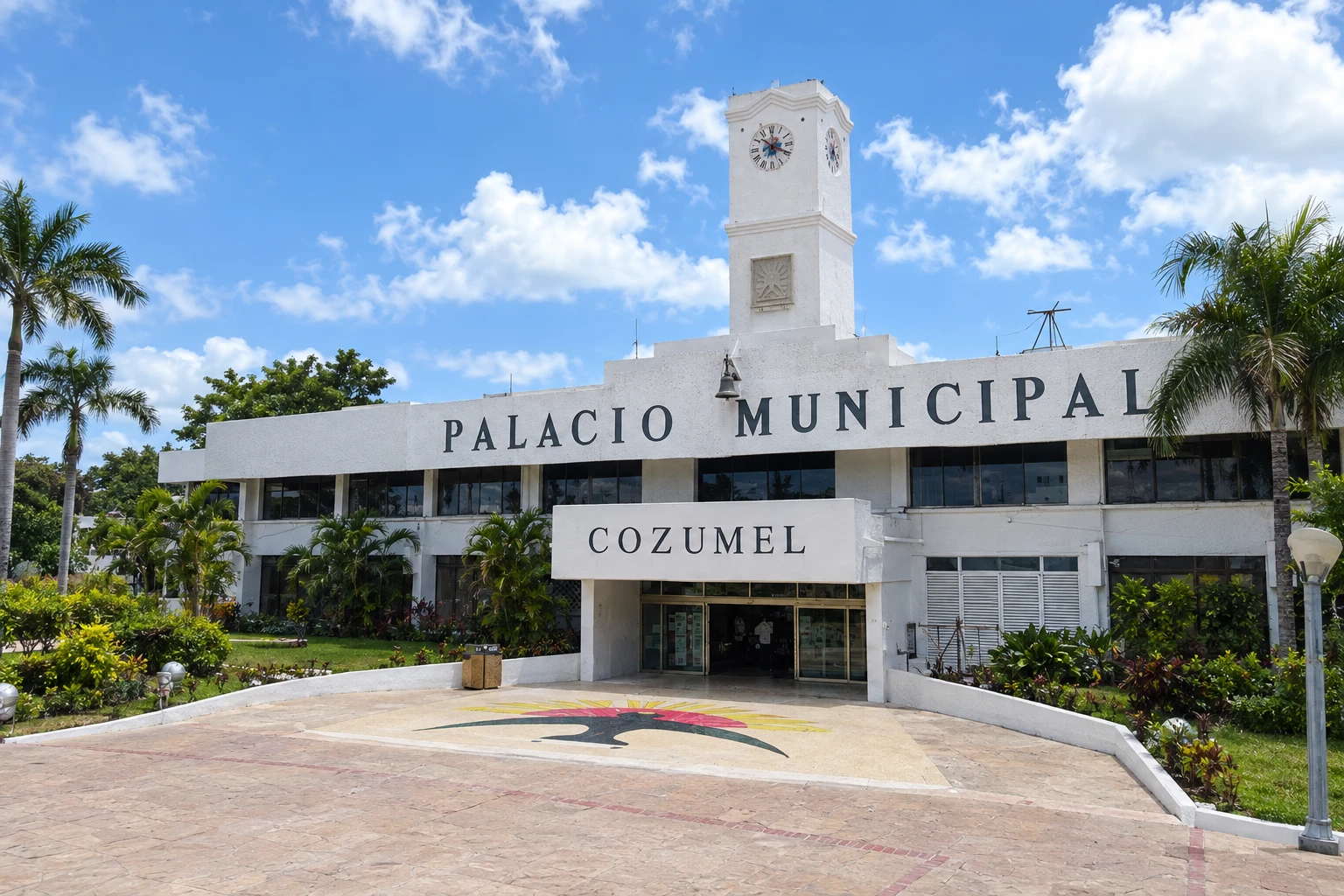
Cozumel is the largest island in the Mexican Caribbean, about 20 km from Playa del Carmen. The town of San Miguel, on the west coast, has the boat pier and the waterfront. The reefs of Parque Nacional Arrecifes de Cozumel, such as Palancar and Colombia, make the island one of the world's best-known diving destinations. Inland is San Gervasio, the Maya sanctuary of the goddess Ixchel, and on the southern tip the Punta Sur park, with the Celarain lighthouse and the Colombia lagoon.
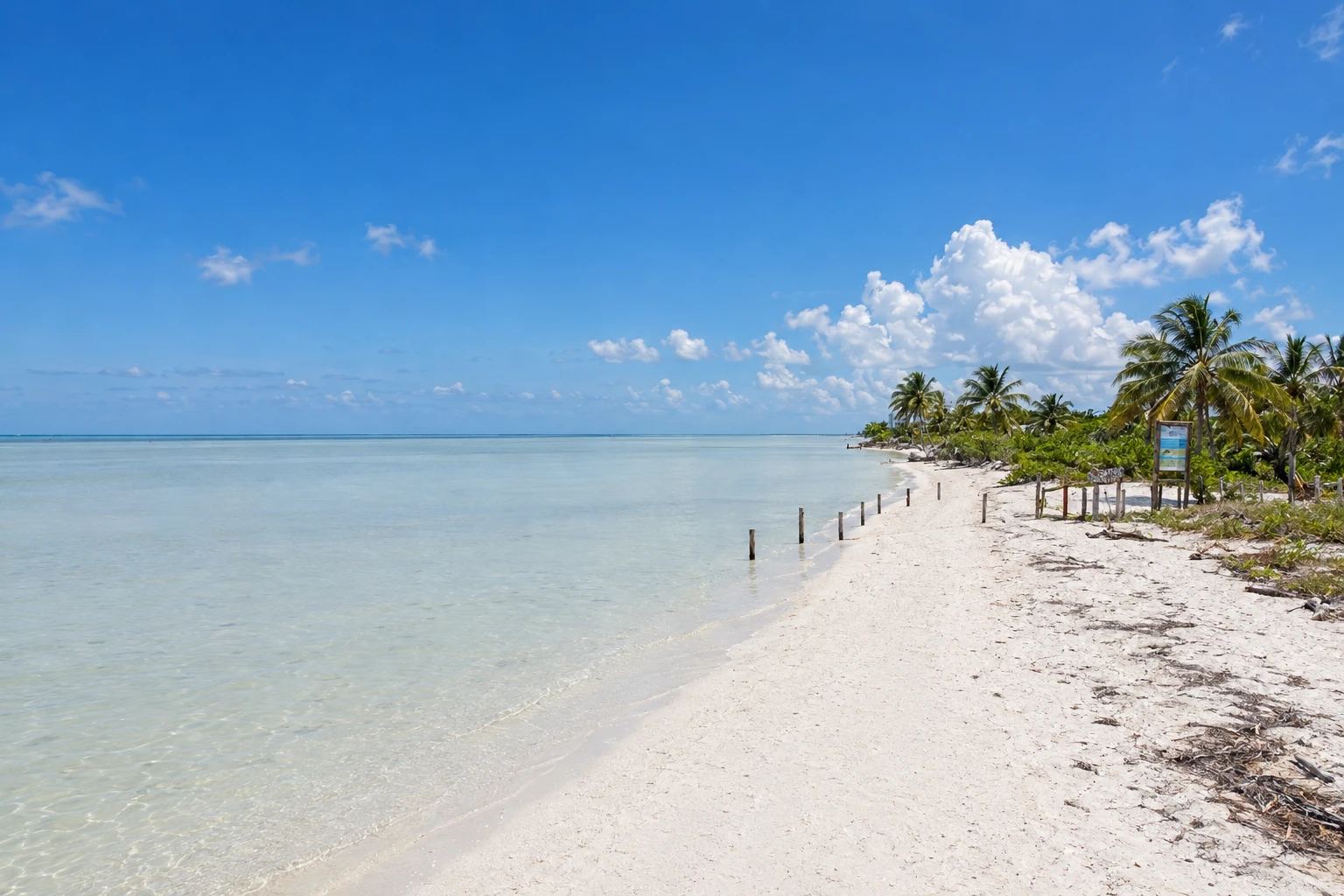
Holbox is a narrow island in northern Quintana Roo, inside the protected area of Yum Balam, separated from the mainland by a shallow lagoon. The village has sandy streets, houses with colorful murals and no cars: transport is by golf cart or bicycle. Boat trips to swim with the whale shark depart from the island, usually appearing from June to September. Holbox Beach and Punta Cocos, to the west, are the sunset spots.
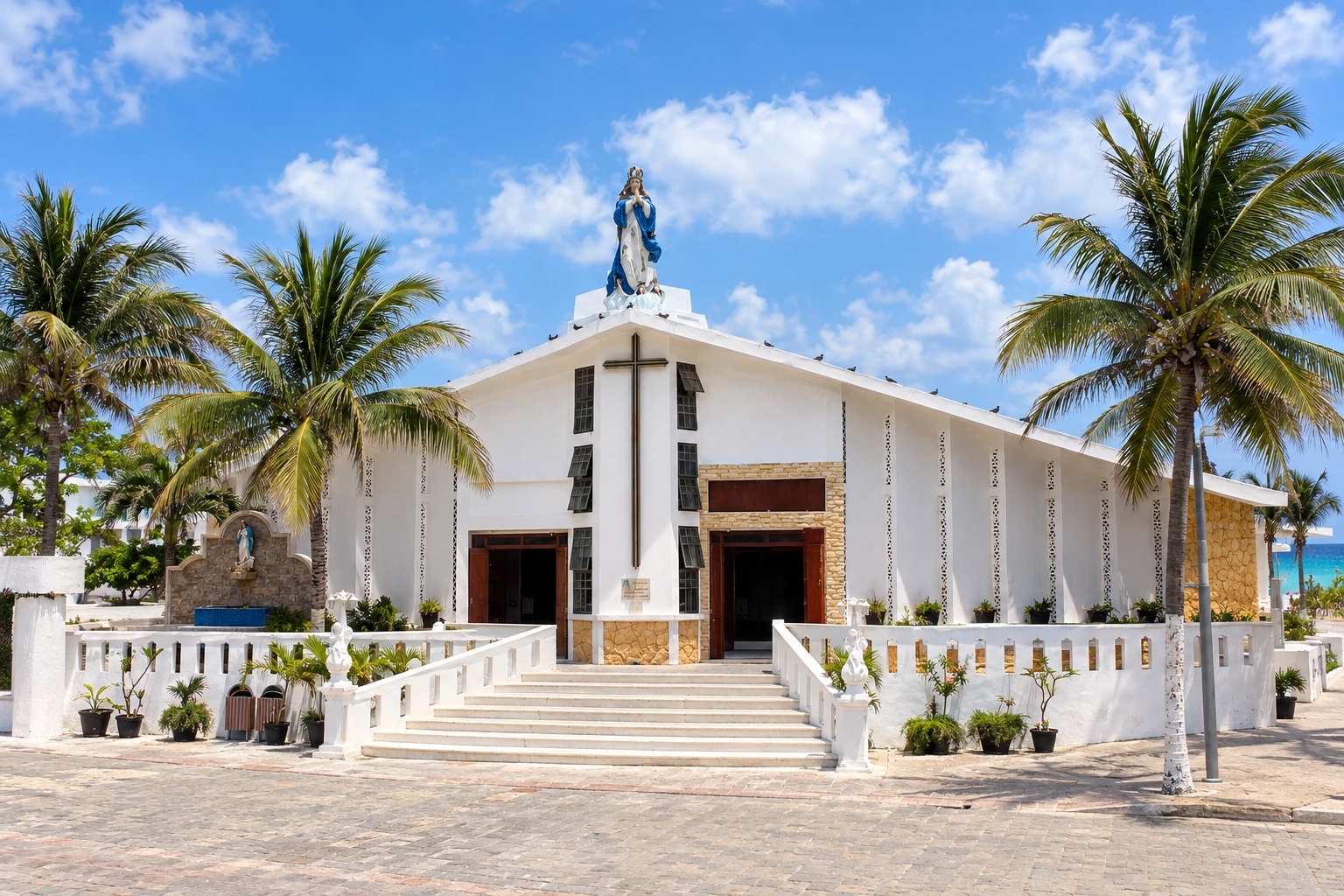
Isla Mujeres is a narrow island about 7 km long off Cancún, a 15–30 minute boat ride away. The village, at the northern tip, has streets of colorful houses and Playa Norte, with white sand and shallow, calm water. At the southern tip, Punta Sur has a lighthouse, a sculpture park and the remains of a Maya temple dedicated to Ixchel, at Mexico’s easternmost point. The island is explored by golf cart or bicycle.
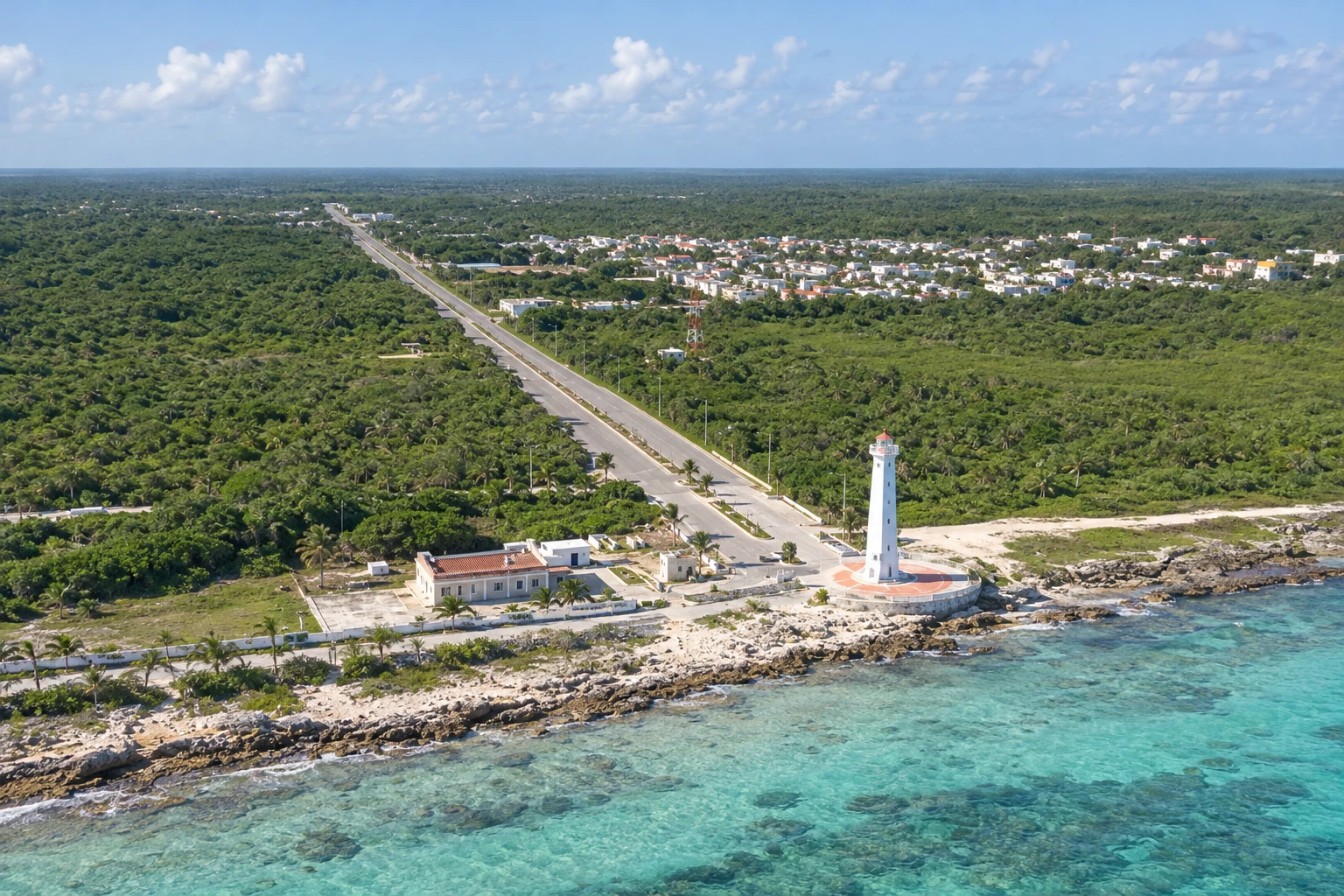
Mahahual is a fishing village on the southern coast of Quintana Roo, in the region called Costa Maya, about 140 km from Chetumal. It has a white-sand beach and calm water, protected by the reef, with a wooden boardwalk and restaurants. To the north is the Costa Maya cruise port. Offshore, about 30 km away, is Banco Chinchorro, a reef atoll.
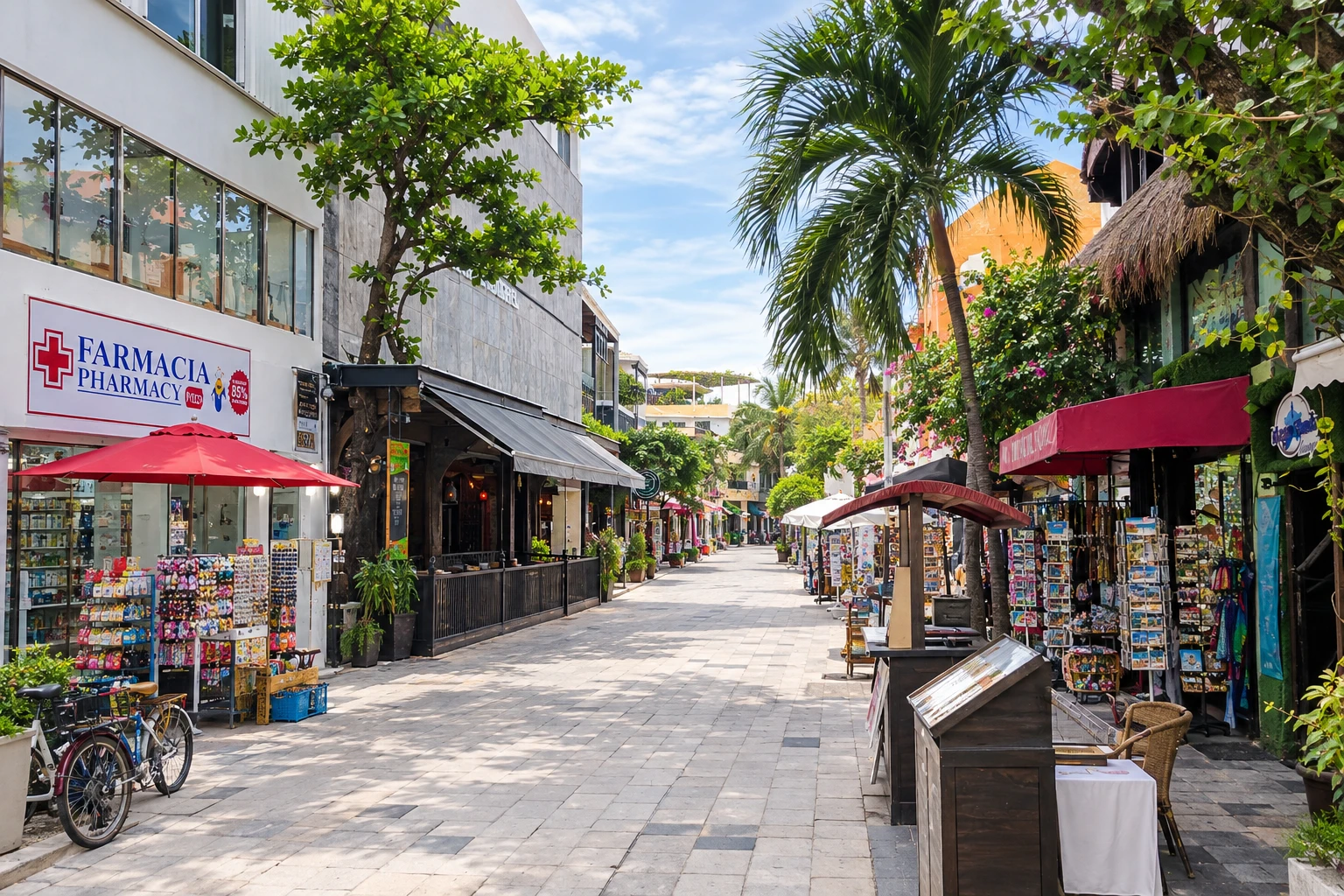
Playa del Carmen is the largest town in the Riviera Maya, about 55 km from Cancún airport. Life revolves around Quinta Avenida, the pedestrian street parallel to the sea, and Parque de los Fundadores, next to the pier for boats to Cozumel, where the Portal Maya sculpture stands. To the north, Punta Esmeralda beach receives the water of a small cenote. It is the most commonly used base for Cozumel, Akumal, Tulum and the cenotes. It is 2 hours behind Brasília.
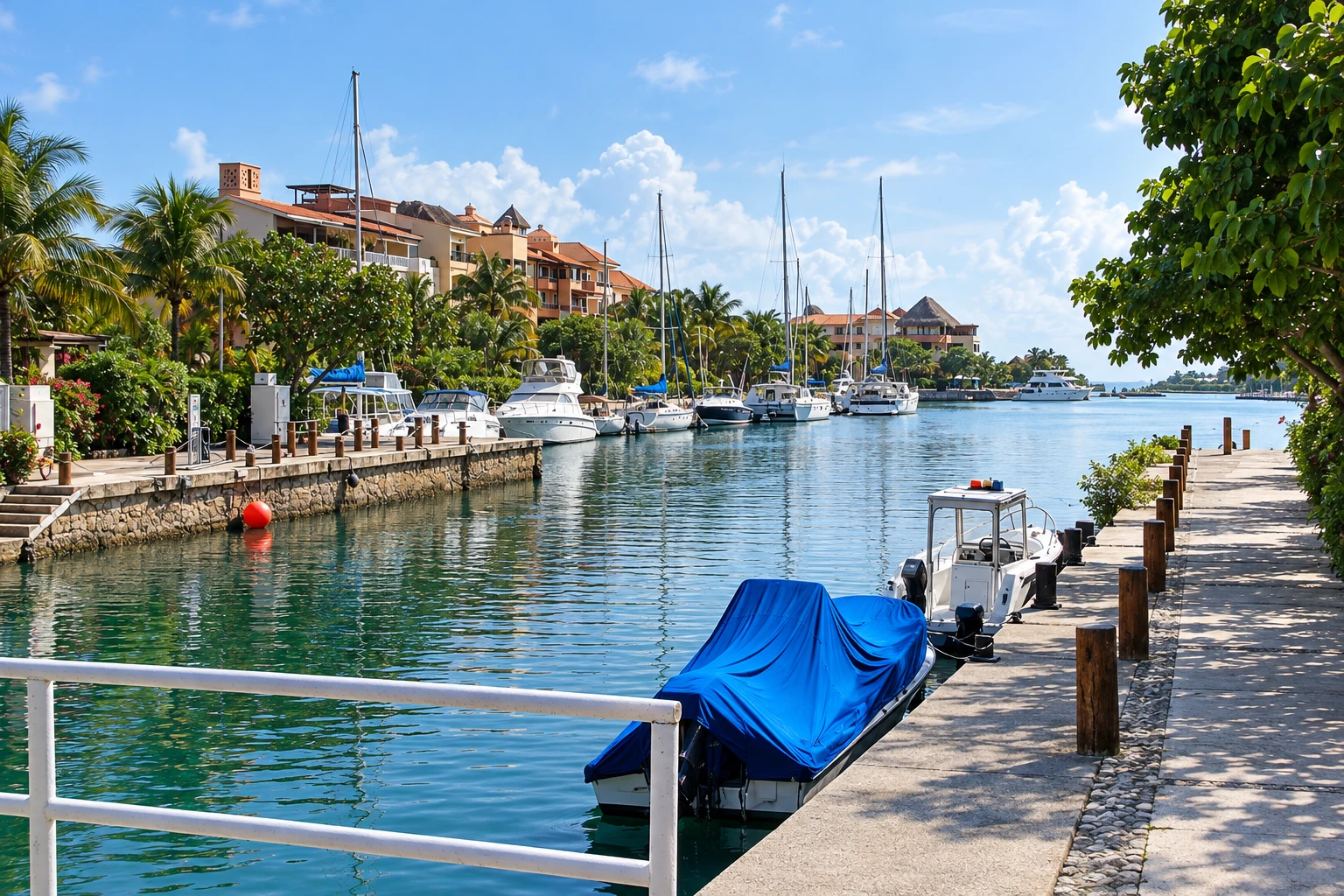
Puerto Aventuras is a planned community on highway 307, between Playa del Carmen and Akumal, built around a marina, with rental homes, a golf course and calm beaches protected by the reef. A few minutes away are three open-air cenotes, Cristalino, Jardín del Edén and Azul, and Xpu-Ha beach. It serves as a quiet base in the middle of the Riviera Maya, about 20 km from Playa del Carmen and 40 km from Tulum.
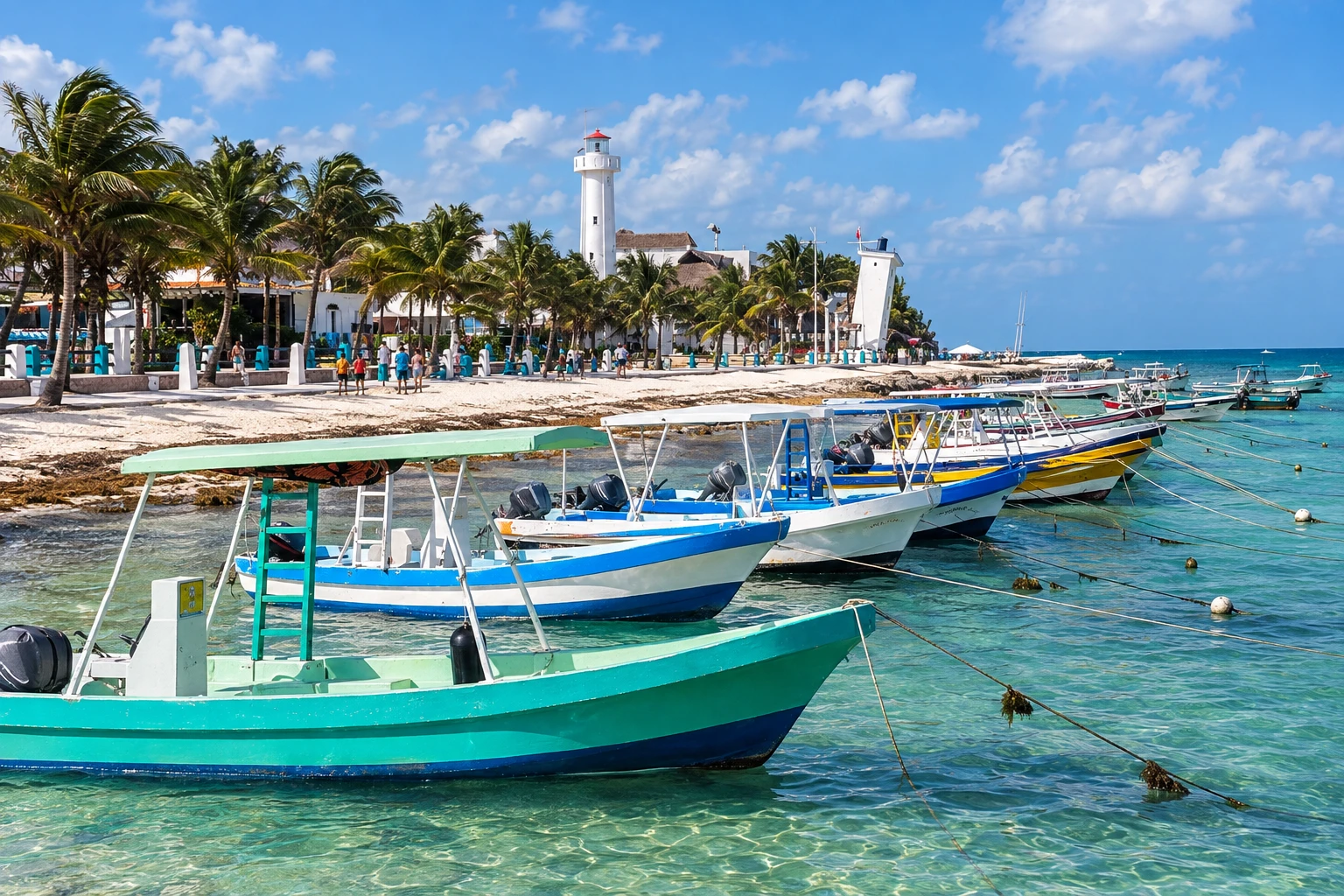
Puerto Morelos is a fishing village between Cancún and Playa del Carmen, about 20 km from Cancún airport. It has a seaside square, the leaning lighthouse, toppled by a hurricane in 1967 and left as a reminder, and the reef protected as a national park a few hundred meters from the beach, good for snorkeling. On the roadside is the Jardín Botánico Dr. Alfredo Barrera Marín. It’s the calmest village in the northern Riviera Maya.
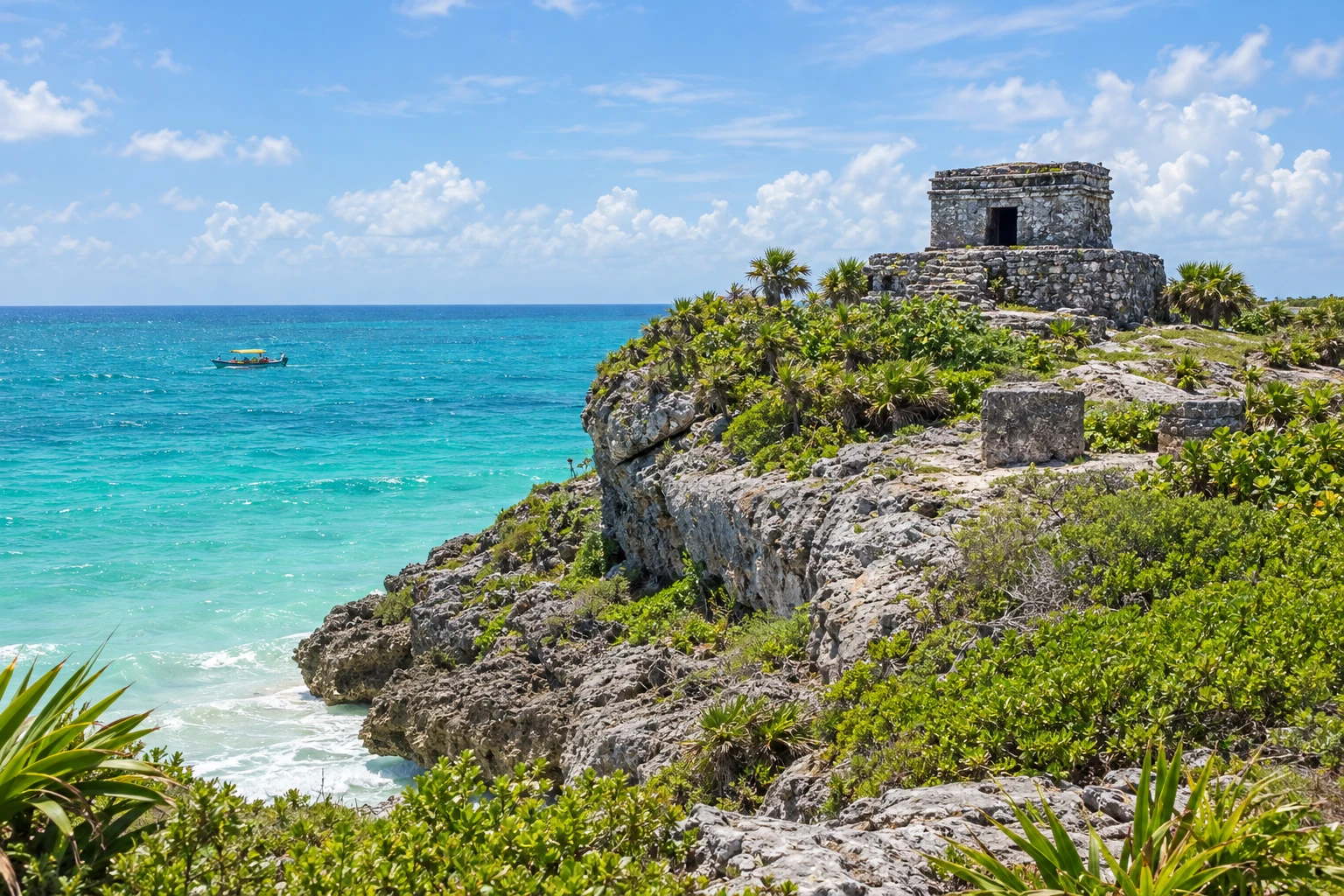
Tulum is the town in the southern Riviera Maya known for the Maya archaeological zone on a cliff facing the Caribbean. The Pueblo, on highway 307, has shops and the bus station; the beach area lies south of the ruins, with Playa Paraíso and the entrance to the Sian Ka'an Biosphere Reserve. Inland are the Gran Cenote and, to the north, the Dos Ojos system. It has its own airport and a Tren Maya station, and is 2 hours behind Brasília.
From November to April, in the dry season, days are usually sunny and less humid; this is high season. From May to October it is hotter, rains in showers and it is hurricane season, with higher risk from August to October. Sargassum seaweed typically reaches beaches between April and August, varying year to year. Quintana Roo is 2 hours behind Brasília.
Cancún International Airport (CUN) is the state's main airport. Connections with Brazil can be direct flights or with a stopover, depending on the season and the airline. Check before purchasing. Tulum (TQO) and Cozumel (CZM) have their own airports, and Chetumal (CTM) receives domestic flights. Between Cancún, Playa del Carmen and Tulum there are frequent buses along Federal Highway 307, and the Tren Maya connects the region to Yucatán and Campeche. For Cozumel and Isla Mujeres there are ferries from Playa del Carmen and from Cancún.
Beyond the guide
Your questions
Cancún is the city with the hotel zone and the international airport. The Riviera Maya is the stretch of coast to the south, from Puerto Morelos to Tulum, including Playa del Carmen, Akumal and Puerto Aventuras, and it can be reached by bus or car from the airport.
The seaweed typically arrives on beaches between April and August, in amounts that vary from year to year and from one beach to another. Islands such as Isla Mujeres and Cozumel, on the side facing the mainland, usually receive less.
Yes. Chichén Itzá is in the neighboring state of Yucatán, about 200 km from Cancún, and there are day tours with stops at cenotes and Valladolid.
It is a natural sinkhole of fresh water formed when the roof of a limestone cave collapses. Many are open for swimming and diving, with an entrance fee, and often require biodegradable sunscreen or a shower before entering.