Illustrative images. The pictures in this guide are illustrations based on the real place, not photographs, and may differ from it.
The city
What to expect from Cancún.
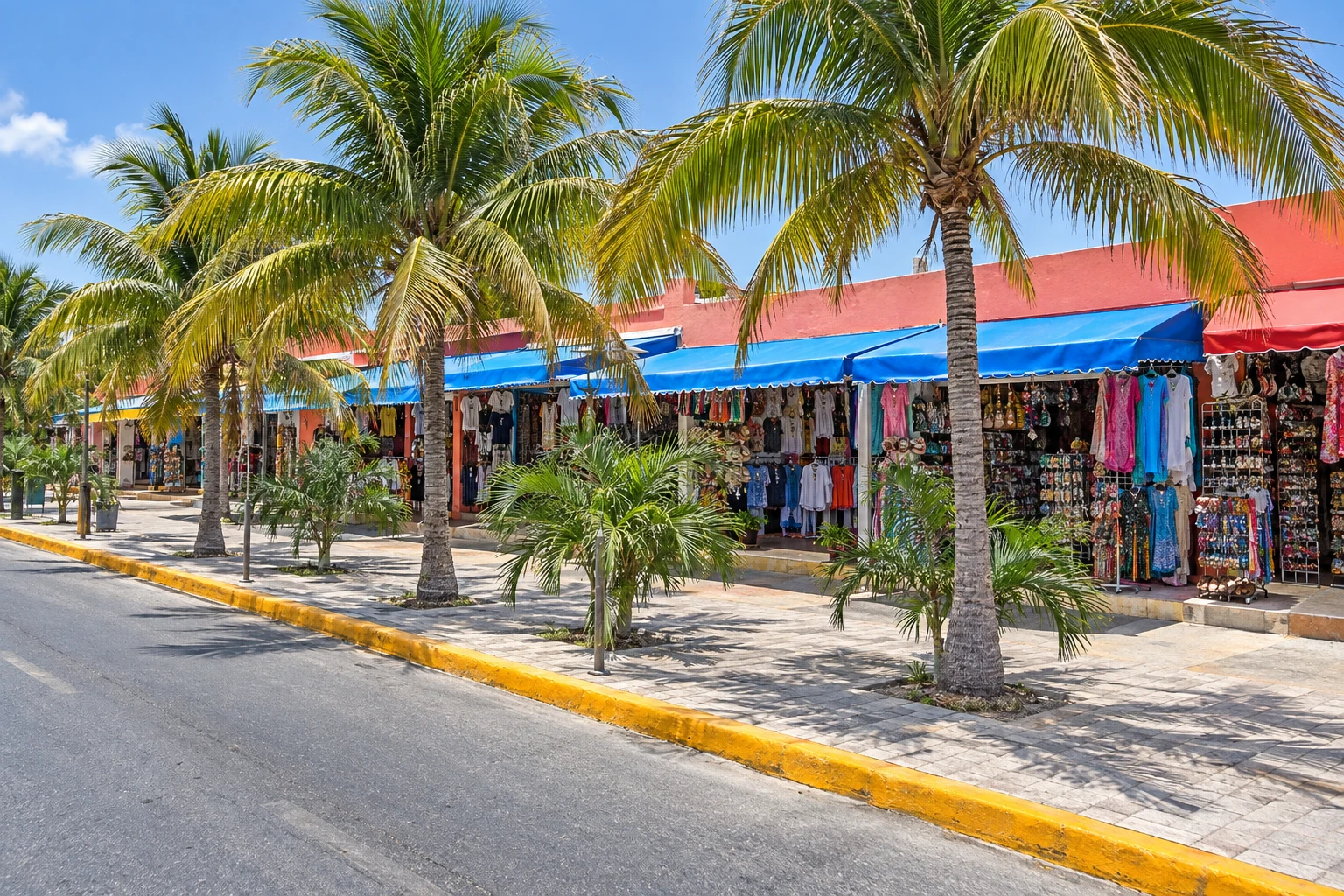
Cancún is the largest city in Quintana Roo and the main tourist airport of Mexico. The Hotel Zone, a sand strip of about 22 km between the Caribbean and the Nichupté lagoon, includes the public beaches, the Museo Maya de Cancún with the San Miguelito archaeological zone and, near Punta Nizuc, the El Rey ruins and Playa Delfines. Downtown, around Tulum Avenue and Parque de las Palapas, has the markets and the bus station. It is 2 hours behind Brasília.
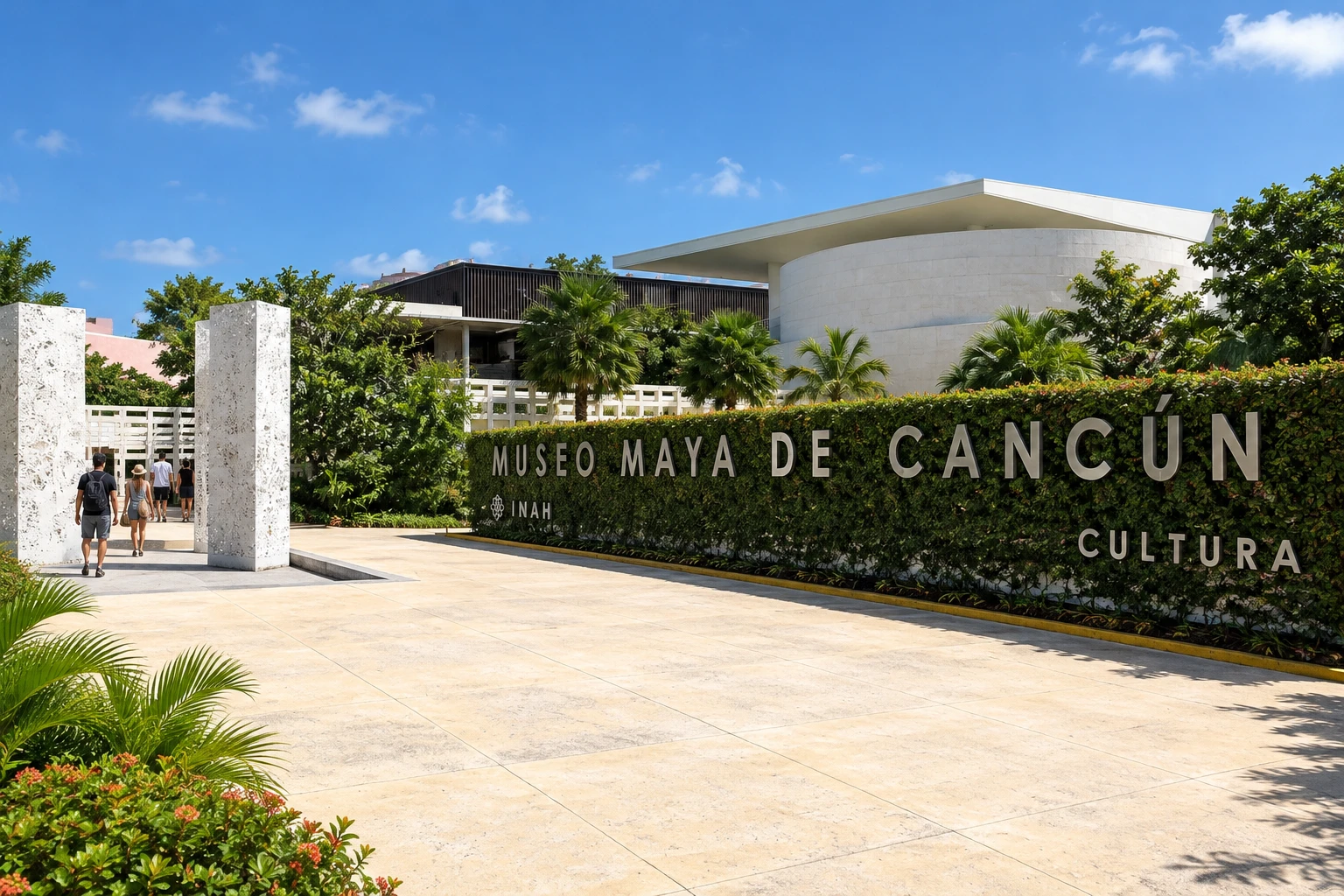
Museum of the National Institute of Anthropology and History (INAH) in the Zona Hotelera, with pieces of the Maya culture of Quintana Roo and the trail to the San Miguelito archaeological zone.
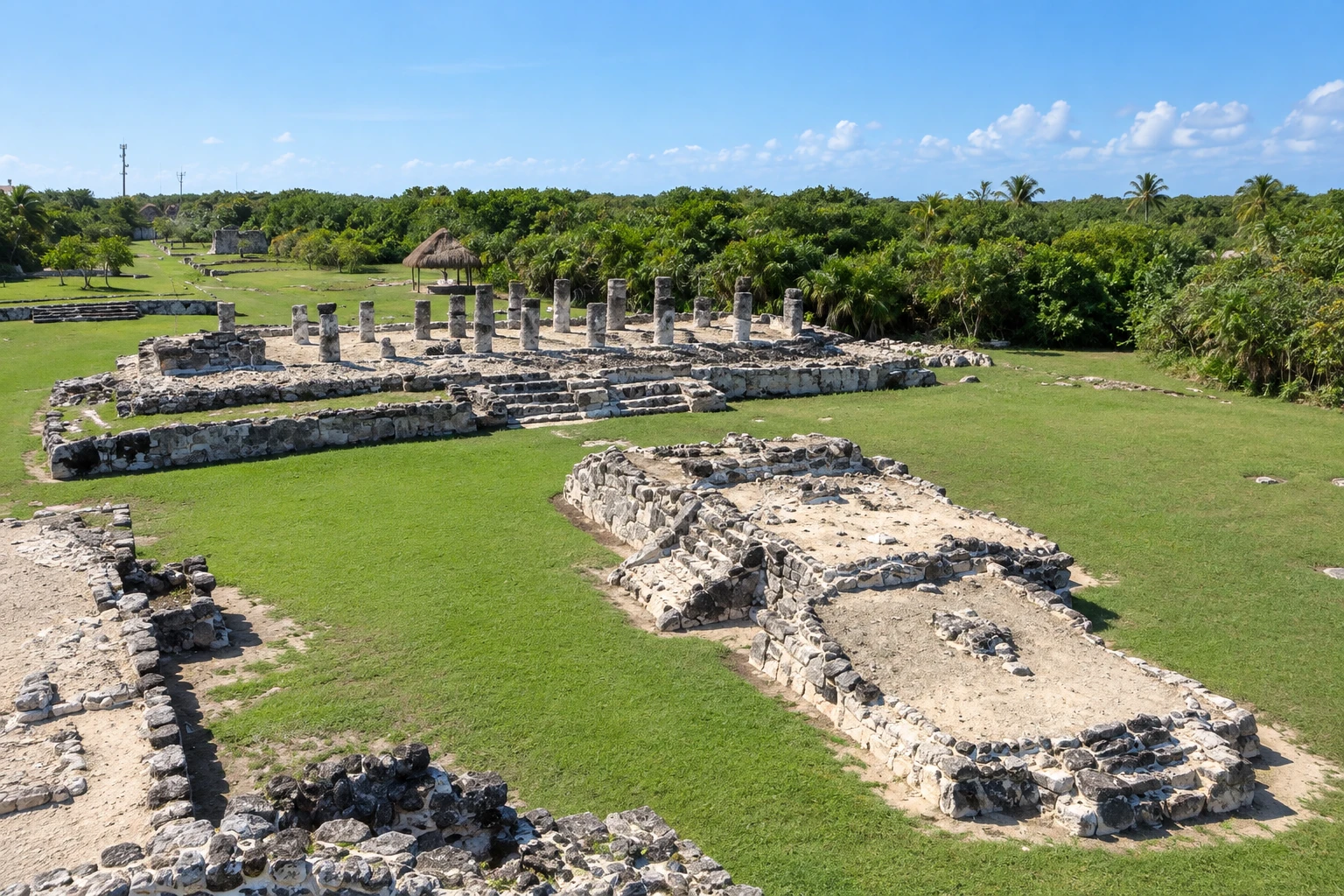
Ruins of a Maya village from the post‑classical period near Punta Nizuc in the southern Zona Hotelera, with a central street flanked by platforms and many iguanas.
Cancún – MexicoDestination Cancunabout 380 km from Chetumal
How to get there
Aeropuerto Internacional de Cancún (CUN)16 km
Terminal de Autobuses ADO Cancún Centro1 km
Terminal marítima de Puerto JuárezPuerto Juárez · 4 km
Approximate distances. Check flights and bus, train or boat schedules before you travel.
Connections with Brazil may be by direct flight or with a connection, depending on the season and the airline. Confirm before buying. Cancún International Airport (CUN) is about 16 km from downtown, with authorized taxis and transfers and buses to the downtown bus station. Long‑distance buses link Cancún with Playa del Carmen, Tulum, Valladolid, Mérida and Chetumal.
How many days
Three days for the beach, the Maya Museum and the Zona Hotelera ruins, and another day for Isla Mujeres. With five or six days you’ll have time left for Holbox or for a day trip to Chichén Itzá.
When to go
The dry season usually runs from December to April, with sun and calmer sea. From May to October there is more rain, in afternoon downpours, and the heat is humid. The hurricane season runs from June to November. Sargassum typically appears from April to August, more on the open‑sea stretch of the Zona Hotelera.
The seasons shown are the most usual ones; nature doesn't always follow the calendar.
Do you need a car?
No. The city bus R-1 runs along Avenida Kukulcán from end to end of the Zona Hotelera to downtown, and taxis are easy to find. A car only helps to leave the city toward Holbox, Valladolid or Chichén Itzá. In Mexico you drive on the right, as in Brazil.
Suggested itinerary
An order that works
Built with the places on this page. No rush: it's paced so you have time to see them.
One day in Cancún
manhã
Museo Maya and San Miguelito
Start at the Museo Maya de Cancún in the Zona Hotelera, with artifacts found in Quintana Roo, and follow the trail that leaves the museum to the ruins of San Miguelito in the middle of the vegetation.
tarde
Beach in the Zona Hotelera
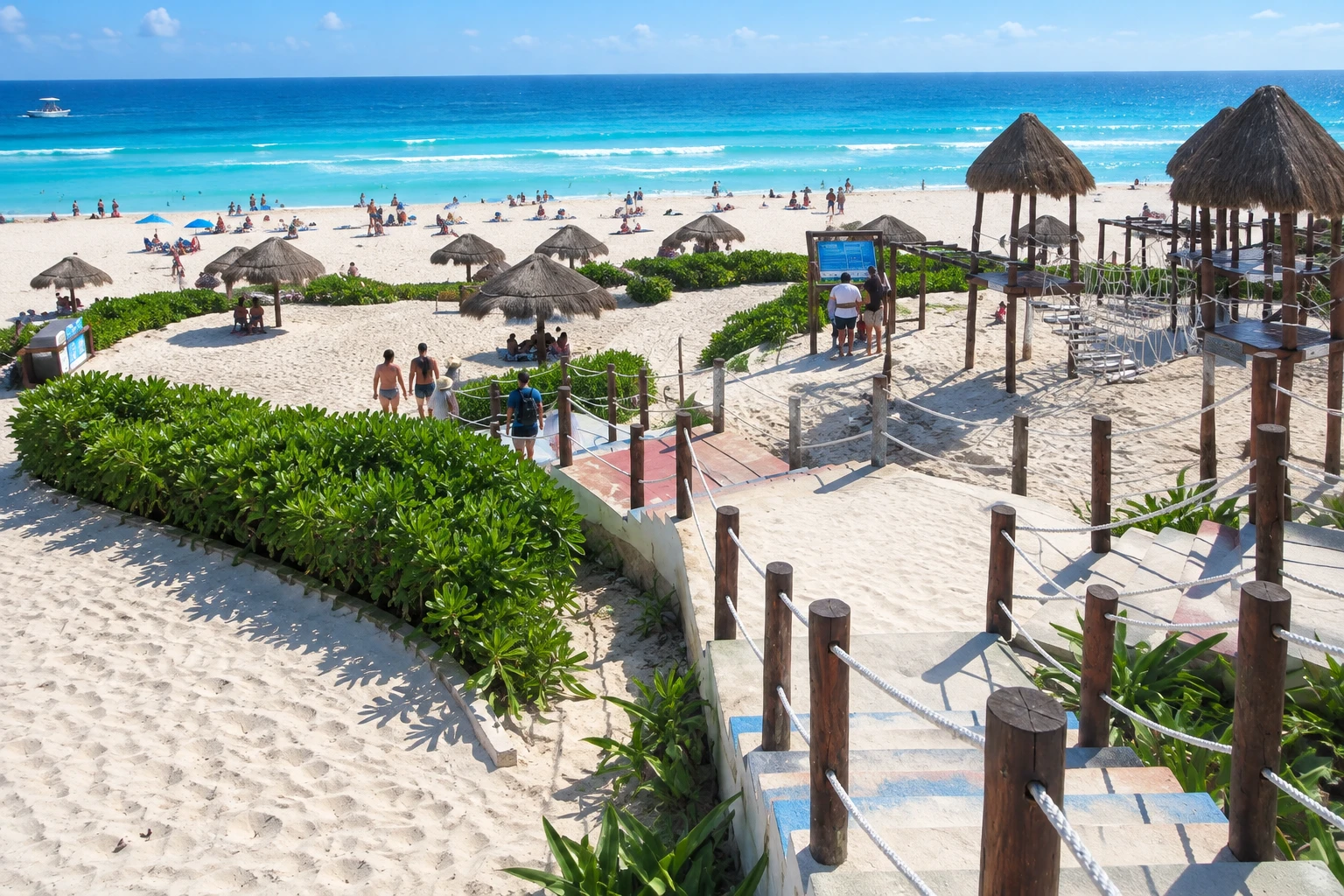
Choose a public beach with access from Avenida Kukulcán, such as Chac Mool or Marlín, and spend the afternoon in the sea. On open‑sea beaches, pay attention to the colored flags that indicate sea conditions.
fim de tarde
El Rey and Playa Delfines
In the late afternoon, visit the El Rey archaeological zone, where iguanas sun themselves on the rocks, and cross the avenue to Playa Delfines and the Cancún letters viewpoint.
noite
Dinner in downtown
Return to downtown and dine near Parque de las Palapas, where at night families and Mexican food stalls fill the square. Avenida Yaxchilán has seafood restaurants and taco places.
Check before you go. Opening hours and days change, and places may close for renovations, holidays or events. This itinerary is a suggestion from Cidade Turismo, not a commitment: plan yours by checking directly with each place you intend to visit.
Before you go
Frequently asked questions
Does Cancún have public beaches?
Yes. By law, Mexico’s beaches are public, including those in front of hotels. There are marked public access points along Avenida Kukulcán, such as Langosta, Tortugas, Chac Mool, Marlín and Delfines beaches.
Which part of Cancún has the calmest sea?
The stretch between downtown and Punta Cancún, facing the Bahía de Mujeres, usually has shallow, calm water. From km 9 to km 20 of the Zona Hotelera the sea is open, with waves and currents; follow the lifeguards’ flags.
What to do in Cancún besides the beach?
Visit the Museo Maya and the ruins of San Miguelito and El Rey, spend a day on Isla Mujeres, watch the sunset over the Nichupté lagoon and take day trips to cenotes, Tulum or Chichén Itzá.
How do you get around the Zona Hotelera without a car?
The city bus R-1 runs along Avenida Kukulcán all day and links the Zona Hotelera with downtown. Taxis are common; agree the fare before getting in, because they do not use a meter.


 Brazil
 Antarctica
 Argentina
 Bolivia
 Chile
 Colombia
 Ecuador
 Falkland Islands (Malvinas)
 French Guiana
 Guyana
 Paraguay
 Peru
 Suriname
 Uruguay
 Venezuela
 Austria
 Belgium
 Croatia
 Denmark
 Finland
 France
 Germany
 Greece
 Hungary
 Iceland
 Ireland
 Italy
 Luxembourg
 Norway
 Poland
 Portugal
 Slovakia
 Slovenia
 Spain
 Sweden
 Switzerland
 the Czech Republic
 the Netherlands
 the United Kingdom
 Turkey
 Bermuda
 Canada
 Greenland
 Saint Pierre and Miquelon
 the United States
 the Dominican Republic
 Japan
 Egypt
 South Africa
 Australia
 Fiji
 New Zealand
 Papua New Guinea