Tulum · Mexico · Archaeological site
Tulum Ruins
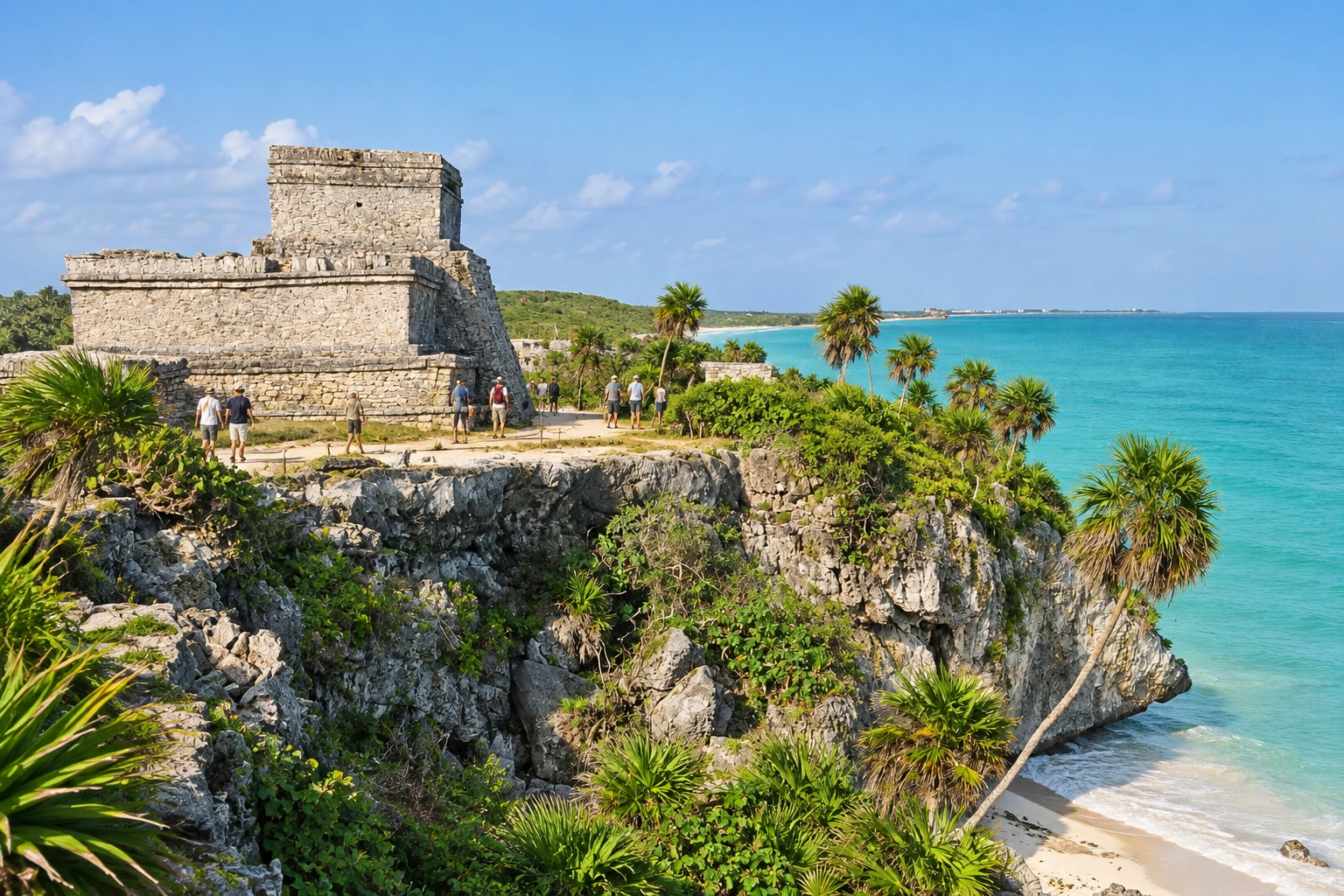
Walled Maya city on a cliff of about 12 meters facing the Caribbean, featuring the Castillo, the Temple of the Frescoes and the Temple of the Wind God.

 Search
 Brazil
 Antarctica
 Argentina
 Bolivia
 Chile
 Colombia
 Ecuador
 Falkland Islands (Malvinas)
 French Guiana
 Guyana
 Paraguay
 Peru
 Suriname
 Uruguay
 Venezuela
 Austria
 Belgium
 Croatia
 Denmark
 Finland
 France
 Germany
 Greece
 Hungary
 Iceland
 Ireland
 Italy
 Luxembourg
 Norway
 Poland
 Portugal
 Slovakia
 Slovenia
 Spain
 Sweden
 Switzerland
 the Czech Republic
 the Netherlands
 the United Kingdom
 Turkey
 Bermuda
 Canada
 GreenlandMexico
 Saint Pierre and Miquelon
 the United States
 the Dominican Republic
 JapanTurkey
 Egypt
 South Africa
 Australia
 Fiji
 New Zealand
 Papua New Guinea
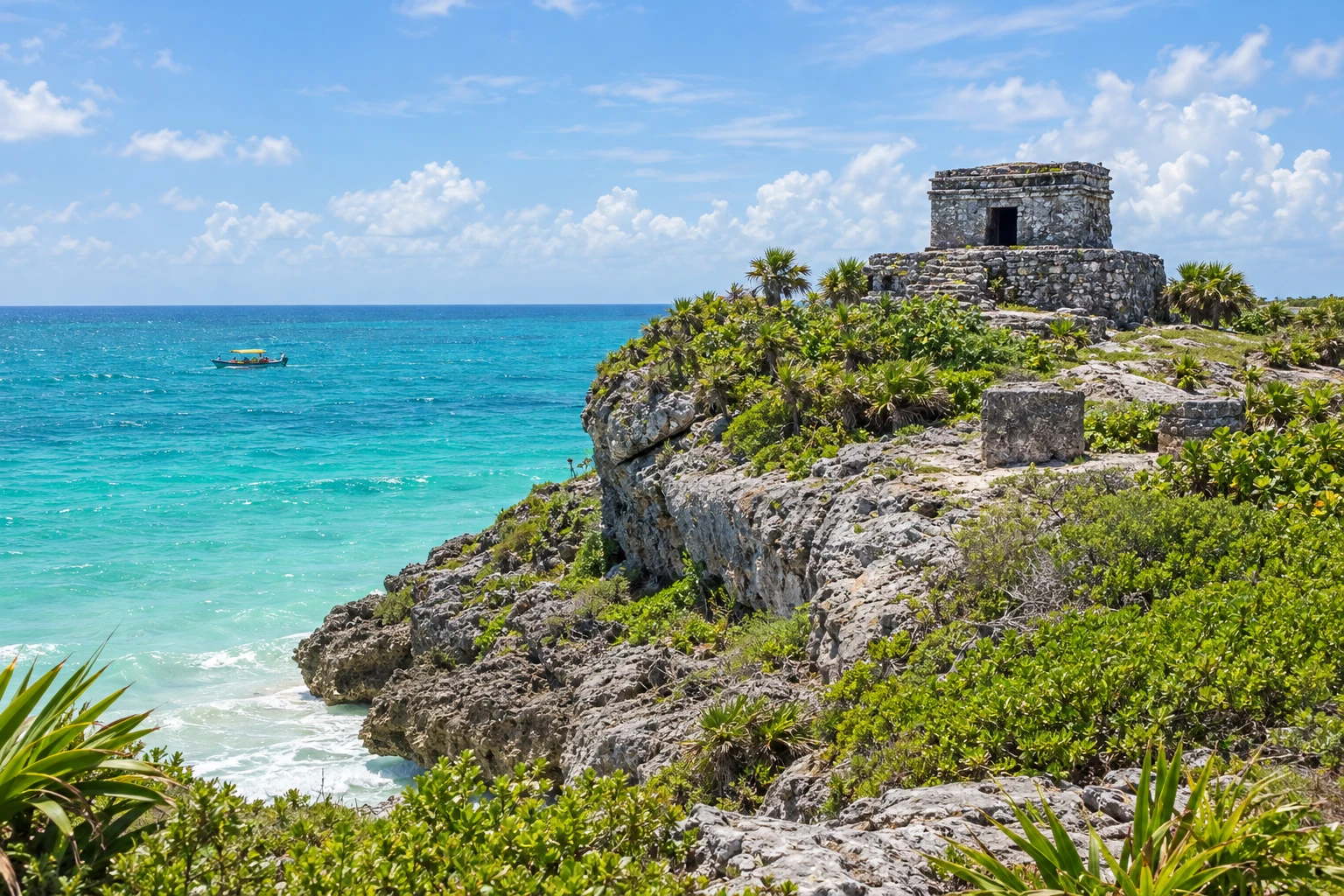
In the photo: Tulum archaeological zone
Illustrative images. The pictures in this guide are illustrations based on the real place, not photographs, and may differ from it.

The city
Tulum is the town in the southern Riviera Maya known for the Maya archaeological zone on a cliff facing the Caribbean. The Pueblo, on highway 307, has shops and the bus station; the beach area lies south of the ruins, with Playa Paraíso and the entrance to the Sian Ka'an Biosphere Reserve. Inland are the Gran Cenote and, to the north, the Dos Ojos system. It has its own airport and a Tren Maya station, and is 2 hours behind Brasília.
There's no accommodation in the guide yet in Tulum.
Tem hotel, pousada ou casa de temporada aqui? Cadastre a suaThere are no restaurants in the guide yet in Tulum.
Know a good one? Recommend it to usHotéis e restaurantes da cidade no mapa.
how to get there · how many days · itinerary · questions
The local experience
Walled Maya city on a cliff of about 12 meters facing the Caribbean, featuring the Castillo, the Temple of the Frescoes and the Temple of the Wind God.
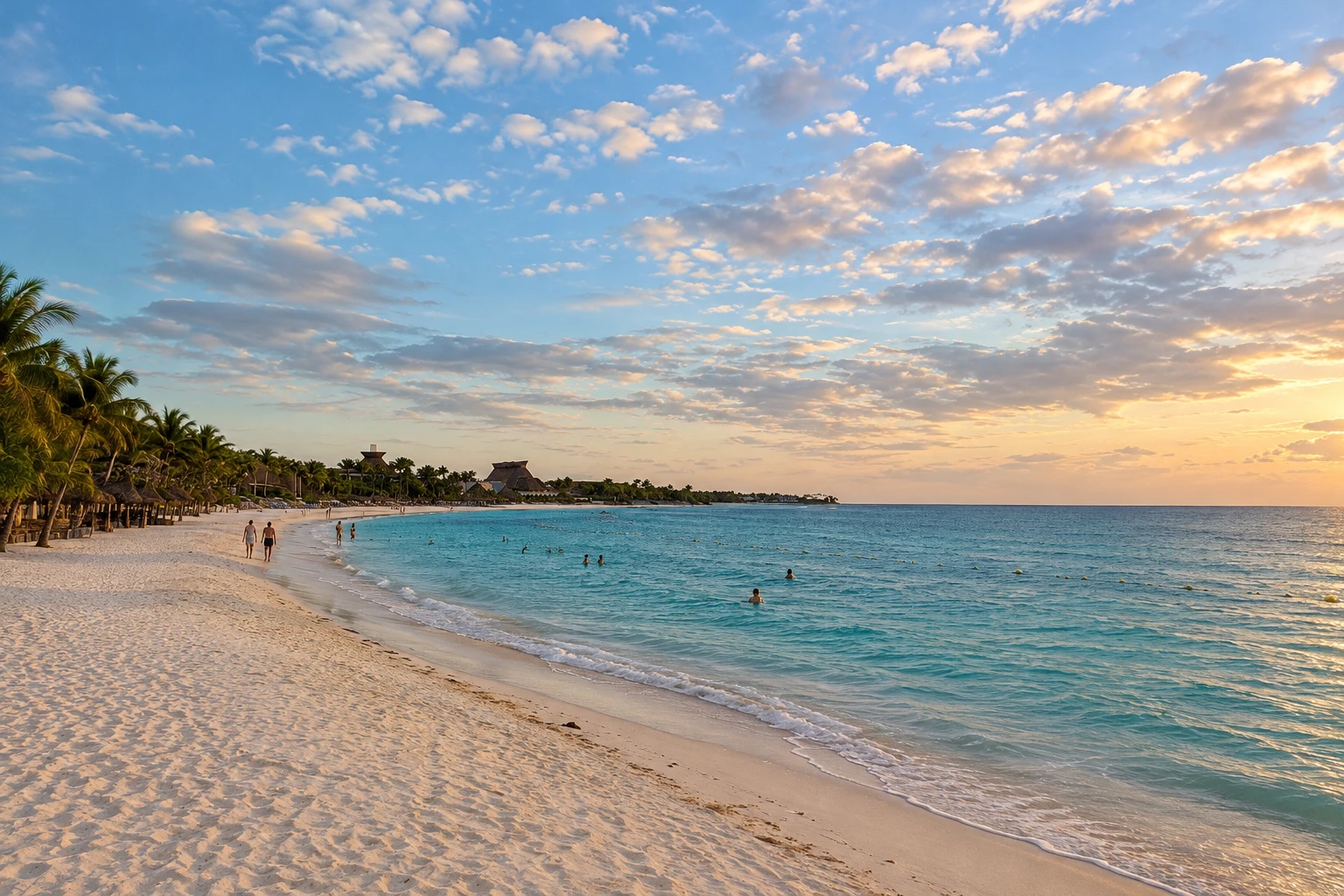
Public beach south of the Tulum ruins, with white sand and coconut palms, and a view of the Castillo to the north.
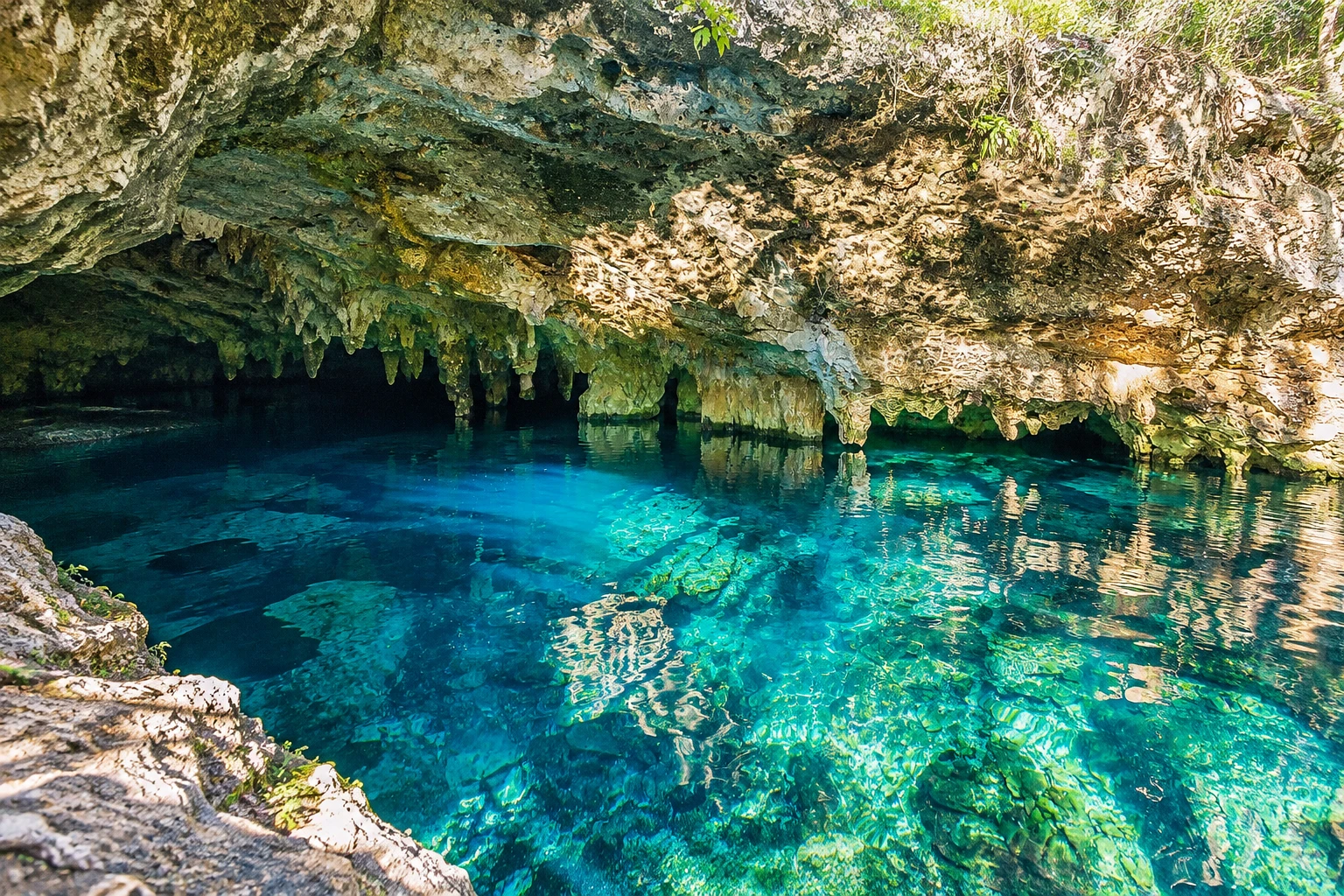
Semi-open cenote on the Tulum–Coba road, with crystal-clear fresh water, stalactite caves and turtles, used for swimming, snorkeling and cave diving.
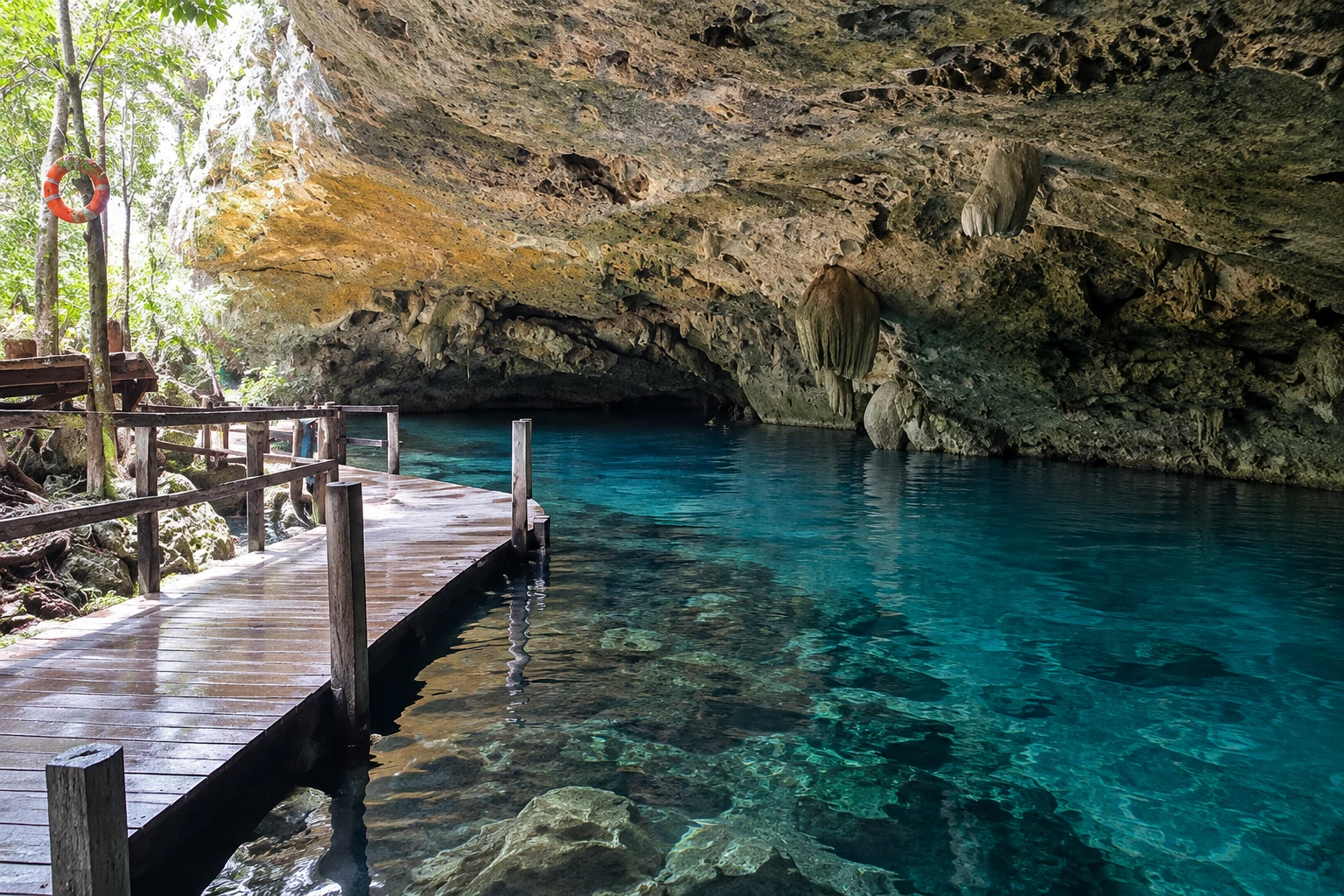
Two cenotes linked by flooded caves, north of Tulum, in one of the largest underground river systems in the world, offering snorkeling and cave diving.
Before you go
Tulum – Mexico Destination Tulum and Coba about 250 km from Chetumal
Approximate distances. Check flights and bus, train or boat schedules before you travel.
Connections with Brazil may be via direct flight or with a connection, depending on the season and the airline. Check before purchasing. Tulum airport (TQO) is about 25 km from the Pueblo, with taxis and buses. From Cancún, about 120 km away, there are direct buses from the airport and from the bus terminal. Shared vans link Tulum to Playa del Carmen and Akumal via highway 307.
Three days for the ruins, the beach, the cenotes and Sian Ka'an. With a fourth day, Coba fits in comfortably.
The dry season usually runs from December to April; from May to October there is more rain, often in showers. Sargassum typically appears from April to August. For the ruins, the first hour of the morning is the coolest in any month.
The seasons shown are the most usual ones; nature doesn't always follow the calendar.
It is not mandatory. Between the Pueblo, the ruins and the beach you travel by bicycle—which is widely used in town—or by taxi. For Coba, the more remote cenotes and Sian Ka'an, a car or an organized tour helps.
Suggested itinerary
Built with the places on this page. No rush: it's paced so you have time to see them.
Arrive at the ruins when they open, before the heat and the tour groups, and see the Castillo and the Temple of the Wind God on the cliff.
Head to the Gran Cenote on the road to Coba and swim among the caves and the turtles in the crystal-clear water.
In the late afternoon, go to Playa Paraíso, south of the ruins, with white sand and coconut palms.
Dine in the Pueblo, along Avenida Tulum and the parallel streets, with taquerías and Yucatecan restaurants.
Check before you go. Opening hours and days change, and places may close for renovations, holidays or events. This itinerary is a suggestion from Cidade Turismo, not a commitment: plan yours by checking directly with each place you intend to visit.
Before you go
When they open, early in the morning, when it is cooler and the tour groups have not yet arrived. The site has no shade.
The small beach below the Castillo is usually open, but it closes in some periods, such as during turtle nesting and when the sea is rough. Playa Paraíso, next to it, is public.
Yes. The train connects Tulum with Cancún, Playa del Carmen and other cities on the peninsula.
Gran Cenote, about 4 km from the Pueblo on the road to Coba, and the Dos Ojos system, about 20 km to the north, are among the most visited.
By bicycle—which is widely used in town—via the bike lane; by taxi; or by car. The beach is about 3 km from the Pueblo.