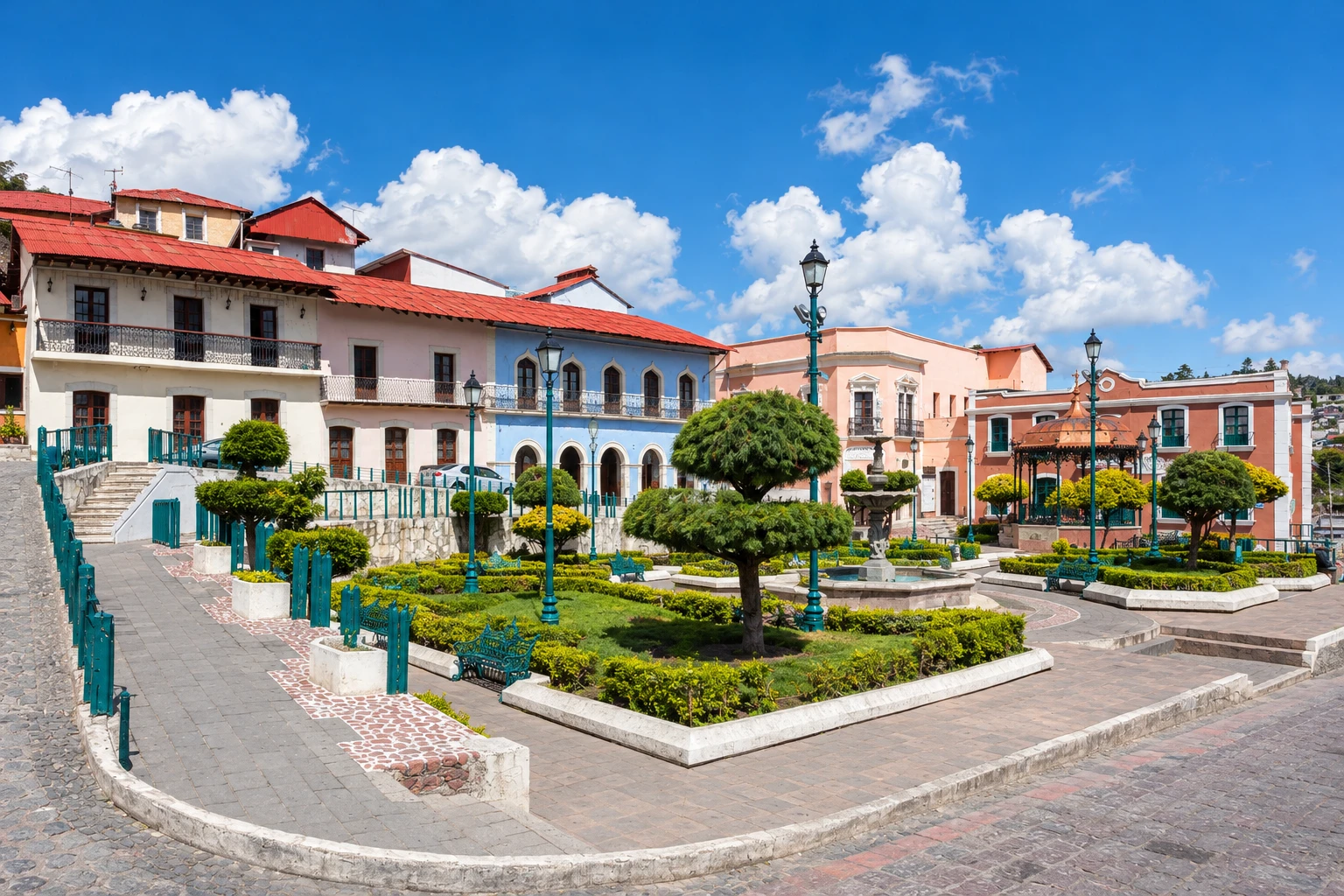
3 cities

 Search
 Brazil
 Antarctica
 Argentina
 Bolivia
 Chile
 Colombia
 Ecuador
 Falkland Islands (Malvinas)
 French Guiana
 Guyana
 Paraguay
 Peru
 Suriname
 Uruguay
 Venezuela
 Austria
 Belgium
 Croatia
 Denmark
 Finland
 France
 Germany
 Greece
 Hungary
 Iceland
 Ireland
 Italy
 Luxembourg
 Norway
 Poland
 Portugal
 Slovakia
 Slovenia
 Spain
 Sweden
 Switzerland
 the Czech Republic
 the Netherlands
 the United Kingdom
 Turkey
 Bermuda
 Canada
 GreenlandMexico
 Saint Pierre and Miquelon
 the United States
 the Dominican Republic
 JapanTurkey
 Egypt
 South Africa
 Australia
 Fiji
 New Zealand
 Papua New Guinea
State · Central Mexico (around the capital)
Hidalgo, north of the capital: the Prismas Basálticos of Huasca, Real del Monte and the miners' pastes, the Tolantongo grottoes and the atlante figures of Tula.
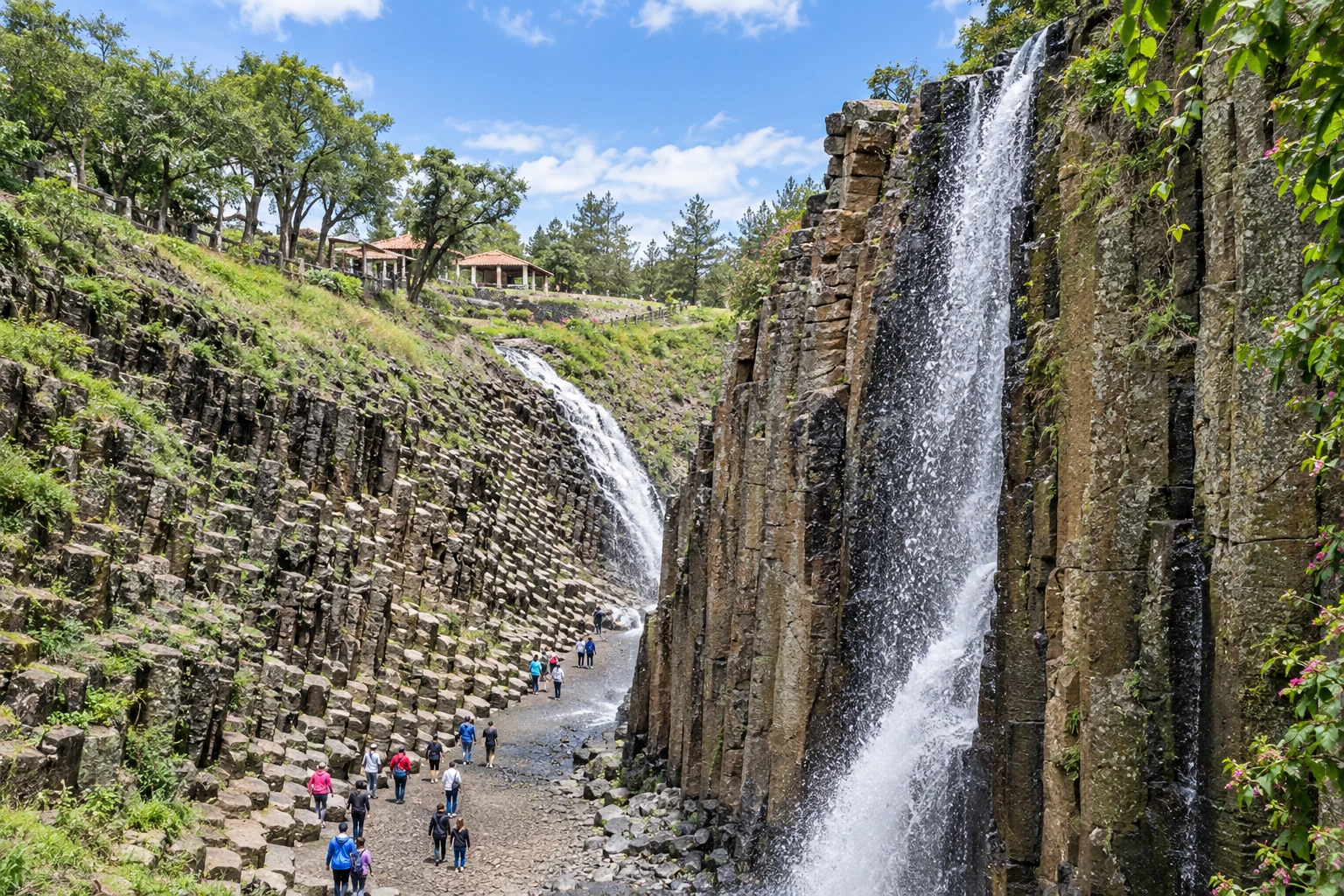
In the photo: Prismas Basálticos de Santa María Regla
Illustrative images. The pictures in this guide are illustrations based on the real place, not photographs, and may differ from it.

State
Hidalgo lies just north of Mexico City, between the dry plateau and pine‑covered mountain ranges. The region lived off silver since colonial times, and the mining towns in the mountains retain churches, stone streets and an unexpected heritage: miners who came from Cornwall, England, in the 19th century.
Pachuca, the capital, is known for the Monumental Clock downtown and for pastes, the turnovers brought by English miners that became a state specialty. In the highlands, Real del Monte and Mineral del Chico are mining villages with colorful houses and steep roofs, with mines open to visitors and trails in El Chico National Park.
Huasca de Ocampo has the Prismas Basálticos de Santa María Regla, columns of volcanic rock several meters high down which waterfalls flow, and old silver‑processing estates. In the Mezquital valley, the Grutas de Tolantongo feature a turquoise‑colored warm river, caves and thermal pools on a canyon slope.
In the southwest, the Tula archaeological zone preserves the atlantes, large stone columns shaped like warriors from the ancient Toltec capital. On the border with the State of Mexico, the 16th‑century Padre Tembleque aqueduct is a World Heritage Site. On the table, pastes, lamb barbacoa and seasonal escamoles.
Destinations
Cities
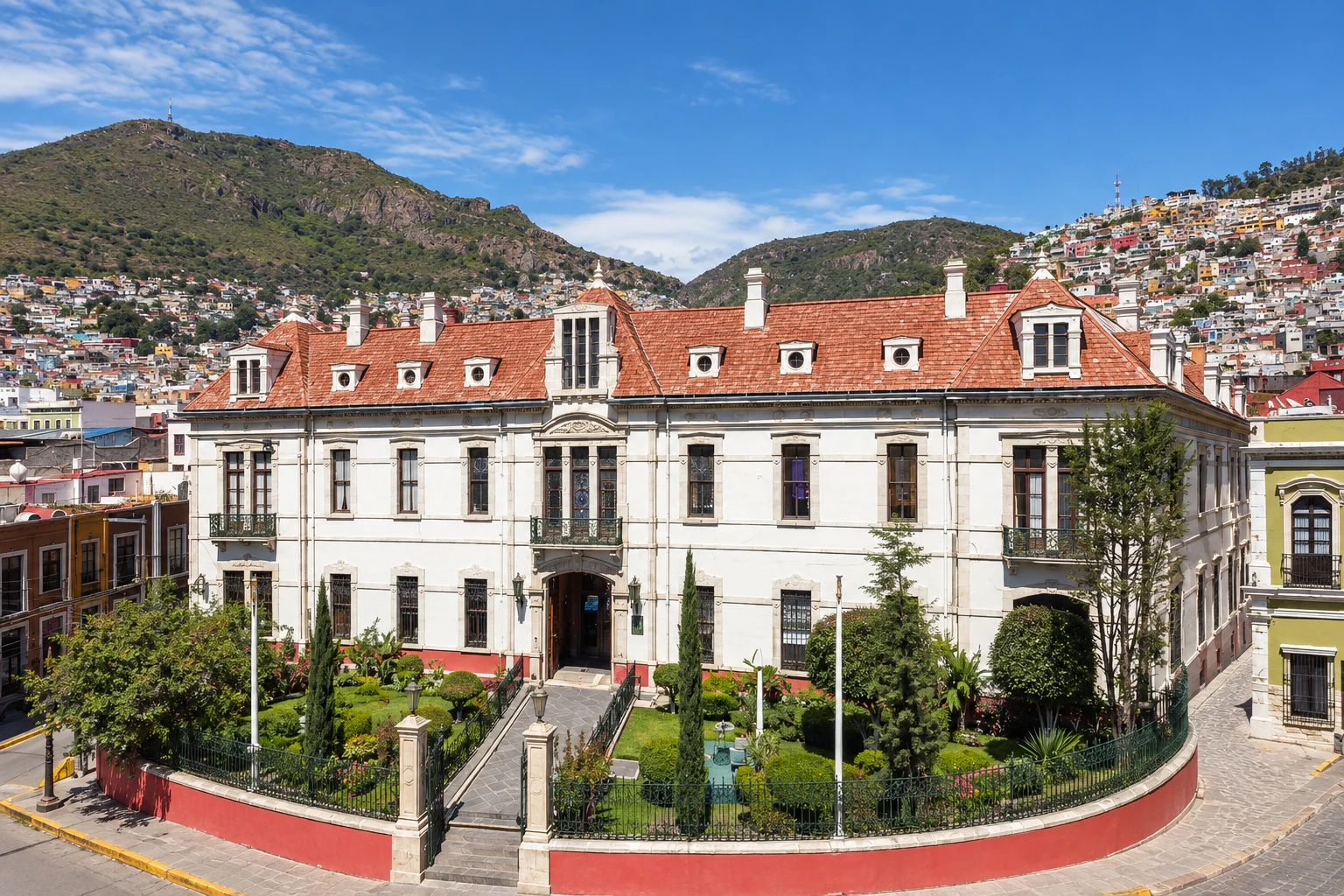
Pachuca is the capital of Hidalgo, a silver mining city about 95 km from Mexico City, known as La Bella Airosa for the wind that comes down from the mountains. The downtown has the Monumental Clock, dating from 1910, and the former convent of San Francisco, which houses the National Museum of Photography. It is the gateway to Real del Monte, Huasca and El Chico National Park.
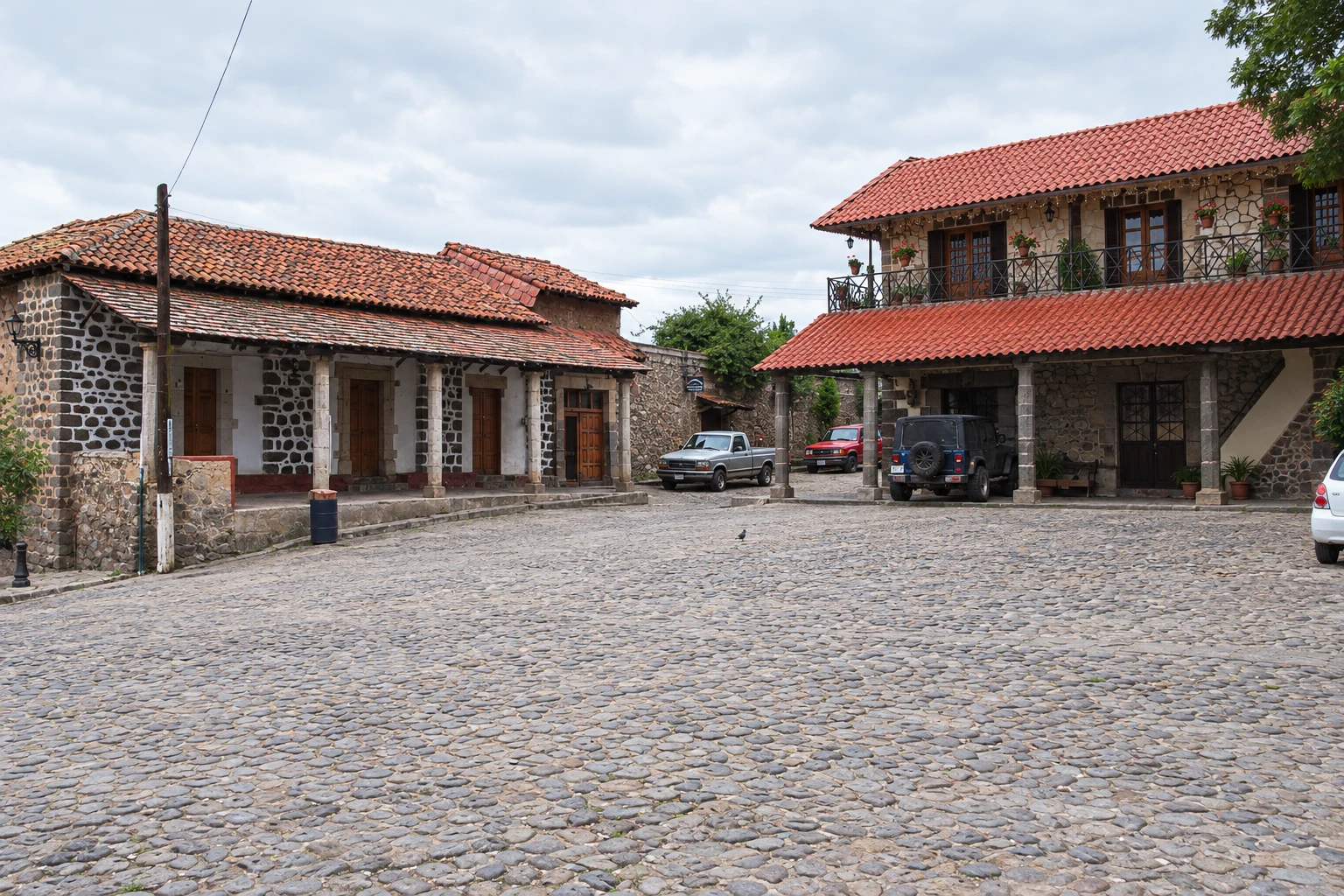
Huasca de Ocampo was the first Pueblo Mágico of Mexico, in 2001. It is about 34 km from Pachuca, in an area of forests, reservoirs and old silver-processing haciendas. The center has adobe houses and the parish of San Juan Bautista, and nearby are the Basaltic Prisms of Santa María Regla and the Peña del Aire rock formation.
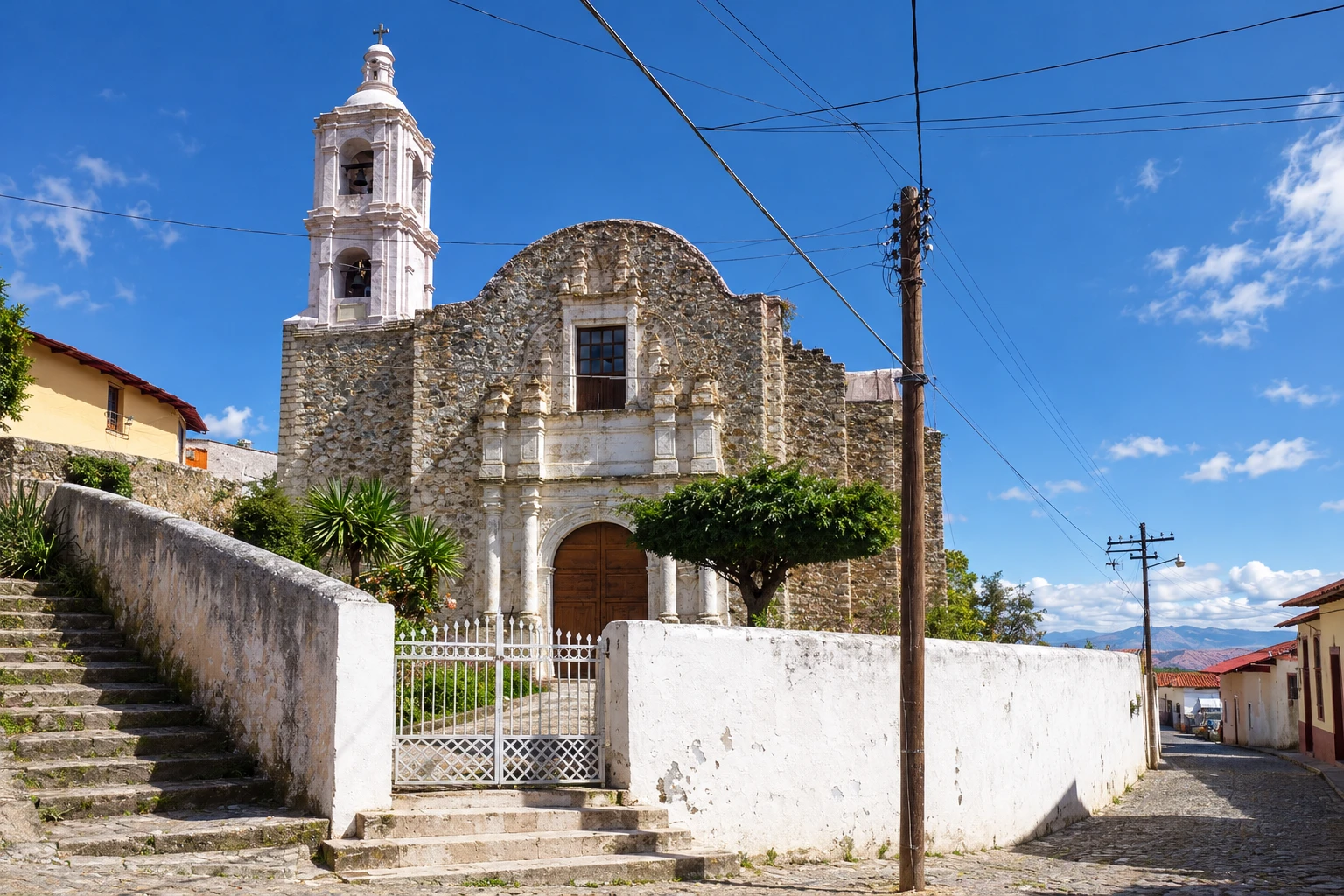
Real del Monte is the highest mining town in the Pachuca range, 12 km from the state capital, with steep streets, red-roofed houses and misty afternoons. The municipality’s official name is Mineral del Monte. From the Cornish miners remain the English Cemetery and the paste, and two old mines have become museums. It is a Pueblo Mágico.
From October to May days are usually dry and sunny, with cold nights in the highlands from December to February. From June to September it rains in the afternoons, and the Prismas waterfalls usually have more water. Tolantongo fills up on weekends and holidays. Hidalgo is 3 hours behind Brasília.
Hidalgo has no airport with regular tourist flights; arrival is via Mexico City. Pachuca is about 1.5 hours from the national capital by bus or car, and Real del Monte and Huasca are about 30 minutes from Pachuca. Tolantongo is roughly 4 hours from Mexico City, with a mountain road on the final stretch.
Beyond the guide
Your questions
You can visit Pachuca and Real del Monte, or the Prismas Basálticos, in one day. Tolantongo requires an overnight stay nearby because of the distance and the road.
Turnovers made with a flaky pastry dough, brought by Cornwall miners in the 19th century. They are sold in Pachuca and Real del Monte, with sweet and savory fillings.
A set of caves, a warm‑water river and thermal pools on a canyon slope in the Mezquital valley, with an entrance fee.
The waterfalls usually have more water in the rainy season, from June to September.


