3 cities

 Search
 Brazil
 Antarctica
 Argentina
 Bolivia
 Chile
 Colombia
 Ecuador
 Falkland Islands (Malvinas)
 French Guiana
 Guyana
 Paraguay
 Peru
 Suriname
 Uruguay
 Venezuela
 Austria
 Belgium
 Croatia
 Denmark
 Finland
 France
 Germany
 Greece
 Hungary
 Iceland
 Ireland
 Italy
 Luxembourg
 Norway
 Poland
 Portugal
 Slovakia
 Slovenia
 Spain
 Sweden
 Switzerland
 the Czech Republic
 the Netherlands
 the United Kingdom
 Turkey
 Bermuda
 Canada
 Greenland
 Mexico
 Saint Pierre and Miquelonthe United States
 the Dominican Republic
 JapanTurkey
 Egypt
 South Africa
 Australia
 Fiji
 New Zealand
 Papua New Guinea
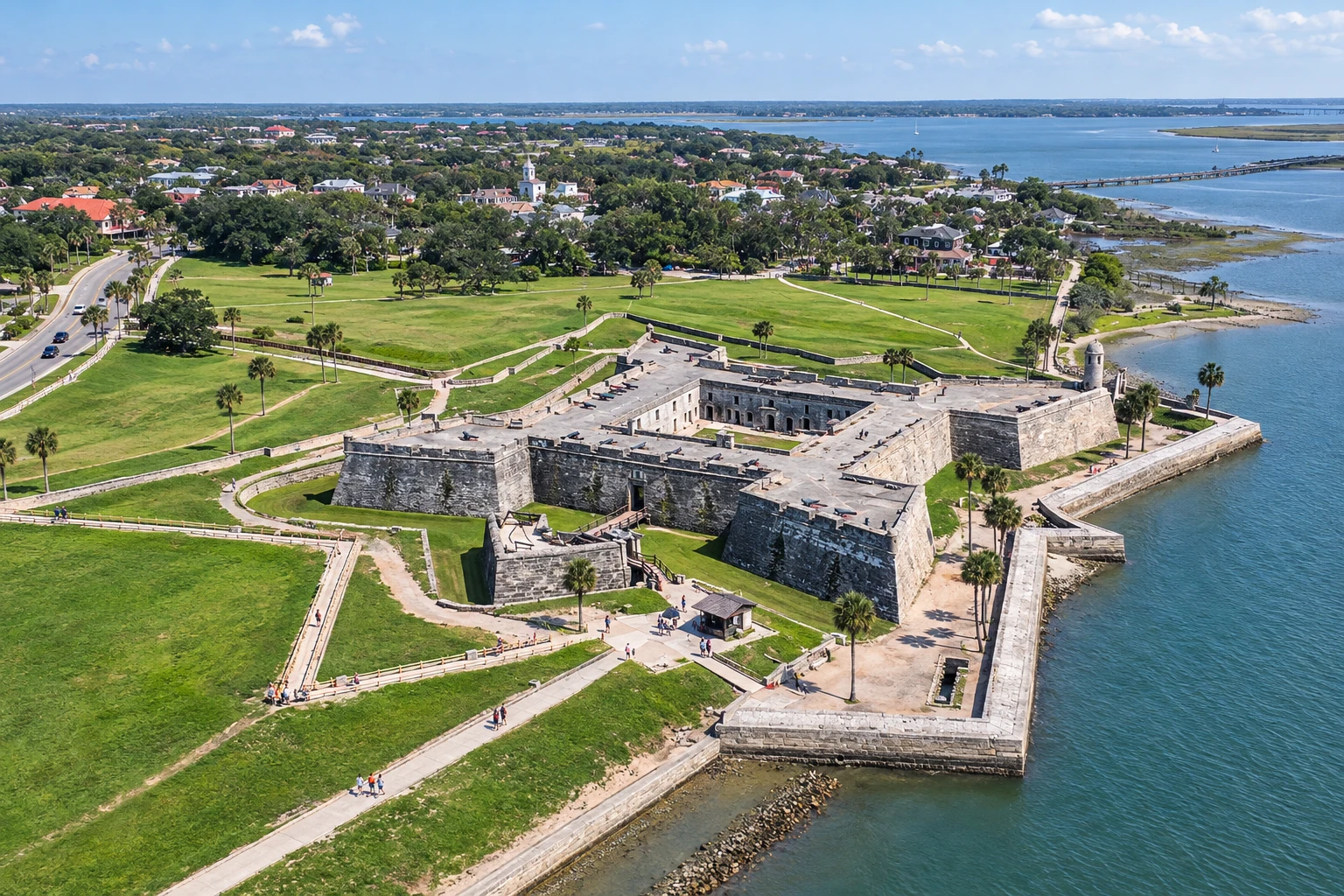
State · Florida
Florida combines the parks of Orlando, the beaches of Miami and the Gulf of Mexico, the Everglades and the road over the sea to Key West.
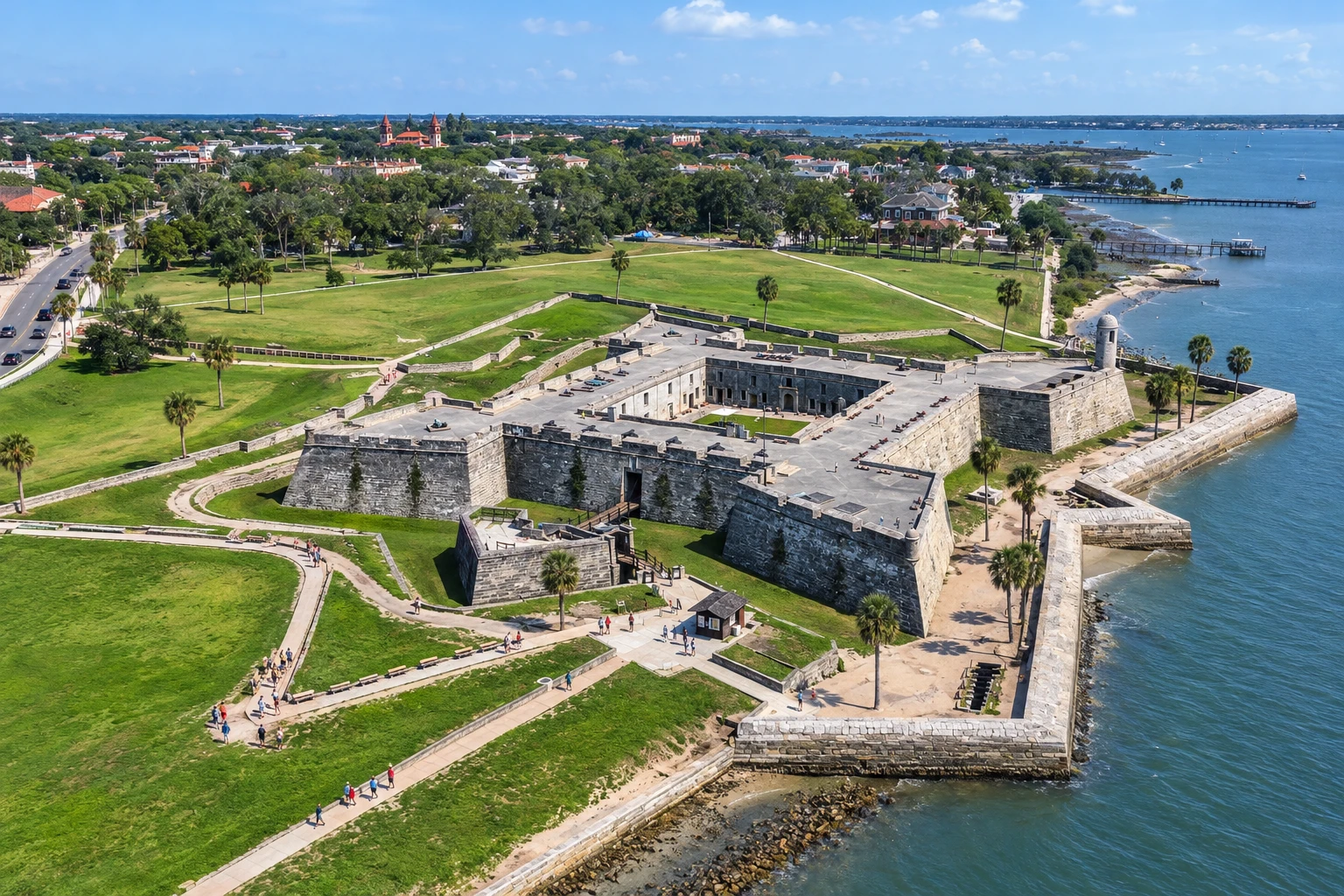
In the photo: Castillo de San Marcos, St. Augustine
Illustrative images. The pictures in this guide are illustrations based on the real place, not photographs, and may differ from it.

State
Florida is the peninsula in the southeastern United States between the Atlantic and the Gulf of Mexico, and the state most visited by Brazilians in the country. The capital is Tallahassee in the north; the cities that attract tourists are in the central and southern parts, with warm weather almost all year round.
Orlando is the city of theme parks: Walt Disney World, between Orlando and Kissimmee, Universal Orlando and SeaWorld. Winter Haven has Legoland, Winter Park is a city of lakes and museums adjacent to Orlando, and Titusville is near the Kennedy Space Center at Cape Canaveral, where rockets are launched.
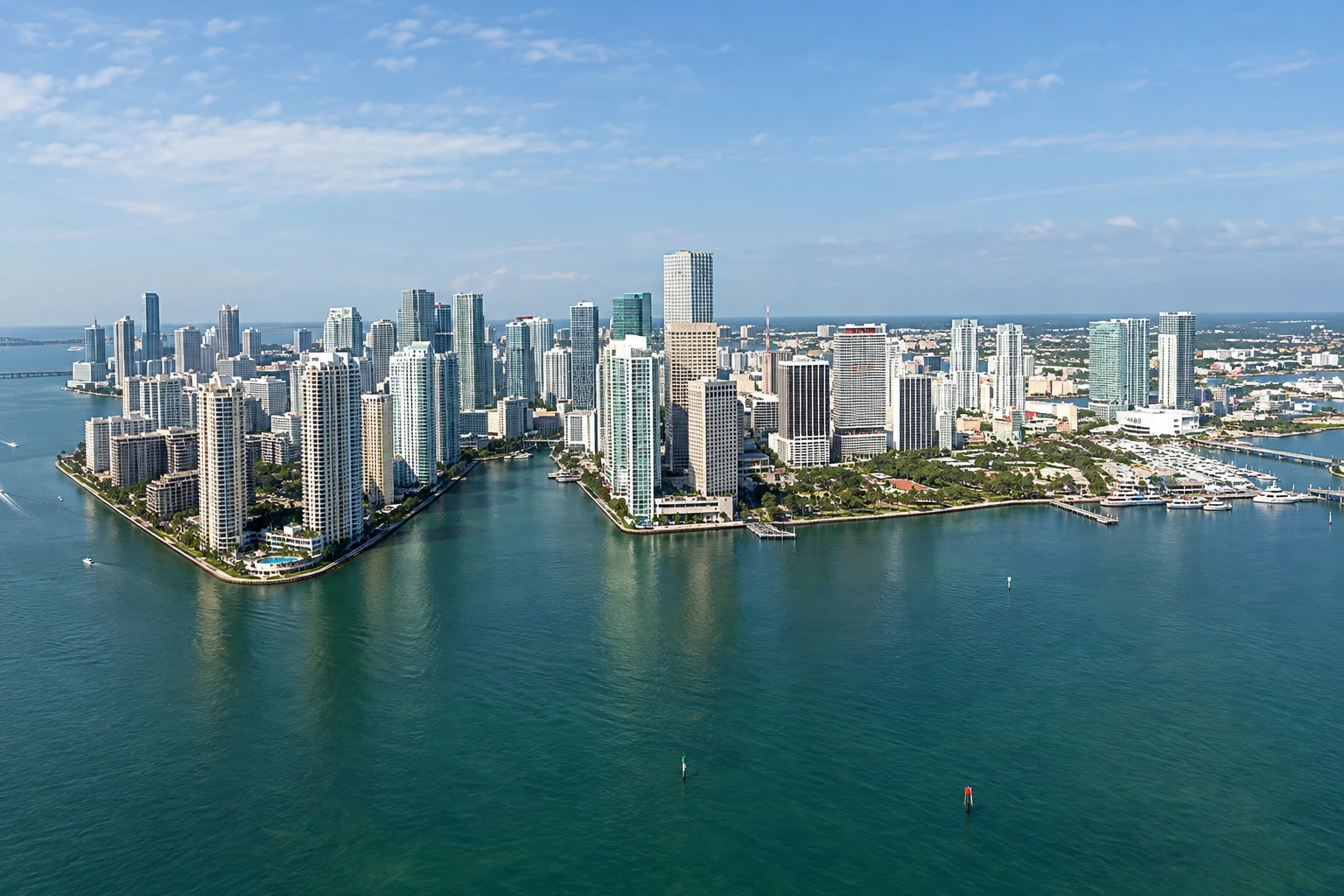
In the southeast, Miami brings together the Brickell downtown, Cuban Little Havana and the Wynwood murals, and Miami Beach has South Beach and the art déco buildings. Fort Lauderdale is crossed by canals, and Homestead is the gateway to Everglades National Park, an area of swamps and mangroves and a UNESCO site, home to alligators and water birds.
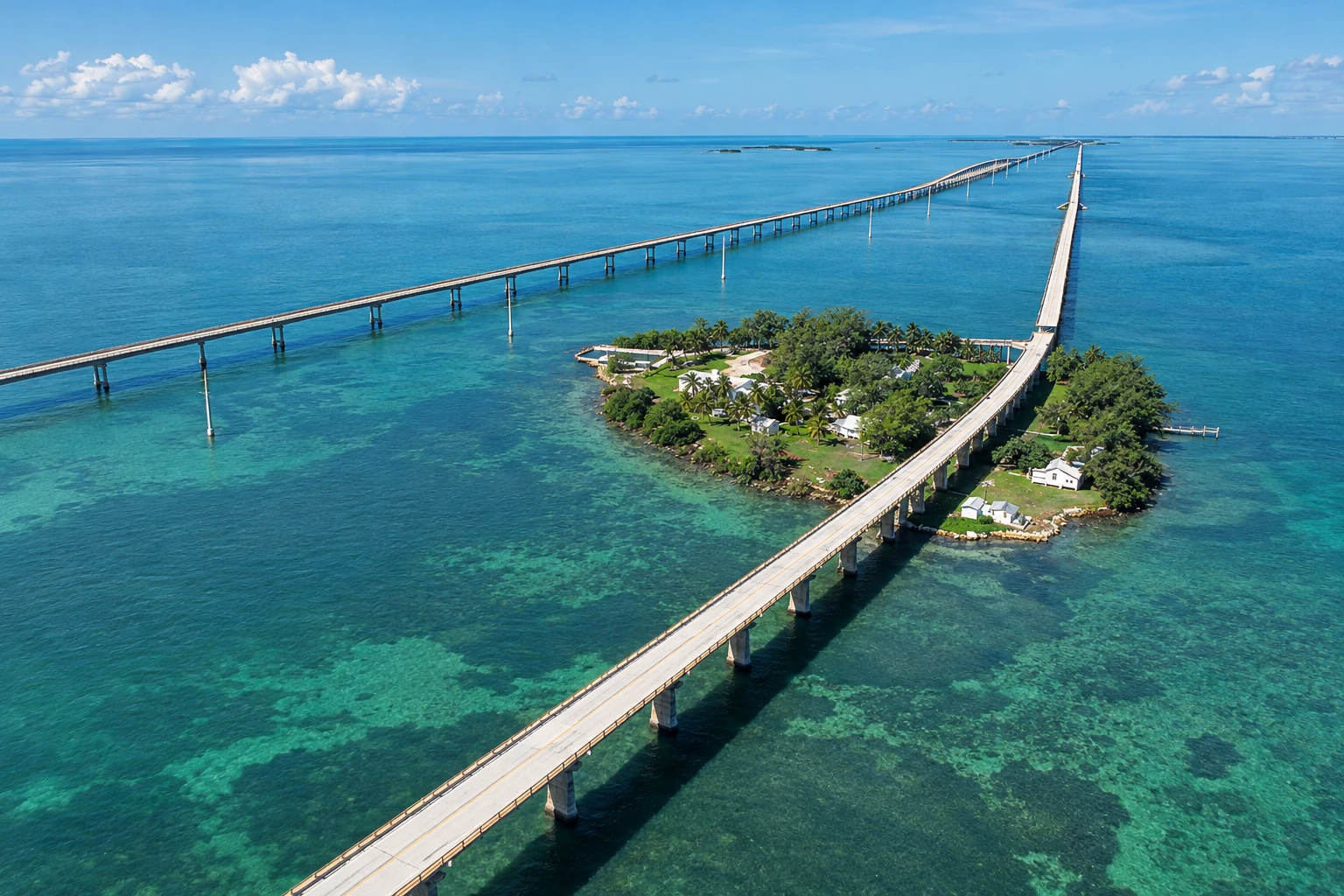
To the south, the Overseas Highway links the Florida Keys by bridges over the sea: Key Largo, with diving on coral reefs, Islamorada, Marathon and Key West, the southernmost city of the contiguous United States. On the Gulf Coast, Tampa has Busch Gardens, Clearwater has white-sand beaches and St. Petersburg has the Dalí Museum.
On the table: the Cuban sandwich, stone crab and key lime pie. English shares space with Spanish, and in Orlando and Miami it is common to hear Portuguese.
Destinations
Cities
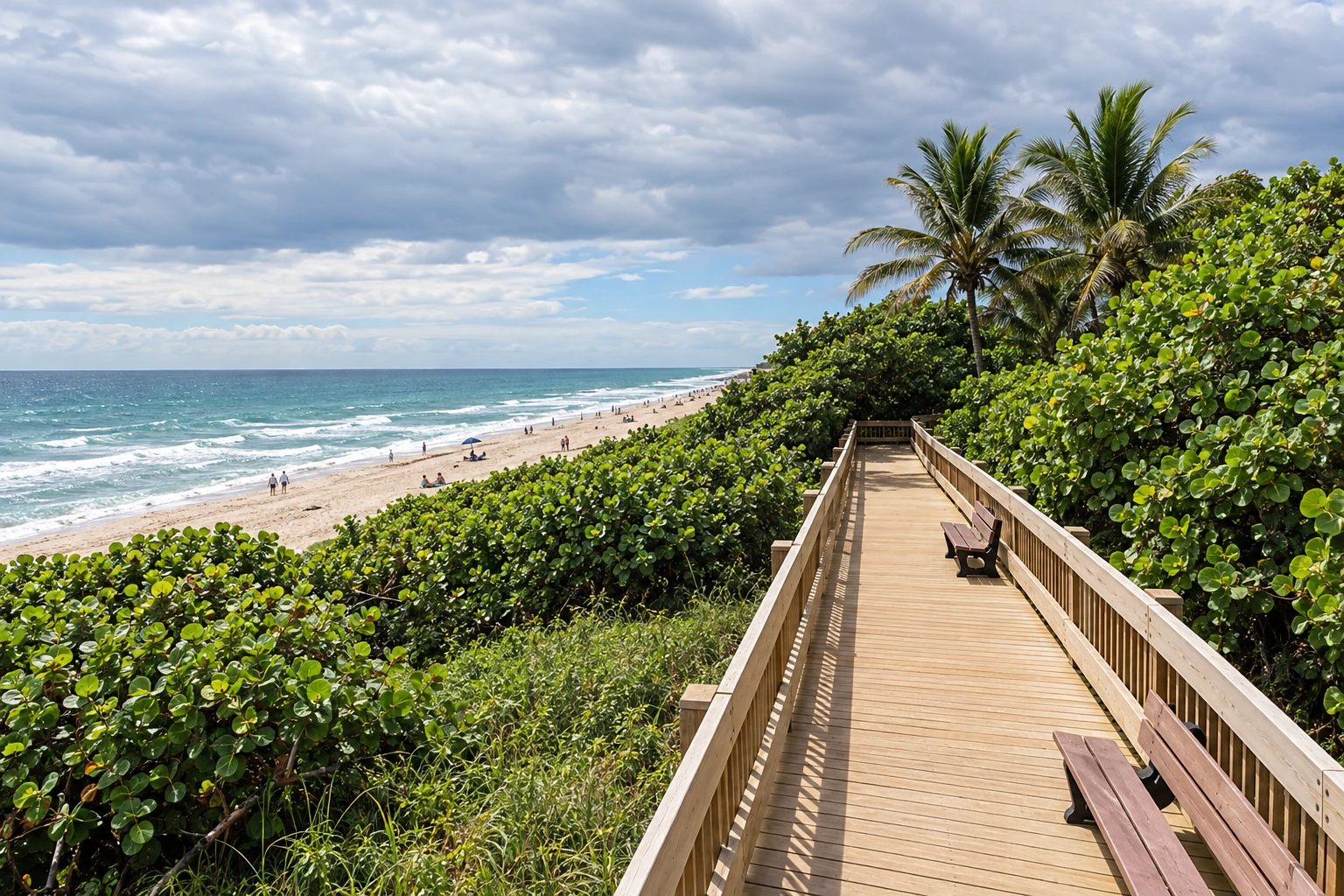
City in the southern part of Palm Beach County, between Fort Lauderdale and West Palm Beach, marked by the Mediterranean-style architecture of architect Addison Mizner in the 1920s. It has beaches with public parks, the Gumbo Limbo Nature Center with sea turtles and a boardwalk through the mangrove, the Boca Raton Museum of Art in Mizner Park, and, a few kilometers to the north, the Japanese gardens of Morikami.
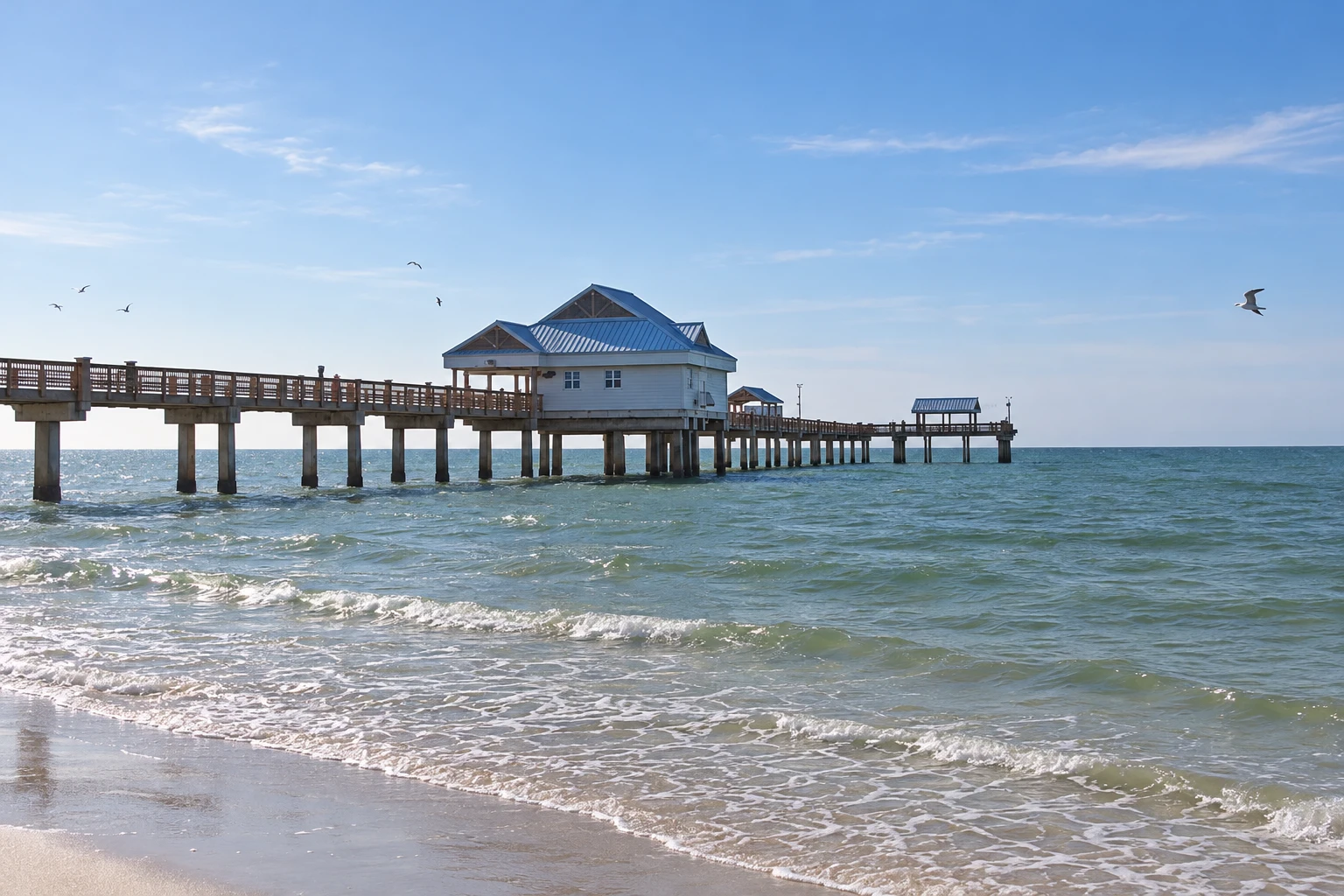
Clearwater is the city that gives access to the stretch of sand at Clearwater Beach, on a coastal island. The beach and Pier 60 are the focal points of the coastal visit, with lodging and services close to the sand and a bridge connection to the mainland.
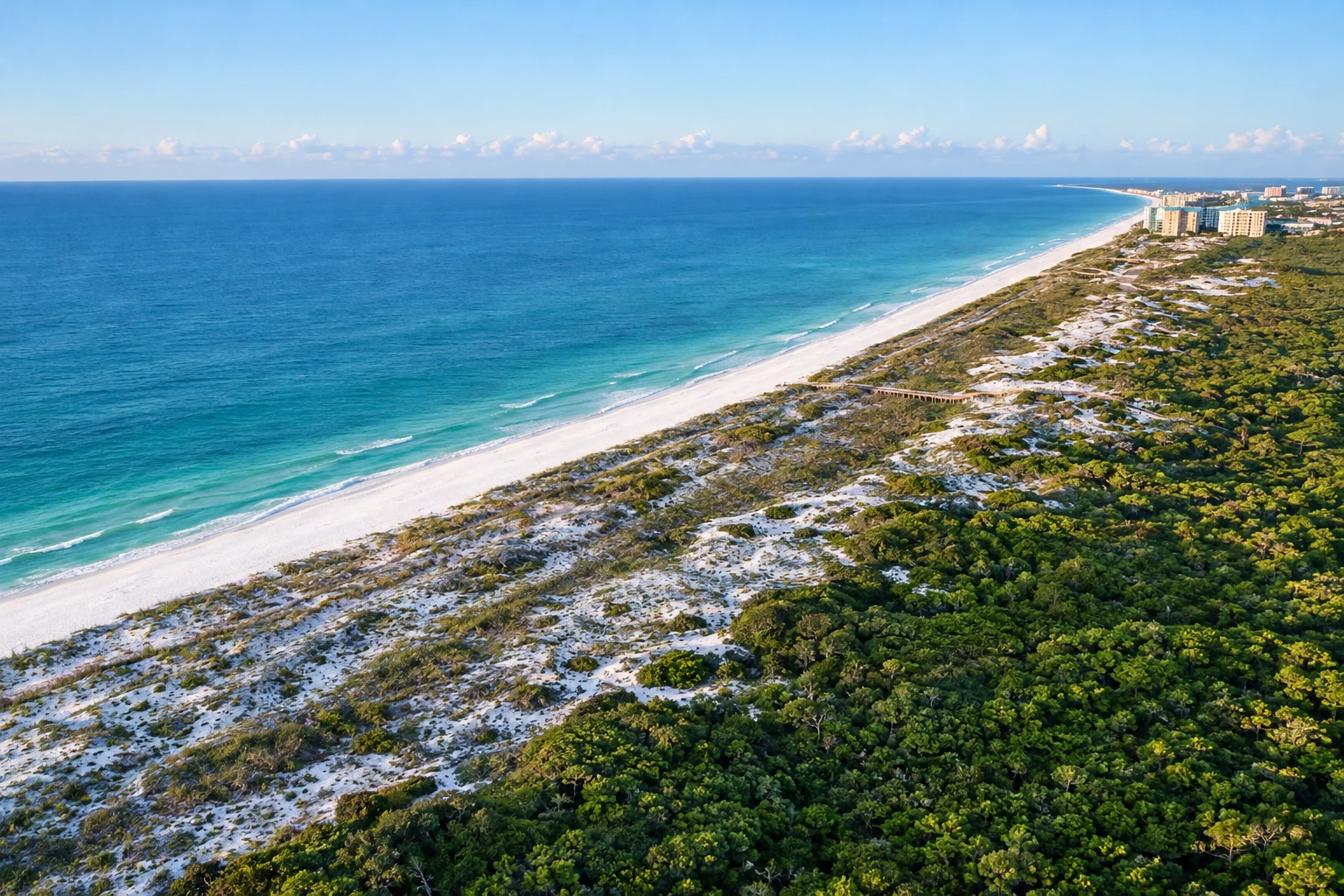
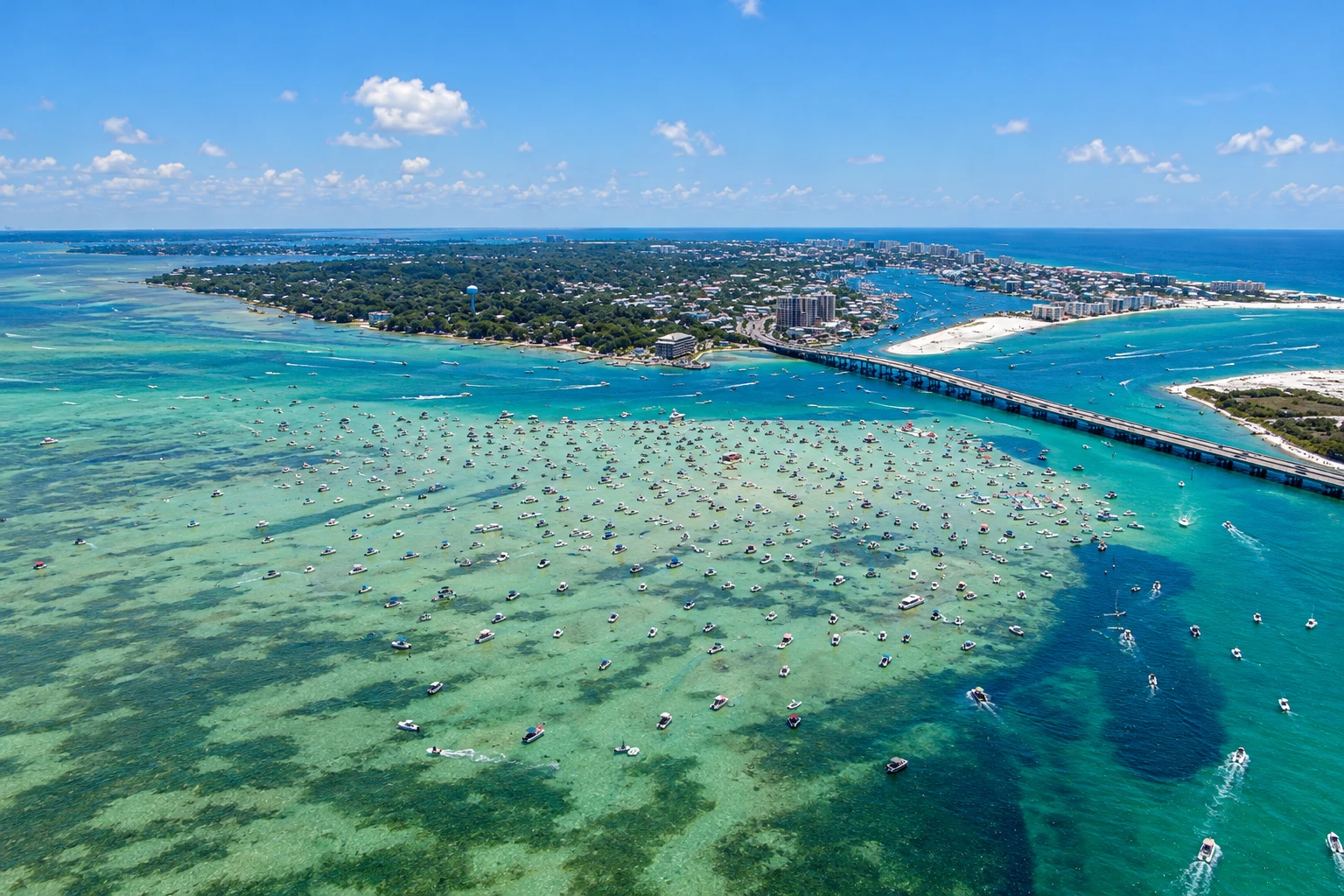
Beach town on the Emerald Coast in the Florida Panhandle, with white quartz sand and green Gulf waters. It began as a fishing village and has a busy harbor with sport-fishing boats. Nearby are the sandbar of Crab Island, Henderson Beach State Park and, to the east, Scenic Highway 30A with Grayton Beach State Park and small beach towns.
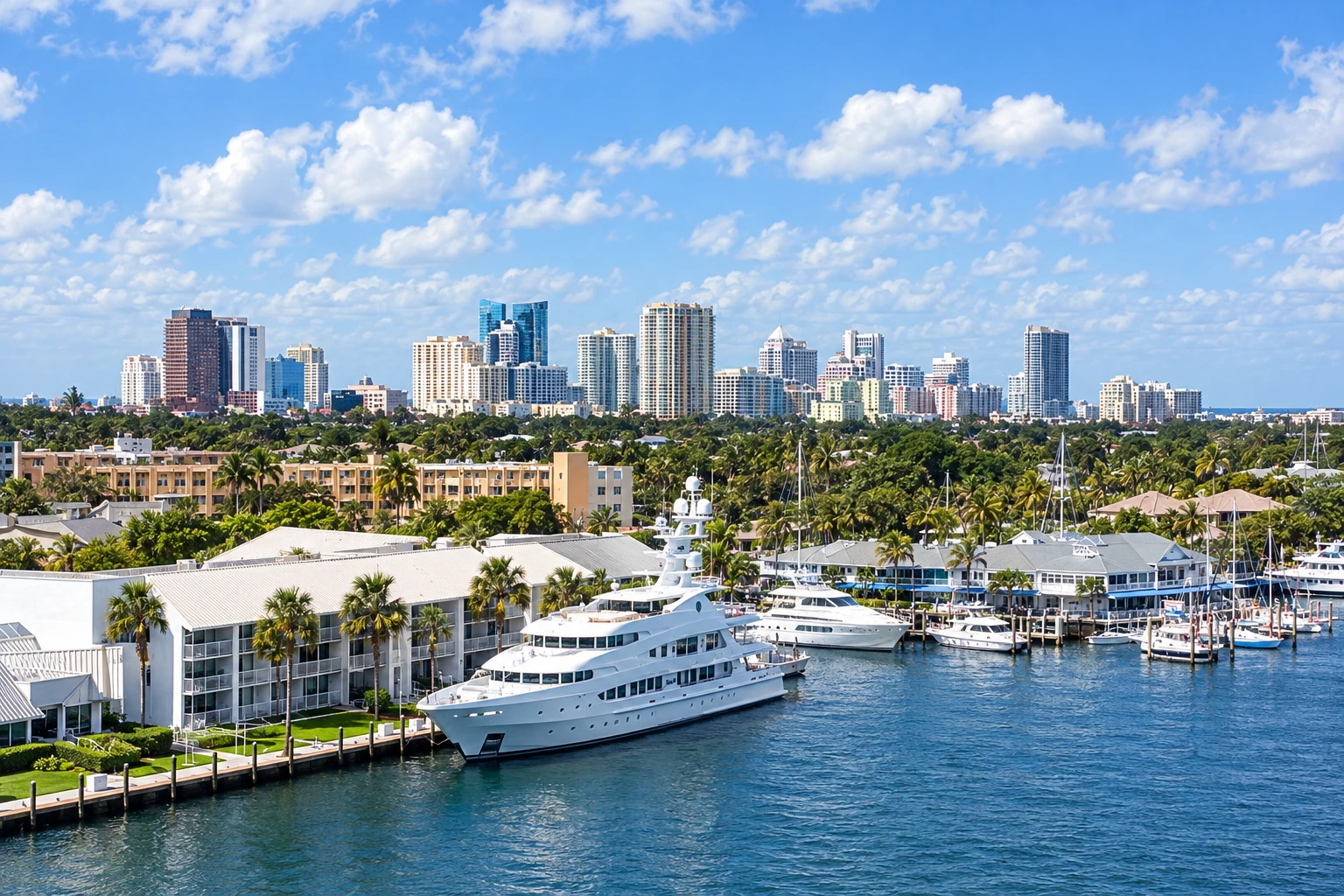
Fort Lauderdale combines canals, marinas and a long Atlantic shoreline. The Bonnet House preserves a historic estate with gardens, while the Riverwalk shows the downtown relationship with the river; the beach is located in a different part of Downtown.
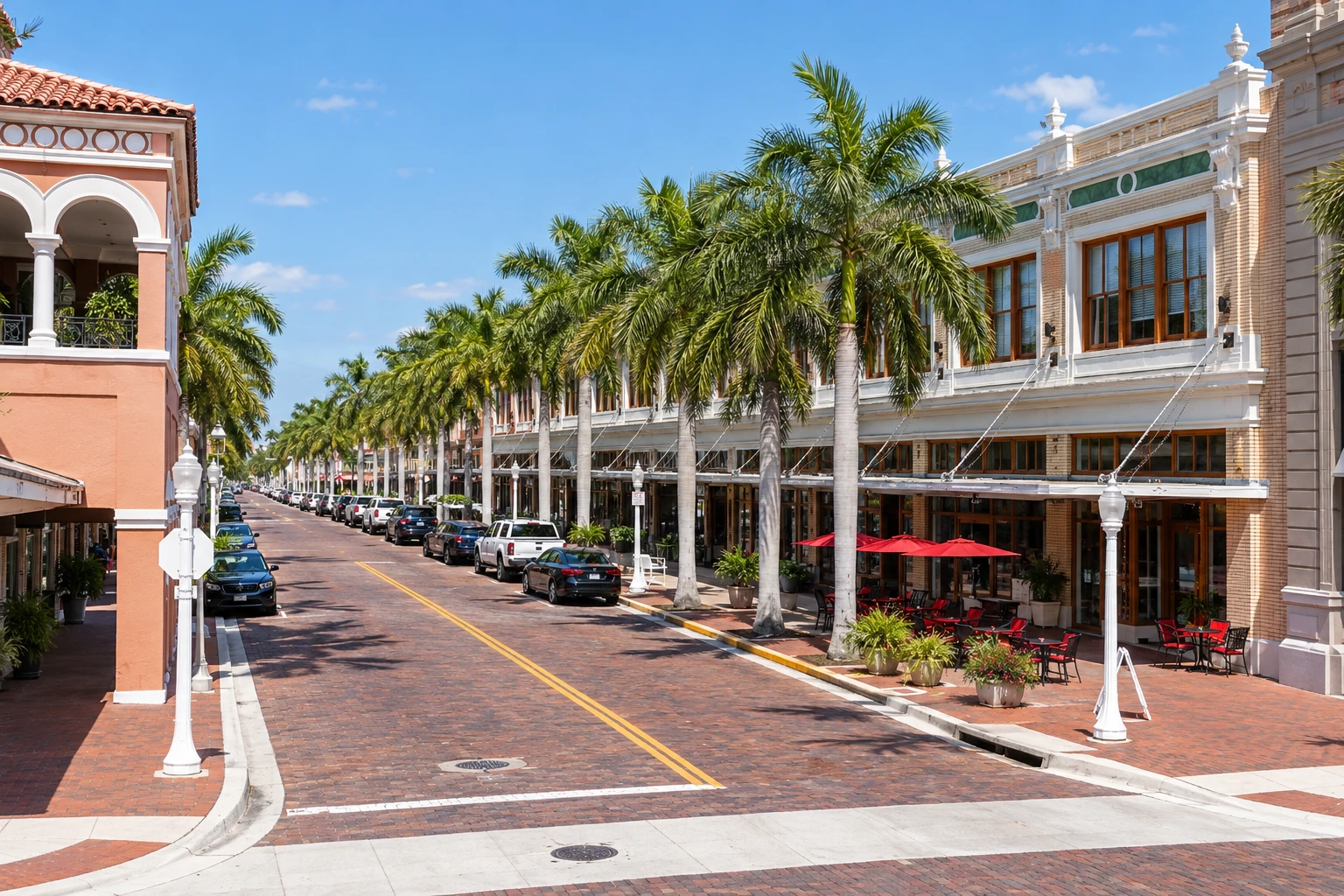
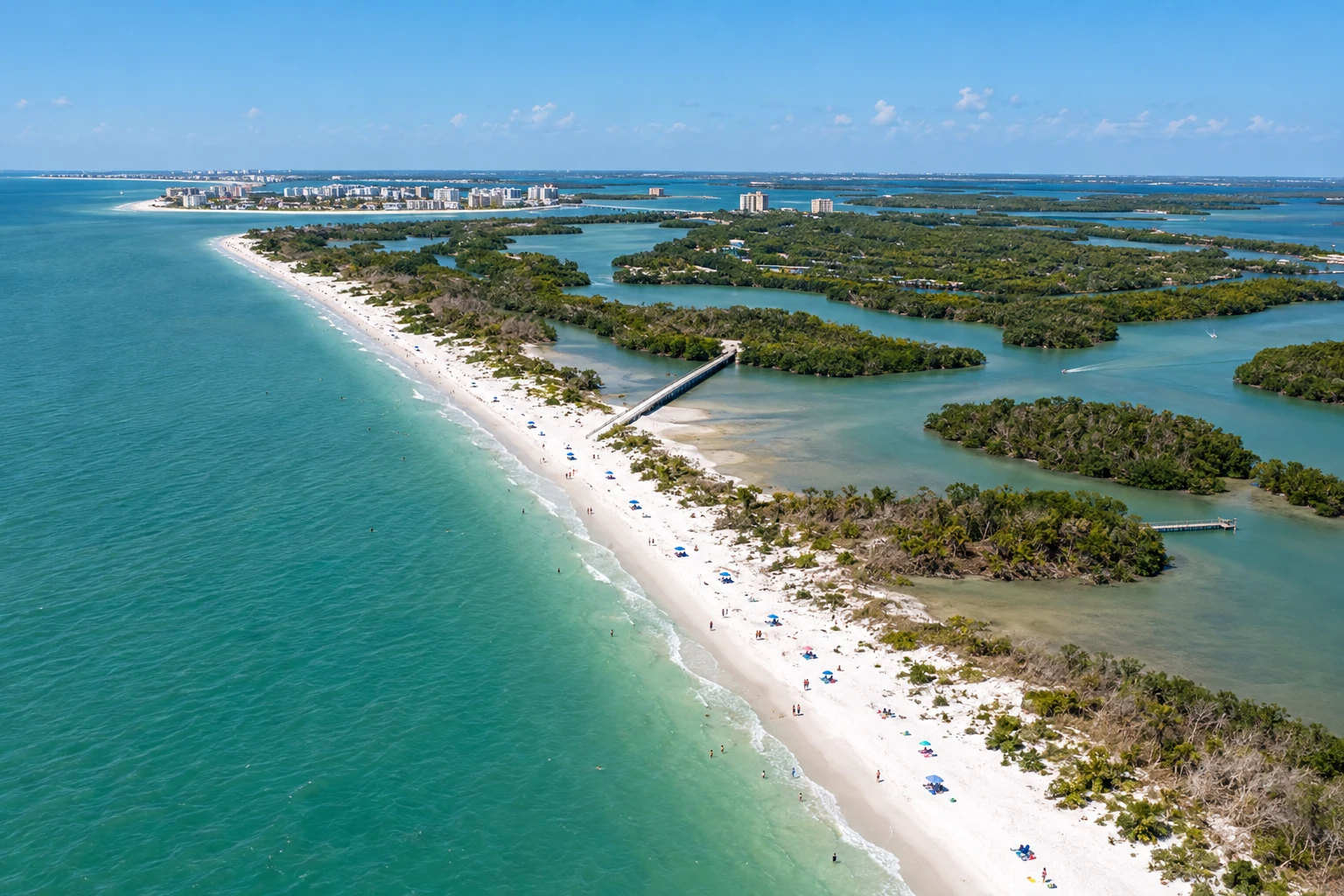
A city on the Caloosahatchee River, the gateway to southwest Florida, with the region’s international airport. It is known for the Edison and Ford Winter Estates, the winter homes of Thomas Edison and Henry Ford, with a laboratory and gardens. Nearby are the boardwalk at Six Mile Cypress Slough Preserve, the beaches of Fort Myers Beach and Lovers Key State Park, and the bridge to Sanibel.
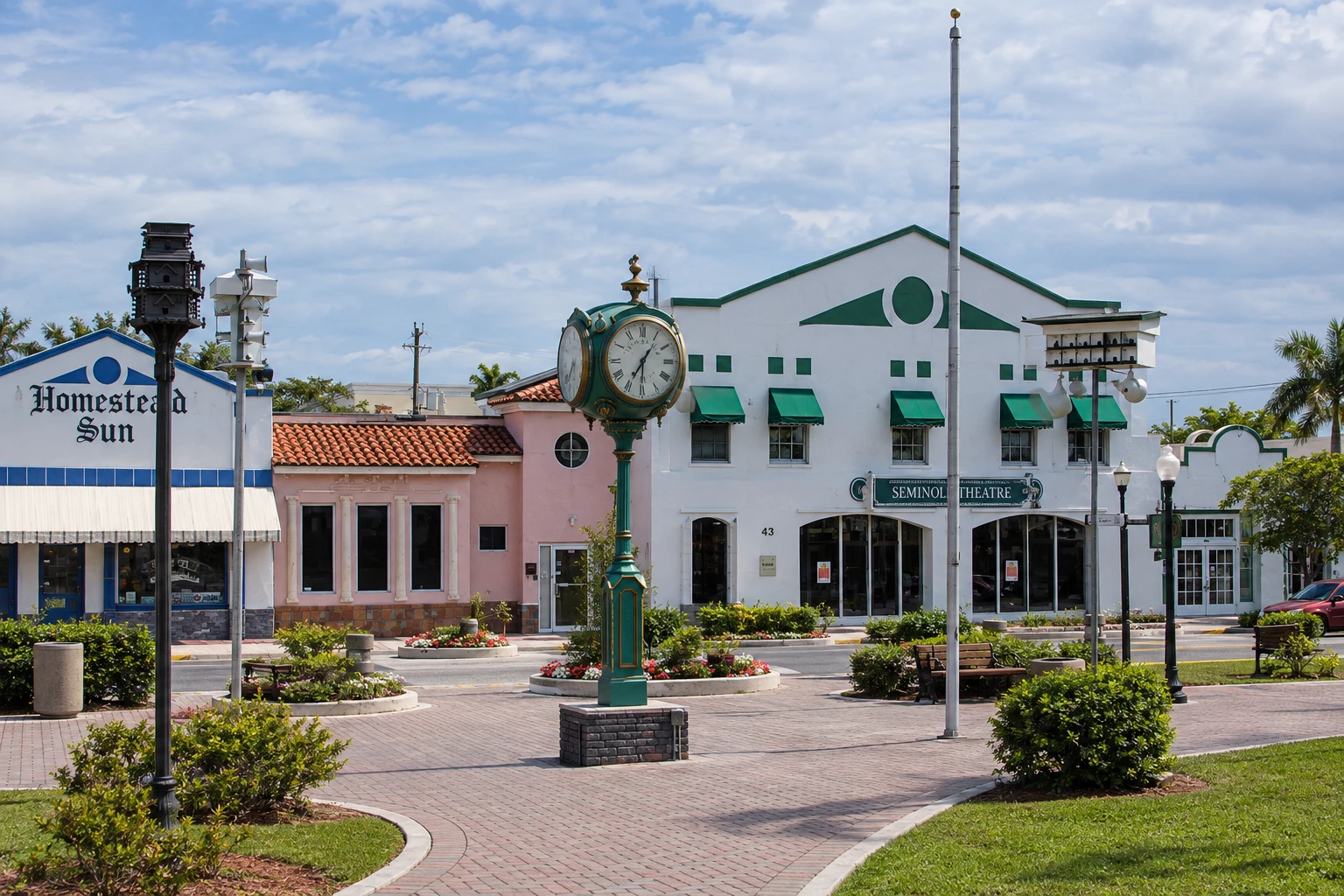
Homestead is a base in the southern Miami region for Everglades National Park and Biscayne National Park. The town lets you start early on the Royal Palm routes or organize bay navigation without crossing all of Miami on the way.
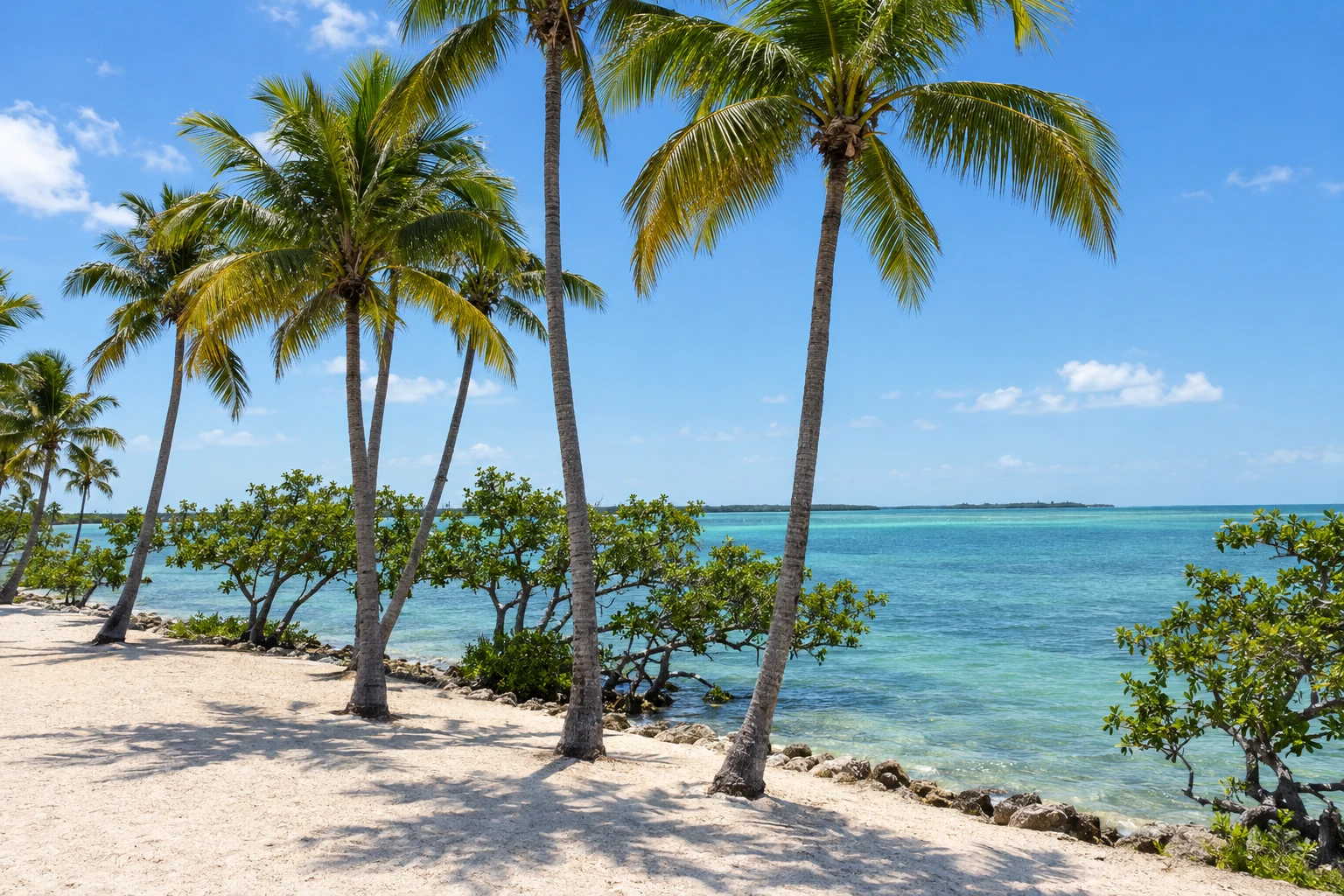
Islamorada occupies a central stretch of the Upper Keys between Key Largo and Marathon. The History of Diving Museum helps to understand diving, and Windley Key Fossil Reef Geological State Park displays ancient reefs exposed in rock.
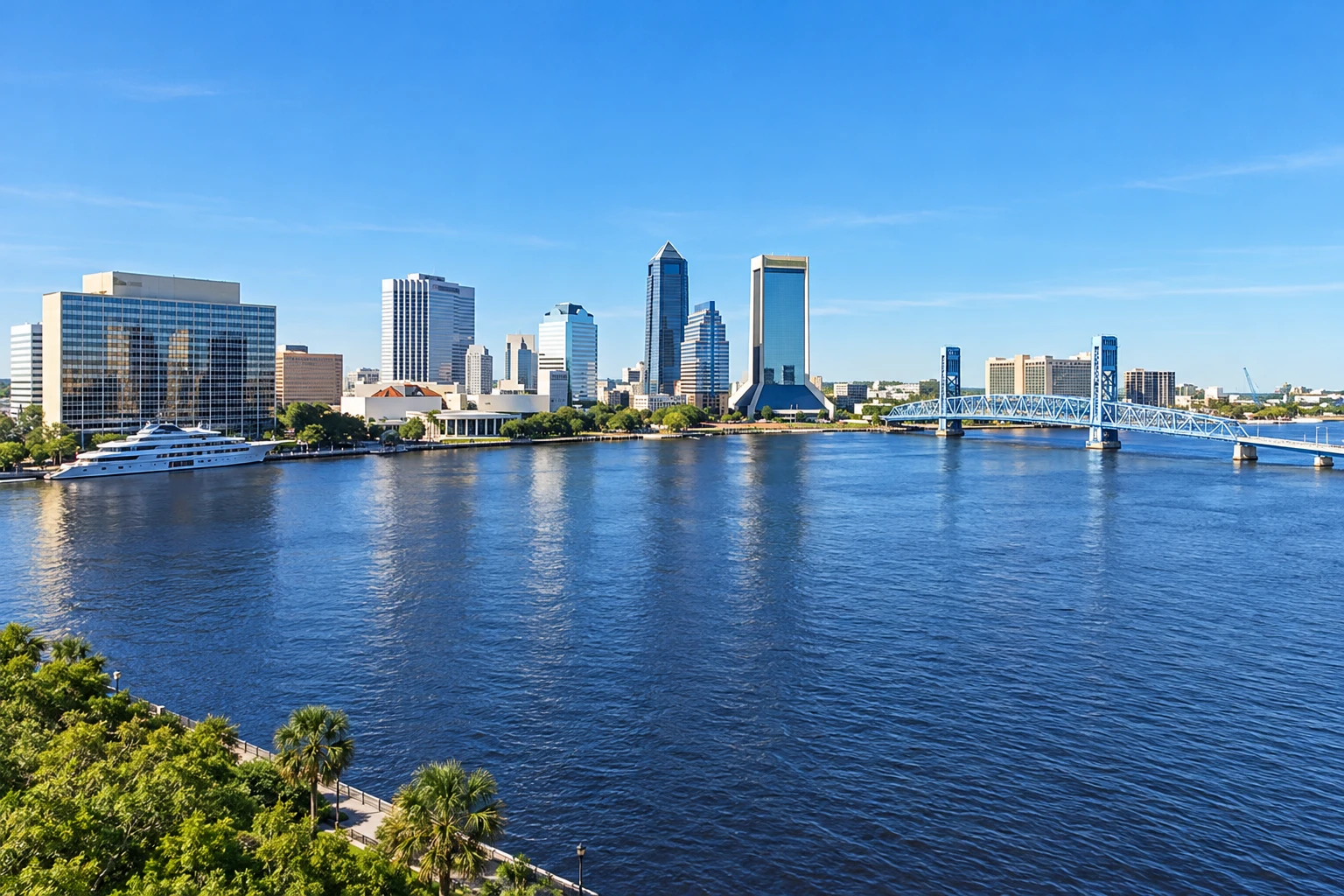
The largest city in Florida by population, cut by the St. Johns River and with Atlantic beaches. It has the Cummer Museum of Art & Gardens, with riverside gardens, the Jacksonville Zoo and Gardens and historic neighborhoods like Riverside and San Marco. To the north are Kingsley Plantation and the preserved islands of the Timucuan Preserve; to the east are Jacksonville Beach and Atlantic Beach.
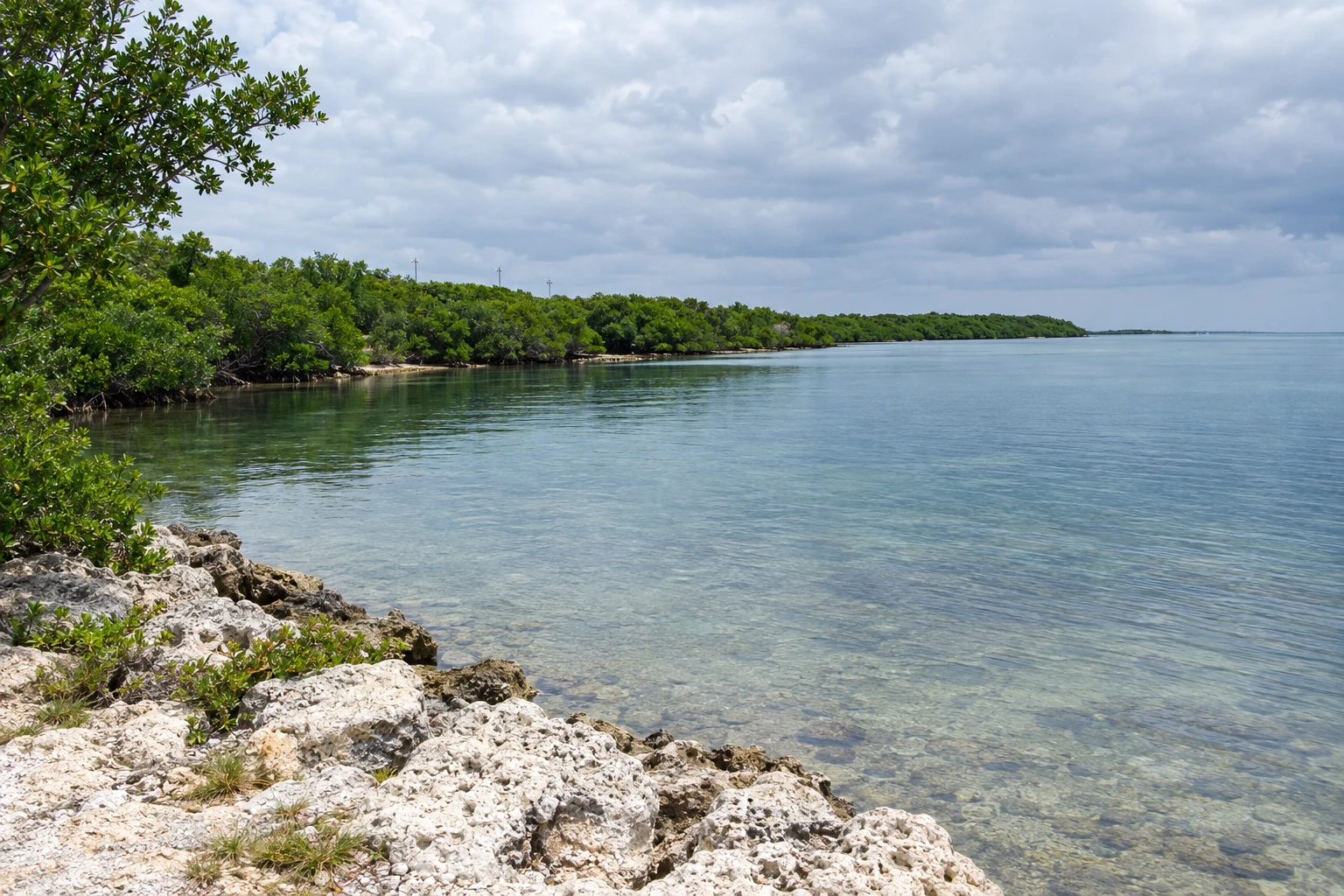
Key Largo is the first major base in the Keys for those coming from Miami. John Pennekamp Coral Reef State Park brings visitors close to the mangroves and reefs with on-water activities, with options that depend on sea conditions.
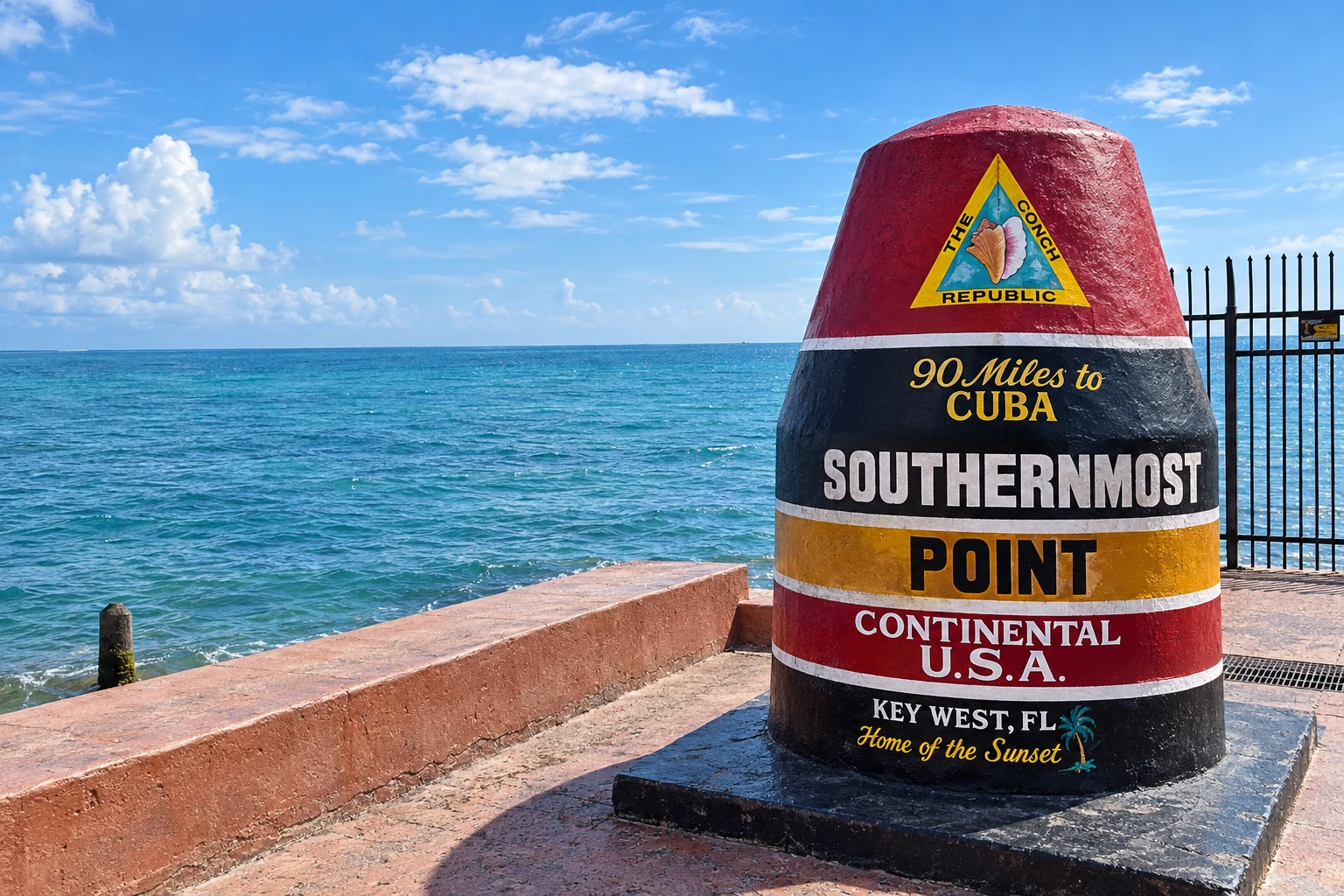
Key West caps the Overseas Highway with an old town of wooden houses and walkable streets. The Hemingway Home and Mallory Square are in Old Town; the town is also the departure base for Dry Tortugas, which requires a full day to reach.
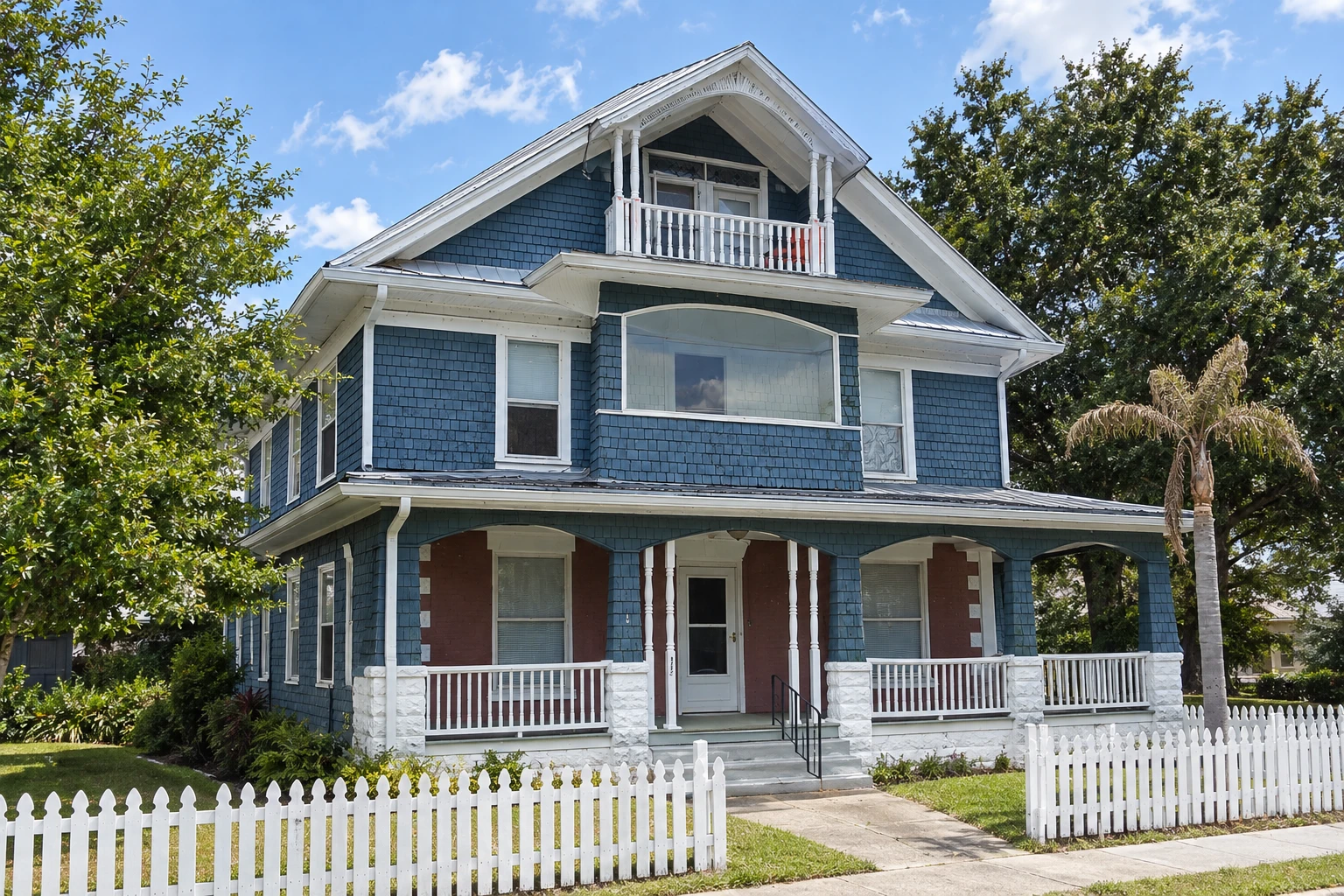
Kissimmee sits on the north shore of Lake Tohopekaliga and serves as a base for the Disney area of the Orlando region. Kissimmee Lakefront Park offers an outdoor break between park days without needing admission to a large complex.
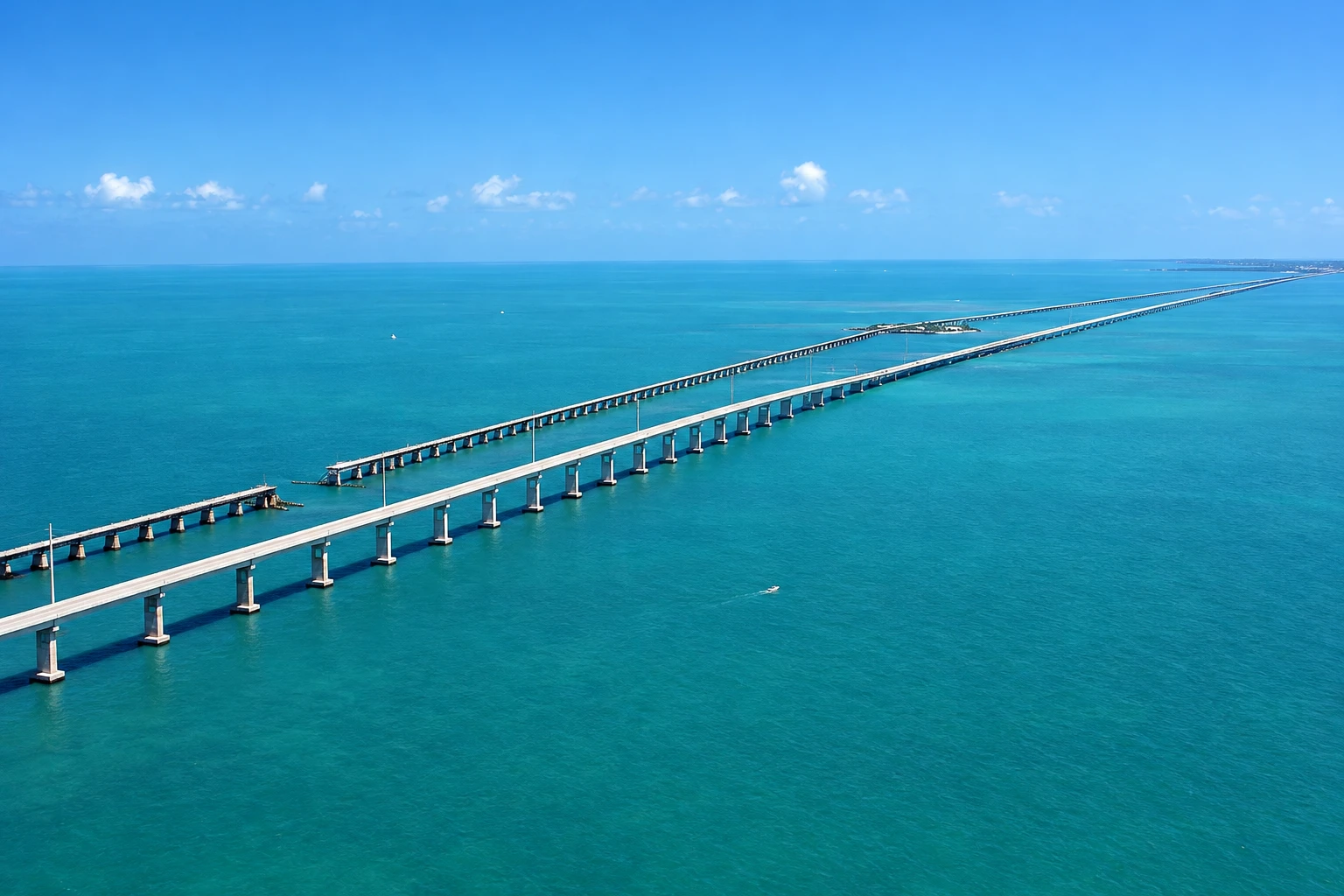
Marathon is an intermediate base in the Keys, close to the bridges and parks of the central part of the archipelago. Crane Point offers nature trails and Bahia Honda State Park allows a beach stop west of town.
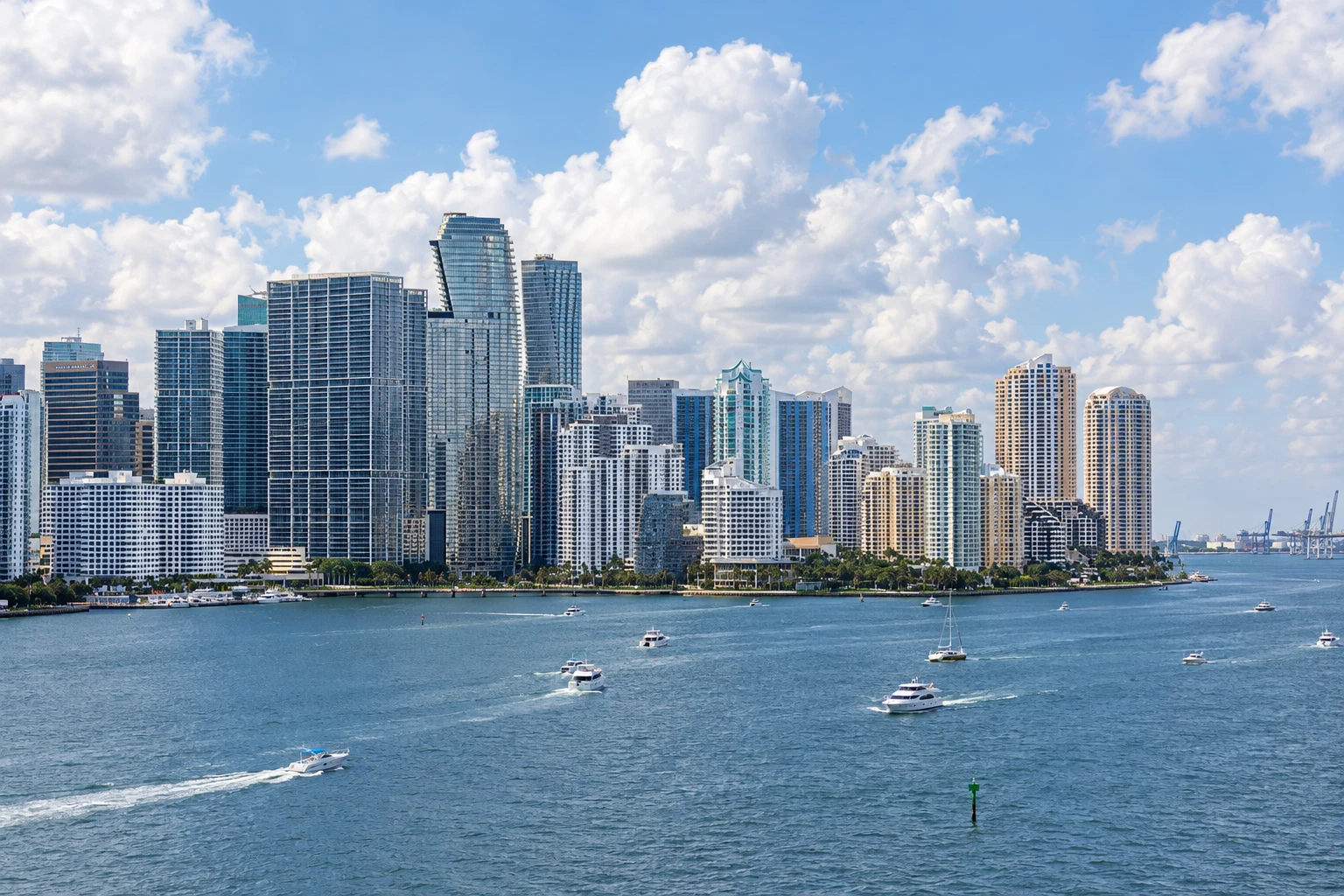
Miami brings together Vizcaya, the Wynwood murals and the culture of Little Havana on the mainland side of the bay. The neighborhoods are spread out and each requires its own walk; the beach most associated with the trip is in the neighboring city of Miami Beach.
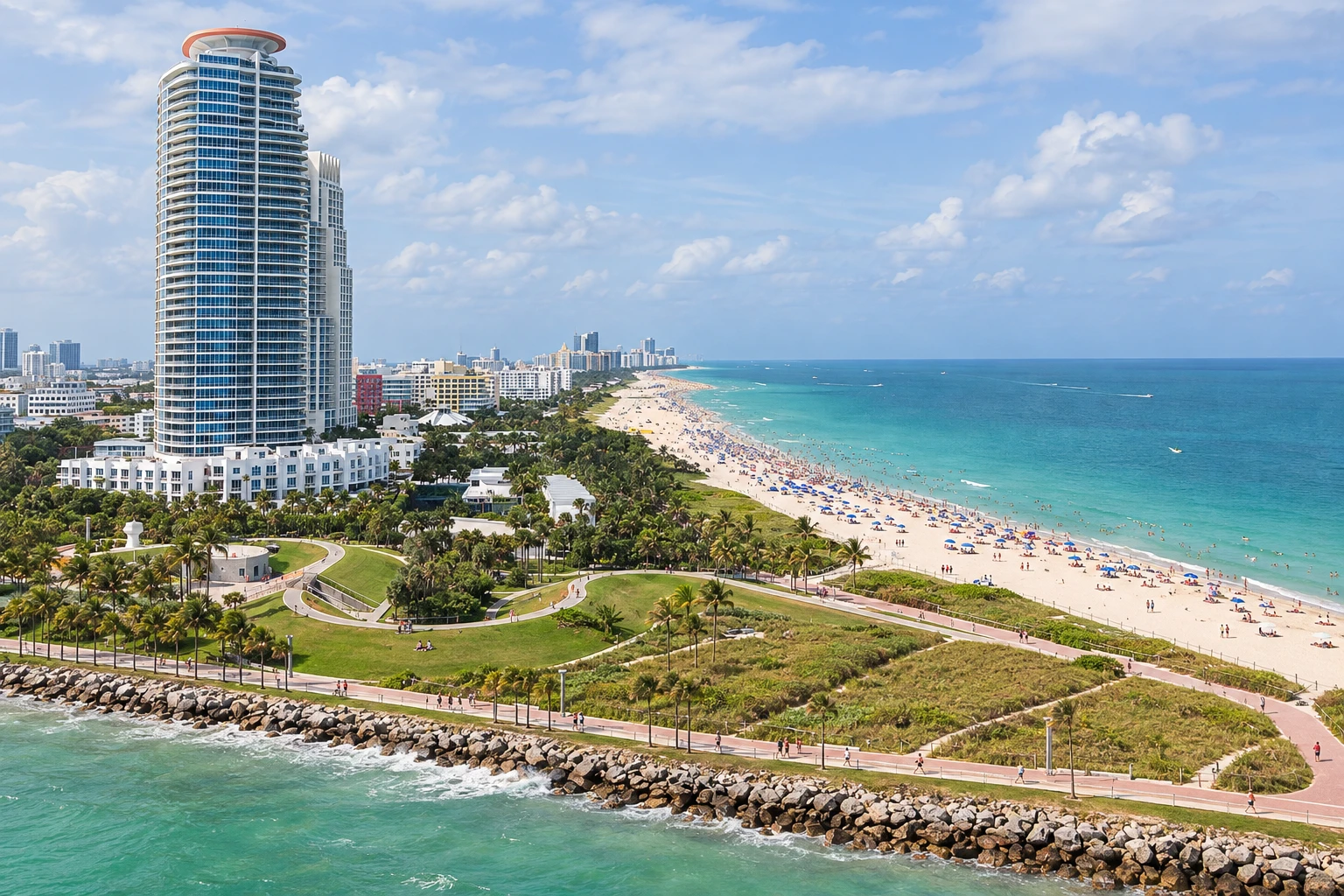
Miami Beach occupies a stretch of islands between Biscayne Bay and the Atlantic. South Beach and the Art Deco Historic District let you combine sand, the boardwalk and architecture without changing areas; the façades on Ocean Drive are part of the urban ensemble.
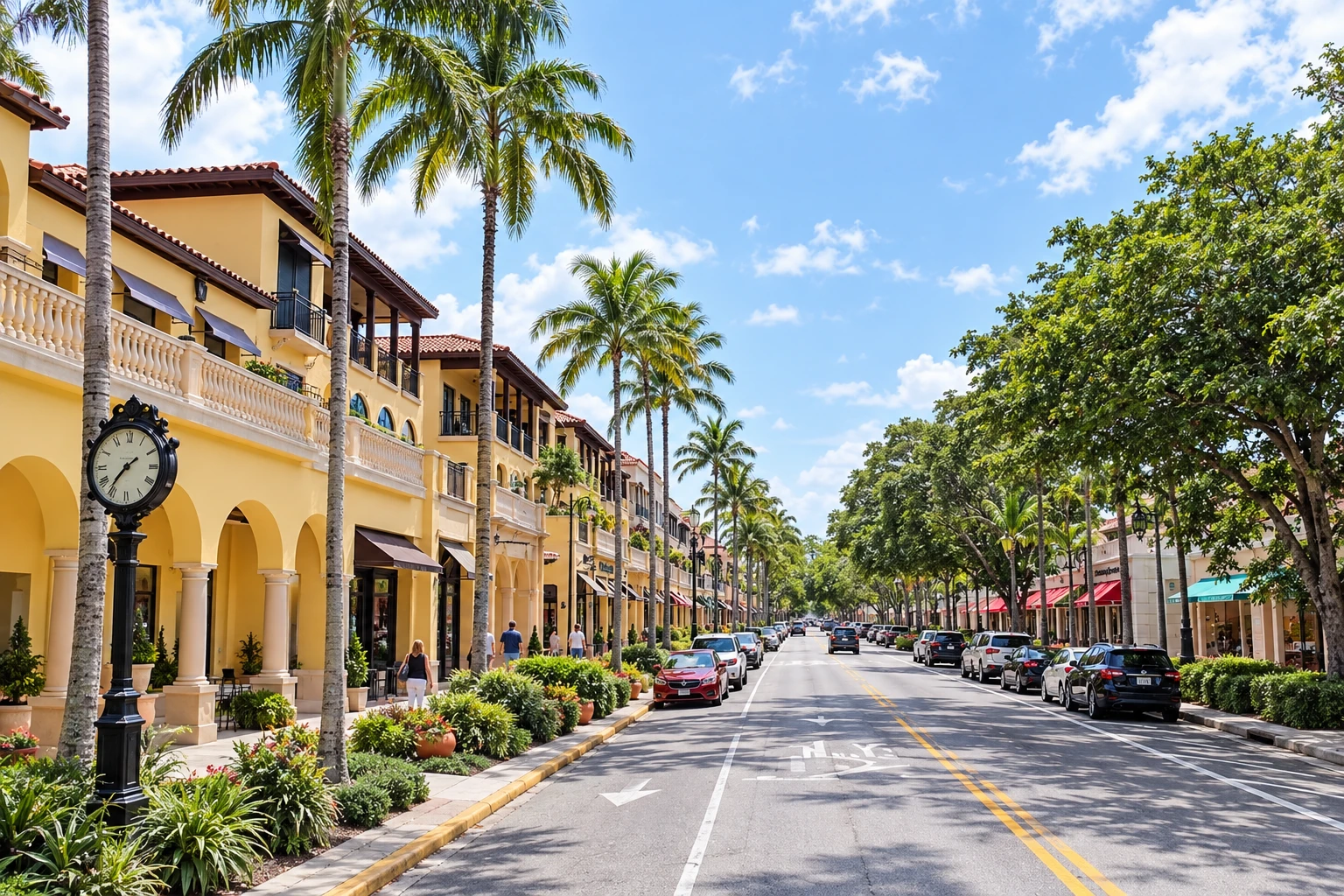
City on the shore of the Gulf of Mexico in southwest Florida, with white-sand beaches, a historic downtown of tree-lined streets around Fifth Avenue South and Third Street South, and many green areas. It has the Naples Botanical Garden, Delnor-Wiggins Pass State Park and, to the northeast, the Corkscrew Swamp Sanctuary, featuring a boardwalk through the largest old-growth bald cypress forest in North America.
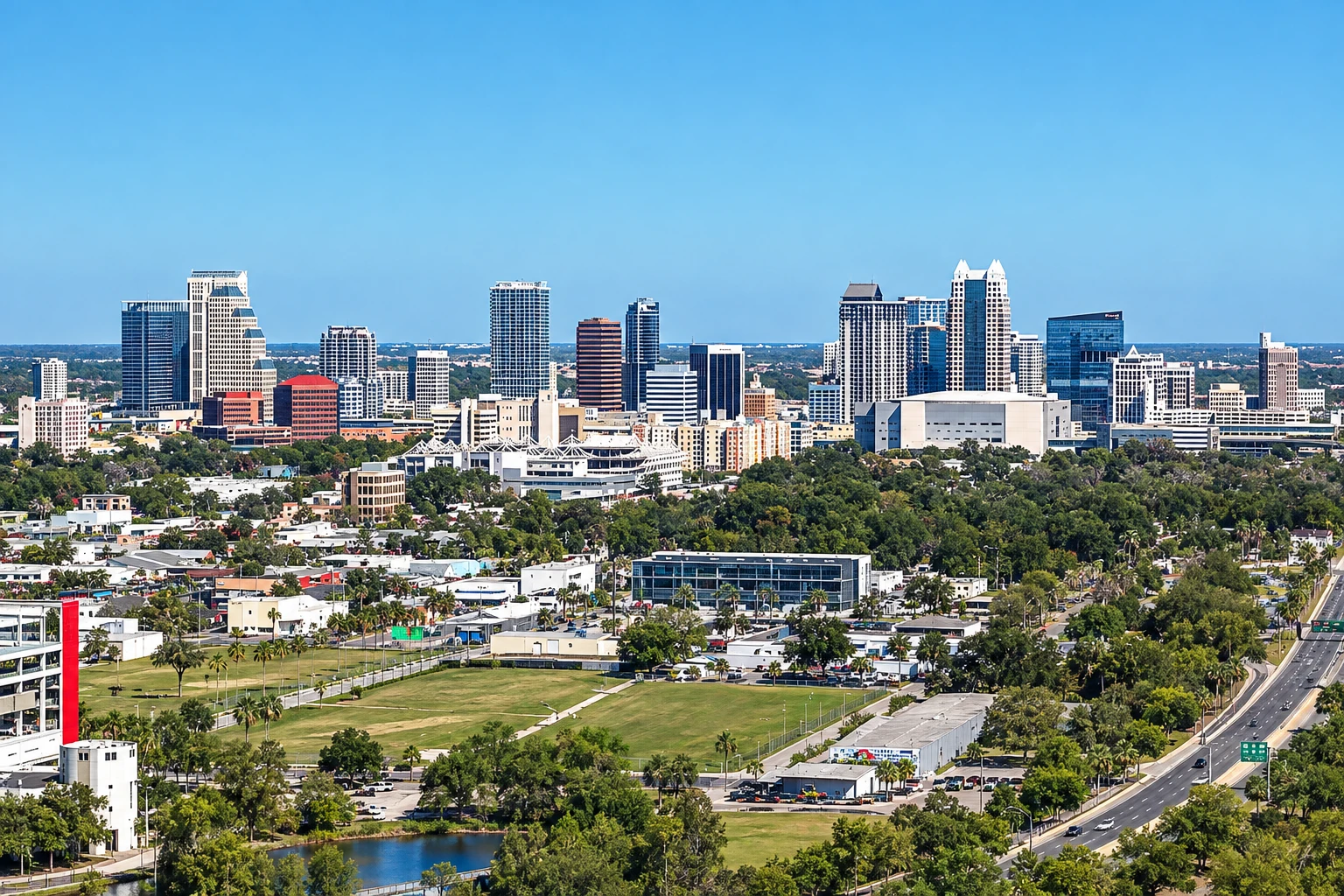
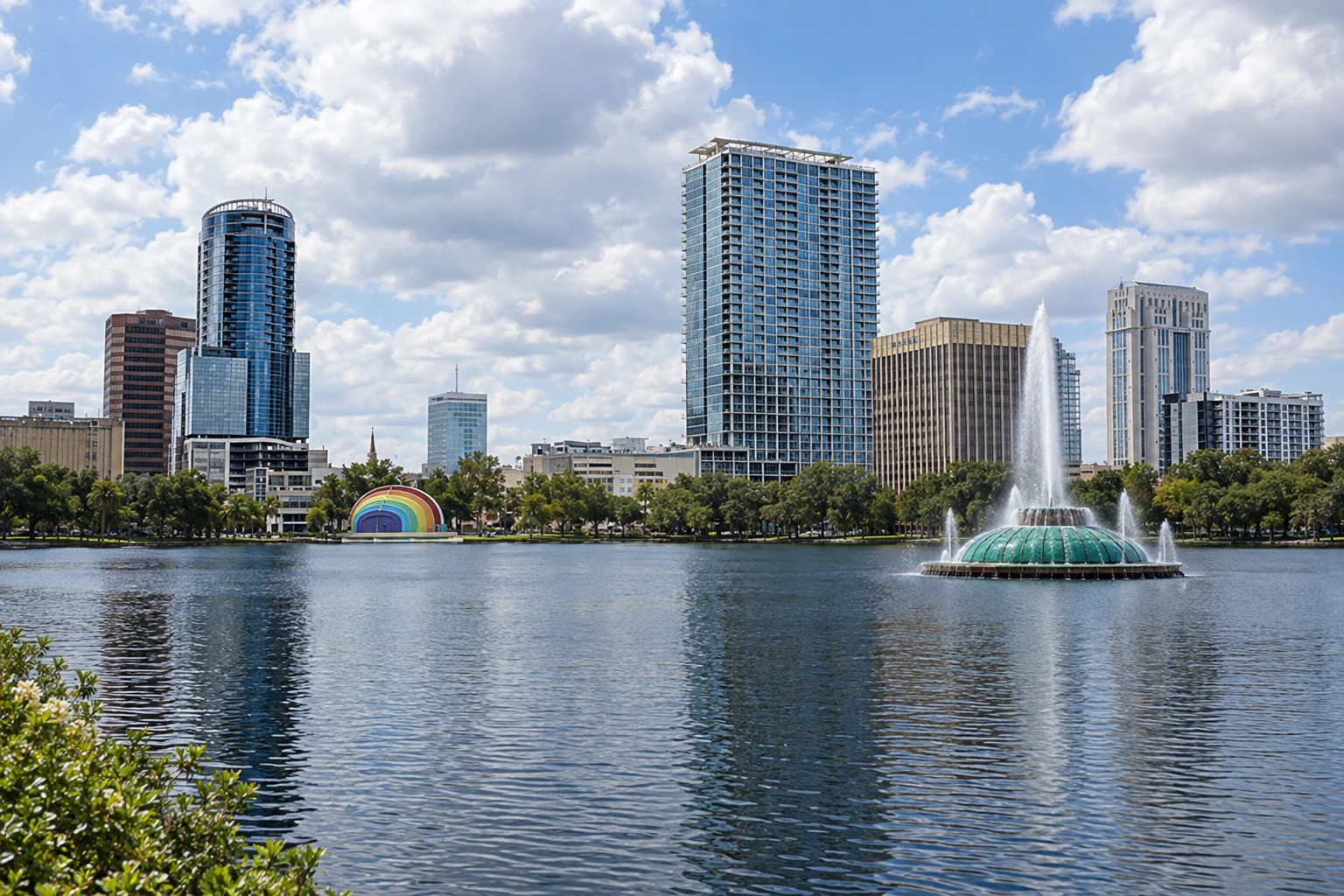
Orlando is the base for a parks trip that spreads across neighboring municipalities. Universal Studios Florida, Islands of Adventure and Epic Universe are located in the tourist sector; SeaWorld, Aquatica and Discovery Cove add roller-coaster and water experiences.
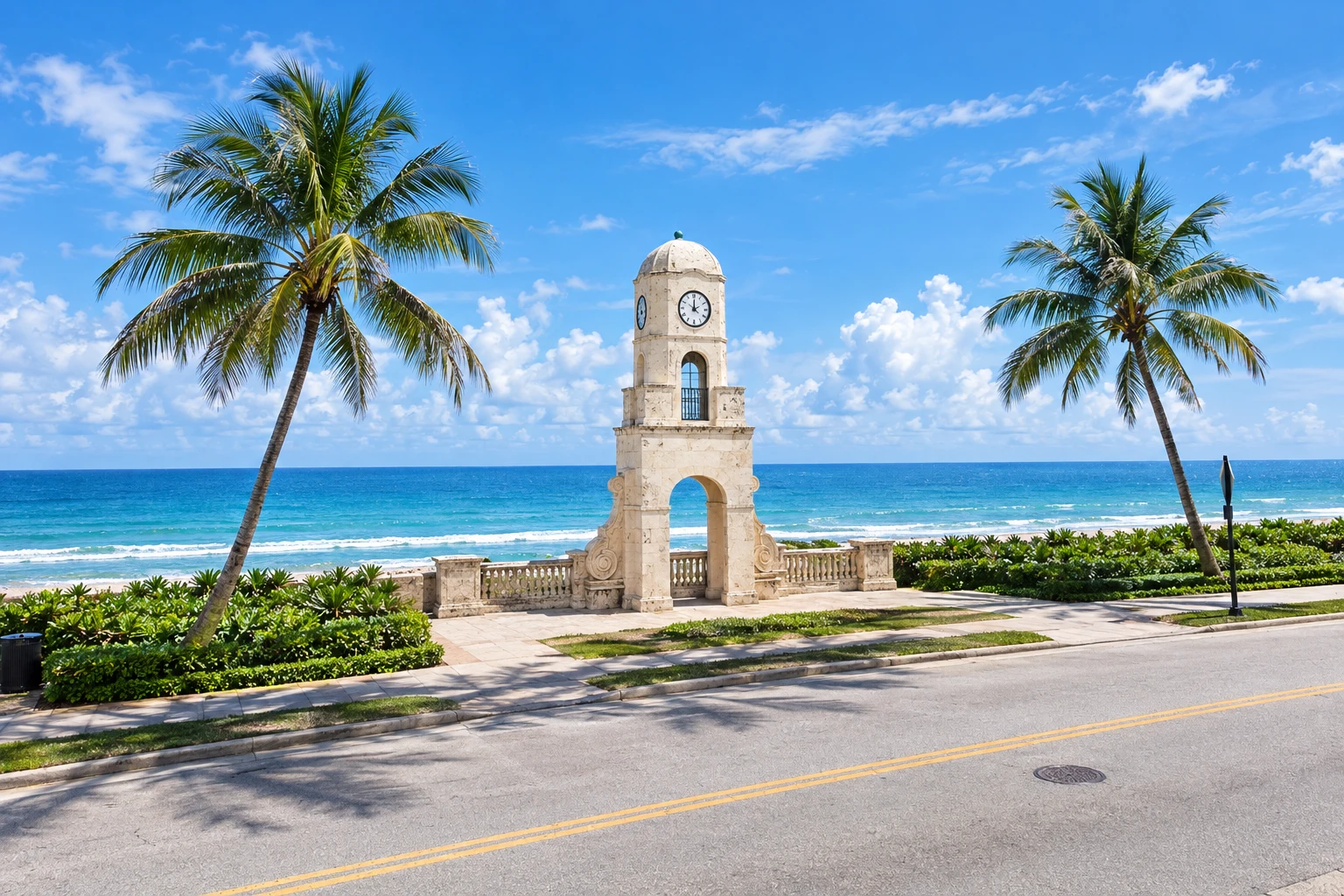
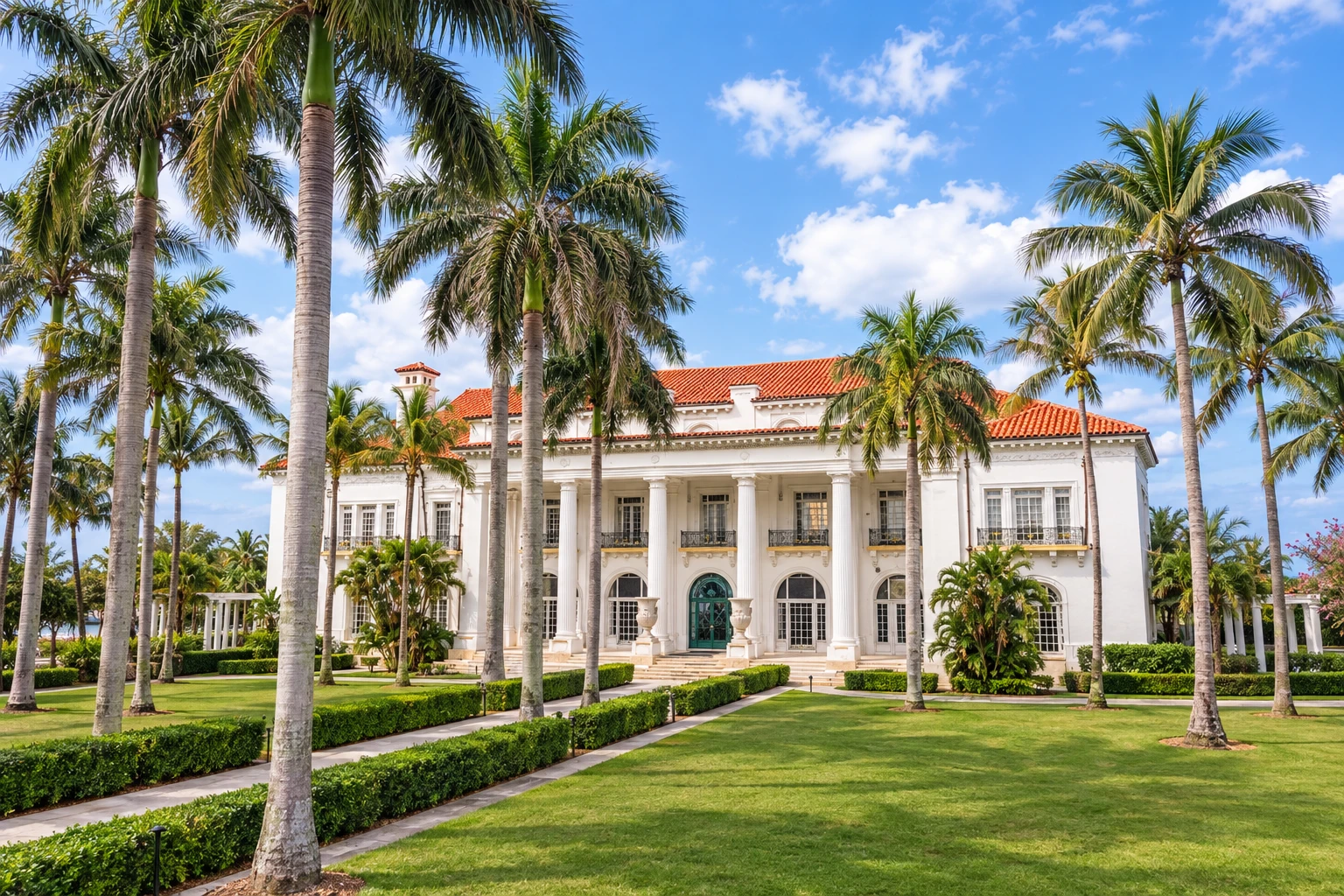
Narrow island between the Atlantic and the Lake Worth Lagoon, connected to West Palm Beach by bridges. It was turned into the winter resort for wealthy Americans by Henry Flagler, whose home, Whitehall, is now the Flagler Museum. It has Worth Avenue, a shopping street with Mediterranean-style passages, mansions behind hedges, and the Lake Trail, a promenade along the lagoon.
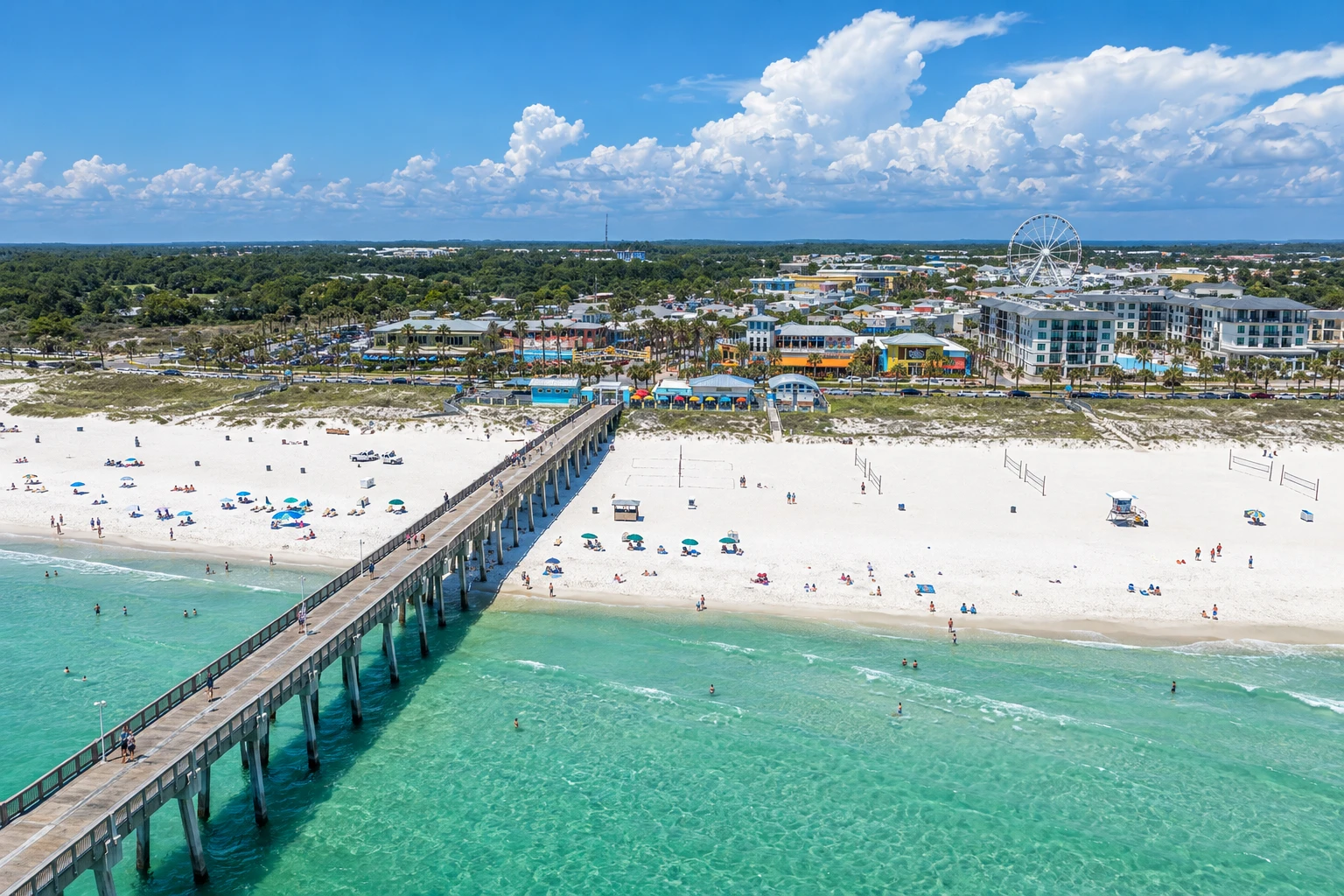
Beach town on the eastern Emerald Coast, with about 43 km of white quartz sand and green Gulf of Mexico water. The shoreline is lined with hotels and condominiums along Front Beach Road, with the Russell-Fields fishing pier in the center. At the far east, St. Andrews State Park has beaches, a channel between jetties and boat access to Shell Island, an undeveloped island.
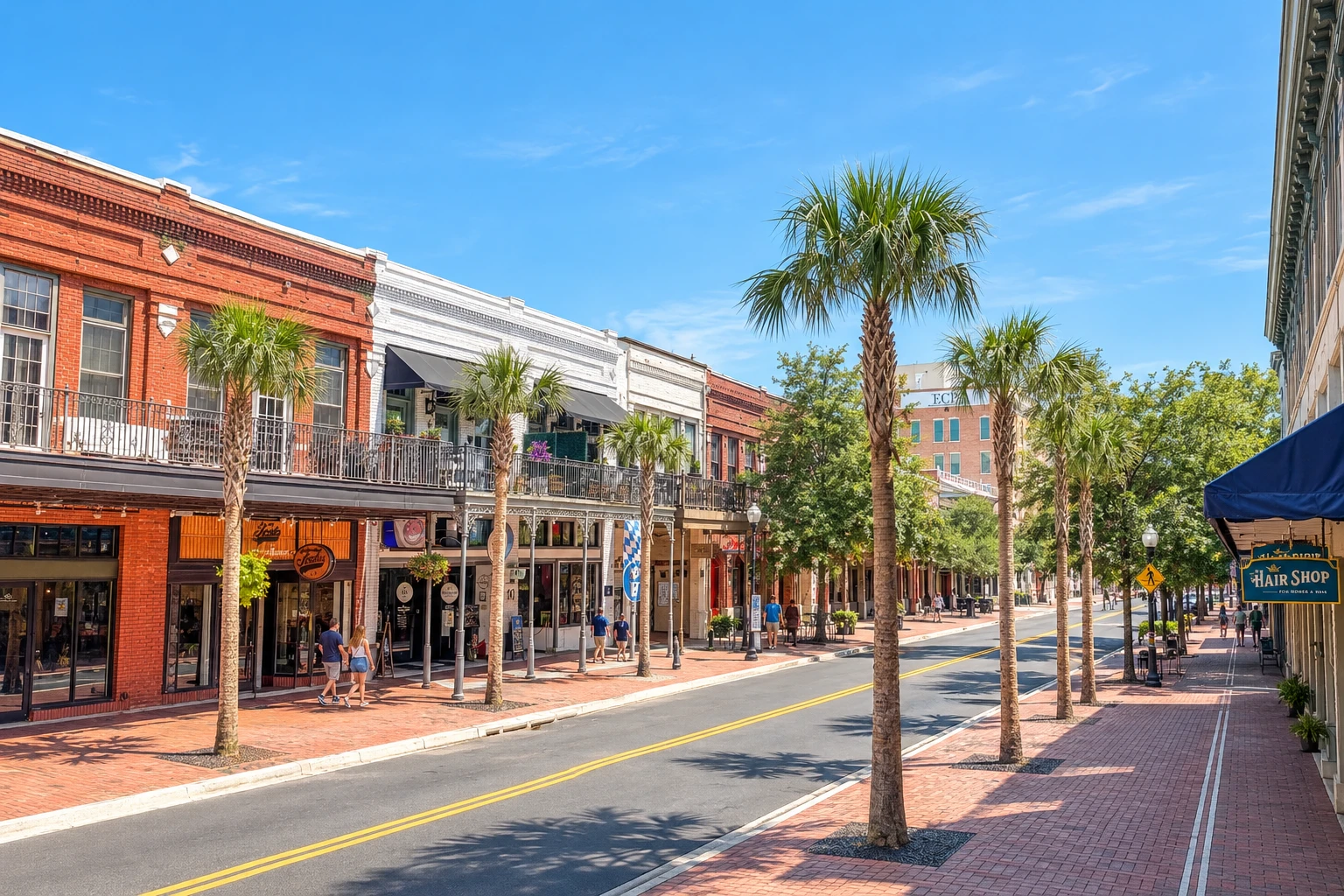
City on Florida’s far western edge, near Alabama, with more than four centuries of history under Spanish, French, British, Confederate and American flags. The downtown has old houses and the historic Seville district. On Santa Rosa Island are Pensacola Beach and Fort Pickens, and at the naval air station the National Naval Aviation Museum and the home of the Blue Angels flight squadron.
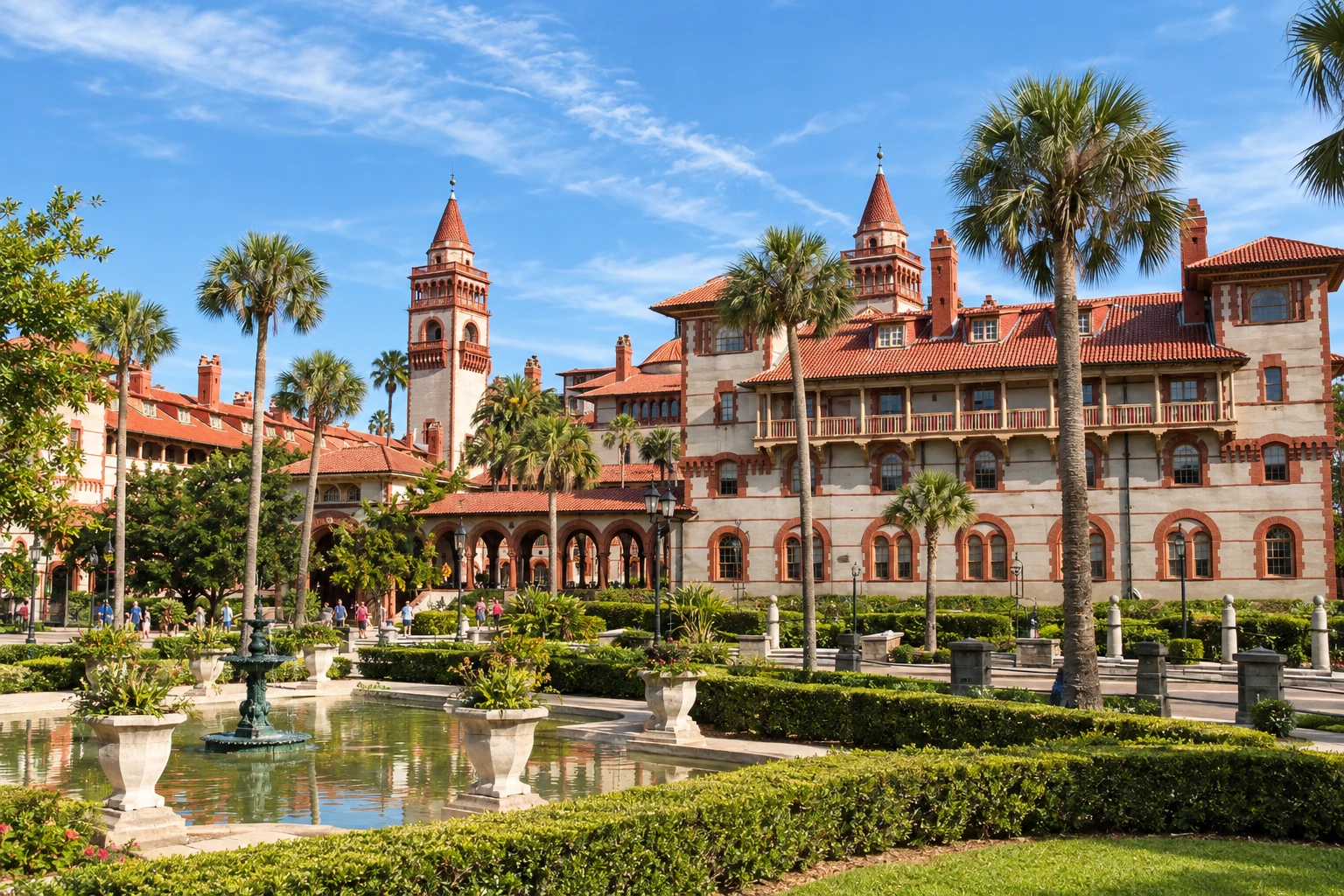
Founded in 1565 by the Spanish, it is the oldest continuously inhabited European-founded city on the continental territory of the United States. The historic downtown has narrow streets, the pedestrian St. George Street, colonial houses and the Castillo de San Marcos, a coquina stone fort by the bay. It also features Flagler College, a former 19th-century luxury hotel, and, on Anastasia Island, the lighthouse and beaches.
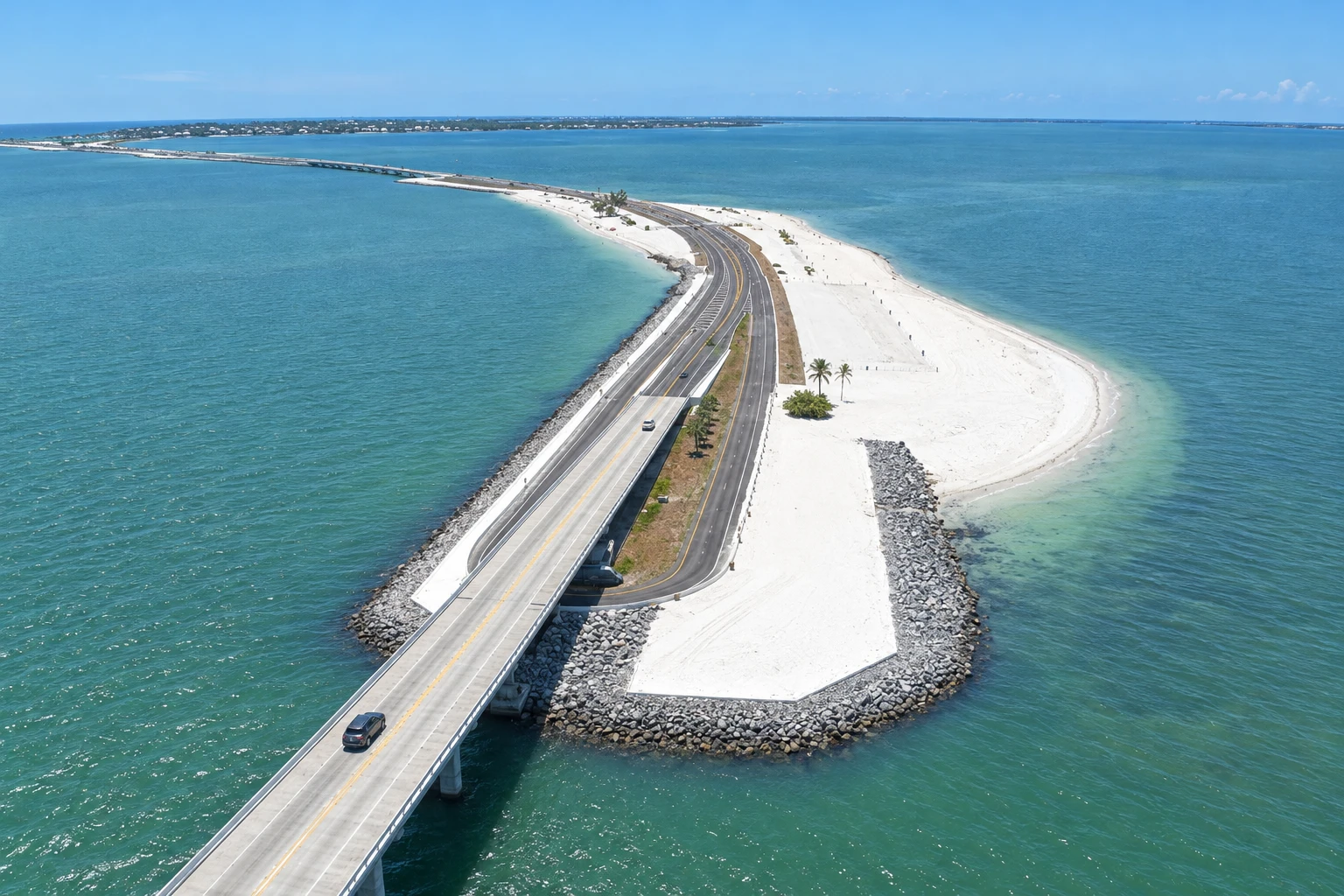
Barrier island in the Gulf of Mexico, connected to Fort Myers by a bridge, known for the shells that accumulate on its beaches and for its protected nature. About two thirds of the island are preserved areas, such as the J.N. "Ding" Darling National Wildlife Refuge, with mangroves and water birds. It has the Bailey-Matthews National Shell Museum, beaches like Bowman's Beach, and a network of bike paths that cross the island.
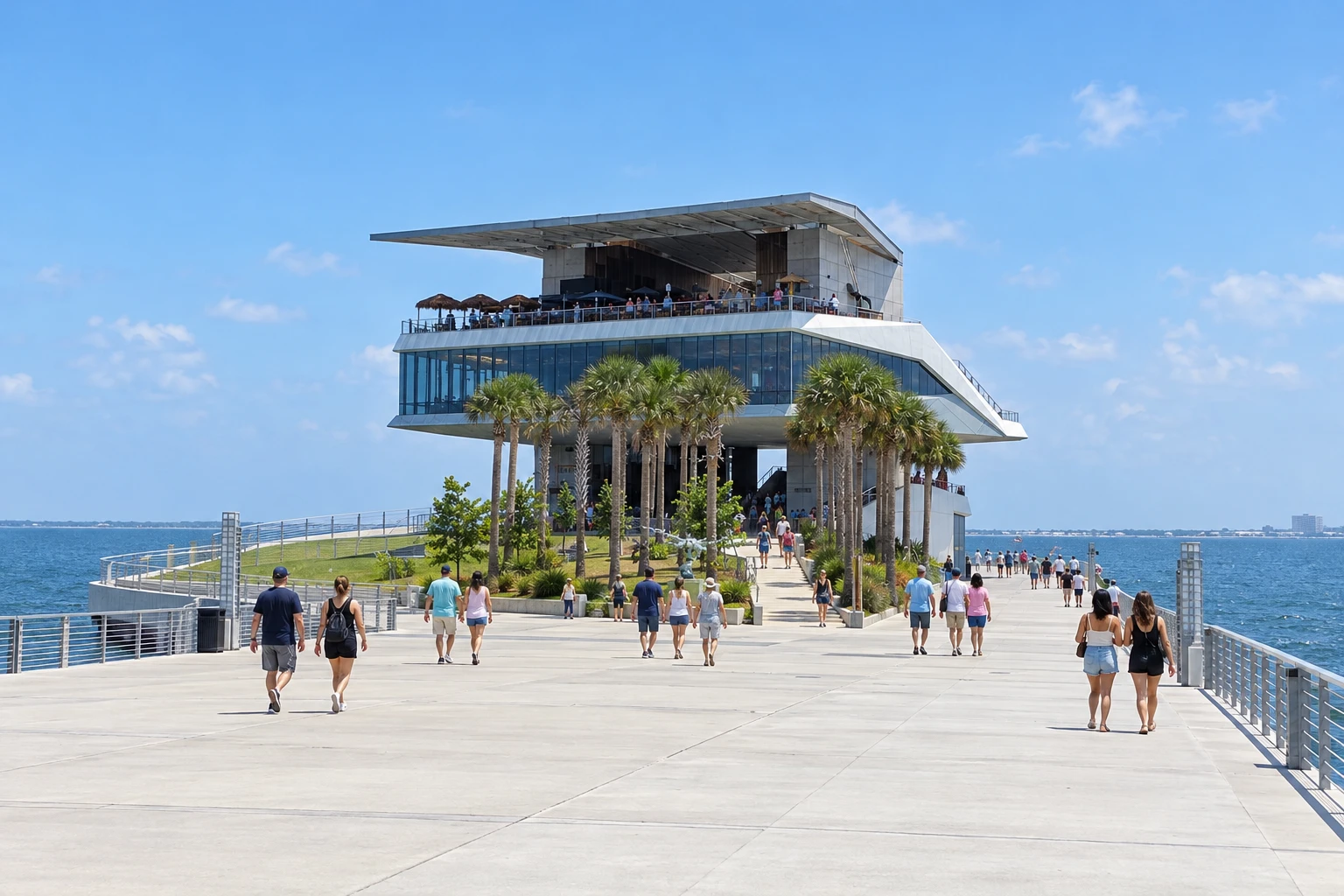
St. Petersburg pairs The Dalí Museum with a waterfront of parks and promenades along Tampa Bay. The city is different from St. Pete Beach on the ocean coast: the museum and downtown are on the bay side.
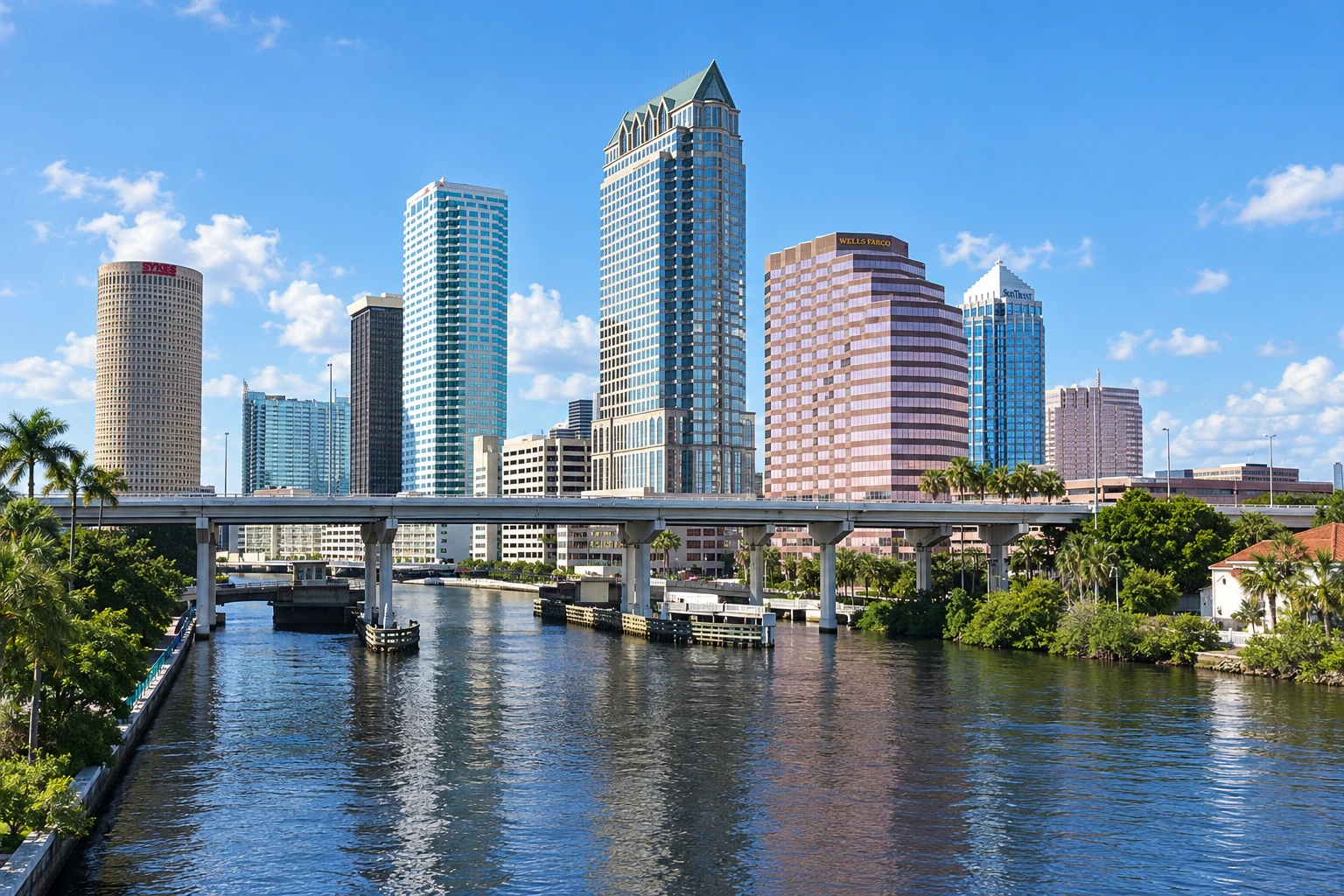
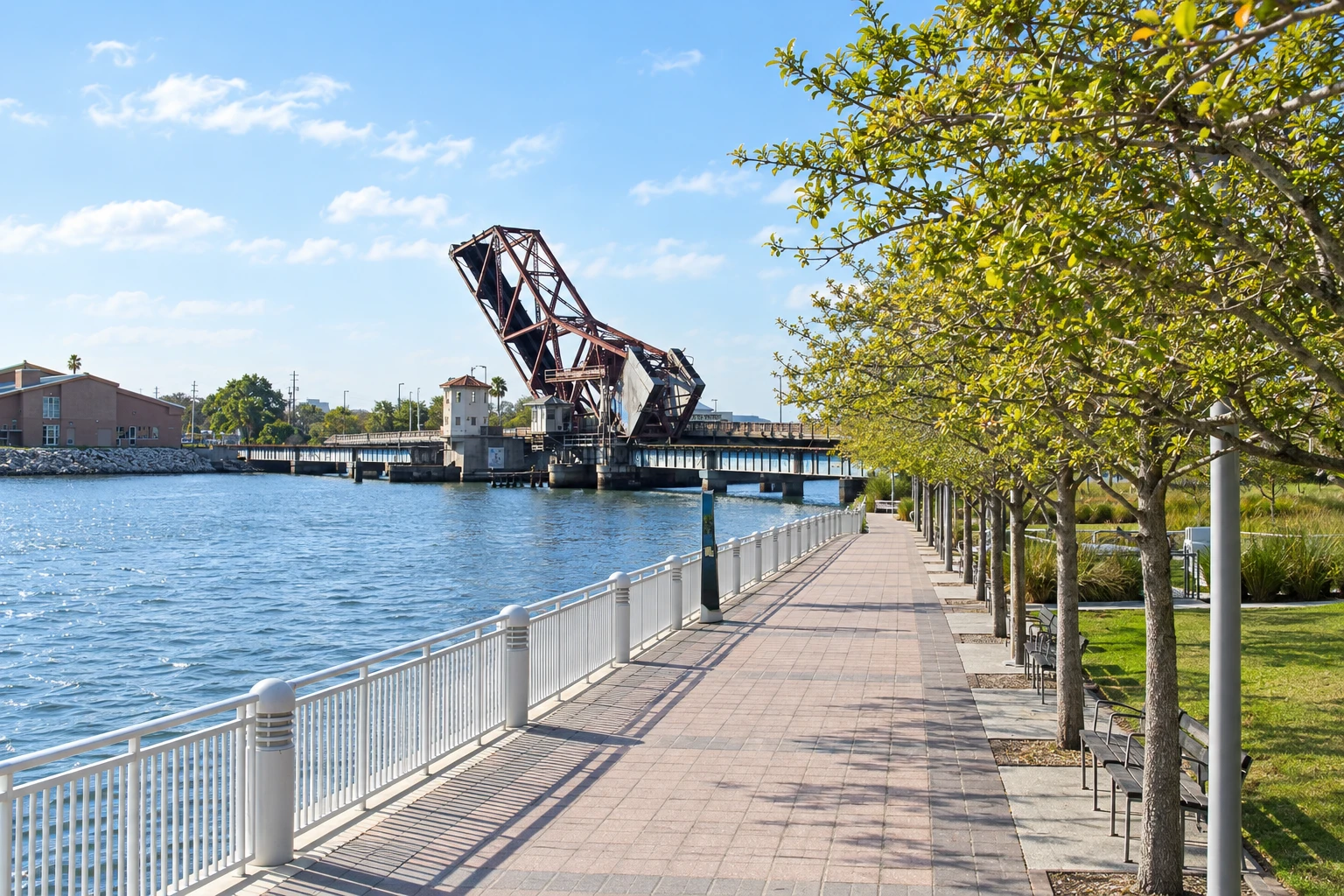
Tampa sits on the bayfront and is home to Busch Gardens, a park with roller coasters, animals and family attractions. Adventure Island is the neighboring water park, with its own ticketing and calendar; each deserves separate planning.
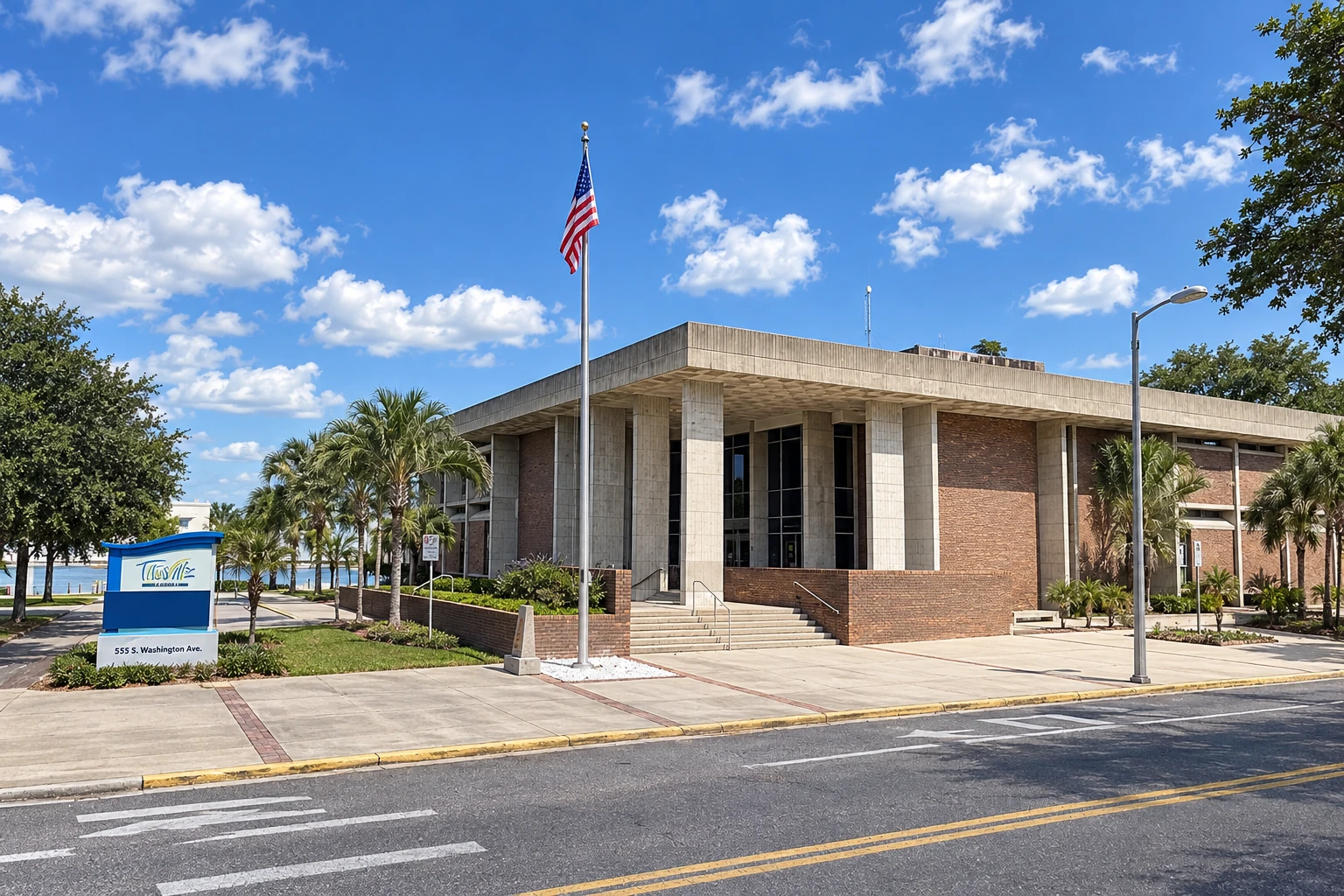
Titusville sits on the Indian River Lagoon, facing the Kennedy Space Center area. It serves as a base to spend the day with the vehicles and exhibitions of space exploration, with a land route to the visitor complex on Merritt Island.
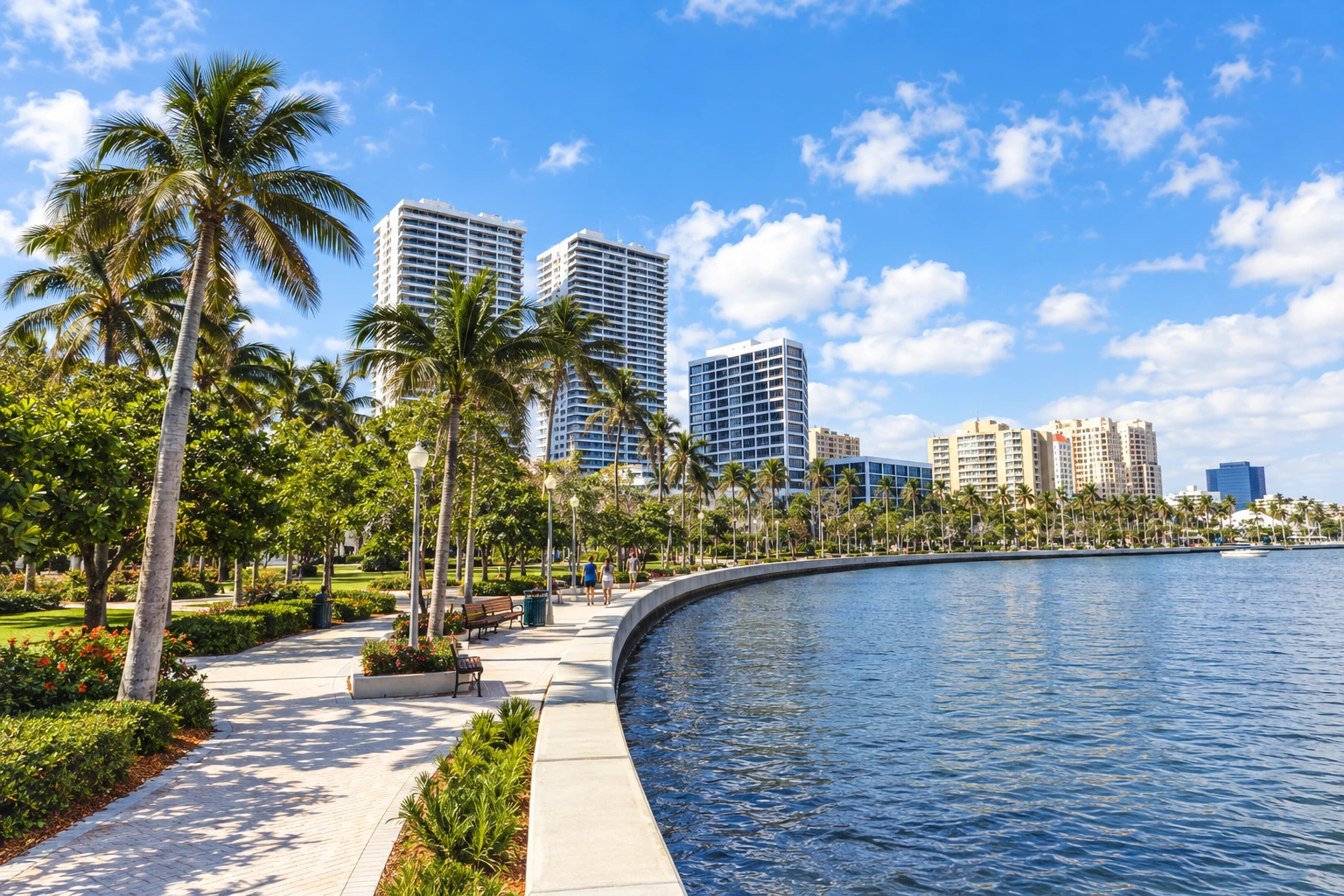
City on the shore of the Lake Worth Lagoon, facing the island of Palm Beach, and the county gateway, with an international airport and a Brightline train station. The downtown area, around Clematis Street and the waterfront, houses restaurants and events. It has the Norton Museum of Art, the Manatee Lagoon manatee observation center, and, to the west, the drive-through Lion Country Safari and the Rapids water park.
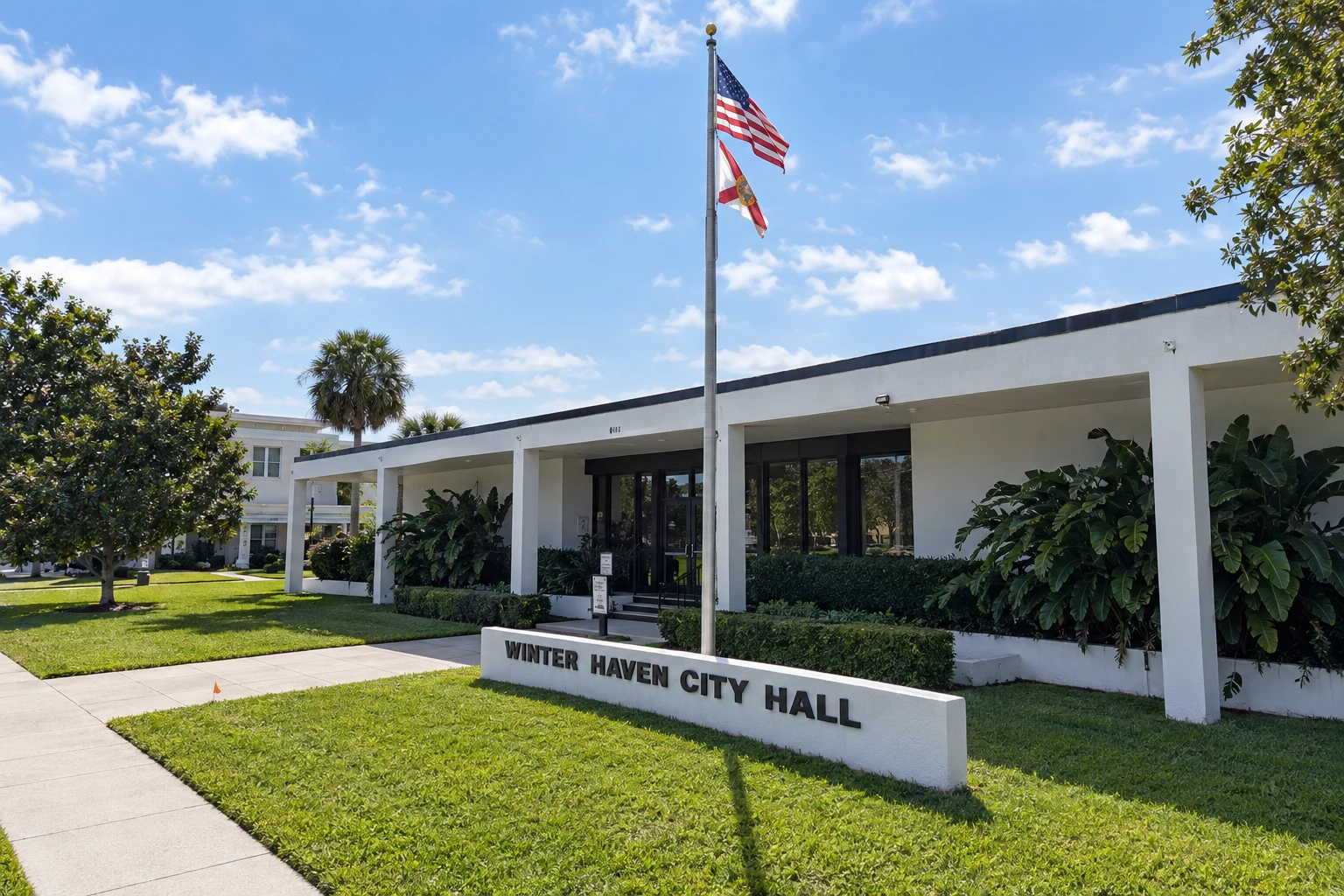
Winter Haven is in a lake region of central Florida and hosts LEGOLAND Florida, its water park, Peppa Pig Theme Park and SEA LIFE Florida. The city is included in trips from Orlando as a stop aimed mainly at families with children.
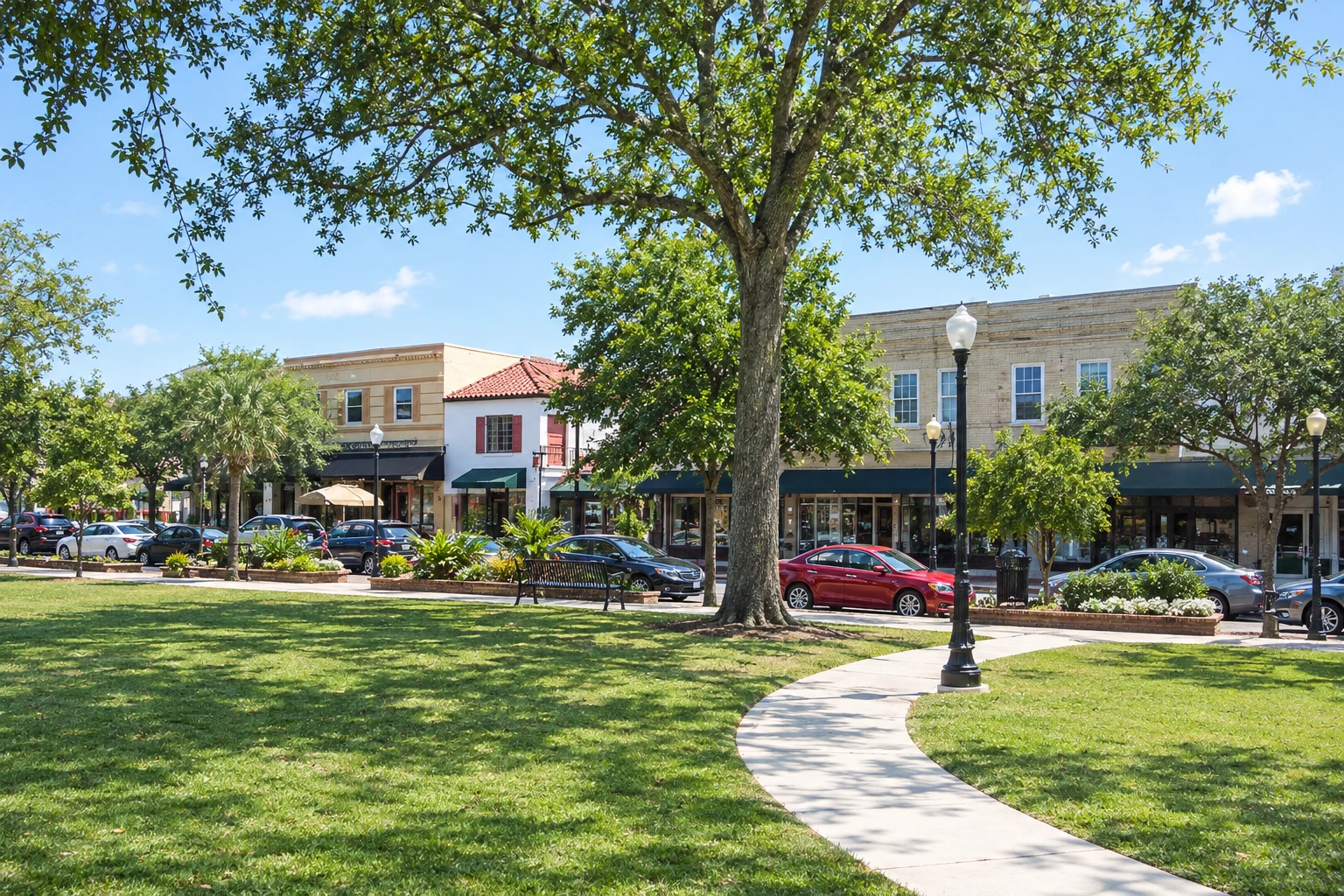
Winter Park has a walkable core around Park Avenue, gardens and lakes north of Orlando. The Charles Hosmer Morse Museum of American Art houses the Louis Comfort Tiffany collection and provides a cultural break between the theme parks.
From November to April is usually the dry season, with hot days and cooler nights, the most popular time for beaches and parks. From June to September the heat is strong, with afternoon downpours. The Atlantic hurricane season runs from June 1 to November 30, with higher risk between August and October. Orlando parks tend to be crowded in July, at Christmas and at Easter.
The main airports are Miami (MIA), Orlando (MCO), Fort Lauderdale (FLL) and Tampa (TPA). Connections with Brazil may be direct or with a stopover, depending on the season and the airline. Check before you buy. Between Miami and Orlando it's about 380 km, via the Brightline train or Florida's Turnpike highway. Key West has its own airport (EYW) and is about 260 km from Miami via the Overseas Highway.
Beyond the guide
Your questions
The parks are between Orlando and Kissimmee. The Lake Buena Vista and Kissimmee area is closer to Disney; International Drive is closer to Universal and SeaWorld. In any case, a rental car or hotel shuttle services help getting around.
Yes, and it is the most common combination. It's about three and a half hours by car or train between the two cities. Many travelers allocate most of their days to the parks and leave three or four for Miami.
The nearest entrance is past Homestead and leads to the Ernest F. Coe visitor center and the Anhinga trail, where it's common to see alligators and birds. airboat rides depart from areas on the park's edge. Entrance fees are charged separately: check the current schedule.
To travel between cities, yes: public transport is limited outside downtown Miami. In Orlando, a car makes it easier to go from one park to another and to shopping, and the drive to the Keys via the Overseas Highway is one of the state's best-known road trips.
The official season begins on June 1 and ends on November 30; the months of greatest risk are usually August, September and October. Travelers during that period should follow weather forecasts and choose insurance that covers cancellations.