Bierock
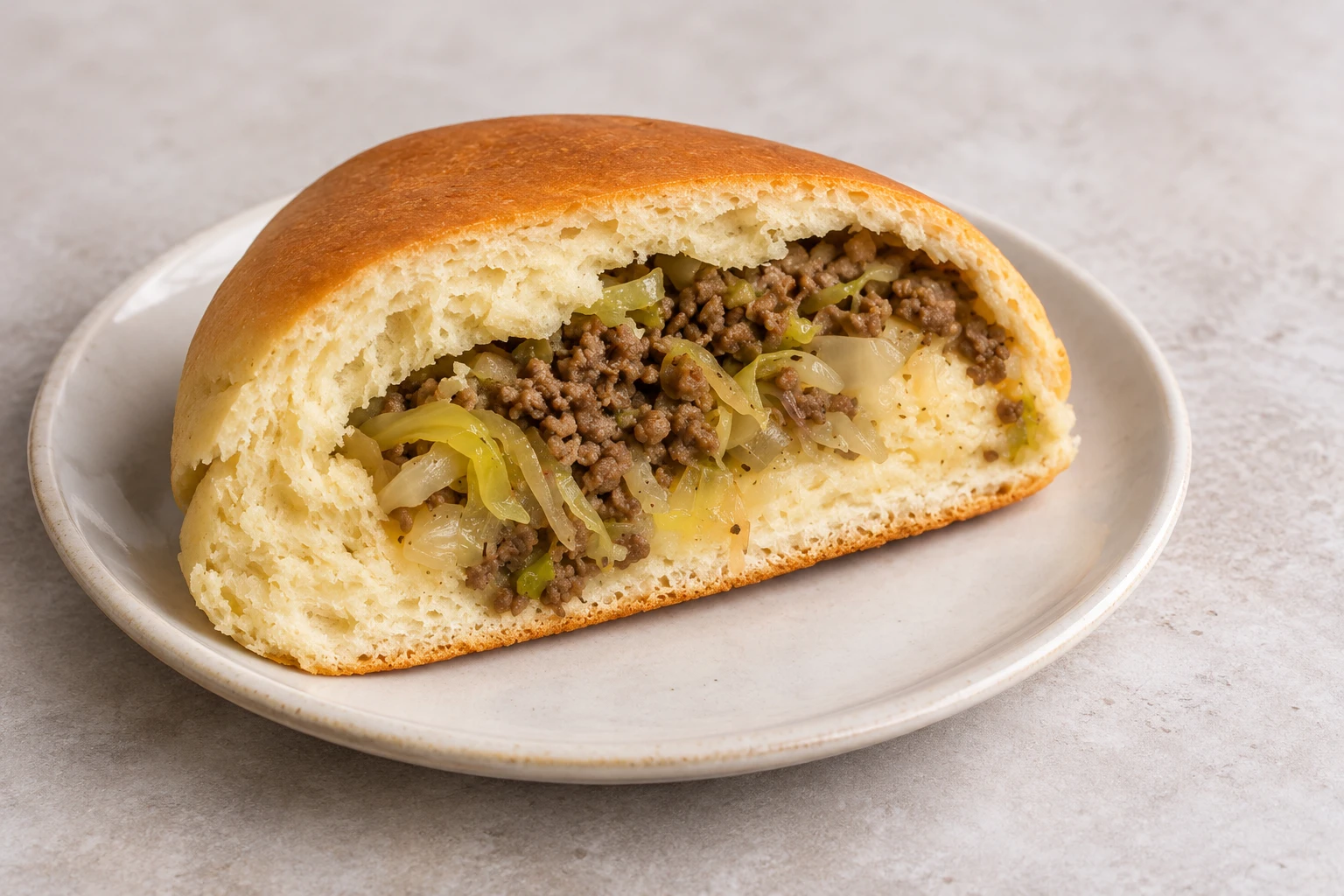
Small leavened roll filled with seasoned ground beef, sautéed cabbage and onion, baked until golden. It came to Kansas with the Volga Germans in the late 19th century and is one of the dishes most closely associated with the state.
Antarctica
State · Great Plains (Mount Rushmore)
Kansas, in the center of the United States: the tallgrass prairie of the Flint Hills, Dodge City of the Old West, Hutchinson's space museum and the chalk towers of Monument Rocks.
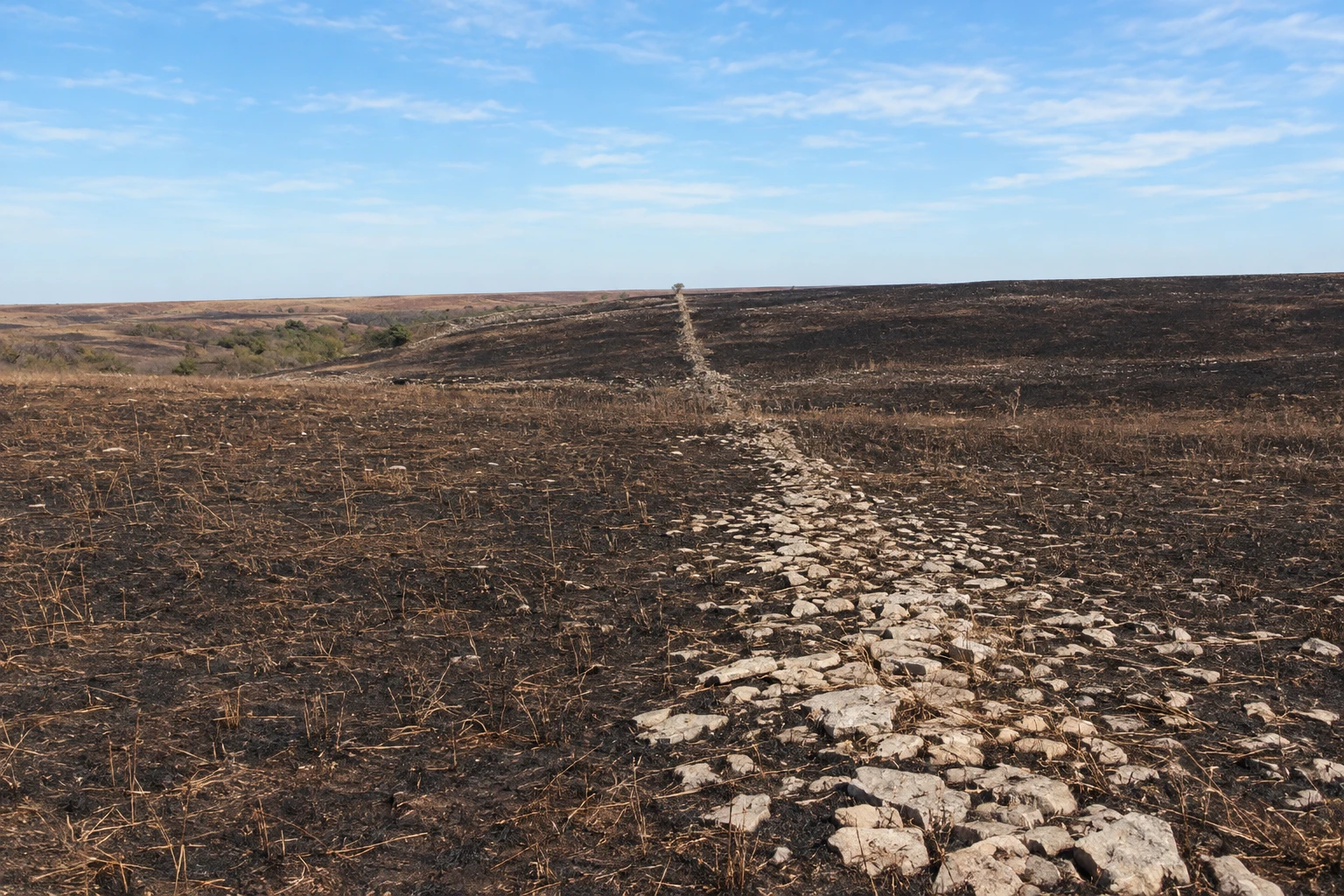
In the photo: Prairie and historic stone wall, Tallgrass Prairie National Preserve
Illustrative images. The pictures in this guide are illustrations based on the real place, not photographs, and may differ from it.
State
Kansas lies at the geographic center of the 48 contiguous states, in the Great Plains. It is a land of wheat fields, open sky and straight roads, once crossed by wagons heading west and Texas cattle drives to the railroads in the 19th century. It is also the state from which Dorothy departs for the land of Oz in L. Frank Baum's book.
In the Flint Hills to the east, the Tallgrass Prairie National Preserve protects a portion of the largest remaining area of tallgrass prairie in North America, with a bison herd and trails. Abilene, the endpoint of the cattle drives, has the library and museum of President Dwight Eisenhower, who grew up in the town.
In the west, Dodge City recreates an Old West town at the Boot Hill Museum, with the 1870s Front Street. Hutchinson is home to the Cosmosphere, a space museum with artifacts from American and Soviet missions, and the Strataca, an underground salt mine open to visitors. Further north, the Monument Rocks are chalk towers rising on the plain, remnants of the floor of an ancient inland sea.
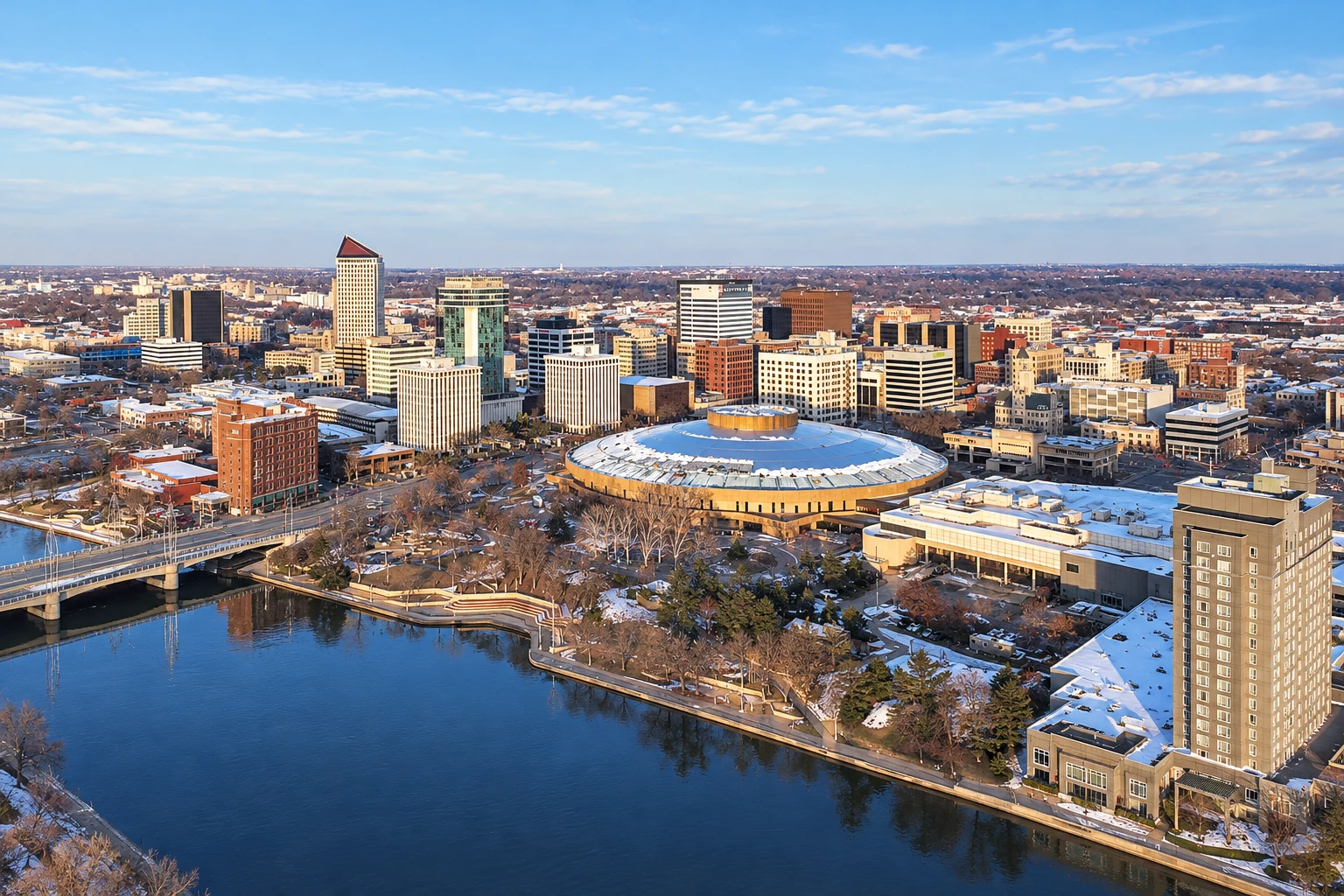
Wichita, the largest city, is an aerospace industry center, with museums along the Arkansas River and, at the confluence with the Little Arkansas, the sculpture Keeper of the Plains depicting a Native warrior. Kansas City is split between Kansas and Missouri, and the Kansas side hosts some of the barbecue joints that made the city famous. At the table, smoked barbecue and plains-style steak.

Flavors of the United States
Destinations
Cities

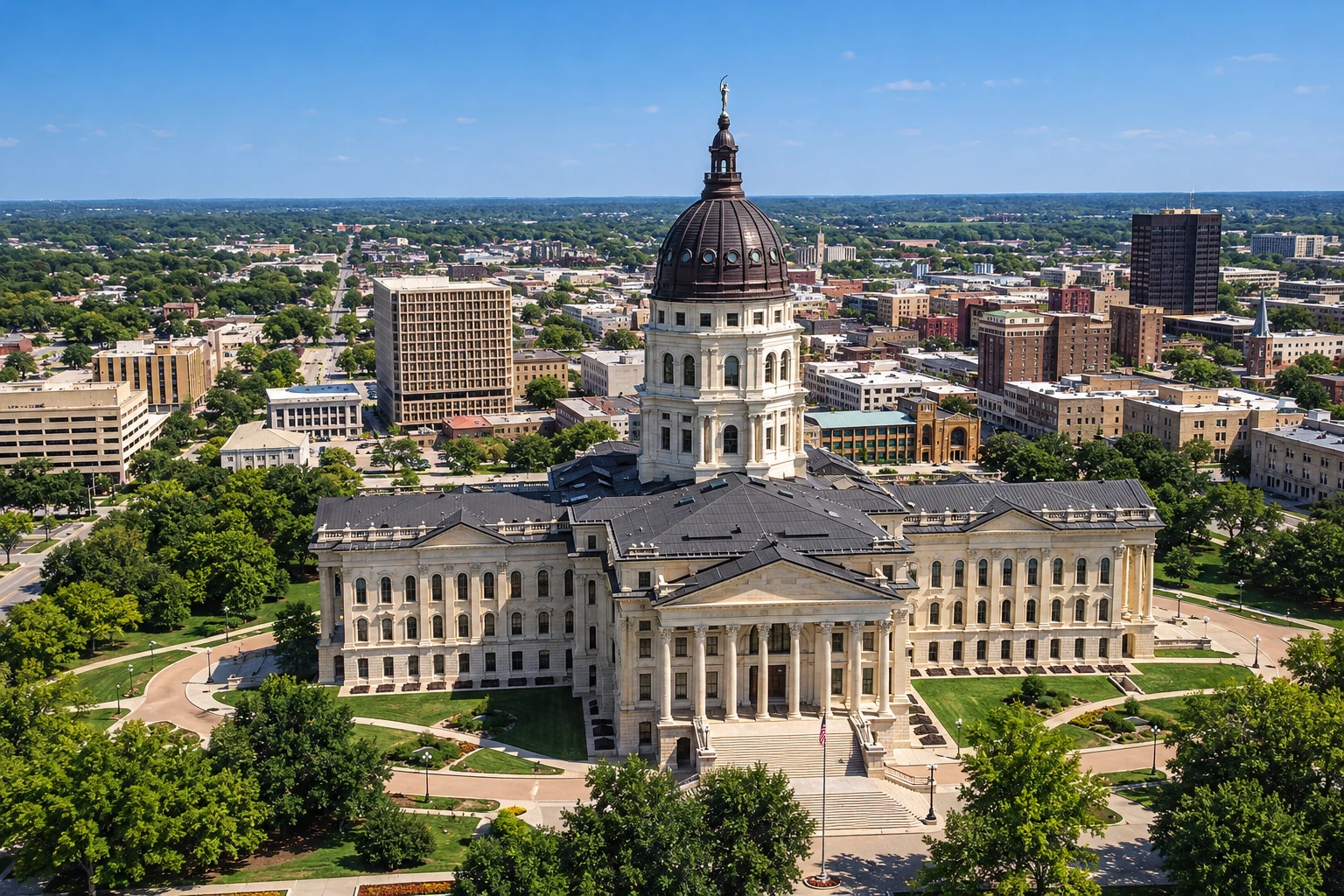
Kansas state capital on the banks of the Kansas River. It has the state capitol, with a climb to the dome and murals by John Steuart Curry; the Brown v. Board of Education National Historic Site, linked to the end of segregation in public schools; the Kansas Museum of History; and Gage Park, with a zoo and rose garden.

A town in central Kansas along I-70, where the Chisholm Trail ended for Texas cattle drives in the late 1860s and where Dwight Eisenhower, the 34th president of the United States, grew up. It has Eisenhower’s library, museum and childhood home, the 1905 Seelye Mansion, and the Greyhound Hall of Fame, about racing greyhounds.

Small county seat of Chase County in the Flint Hills, with a brick main street that ends at the 1873 stone courthouse, the oldest in Kansas still in use. About 6 km to the north, near Strong City, is the Tallgrass Prairie National Preserve, which protects native grasslands, a herd of bison and the Spring Hill Ranch stone headquarters.

A city in southwest Kansas founded in 1872 with the arrival of the railroad that became a center for buffalo-hide trade and cattle drives, with sheriffs like Wyatt Earp and Bat Masterson. The Boot Hill Museum recreates Front Street of 1876 and preserves the old cemetery. To the west, the wagon ruts of the Santa Fe Trail can still be seen on the prairie.

A city in south-central Kansas, about 85 km northwest of Wichita, built over one of the largest rock salt deposits in the world. It is home to the Cosmosphere, a space-race museum that displays the Apollo 13 command module, and Strataca, a museum located inside an active salt mine roughly 200 meters deep. In September it hosts the Kansas State Fair.

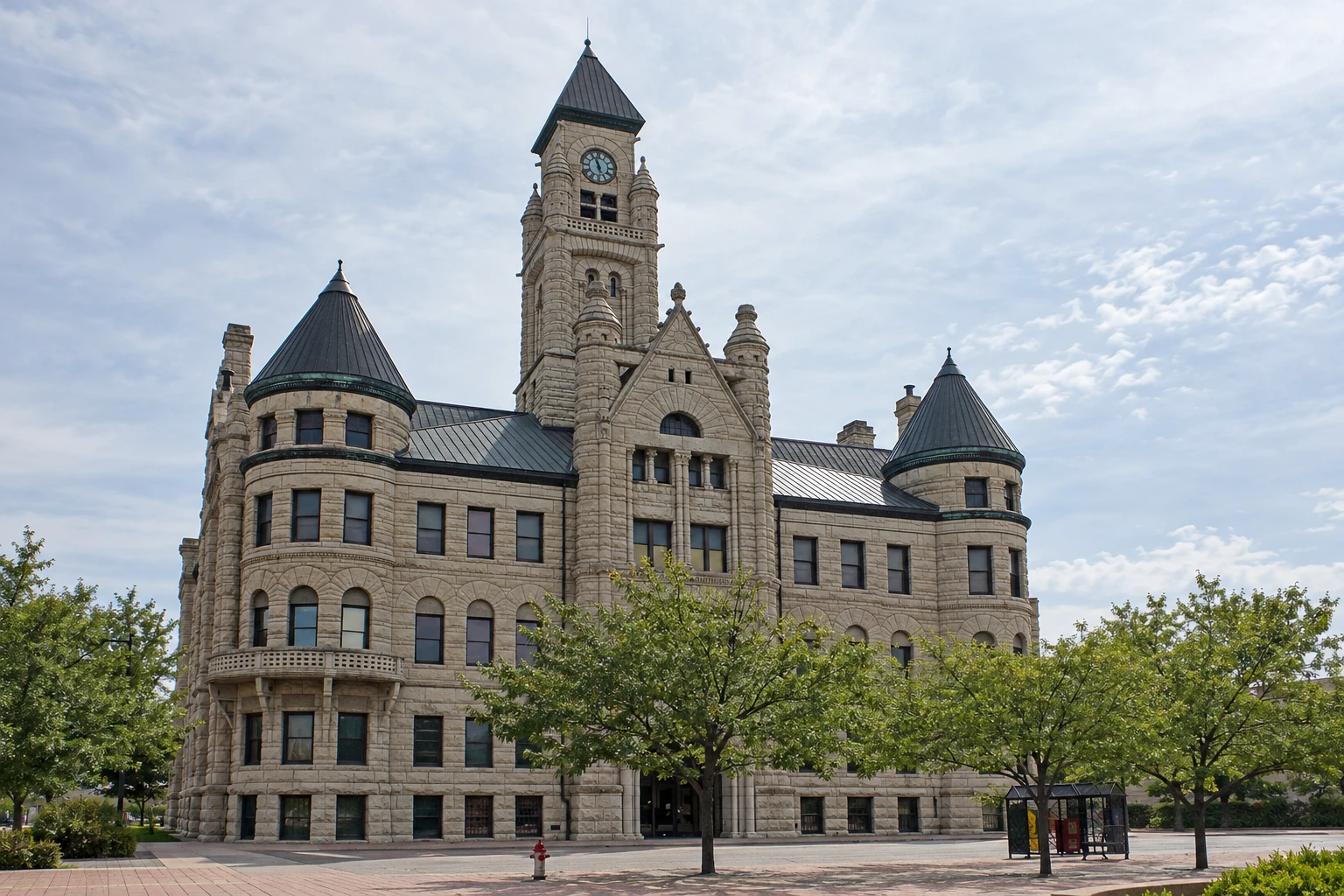
Largest city in Kansas, where the Little Arkansas flows into the Arkansas River, known for its aircraft industry. It features the Keeper of the Plains sculpture, the Old Cowtown Museum, the Kansas Aviation Museum, the Sedgwick County Zoo and the Botanica botanical garden, as well as the Old Town neighborhood with historic brick warehouses.
Spring (April to June) and fall (September and October) usually have mild days; in spring the Flint Hills turn green after the prairie’s controlled burns. Spring is also when storms concentrate on the plains, so it’s wise to follow the weather forecast. Summers are typically hot, above 32 °C (90 °F), and winters are cold and windy. Most of Kansas is 3 hours behind Brasília (2 hours during daylight saving); four counties in the far west are 4 hours behind (3 in summer).
Wichita airport (ICT) offers domestic flights, and the eastern part of the state is served by Kansas City airport (MCI) in Missouri. From Brazil, trips usually connect via Dallas, Houston or Chicago; check before buying. Distances are long: Kansas City to Wichita is about a 3-hour drive, and Wichita to Dodge City about 2.5 hours. I-70 crosses the state east–west.
Beyond the guide
Your questions
Along I-70: Abilene and the Eisenhower Library, the Tallgrass Prairie National Preserve a bit to the south, and the Monument Rocks in the west. Along the southern route: Wichita, Hutchinson and Dodge City. Each route takes two to three days.
A space museum in Hutchinson, with one of the country’s largest collections of space race artifacts, including the Apollo 13 command module. It also has a planetarium and demonstrations. The visit usually takes about half a day.
Yes. The Tallgrass Prairie National Preserve in the Flint Hills maintains a herd of bison in a prairie area, and the Maxwell Wildlife Refuge near McPherson runs tours to see the animals. Bison roam freely and do not always stay close to the trails.
On both sides of the city, in Kansas and Missouri, there are traditional barbecue joints. The local style features slowly smoked meats with a sweet tomato-based sauce, and the caramelized tips of the beef brisket (burnt ends) are the specialty.