Illustrative images. The pictures in this guide are illustrations based on the real place, not photographs, and may differ from it.
The city
What to expect from Sanibel.
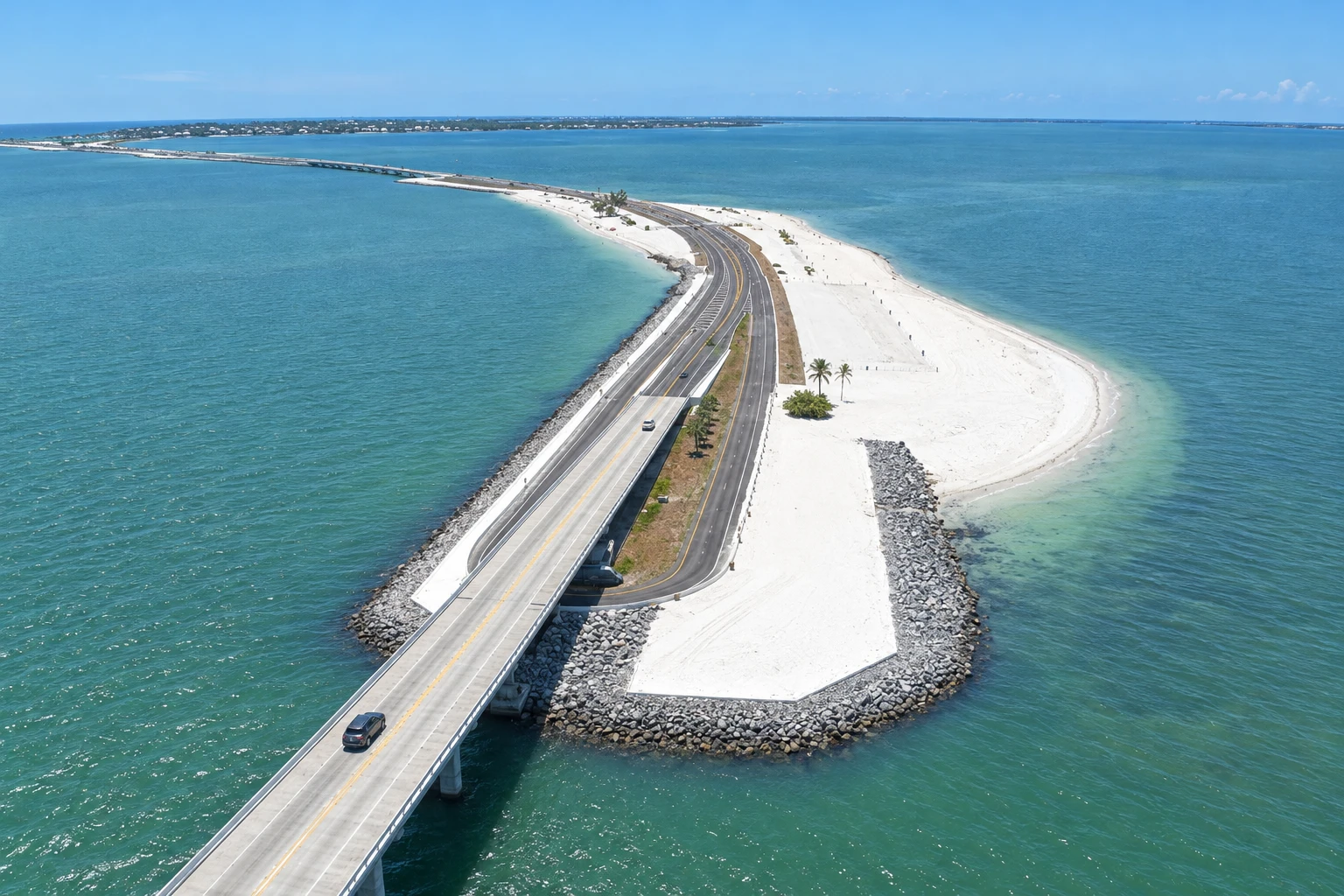
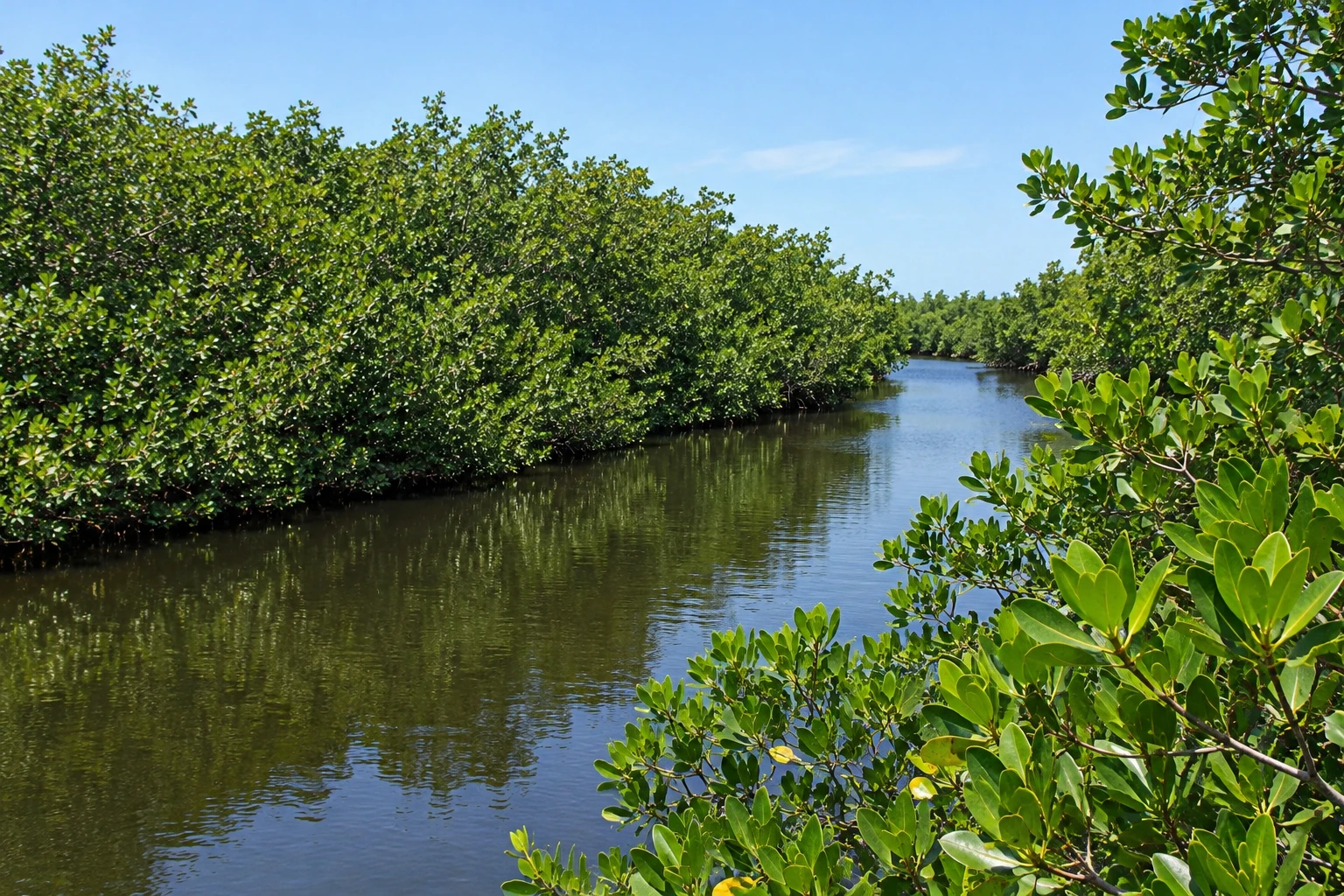
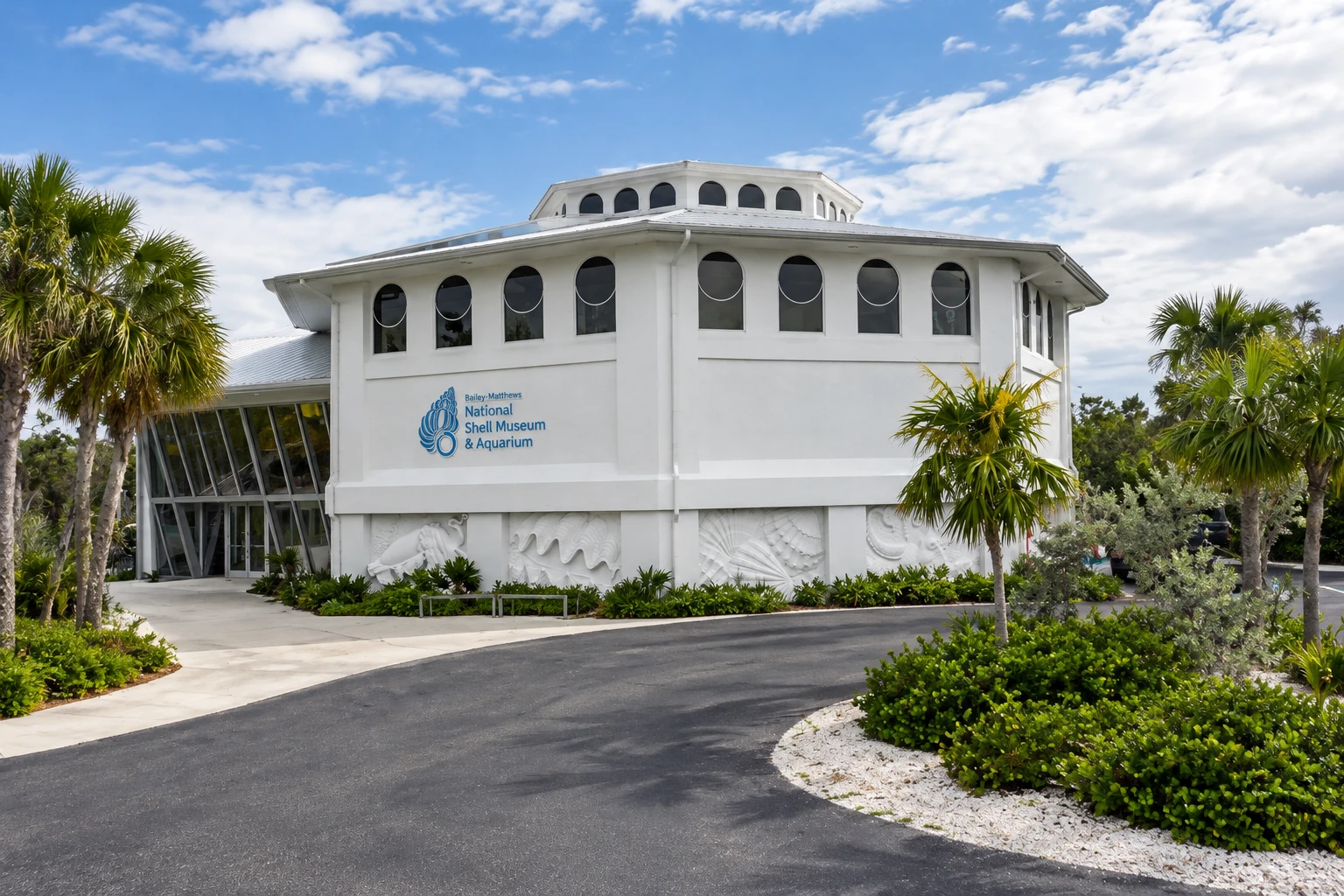
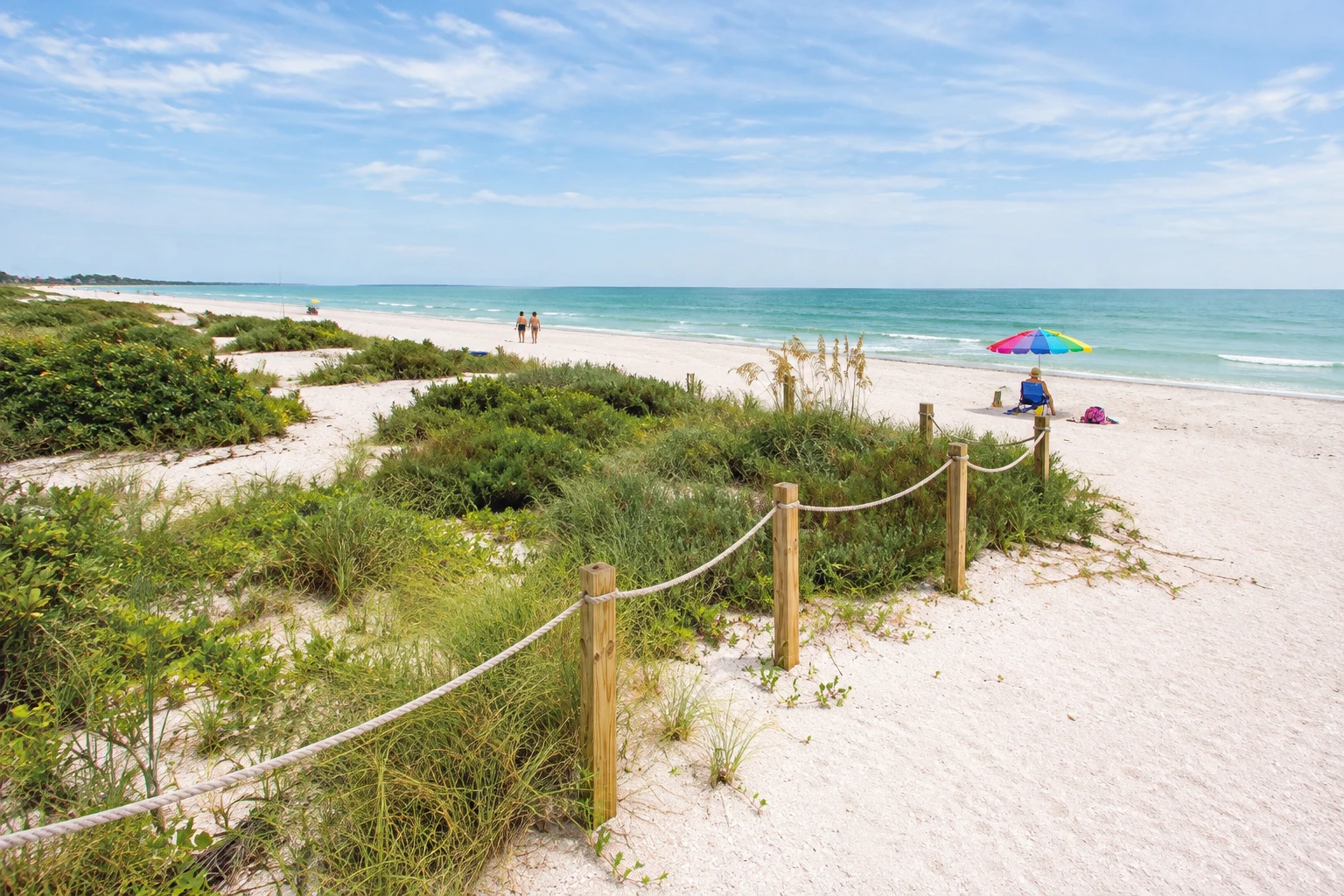
Barrier island in the Gulf of Mexico, connected to Fort Myers by a bridge, known for the shells that accumulate on its beaches and for its protected nature. About two thirds of the island are preserved areas, such as the J.N. "Ding" Darling National Wildlife Refuge, with mangroves and water birds. It has the Bailey-Matthews National Shell Museum, beaches like Bowman's Beach, and a network of bike paths that cross the island.
National wildlife refuge that occupies much of Sanibel, with mangroves, lagoons and a roughly 6.4 km road to view water birds such as roseate spoonbills, herons, pelicans and ibises.
Museum dedicated to shells and mollusks, on Sanibel, with collections from around the world, the Grand Shell Hall and aquariums with live animals from the Florida coast.
Southwest Florida International Airport (RSW)Fort Myers · 40 km
Approximate distances. Check flights and bus, train or boat schedules before you travel.
Sanibel is about 35 km from downtown Fort Myers and 40 km from Southwest Florida International Airport (RSW). You reach it by car via the Sanibel Causeway, with a toll at the island entrance. There is no regular public transport to the island.
How many days
One day for the refuge, the shell museum and a beach; two or three days to enjoy the beaches and bike paths at a relaxed pace.
When to go
December to April, with dry weather and many migratory birds in the refuge. Shells tend to appear more after storms and at winter low tides. Summer is hot and rainy, and hurricane season runs from June to November.
The seasons shown are the most usual ones; nature doesn't always follow the calendar.
Do you need a car?
To get there, yes, by the bridge. Within the island, the bike paths, about 40 km long, allow you to cycle between the beaches, the refuge and the museum.
Suggested itinerary
An order that works
Built with the places on this page. No rush: it's paced so you have time to see them.
One day in Sanibel
manhã
J.N. "Ding" Darling National Wildlife Refuge
Start early on the refuge’s Wildlife Drive, by car or bike, stopping at overlooks to see herons, roseate spoonbills and pelicans.
tarde
Bailey-Matthews National Shell Museum
Visit the shell museum to learn to recognize the species that wash up on the island’s beaches.
fim de tarde
Bowman's Beach
Go to Bowman's Beach, on the west side of the island, to hunt for shells at low tide and watch the sunset over the gulf.
noite
Dinner on the island
Dine at one of the restaurants on Periwinkle Way, the island’s main avenue.
Check before you go. Opening hours and days change, and places may close for renovations, holidays or events. This itinerary is a suggestion from Cidade Turismo, not a commitment: plan yours by checking directly with each place you intend to visit.
Before you go
Frequently asked questions
Why does Sanibel have so many shells?
The island is oriented east–west, unlike most barrier islands on the coast, and receives shells brought by currents from the Gulf of Mexico, which accumulate on the beaches.
Can you take shells from Sanibel?
Empty shells, yes. It is forbidden to collect shells with live animals inside, including starfish and sand dollars.
How do you get to Sanibel?
By car, via the Sanibel Causeway, the bridge that connects the island to Fort Myers, with a toll at the entrance.
Has Sanibel recovered from the hurricanes?
For the most part, yes: the bridge was rebuilt, and beaches, the refuge and the museum have reopened. Some areas, such as around the lighthouse, reopened in stages; check before you go.


 Brazil
 Antarctica
 Argentina
 Bolivia
 Chile
 Colombia
 Ecuador
 Falkland Islands (Malvinas)
 French Guiana
 Guyana
 Paraguay
 Peru
 Suriname
 Uruguay
 Venezuela
 Austria
 Belgium
 Croatia
 Denmark
 Finland
 France
 Germany
 Greece
 Hungary
 Iceland
 Ireland
 Italy
 Luxembourg
 Norway
 Poland
 Portugal
 Slovakia
 Slovenia
 Spain
 Sweden
 Switzerland
 the Czech Republic
 the Netherlands
 the United Kingdom
 Turkey
 Bermuda
 Canada
 Greenland
 Mexico
 Saint Pierre and Miquelon
 the Dominican Republic
 Japan
 Egypt
 South Africa
 Australia
 Fiji
 New Zealand
 Papua New Guinea