Urban ensemble
Długi Targ
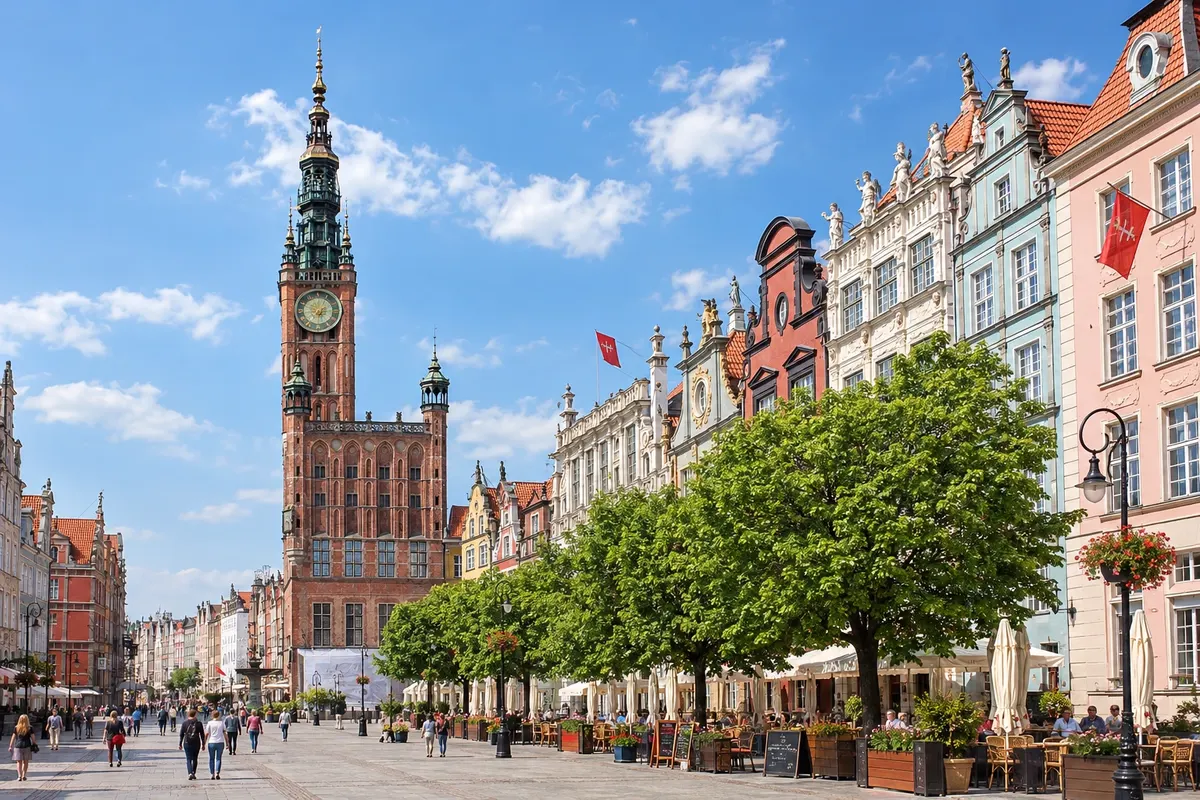
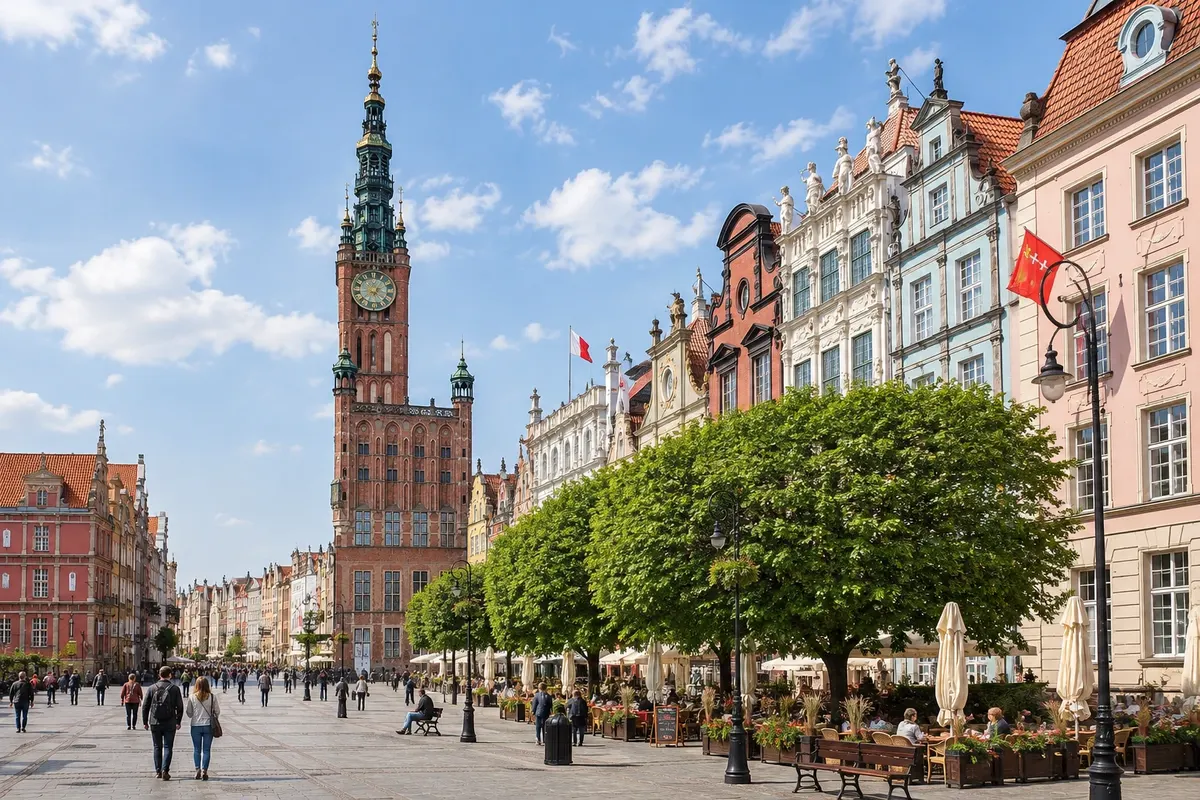
Długi Targ extends Długa Street toward the river, forming the representative axis of Gdańsk’s centre. Narrow, tall façades line the old market space, where the Neptune Fountain and buildings connected to mercantile life can be recognised.
Port heritage
Żuraw
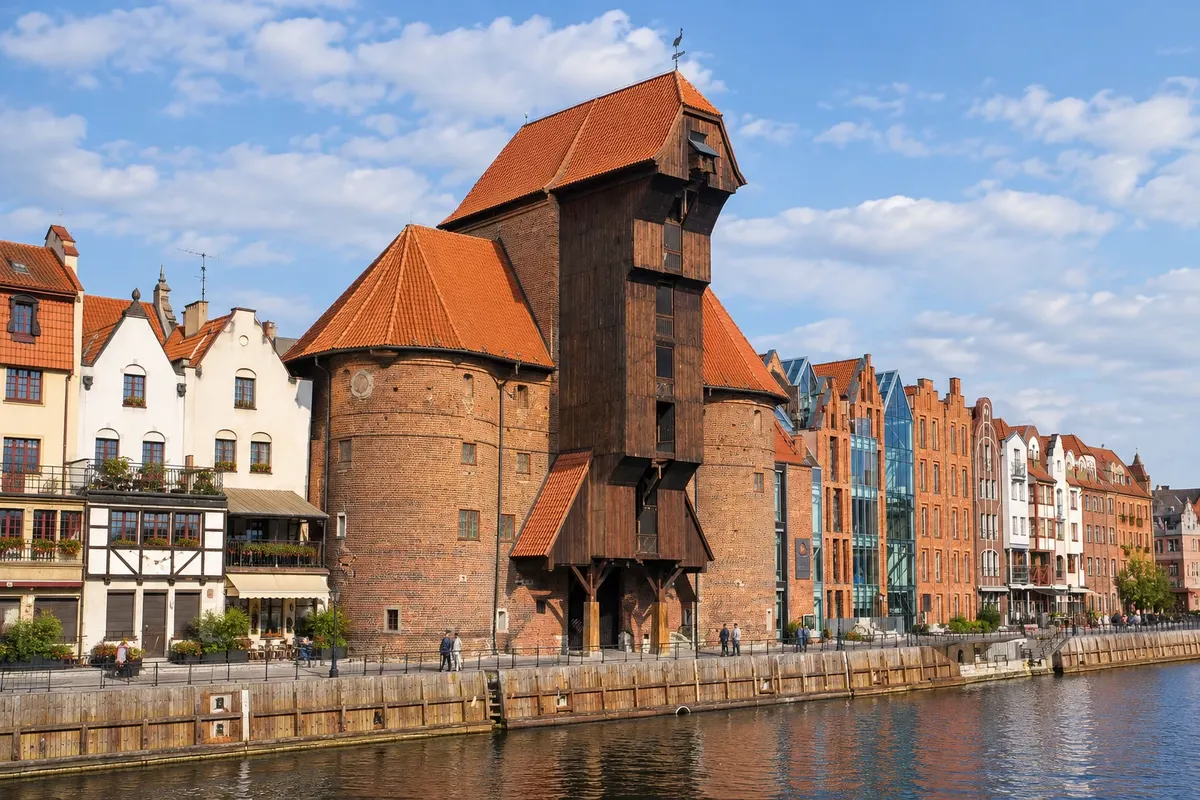
The Żuraw projects over the Motława riverbank with a wooden structure between brick towers. The former port crane is a landmark in Gdańsk’s landscape and shows how cargo infrastructure was integrated at the city’s entrance.
Basilica
Bazylika Mariacka w Gdańsku
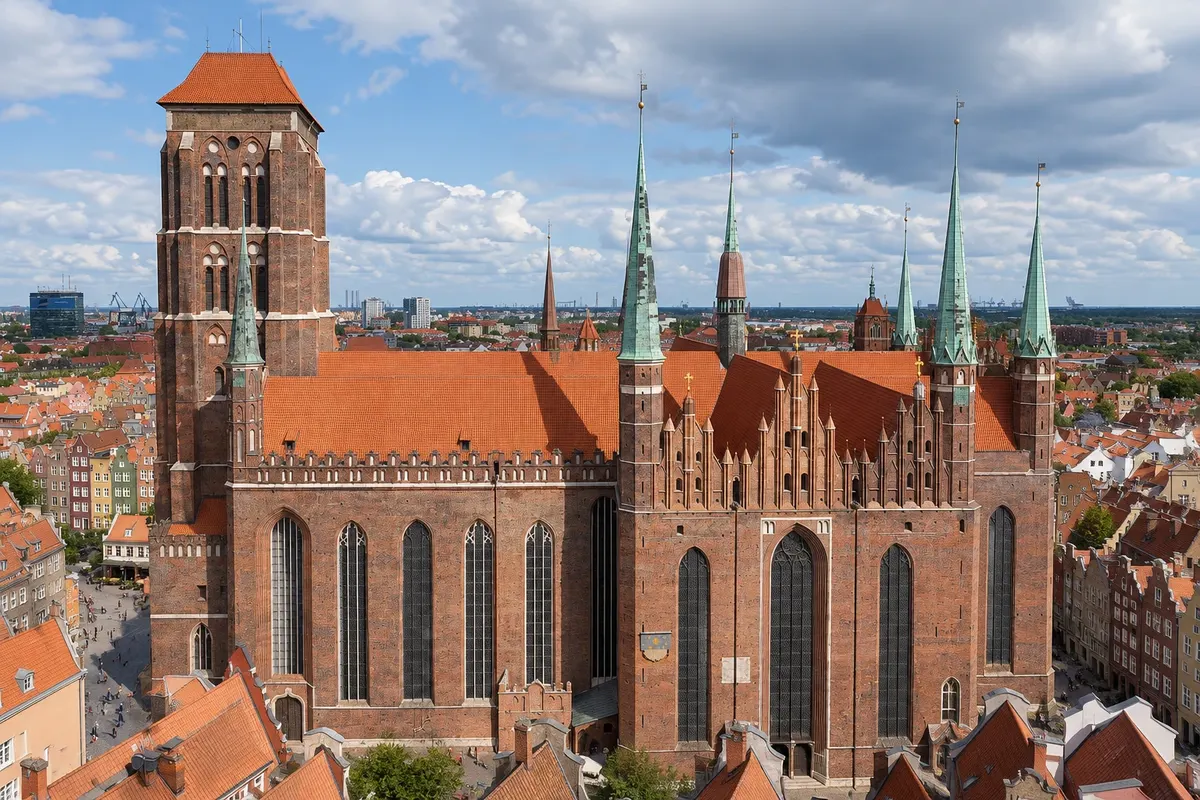
St. Mary’s Basilica occupies a large brick volume in central Gdańsk. Its scale is felt both from the narrow surrounding streets and inside, where pillars and vaults organize a nave that looks different from the decoration of many Baroque churches.
Museum
Muzeum II Wojny Światowej
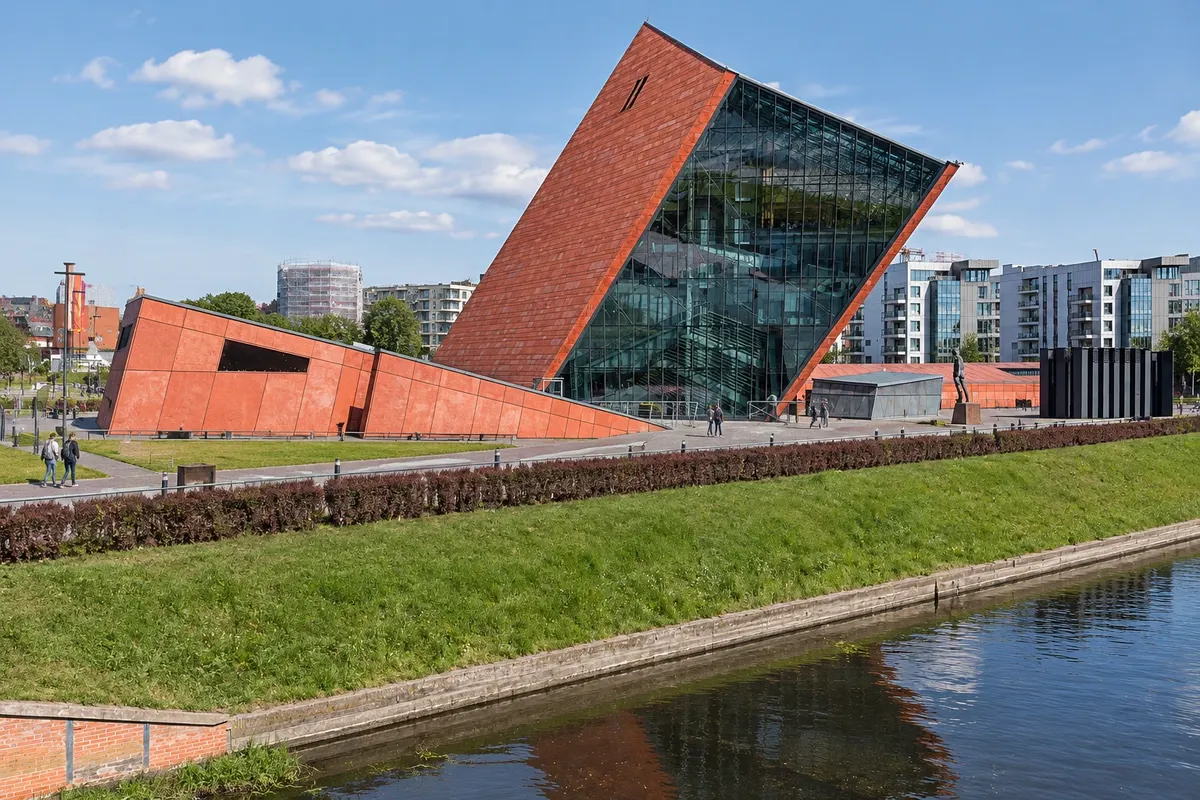
The Museum of the Second World War occupies a contemporary building in Gdańsk, with a significant portion of the exhibitions underground. The visit brings together objects, documents and accounts about the war and its effects on people’s lives, in a wide-ranging narrative.


 Brazil
 Argentina
 Bolivia
 Chile
 Colombia
 Ecuador
 Guyana
 French Guiana
 Falkland Islands (Malvinas)
 Paraguay
 Peru
 Suriname
 Uruguay
 Venezuela
 Germany
 Austria
 Belgium
 Croatia
 Denmark
 Spain
 Finland
 France
 Greece
 the Netherlands
 Hungary
 Ireland
 Iceland
 Italy
 Luxembourg
 Norway
 Portugal
 the United Kingdom
 the Czech Republic
 Sweden
 Switzerland