Szeged
Szeged is organized along the Tisza on the Great Plain. The votive church and its square, the New Synagogue and the Reök Palace display different architectures. The Ferenc Móra Museum adds archaeology and regional culture near the river.
Csongrád-Csanád · Hungary
Votive church, stained glass of the New Synagogue, Secession at the Reök and museum by the Tisza.
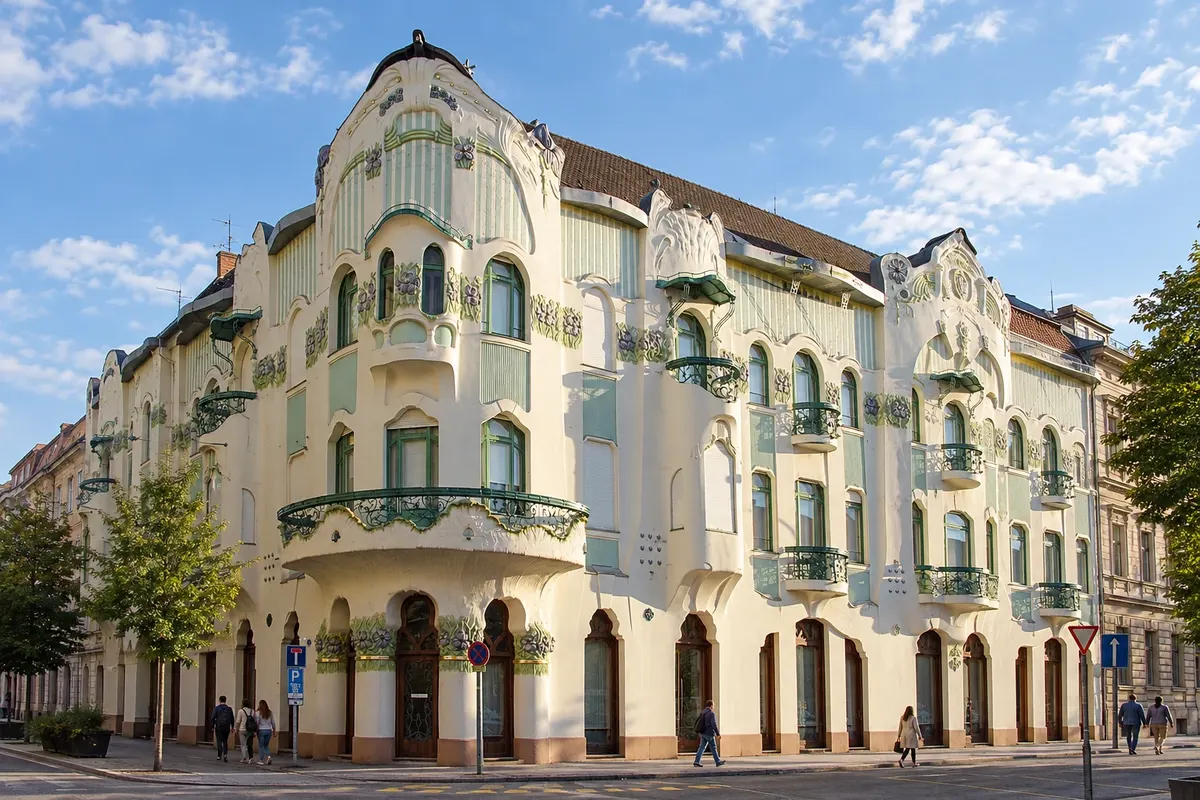
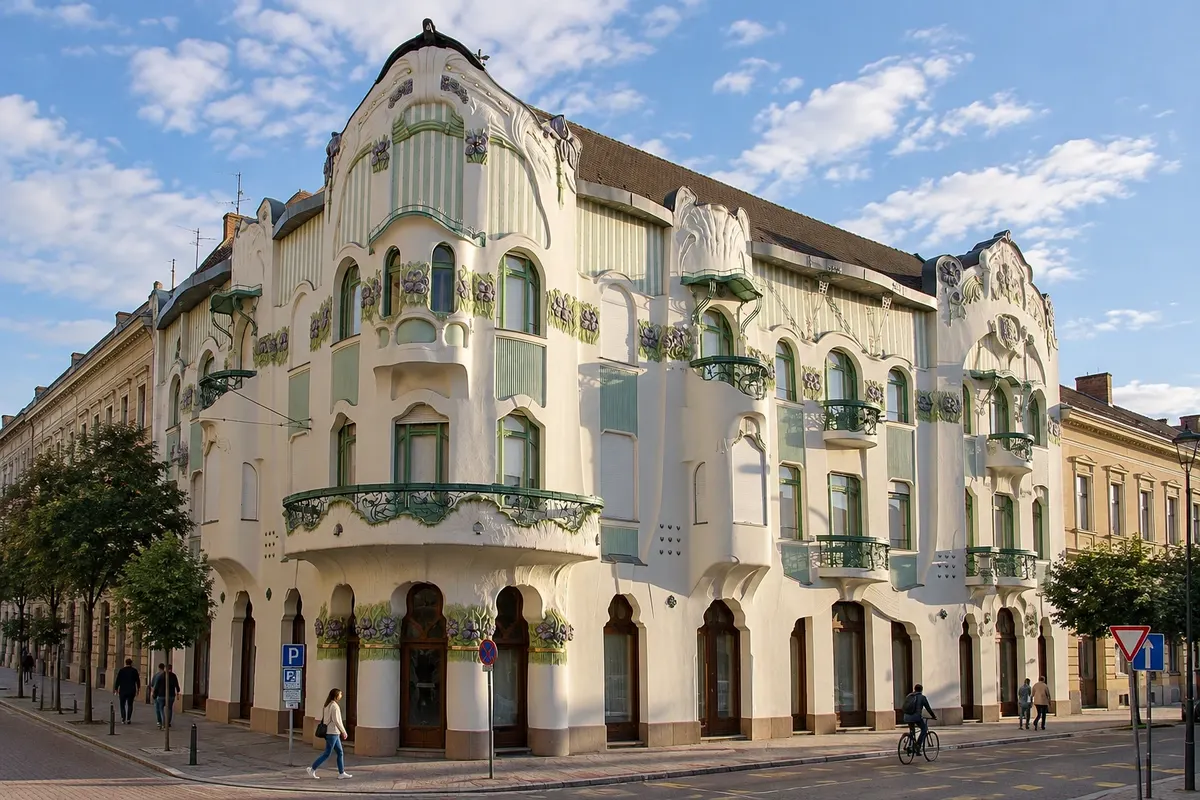
In the photo: Reök-palota
Illustrative images. The pictures in this guide are illustrations based on the real place, not photographs, and may differ from it.
Get to know the place
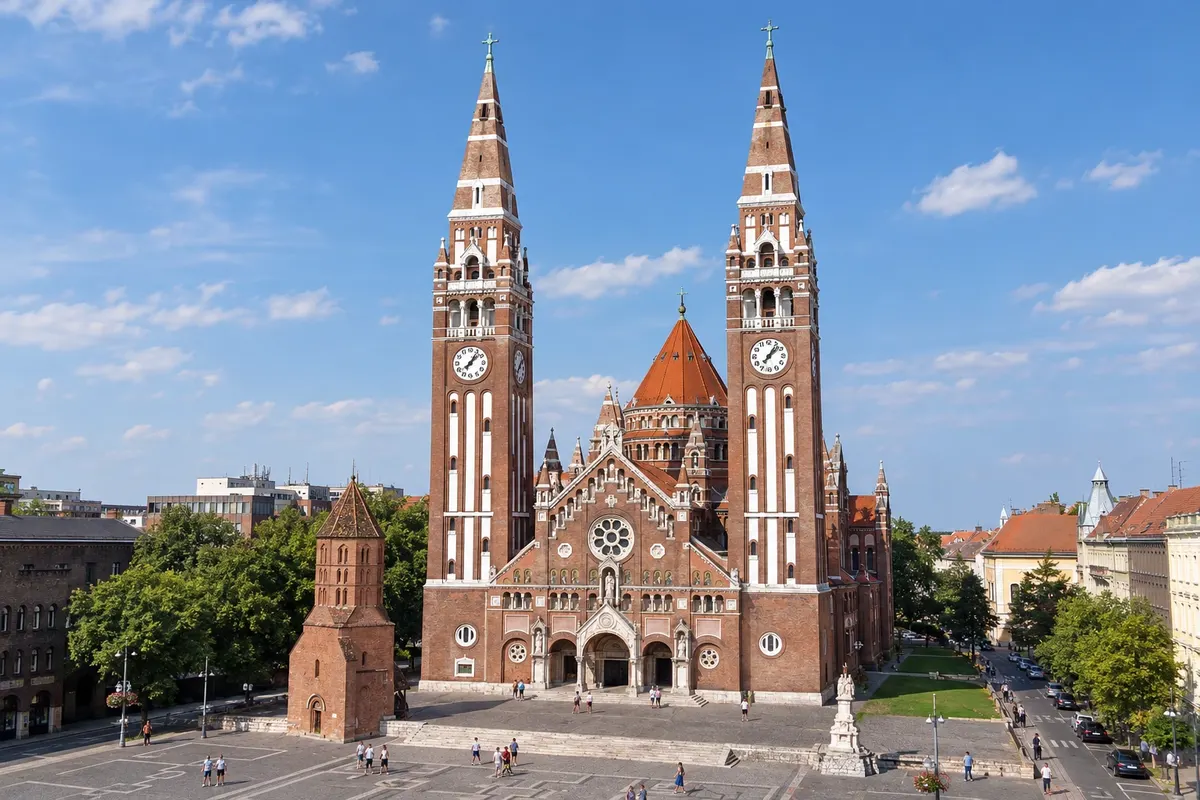
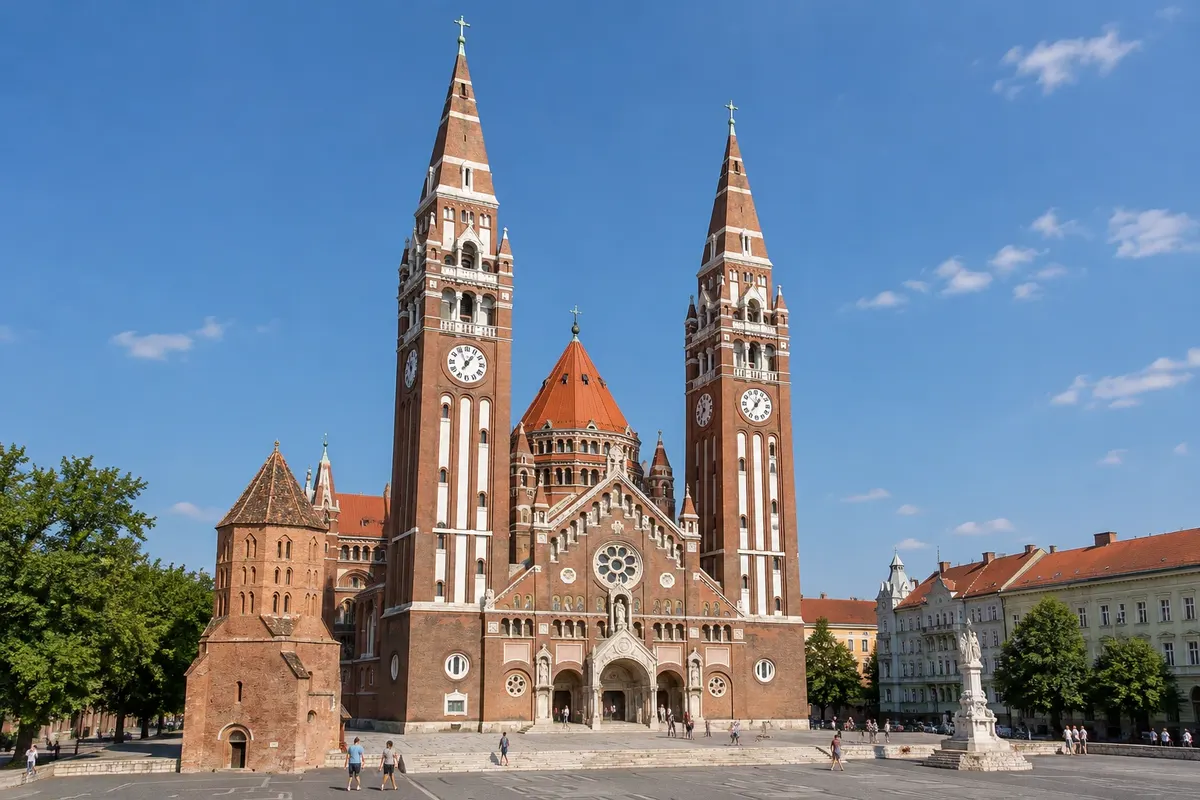
Szeged lies on the Great Plain in southern Hungary, beside the Tisza. The layout of the center is connected to the reconstruction after the 19th-century flood. The votive church and Dóm square form a reference point to begin the walk.
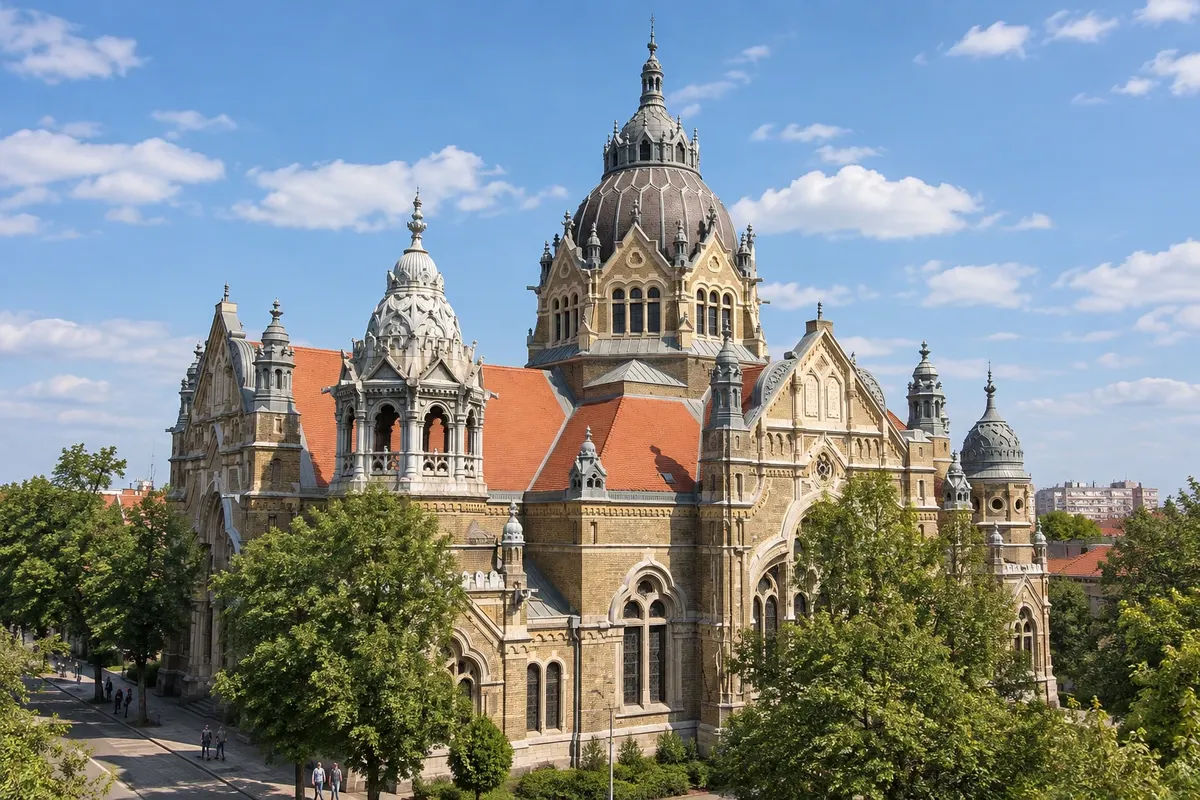
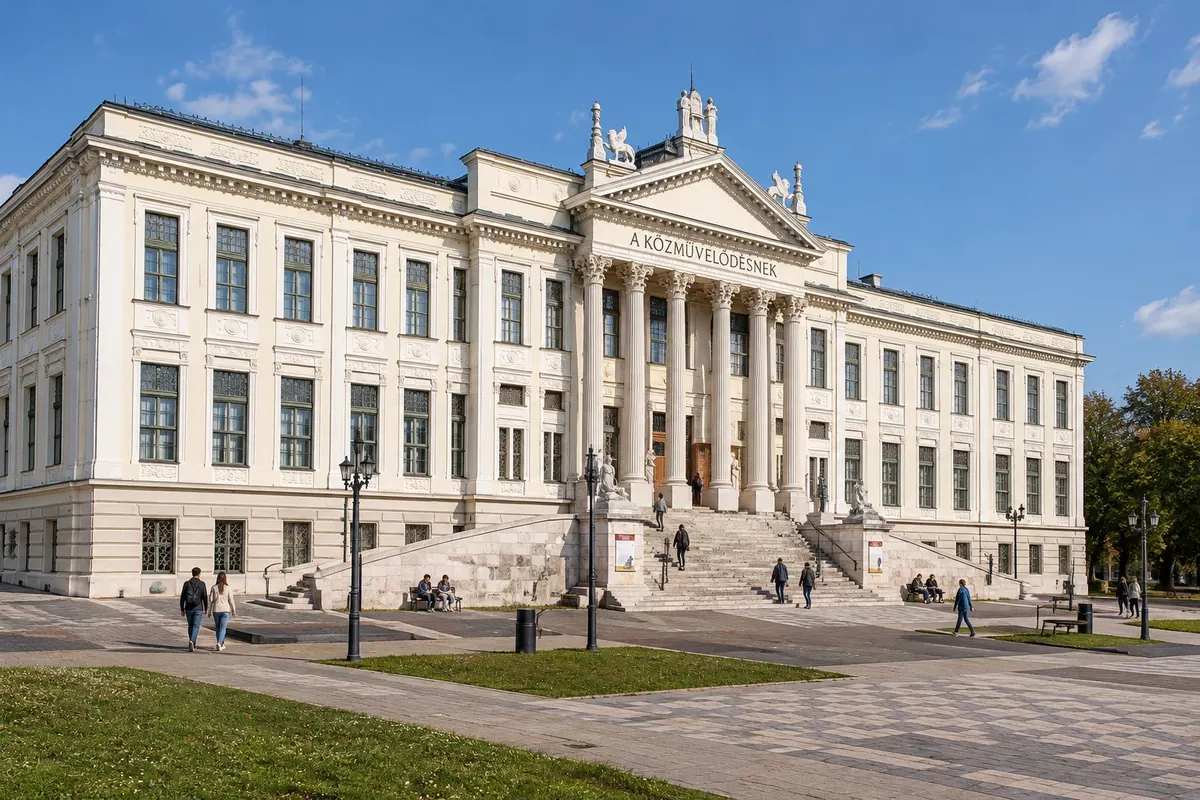
The New Synagogue adds stained glass and an ornate dome, while the Reök Palace presents Secession-style architecture. The Ferenc Móra Museum offers archaeology and regional culture displays in a building near the riverbank.
In summer, between June and August, days tend to be long and warm; winter from December to February is cold with short daylight. Trains serve Szeged from Budapest, and local public transport completes trips beyond the central core.
This destination brings together 1 city: Szeged.
One destination, many paths
Start with one city or combine several in your itinerary.
Contornos: Natural Earth (domínio público) e geoBoundaries (CC0). Adaptação do Cidade Turismo.
Confirm before purchasing. Trains and buses link Budapest to Szeged; local public transport completes access between the station and the center.
The local experience
Votive church with two towers on Dóm square, built after the great flood that transformed Szeged in the 19th century.
Synagogue with an ornate dome and stained glass, designed by Lipót Baumhorn in the early 20th century.
Secession-style Hungarian building with vegetal motifs on the façade, used as an exhibition space.
Museum by the Tisza, in a columned building, with collections of archaeology, regional history and exhibitions.
Before you go
A little planning leaves more time to enjoy the journey.
From April to June and September to October, temperatures usually make it pleasant to walk between Dóm square and the other central buildings. July and August can be hot. December to February generally requires warm clothing and more indoor programs.
The seasons shown are the most usual ones; nature doesn't always follow the calendar.
Two days make room for the four main activities and the riverside walk. With only one day, choose two indoor sites and leave the rest for exterior architectural observation.
The center between Dóm square and the pedestrian axes makes visits easy. Near the Tisza riverbank, a base combines the museum with walks. The station area shortens arrival but requires accounting for the route to the monuments.
Take your trash with you, follow the signs and support local businesses. In natural areas, follow the visiting guidelines.
Get your questions answered
The votive church and Dóm square help to understand the reconstruction and the layout of the center.
The stained glass and the dome are a central part of the interest, depending on the access schedule.
Both approaches can be combined: the façade is a Secession landmark and the interior hosts exhibitions.
Two days allow you to schedule the indoor visits and the museum with more time than a long day trip.
No. The monuments, the museum and the riverside walks can be done by land.