Győr
Győr is the seat of Győr-Moson-Sopron and a river junction in western Hungary. On the Káptalandomb hill, the cathedral and the bishop’s castle structure the visit. The old centre allows complementing interiors with walks and views by the water.
Győr-Moson-Sopron · Hungary
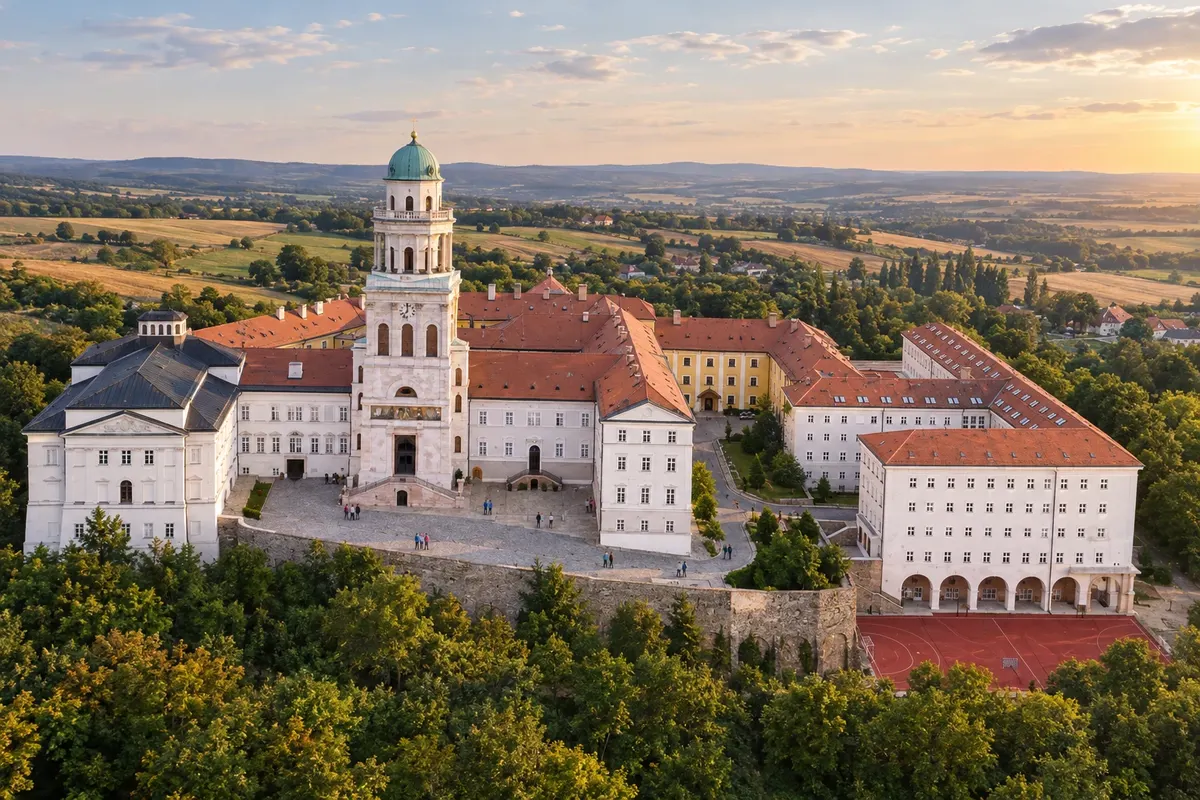
Győr town centre by the rivers and a Benedictine abbey on the hill of Pannonhalma.
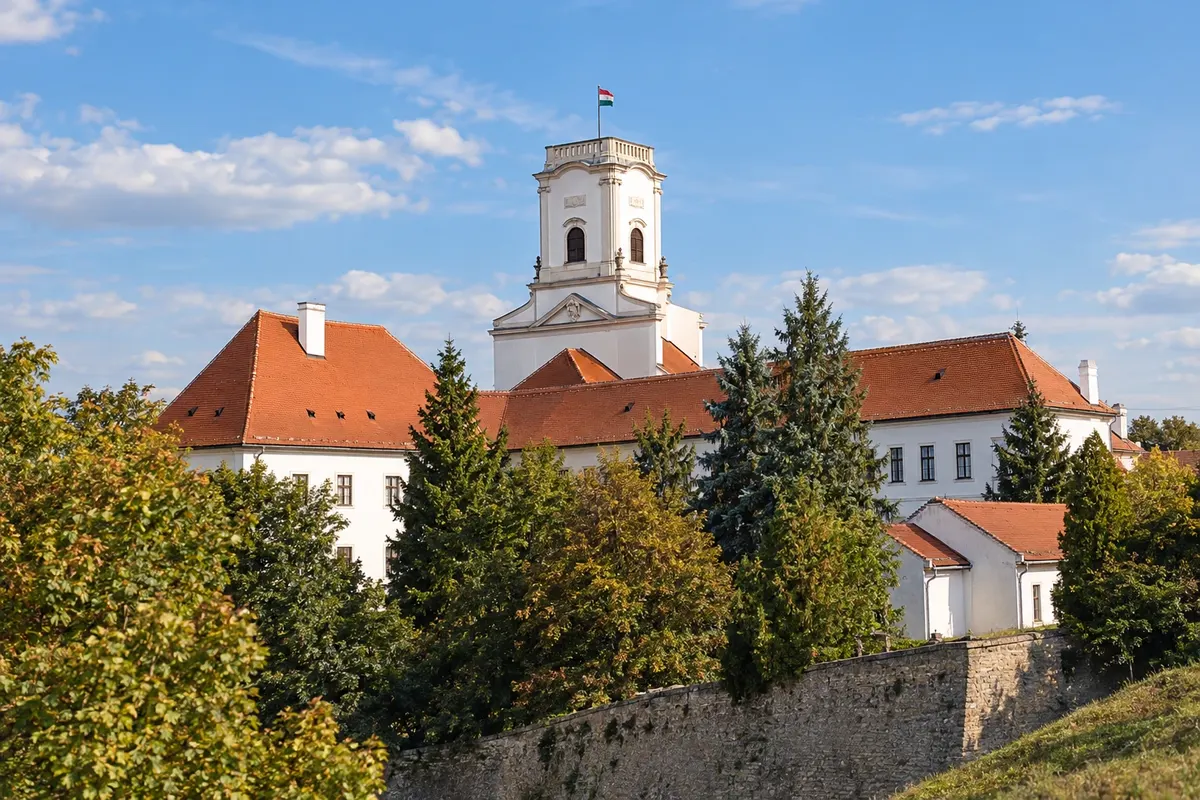
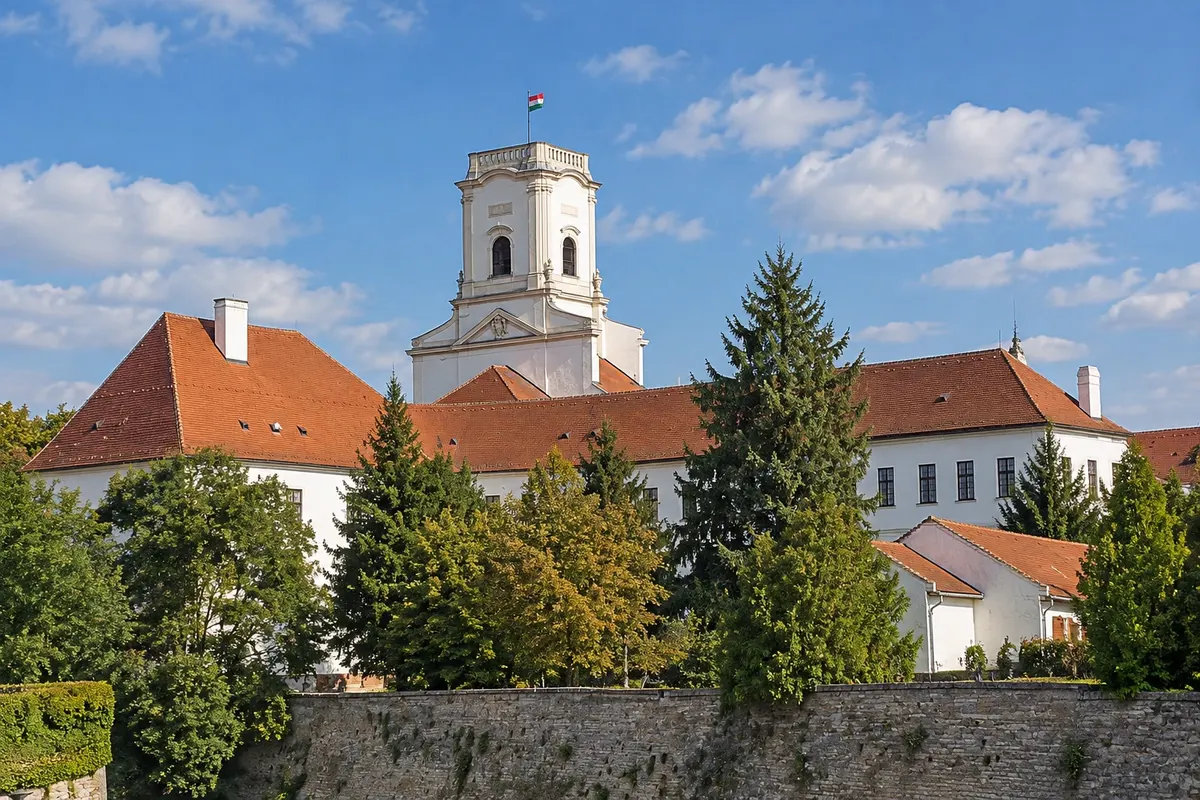
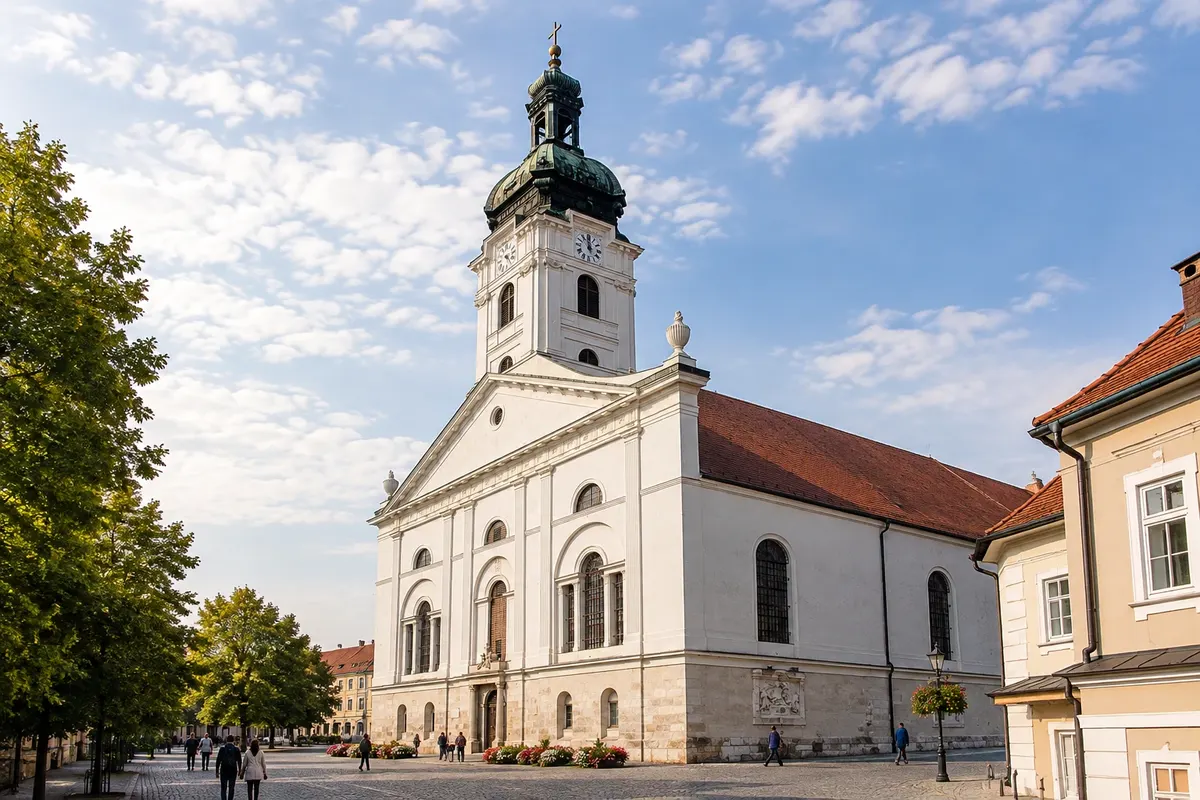
In the photo: Püspökvár
Illustrative images. The pictures in this guide are illustrations based on the real place, not photographs, and may differ from it.
Get to know the place
Győr combines streets of the old centre and a nearby religious hill by the rivers. The cathedral and the bishop’s castle allow alternating between interiors and a viewpoint, while the riverbanks help understand the position of the urban core. The railway station favors arrival without a car.
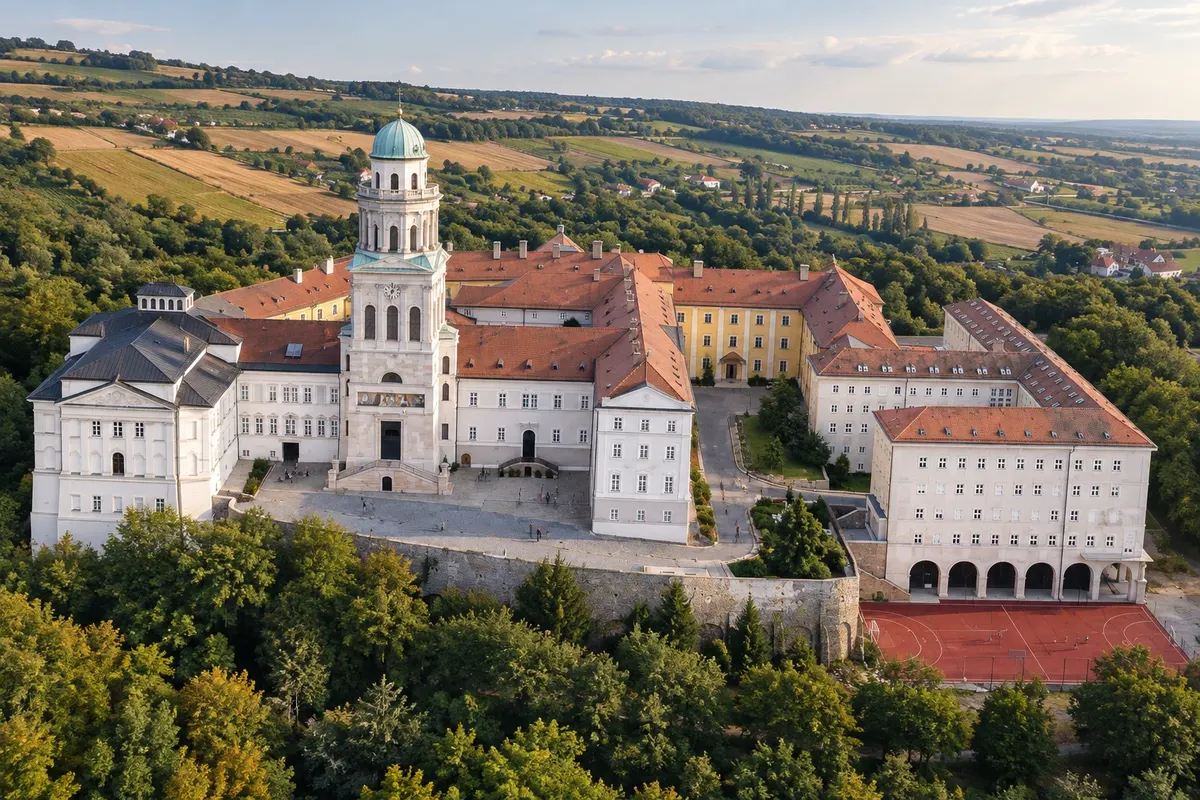
Pannonhalma adds a visit at a different scale. The Benedictine abbey occupies a hill and brings together basilica, cloister and library in an active complex. The World Heritage designation also considers the relationship of the buildings with the natural surroundings.
This destination brings together 2 cities: Győr, Pannonhalma.
One destination, many paths
Start with one city or combine several in your itinerary.
Contornos: Natural Earth (domínio público) e geoBoundaries (CC0). Adaptação do Cidade Turismo.
Confirm before booking. Trains serve Győr on the regional axis. From there, bus or train allow reaching Pannonhalma, with an additional transfer to the abbey.
Suggested arrival point: Győr
Győr is the seat of Győr-Moson-Sopron and a river junction in western Hungary. On the Káptalandomb hill, the cathedral and the bishop’s castle structure the visit. The old centre allows complementing interiors with walks and views by the water.
Pannonhalma develops below the hill of the Benedictine abbey, founded in 996. The monastic complex, with its library, basilica and cloister, is the main reason to visit. Arrival from Győr requires allowing time for the final transfer between public transport and the climb up the hill.
The local experience
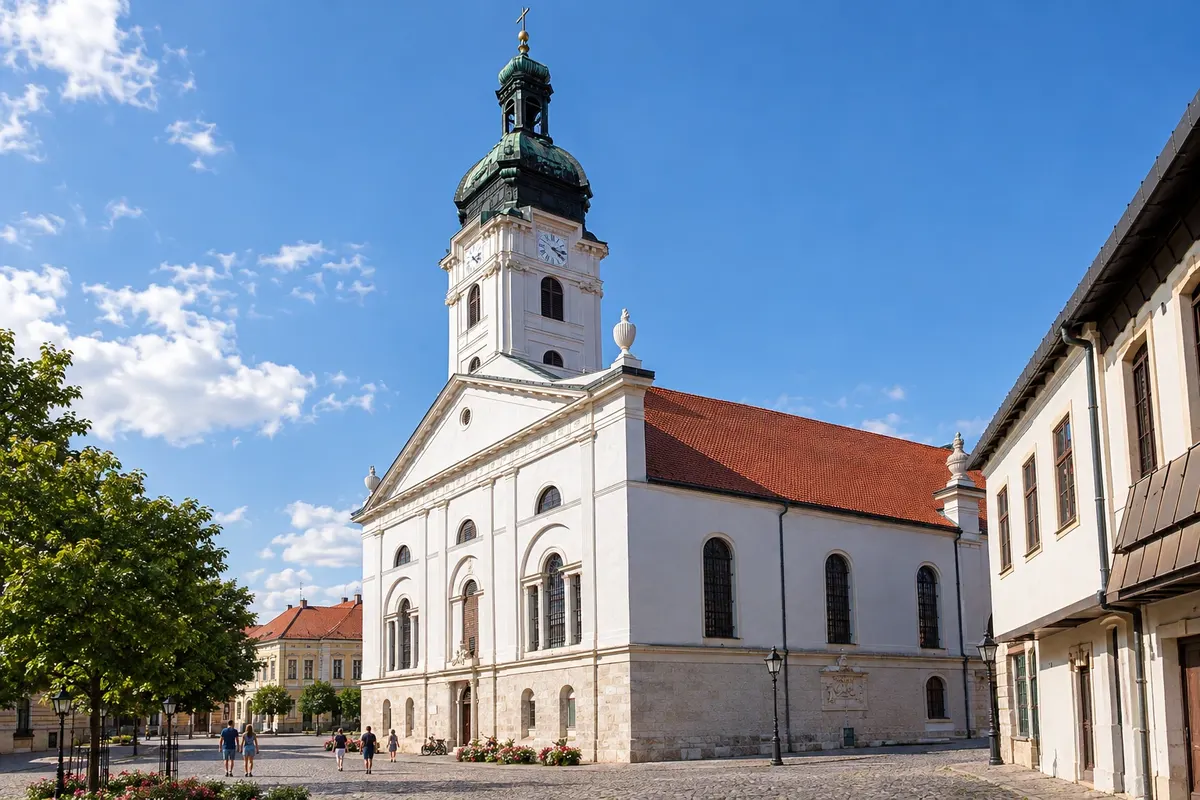
Cathedral on Káptalandomb hill, with Romanesque, Gothic and Baroque layers and a tradition of pilgrimage.
Benedictine abbey founded at the end of the 10th century, with a basilica, cloister, library and a relationship to the hill landscape.
Episcopal residence on Győr hill, with a viewing tower and organised heritage routes.
Before you go
A little planning leaves more time to enjoy the journey.
April to June and September to October are usually mild for town and hill. July and August can be hot. From December to February, check interior routes and reserve the daylight window for the landscape.
The seasons shown are the most usual ones; nature doesn't always follow the calendar.
Two days: one for Győr and another for Pannonhalma. A third morning gives space for extra pauses by the rivers or for a longer monastic visit, depending on the booked option.
Győr’s centre makes monuments and meals easy to reach. The area near the station simplifies arrival and departure for Pannonhalma. Staying by the monastic town suits those who prefer a slower pace, with transport available for other activities.
Take your trash with you, follow the signs and support local businesses. In natural areas, follow the visiting guidelines.
Get your questions answered
The urban day helps separate the itinerary and avoids combining the religious hill and the abbey into a rushed sequence.
Trains and buses serve the towns; the final leg to the abbey needs to be checked.
The Pannonhalma inscription involves the abbey and its natural setting.
Check the route and book in advance on the official website when required.
Győr has elevation on the hill and the tower uses stairs; Pannonhalma also requires reaching a height.