7 cities

 Search
 Brazil
 Antarctica
 Argentina
 Bolivia
 Chile
 Colombia
 Ecuador
 Falkland Islands (Malvinas)
 French Guiana
 Guyana
 Paraguay
 Peru
 Suriname
 Uruguay
 Venezuela
 Austria
 Belgium
 Croatia
 Denmark
 Finland
 France
 Germany
 Greece
 Hungary
 Iceland
 IrelandItaly
 Luxembourg
 Norway
 Poland
 Portugal
 Slovakia
 Slovenia
 Spain
 Sweden
 Switzerland
 the Czech Republic
 the Netherlands
 the United Kingdom
 Turkey
 Bermuda
 Canada
 Greenland
 Mexico
 Saint Pierre and Miquelon
 the United States
 the Dominican Republic
 JapanTurkey
 Egypt
 South Africa
 Australia
 Fiji
 New Zealand
 Papua New Guinea
Region · South
Illustrative images. The pictures in this guide are illustrations based on the real place, not photographs, and may differ from it.

Destinations
Cities
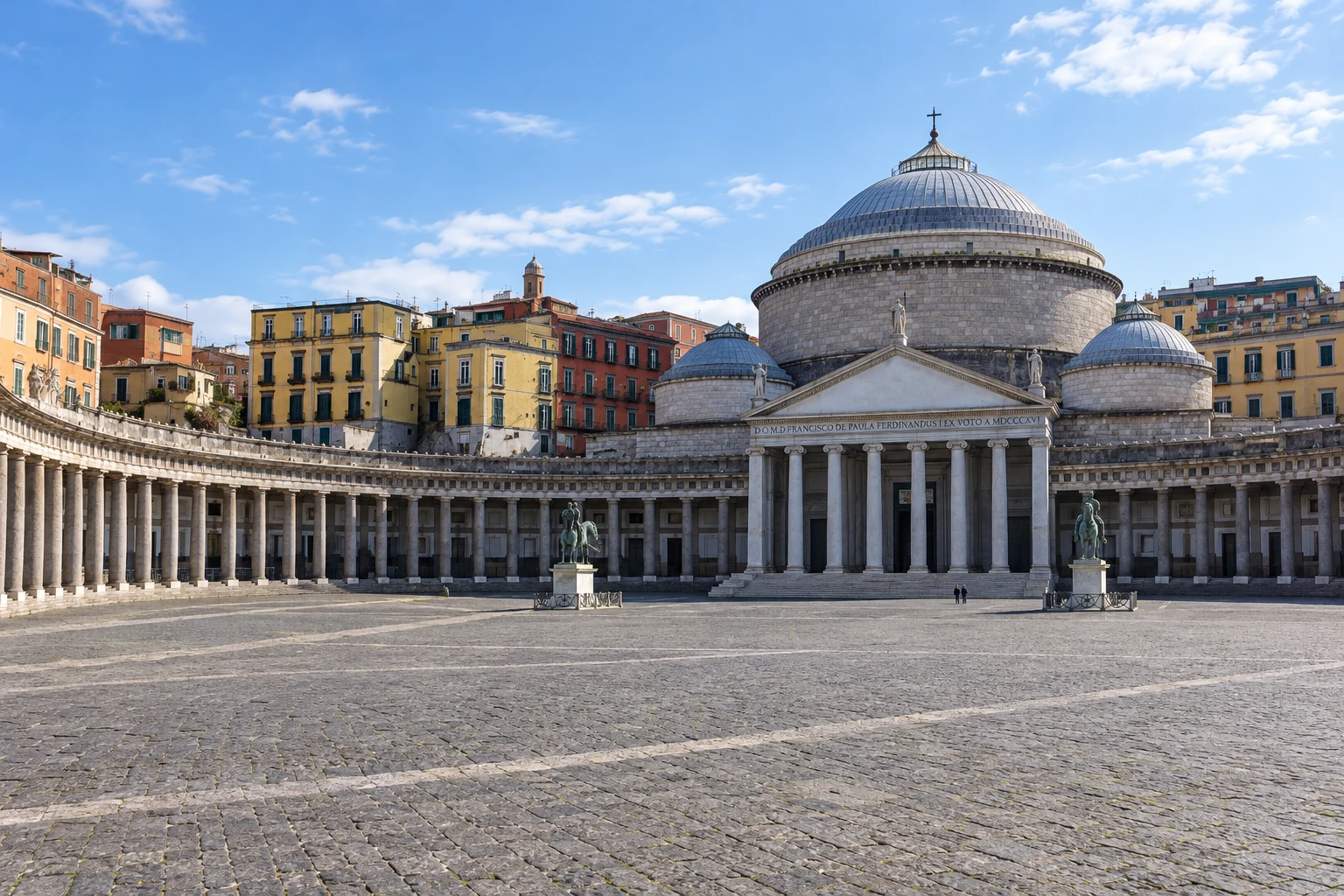
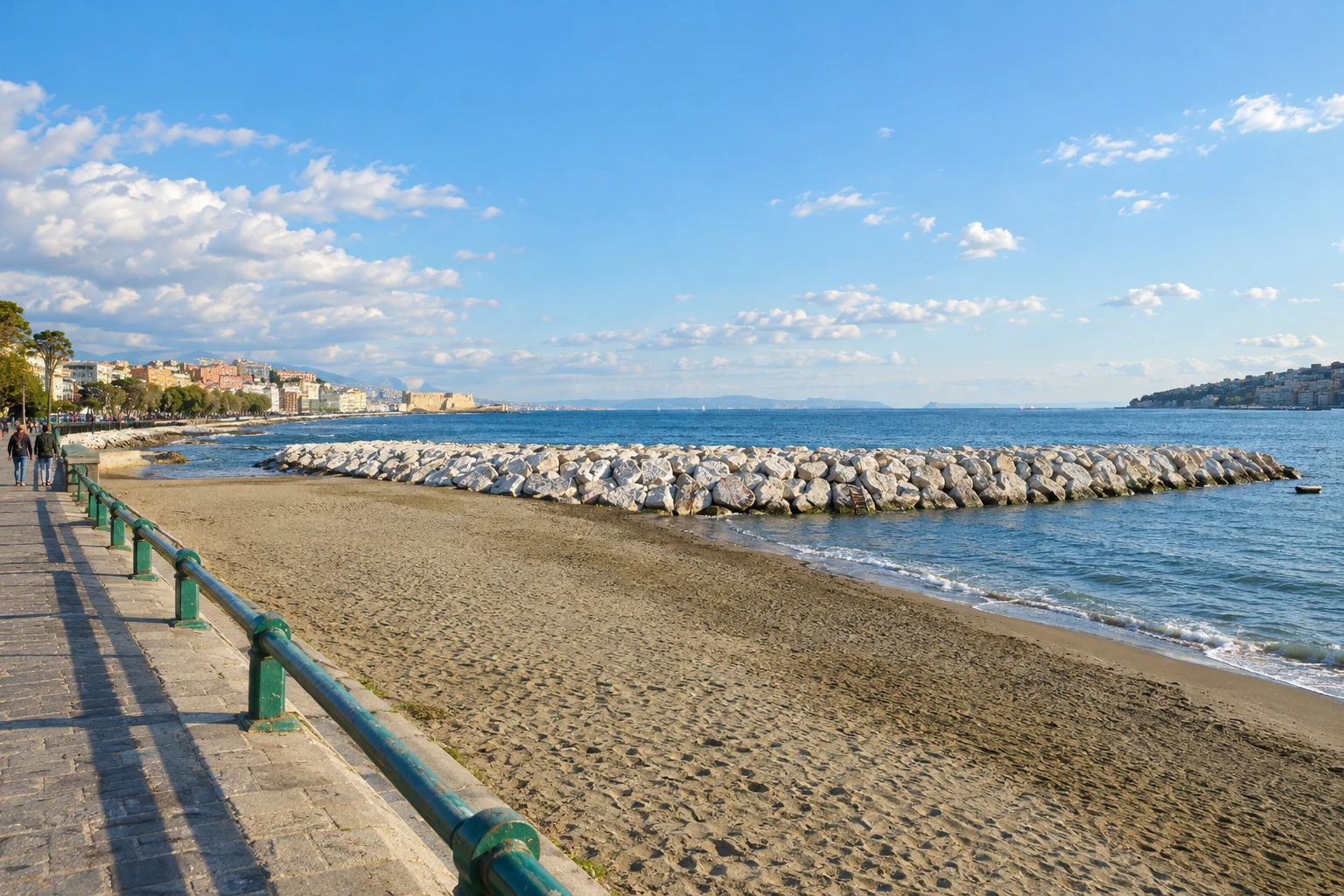
Capital of Campania, Nápoles has a historic center with a Greek layout, a World Heritage site, cut through by the Spaccanapoli. It houses the Cappella Sansevero with the Veiled Christ, the Museo Archeologico Nazionale with the treasures of Pompeia, the Napoli Sotterranea, the Duomo of San Gennaro, the Piazza del Plebiscito, the Palazzo Reale and the waterfront in front of the Vesúvio. It is the city where pizza was born.
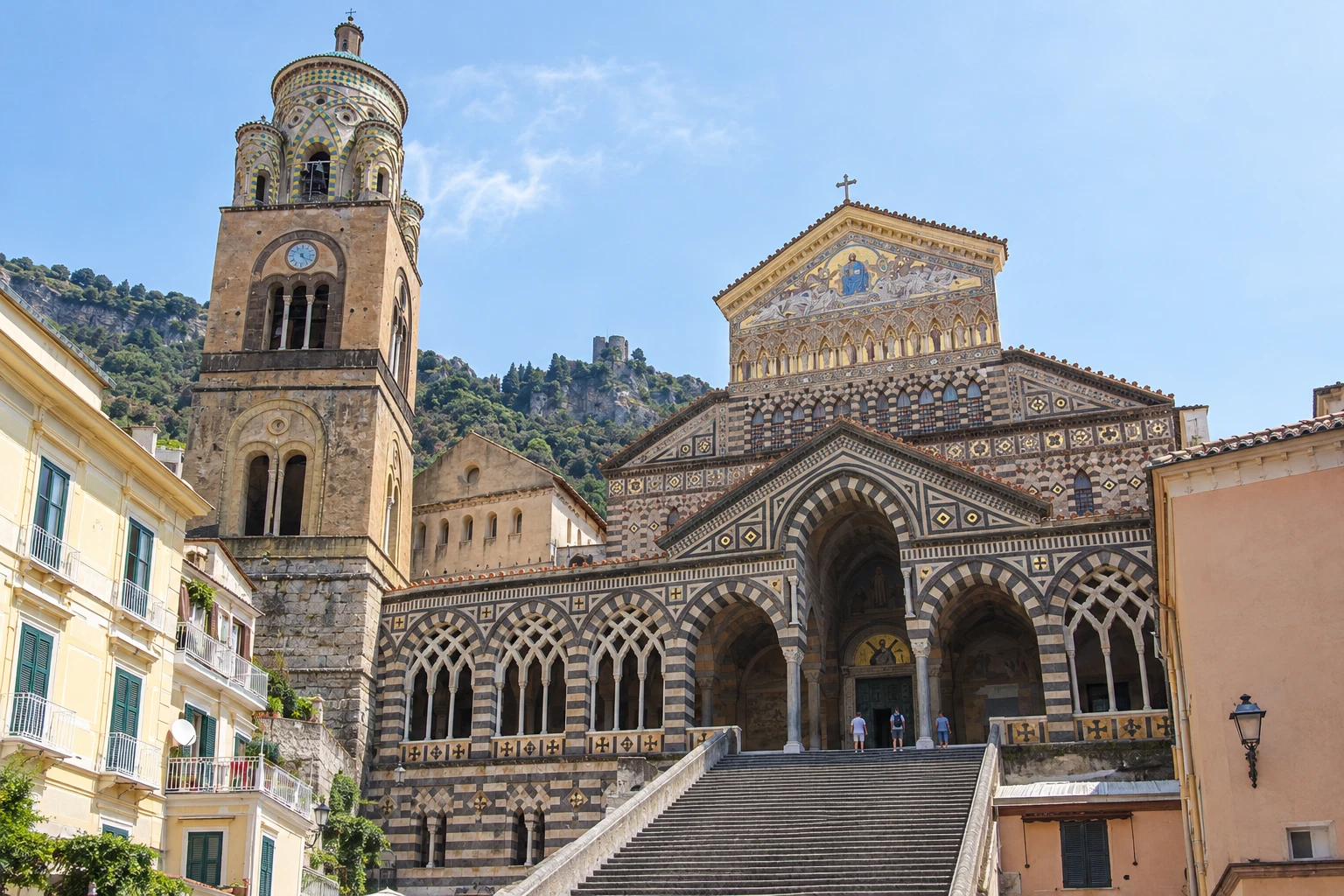
Amalfi, which gave its name to the coast, was a prosperous maritime republic between the 9th and 12th centuries. Today it is the hub for boats and buses in the region. The cathedral of Sant'Andrea, with the Chiostro del Paradiso, dominates the square; the Museo della Carta tells the story of handmade paper; Atrani is a 10-minute walk away; and from there you can reach the Grotta dello Smeraldo and the Greek temples of Paestum.
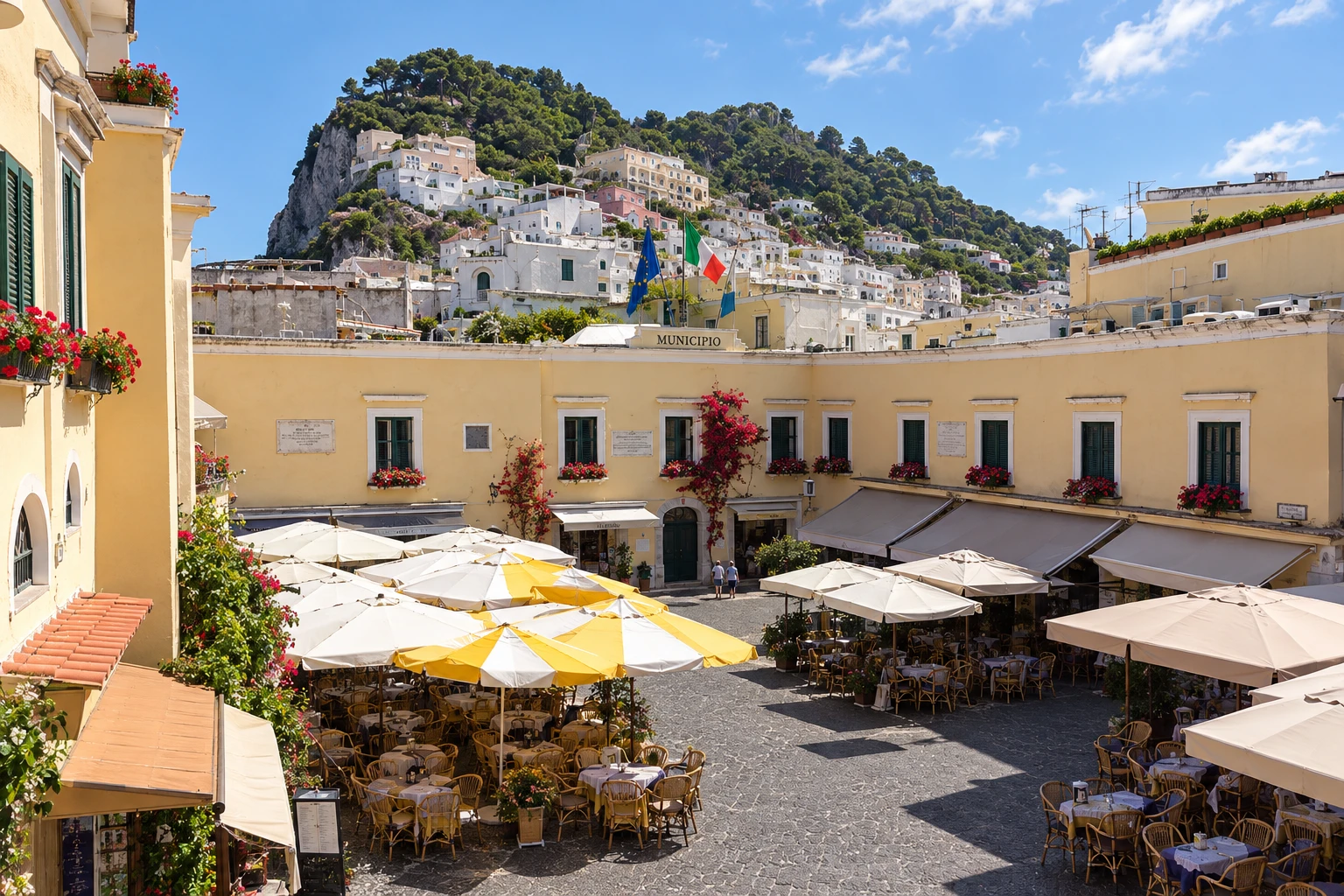
Capri is the limestone island at the end of the Gulf of Nápoles, reachable only by boat. It has the Piazzetta, the Giardini di Augusto with views of the Faraglioni, the Villa San Michele, Monte Solaro with its chairlift, the ruins of the Villa Jovis of emperor Tibério and the Grotta Azzurra, visited by small boat when the sea allows. The boat return shows the coastal grottos.
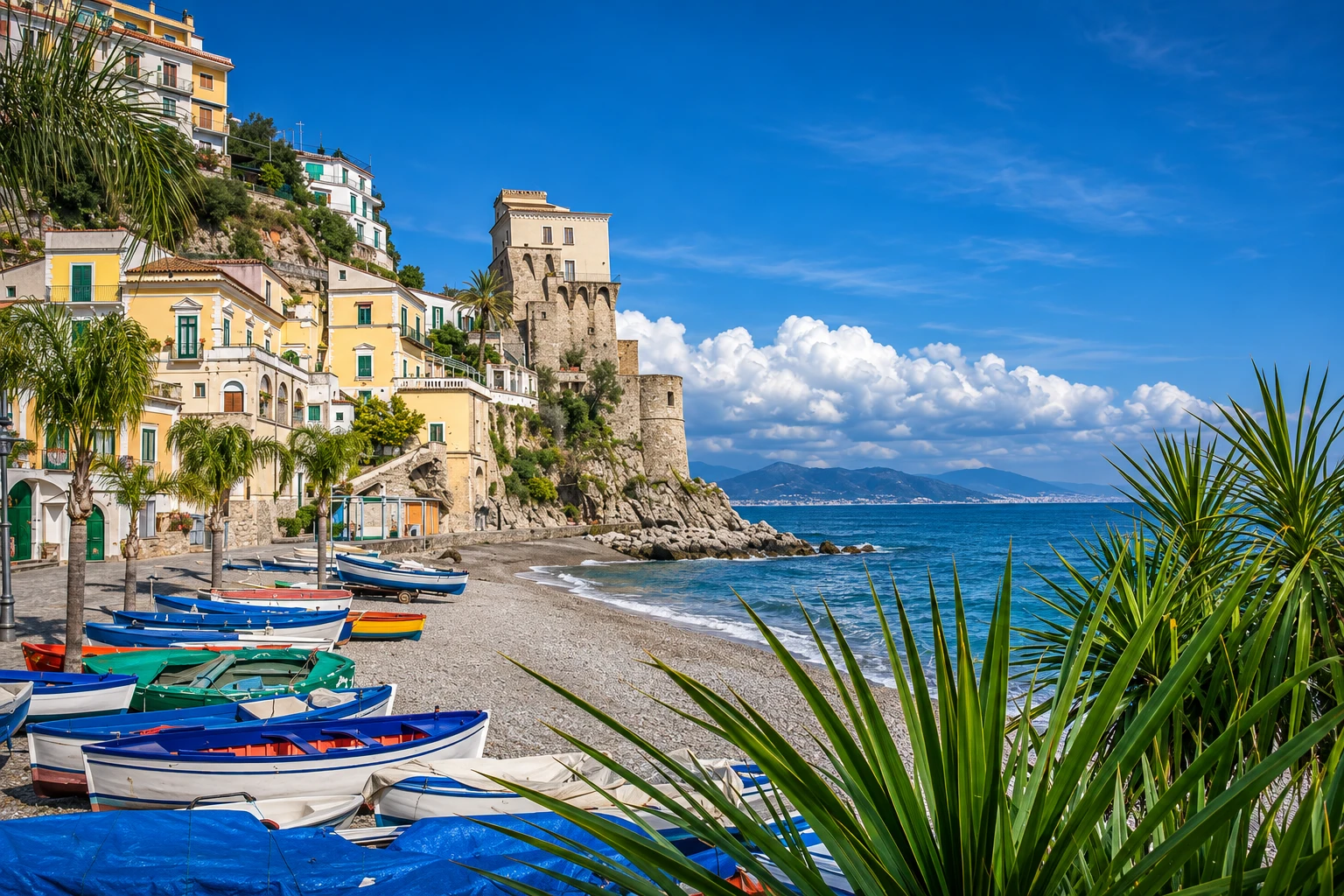
Cetara developed around fishing, on a small bay in the Gulf of Salerno. Corso Garibaldi descends between closely spaced houses down to the harbor, where working boats are still found. The Torre Vicereale occupies the rocky point by the beach. The local colatura is made from the liquid produced by curing anchovies in salt.
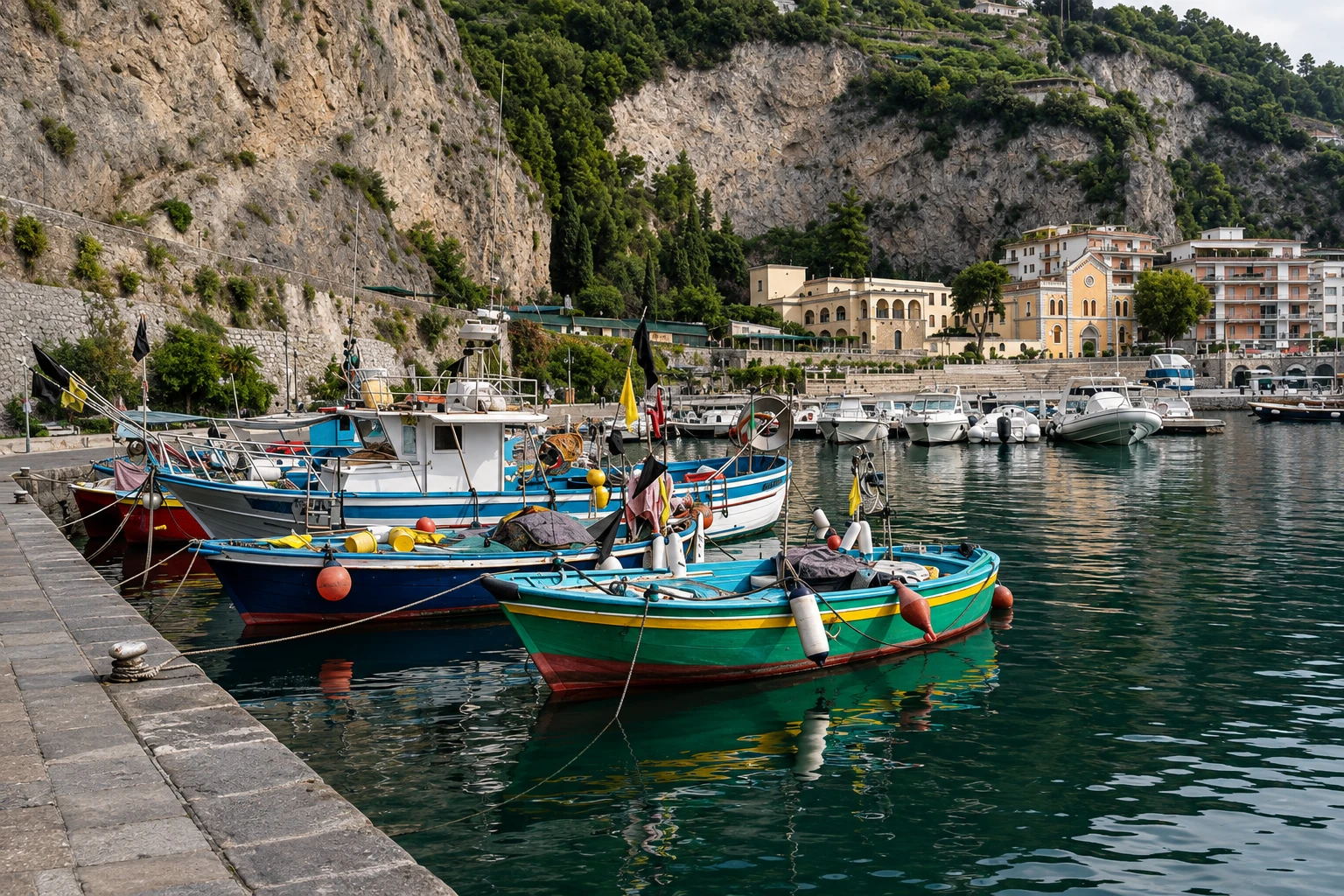
Maiori sits at the mouth of a valley opening onto the Gulf of Salerno. The Corso Reginna crosses the lower part of town and reaches the widest stretch of beach on the Amalfi Coast. The tourist harbor is at the western end of the promenade. Above the seafront blocks, the streets climb toward the hillside terraces.
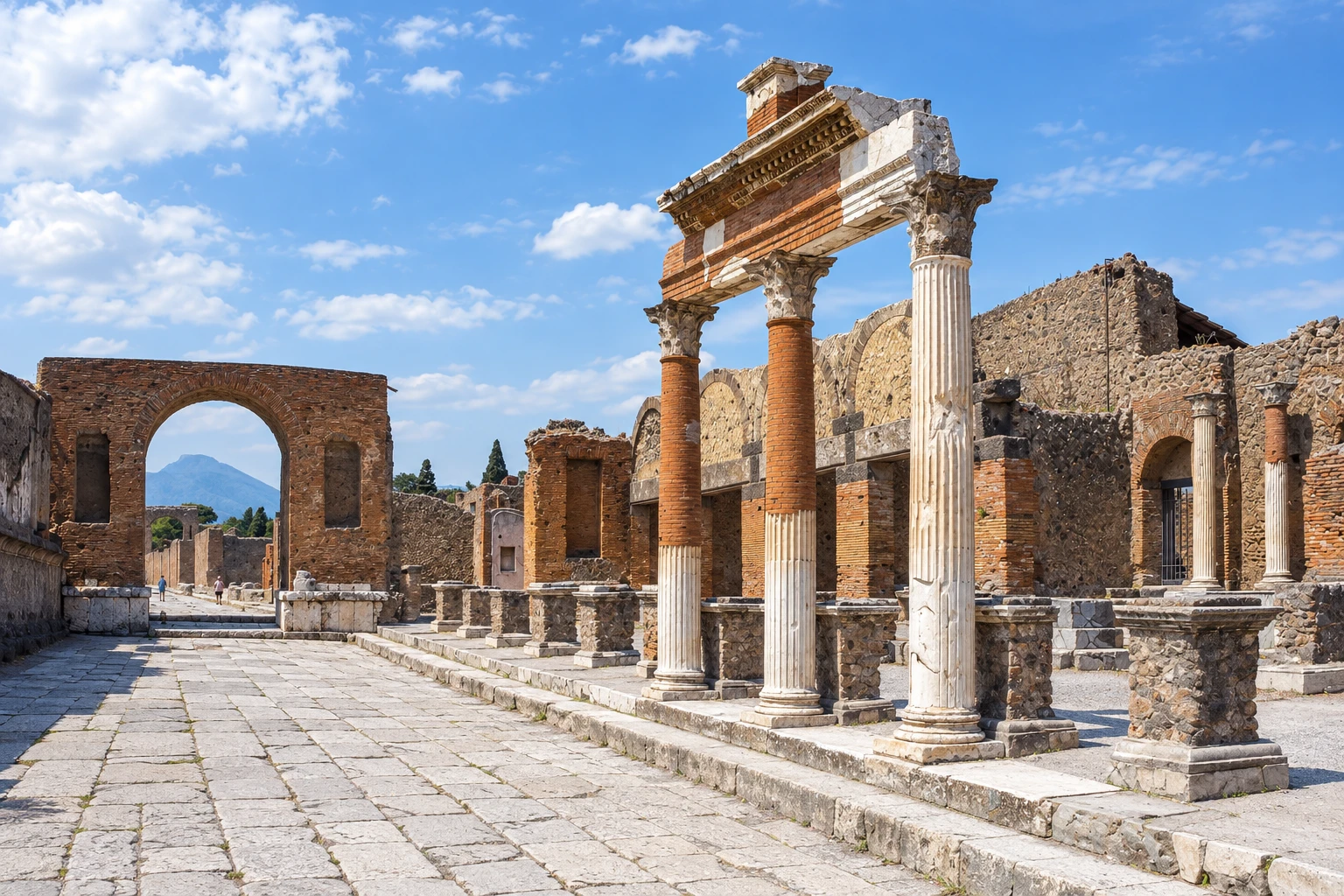
Pompeia is the Roman city buried by Vesuvius in 79 AD, today one of the largest archaeological sites in the world, with the Villa dei Misteri and its frescoes. Beside the ruins, the modern town revolves around the Santuario della Beata Vergine del Rosario. Nearby are Herculano, the Villa di Poppea in Oplontis and the trail up to the crater of Vesuvius.
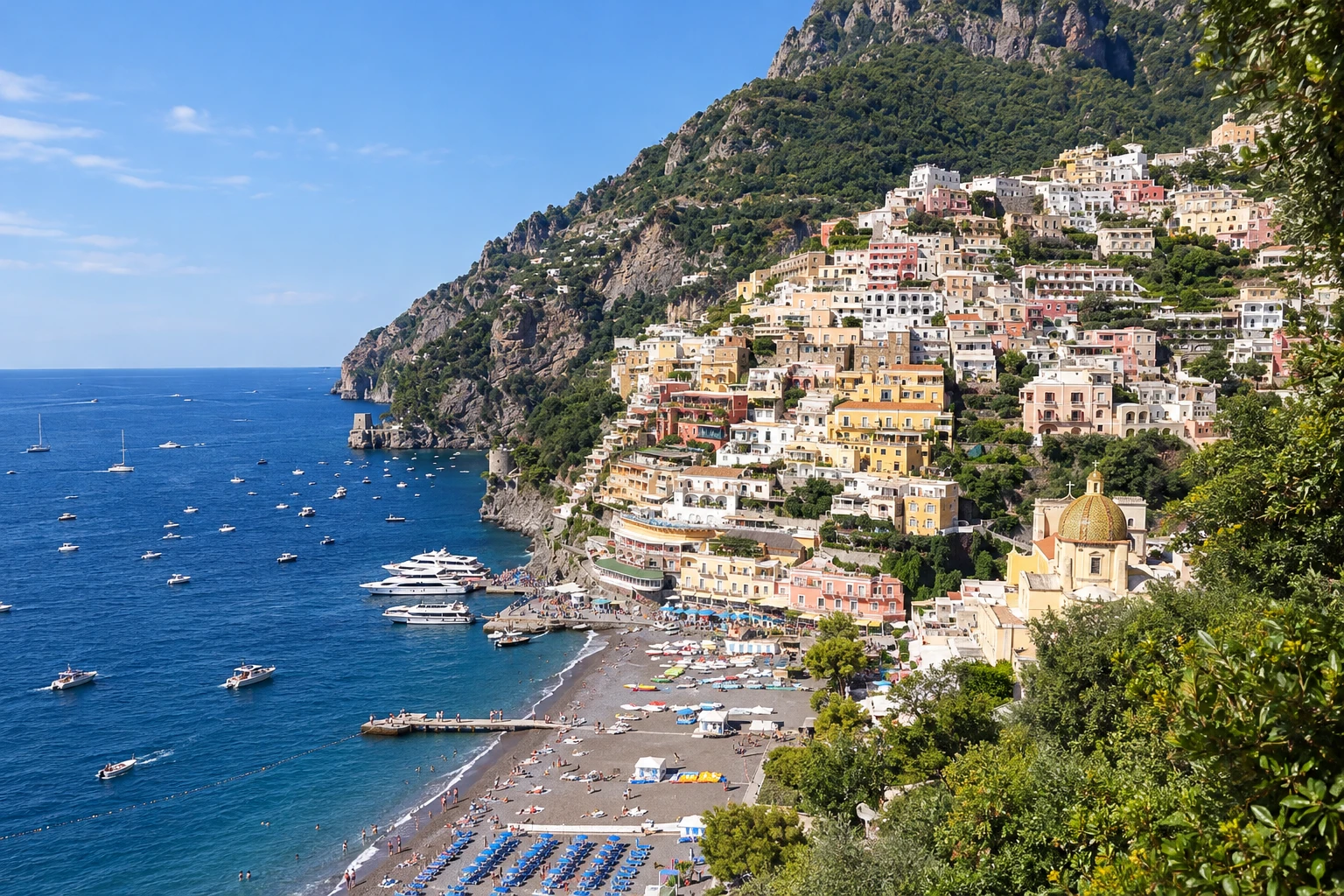
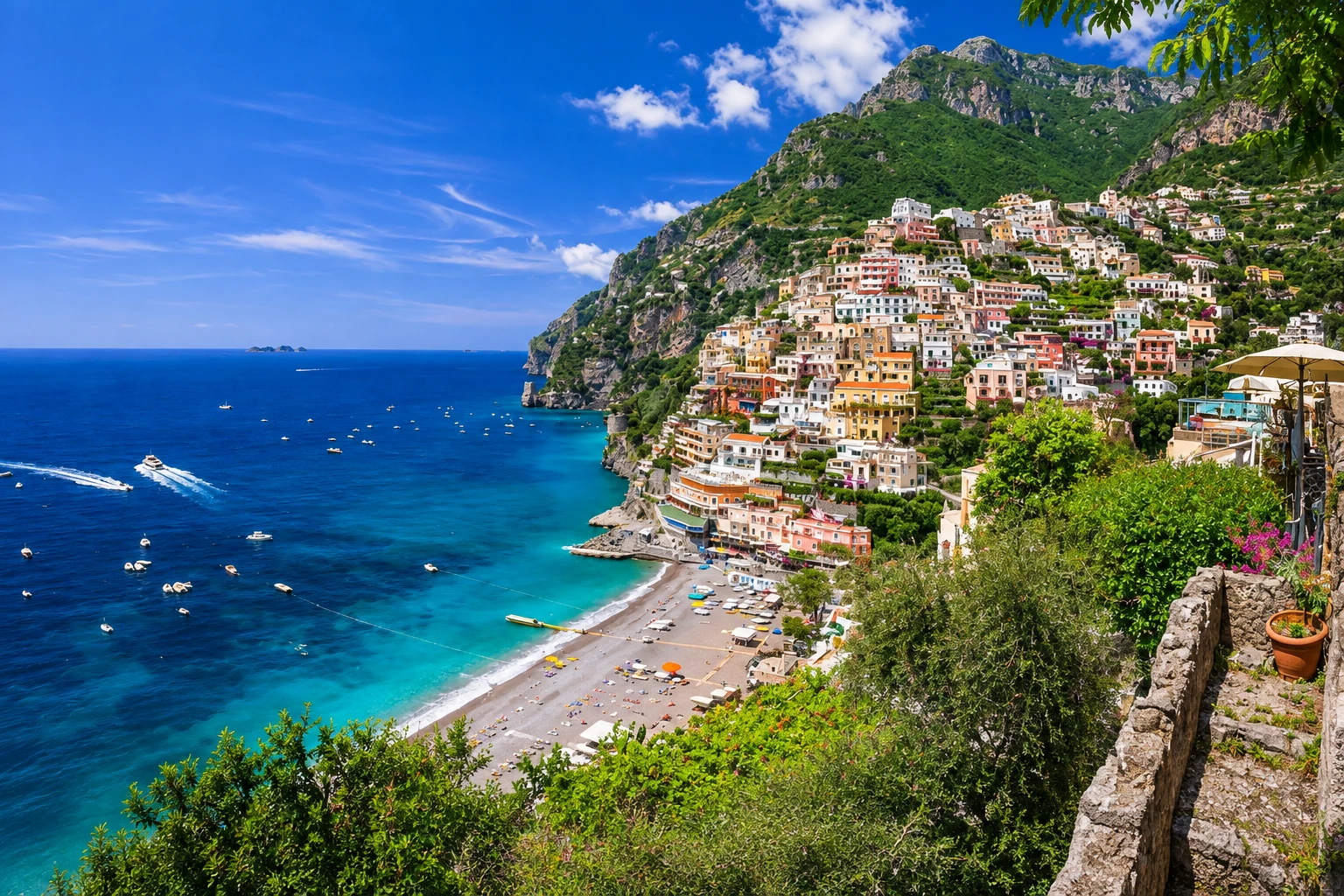
Positano descends the hillside in steps down to the sea, with pastel-colored houses, narrow stair streets and shops selling linen clothing and handmade sandals. Below are the Spiaggia Grande and the church of Santa Maria Assunta, with its ceramic dome. Above, the Sentiero degli Dei reaches Nocelle, a small village belonging to Positano. There is no train station: you get there by bus or by boat.
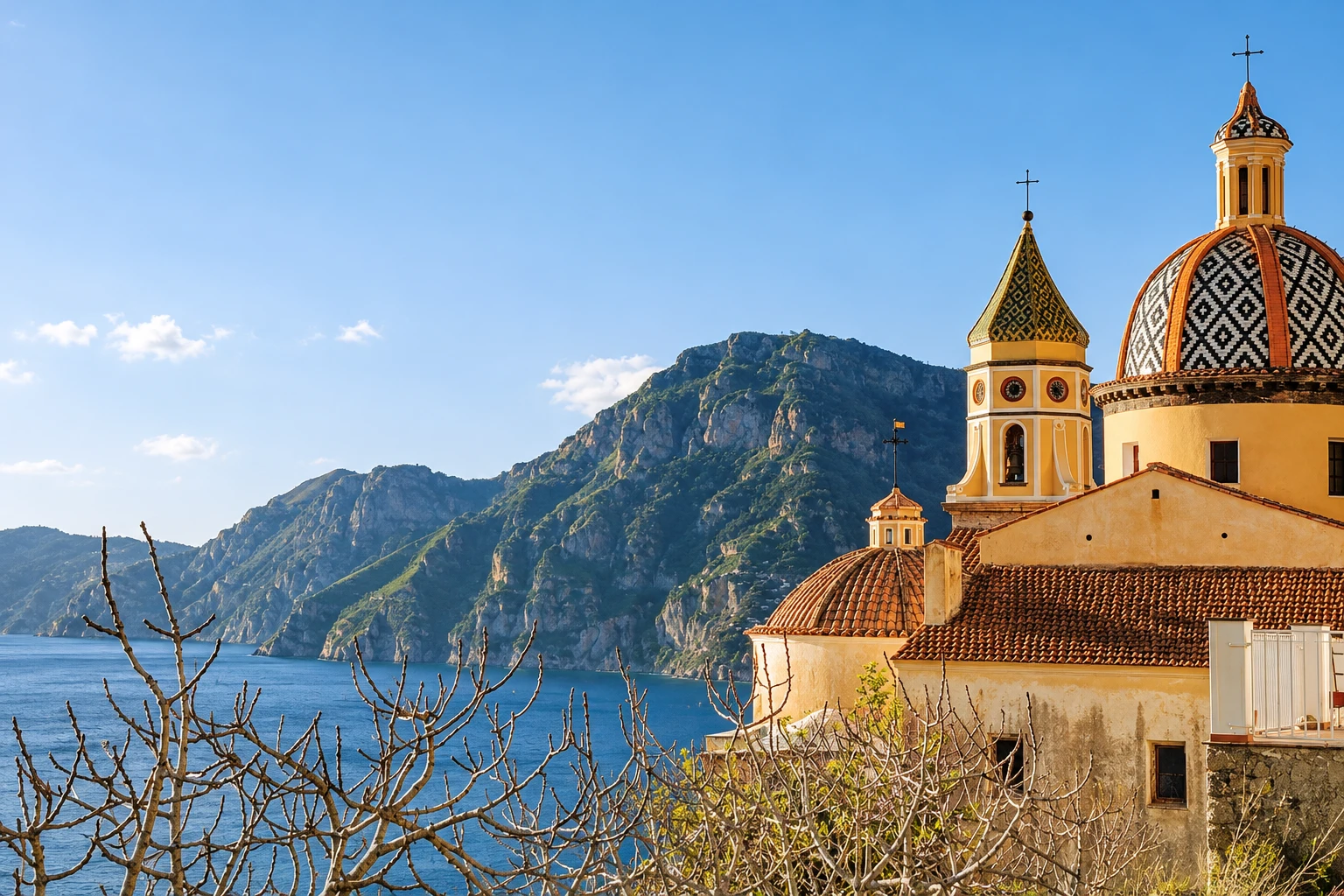
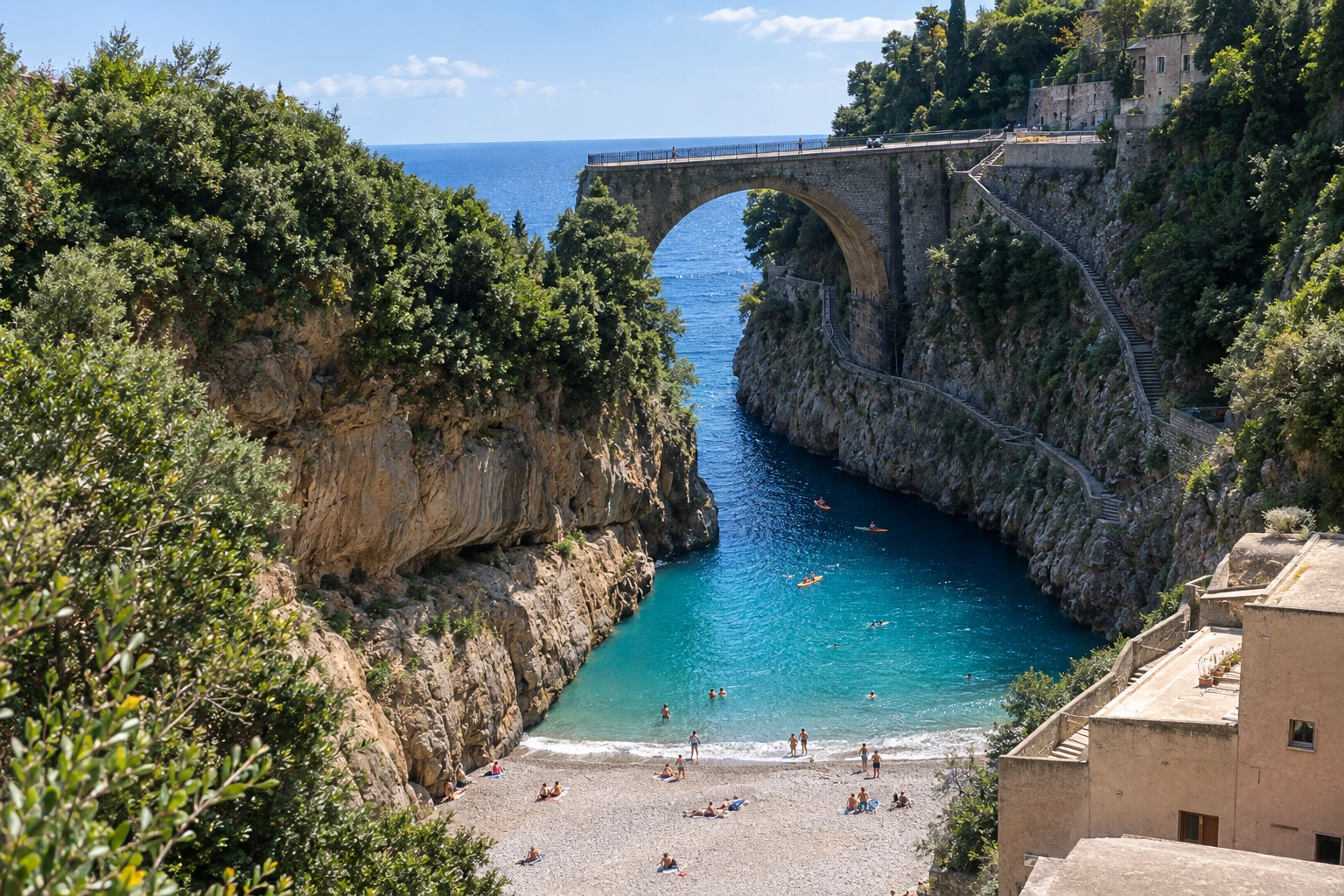
Praiano spreads along the hillside in clusters connected by steep streets. In Vettica Maggiore, a maiolica dome marks the rooftops. Lower down, Marina di Praia occupies the cleft opened by the Praia valley between rock walls. The seaside preserves the town’s old landing and fishing landscape.
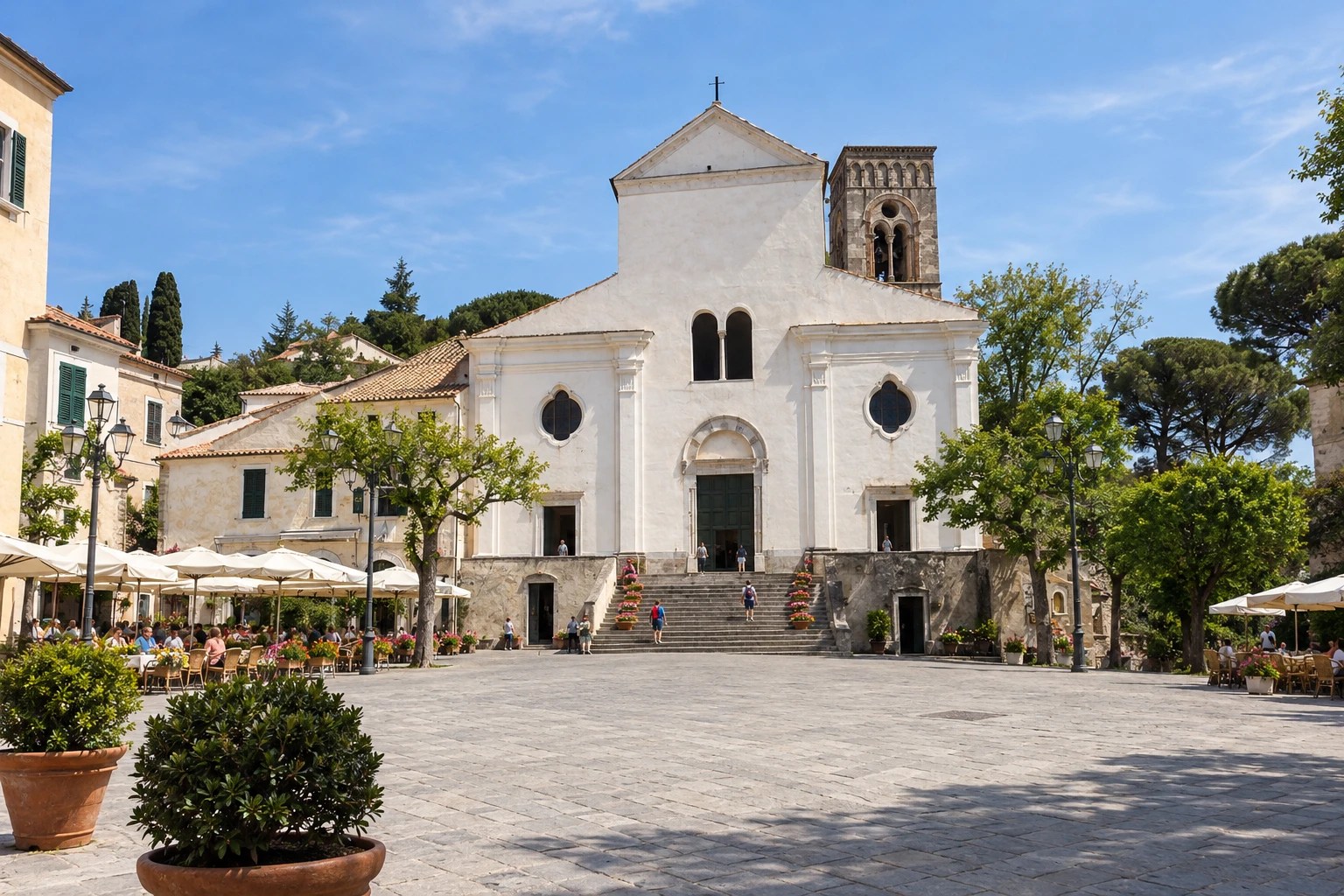
Ravello sits high, about 350 meters above the sea, 7 kilometers from Amalfi. It is a town of gardens and music: Villa Rufolo, which inspired Wagner and hosts the Ravello Festival in summer, and Villa Cimbrone, with the Terrazza dell'Infinito overlooking the Gulf of Salerno. In the main square is the Duomo di Ravello, with 12th-century bronze doors.
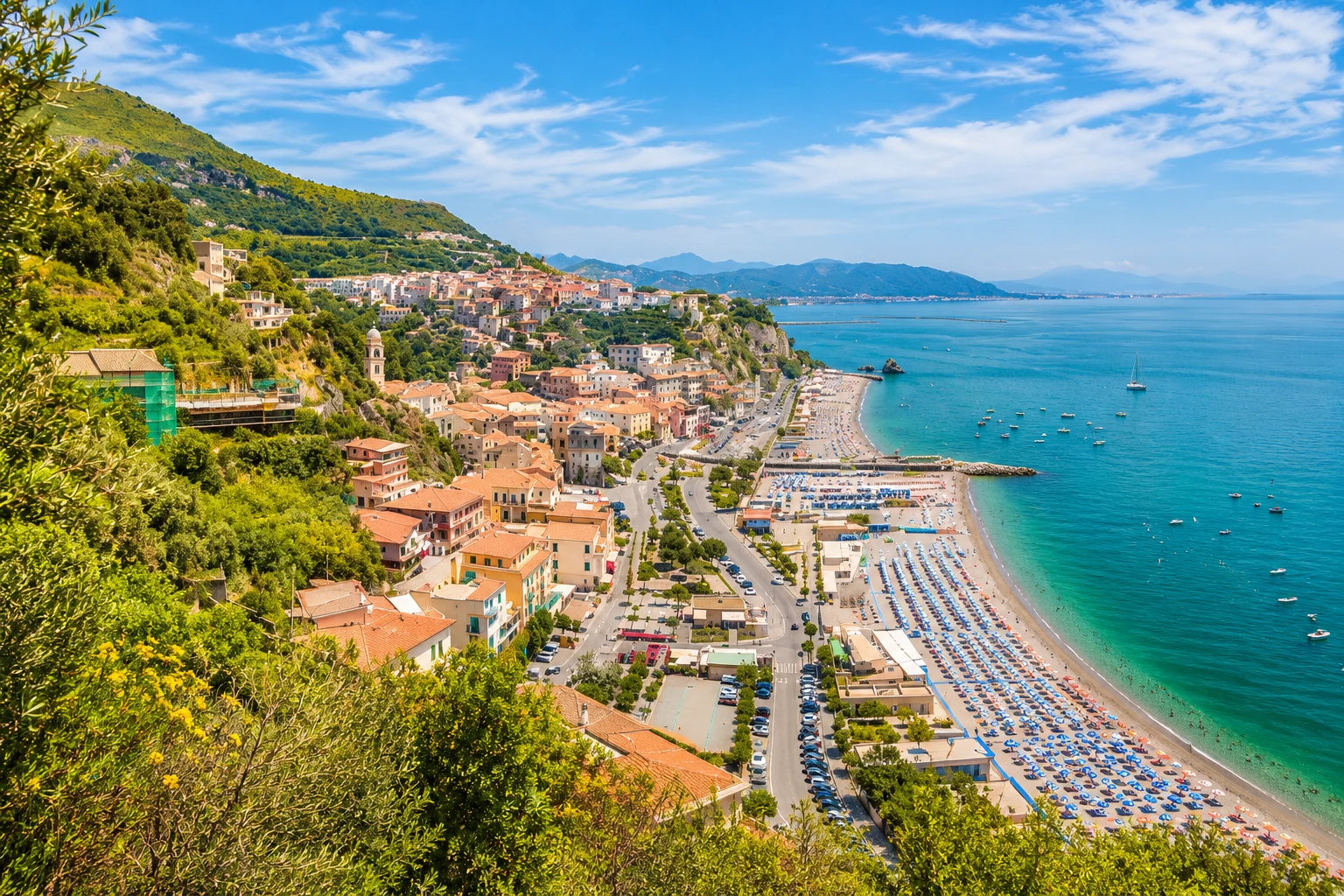
Vietri sul Mare sits at the eastern tip of the Amalfi Coast. In the upper town, ceramic coverings appear on façades, panels and the dome of the main church. Down below, the Marina di Vietri opens a sandy strip at the mouth of the Bonea valley, facing the Gulf of Salerno.
Routes
Beyond the guide