Amalfi Coast

Campania

Amalfi Coast

Villages clinging to the cliff above the Gulf of Salerno: Amalfi, Positano and Ravello, linked by buses, boats and a winding coastal road.

South

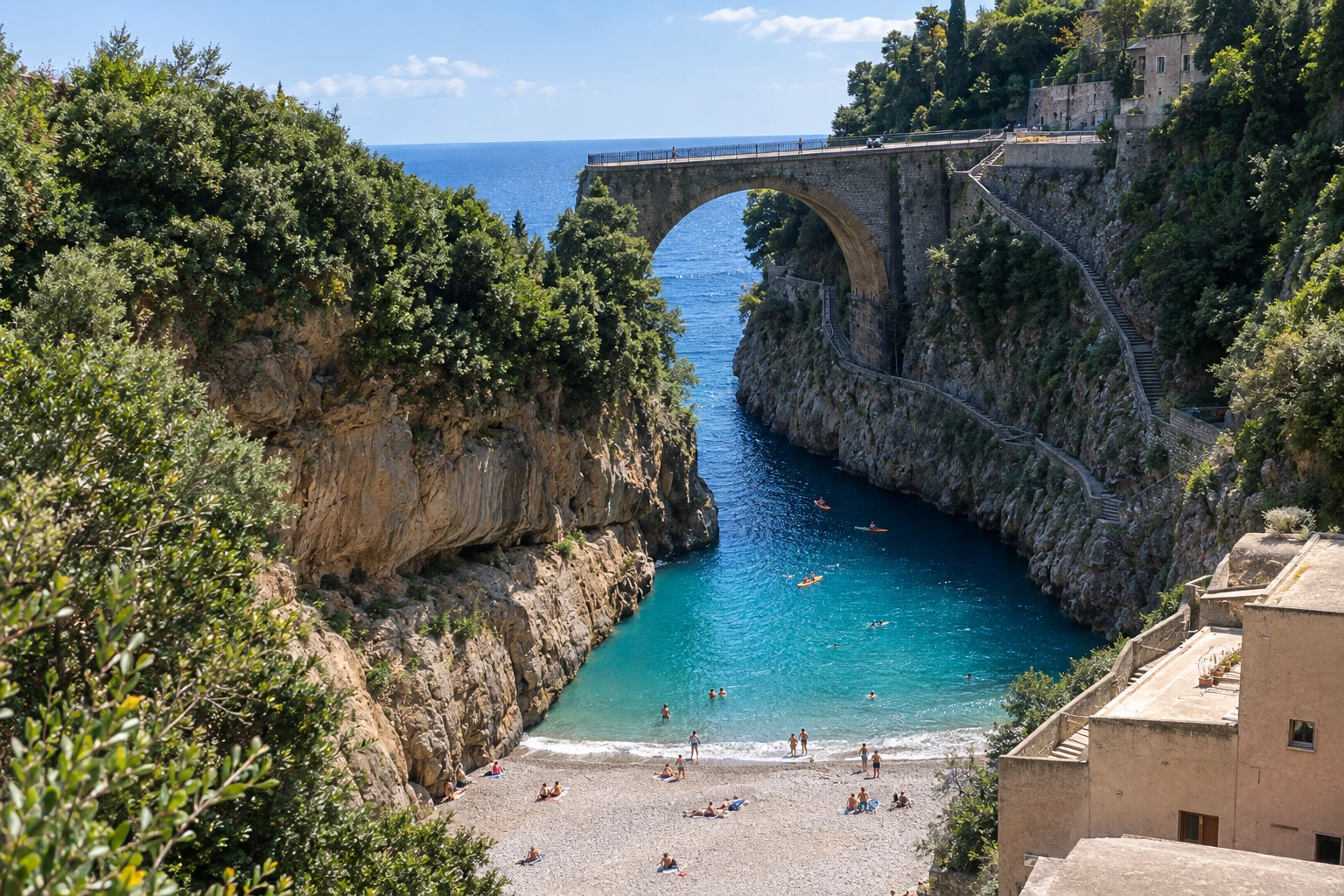
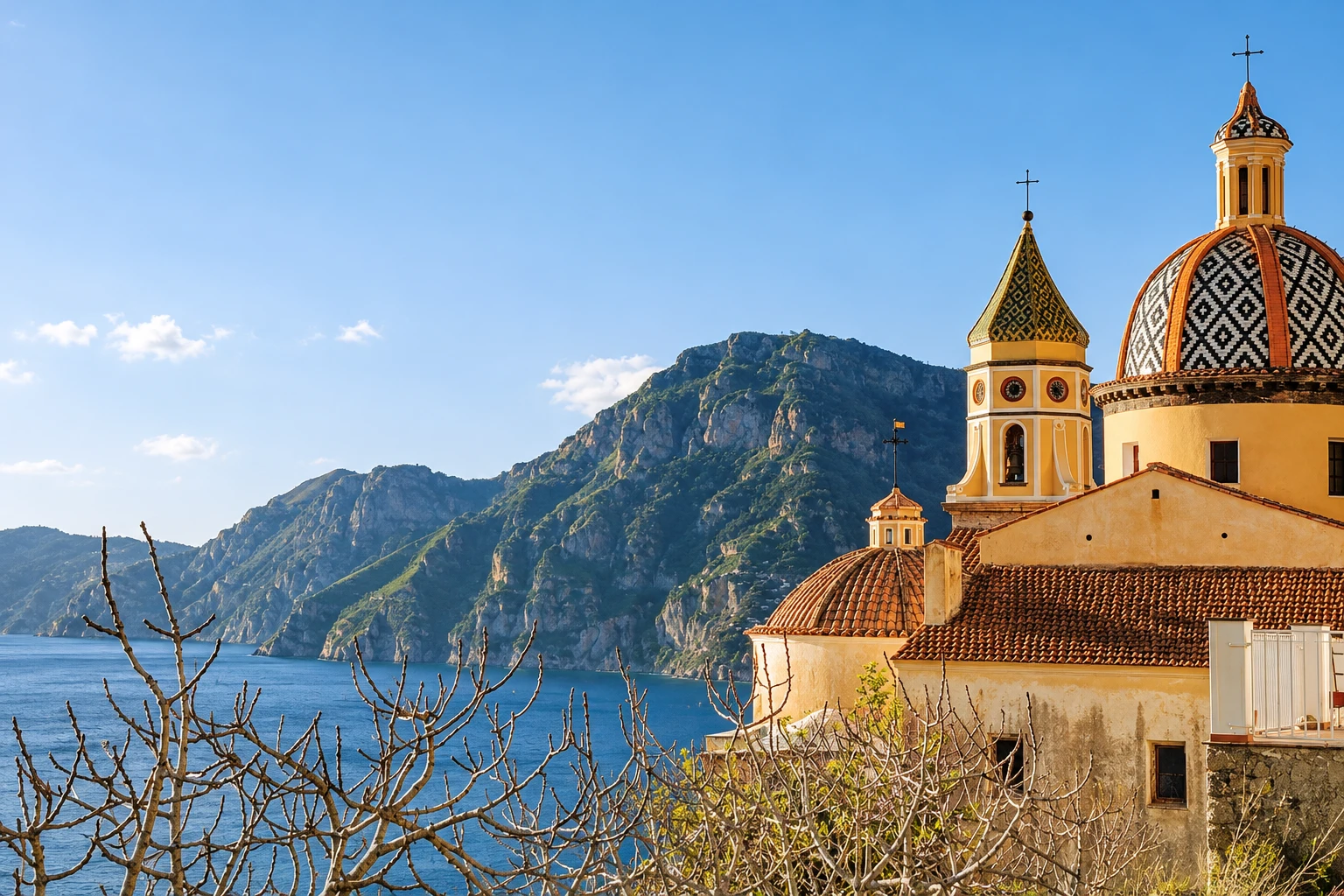
In the photo: Fiordo di Furore, Costa Amalfitana

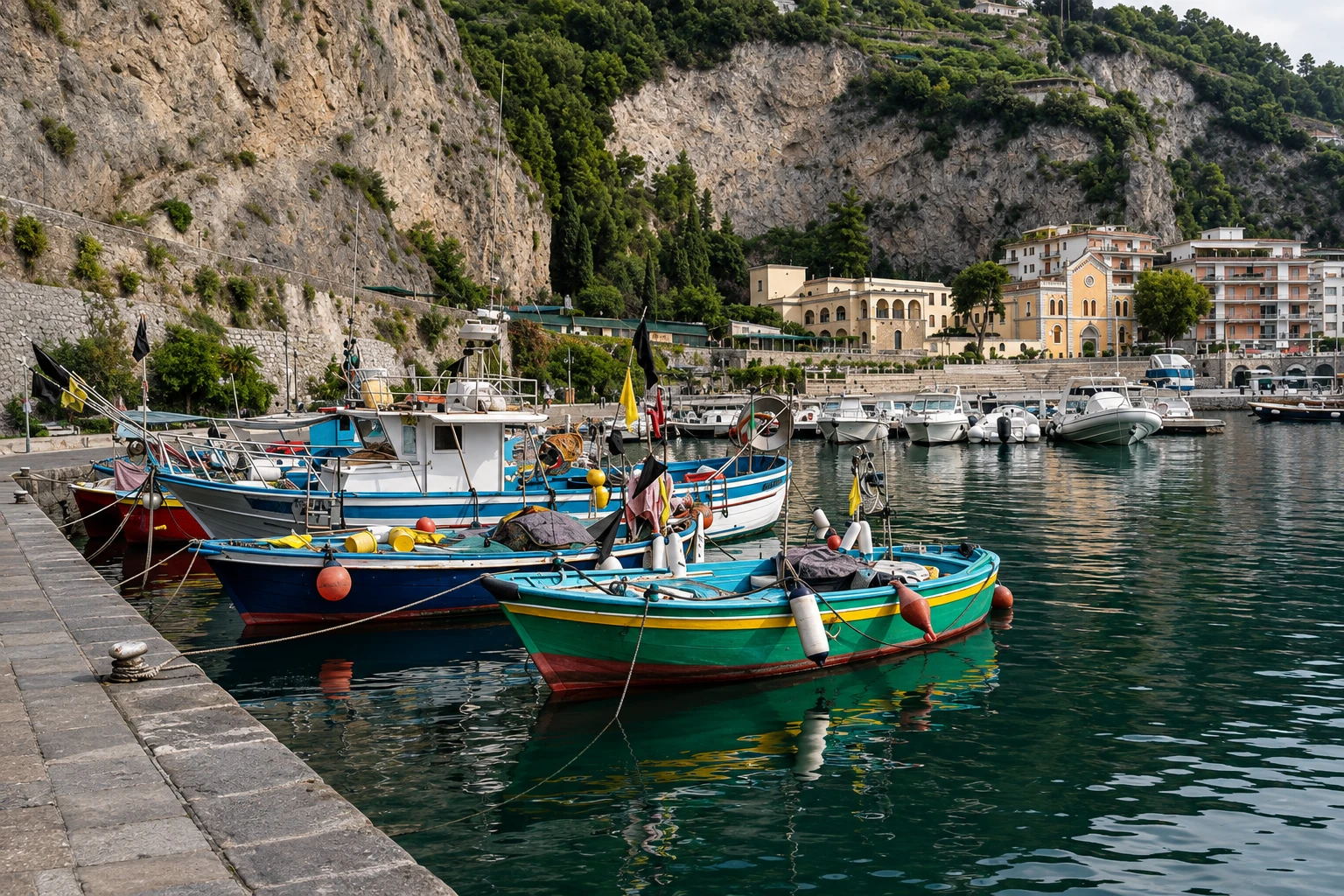
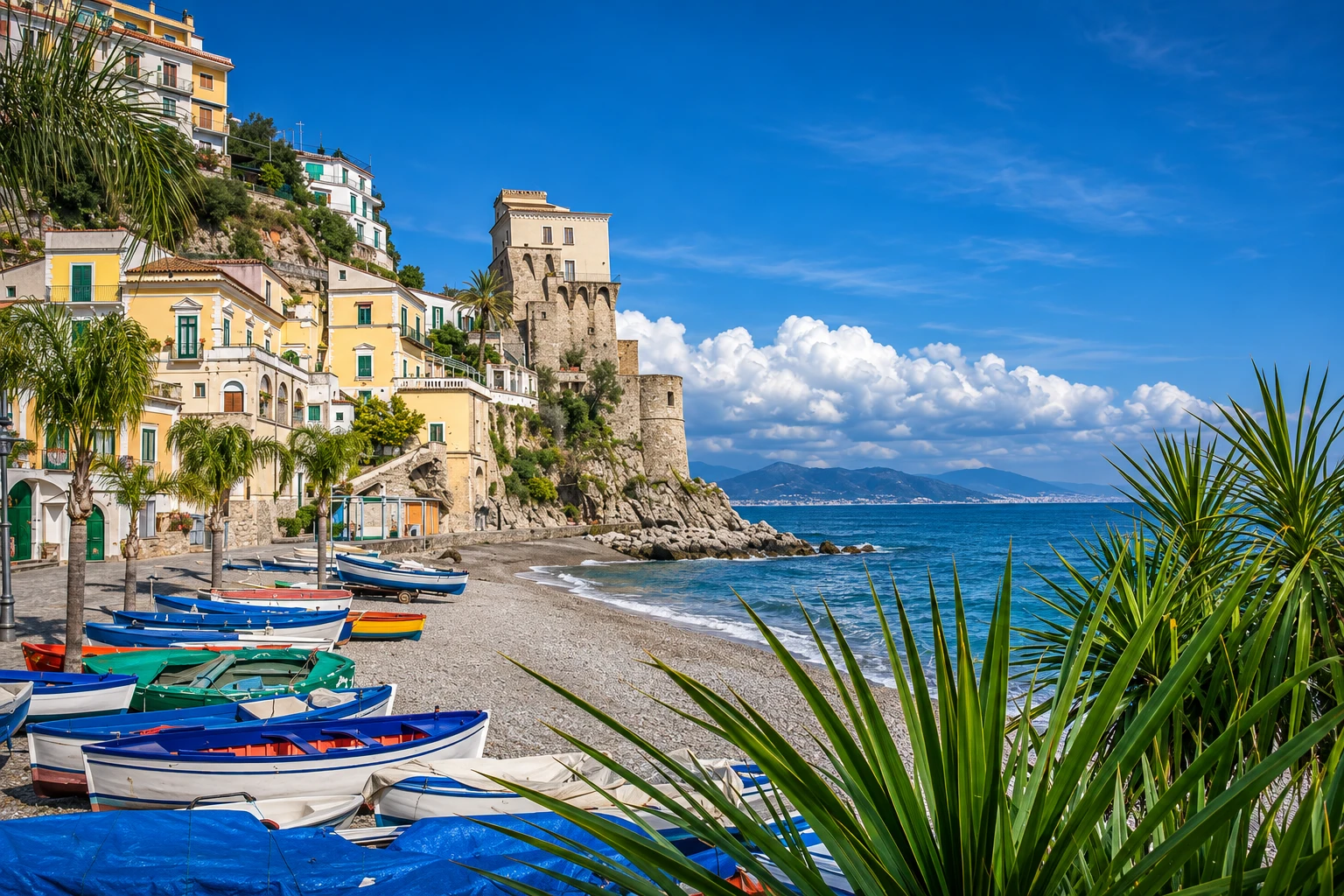
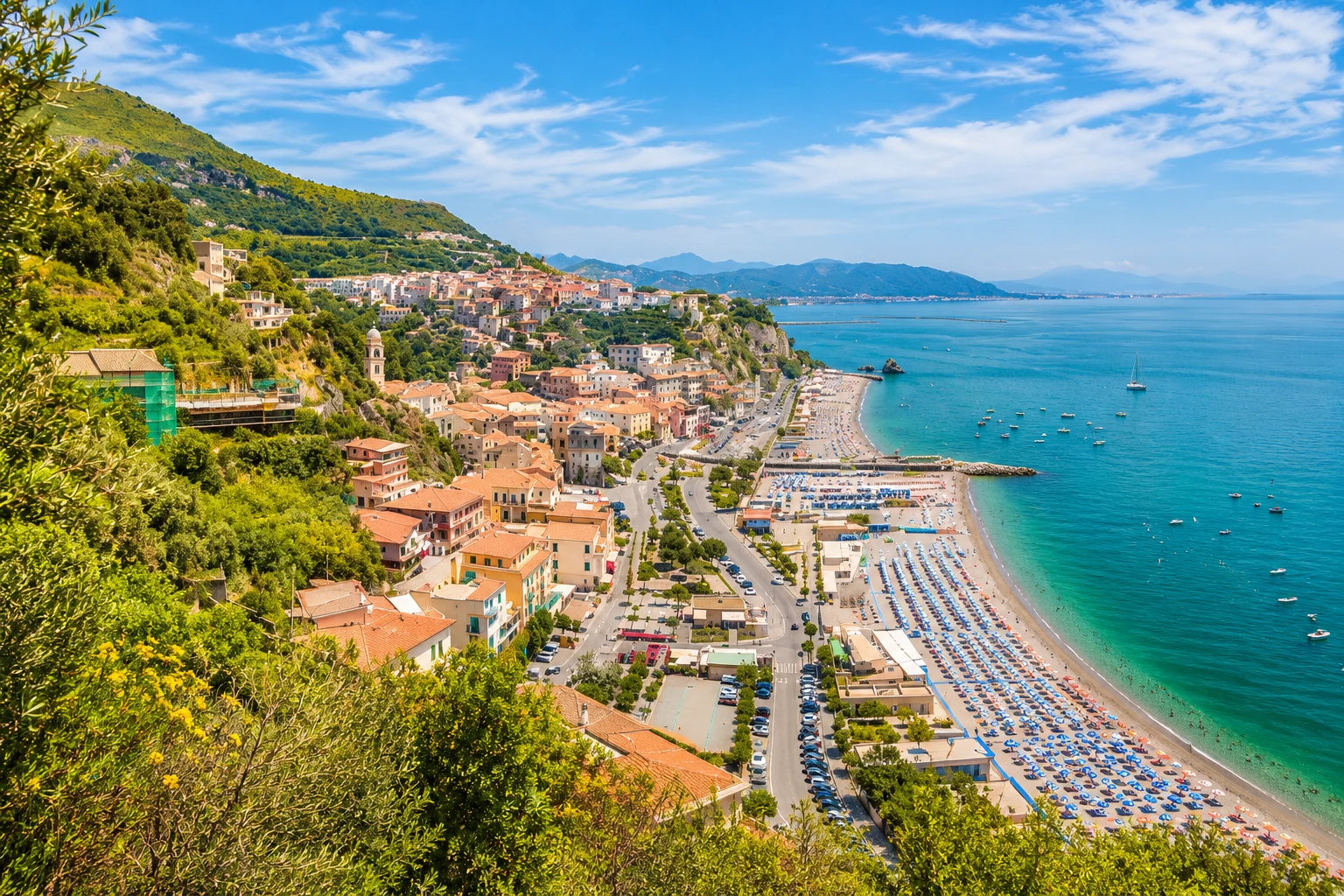
Illustrative images. The pictures in this guide are illustrations based on the real place, not photographs, and may differ from it.

Get it on Google Play

Get to know the place

A region to enjoy
at your own pace.

The Costa Amalfitana (Costiera Amalfitana in Italian) is the stretch of coastline in Campania that runs from Positano to Vietri sul Mare, on the southern side of the Sorrento peninsula. The towns step down the slopes of the Montes Lattari to the sea, with colorful houses, lemon terraces and churches topped by ceramic domes. Since 1997 the coast has been a UNESCO World Heritage Site.

Amalfi was a maritime republic trading with Constantinople and the East between the 9th and 12th centuries, and the cathedral of Sant'Andrea preserves that memory. Positano is the vertical village of narrow stepped alleys and a pebble beach. Ravello sits up high, around 350 meters above sea level, with the gardens of Villa Rufolo and Villa Cimbrone overlooking the Gulf of Salerno.

Getting around is part of the experience. The SS163 Amalfitana road is narrow and very winding, SITA buses connect the towns and, in season, boats run along the coast. Hikers can take the Sentiero degli Dei, a high trail between Agerola and Positano.

The region is the home of limoncello, a liqueur made from the local lemons, and of the carta di Amalfi, handmade paper produced since the Middle Ages. For Brazilians, the most practical bases to reach the coast are Naples or Salerno, and from Rome the train goes to Salerno.

This destination brings together 7 cities: Amalfi, Positano, Ravello, Praiano, Maiori, Cetara, Vietri sul Mare.

Share: WhatsApp
Traveler, share your experiences through photos Up to 5 photos of each place you visited.

One destination, many paths

The cities on this trip

Start with one city or combine several in your itinerary.

Where Amalfi Coast is The star marks the nearest capital, Naples.
NaplesAmalfiPositanoRavelloPraianoMaioriCetaraVietri sul Mare

Outlines: ISTAT, limites administrativos 2026, CC BY 4.0. Adapted by Cidade Turismo.

How to get there: Amalfi Coast

Aeroporto Internazionale di Napoli (NAP), in Napoli · 70 km to Amalfi

Aeroporto Salerno Costa d'Amalfi (QSR), in Pontecagnano Faiano · 45 km to Amalfi

Connections from Brazil are usually via another city. Confirm before booking. The most commonly used airport is Naples (NAP). From Naples the Circumvesuviana train goes to Sorrento and regional trains go to Salerno; from there SITA buses or boats continue. From Rome, high-speed trains run to Salerno.

Suggested arrival point: Amalfi

The local experience

Things to do in Amalfi Coast

Amalfi · Campania · Cathedral

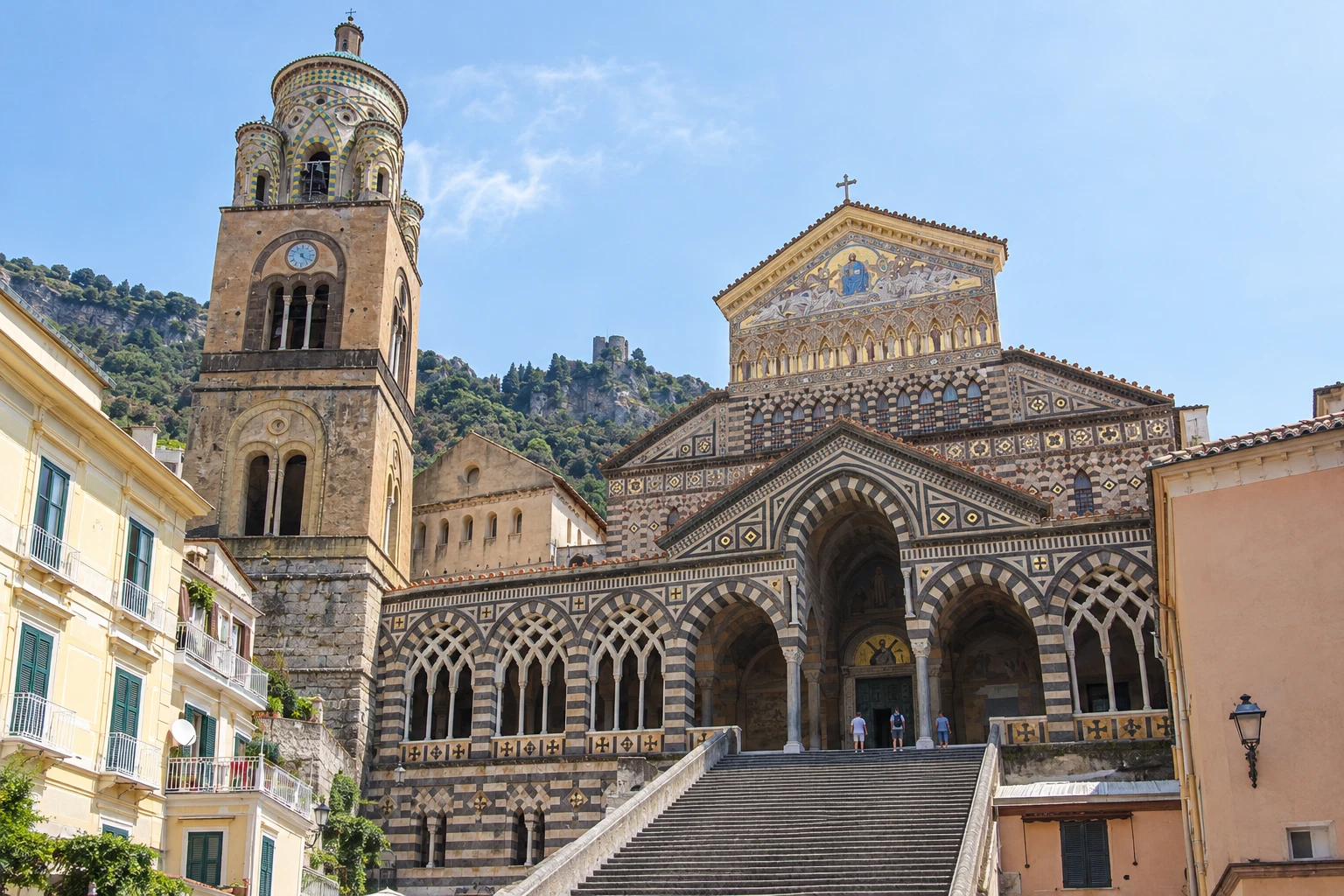
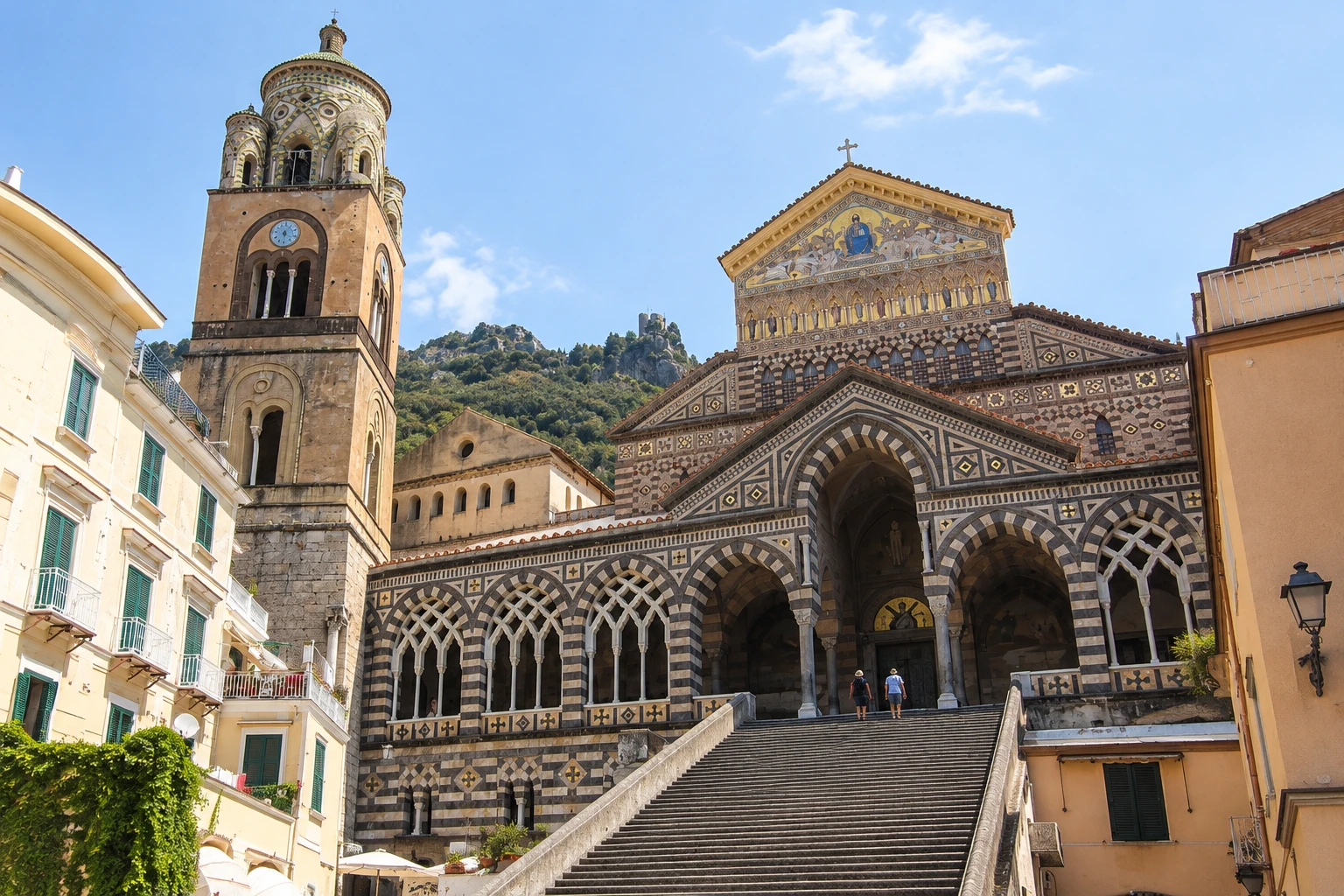
Amalfi Cathedral

The cathedral of Sant'Andrea, at the top of a staircase above the Piazza Duomo, with a striped façade, a tiled campanile, the crypt of the apostle Andrew and the Chiostro del Paradiso beside it.

Explore Amalfi Cathedral

Vietri sul Mare · Campania · Beach

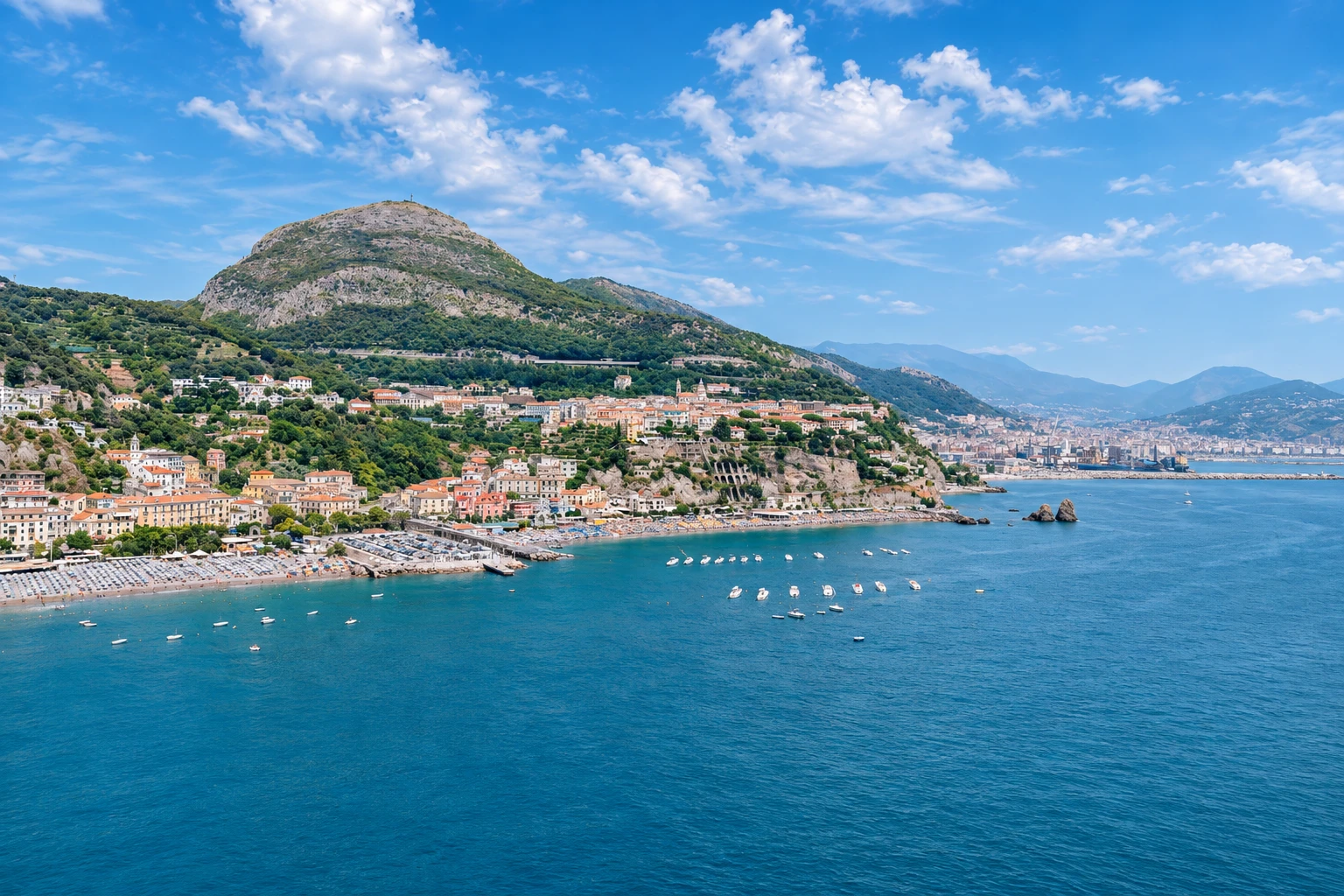
Marina di Vietri

Sandy waterfront below the centre of Vietri sul Mare, at the mouth of the Bonea valley. The I Due Fratelli rocks can be seen from the beach.

Explore Marina di Vietri

See 11 more places in Amalfi Coast

To choose before you go

Tours in Amalfi Coast

Where each tour starts, how long it takes, how it is done, what is included and the price range.

Amalfi: the Duomo, the Cloister of Paradise and the narrow streets

From Piazza Flavio Gioia (bus stop and Amalfi pier) Walk in village about 2 h 30 morning easy (stairs)

Amalfi was the first of the Italian maritime republics, a Mediterranean power between the 9th and 11th centuries, and gives its name to the coast. The Duomo di Amalfi (Cathedral of Saint Andrew), atop a staircase of 62 steps above the square, has a striped-arch façade and gilded mosaics rebuilt in the 19th century, bronze doors cast in Constantinople in 1066 and, beside it, the Chiostro del Paradiso of 1268, the cloister of interlaced arches in an Arab-Norman style that served as the nobles' cemetery; the crypt holds the remains of the apostle Saint Andrew, brought from Constantinople in 1208. The Via Lorenzo d'Amalfi, the main street, climbs the valley past limoncello and ceramics shops up to the Piazza dei Dogi and the Valle dei Mulini, the valley of the old paper mills. Piazza Flavio Gioia, on the seafront, is the hub for all buses and boats on the coast.

Stops: Duomo di Amalfi.

Includes: Duomo: separate paid admission for the cloister, the crypt and the museum (the church opens free of charge at mass times). Self-guided walk.

Tip: Go to the Duomo at opening, before the boats from Sorrento and Salerno unload the groups. Amalfi is the most convenient base on the coast: all buses and boats go through here.

Best time: All year. On June 27 and November 30, festivals of Saint Andrew with the race of the statue down the stairway.

Museo della Carta: Amalfi’s medieval paper mill

From Via delle Cartiere, Amalfi (10 min on foot from the piazza) Museum with guided tour about 1 hour morning or afternoon easy

The Museo della Carta occupies a 13th-century paper mill in the Valle dei Mulini, the Canneto river valley where Amalfi produced rag paper using techniques brought from the Arab East; Amalfi’s 'carta bambagina' supplied the chancelleries of southern Italy and is still made by a local mill. The guided tour, in Italian and English, shows the wooden water-driven vats, the presses and the moulds, and ends with visitors making a sheet by hand. From there, the Valle delle Ferriere trail climbs the valley past ruins of paper and iron mills, waterfalls and humid-climate ferns to a nature reserve, about 2 hours round trip, one of the few shaded hikes on the coast.

Stops: Museo della Carta.

Includes: Separate paid admission, with guided tour included. Valle delle Ferriere trail free of charge.

Tip: The tour departs at set times and lasts about 30 minutes; arrive before the afternoon groups. Bring sneakers if you will climb the valley: the path becomes wet.

Best time: year-round; the valley is cool even in summer.

Positano: the vertical village, Spiaggia Grande and the church

From Positano (SITA bus, Sponda or Chiesa Nuova stop, or pier) Walk on stairways and beach about 3 hours morning or late afternoon moderate (hundreds of steps)

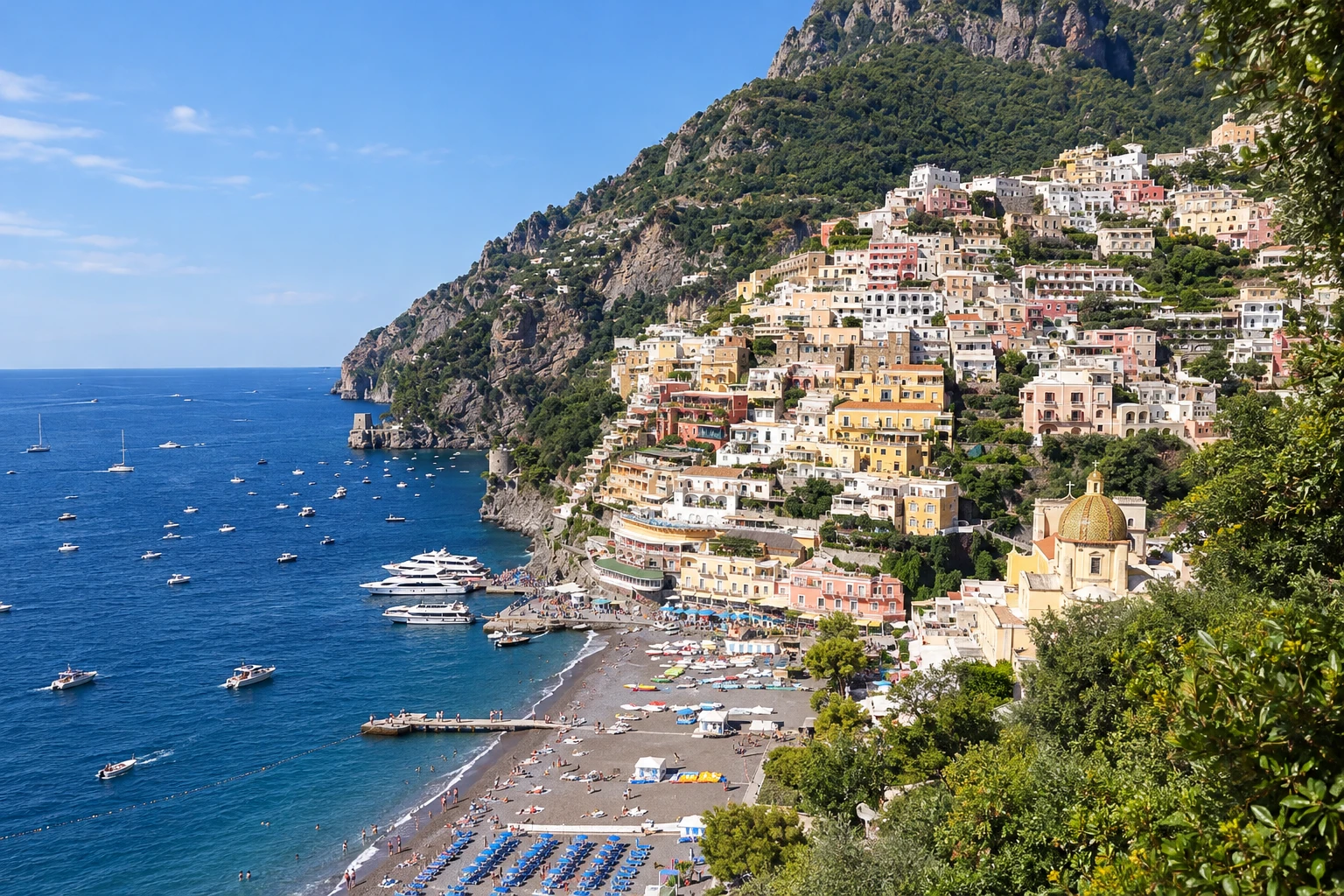
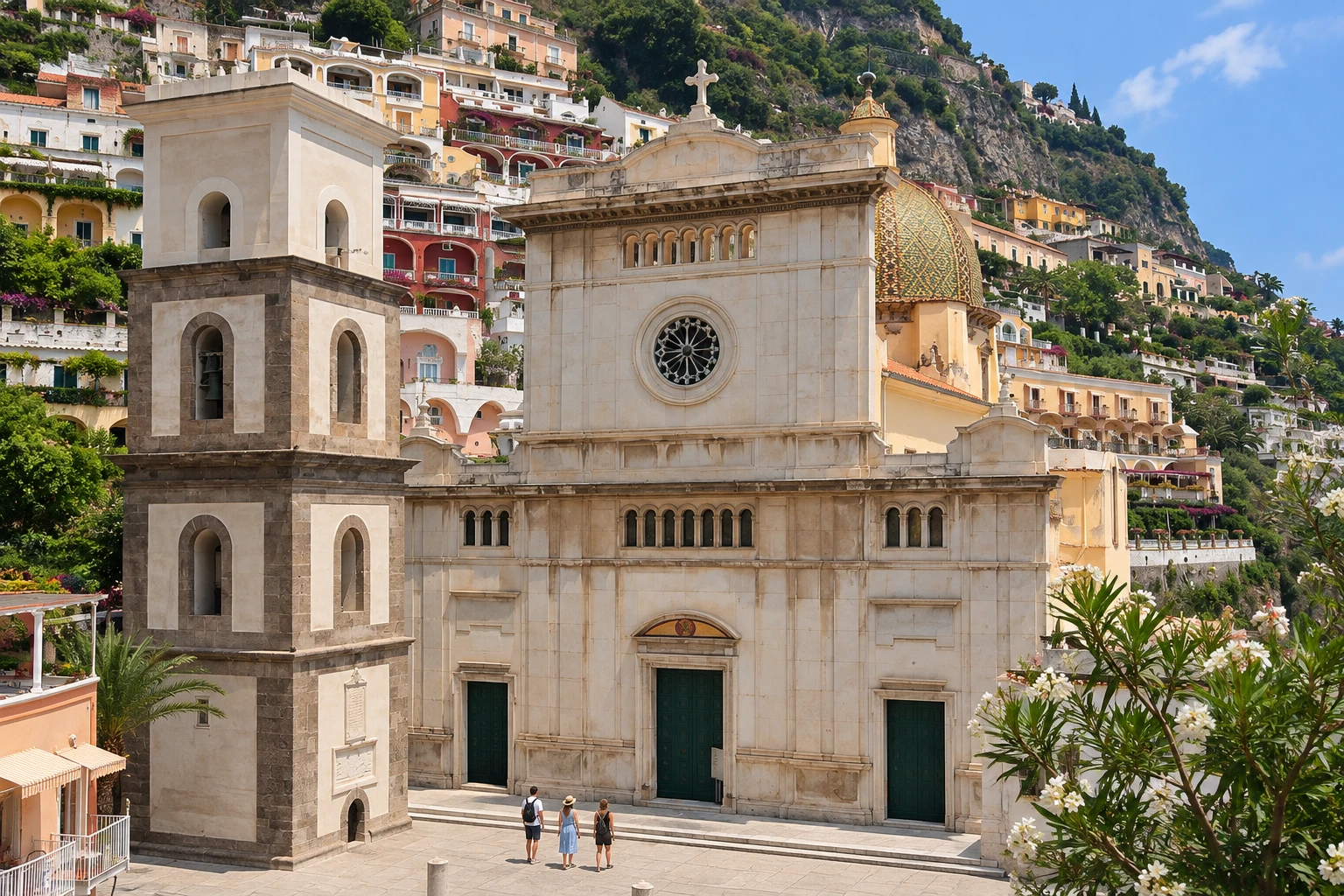
Positano is the village that descends in stairways from the road to the sea, with white, pink and ochre houses stacked on the slope and bougainvillea; there are no flat streets and taxis stop up top. The Chiesa di Santa Maria Assunta, with its green-and-yellow tiled dome, houses the Byzantine icon of the Black Madonna which, legend says, arrived by boat with a voice saying “posa, posa” (rest, rest), the origin of the name; beneath the church is the Roman villa buried by Vesuvius in 79, with frescoes, open to visitors. Spiaggia Grande, of dark pebbles, has colorful umbrella establishments and a free stretch near the pier; Spiaggia del Fornillo, 10 minutes along the cliff path, is quieter. Shops sell “Positano fashion” in linen and sandals made to order. From the boats that leave the pier you can see the whole village.

Stops: Chiesa di Santa Maria Assunta, Spiaggia Grande.

Includes: Small free beach area; paid umbrellas. Roman villa with ticket and opening hours. Walk is free.

Tip: Arrive by boat from Amalfi or Sorrento to see the seaside village and avoid the crowded bus at Sponda. Walk up in the morning, go down to the beach late afternoon. Flat sandals and steep stairways don't mix: wear sneakers.

Best time: April–October; from November to March some hotels and restaurants close.

Sentiero degli Dei: the Path of the Gods, from Bomerano to Nocelle

From Bomerano (Agerola), SITA bus from Amalfi mid-mountain trail about 4 hours morning moderate (7 km, 1,700 steps at the end)

The Sentiero degli Dei (Path of the Gods) is the roughly 7 km trail running about 500 m above sea level along the slope above the sea, from Bomerano (a hamlet of Agerola) to Nocelle, a village above Positano, offering the whole coast, the Faraglioni of Capri in the distance, and goats on abandoned terraces. Heading Bomerano–Nocelle the trail is mostly a gentle descent with the sea ahead; marked in red and white, with a higher (more exposed) and a lower section that join; it takes about 3 hours to Nocelle, where there is a bar and the staircase of 1,700 steps that descends to Positano in 45 minutes (or the local bus). There are narrow sections at the cliff edge with no protection: not suitable for those with vertigo or for small children. The path is stone and dirt, with little shade for most of the route.

Stops: Sentiero degli Dei, Spiaggia Grande.

Includes: Trail free of charge. SITA bus from Amalfi to Bomerano paid separately (about 40 minutes); Nocelle–Positano bus paid separately.

Tip: Depart Amalfi on the 7:00 or 8:00 bus to Bomerano and be on the trail before 9:00; in summer the heat starts early. Bring 1.5 liters of water per person, a hat, hiking shoes, and a snack; there are no springs on the route. Do not go in rain or strong wind.

Best time: From March to June and September to November; in July and August only at dawn.

Ravello: Villa Rufolo, Villa Cimbrone and the Duomo

From Amalfi (SITA bus, 25 min) or on foot via Atrani Villa up above with two gardens about 4 hours morning or afternoon easy (gentle slopes)

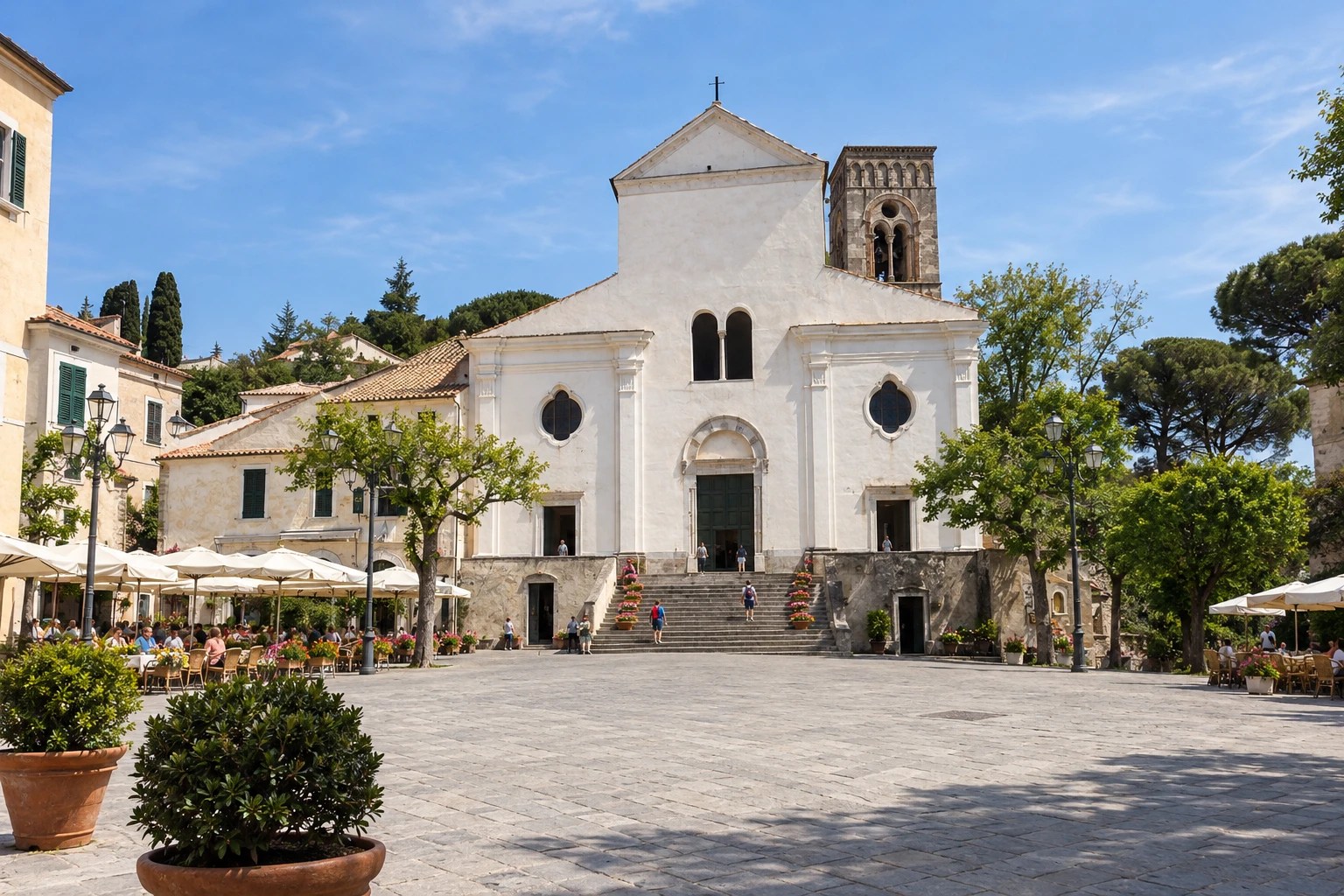
Ravello sits 365 m above the sea, on a ridge between the Amalfi and Minori valleys, and has the Piazza Vescovado as its center, with the Duomo di Ravello, from 1086, featuring bronze doors from 1179, a mosaic pulpit on six lions, and the crypt museum. Villa Rufolo, from the 13th century, with its Moorish tower and Arabic cloister, has terraced gardens over the sea that inspired Wagner in 1880 for Klingsor’s garden in Parsifal; in summer the Ravello Festival builds a stage on the cliff for sunset concerts. Villa Cimbrone, a 10-minute walk along a narrow lane, has a garden created by an English lord in 1904 and the Terrazzo dell'Infinito, the terrace of marble busts hanging 350 m above the sea, offering the most open view of the coast; the palace is a hotel, the gardens are open to all. Ravello is the quiet village of the coast, without a beach, with the best sunsets.

Stops: Villa Rufolo, Villa Cimbrone, Duomo di Ravello.

Includes: Villa Rufolo and Villa Cimbrone with separate paid tickets; Duomo free of charge (crypt museum paid). SITA bus paid separately.

Tip: Take the first morning bus from Amalfi up, or walk via Atrani and the 1,500‑step stairway (1 h 15, shaded in the morning). Buy Ravello Festival tickets (June–September) in advance on the official website.

Best time: From April to October; the festival runs June through September; the villas are open year-round.

Atrani: the smallest village on the coast, within walking distance of Amalfi

From Amalfi (10 min on foot via the tunnel or the stairway) Short walk about 1 h 30 late afternoon easy

Atrani, a 10 minutes on foot from Amalfi, is the smallest comune in Italy by area, with about 800 residents, and the most intact village on the coast: Piazza Umberto I, tiny, with the fountain and the bars, is a few meters from the dark-sand beach, under the road arch that runs over the houses. The Collegiata di Santa Maria Maddalena, from 1274, with its maiolica dome, is the postcard view from the sea; the church of San Salvatore de' Birecto, from the 10th century, was where the doges of Amalfi were crowned. The vaulted alleys climb the hillside up to the Ravello stairway. It’s the village to dine in without Amalfi’s crowds, five minutes away; the beach, small, has a free (ungated) section.

Stops: Atrani, Duomo di Amalfi.

Includes: Self-guided walk; churches free of charge; beach free in part.

Tip: Walk through Amalfi via the stairway path that leaves the road behind Hotel Luna, not along the road. Dine in the square; by day, the beach is the quietest between Amalfi and Minori.

Best time: All year; May to September for the beach.

See 3 more tours

Grotta dello Smeraldo: the green-light grotto in Conca dei Marini

From Conca dei Marini (SITA bus or boat from Amalfi) Sea cave with rowboat about 1 hour morning (best light until midday) easy (elevator or stairs to the cave)

The Grotta dello Smeraldo (Emerald Grotto), in Conca dei Marini between Amalfi and Positano, is a sea cave measuring 45 m by 30 m discovered by a fisherman in 1932: sunlight enters through a submerged opening and colors the water emerald green, over stalagmites and stalactites that indicate the grotto was above sea level before the water rose. You reach it via the coastal road, then descend by elevator or staircase to the pier, or by boat from Amalfi, and the visit is made in rowboats with boatmen who explain the formations and show the submerged ceramic nativity scene placed there in 1956. The light depends on the hour and the day: with a high sun and calm sea the green is intense; with rough seas the grotto is closed.

Stops: Grotta dello Smeraldo.

Includes: Admission paid separately (includes the rowboat); the boat from Amalfi to the cave is a separate ticket. Closes when the sea is rough.

Tip: Go between 10:00 and 13:00, when sunny, and check in the morning whether it is open; on high tide or with waves access is suspended. By boat, the Amalfi–cave round trip takes 15 minutes.

Best time: From April to October; in winter it opens when the sea allows.

Coastal boat: Amalfi, Positano and the view from the sea

From Amalfi (pier at Piazza Flavio Gioia) Ferry boat or boat tour about 3 hours afternoon easy

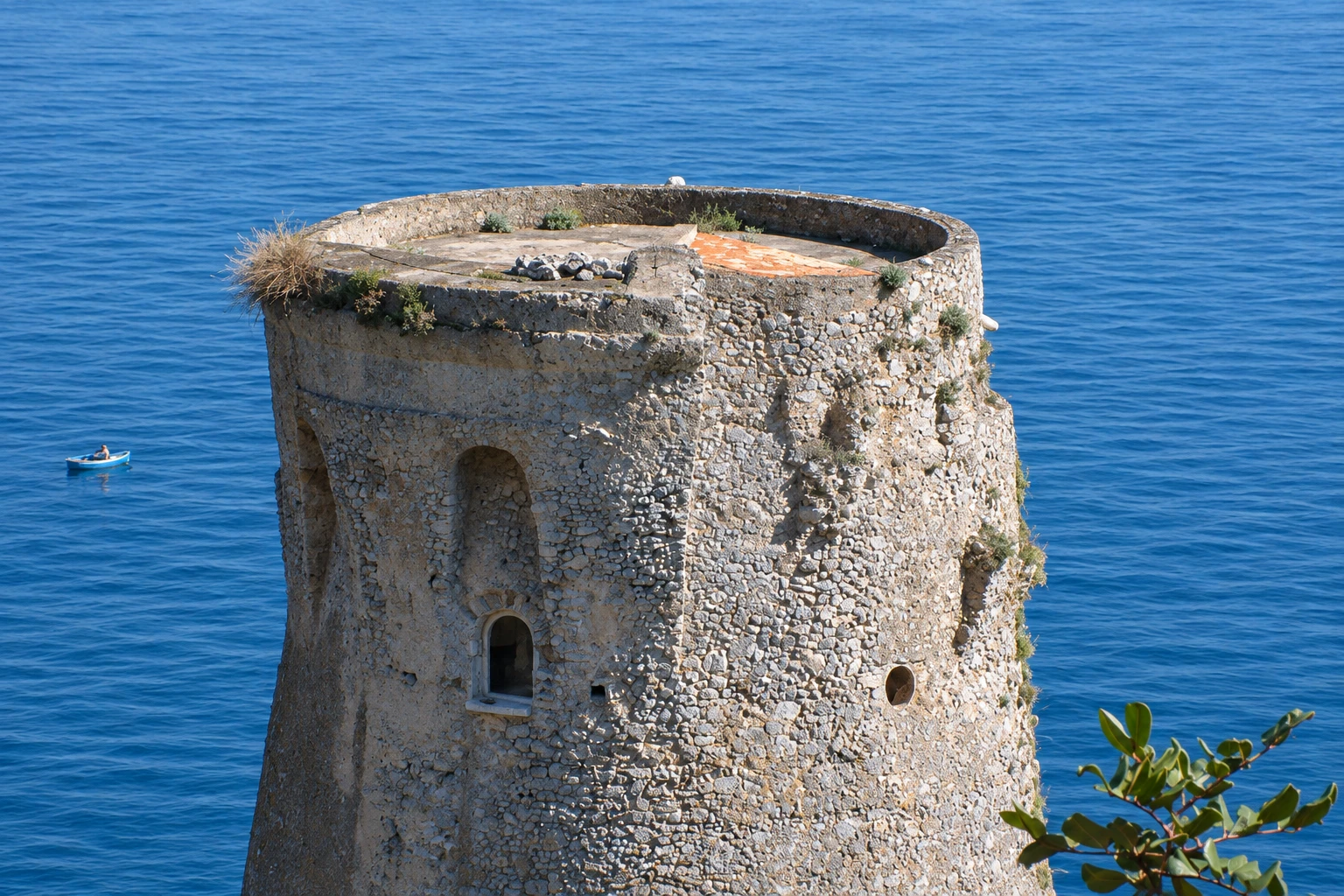
The Amalfi Coast is meant to be seen from the sea: the terraced villages, the 16th–17th century watchtowers against pirates, the lemon trees on terraces, the fjords of Furore and Crestarella and beaches accessible only by boat (Furore Beach, Santa Croce, Arienzo). Travelmar and Alicost ferries connect Salerno, Minori, Maiori, Amalfi, Positano, Sorrento and Capri from April to October, with deck seating, serving as both transport and a sightseeing trip: Amalfi–Positano takes 25 to 30 minutes. Private or group tours, by speedboat or gozzo (the local wooden boat), depart from Amalfi and Positano for the coast, with stops for swimming and a visit to the Grotta dello Smeraldo, on half-day or full-day tours, and to Capri. When the sea is rough everything is canceled, and that happens even in summer.

Stops: Spiaggia Grande, Duomo di Amalfi, Atrani.

Includes: Ferry boats per leg, paid separately; boat tours paid separately, per person (group) or per boat (private), with reservation.

Tip: Use the ferry boat as transport between the villages: it avoids the congested road and provides the views. Sit on the left when heading to Positano. Book boat tours in the morning and reconfirm on the day: the sea decides.

Best time: From April to October; from November to March the ferry boats stop.

Paestum: the Greek temples south of Salerno

From Salerno (regional train, 35 min) or car Day trip to an archaeological site about 5 hours all day easy (site is level)

The Parco Archeologico di Paestum, 40 km south of Salerno, houses three Doric Greek temples among the best preserved in the world, from the colony of Poseidonia, founded by Greeks from Sybaris around 600 BC: the temple of Hera, called the Basilica, from 550 BC; the temple of Neptune (actually of Hera or Apollo), from 450 BC, almost intact, with two rows of internal columns; and the temple of Athena, above. Around them is the Roman town with its forum, the amphitheater cut by the 18th‑century road, and the 4.7 km walls. The Archaeological Museum next door contains the Tomb of the Diver, from 480 BC, the only known Greek human-figure painting from the classical period, and the metopes from the Hera sanctuary at the mouth of the Sele. The plain is home to buffalo mozzarella farms, some of which are open to visitors.

Stops: Parco Archeologico di Paestum.

Includes: Separate paid admission (site and museum, combined ticket); free on the first Sunday of the month. Regional train fare not included.

Tip: The regional train on the Salerno–Sapri line stops at Paestum, a 10-minute walk from the site; from Amalfi take a boat or bus to Salerno and then the train. Go in the morning, before the heat of the plain, and have mozzarella for lunch at a farm in Capaccio.

Best time: All year; April–June and September–October are more pleasant; in summer there are evening openings.

Day by day

2, 3 and 5-day itinerary in Amalfi Coast

Suggestions to plan the trip. Change the order of the days according to the weather and tour availability.

2 days · Amalfi Coast in 2 days: Amalfi, Positano and Ravello

For For those coming from Naples or Sorrento and who want the three main towns. · Based in Amalfi, for its central location and for the boats
  1. Day 1 · Amalfi and Ravello

    Arrival in Amalfi (from Salerno 35 minutes by boat or 1 h 15 by bus; from Sorrento 1 h 40 by bus). Amalfi Cathedral at opening and Museo della Carta; bus to Ravello for Villa Rufolo and Villa Cimbrone in the afternoon; walk back via Atrani for dinner.

  2. Day 2 · Positano and the sea

    Regular boat from Amalfi to Positano in the morning; church of Santa Maria Assunta, the stairways and Spiaggia Grande or Fornillo; Grotta dello Smeraldo on the return boat, if the sea allows; late afternoon in Atrani.

3 days · Amalfi Coast in 3 days: with the Sentiero degli Dei
For For those who want the towns and a day of hiking. · Based in Amalfi or Positano
  1. Day 1 · Amalfi, Atrani and Ravello

    Arrival and Amalfi Cathedral; Museo della Carta; afternoon in Ravello, with the two villas and sunset at the Terrazzo dell'Infinito; descent to Atrani.

  2. Day 2 · Sentiero degli Dei

    7:00 bus from Amalfi to Bomerano; Sentiero degli Dei to Nocelle (3 hours) and descent to Positano via the stairway; afternoon at Spiaggia Grande; return to Amalfi by boat.

  3. Day 3 · Sea and caves

    Half-day boat trip along the coast, including the Grotta dello Smeraldo and swimming at beaches accessible by boat; free afternoon in Amalfi; next-day departure to Salerno (boat or bus) and train.

5 days · Amalfi Coast in 5 days: the towns, the hike, the sea and Paestum
For For those staying a week on the coast, without a car, using boats as transport. · Based in Amalfi (3 nights) and Positano (2 nights)
  1. Day 1 · Amalfi

    Arrival via Salerno (boat) or Sorrento (bus). Cathedral, Chiostro del Paradiso, Via Lorenzo d'Amalfi and Museo della Carta; short hike in the Valle delle Ferriere in the afternoon; dinner in Atrani.

  2. Day 2 · Ravello

    Walk up to Ravello via Atrani (1 h 15) or by bus; Cathedral, Villa Rufolo and Villa Cimbrone; lunch in the piazza; if it's June to September, a Ravello Festival concert at sunset.

  3. Day 3 · Paestum

    Boat to Salerno and regional train to Paestum: temples and the Tomb of the Diver Museum in the morning; mozzarella for lunch; return to Amalfi late afternoon.

  4. Day 4 · Sentiero degli Dei and Positano

    Early bus to Bomerano, Sentiero degli Dei (Path of the Gods) to Nocelle and descent to Positano; check in at Positano, afternoon at Fornillo beach.

  5. Day 5 · Positano and the sea

    Morning at the church of Santa Maria Assunta and the Roman villa; boat trip along the coast including the Grotta dello Smeraldo and swimming; last night in Positano; depart via Sorrento (bus or boat) and train to Naples.

Best time to go

When to go: Amalfi Coast month by month

The season runs from April to October, when boats usually operate and hotels and restaurants are open. May, June and September often offer good swimming conditions and fewer crowds than July and August, the hottest and busiest months. From November to March many services close and sea transport is reduced.

The seasons shown are the most usual ones; nature doesn't always follow the calendar.

January High rain

winter · coast closed

Winter. At the Napoli Capodichino station (the nearest with 1991–2020 normals; the coast is slightly milder): average 9.1 °C and about 92 mm of rain. Short days, rough sea, regular ferries stopped and most Positano hotels and restaurants closed; Amalfi and Ravello operate with village pace. Trails open on dry days. For those seeking quiet and lemons on the trees.

February High rain

winter · lemons and festivals

Winter. At the Napoli Capodichino station (the nearest with 1991–2020 normals; the coast is slightly milder): average 9.4 °C and about 95 mm of rain. Between rains, clear days around 15 °C; Carnival brings parades in Maiori. Very low activity; some villas in Ravello open with reduced hours.

March High rain

spring beginning · trails

Spring beginning. At the Napoli Capodichino station (the nearest with 1991–2020 normals; the coast is a bit milder): average 11.9 °C and about 78 mm of rain. Hiking season (Sentiero degli Dei, Valle delle Ferriere) without heat; regular ferries return at the end of the month or in April; hotels reopen. European summer time on the last Sunday: 4 hours ahead of Brasília.

April High rain

spring · Easter and reopening

Spring. At the Napoli Capodichino station (the nearest with 1991–2020 normals; the coast is a bit milder): average 14.7 °C and about 99 mm of rain, in showers. The coast fully reopens at Easter, with regular ferries and beaches setting up umbrellas; flowers on the terraces; sea still cold. Book accommodation for Holy Week and April 25.

May Some rain

spring · ideal month

Full spring. At the Napoli Capodichino station (the nearest with 1991–2020 normals; the coast is a bit milder): average 19 °C and about 59 mm of rain. Long days, good temperatures for hiking and for early swims, villages not yet crowded like in July. High activity on weekends and on the May 1 and June 2 holidays.

June Low rain

summer · warm sea and Ravello Festival

Summer. At the Napoli Capodichino station (the nearest with 1991–2020 normals; the coast is a bit milder): average 23.1 °C and about 33 mm of rain. Warm sea, beach establishments crowded, ferries every hour; the Ravello Festival begins. Trails only in the early morning. Feast of Saint Andrew in Amalfi on June 27.

July Low rain

summer · heat and busy road

Summer. At the Napoli Capodichino station (the nearest with 1991–2020 normals; the coast is a bit milder): average 25.6 °C (maximums above 30 °C) and about 29 mm of rain. The coastal road gets jammed and SITA buses are full: use the ferries. Crowded beaches; Sentiero degli Dei only at dawn. Book everything in advance.

August Low rain

summer · Ferragosto

Summer. At the Napoli Capodichino station (the nearest with 1991–2020 normals; the coast is a bit milder): average 26.2 °C and about 36 mm of rain, with storms late in the month. It is the peak of the year: Ferragosto (August 15) with fireworks in the villages, fully booked accommodation, crowded ferries. If you can, avoid it; if you go, book months in advance.

September Some rain

end of summer · sea still warm

End of summer. At the Napoli Capodichino station (the nearest with 1991–2020 normals; the coast is a bit milder): average 22.2 °C and about 89 mm of rain, in storms. The sea remains warm, villages empty after the first week and trails become practicable again in the morning; the Regatta of the Maritime Republics passes by Amalfi every four years. One of the best months.

October High rain

autumn · end of season

Autumn. At the Napoli Capodichino station (the nearest with 1991–2020 normals; the coast is slightly milder): average 18.4 °C and about 136 mm of rain, with some heavy-rain days. The sea is still swimmable on sunny days; regular ferry services stop at the end of the month and Positano hotels begin to close. European daylight saving time ends on the last Sunday: 5 hours difference to Brasília.

November High rain

autumn · wettest month

Late autumn. At the Napoli Capodichino station (the nearest with 1991–2020 normals; the coast is slightly milder): average 13.9 °C and about 152 mm of rain, the wettest month. Coast nearly closed, ferries halted, trails at risk of landslides; on November 30 the feast of Saint Andrew is celebrated in Amalfi. Only for those seeking an empty coast.

December High rain

winter · Christmas in the villages

Winter. At the Napoli Capodichino station (the nearest with 1991–2020 normals; the coast is slightly milder): average 10.1 °C and about 112 mm of rain. Nativity scenes and lights in Amalfi and Positano, lemons on the trees, few hotels open; Ravello hosts Christmas concerts. Sunny days around 15 °C between weather fronts.

Plan the journey

How to get there: Amalfi Coast

From Brazil by plane: via Rome or Naples

There is no direct flight from Brazil to Campania. The easiest arrival is via the direct flight from São Paulo or Rio to Rome Fiumicino and the high-speed train to Napoli Centrale (about 1 h 10) or Salerno (about 2 h); or a flight with a connection in another European city to Naples Capodichino (NAP), 70 km from Amalfi. Confirm before buying. From Naples airport, the Alibus takes you to the city center and the port; from Salerno, the regular ferry reaches Amalfi in 35 minutes in season.

By train and boat: Salerno is the gateway

Salerno, at the eastern end of the coast, has a high-speed rail station (Rome about 2 h, Naples 35 to 40 minutes) and the Concordia pier, from which Travelmar and Alicost boats run to Amalfi (35 minutes) and Positano (1 h 10) from April to October. Sorrento, at the western end, has the Circumvesuviana from Napoli (about 1 h 10) and boats to Positano and Amalfi. Vietri sul Mare, the first town on the coast, has a regional station. Outside the ferry season, the route is the SITA bus from Salerno or Sorrento.

By SITA bus: the coastal road

SITA Sud operates the line on the SS163 Amalfitana road: Sorrento–Positano–Amalfi (about 1 h 40), Amalfi–Salerno (about 1 h 15), Amalfi–Ravello (25 minutes), Amalfi–Agerola/Bomerano (40 minutes, for the trail). Tickets are bought at tobacco shops and bars (not on board) and there is a daily pass. In season buses fill up and pass full through intermediate stops: arrive early at the origin stop. The road has curves and precipices; sit on the sea side (right when going to Positano from Amalfi).

By car: the SS163 road and alternating plates

The coastal road (SS163) is narrow, with buses and queues in summer, and the towns have very few parking spaces, expensive and distant from the center; part of the season enforces alternating odd/even license plates for outside cars, plus ZTL (limited traffic zone) in Positano and Amalfi, with cameras and fines sent by the rental company. The recommendation is not to go by car: leave it in Salerno or Sorrento and use ferries and buses. For those who insist: A3 to Vietri sul Mare or A3 to Castellammare and SS145 via Sorrento; Naples–Amalfi takes 1 h 30 to 2 h without traffic.

How to get around the Amalfi Coast

Regular ferry between the towns from April to October (the most practical option), SITA bus year-round, on foot via stairways and trails (Atrani–Ravello, Sentiero degli Dei, Valle delle Ferriere), taxis and transfers with a pre-agreed price. Within Positano, the local bus circles the stairways. In Amalfi everything is on foot. Check daily timetables: ferries and buses change with the season and the weather.

Documents and time zone for Brazilians

Italy is in the Schengen area: Brazilians enter with a valid passport, without a visa for tourism up to 90 days. Entry requirements for Europe can change: confirm before travelling. On entry you may be asked for a return ticket, proof of where you will stay and means to support your stay; travel insurance with medical coverage is required for the Schengen area. Minors travelling without both parents: confirm the requirements before you go. The time zone is Central European Time (CET): Italy is 4 hours ahead of Brasília during European summer time, from late March to late October, and 5 hours the rest of the year. The outlet is the two- or three-round-pin type, 230 V.

Tickets and fees

Villa Rufolo, Villa Cimbrone, the Amalfi Duomo (cloister), Museo della Carta, Grotta dello Smeraldo and Paestum have separate paid tickets, with box offices on site; the Ravello Festival sells online. Beaches include free stretches and paid beach establishments. the coastal municipalities charge a tourist tax per night, paid at accommodation. Check the current table.

Your base to explore

Where to stay and where to eat

Before you go

Practical information

A little planning leaves more time to enjoy the journey.

When to go

The season runs from April to October, when boats usually operate and hotels and restaurants are open. May, June and September often offer good swimming conditions and fewer crowds than July and August, the hottest and busiest months. From November to March many services close and sea transport is reduced.

The seasons shown are the most usual ones; nature doesn't always follow the calendar.

How many days to stay

Three days are enough to see Amalfi, Positano and Ravello without rushing. With four or five days you can add the Sentiero degli Dei, a beach day and a trip to the Greek temples of Paestum. In a single day from Naples or Sorrento it's possible to visit Positano and Amalfi, but travel time on roads and boats is significant.

Which city to stay in

Amalfi is the most practical base: it's the hub for boats and buses, with easy access to Ravello, Atrani and Positano. Positano has the most famous view but is full of steps and more expensive in high season. Ravello is quieter and sits up high, good for those who prefer gardens over beaches. Maiori and Minori on the waterfront have wider beaches. Salerno and Sorrento, off the main coastal road, are better for travelers on a budget and for day trips.

Respect the place

Take your trash with you, follow the signs and support local businesses. In natural areas, follow the visiting guidelines.

Beyond the guide

Your questions

Frequently asked questions about Amalfi Coast

What is the best way to reach the Costa Amalfitana from Brazil?

Connections from Brazil are usually via another city. Confirm before booking. Generally you fly to Naples (NAP) or Rome. From Naples you continue by train to Salerno or Sorrento and from there by bus or boat. From Rome, high-speed trains run to Salerno, and from Salerno boats and buses depart for Amalfi.

Do you need a car on the Costa Amalfitana?

It is not necessary, and in most cases it's better not to have one. The SS163 is narrow, parking spaces are rare and paid, and during some holidays and high season there are driving restrictions by license plate for non-residents. SITA buses and boats connect the towns. If you rent a car, check traffic and circulation rules before you go.

How many days should you allow for the Costa Amalfitana?

Ideally three to five days. Three days cover Amalfi, Positano and Ravello; with more time you can add the Sentiero degli Dei, the Grotta dello Smeraldo, Atrani and Paestum.

Can you do a day trip from Naples or Rome?

From Naples yes, if you leave early: train to Salerno or Sorrento and then boat or bus, allowing time for one or two towns. From Rome the day becomes too long; it's better to spend at least one night on the coast.

What is the best time to go?

From April to October, when boats typically operate. May, June and September are usually the best balance of warm weather, sea conditions and fewer crowds. The seasons are reversed compared with Brazil: European summer runs from June to August.

Do the boats operate year-round?

No. Boat services between Salerno, Amalfi and Positano generally run from April to October, and departures depend on sea conditions. In winter transport is mainly by bus.

Routes in Italy

Amalfi Coast is on the Amalfi Coast from Positano to Vietri sul Mare

Six stops along the SS163, between the slopes of Positano, Amalfi’s port and the ceramic-lined streets of Vietri sul Mare.

Explore the Amalfi Coast from Positano to Vietri sul Mare
Explore other destinations Search by state and city